Após encerrar seu contrato fixo com a TV Globo em dezembro de 2023, a apresentadora e atriz Regina Casé, 72, vai trocar o canal aberto pelos digitais. A artista acertou com a DiaTV para comandar o programa batizado de “Festa da Regina”.
De acordo com comunicado enviado à imprensa, a atração – que foi anunciada durante o YouTube Fair, evento voltado para criadores de conteúdo – será gravada no Rio de Janeiro e contará com plateia, prometendo levar ao público toda a energia e o carisma característicos de Casé. Até o momento não há mais detalhes sobre o formato e a data de estreia do programa.
O trabalho mais recente de Regina na TV foi a primeira temporada da comédia “Tô Nessa”, que ficou no ar entre 2024 e 2025. Depois, ela ainda fez uma participação de merchandising, em dois capítulos de “Três Graças”, escrita por Aguinaldo Silva.
Nascida no Rio de Janeiro em 1954, ela ganhou notoriedade nos anos 1970 com o grupo teatral Asdrúbal Trouxe o Trombone, consolidando uma trajetória de destaque na televisão e no cinema.
Estreou na Globo na novela “Guerra dos Sexos” (1983) e virou fenômeno popular como a marcante Tina Pepper em “Cambalacho”. Ela também integrou o elenco do “TV Pirata” (1988) e comandou programas icônicos que retratavam a cultura popular brasileira, como “Brasil Legal” (1997), “Muvuca” (1999) e o dominical “Esquenta!” (2011–2017).
Entre 2019 e 2012, protagonizou “Amor de Mãe” (2019–2021) como Dona Lurdes e também participou de “Todas as Flores”.
After facing public backlash, Polymarket has removed a market that allowed users to wager on the fate of the seven Cornell University students accused of sexually assaulting a woman at a fraternity house in 2024. The prediction market archived the market, which asked whether any of the so-called Cornell 7 would be charged with a…
After facing public backlash, Polymarket has removed a market that allowed users to wager on the fate of the seven Cornell University students accused of sexually assaulting a woman at a fraternity house in 2024. The prediction market archived the market, which asked whether any of the so-called Cornell 7 would be charged with a…
Un regolamento europeo in attesa di approvazione permetterà di limitare gli affitti brevi. Darà un sollievo temporaneo alla questione abitativa. Per affrontarla in modo strutturale servono però interventi e politiche per le famiglie meno abbienti.
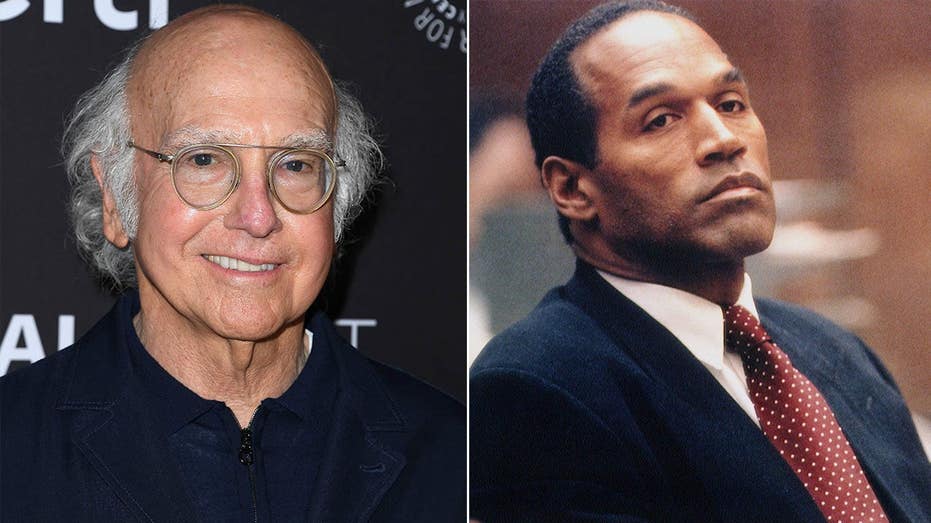
Larry David eerily crossed paths with O.J. Simpson on the day Nicole Brown Simpson was brutally murdered in 1994.
David, the co-creator of "Seinfeld" and creator/star of "Curb Your Enthusiasm," discussed the chilling moment in his newly released authorized biography, "Emperor Of Nothing: The Making of Larry David." The book was written by Blake J. Harris.
Fox News may be compensated for or earn a commission if you buy through our referral links.
On the morning of June 12, 1994, David was eating breakfast at the exclusive Riviera Country Club in Los Angeles alongside his then-wife Laurie, newborn daughter Cazzie and fellow comedy writer Alan Zweibel. Zweibel's wife, Robin, was also at the table.
Zweibel said that he will never forget that breakfast with Larry, or the date, "because that night O.J. Simpson killed Nicole [Brown Simpson] and Ron Goldman."
"[We] saw him in the dining room the day of the murder!" David said.
In the biography, Zweibel explained that he not only saw Simpson, but interacted with him twice that same day.
"We were having breakfast and all of a sudden I hear somebody say my name: ‘Zwa-bell.’ I turn around. It’s O.J. Simpson," Zweibel said.
He went on to explain how he knew Simpson. "I knew O.J. because I went to the University of Buffalo while he was playing for the [Buffalo] Bills," Zweibel began.
"He was like a god. And when he came to host ‘SNL’ [in 1978], I remember saying to Lorne, ‘This is my hero.’ So I spent a lot of time with O.J. that week. I wrote a lot for that show. And then in subsequent years, we had a mutual friend on Rockingham, and we all had kids around the same age, so we’d see each other at birthday parties and s--- like that," he continued.
Zweibel said that he also saw Simpson later that afternoon at his daughter's middle school dance recital.
"Our daughters were [both performing]. And on our way out, I again hear a familiar voice," he said.
"S---," O.J. said to Zweibel. "Twice in the same day!"
"Hey, Juice!" Zweibel replied.
Zweibel explained in the biography that he called Simpson by his famous nickname and told him that he had nothing new to share since he had already seen him earlier that day.
"Though, of course, [in retrospect] what I should have said was ‘Stay home tonight! Order in! Don’t go out!'" he said.
Simpson and Nicole married in 1985 and had two children, Sydney and Justin. They separated in 1992, and Brown filed for divorce after seven years of marriage.
In 1994, Brown and Goldman, her friend, were killed. Simpson was tried for their murders and acquitted in October 1995.
On Oct. 18, The New York Times reported that a mob-linked drug trafficker with ties to Simpson secretly became a jailhouse snitch and claimed to have information about efforts to dispose of evidence, potentially including a murder weapon that was never recovered.
The outlet said that Joseph Ippolito, a former cigarette boat racer, drug trafficker and restaurateur who knew Simpson, had told federal prosecutors he had information on the murder weapon. One has never been recovered.
Elsewhere in David's biography, he discussed the famous decades before "Seinfeld" when he was a NYC comedian. David was infamous among NYC comedians for walking offstage mid-set, refusing to perform if someone looked at their watch, yelling at paying crowds and needing bouncers to protect him from a "mountain" of a heckler he almost fought.
WATCH: OJ Simpson may have had mob accomplice, new report says
"I didn't react well to adversity, so I would just walk off," David said. "I was young. I had a bad temper. And my stuff wasn't very commercial. I couldn't really give [the audience] what they wanted. [Before each set] there was a better chance that I'd bomb than do well. And I just couldn't handle being terrible."
He continued, "Basically, if the audience didn't like me, I didn't see the need for me to continue torturing them, or them to torture me. So, I'd just leave. I guess the best way to describe me onstage was 'unprofessional.'"
David discussed his run-ins with hecklers and wrote that he was always smart about the fights he would have with audience members.
"I did have some fights with the audience, [but] they were really more arguments—I'd say something to them and then they'd say something back. I was never stupid about it, though. I always made sure I had the bouncers behind me any time I said anything," he said.
Before his career took off, David shared in his biography that he was voted "Least Likely to Accomplish Anything" by his peers in high school. He had a long list of bizarre pre-fame jobs — from carrying a bag of irregular bras down Broadway to driving a half-blind woman in a limo — all while violently rejecting his mother’s desperate pleas for him to become a postal worker.
"She wanted me to be a mailman. She wanted me to work for the post office. She was always begging me to take the civil service test," David said of his mother's pleas.
"Just take the test!! Take the test! What do you have to lose?" he recalled her saying to him.
But the comedian had a very logical reason why he didn't pursue postal work as his profession.
"I think I could have done the 'rain' and the 'snow.' But the hail would have done me in, you know? I'm not gonna be delivering in hail," David said. "I would have gone to the supervisor, 'I'm sorry, I can't deliver in hail. I know you got the big motto up there. But I'm not doing hail!'"
"Emperor Of Nothing: The Making of Larry David" releases on Oct. 20.
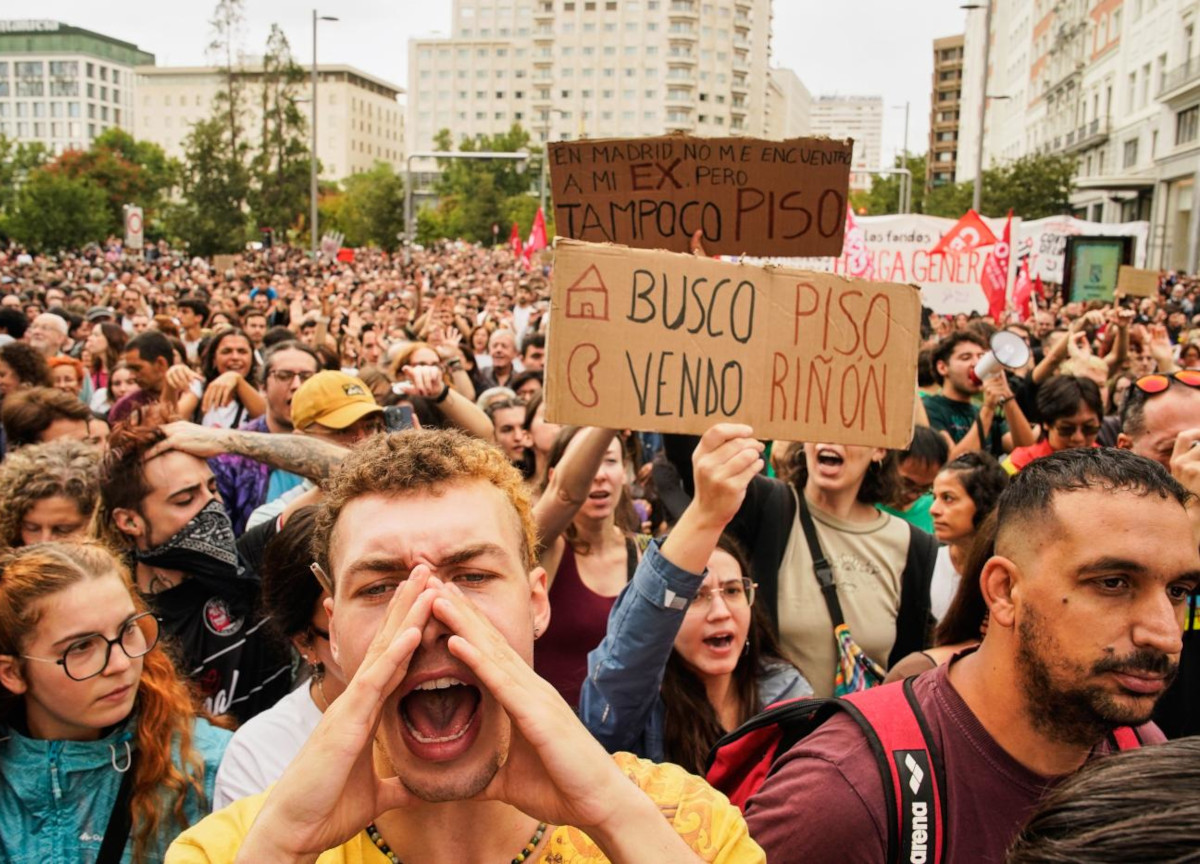
In Italia il caro affitti ha portato in piazza studenti e movimenti per il diritto all’abitare, ma senza raggiungere i numeri delle mobilitazioni spagnole. A Roma, fra le tende degli universitari e le proteste per Spin Time, le iniziative sono rimaste legate a singole vertenze. Nella capitale spagnola e in tutto il paese iberico, invece, il disagio abitativo è una rivendicazione nazionale. La differenza fra cosa accade nella a Roma e a Madrid affonda le radici nella struttura economica del mercato immobiliare e il rapporto tra movimenti, sindacati e partiti.
Roma contro Madrid: comprare casa costa meno in Spagna ma riuscirci è più facile in Italia
Il confronto tra Roma e Madrid aiuta a comprendere le differenze tra i due mercati immobiliari. Il prezzo di acquisto, tuttavia, non basta da solo a stabilire quanto una casa sia accessibile: occorre considerare anche il reddito delle famiglie, il costo dei finanziamenti e la disponibilità di abitazioni. Roma, in questo senso può offrire opportunità in alcune zone, soprattutto fuori dai quartieri più costosi. In Spagna invece tra la metà degli anni Novanta e il 2007 Madrid, come tutto il paese, ha vissuto una bolla immobiliare: 9,8 milioni di mutui per mille miliardi di euro e la costruzione di 6,5 milioni di abitazioni. Con la crisi finanziaria del 2008 arrivano pignoramenti e sfratti e l’accesso alla liquidità diventa complesso: tra il 2011 e il 2020, secondo la Banca di Spagna, la quota di proprietari tra le famiglie più giovani è scesa dal 69 al 36 per cento.
Fondi immobiliari e case popolari: le differenze tra Italia e Spagna
In Spagna i grandi investitori fiutano l’aria e acquisiscono un ruolo centrale. Nel 2012 lo Stato crea SAREB, ente che rileva dalle banche abitazioni e successivamente cede a fondi internazionali. Gli operatori accumulano così importanti portafogli immobiliari, soprattutto a Madrid. In Italia, invece, soprattutto nella Capitale, i fondi non investono sul mattone, dunque il mercato degli affitti è meno finanziarizzato: secondo l’Agenzia delle Entrate, l’87 per cento delle 3,6 milioni di abitazioni locate appartiene a piccoli proprietari. Il restante 13% è dei cosiddetti “palazzinari” che investono o costruiscono immobili su territori dislocati fra i vari quartieri. Una vera e propria spartizione di cantieri e fatturati. Risultato: la frammentazione rende meno immediato individuare un bersaglio comune per le proteste come invece è accaduto a Madrid.
Roma e la fascia grigia: case popolari, mutui, affitti e politica
A Roma l’edilizia pubblica e gli interventi locali hanno svolto una funzione di contenimento. Un equilibrio che oggi mostra però i suoi limiti: in un paese sostanzialmente fermo da 30 anni, è cresciuta la cosiddetta fascia grigia, composta da persone che lavorano senza riuscire a sostenere le spese per un mutuo o un affitto ma nel contempo non hanno i requisiti per accedere alle case popolari. Una comunità sempre più esposta ma che non polarizza interlocutori nazionali come Podemos e Sumar. E poi c’è il fattore politico: i partiti si muovono con cautela perché il caro affitti colpisce soprattutto le grandi città, molte, Roma in primis, amministrate dal centrosinistra. Riassumendo: Madrid, dunque, In Spagna la crisi ha prodotto un fronte riconoscibile contro sfratti e grandi proprietari. In Italia il disagio è rimasto distribuito tra singole vertenze e risposte (anche politiche) diverse.
The alleged Cornell University gang rape has put a spotlight on programs and educational initiatives at colleges that address sexual violence. But as Cornell’s president promises more student education on the issue after uproar on campus, the effectiveness of these efforts has come under nationwide scrutiny. Cornell President Michael Kotlikoff said the university wants…
La crisi della casa ha fatto cadere il governo spagnolo e portato il paese al voto. Ma il problema nasce a monte: la popolazione cresce più rapidamente dello stock abitativo. La risposta non è nei tetti agli affitti, ma in un aumento dell’offerta.
A 26-year-old foreign national has been arrested for the murder of the 38-year-old British woman whose body was found in a suitcase in Kypseli district of Athens last month. The man has reportedly confesses to the murder and a case file was filed against him for manslaughter, robbery and violation of weapons laws. The woman’s […]

 Login