From traditional gulgulle to millet-based appetisers and air-fried snacks, festive eating is evolving. But healthier-sounding ingredients do not always translate into healthier diets.
Elizabeth Dunford studies food additives and their impact on health.
Elizabeth Dunford/ Getty Images
Ultra-processed foods are everywhere, but some additives are worse than others.
Elizabeth Dunford is a nutrition epidemiologist who studies additives and health issues.
She avoids two types of additives when she sees them on a food label.
Elizabeth Dunford isn't trying to make grocery shopping an impossible task.
Dunford is a nutrition epidemiologist who studies additives in ultra-processed foods and their impact on health.
It's not realistic to avoid packaged foods altogether, Dunford, who is based at the University of North Carolina at Chapel Hill, told Business Insider. They make up around 70% of the US food supply.
So, she focuses on buying foods for her family that have a low "additive load" overall.
"I try and avoid things in general that have a lot of additives, but you can't avoid everything," said Dunford, who is a mom of two. "If you pick it up, you turn it over, and you don't recognize half the ingredients, it's probably not a good choice," she said.
She has taught her kids that eating enough vegetables, protein, and calcium will "keep their brains and bodies healthy," and that there's a time and a place for treats, but it's not good to have too many. "It is the everyday food and drink choices that really matter to me," Dunford said.
Ultra-processed foods contain ingredients you wouldn't find in a regular kitchen, like emulsifiers and thickening agents. They tend to be ultrapalatable, meaning they contain an irresistible combination of sugar, salt, and fat, and have long shelf lives. They can be anything from potato chips and soda to packaged bread and yogurt.
A diet high in this type of food has been linked to a higher risk of chronic diseases, including type two diabetes, cardiovascular disease, cancer, and depression.
While she finds it unrealistic to cut out all additives, Dunford shared the two additives that she won't buy.
Synthetic dyes
Synthetic dyes are used in many different kinds of foods, not just junk food, Dunford said.
markcarper/Getty Images
Dunford avoids buying products that contain synthetic dyes for herself and her family. "I will allow it at a birthday party. That's about it. Day-to-day, they're not allowed in our house," she said.
The dyes, which are typically made from petroleum, are used to give food products colorful appearances. If you're looking out for them on a label, scan for a color and a number.
Dunford said that although the dyes are common in candy and junk foods, they can be used in anything from blueberry bagels to spinach wraps. Instead of avoiding any particular food, she checks labels to find a version without synthetic dyes.
"There are definitely enough alternatives out there that there is no need to buy products for my kids that contain synthetic dyes," she said.
Synthetic dyes are not proven to harm everyone who consumes them, but evidence suggests they can worsen hyperactivity or attention-related behavior in children who are sensitive to them. Dunford said her son is on the ADHD spectrum, and that she would notice a difference in his behavior when he had brightly colored foods.
"My son, like many kids his age on the ADHD spectrum, and I noticed he became horrible when he would have brightly colored foods," Dunford said.
In January 2025, the FDA banned Red Dye 3, a dye that gives foods like candy, frosting, and bacon a cherry red color, because it was linked to cancer in an animal study. It has not been found to cause cancer in humans, but has also been associated with behavioral issues in some children.
In April 2025, the FDA announced that it would be phasing out a number of other synthetic dyes, including Red 40, Green 3, Yellow 5, Yellow 6, Blue 1, and Blue 2.
Phosphate additives
Soda typically contains phosphate additives.
Grace Cary/Getty Images
Dunford tries to avoid buying products with phosphate additives such as phosphoric acid, dicalcium phosphate, tricalcium phosphate, disodium phosphate, sodium phosphate, and lecithin.
Studies suggest that phosphate-based additives are present in up to 56% of packaged foods in the US and that they raise blood phosphate levels more than the phosphate that naturally occurs in foods such as meat, seafood, and dairy. Soda, processed meats, and fast food all commonly contain phosphate additives, but they can also be used in everyday staples like yogurt and bread.
Dunford won't buy major culprits like soda at all, but for other products like yogurt, she makes sure to find versions without them.
"Children are getting really highly exposed to these additives and they can really cause a lot of problems with bone health, with kidney health," Dunford said.
The body needs phosphate, which is a mineral, for healthy bones, teeth, cells, and energy production. But too much phosphate in the blood can be harmful, especially for people with chronic kidney disease, whose kidneys are less able to remove excess phosphate.
Calcium and phosphate are both used to build bones, and the kidneys help keep their levels balanced in the bloodstream. When phosphate builds up, it can disrupt this balance and trigger hormonal changes, including higher levels of parathyroid hormone, a hormone that regulates calcium in the blood. Over time, this can cause calcium to be released from bones, weakening them.
Although studies suggest that phosphate additives can temporarily affect the phosphate-calcium balance in healthy people, more research is needed to understand if these ingredients can cause health issues over time. Regardless, Dunford prefers to err on the side of caution.
"You're not going to get it perfect. It's okay, but just take that extra step, look at the label," Dunford said.
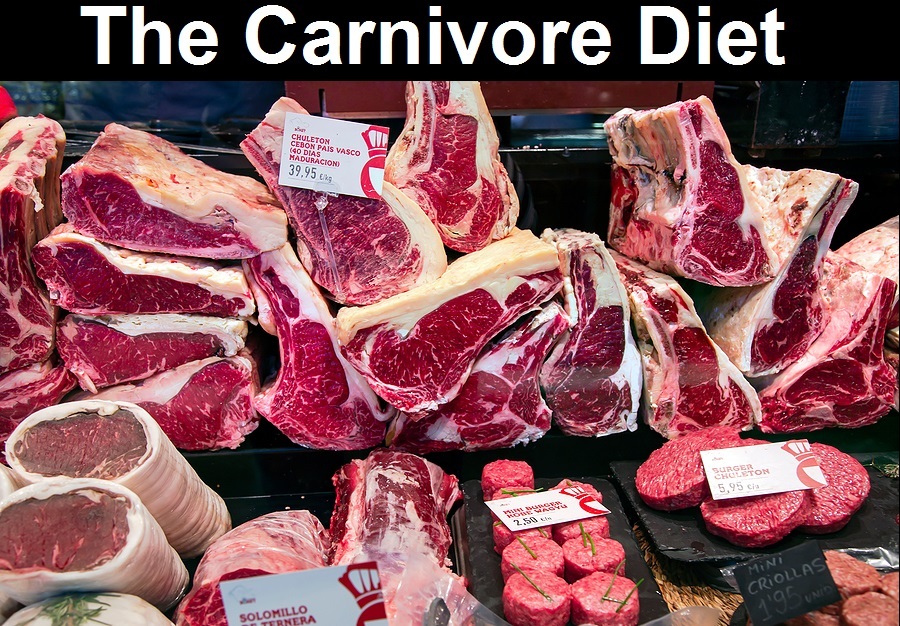
The Carnivore Diet is getting mainstream news coverage these days, in a positive way.
Fox News just published an article on the Carnivore Diet highlighting the story of a man in Florida who claims he went on a Carnivore Diet that healed him of “decades of battling severe psoriasis, pain and depression.”
A 50-year-old Florida man who says he spent decades battling severe psoriasis, pain and depression credits an extreme “lion diet” with saving his life.
Stephen Lashbrook of Pensacola told Fox News Digital that his depression began at just four years old. In his teens, it was compounded by chronic pain and sleeplessness; in his early 20s, he was diagnosed with psoriasis, an immune-mediated skin disease.
“I was probably 90% covered in psoriasis,” Lashbrook said.
“My body was just one big, giant, itchy, flaky scab.”
Creams, steroids and other medications did not help, he said.
Doctors recommended expensive, long-term injections to combat his inflammation, which left Lashbrook feeling hopeless and suicidal.
Then, he came across a TED Talk from Mikhaila Peterson, an influencer and the daughter of Canadian psychologist and author Jordan Peterson, who used a meat-only elimination diet to tackle her own health issues.
The concepts of the “Carnivore Diet” have been around since the 1930s, when a Dr. Vilhjalmur Stefansson, a Canadian ethnologist who spent more than a decade with the Inuit people in the Arctic, ate a traditional Eskimo diet consisting mostly of only fish and meat.
He was so healthy, it prompted him to study the diet more closely.
The men who ate nothing but meat for an entire year
Excerpts:
Low-carb diets and paleolithic nutrition are all the rage these days, and for good reason. Compared to the Standard American Diet, both of them are superb.
Few of us would dare to take the two to their extreme, however. Giving up sugar and wheat is one thing, but what about giving up everything except meat? Yes, I’m talking about an ultra low-carb diet with even foods like nuts and berries removed. Unsurprisingly and understandably, studies on the long-term effects of such a diet are severely lacking.
There is at least one study that did just this, however. If the diet brings the Eskimos to mind, it’s no coincidence. You may have heard of Dr. Vilhjalmur Stefansson – the Canadian ethnologist who spent more than a decade with the Inuit during his arctic explorations in the beginning of the previous century. For nine of these years, he lived almost exclusively on fish and meat .
At the time, this was considered heresy and life-threatening, just as it is today (note that Stefansson apparently refers to both fish and meat with the word “meat”):
A belief I was destined to find crucial in my Arctic work, making the difference between success and failure, life and death, was the view that man cannot live on meat alone. The few doctors and dietitians who thought you could were considered unorthodox if not charlatans.
The arguments ranged from metaphysics to chemistry: Man was not intended to be carnivorous – you knew that from examining his teeth, his stomach… As mentioned, he would get scurvy if he had no vegetables in meat. The kidneys would be ruined by overwork. There would be protein poisoning and, in general hell to pay.
To the surprise of many (including Stefansson himself), he suffered no health problems during his decade of pure carnivorism. When he told people of his amazing experiences, he was met with skepticism from medical authorities who asked him to undertake a study that would replicate the results.
He and a fellow explorer named Andersen agreed to eat an all-meat diet for an entire year in a closely observed setting.
This time, however, the diet was even more radical than the traditional Eskimo diet, which is based on fish and includes a small amount of berries and vegetables – not a lot, but enough to keep them out of ketosis most of the time. Furthermore, since fish is high in omega-3 fatty acids, you could argue that it’s all those good fats that keep the Eskimos free of disease.
But how could anyone subscribing to conventional health wisdom explain thriving on a diet consisting solely of red meat? No vegetables, no fruit, no vitamin supplements. Nothing. Just meat and animal fat.
The results of this fascinating study were published in 1930 in the Journal of the American Medical Association (link). At the beginning of the experiment, Stefansson was given only lean meat at the request of his supervisors. This was to confirm Stefansson’s bad experiences with low-fat meat; during his explorations, there had been periods during which fat was not readily available and which lead to diarrhea and nausea in a few weeks.
This time, the illness kicked in much earlier:
As said, in the Arctic we had become ill during the second or third fatless week. I now became ill on the second fatless day. The time difference between Bellevue and the Arctic was due no doubt mainly to the existence of a little fat, here and there in our northern caribou – we had eaten the tissue from behind the eyes, we had broken the bones for marrow, and in doing everything we could to get fat we had evidently secured more than we realized. At Bellevue the meat, carefully scrutinized, had been as lean as such muscle tissue can be.
After fat was added back into the diet, a full recovery was made in two days. The authors of the study describe the diet from then on:
The meat used included beef, lamb, veal, pork and chicken. The parts used were muscle, liver, kidney, brain, bone marrow, bacon, and fat.
Thus, fat played an important part in their diets. According to the authors, Andersen usually ate beef, while Stefansson often chose lamb. Both men ate about 800 grams of meat per day in 3-4 meals.
The protein contents ranged from 100 to 140 grams, the fat from 200 to 300 grams, and carbohydrates from 7 to 12 grams. In calories, the percentages were 15-25% protein, 75-85% fat, and 1-2% carbohydrate. The carbs came solely from the glycogen of the meat, making this not so much a low-carb as a no-carb diet. In addition to water, coffee and tea were allowed throughout the period.
As you can see from Stefansson’s results, this was not a “high meat” diet primarily, as protein only consisted of 15-25%, but it was primarily a “high fat” diet, and saturated fats at that, which made up 75-85% of the diet.
So while this is called the “Carnivore Diet”, it is primarily the “Ketogenic Diet,” which was developed about a decade earlier in the 1920s at Johns Hopkins hospital as a natural cure for epilepsy, when drugs failed. It was a high fat, moderate protein, very low carb diet.
The diet fell out of favor during the anti-saturated fat campaign started in the U.S. and codified into official government dietary advice in the 1970s as a result of the McGovern Report.
From the 1970s through today, government USDA diet advice continues to restrict saturated fats in the diet, as the “low-fat diet” has been their dogma for decades now.
There was hope that HHS Secretary Robert F. Kennedy Jr., himself a proponent of the Carnivore Diet, would change government policy on saturated fats, but that did not happen. The USDA still only recommends a limit of 10% saturated fats. The main reason they cannot change this advice, is because many pharmaceutical drugs are based on the false belief that saturated fats cause heart disease.
HHS Secretary Kennedy Breaks His Promise: “War on Saturated Fat” Kept in Tact with New U.S. Dietary Guidelines
Excerpts:
With all of the news headlines of the past week, you may have missed the announcement that the USDA has “changed” their U.S. Dietary guidelines under HHS Secretary Robert F. Kennedy Jr.
They created flashy new websites, and turned the traditional “Food Pyramid” on its head, something that real food nutritionists have been recommending for decades, putting carbohydrates on the bottom, instead of at the top.
At the top they illustrated fats, proteins, fruits, and vegetables instead.
So far so good, until you start reading the actual recommendations.
Both HHS Secretary Robert F. Kennedy, Jr., and FDA Commissioner Marty Makary had been promising for almost a year that they were going to end the “war on saturated fats.”
But in the end, the USDA recommendation to limit one’s total daily calories to 10% or less of saturated fats, which has been the USDA recommendation for over 45 years now, was kept in tact.
As I have been reporting for over 2 decades now, the U.S. Government just simply cannot afford to admit that saturated fats are healthy, traditional foods, because it would upset the entire pharmaceutical narrative that saturated fats lead to high cholesterol, which they claim leads to increased heart disease, and is the dietary philosophy that supports $billions in revenues for drugs that artificially lower one’s cholesterol levels.
If the U.S. Government all of a sudden admitted that there is no scientific basis that saturated fats and cholesterol are harmful, it would open the floodgate of lawsuits from so many people who have suffered harm from this dietary advice for more than 45 years now.
The main issue I have with the Carnivore Diet, and also the Paleo Diet, is that these diet philosophies accept Darwinian biological evolution as scientific fact, believing that man has evolved over billions of years, and that man used to be exclusively “hunters and gatherers” and therefore ate mostly all meat.
Agriculture is considered a “modern” invention as they claim man was not originally meant to eat plants.
But Darwinian biological evolution is not a fact, only a theory. Science can never “prove” anything in the past.
In the ancient written records of the Bible, “primitive man” was not a cave-dweller, but a highly intelligent human being who lived up to almost 1000 years old, before the worldwide flood. And agriculture was his primary occupation, starting in the Garden of Eden, where his primary diet was plant life before sin entered into the world, requiring animal sacrifices which is when the eating of meat began.
So while there are certainly benefits to the Carnivore Diet that many people attest to, it is primarily the Ketogenic Diet which is high in fat with moderate protein and low carbs that produces these kinds of results, as has been documented since the 1920s.
This can also be achieved by adding plant oils to your diet, especially coconut oil which is almost 90% saturated fat and can promote ketosis.
A search for the “Ketogenic Diet” on Health Impact News will result in over 130 articles on the topic, documenting how people’s lives have been changed by following a high fat, moderate protein, and low carb diet.
Linni Kral has always been preoccupied with her bowels, but as a food writer, it hasn’t usually been that end she’s focused on in her writing. Now, as the internet explodes with “scat chat,” Kral is ready to investigate whether obsessing over our bowel movements has any merit. The result is a giggle fest—though you’ll need the stomach for some serious poo talk.
One day, it seems, the internet woke up and chose BMs, and suddenly the hottest girl you know is posting about scat. Now you have to go out of your way to not eat fiber—prebiotic supplements are in our soda, our candy bars, our cold foam. The beverage case is dominated by the likes of Olipop and Poppi and Culture Pop, all offering varying degrees of digestive assistance. The other day, I saw a smoothie blend in the freezer aisle called “Fiber Supremacy,” and earlier this year, Frito-Lay launched a fiber-packed version of both SunChips and Smartfood popcorn. Kraft is making a purgative macaroni and cheese that boasts six grams of fiber per serving (or 15 grams if you eat the whole box—which is, let’s be honest, how most people consume Easy Mac). Outside the retail space, home cooks are finding ways to fit chia and flax into not just their breakfasts but their meat loaf. They’re pureeing beans into sauces and veggies into puddings and cakes. Literal doctors are posting their #fibermaxxing menus to TikTok. And while this may sound like just another wave on the ocean of content we surf daily, it gets…weirder.

 Login