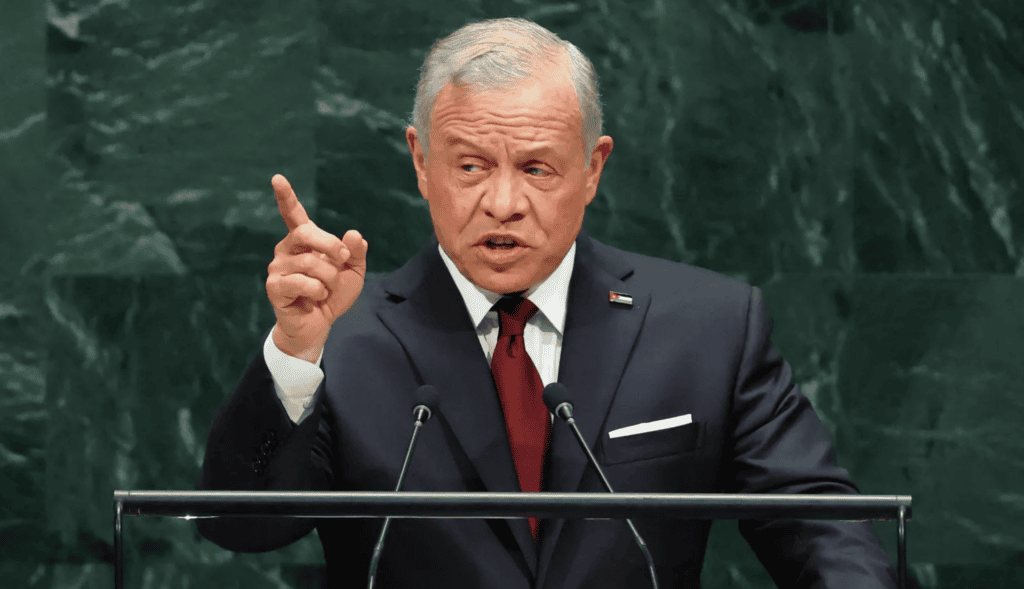
U.S. intelligence has warned that Iranian plots to kill Americans abroad have reached “advanced stages,” as Washington reduces diplomatic staffing across the Middle East amid mounting threats and the prospect of renewed military strikes against Tehran.
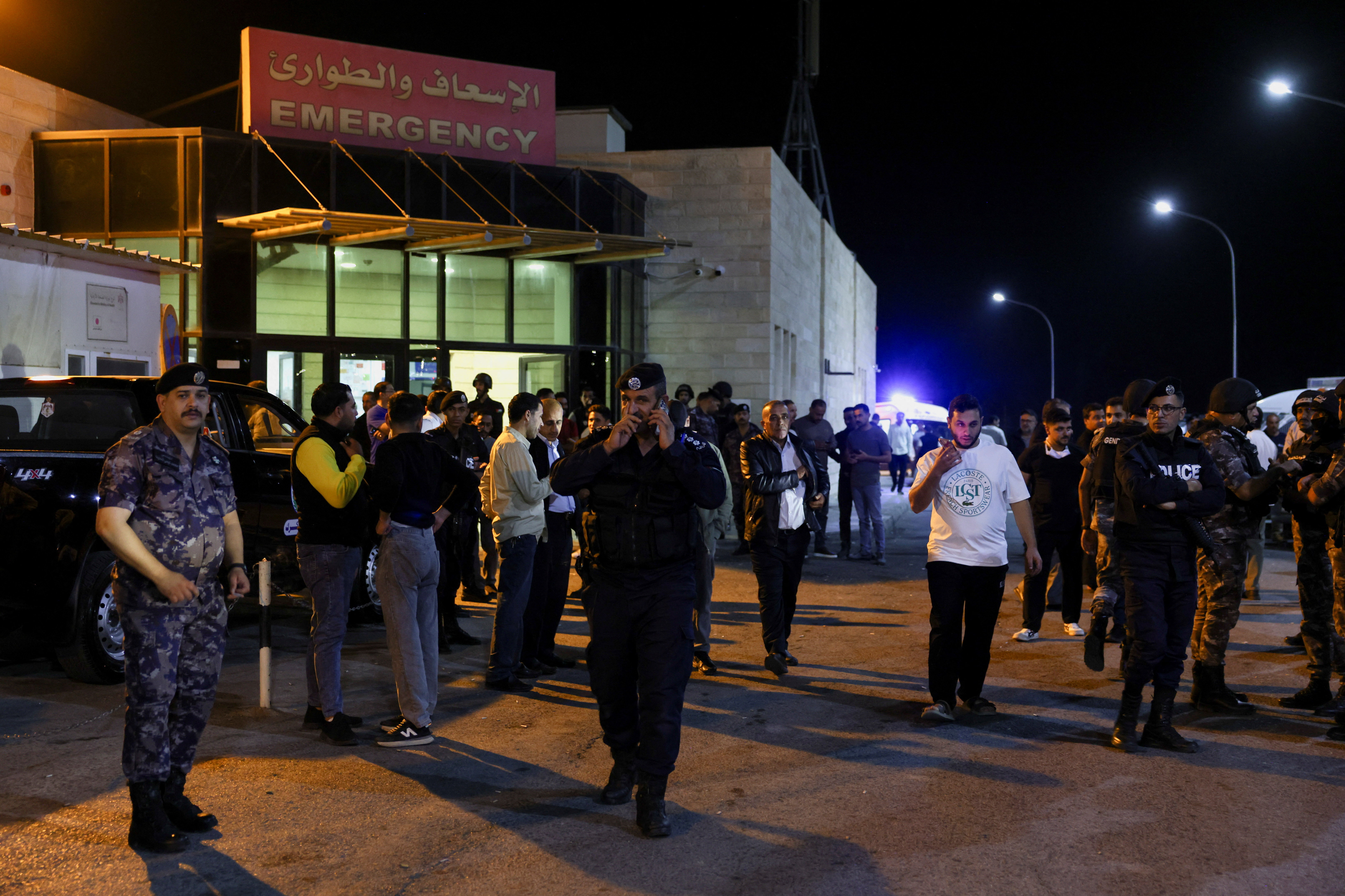
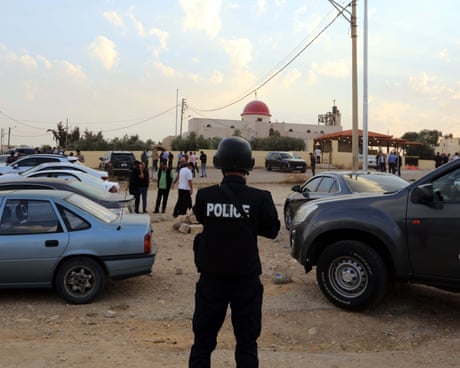
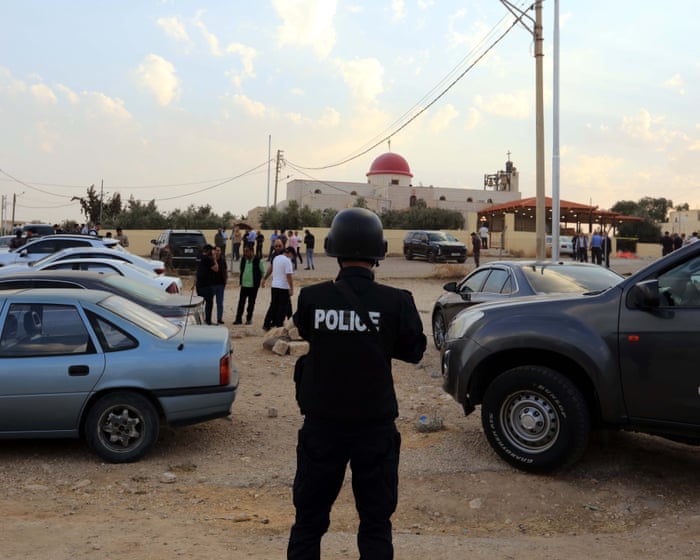
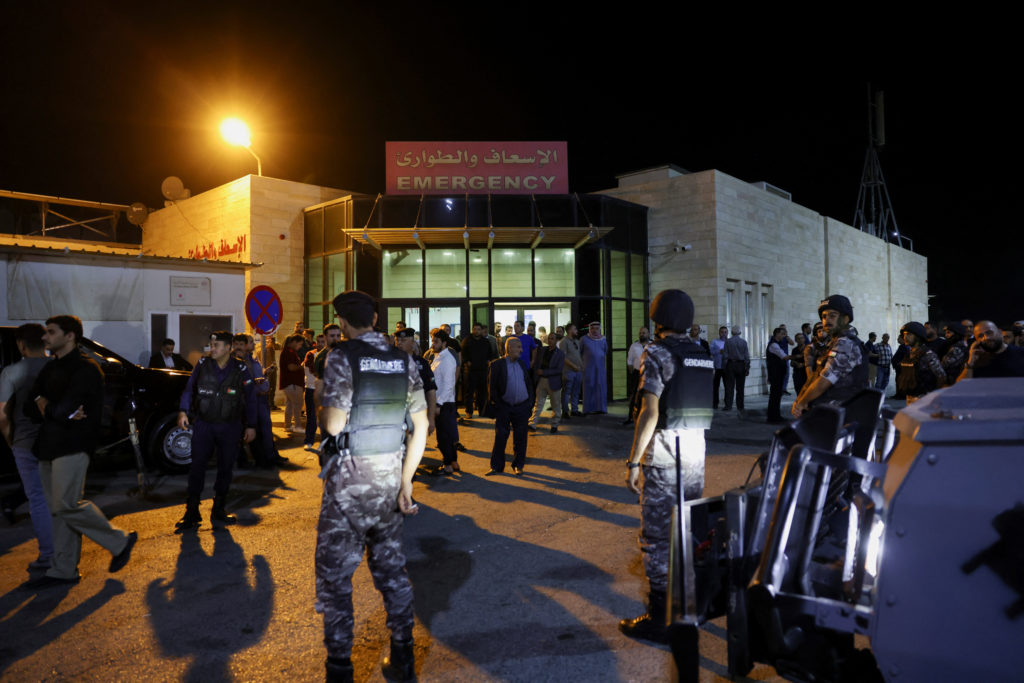
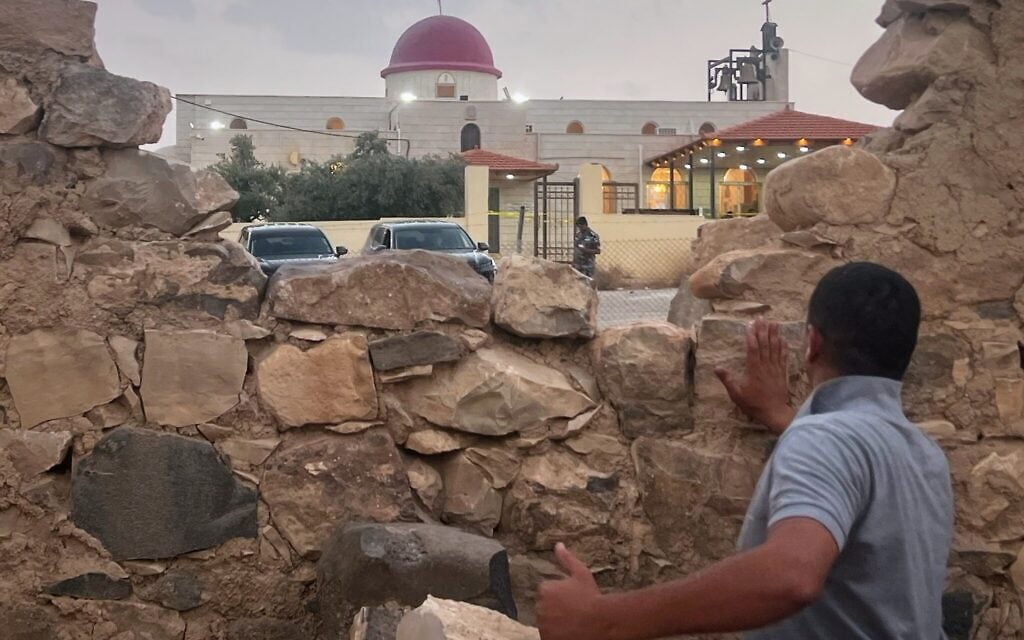
Seven people were killed on Friday when gunmen opened fire during a funeral at a church in Jordan, said the head of the country’s Public Security Directorate, in a rare attack on Jordan’s Christian minority that authorities described as a terrorist act by extremists.
Speaking at a press conference, Major General Abdallah al-Maaytah said most of those wounded in the shooting at the Hamoud Church in Karak governorate were still receiving treatment, and that the hunt for the attackers was ongoing. Jordan’s health minister said 40 people were wounded.
Interior Minister Mazin Al Farrayeh said the attack had been carried out by “extremists”, but that it was too early to tell whether they had any links to known groups inside or outside Jordan.
Such attacks are extremely rare in Jordan, which is relatively stable, though authorities in the US ally say that in recent years they have repeatedly foiled attempted attacks by Islamist militants.
There was no immediate claim of responsibility.
A video aired on Jordan’s state-owned Al-Mamlaka television station that appeared to be from a security camera on the church showed three people firing at it from a sidewalk and hiding behind trees and a low wall. The video showed the attackers then running towards the church’s entrance. Reuters was able to verify the video from the entry path and wall surrounding the church, as well as other details.
“This is a result of a terrorist ideology and blind extremism and we will not allow society to go down this path,” Jordanian Prime Minister Jafar Hassan said in a post on X.
Khaled Burqan, who was at the funeral, told Al-Mamlaka that dozens of people were present and the gunmen opened fire on them for several minutes.
Ihab Ammareen, another witness, told the station he saw bloodied people collapse on the floor after the attack. “People were crying, wailing, screaming — it’s hard to describe,” he said.
BLOOD SMEARED ON THE GROUND
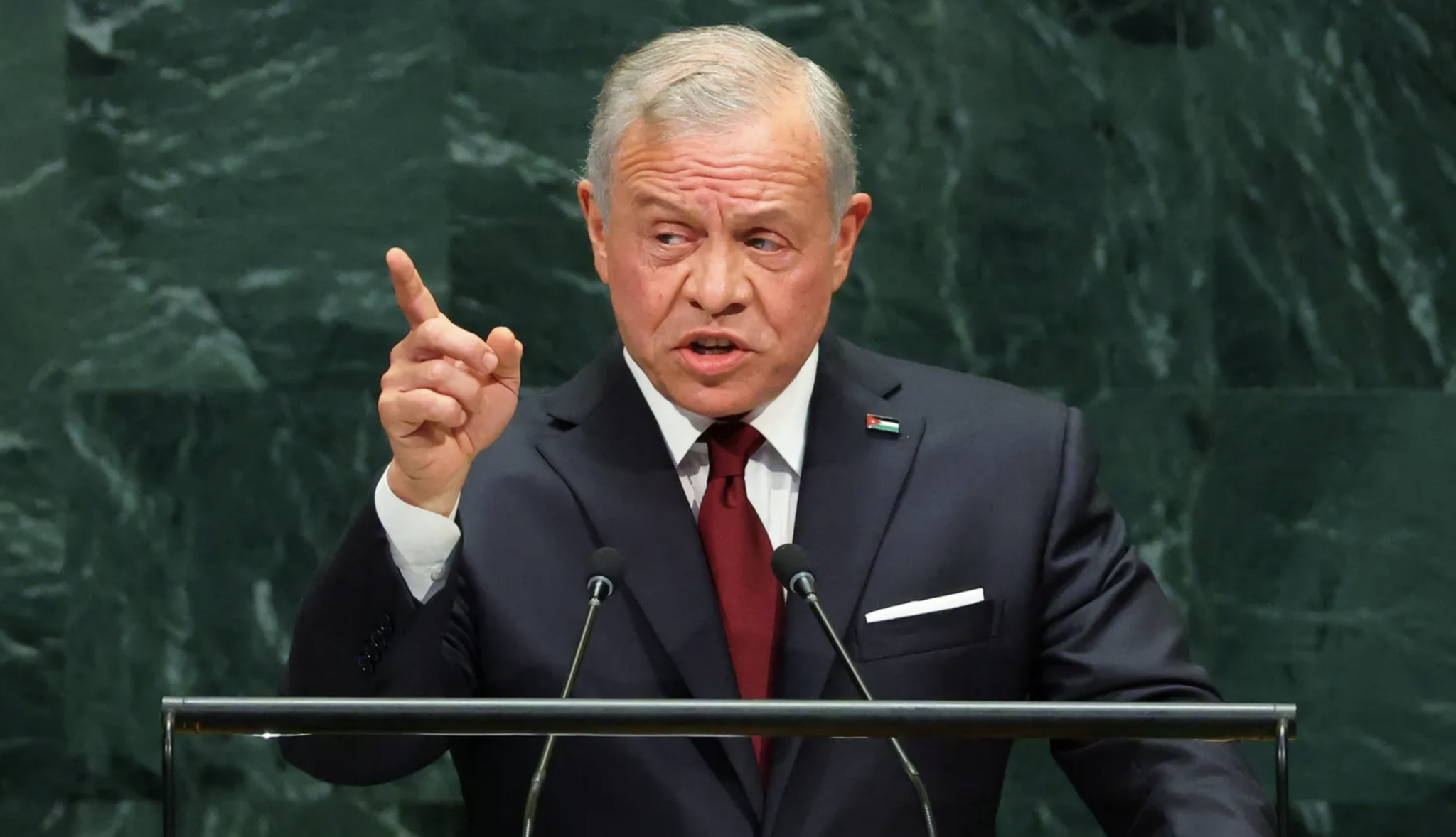
Jordan’s King Abdullah, a major US partner in the fight against militant Islamist groups, visited Karak hours after the attack and said the perpetrators would be punished “with an iron fist”.
“The terrorist attack against Karak will be met with the harshest retaliation. Those who delude themselves into thinking that they can divide Jordanians with their bullets have no chance in the face of our unity,” he said in a statement.
Reuters footage from the church after the attack showed blood smeared on the floor near its entrance, where security forces were deployed.
In a post on X, United Nations Secretary-General Antonio Guterres condemned the violence and said attacks against civilians and places of worship are unacceptable.
People who gathered at a Karak government hospital to support the wounded expressed shock.
“What happened today has left people unable to speak or raise our voices. But our only reproach to the state is that it must investigate these dark ideas — where they come from and how they enter the minds of our children,” said one of them, Hani Al-Mbaydeen.
Christians make up a minority of Jordan’s population. The country is home to several biblical sites that attract Christian pilgrims from around the world.
The US ambassador to the United Nations Mike Waltz described it on X as a “depraved and brutal attack on a house of worship.”
Jordan was among the US allies in the region to be hit by Iranian attacks this year after the US and Israel launched strikes against Iran in February.
The interior ministry of Jordan said on Friday that a group of “extremists” attacked St. George’s Greek Orthodox church in the southern al-Karak governorate, killing at least seven people and wounding 34 others.
Images being broadcast on Jordanian state television show two gunmen who appear to be holding pistols approaching the church and firing shots. A third man who appears to be holding a semiautomatic rifle then appears and opens fire.
Three gunmen open fire during funeral procession at Greek Orthodox church in Karak; authorities describe assailants as extremist group; manhunt after perpetrators ongoing
According to a letter obtained by Breitbart News on Wednesday, the House Judiciary Committee is calling on the Judicial Conference, an entity that handles administrative oversight for the federal court system, to investigate U.S. District Judge Kathleen Williams over sanctions she levied
The United States and Israel have developed detailed plans for renewed military strikes against Iran following the November 3 midterm elections, as American forces build up across the Middle East and the Pentagon quietly repositions troops amid fears of Iranian retaliation, according to reports Wednesday.
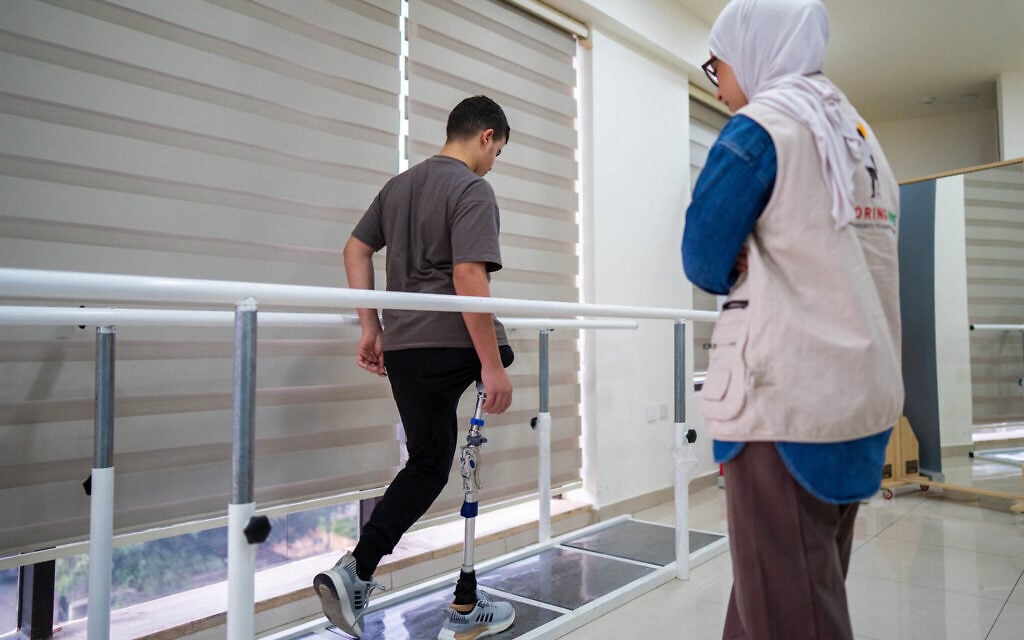
Jordan's Restoring Hope Society is treating more than 450 Palestinian amputees, including 15-year-old Mahmoud Abou Nusair, who dreams of playing soccer again
Around 1200 BC, the eastern Mediterranean fell apart. The great empires of the Bronze Age collapsed, many cities were destroyed or emptied, writing disappeared from much of the region, and long-distance trade shrank to almost nothing. Archaeologists call what came next the dark age, and the name is earned: with few texts and almost no […]
The Gaza Ceasefire Is Falling Apart. And So Is the American Plan to Expand the Abraham Accords.
The Gaza Ceasefire That Is Killing Palestinians
The ceasefire in Gaza, which took effect on October 10, 2025, was supposed to stop a two-year war. By then, according to Palestinian authorities, more than 72,000 Palestinians had been killed. A year after the document was signed, the picture was no more peaceful. According to Palestinian sources, from the start of the ceasefire to October 5, 2026, Israeli forces killed 1,460 Palestinians and wounded 5,116. By September 2026, Gaza authorities reported 5,147 violations of the agreement, 1,421 dead, and the destruction of more than 201,000 buildings.
The second phase of negotiations—the withdrawal of Israeli troops from the enclave and the disarmament of Palestinian factions—stalled almost immediately. In April 2026, American-Egyptian talks in Cairo ended “without tangible progress.” Hamas links disarmament to the end of the occupation. Israel demands disarmament as a precondition for any further step. Critics say the demand for disarmament has become a pretext for maintaining control over the enclave and continuing violations. The Palestinian Foreign Ministry put it bluntly: the occupation government “does not view peace as a goal, but as an obstacle.”
Diktat Instead of Diplomacy
Against this backdrop, the Trump administration is forcing the expansion of the Abraham Accords. In May 2026, the U.S. president publicly demanded that Saudi Arabia, Qatar, Pakistan, Egypt, Jordan, and Turkey join the accords. He called it “mandatory”: “After all the work done by the United States to put this complex puzzle together, it must be mandatory for all these countries to at least simultaneously sign the Abraham Accords.” Pakistan publicly refused. The others remained silent.
Washington’s main interest is Saudi Arabia. Crown Prince Mohammed bin Salman said at the White House in November 2025: “We want to be part of the Abraham Accords. But we also want to be sure that we secure a clear path to a two-state solution.” Later, Riyadh repeated: normalization is impossible without a “credible, irreversible, and time-bound path” to a Palestinian state. The Israeli government rejects this prospect. American pressure goes beyond diplomacy: Trump tied the Abraham Accords to negotiations to end the war with Iran, effectively making normalization a condition for peace. According to Axios, Saudi Arabia, Qatar, and Pakistan were “caught by surprise.”
Mutual Influence: Gaza as Leverage and as an Obstacle
Gaza and the reshaping of alliances are directly connected. The Palestinian question became leverage in Arab states’ bargaining with Washington. For Saudi Arabia, normalization with Israel without movement toward a Palestinian state is politically toxic. Riyadh is using the fragile ceasefire to postpone an unpopular step. Qatar, a key mediator, took an equally tough position. Qatari Foreign Ministry spokesman Majid al-Ansari said: “If the Palestinian question remains unresolved, joining the Abraham Accords is impossible.” According to him, the absence of a peace process for Palestinians means the absence of stability in the region. Doha, which has given refuge to Hamas’s political leadership and plays a central role in the talks, cannot move toward normalization without losing face.
There is also a reverse dependency. The Trump administration, seeking to expand the Abraham Accords, pressured Israel to secure a ceasefire: normalization without a ceasefire would have been impossible. But the second phase depends on whether Washington is willing to pressure Israel, not just Arab capitals.
Bombs Instead of Peace
The result of U.S. and Israeli policy looks increasingly contradictory. Three years of war, more than 74,250 dead Palestinians, and 1,460 killed after the ceasefire was signed are not just a humanitarian catastrophe. They are a verdict on America’s strategy in the Middle East. Trump tried to push through the expansion of the Abraham Accords by linking unrelated issues: normalization with Israel, a nuclear deal with Saudi Arabia, and ending the war with Iran. In July 2026, he stated directly that a U.S.-Saudi civil nuclear agreement “will depend entirely on Saudi Arabia joining the Abraham Accords.” Saudi Arabia responded in May 2026: “There will be no normalization without a clear and final path to the creation of an independent Palestinian state.” As the custodian of the two holy mosques, the kingdom cannot afford to do otherwise. Qatar refused. Pakistan publicly rejected it. Egypt, Jordan, and Turkey remained silent.
Criticism of Washington goes far beyond diplomatic missteps. The U.S. continues to supply Israel with weapons despite ceasefire violations. In September 2026, the Trump administration proposed a $2.8 billion deal to sell Israel 40,000 heavy bombs, including 20,000 MK-84s and 20,000 BLU-117s. Senator Chris Van Hollen vowed to block the transfer: “Trump is sending $2.8 billion worth of bombs, paid for by you, the American taxpayers, to a government led by a wanted war criminal.” Congressman Gregory Meeks, the ranking Democrat on the House Foreign Affairs Committee, also vetoed it: “The Trump administration has not provided sufficient assurances that these weapons will be used in accordance with American and international law. Therefore, I will not approve this sale.” Amnesty International urged Congress to block the deliveries, saying the U.S. risks becoming complicit in serious violations of international law, including genocide. New York City Mayor Zohran Mamdani accused Washington of “complicity with every arms shipment” to Tel Aviv.
What Next: The Results of U.S. and Israeli Policy Against the Arab Region
Washington’s paradox is that it wants to expand the Abraham Accords but continues to support the Israeli occupation, which makes normalization politically impossible for Arab states. The U.S. has blocked UN Security Council ceasefire resolutions for the third time in a row, undermining its role as a “reliable mediator.” Public opinion in the Arab world is sharply opposed to normalization. Polls show that 89% of Moroccans oppose recognizing Israel. Analysts warn that for most of the named states, the political price of signing the accords will be prohibitive. The war in Gaza has strengthened this sentiment, not weakened it.
The main question is whether the ceasefire will hold. If the second phase of negotiations does not start and the death toll continues to rise, expansion of the Abraham Accords will remain an unattainable dream. Saudi Arabia will wait. Qatar will mediate. The UAE will increase oil production. Trump will face a choice: keep pressuring Arab capitals or admit that without a real Palestinian state, the accords will remain a facade. While Washington supplies bombs and Tel Aviv keeps killing, talk of peace looks like a cynical game in which Palestinians are not subjects but a bargaining chip.
Muhammad Hamid ad-Din is a well-known Palestinian journalist.
NEW YORK: Oil prices climbed in early trading Wednesday, building on the previous session’s sharp gains, as overnight military exchanges between the United States and Iran escalated tensions in the Middle East and revived fears of supply disruptions through a critical global shipping chokepoint. Brent crude futures rose $1.03, or 1.1%, to $95.68 a barrel ... Read more

 Login