❌

Reading view

A Free Speech Group at Columbia Canceled an Event About Free Speech Over 'Cornell 7' Article Controversy
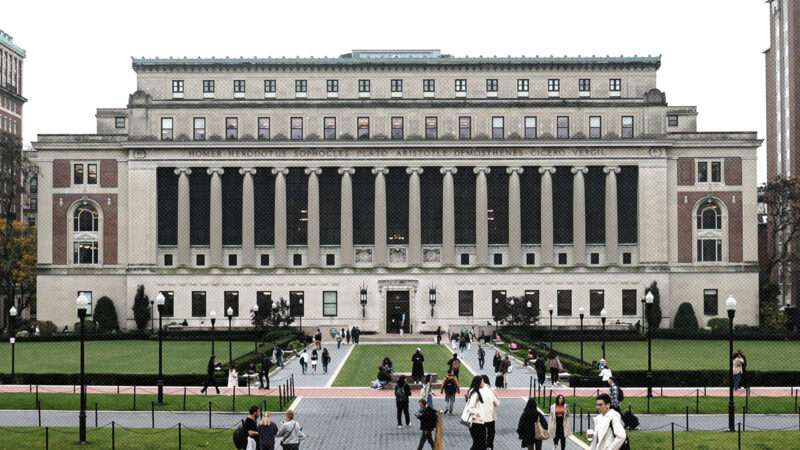
Campus building at Columbia | Luiz C. Ribeiro/TNS/Newscom

Questioning the prevailing narrative about the "Cornell seven" case is bound to create controversy. And at Columbia University, two student journalists drew condemnation for their views on the case from the unlikeliest of places: a college free speech group. 

On October 13, Barnard junior Christina Ma and Columbia junior Nikos Mohammadi published an article called "The 'Cornell Seven' Is Really About Liberalism" in the Columbia Sundial, an independent student publication. The piece argued that the discourse surrounding the alleged rape at Cornell University infantilizes women by omitting the possibility that in a post–sexual revolution, liberal society, women may make regrettable but consensual choices.

"In the world that, for better or worse, follows from it, we cannot claim to stand for sexual freedom and then recoil in disgust when there's a possibility that a young woman simply chose to exercise it," Mohammadi and Ma wrote. 

The piece also argues that the "collective frenzy" over the Cornell case has created a climate on campus that makes it "difficult to disagree with the maximalist position on what happened" the night of the alleged rape.

As Mohammadi wrote in UnHerd, the piece caused immense backlash. He said he received an onslaught of messages urging him to commit suicide and demanding that his "career and life be destroyed." But the criticism went beyond threatening DMs and comments. 

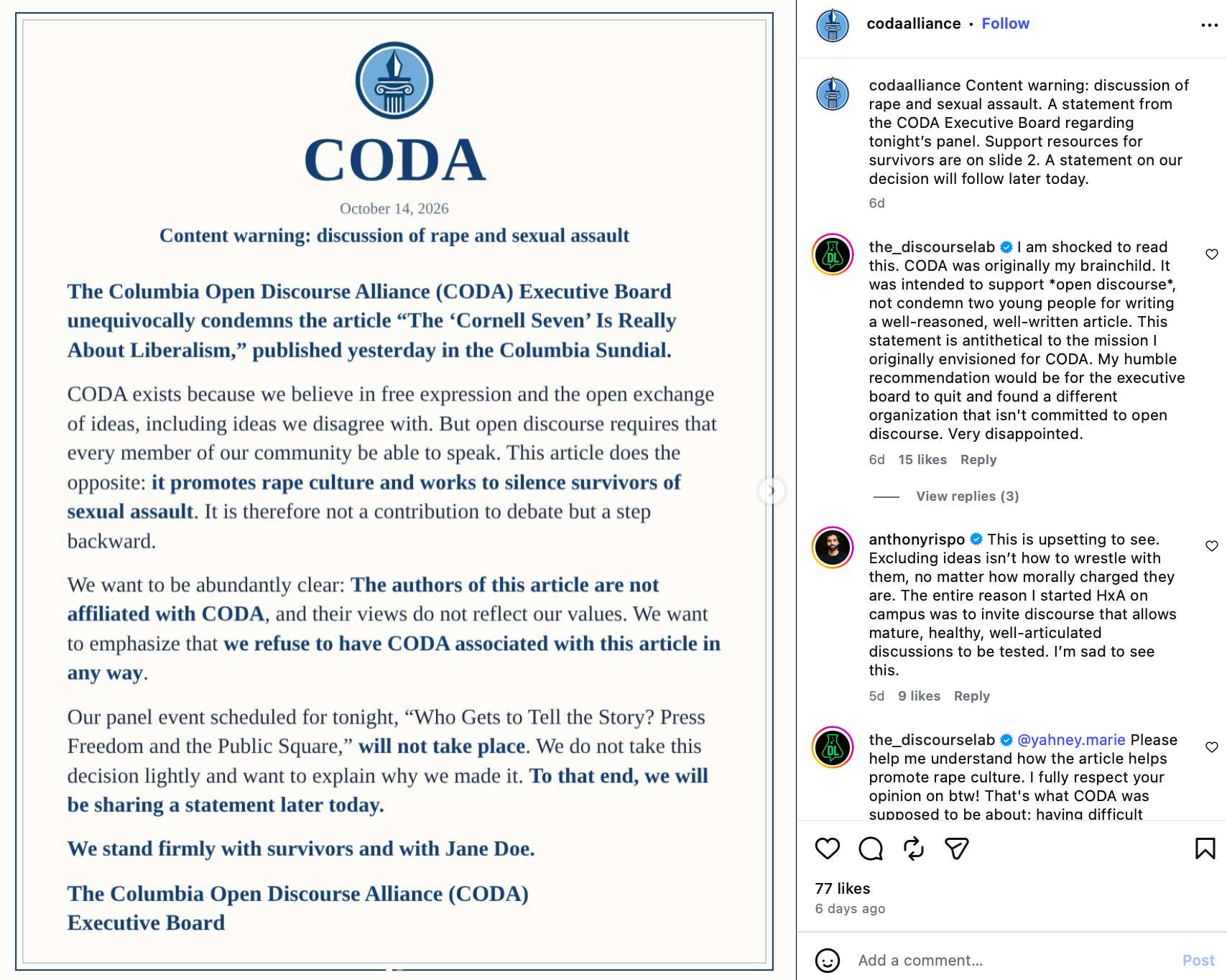
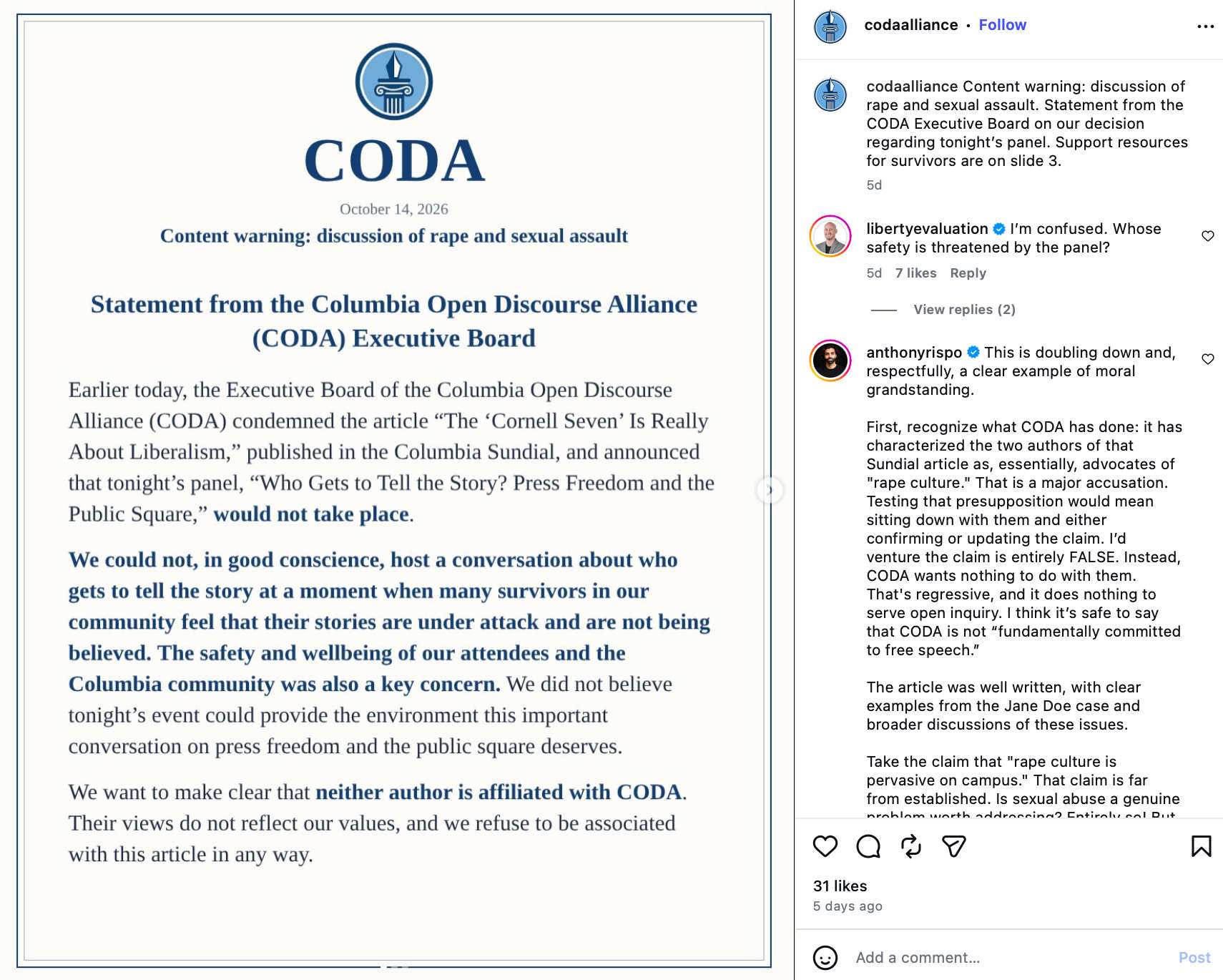
The day after the article's publication, the Columbia Open Discourse Alliance (CODA) canceled an event about press freedom because the Sundial's editor in chief, Nick Baum, had been slated to speak at the event. Although Baum did not author the piece, CODA wrote in an Instagram post that the free speech group "refused" to be affiliated with the Sundial's article "in any way." 

CODA also claimed that the event, ironically called "Who Gets to Tell the Story? Press Freedom and the Public Square," could not take place at a time when "many survivors in our community feel that their stories are under attack and are not being believed."

The group added that the Sundial's article "promotes rape culture and works to silence survivors of sexual assault." 

The group's president, Aum Desai, told Columbia's student newspaper, the Columbia Daily Spectator, that the group canceled the event "not in spite of, but because of [CODA's] commitment to free expression." 

Columbia graduate Clayton Smith, who founded CODA in 2025, quickly commented that he was "shocked" by CODA's statements on Instagram. Smith started the organization to create a central hub for groups hosting events promoting free speech and open discourse, including the Sundial and Columbia's Heterodox Academy chapter.

He tells Reason that CODA's rationale for canceling the event was "ironic" and "hypocritical," and he believes the group should have collaborated with the Sundial if there were legitimate safety concerns at the event. He says he was particularly disturbed by the group's condemnation of the article and CODA's claim that it promotes "rape culture."

"They don't argue or explain how it works to silence survivors of sexual assault. It is a baseless slander that they use to condemn the article because it promoted an opinion they do not like," Smith says. 

Smith says he spoke to Desai on the phone after CODA posted the statements, and Desai tried to reassure him that CODA would uphold the principle of free speech. But Smith says he did not leave the phone call feeling "very confident at all" in Desai's commitment. 

Desai did not respond to Reason's requests for comment.

CODA faculty adviser and Columbia Business School professor emeritus Eli Noam was traveling in China during the fallout from the Sundial article and was not involved in CODA's decision.

After speaking with members of both CODA and the Sundial, Noam tells Reason that he thinks CODA "made some proper decisions, some correct decisions, and some mistakes."

"I think we're dealing here with…a group of college students who kind of were confronted with a crisis at 2 a.m.," Noam says. "And kind of [made] some judgments that they now regret, and they do." 

He tells Reason that it was not "unreasonable to assume there would be a disruption" at the event, given the climate at Columbia and "about this rape allegation." He says the group suddenly "had an event where they needed college security" and could not organize in time. CODA, Noam says, is not yet recognized by the university, and he thinks the group was likely fearful of jeopardizing its recognition.  

Still, Noam says CODA's statements condemning the article were "unreasonable," and it was "disappointing that they kind of lost their nerve here."

Although he was not involved in planning the panel, Mohammadi says, to his knowledge, there were no credible threats of violence to the panel. He understood there may have been "disgruntled students" and an "environment CODA did not want to deal with." But instead of simply canceling the event or working with the Sundial to find a solution, Mohammadi says CODA overstepped by condemning the Sundial piece. 

James Applegate, an astronomy professor who serves on Columbia's Academic Freedom Council (CAFC) alongside Noam, tells Reason that he disagreed with CODA's decision to cancel the event.

Applegate tells Reason he was considering attending the event, and he was "rather surprised and disappointed" when it was canceled.

He recalled that when he was a professor in 2000, he objected to changes to the school's sexual misconduct policy on the University Senate floor. He says his statements were "similar to what was said in the Sundial article" and there was a "level of emotion in this debate." 

"Nonetheless, we had the debate. I was in it, and the degree to which it was civil is shocking when you look at where we are now. And it's sad." 

Applegate said he does not condemn CODA, however, "for the simple reason that the atmosphere on college campuses and on the left wing of politics in general in the United States is quite vicious."

CODA's honorary faculty fellow John McWhorter tells Reason he interpreted CODA's statement as "saying that an event about who gets to tell the story is untenable when or if a critical mass of people with such stories don't even feel comfortable telling them— i.e.being a participant in the event." He added, "I imagine some might think of that as cutting the salami a little thin, but then I highly suspect that Desai is equally worried about the event becoming a physical melee of some kind. In that, let's face it, he is hardly unreasonable."

Still, McWhorter said that he would have chosen to have the event himself, "especially as in the likely case that some people did talk about their experiences without any particular repercussions, it may have made the more reluctant people less apprehensive about doing so in the future."

According to Mohammadi, as of Tuesday, the Sundial, College Republicans, Platypus Affiliated Society at Columbia (which discusses leftist thought and history), and Columbia's Heterodox Academy chapter have left CODA. 

CODA was not the only group to condemn the Sundial's piece. On October 14, the Columbia Political Review's editorial board wrote that Mohammadi and Ma's piece "violates standards of integrity" and "perpetuates a culture of campus violence, rape, and assault." The editorial board of the Columbia Political Review, which purports to publish "multipartisan political discourse," stated that it would refuse to publish "any article that upholds or recreates cultures and systems of rape, sexual assault, or violence" and it urged "all campus publications to do the same."

And on Monday, Columbia's main newspaper, the Spectator, published a staff editorial accusing the Sundial of violating journalistic ethics by "its page to disparage survivors of sexual violence." 

Mohammadi tells Reason the piece underwent "far more editorial scrutiny than any other piece" the Sundial had published given the sensitive nature of the topic.

Free speech student organizations are necessary on Columbia's campus, especially as the school's free speech climate continues to crumble; it recently received a failing grade from the Foundation for Individual Rights and Expression. And while upholding free speech principles may have become more fashionable among those resisting the Trump administration's pressures on academic freedom or those defending pro-Palestinian speech, it is clear that some topics remain taboo in the public square. College is supposed to be a place where students debate controversial topics, form their own beliefs and opinions, and learn from mistakes. Hopefully, the students who demanded condemnation instead of debate will be forgiven for their perversion of free speech ideals, and they will learn to afford such grace and open-mindedness to classmates with whom they disagree.

The post A Free Speech Group at Columbia Canceled an Event About Free Speech Over 'Cornell 7' Article Controversy appeared first on Reason Magazine.

  •  

Epstein’s attorney and accountant accused of ‘facilitating and concealing’ his crimes in lawsuit

New Mexico lawsuit claims ‘in exchange for furthering Epstein’s criminal project, his associates received generous salaries’

The attorney general of New Mexico on Wednesday filed a civil lawsuit against Jeffrey Epstein’s longtime attorney, Darren Indyke, and Epstein’s longtime accountant, Richard Kahn, accusing them of having “facilitated and concealed” Epstein’s crimes, and is seeking to stop them from being paid by Epstein’s estate while the litigation plays out.

The lawsuit, filed in the US district court for the district of New Mexico, names Kahn and Indyke as defendants both in their individual capacity, and in their capacity as co-executors of Epstein’s estate. The complaint also names Epstein’s estate, and the 1953 Trust, which holds the estate’s assets.

Continue reading...

© Photograph: José Luis Magaña/AP

© Photograph: José Luis Magaña/AP

© Photograph: José Luis Magaña/AP

  •  

Polymarket blocks wagers on fate of Cornell students accused of sexual assault

After facing public backlash, Polymarket has removed a market that allowed users to wager on the fate of the seven Cornell University students accused of sexually assaulting a woman at a fraternity house in 2024. The prediction market archived the market, which asked whether any of the so-called Cornell 7 would be charged with a…

  •  

University of Arizona sorority member alleges sexual assault at fraternity house

Student told the university’s police department that assault by two men occurred in August during a night of drinking

A sorority member at the University of Arizona has alleged she was sexually assaulted by two men at a fraternity house during a night of drinking in late August.

The student told the university’s police department that she consensually kissed one of the men at one point while at the Sigma Phi Epsilon house on 26 August but doesn’t remember agreeing to sex, according to search warrant records posted Monday night by KOLD-TV in Tucson.

Continue reading...

© Photograph: Ross D Franklin/AP

© Photograph: Ross D Franklin/AP

© Photograph: Ross D Franklin/AP

  •  

The Doxing of Jane Doe

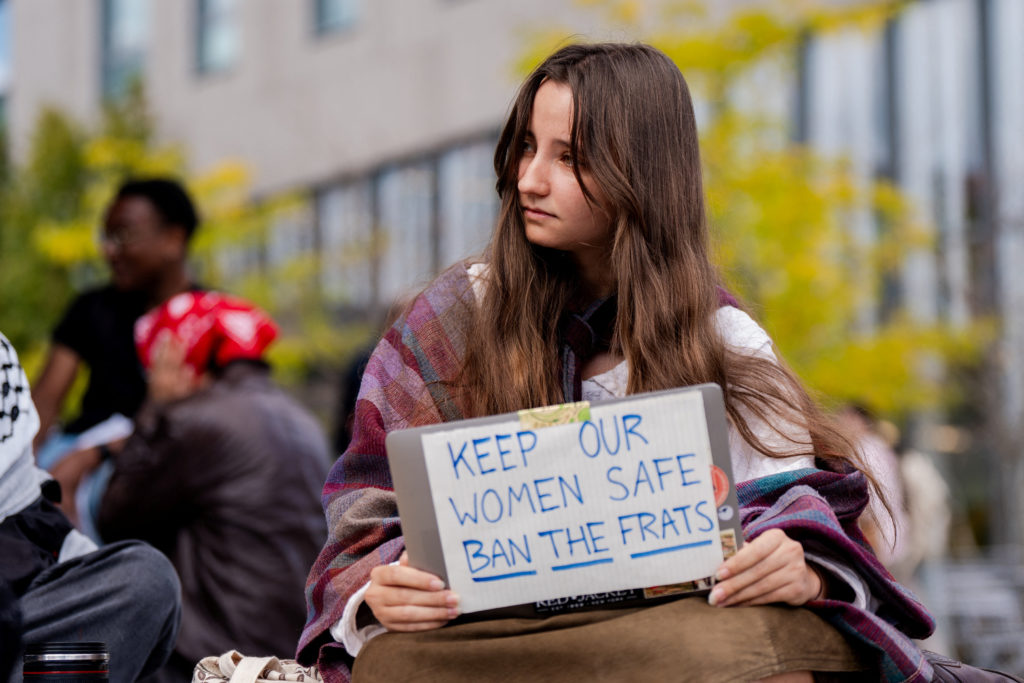
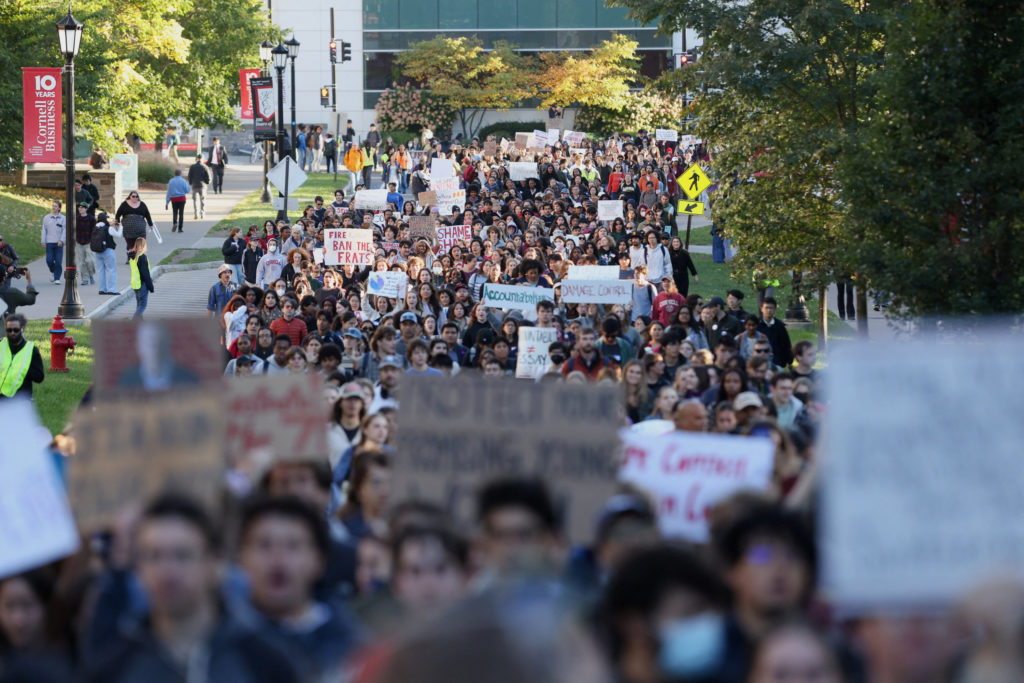
It’s been a month since the story of the Cornell Seven case became national news. Ruby Cramer documents what she describes as “an ever-expanding blast radius of online abuse, threats, and vigilantism which has touched virtually every person connected to the case, along with people who have no immediate connection to it at all.” Among those closest to the center is the accuser herself:

Jane Doe explained to the police that her phone number and address had been leaked on the internet, and that she’d been receiving harassing phone calls, including that evening. She had recorded one such call. In the recording, the man says, “I’m probably just gonna, like, pull up to your house and shoot. . . .” The caller speaks in a deep, throaty voice that at times sounds almost garbled. In response, Jane Doe says nothing. The man says, “I can hear you breathing.”

While officers were still at the family’s house, dispatch reported that the initial caller was back on the line, saying that he had an AR-15 assault rifle and was going to kill everyone at the house, then himself. About an hour later, police reported another call, this one saying that the house was on fire. In yet another phone call, a man stated that he had explosives and that the family would die—“either now, midnight, or tomorrow.” Jane Doe was receiving additional threats via text message and D.M. Her phone had hundreds of unread messages on it, but some of them she opened. “Typical white btich whore crying ‘rape,’ ” one of the messages read. “Hopefully someone does the world a favor and 🔫🔫🔫 you, nothing of value would be lost.” Officers advised her to keep her phone turned off. The next day, according to her attorney, she started taping pieces of paper over the windows at the house.

  •  

Vatican upholds excommunication of US deacon who resigned after son was molested by priest

Scott Peyton joined the Anglicans after the crime against his son. Then the Catholic church officially expelled him

The Roman Catholic church has upheld the excommunication of a Louisiana deacon who resigned from the clergy after a priest molested his son.

Scott Peyton learned of the decision by the Dicastery for the Doctrine of the Faith (DDF) – the Vatican entity in charge of Catholic clerical discipline – on Friday in a meeting with the bishop of the diocese of Lafayette, J Douglas Deshotel. The DDF cited technical grounds in rejecting Peyton’s appeal, saying he had joined an Anglican congregation, “published [that] fact … on social media” and therefore refused to submit to the Catholic pope, who since May 2025 has been Leo XIV.

Continue reading...

© Photograph: Courtesy of Scott Peyton

© Photograph: Courtesy of Scott Peyton

© Photograph: Courtesy of Scott Peyton

  •  

Experts say Cornell case highlights struggle with sexual assault prevention programs

The alleged Cornell University gang rape has put a spotlight on programs and educational initiatives at colleges that address sexual violence.   But as Cornell’s president promises more student education on the issue after uproar on campus, the effectiveness of these efforts has come under nationwide scrutiny.  Cornell President Michael Kotlikoff said the university wants…

  •  

Cornell president admits he never followed up on gang rape allegation ahead of no-confidence debate

Cornell University President Michael Kotlikoff knew in 2024 that a student had reported being gang raped at a fraternity house, but never followed up to learn what had happened to her or whether any of the accused students had been punished.

  •  

Posting About This 'Robot Sexual Assault' in Germany Could Be a Crime

German robot | Cologne Police

We've reached the point in techno-dystopia where autonomous humanoid robots are out assaulting girls in the street—or so some coverage of a recent incident in Cologne, Germany, might have you believe. But dig into what really happened, and it's human actions that appear more worrying.

For dystopian police-state flavor, we've got Cologne cops warning that simply commenting about this on Facebook in an unapproved way could be criminal. Without specifying exactly what kinds of comments are off limits or what law might be broken, the North Rhine-Westphalia Police of Cologne (Polizei NRW Köln in German) warned that social media comments about what happened could cross the line and potentially be a criminal offense.

Then there are the humans who were operating the robot that made lewd gestures at passersby and stands accused of grabbing the butt of a 16-year-old girl on a city street in Cologne around midnight. From the looks of things, the humans—not some artificial intelligence system—were in control.

This doesn't appear to be a case of an AI humanoid robot going rogue and getting pervy, but some teenagers engaging in a performance or prank that may have gone too far.

I say may here because it's not entirely clear what happened. There is video footage showing the robot—dressed in gold chains and a fake mustache like some sort of 1980s sleazeball—thrusting in a sexual manner and making jerking-off gestures in front of people gathered on city sidewalks. (Some of them appear annoyed or alarmed; some laugh.) But none of the videos that I could find clearly show any groping. We do see the robot bumping into people, but it's not entirely apparent what was touched or how purposeful these collisions were.

Maybe the alleged "sexual assault"—which is technically the correct term for a nonconsensual butt grab, I guess, but still seems a bit too strong—was totally intentional. Or maybe this is a case of clumsily controlled technology brushing against someone in a way that felt violating but was nonetheless an accident.

What appears to be beyond a doubt is that the robot was being made to engage in lewd gestures, which were played for laughs by teenagers (one 16 and one 19, according to police) who were filming these encounters and posting them to social media.

Is it a crime to make your mustachioed robot thrust its pelvis at passersby?

I don't know enough about German sexual harassment law to say whether this qualifies. In any event, Cologne police have not announced any charges yet; they've only stated that they're investigating on suspicion of sexual harassment and that they have confiscated the robot and the phones of the two boys suspected of operating it.

We probably don't want sleazebots just going around making obscene gestures in public, whether of their own volition or controlled by humans. But, in the U.S. at least, sexual harassment requires some things beyond just making a crude gesture. Laws vary by state, and by the context in which the alleged harassment takes place, but it generally has to be pervasive, severe, or carried out with a specific intent. I don't think this robot's actions would qualify (though there are perhaps other charges that could be brought, involving disturbing the peace or something like that).

But I wish people would chill out with the breathless coverage that attempts to make this into some sort of super grave and alarming incident. If it turns out these two teens did deliberately instruct their robot to touch a girl's butt, that's certainly not OK, and should be dealt with in whatever manner we might deem just if a teen did so directly. But we're not looking at rogue robots attacking girls on the street, or at teenagers cruelly directing their tech toy to seriously sexually assault someone while they filmed it. At worst, we're looking at a livestreamer stunt that was in poor taste, not the imminent coming of robot rape squads.

And setting aside the alleged violation of bodily autonomy—which may or may not have been intentional—the other antics of this robot are kind of funny? Can I say that? I don't think we want to create norms where it's OK to take a robot dressed like a movie pimp out on the streets and have him make sexual gestures at people, but…I laughed. Don't tell the German police.


In The News

A woman named Carli Heller was arrested for telling Anthropic's Claude that she was going to shoot up the sheriff's office in Lee County, Florida. Anthropic notified the FBI, which notified local authorities, and she was arrested for making a threat of mass shooting or terrorism, a felony.

"Heller's is at least the third case in the U.S. since August in which messages typed to an Anthropic chatbot ended up with the police, following incidents in San Antonio and San Francisco," reports Devin Pavlou at Straight Arrow News:

The cases raise questions about how private chatbot conversations are, when companies can hand them to police without a warrant, and whether words typed to a machine can be a crime. Eugene Volokh, a First Amendment scholar at the Hoover Institution at Stanford University, told Straight Arrow he doubts they can in this case.…

In the past, Florida courts have required proof that a person meant to threaten or knew the message would be viewed as a threat, according to Volokh, who has taught law for 30 years. He said a jury is unlikely to find that beyond a reasonable doubt.

"I doubt that this is a punishable threat, unless there is evidence that the woman subjectively realized at the time that the message would be communicated to a human being who would perceive it as a threat," Volokh said.

Heller's lawyer, Scott Moore, "said he plans to challenge whether a chatbot message can be a written threat under Florida law," adds Pavlou.


On Substack

Tara Burns has a good/infuriating roundup of recent "sex trafficking" busts that involve no trafficking charges and in which police just charge people with prostitution and seize their cash. Here's just one of multiple examples:

On October 6, Virginia Beach police announced the results of a months-long human trafficking investigation that culminated in September 24 raids on four massage businesses and a residence. Police said their surveillance showed several women living together and traveling between their home and massage businesses. Apparently, when Asian women work and live together it warrants the attention of the ICE led Hampton Roads Human Trafficking Task Force.

Three apparent sex workers (Xiaochung Peng, Xiaoqin Wu, and Ping Zhang) were arrested on charges involving maintaining a bawdy place, aiding prostitution, and using a vehicle in the commission of a crime. Police seized $55,085, four vehicles, phones, computers, and a security DVR.

No trafficking charges were announced, and police did not report identifying a trafficking victim.

Follow the Money: This investigation involved at least seven law enforcement entities, including two SWAT teams, federal investigators, and a federally funded, ICE led regional human trafficking task force.

Burns also points out that new anti-trafficking grant money from the Department of Justice's Office for Victims of Crime gives priority treatment to programs that support immigration enforcement.

"To help meet its mission, OJP may give priority consideration to applications proposing … projects designed to advance" five particular goals, including "directly supporting law enforcement operations (including immigration law enforcement operations)," it says.


Read This Thread

Does algorithmic pricing for apartment rentals cause people to pay higher rent? It's how this technology is used that determines whether outcomes are fair and beneficial to consumers, or potentially harmful, as Eliza Terziev and I write @ReasonFdn https://t.co/ai1p7J6X5z

— Max Gulker (@maxg_econ) October 12, 2026


More Sex & Tech News

• News you can use, if you are someone with a robot kink: Meta's AI agent, Muse, can sext. "While pornographic interactions may not be what users expect from Muse's cuddly mascot, Meta says that X-rated conversations are allowed and don't go against its guidelines," reports Wired.

• The latest COYOTE Rhode Island podcast takes a deep look at the disconnect between rhetoric surrounding anti-trafficking policy and how that policy works in practice—how "state surveillance, carceral feminism, and these policies that just loudly claim to save people are often resulting in measurable catastrophic harm."

• "It wasn't all that long ago that if The New York Post published photographs of an aspiring congressman wearing a leather collar and a chain-link leash, his campaign would have immediately been over," writes Lux Alptraum in The New York Times. "Yet that doesn't seem to be the case for Chris Gallant, the gay, gun-toting former Black Hawk pilot who's running for Congress on eastern Long Island. He still may not win, but these photos alone haven't sunk his chances."

• Sarah Hepola's The Only Thing There Is to Want is "a super fun book line by line," writes Phoebe Maltz Bovy, "but here's one of the best: 'Just what every young man wants in bed: Mrs. Robinson, crying.'"

• When you think of countries that have thrived in the tech sector, Finland might not be the first that comes to mind. But for a while, the Finnish company Nokia dominated the cellphone market. "What happened to this brand, the pride of Finnish enterprise and perhaps the defining commercial contribution of a small, isolated, but determined nation?" Arena mag asks (and answers).

• Derek Thompson interviews Daniel Cox about this new book, Generation Uncoupled. "The book argues that problems with dating and romantic partnership are downstream from the decades-long deterioration of American social and civic life," says Cox. "To the extent that we're experiencing a romantic recession, it is a symptom of this broader problem of social disconnection."

The post Posting About This 'Robot Sexual Assault' in Germany Could Be a Crime appeared first on Reason Magazine.

  •  

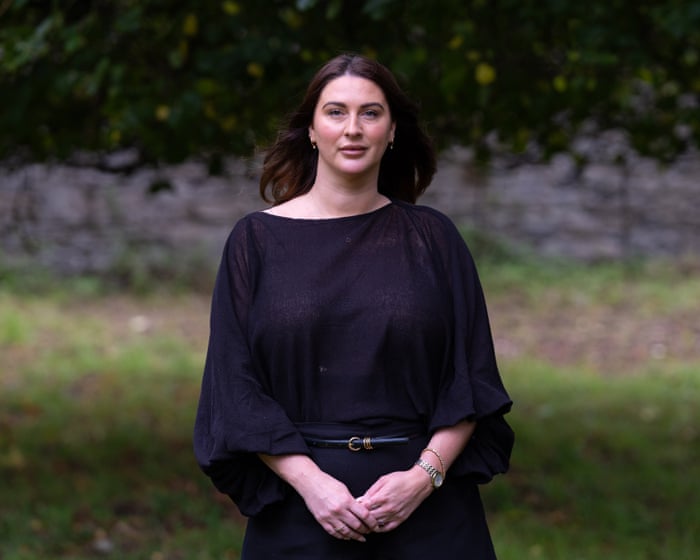
‘I wanted to change the stigma’: Nikita Hand on winning a civil rape case against Conor McGregor

The popularity of Hand’s book Not the Perfect Victim is the latest twist in a story that puts the spotlight on how society responds to sexual assault allegations

Nikita Hand had a compelling reason to not pursue a civil rape case against Conor McGregor. She was, in her own view, an imperfect victim.

The day of the assault, she had been partying with alcohol and cocaine before contacting McGregor, who took her to a Dublin hotel.

Continue reading...

© Photograph: Patrick Bolger/The Guardian

© Photograph: Patrick Bolger/The Guardian

© Photograph: Patrick Bolger/The Guardian

  •  

The True Cost of Rape in America

The horrific story of Jane Doe and the Cornell Seven has spurred nationwide outrage and revived contentious debates around prevention and education. But one question is going unasked: Who really pays after a sexual assault? In terms of actual dollars and cents? The answer, Cosmopolitan finds, isn’t good:

Leah received an email from the first hospital. It was a bill for $3,338, including $663 for lab work and a pregnancy test she hadn’t asked for. She hadn’t been charged for the rape kit, but the price of just checking into the ER was $2,241. After her parents’ insurance was applied, she owed $451.06.

“I was so unbelievably angry,” she says. “I lost it. I was like, ‘You mean it cost me $450 to get raped?!’”

Most people don’t realize this care might not be covered, says Vega, who has worked as an emergency room nurse, emergency room director, and a SANE. But that’s actually common: KFF analyzed a sample of insurance claim data from 2016 to 2018 (the most up-to-date data KFF has) and found that 83 percent of women who received a sexual violence diagnosis were billed for treatment. Another analysis of emergency room department data from 2019 found that the average bill for sexual assault survivors was $3,551, according to the New England Journal of Medicine.

  •  

Her Rape Kit Had a DNA Match. In San Francisco, That’s Not Enough.

The San Francisco Police Department cleared 14 percent of rape cases last year—half the national rate. An investigation finds that rape kits get tested fast, only for cases to be quietly shelved. Often, the only thing standing “between a report and the shelf” is what’s known as a “pretext call,” a recorded phone conversation in which a survivor tries to extract an admission of guilt from their attacker (aka relives their trauma to do the police’s work for them):

She sat in a room at the SVU headquarters with [Sergeant Johnathan] Ng and a recorder. She dialed the man she alleged raped her. He didn’t pick up. She tried again. No answer.

“If we don’t get an admission, it’s a he-said, she-said thing,” she remembered Ng telling her.

Then, she said, he offered some unsolicited advice.

“He told me that I probably shouldn’t be hanging out with 55-year-old men,” she said.

  •  
❌