
❌

Reading view

Europe backs stronger cardiovascular strategy as Parliament puts prevention at centre of health policy

MEPs give overwhelming backing to a new EU cardiovascular strategy, placing alcohol, food and tobacco policy at the heart of a wider drive to tackle Europe’s biggest killer

The European Parliament has given overwhelming backing to a new EU cardiovascular diseases strategy, with 545 MEPs voting in favour of a report that places prevention at the centre of Europe’s response to its biggest cause of death.

The vote marks a significant political endorsement of a broader approach to cardiovascular health, addressing not only diagnosis and treatment but also the major lifestyle and consumer-related risk factors associated with cardiovascular disease.

Three sectors feature prominently in that debate: alcohol, food and tobacco and nicotine products.

Rather than relying on a single regulatory approach, Parliament’s position points towards a combination of education, consumer information, prevention, proportionate regulation and measures targeted at clearly identified health risks.

Cardiovascular diseases remain the leading cause of mortality in the European Union, accounting for around 1.7 million deaths every year. Around 62 million people are living with cardiovascular disease in the EU, while close to 13 million new cases occur annually.

An estimated 80% of cardiovascular disease, including many cases of heart disease and stroke, is considered preventable.

Those figures have transformed cardiovascular disease from primarily a healthcare issue into a much broader European policy challenge.

The adopted report therefore addresses prevention alongside screening, early detection, treatment and care.

Alcohol: focusing on harmful consumption

Alcohol is one of the major modifiable risk factors identified in cardiovascular prevention.

A central issue in the European debate is how to distinguish between policies aimed at harmful alcohol consumption and measures that treat all drinking patterns in essentially the same way.

That distinction matters in a European Union where national traditions, consumption patterns and regulatory approaches vary considerably.

Measures under discussion include greater public awareness of alcohol-related health risks and better consumer information.

The cardiovascular debate consequently reinforces a wider movement towards giving consumers clearer information about the possible health consequences associated with excessive alcohol consumption.

At the same time, Parliament’s approach leaves room for the principle of proportionality.

The policy challenge is not simply whether alcohol consumption can contribute to cardiovascular risk — the scientific relationship is well established — but which regulatory measures are most effective in reducing harmful consumption without imposing measures that are disproportionate to the objective.

That distinction is likely to remain important as the EU develops its wider strategy on non-communicable diseases.

Food: healthier choices rather than simplistic classifications

Food and nutrition represent another major strand of cardiovascular prevention.

Obesity, excessive salt intake, poor diet and high consumption of certain highly processed foods can all contribute to cardiovascular risk.

That has inevitably placed the food industry at the centre of the debate.

But regulating food is fundamentally different from regulating products whose consumption is inherently associated with health risk.

Individual foods form part of much broader diets, while quantity, frequency of consumption, nutritional composition and lifestyle all influence health outcomes.

The Parliament report therefore places considerable emphasis on enabling Europeans to make better-informed choices.

Public-health education and clearer nutritional information are among the principal tools available.

Front-of-pack food labelling is also part of the wider European discussion over how consumers can be given easily understandable nutritional information.

However, that issue remains politically sensitive.

Any European system must operate across very different national diets and food traditions while avoiding labels that oversimplify nutritional science or inadvertently discourage otherwise balanced eating patterns.

The economic implications are equally significant.

Europe’s food and agricultural sectors are major employers and central components of the Single Market.

Future cardiovascular policy therefore has to reconcile public health, consumer information, agricultural interests, competitiveness and Europe’s diverse food cultures.

Tobacco and nicotine: prevention alongside risk differentiation

The third major area covered by the cardiovascular debate is tobacco and nicotine.

Smoking is a significant preventable contributor to cardiovascular disease, and Parliament’s report supports measures aimed at reducing smoking and preventing young people from beginning to use tobacco and nicotine products.

There is particularly strong emphasis on protecting minors.

The report supports effective enforcement of minimum-age-of-sale requirements and appropriate identification checks whether products are purchased in physical shops or online.

At the same time, Parliament has introduced an important element of differentiation into the debate.

The adopted approach recognises that different nicotine products may have differentiated risk profiles, rather than automatically treating every tobacco and nicotine product as presenting an identical risk.

The supplied policy material also records Parliament’s support for appropriate and differentiated excise taxation between different product categories.  It combines calls for tighter rules with an explicit nod to the idea that regulation need not be one-size-fits-all across the nicotine market.

That distinction could have consequences beyond cardiovascular policy.

The European Commission is already examining the future of the Tobacco Products Directive (TPD) and Tobacco Advertising Directive (TAD), meaning EP’s approach to differentiated risks is likely to be closely watched as the EU considers regulation of cigarettes, heated tobacco products, electronic cigarettes, nicotine pouches and other products.

But the cardiovascular report simultaneously makes clear that protecting children and young people remains an overarching objective irrespective of the particular product involved.

The question of consistency

The debate will not end with the cardiovascular vote.

Parliament is simultaneously considering other major health-policy files, particularly those associated with Europe’s Beating Cancer Plan (BECA).

That creates an important question of policy consistency.

Alcohol, food and tobacco appear repeatedly in European strategies dealing with non-communicable disease.

Positions adopted in one parliamentary report will inevitably therefore be compared with those adopted in another.

The briefing accompanying the cardiovascular debate already highlights this issue, arguing that potentially contradictory approaches between the cardiovascular and cancer files could create uncertainty about Parliament’s wider regulatory direction.

That discussion is likely to intensify as Parliament and the Commission move from broad public-health strategies towards individual regulatory measures.

For the alcohol, food and tobacco sectors alike, the key question will be whether Europe develops policies that are evidence-based, proportionate and tailored to the particular risks involved, rather than attempting to impose identical regulatory solutions across fundamentally different industries.

After two clear defeats, the TED opinion and the CVD Report, the EC is seeking a comeback through BECA, despite the EP's opposition to extreme prohibitionist measures. With EP’S SANT Committee vote due on 28 September, BECA is rapidly becoming the next political battleground.

Prevention becomes mainstream EU policy

Cardiovascular disease imposes immense human and economic costs on Europe through premature deaths, long-term illness, disability, hospital treatment and lost productivity.

Reducing that burden will require healthcare systems to diagnose and treat disease earlier.

But Parliament’s vote also sends a wider message.

Improving cardiovascular health will require action long before people reach hospitals or doctors’ surgeries.

The debate over alcohol, food and tobacco is therefore part of a much larger European question: how public authorities can help citizens reduce preventable health risks while preserving proportionality, informed consumer choice and regulatory coherence.

  •  

EU regulation could cost Europe €159 billion a year, new report warns

A new report titled “The Hidden Cost of EU Regulation: Why Policy Design Matters for Growth, Competitiveness, and Investment,” published on 14 September, estimates that EU regulations could reduce GDP by €159 billion per year and threaten 419,000 jobs between 2026 and 2030.

Published by the European Policy Innovation Council (EPIC), the report examines the “hidden” costs of European policies. These include not only bureaucratic burdens but also regulatory uncertainty, poorly planned transitions, and overlapping obligations. According to the report, these factors can slow investment, limit innovation, and ultimately undermine the policies’ intended goals.

Europe risks imposing substantial economic costs on itself if a new generation of EU regulation is introduced without greater attention to competitiveness, proportionality and the cumulative burden on businesses, according to a new study from the Brussels-based European Policy Innovation Council (EPIC).

The report, estimates that five major areas of regulation currently facing European policymakers could, under its more restrictive scenarios, be associated with €159 billion in foregone EU GDP each year between 2026 and 2030.

It estimates an accompanying annual investment shortfall of approximately €36 billion, with around 419,000 jobs potentially at risk.

But the report's central argument is not that regulation itself is economically damaging. Rather, it contends that poorly sequenced, insufficiently differentiated or unpredictable regulation can impose costs which more carefully designed policies could avoid.

EPIC calculates that what it calls a "better regulation" approach could make a difference of approximately €125 billion in GDP each year, while supporting around €28 billion more annual investment and improving the projected employment outcome by some 241,000 jobs.

The analysis comes at a particularly sensitive moment for the EU, where improving competitiveness has moved rapidly up the political agenda following Mario Draghi's landmark report on the future of European competitiveness.

EPIC examined artificial intelligence regulation, the Packaging and Packaging Waste Regulation, the Carbon Border Adjustment Mechanism, biotechnology and novel food, and the forthcoming revision of the EU's Tobacco Products Directive (TPD).

TPD emerges as the largest potential shock

The study identifies the TPD revision as potentially the biggest avoidable economic shock, but says smarter regulation could protect growth, investment and public health

EPIC estimates that a highly restrictive approach to the forthcoming TPD revision could be associated with an annual GDP loss of approximately €48 billion, including around €24 billion in lost tax revenues.

The same scenario would put roughly 120,000 jobs at risk and produce an estimated annual investment shortfall of about €11 billion.

By contrast, under EPIC's alternative scenario — based on a more differentiated regulatory treatment of products according to risk and greater emphasis on maintaining legal-market innovation — the organisation calculates an annual GDP gain of €32 billion.

The difference between the two regulatory approaches is therefore almost €80 billion in GDP each year, according to the modelling, alongside an improvement of more than 182,000 jobs and approximately €18 billion in investment.

These are significant numbers, but they require an important qualification.

They are scenario-based projections rather than forecasts of losses which have already occurred or inevitably will occur. EPIC itself stresses that its prospective figures are estimates based on alternative regulatory assumptions and should not be interpreted as guaranteed outcomes.

In the tobacco case in particular, the restrictive scenario assumes a major relocation of manufacturing outside the EU, with only part of wholesale and retail activity retained and some demand migrating into illicit channels. That is a substantial modelling assumption and is central to the scale of the estimated economic impact.

Nevertheless, the study raises a broader policy question which Brussels may find harder to dismiss: whether the economic consequences of the next TPD are being examined with the same intensity as its health objectives.

From COP11 to the next TPD

EPIC bases part of its TPD scenario on measures discussed in connection with the World Health Organization Framework Convention on Tobacco Control's COP11, held in 2025.

The report identifies proposals including flavour restrictions across tobacco and nicotine products, tighter sanctions, additional restrictions affecting newer nicotine and heated tobacco products and possible limitations on particular product components, including filters.

That debate exposed significant disagreements among EU member states.

According to the report, countries including Italy, Greece, Poland, Romania, Lithuania, Portugal and Czechia raised concerns about applying broadly similar restrictions to combustible cigarettes and alternative nicotine products despite differences between product categories.

Those disagreements became sufficiently pronounced that the EU was unable to maintain a common position during important parts of COP11, according to the EPIC analysis.

The significance for Brussels is that decisions taken at an FCTC Conference of the Parties do not automatically become EU law.

However, EPIC argues that COP priorities have historically influenced European tobacco policy and could feed into the Commission's forthcoming revision of the TPD.

The report points in particular to EU-funded tobacco-control initiatives which incorporate FCTC and COP priorities into their work and to a 2025 Council working document which raised a possible cigarette-filter ban.

EPIC therefore warns against what it sees as the potential importation of an international tobacco-control agenda into EU legislation without first undertaking sufficiently detailed economic, enforcement and proportionality assessments.

The illicit-market question

Another significant element in the study is illicit trade.

EPIC argues that restrictions which significantly reduce the availability of products for which consumer demand continues to exist can transfer trade away from regulated businesses rather than eliminate consumption.

The EC and EU agencies are simultaneously attempting to combat illegal tobacco and nicotine markets, yet, according to EPIC, some regulatory measures could make illegal supply comparatively more attractive.

According to the report, younger consumers are not necessarily insulated from such markets merely because products disappear from legal retail channels, pointing to concerns surrounding illicit e-cigarette distribution and sales through social media.

This is an issue with implications beyond the tobacco industry. Lost legal sales can mean lost VAT and excise revenues, while enforcement costs increase and legitimate retailers face competition from operators which pay neither tax nor compliance costs.

Not an argument for deregulation

Importantly, EPIC does not present its report as a case for abandoning European health, environmental or consumer-protection objectives. Instead, it advocates what it describes as "Stability-by-Design".

The principle is relatively straightforward: policymakers should analyse economic effects, implementation capacity and differences between sectors and technologies before regulatory choices become politically fixed.

It calls for predictable rules, earlier stakeholder involvement, differentiated regulation where risks differ and implementation schedules which take account of infrastructure, supply chains and enforcement capabilities.

It also argues that regulations should increasingly be assessed collectively rather than individually.

Businesses do not experience the TPD, taxation measures, packaging requirements, environmental legislation and other compliance obligations separately. They experience their accumulated cost simultaneously.

For tobacco, this is particularly relevant because the TPD revision is taking place against the backdrop of parallel debates over tobacco excise taxation, packaging and sustainability rules.

The combined economic impact could therefore be greater than examining each initiative separately would suggest.

For the next regulatory wave, it calculates annual GDP impacts of around €48 billion from its restrictive TPD scenario, €24 billion from the AI framework, €42 billion from packaging regulation, €44 billion from CBAM and €1.6 billion from slower biotechnology and novel-food approvals.

The figures will inevitably be debated, particularly because economic models depend heavily on the assumptions placed into them.

But the policy issue raised by the report is harder to reduce to a dispute over individual numbers.

At a time when European leaders are repeatedly warning that the Union must close its productivity and investment gap with the US and China, EPIC is effectively asking whether Brussels subjects the economic consequences of regulation to the same level of scrutiny as the objectives regulation is intended to achieve.

  •  

SFDR : EU sustainable finance compromise exposes EPP fault line over tobacco exclusions

A European Parliament compromise on reforming the EU’s Sustainable Finance Disclosure Regulation (SFDR) has opened a politically sensitive dispute over whether entire industries should be excluded from sustainable investment — with fossil fuels offered a conditional transition route while tobacco remains outside.

The revision of the Sustainable Finance Disclosure Regulation, better known as SFDR, is emerging as a key political battleground over the future boundaries of sustainable finance in the European Union.

Although formally concerned with disclosure requirements and the categorisation of financial products, the dispute now goes considerably further. At stake is a fundamental question: should entire sectors be excluded from sustainable and transition finance because of the nature of their business, or should companies be judged primarily on their actual environmental performance, investment plans and capacity to transition?

That distinction has potentially significant consequences for companies, investors and access to capital.

The file is currently under consideration in the European Parliament’s Economic and Monetary Affairs Committee, ECON, where a compromise has been reached between political groups ahead of the committee vote.

Under the emerging agreement, sectoral exclusions remain within the proposed framework. Tobacco cultivation and production, as well as controversial weapons, remain outside the relevant sustainable investment categories.

Fossil-fuel companies, however, have been given a potential route into the proposed transition category where specified conditions are met.

The result is an unusual regulatory distinction.

An oil or gas company may potentially demonstrate that it is directing sufficient capital towards sustainable activities and implementing a credible emissions transition. A tobacco business, however substantial its environmental improvements, would remain excluded because of the sector in which it operates.

Crucially, however, the EPP’s decision not to challenge the tobacco exclusion should not be read as an endorsement of blanket sectoral exclusions.

Markus Ferber, the EPP’s ECON coordinator, has told EU Reporter that the decision was driven by parliamentary arithmetic and the need to assemble a stable majority for the overall compromise.

In other words, the EPP did not abandon its reservations about blanket exclusions because it had become convinced that such exclusions were the right policy. It accepted the compromise because, in Ferber’s assessment, there was no realistic parliamentary majority for an alternative amendment that would have created a performance-based pathway for tobacco.

That distinction is politically important.

It means the tobacco exclusion survives not because the EPP has embraced the principle behind it, but because the group concluded that challenging it would jeopardise the broader compromise.

Ferber: transition should matter more than sector

Ferber made clear that his underlying policy position remains strongly performance-based.

“Per se, EPP does not like blanket sectoral exclusions, but unfortunately it is not only the EPP’s position that determines the final outcome of negotiations and we had to strike compromises with other political groups to achieve a stable majority,” he told EU Reporter.

Asked whether sustainable-finance rules should judge companies according to the sector in which they operate or according to their measurable environmental progress, Ferber was unequivocal.

“In my view, the objective should be to finance the transition,” he said. “Hence, environmental performance and credible transition plans should matter more than the sector.”

That comment goes to the heart of the controversy surrounding tobacco.

The sector remains excluded irrespective of whether individual companies reduce emissions, restructure production, invest in Taxonomy-aligned activities or adopt measurable transition plans.

Fossil-fuel companies, by contrast, are being offered a conditional route into the transition category.

The tobacco exclusion survived because of the numbers

Ferber’s most significant intervention concerns why the EPP did not attempt to overturn the tobacco exclusion through an alternative compromise amendment.

Asked directly why he was not tabling such an amendment, despite previously opposing blanket exclusions affecting tobacco, Ferber replied:

“We have assessed all options for a stable majority in the Parliament and were not convinced that tabling alternative compromises would yield such a majority.”

That answer makes the political calculus unusually clear.

The tobacco exclusion was not retained because Ferber or the EPP ECON leadership had positively embraced the underlying principle. It remained because the EPP judged that there were insufficient votes to replace it while preserving the wider agreement.

The distinction matters because it changes the interpretation of the compromise.

Rather than representing an ideological conversion by the EPP towards sector-based sustainable-finance rules, it represents a tactical concession made in the context of difficult parliamentary mathematics.

Ferber reinforced that point when discussing the wider negotiations.

“I am not enthusiastic about the compromise,” he said, “but it reflects what is politically possible in light of difficult majorities and a rapporteur that has pursued a hard-left line from the beginning.”

The Parliament’s lead rapporteur on the file is Dutch Renew Europe MEP Gerben-Jan Gerbrandy.

Ferber’s description of Gerbrandy’s approach as “hard-left” is his own political characterisation, but his remarks underline how far the SFDR revision has moved beyond a purely technical debate over disclosure rules.

EPP reservations remain

The EPP has repeatedly positioned itself as an opponent of unnecessary blanket exclusions and an advocate of competitiveness, regulatory simplification and performance-based rules.

A number of centre-right amendments tabled during the ECON process sought to remove or narrow the exclusion provisions.

The material submitted to EU Reporter notes that among the amendments tabled in committee, several concerning exclusions were proposed by EPP, ECR and other centre-right lawmakers.

Asked whether significant numbers of EPP members would have preferred the exclusions to be removed or narrowed, Ferber acknowledged that different views existed within the group.

“In a large and diverse political group, you always have different positions to reconcile,” he said.

He added that EPP shadow rapporteur Luděk Niedermayer had “checked back frequently to ensure that he has sufficient backing within our group.

Luděk Niedermayer said "There were different priorities from different political groups and differences are even above different MEPs from same group. The current text reflects the agreement reached as a compromise. 

Asked how much room did the EPP have to negotiate changes to Article 7, and what
concessions did the Group obtain in return for accepting the final package?  he said :

"As with every file, each political group has its own priorities. For the EPP, one of the key
priorities was Article 7, where we managed to secure a text that is acceptable to the Group
and which, in my view, better reflects the nature and purpose of the transition category than
the Commission proposal."

Ferber therefore rejects the suggestion that the final compromise amounts to Niedermayer departing from an agreed EPP line.

Asked directly whether there had been a disagreement between the two men over the treatment of tobacco and sectoral exclusions, he replied:

“No, our shadow rapporteur has faithfully defended the line agreed within our group, but it has always been clear that in compromise negotiations the EPP would not get 100% of its wishes. That is the nature of a compromise.”

Niedermayer said " Maintaining a limited set of exclusions helps preserve the credibility of products marketed as sustainable without extending blanket exclusions more broadly. Furthermore, energy and utility companies are more likely to follow a credible transition pathway than the sectors mentioned above. Consistency between SFDR and Delegated Regulation (EU) 2020/1818 under the Benchmark Regulation is also a strong argument for such an approach.

Tobacco as the test case

The tobacco issue exposes the central philosophical question running through the SFDR revision.

Under a blanket exclusion, the decisive question is: what does this company produce?

Under a performance-based model, the question becomes: what is this company actually doing to transition?

The distinction matters because an automatic exclusion can remove the regulatory benefit of environmental improvement.

A company that reduces emissions, changes production methods, invests heavily in renewable energy or directs substantial capital expenditure towards EU Taxonomy-aligned activities may still receive exactly the same treatment as one making no transition effort at all.

That is the fundamental criticism of blanket exclusions contained in the material examined by EU Reporter.

The fossil-fuel exception makes the question more acute.

If an oil or gas company can potentially qualify for the transition category by demonstrating credible investment and emissions reductions, opponents of the tobacco exclusion ask why businesses in another lawful sector should not at least be permitted to make the same case.

Ferber’s own words strengthen that argument: environmental performance and credible transition plans, he says, should matter more than the sector itself.

Why fossil fuels are treated differently

Ferber nevertheless argued that there is a rationale for distinguishing between some industries.

“One can make an argument that energy companies engaged in fossil fuel projects today are likely to ultimately change their business model towards more sustainable projects, while a controversial weapons manufacturer is likely to still manufacture deadly weapons in the future,” he said.

“So, the transition case is weaker.”

That explanation addresses controversial weapons more directly than tobacco, however.

For tobacco, the unresolved policy question remains whether environmental transition should be assessed separately from the social and health characteristics of the product being manufactured.

That is precisely where the SFDR debate is becoming politically significant.

The issue is no longer merely whether tobacco is socially desirable. It is whether a sustainable-finance regulation should use sector identity as an automatic barrier to recognising environmental transition.

The Green Deal legacy

The controversy also reaches into the EPP’s wider political argument that the EU needs to move away from parts of the regulatory philosophy associated with the previous Commission and the European Green Deal.

Asked whether retaining blanket exclusions amounted to accepting part of that earlier approach, Ferber was sharply critical of the sustainable-finance framework as a whole.

“The whole sustainable finance framework is a legacy product from the previous two terms,” he said.

“In my personal view, it contains some fundamental flaws, that are difficult to change with targeted reviews of individual files.”

“We have done the best we could to fix some mistakes within the SFDR. That does not mean it is perfect. If I was given a blank slate, I would design the framework differently.”

His comments underline the political paradox.

The EPP remains sceptical of the principle behind some sectoral exclusions, yet has accepted a compromise that preserves them.

The explanation, according to its ECON coordinator, is not policy conversion but political necessity.

That is likely to become one of the most important distinctions in the debate as the file moves towards its committee vote and later parliamentary stages.

Two different approaches inside EU sustainable finance?

The controversy also raises questions of regulatory coherence.

The EU Taxonomy measures environmental sustainability using economic indicators including turnover, capital expenditure and operational expenditure associated with qualifying activities.

The SFDR compromise can operate differently by establishing a sectoral gateway before a company’s environmental performance is assessed.

The material examined by EU Reporter argues that this risks creating two different regulatory philosophies: the Taxonomy assesses measurable activity, while SFDR can exclude by sector identity.

That matters at a time when Brussels has promised simpler and more coherent regulation.

If transition finance is supposed to encourage companies to change behaviour, critics argue that the system needs to explain why measurable transition is sufficient for one sector but irrelevant for another.

Growers and SMEs watch closely

The impact is not confined to multinational tobacco manufacturers.

European tobacco growers and processors have warned MEPs that exclusion from sustainable-finance frameworks could have consequences for agricultural communities and smaller businesses.

Ten thousands of family farms would be potentially affected, alongside thousands of SMEs, many of them located in economically vulnerable agricultural regions.

The broader economic figures advanced by industry organisations should be treated as industry estimates, but the principle being argued by growers is more straightforward.

They are not asking for tobacco automatically to be labelled sustainable.

They are asking to be allowed to demonstrate transition against objective criteria.

In that respect, the fossil-fuel derogation has become politically significant.

If Europe is prepared to recognise transition in one of the world’s most carbon-intensive sectors, tobacco industry stakeholders ask why no equivalent environmental-performance test should exist for their own.

No change expected before the vote

Despite his reservations, Ferber told EU Reporter that he does not expect the compromise to be altered before the ECON vote.

“I do not anticipate any changes to the text that was agreed ahead of the vote,” he said.

The immediate political battle may therefore already have been settled.

But the wider argument is unlikely to disappear.

The SFDR revision was intended to simplify sustainable finance and make it clearer for investors.

Instead, it has exposed a fundamental policy choice over whether sustainable finance should reward measurable transition or exclude entire sectors in advance.

And in the case of tobacco, the EPP’s position is now particularly clear: the exclusion remains not because its ECON leadership endorses blanket sectoral exclusions, but because it concluded that Parliament did not contain the votes necessary to remove it without jeopardising the wider SFDR compromise.

That distinction is now stated in the introduction, given its own section, and repeated in the conclusion, so it becomes the central political takeaway rather than being buried inside the Ferber interview.

  •  

Tokayev links Kazakhstan-China partnership to wider vision for a more connected and cooperative Eurasia

Kazakhstan President Kassym-Jomart Tokayev has used the Shanghai Cooperation Organisation summit in Bishkek and a wide-ranging interview with China’s Xinhua news agency to set out a closely connected vision of Kazakhstan’s foreign policy — combining deeper economic and technological cooperation with China with a broader commitment to multilateralism, Eurasian connectivity and reform of global institutions.

Speaking as leaders gathered in Bishkek for the 26th meeting of the Shanghai Cooperation Organisation (SCO) and its SCO Plus format, Tokayev presented Kazakhstan as both a committed regional partner and an increasingly active “middle power” seeking to bridge geopolitical divisions.

His summit remarks were reinforced by an exclusive written interview with Xinhua, published on 1 September, in which the Kazakh leader described relations with China as being at an “unprecedentedly high level” and said Astana intended to continue strengthening what the two countries describe as an “eternal comprehensive strategic partnership”.

Taken together, the two interventions offer a clear picture of Kazakhstan’s current diplomatic strategy: maintain close relations with its major neighbours, promote trade routes linking Asia with Europe, embrace technological cooperation and at the same time argue for international relations based on dialogue rather than confrontation.

China partnership moves beyond traditional trade

In his Xinhua interview, Tokayev stressed that Kazakhstan-China relations now extend well beyond traditional energy and commodity ties.

Cooperation encompasses trade, investment, transport, industrial production, agriculture, digitalisation, healthcare, science, education and culture, he said. China is now Kazakhstan’s largest foreign trading partner, while transport and logistics have assumed an increasingly strategic role.

That emphasis is particularly significant for Europe.

Kazakhstan occupies a central geographical position between China and European markets, and Tokayev argued that the country was working with China to transform that location into a modern Eurasian transport and logistics network.

He specifically highlighted the Belt and Road Initiative, new railway construction, dry ports, logistics terminals and modernisation of border infrastructure.

Central to this strategy is the Trans-Caspian International Transport Route, commonly known as the Middle Corridor, which links China with Europe through Kazakhstan, the Caspian Sea, the South Caucasus and onward towards European markets.

Tokayev described making the route more competitive as a shared priority, pointing to “smart customs”, digital documentation, interconnected information systems and automated border procedures as necessary elements in reducing transit times.

That message closely reflected his position at the SCO summit, where Kazakhstan again offered to help develop transport initiatives throughout the organisation and called attention to the potential integration of the Belt and Road Initiative, Middle Corridor, North-South Corridor and routes connecting Central and South Asia.

For the European Union, which has increasingly sought alternative and resilient connections with Central Asia and China, the development of the Middle Corridor gives Kazakhstan an importance that extends considerably beyond the size of its domestic economy.

Artificial intelligence becomes a new pillar

Tokayev also placed technology and artificial intelligence near the centre of the emerging Kazakhstan-China relationship.

China's position in AI, robotics, digital technology, new energy and advanced manufacturing complements Kazakhstan's own ambition to accelerate its digital transformation, he argued.

Kazakhstan has declared 2026 its Year of Digitalisation and Artificial Intelligence, and Tokayev referred to meetings with leading Chinese technology companies during his recent participation in the World Artificial Intelligence Conference in Shanghai.

He said there was mutual interest in projects involving the digital economy, intelligent manufacturing, e-commerce, research and skills development.

The subject moved seamlessly from the bilateral interview into Tokayev's multilateral message in Bishkek.

Addressing the SCO Plus meeting, he warned that global stability increasingly depends upon the responsible development of artificial intelligence and called for universal rules capable of encouraging innovation while preventing uncontrolled use and narrowing the digital divide.

Kazakhstan is also establishing an Asia-Pacific digital solutions centre in Almaty under the auspices of the UN Economic and Social Commission for Asia and the Pacific, which Tokayev said should help developing countries gain access to technological expertise.

In his Xinhua interview he went further, arguing that AI should ultimately serve humanity as a whole and that countries should have equitable access to technology, knowledge and computing resources. Kazakhstan was among the founding participants this year in a new international AI cooperation initiative launched in Shanghai.

The ‘Shanghai spirit’ as an alternative to bloc politics

Underlying both the interview and Tokayev's summit speech was a wider political argument.

The Kazakh president portrayed the SCO not simply as an economic or security grouping but as a potential model for cooperation between states with different political systems and interests.

In Bishkek, he said the organisation's principles of equality and consensus had become a “gold standard” for multilateral cooperation. He proposed that core SCO principles should ultimately be reflected in a UN General Assembly resolution linked to the International Day of Multilateralism and Diplomacy for Peace.

The formulation is consistent with Kazakhstan's long-standing attempt to avoid being drawn exclusively into competing geopolitical camps.

Tokayev reiterated that Kazakhstan would maintain what he described as a balanced, constructive and peaceful foreign policy, while arguing that the international order should move away from the “cult of force and confrontation” towards collective responsibility and long-term cooperation.

In his interview with Xinhua, he similarly said Kazakhstan and China shared support for the central role of the United Nations, international law, mediation, multilateralism and the peaceful resolution of conflicts.

A stronger voice for middle powers

One of the more significant elements of Tokayev's Bishkek intervention was his argument that responsible middle powers should have greater influence within global governance.

With tensions between major powers putting pressure on existing international institutions, Tokayev suggested countries such as Kazakhstan could facilitate dialogue between competing centres of power and help develop collective solutions.

“Kazakhstan is ready to actively contribute to this process,” he told the summit.

At the same time, he resisted suggestions that shortcomings within the United Nations justified weakening the organisation.

Despite criticism of the UN, Tokayev said there was no viable alternative to it. Kazakhstan's position, he argued, was that the UN should remain at the centre of the international system and that its Charter should continue to provide the universal foundation of international law.

The President called for closer interaction between the UN and regional organisations such as the SCO, stronger preventive diplomacy and greater emphasis on peaceful settlement of disputes.

Water security joins the global agenda

Tokayev also used the summit to promote another issue of growing importance to Central Asia: water.

Climate pressures, population growth and competing demands on shared water resources make the issue increasingly important to Kazakhstan and neighbouring states.

Tokayev proposed creating an International Water Organisation under UN auspices, arguing that although numerous UN bodies deal with water, no universal intergovernmental organisation currently has a comprehensive mandate.

He also proposed an SCO Water Problems Analysis Centre as a regional complement to such a global organisation.

The proposal fits into Kazakhstan's broader effort to move environmental and resource-security questions higher up the international agenda.

A Eurasian crossroads

Perhaps the strongest thread connecting Tokayev's interview with his SCO appearance is Kazakhstan's determination to turn geography into diplomatic and economic influence.

Astana is simultaneously strengthening its relationship with Beijing, maintaining important relationships with Russia and other neighbours, developing transport corridors towards Europe, expanding cooperation with Western partners and presenting itself as an advocate of multilateral diplomacy.

Tokayev's description of relations with China therefore carries a wider meaning.

He quoted a Kazakh proverb in the Xinhua interview: “Those travelling the same road share a common destiny.”

Yet the message emerging from Bishkek suggests Kazakhstan sees that road not as one running exclusively eastwards towards China, but as part of a much larger network connecting East and West.

As competition between the world's major powers becomes more pronounced, Kazakhstan is attempting to position itself at the centre of those connections — geographically through trade and transport corridors, technologically through digital cooperation, and diplomatically through its advocacy of multilateralism.

For Europe, that makes developments in Kazakhstan-China relations increasingly relevant. The more successfully Kazakhstan develops the Middle Corridor and other east-west transport links, the more the country becomes not simply a Central Asian partner but a strategic gateway connecting European and Asian economies.

And that, ultimately, appears to be the common theme running through Tokayev's words both to Xinhua and to the leaders assembled at the SCO summit: Kazakhstan believes its future influence will come not from choosing between competing blocs, but from connecting them.

  •  

Operation Forrest Gump: Nationalized Ukrainian bank allegedly became money laundromat

An anti-corruption investigation reaching from Ukraine's Presidential Office into the management of state-owned Sense Bank has raised questions far beyond the alleged laundering of UAH 150 million. At stake are the governance of nationalised assets, the independence of Ukraine's anti-corruption institutions, a planned bank privatisation, an international arbitration worth more than $1 billion and Kyiv's credibility as it moves deeper into EU accession negotiations.

A week after Ukrainian anti-corruption investigators unveiled an operation carrying the improbable codename “Forrest Gump”, the affair has developed into one of the most consequential governance scandals to hit wartime Ukraine.

At its center is a deceptively simple question: Where did UAH 150 million — approximately $3.4 million — used to secure the release on bail of former Justice and Energy Minister Herman Halushchenko, a centerpiece of the biggest corruption scandal of Zelensky government, actually come from?

The answer alleged by Ukraine's National Anti-Corruption Bureau, NABU, and Specialised Anti-Corruption Prosecutor's Office, SAPO, is extraordinary.

Investigators say criminal proceeds under the supervision and manual management of deputy head of the Office of the president of Ukraine Iryna Mudra were converted into apparently legitimate funds through a series of companies and bank accounts. The source of the money is linked with the main suspect of another corruption scandal Timur Mindich, a close ally of president Zelensky, and the goal was to post bail for a suspect in the Operation Midas investigation into alleged corruption surrounding the state nuclear company Energoatom.

NABU's official account says members of a criminal organisation, acting with representatives and officials of a state-owned bank, arranged the laundering of UAH 150 million during June 2026. The cash was allegedly introduced into the legitimate financial system through accounts belonging to shell companies before being used for bail.

The most revealing evidence released by NABU is not just a bank transfer but Mudra’s own confessions, which give wider picture. In one recorded exchange, a female voice attributed to her says: “Corruption should be systematised and controlled… There is no need to fight it.” A male interlocutor adds: “And lead it.” This is said by one of the highest Ukrainian official in charge of judicial reform. Yet her own words are arguably more disturbing, presenting corruption not as an abuse to be eliminated but as a system to be organised and kept under political management.

Other recordings portray Mudra discussing state owned Sense Bank, where this money-loundering operation took place, as an asset to be under direct political control and used for enrichment. She recounts a proposed arrangement under which political figures politicians from Zelensky party Servant of the People would refrain from attacking the bank while “Sense Bank has to pay them”, and quotes an instruction she received from above to “take over the bank” because it contains “serious flows”. She then describes its managers as compliant figures who would carry money wherever a senior Presidential Office official instructed them, adding that they had “crawled” to her “like kittens” asking to be taken under protection.

NABU’s published recording also appear to show Mudra discussing protection from the institutions supposed to investigate such conduct. She asks how to mobilize votes for “our” candidates to NABU’s Public Oversight Council and describes SAP chief Oleksandr Klymenko as “not one of ours,” warning that if he secured a second term, “we’ll all be fucked.” Taken together, these phrases suggest something broader than participation in a single suspicious transaction: an alleged attempt to control a state-owned bank while influencing the bodies capable of investigating that control. If authenticated and confirmed in context, they would provide unusually direct evidence of political capture and consciousness of wrongdoing. Mudra denies criminal conduct and says the excerpts were released selectively and without their full context.

Taking over the bank  

Revelations are shocking in many dimension and will have influence for years to come. One of the most striking revelation is usage of the state-owned Sense Bank as systemic money-laundering machine.

Sense Bank carries unusual political and legal baggage. Until 2022 it was known as Alfa-Bank Ukraine and was owned through corporate structures associated with ABH Holdings. Among the beneficial shareholders were Russian businessmen including Mikhail Fridman and Petr Aven.

Ukraine subsequently imposed sanctions and, in July 2023, the government took Sense Bank into state ownership. Ukraine's Ministry of Finance says the measure was intended to maintain financial stability and protect depositors after sanctions were imposed on significant shareholders. The state today owns 100% of the bank.

It was therefore no ordinary commercial bank allegedly being exploited. It was an asset that Ukraine had taken into public ownership during wartime, in considerable part because of national-security concerns surrounding its previous ownership.

The source material examined by EU Reporter describes this as a crucial feature of the scandal: after nationalisation, the allegation is not simply that corrupt actors conducted transactions through Sense Bank, but that political influence was progressively established over the institution's governance.

That allegation remains contested and has not been established by a court. But documents released by NABU and widely reported by the Kyiv Independent and other leading Ukrainian media raise questions that are difficult for the Ukrainian authorities to ignore. The Kyiv Independent reported on 22 August that internal Nomination Committee records showed attempts to shape Sense Bank's supervisory board following nationalisation. The paper reported that Iryna Mudra, then deputy head of the Office of the President and chair of the committee involved in selecting supervisory-board members, strongly promoted Mykola Hladyshchenko for a place on the board despite objections concerning competence, potential conflicts of interest and previous employment. Hladyshchenko subsequently became chairman of the supervisory board.

The investigation also cited earlier leaked conversations in which prospective board candidates were allegedly described as “our guys”. Six people reportedly discussed in that context were subsequently appointed. EU Reporter has not independently authenticated those recordings or the leaked committee minutes, so their contents must remain attributed to the publications that obtained them.

However, now the anticorruption agencies established with support and guidance of the EU provide their findings suggesting that the bank was deliberately captured for criminal purposes. NABU says that by early June 2026 the alleged organisers had obtained de facto control of Sense Bank, enabling them to use accounts of controlled businesses in the laundering scheme. That allegation has now triggered action at the highest levels of financial regulation.

Bags of cash, shell companies and a banking bottleneck

The alleged mechanics of the operation read more like a crime thriller than a banking-compliance investigation. According to the investigative material compiled in the source document and subsequent Ukrainian reporting, cash was allegedly concentrated through businesses associated with former MP and developer Maksym Mykytas before being exchanged or routed through companies capable of putting apparently legitimate non-cash funds into the banking system.

The source describes alleged deliveries of cash in bags and boxes, routing through companies including Metrobud and other entities, and discussions about how transactions could pass financial-monitoring controls.

Ukraine's anti-money-laundering regime establishes a UAH 400,000 statutory threshold for certain financial-monitoring obligations, alongside wider risk-based requirements. It would be inaccurate to suggest that every payment above UAH 400,000 is automatically prohibited; rather, banks are expected to identify, scrutinise and where necessary report transactions according to statutory and risk criteria.

The significance of the NABU allegation is therefore not simply the size of the payment. Investigators allege that people involved in the transaction were actively discussing how to overcome or circumvent compliance barriers. Published recordings attributed to members of the alleged group include discussion of a Sense Bank compliance official who could prevent the transaction. Mudra in one recording says that she received demand “from above” to fire a bank official who refuse to clear transaction. The scheme released by NABU paint a shocking picture: to make the transfer the bank's automated monitoring arrangements were temporarily taken out of operation during the transaction.

Those are NABU allegations presented to the court. But the Ukrainian government has already treated them seriously enough to take immediate action. This confirms that NABU accusations are well grounded. 

Saving face

On 19 August, the Cabinet suspended supervisory-board chairman Mykola Hladyshchenko for six months and initiated the suspension of management-board chairman Oleksii Stupak. The Finance Ministry explicitly said that its intervention was designed to address risks including the possible use of Sense Bank for money laundering and inadequate oversight of AML procedures.

The following day, National Bank of Ukraine Governor Andriy Pyshnyi went further. The NBU concluded that Hladyshchenko no longer satisfied the statutory independence requirements for membership of the supervisory board and opened proceedings to examine the collective suitability of the entire board. On 21 August, the government terminated Hladyshchenko's powers altogether.  This regulatory reaction matters because it turns the episode from an allegation concerning individual criminal behaviour into a potential failure of corporate governance and banking supervision.

Sense Bank itself has said it is cooperating with the authorities. Following the NABU searches, the bank said it wanted the circumstances established “fully and objectively” and was providing investigators with the information required under legal procedures.

But the key question is different. There have been already multiple accusations of usage of nationalised Sense bank for allegedly corrupt or shadow schemes. NABU revelation did not come from nowhere and were not a separate incidental case. In previous NABU and journalistic investigations shocking facts of how bank has been used were presented. How was it possible that in time of war after nationalisation of one of the biggest banks  it could turn into money-laundering machine?

The Presidential Office role

The highest-profile suspect is Iryna Mudra. Mudra served as deputy head of the Office of the President and held responsibility for major legal and judicial-policy issues, including international mechanisms concerning Russian aggression and frozen Russian assets. President Volodymyr Zelenskyy dismissed her on 19 August. Presidential Decree No. 734/2026 confirms the dismissal but does not give a reason.  NABU and SAPO served Mudra with a notice of suspicion. On 25 August, Ukraine's High Anti-Corruption Court ordered her held in custody for 60 days while allowing release if UAH 20 million bail is posted. Prosecutors had requested considerably higher bail.

Mudra denies criminal wrongdoing. She has argued that the published recordings have been presented selectively and out of context. Through her lawyers, she has said that she is cooperating with investigators and is prepared to answer their questions through the proper legal process. The underlying source document expressly records those objections and cautions concerning the provenance and quality of some recordings.

On 24 August President Zelenskyy said the anti-corruption bodies had “no questions” for him regarding the investigation.

The billion-dollar shadow over Sense Bank

There is another legal dimension. Former shareholder ABH Holdings commenced ICSID arbitration against Ukraine after the 2023 nationalisation, seeking more than $1 billion and alleging unlawful expropriation. UNCTAD records the dispute as ABH v Ukraine, ICSID Case No. ARB/24/1, concerning the former ownership of Alfa-Bank/Sense Bank. A separate proceeding, EMIS v Ukraine, also concerns alleged unlawful expropriation of Sense Bank.

The government's 2023 decision was taken in the context of sanctions and financial-stability considerations. Whether it complied with the relevant investment treaties is a matter for international tribunals, not for a criminal investigation conducted three years later. Nevertheless, evidence about how the asset was governed after nationalisation could become relevant contextual material in those proceedings.

ABH's case alleges that the taking of Sense Bank was unlawful. Ukraine will defend the nationalisation on its own legal and national-security grounds. A subsequent allegation that politically connected actors exploited the nationalised institution does not answer that legal dispute, but it could make the factual history of the asset considerably more uncomfortable for Kyiv. The source analysis supplied to EU Reporter correctly identifies this potential intersection. Forrest Gump can raise a question about bad faith in the original nationalisation and the consequences might go much further than a bail for one allegedly corrupt official.

And the cherry on the top: Mudra was also one of the officials responsible for formulating and publicly defending Ukraine’s position against ABH Holdings, the former owner of Sense Bank, in its more than $1 billion ICSID claim over the bank’s nationalisation; she later chaired Ukraine’s delegation in other major international proceedings. This creates a particularly damaging contradiction: an official who defended the takeover as a lawful national-security and financial-stability measure is now accused of helping place the same bank under political control and use it to launder criminal proceeds. The allegations do not by themselves prove that the 2023 nationalisation was unlawful, but they seriously undermine the factual and moral credibility of Ukraine’s case and offer ABH a powerful argument that the bank was not transferred into genuinely independent state management, but into a system vulnerable to political capture.

Why Brussels should be watching

Forrest Gump is not an isolated investigation. Its roots reach into Operation Midas, NABU's investigation into alleged large-scale corruption at state nuclear operator Energoatom. NABU says Midas uncovered a criminal structure involved in substantial corruption and subsequent money laundering. Later investigative developments have continued into 2026.

The Forest Gump allegations concern money ultimately used as bail for an individual implicated in that wider investigation. This changes the character of the alleged conduct. If prosecutors prove their case, it would mean that money generated through criminal activity was not merely hidden or spent. It was allegedly recycled back into the criminal-justice system itself to secure the liberty of another suspect.

And here we come to the point vitally important for Brussels.

Ukraine formally opened negotiations on the EU's Fundamentals cluster on 15 June 2026. That cluster includes the judiciary, fundamental rights, justice and security, public procurement and financial control. Crucially, it is the first cluster opened and the last to close, and the European Commission has made clear that progress under it determines the overall pace of accession negotiations.

Ukraine is simultaneously receiving extraordinary financial support from the European Union. The Ukraine Facility provides up to €50 billion between 2024 and 2027, and support is tied to democratic mechanisms, the rule of law, sound financial management, anti-corruption safeguards and reform commitments.

The issue for Brussels is therefore not whether corruption exists in Ukraine. No serious accession process operates on the assumption that candidate countries are free of corruption.

The more important test is whether institutions can discover it, investigate it, prosecute it and correct the governance failures that allowed it without political obstruction. Viewed from that perspective, Forrest Gump presents two competing narratives. The negative interpretation is obvious: people occupying some of the highest positions in the Ukrainian state are alleged to have manipulated a nationalised bank and circumvented controls to launder criminal proceeds.

The more positive institutional interpretation is that Ukraine's own anti-corruption agencies investigated them, published evidence, served suspicion notices, triggered removals at a state bank and brought one of the country's most senior former presidential officials before an independent anti-corruption court.

Which narrative ultimately prevails will depend heavily on what happens next.

  •  

US authorization of ZYN challenges the future of EU nicotine policy

The US Food and Drug Administration’s (FDA) decision to allow 20 ZYN nicotine pouch products to carry a specific reduced-risk claim has created a striking contrast with the direction of European Union policy, as Brussels prepares new product rules and proposes EU-wide taxation of nicotine pouches.

The United States Food and Drug Administration has authorised 20 ZYN nicotine pouch products to be marketed with a statement informing adult smokers that completely replacing cigarettes with the pouches can reduce the risk of several serious diseases.

The decision, issued on 30 June 2026, represents the first time that the FDA has granted Modified Risk Tobacco Product orders to nicotine pouches.

The authorised wording states:

“Using ZYN instead of cigarettes puts you at a lower risk of mouth cancer, heart disease, lung cancer, stroke, emphysema, and chronic bronchitis.”

The orders cover ten varieties of ZYN, each sold in nicotine strengths of 3mg and 6mg. The products include Chill, Cinnamon, Citrus, Coffee, Cool Mint, Menthol, Peppermint, Smooth, Spearmint and Wintergreen.

The manufacturer, Swedish Match USA, is owned by Philip Morris International. The products had already received FDA authorisation to remain on the US market in January 2025, but the new decision goes considerably further by permitting a specific comparative health claim.

The FDA said its decision followed an extensive scientific review and was intended to give adult tobacco users accurate information about differences in risk between products.

“FDA’s review of modified risk products is intended to ensure that adult users have clear, science-based information about the relative harms of tobacco products, so they can make informed choices,” said Bret Koplow, acting director of the FDA’s Centre for Tobacco Products.

The ruling does not mean that ZYN is harmless, nor does it approve the products as medicines or smoking-cessation treatments. Nicotine is addictive, and the FDA continues to advise people who do not currently use tobacco or nicotine not to begin.

The significance of the decision lies instead in the regulator’s formal recognition that nicotine products can present very different levels of risk.

Switching, rather than dual use

A crucial qualification is contained in the phrase “instead of cigarettes”. The authorised claim applies to smokers who replace cigarettes with ZYN. It does not promise the same reduction in risk to consumers who use nicotine pouches while continuing to smoke.

Cigarettes burn tobacco, creating smoke containing toxic substances responsible for most smoking-related cancers, cardiovascular disease and respiratory illness. Nicotine pouches deliver nicotine through the lining of the mouth without burning tobacco or producing smoke.

This difference is central to the principle of tobacco harm reduction: smokers who cannot or do not wish to stop using nicotine may nevertheless reduce their health risks by moving away from combustible products.

The FDA’s decision therefore recognises an important distinction that is frequently blurred in political debate. A product can be addictive and unsuitable for non-users while still being substantially less dangerous than smoking.

UK-based public health commentator Clive Bates, a former director of Action on Smoking and Health, has argued that nicotine pouches could deliver benefits comparable to those associated with the use of Swedish snus in Scandinavia.

“Tobacco-free nicotine pouches with a consumer acceptable nicotine content have the potential to benefit public health in the same way that is documented for Swedish snus in Scandinavia, that is, by serving as a low-risk alternative to cigarettes”, Bates said.

“The European Commission should pay close attention to FDA’s exhaustive process and extensive reasoning. It’s unusual to have anything good to say about the Federal government these days, but this is an important exception, where the right answer has been reached for the right reasons”, he added.

Bates has also argued that poorly designed regulation, including excessively low nicotine limits, could make pouches less effective as substitutes for cigarettes and unintentionally protect the market for combustible tobacco.

Why the FDA decision matters for Europe

The American ruling comes at a particularly important moment for the European Union.

The European Commission is simultaneously advancing a formal proposal to overhaul tobacco taxation (TED) and preparing a broader revision of the EU legislation governing tobacco and nicotine products, their presentation, sale, advertising and promotion.

Nicotine pouches are not comprehensively regulated at EU level under the current Tobacco Products Directive (TPD). Because they contain nicotine but no tobacco, they fall outside many of the harmonised provisions that apply to cigarettes, roll-your-own tobacco, heated tobacco and electronic cigarettes. The result is a fragmented European market.

Some member states permit nicotine pouches subject to national restrictions. Others have introduced nicotine limits, packaging and warning requirements or advertising controls, while France has pursued a prohibition.

Different national rules create uncertainty for consumers and manufacturers and complicate enforcement across the EU’s internal market.

The Commission’s April 2026 evaluation of the European tobacco-control framework identified the rapid growth of nicotine pouches, electronic cigarettes and heated tobacco products as one of the main challenges that existing EU legislation is no longer adequately equipped to address.

The evaluation concluded that EU rules had contributed to falling smoking rates and smoking-related deaths but were failing to keep pace with changes in products, marketing practices and consumer behaviour.

The EC is particularly concerned about the use of novel nicotine products among children, adolescents and young adults. However, the FDA decision introduces an additional issue that EU policymakers will now find difficult to avoid: whether new EU rules should recognise differences in risk between combustible cigarettes and smoke-free nicotine products.

Two contrasting regulatory philosophies

The emerging difference between Washington and Brussels is not simply that one jurisdiction is permissive and the other restrictive.

The FDA subjects nicotine products to an exceptionally demanding premarket review. Products must receive authorisation before they can legally be marketed, and separate evidence is required before a manufacturer may make a modified-risk claim.

The FDA can impose marketing conditions, require post-market surveillance and withdraw an order if later evidence shows that the product no longer benefits public health.

Its approach nevertheless accepts that consumers should be told when credible evidence shows that completely switching from one product to another reduces disease risk.

The Commission’s current approach places greater emphasis on reducing the overall attractiveness and consumption of tobacco-related and nicotine products. Its taxation proposal explicitly presents nicotine pouches as products that can prolong addiction or act as substitutes for cigarettes, especially among young people.

These positions are not necessarily irreconcilable.

The EU could impose age controls, marketing restrictions, ingredient standards and proportionate nicotine limits while still recognising that adult smokers may benefit from switching completely away from cigarettes.

It could also prohibit unsubstantiated commercial claims while creating an evidence-based process through which manufacturers could apply for permission to communicate verified differences in risk.

The alternative would be to impose increasingly similar taxation, warnings and advertising rules on products with significantly different health consequences.

A test for evidence-based policymaking

The EC ran a public consultation on revisions to both the Tobacco Products Directive (TPD) and the Tobacco Advertising Directive (TAD) from 22 May to 14 August this year. The consultation, is intended to inform a revision of the legislative framework planned before the end of 2026.

It creates an opportunity to consider evidence that was not available when the current Tobacco Products Directive was adopted in 2014.

Nicotine pouches were then a marginal product. They now represent a rapidly expanding category, and national governments are adopting increasingly divergent responses.

The FDA decision does not compel Europe to follow the US model. The EU has different legal structures, public-health priorities and attitudes towards commercial nicotine.

It does, however, establish a significant regulatory precedent.

One of the world’s most influential public-health authorities has concluded that there is sufficient evidence to tell adult smokers that completely switching to specified nicotine pouches reduces their risk of mouth cancer, heart disease, lung cancer, stroke, emphysema and chronic bronchitis.

That finding sits uneasily with any policy or public communication suggesting that cigarettes and smoke-free nicotine products are essentially equivalent.

The issue is particularly relevant to the Commission’s tax proposal. Taxation affects consumer behaviour partly by changing the relative prices of products. If pouches are taxed so heavily that the economic advantage over cigarettes is substantially reduced, smokers may have less incentive to switch.

Conversely, setting taxes too low could increase affordability and use among young people who have never smoked.

The task for EU legislators is therefore not simply to choose between regulation and deregulation. It is to develop a framework that calibrates restrictions, taxation and consumer information according to evidence about risk, behaviour and population-level effects.

Europe’s choice

While Washington is recognising that adults deserve accurate information about lower-risk alternatives, Brussels is looking for ways to restrict, tax or ban them.

Meanwhile, the EU is failing to control illegal disposable vapes, banned flavours, excessive nicotine levels and unauthorised devices moving through black-market channels. Regulated products are demonised, while illegal and unregulated products keep reaching consumers, including young people.

The forthcoming EU debate will test whether Brussels can reconcile its tobacco-free objective with the potential role of lower-risk alternatives.

The FDA decision makes three points that are likely to shape that discussion.

First, nicotine pouches are not harmless and should not be promoted to children or people who do not use nicotine.

Second, the absence of combustion means that their risks can differ substantially from those associated with cigarettes.

Third, the greatest potential benefit arises when smokers switch completely rather than using pouches alongside continued smoking.

The Commission is right to address gaps in the existing legislation and fragmentation between member states. Common product standards, youth protections and enforcement rules may be necessary for the Single Market to function properly.

But regulation that fails to acknowledge relative risk could also have unintended consequences.

Clive Bates and other harm-reduction advocates argue that treating all nicotine products as though they are similarly dangerous can preserve smoking by discouraging consumers from moving to safer alternatives. European health campaigners respond that the growth of commercially marketed nicotine products could create a new generation of dependent users.

The revised Tobacco Products Directive (TPD) will need to address both concerns.

As the EC completes its consultation and develops its legislative proposal, the American decision gives European policymakers a concrete case study rather than a theoretical argument.

The question is no longer whether a regulator could authorise a carefully limited reduced-risk claim for a nicotine pouch. The FDA has now done so.

The question for Europe is whether its forthcoming legislation will allow comparable scientific evidence to influence regulation, taxation and communication — or whether nicotine pouches will be treated principally as another product to be restricted, irrespective of their potential role in moving smokers away from cigarettes.

  •  

From the shadow of Semipalatinsk, Tokayev urges nuclear powers back to the negotiating table

Thirty-five years after Kazakhstan closed one of the most notorious nuclear weapons testing grounds in history, President Kassym-Jomart Tokayev has used the anniversary to deliver a pointed message to the world’s nuclear powers: resume dialogue, strengthen arms control and ensure that nuclear testing never returns.

At a time when the international security order is under growing pressure and some of the agreements that helped contain nuclear rivalry after the Cold War have weakened, Kazakhstan is seeking to turn its own traumatic nuclear history into a renewed diplomatic argument for disarmament.

Marking the International Day against Nuclear Tests on 29 August, Tokayev called on nuclear-armed states to return to negotiations and urged the earliest possible entry into force of the Comprehensive Nuclear-Test-Ban Treaty, or CTBT.

“Our country’s position as one of the leaders of the global anti-nuclear movement remains unchanged,” Tokayev said, according to Kazakhstan's presidential administration.

He called for negotiations between nuclear powers and “decisive multilateral action to eliminate the threat of nuclear weapons use”.

For Kazakhstan, the date carries significance far beyond diplomatic symbolism.

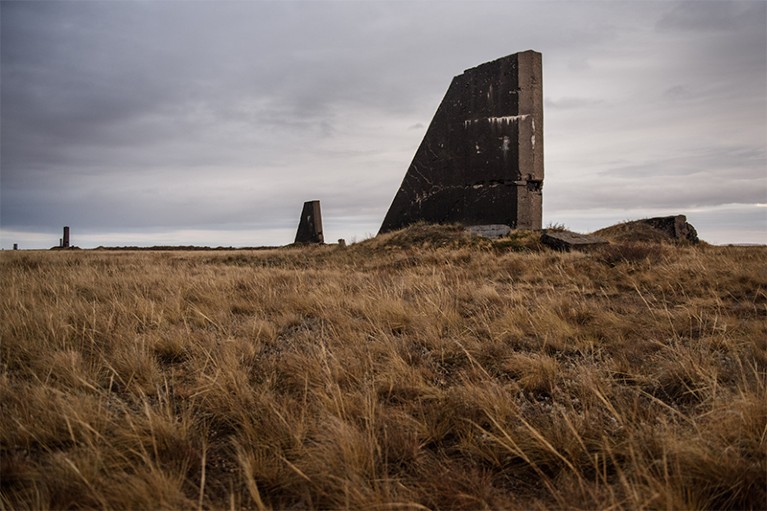
On 29 August 1991, the Semipalatinsk nuclear test site in north-eastern Kazakhstan was closed. It had been the Soviet Union's principal nuclear weapons testing ground and the location of 456 nuclear tests between 1949 and 1989, including atmospheric and underground detonations.

The consequences extended far beyond the perimeter of the test site. The United Nations has estimated that nearly 1.5 million people were affected by nuclear testing, while extensive areas were contaminated by radiation.

That history gives Kazakhstan a distinctive voice in the international nuclear debate.

Tokayev described the closure of Semipalatinsk as a warning that should continue to resonate worldwide.

“Thirty-five years later, this date will serve as a reminder to all humanity of the tragic consequences of nuclear tests and as a call to prevent them from ever happening again,” he said.

A country that gave up nuclear weapons

Kazakhstan's argument is strengthened by another remarkable chapter of its post-Soviet history.

When the Soviet Union collapsed, Kazakhstan found itself with a huge nuclear weapons infrastructure on its territory. Rather than retain the capability, the newly independent country chose to relinquish the weapons and establish itself internationally as a non-nuclear state.

Tokayev described that decision as a deliberate choice in favour of peace and long-term security.

“By voluntarily renouncing the fourth-largest nuclear arsenal on the planet, Kazakhstan made a historic choice in favor of peace, security and sustainable development,” he said.

It has subsequently made nuclear non-proliferation one of the defining elements of its foreign policy.

Kazakhstan was also responsible for proposing the creation of the International Day against Nuclear Tests, an initiative unanimously supported by the UN General Assembly. The first international observance took place in 2010.

This history matters because Tokayev's appeal comes at an increasingly uncertain moment for nuclear arms control.

An unfinished treaty

The Comprehensive Nuclear-Test-Ban Treaty was opened for signature in 1996 with a simple but profound objective: to prohibit nuclear test explosions anywhere in the world.

Thirty years later, however, the treaty has still not formally entered into force.

The CTBT currently has 188 signatories and 179 ratifications, demonstrating overwhelming international support. But its provisions require ratification by a specified group of 44 states possessing nuclear technology when the treaty was negotiated before it can become legally binding.

Nine of those states have yet to ratify: China, Egypt, India, Iran, Israel, North Korea, Pakistan, Russia and the United States.

India, North Korea and Pakistan have not signed it.

Russia had ratified the treaty but revoked its ratification in November 2023. China and the United States signed it in 1996 but have never completed ratification.

The treaty nevertheless represents one of the more successful international norms of the post-Cold War period.

More than 2,000 nuclear tests were carried out during the five decades before the CTBT opened for signature. Since 1996, nuclear tests have occurred on only ten occasions, according to the Comprehensive Nuclear-Test-Ban Treaty Organization, and North Korea is the only country to have conducted nuclear explosive tests during the 21st century.

Tokayev's warning is therefore also a defence of a system that has largely succeeded in suppressing nuclear testing — but whose legal foundations remain incomplete.

Nuclear weapons and nuclear energy are not the same debate

There is another important dimension to Kazakhstan's position.

Tokayev's opposition to nuclear weapons does not translate into opposition to nuclear technology.

On the contrary, Kazakhstan is now moving towards the development of civilian nuclear power. Tokayev emphasised that nuclear energy should be used for “exclusively peaceful and constructive purposes”, presenting civilian nuclear development as compatible with the country's anti-nuclear weapons philosophy.

This distinction has particular relevance for Europe.

Kazakhstan is already an important part of Europe's nuclear energy supply chain. According to the Euratom Supply Agency, Kazakhstan supplied 20.31% of the natural uranium delivered to EU utilities in 2025, making it the EU's second-largest source after Canada.

The connection became even more politically significant during Tokayev's visit to Brussels in June.

Following meetings with European Council President António Costa and European Commission President Ursula von der Leyen on 23 June 2026, the EU and Kazakhstan specifically identified energy security as an area for deeper strategic cooperation.

Their joint statement recognised Kazakhstan as an important supplier of oil and uranium to Europe and highlighted the potential for increased cooperation in both renewable energy and civil nuclear energy.

That places Kazakhstan in an unusual position.

It is simultaneously one of the world's most prominent advocates of nuclear disarmament and one of the most important suppliers of the raw material on which civilian nuclear power depends.

Rather than regarding those positions as contradictory, Astana's policy is increasingly built around distinguishing sharply between the destructive and peaceful uses of atomic technology.

Europe has a stake in the argument

For the European Union, Tokayev's intervention is therefore not an abstract diplomatic message from a distant Central Asian state.

Kazakhstan has become increasingly significant to Europe's efforts to diversify energy supplies and strategic raw materials, particularly as Brussels attempts to reduce potentially dangerous dependencies.

EU-Kazakhstan relations have also expanded far beyond energy.

During Tokayev's June visit to Brussels, European and Kazakh leaders agreed to deepen their strategic partnership in critical raw materials, transport, digitalisation and emerging technologies. They also reaffirmed their commitment to strengthening the international disarmament and non-proliferation regime.

Kazakhstan's geopolitical position adds another dimension.

It shares a vast border with Russia and another with China, while simultaneously developing closer political and economic relationships with the European Union and maintaining partnerships with the United States and other Western countries.

That makes Astana one of a relatively small number of governments able to maintain meaningful dialogue across increasingly divided geopolitical blocs.

In an era when communication between major powers has become more difficult, that may make Kazakhstan's diplomatic role increasingly relevant.

A warning written into the landscape

The ruins of Semipalatinsk remain a stark physical reminder of what the nuclear arms race once meant.

Between 1949 and 1989, explosions equivalent collectively to thousands of Hiroshima-sized bombs were detonated at the site, according to UN documentation. Communities surrounding the testing ground were exposed to radioactive fallout whose health and environmental effects endured long after the final explosion.

https://carnegieendowment.org/static/media/images/202202-6_The_Polygon_Today_33b49796-1b2c-4d3a-8ef0-6115c00ec1ea.jpg
https://media.nature.com/lw767/magazine-assets/d41586-019-01034-8/d41586-019-01034-8_16584232.jpg
https://images.openai.com/static-rsc-4/b6sxixKLUqfoYNSln1Pn2JdYJ9xLLrsDhJpLVUNos6HjOBJLZNqQu0q97BTWGHq5uCHbztbtLhWgFa45sqWCwz0E50NBb0tW-cN8NKto3giq_gJ8wnvbpnd1h2hPnTlZDUiGicaWHhtvTxO310c5-izcoMmjUnBh8FUrSpqITsiY0q4IGM7wbGCm5-FYcttp?purpose=fullsize

Kazakhstan has sought to transform that legacy from one of victimhood into one of diplomacy.

Semipalatinsk's closure was followed by the relinquishment of nuclear weapons, Kazakhstan's participation in the Central Asian Nuclear-Weapon-Free Zone and its persistent advocacy of nuclear disarmament.

But Tokayev's latest message contains an uncomfortable implication.

The political assumptions that allowed the world to move progressively away from nuclear testing after the Cold War cannot simply be taken for granted.

The CTBT is now 30 years old and still awaits entry into force. Relations between the major nuclear powers are deeply strained. Nuclear weapons have again assumed a conspicuous place in geopolitical confrontation.

Against that background, Kazakhstan's argument has an unusual moral force.

Few countries have experienced nuclear testing on the scale Kazakhstan did. Fewer still subsequently possessed nuclear weapons and voluntarily relinquished them.

Thirty-five years after the gates of Semipalatinsk were closed, Tokayev is effectively asking the world's nuclear powers to remember why they were closed in the first place.

The message from Astana is straightforward: nuclear deterrence may remain part of international politics, but nuclear testing does not have to be — and dialogue between nuclear powers is more essential when relations are deteriorating, not less.

For Europe, confronting war on its eastern frontier while simultaneously reconsidering energy security and strategic autonomy, that is a message worth hearing.

  •  

Inside Kazakhstan’s new political era: EU Reporter journalist Derya Soysal questions President Tokayev after historic Kurultai vote

EU Reporter journalist Derya Soysal was among the members of the press given direct access to President Kassym-Jomart Tokayev in Astana after he cast his vote in Kazakhstan’s first elections to the newly established Kurultai — an opportunity that offered a rare first-hand insight into the President’s thinking on political reform, government, youth, artificial intelligence and the country’s future direction.

For a journalist covering the rapidly changing political landscape of Central Asia, there are moments when being in the room matters.

For EU Reporter journalist Derya Soysal (pictured with President Kassym-Jomart Tokayev) Kazakhstan’s historic Kurultai election provided precisely such an opportunity.

After President Kassym-Jomart Tokayev cast his vote in the country’s first election to the newly established Kurultai, Soysal was among the journalists with privileged access to the President during the press briefing that followed.

It gave EU Reporter a first-hand opportunity to hear Tokayev address some of the most important questions facing Kazakhstan as the country enters a new political chapter.

The exchanges went far beyond election day itself.

Questions ranged from the consequences of constitutional reform and the creation of the Vice Presidency to the future composition of the government, the role of younger politicians and the increasingly important place of artificial intelligence in Kazakhstan’s economic and social development.

The result was a revealing picture of how Tokayev sees the next phase of his country’s transformation.

A historic political moment

Tokayev himself described the election as a historic milestone and the beginning of a new stage in Kazakhstan’s development.

The establishment of the Kurultai forms part of a much broader restructuring of the country’s political institutions.

During the briefing, the President was questioned about what ordinary citizens should expect from the constitutional reforms, how the newly created Vice Presidency would operate and what role the Kazakhstan People’s Council would play.

Tokayev portrayed the changes as essential components of a renewed political system.

He stressed the importance of the Vice Presidency as an institution capable of supporting effective governance during difficult periods, while describing the Kazakhstan People’s Council as a mechanism intended to strengthen public participation and national cohesion.

But the President’s vision was not restricted to political architecture.

He also pointed to ambitious infrastructure and development programmes encompassing healthcare facilities, rehabilitation centres, urban modernisation and environmental projects.

The question everyone wanted answered

Among the most politically sensitive questions put to Tokayev concerned his own future.

Could he stand again for President?

Following recent constitutional developments concerning his eligibility for a future presidential election, journalists pressed Tokayev on whether he intended to seek another term.

His response was deliberately cautious.

While acknowledging that the legal possibility exists, Tokayev rejected speculation about a future campaign as premature.

Instead, he argued that Kazakhstan should be concentrating on the immediate challenges of modernisation, economic growth, social development and stability in an increasingly unpredictable international environment.

It was a response that sought to move attention away from political succession and back towards the governing agenda.

What kind of politicians does Kazakhstan need?

Soysal’s access to the presidential briefing also provided an opportunity to hear Tokayev set out his expectations of the people who will serve in the new political institutions.

Asked what qualities Kurultai deputies should possess, the President emphasised responsibility and accountability.

Members, he said, should be judged by the quality of the legislation they adopt, whether they fulfil promises made to voters and whether the programmes they pursue genuinely contribute to Kazakhstan’s development.

A recurring theme throughout the briefing was generational change.

Tokayev again argued that Kazakhstan needs younger people to play a greater role in public life.

New faces and new thinking, he suggested, will be essential if the country is to maintain momentum in the years ahead.

A new government — but not change for change’s sake

The creation of the Kurultai also has consequences for the government.

Journalists therefore questioned Tokayev about the future administration and whether Kazakhstan should expect major personnel changes.

The President praised the work of the existing government but confirmed that changes would come.

At the same time, he cautioned against replacing officials simply to create the appearance of political renewal.

For Tokayev, modernisation appears to mean continuous institutional renewal rather than political theatre: bringing in new energy and expertise where necessary while retaining effective administration.

Was the election genuinely competitive?

Another important exchange concerned political competition.

Asked whether the campaign had demonstrated genuine competition, Tokayev pointed to televised debates, public engagement and particularly strong interest among younger voters.

He characterised the electoral process as another milestone in Kazakhstan’s continuing political modernisation and said the campaign had brought new political voices and new ideas into public debate.

For an international audience, however, the question of political pluralism remains one of the key issues against which Kazakhstan’s reforms will ultimately be judged.

The significance of the new institutions will therefore depend not only upon their constitutional design, but on how independently and effectively they operate in practice.

The generation that will inherit Kazakhstan

Young people repeatedly returned to the centre of the discussion.

With a significant number of younger candidates participating in the electoral process, Tokayev was asked whether this generation could genuinely transform the country’s political system.

His answer was notable for combining optimism with a measure of realism.

He acknowledged that not every young official promoted into senior positions in recent years had been successful.

Nevertheless, Tokayev insisted that Kazakhstan must continue putting its confidence in younger generations.

For a country with a comparatively young population, he suggested, long-term success will depend heavily upon the responsibility, engagement and leadership of its youth.

Politics is also about culture

Some of the most revealing exchanges witnessed by Soysal moved beyond constitutions and elections.

Tokayev was questioned about his repeated calls for greater civic responsibility, discipline, respect and public ethics.

The President argued that national modernisation cannot be measured solely in economic growth rates or institutional reforms.

It also requires changes in behaviour and public culture.

He connected those ideas with the Taza Kazakhstan initiative, explaining that cleanliness should be understood both literally and symbolically — encompassing respect for public spaces but also ideas of dignity, moral responsibility and civic consciousness.

From smartphones to artificial intelligence

Perhaps the most forward-looking discussion concerned Kazakhstan’s digital ambitions.

Artificial intelligence has become a central part of Tokayev’s political and economic agenda.

Asked to assess progress in digitalisation, the President argued that Kazakhstan had already completed an important first stage in constructing a digital state by making electronic public services widely accessible.

Citizens can now carry out administrative tasks from home that once required lengthy bureaucratic procedures.

But Tokayev made clear that he regards this as only the beginning.

The next challenge, he said, is to move artificial intelligence and digital technology beyond conferences, presentations and policy documents and turn them into instruments that deliver practical economic benefits.

He highlighted entrepreneurs, farmers and regional communities as groups that should increasingly be able to use technology to improve productivity and generate income.

His message was strikingly simple: the smartphone should no longer be regarded merely as an entertainment device but as an instrument of economic opportunity.

The value of being in the room

For EU Reporter, Soysal’s participation in the presidential briefing provided something increasingly valuable in international reporting: direct access to the political decision-maker at the centre of the story.

Rather than interpreting Tokayev’s position through official statements alone, she was able to witness at first hand how the President responded when confronted with questions about political succession, institutional change, government performance and the expectations of Kazakhstan’s younger generation.

Soysal’s access is particularly significant at a moment when Kazakhstan is seeking to redefine both its domestic political institutions and its place internationally.

The country occupies an increasingly important strategic position between Europe and Asia, while its economic, energy and diplomatic relationships with the European Union continue to develop.

Understanding the direction Kazakhstan takes therefore matters well beyond its own borders.

A country debating what comes next

What emerged from the presidential exchange in Astana was not simply a discussion about one election.

It was a debate about what kind of Kazakhstan should emerge from the reforms now under way.

How much influence will the new institutions exercise?

Will younger politicians genuinely reshape public life?

Can artificial intelligence translate into economic opportunity outside Kazakhstan’s major cities?

And how far will political modernisation alter the relationship between the state and its citizens?

Those questions will not be answered by one election or one presidential press briefing.

But Derya Soysal’s privileged position inside that briefing gave EU Reporter readers a valuable first-hand view of how Kazakhstan’s President himself answers them.

As the first Kurultai begins its work, the importance of the election may ultimately be judged not by the symbolism of its creation, but by what Kazakhstan’s new political institutions actually deliver.

For the moment, however, one thing is clear: the country has entered a new phase, and the political conversation about what comes next has already begun.

Derya Soysal is an EU Reporter journalist covering European and international affairs. She attended President Kassym-Jomart Tokayev’s press briefing in Astana following his vote in Kazakhstan’s first Kurultai elections.

  •  

Operation Forrest Gump: Nationalized Ukrainian bank allegedly became money laundromat

An anti-corruption investigation reaching from Ukraine's Presidential Office into the management of state-owned Sense Bank has raised questions far beyond the alleged laundering of UAH 150 million. At stake are the governance of nationalised assets, the independence of Ukraine's anti-corruption institutions, a planned bank privatisation, an international arbitration worth more than $1 billion and Kyiv's credibility as it moves deeper into EU accession negotiations.

A week after Ukrainian anti-corruption investigators unveiled an operation carrying the improbable codename “Forrest Gump”, the affair has developed into one of the most consequential governance scandals to hit wartime Ukraine.

At its center is a deceptively simple question: Where did UAH 150 million — approximately $3.4 million — used to secure the release on bail of former Justice and Energy Minister Herman Halushchenko, a centerpiece of the biggest corruption scandal of Zelensky government, actually come from?

The answer alleged by Ukraine's National Anti-Corruption Bureau, NABU, and Specialised Anti-Corruption Prosecutor's Office, SAPO, is extraordinary.

Investigators say criminal proceeds under the supervision and manual management of deputy head of the Office of the president of Ukraine Iryna Mudra were converted into apparently legitimate funds through a series of companies and bank accounts. The source of the money is linked with the main suspect of another corruption scandal Timur Mindich, a close ally of president Zelensky, and the goal was to post bail for a suspect in the Operation Midas investigation into alleged corruption surrounding the state nuclear company Energoatom.

NABU's official account says members of a criminal organisation, acting with representatives and officials of a state-owned bank, arranged the laundering of UAH 150 million during June 2026. The cash was allegedly introduced into the legitimate financial system through accounts belonging to shell companies before being used for bail.

The most revealing evidence released by NABU is not just a bank transfer but Mudra’s own confessions, which give wider picture. In one recorded exchange, a female voice attributed to her says: “Corruption should be systematised and controlled… There is no need to fight it.” A male interlocutor adds: “And lead it.” This is said by one of the highest Ukrainian official in charge of judicial reform. Yet her own words are arguably more disturbing, presenting corruption not as an abuse to be eliminated but as a system to be organised and kept under political management.

Other recordings portray Mudra discussing state owned Sense Bank, where this money-loundering operation took place, as an asset to be under direct political control and used for enrichment. She recounts a proposed arrangement under which political figures politicians from Zelensky party Servant of the People would refrain from attacking the bank while “Sense Bank has to pay them”, and quotes an instruction she received from above to “take over the bank” because it contains “serious flows”. She then describes its managers as compliant figures who would carry money wherever a senior Presidential Office official instructed them, adding that they had “crawled” to her “like kittens” asking to be taken under protection.

NABU’s published recording also appear to show Mudra discussing protection from the institutions supposed to investigate such conduct. She asks how to mobilize votes for “our” candidates to NABU’s Public Oversight Council and describes SAP chief Oleksandr Klymenko as “not one of ours,” warning that if he secured a second term, “we’ll all be fucked.” Taken together, these phrases suggest something broader than participation in a single suspicious transaction: an alleged attempt to control a state-owned bank while influencing the bodies capable of investigating that control. If authenticated and confirmed in context, they would provide unusually direct evidence of political capture and consciousness of wrongdoing. Mudra denies criminal conduct and says the excerpts were released selectively and without their full context.

Taking over the bank  

Revelations are shocking in many dimension and will have influence for years to come. One of the most striking revelation is usage of the state-owned Sense Bank as systemic money-laundering machine.

Sense Bank carries unusual political and legal baggage. Until 2022 it was known as Alfa-Bank Ukraine and was owned through corporate structures associated with ABH Holdings. Among the beneficial shareholders were Russian businessmen including Mikhail Fridman and Petr Aven.

Ukraine subsequently imposed sanctions and, in July 2023, the government took Sense Bank into state ownership. Ukraine's Ministry of Finance says the measure was intended to maintain financial stability and protect depositors after sanctions were imposed on significant shareholders. The state today owns 100% of the bank.

It was therefore no ordinary commercial bank allegedly being exploited. It was an asset that Ukraine had taken into public ownership during wartime, in considerable part because of national-security concerns surrounding its previous ownership.

The source material examined by EU Reporter describes this as a crucial feature of the scandal: after nationalisation, the allegation is not simply that corrupt actors conducted transactions through Sense Bank, but that political influence was progressively established over the institution's governance.

That allegation remains contested and has not been established by a court. But documents released by NABU and widely reported by the Kyiv Independent and other leading Ukrainian media raise questions that are difficult for the Ukrainian authorities to ignore. The Kyiv Independent reported on 22 August that internal Nomination Committee records showed attempts to shape Sense Bank's supervisory board following nationalisation. The paper reported that Iryna Mudra, then deputy head of the Office of the President and chair of the committee involved in selecting supervisory-board members, strongly promoted Mykola Hladyshchenko for a place on the board despite objections concerning competence, potential conflicts of interest and previous employment. Hladyshchenko subsequently became chairman of the supervisory board.

The investigation also cited earlier leaked conversations in which prospective board candidates were allegedly described as “our guys”. Six people reportedly discussed in that context were subsequently appointed. EU Reporter has not independently authenticated those recordings or the leaked committee minutes, so their contents must remain attributed to the publications that obtained them.

However, now the anticorruption agencies established with support and guidance of the EU provide their findings suggesting that the bank was deliberately captured for criminal purposes. NABU says that by early June 2026 the alleged organisers had obtained de facto control of Sense Bank, enabling them to use accounts of controlled businesses in the laundering scheme. That allegation has now triggered action at the highest levels of financial regulation.

Bags of cash, shell companies and a banking bottleneck

The alleged mechanics of the operation read more like a crime thriller than a banking-compliance investigation. According to the investigative material compiled in the source document and subsequent Ukrainian reporting, cash was allegedly concentrated through businesses associated with former MP and developer Maksym Mykytas before being exchanged or routed through companies capable of putting apparently legitimate non-cash funds into the banking system.

The source describes alleged deliveries of cash in bags and boxes, routing through companies including Metrobud and other entities, and discussions about how transactions could pass financial-monitoring controls.

Ukraine's anti-money-laundering regime establishes a UAH 400,000 statutory threshold for certain financial-monitoring obligations, alongside wider risk-based requirements. It would be inaccurate to suggest that every payment above UAH 400,000 is automatically prohibited; rather, banks are expected to identify, scrutinise and where necessary report transactions according to statutory and risk criteria.

The significance of the NABU allegation is therefore not simply the size of the payment. Investigators allege that people involved in the transaction were actively discussing how to overcome or circumvent compliance barriers. Published recordings attributed to members of the alleged group include discussion of a Sense Bank compliance official who could prevent the transaction. Mudra in one recording says that she received demand “from above” to fire a bank official who refuse to clear transaction. The scheme released by NABU paint a shocking picture: to make the transfer the bank's automated monitoring arrangements were temporarily taken out of operation during the transaction.

Those are NABU allegations presented to the court. But the Ukrainian government has already treated them seriously enough to take immediate action. This confirms that NABU accusations are well grounded. 

Saving face

On 19 August, the Cabinet suspended supervisory-board chairman Mykola Hladyshchenko for six months and initiated the suspension of management-board chairman Oleksii Stupak. The Finance Ministry explicitly said that its intervention was designed to address risks including the possible use of Sense Bank for money laundering and inadequate oversight of AML procedures.

The following day, National Bank of Ukraine Governor Andriy Pyshnyi went further. The NBU concluded that Hladyshchenko no longer satisfied the statutory independence requirements for membership of the supervisory board and opened proceedings to examine the collective suitability of the entire board. On 21 August, the government terminated Hladyshchenko's powers altogether.  This regulatory reaction matters because it turns the episode from an allegation concerning individual criminal behaviour into a potential failure of corporate governance and banking supervision.

Sense Bank itself has said it is cooperating with the authorities. Following the NABU searches, the bank said it wanted the circumstances established “fully and objectively” and was providing investigators with the information required under legal procedures.

But the key question is different. There have been already multiple accusations of usage of nationalised Sense bank for allegedly corrupt or shadow schemes. NABU revelation did not come from nowhere and were not a separate incidental case. In previous NABU and journalistic investigations shocking facts of how bank has been used were presented. How was it possible that in time of war after nationalisation of one of the biggest banks  it could turn into money-laundering machine?

The Presidential Office role

The highest-profile suspect is Iryna Mudra. Mudra served as deputy head of the Office of the President and held responsibility for major legal and judicial-policy issues, including international mechanisms concerning Russian aggression and frozen Russian assets. President Volodymyr Zelenskyy dismissed her on 19 August. Presidential Decree No. 734/2026 confirms the dismissal but does not give a reason.  NABU and SAPO served Mudra with a notice of suspicion. On 25 August, Ukraine's High Anti-Corruption Court ordered her held in custody for 60 days while allowing release if UAH 20 million bail is posted. Prosecutors had requested considerably higher bail.

Mudra denies criminal wrongdoing. She has argued that the published recordings have been presented selectively and out of context. Through her lawyers, she has said that she is cooperating with investigators and is prepared to answer their questions through the proper legal process. The underlying source document expressly records those objections and cautions concerning the provenance and quality of some recordings.

On 24 August President Zelenskyy said the anti-corruption bodies had “no questions” for him regarding the investigation.

The billion-dollar shadow over Sense Bank

There is another legal dimension. Former shareholder ABH Holdings commenced ICSID arbitration against Ukraine after the 2023 nationalisation, seeking more than $1 billion and alleging unlawful expropriation. UNCTAD records the dispute as ABH v Ukraine, ICSID Case No. ARB/24/1, concerning the former ownership of Alfa-Bank/Sense Bank. A separate proceeding, EMIS v Ukraine, also concerns alleged unlawful expropriation of Sense Bank.

The government's 2023 decision was taken in the context of sanctions and financial-stability considerations. Whether it complied with the relevant investment treaties is a matter for international tribunals, not for a criminal investigation conducted three years later. Nevertheless, evidence about how the asset was governed after nationalisation could become relevant contextual material in those proceedings.

ABH's case alleges that the taking of Sense Bank was unlawful. Ukraine will defend the nationalisation on its own legal and national-security grounds. A subsequent allegation that politically connected actors exploited the nationalised institution does not answer that legal dispute, but it could make the factual history of the asset considerably more uncomfortable for Kyiv. The source analysis supplied to EU Reporter correctly identifies this potential intersection. Forrest Gump can raise a question about bad faith in the original nationalisation and the consequences might go much further than a bail for one allegedly corrupt official.

And the cherry on the top: Mudra was also one of the officials responsible for formulating and publicly defending Ukraine’s position against ABH Holdings, the former owner of Sense Bank, in its more than $1 billion ICSID claim over the bank’s nationalisation; she later chaired Ukraine’s delegation in other major international proceedings. This creates a particularly damaging contradiction: an official who defended the takeover as a lawful national-security and financial-stability measure is now accused of helping place the same bank under political control and use it to launder criminal proceeds. The allegations do not by themselves prove that the 2023 nationalisation was unlawful, but they seriously undermine the factual and moral credibility of Ukraine’s case and offer ABH a powerful argument that the bank was not transferred into genuinely independent state management, but into a system vulnerable to political capture.

Why Brussels should be watching

Forrest Gump is not an isolated investigation. Its roots reach into Operation Midas, NABU's investigation into alleged large-scale corruption at state nuclear operator Energoatom. NABU says Midas uncovered a criminal structure involved in substantial corruption and subsequent money laundering. Later investigative developments have continued into 2026.

The Forest Gump allegations concern money ultimately used as bail for an individual implicated in that wider investigation. This changes the character of the alleged conduct. If prosecutors prove their case, it would mean that money generated through criminal activity was not merely hidden or spent. It was allegedly recycled back into the criminal-justice system itself to secure the liberty of another suspect.

And here we come to the point vitally important for Brussels.

Ukraine formally opened negotiations on the EU's Fundamentals cluster on 15 June 2026. That cluster includes the judiciary, fundamental rights, justice and security, public procurement and financial control. Crucially, it is the first cluster opened and the last to close, and the European Commission has made clear that progress under it determines the overall pace of accession negotiations.

Ukraine is simultaneously receiving extraordinary financial support from the European Union. The Ukraine Facility provides up to €50 billion between 2024 and 2027, and support is tied to democratic mechanisms, the rule of law, sound financial management, anti-corruption safeguards and reform commitments.

The issue for Brussels is therefore not whether corruption exists in Ukraine. No serious accession process operates on the assumption that candidate countries are free of corruption.

The more important test is whether institutions can discover it, investigate it, prosecute it and correct the governance failures that allowed it without political obstruction. Viewed from that perspective, Forrest Gump presents two competing narratives. The negative interpretation is obvious: people occupying some of the highest positions in the Ukrainian state are alleged to have manipulated a nationalised bank and circumvented controls to launder criminal proceeds.

The more positive institutional interpretation is that Ukraine's own anti-corruption agencies investigated them, published evidence, served suspicion notices, triggered removals at a state bank and brought one of the country's most senior former presidential officials before an independent anti-corruption court.

Which narrative ultimately prevails will depend heavily on what happens next.

  •  

Kazakhstan after Kurultai elections: Expanding opportunities for co-operation with the European Union

Parliamentary elections on 23 August completed the formation of Kazakhstan’s new legislature — the Kurultai — the central element of the country’s renewed political system following constitutional reform. Seven political parties took part in the vote. Turnout stood at 74%.

The first convocation of the Kurultai has cemented the completion of the institutional transition and marked the country’s entry into a new political cycle.

Political reforms and their institutional foundations

The decisive factor enabling this far-reaching transformation of the political system has been President Kassym-Jomart Tokayev’s consistent course toward democratic renewal in Kazakhstan.

It was within this framework that constitutional amendments were initiated, the role of representative institutions expanded, political competition strengthened, and powers redistributed among the branches of government.

For European partners this carries particular significance: it demonstrates that the institutional overhaul was not ad hoc but systematic and phased, grounded in political will and a long-term reform strategy.

Kazakhstan in the architecture of engagement with the EU

For the European Union, Kazakhstan remains one of its key partners in Eurasia, primarily in the domains of energy, logistics, and raw materials.

The renewal of the institutional system enhances the predictability of engagement — a quality of particular importance for long-term European projects.
Energy Cooperation and Market Transformation
Energy continues to form one of the central pillars of Kazakhstan–EU relations.

Key avenues include:

  • securing stable hydrocarbon supplies;
  • advancing projects in hydrogen and renewable energy;
  • joint initiatives on decarbonisation;
  • expanding investment in green infrastructure.

Institutional stabilisation after the elections strengthens the durability of the contractual framework in the energy sector, while the new legislative structure facilitates the coordination of long-term economic initiatives.

Transport corridors and logistics

Special emphasis is placed on the development of the Trans-Caspian International Transport Route, which the EU regards as a strategic alternative to traditional trade arteries.

Kazakhstan plays a pivotal role by providing:

  • transit infrastructure;
  • connectivity between China, Central Asia, and Europe;
  • development of the Caspian region’s port system;
  • integration of logistics chains.

A stable institutional environment increases the investment attractiveness of these projects.

Institutional predictability

The formation of the Kurultai creates a more transparent decision-making system, thereby reducing regulatory risks for European partners.

This is reflected in:

•growing investment activity;

  • deeper intergovernmental engagement;
  • more predictable long-term project planning;
  • broader participation by European business.

The 23 August elections have concluded the phase of institutional renewal in Kazakhstan and opened the period of practical implementation of reforms. For the European Union, this means a more predictable foundation for cooperation with Kazakhstan in the key spheres of energy, raw materials, and transport infrastructure. Kazakhstan enters a new political cycle with an updated institutional system, reinforcing its position as a strategic partner of the EU in Eurasia.

  •  

Kazakhstan at a Crossroads: How the Kurultai Elections Are Shaping Central Asia’s New Political Landscape

Kazakhstan holds elections for the first convocation of the Kurultai. The vote marks the country's final transition to a unicameral parliamentary system and completes a pivotal stage of institutional reforms under the leadership of President Kassym-Jomart Tokayev.

An experienced diplomat and statesman, President Tokayev is skillfully constructing the new political system of a "Fair Kazakhstan," cementing the nation's position as a leader in democratic reform across Central Asia.

For Brussels and European capitals, these elections represent far more than an internal event in Central Asia's largest economy—they serve as a vital indicator of political transition in a strategically essential region.

From a Bicameral System to a Unicameral Body

Comprehensive constitutional changes, approved in a nationwide referendum, abolished the former bicameral structure (comprising the Senate and the Mazhilis) and replaced it with the Kurultai—a unicameral legislature made up of 145 deputies elected for five-year terms under a proportional representation system.

The reform aims to streamline the legislative process, enhance governmental accountability, and expand parliamentary oversight regarding budget execution and ministerial appointments. For the first time in the nation's history, presidential quotas for appointing legislators have been completely eliminated.

The Regional Context of Democratization

Against the backdrop of a complex geopolitical environment in Eurasia, Astana is actively positioning itself as a beacon of democratic reform in Central Asia. Over recent years, the country has implemented key measures that distinguish it from its regional neighbors:

  • Limiting Presidential Power: The constitution mandates a single, non-renewable seven-year term for the president and legally prohibits close relatives of the head of state from holding high-level public posts.
  • Human Rights Infrastructure: The re-establishment of the Constitutional Court—granting citizens a direct right of appeal—alongside the total abolition of the death penalty and the institutional strengthening of the Human Rights Ombudsman.
  • Pluralism and Inclusivity: Lowering registration barriers for political parties and introducing a mandatory 30% quota for women, youth, and persons with disabilities on party lists.
  • Local Self-Governance: The transition to direct elections for district akims (local governors) and the implementation of an official online petition mechanism.

The View from Brussels

As the European Union deepens its strategic partnership with Kazakhstan across energy, critical raw materials, and transport routes (notably the Middle Corridor), institutional stability and predictability remain top priorities.

An important backdrop to the parliamentary vote was President Kassym-Jomart Tokayev’s official visit to Brussels. During high-level talks with European Council President António Costa and European Commission President Ursula von der Leyen, the leadership solidified the evolution of EU–Kazakhstan relations into a mature strategic partnership.

Among the key outcomes of the visit:

  • A record-setting package of commercial agreements and contracts worth over $12 billion was announced during the Kazakhstan–EU Business Forum, covering energy, transport, critical raw materials, and technology sectors.
  • Constructive progress was made in visa facilitation negotiations.
  • The parties signed a Horizontal Aviation Agreement and secured a major contract for the delivery of up to 50 Airbus aircraft for national carrier Air Astana.
  • Concrete financial commitments were made by the European Investment Bank to modernize the infrastructure of the Trans-Caspian Transport Network (Middle Corridor), ensuring a reliable alternative land route between Europe and Asia.
  • Strategic roadmaps were reaffirmed to supply Europe with Kazakh rare earth metals, lithium, and green hydrogen to support the European energy transition.

European observers note that the momentum of Kazakhstan’s reforms sets a major regional precedent. However, the true test for the new Kurultai will be its ability to effectively carry out its representative functions, establish an effective system of checks and balances, and stay responsive to civil society.

The vote serves as a crucial benchmark of how successfully Astana translates its declared path of modernization into dynamic, functioning democratic institutions.

Picture credit: Kazakhstan Today

  •  
❌