❌

Reading view

U.S-Iran War: Freak Mid-Air Crash Survivor KC-135 Stratotanker Flies Back Home with Donor Tail

One of the two US Air Force’s KC-135R Stratotankers that collided mid-air earlier this year during hostilities with Iran is now flying with a replacement vertical stabilizer sourced from another aircraft.

During the height of the clash between the US and Iran, two USAF KC-135 refuellers collided mid-air in friendly airspace in Iraq in a freak accident on March 12, 2026. 

One of these tankers, call sign Zeus 95, was unable to recover from the impact and crashed close to Turaibil on the border between Iraq and Jordan. Meanwhile, the other aircraft managed to steer away and land safely at Ben Gurion Airport in Israel—the hub of USAF’s aerial refueling capability during the conflict—despite sustaining damage to its vertical stabilizer, or tail, as previously reported by the EurAsian Times.

“U.S. Central Command is aware of the loss of a U.S. KC-135 refueling aircraft. The incident occurred in friendly airspace during Operation Epic Fury, and rescue efforts are ongoing. Two aircraft were involved in the incident. One of the aircraft went down in western Iraq, and the second landed safely. This was not due to hostile fire or friendly fire,” the US Central Command (CENTCOM) said in a statement on the day of the tragic accident.

As it turns out, the surviving KC-135 has been repaired by cannibalizing the vertical stabilizer from another aircraft of the type. It was spotted at RAF Mildenhall, UK, during its transit from Israel to the continental US, featuring two distinct serial numbers: although the fuselage itself carried 63-8017, the original serial number, the tail bore 63-8002, as seen in photos shared by UK-based aviation photographer Havoc Aviation.

The U.S. Air Force KC-135 "Stratotanker" that survived the fatal midair collision with another KC-135 over Iraq in March is now en route towards the United Kingdom, likely beginning its return to the United States.

Based on the extensive structural damage sustained in the… pic.twitter.com/1aHcRvPXhg

— OSINTdefender (@sentdefender) August 2, 2026

According to reports, the donor aircraft had previously served with the 22nd Air Refueling Wing and was last noted at the KC-135 depot at Tinker AFB, Oklahoma, where it appears to have entered retirement or storage. The repair work was apparently carried out at Israel’s Ben Gurion Airport, which recently made headlines for refusing to accommodate additional USAF tankers amid overcrowding.

Further maintenance is expected upon the aircraft’s arrival in the US, including a repaint to apply the correct markings, if the donor vertical stabilizer is permanently retained.
Image
USAF’s KC-135 63-8017 arrived at RAF Mildenhall featuring a different tail number (Image Courtesy: Havoc Aviation)

This repair approach—using a donor component from another airframe—is an established practice for returning heavily damaged aircraft to service.

Earlier, the USAF successfully reassembled two damaged F-35 stealth fighters into one Frankenbird. One of the F-35s was damaged in a catastrophic engine fire at Eglin Air Force Base in 2014, whereas the other was damaged in a nose-gear collapse at Hill Air Force Base in Utah in 2020. The team developed specialized tooling, supports, and other equipment to assemble and connect the aircraft components, as you can read about here.

Similarly, the B-2 Spirit of Georgia, whose wing composite was severely damaged after it suffered a landing-gear collapse at Whiteman AFB in 2021, was later repaired by equipping it with an 8×4-foot donor composite skin panel from Test Article 0998.

Nevertheless, the KC-135 with two different numbers at RAF Mildenhall remains a unique sighting, particularly as the mid-air crash occurred during intense combat and killed six crew members.

Iran’s proxies in Iraq claimed responsibility for the attack as soon as the crash was announced by official channels. 

“In defense of our country’s sovereignty and its airspace violated by the aircraft of the occupation forces, the mujahideen of the Islamic Resistance in Iraq targeted, with appropriate weaponry during the past twenty-four hours, a second aircraft of the KC-135 type belonging to the American occupation in western Iraq. Its crew managed to escape with it after it was hit, and it made an emergency landing at one of the enemy’s airports,” the Islamic Resistance in Iraq (IRI), an umbrella group of Iran-backed Iraqi militias, said in a statement at the time. 

The claim was unsurprisingly amplified by Iranian state media and others, though CENTCOM immediately refuted it. 

USAF Has Lost Many KC-135 Tankers 

The KC-135, introduced nearly 70 years ago, remains the most numerous aerial-refueling aircraft in US service and the backbone of the tanker force. It enables long-range operations by fighters, bombers, and other aircraft of the Air Force, Navy, Marine Corps, and allied nations.

Ben Gurion Airport became a major forward operating location for both KC-135s and newer KC-46 Pegasus tankers before and during Operation Epic Fury. The concentration of refueling and cargo aircraft there grew substantially as the conflict continued past the April ceasefire, at one point reaching 70–75 aircraft and prompting Israeli authorities to press for a drawdown to protect commercial airline operations.

However, for the one KC-135 that the USAF managed to restore, it has lost many others during its high-tempo war with Tehran.

Following the fatal accident on March 12, media sources on March 14 stated that an Iranian missile and drone attack had destroyed five KC-135s while they were on the ground at Prince Sultan Air Base in Saudi Arabia. The refuellers were parked in the open on the apron, making them “sitting ducks” for Iranian missiles and drones, because the base, which is roughly 600 kilometers from Iran, lacked shelters for large planes like the KC-135.

Due to a lack of clear information from CENTCOM, the extent of damage to each tanker remains unknown. 

In fact, the latest arrival of the KC-135 at RAF Mildenhall was the third of a damaged tanker at the British facility, according to reports.

The Mildenhall transit of 63-8017 marks at least the third appearance of a battle-damaged KC-135 at the British base.

On April 12, 2026, KC-135R 59-1444 arrived covered in temporary battle-damage-repair patches before continuing to the Oklahoma City Air Logistics Complex at Tinker AFB. On May 23, 2026, Alaska Air National Guard KC-135R 63-8028 of the 168th Wing arrived with shrapnel repairs on its tail and flaps and without its refueling boom.

The substantial damage to the USAF’s KC-135 aircraft in the Middle East has spurred discussion about the attrition and pressure on the aging tanker fleet during high-tempo operations. As of now, parts cannibalized from boneyard-decommissioned aircraft are essential to the KC-135 fleet.


The post U.S-Iran War: Freak Mid-Air Crash Survivor KC-135 Stratotanker Flies Back Home with Donor Tail appeared first on EURASIAN TIMES.

  •  

UK-France Row: British Reform Party Pledges Largest Military Operation in English Channel Since World War-2

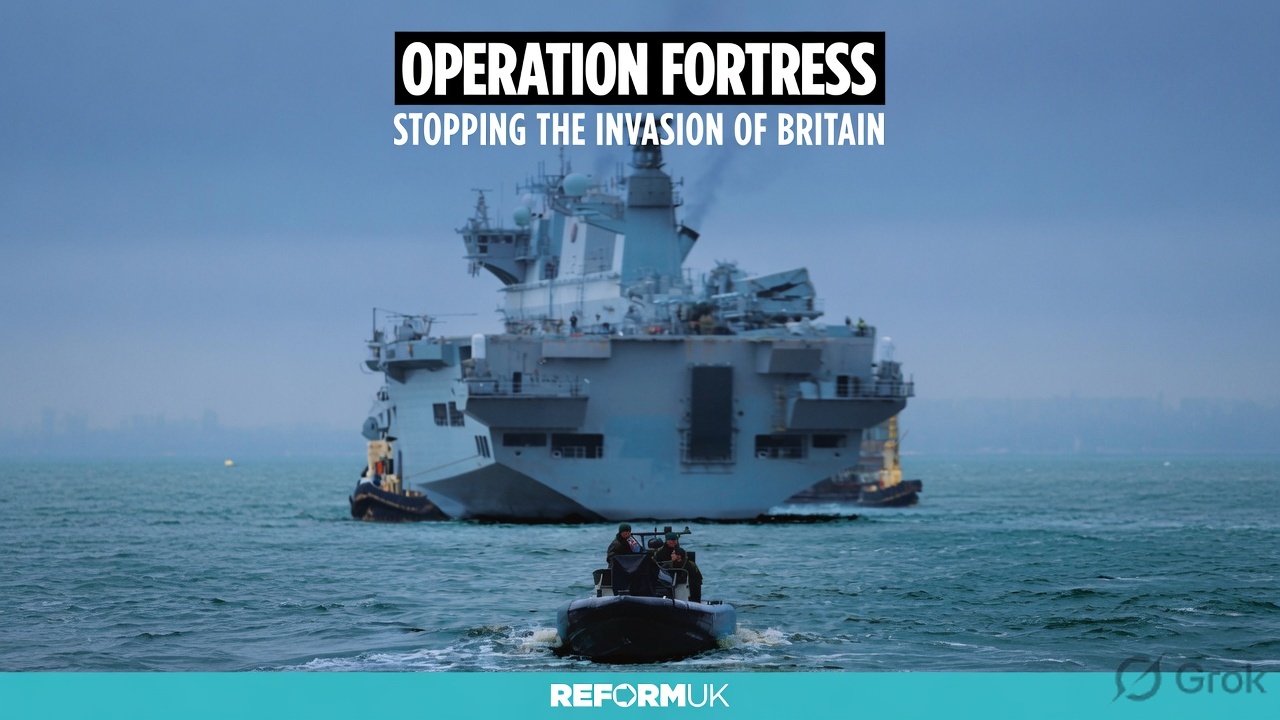
Britain’s far-right, anti-immigration party, Reform UK, has announced that it would stop immigrants from France with the biggest military operation in the English Channel since the Second World War. 

Unveiling the proposal, dubbed “Operation Fortress”, Reform leader Nigel Farage said at a press conference that asylum seekers arriving in small boats from France will be detained and sent back.

“Under a Reform government, within a fortnight, there would be no more boats,” Farage declared, claiming the plan would render Britain’s borders “impenetrable.”

Farage, whose party has recently lost its lead in national opinion polls for the first time in more than a year amid controversies over donations and gifts to senior figures, pointed to the recent migrant surge into the Spanish enclave of Ceuta.

Roughly 60,000 people crossed from Morocco over a few days in late July, with at least 72 deaths from drownings and crushes at the breakwater barriers. “What happened in Ceuta over the weekend shows you just how serious this situation is,” he told reporters.

The Reform UK party has reportedly proposed a joint military command drawing units from the British Army, Royal Navy, Royal Marines, and RAF, supported by a specialized surveillance command to track vessels. The military would stop unauthorized boats, hold those on board, and return them on navy ships. The party said it would introduce emergency legislation “as necessary” to give the command any extra powers required.

“When you think about it, what is the Royal Navy for? If the Royal Navy is not there to protect this country from invasion, then, frankly, I can’t see what its purpose is,” Farage said at the press conference.

Reform UK has said it wants to launch “the largest military operation in the English Channel since World War Two” to stop small boat arrivals.

A Nigel Farage-led government would send the Royal Navy to intercept migrant boats there and return them to France or Belgium.

Labour… pic.twitter.com/TA081Ig5QS

— Channel 4 News (@Channel4News) August 3, 2026

The French Interior Ministry condemned the plan, telling AFP it “would be a violation of French sovereignty as well as a violation of maritime law and international law.”

While the ruling Labor Party vociferously opposed the Reform proposal, Prime Minister Andy Burnham pledged to make “relentless” efforts to halt asylum seekers after new data revealed that over 2,000 people had entered Britain since he took office two weeks ago.

Several former service personnel, particularly ex-Royal Navy officers, have strongly criticized and dismissed Reform UK’s “Operation Fortress” proposal.

The Royal Navy is there to protect this country from invasion and that is what I intend to use it for. pic.twitter.com/jbvTUTEzZR

— Nigel Farage (@Nigel_Farage) August 3, 2026

For example, Retired Royal Navy Commander Tom Sharpe questioned the “substance” of the concept, adding that the navy lacks ships to conduct the operation. “A billion-pound warship that’s configured for anti-air warfare or anti-submarine warfare, which are both threats to the UK, is not best used ferrying people around. You’re better off using an actual ferry,” Sharpe told BBC Radio 4’s Today program.

The concept “sounds magnificent, provided you know nothing about ships, sailors, France, or the law,” said Andrew Fox, a former paratrooper and senior associate fellow at the Henry Jackson Society think tank. He noted that London won’t be able to ​move warships into French territorial waters, seize ​boats, or disembark passengers without French permission.

Ben Obese-Jecty, a Conservative MP and former British army officer, dismissed the proposal as “ridiculous”, adding that Reform had announced this ridiculous idea before. Additionally, he pointed out in a post on X that Reform UK’s “Operation Fortress” poster uses the image of HMS Ocean, which was sold to Brazil in 2018.

Via Reform UK. Edited by Grok

Meanwhile, Former Royal Navy officer John Foreman CBE dismissed the plan bluntly as “a crock of shit,” in a post on X.

Undeterred by the criticism, Farage justified his proposal, saying, ”humanitarian missions do not violate maritime or international law,” and the party defiantly vowed to “stand up for British interests,” whether French President Emmanuel Macron “likes it or not.”

While experts from both the military and legal domains believe that the proposal is unfeasible, Farage’s call for “the largest military operation” after World War II has created quite a stir and brought back memories of the actual biggest military operations in the channel that changed the face of the WW2 and reversed Germany’s fortunes.

The Largest Operation In The English Channel 

The English Channel saw intense, sustained naval warfare throughout the Second World War. However, two operations in particular stand out for sheer scale and are the clear historical benchmarks that Farage invoked.

One of these operations came to be known as Operation Dynamo, or Dunkirk Evacuation, which took place between May 26, 1940, and June 4, 1940.

In May 1940, German forces invaded the Low Countries and France using Blitzkrieg tactics. They rapidly advanced, cutting off the British Expeditionary Force (BEF) and large numbers of French and Belgian troops. Thus, the Allies were driven back towards the English Channel and found themselves trapped in a shrinking pocket around the port of Dunkirk, with their backs to the sea and the prospect of annihilation or capture.

This necessitated an evacuation. Vice Admiral Bertram Ramsay directed the rescue operation from the tunnels beneath Dover Castle.

Allied evacuation of Dunkirk
Allied evacuation of Dunkirk-Wikipedia

The Dunkirk harbor was heavily damaged by Luftwaffe bombing, rendering its inner docks unusable. This meant that larger warships could not approach the shallow beaches stretching roughly ten miles east. So, a plan was hatched: two-thirds of the rescued troops boarded destroyers, minesweepers, and other ships from the East Mole, a 1,400-yard breakwater that extended into deeper water. Meanwhile, the remaining one-third were lifted from the open beaches at Malo-les-Bains, Bray-Dunes, and La Panne by small ships.

Nearly a thousand vessels, including Royal Navy destroyers, minesweepers, and merchant ships, formed the backbone of the effort, while hundreds of civilian “little ships” such as yachts, fishing boats, pleasure craft, and lifeboats, ferried men from the shallow beaches to the larger ships waiting offshore or carried them all the way to England. 

The Luftwaffe subjected the harbor, beaches, and shipping to intense bombing, while the RAF fought to provide air cover at considerable cost.

Planners initially expected to save only about 45,000 men over a couple of days. However, as the operation progressed, roughly 338,000 troops, including around 224,000 British and some 120,000 French and other Allied soldiers, were brought safely across the Channel.

And, by the time the operation ended on 4 June, the bulk of the British Expeditionary Force had been saved.

The second major operation in the Channel was Operation Neptune, the codename for the naval and amphibious assault phase of the Allied invasion of Normandy on 6 June 1944. This operation apparently formed the seaborne component of the larger Operation Overlord, the plan to liberate north-west Europe from German occupation, and remains the largest seaborne invasion in history.

Admiral Sir Bertram Ramsay of the Royal Navy commanded the Allied Naval Expeditionary Force. The fleet was organized into two task forces: the Western Task Force for the American beaches and the Eastern Task Force for the British and Canadian beaches.

Allied forces assembled in ports along the southern coast of England, then crossed the English Channel overnight on 5–6 June 1944 to land on the beaches of Normandy in German-occupied France. The distance varied by route and beach but was typically between about 60 and 100 miles.

The naval armada of nearly 7,000 vessels transported troops, vehicles, and supplies through these waters under the protection of warships and air cover.

The successful execution of Neptune opened the long-awaited second front in Western Europe and marked the beginning of the final campaign against Nazi Germany.


The post UK-France Row: British Reform Party Pledges Largest Military Operation in English Channel Since World War-2 appeared first on EURASIAN TIMES.

  •  

Remédio para o «viródio»

Composição: Amor, bem-estar, escutar-se, partilha, amizade, 5 minutos, proximidade emocional, escuta. Sobredosagem: Família, autorregulação, comunicação. Procedimento adotado nas Leituras Furiosas: Rasurar a palavra «bênção» da coluna de palavras relativas à ideia de «família» foi um erro, aponta LCMarola — um moço que se lê como uma mota com desejo de rugir a sua aceleração sobre a paisagem. Cuidado, diz-nos o Lunatic, a rapidez é pouco amiga da atenção e da escuta. Diz-nos que (…)

- 2026/08
  •  

At India’s Nuclear Testing Site — IAF Helicopters Train as Low-Cost Drone Hunters in Rotor Clap-III Drills

The Indian Air Force (IAF) held a week-long counter-drone exercise to strengthen its capabilities against low-cost unmanned aerial systems.

The primary goal of the exercise, dubbed “Rotor Clap-III”, was reportedly to assess and refine operational principles to address emerging aerial threats from unmanned systems. The exercise concluded on August 2.

The Counter-Unmanned Aerial System (UAS) drill was held at the Pokhran Field Firing Range in the Thar Desert.

The site is best known as the location of India’s nuclear tests in 1974 and 1998, but its vast, sparsely populated expanse near the India-Pakistan border supports secure live-fire practice, helicopter operations, and high-intensity training while closely matching the terrain, climate, and conditions of the western theatre.

The drills were also aimed at improving the IAF’s helicopter fleet’s operational capabilities against threats posed by drones.

#IAF Helicopters undertook, Exercise ROTOR CLAP III themed "Counter-UAS" in Rajasthan.

The exercise brought together helicopter units of the #IndianAirForce to validate operational concepts against emerging aerial threats#ExerciseRotorClapIII #CounterUAS@DefenceMinIndia… pic.twitter.com/8nFwAQGm5T

— Indian Air Force (@IAF_MCC) August 1, 2026

Several IAF helicopter units participated in the exercise, conducting tactical missions such as coordinated actions against both aerial and ground-based threats, soldier insertion, reconnaissance, precision attacks, battlefield support, and casualty evacuation.

The drills evaluated integrated helicopter tactics, procedures, and coordination in simulated combat conditions.

Moreover, the aircrew and operational units had the opportunity to test and validate mission planning, inter-unit coordination, quick response, and cooperative operations in near-war scenarios throughout the exercise. According to reports, special emphasis was placed on ensuring smooth coordination among multiple helicopters in the desert terrain.

Notably, helicopters are increasingly being employed worldwide in counter-UAS roles, especially against slower, low-cost loitering munitions and reconnaissance drones. Russia and Ukraine, for example, routinely use military helicopters for this purpose, whereas Gulf countries have recently started deploying their own choppers to down Iranian drones.

Image
File: IAF helicopters participated in ROTOR CLAP III themed “Counter-UAS” in Rajasthan

In general, helicopters make good counter-UAS platforms because many of them cruise at speeds similar to those of propeller-driven drones such as the Shahed class, enabling them to close the distance, match altitude, and make repeated engagement passes—advantages not available to fast jets, which are limited to a single high-speed pass.

Typically, helicopters can also operate from dispersed or improvised sites, fly low and slow, and loiter over threat areas. Equipped with thermal or electro-optical sensors and night-vision systems, they are effective at detecting and engaging low-flying drones after dark.

Once the helicopter matches the drone’s path, gunners or automated systems use proximity-fuzed rockets or brief bursts of cannon or machine-gun fire to neutralize a drone.

Therefore, these armed helicopters form one mobile layer alongside ground-based guns, electronic warfare, interceptor drones, and high-end surface-to-air missiles (SAM).

Using helicopters as counter-drone platforms is also cost-effective, given that machine guns, cannons, and rockets are far cheaper per engagement than surface-to-air missiles or fighter sorties. In fact, the US has now integrated its Apache helicopters with APWKS laser rockets to further reduce the cost of hunting drones.

The IAF operates a range of different military choppers—AH-64 Apache, the aging Mi-25 and Mi-35 attack helicopters, the LCH Prachand, Chinook Heavy-lift transport helicopter, the Mi-17 Medium utility helicopter, and the ALH Dhruv

Sources said the exercise reaffirmed the IAF’s commitment to high operational readiness and adaptation to new security challenges. It forms part of India’s broader push to strengthen counter-UAS capabilities at a time when inexpensive small drones, loitering munitions, and sophisticated unmanned systems have upended the cost calculus of conflict and changed the face of conventional warfare that India has participated in.

India’s Counter-Drone Effort Inspired By Op Sindoor

India’s heightened focus on counter-drone measures is driven by global trends, persistent cross-border drone activity, and, most significantly, experience gained during Operation Sindoor in May 2025, which it launched against Pakistan-based terror infrastructure.

Pakistan retaliated almost instantly and employed large numbers of drones as a core element of its response codenamed Operation Bunyan al-Marsus.

Indian official briefings stated that Pakistan launched swarms of drones in major coordinated waves. According to the Government of India’s official press briefing, Pakistan launched 400–500 drones in a coordinated reconnaissance and SIGINT (Signal Intelligence) operation. These were intended to clutter Indian radars, force air-defense systems to expend ammunition and attention, probe for gaps, and mask the presence of a smaller number of more capable surveillance or attack drones.

Pakistan has invested heavily in drone manufacture using indigenous capabilities acquired from allies like Turkey and China, as previously explained in detail by the EurAsian Times. During the conflict, it used Turkish Asisguard Songar, Turkish Yiha-III, Bayraktar TB2 drone, and Chinese drones like the CH-4 and Wing Loong II, to name a few.

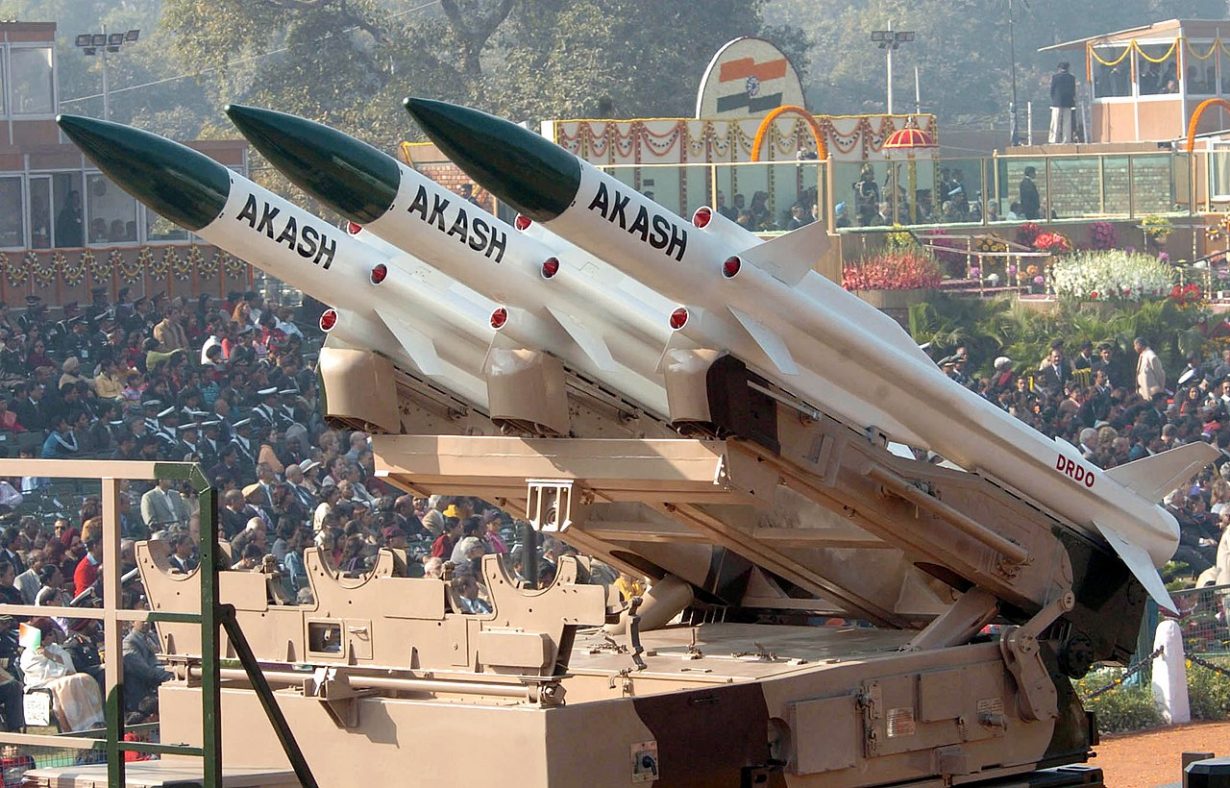
India stated that the large majority of incoming drones were neutralized by a combination of kinetic systems (anti-aircraft guns, including the L-70, ZU-23, and Schilka, as well as surface-to-air missiles such as Akash), and non-kinetic measures (spoofing and jamming).

akash-missile
File Image: Akash Missiles

While India has significantly expanded its own inventory of drones, many of which were used successfully and decisively against Pakistani targets during the war, the intensity of drone use by the Pakistani military during the four-day intense conflict has accelerated Indian investment in counter-drone programs and tactics.

For example, counter-drone grids are being incorporated into Mission Sudarshan Chakra, a long-term, AI-enabled, multi-layered national air-defense shield announced last year.

In early July 2026, the Defense Acquisition Council granted Acceptance of Necessity for procurement proposals worth approximately ₹52,000 crore. These include the indigenous Akash Tarang anti-UAV electronic-warfare system for the Army, Very Short-Range Air Defense Systems (V-SHORADS) to bolster low-altitude defense against drones, and jet-powered kamikaze drones, underscoring the priority now attached to both unmanned systems and counter-UAS capabilities

A range of new counter-drone systems developed jointly by public- and private-sector entities are at various stages of testing.

Last year, for instance, India’s Defense Research and Development Organization (DRDO) unveiled the D4 (Drone Detect, Deter, Destroy) anti-drone system, which is now being deployed along key border areas. This integrated counter-drone solution is designed to detect and neutralize rogue unmanned aerial vehicles (UAVs) with precision.

Earlier this year, the Indian Ministry of Defense (MoD) announced the completion of development trials of the Unmanned Aerial Vehicle Launched Precision Guided Missile-V3 (ULPGM-V3) in air-to-ground and air-to-air modes. The ULPGM is designed for UAV integration to destroy soft and hard targets, on the ground and in the air.

Similarly, India-based Zen Technologies launched an enhanced variant of its counter-unmanned aircraft system (C-UAS) that is already in service with the Indian Armed Forces in May 2026. The new variant of the system reportedly has increased detection and jamming ranges and is integrated with AI for improved threat detection.

These are just a few examples of India’s counter-drone effort.

The armed forces are also conducting dedicated counter-drone exercises based on lessons from Operation Sindoor. In October 2025, for instance, India’s largest drone and counter-drone warfare drill, Exercise Cold Start, was conducted in Madhya Pradesh to evaluate the effectiveness of the existing air defense

Therefore, the recently concluded Rotor Clap-III, focused on the IAF’s helicopter fleet, is another step in preparing for operations on a battlefield increasingly dominated by drones.


The post At India’s Nuclear Testing Site — IAF Helicopters Train as Low-Cost Drone Hunters in Rotor Clap-III Drills appeared first on EURASIAN TIMES.

  •  

Trump Calls It “Invasion,” Musk Says Budget “Destroyed”: Moroccan Surge in Spain Rattles U.S. & Europe and Reignites “Islamic Fear”

Nearly 50,000 of the 60,000 young Moroccans who had entered  Ceuta, Spain’s 7.5-square-mile enclave on Africa’s coast, on July 29-30, 2026, by swimming around border barriers, may have returned to their country. But the global headlines they were responsible for have had geopolitical impacts on the rest of Europe and the United States. 

Prime Minister Pedro Sanchez of Spain called the event  “a violation of Spain’s territorial integrity”. But then the fact remains that his left-wing government’s series of liberal migration policies, coupled with the Spanish Supreme Court’s ruling last month that migrants arriving by sea could not be summarily returned, prompted such a massive migration, for which the country was perhaps not ready.

Of course, this was not the first surge from Morocco. As many as 10,000 from Morocco were said to have entered Spain in 2021. But the scale on July 29-30 made it the largest not only in Spain but also in the history of the European Union(EU).

After all, Ceuta, the small Spanish exclave on the North African coast, has a permanent population of just 84,000. Obviously, swarms of 60,000 outsiders totally overwhelmed the locals.

The crisis forces 3 questions: What drove it? What does Spain’s approach mean geopolitically? And how does the debate over religion, demography and identity shape it? 

As pointed out above, the influx was possibly triggered by a ruling by Spain’s Supreme Court that a law allowing the prompt handing back of migrants who breach frontier barriers at Ceuta and Melilla, another Spanish exclave, does not apply to those who arrive by sea. (Those who swim, the court reasoned, do not technically breach frontier barriers, since there are none in the water.) Word of this got around on social media in Morocco, prompting the stream of swimmers.

It may be noted that historically, Morocco has contested Spanish sovereignty over Ceuta and Melilla, just 13 to 14 kilometers from its shores through the Strait of Gibraltar. This has led some analysts to believe that  Rabat  “deliberately did little to prevent the crossings”.

They cite the similar opening that was made in 2021. But this is a minority view, given that Morocco has already facilitated the return of 50,000 of its people and is doing so even now.

The 2021 episode was a little different. That time Morocco allowed its people to wade into Ceuta, as an expression of its anger that Spain had allowed the leader of Polisario, a group that has long fought for the independence of Western Sahara, to come to Madrid for medical treatment. Morocco, incidentally, had annexed two-thirds of Western Sahara, a former Spanish colony, in 1975.

However, over the last four years, diplomatic parleys between Madrid and Rabat have stabilized the bilateral ties. Spain now backs Morocco’s autonomy plan for Western Sahara in exchange for Rabat policing the coast and taking back illegal migrants.

In 2024,  Spain started a program to legalize 900,000 undocumented migrants already in Spain (most of them Moroccans)  to bring them into the tax and social security. It decided to issue  “Labor visas”, under which fast-track permits to address Spain’s rapidly falling population.

The Sanchez regime has tried to legalize immigration as much as possible under what it calls a “human rights and labor needs” approach that envisages expanded regularization programs, bilateral cooperation with Rabat, and faster work permits for migrants in agriculture, tourism, and elder care.

Apparently, Spain has become the EU’s largest entry point for irregular migration, overtaking Italy and Greece. The vast majority of arrivals were from Morocco and the likes of Malians and Senegalese, who crossed through  Morocco by sea. So much so that Spain now has the largest Moroccan diaspora in the EU — over 800,000 people of Moroccan origin, as per Spanish data.

Reportedly, the UN projects Spain needs 200,000 net migrants per year to maintain workforce size. And 10 million foreign-born people for the first time in Spain’s history; they now constitute a fifth of the country’s total population, about 50 million.

At 1.1 million, Moroccans happen to be the largest single nationality of all the foreign nationalities. Birth rates among Moroccan-origin residents are said to be higher than those of native Spaniards, but converge to the Spanish average of 1.6 percent by the second generation, per demographic studies.

In other words,  Spain’s population would be shrinking without immigration.

However, the geopolitical reactions to what happened in Spain are quite different, particularly on both sides of the Atlantic.

The incident provided armor to President Donald Trump and all his supporters in their fight against what they say is illegal immigration into the US.

As images spread, Trump posted that the Ceuta scenes “vindicated” his wall and deportation policies, arguing Europe was now facing what the US faced in 2019. US conservative media amplified the Ceuta footage as evidence for border closure.

“I saw Spain yesterday, and I watched the catastrophe that took place,” Trump told a meeting of his cabinet at the presidential Camp David retreat in Maryland. “It looks like an invasion of a country by hundreds of thousands of people, and that same thing’s going to happen to us if the Republicans don’t get elected, except worse, much bigger.”

Tech billionaire Elon Musk also commented on the situation in Spain, writing on X that “Spain’s entire budget will be destroyed by illegal migrants” and arguing that offering benefits to migrants would create a “forcing function” for large-scale migration.

There were similar reactions from right-wing parties and EU centrists across Europe, demanding tougher immigration policies.

Far-right Alternative for Germany (AfD) co-leader Alice Weidel claimed in an X post that “Ceuta was left in ruins overnight” by the mass influx from Morocco. She argued that Germany is “likely the destination for most of these migrants”, adding “Germany must prepare itself: borders must be secured and rejections rigorously enforced”.

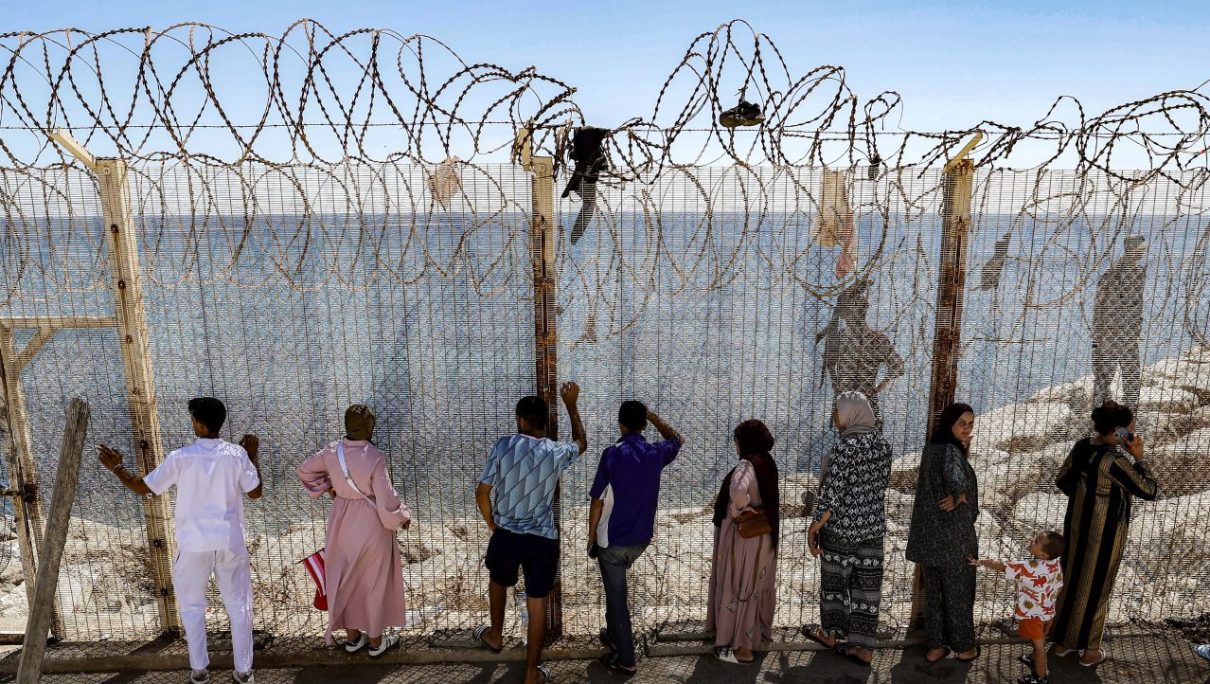
Relatives and friends wait by a fence topped with barbed wire for the return of people who had previously crossed into Spain’s North African enclave of Ceuta, at Morocco’s Bab Sebta border crossing on the outskirts of Fnideq on August 2, 2026. As many as 60,000 migrants entered Ceuta in recent days, mostly swimming around the small border post that juts into the Mediterranean Sea, in an unprecedented surge that prompted an international crisis for Spain. The mass crossing into the tiny Spanish territory resulted in at least 67 deaths, according to Spanish authorities, and led to clashes with Moroccan police on the shared border. (Photo by Abdel Majid BZIOUAT / AFP)

Italian Prime Minister Giorgia Meloni described the scenes in Ceuta as evidence that “uncontrolled illegal immigration poses a concrete threat to the security of Europe’s borders,” saying Italy was prepared to take “extraordinary measures” to defend its borders and the safety of its citizens, including the possible suspension of the Schengen Area with Spain.

The right-wing ruling coalition in Finland also called for excluding Spain from the European visa-free zone as a result of the situation. Czech Prime Minister Andrej Babis said the Ceuta situation was caused by Spain’s policy of offering hundreds of thousands of migrants already in the country a legal status.

In fact, the weekend incident in Spain is said to have accentuated the political turbulence in Europe and strengthened forces, including even conservatives and liberals, to end what was hitherto a “Liberal Consensus” on a liberal immigration policy.

That explains why on Saturday, Denmark’s Prime Minister Mette Frederiksen, German Chancellor Friedrich Merz, and Italian Premier Meloni initiated a letter that got signed by 22 member states, calling for immediate EU action.

“The bloc cannot allow uncontrolled mass crossings, the instrumentalization of migration or other hybrid threats to create the perception that illegal entry into the European Union is possible,” they wrote.

It may be noted here that for years Germany was the face of liberal asylum policy under Chancellor Angela Merkel. Now it has really reversed that under immense political pressure.

The AfD nearly doubled its vote share, especially in eastern Germany, by campaigning on immigration and crime linked to asylum seekers. As a result, the new CDU-SPD coalition started last year the policy of  “Stricter border checks” and a “de facto entry ban” for undocumented migrants,  including asylum seekers.

Even the British leadership labeled the developments in Spain deeply concerning while highlighting that the UK’s own restrictive operational measures are yielding lower overall small-boat crossing numbers compared to prior tracking periods.

Moving away from past perceptions of a liberal framework to stem the rise of populist Reform Party UK,  the ruling Labour Party is now systematically tightening rules through higher salary thresholds, bans on dependents for most students, restrictions on overseas care worker recruitment, and shorter temporary protection grants for refugees.

And still its government is facing intense but growing popular pressure for mass deportations, rigorous enforcement and digital pre-departure checks.

Incidentally, the growing fears in Europe over uncontrolled and illegal immigration seem to have an angle of the fear of “Islamisation”. It may not be the main driver of policy changes, but it is a major factor in the political turbulence around immigration, particularly in Germany, the UK, and France.

There is a growing Muslim population in these countries due to immigration and higher birth rates among the immigrants.

Reportedly,  there are 5.5 to 6.5 million Muslims in France, making it the largest Muslim minority in Western Europe. This group makes up about 8% to 10% of the country’s total population. The majority of them have roots in North Africa (Algeria, Morocco, and Tunisia), with smaller groups from Turkey and Sub-Saharan Africa.

Germany’s Muslim population is estimated to be between 5.5 and 7 million, which makes up roughly 6.5% to 8.5% of the country’s total population. The largest group has Turkish heritage, dating back to the guest worker program in the 1960s. Recent growth comes from refugees and migrants arriving from countries like Syria, Afghanistan, and Iraq.

The Muslim population in the United Kingdom is approximately 4 million people, making up about 6.0% to 6.5% of the total population. Islam is the second-largest religion in the country.

The largest share, as much as 66 percent, of British Muslims trace their family roots to the Indian subcontinent, with many arriving in waves during the 1950s and 1960s to fill postwar labor shortages. The rest came mainly from Somalia, Nigeria, Libya, Morocco, Algeria, Afghanistan, Iran, Turkey, and Cyprus.

In these three leading countries, considered to be the engines of Europe, the Muslim immigrants have created what are called economic, cultural, and political concerns over their running parallel societies, sharia law, religious schools, mosques, headscarves, and value clashes over free speech, gender, and LGBTQ issues.

Besides, there are problems relating to issues concerning economics, housing, asylum backlog, crime (the rise of extremism in Islam), and border control.

As it is, the Netherlands, Sweden, and Denmark have already passed laws on face veils, foreign funding of mosques, and “ghetto” laws. Denmark’s Social Democrats explicitly said they wanted “fewer Muslims” to protect their welfare state.

But then, as seen in Spain, these countries also face acute labor shortages, for filling up which most of these Muslims, like others, migrate. In any case, apart from the UK, in no country have Muslims become politically active to endanger the native whites. They do not have high-paying jobs like the skilled and highly educated immigrants, though they are doing very well in the sporting arena.

Therefore, if they are being seen with suspicion, it is because of the changes they have made to mainstream culture.

For many center-right and working-class voters in Europe, that includes concerns about mosques, religious schools, and values. That is why even left-wing parties like UK Labour and German SPD are now tightening controls. They have realized that if one does not address the cultural anxiety, one loses to parties who do or will.

In sum, what the weekend’s episode in Spain seems to have done is raise two questions: whether a liberal-immigration model of Europe will survive by combining open labor markets with credible borders; and whether Europe will still debate culture without dehumanizing people.

  • Author and veteran journalist Prakash Nanda is Chairman of the Editorial Board of the EurAsian Times and has been commenting on politics, foreign policy, and strategic affairs for nearly three decades. He is a former National Fellow of the Indian Council for Historical Research and a recipient of the Seoul Peace Prize Scholarship.
  • CONTACT: prakash.nanda (at) hotmail.com

The post Trump Calls It “Invasion,” Musk Says Budget “Destroyed”: Moroccan Surge in Spain Rattles U.S. & Europe and Reignites “Islamic Fear” appeared first on EURASIAN TIMES.

  •  

Patriot and THAAD Inventories Collapse in Ongoing Iran War as U.S. and Israel Pause New Strikes

President Donald Trump said the US and Israel had decided to hold off on new strikes on Iran — provided that a deal to end the ongoing conflict is reached quickly.

Meanwhile, a report published by a US-based think tank recently warned that American inventories of key air defense interceptors have fallen sharply, raising the prospect that US and coalition forces may need to accept greater risks in future missile defense operations.

When the US launched Operation Epic Fury in February 2026, President Donald Trump said the hostilities would last only a few days, a deadline that was subsequently moved to a few weeks. However, five months later, there is no end in sight to the war, which has now spilled over into much of West Asia. 

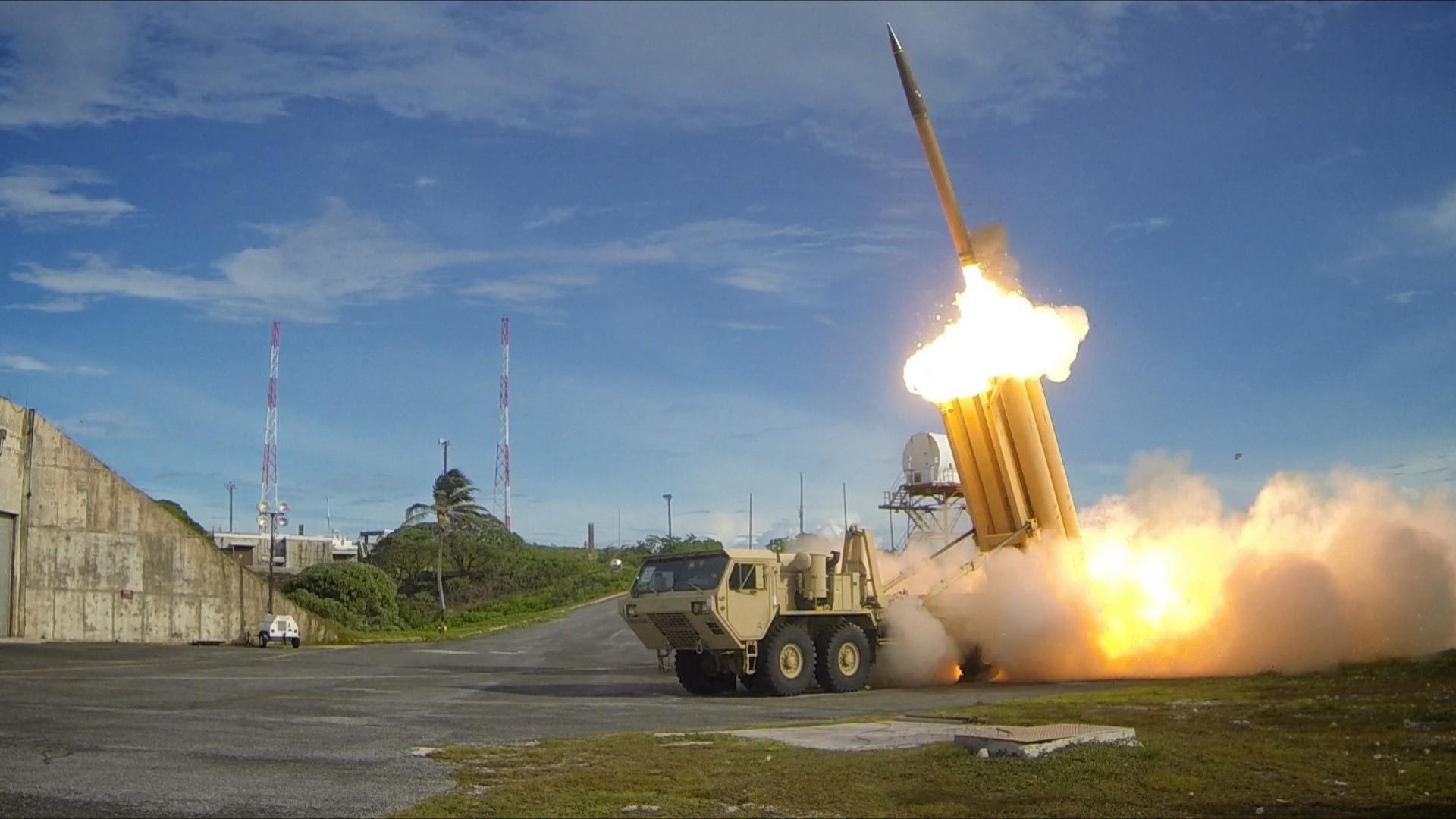
During the war, the US has severely drawn down its air defense interceptors, as documented by the US-based think tank CSIS (Center for Strategic and International Studies). The CSIS report estimates that stockpiles of the Patriot and THAAD (Terminal High Altitude Area Defense) have been greatly reduced in the ongoing conflict.

Published on July 27, 2026, the report—“Renewed Iran War Would Test Diminished Interceptor Inventories” authored by Mark F. Cancian and Chris H. Park—updates an earlier CSIS assessment released around the ceasefire agreed to by both sides on April 8, 2026.

“The air defense campaign has been largely successful with high—though not perfect—interception rates. While some Iranian attacks got past defenses, causing casualties and extensive base damage, these attacks have been unable to diminish U.S. and coalition operations. This has required extensive use of interceptors, with Patriot inventories now under 1,000 and THAAD inventories at about 250,” states the report.

The previous report had estimated that the US Patriot interceptor inventory shrank by 55%. However, the updated figures suggest the stockpile has further shrunk by an additional 10% since the truce, and that approximately 65% of US Patriots have now been lost since the war began.

Image
Image via CSIS

The report estimates that Patriot inventories now stand at under 1,000 (the most recent figures place the range at 759–827) and that THAAD inventories stand at about 250 (the latest figures put it at roughly 234–278).

Both systems have been heavily used to defend US bases, Gulf partners, and Israel against Iranian ballistic missiles, cruise missiles, and related threats. CSIS apparently draws its estimates from publicly available legislative and Pentagon budget documents, supplemented by open-source data on rounds expended in the Gulf.

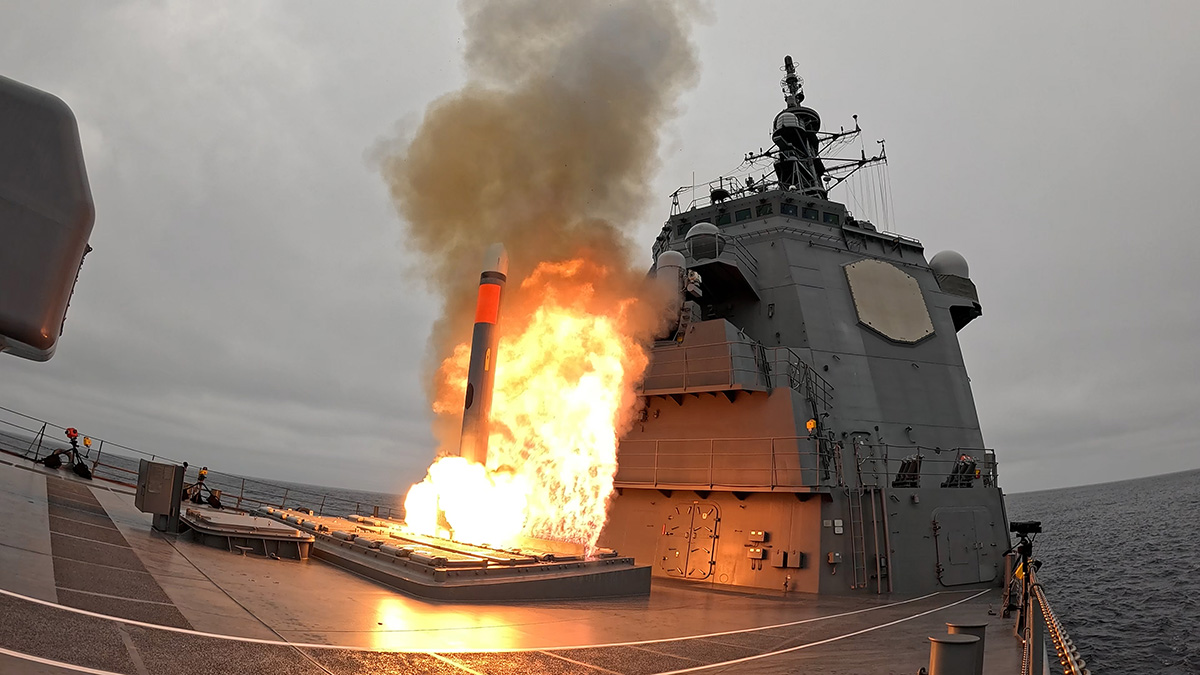
“Diminished stockpiles may force the United States and its coalition partners to take more risks with interceptions. There are no good alternatives to Patriot and THAAD for ballistic missile defense. Navy ships, with Standard Missiles that can intercept such threats, generally are too far away,” the report warned.

Notably, an NBC report recently stated that US commanders are choosing not to take down Iranian projectiles that are headed into uninhabited regions of US sites in the vicinity because they do not want to squander their interceptor missiles.

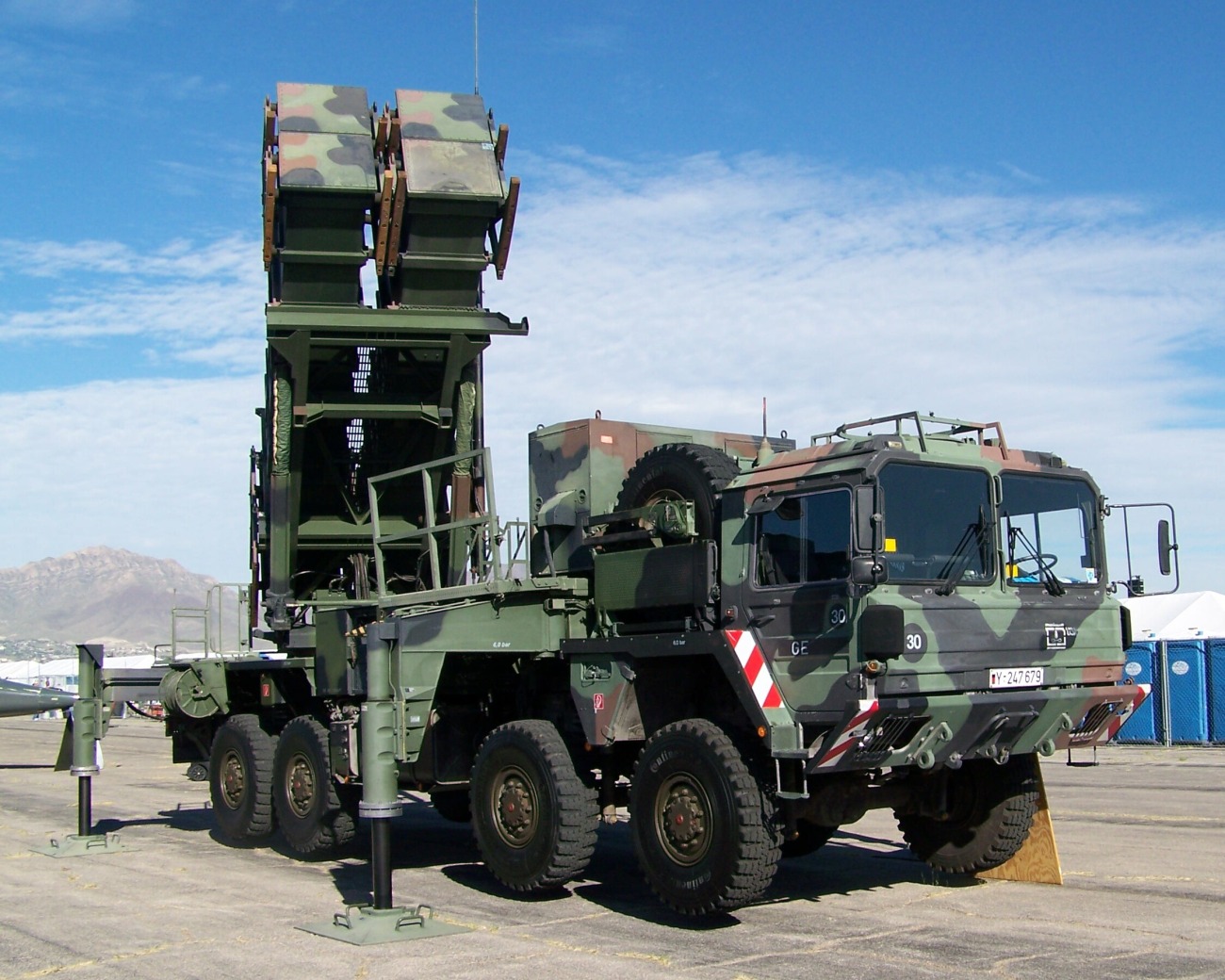
Patriot-Missile
Patriot AD System.

This alleged tactic, if true, marks a shift from previous air and missile defense procedures in the region, such as when a US-manned Patriot detachment protected a mostly evacuated Al-Udeid Air Base in Qatar from a barrage of Iranian ballistic missiles in response to Operation Midnight Hammer in June 2025.

Despite a dearth in air defense interceptors, the US has vowed to hit Iran very hard, a move that will almost certainly trigger Iranian retaliation and further cause depletion in Patriot and THAAD interceptors. The situation may become dire, given that the production of these missiles takes woefully long—Lockheed delivered just about 600 interceptors in 2025, and only 96  THAAD interceptors are manufactured per year. 

The United States is therefore consuming its most valuable air-defense munitions far faster than industry can replace them. Some analysts have suggested that depleting offensive and defensive stockpiles contributed to the Trump administration’s decision to accept a ceasefire, including the latest one where the U.S. and Israel agreed to hold off on new strikes on Iran.

Other reports indicate Trump may have changed the offensive plans after talking with Saudi Arabia and after Iran also spoke to Riyadh, besides Pakistan and Turkey.

Trump insisted the US was still “locked and loaded and ready to go against the Islamic Republic of Iran,” but added that Tehran and other Middle Eastern countries had asked him to hold off on fresh strikes. “Based on this request, I have agreed, for the future benefit of the WORLD and, likewise, the survival of a successful and prosperous Iran, to cancel the attack, subject to being able to rapidly make a DEAL,” Trump posted on his Truth Social platform.

Terminal High Altitude Area Defense - Wikipedia
Terminal High Altitude Area Defense – Wikipedia

Meanwhile, Strategists also warn that the shortages create near- to medium-term risks for U.S. readiness in other theaters, particularly a potential conflict with China in the western Pacific.  “Expended munitions create a near- to medium-term risk for U.S. readiness to fight a war against China in the western Pacific,” the report stated.

In the near term, Washington is unlikely to spare Patriots for Ukraine, which continues to face intense Russian attacks and has repeatedly requested additional interceptors. Russia has been exploiting the vacuum in air defense coverage to strike Kyiv with lethal ballistic and hypersonic missiles, as the EurAsian Times reported.

Pentagon Boosting Interceptor Production

Noteworthy steps have been taken in 2026 to rapidly expand production of Patriot (primarily PAC-3 MSE) and THAAD interceptors.

These efforts use a new “Acquisition Transformation Strategy” approach that emphasizes multi-year framework agreements, undefinitized contract actions (UCAs), long-term demand signals, and parallel investments in facilities, the workforce, and bottleneck components.

For instance, the US Army awarded Lockheed Martin a contract on July 29 worth up to $58.6 billion to produce Patriot interceptor missiles.

This comes after the US awarded Lockheed Martin a $4.7 billion contract in April 2026 to accelerate the production of the Patriot Advanced Capability-3 (PAC-3) Missile Segment Enhancement (MSE) interceptors. The agreement stipulated that the annual output of PAC-3 MSE interceptors would be increased from nearly 600 to 2,000 units.

The Army states that the latest contract establishes a multiyear procurement strategy for the interceptors from fiscal 2026 through 2032 by converting a prior one-year deal awarded in April into a seven-year draft agreement.

The Pentagon Munitions Acceleration Council (MAC) also reportedly signed an emergency procurement agreement with key vendors to boost production.

Meanwhile, Lockheed has stated that it is investing $8–9 billion through 2030 across more than 20 sites in the United States.

Additionally, the US has agreed to grant Ukraine a license to produce Patriot interceptors, making it the latest European country to manufacture these prized munitions, alongside Germany, Romania, and Poland.

Not just that, Lockheed Martin announced the introduction of the PAC-3 Adapted Capability Effector (PAC-3 ACE), a low-cost interceptor built to defeat a wide range of threats for less than half the cost of a PAC-3 MSE.

As for THAAD, the Pentagon signed a framework with Lockheed Martin to quadruple annual production from 96 to 400 interceptors.

The framework was intended to lead to a formal contract award (subject to congressional appropriations). This was later executed in June 2026 with an undefinitized contract action (UCA) valued at up to $35 billion to increase manufacturing through 2030. 

The Pentagon, in collaboration with L3Harris and Lockheed Martin, announced two historic seven-year framework agreements earlier this week to increase production capacity for critical components of the Terminal High Altitude Area Defense (THAAD) and the Patriot Advanced Capability-3 (PAC-3) Missile Segment Enhancement (MSE) interceptors.


The post Patriot and THAAD Inventories Collapse in Ongoing Iran War as U.S. and Israel Pause New Strikes appeared first on EURASIAN TIMES.

  •  

U.S. Marine Corps Pilot Ejects From 47,000 Feet — Meet “The Man Who Rode the Thunder” 67 Years Ago

Lt. Col. William Henry Rankin was a decorated US Marine Corps fighter pilot who flew combat missions in World War II and the Korean War. His greatest ordeal, however, came in peacetime.

On July 26, 1959, he ejected from an F-8 Crusader straight into a massive thunderstorm. And he lived to tell the tale.

The Vought F-8 Crusader was a single-engine, supersonic, carrier-based air-superiority fighter designed for the U.S. Navy and Marine Corps. Known as the “Last of the Gunfighters,” it was the final American fighter built with guns as its primary armament at a time when missiles were rapidly taking over. The aircraft entered service in 1957.

In May 1957, Rankin took command of Marine Fighter Squadron 122 (VMF-122). The following year, it became the first Marine squadron to operate the F-8 Crusader.

In 1959, he catapulted to fame for surviving what seemed like an impossible incident with the Crusader.

The Story Of Rankin’s Riding A Thunderstorm

On the afternoon of July 26, 1959, Rankin led a two-ship flight with wingman Lt. Herbert Nolan from Naval Air Station South Weymouth, Massachusetts, back to Marine Corps Air Station Beaufort, South Carolina.

During the flight, the pilots encountered a large cumulonimbus thunderstorm.

Typically, thunderstorms pose severe threats to fighter jets, including extreme turbulence, powerful updrafts and downdrafts, hail, lightning, icing, and torrential rain. So, fighter pilots are trained to climb above the storm to prevent damage to their aircraft.

The F-8 Crusader’s strong climb performance and high service ceiling of about 50,000 feet made this a practical choice for Rankin on that fateful day.

Rankin climbed his F-8 fighter jet to 47,000 feet at a speed of Mach 0.82 over a massive cumulonimbus cloud that peaked at about 45,000 feet.

While on this quest, he suddenly heard a loud, unprecedented bump and rumble from the aircraft’s engine. He instantly knew something was wrong with his jet. 

The engine immediately stopped producing power, a bit of bad news that was delivered to Rankin by a bright fire warning light.

Acting swiftly to arrest the threat, Rankin immediately pulled the lever to deploy auxiliary power, but instead of saving his jet, it snapped in his hand.

Image
Lt. Col William Rankin (Via X)

At this point, Lt. Col Rankin knew he had to eject, which was a formidable challenge without a pressure suit at that altitude.

As soon as he ejected and touched what is believed to be -58 to -60 degree air, his body started to fail. The veteran fighter pilot who had braved enemies in the wars he fought through his career was now struggling for survival—he suffered frostbite, the decompression caused his stomach to bloat, and he started to bleed from his mouth, nose, and ears. The only respite, at least initially, was that he had an emergency oxygen supply. 

The chances of survival were grim, something Rankin was fully aware of.

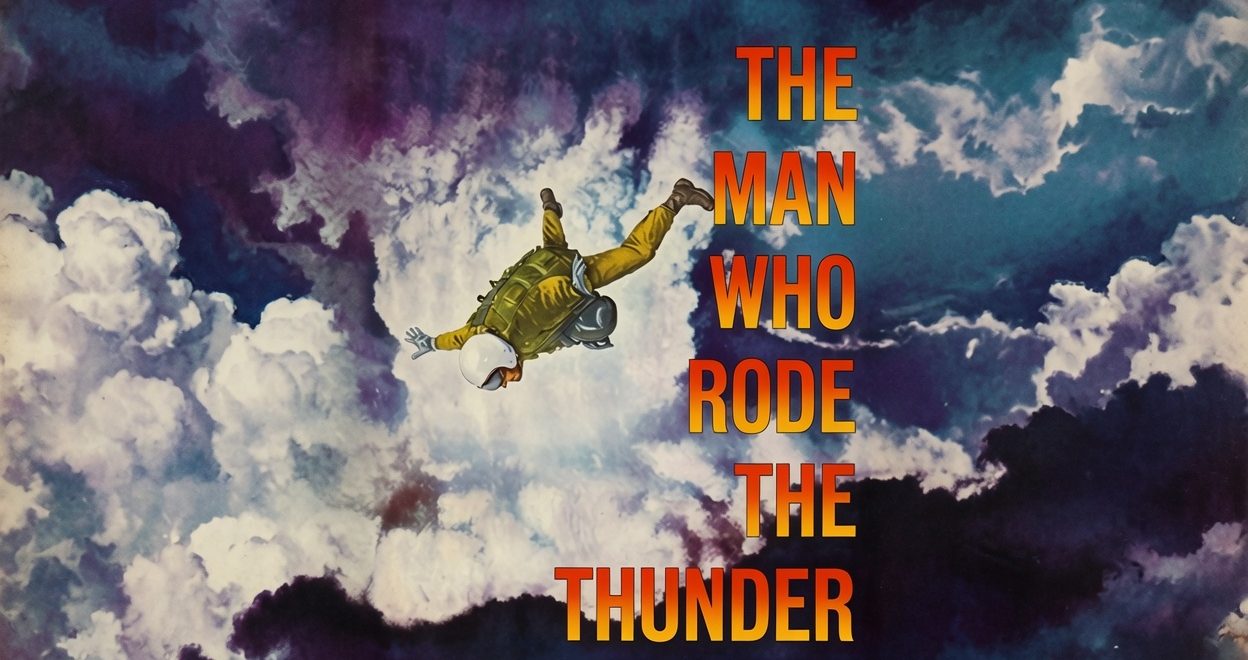
“I was convinced I would not survive; no human could”, Rankin later wrote in his book “The Man Who Rode the Thunder”. 

“The pain of ‘explosive’ decompression was unbearable,” he recalled in his book, which has been widely read by aviation enthusiasts globally. “I could feel my abdomen distending, stretching, stretching, stretching, until I thought it would burst. My eyes felt as though they were being ripped from their sockets, my head as if it were splitting into several parts, my ears bursting inside, and throughout my entire body, there were severe cramps.”

However, he also bravely emphasizes, “I was terrified, but not petrified. It’s a brave distinction of terms.”

After roughly five minutes of free fall, Rankin realized his parachute had not opened. The system was designed to deploy automatically at about 10,000 feet via a barometric switch, allowing the pilot to reach denser, breathable air before the canopy opened. The already disoriented pilot began to worry that the parachute’s auto-deployment system may have been broken, causing his only chance at survival to fail.

Unfortunately, though, he was now in for a completely different kind of challenge.

As he was passing through a massive thunderstorm with zero visibility, the parachute opened prematurely as the violent pressure fluctuations, updrafts, and turbulence inside the cumulonimbus cloud “fooled” the barometric sensor.

Once under the open canopy of the parachute, Rankin was far more vulnerable to the storm’s powerful vertical currents. The long descent increased the risk of his death from cold or asphyxiation. Additionally, it meant that he was dangerously caught in the up-and-down draft of the storm system, which buffeted the pilot thousands of feet into the air before dragging him back down. And that’s exactly what happened.

Ten minutes into the ordeal, he began vomiting from the violent spinning and pounding even as lightning flashed around him—later described as blue blades several feet thick.

The rain was so dense that he repeatedly inhaled or swallowed water with every breath and had to hold his breath to avoid choking. “Gasping for air, swollen, bleeding, and battered by hail, it was as though I were under a swimming pool, and I had held my breath several times,” wrote Rankin.

For Rankin, this was akin to “drowning in the sky.”

For about forty minutes, he was battered by hail, nearly drowned by torrential rain, and subjected to lightning and extreme turbulence.

“I didn’t hear the thunder, I felt it,” Rankin wrote in his book.

Thankfully, the storm’s intensity eventually decreased, allowing the pilot to finally avoid its drafts. Then, the rain that had threatened to drown him gave way to a comforting summer shower, and the air got substantially warmer.

Lt. Col Rankin and his parachute, which had endured unimaginable turbulence and the ferocity of nature, had miraculously survived the thunderstorm.

Soon, he approached the forests of North Carolina’s backcountry, got entangled in a tree, cut away from it, and landed on the ground.

Battered, frostbitten, bleeding, rain-soaked, and covered in vomit, he stumbled through the woods using a search pattern until he found a country road. “Lying on my left side. I simply could not believe that I was on the earth—that I had survived,” he later wrote.

Several cars passed before a motorist stopped, drove him to a nearby country store, and allowed him to call for an ambulance. He collapsed while waiting and was taken to a hospital in Ahoskie, North Carolina. Rankin spent several weeks recovering but sustained no permanent long-term injuries from the forty-minute ordeal and soon returned to duty.

Rankin gained widespread recognition for his iconic and unbelievable battle with the thunderstorm after he returned to active service. 

Having survived a 40-minute thunderstorm in the air, he lived for 50 more years before passing away at 89 in 2009.

Nevertheless, Lt. Col Rankin is still remembered—nearly 70 years after the incident—as the only man who defeated a thunderstorm.


The post U.S. Marine Corps Pilot Ejects From 47,000 Feet — Meet “The Man Who Rode the Thunder” 67 Years Ago appeared first on EURASIAN TIMES.

  •  

Turkey’s KAAN Stealth Fighter Begins Taxi Tests — 1st Flight Imminent After Kızılelma’s Historic Internal Bay Firing

Turkey has startled the world with its rapid rise in military technology, particularly in drone warfare. However, it is now charging full steam ahead with the development and testing of the KAAN combat aircraft, a move that will place it in the elite group of nations with stealth fighters

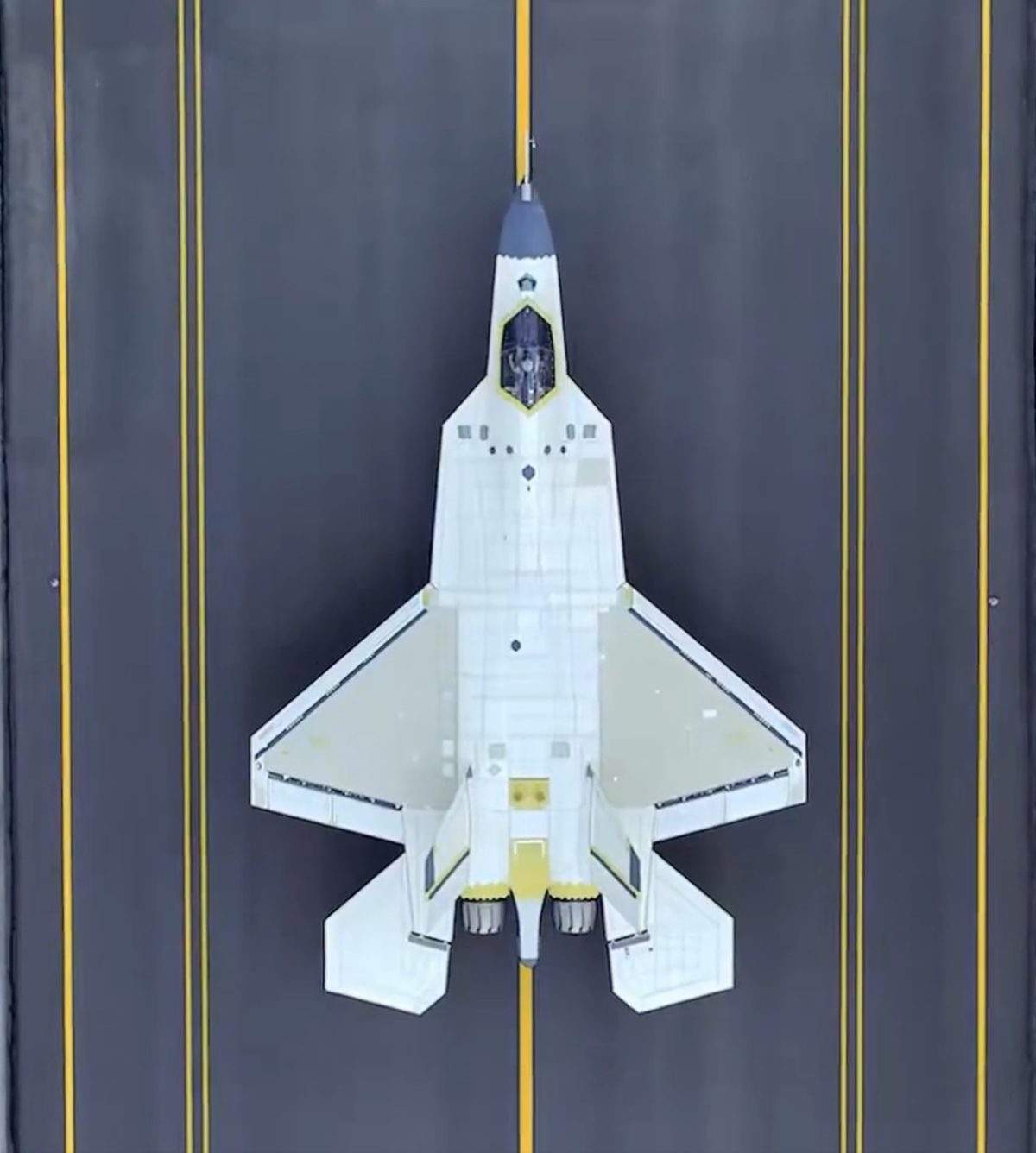
Turkish Aerospace Industries (TAI) recently released a video of KAAN’s new prototype performing powered taxi testing, suggesting that the first flight may be imminent. The video, posted on X, shows the aircraft moving on its own, verifying the functionality of the engine, brakes, steering, and flight control systems prior to flight clearance.

The new prototype, known as P1, is based on the original P0, which flew for the first time in February 2024, as EurAsian Times reported at the time.

However, the P1 is considered a more mature aircraft that will be crucial to the fighter development and testing campaign. The P0 prototype was constructed to confirm the aircraft’s fundamental flight characteristics, flight control system, and core platform. The P1, by contrast, incorporates a more advanced systems architecture and is intended to carry the bulk of performance, avionics, and mission-systems validation.

Notably, a second prototype, P2, remains in parallel production and integration, with the goal of having both aircraft flying by the end of 2026 to accelerate the test campaign through concurrent work.

😉#KAAN pic.twitter.com/wWXXweP4af

— Türk Havacılık Uzay Sanayii (@TUSAS_TR) July 31, 2026

TAI CEO Mehmet Demiroğlu earlier stated e that the company hopes to see KAAN airborne within a few months and aims to have the second aircraft flying by year-end. “We hope to see KAAN in the sky within a few months. We also aim to fly the second aircraft by the end of the year. Our goal is to have two KAANs flying one after the other, or side by side, at year-end,” Demiroglu said at the Farnborough Airshow in the UK last month

Turkey plans three pre-production prototypes followed by series production of 250 aircraft. A deal was reportedly signed last month for 20 units of the original Block 10 KAAN

Notably, the P1 symbolizes the Kaan program’s evolution from a technology demonstrator into a developmental test fleet. It demonstrates that the program is proceeding at a speed to match the aspirational schedule of delivering the jets to the Turkish Air Force by 2028.

In addition to accelerated development and testing, the KAAN received another big boost last month when the US cleared for export the General Electric-made F110 engines initially destined to power the plane, removing a major roadblock in the program. Simultaneously, TAI is advancing work on the indigenous TF35000, which will power the aircraft in the long run, as EurAsian Times reported earlier.

TAI KAAN P1 prototype conducted taxi test

The induction of the KAAN fighter will transform the Turkish Air Force, which has been operating aging F-16s since Ankara’s removal from the F-35 program in 2019 over its purchase of Russia’s S-400. The expulsion pushed Turkey to develop its own advanced fighter, aiming to achieve technological sovereignty and reduce dependence on the US.

More significantly, KAAN is Turkey’s most ambitious defense project in decades, positioning the country among the select group of nations that have independently designed and built a fifth-generation stealth aircraft. This progress aligns with Ankara’s broader emergence as a major defense producer and innovator, most notably in drones.

Turkey seems to be overtly prioritizing stealth, as evidenced by the development of KAAN. The KAAN is a twin-engine, single-seat stealth fighter featuring internal weapons bays, low-observable shape, and composite materials that improve stealth by lowering weight and radar signature.  Furthermore, it carries a range of weapons internally, including air-to-air and air-to-ground munitions, such as indigenous Gökdoğan (BVR) and Bozdoğan (WVR) missiles, to bolster lethality while preserving stealth.

Alongside the manned fighter, Turkey continues advancing stealth unmanned systems.  This includes the Anka-3, the first flying-wing, deep-strike drone developed by Turkish Aerospace Industries. According to reports, this stealthy unmanned combat aerial vehicle (UCAV) is currently advancing toward serial production, with design upgrades to intakes, exhausts, antennas, and other components.

More importantly, Turkey’s list of unmanned stealth aircraft prominently features the Kizilelma, an unmanned fighter jet expected to conduct a wide range of military operations.

The Bayraktar Kızılelma incorporates low-observable design features. It is routinely described by Baykar and Turkish defense officials as a low-RCS (radar cross-section) unmanned fighter. In fact, the Kizilelma recently conducted a weapons-firing test that further added to its stealth characteristics.

Stealthy Kizilelma Fired From Internal Weapons Bay

Last month, Kizilelma successfully conducted its first live-fire tests from its internal weapons bay, achieving direct hits. The test was reportedly conducted at the Corlu Flight Training and Test Center in the northwestern province of Tekirdag, using the production model with tail number S2 and Roketsan’s TEBER-82 munition and TOLUN munitions. 

Baykar hailed the test as a historic milestone that confirms the jet’s ability to attack with precision while maintaining a low radar signature.

It is worth mentioning that external weapons, pylons, and the cavities they create dramatically increase an aircraft’s RCS. In fact, even a well-shaped low-observable airframe loses much of its stealth advantage once munitions are hung outside.

By successfully firing precision-guided munitions from the internal bay on the serial prototype, Kızılelma demonstrated that it can carry and release weapons without compromising its clean, low-RCS airframe, conduct stand-in or penetrating attacks in contested airspace while remaining harder to detect, and maintain higher speed and better aerodynamic efficiency.

“Thanks to its internal weapons bay, Kizilelma will be able to penetrate deep into hostile territory and strike using indigenous munitions while maintaining a low radar signature,” Baykar said, adding that internal carriage allows it to function “more effectively in areas with dense air defense coverage.

#KIZILELMA ✈🚀🍎

✅ TEBER-82 & TOLUN-P Munition Firing Test from the Internal Weapons Bay

🎯 Bull’s Eye#Baykar 🤝 @Roketsan 🤝 @Aselsan#NationalTechnologyInitiative 🌍🇹🇷 pic.twitter.com/hw6ukagjGU

— BAYKAR (@BaykarTech) July 30, 2026

The Kizilelma is a stealthy multi-role unmanned platform designed for air-to-air combat, air-to-ground strikes, ISR (intelligence, surveillance, reconnaissance), close air support (CAS), missile strikes, suppression of enemy air defenses (SEAD), and destruction of enemy air defenses (DEAD), among other things.

“Bayraktar Kizilelma made its first flight in 2022. Since then, intensive flight activities have continued. Serial production was completed last year, and our goal this year is to place Kizilelma into service for Türkiye,” Bayraktar said at SAHA 2026.

The platform integrates Artificial Intelligence and can be operated out of aircraft carriers, according to the manufacturer, although those capabilities are still being refined. Moreover, it can fly alongside KAAN in a manned-unmanned teaming configuration (MUMT), adding what is referred to as “affordable mass” and substantially reducing the risk to manned fighters in contested environments,

If the current trajectory holds, KAAN and stealthy unmanned platforms will strengthen Turkish airpower and advance Ankara’s goal of self-reliance.

The post Turkey’s KAAN Stealth Fighter Begins Taxi Tests — 1st Flight Imminent After Kızılelma’s Historic Internal Bay Firing appeared first on EURASIAN TIMES.

  •  

Amid deadly temperatures, GOP advances bill to ban federal heat protections for workers

Rep. Mark Messmer (R-IN) attends a news conference following a House Republican Conference meeting at the U.S. Capitol on January 13, 2026 in Washington, DC. Photo by Kevin Dietsch/Getty Images
Common Dreams Logo

This story originally appeared in Common Dreams on July 24, 2026. It is shared here under a Creative Commons (CC BY-NC-ND 3.0) license.

A Republican-controlled House committee passed legislation earlier this week that would prevent the US Labor Department from enacting federal standards to protect workers from extreme heat, a move that came amid sweltering heat across the country.

The Heat Workforce Standards Act, led by Rep. Mark Messmer (R-Ind.), passed the House Education and Workforce Committee on Tuesday in a 18-15 vote along party lines. If enacted, the legislation would bar the Occupational Safety and Health Administration (OSHA) from implementing nationwide heat protections for workers—including those proposed by the Biden administration in 2024.

The Biden Labor Department estimated that its proposed rules would protect around 36 million workers. Trump’s Labor Department has done nothing to move forward with the Biden-era proposal.

The AFL-CIO, the largest labor federation in the US, has condemned the GOP bill, noting that “extreme heat is one of the deadliest workplace hazards in America.”

“House lawmakers are considering legislation that would block OSHA from issuing or enforcing a federal heat safety standard,” the labor group said earlier this week. “That’s the wrong direction when workers’ lives are on the line.”

Ahead of Tuesday’s vote, a coalition of labor unions and advocacy groups wrote in a letter to members of Congress that the Republican legislation “would permanently remove the federal government’s authority to address a workplace hazard that is already resulting in worker fatalities.”

“The Bureau of Labor Statistics recorded 55 worker deaths from heat exposure in 2023, a number that safety researchers widely consider to be an undercount due to frequent misclassification or underreporting of heat-related illnesses and fatalities,” the coalition wrote. “More broadly, heat-related deaths in the United States have more than doubled since 1999, and extreme heat now claims more lives each year than any other weather-related hazard.”

“Workers have no control over extreme heat, and many are unable to refuse hazardous assignments without jeopardizing their livelihoods,” the groups added. “Congress should not respond to an escalating occupational hazard by permanently removing the Department of Labor’s authority to address it.”

The Groundwork Collaborative, Workshop, and Harvard Law School’s Center for Labor and a Just Economy estimated in a report published earlier this year that basic, federal workplace heat protections could save up to 1,500 lives annually. The report observed that major industry groups, including the US Chamber of Commerce, have mobilized against proposed national heat protections.

“Companies like Amazon and the United Parcel Service (UPS) that employ hundreds of thousands of workers subjected to extreme workplace temperatures make public statements about their commitments to worker safety while actively lobbying to weaken or block heat regulations,” the report noted. “As extreme heat intensifies, the cost of inaction will be measured in lives lost. The question facing policymakers is no longer whether effective protections exist, but whether they have the political will to stand up to those unscrupulous employers lobbying hard to block them.”

  •  

How Israel has used sexualized violence as a weapon of settler colonialism from 1948 to today

A Palestinian woman holds images of relatives held in Israeli jails during a protest calling for their release at the Duwar al-Manara in central Ramallah, in the Israeli occupied West Bank on July 21, 2024. Photo by JAAFAR ASHTIYEH/AFP via Getty Images

This story originally appeared in Mondoweiss on July 21, 2026. It is shared here with permission.

In December 2023, former State Department official, Josh Paul told CNN anchor, Christiane Amanpour that during his tenure in the foreign service, he learned of the rape of a 13-year old boy by Israeli officers while in captivity. In response to U.S. inquiries, the Israeli Government designated the Defense for Children International, the Palestinian organization that documented the abuse, a terrorist organization.

Since then, multiple Palestinian testimonies have emerged, enough to fill the pages of reports by the UN Human Rights Office (OHCHR), the Independent International Commission of Inquiry on the Occupied Palestinian Territory, as well as B’tselem, an Israeli human rights organization. Among the most harrowing incidents was a leaked video of five Israeli officers gang raping a Palestinian detainee in Sde Teiman prison. An Israeli court not only acquitted the officers, but Israeli society celebrated them as heroes and protested their trial in infamous “right-to-rape” rallies. Still, when American journalist Nicholas Kristof published his opinion essay bemoaning impunity for the systematic sexual abuse of Palestinians in Israeli captivity in The New York Times, he insisted that there was “no evidence that Israeli leaders order rapes.” (The Israeli government threatened to sue the paper of record for blood libel nonetheless.)

While Kristof, the UN, and human rights organizations are right to scrutinize the lack of concern and accountability for the sexual abuse of Palestinians, they have rarely asked how sexualized violence has functioned within Israel’s wider system of conquest, occupation and domination.

On June 30, 2026, the Palestinian Feminist Collective released a report that helps rectify that elision with meticulous research and painstaking documentation.  A Predatory State: Israeli Systemic Sexualized and Gendered Violence against Palestinians lays out a decades-long pattern of Israeli sexual aggression against Palestinian children, women, and men.  Harrowing as the 200-page report is, it is necessary reading for anyone concerned with human rights and gender justice. The report’s historic sweep, from the early days of the Zionist militia attacks on terrorized Palestinians, to the present day sexual torture of Palestinian prisoners inside Israeli prisons, should lay to rest any attempt to rationalize the current horrors as a response to the alleged rapes by Hamas militants of Israeli citizens or worse, an issue of a few rogue soldiers. Instead, the PFC report makes clear that such violence advances the genocide of the Palestinian people.

The report revisits a 1949 case, revealed in Israel’s first Prime Minister David Ben-Gurion’s own diary, in which he describes how a platoon of Israeli soldiers kidnapped a young Bedouin girl, “in her mid-teens.” When their commanding officer gave them the choice between using her as kitchen staff or a sex slave, the Israeli officers opted for the latter. They cut her hair and washed it with kerosene, then gang raped her so violently that on the next morning the officer in charge, Second Lieutenant Moshe, “saw fit to remove her from the world.”

Gendered violence is an inherent tool of settler colonialism and is not unique to Israel. Here in the United States, another settler colonial state, the Missing and Murdered Indigenous Women (MMIW) movement has highlighted the impunity surrounding the sexual assault of indigenous women on reservations where overlapping US and native criminal jurisdictions have made indigenous women particularly vulnerable to sexual assault. That it remains a significantly under-resourced and unaddressed crisis is not an accident.

Similarly, Zionist ideology, as a nation-making enterprise, necessitates the dispossession of Palestinian land and, ultimately, Palestinian elimination through juridical negation — denying their right to self determination, forced removal, containment, and/or destruction.  Sexual violence is central to that effort as it both advances ethnic cleansing ambitions and shatters the social cohesion of those Palestinians who remain.

Israeli historian Benny Morris, who bemoans the fact that the 1948 Nakba did not go far enough in ethnically cleansing Palestine, noted many reported instances of rape dating to the founding of the Zionist state. He observed that “because neither the victims nor the rapists liked to report these events, we have to assume that the dozen cases of rape that were reported, which I found, are not the whole story. They are just the tip of the iceberg.” The sexual violence, like other forms of violence enacted throughout and since the Nakba, aimed  to terrorize Palestinians and compel them to leave their towns and villages in search of safety.  Official records show that the highest-ranking Israeli officials were fully aware of these abuses. The PFC report traces this history from before the establishment of Israel, into the present and intensified genocide in Gaza, to illustrate how Israel has always relied on sexual violence to advance its colonial plans. In it, we learn about the rape of civilians during the 1948 Nakba, the sexual torture of innocent prisoners in administrative detention during and in the aftermath of the 1967 War, and the rape of grassroots organizers during the Intifada, all the way to 2023–that is, before the October 7, 2023. The report also provides an analysis of the unfounded mass rape accusations against Hamas militants to demonstrate how such narratives work to further racialize Palestinian society as uncivilized and unworthy of life. 

From being used as a method to expel Palestinians from their land in 1948 to the use of gendered sexualized violence to torture Palestinian detainees and prisoners in the wake of the 1967 War, and beyond, the report shows that while sexualized violence has changed frequency and form, it has remained a feature of settler-colonial displacement and oppression.

The United States cannot treat this as someone else’s crime. US officials have been told about these abuses. US weapons and diplomatic support continue to shield the system in which they occur. Accountability must go beyond a handful of soldiers to reach and tear down the legal, military and political structures that command and then protect these crimes.

  •  

Historic First for Indian Rafale Jets: Australian KC-30A Refuels IAF Fighters During Pitch Black 2026

For the first time, an Indian Air Force (IAF) Dassault Rafale fighter aircraft was refueled by a Royal Australian Air Force (RAAF) Airbus KC-30A Multi-Role Tanker Transport (MRTT) taking part in Exercise “Pitch Black” 2026.

The refueling of the Indian Rafale—making their debut at “Exercise Pitch Black”—was conducted during the second week of the exercise, which began on 20 July and runs through August 7, 2026. The jets that refueled mid-air have been identified as a single-seat Rafale EH and a twin-seat Rafale DH, as noted by Janes.

According to the Australian Department of Defense, the KC-30A, operating from RAAF Base Darwin, refueled 14 fighter aircraft from partner nations during a five-hour sortie over Australia’s Northern Territory. Meanwhile, the Royal Australian Air Force (RAAF) highlighted the mission on X with video footage that also showed RAAF Super Hornets, Republic of Korea Air Force F-15Ks, and German Eurofighter Typhoons being refueled mid-air.

Flight Lieutenant Sara Whitehead, commander of the KC-30A, said, “The first to visit the aerial bowser were two IAF Rafales, completing fuel transfers by wing-mounted hose-and-drogue before returning to their missions.”

Before this, the RAAF KC-30A Multi-Role Tanker Transports refueled IAF Su-30MKIs during Exercise Pitch Black 2018 for the first time.

A RAAF KC-30A delivered fuel to Indian Rafales @IAF_MCC, RAAF Super Hornets, Republic of Korea Air Force F-15Ks @ROK_MND and German Eurofighter Typhoons @Team_Luftwaffe, demonstrating seamless multinational interoperability at #PitchBlack26. pic.twitter.com/5u7F4U29bs

— Royal Australian Air Force (@AusAirForce) July 28, 2026

Notably, the latest refueling event was the visible execution of an agreement signed by Australia and India in November 2024, enabling RAAF KC-30As to refuel aircraft of the Indian Armed Forces. It is, however, noteworthy that the KC-30s refueled the IAF’s most advanced fighter jet, which has now become the cornerstone of its air power.

Interestingly, the Rafales arrived in Australia a little over a year after the May 2025 India–Pakistan crisis, in which Indian fighters engaged Chinese-origin Pakistani aircraft, and at a time when India is advancing plans for the acquisition of 114 additional Rafales.

This is not the first time that a refueling aircraft of a partner nation has refueled Indian Rafales. Earlier, for instance, the first IAF Rafales were mid-air refueled by French Air Force Airbus A330 Multi-Role Tanker Transport (MRTT) aircraft during their ferry flight from Merignac (Bordeaux), France, to Al Dhafra Air Base in the UAE.

Separately, the UAE Air Force Airbus MRTT tankers provided in-flight refueling for several subsequent ferry flights of IAF Rafales from France to India, enabling non-stop flights.

Having said that, the latest long-range deployment to Australia tested the Rafale’s strategic reach and ability to sustain operations far from home bases.

Image
IAF Rafale being refueled mid-air by RAAF’s KC-30 (Picture courtesy of RAAF)

The Indo-Pacific is a vast theater where combat aircraft need extended range and endurance. Therefore, this kind of mutual support strengthens collective readiness, deterrence, and the ability to sustain operations far from home bases — goals repeatedly highlighted in India–Australia statements about a “free and open Indo-Pacific.”

The IAF Rafale’s debut in Pitch Black comes at a time when India and Australia are strengthening their defense ties. For the ongoing drills, the IAF sent at least four Rafales, two Boeing C-17 Globemaster III transport aircraft, one Ilyushin Il-78 Midas aerial refueling aircraft, and an estimated 120 troops to RAAF Base Darwin.

The IAF Rafales were expected to fly alongside the F-35 stealth fighters during these keenly watched multinational drills.

Fielding Rafales for the first time in 2026 and successfully receiving Australian tanker support underscores deepening air-power cooperation. It complements other engagements, including maritime patrol aircraft interactions and joint exercises, and signals growing ability to operate together in coalition settings.

India-Australia Strengthen Defense Ties 

Earlier this week, Australian High Commissioner Philip Green stated that India has become a “top-tier” security partner for Australia, noting that Indian Prime Minister Narendra Modi’s recent trip to Melbourne has strengthened security ties.

India and Australia have developed one of the fastest-growing defense partnerships in the Indo-Pacific, based on the Comprehensive Strategic Partnership signed in 2020. This core framework is apparently built on shared democratic values, economic ties, and a common vision of a free, open, peaceful, stable, and prosperous Indo-Pacific

After this, the two sides signed the Mutual Logistics Support Arrangement to provide reciprocal logistical support and facilitate more complex exercises and deployments. Subsequently, New Delhi and Canberra inked the Air-to-Air Refueling Arrangement in 2024.

The defense ties received a further boost this month as Narendra Modi and Australian Prime Minister Anthony Albanese signed the Joint Declaration on Defense and Security Cooperation during the third Annual Leaders’ Summit in Melbourne. It renews and expands the 2009 framework, committing the two sides to deeper strategic consultations, more complex exercises, faster interoperability and information sharing, expanded aircraft deployments from each other’s territories, and greater personnel exchanges.

Not just that, the two sides agreed on a Maritime Security Collaboration Roadmap focused on operational coordination, information sharing, and capability development in the maritime domain—the area of greatest geographic and strategic overlap.

Beyond Bilateral defense frameworks, India and Australia are bound by a host of institutional mechanisms, such as the QUAD, which also includes the US and Japan.

Meanwhile, the military cooperation spans all three services and has grown in frequency and complexity. In addition to Air Force-focused Pitch Black, India and Australia have participated in naval exercises such as Exercise Malabar, AUSINDEX, Milan, and Kakadu.

Additionally, the two sides have participated in AustraHind, an exercise that brings together the armies of the two countries, which now appears to be expanding to include amphibious or littoral elements.

India has also reportedly participated in Talisman Saber, hosted by Australia in 2025, and is looking forward to an enhanced role planned for the 2027 edition.

In his latest interview, Green also highlighted the value of common platforms such as the Boeing P-8 maritime patrol aircraft, bolstering interoperability.

The two sides frequently engage with each other’s industries. For instance, Australia participated in Aero India 2025, while a delegation from India attended the Avalon Australian International Airshow 2025.

A key driver of this close defense partnership is the shared concern about regional stability, freedom of navigation, and the rules-based order in the Indo-Pacific. Although maritime security has been the strongest pillar of alignment amid shared threats and China’s rapid expansion in the Indian and Pacific Oceans, the defense industrial collaboration is expanding through trade missions, industry roundtables, and efforts to build resilient supply chains and co-develop capabilities.

The Rafale’s debut in Pitch Black and the refueling exhibit the strength of ties between the two states.


The post Historic First for Indian Rafale Jets: Australian KC-30A Refuels IAF Fighters During Pitch Black 2026 appeared first on EURASIAN TIMES.

  •  

Japan Officially Joins The “Tomahawk Club”, Fires U.S.-Origin Cruise Missile in Landmark Pacific Test

Japan has become the latest entrant to the exclusive club of countries that possess the Tomahawk cruise missile.

Japan’s Ministry of Defense (MoD) announced on July 30 that the Japan Maritime Self-Defense Force (JMSDF) had test-fired a Tomahawk land-attack cruise missile from one of its warships, the Aegis guided-missile destroyer JS Chokai (DDG-176), for the first time.

The test was conducted on June 29 in the Pacific Ocean with US Navy’s support. It followed the March 2026 announcement by the Acquisition, Technology & Logistics Agency that Chokai had completed the necessary upgrades to fire long-range standoff missiles.

With the launch, Japan became the third nation (apart from the United States) to fire a Tomahawk from a surface combatant—after Australia and the Netherlands—and the fourth overall, following the United Kingdom, which has launched the missile only from submarines. The successful test marks a major step in Tokyo’s effort to field a credible long-range conventional strike capability.

The MoD verified that the missile reached its intended target and that the ship and crew successfully carried out the launch sequence. It did, however, conceal certain information, such as the precise location in the Pacific, the number of missiles fired, the range attained, the target’s specifics, and the missile variant used.

Historic moment as JS Chokai becomes the first JMSDF warship to live-fire a Tomahawk Land Attack Missile. We can expect a torrent of state media commentaries from you-know-who proclaiming the impending end of the world with Japan’s remilitarism. https://t.co/zXXalHYluW pic.twitter.com/wT1rHAP2V7

— Collin Koh 🇸🇬🇺🇦 (@CollinSLKoh) July 30, 2026

Chokai is expected to return to Japan around September 2026, indicating that the Tomahawk capability will be deployed in the volatile Indo-Pacific region.

Japan plans to equip all eight of its Aegis destroyers—two Kongō-class, two Atago-class, and two Maya-class— with Tomahawks. Modifications will be carried out gradually on ships based at Yokosuka and Sasebo.

Additionally, Japan is also building two Aegis System Equipped Vessels (ASEVs), due to enter service in fiscal years 2027 and 2028, respectively. Officials have stated that these ships will not have Tomahawk launch capability upon entry into service, though they are designed for future integration.

File: JS Chokai launched a Tomahawk cruise missile
Japan announced the purchase of 400 Tomahawk missiles in 2024, including 200 Block IV and 200 Block V variants, along with 14 Tactical Tomahawk Weapon Control Systems and associated support, training, maintenance, and spares. The original plan had called for acquiring up to 400 of the newer Block V missiles starting in fiscal 2026. However, to accelerate deployment, Tokyo advanced the timeline by a year and substituted half the order with the  Block IV variant.
However, the US Secretary of  War, Pete Hegseth, told his Japanese counterpart, Shinjiro Koizumi, in May 2026 that the delivery could be delayed.

Tomahawk forms a central part of Japan’s effort to develop “standoff defense capabilities” in response to a more demanding regional security environment vis-à-vis China, which is widely seen as a potential aggressor amid unprecedented military expansion.

Moreover, it aligns with Japan’s 2022 National Security Strategy, which officially recognized “counterstrike capabilities” as a self-defense measure.

Japanese officials consider the Tomahawk as a deterrent: by holding an aggressor’s launch sites and supporting infrastructure at risk, Japan aims to make any attack on it far more costly and less likely to succeed.

Having said that, the Tomahawk missile is viewed by experts as an interim solution adopted by Japan until indigenously developed options, such as the Type 12 and other long-range missiles, are ready for induction.

Defense By Offense: Japan’s Tomahawks are Here

Japan’s test-firing of Tomahawk has formally heralded the country’s transition from a purely defensive posture to one that includes credible long-range counterstrike stand-off capabilities. This aligns with Japan’s push to strengthen its long-range strike capabilities to deter China, which has steadily expanded its military presence in the East China Sea. 

Tokyo regards China’s rapid buildup of missile forces and naval power, together with its assertive actions around the Senkaku Islands (administered by Japan but claimed by China and Taiwan), as Japan’s greatest strategic challenge. Moreover, the Japanese leadership fears that the country could get dragged into a China-Taiwan conflict triggered by the PLA’s invasion of Taiwan, due to its geographic proximity.

Speaking at a news conference earlier, Japanese Defense Minister Shinjiro Koizumi exclaimed that the new capability would be “of great significance for reducing the possibility of an armed attack on Japan itself,” potentially referring to regional rivals such as China. “To defend against incoming missiles while preventing further armed attacks, Japan must possess the capability to launch an effective counter-attack – a counterstrike capability. Long-range missiles can be used for this counterstrike capability.”

The Tomahawk cruise missile is primarily designed to strike high-value, heavily defended land targets, such as command centers, airfields, and critical infrastructure.

With a range of approximately 1,600 kilometers, Tomahawks launched from the western Pacific or waters around Japan can cover all of North Korea and reach deep into eastern China, as well as parts of Russia’s Far East. This essentially gives Japan the ability to strike missile launch sites, air bases, command-and-control nodes, logistics hubs, and amphibious staging areas from outside an adversary’s defensive envelope.

File: JS Chokai launched Tomahawk

Unlike fixed land-based platforms, sea-based launch platforms are mobile, making missiles more difficult to preempt. The Tomahawk features in-flight retargeting via data links, enabling more adaptive responses during a potential conflict.

With the integration of Tomahawk, Japan can impose costs on the aggressor’s rear-area infrastructure rather than solely defending against the first wave of missiles or ships. This supports “deterrence by denial”, making invasion or sustained attack harder, and “deterrence by punishment”, threatening meaningful retaliation—both of which were earlier missing from the Japanese military’s inventory and philosophy.

Tomahawks will operate alongside ground-launched systems such as upgraded Type 12 missiles and Hyper Velocity Gliding Projectiles, as well as air-launched weapons including the Joint Strike Missile carried by F-35s.

Together, these systems will form a layered, distributed long-range fires network that complicates adversary planning and raises the cost of aggression.

Fielding the Tomahawk will deepen interoperability with the United States while reducing Japan’s exclusive reliance on US forces for deep-strike missions, thereby enhancing Tokyo’s self-reliance as a security actor, which it has been desperately seeking for some time.

China is likely to be wary of Japan’s possession of Tomahawk, particularly since the missile has already proved its efficacy in combat multiple times, most recently in the Iran war. Previous reports suggested that the US military fired over 850 Tomahawk missiles, a number that may have swollen by now as hostilities continue

Beijing has consistently opposed Japan’s defense buildup as provocative and had strongly criticized the deployment of the Mid-Range Capability system in Japan, which can also launch Tomahawks, earlier this year.

The post Japan Officially Joins The “Tomahawk Club”, Fires U.S.-Origin Cruise Missile in Landmark Pacific Test appeared first on EURASIAN TIMES.

  •  

A Verdict by Men’s State: T-invariant uncovers the details of Darya Shipacheva’s treason case

On July 29, the Moscow City Court is set to hand down its verdict against Darya Shipacheva, author of books and podcasts about chronic pain. The prosecution of this science journalist and feminist activist illustrates a new pattern in how Russia’s repressive machine operates. Treason cases involving money transfers to Ukraine — like those involving donations to Alexei Navalny’s Anti-Corruption Foundation (ACF) — have been fast-tracked: closing arguments in cases seeking 12-year sentences now take just one hearing, lasting only an hour and a half. And online stalking (in Shipacheva’s case, by activists from the misogynistic Men’s State movement) can be enough to trigger a criminal case, including under repressive charges like treason.

After fifteen months in pretrial detention centers in Rostov-on-Don and Moscow, journalist Darya Shipacheva was formally charged with treason at her first court hearing, held on July 27 in the Moscow City Court. As reported in Mediazona, closing arguments lasted just an hour and a half, after which the prosecution requested a 12-year prison sentence. The trial was held behind closed doors. The defense asked the court to take into account Shipacheva’s admission of guilt and cooperation with the investigation. T-invariant spoke to Shipacheva’s friends and fellow students and learned that the treason charge stemmed from a money transfer to Ukraine. “Darya was born in Ukraine and has a lot of family there. As far as we know, investigators reclassified one of her transfers — made to a civilian — and built the case on it,” one of Shipacheva’s acquaintances told us. Another source told T-invariant that the transfer in question went to a relative.

Top news on scientists’ work and experiences during the war, along with videos and infographics — subscribe to the T-invariant Telegram channel to stay up to date.

Darya Shipacheva is a well-known science journalist, the author of books and podcasts on medical topics, and a graduate student in ITMO University’s Health Sciences master’s program (focused on public health). Darya was detained on April 23, 2025, and taken to a pretrial detention center in Rostov-on-Don, where she spent more than a year before being moved for the last few weeks to Lefortovo [a Moscow detention facility run by the FSB, long used to hold high-profile political prisoners — T-invariant] — a detail that was confirmed to T-invariant by five sources close to Shipacheva.

“We were supposed to meet on Zoom to go over some issues with our thesis projects, and Dasha didn’t show up. She was always so motivated and punctual that we knew right away something was wrong. It turned out she’d been detained a few days earlier. We were all baffled as to why she’d been taken straight to Rostov. We assumed that’s where they send people suspected of collaborating with Ukraine, people facing treason charges, and Ukrainian POWs,” recalls a fellow student of Darya’s.

According to T-invariant’s sources, Darya’s phone stayed online for a long time after her detention. “We saw that activity and realized her devices were now controlled by ‘Comrade Major’ [Russian slang for FSB surveillance — T-invariant], and that all our messages were exposed. It was terrifying. We put the word out — delete everything immediately,” one of T-invariant’s sources said.

On August 19, 2020, police detained Darya Shipacheva — then the author of the Telegram channel ‘We Are the Khachaturyan Sisters’ — for holding a solo picket under the #ЗаЮлю (‘For Yulia’) hashtag [a campaign in support of artist Yulia Tsvetkova, prosecuted at the time over her body-positive art — T-invariant]. That same day, Moscow’s Meshchansky Court fined Shipacheva 10,000 rubles. Photos showing that Darya had been sitting alone in an empty square during the picket — making clear there was no question of a mass gathering — were not admitted as evidence; the judge ruled that ‘the arresting officers’ own written testimony is sufficient to establish guilt.’ Photo: Telegram channel ‘Ya/My Yulia Tsvetkova’ [I/We Are Yulia Tsvetkova]

According to several of Shipacheva’s friends and fellow students, before her detention the journalist had been receiving online threats from supporters of the so-called Men’s State movement over the feminist views she voiced online. “One of the last messages read: ‘We’re digging up dirt on you, they’ll come for you soon.’ Then, based on activity on her Facebook, Telegram, and Instagram accounts, she realized how serious the threats were and started scrubbing her public information, changing her usernames and passwords, and setting her Facebook and Instagram accounts to private,” one of Shipacheva’s friends told us.

“In those days she was bracing for an attack from those shady characters who’d been threatening her online. She told me about it at the time, but she never shared the actual messages or threats with me — she was trying to spare us additional stress,” said another friend of Shipacheva’s.

BACKGROUND

Men’s State is a Russian movement whose activists harass and target women, children, ethnic minorities, and LGBT people. It was founded in 2016 by Vladislav Pozdnyakov as a closed VKontakte community. On October 18, 2021, the Nizhny Novgorod Regional Court designated Men’s State an extremist organization and banned its activities in Russia. According to unconfirmed reports, Pozdnyakov has since left the country. Information about his current activities is inconsistent: he is linked to several Telegram channels (the best known being “Pozdnyakov 3.0”), sells ads and paid access to his private channels (such as “Bottle”), and supports Russia’s invasion of Ukraine.

According to fellow students and instructors, Darya Shipacheva was an remarkably active, motivated student with excellent academic performance. She was detained just as she was finishing her thesis, at the very end of her master’s program. At the request of the defense, the court received strong character references from ITMO. “A very good student — hardworking, serious. One of the best in her cohort,” an ITMO associate professor told T-invariant. From 2019 to 2025, the journalist was a freelance contributor covering medical topics for Forbes Russia and worked with several other outlets, including Zdorovye Mail.ru, Mail.ru’s health section, RBC, Lenta.ru, Reminder, and Takie Dela.

“As far as we know, these almost a year and a half in pretrial detention passed without major incidents. Dasha received books, various items, and letters, and she had visits with family. She’s in a rough emotional state, of course. As far as I know, she was also against making this public, since she worried it might lead to a harsher sentence. But recently she asked us to invite journalists to the verdict hearing,” a friend of the journalist’s told us.

“It’s extremely difficult for her in pretrial detention — Dasha lives with chronic pain. That’s actually what she studied: she wrote a No Panic about it and hosted a podcast called Life Is Pain. She turned her own pain into meaningful, informative work that has helped a lot of people,” said another friend of Shipacheva’s.

From April 2025 until July 28, 2026, there was no publicly available information about Shipacheva’s detention, criminal case, or the investigation against her. According to T-invariant’s sources, this was a decision made by her family and by the court-appointed attorney. The lawyer later changed, but the approach to public communication stayed the same. Since late 2025, the lawyer has changed again, and the journalist is now defended by Oleg Ivankovich. According to Shipacheva’s friends, it was Ivankovich who developed her entire defense strategy and arranged for her to get medication. Ivankovich did not respond to messages or calls from T-invariant’s correspondent.

[[socialnetworks]]

Darya Shipacheva is now trying to complete her master’s thesis from behind bars and still hopes to defend her thesis.

As T-invariant has reported, the timelines for “political” criminal cases have shortened significantly in recent months. Mathematician Andrey Dymov, for instance, was sentenced to three and a half years in a penal colony for a 3,500-ruble donation to ACF less than a month after his criminal case was initiated — after just two hearings. According to defense lawyers, this “fast-track justice” is driven by the sheer volume of treason and extremism-financing cases, which has led to an informal decision to speed up both investigations and trials.

Support T-invariant’s work by subscribing to Our Patreon and choosing a donation amount that suits you.

The post A Verdict by Men’s State: <em>T-invariant</em> uncovers the details of Darya Shipacheva’s treason case appeared first on Т-инвариант / T-invariant.

  •  

Putin’s Falcons. Alabuga’s CEO patented a game called Drone Battle: Ukraine, while his deputy patented the war’s main drone

YouTube, TikTok and Twitch are blocking ads en masse for the Alabuga Special Economic Zone, which recruits young people to assemble combat UAVs. Yet Tatarstan’s efficient managers have relaunched the recruitment campaign – through the proxy project Stalin’s Falcons, the Dronecon cyber tournaments with million-ruble prizes, and the game Drone Battle: Ukraine. Details in a T-invariant investigation.

Alabuga SEZ CEO Timur Shagivaleev has registered a patent for an “assessment tool in game form: the multiplayer online strategy Drone Battle: Ukraine.” The strategy is available on its website in three languages: Russian, English and Chinese. According to the Whois service, the dronewars.su domain is registered to the Alabuga SEZ.

PREVIOUSLY IN T-INVARIANT

“Every Day I Live My Best Life” — While Teenagers in Alabuga Assemble Drones for the War

“Aerokitties” Fly in Swarms. How Higher Education Programs in Drone Technology Serve Military Objectives

Gamer Under Contract. The State Offers Students a New Role Model

Black Shaheds Will Be Assembled in Togliatti Instead of Cars

And Jupiter is Ours, and Europe is Ours

Shagivaleev is listed as the author of three more patents for various game-based “assessment tools.” According to Elibrary, all of them have zero citations. Another patent in his name covers software for conducting and analyzing mass assessments – the Alabuga HR platform. Shagivaleev is under sanctions from most countries in the Western coalition and appears on Ukrainian sanctions lists under the category “engineers of aggression.” At the same time, Shagivaleev did not add himself to patents related to UAV technologies that were registered by other SEZ employees or outside engineers (in Russia, the practice of adding a manager to patents and other intellectual-property documents is common).

Shagivaleev’s deputy for new production, Sergey Alekseev, is listed first among the authors of a patent for a “civilian unmanned aerial vehicle.” Less is known about Alekseev than about his boss. Judging by the widely discussed 2023 investigation by Protokol, which exposed the involvement of teenagers in assembling Shaheds at Alabuga, Alekseev appears to be the main advocate of the company’s signature method of motivating students to deliver results: punishing them by shooting them with paintballs. Looking at the outline of this “civilian” UAV, one can easily recognize the shape of the Shahed loitering munition, also known as the Geran-2. Little information is available about the other patent authors; only Mikhail Zavyalov has an obvious connection to the UAV industry. In all of the patents mentioned above, the rights holder is the Alabuga SEZ.

The abstract to Shagivaleev’s patent (for some reason, Alabuga SEZ chief accountant Anastasia Zyryanova is also listed as a co-author) states that “the main purpose of the program is to familiarize users with the situation in the special military operation zone through a training tool in game format, and to develop tactical and strategic planning among participants in game sessions.” Drone Battle: Ukraine is described as “a training simulator in the form of a multifunctional interactive web application with multiplayer support.” The first recorded uses date to 2025.

T-INVARIANT BACKGROUND

Who is hacking Alabuga’s production and propaganda machine?

On June 27, 2026, it became known that the Alabuga SEZ website had been hacked. Hackers from Black Spark claimed responsibility and said they had obtained a database of employees and supply chains. For several days, the site displayed a Black Spark placeholder page (what it looked like can now be seen here). By July 1, the site had been restored. In spring and summer 2026, an active campaign was under way to block Alabuga advertising; on June 19, the AlabugaGate project announced that almost no integrations remained on YouTube – nearly all had been removed or blocked. Earlier, in May 2026, information appeared that “Alabuga is Ukraine’s No. 1 target for 2026”; according to the Ukrainian Telegram channel Strategic Aviation, “preparation for the operation to destroy it has been under way for several years and may become one of the largest in the war.”

The active phase of the advertising campaign for Drone Battle: Ukraine began in spring 2026 and is still ongoing. T-invariant obtained a commercial proposal that advertising agencies are sending to YouTubers with million-strong audiences. According to the brief, the target audience for the ads is “men aged 18 to 45, GEO: all of Russia (mainly up to 1,500 km from Tatarstan).”

Alabuga’s management uses this multiplayer game to recruit people as UAV operators, mainly through its proxy project Stalin’s Falcons. The project’s slogan: “Our grandfathers developed and produced the best weapons in the world and used them to beat the fascists. Now it’s our turn.”

Left to right: Timur Shagivaleev, VTB head Andrey Kostin, Tatarstan President Rustam Minnikhanov, and a Stalin statue at the opening of Alabuga Polytech headquarters. Photo: Alabuga SEZ press service.

T-INVARIANT BACKGROUND

Timur Shagivaleev was born on January 28, 1978. He graduated from MGIMO. Since September 2011, he has served as CEO of the Alabuga SEZ. In 2023, he presented Russian officials and state banker Andrey Kostin with a 25-year, 491-trillion-ruble development project for Alabuga that envisaged colonizing four of Jupiter’s moons and incorporating them into the SEZ. According to the presentation, the colonization of Jupiter’s moon Callisto would include the development of biotechnology for human cloning, genome editing, and extending human life to 700 years. At the ceremonial signing of the plan at Alabuga, VTB head Kostin and Russian First Deputy Finance Minister Irina Okladnikova added their signatures (see T-invariant’s detailed analysis of the megaproject).

In February 2026, Radio Liberty published a major story on Stalin’s Falcons. Its journalists concluded that this Alabuga SEZ project was more likely serving PR and HR goals – attracting people “to the special military operation” and to drone assembly – than directly participating in hostilities. Stalin’s Falcons openly campaign among students. As T-invariant previously reported, on April 20, 2026, HSE University hosted a drone-piloting tournament organized by Stalin’s Falcons. To take part, students had to pass a preliminary selection specifically in the Drone Battle: Ukraine simulator. The university’s social-media groups published instructions (here and below, T-invariant preserves the authors’ spelling and punctuation):

“The procedure is simple:

– register on the platform: dronewars.su/ru

– complete 10 training chapters

– win a single-player game in Real Time mode, playing for the Russian Federation

After that, access to ranked games will open – this is your pass to the next stage.”

Stalin’s Falcons tournament at HSE University. Photo: T-invariant.

The competition took place in the atrium of HSE University’s main building on Pokrovsky Boulevard in Moscow. Interestingly, in the report “A Duel of the New Era” on HSE’s website, the press office removed the word “Ukraine” from the name of the simulator.

“Drone Battle is designed as a tactical simulator in which the player commands a UAV troops unit. The player has FPV infantry, vehicles and support stations at their disposal. The objective depends on the scenario: capture the enemy headquarters and hold it for one day of game time, or occupy a neutral base and hold it for five days. After the competition, representatives of Stalin’s Falcons spoke with students and explained how service in UAV troops works today,” the article said.

The Drone Battle: Ukraine simulator is also a key part of the large Dronecon cyber tournaments held in Tatarstan with support from the Alabuga SEZ and Stalin’s Falcons.

“The cyberbattle of the year: Russia’s largest tournament from Stalin’s Falcons!” is how major public pages, Z-bloggers and war correspondents advertise the event (see 1, 2, 3). So far, at least four large multi-day events have taken place: the tournament on April 11-13, 2025; the tournament on February 23-27, 2026; the tournament on April 11-13, 2026; and the tournament on May 8-14, 2026. Cyber athletes were invited to Tatarstan for these events, with all travel, accommodation, meals and entertainment covered, and the organizers did not stint on major rewards. The prize fund of the first tournament was announced at 18 million rubles, while the following tournaments offered 15 million rubles.

The first tournament organized by Stalin’s Falcons. Photo: Stalin’s Falcons Telegram channel.

The February tournament made the loudest splash in the media, on social networks and on YouTube. It was won by the esports player “Grisha Putin,” who received a check for 3.5 million rubles. He is Russia’s most popular Z-streamer; his second nickname is “Cyberwarrior of the Special Military Operation.” His real name is Grigory Korolev, and he is a student at St. Petersburg State University (in a recent interview, he said he was on the verge of expulsion for poor academic performance and was considering signing a contract with the UAV troops). Grisha Putin regularly draws huge audiences to cyber tournaments, including with Western streamers, and actively promotes the Z agenda in the global gaming community. The streamer says he raises millions of rubles from sympathetic foreign gamers for combat drones for the Russian army. One of the most popular lots is personalized shells, rockets, mines and UAVs: Grisha Putin arranges for Russian soldiers to write foreigners’ wishes on munitions and send photo and video reports (for example, it was reported that an Arab man allegedly asked them to write about his beloved cat).

Russia’s best-known Z-esports player Grisha Putin (second from left) celebrates his victory. Photo: “Grisha Putin’s Bunker” Telegram channel.

In press releases from Stalin’s Falcons, Grisha Putin describes his impressions as follows:

“Video games have long been more than youth entertainment. Many countries use them to promote their historical truth, thereby educating young people and giving them their point of view. Russia has begun releasing its own video games with support from the Internet Development Institute. I have already highlighted new domestic games such as the first game about the special military operation, Squad 22: ZOV by SPN Studio, Sparta 2035 by Lipsar Studio, and Gomel Bogatyrs by Playing Cats Studio. As for the Dronecon tournament by Stalin’s Falcons, it is an excellent example of drawing gamers who play popular global strategy games into the latest technologies of warfare. Gamers have skills in strategic thinking, game planning and instant reaction to partners’ actions. This is a unique and already very well prepared contingent for working with real-world projects.”

Grisha Putin at the tournament. Photo: “Grisha Putin’s Bunker” Telegram channel.

This is how Stalin’s Falcons describe the rules for participation:

1. You must submit an application on the website and choose a track.

2. Contact the tournament organizers for further interaction.

3. Complete the training in the Drone Battle simulation and play a single-player game for the Russian Federation – https://dronewars.su/ru. Send confirmation of completing the training to the organizers.

4. Collect a package of documents (passport, taxpayer identification number, SNILS) to create a participant card and verify the data. The tournament is held on a closed and guarded site to ensure the safety of participants and guests.

5. Confirm your participation in the tournament after your participant card has been approved.

6. Receive your tickets before the tournament and arrive.

You can expect paid transfer and accommodation; a fair prize fund; and the opportunity to receive an offer from Stalin’s Falcons.

The total advertising campaign has not gone unnoticed. Reviews by participants can be found on review sites. There is also feedback about the “closed and guarded site”:

“The tournament is not a scam, I was there myself. The only thing is that for those seven days you’re basically in prison: there’s almost no connection, you can’t leave the site, you’re supervised, and you sign nondisclosure documents about what you saw. On the plus side, they feed you for free and the food is tasty :), and they also give you their merch (the merch is really cool, in my opinion, but if your size is M, it’s better to try to get into the line first; those sizes are in short supply). There are different disciplines: instead of HoI, I had War Thunder; maybe the next tournament will have HoI. There are several disciplines: War Thunder (in my case), GeoGuessr, Drone Battle and FPV flights (first in a simulator, then on a real one). Points are counted in total. If you win first place in one discipline but are eliminated from all the others, that doesn’t necessarily mean you’ll get prize money. By the way, Alabuga covers the tax on the prize.”

A runway-style show at a Stalin’s Falcons tournament. Photo: Stalin’s Falcons Telegram channel.

t is difficult to name the exact number of people the organizers managed to attract to their events. Radio Liberty journalists wrote in February 2026 that only a few photographs from Dronecon could be found online: some were taken on the grounds of Alabuga Polytech, and others inside the premises of the Zarnitsa production association in Kazan. At the time, Radio Liberty found only one independent piece of evidence that the tournament had actually taken place: the Higher School of Petroleum in Almetyevsk reported on its website that one of its students had participated in Dronecon. He confirmed to journalists that he had gone to the tournament, called it “cool,” but noted that far fewer than the announced thousand people had taken part in Dronecon. The note is still available today.

[[socialnetworks]]

Radio Liberty also described in detail that many links can be found between Stalin’s Falcons and Alabuga, but no real traces can be found of the Falcons operating as a combat unit, nor of people connected to the unit beyond recruiters and marketers. Stalin’s Falcons have never been mentioned as a combat unit in reports by the Russian Defense Ministry or in federal media. Russian “war correspondents” write about the Falcons only in advertising posts. In addition, Radio Liberty found numerous negative reviews from people who had tried to join Stalin’s Falcons through recruiters.

The Ukrainian outlet 24 Kanal also published a major investigation into the Falcons. Its journalists concluded that Stalin’s Falcons look like “an element of a sprawling network where technology, information operations and controlled PR are combined.”

“In modern war, Russia is building not only combat units, but entire media systems of influence that operate simultaneously in the military, digital and public spheres,” the journalists conclude.

Thus, Timur Shagivaleev has managed to prove to the Kremlin his important role in supplying the key resource of modern warfare – UAVs – as well as the people who will assemble and then operate them. And while the whole world already knows about Alabuga as a physical point on the map where instruments of death are produced, far less is known about the cyber-Alabuga that Shagivaleev and other “Putin’s Falcons” from the Alabuga SEZ are building in parallel. Given the current shortage of personnel for the combat-drone industry, the task of recruiting young people online looks like no less important a national project than keeping the death factory in Tatarstan running. As T-invariant wrote earlier, “esports players are admitted without competition.” That was the headline of an article published by Tatar-inform at the height of the student recruitment campaign.

You can support T-invariant by subscribing to our Patreon and choosing a donation amount that works for you.

The post Putin’s Falcons. Alabuga’s CEO patented a game called Drone Battle: Ukraine, while his deputy patented the war’s main drone appeared first on Т-инвариант / T-invariant.

  •  

The Passport Black Spot: How Dual-Use Restrictions Are Sending Russian Scientists to China

An experimental physicist originally from Russia is now one of the most undesirable applicants on the global academic job market. Even IT specialists and theoreticians find it easier to secure employment than those who actually know how to turn lab concepts into working experiments. In Europe, the primary legal barrier is a sweeping expansion of European export control legislation regarding dual-use technologies, enacted in September 2025. The underlying bureaucratic logic dictates that since resources are insufficient to separate safe Russians from untrustworthy ones, it is simpler to exclude everyone. Consequently, anti-war students who fled Russia in 2022–2023 are finding themselves blacklisted by Western companies and universities, forcing them to move to China and Arab nations. T-invariant shares the story of scientist Nikita Asmedianov, a clear example of this unfolding crisis.

Nikita Asmedianov. Photo: from personal archive

Top news on scientists’ work and experiences during the war, along with videos and infographics — subscribe to the T-invariant Telegram channel to stay updated.

The Last Ticket

Nikita Asmedianov comes from Kuytun, a small working-class settlement in the Irkutsk Oblast, where trains barely slow down long enough for passengers to jump aboard and head toward major cities. He earned his higher education at Novosibirsk State University (NSU). Nikita spent eight years in Siberia’s scientific capital before deciding to leave Russia. A year before the war even began, he was already sending out his CV to various foreign universities once a week. In August 2022, he applied to the Technion — Israel Institute of Technology. Then, on September 22 — just one day after the mobilization was declared in Russia — an invitation came from Professor Yakov Krasik at the Technion’s Plasma Physics Laboratory. The letter said that the PhD program would start in October. However, Nikita decided not to wait for October and left the country on September 25.

“Back then at NSU, about a third of the students, graduate students, and professors fled Russia. Some returned later, some didn’t, but it was a mass exodus at the time.”

To get to Israel, Nikita decided to wait things out for three weeks in Kazakhstan. He distributed his belongings among friends in Novosibirsk, sold a few items, and gave others away for free. He didn’t even submit a resignation letter to the Budker Institute of Nuclear Physics (BINP, Siberian Branch of the Russian Academy of Sciences), where he had worked for six years — he just dropped everything and got on a train to Omsk.

“I bought the very last ticket and managed to get from Omsk to Petropavl in Kazakhstan. At the station in Petropavl, there was some kind of actor, hired either by the FSB or the local administration, screaming at the top of his lungs: ‘Nobody wants you here in Kazakhstan, you won’t be able to rent an apartment, go back, what are you doing here?’ The entire station was packed with migrants, there was nowhere to stand or sit, everyone was scrambling to exchange money and buy local SIM cards.”

Nikita spent several nights sleeping at train stations in towns along the route until he finally reached Astana. There, an acquaintance of Yakov Krasik helped him find a place in a hostel. A bit later, a friend of Nikita’s mother was found in Almaty, and after a difficult struggle to secure a bus ticket, he went to stay with her.

“She let me stay at her place; in return, I looked after her child, cooked, and helped around the house. That’s how I lived for another two weeks in a wonderful city that felt culturally much more comfortable to me than Novosibirsk.”

Two weeks later, Nikita flew to Istanbul, and then on to Israel to join Professor Yakov Krasik.

PREVIOUSLY IN T-INVARIANT

A Swiss Cross on Russian Students: Famous Zurich University Imposes Sanctions on Them for “Security Reasons”

By the Color of Their Passport: Sanctions Control Rules Applied to Scientists Now Extended to Students

“I Formed as an International Scientist in Israel”

At the Technion lab, Nikita received a very warm welcome and was given a dorm room.

“Yakov tested my capabilities, assessed me at first, and gave me his papers to read to help me master the technical language. Within a couple of months, he had already defined my dissertation topic. He told me everything would be great, that after four years of my PhD, I could stay on as a postdoc for another two and a half years. He also mentioned the advantages of living in Israel, suggesting it would be good for me to marry here to get citizenship. I understood that there was no other way to continue working in Israel; I even tried to get married, but it just didn’t work out.”

In his very first months under Yakov Krasik’s guidance, Nikita published his first paper, which continues to be widely read and cited today. Over his four years in the doctoral program, Nikita ran dozens of experiments, published 14 papers co-authored with colleagues, and completed his dissertation on high-energy-density physics.

“I designed wires and foils in simulation software and fabricated them myself, which we then exploded using electrical generators. I calibrated and repaired those generators myself. If necessary, I could build any of them from scratch — just by finding the parts, ordering them, and assembleing it. In parallel, I developed a hydrodynamic simulation for extreme conditions based on Professor Krasik’s research. I managed to refine it to such an efficient operating state that it requires no heavy computing hardware. Meaning, you can run it on any “toaster” (a basic PC), and it will compute everything you need for any thermal explosion. For instance, if you know the input power profile delivered to an exploding object, it will calculate how the object itself burst, expanded, and how its surroundings were destroyed. My software can solve most problems encountered in explosion engineering.”

Up-to-date videos on science during wartime, interviews, podcasts, and streams with prominent scientists — subscribe to the T-invariant YouTube channel!

Such applications are indispensable in geological exploration and petrochemical processing, given that certain oil derivatives can only be synthesized under these explosive conditions. They are also exceptionally critical for materials science under extreme environments. For instance, testing how a material behaves under immense pressure and temperature can be achieved either experimentally on the generator Nikita and his colleagues built, or through this computer simulation. Naturally, these studies have military applications as well, though Nikita never participated in such projects. This requires special security clearance, involves a certain bureaucratic process. Nobody would offer it to a PhD student without Jewish roots or Israeli citizenship.

“I only engaged in open research, so I can present any formula or chart at any conference without needing extra permits.”

Security concerns have shut Nikita out of more than just military projects. For over a year, he has received job inquiries from Israeli universities, corporations, and startups. Tel Aviv University, Ben-Gurion University, and the Weizmann Institute of Science have all extended invitations, but a Russian passport puts an end to any long-term prospects in Israel.

At the facility in Hamburg. Photo: from personal archive

“Right now at the Technion, a new laboratory is opening up, and they are hiring students who worked under my supervision. Julien Fuchs, who runs the lab, would gladly take me on, but local security agencies have so thoroughly intimidated him that he now goes out of his way to avoid Russian grad students — he steers clear of us altogether, just so he won’t have to face our questions or deal with our bewilderment.”

Once it became clear that finding work in Israel without citizenship was impossible, Nikita began sending his resume to European collaborators he had worked with during his PhD and shared publications with — including the European Synchrotron Radiation Facility in Grenoble and the European XFEL in Hamburg. Yet no responses came from there either. Yakov Krasik also tried to help his student secure a position in various countries. But what used to work quite seamlessly has now become impossible — not a single brilliant scientific paper proved capable of overcoming the black spot of a Russian passport.

Finally, Nikita had a stroke of luck — he was invited to join a French startup.

T-INVARIANT BRIEFING

Export Control in European Universities

Export control serves as a mechanism to prevent the transfer of dual-use technologies to sanctioned states. Since 2025, it has been extended to cover students from Russia, China, and Iran. Academic institutions are restricting access to courses in cybersecurity, cryptography, IT security, and other sensitive tech fields. A striking case is the University of Bonn, where 65 Russian master’s students were barred from an entire track in Communication Management. Similar restrictions are being enacted across Norway, the Czech Republic, Switzerland, and other European countries.

On paper, universities point to European and domestic regulations aimed at non-proliferation of military tech. In practice, however, this frequently plays out as passport discrimination: checking citizenship and background history, banning official enrollment, and withholding credits, even when lecture materials remain publicly accessible. Critics brand this as overcompliance and an infringement on academic freedom, given that education itself is not directly subject to EU sanctions.

The Dangerous Russian

Nikita’s breakthrough came via a fellow Siberian, who had completed his PhD in Paris and transitioned into the high-tech industry. It was he who recommended the young scientist as a unique experimentalist for a new startup spearheaded by Catherine Pépin.

“Vladimir and I had worked together at both the Institute of Solar-Terrestrial Physics and the BINP. He handled the theory, while I ran the experiments. He put me in touch with Catherine directly; she quickly conducted an interview and realized I possessed genuine hands-on experience running experiments on the exact system required. We actually began working even before she could send over a formal contract because she was in a massive rush. The startup’s goals were highly ambitious, and the deadlines were extremely tight.”

[[socialnetworks]]

Pépin’s company was tackling a problem in nuclear energy, specifically in the field of “open magnetic traps.” This represents arguably the most environmentally safe type of nuclear reactor possible. They find applications both in clean energy generation and in beam therapy for cancer treatment. These traps operate similarly to gas turbines, but at stellar temperatures — on the order of 100 million degrees Celsius. Fresh, unburned gas (typically hydrogen) is injected into them, quickly blending with the already burning gas, heating up to the required temperatures, and reacting to release immense energy, which is then fed into the consumer grid via a conversion system. Thanks to this continuous stream, combustion byproducts are expelled immediately, making the whole cycle non-stop. Today, this is the most powerful energy source known to science, with fuel that can be sourced on virtually any planet. China, for instance, has a project focused on mining fuel for precisely this type of reactor — on the Moon. This line of research originated back during the Manhattan Project, yet today this energy niche is being actively advanced in only a handful of countries — Japan, South Korea, China, the United States, and Russia (specifically in Novosibirsk). One such gas-dynamic trap at the BINP was managed by Petr Bagryansky, under whom Nikita studied.

Photo: from personal archive

“I joined his team almost immediately after starting at the Budker Institute. The work was fascinating: I mastered both vacuum and gas systems, including handling explosive, hazardous gases, all while strictly adhering to safety protocols. They trained me thoroughly, explaining precisely what the consequences would be in the event of an error. Because of that, I work with extreme caution, taking zero risks. These were pure, classic experiments. It was under Bagryansky that I gained the experience to develop this entire system from the ground up, and with some minor support from colleagues, I could fully replicate a gas-dynamic trap system. It’s a massive facility, the size of a standard thermal power plant. In essence, it is a power plant, albeit significantly more complex and hotter. And I partially reproduced it for Catherine’s project. She wanted to launch an open trap project so that France could develop a parallel energy infrastructure alongside the well-known tokamaks. There is hope that the output of the resulting reactor will suffice to synthesize automotive fuel. Essentially, the system would yield enough energy to capture ambient carbon dioxide from the atmosphere and utilize it for fuel synthesis. This is why a massive commercial potential was embedded within these experiments.”

As soon as the offer from Pépin’s company arrived, Nikita submitted all his documentation to the French consulate in Tel Aviv and applied for an EU Blue Card. The second Iran war was at its peak back then. To make it in time for the brief reception hours, Nikita drove over 90 kilometers from Haifa to Tel Aviv amidst rocket fire. His documents were accepted immediately. However, two months later, a rejection arrived: “Pursuant to laws L421-7 and L421-25, you pose a risk to the people of France.” The consul simply shrugged: “I have nothing to tell you. I wasn’t given any explanation. But you are entitled to file an appeal.” Utilizing assistance from friends and AI tools, Nikita drafted an appeal and mailed it to the Nantes administrative court at the address specified in the letter.

“After I was denied the visa, Catherine provided moral support and helped me obtain a recommendation letter from the director of the CNRS. But then, out of nowhere, she dismissed all Russian personnel, including my colleague Vladimir, who had already been working with her for several months. She also rescinded my offer, as well as the offer extended to Vlad, another Russian physicist and Technion graduate student whom she had planned to hire alongside me for the startup. He received a visa refusal with the exact same wording, stating he posed a threat to France.”

Then Catherine sent us a letter that read: ‘Dear Nikita and Vladislav, we would like to write and express our immense gratitude for your contributions to the project. Over the past few months, we did our utmost to brainstorm every possible aspect of the project with you. We made good progress, but we have decided to look for experimentalists within the CEA and the VEST project instead. We hope to cross paths again in the future and support each other’s work. In the meantime, I am withdrawing your offers.’ Word has it she did this under heavy pressure following conversations with French security services.

Currently, Nikita is awaiting the ruling from the Nantes court and delaying his PhD defense at the Technion as much as humanly possible — because once he defends, he will be required to leave Israel. He has no desire to return to Russia. Consequently, he is gearing up for several interviews with universities and companies in countries where a red Russian passport is still acceptable. On his calendar are upcoming interviews in China. Meanwhile, his laboratory colleague Vlad has just secured a job offer in the United Arab Emirates.

Support T-invariant’s work by subscribing to our Patreon and choosing a donation amount that suits you.

The post The Passport Black Spot: How Dual-Use Restrictions Are Sending Russian Scientists to China appeared first on Т-инвариант / T-invariant.

  •  

Bleder Kanalgeruch with an h-index: A Tour of Belgian Academic Magic

A questionable publication in Nature, several fake images, a professor with a dozen suspicious papers, a phantom author with an h-index who turns out to be a Zenit football fan from a fan website — this is not an isolated oddity, but part of a system, a cross-section of today’s Belgian academic environment. More in the latest installment of Plagiarism Navigator.

The main news about scientists’ lives during the war, along with videos and infographics, is available on the T-invariant Telegram channel. Subscribe so you don’t miss anything.

One of the latest critical comments on PubPeer, a platform for post-publication peer review, concerns a study by Belgian researchers at KU Leuven, one of Belgium’s largest and most prestigious universities.

Experts noticed something odd: an image of the vascular network around tumor nodules in mouse lungs appeared twice, even though the authors said the images had been obtained under different laboratory conditions. The second image was a mirrored version of the first, rotated clockwise and dimmed.

Researchers sometimes use such tricks to conceal traces of scientific misconduct. Nature Communications, which published the results of this study in 2025, is a prestigious top-tier interdisciplinary journal with a high impact factor of 14.7. One would like to believe this was merely an unfortunate technical error, especially since the Belgian authors of the paper had not previously been caught in similar manipulations. But it is not that simple.

Among the eleven authors of the publication, one name stands out: Anna Sablina. Her record includes more than a dozen papers in which experts have found signs of image manipulation. Who is she?

According to For Better Science, shortly after defending her Candidate of Sciences dissertation in Moscow, Anna Sablina left Russia. She first worked as a postdoc in the United States, and from 2009 as an associate professor at KU Leuven. She is now a full professor and heads her own laboratory.

Here is another example showing that the methods of “working” with images in Sablina’s co-authored publications have changed little over the years. The figure below shows histological sections of mouse embryo skin: normal embryos on the left, and embryos with the loss of one copy of the gene on the right. The two images partially overlap when one is rotated clockwise, which should not happen.

In 2020, this paper was published in Circulation Research, a prestigious journal and leading outlet in cardiovascular and translational biology, with a five-year impact factor of 20.8. Among its co-authors we find another name: Mikhail Steklov, a former employee of the K. A. Timiryazev Institute of Plant Physiology of the Russian Academy of Sciences and now a postdoc at the Flemish Institute for Biotechnology in Ghent, Belgium. Steklov also has several PubPeer comments in which experts have noticed signs of image manipulation.

Even so, Steklov still has a long way to go before catching up with Professor Sablina. Sablina appears to have persuaded even some Belgian researchers of the effectiveness of her methods. One of them is Professor Francis Impens of Ghent University, who, like his colleagues Sablina and Steklov, has repeatedly been flagged on PubPeer. One of Impens’s papers was published in Nature, whose impact factor exceeds 50, making it one of the world’s most prestigious and highly cited scientific journals.

Here is an example of image manipulation from that paper. The figure below shows a histological analysis of papillomas from three different tissues. But two of the three images partially overlap when rotated, which should not happen.

None of the papers mentioned above, published mainly by teams of Belgian scientists, has been retracted. The only paper by Professor Sablina that has been retracted was co-authored with Chinese scientists. It was withdrawn a year after publication at the request of Sablina’s co-authors. The retraction note states: “We discovered that the data presented in Fig. 1C, Fig. 2D and Fig. 4A in the manuscript were inappropriately manipulated. These manipulations are contrary to the journal’s policy.” Unlike their Belgian colleagues, the Chinese scientists were ultimately prepared to acknowledge their mistakes.

China is also linked to another amusing and instructive story involving KU Leuven and Russia. Several years ago, scientific papers began appearing in various academic journals in which a certain Anthony Lam, a young professor at the Faculty of Economics and Business at KU Leuven, was listed as a co-author of Chinese researchers. It soon turned out that no such professor existed at the university.

Nor, for that matter, did he exist at any other university in the world. The Chinese authors had simply invented him, taking the photograph from a Russian football fan website, where it showed a certain Bleder Yakovlevich Kanalgeruch.

The fictional author is shown on the left; on the right is his prototype from a Russian football fan website.

The name on the fan website was probably invented as well: translated from German, and possibly from Yiddish, Kanalgeruch literally means “sewer stench,” while Blöder means “fool” or “stupid person.” Most of those papers were later retracted. But now we know this: Zenit fan Bleder Yakovlevich Kanalgeruch has an h-index of eight. By this academic metric, Kanalgeruch even outperforms some members of the Russian Academy of Sciences.

A curious detail: one of the papers authored by the fictional Belgian professor Anthony Lam was published in 2021 in the Russian journal Izvestiya Vuzov. Fizika. This may well be the only journal in the world that never bothered to retract a paper with a fake co-author.

Taking all these circumstances together, one is led to suspect that the fictional Belgian professor — and the subsequent promotion of publications under his name — were the product of a paper mill involving Russians with a strong sense of humor.

[[socialnetworks]]

To be fair, questionable publication practices are entering the European academic environment not only from the post-Soviet space. The problem is much broader. In recent years, Belgian universities have increasingly faced forms of academic misconduct whose roots lie in countries in Asia and North Africa.

As researchers from these countries move to Belgium for postdoctoral, teaching, or faculty positions, they sometimes bring with them academic norms shaped in their previous environments — including a tolerance for plagiarism, fictitious co-authorship, publications in dubious journals, and the artificial inflation of publication records.

Here is just one, but telling, example. Professor Hamada AbdElgawad has worked at the University of Antwerp for more than ten years. Yet even after such a long period, experts continue to find serious violations in his publications.

For example, in a 2023 paper published in Molecules, a Swiss journal indexed in Scopus, and co-authored with his Egyptian colleagues, the Belgian professor used a scanning electron microscope image taken from someone else’s article, published several years earlier and devoted to entirely different experimental conditions.

Experts also find in the professor’s record images borrowed from the internet, data falsification, manipulations with experimental spectra, and obvious conflicts of interest. It should be noted that in most such publications, AbdElgawad is the only representative of a European university. The other co-authors come from various countries in the Middle East.

This situation is typical of Asian paper mills, which use some Western European co-authors to give their publications greater weight.

Current videos about science during the war, interviews, podcasts, and streams with prominent scientists are available on T-invariant’s YouTube channel. Become a subscriber!

Of course, the cases described above concern a minority of individual researchers, not Belgian universities or Belgian scientific schools as a whole. But what is the overall picture? On one side, professors with dozens of suspicious papers, postdocs moving from one institute to another with the same set of “tricks,” and prestigious journals that prefer not to notice the obvious. On the other, the fictional Anthony Lam — also known as Bleder Yakovlevich Kanalgeruch.

The absurdity of this situation reveals a simple truth: the modern publication system has long been evaluating not so much science itself as the ability to imitate it. The problem is that it takes only a few percent of dishonest scientists and one or two indifferent editors for systematic misconduct to penetrate the system. Belgium is not an exception; it is an indicator of a broader crisis in publication oversight across academia.

As long as retractions remain isolated events that happen only under external pressure, rather than as a result of universities’ own internal checks, stories like these will keep recurring. And each new case is not merely another bad paper, but a quiet erosion of trust in the entire European academic system.

Support T-invariant by subscribing to our Patreon and choosing a donation amount that works for you.

The post Bleder Kanalgeruch with an h-index: A Tour of Belgian Academic Magic appeared first on Т-инвариант / T-invariant.

  •  

PUSIN for Putin: Who is selling the “happiness button” and how?

By the beginning of Vladimir Putin’s new presidential term in 2030, Russia’s fastest-growing neurotechnology company promises to begin developing solutions for maintaining mental health and cognitive function, as well as technologies for stimulating brain neuroplasticity and managing emotional states — specifically, “fear, happiness levels, and motivation.” Research and development are being handled by scientists at Moscow State University’s AI Research Institute, which is headed by Putin’s daughter, Katerina Tikhonova. Neiry Group already enjoys substantial support from both state development institutions and private investors, notably from billionaire Vladimir Potanin and other major Russian investors operating through closed-end mutual funds. What is at stake is extending life expectancy and improving quality of life in old age — a topic that deeply concerns the Russian President, though he is certainly not alone in this interest. With such positioning, Neiry expects to secure significantly more funding, according to T-invariant’s sources in the Russian venture capital market.

Top news on scientists’ work and wartime experiences, along with videos and infographics — subscribe to the T-invariant Telegram channel to stay updated.

From Rats to Humans

The MSU AI Research Institute has become a strategic partner for Neiry Group, which plans to move “from mass microchipping of animals to the first experimental human neurochip implant surgeries.” The institute houses an invasive neural interface development laboratory where joint research with Neiry is conducted. The company and its founder, Alexander Panov, participated actively in the recent St. Petersburg International Economic Forum (SPIEF). In the “Know Our Own” zone, as part of the “Minute of Techno-Glory,” Neiry’s booth operated alongside “The Welder Catherine,” Lapochka lemonade, Infomaximum, and other Russian brands. At the forum, the company announced a new funding round and even more ambitious plans than before (see previous T-invariant article on remote-controlled bio-drone pigeons and “conquering the world with neurotechnology”).

This new phase of active fundraising has shed light on the sources of funding used to consolidate Russian neurotechnology companies around Neiry. Meanwhile, an aggressive PR campaign has revealed what Neiry intends to do next.

“Just so you know, my co-founder of Neiry is Katerina Tikhonova, the idea for an AI-chipped rat came from Mikhail Kovalchuk, and our ambassador is Vladimir Putin!
*according to foreign agents, extremists, and Navalny’s idiots”

From the Telegram channel of Neiry founder and CEO Alexander Panov

In its investor presentation on the Aurora platform, Neiry listed six organizations as investors: Interros holding company, the Voskhod Fund, the NTI Fund, JSС Mira AI Capital, SPEC Investment, and the Seed Investment Fund. However, in the presentation on its own website, Neiry has omitted Interros, owned by billionaire Vladimir Potanin. As a reminder, the holding company is under US and Canadian sanctions, while Potanin himself has been on the US sanctions list since 2018, and after 2022 was sanctioned by Canada, the UK, Australia, and New Zealand. The Voskhod Fund was created by Interros and was sanctioned by the US in 2023.

Neiry raised a significant portion of its capital from state development institutions. Judging by the presentation, the NTI Fund was its first public investor. Among the third-round investors is the Seed Investment Fund (Russian abbreviation$nbsp;— FPI), displaying the old logo of the Russian Venture Company (RVC). Yet back in 2019, RVC announced the closure of its subsidiary funds (including FPI), and in 2021 it was reported that RVC had been integrated into the Russian Direct Investment Fund (RDIF).

Founder and CEO of Neiry Alexander Panov. Photo: Forbes.

Meanwhile, FPI remains legally registered. This is likely due to the administrative peculiarities of RVC’s reorganization and the convoluted nature of winding up legal entities, especially of this type, according to a former RVC employee who spoke with T-invariant. There is no record of any substantive activity by FPI over the last 8–10 years — a fact confirmed to T-invariant by two former FPI employees.

Sources say it is difficult to explain why FPI appears in the “Neiry Group’s Capital” section of the investor presentation. “Perhaps it refers to some earlier investments in one of the neurotechnology companies that became part of Neiry, or maybe it’s somehow connected to RDIF, which now holds what used to be called RVC or was part of it,” suggests a former RVC employee. T-invariant sent an inquiry to Neiry Group to clarify this information, but no response has been received yet.

T-INVARIANT BACKGROUND INFO

The Russian Direct Investment Fund (RDIF) is a sovereign wealth fund established in 2011 by the Russian government to attract foreign capital into the Russian economy and co-invest in key projects. RDIF and its CEO, Kirill Dmitriev, were added to all major sanctions lists within days of the full-scale invasion of Ukraine (February 28, 2022, by the US; March 1, by the UK; and shortly after by the EU). Kirill Dmitriev has headed the fund since its founding. Today, he is one of the key Russian negotiators in economic and political dialogue with the US under the Trump administration.

During these active negotiations, a project for a tunnel across the Bering Strait (Chukotka–Alaska) was proposed. The fund and its founder have always been inclined toward mega-projects. In 2016, the fund invested in Hyperloop One, a company developing a high-speed vacuum train based on Elon Musk’s design. The deal’s value and terms remain unknown (though after the project collapsed, all investments were lost). In 2017, Kirill Dmitriev announced that RDIF would invest in the construction of Neom, the “city of the future” in Saudi Arabia. Dmitriev’s wife is Natalya Popova, a friend of Katerina Tikhonova and her deputy at Innopraktika (for more details, see the article “The ‘Single Perimeter’ State Corporation: How Putin’s Daughter and Her Fashion-Model Friend Decided to Turn Innopraktika into an Integrator for All High-Tech Companies”).

The remaining two public investors are JSC Mira AI Capital and SPEC Investment. These companies have not been included in sanctions lists. Alexey Mariza, the founder and former CEO of Mira AI Capital, also serves as the chief operating officer of Neuroroga. In 2025, during its third funding round, Neiry acquired a 50% + 1 share stake in Neuroroga. Consequently, Mira AI Capital’s investments now flow into both the parent company (Neiry) and its subsidiary (Neuroroga). The founder of SPEC Investment is the Minerva-Capital closed-end mutual fund with a 99.93% stake; this fund is managed by JSC AF Capital Management Company (known as JSC Veter Management until January 10, 2025).

The strategic partnership with Katerina Tikhonova’s institute serves as a signal of political priority and provides access to the largest pools of capital. Potanin’s funds provide financing, while VTB Bank — represented by its Deputy Chairman of the Management Board, Vadim Kulik — gives Neiry prominent visibility at the major Data Fusion conference (hosted by the state bank in collaboration with Tikhonova’s Innopraktika foundation) In 2025, Kulik personally moderated a panel titled “Neurotechnologies: The Race for the Future.” Judging by the list of participants, Neiry is the company driving this race — specifically, Neiry founder and CEO Alexander Panov, Chief Scientific Officer Mikhail Lebedev, and laboratory head Vasily Popkov (both scientists are key figures at the MSU AI Research Institute). Such high-level PR support is not even available to Russia’s largest and longest-established neurotechnology companies, such as Motorika, which specializes in functional cybernetic limb prostheses, neuroimplants, and medical device distribution (Motorika has received direct investment from RDIF and has completed a pre-IPO round).

“The development of neurotechnologies, which Neiry is engaged in, can be viewed as a tool of geopolitical competition, and the state’s current position regarding limited regulation of AI development allows for growth in all directions,” stated VTB Deputy Chairman Vadim Kulik.

The new, fourth funding round was split into two parts: a “public” round and one for professional investors. The round for retail investors ran from March 10 to April 24. The price per share was set at 5,250 rubles [~$70]. The minimum investment for retail investors was 152,250 rubles [~$2000], equivalent to purchasing 29 shares. On his Telegram channel, Panov said that over 200 individual investors became shareholders within three weeks of the campaign. In another post, he mentioned that Neiry “raised 100+ MILLION [~$1,3m] in funding” within five days of targeting individual investors — this is currently the only public information available on the financial results of the 2026 funding round. Looking ahead, he noted that from May through the end of 2026, participation in the round would be restricted “only to strategic partners and institutional funds with a minimum investment size of 100 million rubles [~$1,3m].”

Ultimately, according to the investor presentation, Neiry Group’s valuation is projected to reach 8 billion rubles [~$100m] by the end of 2026. Following that, an IPO is planned for 2028.

On-Demand Happiness

It is expected that 50% of the funds raised will be allocated toward accelerating research and developing invasive neural interfaces to treat neurological and psychiatric disorders, as well as enhancing cognitive abilities. This will culminate in the mass production of PUSIN — the “Personal Universal System of Invasive Stimulation.” Another 30% of the investment will be used to acquire other neurotechnology companies, with the remaining 20% dedicated to international market expansion, clinical trials, and related overhead costs.

The company’s website states that Neiry operates four proprietary surgical units, has performed over 500 successful animal surgeries, and is slated to begin human trials in 2026. The company has already announced recruitment for a study on deep brain stimulation (DBS) for patients with treatment-resistant depression and obsessive-compulsive disorder. This procedure involves implanting electrodes into specific brain regions to deliver stimulation, thereby mitigating symptoms. This is not a novel development — neuromodulation and neurostimulation techniques have long been used worldwide, for instance, in treating Parkinson’s disease. These routine procedures will likely serve as a “warm-up” for future, more invasive and complex devices — namely, brain-computer interfaces (BCIs).

Neiry’s flagship development is PUSIN. According to the company’s investor presentation, it will enable users to control gadgets using thoughts alone, as well as modulate their emotional state — for example, inducing feelings of happiness and improving sleep quality. Neiry expects practical applications of neurointerfaces to materialize around 2030–2035. During 2026–2027, the plan involves refining surgical procedures using Medtronic neurostimulators, for which proprietary clinics will be launched, alongside upgrading PUSIN following animal trials. The period between 2027 and 2030 will see the first human PUSIN neuroimplantation and technology optimization. Following this, the company plans to develop and roll out technologies for maintaining mental health and cognitive functions, alongside managing emotional states like fear, happiness, and motivation.

“Even though Neiry is probably ALREADY THE LARGEST PRIVATE PROJECT in the country by number of investors, valuation, and growth rate, I predict that our deep tech fan club will add several hundred more investors over the next three weeks. This means we will be able to do more, go deeper, and chip everyone even more aggressively, advancing our scientific, engineering, and product development all in the name of profit margins and saving human civilization.”

From Alexander Panov’s Telegram channel

Overall, according to Neiry’s strategy, the company’s primary focus areas include developing BCIs (such as PUSIN), invasive stimulators for psychiatric disorders, and non-invasive neurodiagnostic devices (wearable EEG units, psycho-emotional monitoring systems, etc.).

The company believes that neurotechnology development in Russia is hindered by numerous legislative loopholes, outdated regulations that require overhaul, an obsolete educational framework for training personnel, and rigid device testing requirements — arguing that special rules should be established for the development and testing of “breakthrough” devices.

On his channel and at other events (such as a strategy session NeuroNet — an industry association of neurotechnology companies) Panov’s rhetoric has become increasingly hardline. He argues that to outcompete the US and China, which currently lead the industry and can deploy massive capital, Russia needs to win on the regulatory front: “Designate a few regions in the country where ANY neuroimplantations are permitted based on an agreement with the patient/user. This simple fix would provide a massive boost to neuroscience and neurotechnology, and startups from all over the world would start moving here. Zero budget expenditure, massive benefits. We already have a huge list of clients ready to go.”

“We are making filthy money by cutting back on marketing, just because everyone writes about us (for free!)”

From Alexander Panov’s Telegram channel

Erection Subscriptions

While CEO Alexander Panov handles PR promotion personally, the entire team follows closely in his wake. Neiry initially began communicating its results by leaning into blatant clickbait. For instance, in 2024, a press release titled “Introducing a rat that is smarter than most people” circulated across media outlets. This referred to the presentation of the first results of Project Pythia — where scientists and developers claimed to have connected a rat’s brain to artificial intelligence “for the first time in the world.”

Pythia — a rat whose brain is connected to AI. Image: Neiry website.

In a recent interview, Panov discusses another acquisition: the company Neuroroga. In his words, a cow is a milk-producing machine that should yield as much as possible, but this machine has its own agency — for instance, deciding when to eat. To yield more milk, a cow needs to eat more. The management of a dairy farm approached them with a request: design a button that forces the cow to start feeding when pressed. Panov calls this a “cow subscription” — the technology works on a subscription basis: the cow has a neuroimplant installed in its brain that remains active as long as the farm pays the subscription fee. When payments stop, the stimulator shuts off, and the cow reverts to being a normal cow.

[[socialnetworks]]

According to Panov’s speculation on his Telegram channel, these smart cows yield 15% more milk. Yet the same smart cows, featured in the investor presentation, are claimed to yield up to 30% more.

It is likely safer to rely on the 15% figure — as that was the percentage that ultimately ended up on the label of the milk bottle designed by Artemy Lebedev Studio.

Packaging of the limited-edition “Neuromilk from the neurofarm”. Image: artlebedev.ru.

In the spring of 2026, Neiry’s bio-drone pigeons generated such intense blowback that the company now refrains from mentioning the topic altogether; Panov did not breathe a single word about it even during his most extensive and detailed interview with the business outlet Inc. The “cow subscription” and spy pigeons have been left behind. The PR focus has shifted entirely to human enhancement. In the interview, Panov talks at length about how he intends to sell a “happiness subscription” and an “erection subscription.” The only thing left is to officially put that human’s name in the project roadmap.

In that same interview with Inc., Panov mentions — whether jokingly or seriously — that certain products of the company are vetted by an “assigned officer from the Russian Orthodox Church.” Whether the journalist is genuinely surprised or just playing along is unclear. Either way, the desired effect was achieved: The Edinorog [Unicorn], a Telegram channel covering business, is seriously seeking confirmation of this from investor companies and ROC officials.

“I want to emphasize something very important: the 21st century will be the century of neurotechnology. Globally, it will mirror how the 20th century was defined by nuclear tech. It will spark a similar scientific race. Nations will compete in neurotechnology to make their citizens’ lives longer, better, and more efficient. Initially, this will be a matter of safeguarding public health, not through pharmaceutical means, but electroceutical ones. It will assist individuals with treatment-resistant depression, Parkinsonism, epilepsy, and several other conditions… But soon after, states will begin competing to have more upgraded people… The world will witness a race for a new kind of human. We call it homo superior — a human integrated with computers on a fundamentally new level. Such individuals will have the capacity to interface with computers and artificial intelligence in real time,” Alexander Panov says, outlining these prospects in his interview.

Twenty years ago, using a similar line of reasoning, Mikhail Kovalchuk secured roughly 180 billion rubles [$2,4b] from Vladimir Putin to develop nanotechnology. The objective was clear — leapfrog the West through fast-paced nano development. The funds were spent on various needs with varying degrees of efficiency, yet a domestic nanotechnology industry never materialized in Russia. The new visionary, Panov, outlines a far more ambitious goal — outliving the West via neurotechnology. And, judging by how the PR campaign is unfolding, there is every indication that it will meet the same fate as the grand “nano-project.” That said, few experts surveyed by T-invariant expressed any regret over this, arriving at a consensus: “It’s better they blow money on a happiness button, an erection lever, flying cows, and milk-yielding pigeons than on the war.”

T-invariant was unable to find scientists willing to offer a substantive evaluation of Neiry’s prospective plans or its investor presentation. One typical reaction was: “There was a major neurotechnology science conference recently. Throughout the entire event, I didn’t hear a single soul discuss their developments or anything related to them,” an interlocutor told the editorial team. As T-invariant previously pointed out, no peer-reviewed scientific papers detailing the mechanisms of Neiry’s neuroimplants in either animals or humans have been published. In the most famous video of the trials, the bio-drone pigeons merely fly left or right upon receiving a command, and nothing more. Perhaps an “assigned ROC officer” has no need for verified data published in peer-reviewed journals, given that the R&D outcomes are evaluated not by venture capital experts, but the main patient himself and his inner circle.

Support T-invariant’s work by subscribing to our Patreon and choosing a donation amount that suits you.

The post PUSIN for Putin: Who is selling the “happiness button” and how? appeared first on Т-инвариант / T-invariant.

  •  

“Propaganda Works Because People Don’t Read Enough.” Publisher Vladimir Kharitonov on Censorship, Tamizdat 2.0, and Life Inside the Absurd

Vladimir Kharitonov is one of the key figures shaping today’s independent Russian-language book world outside Russia. In an interview with T-invariant, the technical director of Freedom Letters and head of the Free University’s publishing project explains how today’s tamizdat differs from Soviet samizdat and why the printed book is still very much alive — TikTok notwithstanding.

T-invariant: You work with several “publishing houses in exile.” What is distinctive about them?

Vladimir Kharitonov: First, there is the publishing project of the Free University — an association of lecturers who either left Russian universities themselves or were dismissed from them. Today it brings together about 200 instructors and several thousand students each year. Since 2022, the Free University Press has published the journal Palladium; 17 issues have already come out. It now appears four times a year. As a rule, each issue is devoted to a particular theme and is prepared by colleagues from different departments. The most recent issue was an exception: it consists entirely of two Memorial reports on Russia’s war crimes. In addition, we publish scholarly and popular-science books written by our professors or recommended by them for publication. At Freedom Letters, I am technical director and oversee book production. That is a completely different kind of publisher: it specializes mainly in books for the broadest possible readership.

T-INVARIANT BACKGROUND

Vladimir Kharitonov was born in Sverdlovsk in 1969. He graduated from Ural State University (UrSU). He holds a Candidate of Sciences degree in philosophy. For many years he taught the history of culture at UrSU and taught a course on digital book publishing at the Higher School of Economics. He teaches publishing at the Free University. He has worked at the publishing houses of UrSU, U-Factoria, Ultra.Culture, AST, and Cabinet Scholar. He is a specialist in e-books — for many years he worked as a consultant for Bookmate — and copyright, and an analyst of the book market. His articles and comments have appeared in Novaya Gazeta, Gorby, Novaya Gazeta Europe, Russia.Post, Gorky, University Book, and other publications. Since 2022 he has lived in Latvia. He is technical director of Freedom Letters and director of the Free University Press.

T-i: Is it fair to say that most Russian-language publishers outside Russia today primarily publish what cannot be published in Russia?

VK: In recent years, many very different kinds of people have left Russia — including people who read books, write books, and, naturally, publish books. The range of Russian-language publishers in emigration is quite broad. But you are right: a significant share of their output consists of books that cannot be released in Russia today. And since the list of prohibitions keeps expanding, the need for publishers abroad remains high.

T-i: What do you see as the main difference between Soviet samizdat and today’s tamizdat? Do contemporary Russian-language publishers abroad perform the same function?

VK: I think the situation is different after all. Just last year, Charlie English’s book The CIA Book Club: The Best Kept Secret of the Cold War came out. It tells the story of how, with support from American intelligence services, illegal literature was printed and smuggled into Poland for the Solidarity movement. It is a very interesting book. And I took away two important things from it. First, Soviet society was far more suppressed and repressive than Poland at the time. Poles were much better prepared to fight their regime. The CIA supplied Poland with equipment for underground printing presses. There was nothing of the kind in the USSR: what existed was only the illegal reproduction of texts that had already been written. Second, such activity is simply impossible today — and unnecessary. The internet exists. Despite blocks, bans, VPNs, and other restrictions, information still gets into Russia, including books in digital format. Digital distribution has become an important channel for spreading books published by publishers in emigration.

PREVIOUSLY IN T-INVARIANT

• Rules Without Rules: How Censorship Is Changing Contemporary Russia

• The Tale of a Lost Gene Pool: How One Book Turned the Statistics of Repression into Human Stories

• Mikhail Edelstein: “We Have Only Two Sacred Pillars: Victory in the Great Patriotic War and Homophobia”

• Russian Books in Exile: Secret Routes and Literary Heroes

• The Victim Gets Everything: Historian Konstantin Pakhaliuk on the Construction of Historical Memory and the “Genocide of the Soviet People”

T-i: What do you think about the censorship that authors today are forced to evade? There is an opinion that censorship is not always evil: it existed in the Soviet years, yet that period left behind many outstanding works. And in general, restrictions in one form or another exist in almost every country.

VK: Naturally, I have a negative view of censorship. Ultimately, it violates the constitutional principles of freedom of speech and freedom of expression. At the same time, various forms of restriction do exist in many countries. Russia is simply a particularly vivid example in this respect.

As for the Soviet experience, such arguments strike me as a literary exaggeration. Yes, books were written then that are still read today. But it is important to remember that they were created not thanks to censorship, but in spite of it. Their authors were counting on those texts eventually seeing the light of day.

T-i: Obviously, there are ideas that are almost impossible to publish anywhere. Where is the line between censorship and reasonable restrictions?

VK: Every society defines that line for itself. In this sense, the United States is a telling example. The federal government has no right to introduce censorship, but restrictions can be imposed at the level of individual states. That is exactly what we are seeing now: the number of bans affecting libraries and children’s and young adult literature is growing. American society is living through this conflict right now, and many people — readers, authors, librarians — are trying to resist these restrictions. I can only support them.

T-i: What do you feel when you pick up a book in which blacked-out bars have replaced words? Can such editions be seen as rarities and symbols of an era that must be preserved for posterity?

VK: Above all, I feel sadness and outrage. I could not even have imagined that individual words would once again begin to be expunged from philosophical treatises. I was completely unprepared for that. Probably because I remember the Soviet period well, and the feeling of freedom that came after censorship was abolished. It seemed that we had finally found ourselves in a world where different books could be published, and where only authors and publishers bore responsibility for them — to their readers and to society.

Of course, today’s demonstratively censored editions — or those censored under pressure — can be regarded as rarities. But when you see the number of censored books and the number of books that cannot be published today, what you feel above all is sadness, grief, and outrage. It is impossible to treat this as normal. Recently I came across a biography of a person quite well known in scholarly circles, in which an entire paragraph had been blacked out. It was simply impossible to understand what had been discussed there. Yes, this person was homosexual. There is nothing terrible or reprehensible about that. It was part of his life and undoubtedly influenced his fate and his path. But the reader will no longer learn that from the book. Or rather, they may be able to learn it somewhere else, but the book itself becomes incomplete, as if gnawed away. And that is very sad.
One of the best-known victims of censorship in contemporary Russia is Roberto Carnero’s biography Pasolini: To Die for Ideas. Photo: Novaya Gazeta

T-i: There are known cases in which authors based in Russia sign contracts so that the publisher receives rights only to publish and distribute the book within Russia. In this way, the author keeps the option of being published abroad. Have you heard of such cases? Or is this already a trend?

VK: I have not heard of that. But there is nothing strange about it. If only because Russian legislation — specifically Part Four of the Civil Code, which deals with intellectual rights — states directly that an author has the right to dispose of their work as they see fit. A publishing contract is a civil-law contract, and the author may permit or refuse to permit the publisher to use the work in whatever ways the author determines. In that sense, authority over the work remains with the author. For example, the author may allow a publisher to release a book in Russian and sell it only in Russia, or to sell it worldwide. The author may transfer rights to translations and to agreements with foreign publishers, or may keep those rights. Naturally, the amount of the author’s remuneration may depend on this. It is possible that authors who retain translation rights lose income — sometimes a little, sometimes substantially.

The main news about the lives of scholars during the war, videos, and infographics are available on T-invariant’s Telegram channel. Subscribe so you don’t miss anything.

For now, attitudes toward Russian publishers abroad remain complicated, although they have softened over the past few years. After the start of the war, many foreign publishers stated outright that they would not work with Russian partners. Some later revised that position and began gradually restoring contacts. Whether there is now active interaction around selling rights to books by Russian authors, I honestly do not know. But even before, this was not a significant part of the publishing business. It was more of a rarity and an exception — a particular stroke of luck for both author and publisher.

T-i: Another problem for Russian publishers. Suppose a translation of a popular-science book by a Berkeley professor has come out, and the university is later designated an undesirable organization in Russia. What should a publisher do in such a situation?

VK: It is a very difficult story for everyone. Especially if you look at the list of organizations designated as undesirable. Some of the world’s strongest research centers have ended up on it. If we take only American universities, there are Berkeley, Stanford, Yale, and many other outstanding educational and research institutions. Many of them have their own academic presses, and translations of their books have always been an important part of the Russian intellectual and scholarly book market. So what is happening looks very bad and very sad.

I hope that one day this will end. We are now living through a dark period in the history of Russian science and publishing. It is hard for me to imagine that such a situation can go on forever. Although, on the other hand, when Russia began its full-scale war against Ukraine, that also seemed impossible to many people. I remember that feeling very well — as if something utterly unthinkable had happened. Complete absurdity and catastrophe. But somehow we continue to live inside this absurdity.

T-INVARIANT BACKGROUND

After major Western universities were added to Russia’s register of “undesirable organizations,” Valery Fadeev, head of the Presidential Human Rights Council, urged people not to study at them and not to have any dealings with them. “You cannot conduct business or projects with these organizations, finance them, or receive money from them <…> now that Yale University has been declared an undesirable organization, there is no need to study there, and children should not go there to study; one should think about whether to continue working there,” Fadeev said. In addition, the head of the council suggested that research conducted at these universities would hardly be banned in Russia, and advised people with any doubts “not to be shy” about consulting the FSB or the prosecutor’s office.

T-i: How do you think your colleagues who remained in Russia reason about all this? What helps them hold on and continue working?

VK: Not everyone can leave. And not everyone should leave. There are still people in Russia who read books, and there are still publishers who continue producing those books for them. For many of them, a good book is not a book about how wonderful war is, but about how terrible it is. It seems to me that they are doing important and necessary work. Even when the books are not about war. Some publish books about how to remain a normal human being. Some publish novels about our complicated life. Some release books that can support and comfort a person who is finding it hard to live through what is happening.

For many book people, this remains the main source of motivation. And not only for publishers. The same is true of people who continue organizing book fairs. A book fair is one of the few forms of cultural life that seems especially important to me today. It allows people to see that there are other people around who read good books instead of going off to fight.

T-i: We recently interviewed Lida Kanashova and Alexei Fedorchenko, the authors of The Chief of Tales. Among other things, we discussed the problem that much has been written, little has been read, and what is read is quickly forgotten. Do you think books really influence people?

VK: Of course they do.

Current videos about science during the war, interviews, podcasts, and streams with prominent scholars are available on T-invariant’s YouTube channel. Become our subscriber!

T-i: Then why do we keep making the same mistakes?

VK: Because everything happens very slowly. As Bruce Sterling once said, the future has already arrived — it is just not evenly distributed. It does not work like this: we publish a good book, everyone reads it, and the world becomes better. That is not how it works. A couple of years ago I attended a meeting of the Russian-speaking academic diaspora. A former deputy director of the Open Society Institute, who had worked there back in the 1990s, came to the meeting. And I found myself thinking again about what an enormous undertaking that foundation had carried out then. For example, there was a list of books for whose translation and publication one could receive a grant. Many of those books were published. And practically everyone gathered at that meeting had read them. That is how the influence of books works. Their impact should not be overestimated. But neither should it be underestimated. Perhaps scholarly and popular-science books are not as effective as propaganda. But they do work.

T-i: Why, then, does propaganda turn out to be more effective?

VK: Among other reasons, because people don’t read enough.

Reading helps a person build a complex picture of the world. It will not necessarily be a correct one — there are plenty of bad and foolish books too. Reading in itself does not automatically make anyone better. But the world inside one’s head becomes more complex. And this does not have to mean scholarly literature. A person who spends a lifetime reading Dickens also gains a very complex understanding of human relationships, destinies, motives, and actions.

The problem is that not everyone reads books. Propaganda, by contrast, offers simple explanations for complex phenomena. That is why it often seems more convincing. The other thing is that this picture of the world begins to fall apart when it collides with reality, when questions arise for which the system has no answer. For example, if petrol suddenly disappears from gas stations, no one explains it by strikes on oil refineries. And then a person has to look for other explanations for what is happening.

T-i: Does that mean you hope the fridge will eventually beat the television?

VK: In a sense, yes. Let us recall Maslow’s hierarchy of needs: people need to eat, drink, dress, and have a roof over their heads. When problems arise at that level, they begin to regard everything else more critically.

T-i: But people, especially young people, are reading less and less, aren’t they?

VK: Does it seem that way to you? I would not agree. Children really have begun to read less for pleasure. But young adults, if we mean people aged 20 to 30, actually read quite a lot. The other thing is that books have become part of the attention economy. With the emergence of the internet and digital technologies, they have found themselves in the same row as films, music, social networks, news sites, and countless other ways of consuming content. And books are not in the strongest position in that competition: reading a novel is harder than watching a TV series. It takes more time and intellectual effort. A good novel will take 10 to 15 hours. In the same amount of time, you can watch two seasons of a series — and if it is a British series, all four.

[[socialnetworks]]

On the other hand, about seven years ago it unexpectedly became clear that audiobooks compete perfectly well with all other formats. You can listen to them while running, walking the dog, cleaning, or commuting. As a result, the global book industry, including the Russian one, is experiencing a real audiobook boom. That market is no longer growing as rapidly as before, but it still accounts for a significant share of digital sales. In the United States, audiobook sales have already surpassed sales of text e-books. In Russia, as far as I remember, audiobooks account for about 40 percent of the digital market.

Of course, it is easier to watch short videos on TikTok or scroll through Reels. But this is not only a problem for children. Adults do exactly the same thing. I am not sure there is any serious age dependence here at all.

T-i: What is happening with printed books? What allows them to continue existing?

VK: Printed books are doing fine. The printed book remains an ideal format for many kinds of information. When we talk about book publishing, we often generalize too much. In reality, there are enormous numbers of completely different kinds of books. They are created differently, for different audiences, and are produced and distributed in different ways. A publisher of children’s books and a publisher of monographs on quantum physics have almost nothing in common, except that both deal with books.

The printed book remains a very convenient and attractive object. It is pleasant to hold. It can be beautifully made. And, interestingly, it is precisely against the backdrop of digitalization that demand for beautiful, well-designed books is only growing. Moreover, for many young people, the printed book has become a way to take a break from the phone. And at the same time, it is a way to show others that they are not spending their time meaninglessly, but are reading a novel or a popular-science book.

At the most recent Frankfurt Book Fair, I was delighted to discover a huge hall devoted entirely to Young Adult fantasy. Hundreds of people were standing in line for authors’ autographs. The books themselves may not have been the absolute pinnacle of printing art, but they came very close. They were made with love, attention, and care for the reader. These are books you want to hold in your hands, photograph, and show to others. And it seems to me that this is one proof that the printed book is still alive and popular. Of course, book publishing is changing.

T-i: What changes do you see?

VK: For example, the growth of self-publishing. The very function of the publisher is changing radically: many tasks that used to be tied specifically to a publishing house can now be performed without one. E-books have appeared, and they are already a substantial part of the modern book market. I remember BookExpo America in 2012 very well. Back then, American publishers seriously feared that e-books would “devour” printed books. At the same time, they watched the growth in sales of printed editions with surprise and anxiously awaited the moment when that growth would stop. Over the next ten to fifteen years, the situation stabilized. It turned out that e-books and printed books can coexist perfectly well. Another segment began to disappear instead: mass-market paperbacks — cheap pocket-sized editions in soft covers printed on newsprint. It was with books like those that the history of Penguin began.

The main advantage of mass-market books was that they were cheap. A reader could buy one almost without thinking: for five or six dollars, get a light pleasure, read the book quickly, and forget it just as quickly. Today e-books have the same quality. That is why entire genres are gradually moving into digital form. For example, a huge share of romance novels now exists precisely in electronic format. Such books are rarely reread: they are read once, and the interaction ends there. Although, of course, there are collectors who still keep whole shelves of novels, for example from Harlequin.

A revolution has also taken place in printing itself. I mean print-on-demand and the significant reduction in the cost of short runs. This has had an especially strong effect on academic publishing. Most American university presses have almost completely switched to print-on-demand. Today no one prints large runs of scholarly monographs: their audience is too small, and traditional printing is expensive. Print-on-demand has turned out to be a very successful solution.

T-i: In the film industry, piracy has effectively been legalized today. What is the situation with piracy in book publishing?

VK: Traditional publishers, of course, try to observe copyright. They understand that sooner or later the current situation will end and the legal system will again function in full. But pirated book publishing has existed for a long time. It simply remains a niche phenomenon. If you go, for example, to Avito, you can find pirated translations and editions of many authors, including Stephen King (after the start of the full-scale war, he refused to sign new contracts with Russian publishers. — T-i). Publishers can do nothing about this, since they do not represent the author’s interests. The author himself cannot fight violations while sitting in America. And this does not apply only to King. A similar situation exists in niche science fiction and in many other segments. In many ways, this story is connected not with the war, sanctions, or politics, but with the fact that copyright does not always respond effectively to readers’ real needs.

T-i: What books do you think are profitable to publish today? Is there some kind of sure-fire option?

VK: I do not know. I work on books that I consider necessary. Perhaps for a not very large audience. If I knew the recipe for a future bestseller, I would probably have owned a flourishing publishing house long ago. In reality, no such recipe exists. There are many books about how to write a bestseller, but all of that, of course, is untrue. The history of publishing knows an enormous number of cases when publishers were wrong. Think of Marcel Proust, for example. He had to publish the first volume of In Search of Lost Time at his own expense after publishers rejected it. Today that is hard to believe.
Prague Book Tower / Pražská knižní věž (September 2025). Photo: Slova vne sebya

T-i: It is known that you will be taking part in Prague Book Tower / Pražská knižní věž. How exactly?

VK: We have not fully decided yet, but I very much hope we will be able to present our books — above all, Elena Lukyanova’s The Basic Law.

T-i: Is there a book whose publication you are especially proud of?

VK: There are quite a few. For example, Capitalism and Schizophrenia by Gilles Deleuze and Felix Guattari — one of the most important philosophical books of the twentieth century. Montaillou by Le Roy Ladurie, one of the key books of the Annales school of history. Critique of Cynical Reason by Sloterdijk — a very timely book, it seems to me.

You can support T-invariant’s work by subscribing to our Patreon and choosing a donation amount that suits you.

The post “Propaganda Works Because People Don’t Read Enough.” Publisher Vladimir Kharitonov on Censorship, Tamizdat 2.0, and Life Inside the Absurd appeared first on Т-инвариант / T-invariant.

  •  

Does Silence Save? Philosophers Launch an Open Letter in Defense of Svetlana Mesyats

The academic community has launched a signature campaign in support of the philosopher Svetlana Mesyats. She has been charged with fraud on an especially large scale, an accusation that can carry a sentence of up to ten years in prison. Svetlana Mesyats’s prosecution fits the pattern of other criminal cases targeting Russian scholars who have returned to the country. Marina Bykova, a professor at North Carolina State University, reflects on whether public support from the anti-war opposition is useful or dangerous.

The main news about the lives of scholars during the war, videos, and infographics are available on T-invariant’s Telegram channel. Subscribe so you don’t miss anything.

On May 29, the academic community issued an open letter in support of Svetlana Mesyats. Its author is Andrei Rodin, an associate member of the French National Centre for Scientific Research (CNRS).

The signature campaign on Change.org was organized by Michael Chase, a specialist in ancient Greek, Roman, medieval, and Islamic philosophy, until recently a senior research fellow at the Jean Pépin Centre, an adjunct professor in the Department of Greek and Roman Studies at the University of Victoria, and a visiting fellow at the Max Planck Institute for the History of Science. At the time of publication, more than 350 signatures had been collected.

As a reminder, on May 19, 2026, several employees of the Institute of Philosophy of the Russian Academy of Sciences (IF RAS) were summoned for questioning by the Investigative Committee of the Russian Federation. The country’s main institute of philosophy was suspected of violations in preparing a complete scholarly edition of Aristotle’s works with scholarly commentary, including translations of treatises that had not previously been published. The project’s director, the internationally renowned philosopher and scholar of ancient thought Svetlana Mesyats, was placed under house arrest by Moscow’s Tverskoy District Court.

The judge who issued the decision on the measure of restraint was Alexei Krivoruchko, who had taken part in the cases of Sergei Magnitsky and Alexei Navalny. That fact alone points to the political undercurrent of the case. Especially since, according to colleagues, she had been the target of political denunciations long before her arrest. T-invariant asked the philosopher and professor Marina Bykova, who is well acquainted with the situation around the IF RAS, to comment.

T-INVARIANT BACKGROUND

Marina Bykova is a Russian and American philosopher. She defended her Candidate of Sciences dissertation in 1985 and her Doctor of Sciences dissertation in 1993. She is a professor at North Carolina State University and editor-in-chief of the journal Studies in East European Thought. She worked at the IF RAS from 1986 to 1993 and continued to collaborate actively with the Institute after leaving it.

Svetlana Mesyats holds a Candidate of Sciences degree in philosophy. Since 1999 she has worked at the IF RAS, where she is a senior research fellow and deputy head of the Department of Ancient and Medieval Philosophy. She has taught at the Russian State University for the Humanities (RSUH) and the State Academic University for the Humanities (GAUGN). She is the author and co-author of entries and articles in the Great Russian Encyclopedia, the Orthodox Encyclopedia, and other authoritative publications. She is the head of the project to prepare a new academic edition of Aristotle’s collected works in Russian, “The Legacy of Aristotle.”

Marina Bykova. Photo: NC State University

Marina Bykova: Svetlana Mesyats is one of those people who clearly and publicly articulated her anti-war position as early as 2022. That earns deep respect. Soon after the invasion she left Russia, but several months later she returned to Moscow and continued her work at the IF RAS. For the past ten to twelve years, together with a group of fellow scholars of ancient philosophy, Svetlana has been working on Aristotle — particularly on translating and commenting on his texts.

In that sense, her project to publish Aristotle’s collected works would have been a completely logical culmination of this work. But projects of this kind cannot be completed in six years, or even in ten. I myself had the chance to take part in a bilingual Russian-German project to publish Kant’s major works, and I understand very well what such projects involve, how labor-intensive they are, and how much time they require.

Svetlana Mesyats is a scholar of international standing. Work on Aristotle’s collected works is, in essence, an ongoing research project lasting decades. A four-volume edition of Aristotle was published back in the Soviet period, but it was not a complete collected works. Now the earlier translations are being refined, and new ones are being added. To interrupt this work would be a direct loss for scholarship and culture. Can the scholarly community influence the fate of a unique specialist who has come under attack from the repressive machine?

MB: There are only a handful of scholars of ancient philosophy in the world at Svetlana’s level. People who are capable of translating philosophical texts from dead languages are specialists of the very highest class. In addition, one must not forget that Aristotle wrote in technically complex language, and to render his texts in accessible philosophical language without losing important nuances of his thought is a special gift. Not everyone is capable of it.

I began asking myself about public support for Svetlana Mesyats literally immediately after her detention, and I discussed the question in a small circle of colleagues now living in the West. When, in 2021, the Institute of Philosophy protested the appointment of an acting director, we immediately published a major statement in my journal. I managed to mobilize the Western philosophical community: we collected signatures, sent the statement to Moscow, and it was published on the Institute’s website. According to the Institute’s administration, it had a serious impact. But today’s situation is fundamentally different from the one that existed five years ago. Today, the West and Western scholars have been declared enemies. Russian colleagues are openly afraid to communicate even with those of us who have ended up in the West. They are explicitly forbidden to do so, and only a few dare — and then only in secret. So we have to ask ourselves whether our support might do harm.

Through my personal channels, I reached out to colleagues at the Institute and received a frank response: “Please, just not now — no support from the international philosophical community or from the anti-war opposition.” They hope that if Svetlana’s case does not gain international resonance, it may all end with a fine. Whether I agree with that position is a separate question, but it is difficult simply to ignore such a request.

Could attempts to help make the victim’s situation worse? This question arises constantly when political persecution in Russia is at issue. Could other people connected to those who allow themselves to speak too openly suffer as well? According to Marina Bykova, Putin’s regime has built a system in which even those outside Russia cannot speak freely — in particular, they cannot freely support colleagues who have effectively become hostages.

MB: The truth is that we are now limited in what we can do in relation to what is happening in Russia. But, thank God, we can at least speak openly and formulate our position both on the war and on what is happening inside Russia itself. And we do speak — at least some of us do. But part of the emigration remains silent for subjective reasons: some have elderly parents in Russia, some have an apartment there. The same is happening inside the country. By no means are all former colleagues pro-Putin. Many are critical both of the regime and of the war, but they have switched to Aesopian language.

Current videos about science during the war, interviews, podcasts, and streams with prominent scholars are available on T-invariant’s YouTube channel. Become our subscriber!

While uncertainty remains about the intentions of the repressive agencies, it often really does make sense to keep quiet so as not to interfere with the lawyers’ work. However, on May 29, Svetlana Mesyats was charged under Part 4 of Article 159 of the Russian Criminal Code, fraud on an especially large scale, which carries a maximum penalty of up to ten years in prison. It now seems obvious that silence will not help Svetlana preserve her freedom in this political case disguised as an economic one.

MB: Yulia Sineokaya, in the interview she gave to T-invariant, said that at the moment this is an economic case, but that it will turn into a political one. I believe, however, that this case was political from the very beginning and remains so. It is a continuing attack on the Institute and on the liberal-minded colleagues who work there. As I wrote in my recent article, the regime’s task is to break the Institute, subordinate it, and once again turn philosophy into an ideology that legitimizes and serves the regime.

In this exchange from afar, there is in fact no contradiction, because in Russia political persecutions are often framed as ordinary criminal cases. The criminal cases against Navalny are an example. In recent years, however, investigators have often added political charges to such accusations during the trial itself. It is then that the case becomes political in form — but that means it was political from the start.

From outside the country, it is difficult to judge how reasonable it is to adhere to a strategy of silence. Yet there are examples in which intervention by the international academic community clearly did not harm the accused scholars. A vivid example is the case of Sergei Abramov, a corresponding member of the Russian Academy of Sciences and a leading specialist in supercomputers, who was arrested in 2023 for donations to the Anti-Corruption Foundation.

Several prominent members of the Russian Academy of Sciences spoke out in defense of the scholar, including academicians Mikhail Danilov and Yuri Popkov, as well as corresponding member Vladimir Arlazarov. The American Physical Society issued an open letter in support of Abramov. The informal “July 1” club of academicians also made a cautious statement.

The National Supercomputing Forum sent a collective petition by its participants in support of Sergei Abramov to a number of authorities, from the FSB investigative department to the Presidential Administration of the Russian Federation. In the end, the two-year trial in Abramov’s case concluded with a fine of 150,000 rubles.

The case of Oleg Kabov in Novosibirsk is another example, one even more similar to Svetlana Mesyats’s case. Kabov, a corresponding member of the Russian Academy of Sciences and head of the Laboratory for Intensification of Heat Transfer Processes at the Institute of Thermophysics of the Siberian Branch of the RAS, was accused of fraud on an especially large scale under the same Part 4 of Article 159 of the Russian Criminal Code. The scholar was accused of paying bonuses to employees, even though experts claimed that only 37.76 percent of the state assignment had been completed and that the results of the work contained no scientific novelty.

The American Physical Society again spoke out in support of Oleg Kabov, sending letters to RAS President Gennady Krasnikov and to Valery Falkov, Russia’s Minister of Science and Higher Education. In the end, the court limited itself to a suspended sentence without restriction of freedom and compensation for the seven-million-ruble “damage” to the Ministry of Education and Science.

Of course, in both of these cases, the relatively favorable outcome was, above all, the achievement of the lawyers. Still, we can see that publicity and support, including international support, did not get in the way.

[[socialnetworks]]

The author and signatories believe that Svetlana Mesyats’s arrest is the result of a years-long struggle for control over the IF RAS, one episode of which T-invariant has already covered. “Svetlana, who has never held senior administrative positions either in the Academy of Sciences or in other organizations, has become a victim of this continuing confrontation despite not having taken an active part in it herself. The accusation of misusing funds allocated for a scholarly project on ancient Greek philosophy appears completely implausible,” the open letter says.

Svetlana Mesyats is not the first scholar to become a victim of persecution after returning to Russia. Last year, the philosopher Nikolai Zyuzev, a specialist on Pitirim Sorokin, was charged with treason. Zyuzev, who had long lived in Canada and received Canadian citizenship back in 2008, was arrested during a visit to relatives. He remains under arrest.

The case of Svetlana Mesyats is an alarming signal for the academic community, confirming a pattern of persecution against scholars who come to Russia from abroad. Although the formal grounds for the arrest were economic claims, colleagues and experts regard the accusation as politically motivated. For that reason, in Svetlana Mesyats’s case, broad public attention may increase the chance of avoiding imprisonment.

You can support T-invariant’s work by subscribing to our Patreon and choosing a donation amount that suits you.

The post Does Silence Save? Philosophers Launch an Open Letter in Defense of Svetlana Mesyats appeared first on Т-инвариант / T-invariant.

  •  
❌