For China Books Review, Zhang Er reflects on growing up in Beijing during the Cultural Revolution, and how she owes her love of reading to Auntie Zou, a librarian who stripped banned books of their covers and any pages marked with the library seal of the Workers’ Club, smuggled them home, and secretly loaned them to her. Even amid the chaos of that era, Er remembers this part of her childhood as magical, a time “where characters sprung from their pages and interwove with each other’s lives,” and she imagined worlds far beyond the one she lived in.
By the time I was 12 or 13, I could read fast enough to finish the weekly book loan in two days, so I had time to spare before returning it to Auntie Zou. By then I had made a good friend, Yu Ping, who loved reading too. Her home was three blocks from mine. I would bicycle to her place and deliver the book to her. Yu Ping would read day and night to finish the book and return it to me before the due date. We would keep the book wrapped in old newspapers, so that we could read in class without getting into trouble, while our teachers repeated the same quotations from Mao, week after week.
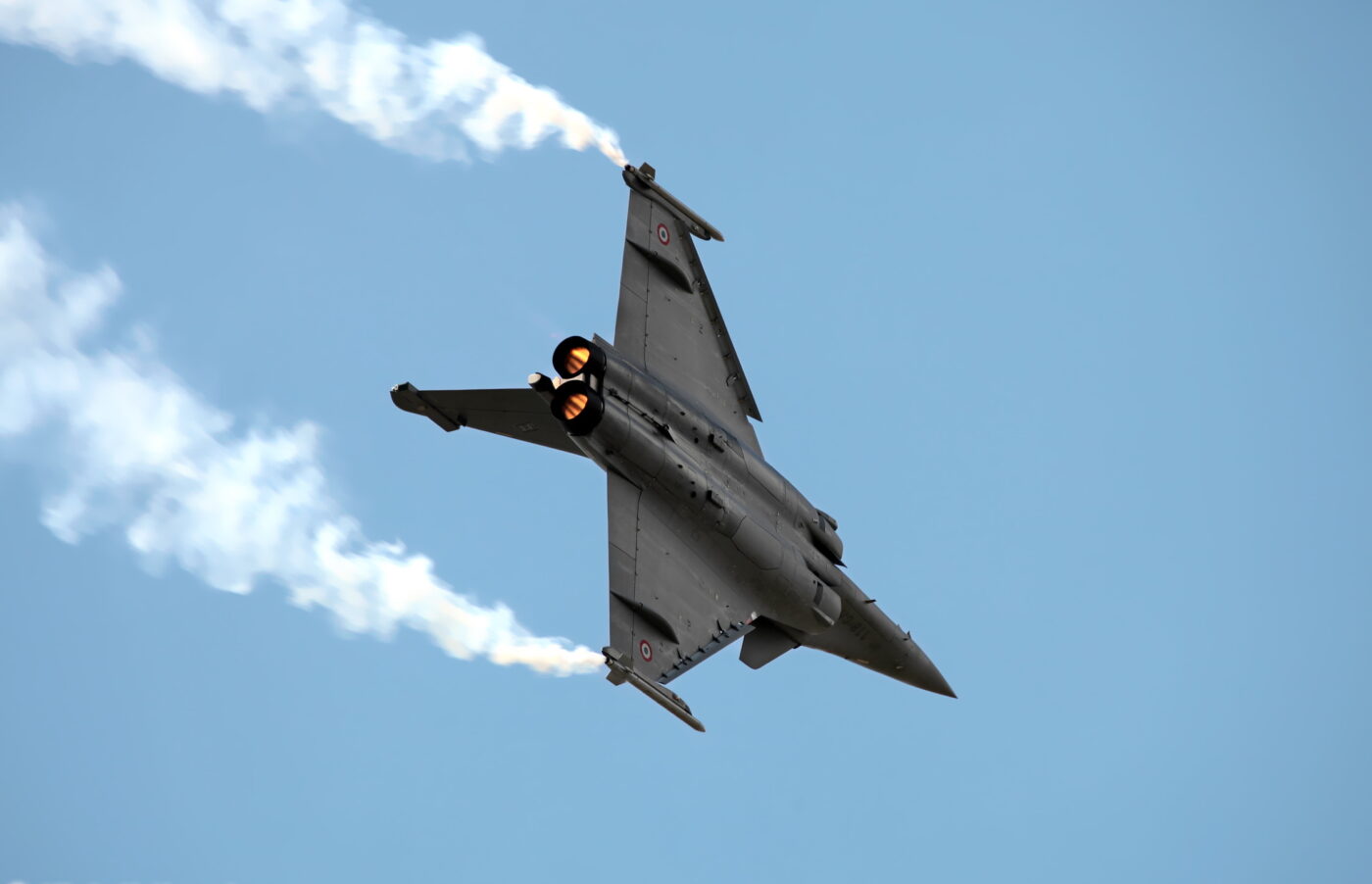
A month after the collapse of the France–Germany–Spain Future Combat Air System (FCAS) fighter program, the outlook for France’s Rafale F5, the next major upgrade standard of the Dassault Rafale multirole fighter succeeding the F4, has itself grown uncertain.
The French Air and Space Force has indicated it would rather receive additional F4-standard jets sooner than wait for the more advanced F5 variant.
The Chief of Staff of the French Air and Space Force, General Jérôme Bellanger, told senators that his force needs more Rafales well before the fighter’s next standard, the F5, becomes available.
Taking more Rafale F4-standard jets, which Bellanger described as a very capable fighter, would be preferable to waiting for the F5.
While Bellanger did not directly mention the Russia-Ukraine War and fears of the war spreading to Europe and NATO, he did suggest that changed geopolitical circumstances necessitated greater fighter fleet strength sooner.
General Jérôme Bellanger appeared before the Senate foreign affairs, defense and armed forces committee in May, during hearings on the bill updating France’s 2024-2030 military programming law. However, the whole session was held behind closed doors, and transcripts of the meeting were released only in the first week of August.
France’s updated 2024-2030 military programming law, which was adopted by the Senate on July 1, 2026, defers the delivery of 20 Rafale fighter jets from 2031-2032 to 2033-2034, so that the aircraft could be delivered directly to the upgraded F5 standard.
Rafale F5 Standard
France’s planned Rafale F5 standard will be armed with ASN4G hypersonic nuclear missiles and STRATUS RS missiles for suppressing enemy air defenses and for anti-ship warfare, will be powered with a domestically produced, high-thrust T-REX engine, and will feature Manned-Unmanned Teaming (MUM-T) with loyal wingman drones, including plans for a stealth combat drone by 2035.
France’s defense procurement agency, the Direction Générale de l’Armement (DGA), notified MBDA on June 2, 2026, about the framework agreement for the implementation and development contract for the ASN4G (Air-Sol Nucléaire de 4ème Génération), the country’s fourth-generation nuclear-armed hypersonic cruise missile.
The DGA has set a target of 2035 for the missile’s induction, adding that it will be carried by the Rafale F5 and integrated into both the French Air and Space Force’s Strategic Air Forces (FAS) and the Navy’s Nuclear Air Force component.
Meanwhile, the M88 T-REX is an advanced higher-thrust military turbofan engine developed in France by Safran Aircraft Engines to power the Dassault Rafale F5 fighter jet. Officially unveiled at the Paris Air Show in June 2025, it provides a 20% power boost over the standard M88 engine.
Dassault Rafale – Wikimedia Commons
“F5 variant of Rafale will have more powerful engines, improved survivability and data links, and will be accompanied by an unmanned combat air vehicle (UCAV) weighing more than 10t,” Dassault Aviation’s chief executive Officer, Eric Trappier, recently said in an interview.
The Rafale F5 standard is targeting initial operational service capability by 2030. However, integration into the French Air Force and Navy could happen around 2033-2034, with integration of ASN4G hypersonic missiles expected only by 2035.
The aircraft combat fleet target, as per the 2024-2030 military programming law, is unchanged at 225 aircraft by 2035: 185 for the French Air and Space Force and 40 for the French Navy.
However, Bellanger told the Senate that he would need the aircraft sooner, even if they’re of the F4 standard.
“I am going to need more aircraft quickly,” Bellanger told the committee. “If we are not in a position to produce the F5 standard before 2033, we will have to choose the F4, which is already a very fine aircraft, unless the operational contracts of the Air and Space Force on the fighter segment are revised.”
Notably, Bellanger is not alone in demanding more F4-standard Rafale jets sooner, instead of waiting for the F5-standard aircraft.
The Senate committee itself has questioned the design to postpone the induction of 20 Rafale jets so that they can be inducted directly in F5-standard.
It cited the tremendous pressure on the Rafale fleet of the French Air Force, the advanced age of the Rafale Marine aircraft, and mounting operational commitments constraining aircraft availability, according to reports.
Warning that the postponement could widen the capability gap at a critical time, the Senate committee said that the decision seems to be motivated more by budgetary considerations than operational choices.
Notably, in June this year, nearly 80% of the French fighter fleet was airborne at the same time for the first time ever.
Bellanger attributed it to Operation Poker, the quarterly Strategic Air Forces nuclear raid exercise, and intensive deployments in the Near and Middle East, where French Rafales were helping defend Gulf countries against Iranian drones and missiles.
French Rafales are also deployed into Eastern Europe as part of the Baltic Air Policing mission.
Lithuania | Interception of 6 aircrafts within the Baltic air space
Scramble of two Rafale aircraft of the Baltic Air Policing 71 detachment, based in Šiauliai , in order to escort aircrafts operating in the Baltic responsibility area.
— The Joint Staff – Military operations (@FrenchForces) June 4, 2026
“We are overusing the Rafale,” Bellanger said. “Versatility does not mean ubiquity.”
Another reason for overusing the Rafales is France’s expanding nuclear posture.
Earlier this year, French President Emmanuel Macron unveiled the “forward deterrence” nuclear doctrine, proposing to expand France’s independent nuclear deterrent umbrella across Europe.
However, this “forward deterrence” nuclear doctrine would put additional pressure on the Rafale fleet.
Bellanger said that the larger arsenal announced by President Emmanuel Macron at Île Longue in March would “mechanically” force France to reconsider the number of nuclear-armed Rafale B, the single-seat Rafale C assigned to protect them, and potentially its tanker fleet, which remains capped at 15 A330 MRTTs under the updated law.
This would be a major issue for the next programming law, he said, adding that “many more” aircraft would be needed.
“If we expand the nuclear arsenal, it is not so the weapons can sit in storage,” Bellanger said.
Another issue is the tremendous pressure on Dassault Aviation to deliver on its large Rafale orderbook.
France currently has nearly 165 Rafales in its fleet, 41 in the French Navy, and 124 for the French Air Force.
France has a target of 225 Rafale jets by 2035. So Dassault will have to deliver around 60 more Rafales in the coming years.
However, Dassault also has to deliver 165 Rafales for export customers, including India, Egypt, Qatar, Greece, Croatia, the UAE, Serbia, and Indonesia.
This does not include the 100 aircraft that Ukraine has shown intent to acquire, nor the IndianAir Force’s (IAF) proposal for 114 Rafale aircraft, which is currently under active consideration by India’s Ministry of Defense (MoD). If these two deals go through, the numbers will be even more significant, around 380 for export customers and 60 for France.
For perspective, Dassault delivered 26 Rafale fighter jets in 2025, one more than its target of 25. Of the 26 Rafales, 15 were for export customers and 11 for the French armed forces.
A year ago, the Rafale production rate was 2 aircraft a month (24/year). The same has now been increased to 3 per month (36 per year), with plans to increase to 4 per month (48 per year) to handle a growing backlog of orders.
Meanwhile, France’s existing Rafale fleet is working at full capacity, its Rafale Marine fleet is aging rapidly, and the current geopolitical environment and France’s expanding nuclear posture demand more Rafale aircraft sooner rather than later.
Under these circumstances, Bellanger feels that more F4-standard Rafales sooner is preferable to fewer F5-standard Rafales at a later date.
Sumit Ahlawat has over a decade of experience in news media. He has worked with Press Trust of India, Times Now, Zee News, Economic Times, and Microsoft News. He holds a Master’s Degree in International Media and Modern History from the University of Sheffield, UK.
He can be reached at ahlawat.sumit85 (at) gmail.com
By all conventional measures, America is losing the war with Iran. The Iranian Revolutionary Guard Corps (IRGC) has survived the U.S.-Israeli regime change effort, and it seems as though the hardline factions in Iran have been empowered. They also maintain their stockpiles of drones and missiles, while the U.S. is running dangerously low on crucial […]
In this harrowing, incredibly reported story co-published by Science and Retraction Watch, Brendan Borrell uncovers how “Mei,” a 6-year-old girl in China, died a week after an experimental gene-editing trial went wrong—and how her medical team, led by neuroscientist Zilong Qiu, downplayed the risks to her parents, did not publicly disclose her death, and has faced no real accountability.
On 23 March 2025, the day before the procedure, the family settled into a shared room inside a crowded pediatric ward. When the other girl in the room broke into tears, Mei handed her one of her favorite stuffed animals: a blue bird. “She liked to give things to other kids,” Jason said.
The next day Mei put on a brave face as she was taken to the procedure room. Yu’s handpicked doctor inserted a needle between two vertebrae on her lower back and withdrew just over a teaspoon of spinal fluid to create space for the drug. Then, he swapped syringes and gently pressed down on the plunger, filling her spinal canal with viruses.
The European Union is the only area in the world where passengers are protected by a full set of rights – whether they travel by air, rail, ship, or bus and coach.
For air travel, the current EU regulation sets out passengers’ rights when flights are cancelled, significantly delayed, or boarding is denied. In the case of delays, compensation applies once the delay reaches three hours, provided it is not caused by “extraordinary circumstances” beyond the airline’s control – such as severe weather or air traffic restrictions.
Yet the current regulation dates back to 2004, and much has changed since then – from inflation and the Covid-19 pandemic to a massive rise in air travel. In response, the European Commission proposed a revision in 2013, but disagreements among member states stalled the process until 2025.
In June 2025, EU ministers finally reached a political agreement, and negotiations with the European Parliament resumed in October. However, deep divisions remain over key issues. While the Council’s proposal is seen as less passenger-friendly, the Parliament is pushing for stronger protections.
To that end, MEPs have set a series of red lines, including a pre-filled claim form sent no later than 48 hours after the scheduled departure and the right to carry a hand luggage item without extra charge. But the most controversial issue is the Council’s proposal to raise the compensation threshold from three to four hours for intra-EU flights, and to six hours for long-haul journeys.
On 21 January, the Parliament adopted its second-reading position in plenary, with 97 percent of MEPs voting in favour of its red lines. The ball is now in the Council’s court, which has up to four months to update its mandate in response.
Over the coming months, it will become clear which side prevails – passengers or airlines.
Berlin (dpa) – Germany’s Greens are backing the European Union’s landmark trade deal with India, days after the party’s lawmakers in the European Parliament played a key role in challenging the bloc’s agreement with the South American Mercosur countries.
Andreas Audretsch, the party’s deputy group leader in the German parliament, said the deal with India, which was announced earlier on Tuesday, was good for businesses and workers in Germany.
In view of the “destructive rage” of US President Donald Trump, Europe must build new alliances for trade and cooperation, Audretsch argued.
The deal was finalised during an EU-India summit in New Delhi, with European Commission President Ursula von der Leyen and Indian Prime Minister Narendra Modi proclaiming the agreement on Tuesday.
“The EU and India make history today, deepening the partnership between the world’s biggest democracies,” von der Leyen said.
The latest agreement will not be as comprehensive as the one recently concluded between the EU and Mercosur countries Brazil, Argentina, Paraguay and Uruguay.
Last week, several Green lawmakers in Brussels voted in favour of referring the bloc’s deal with Mercosur to the European Court of Justice (ECJ), which could result in a substantial delay to ratification. Their votes were decisive in passing the motion, prompting severe criticism for the party in Germany, whose export-led economy stands to benefit from the boost to trade.
In a paper, the Green leadership has said that Germany needs “new economic partnerships” to diversify foreign trade. “That is why it is important to provisionally apply the agreement with the Mercosur countries and then ratify it,” the paper continued. (January 27)
Strasbourg, France – Several thousand European farmers protested in the French city of Strasbourg on Tuesday against the European Union’s free trade deal with countries in the Latin American Mercosur bloc.
Around 5,000 protesters and several hundred tractors gathered in the city, according to local officials, where the European Parliament is holding a plenary session this week.
EU lawmakers are to decide on Wednesday if they want to seek an opinion from the European Court of Justice (ECJ) on whether the contested Mercosur agreement is compatible with EU law, which could delay the ratification process.
The free trade agreement was signed in Paraguay last weekend and still has to be approved by the European Parliament.
With their protest, the farmers want to keep up the pressure on EU decision-makers. They fear disproportionate competition from cheap imports from South America.
Protesters lit smoke bombs and held up placards with slogans such as “Von der Leyen go home,” directed at European Commission President Ursula von der Leyen.
The demonstration caused major traffic disruption in Strasbourg, with several roads blocked. (January 20)
Depuis les Rencontres économiques d'Aix-en-Provence, Aux avant-postes s'interroge sur la place de l'Europe dans la mondialisation. Une Europe qui a accumulé du retard dans un certain nombre de secteurs économiques, comme le numérique et l'industrie, et qui doit à présent trouver des solutions pour relancer sa compétitivité à l'échelle mondiale.
di Cesare Sacchetti Nell’ultimo editoriale del giornalista del Corriere, Federico Fubini, uno degli uomini della rete di George Soros in Italia, si alternano timori concreti ed esercizi di autoconvicimento. Fubini è noto per essere uno dei principali propagandisti degli organi di stampa, uno di quegli uomini ai quali è stata deputata la “missione” di dire […]
di Cesare Sacchetti In altri tempi, un retroscena simile sarebbe stato ospitato sulle pagine di qualche rivista di fonti ben informate, magari come la celebre OP di Mino Pecorelli, massone e giornalista tra i più informati sulle vicende della Santa Sede. Di questi tempi invece si fa fatica a trovare delle notizie sui retroscena della […]
di Cesare Sacchetti Epstein è un nome salito ai (dis) onori delle cronache solo nei tempi più recenti per via del famigerato Jeffrey Epstein. Epstein è stato molto di più di un uomo che ce l’ha fatta. La sua parabola è quella di un personaggio che è stato preparato meticolosamente, prim’ancora che il suo nome […]
di Cesare Sacchetti All’Addaura, uno splendido tratto di costa di Palermo, ci sono molti ricordi del passato, e soprattutto diversi misteri della repubblica di Cassibile. Era una calda giornata di giugno del 1989, quando il giudice Giovanni Falcone si preparava a ricevere due illustri ospiti quali i giudici svizzeri Carla Del Ponte e Claudio Lehmann, […]
di Cesare Sacchetti Il suo portamento era aristocratico, il suo sguardo sincero e la sua fede dotta e incrollabile. Il Santo Padre, Pio XII, al secolo Eugenio Pacelli, è stato senza dubbio uno dei pontefici più importanti e influenti non solo della storia del’900, ma di tutta l’epoca moderna sorta dopo l’avvento dell’infausta rivoluzione francese. […]
di Cesare Sacchetti Nel mezzo della seconda guerra mondiale, in Italia c’era una diffusa aria di malcontento, tristezza e sfiducia riguardo le sorti del conflitto. Tra i vertici politici e militari dell’epoca era già maturata la convinzione che l’Italia non sarebbe mai uscita vincitrice da quel conflitto. Troppo forti gli avversari, e soprattutto troppo ancora […]
di Cesare Sacchetti Anni fa, ai tempi del governo gialloverde, si presentò con l’appellativo di “avvocato del popolo”, anche se Giuseppe Conte il popolo nelle sue cause e nella sua improvvisa carriera politica non lo ha mai realmente rappresentato. Conte è stato scelto sin dai primi istanti dagli ambienti pentastellati e aveva già nel 2018 […]
di Cesare Sacchetti Ci sono alcune storie così incredibili che a volte si può pensare che si è usciti dal confine della storia per essere approdati in quello della finzione letteraria. Questa storia è certamente incredibile, ma non appartiene al campo dei romanzi o dei gialli che raccontano di intrighi politici internazionali e di trame […]
di Cesare Sacchetti A Ecône, il paesino circondato dalle verdi vallate svizzere, nella casa della Fraternità Sacerdotale San Pio X, erano convinti che il meteo fosse foriero di segni positivi per ciò che stava accadendo. La FSSPX ha deciso, nonostante le esortazioni a desistere del Santo Padre, Leone XIV, di procedere con le ordinazioni di […]
di Cesare Sacchetti A Roma, tra la fine degli anni’60 e i primi anni’70, si respirava ancora un’aria di “innocenza” nei giri della malavita locale. I fatti violenti nella città non erano ancora divenuti all’ordine del giorno, le armi c’erano, ma non nella quantità e nella disponibilità degli anni a venire. Il malavitoso romano era […]
A «revolução dos flamingos rosa» agita a Albânia. Todos os dias, manifestantes protestam contra um projeto hoteleiro de luxo, prejudicial ao ambiente. Por trás deste empreendimento estão investidores sírio-catarenses que conduzem outras operações semelhantes, nomeadamente no oceano Índico. Porque Doha aposta no turismo para consolidar a sua posição internacional e diversificar a sua economia. Para as tartarugas gigantes e a biodiversidade marinha, o atol de Aldabra constitui um santuário. (…)
Composição: Amor, bem-estar, escutar-se, partilha, amizade, 5 minutos, proximidade emocional, escuta. Sobredosagem: Família, autorregulação, comunicação. Procedimento adotado nas Leituras Furiosas: Rasurar a palavra «bênção» da coluna de palavras relativas à ideia de «família» foi um erro, aponta LCMarola — um moço que se lê como uma mota com desejo de rugir a sua aceleração sobre a paisagem. Cuidado, diz-nos o Lunatic, a rapidez é pouco amiga da atenção e da escuta. Diz-nos que (…)

 Login

 Lithuania | Interception of 6
 aircrafts within the Baltic air space


 Scramble of two
 Rafale aircraft of the Baltic Air Policing 71 detachment, based in Šiauliai
 , in order to escort
 Visual…

