Tax authorities in Greece uncovered a smugglers ring illegally extracting and collecting protected red corals around the island of Skopelos. The value of the illegal cargo is estimated at 800,000 euros. The perpetrators who collected the precious corals had rented a pleasure boat. Their movements were suspicious and were arrested by inspectors of Independent Public […]
For decades, the US has maintained an unassailable lead in aircraft carriers.
The US currently operates 11 flattops, all of them nuclear-powered. China is a distant second with three aircraft carriers, none of them nuclear-powered.
The US operates roughly half of the world’s true aircraft carriers. However, for years, the security analysts in Washington have been wargaming for a nightmarish scenario.
What if the US’s carrier fleet is not a force multiplier, but a strategic vulnerability? Or, to put it another way, can Beijing sink the US Navy’s aircraft carriers?
These questions have assumed significance ever since China claimed to have developed anti-ship ballistic missiles (ASBMs), the DF‑21D and DF‑26B, also known as “carrier-killers.”
These ASBMs are part of China’s broader A2/AD (Anti-Access and Area Denial) architecture intended to push U.S. carrier strike groups (CSGs) beyond the first island chain.
In the last decade, several wargames, research studies, think‑tank reports, and opinion columns have wondered whether carriers are becoming obsolete, the new battleships – large, complex, and expensive systems – but vulnerable to cheap, long‑range missiles.
But a new Center for Strategic & International Studies (CSIS) research paper has flipped the script: if US carriers are vulnerable, why can’t Washington also hold China’s new carriers at risk?
Are Aircraft Carriers Becoming Obsolete?
In 2023, the South China Morning Post reported that researchers at North University of China claimed that it took an average of only 24 hypersonic missiles to sink the USS Gerald R. Ford and its five escort ships across 20 simulated battles.
From an economic point of view, that would imply that for every $1 China spends on new classes of low-cost hypersonic missiles, it could destroy $10,858.59 worth of U.S. capital ships.
A British study published in 2024 found that their carriers – the HMS Queen Elizabeth and HMS Prince of Wales – were similarly at risk.
Not just think tanks, even senior US government figures have expressed similar fears.
US Secretary of War Pete Hegseth said in a recent podcast interview: In wargames against China, ‘We lose every time.”
The secretary went further, linking US defeat to the vulnerability of aircraft carriers: “We know what our real capability [is]…If our whole power projection platform is aircraft carriers and the ability to project power that way strategically around the globe . . . and if 15 hypersonic missiles can take out our 10 aircraft carriers in the first 20 minutes of a conflict, what
does that look like?”
But if US carriers are so vulnerable, why can’t Washington bring China’s expanding carrier fleet within its firing range?
China’s Expanding Carrier Fleet
After the US, China has the world’s second-largest carrier fleet.
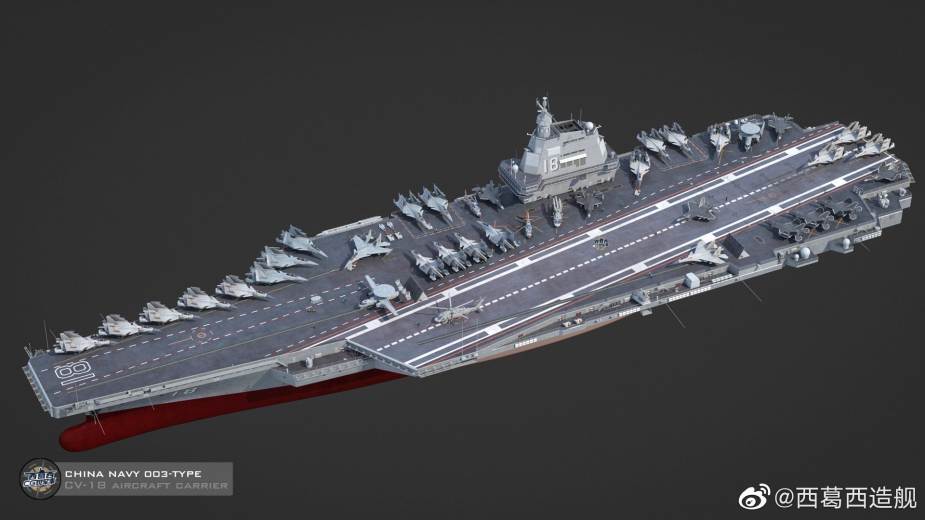
Beijing currently operates a fleet of three aircraft carriers. China launched its third carrier, Fujian (Type 003), an 80,000‑ton supercarrier capable of launching a mix of over 50 fourth- and fifth-generation fighters, and key enablers such as KJ-600 airborne early warning and control aircraft.
China also launched Sichuan (Type 076), a 40,000‑ton amphibious assault ship also suspected of serving as a drone carrier capable of using an electromagnetic (EM) catapult to launch GJ-11 stealth unmanned combat aircraft.
A fourth carrier (Type 004) is undergoing construction. Satellite imagery suggests that this will likely be China’s largest and first nuclear-powered carrier.
The Fujian is more technically advanced than the other Chinese carriers.
China plans to construct six additional aircraft carriers by 2035, bringing its total carrier force up to nine, according to the Department of War (DOW).
China’s growing carrier fleet is a force multiplier; however, it could also become a strategic vulnerability.
The Vulnerability of the US Aircraft Carriers
China recognized early that the US ability to project force globally rests on its fleet of 11 nuclear-powered aircraft carriers. It also recognized that it would be decades before it could match Washington in carrier fleet strength.
Therefore, China focused its energy on developing weapons systems that could negate the US advantage and developed anti-ship ballistic missiles (ASBMs).
Recent pieces have argued that Chinese hypersonic and ballistic missiles, supported by an increasingly sophisticated space‑ and AI‑enabled “kill web,” could force US and allied carriers so far offshore that their air wings become operationally irrelevant.
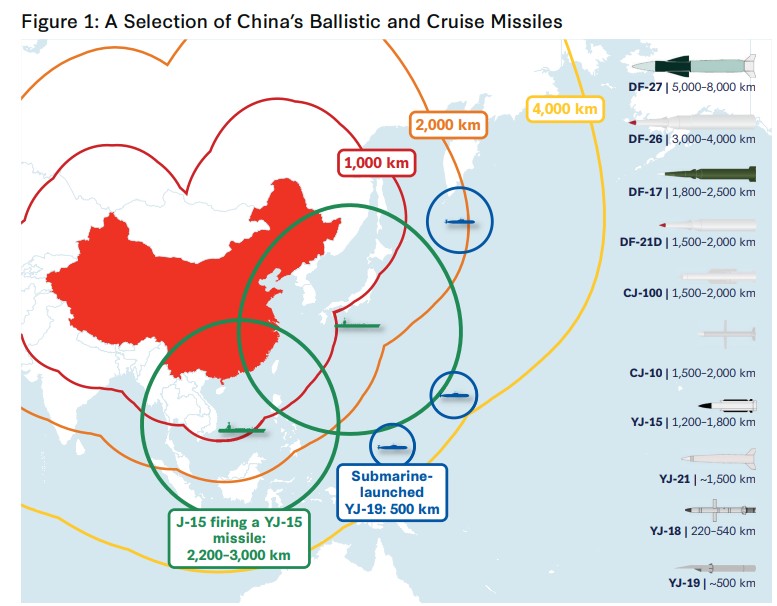
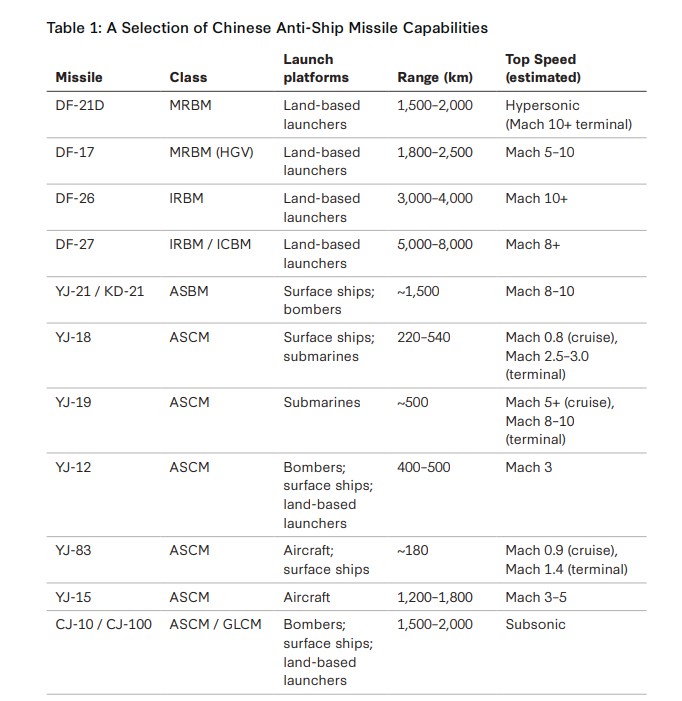
For example, the YJ-21 is a Chinese air-launched medium-range ballistic missile specifically designed to strike high-value assets such as carriers. This missile can be launched from fighters and unmanned combat aerial vehicles (UCAVs) and uses redundant guidance systems that make it difficult to jam; a variant can be fired from Type 055 destroyers, though this may have been the YJ-20.
Source: Adapted from CSIS Missile Defense Project, “Missiles of China,” CSIS, last modified March 18, 2026. Credits CSIS.
Combined with older missiles such as the DF-26, colloquially known as “carrier-killers” with a range of up to around 4,000 kilometers (km), and the DF-17, which has a shorter range of up to around 2,500 km but is designed to strike high-value assets and evade US interceptors (e.g., THAAD and Patriot), China has an arsenal of systems capable of hypersonic speeds that can hold carriers at risk up to 2,500 miles away.
A Selection of Chinese Anti-Ship Missile Capabilities. Credits CSIS.
However, the current discussion in Washington often frames carriers as unique to the United States and uniquely vulnerable, while underplaying the fact that China is now building its own large-deck, network‑enabled capital ships that are at least as targetable as the U.S. ships China aims to threaten.
How the U.S. Can Make China’s Carriers Vulnerable?
According to the CSIS paper, Washington could follow a five-pronged strategy to make China’s growing carrier fleet vulnerable.
“Despite various improvements, PLAN surface ASW, fixed‑wing ASW, and undersea sensing are still patchy compared with U.S. and Japanese capabilities, particularly in noisy littorals and chokepoints,” it said.
A cost‑effective way to threaten China’s carriers is through a layered subsurface screen built around the following assets:
■ U.S. nuclear attack submarines (SSNs) operating at range.
■ Allied diesel-electric submarines from Australia, Japan, South Korea, and potentially the Philippines, including submarines equipped with air-independent propulsion where available.
■ Shared undersea sensing networks and common heavyweight torpedoes, enabling coordinated ambush of PLAN carrier groups in transit corridors rather than near the Chinese coast.
■ Shared unmanned undersea vehicles (UUVs) capable of both conducting intelligence collection and limited strike missions against PLAN ships.
The key is to turn the “undersea domain into a continuous threat envelope that forces Beijing to invest heavily in escorts, ASW aviation, and fixed sensors simply to move carriers out of its home waters.”
Further, this approach also leverages existing areas of production and operational excellence from various U.S. allies, making implementation faster and cheaper than more novel approaches.
(2) Land-based maritime strike networks: China’s A2/AD system is, in part, a land‑based missile problem. The United States and its regional partners can mirror that logic by building a distributed, multinational anti‑ship missile network on land from Japan through the Philippines and, where politically feasible, into the South Pacific and even around key maritime terrain globally, including the following:
■ U.S. Marine Corps and Army units fielding Navy-Marine Expeditionary Ship Interdiction System (NMESIS) missile systems, Mid‑Range Capability (i.e., Typhon batteries), and Precision Strike Missiles (PrSMs) adapted to strike ships and a host of information warfare systems (e.g., cyber, space, electronic warfare, and inform/influence activities) stationed as a
littoral rotational force.
■ Australian, Japanese, and potentially Philippine coastal missile batteries (e.g., upgraded Type 12, BrahMos, and naval strike missiles) integrated into common fire control and ISR architectures.
■ Pre‑negotiated access, dispersal sites, and logistics arrangements to ensure these units can survive Chinese Air Force and Rocket Force (PLAAF/PLARF) strikes and continue to generate maritime fires.
Such a network can threaten PLAN carriers during deployment, not just at the point of conflict.
Moreover, “the mere expectation that upon entering the Philippine Sea, carriers such as the Fujian or Sichuan will face dense, land‑based anti‑ship fires backed by allied ISR raises the perceived risk of using them as front‑line tools of coercion.”
(3) Long-range air and space-enabled fires: The United States and its allies can conduct long-range strikes using a mix of bombers, fighters, and maritime patrol aircraft:
■ U.S. Air Force bombers and Navy aircraft armed with anti-ship missiles, such as LRASM and future hypersonic anti-ship weapons, connected to a complex battle network that both supports the attack and degrades enemy sensors.
■ Allied F‑35 fleets (from Australia, Japan, and South Korea) using low‑observable sensors to contribute to the maritime picture and deliver their own long‑range anti‑ship munitions.
■ A mix of kinetic and non-kinetic attack vectors with a conscious emphasis on mission kills, specifically by degrading flight‑deck operations, destroying aviation fuel and ordnance handling, or disabling key escorts and logistics ships supporting the carrier, rather than only aiming for catastrophic hull loss.
This approach is particularly suited to large military powers such as the United States but can be partially adopted by states with smaller budgets by investing in a limited number of fifth‑generation or advanced fourth‑generation aircraft plus modern anti‑ship missiles.
(4) Cyber-electromagnetic disruption: PLAN CSGs are nodes within a broader battle network. Their combat value depends on complex links to off‑board ISR, satellite navigation, command networks, and electromagnetic attack and defense platforms.
By disrupting the carriers’ connections to this broader network, the United States and its allies can deny the PLAN access to the enablers that make its forces more combat-capable.
Rather than treating ships solely as physical targets, U.S. and allied planners should prioritize EM and cyber operations.
(5) Unmanned swarm and port-denial campaigns: The Ukraine war has shown how even a state with a modest navy can use unmanned surface vessels (USVs), unmanned aerial vehicles, and shore‑based missiles to attrite a larger fleet.
Ukraine has successfully forced Russia to pull major units out of Sevastopol and turned the Black Sea into a contested battlespace.
While the terrain of the Pacific is not identical to the Black Sea, a similar logic can be applied to PLAN carriers, especially in the first island chain.
Swarms of relatively low‑cost USVs and loitering munitions can attack ships in port, logistic hubs, and fixed defenses, driving carriers to relocate to more distant, less convenient bases.
The central idea is to make a carrier’s routine employment around Taiwan, the South China Sea, or beyond the first island chain appear prohibitively risky.
By following these steps, the U.S. and its allies could blunt the advantage of China’s growing carrier fleet.
While China has for years invested in AA/AD vectors to make the U.S. carriers vulnerable, Washington could flip the script and make Beijing’s own carriers equally vulnerable.
Sumit Ahlawat has over a decade of experience in news media. He has worked with Press Trust of India, Times Now, Zee News, Economic Times, and Microsoft News. He holds a Master’s Degree in International Media and Modern History from the University of Sheffield, UK.
He can be reached at ahlawat.sumit85 (at) gmail.com
The number of West Nile virus infections in Greece continues to rise, according to an announcement of the National Public Health Organization (EODY), which on Wednesday reported 23 additional locally acquired cases over the past week. Since the start of the surveillance period and up to 5 August, 2026, a total of 65 locally acquired […]
The body of a man found in the sea west of the island of Symi on Wednesday has been identified as the missing German yacht passenger, the Greek Coast Guard announced on Thursday. that of the eighth passenger of a sailboat who had been missing since August 2, the Hellenic Coast Guard announced on Thursday. […]
Τhe 26-year-old boxer suspect for the murder of 38-year-old British national Elisabeth Jane Ross has been remanded in custody after appearing before an investigating magistrate on Thursday. The defendant, who entered Greece as an unaccompanied minor from Afghanistan in 2016, has been charged for the offenses of intentional homicide, robbery and weapons possession.. The body […]
Ukraine is staring down a new and deeply unsettling threat: a possible North Korean missile unit deployment to western Russia amid a lack of anti-ballistic interceptors in its arsenal.
North Korea is preparing to deploy a missile unit to western Russia, according to a Ukrainian military intelligence official, marking a significant escalation in the conflict.
Andrii Cherniak of Ukraine’s Main Directorate of Intelligence (GUR) told Reuters that the deployment involves Russia’s 112th Guards Missile Brigade and about 90 North Korean personnel based in the Voronezh region, which borders Ukraine.
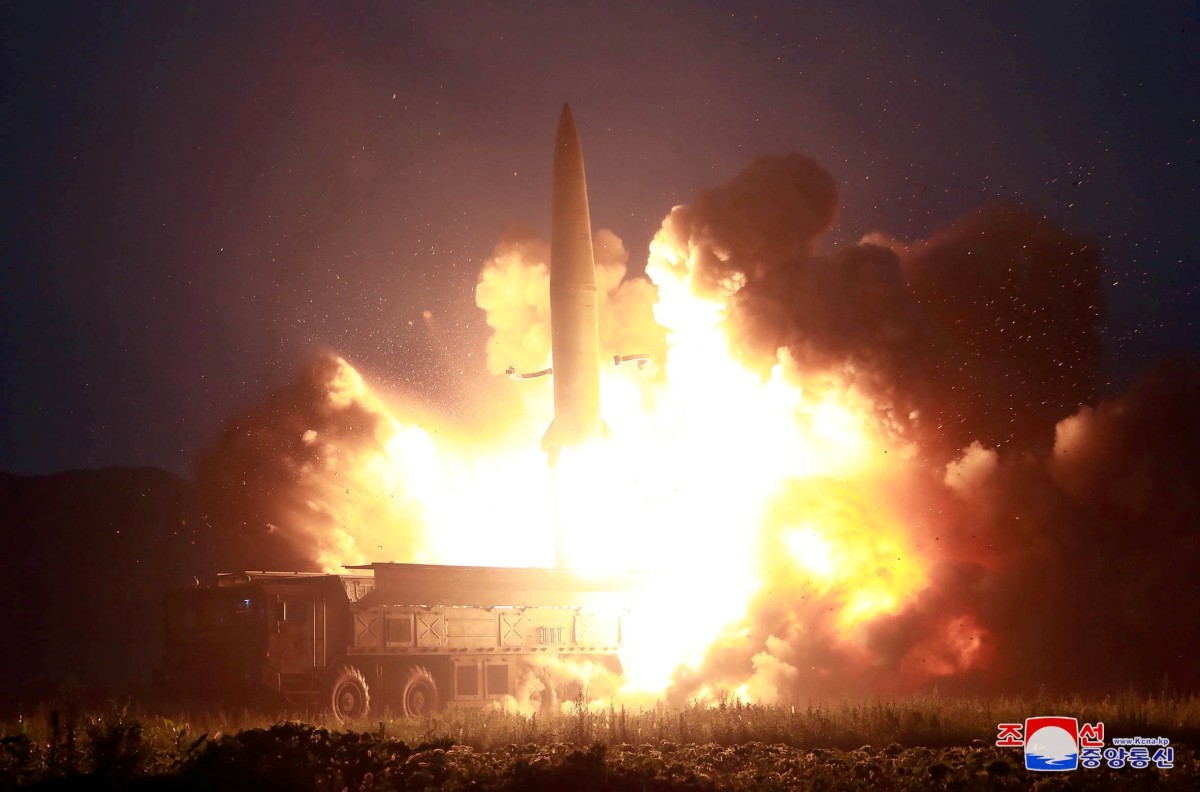
While the exact composition of missiles will be finalized during senior-level talks next month, Pyongyang has already sent a new batch of 40 KN-23 and KN-24 missiles and personnel to Russia, the GUR official claimed.
Further, he noted that the unit could eventually field up to 120 short-range ballistic missiles along with six launchers.
An informed source reportedly told Reuters that the United States was aware of the plan but did not provide further details.
Designed to evade missile defenses by flying on a lower, “depressed” trajectory that reduces radar detection, the KN-23—resembling the Russian Iskander—has a range of 800-900 kilometers.
Previous reports indicated that Moscow had allegedly modified the missile to enhance its accuracy.
Meanwhile, the KN-24 has a comparatively shorter range of about 410 kilometers and employs a quasi-ballistic or depressed trajectory with possible in-flight maneuvers, making it harder to intercept.
GUR’s claims could not be officially verified, and the Pentagon has not made a statement acknowledging any such intelligence reports. Nevertheless, the GUR’s assessment comes days after Ukrainian President Volodymyr Zelenskyy announced Russia used a North Korean missile for a strike on July 30, which killed five members of a family.
Although Russia has previously used North Korean ballistic missiles, the Ukrainian reports hinted that Moscow might have received a fresh supply.
Earlier, Pyongyang had reportedly delivered more than 100 short-range ballistic missiles (primarily KN-23 and KN-24), millions of artillery shells, over 120 long-range self-propelled artillery systems, and more than 120 multiple rocket launch systems. Additionally, it had deployed an estimated 11,000 troops for the Ukraine war, of whom approximately 2,300 were killed in combat.
While the US and NATO are on the ground in Ukraine, studying the realities of modern warfare and using those lessons to develop the next generation of military technology, North Korea, Iran, and China are also closely observing the conflict to refine their own weapons and military doctrines.
North Korean KN-23
Why is Ukraine Alarmed
Russia has been exploiting gaps in Ukraine’s air defenses to launch frequent ballistic and hypersonic missile strikes.
On August 4, Russia conducted a major overnight attack with drones and ballistic missiles that killed 17 people. Ukrainian forces intercepted 98 of 115 drones but failed to shoot down even a single ballistic missile, as recently reported by the EurAsian Times
Having run out of Patriot interceptors, which are the only reliable defense against ballistic missiles, Ukraine is practically left defenseless.
Ukraine has been pleading with its allies to supply more Patriot batteries and interceptors, which remain among the few weapons capable of countering ballistic missile threats such as North Korea’s KN-23 and KN-24 and Russia’s Iskander.
“Ballistic missile interceptors could have saved the lives of those killed today,” Zelenskyy wrote on social media after the August 4 strike. “It is very important that our partners understand that delays in supplying them, or an unwillingness to provide anti-ballistic systems, lead directly to such horrific casualties and destruction.”
Notably, the US has been sending Patriot missiles to Ukraine, among other weapons and munitions—including through the Prioritized Ukraine Requirements List (PURL), a new system wherein NATO nations pay for the transfer of weapons from the US. However, recent reports suggest that the US has expended a massive chunk of its own Patriot interceptors in the Ukraine war, eroding any space to make fresh deliveries to Kyiv.
Meanwhile, other NATO allies remain wary of aiding Ukraine with Patriots amid heightened security threats and long production timelines.
The Patriot shortage has allowed Moscow to use ballistic missiles with near impunity, creating a dangerous “window of vulnerability” for Ukraine that will only expand with North Korea’s deployment. In fact, experts fear that the situation will get increasingly challenging as winter approaches, which is when Russia intensifies attacks on Ukraine’s power grids.
The expanding Russia-North Korea partnership also carries broader geopolitical implications for Ukraine after nearly five years of war.
“Kyiv is rattled not because North Korean missiles are more advanced than Russia’s Iskander, but because they signal a deeper, more dangerous geopolitical alignment—and their sheer volume and indiscriminate use are overwhelming Ukraine’s already strained defenses. This isn’t just about weapons—it’s about the normalization of new military collaboration and geopolitical alignment. Russia’s use of North Korean missiles also suggests Pyongyang has replenished Moscow’s arsenal, enabling intensified bombardments as Russia seeks to break Ukrainian morale. For Kyiv, each KN-23/24 impact is both a physical and symbolic blow,” Air Marshal G.S. Bedi (retd) told the EurAsian Times.
Notably, North Korea’s short-range ballistic missiles (SRBMs) are believed to be less accurate compared to their Russian counterparts. A previous Ukrainian state prosecutor’s report stated that about half of the KN-23s launched by Russia between late December 2023 and late February 2024 veered off course and sometimes exploded midair.
Moreover, strikes launched using these missiles have caused large-scale civilian casualties.
Nonetheless, the deployment of North Korean missiles will give Russia what it needs to overwhelm and batter Ukraine: volume.
This allows Moscow to reserve more precise systems such as the Iskander for high-value targets while using KN-23 and KN-24 missiles against population centers and infrastructure to increase pressure on Kyiv.
Interestingly, during a meeting of Ukraine’s National Security and Defense Council, President Volodymyr Zelenskyy reportedly announced that his country will destroy Russian missile launchers to reduce attacks on Ukrainian cities.
“Our military knows they must destroy the enemy’s launchers to reduce strikes on Ukraine, its critical infrastructure, and civilians. They are working on this and will continue to do so,” Zelenskyy said.
Contact the author at sakshi.tiwari13 (at) outlook.com
China’s state broadcaster recently released the first footage showing multiple DF-17 hypersonic missiles in a single frame, in what appears to be a deliberate power-projection message. The display comes at a time when hypersonic weapons have proven their lethality and ability to penetrate air defenses in the Ukraine and Iran wars.
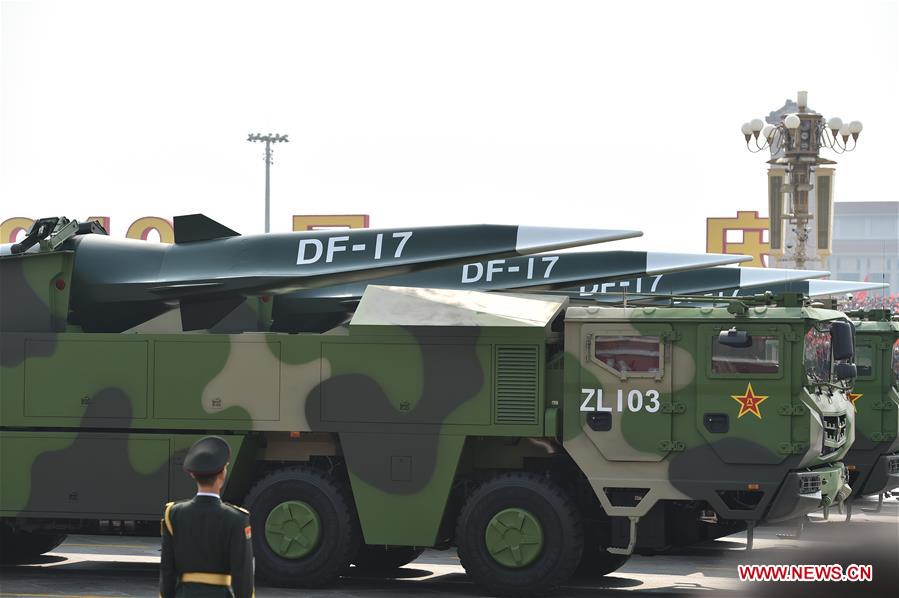
On August 3, state-owned CCTV aired video from the PLA documentary series Zhìshèng (“Victory”) featuring at least six DF-17 transporter-erector-launchers (TELs) of the People’s Liberation Army Rocket Force (PLARF) together.
Military affairs expert Zhang Junshe told the Global Times that the display indicates the system has been mass-deployed and is reliably placed on combat duty.
Zhang emphasized that the DF-17 is a vital weapon that can alter the rules of modern air defense warfare, as it can precisely hit adversary forward air defense installations and strategic command targets by leveraging its hypersonic penetration advantage.
Typically, hypersonic weapons are very hard to intercept by conventional missile defense systems due to two main reasons: 1) these weapons travel faster than Mach 5, or five times the speed of sound, equivalent to approximately 100 kilometers (60 miles) per minute; 2) these are highly maneuverable weapons that follow an unpredictable trajectory.
Only a few countries have developed and combat-deployed hypersonic weapons, including China, Russia, and sanctioned countries like Iran and North Korea.
Of these, both Russia and Iran have used these weapons in combat with Ukraine and the United States, respectively.
On its part, Ukraine has intercepted some Russian Kinzhal hypersonic missiles with Patriot batteries.
However, these hypersonic missiles have been wreaking havoc on Ukrainian cities in recent weeks, as earlier reported by the EurAsian Times. Moscow purportedly exploits a gap in its air defense coverage and launches Kinzhal and Tsirkon hypersonic missiles to cause devastation in the embattled country. Additionally, Moscow has struck Ukraine with the Oreshnik hypersonic missile, which Ukraine has been unable to shoot down so far.
Meanwhile, Iran claimed to have fired hypersonic missiles (Fattah-class) on Israeli cities and US military bases across the Middle East during the hostilities earlier this year.
However, independent verification of claimed terminal speeds, maneuver performance, and interception rates remains limited. Previous video footage from Tel Aviv and other Israeli cities showed Iranian missiles dodging as many as 10 interceptor missiles and hitting their targets at hypersonic speeds.
Six DF-17 hypersonic missile launch vehicles of the PLARF appeared together in the same frame in footage broadcast by CCTV (Photo Courtesy of Global Times)
Notably, the latest footage comes more than a month after CCTV published footage of a DF-17 hypersonic glide vehicle missile launch in June 2026. At the time, analysts noted that China was sending a deterrence message by emphasizing its strike capability to the United States, particularly amid tensions in the Taiwan Strait, the First Island Chain, and the South China Sea.
The same argument may apply to the latest footage, particularly since the DF-17 is the world’s first medium-range missile to field a hypersonic glide vehicle (HGV).
China has amassed a variety of deadly hypersonic missiles, including the DF-17, DF-27, YJ-21, and YJ-20. These weapons are part of the formidable Chinese A2/AD (Anti-Access/Area Denial) network along its coastline.
Chinese experts believe that even the most advanced missile defenses in the US, including the THAAD (Terminal High Altitude Air Defense) and PAC-3 Patriot, are not effective against hypersonic weapons.
“Existing US missile defenses can theoretically intercept some hypersonic weapons in their final stage, but high speed, maneuverability, and stealth make it very difficult,” read a previous Chinese paper titled “Tactical Missile Technology” on the ability of US missile defense systems to intercept hypersonic weapons.
The US and allied forces are developing countermeasures, including improved sensors, the Glide Phase Interceptor, SM-6 variants, and other technologies, but substantial challenges remain in tracking and engaging maneuvering hypersonic vehicles at scale for now.
Chinese experts have noted that the DF-17 is a potent strategic deterrent because it is a conventional, medium-range missile capable of reaching important targets in the first island chain—stretching from the Japanese archipelago through Taiwan to the Philippines—including strategic sites in Japan and other areas.
Chinese experts have previously noted that the missile may reach as far as parts of the Second Island Chain, extending from Japan through Guam, Micronesia, and Palau. They believe that coordinated multi-vehicle salvo launches may play a crucial role in both launch site security and strike effectiveness—compounding the threats faced by the US military forces in the Indo-Pacific region.
DF-17’s Mass Deployment
The DF-17 is China’s first operational road-mobile medium-range ballistic missile (MRBM) equipped with a hypersonic glide vehicle (HGV).
With a range of 1,800–2,500 kilometers, it is Beijing’s most operationally mature hypersonic strike system and is widely regarded as capable of penetrating nearly any missile defense network worldwide.
Like ICBMs, hypersonic glide weapons are launched by rockets high into the atmosphere. However, unlike ICBMs, whose warheads rely primarily on gravity once they begin their descent, hypersonic glide weapons dive back toward Earth sooner, then flatten their flight path. They make continuous course corrections to stay on target while traveling at speeds up to 12 times the speed of sound, using onboard navigation systems, making them much harder to detect by the adversary and allowing them to suppress enemy missile defenses at an early stage, clearing the way for follow-on strikes.
China’s DF-17 hypersonic missiles. (Image: China Military Online)
The DF-17 made its public debut in October 2019 at a military parade that marked the 70th anniversary of Communist Party rule in China.
In 2021, the PLA conducted its first known hypersonic test involving the DF-17 glide vehicle, rattling the United States. Later, the Pentagon published the China’s Military Power 2022 report, referring to the DF-17 as a critical threat in the Western Pacific.
“The DF-17 passed several tests successfully and is deployed operationally. While the DF-17 is primarily a conventional platform, it may be equipped with nuclear warheads,” the report added.
Zhang pointed out that the DF-17 can avoid adversary targeting and reconnaissance because it does not depend on fixed launch silos.
Moreover, DF-17’s powerful anti-jamming and precision strike capabilities greatly increase its battlefield survivability and make it well-suited for a variety of complex field combat scenarios, as it is difficult for adversary satellites to detect its operational patterns.
“In addition to a longer vehicle body and more wheels [of the TEL], the biggest change in the DF-17 is the shape of the missile itself. Unlike the cone-shaped warhead we are familiar with from past models, the DF-17’s warhead has undergone significant changes and now features four wings and a tail fin,” Gong Chunyu, a training staff officer from the DF-17 conventional missile formation, was quoted as saying by CCTV earlier.
“This design reflects a more scientific and advanced concept, with the missile capable of flexible and varied flight trajectories and greatly enhanced penetration capabilities,” he added.
It may be noted that China’s public releases of multiple TELs in formation and field launches demonstrate that the system is no longer experimental or small-scale, and it signifies distributed, mobile, ready forces that could hunt US-based targets quickly.
The missile’s range and penetration capability are repeatedly linked to targets in the western Pacific. Analysts interpret this as reinforcing China’s ability to hold at risk U.S. and allied bases, airfields, command nodes, and surface ships in a Taiwan or regional contingency—raising the cost of a US intervention.
Contact the author at sakshi.tiwari13 (at) outlook.com
Part of ceiling of the newly renovated Emergency Department (ER) in the General Hospital of Corinth, collapsed less than a month after the inauguration by Health Minister Adonis Georgiadis. According to hospital personnel, the collapse occurred in the exact same area where the inauguration took place, putting employees, patients and attendants at risk. In a […]
The Ancient Olympia is getting ready and in the mood to host the 2nd Olympia Night Run – Run Under Zeus, an event scheduled to take place on Saturday, August 8, 2026 in Ancient Olympia. Staring time: 9 o’ clock in the evening. According to organizers, registrations have been completed on Wednesday and more than […]
A 55-year-old man has been arrested by police when it was found out that he was keeping the body of his father in a deep freezer for years in order to collect his pension payments. The case was discovered after relatives/neighbors complained to police that they have not seen the old man for years. The […]
The regional unit of Attica remains at Very High Fire Risk also on Wednesday and Thursday, August 5-6, 2026, the Civil Protection has warned. Also other regions including Greek islands are on the same Category 4, while many parts of the country are at High Fire Risk Category 3. According to the Fire Risk Forecast […]
The body of a man was recovered from the sea near Panormitis Bay, off the island of Symi, the Greek Coast Guard announced on Wednesday. The body was picked up by a Coast Guard patrol boat during a Coast Guard operation and will be taken to the Rhodes General Hospital for autopsy. Authorities will investigate […]
If anything, Indian Defense Minister Rajnath Singh’s call on August 3 for greater “military-civil integration” to create “a robust defense ecosystem to tackle emerging challenges” implies that there is still a structural mismatch between generalist bureaucrats (critically called Babus) and uniformed personnel within the Ministry of Defense (MoD).
In other words, in India’s higher defense reforms, integration between the military and civil components of the Ministry of Defense (MoD) is being seen as important as greater jointness among the three armed services (army, air force, and navy).
For decades, the relationship between civilian staff and military personnel within the MoD has been described by experts as both a strength and a fault line, particularly at the level of defense management.
Therefore, as India moves toward theatre commands, self-reliance under the “Atmanirbhar Bharat” (Self-reliant India) scheme, and faster procurement of defense components, the question is: how has this synergy worked in retrospect, and what should it look like in the future?
Addressing the 85th Armed Forces Headquarters (AFHQ) Civilian Services Day celebrations in New Delhi on Monday, Singh emphasised that both the uniformed and civil services cannot proceed along separate paths, adding that, as joint and integrated structures develop, there will be a need for continuity and expertise across all areas – policy, administration, human resource management, financial processes, logistics, and institutional knowledge.
He highlighted the importance of further enhancing structured cross-exposure between civilian and military officers, suggesting joint training programs and developmental assignments for both sides to learn from each other’s experiences.
“Military officers bring operational experience, a command perspective, and an understanding of warfare, while civilian officers contribute through administrative continuity, policy experience, an understanding of government processes, and institutional memory. When these strengths combine, decision-making becomes more informed, balanced, and effective,” stated the Defense Minister.
As things stand today, there are nine major participating groups dealing with India’s defence – three military services, and the non-military six – Department of Defence(DoD), the Department of Military Affairs(DMA), the Department of Defence Production ( DDP), the Department of Defence Research and Development (DDR&D), the Department of Ex-Servicemen Welfare (DESW), and Defence Finance.
While these nine groups are — three military services, and the non-military six – inside the MoD, there are three others outside the domain having considerable influence on defense matters – the Ministry of Finance (controlling the defense spending), the Cabinet Secretariat (policy matters that have implications for other ministries) and the Prime Minister’s Office (which can always intervene or arbitrate selectively).
However, we will focus here only on the MoD, particularly on the integration of the military services with the non-military ones.
To begin with, one is reminded of what late Vice Admiral Verghese Koithara had said: each of the major participating groups in Indian defense is known for “jealously guarding its turf and mistrustful of the others”.
Incidentally, the Admiral was talking of eight groups, because the DMA was a later creation. But the spirit behind his comment remains intact.
It may be noted that the total workforce under the MoD stands at approximately 2.92 million (29.2 lakh) personnel, making it the largest employer in the world. Expenditure on salaries and pensions for both civilian and non-civilian personnel is fully integrated into the official MoD budget.
The total strength encompasses active military personnel, reservists, and defense civilians. Approximately 1.43 million active-duty personnel serving across the Army, Navy, and Air Force are complemented by roughly 1 million reserve personnel.
Approximately 400,000 defense civilians are distributed across administrative services. They come mainly from the Indian Defense Accounts Service, Indian Ordnance Factories Service, Defense Research & Development Organization scientists, and the Armed Forces Headquarters Civil Service, the Defense Accounts Department (DAD), Border Roads Organization (BRO), DRDO, and top bureaucracy.
The apex bureaucratic positions like the Defense Secretary, Secretary (Defense Production), and Secretary (Ex-Servicemen Welfare) are often held by IAS officers.
The last 5 years have seen some important defense reforms in India. For the first time, a serving 4-star General became Secretary in MoD as Chief of Defense Staff. DMA handles procurement, tri-service matters, and jointness. This is said to have broken the wall between the civilian secretariat and the military.
Service HQs have been integrated with the HQ of MoD. Joint Secretaries from the military now sit in the MoD and sign files. This means operational officers are now part of the procurement and policy process.
Before this reform, the MoD was entirely dominated by generalist civilian bureaucrats under the Department of Defense (DoD), led by the Defense Secretary. The Army, Navy, and Air Force headquarters operated merely as “attached offices,” meaning military files had to be routed through junior civilian desk officers for approval.
However, there are still well-documented latent and reported mutual resentment between military and civilian personnel in the MoD, which analysts and scholars refer to as “civil-military dissonance”.
The friction does not stem from opposition to the constitutional principle of political/democratic civilian control, which the military fully accepts. Instead, the resentment focuses on “bureaucratic control,” where career civil servants are perceived to act as a barrier between the uniformed leadership and the political executive.
File Image: Indian Army/Twitter
A primary driver of public friction involves rank parity and protocol equivalence between military officers and civilian cadres. As Admiral Arun Prakash points out, the three Chiefs have been accorded “no locus standi in the structure of the GoI, so much so that the Secretary of the Department of Defense is deemed to represent the three Services in most forums”.
According to the “Government of India Allocation of Business Rules” (AoB Rules) and the “Government of India Transaction of Business Rules” (ToB Rules), the Secretary of DoD (a IAS officer) is allocated the responsibilities of “(a) Defence of India and every part thereof including preparation for defence and all such acts as may be conducive in times of war to its prosecution and after its termination to effective Demobilisation; (b) The Armed Forces of the Union, namely, Army, Navy and Air Force; (c) Integrated Headquarters of the Ministry of Defence comprising of Army Headquarters, Naval Headquarters, Air Headquarters and Defence Staff Headquarters”.
This looks particularly strange as, in terms of protocol, the Defense Secretary ranks at 23 in the order of preference, along with “Army Commanders/ Vice-Chief of the Army Staff or equivalent in other services”. In contrast, a Service Chief of Staff holding the rank of full General or equivalent rank is at number 12.
Even at 16, Officiating Chiefs of Staff holding the rank of Lieutenant General or equivalent rank are higher in protocol than the Defense Secretary.
Similarly, the Military officers are said to have resented the equation of lower-tier civilian administrative posts of Joint Secretary with senior military ranks like Major Generals. It is argued that a Major General has significantly more operational responsibility and seniority (often over 32 years of service) compared to an IAS officer reaching Joint Secretary level in roughly 18 years.
Military officials often point out that allowances, non-functional financial upgrades, and pension structures have favored civilian bureaucracies over the unique hazards of military service. Successive Central Pay Commission awards have frequently triggered military dissatisfaction.
In other words, there is an underlying perception of hierarchical degradation that persists within the armed forces.
Secondly, there are gaps between the military and civilian officials over what is called “Policies vs Operations”. While civilians are accused of lacking operational understanding, the military is accused of not understanding procurement rules. This really leads to delays in equipment purchase.
Perhaps, realizing these deep-seated systemic silos, Defense Minister Singh said on Monday that the military and civilian wings can no longer afford to operate in isolated silos to build an effective national defense ecosystem.
As he underscored, the civilian officials should read Indian military history, examining it from a civilian perspective, thereby fostering fresh ideas and new perspectives. He called upon the Civilian Services to evolve into the “strategic brain” of India’s defence management architecture by developing a comprehensive understanding of the defence sector, functioning effectively in a joint environment, and continuously enhancing its expertise to face the emerging challenges.
Notably, when one talks of dissonance between the military and civilian officers, it is perhaps more to do with purely civilians like IAS and other central services within the MoD rather than the non-military technical and scientific personnel.
There has been relatively smoother synergy in areas like defense production and infrastructure building. For instance, Defence Public Sector Undertakings like the HAL, BEL, BDL and OFB, which are run with a mix of civilian managers, engineers, scientists and military users, have produced platforms and ammunition like Tejas, Arjun, BrahMos. succeeded because civilian scientists in DRDO worked with military feedback loops.
Similarly, the BRO, a civilian-led organization with military engineers, has built highly acclaimed critical roads in the country’s northern and north-eastern border (Line of Actual Control) with China.
However, it is with the civilian officials working within the MoD that military officials have some issues, such as policy decisions, pay, and ranks.
But then, it is also to be noted that while services may all agree on their fight against the civilians, when it comes to “promoting jointness” in military matters, they do not have the same ideas. There is an intense rivalry amongst them. Although the situation has improved of late, there are differences over whether the country should have theater commands, and if it will have them, then how those will be operated.
In other words, there are, overall, challenges in building better “Civil-Military Synergy”. There seem to be merits when some experts argue that National Defense College (NDC) and the College of Defense Management (CDM) could bridge strategic and administrative silos, fostering deeper synergy, mutual understanding, and coordinated policy-making between senior civilian bureaucrats and military leadership.
There are also ideas like extending the DMA model to have military officers in all key procurement and policy wings, and civilian officers in Integrated Theatre Commands. Defense civilians should have tenures in field formations and military officers in MoD finance and policy.
Another interesting suggestion is to extend the synergy beyond the MoD and involve the private sector, startups, academia and state governments. Of course, in a way this is happening with projects like defence corridors, and through collaboration in the space, cyber and AI sectors.
Viewed thus, the core challenge to the synergy that the Defense Minister has talked about is removing what is said to be the “Trust Deficit” between the civilian and military wings within the MoD, due to decades of suspicion.
The synergy does not mean the dilution of civilian supremacy at the policy-making level, be it the MoD, or the Union cabinet, or the Parliament. But it means the military’s voice is heard in policy-making. The military does not grudge civilian control; it opposes “the bureaucratic control”.
Synergy does not imply that civilians are made into soldiers, or soldiers into ‘babus’. Its goal is to make both into “defense managers”
Author and veteran journalist Prakash Nanda is Chairman of the Editorial Board of the EurAsian Times and has been commenting on politics, foreign policy, and strategic affairs for nearly three decades. He is a former National Fellow of the Indian Council for Historical Research and a recipient of the Seoul Peace Prize Scholarship.
A month after the collapse of the France–Germany–Spain Future Combat Air System (FCAS) fighter program, the outlook for France’s Rafale F5, the next major upgrade standard of the Dassault Rafale multirole fighter succeeding the F4, has itself grown uncertain.
The French Air and Space Force has indicated it would rather receive additional F4-standard jets sooner than wait for the more advanced F5 variant.
The Chief of Staff of the French Air and Space Force, General Jérôme Bellanger, told senators that his force needs more Rafales well before the fighter’s next standard, the F5, becomes available.
Taking more Rafale F4-standard jets, which Bellanger described as a very capable fighter, would be preferable to waiting for the F5.
While Bellanger did not directly mention the Russia-Ukraine War and fears of the war spreading to Europe and NATO, he did suggest that changed geopolitical circumstances necessitated greater fighter fleet strength sooner.
General Jérôme Bellanger appeared before the Senate foreign affairs, defense and armed forces committee in May, during hearings on the bill updating France’s 2024-2030 military programming law. However, the whole session was held behind closed doors, and transcripts of the meeting were released only in the first week of August.
France’s updated 2024-2030 military programming law, which was adopted by the Senate on July 1, 2026, defers the delivery of 20 Rafale fighter jets from 2031-2032 to 2033-2034, so that the aircraft could be delivered directly to the upgraded F5 standard.
Rafale F5 Standard
France’s planned Rafale F5 standard will be armed with ASN4G hypersonic nuclear missiles and STRATUS RS missiles for suppressing enemy air defenses and for anti-ship warfare, will be powered with a domestically produced, high-thrust T-REX engine, and will feature Manned-Unmanned Teaming (MUM-T) with loyal wingman drones, including plans for a stealth combat drone by 2035.
France’s defense procurement agency, the Direction Générale de l’Armement (DGA), notified MBDA on June 2, 2026, about the framework agreement for the implementation and development contract for the ASN4G (Air-Sol Nucléaire de 4ème Génération), the country’s fourth-generation nuclear-armed hypersonic cruise missile.
The DGA has set a target of 2035 for the missile’s induction, adding that it will be carried by the Rafale F5 and integrated into both the French Air and Space Force’s Strategic Air Forces (FAS) and the Navy’s Nuclear Air Force component.
Meanwhile, the M88 T-REX is an advanced higher-thrust military turbofan engine developed in France by Safran Aircraft Engines to power the Dassault Rafale F5 fighter jet. Officially unveiled at the Paris Air Show in June 2025, it provides a 20% power boost over the standard M88 engine.
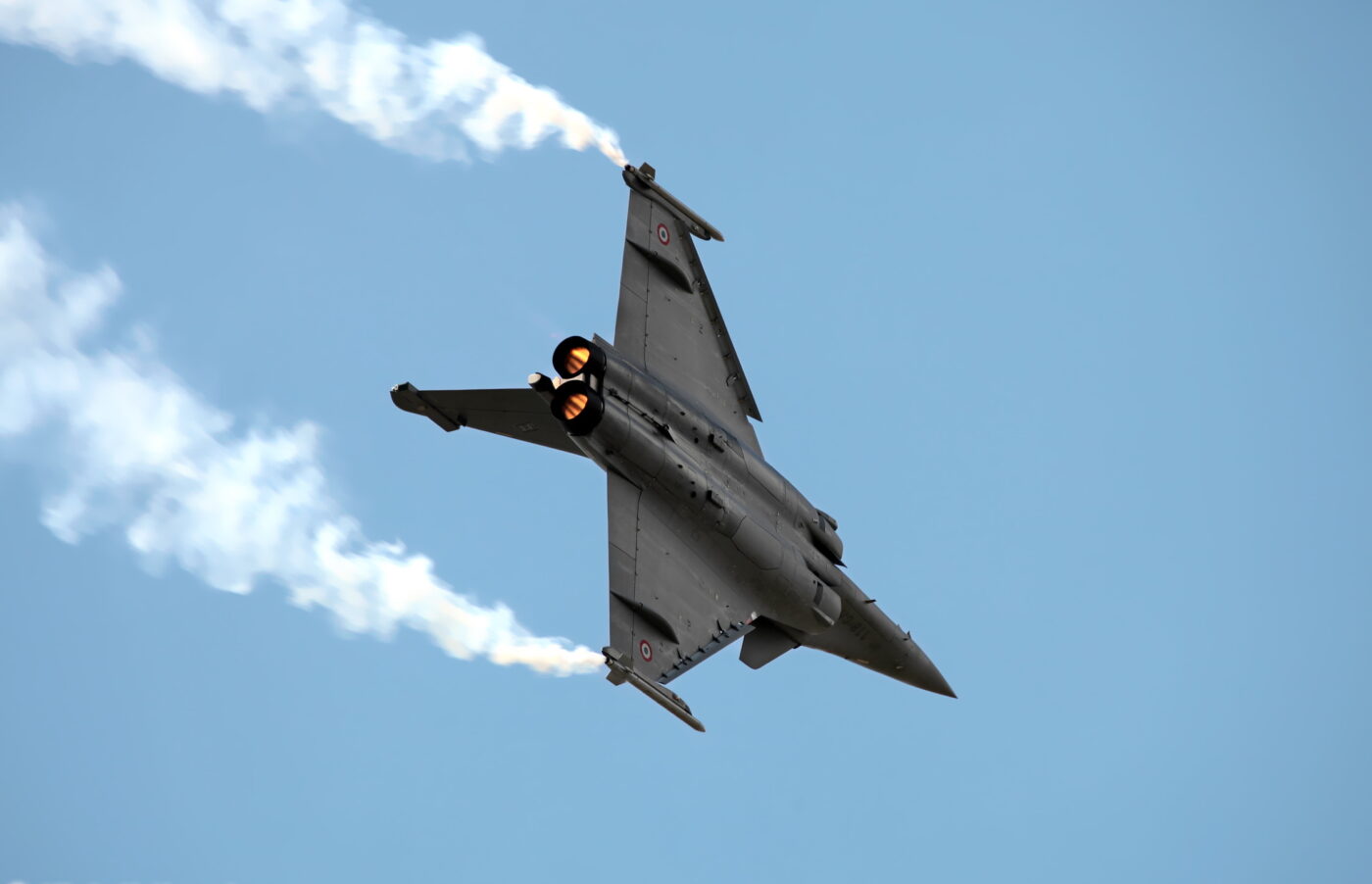
Dassault Rafale – Wikimedia Commons
“F5 variant of Rafale will have more powerful engines, improved survivability and data links, and will be accompanied by an unmanned combat air vehicle (UCAV) weighing more than 10t,” Dassault Aviation’s chief executive Officer, Eric Trappier, recently said in an interview.
The Rafale F5 standard is targeting initial operational service capability by 2030. However, integration into the French Air Force and Navy could happen around 2033-2034, with integration of ASN4G hypersonic missiles expected only by 2035.
The aircraft combat fleet target, as per the 2024-2030 military programming law, is unchanged at 225 aircraft by 2035: 185 for the French Air and Space Force and 40 for the French Navy.
However, Bellanger told the Senate that he would need the aircraft sooner, even if they’re of the F4 standard.
“I am going to need more aircraft quickly,” Bellanger told the committee. “If we are not in a position to produce the F5 standard before 2033, we will have to choose the F4, which is already a very fine aircraft, unless the operational contracts of the Air and Space Force on the fighter segment are revised.”
Notably, Bellanger is not alone in demanding more F4-standard Rafale jets sooner, instead of waiting for the F5-standard aircraft.
The Senate committee itself has questioned the design to postpone the induction of 20 Rafale jets so that they can be inducted directly in F5-standard.
It cited the tremendous pressure on the Rafale fleet of the French Air Force, the advanced age of the Rafale Marine aircraft, and mounting operational commitments constraining aircraft availability, according to reports.
Warning that the postponement could widen the capability gap at a critical time, the Senate committee said that the decision seems to be motivated more by budgetary considerations than operational choices.
Notably, in June this year, nearly 80% of the French fighter fleet was airborne at the same time for the first time ever.
Bellanger attributed it to Operation Poker, the quarterly Strategic Air Forces nuclear raid exercise, and intensive deployments in the Near and Middle East, where French Rafales were helping defend Gulf countries against Iranian drones and missiles.
French Rafales are also deployed into Eastern Europe as part of the Baltic Air Policing mission.
Lithuania | Interception of 6 aircrafts within the Baltic air space
Scramble of two Rafale aircraft of the Baltic Air Policing 71 detachment, based in Šiauliai , in order to escort aircrafts operating in the Baltic responsibility area.
— The Joint Staff – Military operations (@FrenchForces) June 4, 2026
“We are overusing the Rafale,” Bellanger said. “Versatility does not mean ubiquity.”
Another reason for overusing the Rafales is France’s expanding nuclear posture.
Earlier this year, French President Emmanuel Macron unveiled the “forward deterrence” nuclear doctrine, proposing to expand France’s independent nuclear deterrent umbrella across Europe.
However, this “forward deterrence” nuclear doctrine would put additional pressure on the Rafale fleet.
Bellanger said that the larger arsenal announced by President Emmanuel Macron at Île Longue in March would “mechanically” force France to reconsider the number of nuclear-armed Rafale B, the single-seat Rafale C assigned to protect them, and potentially its tanker fleet, which remains capped at 15 A330 MRTTs under the updated law.
This would be a major issue for the next programming law, he said, adding that “many more” aircraft would be needed.
“If we expand the nuclear arsenal, it is not so the weapons can sit in storage,” Bellanger said.
Another issue is the tremendous pressure on Dassault Aviation to deliver on its large Rafale orderbook.
France currently has nearly 165 Rafales in its fleet, 41 in the French Navy, and 124 for the French Air Force.
France has a target of 225 Rafale jets by 2035. So Dassault will have to deliver around 60 more Rafales in the coming years.
However, Dassault also has to deliver 165 Rafales for export customers, including India, Egypt, Qatar, Greece, Croatia, the UAE, Serbia, and Indonesia.
This does not include the 100 aircraft that Ukraine has shown intent to acquire, nor the IndianAir Force’s (IAF) proposal for 114 Rafale aircraft, which is currently under active consideration by India’s Ministry of Defense (MoD). If these two deals go through, the numbers will be even more significant, around 380 for export customers and 60 for France.
For perspective, Dassault delivered 26 Rafale fighter jets in 2025, one more than its target of 25. Of the 26 Rafales, 15 were for export customers and 11 for the French armed forces.
A year ago, the Rafale production rate was 2 aircraft a month (24/year). The same has now been increased to 3 per month (36 per year), with plans to increase to 4 per month (48 per year) to handle a growing backlog of orders.
Meanwhile, France’s existing Rafale fleet is working at full capacity, its Rafale Marine fleet is aging rapidly, and the current geopolitical environment and France’s expanding nuclear posture demand more Rafale aircraft sooner rather than later.
Under these circumstances, Bellanger feels that more F4-standard Rafales sooner is preferable to fewer F5-standard Rafales at a later date.
Sumit Ahlawat has over a decade of experience in news media. He has worked with Press Trust of India, Times Now, Zee News, Economic Times, and Microsoft News. He holds a Master’s Degree in International Media and Modern History from the University of Sheffield, UK.
He can be reached at ahlawat.sumit85 (at) gmail.com
The map of absolute destruction: 42% of the forests in Attica burned in the last 10 years. From 2017 until yesterday, August 3, 2026, a total of 15 major fires have burned more than 800,000 stremma* or 80,000 hectares and approximately 197,684.3 acres acres. The data resulting from the updated analysis of the burned areas […]
Four turtles rescued from a fire-stricken area in northern Greece were found to have been abused by human thugs who painted their shells with orange oil paint.The discovery prompted the intervention of the Prosecutor’s Office in Thessaloniki on Tuesday. The unprecedented incident was revealed when members of the Wild Animal Rescue & Reintegration Team arrived […]
British tourists on the island on Kefalonia showed their gratitude and paid for water bottles for the firefighters battling the big blaze on the island in the Ionian Sea over the weekend. Local media kefaloniapress.gr reported about the spontaneous “Thank you!” incident that apparently occurred on Sunday, August 2. The post published today, Tuesday, August […]
Japan must reinforce and transform its defense capabilities with a stronger “sense of urgency and crisis” than ever before, Defense Minister Shinjiro Koizumi said Tuesday, as Tokyo released its annual white paper that once again flags risks from China, North Korea and Russia.
In the preface to the 598-page Defense of Japan report, Koizumi wrote that the security environment surrounding the country is now the most severe and complex since the end of World War II.
He pointed to the rapid military build-ups by Beijing and Pyongyang, their expanding cooperation with Moscow, and the new forms of warfare demonstrated by Russia’s invasion of Ukraine, warning that a serious crisis capable of shaking the postwar order cannot be ruled out in East Asia.
Japan is already accelerating its military modernization. Defense spending has been pushed higher, with the budget for the current fiscal year exceeding 9 trillion yen for the first time, while Tokyo deepens security partnerships across the Indo-Pacific.
Missile launchers are being stationed on remote southwestern islands closer to potential flashpoints, the Self-Defence Forces are moving to field longer-range “counterstrike” weapons that could hit targets beyond Japanese territory, and rules restricting arms exports have been loosened to allow greater transfers of equipment and technology to like-minded partners.
In the Indo-Pacific, “not only are China and North Korea further strengthening their military capabilities, China-Russia and Russia-North Korea are also reinforcing their cooperation,” he also added.
The new white paper said China was “intensifying its activities” in the region around Japan, “extending beyond the so-called first island chain to the second island chain”.
It listed a series of incidents in 2025, including activities by Chinese aircraft carriers and the “unusual close approach” by Chinese aircraft to Japanese planes in two incidents in June and July.
Japanese jets scrambled 595 times in the year to March 31, 2026, including 366 sorties against Chinese aircraft and 214 for Russian planes. This compares to 704 the previous year and was the fewest since at least 2021.
Japan decided in April to lift its self-imposed ban on weapons exports, but the white paper highlighted issues in the country’s production base that could jeopardize procurement and innovation.
Koizumi also said that he and US counterpart Pete Hegseth had “exchanged candid views” on the “unwavering” US-Japan alliance, while also increasing security cooperation with the Philippines, Australia and South Korea to realize a “Free and Open Indo-Pacific”.
“As the security environment becomes increasingly and rapidly severe, what is required now is to strengthen resilience against crises all across the entire Indo-Pacific region,” Koizumi said.
“In order to do so, Japan will build and expand multilayered networks among allies and like-minded countries, and enhance interconnectivity with like-minded countries and others in every area.”
Meanwhile, China has repeatedly voiced concern at what it sees as a return to “new militarism” by Tokyo.
After World War II, Japan adopted a pacifist constitution in 1947, with Article 9 renouncing war as a sovereign right and prohibiting the maintenance of military forces, seeking a peaceful global order.
“Aspiring sincerely to an international peace based on justice and order, the Japanese people forever renounce war as a sovereign right of the nation and the threat or use of force as a means of settling international disputes. In order to accomplish the aim of the preceding paragraph, land, sea, and air forces, as well as other war potential, will never be maintained. The right of belligerency of the state will not be recognized,” reads Article 9 of the Japanese Constitution.
Japan, the only victim of a nuclear attack in history, also adopted the “Three Non-Nuclear Principles” of non-possession, non-production, and non-introduction of atomic weapons. Even though all five victors of the Second World War built their nuclear weapons.
Japan relinquished wars of aggression, militaristic societies, and the production of nuclear weapons. In the post-war era, Tokyo directed the nationalistic impulses of its country toward becoming an economic powerhouse and technology leader.
Japan became the world’s second-largest economy in 1990 after the disintegration of the Soviet Union.
China’s military muscle-flexing in the South China Sea, North Korea’s missile proliferation, and Japan’s strained ties with Russia, especially after the Ukraine invasion, are forcing Japan to shed its post-war inhibitions and adopt a more assertive defense role.
Former Prime Minister Shinzo Abe played a critical role in Japan’s transformation. Abe had raised the prospect of the country hosting US nuclear weapons facilities on Japanese soil, boosted defense spending, and called for a strong foreign and security policy.
Under Abe, Japan passed legislation allowing the Japan Self-Defense Forces to engage in overseas combat missions. Essentially, this bill allows Japan’s armed forces to help defend its allies, like America, even if Japan itself isn’t under attack. The Japanese Constitution, following the devastation from the war, previously limited Japan’s forces to self-defense within its borders.
In December 2024, Japan approved a 9.4% increase in defense spending for FY2025. This marked another record figure for the 11th year in a row for Japan’s national defense budget. Japan, which has historically spent less than 1% of its GDP on defense, has also promised to raise it to 2% of its GDP by 2027.
This defense spending hike was part of the Defense Buildup Program, which outlines US$273 billion in defense spending over the five-year period through FY2027.
Japan is also building alliances with China’s competitors. It has developed and promoted military ties with several countries in and beyond the Indo-Pacific region. It has strengthened security cooperation with Australia and India—both members of Quad alongside Japan and the USA—through high-level dialogues, joint military exercises, intelligence sharing, and mutual access to each other’s military facilities.
In December 2022, Japan announced a joint program with Italy and the United Kingdom to develop a new sixth-generation combat aircraft—the Global Combat Air Program (GCAP).
Japan is developing two hypersonic weapon concepts: the Hypersonic Cruise Missile (HCM) and the Hyper Velocity Gliding Projectile (HVGP), as well as long-range missiles.
Japan’s Ministry of Defense (MOD) also conducted flight tests for its island defense hypersonic glide vehicle (HGV). Four test launches were conducted at a site in California, with one launch in August 2024, two in November 2024, and one in January 2025.
Japan’s new 10kW-class high-power laser electronic warfare (EW) vehicle recently entered service to counter aerial and missile threats, including hostile unmanned aerial vehicles (UAVs) and low-altitude missile systems.
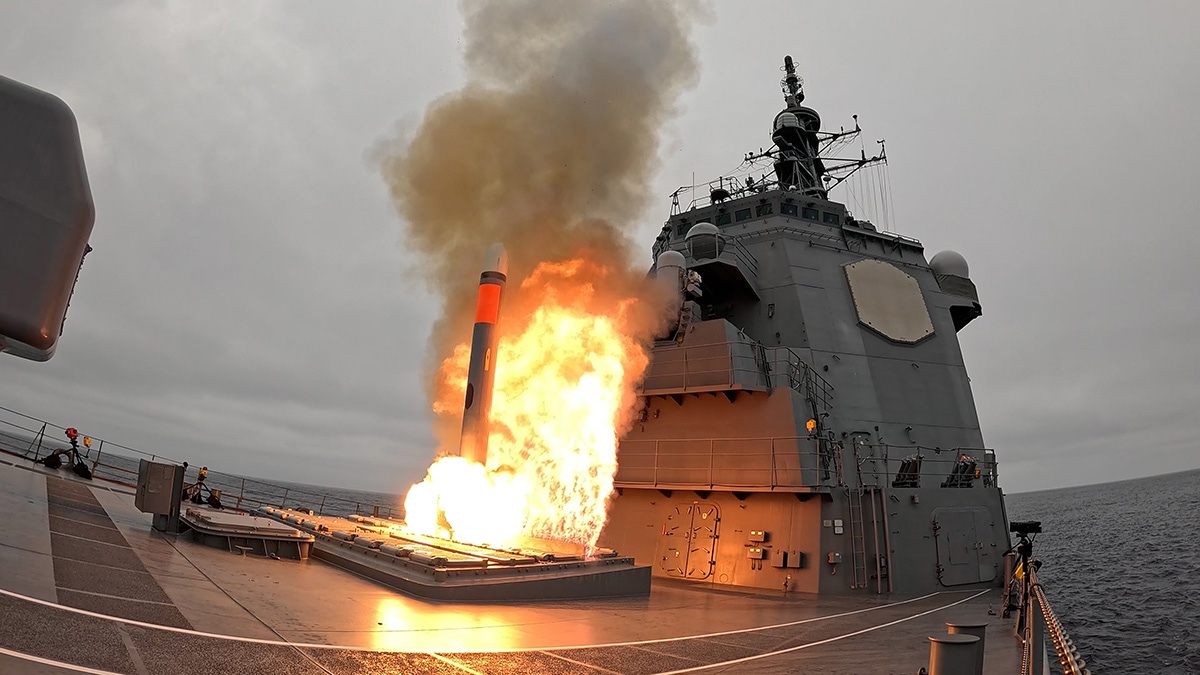
Meanwhile, Tokyo announced on July 30 that it had test-fired a Tomahawk land-attack cruise missile from one of its warships, the Aegis guided-missile destroyer JS Chokai (DDG-176), for the first time.
Additionally, Tokyo fielded the Type 25 Hyper Velocity Gliding Projectile, its first indigenous hypersonic boost-glide weapon, following successful California flight tests and domestic deployment drills that included loading launchers onto ships and aircraft.
In late July, an F-2 fighter conducted the first captive-carry flights of the air-launched Improved Type 12 (Type 25) long-range missile at Gifu Air Base, validating integration ahead of planned service in 2027.
Separately, a 100 kW-class shipboard laser system began sea trials aboard the test ship Asuka in late 2025, targeting drones and projectiles. Japan also conducted its first anti-ship missile live-fire on domestic soil in June 2025, firing a Type 88 from Hokkaido.
These developments highlight Tokyo’s push for stand-off strike and layered defenses amid regional tensions.
The Regional Unit of Attica will remain on Very High Risk of Fire also tomorrow, Tuesday, August 4, 2026, the Civil Protection announced on Monday. According to the Fire Risk Forecast Map issued by the General Secretariat of Civil Protection of the Ministry of Climate Crisis & Civil Protection a Very High Fire Risk (Risk […]
The US Navy has awarded a historic $76.6 billion contract to build 14 new submarines, as Washington races to maintain its dominance over China in undersea warfare.
The deal includes the construction of five Columbia-class nuclear-powered ballistic missile submarines (SSBNs), awarded to General Dynamics Electric Boat (GDEB).
The contracts also provide for the construction of nine Virginia-class nuclear-powered attack submarines (SSNs) during fiscal years 2025–2029. The nine-ship contract was awarded to GDEB and HII-Newport News Shipbuilding (HII-NNS).
Together, these new awards represent a historic investment in maritime modernization and supremacy, with a combined total value of US$76.6B. The award will also strengthen the U.S.’s nuclear triad capacity.
“The awards drive the critical, once-in-a-generation recapitalization of the Navy’s undersea forces and the Nation’s nuclear triad,” according to the U.S. Department of the Navy.
“This historic investment underscores the Department’s continued commitment to undersea superiority and the recapitalization of our nuclear triad,” said Vice Adm. Robert Gaucher, Director, Submarine Programs.
The Columbia-class submarines will replace the Navy’s aging nuclear deterrent fleet, ensuring the continuity of the United States’ sea-based strategic nuclear deterrent.
— Acting Secretary of the Navy Hung Cao (@SECNAV) July 29, 2026
As the most survivable leg of the nuclear triad, the Columbia Class ballistic missile submarine represents a modern platform of national security and remains the Department of War’s number one acquisition priority, the U.S. Navy statement said.
Furthermore, these contract awards support the fielding of enhanced Virginia Class submarines, a platform engineered for unparalleled stealth, heavy payload strike capability, and multi-domain lethality.
The Virginia Class submarine is the premier tactical strike and multi-mission platform, ensuring continuous global undersea dominance, the US Navy said.
“By securing the continuous production of both the Columbia and Virginia classes, we ensure we will continue to deliver the world’s most lethal, survivable and resilient combat platform to our global Combatant Commanders, while providing long-term stability to our shipbuilding industrial base,” Vice Adm. Gaucher said.
The U.S. Navy now has seven Columbia-class submarines under contract, complementing a force of 26 operational Virginia-class submarines with 23 more slated to be built.
U.S. Navy Seeks Revolutionary Submarine-Launched Surface-to-Air Missile
Separately, the U.S. Navy is also seeking a new family of modular surface-to-air missiles, including a version that will arm future variants of the Virginia-class submarine.
The information was provided in a draft request for solutions contracting notice recently posted online.
“The United States Navy (USN) is seeking a new, modular interceptor to serve as the basis for the Naval Modular Missile (NMM) program, a next-generation initiative designed to revolutionize surface naval capabilities through multi-mission utility, enhanced capacity, and a modular open architecture,” according to the recent draft request.
Under this new NNM program, the U.S. Navy seeks to develop at least four distinct surface-to-air missile interceptors.
Though all four NNMs will fall in the broad category of Terminal Stage Interceptors (TSI), the four variants will differ substantially in their role and capabilities.
The four variants are: NNM Multi-Mission Long Range (LR), NMM Extended Range Submarine (ER-S), NMM Dual-Pack Extended Range (DP-ER), NMM Quad-Pack Medium Range (QP-MR).
The NMM ER-S is an extended-range interceptor intended to be launched from future versions of Virginia-class nuclear-powered attack submarines.
Notably, US submarines do not have an operational dedicated SAM system for engaging aircraft or other aerial threats.
Traditional weapons of US submarines are Tomahawk cruise missiles, Harpoon anti-ship missiles, Torpedoes, and Trident ballistic missiles.
Therefore, the development and operationalization of submarine-launched NMM ER-S would add a critical, all-new capability to the U.S. submarine fleet and would provide protection against airborne threats such as anti-submarine warfare (ASW) aircraft, while also contributing to broader fleet air defense.
This would give US submarines a true anti-aircraft capability for the first time, allowing them to engage planes or drones while remaining submerged or semi-submerged.
Furthermore, given that no country has operationalized a submarine-launched surface-to-air missile capability, this would give the U.S. submarine fleet a critical and exclusive defensive capability that will enhance its survivability in contested waters.
However, Germany is also developing its own submarine-launched SAM.
Germany’s IDAS (Interactive Defense and Attack System for Submarines), based on the IRIS-T missile, is designed for fully submerged launch from standard 533 mm torpedo tubes.
Traditionally, submarines were armed with man-portable air-defense systems (MANPADS), and submarines had to surface or expose the conning tower so a crew member could fire them manually. A tube-launched submarine-based SAM would be a revolutionary addition.
The addition of 14 new submarines (Five Columbia-class and nine Virginia-class) and SAM capability on future Virginia-class variants will boost the U.S. Navy’s capabilities as it races to maintain its edge over China in the critical domain of undersea warfare.
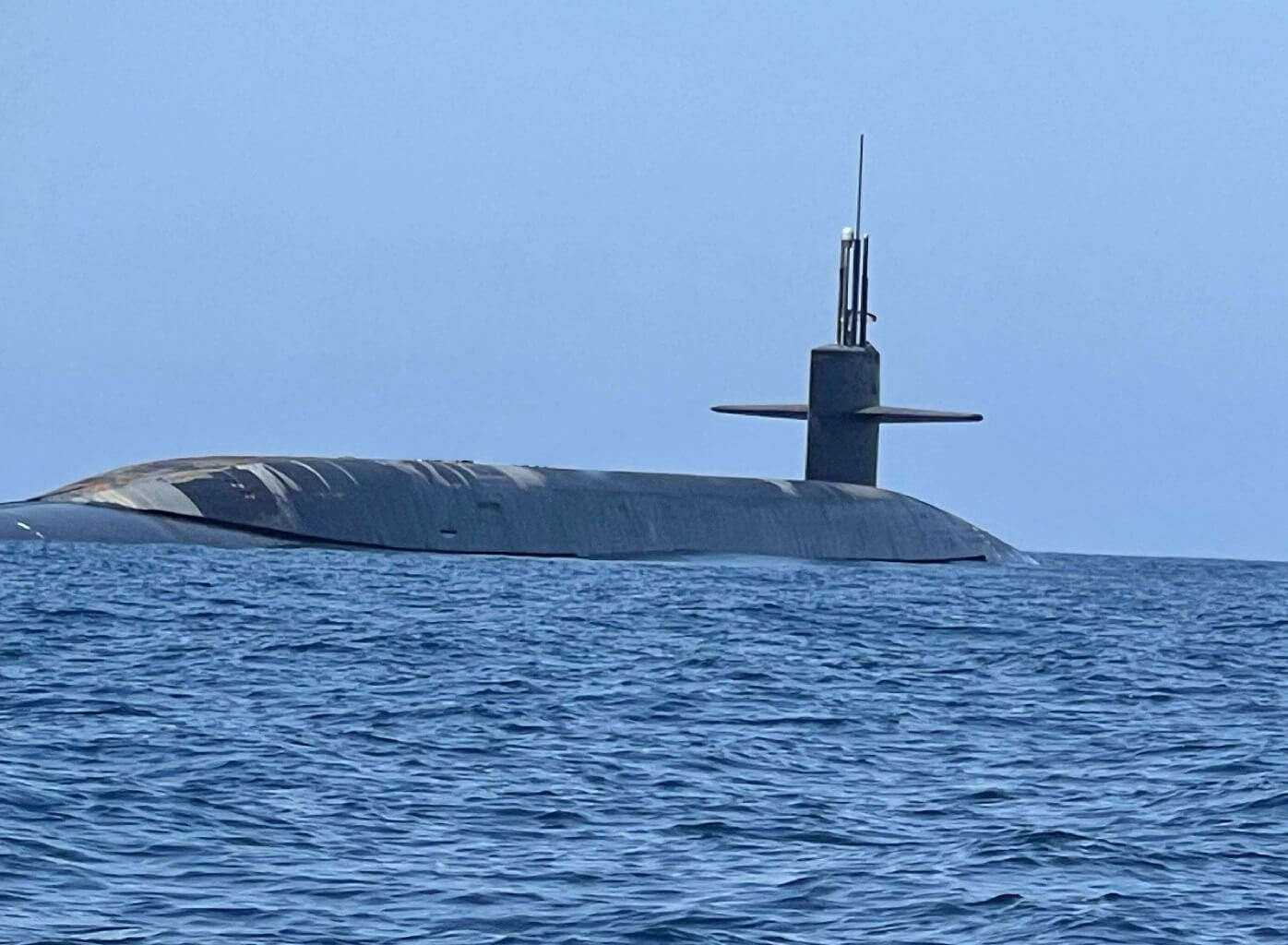
File Image: USS West Virginia Submarine: Via US CENTCOM
U.S. Vs China In Undersea Warfare
China already possesses the world’s largest maritime fighting force, with 234 warships compared to the U.S.Navy’s 219.
However, the U.S. still maintains an edge over China in undersea warfare.
But, according to a Pentagon report on the People’s Liberation Army (PLA), released in December last year, even in submarine fleet strength, Beijing is set to match U.S. capabilities by the end of this decade and might even surpass Washington’s submarine fleet by 2035.
According to the Nuclear Threat Initiative (NTI), the US Navy currently has 71 submarines, all nuclear-powered. However, some latest reports put the strength of the current U.S. submarine fleet at 66.
This list includes 14 Ballistic Missile Submarines (SSBNs), 53 Nuclear-Powered attack submarines (SSNs), and four Guided Missile Submarines (SSGNs).
Similarly, according to the NTI, China has 60 submarines, of which only 12 are nuclear-powered.
China has six Ballistic Missile Submarines (SSBNs), six Nuclear-powered attack submarines (SSNs), and 48 Diesel-electric attack submarines (SSKs). Of the 48 SSKs, 12 submarines feature Air-independent propulsion (AIP), a technology that makes them quieter and allows them to stay submerged longer.
While China has not yet operationalized a nuclear-powered aircraft carrier, Beijing has nearly half a century of experience with nuclear-powered submarines.
China’s first nuclear-powered submarine, which was a loud and slow vessel, entered service in 1974. Since then, Beijing has made considerable progress in improving its nuclear-powered subs. They are now larger, quieter, and faster.
In recent years, China has made particular strides in nuclear-powered submarines, whose greater speed, range, and endurance give its Navy greater reach.
New models under development include the Type 095, which analysts expect to feature vertical launch tubes capable of accommodating cruise missiles.
According to the Institute for National Defense and Security Research, the capabilities of China’s two new nuclear submarines – the Type 095 and Type 096 – match those used by the US and Russia.
Additionally, China is set to add more submarines each year than the US, meaning it will have far greater submarine strength than the US in the future.
According to the US Navy’s long-range shipbuilding and fleet inventory plan 2025, the US submarine strength will drop to 47 by the end of this decade, before hovering in the mid-50s for many years. The fleet isn’t projected to hit 66 until 2054.
On the other hand, China’s submarine strength will rise in the coming years. A 2023 US Department of Defense (DoD) report anticipates that China will grow its submarine force to 80 units by 2035. Nearly 20 of these subs could be nuclear-powered.
According to a 2024 CSIS report, China’s submarine technology is rapidly improving, and its submarine production capacity is growing.
China has added between seven and eight Type 093B submarines in just the past three years, a production rate that exceeds the number of attack submarines China has constructed over the past three decades.
When including conventional submarines, such as the new Type 039C, China’s total submarine fleet launched over the past three years exceeds 15, underscoring China’s impressive submarine-building capacity.
These numbers suggest that in the next decade, China might have nearly 20 more submarines than the US.
However, in qualitative terms, Washington still might have an edge over China. As noted earlier, while all of the US submarines are nuclear-powered, China will have only around 20 nuclear-powered submarines.
The addition of 14 new submarines and a SAM capability are, therefore, key to Washington’s efforts to maintain parity with Beijing in undersea warfare.
Nitin J Ticku holds a double master’s degree in Journalism and Business Management from the University of Glasgow. He has over 20 years of global experience in MARCOM, Journalism, and Digital Marketing, and has worked & traveled widely across Europe, the Americas, and Asia. Nitin is the Editor of the EurAsian Times.
He can be reached at editor (at) eurasiantimes.com

 Login



 Lithuania | Interception of 6
 aircrafts within the Baltic air space


 Scramble of two
 Rafale aircraft of the Baltic Air Policing 71 detachment, based in Šiauliai
 , in order to escort
 Visual…