Madrid. La tranquilidad nocturna que se respiraba en las tertulias del madrileño Café León, en la calle de Alcalá, se vio truncada de forma dramática en las últimas horas de la pasada noche. El doctor Juan Negrín, diputado socialista por Las Palmas y reputado catedrático de Fisiología, se disponía a dar cuenta de su habitual […]
Madrid. Entre los destacados dirigentes socialistas que asistieron al velatorio del cadáver del teniente Castillo en la Dirección General de Seguridad estaba el diputado por Las Palmas Juan Negrín. En medio del estupor y el dolor por el asesinato del teniente republicano a manos de un grupo de falangistas, tuvo conocimiento del posterior asesinato del […]
This week, Mark Leonard is joined by Jörg Lau, international correspondent at Die Zeitand Jana Puglierin, head of ECFR’s Berlin office, to explore the political turmoil in Germany ahead of an electoral autumn. Chancellor Friedrich Merz’s government is becoming increasingly unpopular: it faces collapsing approval ratings, growing tension within the governing coalition and mounting pressure from the far-right Alternative for Germany (AfD).
As regional elections approach, Jana argues that Germany’s traditional parties face difficult choices that could reshape the country’s political landscape, while Jörg discusses what the AfD’s rise means for Germany. A “firewall” has kept mainstream parties from cooperating with the far right in the post-war period—but Jörg reflects on the strain this is under, and whether the AfD’s first taste of regional power could transform German politics.
Together, Mark, Jörg and Jana assess the prospects for Merz’s leadership, the future of the CDU and whether Germany’s political centre can withstand such pressure. Are established parties capable of renewing themselves? What happens if the AfD makes gains at the regional level? And what would prolonged instability in Berlin mean for Europe?
This podcast episode was recorded on August 12th 2026.
Artificial intelligence is forcing venture capitalists to rethink how they invest. For decades, investors backed startups by judging founding teams, products, and markets. But as AI advances at breakneck speed,...
Governments that deploy internet shutdowns to thwart protesters have struggled to clamp down on offline messaging apps. India’s recent response to Jack Dorsey’s Bitchat suggests that battle is entering a...
Demonstrators take part in a protest rally organised by the Cockroach Janta Party and various Left student organisations against the NEET paper leak, demanding the resignation of Education Minister Dharmendra Pradhan in Kolkata, India. (Photo by Avijit Ghosh/NurPhoto via Getty Images)
A escalada incessante dos preços e das rendas torna particularmente urgente olhar para a crise da habitação como um lugar de conflito de poderes e de interesses cujos custos estão a ser assimetricamente suportados pelos trabalhadores. Como poderia o controlo das rendas ser uma alavanca para dar resposta a esta crise? A série «Agora como nunca, ideias para sempre» continua a colocar no debate público ideias simples e capazes de melhorar o futuro. Depois da saúde, a habitação. Todos os dias (…)
O que é hoje um pobre? Qual o padrão de vida digno que coletivamente se entende ter de ser assegurado a todos? No momento de definir instrumentos estatísticos e políticas sociais de combate à pobreza fazem-se escolhas que podem reduzir, ou aprofundar, a dependência económica estrutural e a insegurança ontológica da maioria da população. O que é um pobre? A pergunta ressurge num momento em que os afetos coletivos em torno desta «categoria social» se mostram cada vez mais polarizados: à (…)
As July monsoon rains flood the Mumbai streets around my home, quick-commerce platforms are using advanced weather algorithms to capture surging customer demand. While tech companies capitalize on the storms,...
Indian manufacturers are beating Tesla and BYD at building energy-efficient electric cars. Tata Motors topped a global ranking of the most efficient battery EVs for 2025, released by the International...
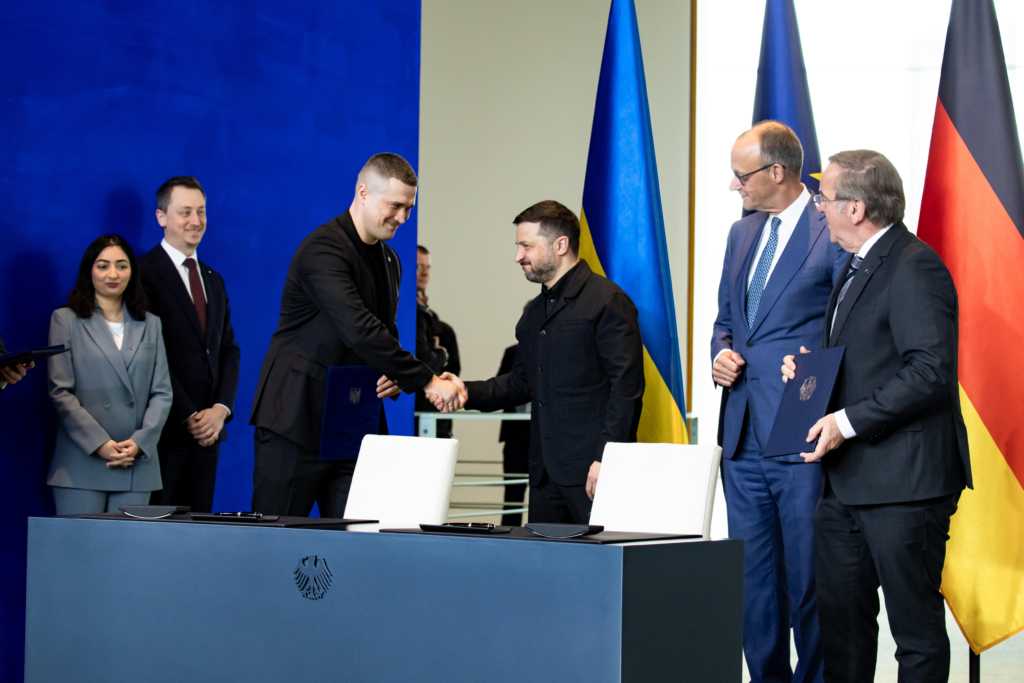
For the second July running, a controversial decision from President Volodymyr Zelensky has sparked protests across Ukraine. Last year it was his attempt to weaken two anti-corruption bodies. This time it is the dismissal of his popular young defence minister, Mykhailo Fedorov, after just six months on the job. Zelensky cited a breakdown of relations between the ministry of defence and the military leadership as a key reason for his decision.
Fedorov was blunter. In a scathing statement, he criticised the commander-in-chief of the armed forces Oleksandr Syrsky for choosing loyalty over performance, sticking to outdated ways of war fighting, and sabotaging necessary reforms. “Instead of working out how to asymmetrically defeat Russia”, Fedorov said, “[Syrsky] has worked out how to split the country.” Such internal strife is the last thing Ukraine needs. But Fedorov’s allegations also call into question whether Western military assistance for Kyiv is being used in the best possible way.
The solution
Zelensky has proposed Yevhen Khmara to replace Fedorov, subject to approval by parliament. Khmara is a respected military commander and the acting head of Ukraine’s security service, so has credentials as a military leader. But Ukraine’s parliament must also decide whether he can be a trustworthy manager in the job.
This is, of course, Ukraine’s sovereign decision to make. But it is a consequential one for the rest of Europe, too: at the end of the second quarter, defence accounted for roughly 80% of Ukraine’s annual budget, with almost a third of this coming from external partners (who also supply a lot of the country’s civilian needs). The EU and European countries are by far Kyiv’s biggest financial and miliary backers. And how these funds are spent matters for Ukraine’s success; as does whether its military strategy, supplies, recruitment and procurement are aligned. The resources also need to be used efficiently. Fedorov’s allegations thus deserve proper scrutiny.
Ukraine’s European partners should not back any one choice of new defence minister. But they should make clear that, whether it is Khmara or somebody else, Fedorov’s replacement must be a credible, competent and trusted partner. This means he or she should be proven as a commander, but also be able to continue Ukraine’s defence reforms and address problems related to mobilisation, relations with the military, and corruption in the sector. Fedorov’s replacement should also be committed to continuing to build up the country’s defence technology base.
Context
Before he became defence minister in January 2026, Fedorov headed Ukraine’s digital governance revolution. He transferred his tech-savviness to the ministry of defence and is widely credited with Ukraine’s recent advances in defence technology which helped turn the tide against Russia. Several military commanders have defended Fedorov’s work as defence minister and supported his claims against Syrskyi; others in the military have spoken in favour of the commander.
In his statement, Fedorov remained loyal to Zelensky but rumours about the outgoing official’s political ambitions have been circulating for weeks. Whether there is any truth in them or not, protesters see this as a motivation behind the president’s reshuffle. And the views of the public matter. Ukraine’s defence is a whole-of-society affair, partly sustained by volunteers and the private sector. So, Zelensky will need to dispel these rumours—a country at war can hardly afford to make decisions based on political preference at the expense of competence or defence logic.
The onus is now on Zelensky to convince everyone that Khmara is the man for the job. While parliament approved a new government led by Sergy Koretsky on July 15th, this did not include the names of the president’s (constitutionally required) proposals for defence and foreign ministers. Barring an extraordinary session, MPs will only reconvene in mid-August. This means they have time to reflect and engage in a dialogue. This should result in a defence minister who commands not just the president’s trust but also that of the military, society—and international partners.

 Login