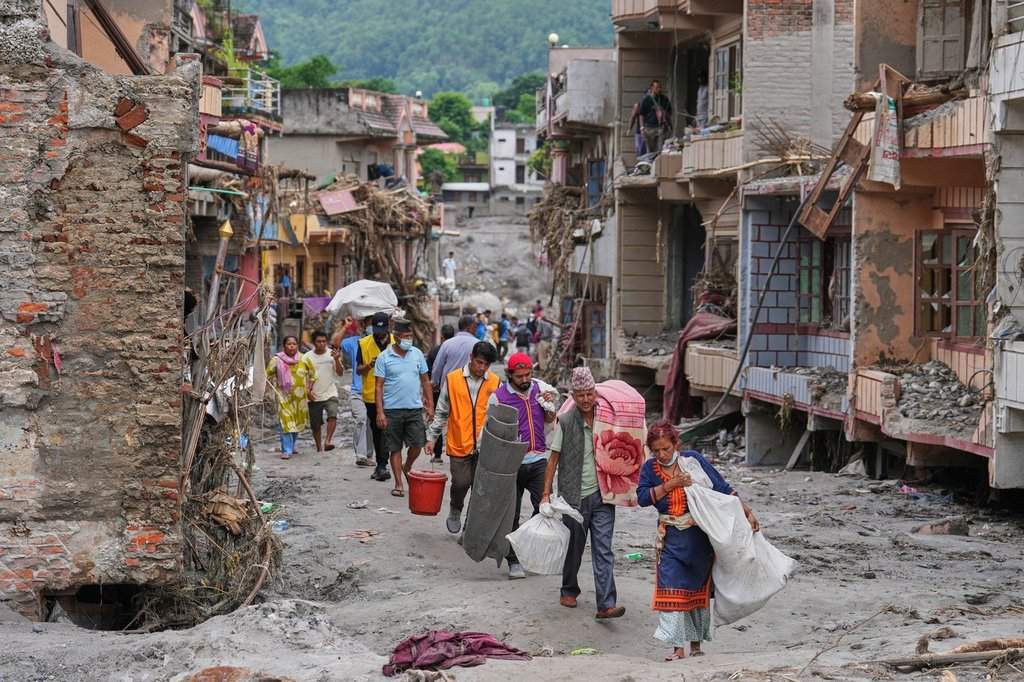
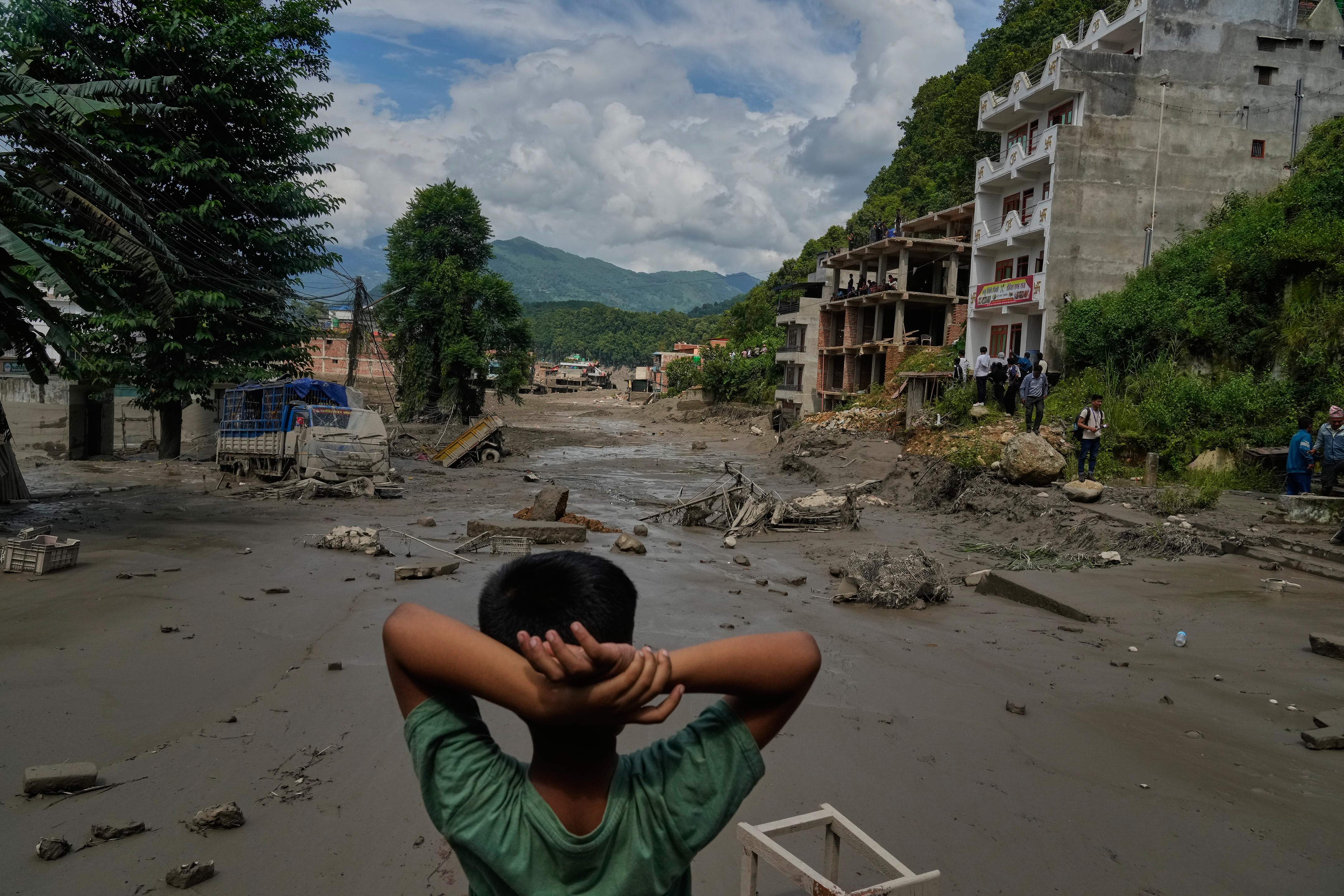
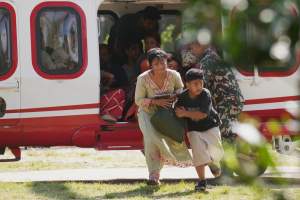
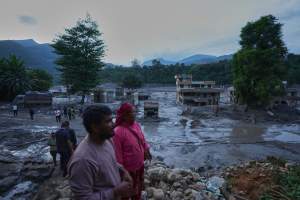
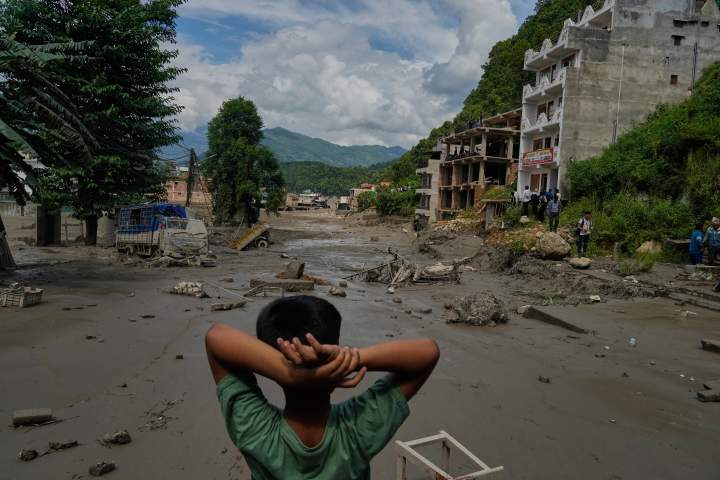
The federal government says at least 32 Canadians are reported missing in an area spanning parts of Nepal and Tibet, an autonomous region in China, after devastating floods.
The federal government says at least 32 Canadians are reported missing in an area spanning parts of Nepal and Tibet, an autonomous region in China, after devastating floods.
Apparently, African wild dogs enjoy knocking around balls of elephant dung like a football. It’s this playfulness that has endeared them to researchers—but, as Helen Sullivan points out, they have their work cut out for them trying to protect this persecuted big predator. Sullivan follows conservationists in southern Africa who are carefully managing tiny, isolated populations and attempting to introduce genetic diversity. The story of the three sisters who are flown over from Mozambique to be introduced to Waterberg—a South African municipality three hours from Johannesburg—is heart-wrenching. Yet in such a harsh environment, individual tragedies have to be endured while staying focused on the bigger picture: the fragile recovery of the species as a whole.
As we help Greyling and Hlako lift a crate off the pickup, a dusty paw flops out of one corner, and I think of something my uncle says: “You can smell the world in a dog’s paw.” Mooney and I back away, watching from inside a container as Hlako moves the car so that the overheating dog is in the shade. Though it is late afternoon, the temperature is still around 90 degrees.
Hlako and Greyling release the dogs one at a time, opening the crate and waiting until a dog walks, then trots, out. The first is less sure on her feet, the second seems almost normal, until Mooney points out that she would have run much faster from the crate and people had she not still been a bit dozy. The sisters stand together in a grassy area, point their noses in the air, move their satellite-dish ears and lie down under a thorn tree; it has been a long day.
In the second quarter of 2026, the EU recorded a trade deficit of €21.8 billion, as goods imported from non-EU countries (€701.8 billion) exceeded exports (€680.0 billion). This is the first trade deficit registered since the second quarter of 2023, the last of a series of deficits fuelled by soaring energy costs observed between late 2021 and mid-2023.
The deficit in the trade balance was primarily due to an increase in the deficit on energy products (from -€71.3 billion in Q1 2026 to -€101.1 billion in Q2 2026), raw materials (from -€7.9 billion to -€9.4 billion) and other manufactured goods (from -€8.3 billion to -€9.1 billion). Additionally, there was a reduction in the surplus of machinery and vehicles (from €24.9 billion in Q1 2026 to €23.2 billion) and other goods (from €11.6 billion to €9.1 billion).
On the other hand, there were surplus increases for chemicals (from €47.1 billion to €54.0 billion) and food and drinks (from €10.7 billion to €11.5 billion).
Overall, exports increased by 5.4% (+€34.9 billion) and imports by 9.9% (+€63.4 billion) compared with the previous quarter.
Exports and imports had been declining since the second quarter of 2025, a trend that halted in the first quarter of 2026. Those declines had been partly attributed to tariff tensions.
Northwest Arkansas has been changing. Walmart, which has been rooted in Bentonville for more than 75 years, has reshaped the small town, and now that growth is spreading into the surrounding countryside. With that change, writes Jordan P. Hickey in this poignant essay, come wealthy newcomers looking for a country lifestyle and gravel cyclists riding thousands of unpaved rural roads. And then there are the dogs—who have been here longer than any of these transplants—caught in the midst of it all. Hickey calls them “yarddogs,” finding in them a metaphor for a region in the process of transformation. (Subscription required.)
Downtown Bentonville, so carefully planned, feels surreal today—”Disneyfied,” “Pleasantville,” “gentrification” are the apt words of the critics.And not that it needs to be said, but there are no yarddogs in Bentonville. Not anymore. Here, there are only good dogs. Dogs on leashes, dogs that have been to school, dogs that listen, obey, behave, and will not lunge at every passing jogger.
But, of course, this is not really about dogs at all.
Scientists are growing miniature human brains in labs around the world. (Yep, you read that right.) For Wired, Claire L. Evans reports on the latest research in the field of organoid intelligence, or OI, where scientists are artificially growing brain organoids from tiny human samples, whether skin, blood, teeth, or even hair. As these seed-sized globs mature, they are able to send and receive electrical signals, and even learn to remember and anticipate them. In other words, this living matter is programmable. “And this is where things get truly weird,” writes Evans.
For now, these neural computers are mostly of interest to researchers who want to work with neurons without taking on the tedious wet-lab husbandry themselves. Eventually, however, the company hopes that neurons will prove themselves to be an energy-efficient, resilient substrate for more general computing applications—including some tasks currently handled by AI, like image recognition and classification.
“When you think about what you want from AI, it’s biology,” said Brett Kagan, Cortical Labs’ chief operating officer, when I reached him over Zoom. “You want it to be self-repairing as much as possible. You want it to be adaptable. You want it to be long-lived. You want it to be energy-efficient. These are all features you get for free in biology.”
As Eliran Arazi spends time with the Andoque, an Indigenous people in southern Colombia along the Caquetá River, he finds himself increasingly drawn into their tales that interweave sexuality with the creatures of the jungle. Gradually, those stories begin to shape his own way of thinking about seduction in modern life, as his mind spins off its own fantasies. A fascinating piece that blurs the lines between writer and subject, leaving the reader in a dreamlike state.
A few days later, jaguar footprints appeared along the long path leading to a small harbour on the Caquetá River. For the next week, Dufi’s family expressed concerns about venturing down that path, especially alone, for fear of a jaguar attack. When I mentioned my plan to go there for a phone call, hoping for better reception by the river, one of Dufi’s sons again cautioned me about the jaguar. Dufi, however, quickly reassured me. I had nothing to fear because jaguars dislike the soapy, perfumed scent of white people, which, he added, is precisely the smell that attracts dolphins.
As I reached the Caquetá in the late afternoon, I sensed the dolphin smell again. Odours and attraction, I thought – at least it works both ways.
A team of underwater archaeologists and geologists from Sapienza University of Rome and the Center for Maritime Studies has located, off the town of Santa Marinella north of Rome, the remains of an ancient pier and dock which, according to researchers, constitute the earliest known evidence of a mooring point associated with an Etruscan temple. […]
When Sabrina Imbler’s cat, Melon, becomes seriously ill with what is later confirmed as feline infectious peritonitis (FIP), Imbler feels she doesn’t have time to wait for a formal diagnosis and turns to a Facebook group that connects desperate cat owners with a black‑market treatment: GS‑441524. Injecting Melon twice a day at home, they enter a frantic stretch in which the acidic drug causes a wound to open on Melon’s back, and she is sentenced to weeks in a hated recovery suit called a Suitical: “Melon was so upset that she lay on her side like a tipped cow for hours, her chin glumly fixed to the carpet.” With Melon finally fully recovered, Imbler has the space to look back on the desperate measures it took to save her.
The FIP Warriors contact met me in the lobby of their building, wearing a knit cap with cat ears. They proceeded to demonstrate how to deliver the medicine on their stuffed cat, Edward. I watched as they manipulated the stuffed toy, lifting up pockets in Edward’s “skin” into which I was to drive a 22-gauge needle at an angle into subcutaneous tissue. I paid $50 for two vials of injectable GS-441524, which was acidic to keep it shelf-stable. This acidity, the contact warned me, meant the injections burned. “It’s really best if you have help,” they told me. “Will you have help?” No, I told them. My ex was out of town and it was just me and Melon. “Well, you’ll figure something out,” they said. I would have to.
Europe is warming more than twice as fast as the global average—a terrifying statistic made all too apparent this summer as heat wave followed heat wave. European cities were never designed for these temperatures, and public health, infrastructure, and tourism are all under strain. Eric Klinenberg arrives in Milan just as “Europe’s third heat wave of the summer entered its fiercest stretch” and sweats his way across the continent to see how trees, shade, water, and other measures are being deployed to adapt urban centers. But with this crisis set to deepen can these experiments really keep pace?
Of all the problems that heat poses for Barcelona, losing some of the hundred and sixty thousand tourists who typically visit each day ranks low on the priority lists of most officials and residents. Some locals have staged protests, chanting “Tourists go home” while targeting visitors with water guns. But tourism employs more than a hundred and sixty thousand people in Barcelona and accounts for around thirteen per cent of its economic output, which explains why, despite concerns that the city gets too many visitors, more than seventy per cent of residents consider tourism beneficial. At midday, when I arrived on La Rambla, the city’s most heavily visited and photographed corridor, the street had little shade and surprisingly few people. At La Boqueria market, normally jam-packed at lunchtime, I found my way to a famously busy bar counter and took one of several open seats.
Do you remember the media frenzy over lab-grown meat? Why, several years later, has it not become a supermarket staple? Erin Somers investigates with wry humor as she throws herself, and her taste buds, into exploring why cultivated meat has yet to take over the world. You’ll devour this piece.
The two of them ate with forks and knives, passing the plate, sawing off thoughtful bites. Chewing slowly. Afterward they rendered their verdicts. “I would say it is somewhere on the spectrum between a Boca Burger and McDonald’s,” Schonwald told a reporter from NBC. “The absence of fat makes a big difference. It has the texture, which I was not expecting. It was like an animal-protein cake.” Rützler noted the burger’s blandness to a reporter from Science. “There is room for improvement here,” she said. At the end of the event, roughly $150,000 worth of burger remained uneaten. But none of this stopped Post from predicting that meat cultivated in a lab would become a consumer product within the decade.
David Kushner first met Anthony Curcio nearly two decades ago, to tell the story of how Curcio masterminded a $400,000 bank robbery and escaped on an inner tube. His latest on Curcio is every bit as outlandish: After his release from federal prison, Curcio waded deep into the trading card industry, dealing in top-rated Michael Jordan and Nolan Ryan cards and coming under scrutiny for suspected fraud. Curcio contends that the real villain is Collectors Holdings, a private company that owns Professional Sports Authenticator, which evaluates and assigns value to trading cards. A thrilling piece of reporting about authenticity—as an idea, a value, and maybe even a front.
Three months later, on the early morning of May 23, 2024, Curcio was walking through his neighborhood in Redmond. It was quiet — what he called “raccoon hours.” Then he heard cars coming up behind him. FBI agents stormed him, guns drawn; he counted around 20. “What the fuck is this about?” he said. “You’re here for sports cards?” He told them about the judgment he’d just won against Captain Ticket. They said they knew all about it.
When Rhonda MacDonald put out a plea for help on Facebook, the cowboys answered. Wildfires have been ravaging British Columbia, Canada, this summer—and when a ranch is put under evacuation, it is no easy feat to round up 150 free‑roaming cattle. The MacDonald herd was roaming a vast, 100,000‑acre expanse of Crown rangeland above the ranch, and the people of most use were those on horseback. This exhilarating piece documents the people who came to help, and honors the skills and hard‑won knowledge needed to navigate treacherous, fire‑scarred terrain to save the herd and help a neighbour in crisis.
Before the riders headed up Mimenuh Mountain, Wayne MacDonald stood in front of a whiteboard with a red Sharpie and began drawing. Not a map, exactly. More like 50 years of memory. He sketched the ridges, draws and escape routes cattle would choose under pressure. There was one thing he kept returning to: the lack of escape routes. “As far as road, there’s one in and one out.” They knew there might come a moment when staying was no longer brave – it was reckless.
 Login