❌

Reading view

Navy Sounds Like It Now Wants The Air Combat Drone It Notoriously Passed Over A Decade Ago

The U.S. Navy’s newest stated requirements for its Collaborative Combat Aircraft (CCA) effort point toward a drone that sounds very much like an advanced uncrewed combat air vehicle (UCAV), rather than a smaller and less capable autonomous ‘loyal wingman’ intended to economically augment crewed fighters. Overall, the new requirements serve as a tacit admission that the Navy is still looking for the kind of drone that it previously explored with extreme promise in the X-47B and Unmanned Carrier-Launched Airborne Surveillance and Strike (UCLASS) program. The UCLASS requirements were abruptly shelved and replaced with an uncrewed carrier-based tanker effort, which resulted in the MQ-25 Stingray. This act was seen by some as one of the most controversial and puzzling procurement decisions in modern naval aviation history.

The traditional loyal wingman or CCA concept generally envisions uncrewed ‘fighter’ aircraft whose primary purpose is to complement crewed companions. This typically involves extending the crewed platform’s sensor reach, carrying additional weapons, and opening up a greatly expanded tactics playbook. An advanced UCAV, by contrast, is fundamentally an independent combat aircraft in its own right, designed to deliver weapons and other effects similar to what a crewed platform can provide without requiring a crew onboard or nearby. As such, it is more capable, survivable, and an overall ‘exquisite’ asset with a heavier payload, more capable of taking the place of a crewed aircraft in certain roles, rather than augmenting them, although there is nothing keeping them from working in a loyal wingman type role if required.
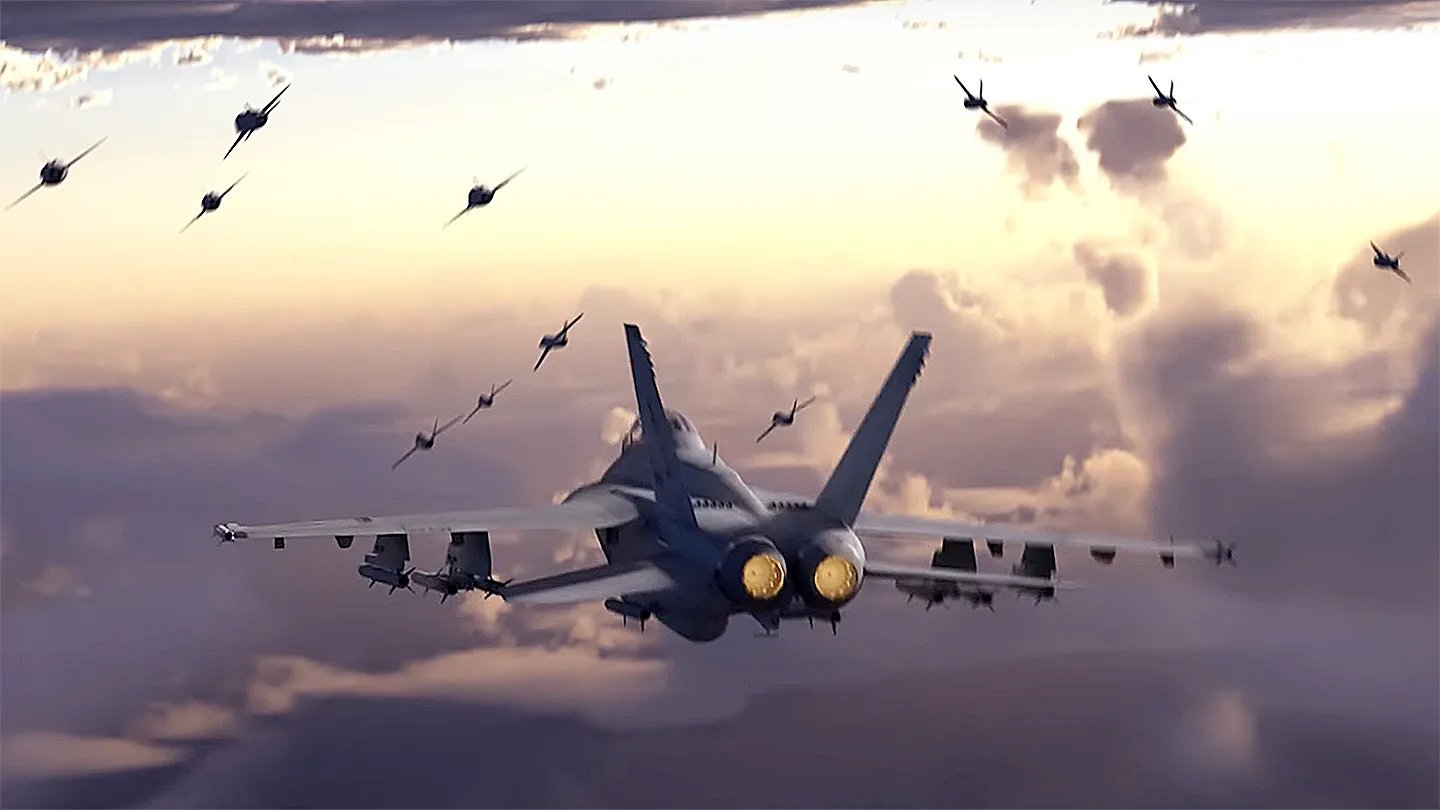
A rendering of a U.S. Navy Super Hornet working alongside smaller collaborative drones. Collins Aerospace/screencap

Yesterday, Naval Air Systems Command (NAVAIR) released a new Request for Information (RFI) that lays out an unusually demanding set of requirements for a CCA Increment 1 prototype. Among other things, the Navy wants an aircraft capable of operating from its aircraft carriers, carrying plentiful weapons, conducting strike missions in highly contested environments, and operating both independently and as part of a larger crewed-uncrewed team.

The combination of these requirements provides a much clearer picture of what the Navy wants its future carrier-based combat drones to be capable of.

Perhaps the most striking requirement concerns weapons carriage. The Navy says the Increment 1 CCA must have the ability to carry four externally mounted weapons weighing up to 2,500 pounds each throughout the target flight envelope and during carrier certification activities. That equates to a potential external weapons load of 10,000 pounds, although it should not necessarily be interpreted as the aircraft’s normal operational configuration. By way of comparison, a very heavily loaded F/A-18E/F Super Hornet might launch with close to 17,000 pounds of weapons and stores — though that is far from common.
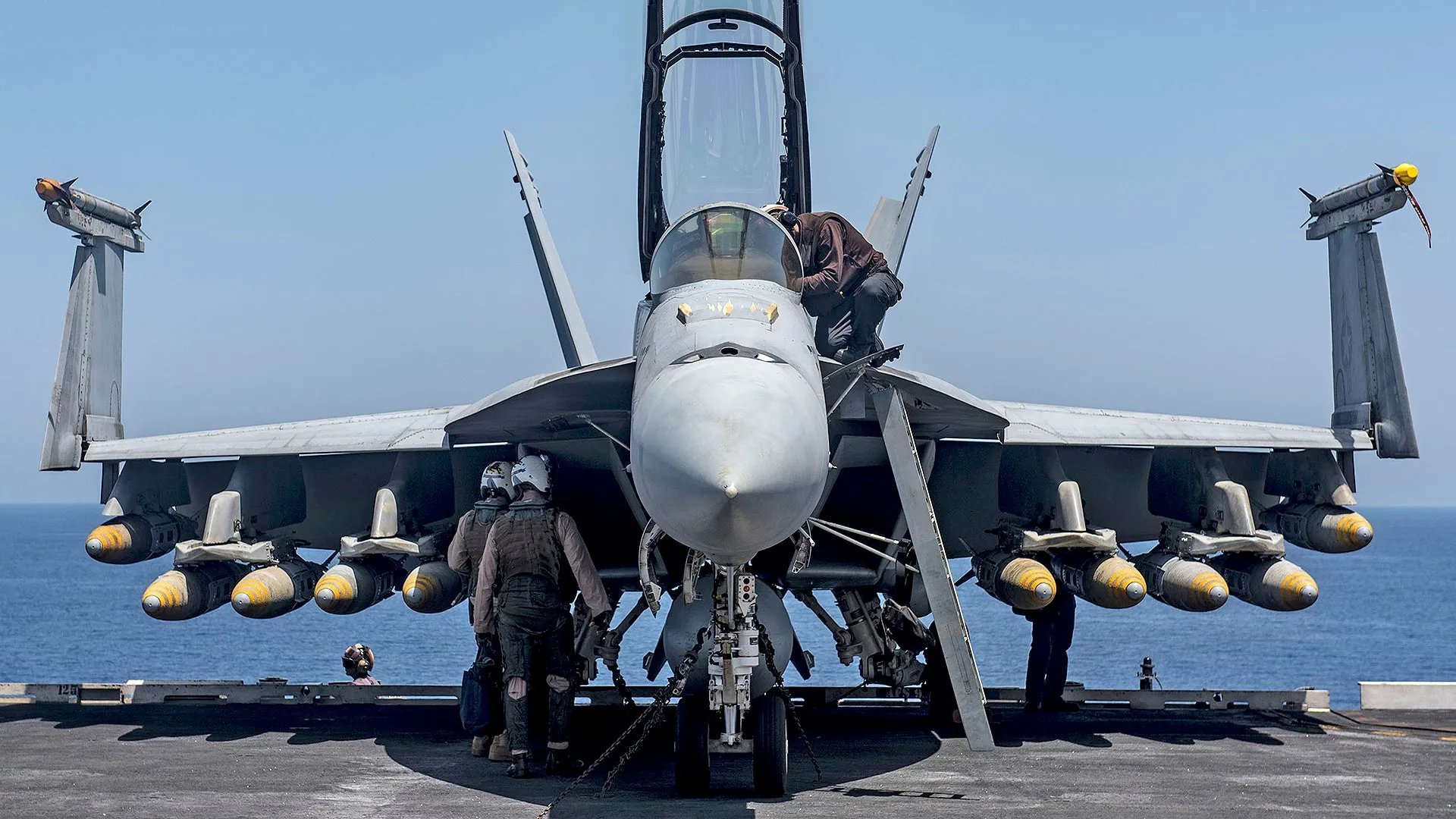
An F/A-18F equipped with a uniquely massive weapons load, including no fewer than 10 1,000-pound GBU-32 JDAMs slung under its wings. All in, this stores load-out weighed roughly 16,750 pounds. U.S. Navy

Meanwhile, the kinds of drones that the U.S. Air Force is currently exploring under its own separate CCA Increment 1 effort, namely the General Atomics YFQ-42A Dark Merlin and Anduril YFQ-44A Fury, are air-to-air optimized. Their primary loadout is widely expected to be a pair of AIM-120 AMRAAM missiles, which is just a fraction of the Navy’s newly stated payload requirement.
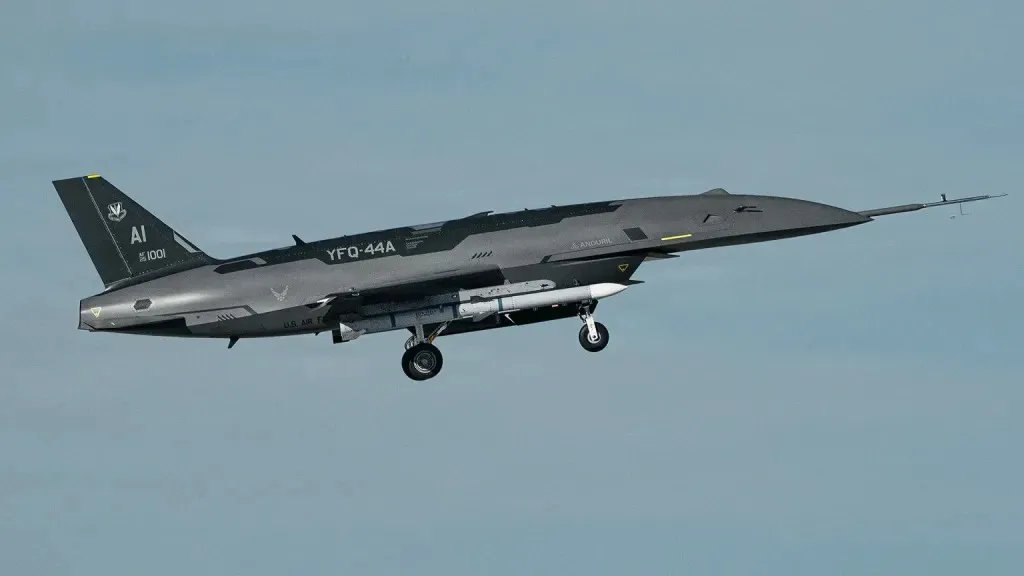
A YFQ-44A Fury drone carrying an inert AIM-120 air-to-air missile during a flight test. U.S. Air Force

The RFI NAVAIR put out yesterday also specifically asks respondents to address internal weapons carriage, with both capacity and survivability among the factors the Navy will consider. Internal stores carriage would offer obvious advantages in reducing an aircraft’s radar signature and preserving aerodynamic performance.

The Navy also wants the aircraft to have a substantial combat radius while carrying its required weapons load, as well as the ability to spend at least 30 minutes on station while retaining sufficient fuel reserves to return to the carrier.

For a CCA, carrier operations add another layer of complexity. The aircraft must be capable of catapult launches and arrested landings from both Ford and Nimitz class carriers, while operating within existing carrier deck, elevator, hangar, and support constraints.
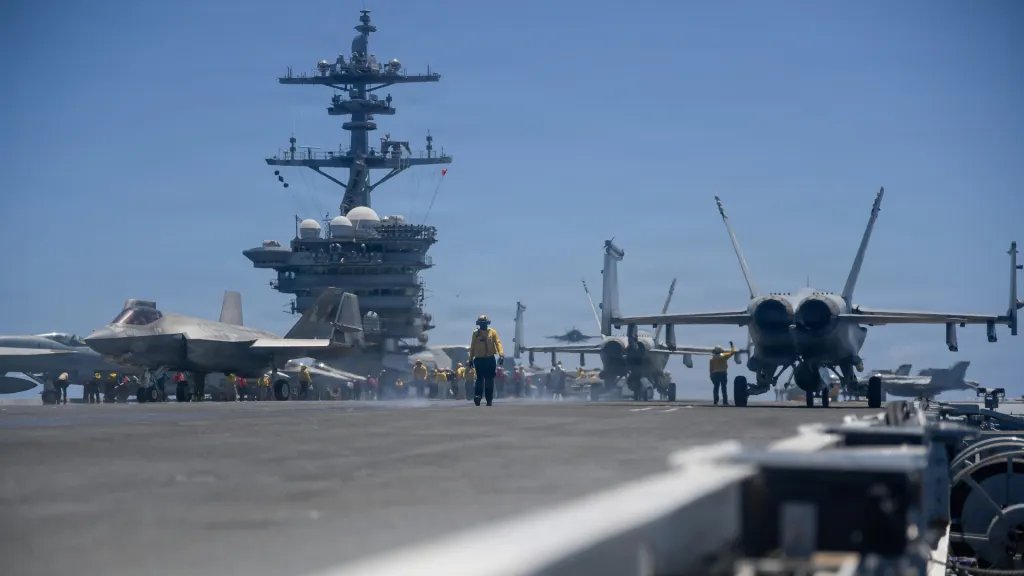
F/A-18E/Fs and F-35Cs seen on the deck of the Nimitz class supercarrier USS Theodore Roosevelt on July 10, 2026. Seaman Apprentice Tyler Harstad/U.S. Navy

Autonomy is similarly central to the concept. The Navy wants mission and flight autonomy that can support the aircraft from launch through recovery, along with the ability to incorporate third-party mission software. The prototype is also expected to demonstrate both individual and multi-aircraft autonomous operations. While crewed-uncrewed teaming is a fundamental part of the concept, the latest requirements make it clear that the aircraft will not depend on a crewed aircraft continuously supervising its actions.

The video below from Collins Aerospace offers a notional look at what crewed-uncrewed teaming involving carrier- and land-based CCA-type drones might look like in the future.

In terms of the survivability requirement, the Navy specifically wants the aircraft to operate in highly contested environments and is asking industry to provide approaches for assessing and managing survivability during collaborative operations. The consideration of internal weapons carriage is another indication that signature reduction and survivability are important design considerations, pointing to a low-observable (stealthy) platform.

All of this begins to blur the distinction between the Navy’s Increment 1 CCA plan and a traditional survivable UCAV concept.

That does not necessarily mean the Navy is abandoning the CCA concept entirely in favor of resurrecting the carrier-based UCAV concept. Rather, it suggests that the distinction between the two becomes blurred as requirements overlap. There also remains the strong possibility (or more likely probability) that the Navy will seek to explore CCA designs closer to what the Air Force, as well as the U.S. Marine Corps, are pursuing. This could potentially include development of carrier-based versions of one or more of those designs under a future increment.
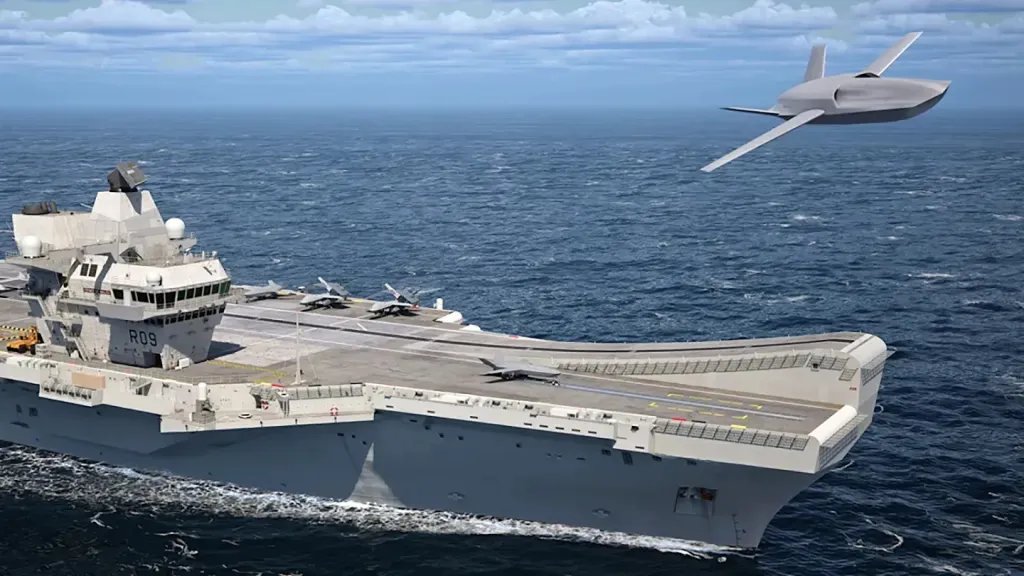
A rendering depicting General Atomics carrier-based Gambit 5 drones operating from a British Queen Elizabeth class carrier. General Atomics

The new RFI is also consistent with the Navy’s broader Air Wing of the Future effort (AWOTF).

An earlier NAVAIR sources-sought notice released in July outlined an expansive vision for future carrier-based uncrewed aircraft covering missions including surface warfare; strike warfare; anti-submarine warfare; air warfare; electronic warfare; intelligence, surveillance, reconnaissance and targeting (ISR&T); mobility; and logistics. That notice also pointed toward aircraft capable of attacking targets at least 1,000 nautical miles from the carrier without requiring aerial refueling, while leaving open the possibility of extending that reach with tankers.
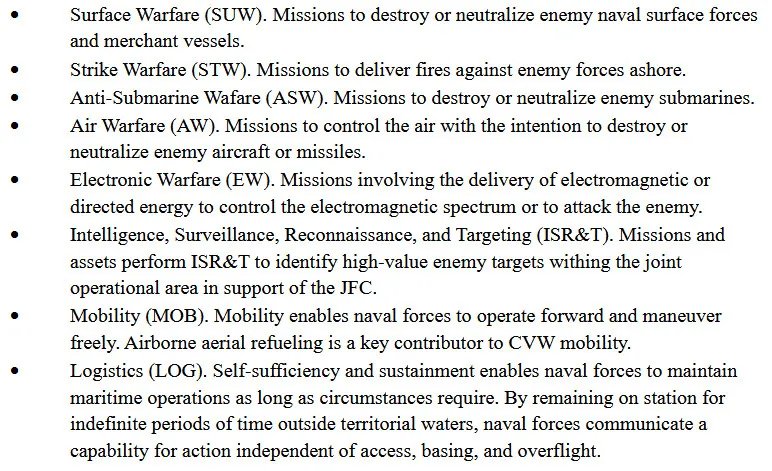
The mission sets as defined in the earlier RFI from July 2026. The acronyms JFC and CVW here refer to the joint force commander and the carrier air wing, respectively. U.S. Navy

Intriguingly, the new RFI does not include an explicit maximum range target, but based on the payload requirements alone, this would be very considerable, reflecting the Navy’s concerns about fighting a future conflict across the vast distances of the Pacific. Traditional advanced UCAVs usually have a combat radius measured in thousands of miles, not hundreds, far exceeding the reach of their crewed fighter counterparts.

Whatever the possible range target, the planned weapons load also points to a substantial airframe. Indeed, the deck-space requirement outlined in the RFI is relevant here. The CCA’s “spot factor” cannot exceed that of an existing fourth-generation fighter, meaning that it could potentially be as large as an F/A-18E/F.

Otherwise, however, the latest CCA Increment 1 RFI is considerably more concrete.

The Navy wants a first flight of a prototype within 24 months of a contract award and carrier certification during a three-year development effort. It also wants a path toward an affordability target of around $30 million per aircraft. This kind of price point would put it at the top end of the CCA concepts we have seen so far, and is fairly ambitious for a higher-end UCAV.

Navy officials said in 2024 that the CCA’s unit cost target was around $15 million, reflecting the idea that the aircraft would be sufficiently inexpensive to be expendable under some circumstances. The new RFI instead asks industry to outline a path toward an affordability target of $30 million per aircraft. That is still a fraction of the cost of a modern carrier-based fighter, but it suggests the Navy is willing to pay considerably more for an aircraft with substantially greater weapons capacity, range, autonomy, and survivability.
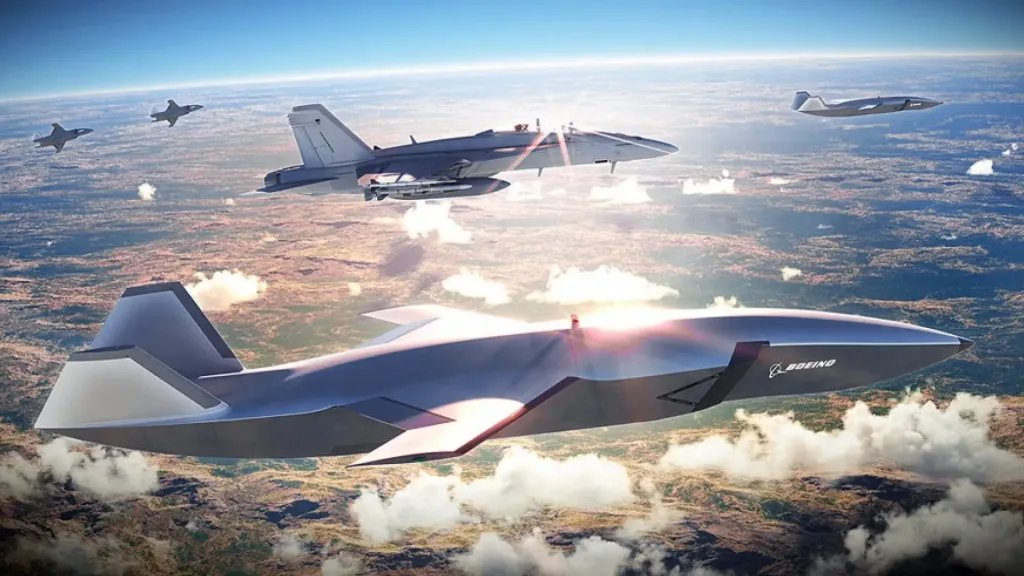
Concept artwork showing Boeing MQ-28 Ghost Bat CCAs alongside a Super Hornet. Boeing

As to the companies that might respond to the RFI, in August of last year, the Navy confirmed that Anduril, Boeing, General Atomics, and Northrop Grumman were all on contract for “conceptual” CCA designs. At that time, the service also said Lockheed Martin had been hired to work on a common control architecture for the drones. Lockheed Martin is already the prime contractor for the control stations and associated software the service is integrating onto its carriers now to support the MQ-25.

The new RFI, however, marks a shift from the conceptual studies described last year toward a specific prototype effort. The Navy is seeking industry input as it shapes the acquisition strategy, with responses due September 18.

In the past, the Navy has said it is aiming for the total makeup of carrier air wings to eventually be 60 percent or more uncrewed, although the precise balance is still to be determined and will certainly be informed by the lessons of Navy CCA Increment 1. Exactly how the CCA might fit in with the Navy’s sixth-generation crewed fighter – known as F/A-XX – is another intriguing prospect, but would clearly be optimized to work alongside that platform.

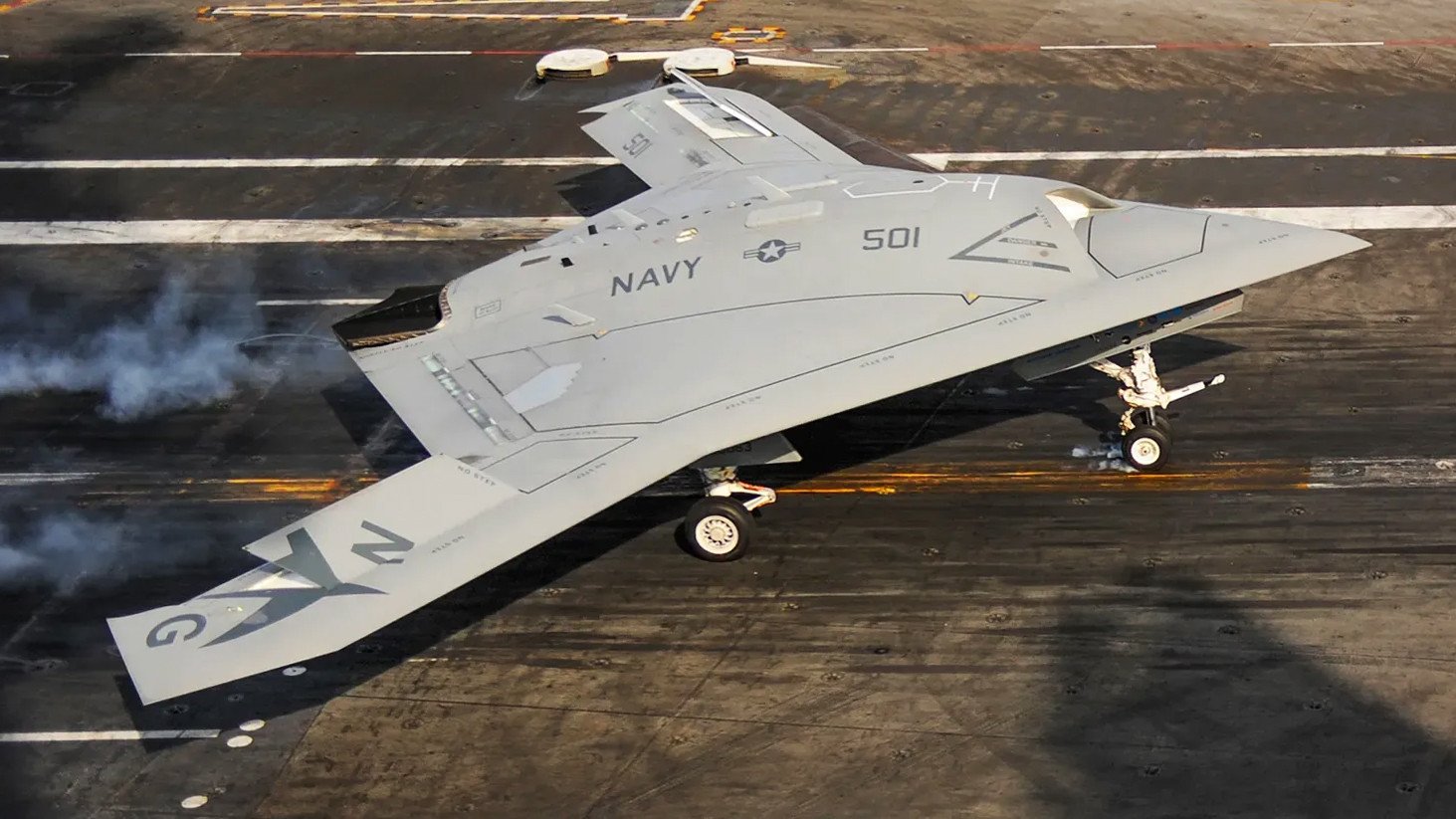
Now, back to the Navy’s earlier effort to develop a high-end, stealthy, carrier-based UCAV capability. Northrop Grumman built two X-47B demonstrators for that program, both of which underwent extensive flight testing, including carrier operations and aerial refueling. The aircraft flew from 2011 for around half a decade. As of 2022, both X-47Bs had been earmarked for eventual public display at museums.
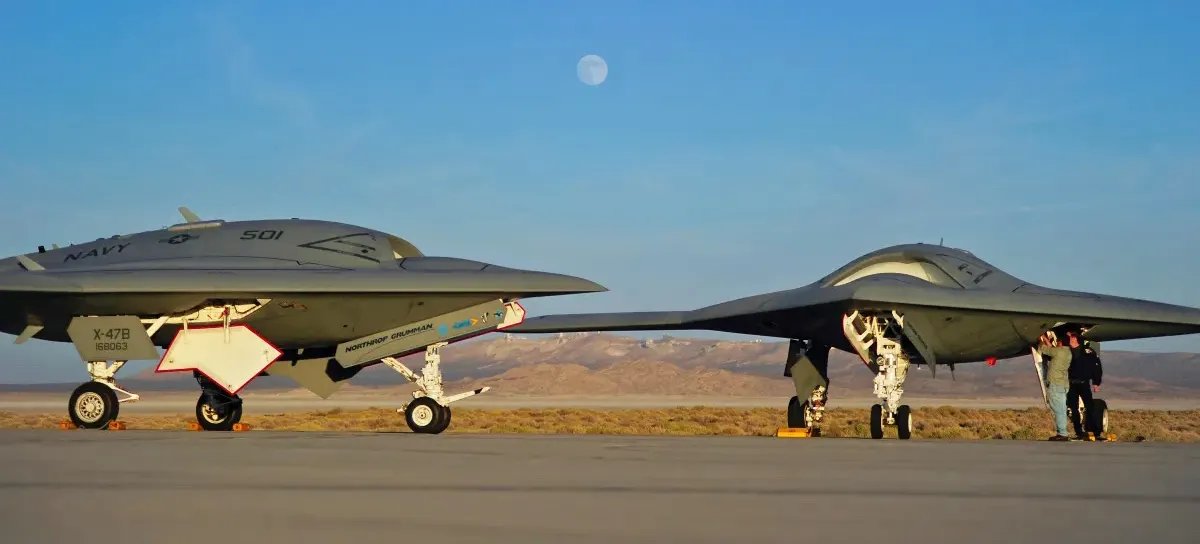
The two X-47Bs together. Northrop Grumman

The two X-47Bs had offered far more than a glimpse of what a carrier-based UCAV capability might look like, and the base design was set to evolve into an operational type. These were large, stealthy UCAVs with thousands of pounds of payload and endurance that far outstripped crewed naval fighter aircraft. The follow-on UCLASS program aimed to see the capabilities the X-47 demonstrated put into operation via a new aircraft procurement effort. However, it transformed into the radically different, less ambitious, tanker-focused Carrier-Based Aerial-Refueling System (CBARS) program in the mid-2010s. This, as noted, led to the MQ-25 Stingray.

To this day, the cancellation of UCLASS remains a very sore spot and is widely seen as a nearsighted and even reckless decision. This mirrored earlier moves by the USAF, which had demonstrated how revolutionary UCAV capabilities could be, only to entirely walk away from the concept. In fact, that service went even further, appearing to erase those developments from recent memory. You can read all about this bizarre and troubling inflection point in American air power history and the glaring questions surrounding it in this past feature.
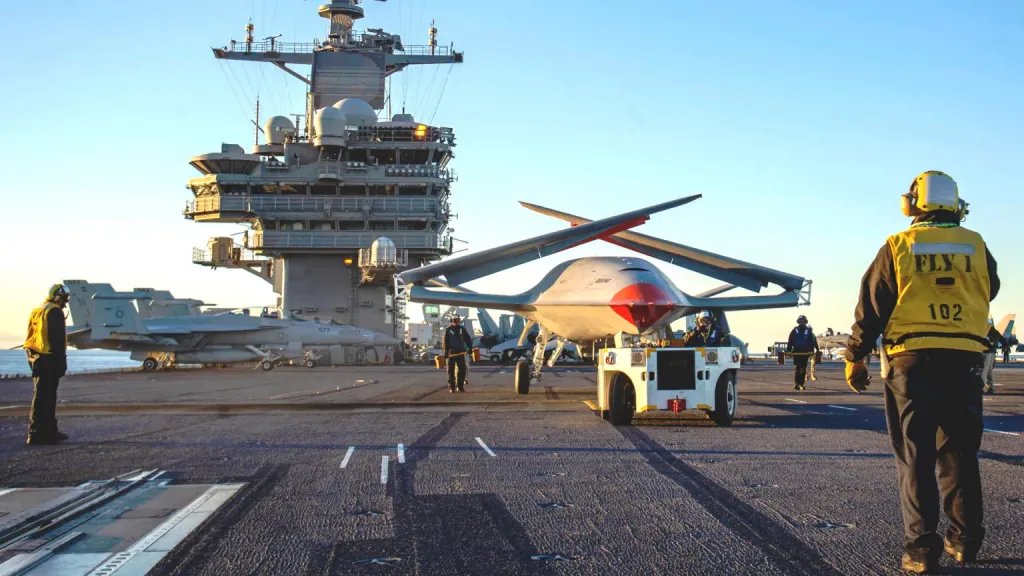
MQ-25 T-1 seen during deck handling testing aboard the USS George H.W. Bush. U.S. Navy

Fast forward to today, and the Navy is getting the MQ-25, which is primarily a tanker, but clearly, that was not the only mission set that influenced its exotic design. In fact, these Navy requirements could open the door for the Stingray platform to potentially fulfill at least parts of the Navy uncrewed combat drone role in a ‘cleaned-up,’ stealthier configuration, something we have explored in depth in the past.

Overall, the takeaway here is that the Navy’s latest CCA requirements raise the intriguing possibility that its earlier UCAV ambitions are resurfacing, this time under the CCA banner. This is happening as China is moving very quickly with its own stealthy UCAVs, a number of which are in testing, and one of which is very mature and is navalized for shipboard operations – the GJ-11 Sharp Sword. The GJ-11 sounds very similar to the Navy’s requirements wish list, including its ability to act independently and teamed with crewed counterparts, as well as its general size and need for survivability.

While an RFI only represents an early part of the contracting process, in practical terms, it looks like the Navy is asking whether industry can finally make good on the past promise of a U.S. Navy UCAV.

Contact the author: thomas@thewarzone.com

The post Navy Sounds Like It Now Wants The Air Combat Drone It Notoriously Passed Over A Decade Ago appeared first on TWZ.
  •  

Russia’s Zircon May Not Be A Hypersonic Cruise Missile After All

A new Ukrainian intelligence report details the complex production chain behind Russia’s shadowy 3M22 Zircon missile and identifies U.S.-origin electronics inside one of Russia’s most advanced weapons. New details also add weight to the theory that the weapon is a maneuverable quasi-ballistic missile rather than a true hypersonic cruise missile.

The unusually detailed new breakdown of the Zircon missile identifies 70 enterprises and 84 individuals involved in its development and production while providing a component-by-component look at one of Moscow’s most closely watched — and least-understood — weapons.

‼DIU exposes details of russia’s 3M22 Zircon ballistic missile — including its components, production chain, 70 companies involved, key personnel, and foreign equipment used to manufacture the weapon: https://t.co/oOBqjUb8dS pic.twitter.com/VqRSSA41iV
— Defence Intelligence of Ukraine (@DI_Ukraine) August 31, 2026

The first evidence of Zircon’s combat use emerged in February 2024, when Ukrainian officials displayed recovered debris after a Russian strike. The wreckage included distinctive engine and steering-system components that Ukrainian specialists used to identify the weapon.

Russia has since employed the missile on other occasions. Ukrainian authorities reported that a Zircon was launched from occupied Crimea during a major missile and drone strike in January 2026, as we reported at the time.

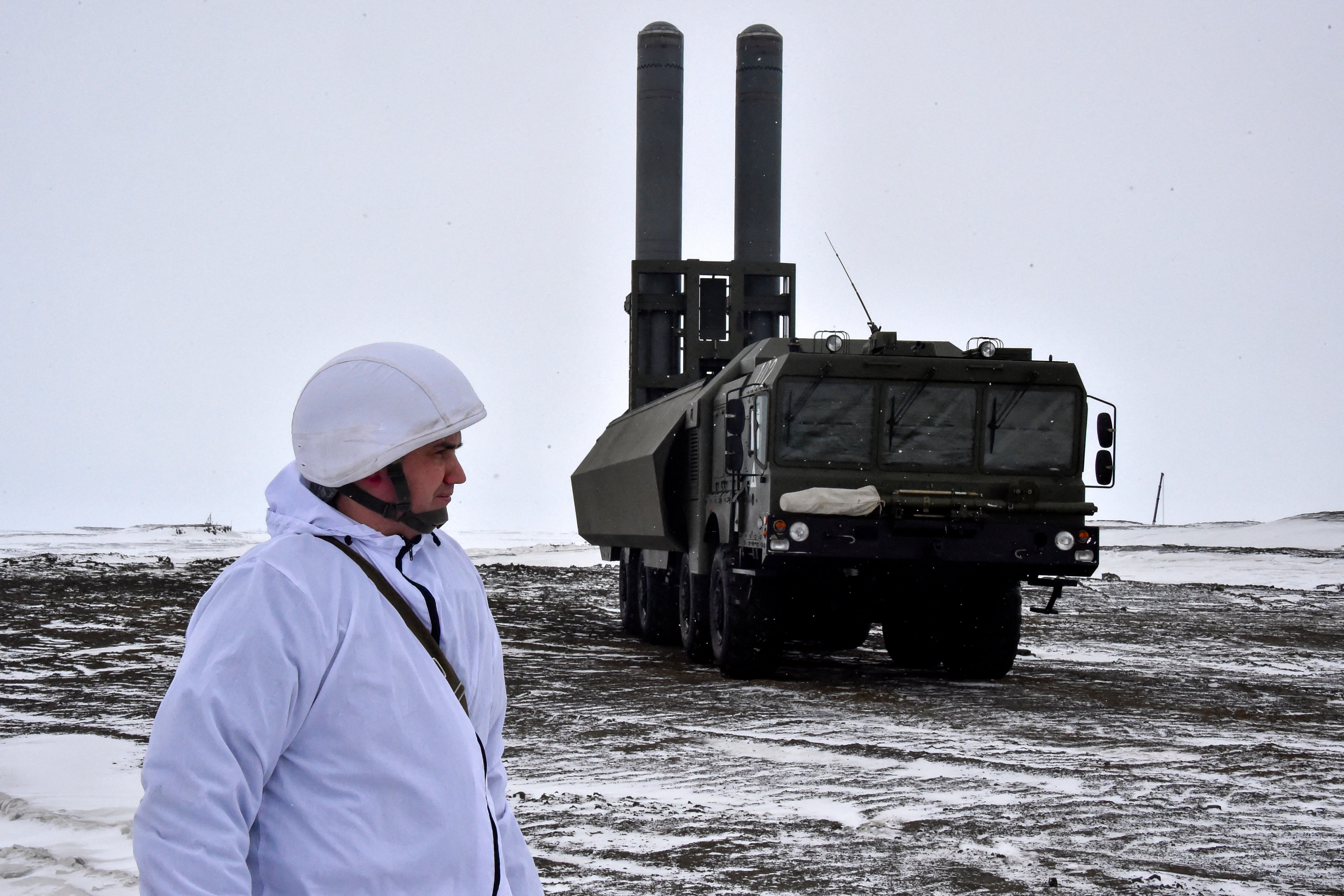
While initially developed for use from warships and submarines, Zircon is understood to have been employed from ground-based launchers against Ukraine, with modified launchers from the K-300P Bastion coastal defense system considered the most likely candidate.

A serviceman stands near a Russia's Bastion mobile coastal defence missile system on the island of Alexandra Land, which is part of the Franz Josef Land archipelago, on May 17, 2021. (Photo by Maxime POPOV / AFP) (Photo by MAXIME POPOV/AFP via Getty Images)
A standard Bastion-P mobile coastal defense missile system. Photo by Maxime POPOV / AFP MAXIME POPOV

The new entry on Ukraine’s Main Directorate of Intelligence (GUR) War & Sanctions portal includes an interactive 3D model and identifies systems ranging from the missile’s radar seeker and onboard computer to its propulsion system and warhead. It also identifies foreign-origin electronics, including components associated with U.S. manufacturers.

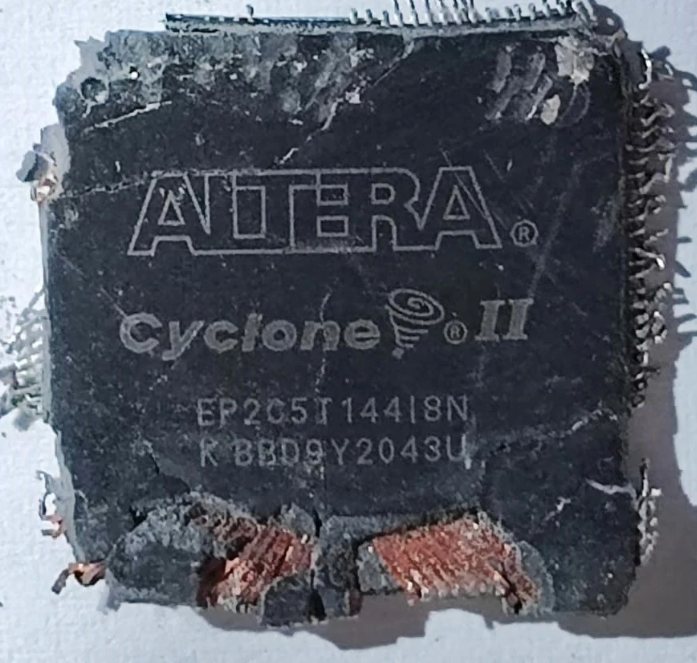
Among them, according to the GUR report, is a TGA2704 amplifier associated with TriQuint Semiconductor, now part of U.S. company Qorvo. The GUR also identifies an Altera Cyclone II EP2C5T144I8N field-programmable gate array (FPGA) associated with Altera Corporation, now part of Intel, and lists it as originating in the United States.

An Altera Cyclone II Field-Programmable Gate Array (FPGA), a type of microchip, which the GUR says was found in Zircon wreckage. GUR

The alleged findings do not establish that either company knowingly supplied Russia’s defense industry, nor do they explain precisely how the components reached Russian production lines. The GUR says it’s seeking additional information on their origins and supply chains. Bearing in mind previous precedents, China could potentially be one source, being a known vector globally for recycled chips.

Nevertheless, the disclosure highlights the continued presence of Western-origin electronics in Russia’s advanced weapons programs despite sanctions and export controls.

The GUR lists the Zircon as approximately 26 feet long, with a body diameter of 2.2 feet, and a warhead weighing about 265 pounds.

The agency gives a maximum speed of Mach 8-9, a flight altitude of approximately 19-25 miles, and a separate “maximum fixed speed” (presumably, sustained cruising speed) of Mach 6.8. These are Ukrainian intelligence assessments and cannot be independently verified.

The database identifies the 3B222 active radar-homing head, manufactured by NPP Radar MMS, and a Baget-83 onboard digital computer produced by KB Korund-M.

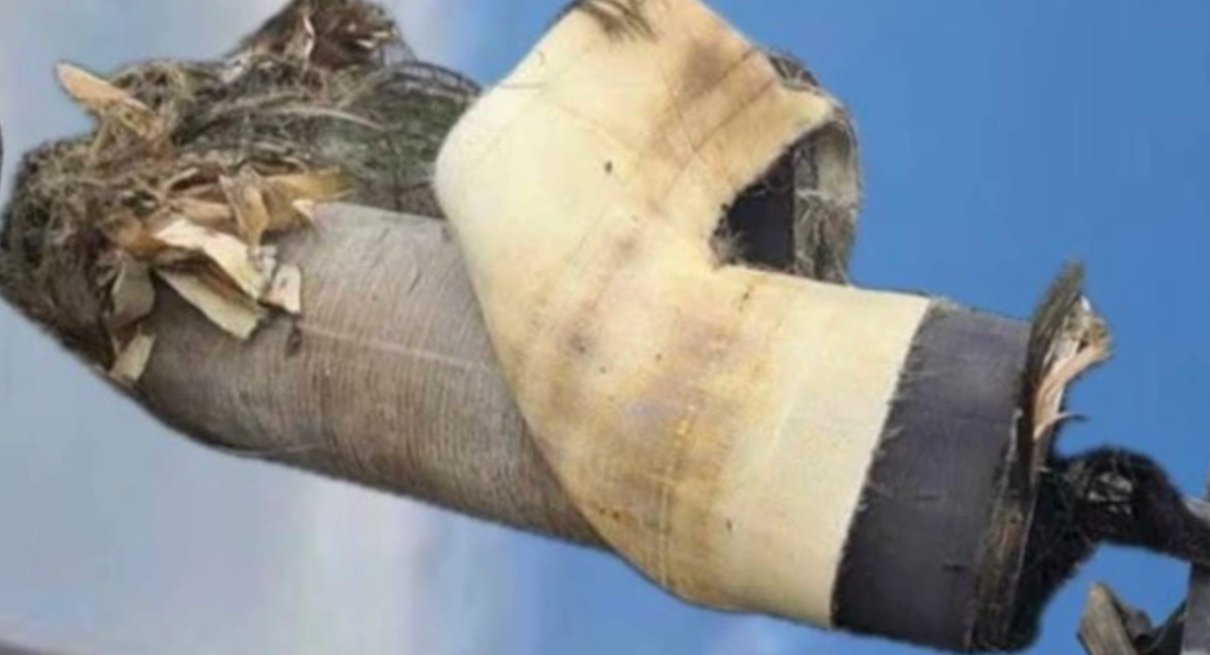
Reported 3B222 active radar homing antenna recovered from Zircon wreckage. GUR

It also identifies the 3B915 guidance units, the 3G22 warhead, and the 3L2211 solid-fuel rocket motor manufactured by NPO Iskra. Other Russian companies provide altimeters, control systems, power supplies, and other components.

Reported remains of a 3L2211 solid-fuel rocket motor manufactured by NPO Iskra. GUR

The reported propulsion information is particularly significant.

Russian and other sources have consistently described Zircon as a hypersonic cruise missile, implying an air-breathing propulsion system burning liquid propellant, capable of sustaining hypersonic flight.

However, the physical evidence for such a propulsion system has always been less clear.

Open-source analysis by Fabian Hinz has highlighted the apparent absence of a conventional air intake on Zircon. A scramjet- or ramjet-powered missile requires an intake to bring atmospheric oxygen into the engine, yet available imagery does not clearly show one. A Russian patent associated with the missile’s jettisonable launch cap likewise does not reveal an obvious intake arrangement.

Just published my new OSINT investigation into Russia's secretive Zircon missile whose combat use has risen sharply in 2026.

Available evidence suggests that Zircon is not a hypersonic cruise missile but rather a quasi-ballistic system.

Link: https://t.co/8DoQePRpX3 pic.twitter.com/bIBS532FUB

— Fabian Hinz (@fab_hinz) June 17, 2026

More significant is evidence from recovered missile debris.

Material examined by Ukraine’s Scientific Research Institute of Forensic Expertise included a circular metal structure interpreted as part of a solid-propellant rocket motor. The hardware appeared to be associated with Zircon’s second stage rather than simply its launch booster (which would be used on a true hypersonic cruise missile to bring it up to operating speed). This suggests a two-stage weapon, with a solid-propellant rocket in each. This would match with what we have seen during shipboard launches.

That finding is consistent with Russian patent activity involving NPO Mashinostroyeniya and NPO Iskra. Patents associated with the companies describe solid-propellant rocket motors incorporating arrangements for aerodynamic-control equipment around the motor’s exhaust system.

There is also evidence that Russian engineers developed advanced composite solid propellants specifically for Zircon.

None of this conclusively proves the missile lacks an air-breathing engine, but it certainly raises more questions about its classification. It should be noted that there are also some solid-fuel ramjet concepts, but these are much rarer applications.

In February 2024, evidence emerged that Russia had, for the first time, used the Zircon in attacks on at least one target in Ukraine. Ukrainian scientists showed a video of the Zircon wreckage — “fragments of the engine and steering mechanisms [with] specific markings,” seen here. via X

If Zircon is primarily rocket-powered, it may be better understood as a maneuverable quasi-ballistic missile that nonetheless reaches hypersonic speeds.

Such a weapon would use rocket propulsion to accelerate rapidly and climb to high altitude before descending toward its target along a trajectory that is partly ballistic but incorporates aerodynamic maneuvering — a so-called ‘porpoising’ or ‘skip-glide’ trajectory. It could therefore reach hypersonic speeds without requiring sustained cruise under the power of an air-breathing system. The combination of high speed and unpredictable trajectory also makes it notably difficult for air defenses to deal with, characteristics shared with the air-launched Kinzhal, another Russian quasi-ballistic missile.

That interpretation could also help explain reports of a highly variable Zircon speed profile.

Russian officials have claimed that the missile can reach approximately Mach 9. During a 2020 test, Russian military leadership said Zircon reached more than Mach 8 while flying to an altitude of roughly 17 miles.

A Russian Ministry of Defense video that claims to show the Zircon test in the White Sea on Oct. 6, 2020:

Ukrainian assessments have described a more complicated profile, with the missile reportedly flying at around Mach 5.5, accelerating to approximately Mach 7.5 near the target, and then slowing before impact. Those figures cannot be independently confirmed, but a boost-and-glide or quasi-ballistic trajectory could produce such a profile more naturally than sustained powered cruise.

Ru MoD released a somewhat better Zircon launch footage. pic.twitter.com/bxHa6DsFG7

— krakek (@krakek1) December 3, 2024

At the same time, it should be recalled that ‘hypersonic’ does not necessarily imply a ‘hypersonic cruise missile.’ A ballistic or quasi-ballistic weapon can travel well above Mach 5, which appears to be the case here. The characteristics of the Zircon, as presented by the GUR, would also help explain official Ukrainian claims that the missiles have been intercepted successfully by Patriot PAC-3 air defense systems.

There is also a relevant technological precedent. NPO Mashinostroyeniya has previously patented solid-propellant missiles using quasi-ballistic trajectories, including designs intended to maneuver at high-supersonic and hypersonic speeds. That does not establish a direct lineage to Zircon, but it does show that the concept is consistent with the company’s history.

The other major takeaway from the release is the scale of Zircon’s production network.

One of Russia’s leading missile houses, NPO Mashinostroyeniya is identified as the missile’s main designer and manufacturer and prime contractor for Russian Ministry of Defense contracts covering its development and production.

But the weapon depends on dozens of other organizations. NPO Iskra supplies the solid-fuel motor; NPP Radar MMS provides the radar seeker; KB Korund-M produces the onboard computer; and other enterprises supply guidance systems, altimeters, control electronics, warheads, power systems, and other specialized equipment.

Another video, released by the Russian Ministry of Defense in May 2022, is said to show the Gorshkov launching a Zircon, although the missile is seen only at a distance with no details visible:

The U.S.-origin electronics claimed to have been identified by GUR are particularly notable because they demonstrate how Russia’s sophisticated weapons production remains connected to international semiconductor supply chains.

By linking specific enterprises and individuals to individual missile components, Ukraine has provided governments and investigators with new information that could be used to pursue sanctions, export-control enforcement, and efforts to disrupt Russia’s supply chain.

The report also adds weight to continued open-source assessments of what kind of missile Zircon actually is.

Regardless of its classification, Zircon remains a formidable weapon. A rocket-powered missile capable of reaching hypersonic speeds, flying at high altitude, maneuvering, and potentially accelerating during its terminal approach presents a serious challenge to missile defenses. With Ukraine’s ability to intercept even more conventional ballistic missiles already severely eroded, the weapon further complicates the country’s troubling air defense picture.

Contact the author: thomas@thewarzone.com

The post Russia’s Zircon May Not Be A Hypersonic Cruise Missile After All appeared first on TWZ.

  •  

Japan’s ASM-3 Kai Supersonic Cruise Missile May Have An Air-To-Air Capability

Japan’s Ministry of Defense has included an intriguing description of the ASM-3 Kai missile in its record fiscal year 2027 defense budget request, referring to the weapon as an “air-to-surface/anti-air missile.” Until now, the ASM-3 family has been publicly associated with the air-launched anti-ship (anti-surface) mission, and the wording potentially hints at an additional capability or intended role for the upgraded weapon.

The reference appears in Japan’s FY2027 defense budget request, submitted today, which seeks a record ¥8.89 trillion (approximately $56 billion) for the fiscal year beginning in April 2027. The request is part of a broader push by Tokyo to expand standoff strike, air defense, uncrewed systems, and other advanced capabilities.

The reference appears under a sub-section entitled Durability and Resilience, which calls for funds to “secure ammunition and fuel, increase the number of operational units (by addressing parts shortages, etc.), enhance the resilience of facilities (through facility upgrades associated with the formation of new units and the introduction of new equipment, etc.), and strengthen the operational infrastructure (by enhancing manufacturing capabilities, etc.).”

https://t.co/ntiASteLJx
というわけで概算要求ですが、個人的にはずっと導入を訴えてきたAARGM-ERの導入決定が嬉しい。あとは、ASM-3(改)がまさかの「空対艦/対空ミサイル」とは。 pic.twitter.com/XX09mrx2cE

— 因幡のよっちゃん(稲葉義泰 Yoshihiro Inaba) (@japanesepatrio6) August 31, 2026

In terms of securing ammunition, the document highlights the breadth of weapons systems involved, ranging from 5.56mm small arms ammunition and 30mm cannon rounds, via 155mm precision artillery rounds, up to advanced missiles including the Type 23 ship-launched air defense missile and the ASM-3 Kai.

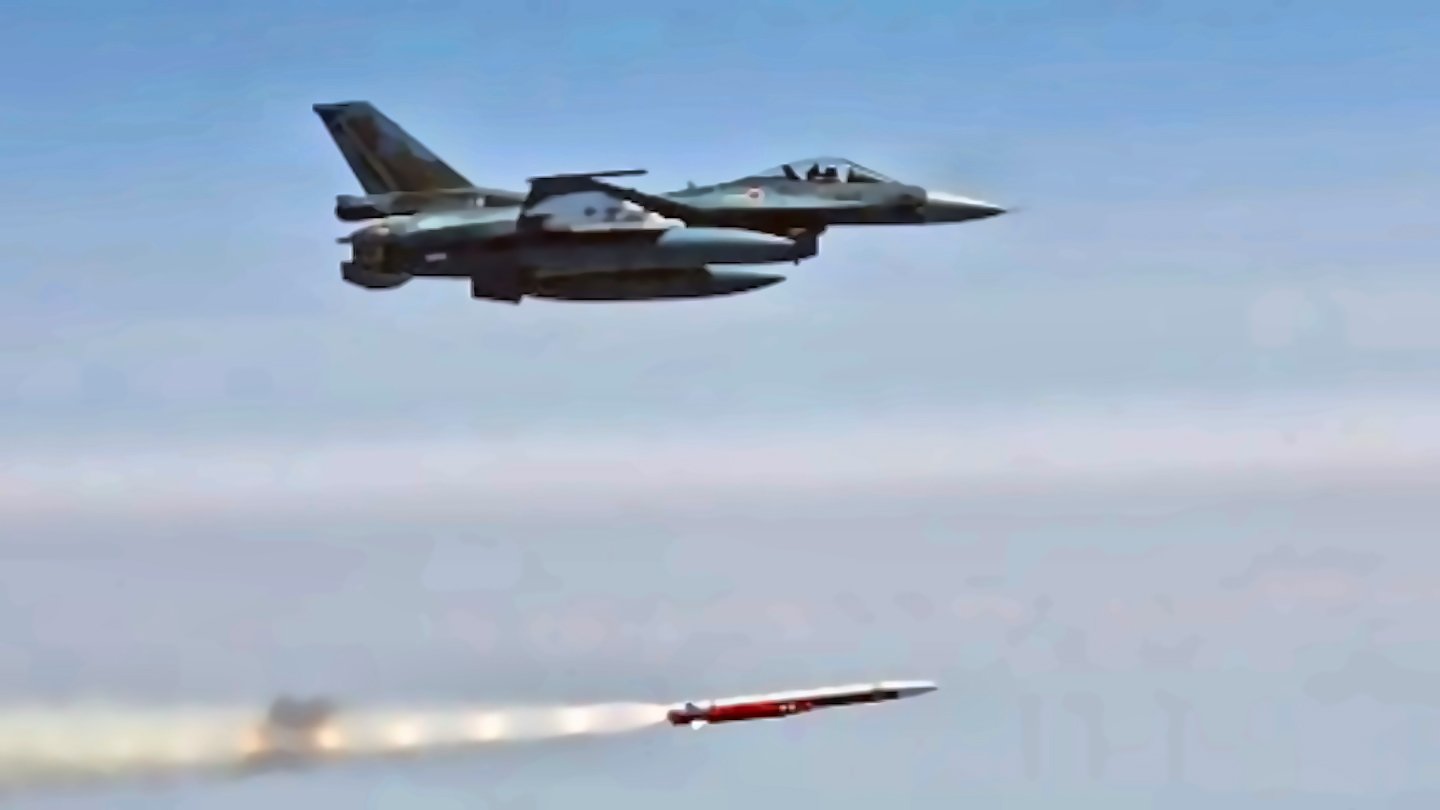
The Mitsubishi Heavy Industries (MHI) ASM-3 is Japan’s domestically developed supersonic air-launched anti-ship missile, originally intended to arm the Mitsubishi F-2 fighter. The improved ASM-3 Kai (“Kai” meaning modified or revised) represents a significant evolution of the weapon, although the full nature of its capabilities and performance have not been officially revealed. The missile has already been observed undergoing testing on F-2s.

2年半振り以上?に飛んでいる102号機を撮影しました👍
ASM-3改にカメラポット吊してありがたや🙏

2026.06.01
岐阜基地 RJNG
F-2B 102 pic.twitter.com/oUJImUagsI

— ボボ・AKEBOVO (@AKEBOVO) June 1, 2026

The ASM-3 program has also gone through a number of different configurations over its development history, with at least five distinct external configurations identified in previous reporting. The existence of multiple iterations leaves open the possibility that the newly identified “anti-air” designation could ultimately correspond to a dedicated air-to-air variant or derivative of the ASM-3 family, rather than simply a secondary capability of the baseline ASM-3 Kai.

Reportedly, the ASM-3 Kai is capable of flying more than 400 kilometers (about 250 miles), although the exact range of the operational weapon remains classified. It is powered by a ramjet engine, giving it sustained high-speed performance — reportedly around Mach 3. If it indeed has an air-to-air capability, this would be an advantage in some scenarios, compared to relying solely on a brief but very powerful rocket boost as many air-to-air missiles do.

A Mitsubishi F-2 launches an ASM-3 anti-ship missile. (JASDF)

The weapon is also understood to employ an active/passive radar seeker, providing it with both an active radar mode for detecting and engaging targets and a passive mode that can home in on their electromagnetic emissions. While an active radar seeker is common on long-range air-to-air missiles, the latter passive capability could also be of extreme value in an air-to-air application.

岐阜基地
九州から岐阜へ移動しました。
F-2 101号機、ASM-3✖2発
スペマと離陸しました。#岐阜基地 #ASM3 pic.twitter.com/oFjetR3rWZ

— K.otani (@kotaken8022) December 9, 2025

The ASM-3 is also a substantially larger missile than typical fighter-launched air-to-air weapons. While that imposes obvious carriage and aerodynamic penalties, it also allows for a larger propulsion system, seeker, and warhead than would be practical in a smaller missile.

A weapon capable of traveling hundreds of miles at high speed, while carrying an active/passive radar seeker, could potentially be especially useful against high-value airborne assets such as airborne early warning and control (AEW&C) aircraft. These platforms provide vital wide-area surveillance, battle management, and targeting capabilities. At the same time, their powerful radars are necessarily emitting, potentially making them detectable and trackable by a missile employing a passive seeker.

China’s rapidly expanding AEW&C fleet is an increasingly important part of its ability to generate situational awareness, coordinate fighters, and extend its sensor coverage well beyond its immediate borders. The force, which already numbers dozens of increasingly capable fixed-wing aircraft, is a growing operational challenge for Japan and other regional air forces.

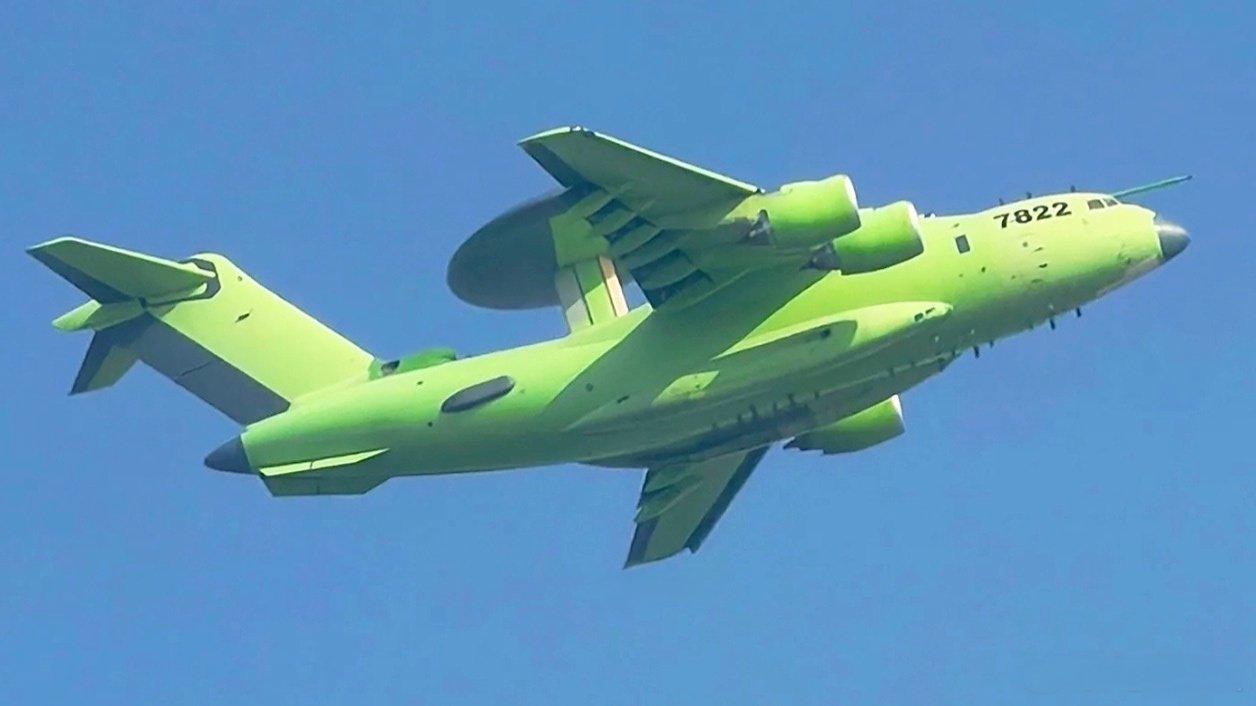
The second example of the Chinese KJ-3000 AEW&C aircraft, still painted in primer. via X

The ability to threaten such aircraft from well beyond the range of conventional air-to-air engagements could force an opponent to operate its AEW&C fleet even further from contested airspace, reducing the effectiveness of its sensors and command-and-control architecture. Although a passive seeker could also offer an avenue for homing in on relevant radar emissions, exactly how the ASM-3 Kai’s seeker would operate against airborne targets is not publicly known. Equally, a different variant of the missile, optimized for anti-air missions, could incorporate both passive and active seekers specially adapted for that mission set, although it is very possible a single configuration can accomplish both missions. As well as AEW&C aircraft, such a missile would be just as relevant for other high-value, non-maneuvering targets at long ranges, including intelligence-gathering platforms, tankers, and other support aircraft.

The budget language by itself falls short of establishing whether the ASM-3 Kai has been tested or validated against aircraft. The designation could reflect a broader classification within the budget documents, or it could point toward a genuine expansion of the weapon’s intended target set.

Such a weapon would not necessarily be a replacement for Japan’s existing air-to-air missile arsenal. Instead, an “anti-air” ASM-3 Kai could occupy a specialized niche focused on high-value or otherwise particularly important airborne targets at extended ranges.

The possibility is consistent with Japan’s broader effort to expand the flexibility and reach of its air-launched weapons. Tokyo is pursuing a growing family of standoff weapons as part of a major expansion of its counterstrike and deterrence capabilities, including longer-range missiles capable of striking targets well beyond the immediate vicinity of Japan.

Other air-to-air missiles mentioned in the same section of the document comprise the U.S.-made AIM-120 Advanced Medium-Range Air-to-Air Missile (AMRAAM) and the domestically developed AAM-4B, another medium-range weapon, thought to be the first of its kind to be fitted with an active electronically scanned array (AESA) antenna.

Between the exclusive AESA radar and Japan's labour cost, Mitsubishi's AAM-4B might be the most expensive air-to-air missile on the planet pic.twitter.com/rfBnXB8RzS

— Lia Wong (@LiaWong__) May 3, 2022

The FY2027 defense budget request also mentions another apparently new air-launched weapon for Japan, the AGM-88G Advanced Anti-Radiation Guided Missile-Extended Range (AARGM-ER). Japan has not previously been publicly documented as an international AARGM-ER customer, but the weapon would be an obvious candidate for integration with its F-35 fighters if it wishes to bolster their suppression/destruction of enemy air defenses (SEAD/DEAD) capabilities.

An AARGM-ER seen under the wing of an F/A-18F Super Hornet during a test. U.S. Navy

In terms of F-2-related developments, the document calls for the upgrade of an initial 10 of these aircraft to make them compatible with the air-launched version of the Upgraded Type 12 anti-ship guided missile, a significant new weapon that you can read more about here.

A pair of previously unseen missiles slung beneath the wings of a Japan Air Self-Defense Force (JASDF) Mitsubishi F-2 fighter underscores the progress Tokyo is making on expanding its long-range strike arsenal. While the weapon has not been officially identified, its size, configuration, and timing strongly suggest it could be the air-launched version of Japan’s new Type 25 Surface-to-Ship Missile (25SSM).
A pair of new missiles slung beneath the wings of an F-2, understood to be the air-launched version of Japan’s Upgraded Type 12/Type 25 anti-ship missile. @bibabibabibary @bibabibabibary

TWZ has contacted Japan’s Ministry of Defense seeking clarification on the “air-to-surface/anti-air” designation and what it means for the ASM-3 Kai’s intended capabilities and target set. It could also be the case that the description is an error in the budget document.

However, the emergence of such a capability would also come at a time when very-long-range air-to-air weapons are becoming increasingly important as anti-access/area-denial challenges make it harder for fighters to get close to enemy aircraft and the high-value assets supporting them. China has fielded weapons such as the PL-15 and the much larger PL-17, while the United States is developing the AIM-260 and has just revealed the AIM-424 Malice, a U.S. Navy missile reportedly capable of reaching more than 250 nautical miles. The U.S. Navy is also fielding the AIM-174B, a very-long-range weapon developed very much with the Chinese threat in mind, and which we discuss in the video below.

For now, exactly what prompted the “air-to-surface/anti-air” designation for the missile is unclear, but if it reflects a genuine expansion of the ASM-3 Kai’s mission set, it would represent a particularly interesting development in Japan’s rapidly evolving air-launched weapons portfolio.

Hat-tip to Yoshihiro Inaba for bringing this development to our attention.

Contact the author: thomas@thewarzone.com

The post Japan’s ASM-3 Kai Supersonic Cruise Missile May Have An Air-To-Air Capability appeared first on TWZ.

  •  

Indonesia’s First Aircraft Carrier Is On Its Way From Italy

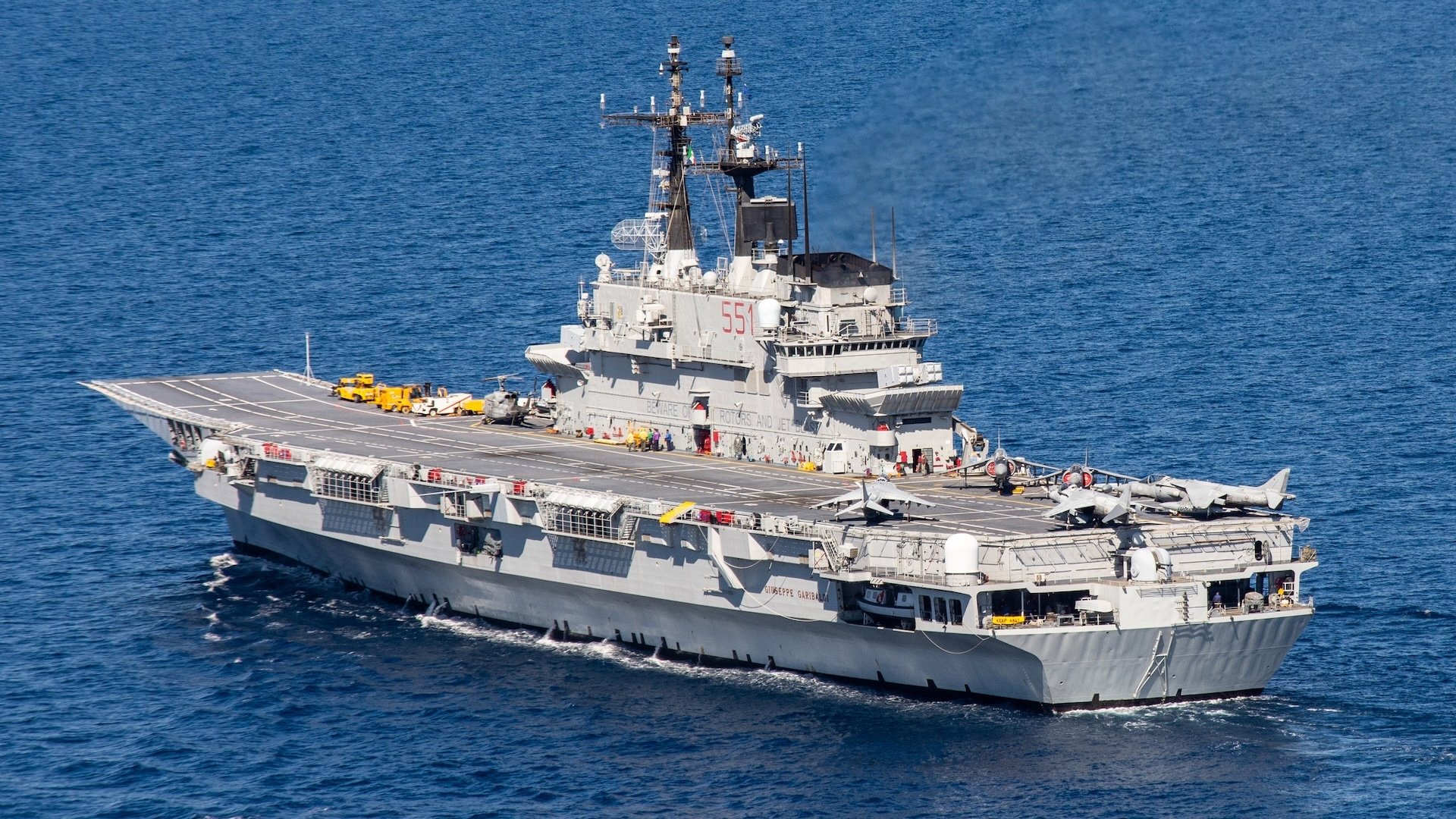
Indonesia is about to become the second Southeast Asian country to operate an aircraft carrier, nearly three decades after Thailand became the first with HTMS Chakri Naruebet. The latest addition to the region’s small carrier club is the former Italian Navy carrier Giuseppe Garibaldi, which departed Italy earlier this week, bound for Indonesia, where it will eventually become KRI Gajah Mada. Indonesian Navy Chief of Staff Admiral Muhammad Ali confirmed the ship’s departure on Tuesday.

Garibaldi is expected to spend more than 20 days making the journey from Italy to Indonesia, passing through the Suez Canal and Red Sea. Italian frigates are accompanying the carrier during the transit.

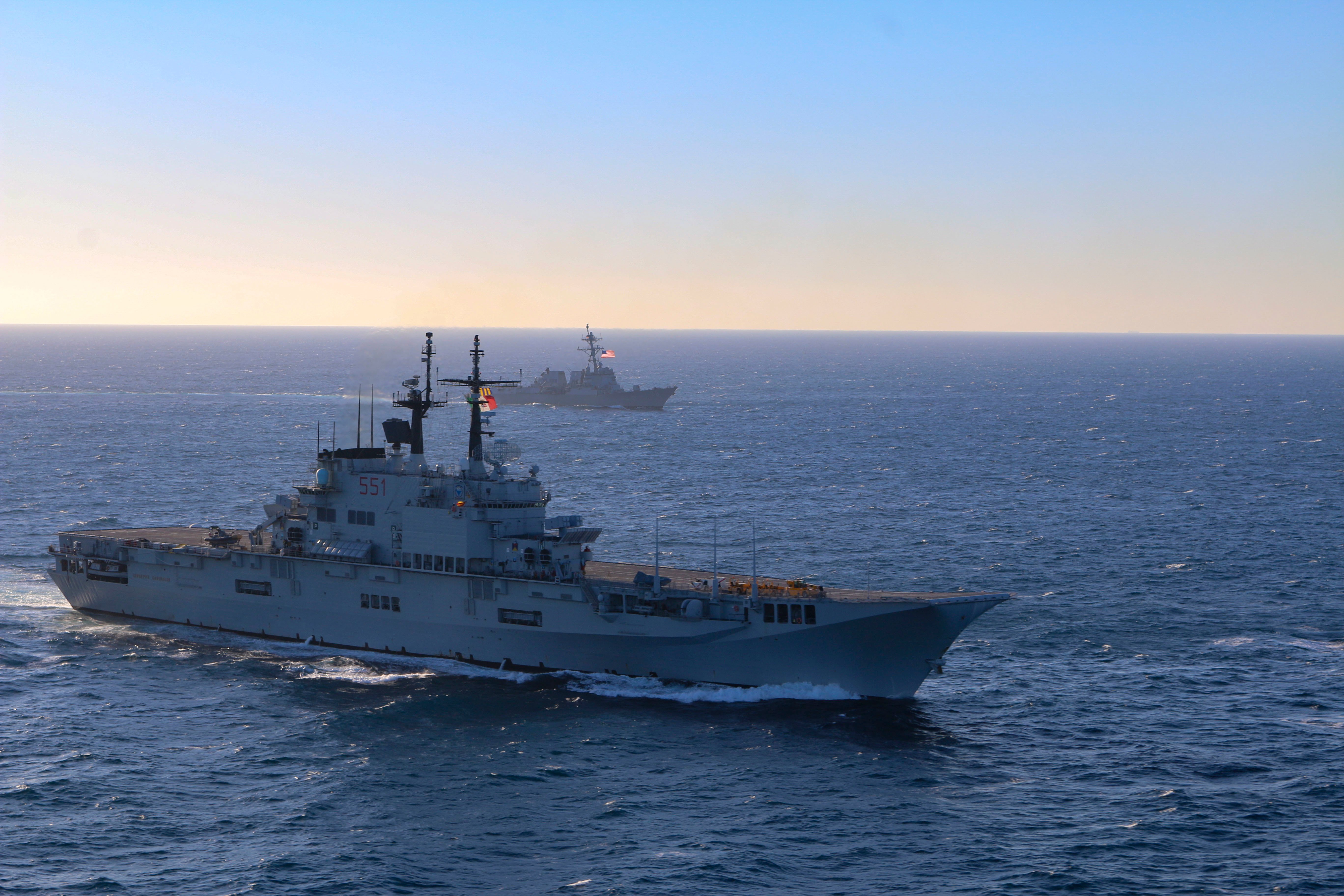
220222-N-NO901-0004 BAY OF CADIZ (Feb. 22, 2022) Arleigh Burke-class guided-missile destroyer USS Forrest Sherman (DDG 98) participates in a photo exercise with Italian aircraft carrier ITS Giuseppe Garibaldi, USS Roosevelt (DDG 80) and Blue Ridge-class command and control ship USS Mount Whitney (LCC 20), Feb. 22, 2022. USS Forrest Sherman is on a regularly scheduled deployment conducting routine operations in the U.S. Sixth Fleet area of operations. (U.S. Navy photo by Naval Air Crewman (Helicopter) 2nd Class Reuben Richardson)
The Italian aircraft carrier Giuseppe Garibaldi alongside the Arleigh Burke class destroyer USS Forrest Sherman in the U.S. Sixth Fleet area of operations in 2022. U.S. Navy photo by Naval Air Crewman (Helicopter) 2nd Class Reuben Richardson

According to Admiral Ali, the ship is scheduled to reach Indonesia between September 15 and 20.

The carrier will retain its Italian identity throughout the voyage, sailing as Giuseppe Garibaldi under the Italian flag until the formal transfer, when it will be renamed and placed under Indonesian command.

Commissioned in 1985, Garibaldi was initially described as a “helicopter cruiser” before being redesignated as an aircraft-carrying cruiser in 1989 and receiving the Italian Navy’s AV-8B Harrier II jump jets. The ship subsequently served as Italy’s flagship and later shifted toward amphibious operations and command-and-control duties after the larger Cavour entered service.

At around 13,850 tons full load, Garibaldi combined a relatively compact aviation capability with a multirole weapon and sensor fit, at least in its early period of service. Its armament historically included two octuple launchers for Sea Sparrow/Aspide surface-to-air missiles, four Otomat Mk 2 anti-ship missiles, two 2 triple torpedo tubes, and three twin Oto Melara 40mm guns.

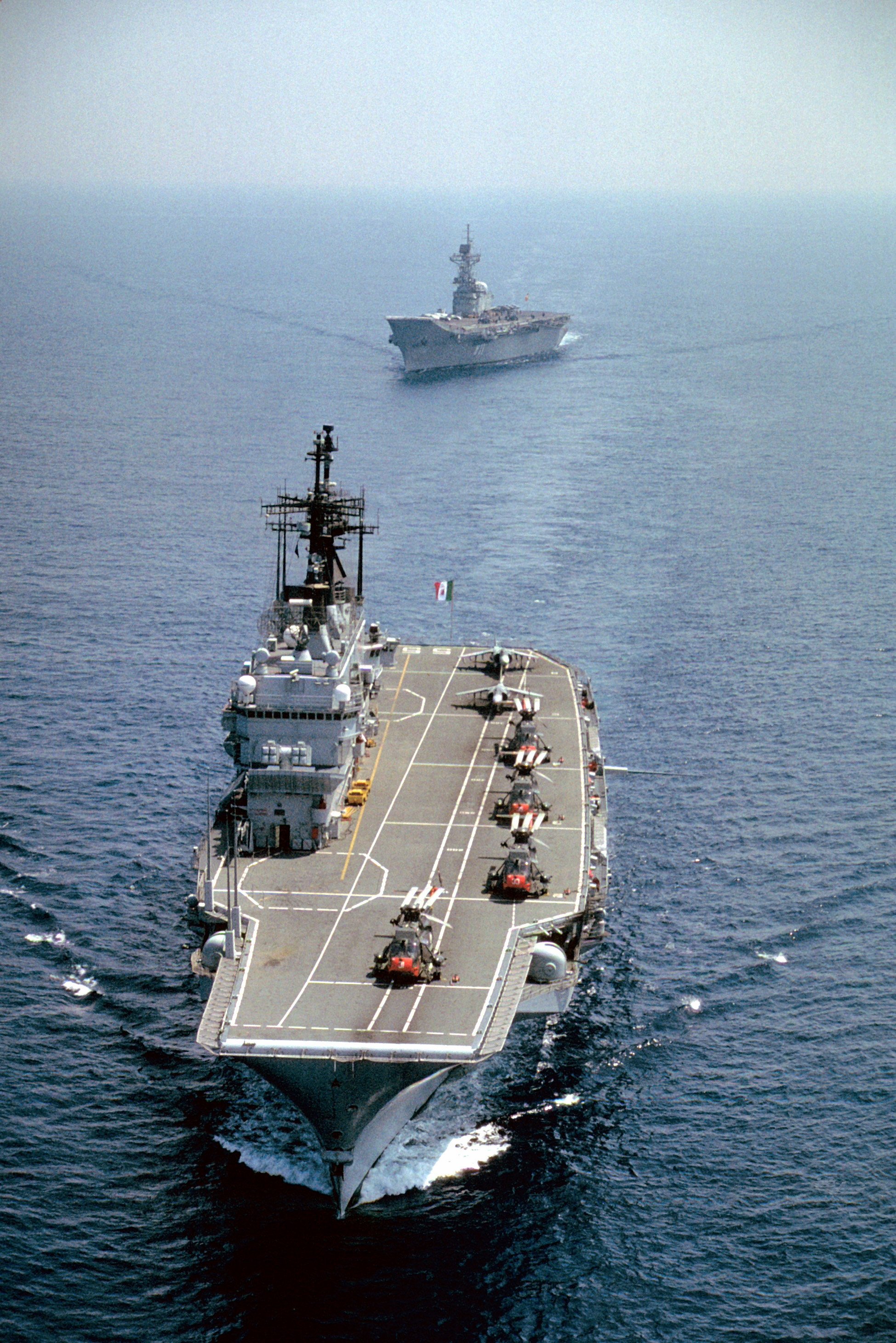
The Spanish navy's aircraft carrier PRINCIPE DE ASTURIAS (R-11) follows the Italian navy's aircraft carrier GUISEPPE GARIBALDI (C-551) as the two vessels take part in the joint exercise Dragon Hammer '92.
The Giuseppe Garibaldi underway in the Mediterranean during its early period of Italian Navy service. Note the Mk 29 octuple launcher for Sea Sparrow/Aspide immediately in front of the bridge. In the background is the Spanish Navy aircraft carrier Príncipe de Asturias, on which the Chakri Naruebet is closely based. U.S. Department of Defense

Indonesia is acquiring the ship through an intergovernmental grant arrangement rather than purchasing it through a conventional commercial transaction.

Although it has spent almost four decades in Italian service, the ship offers considerable flexibility, combining a large aviation facility with the ability to serve as a command and support platform.

Jakarta says it plans to use the ship primarily as a helicopter-capable aviation platform, with aircraft from the Indonesian Navy, Air Force, and Army expected to operate from its deck.

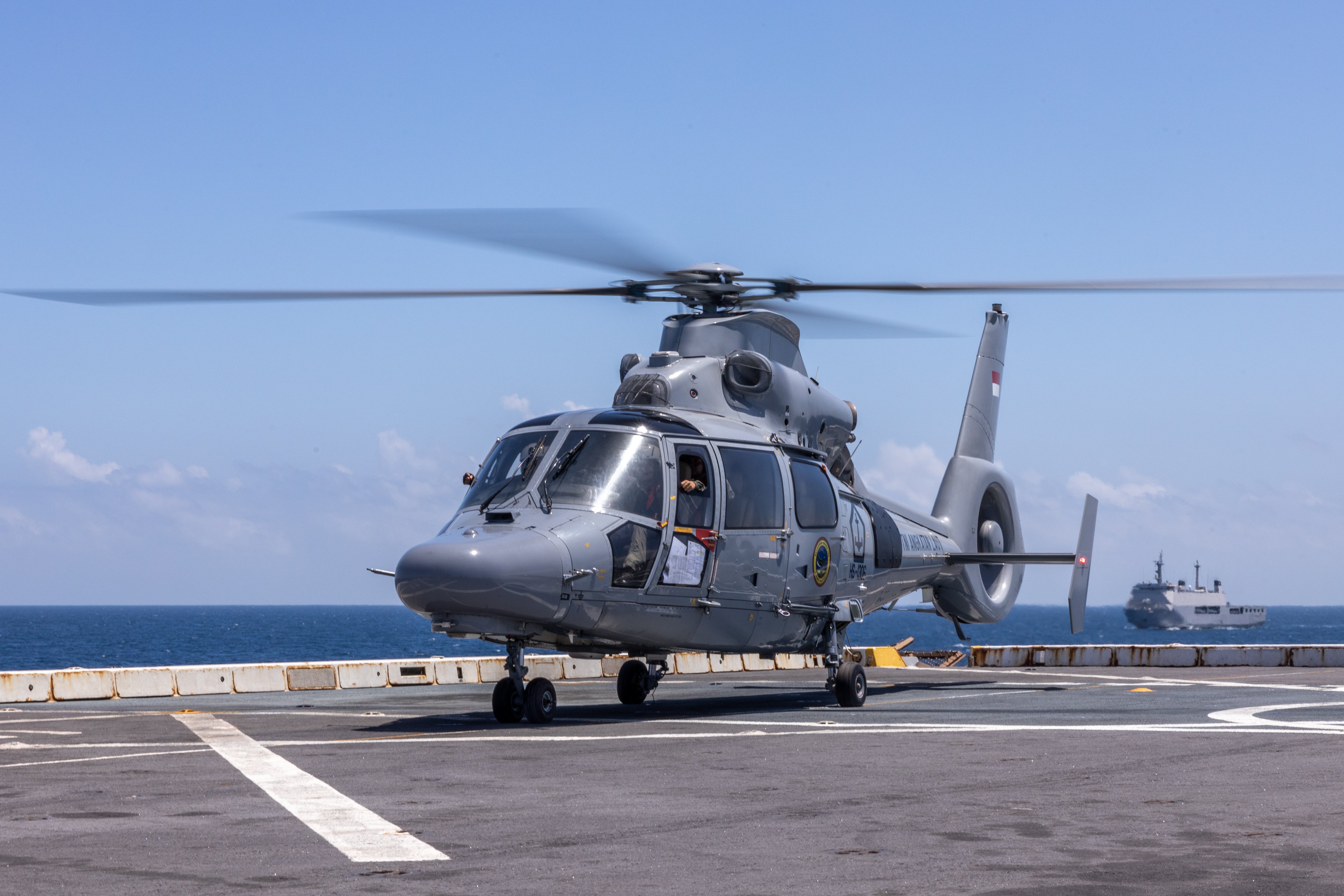
An Indonesia National Armed Forces AS565 Panther helicopter lands on the flight deck of the amphibious transport dock ship USS Green Bay (LPD 20), during a cross-deck exercise in the Java Sea, Sept. 4, 2024. The exercise showed the capabilities of multilateral communication and cooperation, enhancing interoperability between U.S., Singaporean and Indonesian fighting forces. Super Garuda Shield is an annual exercise that has significantly grown in scope and size since 2009. Super Garuda Shield 2024 is the third consecutive time this exercise has grown into a combined and joint event, focused on commitment to partnership and a Free and Open Indo-Pacific. (U.S. Marine Corps photo by Lance Cpl. Peter J. Eilen)
An Indonesian Navy AS565 Panther helicopter lands on the flight deck of the amphibious transport dock ship USS Green Bay, during a cross-deck exercise in the Java Sea in 2024. U.S. Marine Corps photo by Lance Cpl. Peter J. Eilen

Ahead of the ship’s arrival, preparations have included establishing a training facility at Juanda Naval Air Station/International Airport in Sidoarjo, East Java. Here, the large outline of a carrier flight deck has been painted on an apron/helipad area on the southern side of the installation, to familiarize naval pilots and deck crews with carrier flight-deck procedures.

The carrier flight deck outline at Juanda Naval Air Station. TNI AL

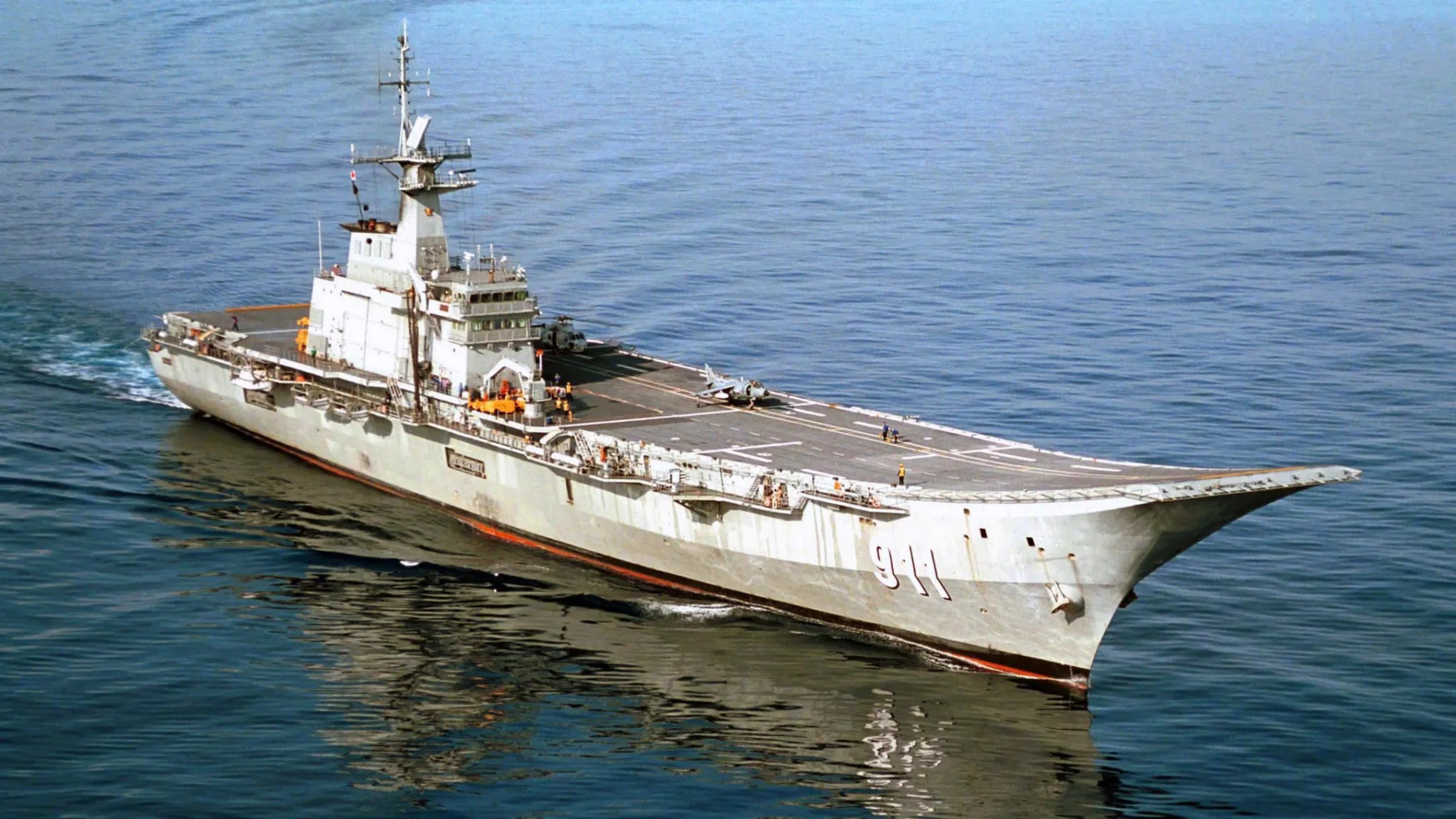
Thailand’s experience provides useful context here. When Chakri Naruebet entered service in 1997, it was configured to operate AV-8S Harriers as well as helicopters. The Harriers were subsequently retired, leaving the ship to perform a much broader range of roles, including helicopter operations, disaster response, training, and VIP duties. TWZ has previously examined that unusual evolution in detail.

HTMS Chakri Naruebet underway in the South China Sea in April 2001 with a single AV-8S and an S-70B seen on the deck. U.S. Navy

Once in service, Indonesia will likely operate the Gajah Mada as a mobile aviation base. This will allow helicopters to provide transport, surveillance, logistics, search and rescue, disaster relief, and potentially anti-submarine warfare and amphibious support capabilities over much greater distances than when operating from land bases, and in much larger numbers than operating from other Indonesian Navy vessels.

The potential mission set is particularly relevant for Indonesia, whose territory stretches across thousands of islands.

Occupying a strategic position at the southern end of the South China Sea, Indonesia is also locked in a maritime dispute with China, including incidents in which Chinese fishing boats accompanied by Chinese Coast Guard vessels have entered Indonesia’s exclusive economic zone in the South China Sea. The tense situation as regards China seems to be driving something of a defense spending spree in Indonesia, with high-profile acquisitions including French-made Rafale fighters and submarines.

Meanwhile, in peacetime, disaster response is also a significant consideration for Indonesia. The Gajah Mada will be able to bring helicopters, personnel, supplies, and command-and-control capabilities to areas where local infrastructure has been damaged or where access is otherwise difficult.

The ship is also likely to take part in maritime security missions and regional deployments including multinational training exercises.

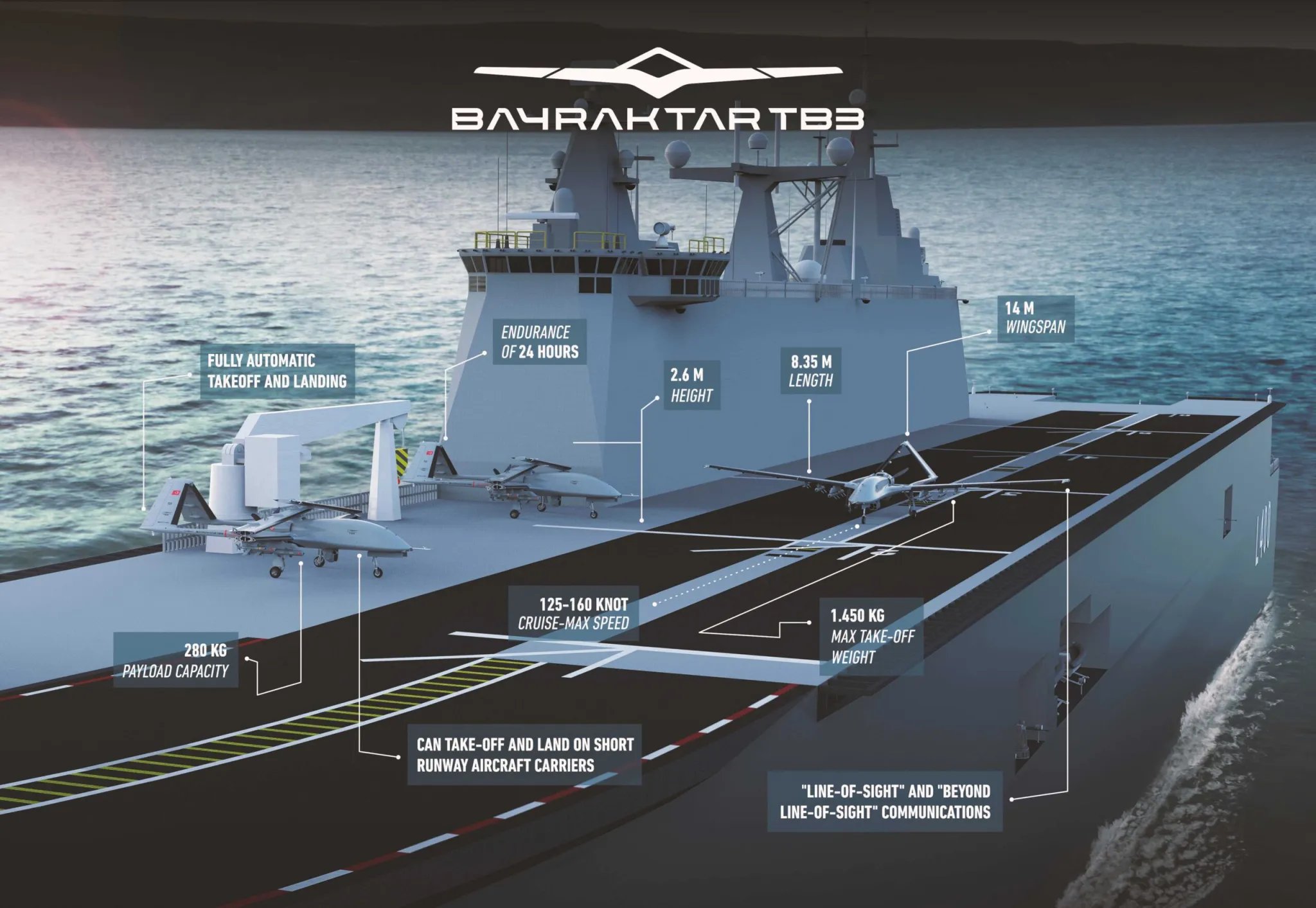
There is potential for Indonesia to adapt the warship for drone operations too, something that Italian shipbuilder Fincantieri has previously proposed. While Indonesia has not announced such a capability as part of the ship’s initial configuration, it has acquired Turkish-made Bayraktar TB3 drones, which have demonstrated operations from carrier decks.

Infographic on the TB3’s operational capabilities. Baykar

As well as Turkey’s Anadolu, which has evolved into a platform for operating drones after Turkey lost access to the F-35B program, other navies are similarly experimenting with integrating uncrewed aircraft into helicopter-carrier-sized ships, reflecting a broader shift toward using large flight decks for mixed crewed and uncrewed aviation. The trend includes experiments with fixed-wing drones on amphibious assault ships, including in China and the United States.

ANTALYA, TURKIYE - APRIL 09: Bayraktar TB3 unmanned aerial vehicle takes part in the live-fire phase from TCG Anadolu on the final day of the 'Blue Homeland-2026' (Mavi Vatan) tactical exercise in the Eastern Mediterranean, in Antalya, Turkiye, on April 9, 2026. The extensive drills, also conducted across the Black Sea and the Aegean Sea, involved 120 ships, 50 aircraft, and 15,000 personnel to enhance the operational readiness and coordination of the Turkish Armed Forces. (Photo by Orhan Cicek/Anadolu via Getty Images)
A Bayraktar TB3 on the deck of Anadolu during an exercise in the Eastern Mediterranean in April 2026. Photo by Orhan Cicek/Anadolu via Getty Images Anadolu

For Indonesia, a future combination of helicopters and drones could provide the Gajah Mada with persistent surveillance and potentially strike capabilities without requiring the country to develop a conventional fixed-wing carrier air wing.

How extensively Indonesia eventually makes use of any of its capabilities will depend on its ability to sustain the ship and build the associated aviation infrastructure and expertise.

The Indonesian Navy is constructing the warship’s future base in Lampung, on the southern tip of the Indonesian island of Sumatra. The facility is expected to be finished around the time the ship arrives and operational by the end of September.

The Italian carrier Giuseppe Garibaldi (C551) and the USS America (CV-66) conduct joint operations in the Adriatic Sea off the coast of Croatia in 1996. The image provides a good size comparison between the Italian warship and even a non-nuclear U.S. Navy aircraft carrier. DoD photo by Petty Officer 3rd Class Michael D. Flinn, U.S. Navy

The ship’s formal transformation into an Indonesian warship is planned for September 25. A commissioning and flag-changing ceremony is scheduled for that date, with President Prabowo Subianto expected to attend and officiate.

At that point, the carrier will become KRI Gajah Mada, taking its name from the famous Majapahit-era military commander and statesman.

The Navy plans to include the ship in celebrations marking the 81st anniversary of the Indonesian National Defense Forces, or TNI, in October.

Thailand’s experience with the Chakri Naruebet, which only very rarely goes to sea for any length of time, underscores the fact that buying a carrier is the relatively easy part. Creating a sustainable carrier aviation capability around it is much more challenging.

Nevertheless, the Gajah Mada gives Jakarta something it has never previously possessed: a large, dedicated maritime aviation platform capable of carrying helicopters from multiple services. As such, it could prove useful across a wide spectrum of missions.

Ciontact the author: thomas@thewarzone.com

The post Indonesia’s First Aircraft Carrier Is On Its Way From Italy appeared first on TWZ.

  •  

Saab’s Gripen F Two-Seater Takes To The Air For The First Time

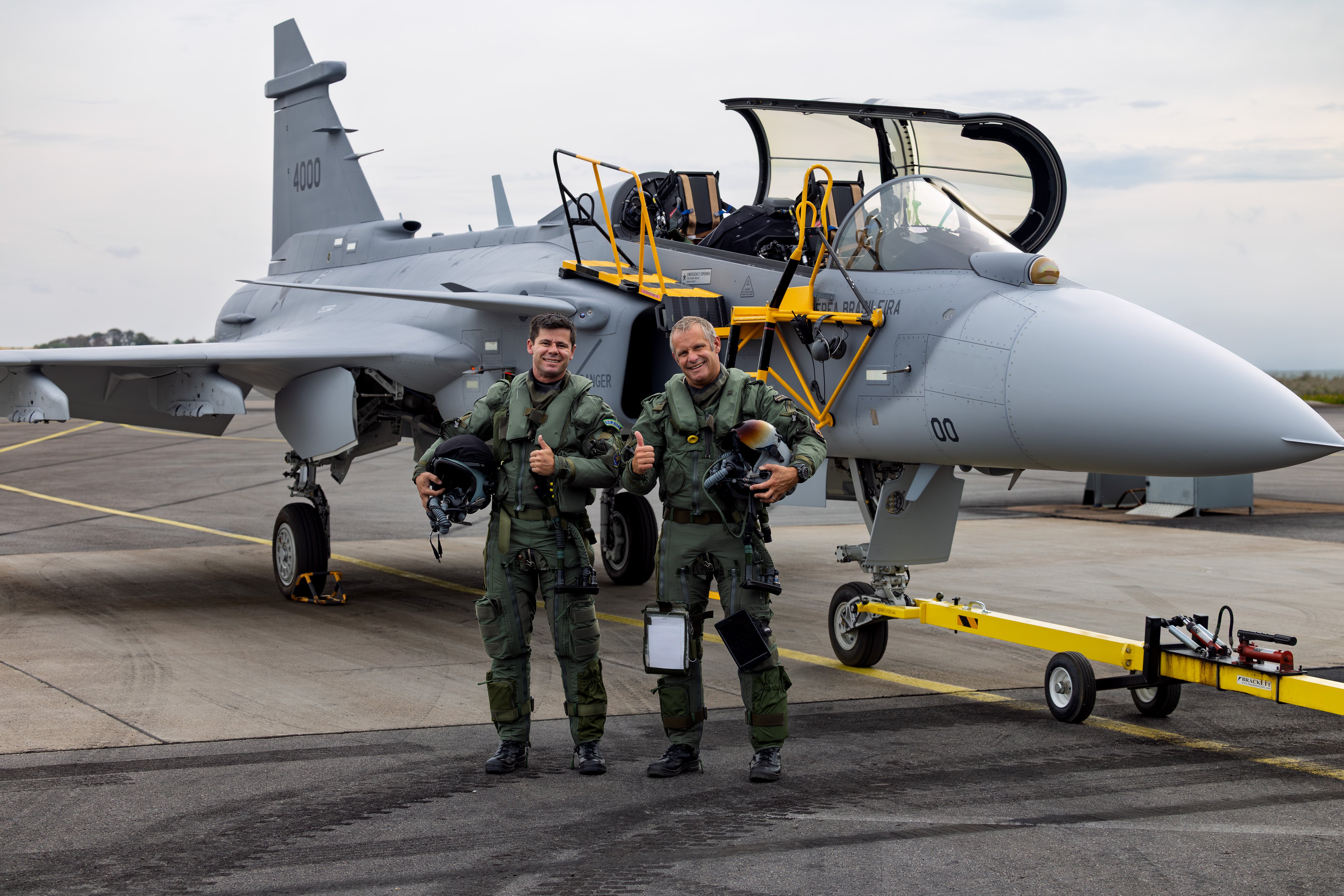
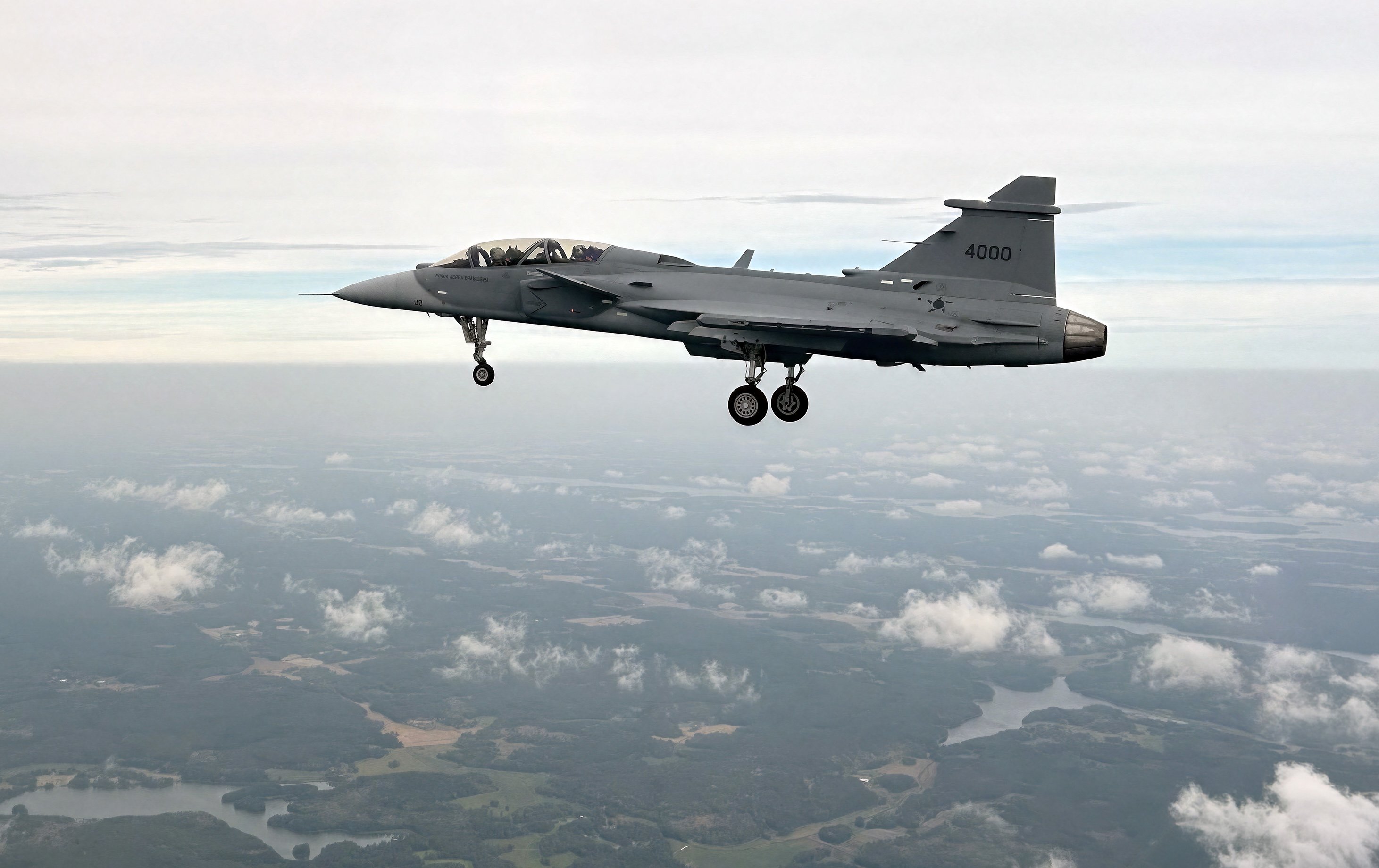
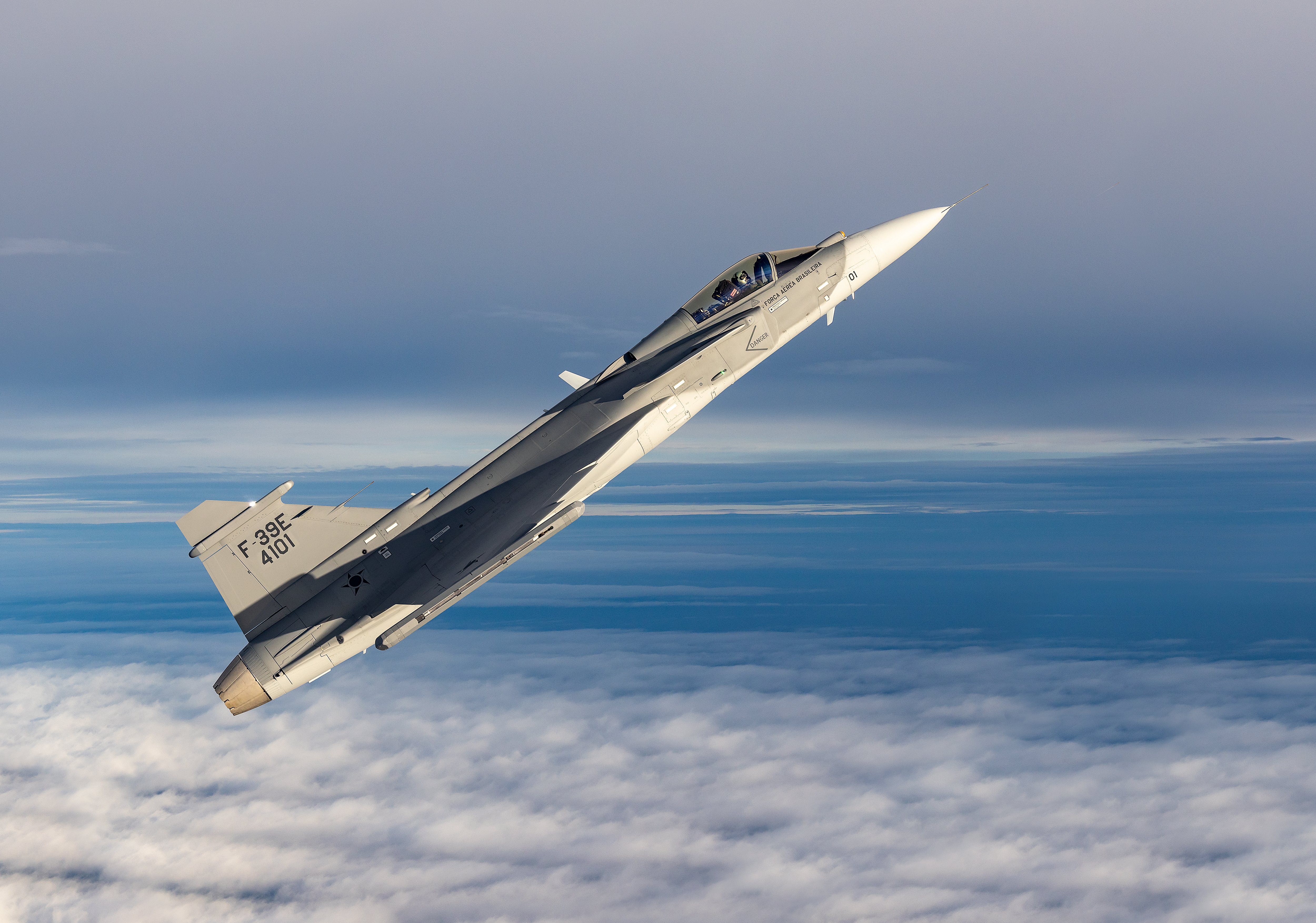
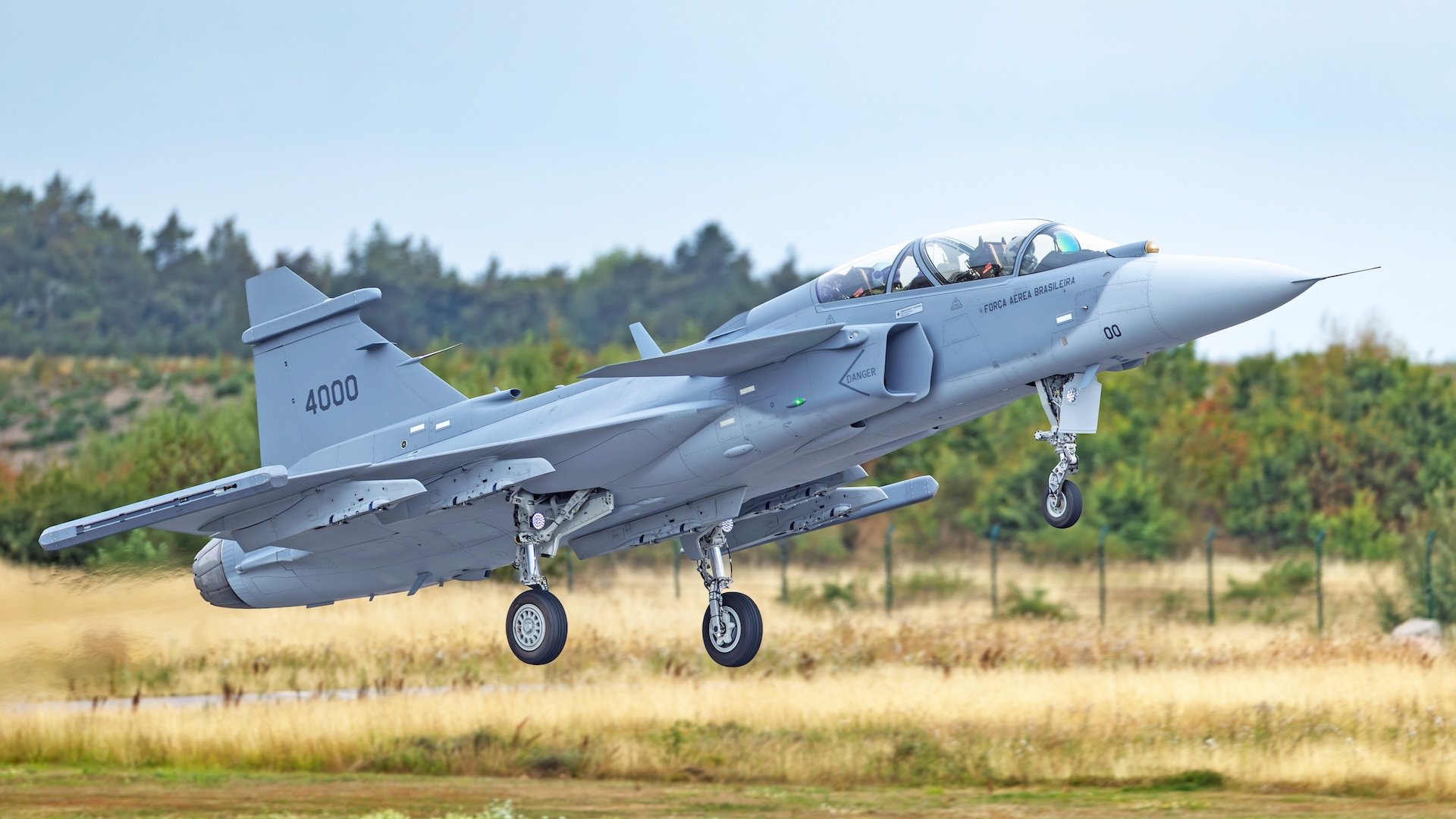
Saab’s first Gripen F two-seat fighter has taken to the air, marking the beginning of the flight-test campaign for a variant being developed in close cooperation with Brazil.

The aircraft departed Saab’s airfield at Linköping, Sweden, at 9:40 a.m. local time today and remained airborne for approximately 40 minutes. Saab chief test pilot Jakob Högberg and Brazilian Air Force test pilot Lt. Col. Aviator Abdon de Rezende Vasconcelos were in the cockpit for the inaugural sortie.

Gripen F test pilots Jakob Högberg and Lt. Col. Aviator Abdon de Rezende Vasconcelos. Saab

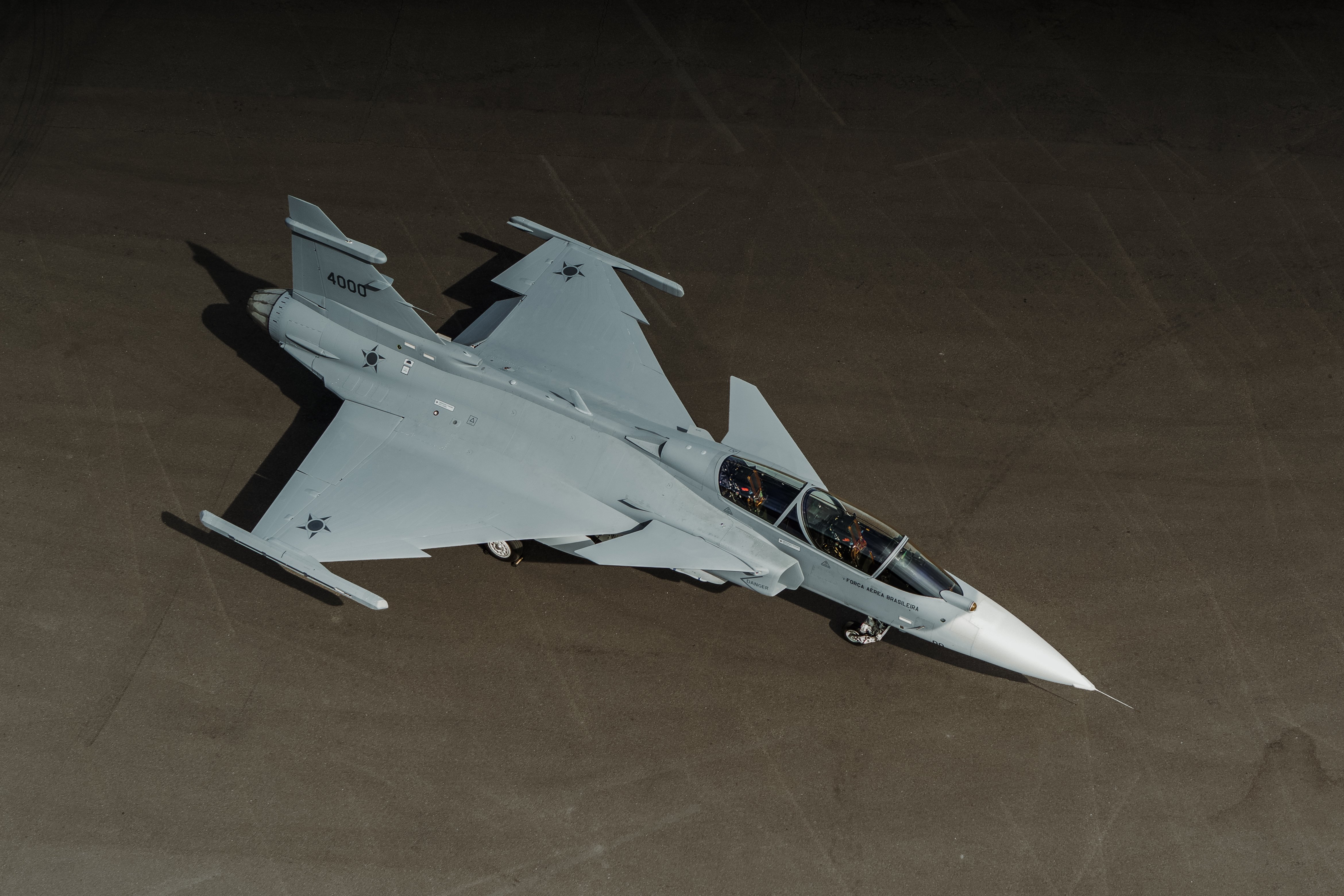
According to Saab, the flight was intended primarily to verify the aircraft’s core systems and initial flying characteristics. The company says the aircraft will now enter a more extensive test program, including progressive expansion of its permitted flight envelope.

That work will eventually cover the aircraft’s speed, altitude, G-loading, and angle-of-attack limits, as well as the tactical capabilities and systems associated specifically with the rear cockpit.

“This first flight represents an important step forward for both Saab and the Brazilian Air Force,” said Lars Tossman, head of Saab business area Aeronautics.  “Seeing Gripen F take to the skies is particularly significant for all the Swedish and Brazilian teams whose years of engineering work have helped turn this aircraft into a reality. It is designed to accelerate pilot training while enhancing operational performance in advanced combat missions.”

First flight of the Gripen F, with landing gear extended. Saab

The Gripen F is the two-seat derivative of the Gripen E, but it is not simply a conventional trainer version of the single-seat fighter. Saab has designed the rear cockpit to be independently functional, allowing the aircraft to retain an operational combat role while carrying a second crew member.

The configuration is therefore intended to support conversion training and mission preparation while also offering potential advantages during complex combat missions through the division of cockpit workload. This could also include as a ‘drone controller,’ a growing area of interest for many air forces and something that Saab is also working toward with its uncrewed aircraft plans.

The Gripen F before its first flight. Saab

Combining the Gripen F, in particular, with a high-end drone of the kind that Saab envisages, would make a good deal of sense.

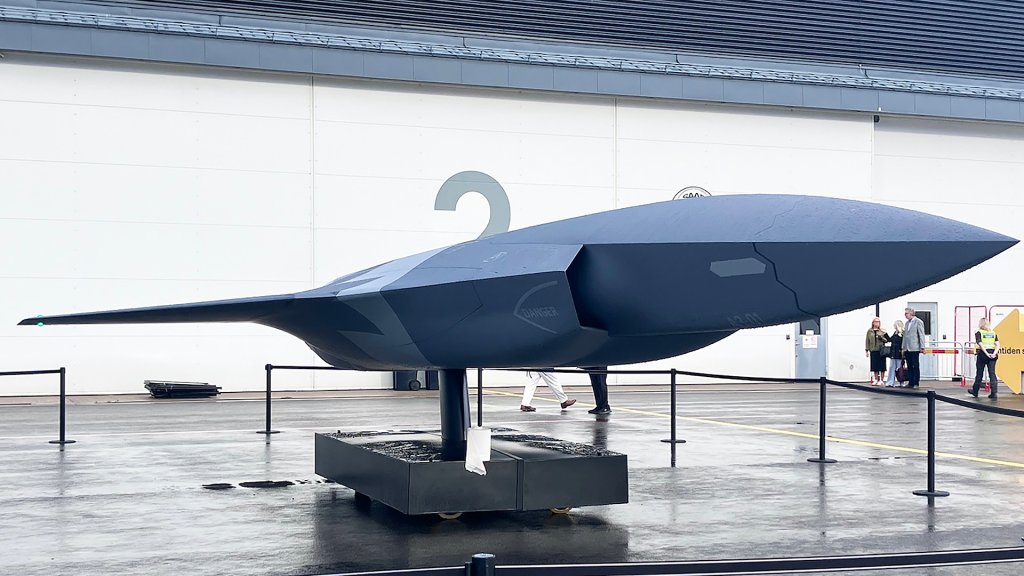
Saab has already pitched its stealthy, supersonic Autonomous Collaborative Platform (ACP) ‘fighter drone’ as an adjunct for the single-seater, describing it as “a great asset to the Gripen E.” Saab envisages the Gripen E serving as a tactical mission commander for one or more ACPs, working in conjunction with the company’s GlobalEye airborne early warning and control (AEW&C) aircraft.

Saab has unveiled its roadmap for its Autonomous Collaborative Platform (ACP) program, a stealthy, supersonic ‘fighter drone,’ which could enter service in the 2030s with the Swedish Air Force and potentially other customers. The aerospace and defense company is already working on two uncrewed technology demonstrators and today presented a full-scale mock-up of an operational drone that those two aircraft could inform.
The Saab A3 concept for its future Autonomous Collaborative Platform (ACP) ‘fighter drone.’ Thomas Newdick Thomas Newdick

The dual-crew benefits of the Gripen F, combined with the ACP, could give Saab an even more compelling route into the CCA market. After all, a fourth-generation fighter like the Gripen (Saab, it should be noted, rigorously avoids using this generational terminology), can remain highly relevant when teamed with CCAs, and a high-performance, stealthy drone like the ACP could make that combination even more potent. It could, at least possibly in some cases, allow air forces to skip the sixth-generation crewed combat air platforms altogether, or at least greatly reduce the need for them.

Brazil is central to the Gripen F program. The country was the launch customer for the two-seat variant and participated directly in its development as part of the broader technology-transfer arrangement underpinning its Gripen acquisition.

The first Gripen F was formally rolled out at Saab’s Linköping facility in June. Brazil’s original 2014 agreement with Saab covers 36 aircraft, in the form of 28 single-seat Gripen E fighters and eight Gripen F two-seaters. Deliveries of Brazilian Gripens began in 2020.

Rollout of the Gripen F. Saab

The F-model has also attracted interest beyond Brazil. Saab has subsequently received Gripen F orders from Thailand and Colombia. The South American nation will get two Gripen Fs, while the breakdown of Thailand’s Gripen E/F order has not been revealed. According to Saab, the 16 new-build Gripens ordered for Ukraine will all be single-seaters.

As for the Swedish Air Force, it plans to buy 60 single-seat Gripen Es, but bearing in mind the changing security situation in Europe, and the increasing focus on uncrewed aircraft, a future Gripen F order should not be ruled out. In particular, Saab has said it expects the Swedish government to acquire new Gripen E/Fs to backfill the 12 earlier Gripen C/D variants it has donated to Kyiv, and which are expected to arrive in Ukraine early next year.

Ukraine intends to purchase 20 Gripen E/F aircraft. In conjunction with the sale, Sweden will donate up to 16 Gripen C/D, including advanced ammunition. To replace the donated aircraft, new modern Gripen E/F will be procured for the Swedish Air Force. https://t.co/kPHjVDXnSb pic.twitter.com/IxEhsy2yvN

— Försvarsdepartementet (@ForsvarsdepSv) May 28, 2026

Saab also remains upbeat about the prospect of a Canadian order for the Gripen E/F.

Sweden has made a strong push to sell Gripen to Ottawa, and Saab offered to build the jet in Canada, in an effort to secure support for its previous bid, which it lost to Lockheed Martin and the F-35. Since then, Saab has also emerged as the preferred candidate to supply Canada with its future AEW&C capabilities via its GlobalEye.

Days after trade talks between Ottawa and Washington collapsed this month, further straining the Canada-United States relationship, Saab chief executive Micael Johansson told TWZ and other journalists that Gripen would be the “perfect” option if Canada moves ahead with a joint fighter purchase. The Swedish jet would add “combat mass” alongside the F-35, according to Johansson.

“I don’t think Canada will give up the F-35 completely; they will go forward with that to some extent,” Johansson said.

Johansson also pointed to the Gripen’s ability to operate from highway strips as well as conventional runways: “You get to use all kinds of airstrips that you cannot use with the F-35,” he added.

Part of the Saab pitch to Canada is the establishment of a new domestic final assembly line for the Gripen E/F, which would be the third such facility after Sweden and Brazil.

As for the Brazilian connection, this extends well beyond aircraft procurement. Saab says more than 350 Brazilian engineers, technicians, and pilots have participated in activities covering Gripen development, production, flight testing, and maintenance. Brazilian industry, including Embraer, has consequently become deeply involved in the program.

A Brazilian Air Force Gripen E. Saab

Meanwhile, Saab is continuing to expand what the fighter can actually do once it leaves the factory.

Recent work has included a test launch of the Taurus KEPD 350 cruise missile, as well as last year’s integration of Helsing’s Centaur AI agent, which was tested in a beyond-visual-range combat scenario.

🇸🇪 TAURUS LAUNCH
Today a TAURUS KEPD 350 cruise missile was launched from a Swedish JAS 39 Gripen for the first time. The test was conducted at the Vidsel Test Range in Norrbotten.
Today TAURUS is a long-range cruise missile that introduces a new deep-strike capability.
📷 FMV pic.twitter.com/vYcL75Lu4p

— Flygvapnet (@flygvapnet) August 21, 2026

Speaking last week, Johan Segertoft, head of Saab’s Gripen business unit, points to the fighter’s digital architecture as a key enabler of the rapid integration of new capabilities. The company says the Centaur integration took just 10 weeks.

“We chose BVR because it’s one of the most complex things to prove that we could take third-party software and do it, but there’s a lot of things in an aircraft and outside an aircraft that benefit from the advancement of software,” Segertoft said.

Since the Gripen E first flew in 2017, Saab has implemented around 300 capability upgrades, according to Segertoft. He contrasts that with what he describes as a theoretical maximum of around five upgrades for competing aircraft.

The Gripen E used in the Centaur AI trials. Saab

That approach is summed up by Saab’s internal mantra, Segertoft says: “code in the evening, deploy in the morning, learn by lunch.”

The Gripen F test campaign will now move beyond basic systems checks toward progressively more demanding flight conditions. Saab’s Flight Test Center in Sweden will conduct the campaign before the aircraft undergoes the remaining acceptance procedures and is eventually handed over to the Brazilian Air Force.

The first flight therefore represents a milestone not only for Saab’s new two-seat fighter but also for the industrial partnership that produced it. Potentially, that model could be repeated in Canada in the future.

Contact the author: thomas@thewarzone.com

The post Saab’s Gripen F Two-Seater Takes To The Air For The First Time appeared first on TWZ.

  •  

What Europe Needs Next In Beyond-Visual-Range Air-To-Air Missiles

Europe is entering an interesting, and potentially highly consequential, period in the development of beyond-visual-range (BVR) air-to-air weapons. While the public emergence of new U.S. weapons in this class has unsurprisingly grabbed the headlines in recent months, Europe is meanwhile working on several projects that ultimately seek to field its next generation of far-reaching air-to-air missiles.

As in the United States, the immediate catalyst is the rapid evolution of Chinese air-to-air missiles, particularly the PL-15 and newer systems that are emerging around it. The India-Pakistan air combat experience from last year has brought the issue into sharper focus, demonstrating the operational consequences of underestimating an opponent’s long-range air-to-air capabilities. However, while Pakistan said its Chinese-made fighters and missiles shot down several Indian aircraft, the precise circumstances, numbers, and tactics involved remain the subject of competing claims and outside analysis.

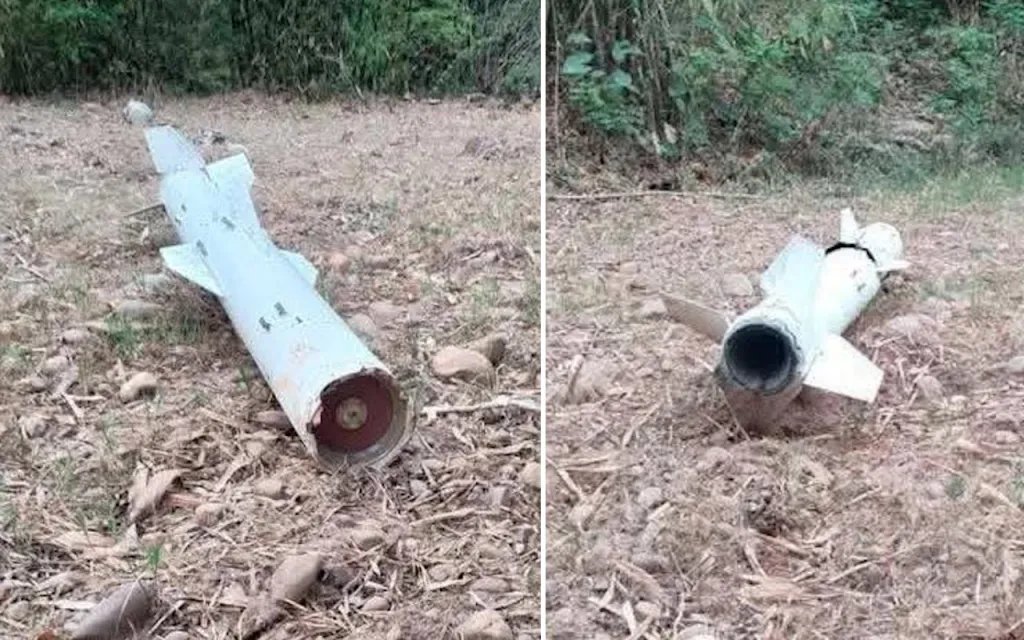
Pictures of the PL-15E missile body that came down in India’s Punjab region during the Indo-Pakistan conflict in May 2025. via X

For Europe, the MBDA Meteor is currently the state of the art in terms of BVR air-to-air missiles, and its unique set of capabilites is something we have discussed in depth in the past. The question is increasingly not simply how to improve the Meteor, but what should come after it, and what kind of weapons architecture (or ‘kill chain’) will be needed for the next generation of crewed and uncrewed combat aircraft and their weapons.

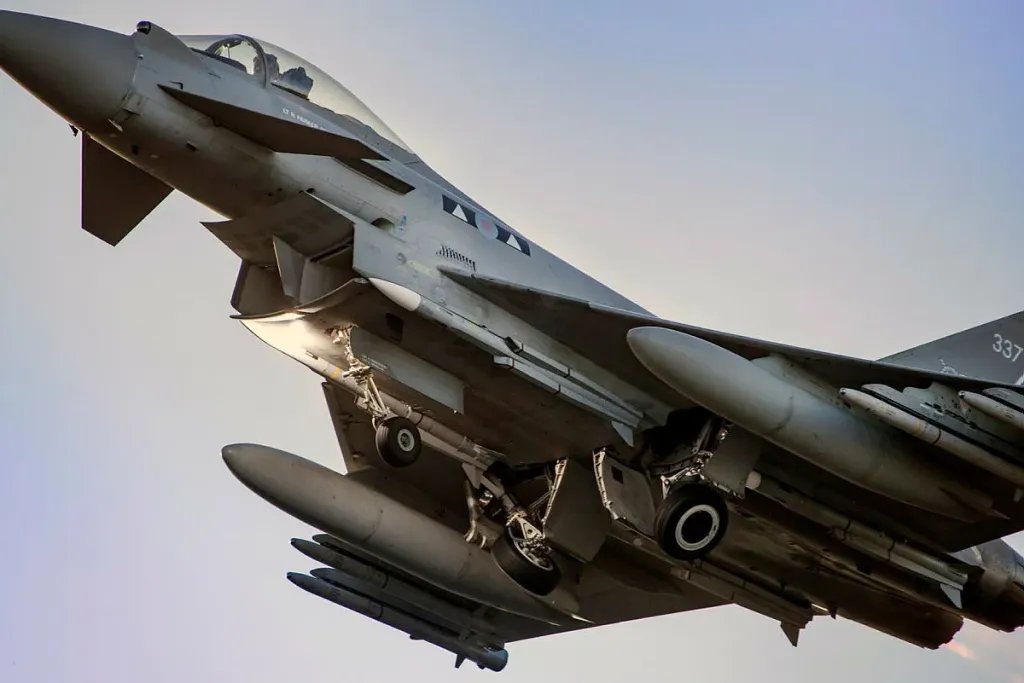
A U.K. Royal Air Force Typhoon takes off, loaded with Meteor missiles below the fuselage. Crown Copyright

One of the most intriguing current developments is France’s Comet program, which appears to be led by the French side of the pan-European MBDA consortium. Very little is publicly known about the weapon, and its exact specifications remain unclear. It nevertheless appears to represent an effort to provide a significant step beyond the current MICA family, offering greater range and speed. If the apparent timeline of around 2030 is correct, Comet could be viewed as a relatively near-term response to an increasingly demanding threat environment.

Douglas Barrie, senior fellow for military aerospace at the International Institute for Strategic Studies (IISS) research institute in London, told TWZ that Comet looks like “a response to the exchanges between the Pakistanis and the Indians, where, on day one, the Indians underestimated how aggressive the Pakistanis were going to be, particularly with PL-15. It seems coincidental at the very least that this kind of thing has just popped up onto the horizon.”

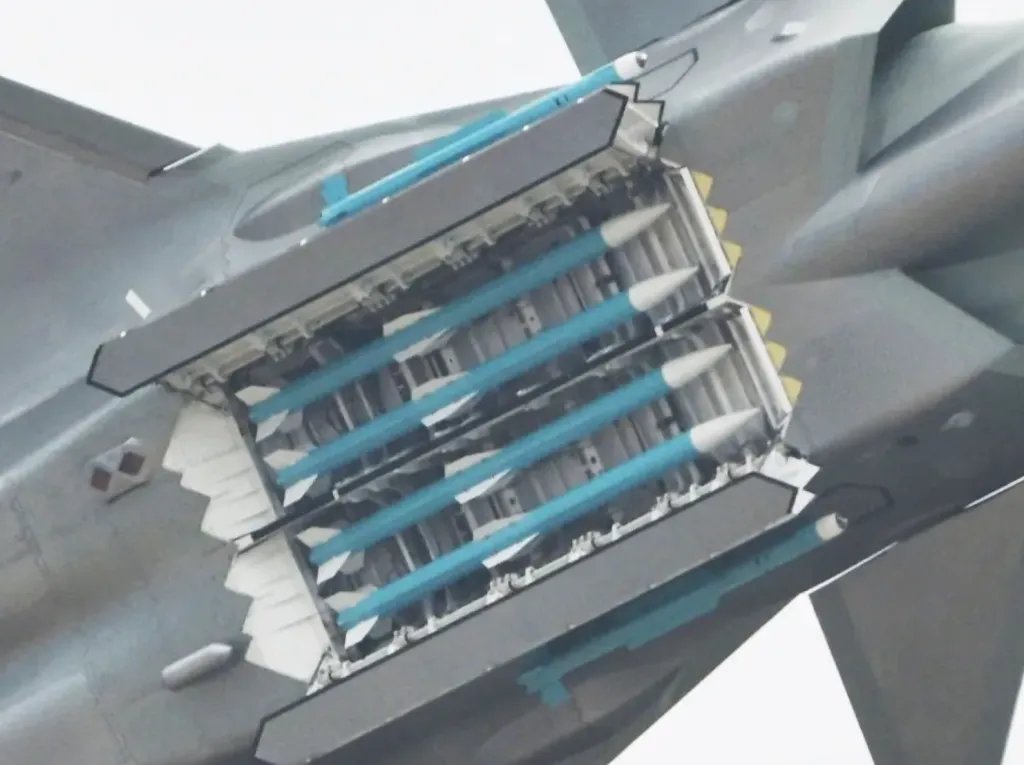
Four dummy PL-15 missiles in the internal weapons bay of a Chinese J-20 fighter. Chinese Internet

That would distinguish Comet from the U.K.’s Future Air Superiority Effectors, or FASE, program which appears to be associated much more closely with the longer-term requirements of the U.K.’s Future Combat Air System and GCAP/Tempest.

Talking to TWZ, Justin Bronk, a research fellow for airpower at the Royal United Services Institute (RUSI), explained that FASE “is likely aimed at providing significantly better combat capabilities by the early-mid 2030s than a mid-life upgrade of the Meteor missile would be able to offer within the bounds of its basic layout and size.”

Creating an interesting overlap with FASE and Comet is a joint Franco-British study looking at what comes after Meteor. In April, the two countries signed a memorandum of understanding launching the 12-month effort that will assess future air-combat threats and potential next-generation missile concepts. The study is intended to identify the technologies required for a successor weapon and establish a development roadmap. While the two countries are at least formally examining the same post-Meteor problem, their longer-term combat air priorities appear to be diverging.

Beyond Meteor

Meteor remains one of Europe’s most capable air-to-air weapons. Its ramjet propulsion system gives it an important advantage over conventional solid-rocket missiles by allowing it to retain propulsion and energy much further into an engagement.

However, the threat environment that Meteor was designed against is changing. Meteor’s requirements were established in an environment dominated by the Soviet/Russian air-to-air missile threat. Today’s planning increasingly has to account for Chinese weapons such as the PL-15 and newer systems that may combine very long range with substantially greater speed.

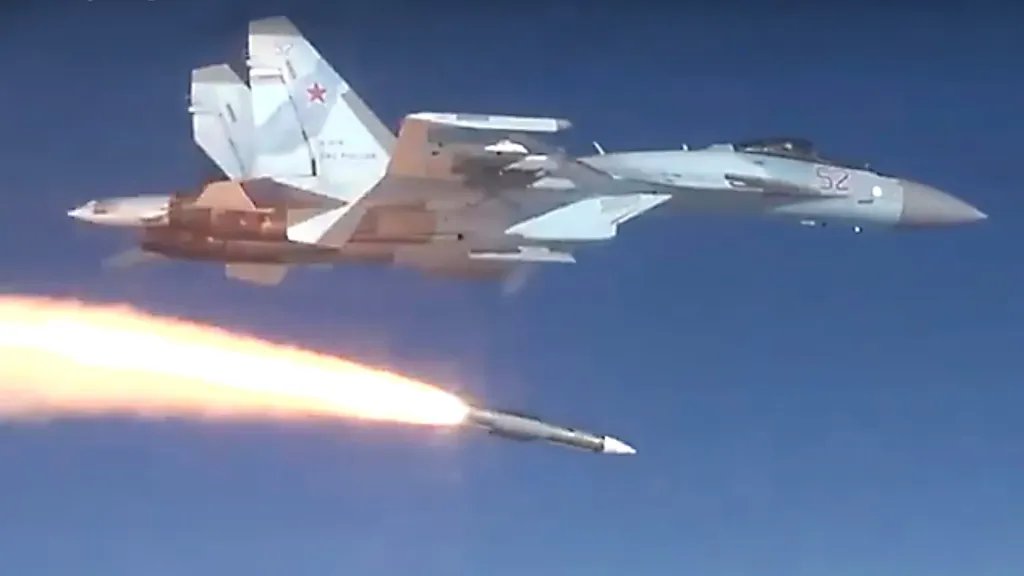
A Su-35S launches an R-37M — the longet-range Russian air-to-air missile. Russian Ministry of Defense screencap

“Since the Meteor is still more than a match for current Russian air-to-air missiles in air-to-air engagements, it is likely that the capability goals for the FASE program will use far more capable Chinese air-to-air missiles, aircraft, and sensors as pacing threats,” Bronk ​​​​added.

That raises the uncomfortable question of what happens when both sides can launch extremely capable BVR weapons against each other?

Simply put, higher speed now matters more, because it reduces the target’s reaction time and can make the terminal engagement substantially more demanding. One of Meteor’s advantages is the considerable energy it retains when it reaches the terminal phase, but the tradeoff is a slower average speed across the entirety of its flight envelope.

Barrie explained: “Meteor’s fly-out speed is somewhere between Mach 3.5 and somewhere below Mach 4. If you launch a PL-15 off a J-20, which is doing Mach 2, that weapon probably stays above Mach 5 for an awfully long time, which is one of the issues. It’s that risk of a mutual kill. Obviously, if the weapon against the J-20 is coming out at Mach 3.5 to Mach 4, then you have a bit an issue there.”

At the same time, a missile’s effectiveness depends on many other factors, including launch conditions, flight profile, midcourse guidance, seeker performance, electronic warfare environment, and target maneuvering.

However, the nature of the threat may push the next generation of European weapons toward a combination of greater range, substantially higher speed and greater terminal energy rather than simply another incremental improvement to Meteor. Indeed, the United Kingdom has dropped its plans for a Meteor mid-life upgrade, presumably to focus its efforts on an altogether more ambitious and capable successor, or successors.

Does the next weapon need a ramjet?

The Meteor was designed around a ramjet motor, especially since it was expected to face a ramjet version of the Russian R-77 (AA-12 Adder) missile. This was never fielded, and, as far as we know, China doesn’t have a weapon in this class either. A Meteor successor therefore won’t necessarily use the same kind of propulsion.

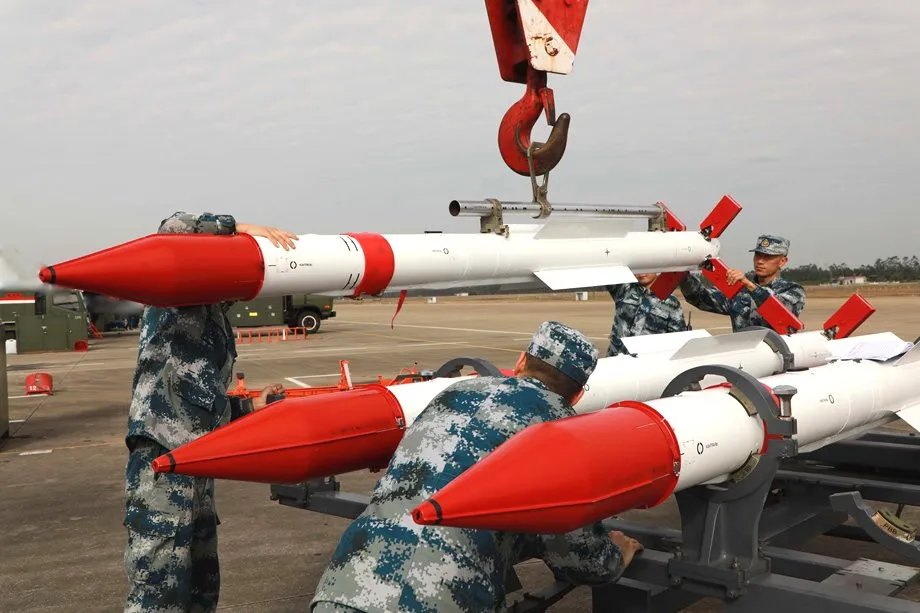
Chinese People’s Liberation Army Air Force personnel move standard R-77 missiles. PLA

Meteor demonstrated the advantages of air-breathing propulsion, but there are trade-offs involved in using a ramjet or another air-breathing system. Achieving very high speeds while maintaining useful range and maneuverability can become increasingly difficult, and propulsion complexity adds cost and potentially consumes valuable internal volume.

The performance being attributed in open sources to Chinese solid-propellant weapons like the PL-15 suggests that another approach is possible.

Barrie would not be surprised if the ramjet is dropped. “The issue with a ramjet is it’s not impossible to get above Mach 5, but it’s difficult, and there are lots of compromises you probably have to make … I wonder if they may just look at energetic solids.”

A future European missile could therefore use a substantially larger solid-propellant motor, potentially coupled with a different boost and sustain architecture, to achieve the required combination of speed and range. Using more than one stage, or a multi-pulse solid rocket motor could be other solutions to the issue.

The size problem

Perhaps the biggest opportunity for a new European BVR weapon comes from the aircraft that will carry it.

Meteor was developed within the physical constraints imposed by existing fighter aircraft and their weapons-carriage arrangements, including internal carriage in the F-35. A future combat aircraft such as Tempest is expected to have significantly greater internal volume available for weapons.

“One of the drivers for Tempest is internal carriage, obviously, but lots of it,” Barrie continued. “A big main bay, and then probably sizeable side bays as well. That lets you carry a considerably larger weapon mass internally than an F-35. If you look at size of the platform in terms of what they’ve released, it’s a big aircraft, and one would assume it has a very significant internal weapons bay.”

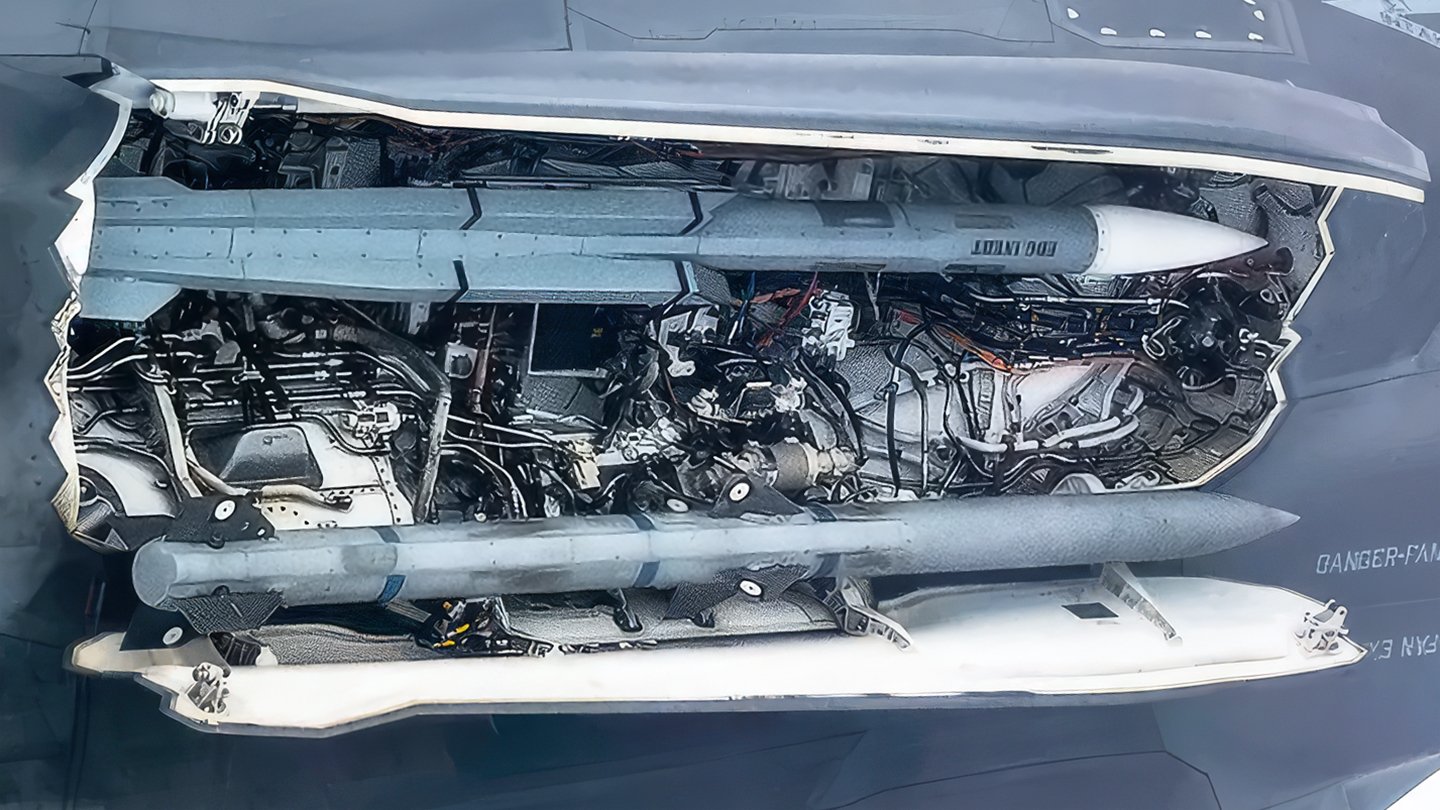
The current AIM-120 AMRAAM internal carriage configuration on the F-35, with two missiles in each weapons bay. Crown Copyright

A larger missile can carry more propellant, potentially support a more powerful propulsion system, accommodate a larger or more capable seeker, and provide additional volume for electronics and other subsystems.

As we have explained in the past:

There are different ways of increasing the range of an air-to-air missile, but this process is always easier if the weapon can be made larger. Bigger dimensions can translate to a bigger engine, more fuel, multi-stage rocket motors, and air-breathing engines, like the ramjet used in the Meteor. Other range-extending options that the United States has examined include throttleable “multi-pulse solid rocket motors” and more exotic “propellants, grain configurations, cases, and liners,” all of which would also be able to ensure greater range — as well as higher speed — compared to existing weapons.

The result could be a weapon that is considerably larger than Meteor but still fully compatible with the aircraft for which it was designed.

This reality, and the use of the plural effectors in the U.K.’s FASE terminology raises the possibility that the future European BVR requirement may not be for one missile, but for a family of weapons — at least as far as the British are concerned.

Why “effectors” may matter

If FASE ultimately refers to multiple effectors rather than a single missile, that could point to the broader direction of future air combat, involving crewed aircraft as well as various uncrewed wingmen.

Tempest is expected to operate as a so-called quarterback, supported by a number of uncrewed combat aircraft, remote carriers, or other systems operating considerably farther forward. Those uncrewed systems will have different size, payload and weapons-carriage constraints from the crewed aircraft.

This means that not every platform will need the same BVR weapon, or even be able to accommodate them, when it comes to the larger missiles.

Instead, a future force might require something resembling a family:

  • A large, long-range, high-speed weapon for the crewed Tempest aircraft, optimized for the highest-end air-superiority engagements.
  • A medium-sized weapon suitable for existing fighters and potentially future aircraft with more constrained weapons carriage.
  • A smaller weapon optimized for CCAs or other uncrewed systems where internal bay dimensions, payload and cost are more restrictive.

A modular missile could possibly cover two of these categories at once. More broadly, these weapons could share technologies without necessarily being identical missiles. Common seekers, electronics, datalinks, software, guidance technologies or other subsystems could potentially be reused across the family.

The result would be a fundamentally different approach from simply developing a single Meteor replacement.

The seeker may be as important as the motor

The front end of a future European BVR weapon is another area where significant change is likely.

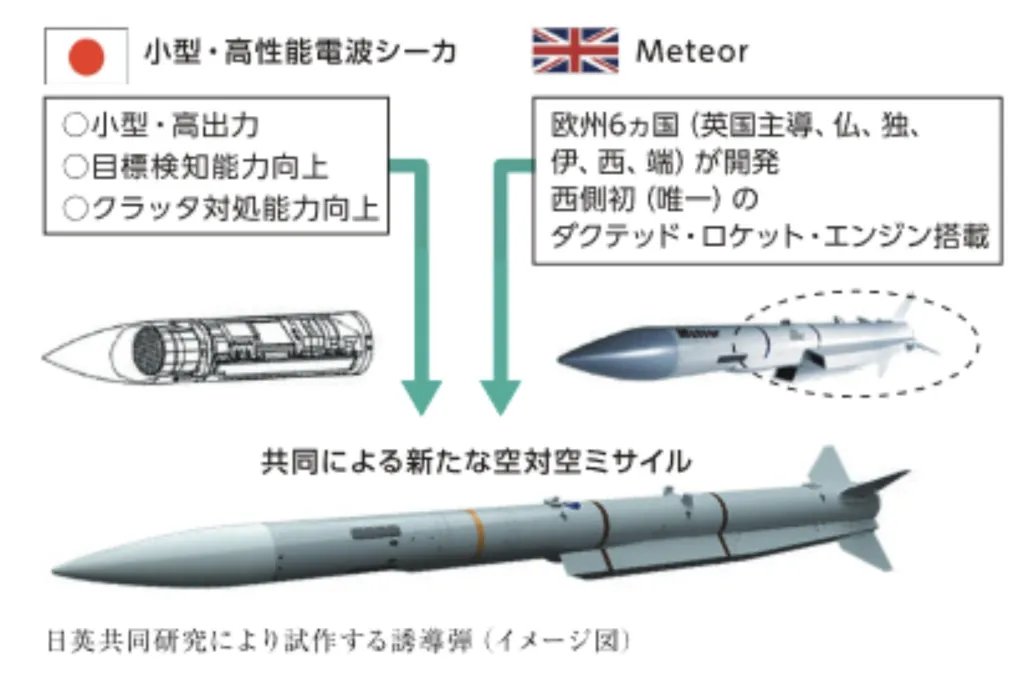
An active electronically scanned array (AESA) seeker would seem a logical baseline for a next-generation weapon. The United Kingdom’s previous work with Japan on the Joint New Air-to-Air Missile program, or JNAAM effort was particularly interesting in this regard, given Japan’s experience with active electronically scanned air-to-air seekers.

An infographic for the JNAAM program provides a loose visual indication of how it would have combined Japanese and British components in a single missile. Japan Ministry of Defense

A future weapon could also incorporate a passive radio-frequency capability alongside its active radar. That would provide another means of detecting or tracking emitting targets and could increase the weapon’s resilience in a heavily contested electromagnetic environment.

For its PL-17 ultra-long-range air-to-air missile, China appears to have chosen a combination of active and passive seekers, although, as Barrie points out, it also appears to have been designed around a very specific target set: E-7 Wedgetail, E-2 Hawkeye, other airborne early warning and control platforms, and support assets, like tankers and strategic electronic surveillance and attack aircraft.

This 2016 image provided our first look at the PL-17. Chinese internet

Whether such a capability is worth the additional cost and complexity is another question. A highly sophisticated multimode missile will inevitably be expensive, however, the same technologies could potentially provide utility against a broader range of targets than conventional fighter-on-fighter engagements. An air-to-surface capability should also not be ruled out, with a passive seeker potentially bestowing an anti-radiation missile (ARM) capability on the weapon.

Another passive seeker alternative could be based on an imaging infrared (IIR) sensor. This could provide an interesting complement to an active-radar seeker, making use of the same kind of two-way datalinked midcourse guidance system already included in Meteor. It could be especially relevant for engaging small or low-signature (stealthy) targets and in a heavily contested electromagnetic environment.

The weapon is becoming part of the network

Perhaps the biggest change will be the extent to which future BVR missiles exploit the wider kill chain, becoming much more than weapons guided by the aircraft that launches them.

The key requirement is for the missile to be track-source agnostic. This means a future long-range air-to-air missile could receive targeting information from a CCA, an airborne early warning aircraft, another fighter, a naval platform, or potentially space-based sensors.

For example, with Tempest operating alongside forward-deployed CCAs, the sensor that initially detects a target could be the CCA. The launching aircraft could then receive the track, launch a weapon, and continue receiving updates from multiple platforms.

Alternatively, a CCA could launch the weapon using targeting information generated by the crewed aircraft or another sensor elsewhere in the force, provided it is on the network.

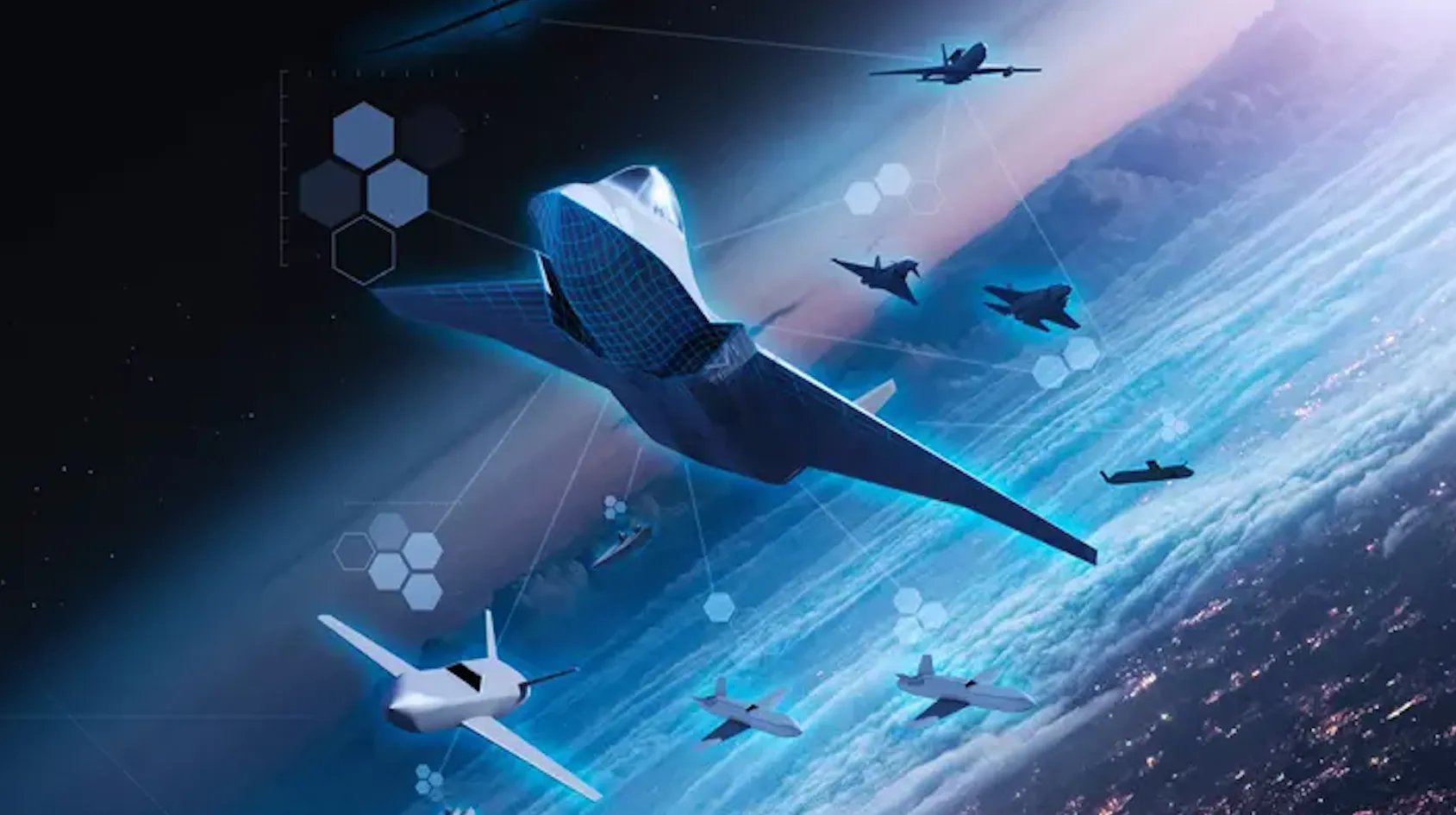
A graphic from BAE Systems shows a Tempest fighter working as part of a networked team together with Typhoon, F-35, E-7 Wedgetail, and ‘loyal wingman’ type drones. BAE Systems

Two-way datalinks, midcourse guidance, electronic warfare resilience, and the ability to accept high-quality third-party targeting information become central requirements. Some of this functionality is available, to varying extents, on some current air-to-air missiles, but it will be even more important as air combat becomes increasingly reliant on distributed sensor networks and crewed/uncrewed aircraft teaming.

If it can rely on offboard sensors, the missile’s engagement range no longer needs to be constrained by the organic sensor range of the launching fighter. Faced increasingly by the realities of an anti-access/area-denial (A2/AD) environment, this could enable weapons that fly far beyond what the launch platform could independently detect and engage. The A2/AD threat is already pushing research into much farther-reaching air defense missiles, potentially with a range of up to 1,000 miles.

This also opens the door to more exotic propulsion concepts, including multi-stage weapons designed to combine very high-speed boost with a separate sustain or terminal stage.

The next generation of long-range air-to-air missile may therefore be defined as much by the kill chain they plug into as by the architecture and performance of the missile itself.

What happens to Meteor?

Meteor is one of Europe’s strongest examples of a successful multinational defense program. Six European nations participated in its development, and the program eventually produced a weapon that is widely regarded as a highly capable system.

Now, however, the countries that developed Meteor do not necessarily have identical requirements for the next generation.

The United Kingdom is moving toward GCAP/Tempest with Japan and Italy. Its future combat air requirements will increasingly be shaped by that program and by the threat assessment driving it.

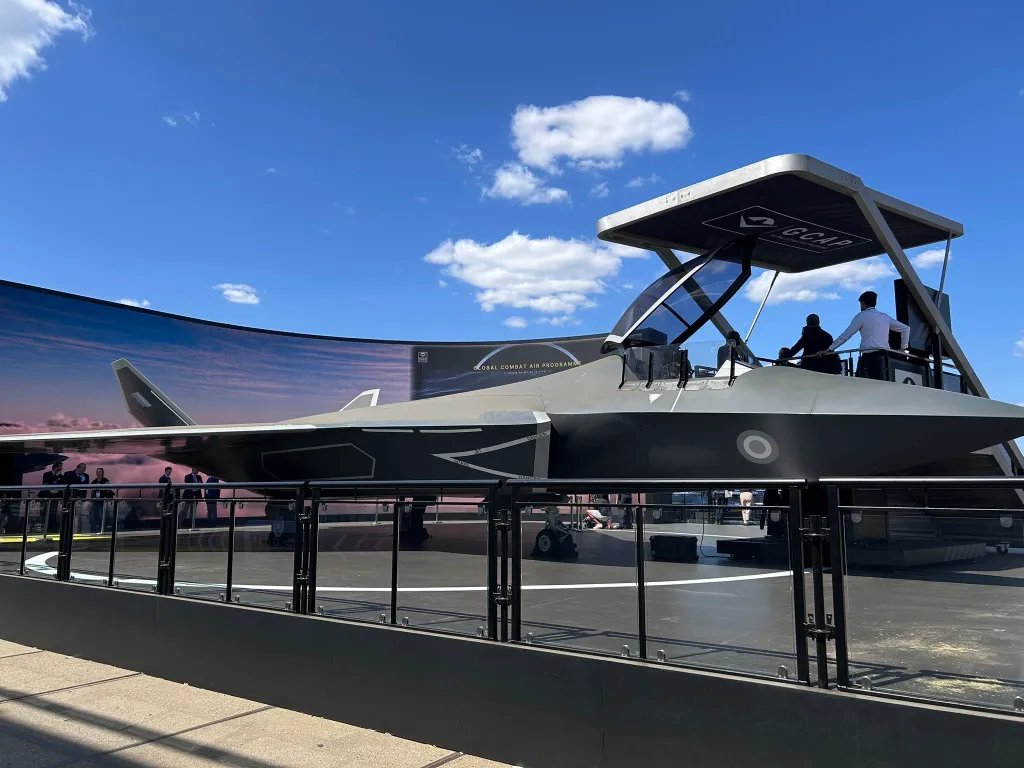
The latest full-size mockup of the Tempest gives some idea of its size. GCAP

The United Kingdom appears to want a very large, very high-performance weapon optimized for Tempest and the future air-superiority mission, especially in the Indo-Pacific region. Japan likely needs very much the same.

Meanwhile, other Meteor users may prioritize a weapon that can be integrated onto existing fighters and remain affordable in larger numbers.

France’s Comet effort could meet that requirement, since it appears to be a comparatively rapid response to the emerging threat. With that in mind, France could eventually find itself with a near-term weapon, a future clean-sheet requirement, and a continuing relationship with the Meteor family, all while pursuing its own future combat air requirements.

Overall, it is far from clear whether the Meteor consortium will survive for another generation, at least in its current form.

Could Japan become part of the answer?

Given that it’s a partner in GCAP/Tempest, and based on its previous air-to-air missile studies with the British, Japan is particularly interesting in this context.

Japan faces a threat environment in which long-range air combat is of obvious importance, and Japan has already demonstrated advanced capabilities in active electronically scanned air-to-air seekers. The Japanese-developed Mitsubishi AAM-4B became the first air-to-air missile to feature an AESA seeker.

Although earlier air-to-air missile cooperation between Japan and the United Kingdom did not evolve into an operational program, the two countries are now developing a combat aircraft together through GCAP.

With Britain and Japan designing the future combat aircraft together, they could eventually develop some of its principal weapons together as well, although Italy’s requirements are likely very different.

Thinking beyond the missile

Europe can almost certainly build a faster missile than Meteor, but there are plenty more questions about what kind of air combat system that missile — or missiles — will fit into.

A future BVR weapon will have to operate from multiple types of platforms (crewed and uncrewed), receive targeting data from offboard sensors, communicate with CCAs, function in a highly contested electromagnetic environment, engage maneuvering targets at extreme range, and retain enough energy to remain dangerous in the terminal phase.

Increasingly, it seems that, rather than a single weapon, a family of effectors will be the solution.

For the United Kingdom, FASE may become one of the most important programs to watch because it could reveal how Britain intends to bridge the gap between Meteor and the weapons of the GCAP/Tempest era. At this stage, FASE appears to be ‘for U.K. eyes only,’ although Japan and Italy would appear to be likely beneficiaries, due to their teaming on GCAP.

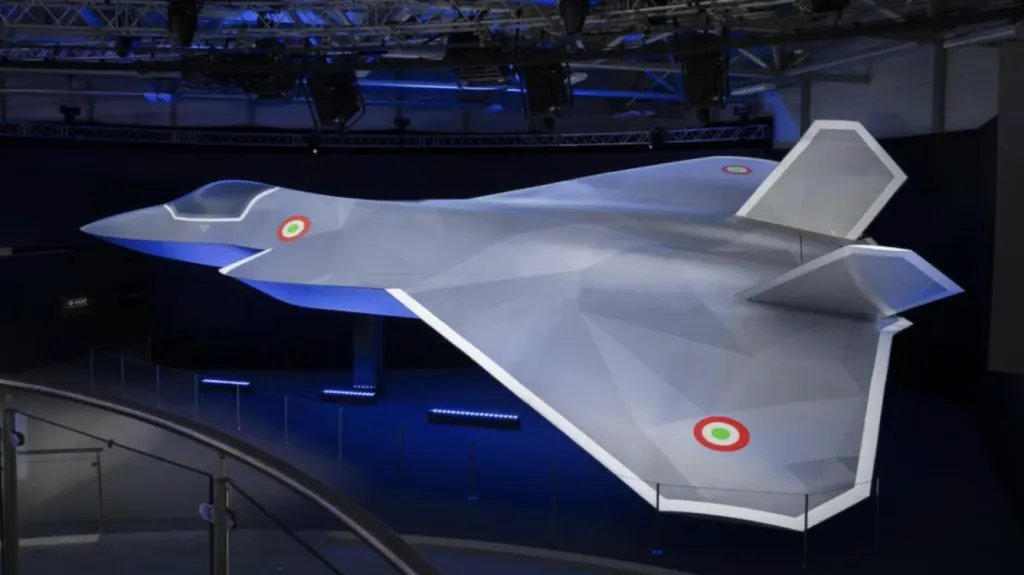
A scale model of a possible Tempest configuration, in Italian Air Force markings. Leonardo

Elsewhere, Comet could provide an early indication of how France intends to respond to the emerging long-range missile threat while maintaining flexibility for a future system.

And for the wider Meteor consortium, it remains to be seen whether the program’s success can be carried forward into another multinational weapon, or whether the emergence of GCAP/Tempest and increasingly divergent national requirements marks the beginning of the end for the Meteor model.

Either way, the next generation of European BVR weapons is likely to be larger, faster, more networked, and more deeply integrated with the combat air system around it. At the same time, the need to create a family of effectors designed around a distributed force of crewed aircraft, CCAs, and offboard sensors will bring some formidable challenges.

Contact the author: thomas@thewarzone.com

The post What Europe Needs Next In Beyond-Visual-Range Air-To-Air Missiles appeared first on TWZ.

  •  
❌