❌

Reading view

USS Abraham Lincoln Looks Like It’s Been Through Hell After 286 Days At Sea

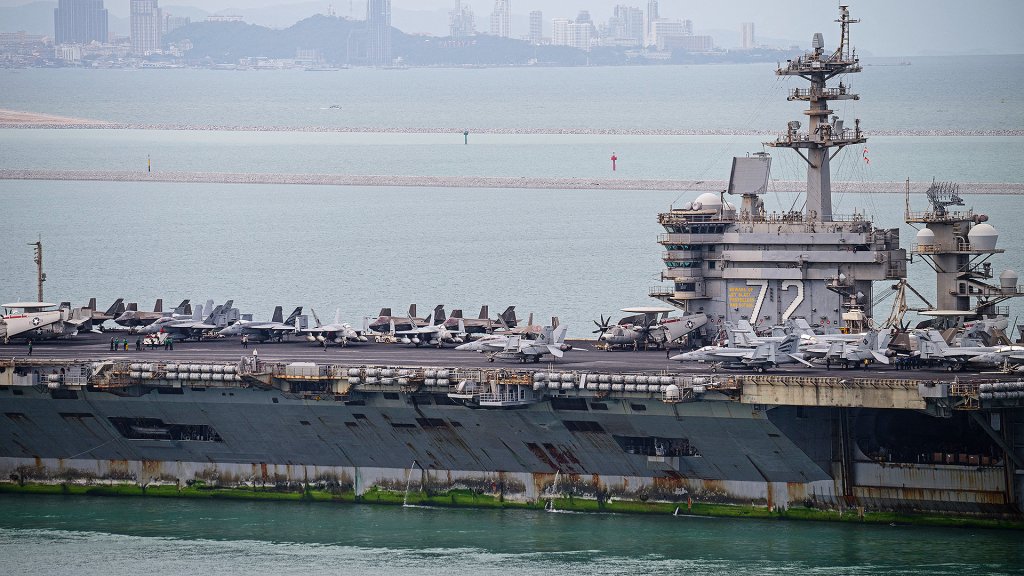
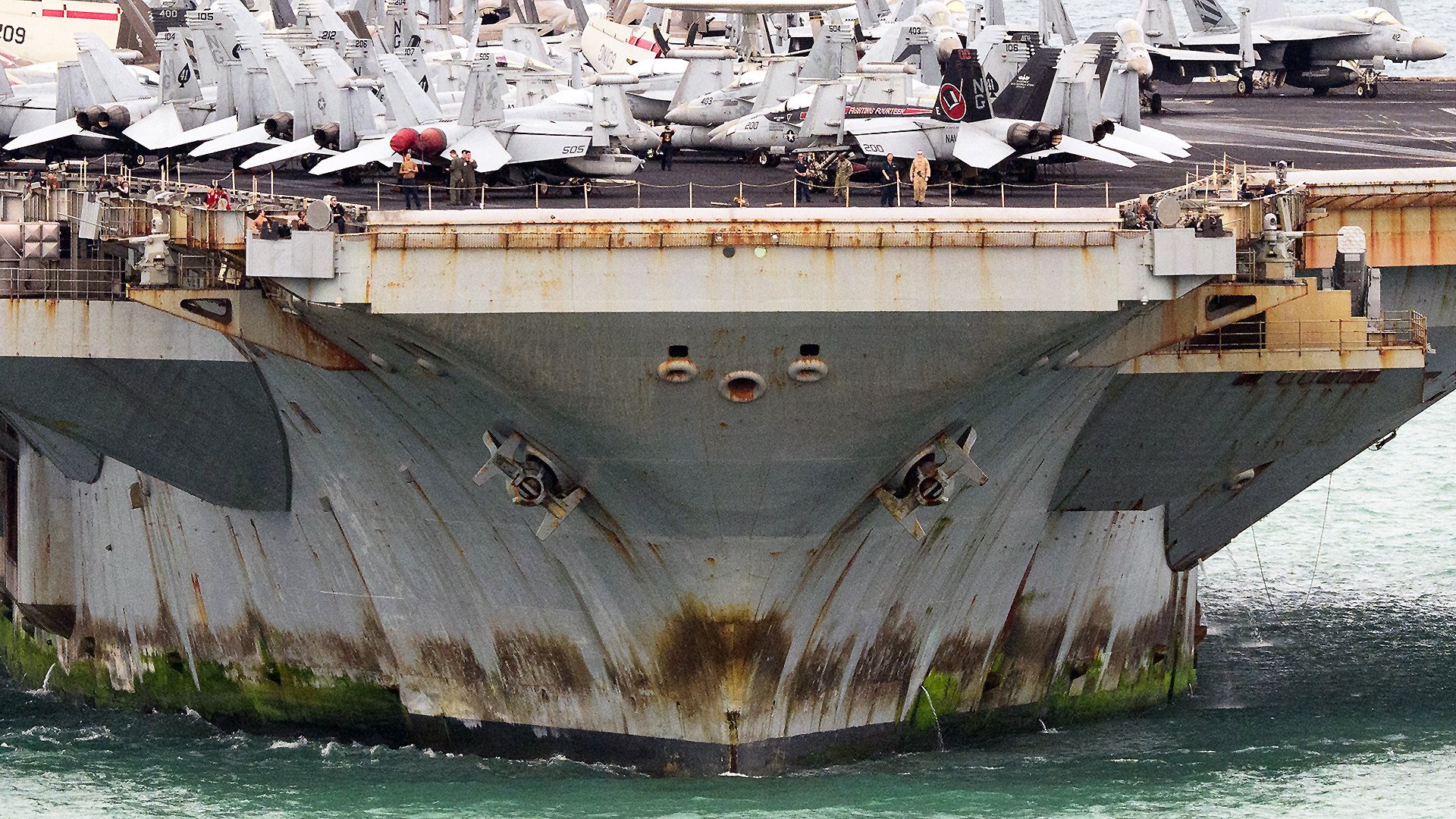
The U.S. Navy’s supercarrier USS Abraham Lincoln is now in Thailand for a much-deserved and highly publicized liberty port call. The carrier had gone 286 days without making such a stop, with much of that time spent executing grueling combat operations against Iran. The ship has been run very hard, relying on at times a rickety conveyor of sea replenishments to continue operating for months on end, and it has the scars to show for it. The Lincoln looks very much worse for wear, with so-called “running rust” and algae caked all along the sides of the hull, as well as around the edges of the flight deck and sponsons on either side. It’s something of a startling appearance for one of the most powerful ships on the planet and a major symbol of U.S. power projection, but it is also a reminder of what the vessel and its crew have endured for months on end.

The Lincoln arrived in the Thai port of Laem Chabang earlier today. The carrier did make a stop in Guam in December 2025 and reportedly made another one somewhere in the Middle East in July. However, in both cases, these have been characterized as brief logistical stopovers that did not offer any real opportunity for personnel onboard to disembark. Thai media reports say the carrier is expected to remain in Laem Chabang through the end of the weekend.

“Our arrival in Laem Chabang provides a well-deserved opportunity for our Sailors and Marines to rest and recharge. It also underscores the strong and enduring partnership and alliance between the United States and Thailand,” Rear Adm. Robert E. Loughran, commander of Carrier Strike Group 3 (CSG-3), said in a statement in a press release today. “What this strike group has accomplished is truly historic. I could not be prouder of the exceptional professionalism and expertise demonstrated by every member of this team during our operations in the U.S. Central Command area of responsibility.”
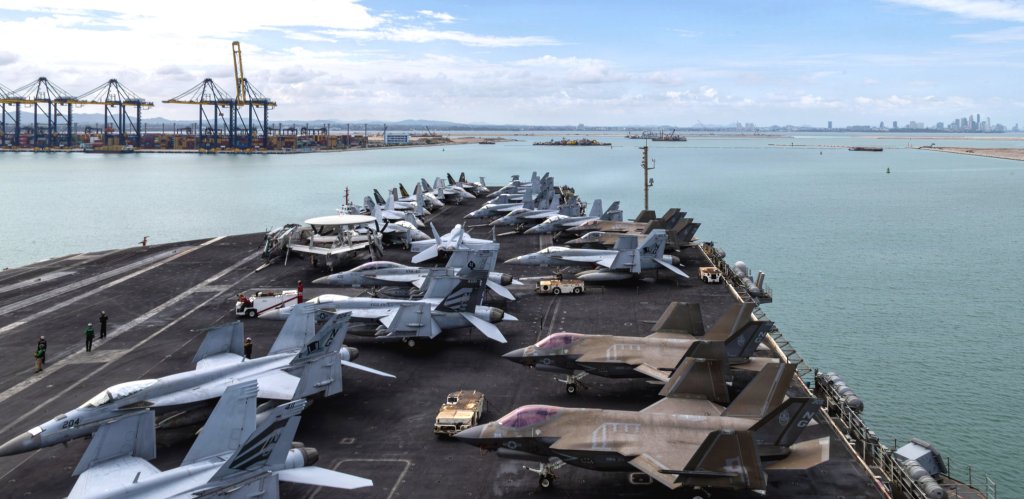
An official picture the US Navy has released of the USS Abraham Lincoln arriving in Thailand today. USN

Lincoln and its strike group had left port in San Diego in November 2025 for what was originally expected to be a routine cruise in the Pacific. The carrier, its air wing, and escorts were subsequently directed to the Middle East and arrived in that region in January 2026.

CSG-3 took part in the opening salvo of strikes on Iran on February 28 as part of what the U.S. military dubbed Operation Epic Fury. Lincoln and the rest of the strike group continued to support Epic Fury and subsequent operations against Iran for months thereafter. The decision was finally made to rotate the carrier out of the region last month following a raft of reports of severely flagging morale and mental health among the crew, which we will come back to later.

Two of the Arleigh Burke class destroyers assigned to CSG-3, the USS Michael Murphy and the USS Spruance, are still understood to be operating in the Western end of the Indian Ocean. A third destroyer in the strike group, the USS Frank E. Petersen Jr., accompanied the Lincoln to Thailand and is now docked in a separate port in Sriracha, near Laem Chabang. The Ticonderoga class cruiser USS Robert Smalls also helped escort the carrier, and that warship “also arrived in Map Ta Phut, Thailand for their own scheduled port visit,” according to the Navy.

As mentioned, Lincoln definitely looks like it’s been at sea more or less continuously for the last nine and a half months or so. Pictures and videos of the ship in Laem Chabang seen throughout this story plainly show big dark rust stains all around the hull and other similar signs of wear elsewhere. There is also a bright green ring of algae layered on the hull at the waterline. While carriers have very large crews and usually keep the ship’s appearance up relatively well while on cruise, there is only so much that can be done out of port on particularly long deployments, where all resources are focused on sustained high-tempo combat operations.
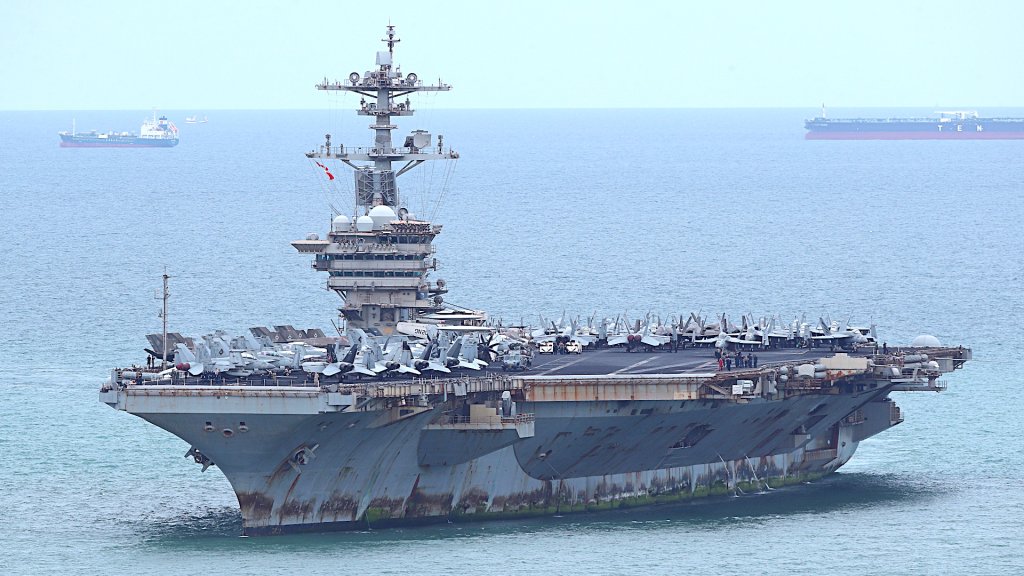
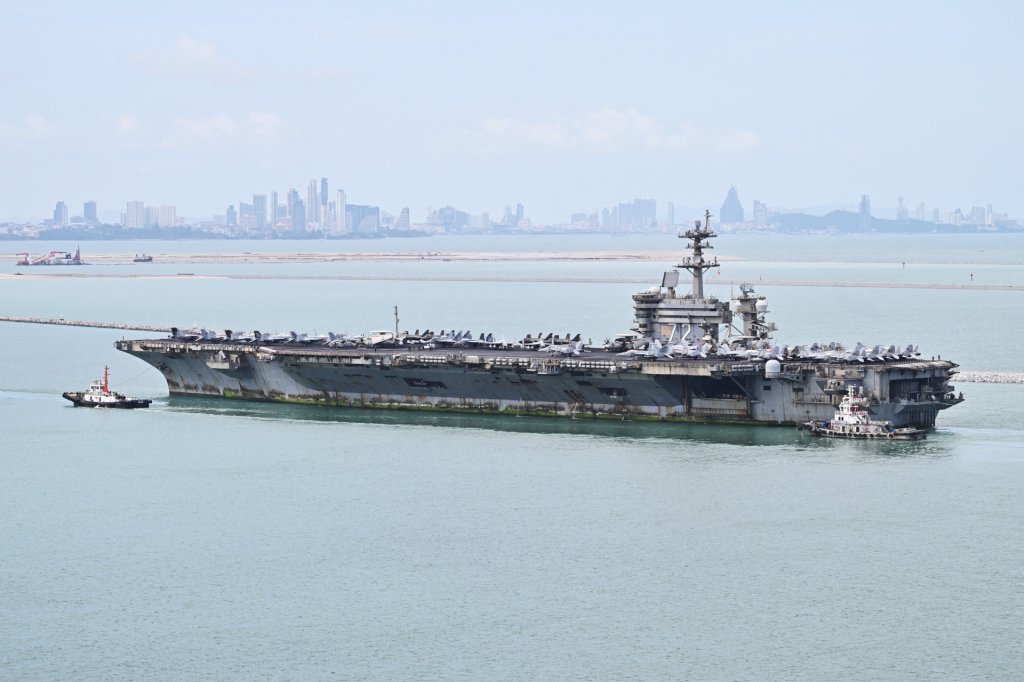
USS Abraham Lincoln seen arriving in Laem Chabang, Thailand, today. Thananuwat Srirasant/Getty Images
Another look at the Lincoln arriving in Thailand today. ANTHONY WALLACE / AFP via Getty Images
A closer look at the side of Lincoln‘s hull, with ‘running rust’ and algae plainly visible. ANTHONY WALLACE / AFP via Getty Images

Running rust on U.S. Navy ships has been something of a lightning rod for criticism in recent years, including from President Donald Trump. This is in part due to the negative optics of such visible wear and tear on American naval vessels, especially during calls in foreign ports.

“It’s terrible. I think they should be ashamed,” John Phelan told members of Congress at a hearing last year after being shown pictures of a very worn-looking Arleigh Burke class destroyer, the USS Dewey, during a stopover in Singapore. “Would you want to go on that ship?”

Phelan was testifying at the time regarding his nomination to be Secretary of the Navy. At the time, he said that President Trump had already been texting him in the middle of the night regarding the issue. Phelan was subsequently confirmed and served as the Navy’s top civilian until he was unexpectedly fired in April, reportedly over disagreements regarding the new Trump class battleships and other more general friction within the administration,
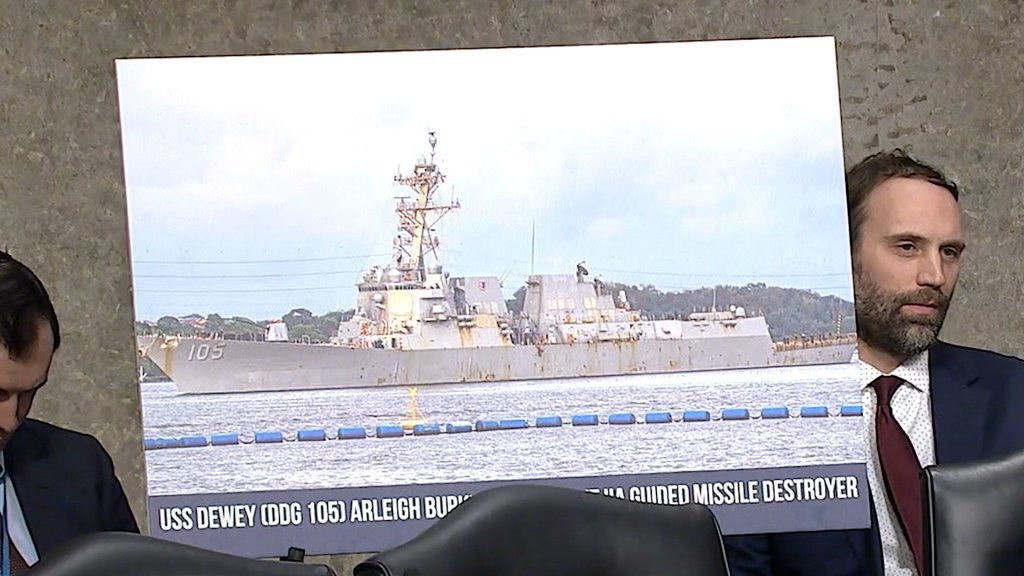
A picture of the USS Dewey covered in “running rust” during a recent port visit in Singapore is shown at the confirmation hearing for Secretary of the Navy nominee John Phelan on January 27, 2025. Senate Armed Services Committee capture

Lincoln‘s current condition is, of course, an extreme case that is the result of very specific operational circumstances. The carrier has already been in the news for weeks now due to the aforementioned morale issues, which family members of those onboard have been very vocally calling attention to through the media. One sailor had to be rescued last month after deliberately jumping overboard. There were reports that at least one other individual onboard had attempted to do the same. President Donald Trump and Secretary Pete Hegseth, among others, have pushed back on concerns about mental health and other issues on the ship. In a statement shared on social media on August 16, Navy Adm. Brad Cooper, head of U.S. Central Command (CENTCOM), acknowledged, but still downplayed, the seriousness of the mental health situation, in particular.

At the same time, the carrier’s marathon deployment is indicative of larger shipbuilding, readiness, and other issues that the Navy continues to struggle with. Strains on the service carrier fleets in particular have been steadily building for years and are now becoming a low-level crisis. The USS Gerald R. Ford wrapped up a historic 326-day-long deployment in May. The Navy has publicly said that the USS Theodore Roosevelt, which is set to begin its latest cruise soon, could be away from home for at least eight months. The longer the ships remain deployed, the longer they typically have to spend in port afterward, further compounding the situation with each passing day during months-long extensions. This all has very worrisome cascading impacts on even routine maintenance cycles, let alone deep overhauls and upgrade efforts, as well as personnel management matters, as we have explored in detail in the past.
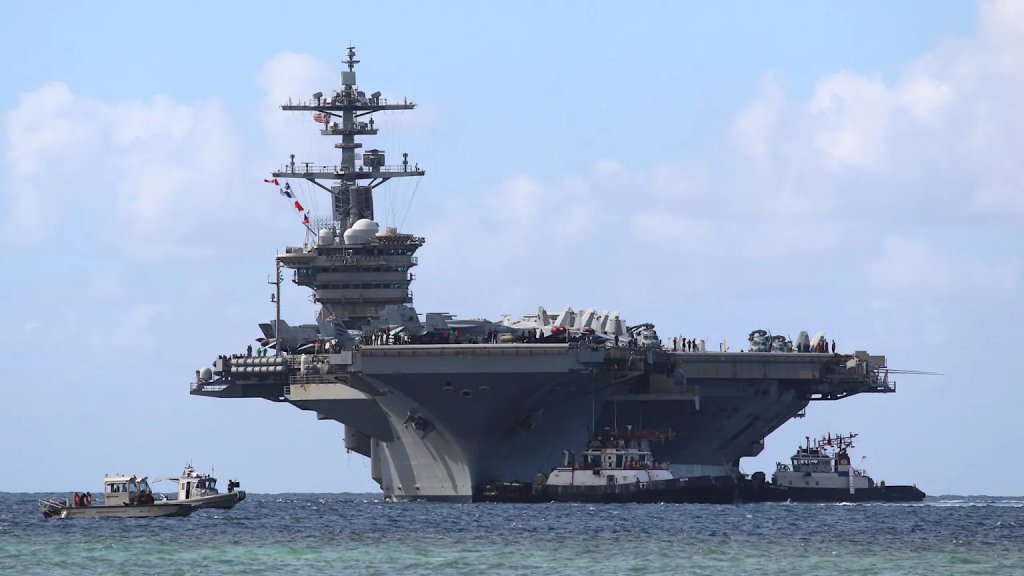
USS Abraham Lincoln in Guam in December 2025. USN

“It’s my earnest attempt to really try to keep those [deployments] at seven months,” Chief of Naval Operations Adm. Daryl Caudle, the Navy’s top officer, said during a question-and-answer session at Fort Meade, Maryland, Monday, which was livestreamed. He also said he wanted a Navy “that can sustain a seven-month deployment and still give our combatant commanders the amount of naval force they need to accomplish their missions, solve their key operational problems, and make sure they have all the naval force necessary to do what they need to do.”

Caudle had notably acknowledged concerns about strains on the Ford while speaking to TWZ and other outlets at the Surface Navy Association’s annual symposium back in January.

The Lincoln‘s visibly worn state certainly draws new attention to the stress on America’s carrier fleets as personnel onboard are now finally getting a much-earned reprieve in Laem Chabang.

Contact the author: joe@twz.com

The post USS Abraham Lincoln Looks Like It’s Been Through Hell After 286 Days At Sea appeared first on TWZ.
  •  

Chinese Cargo Ships Clandestinely Gather Signals Intelligence: Report

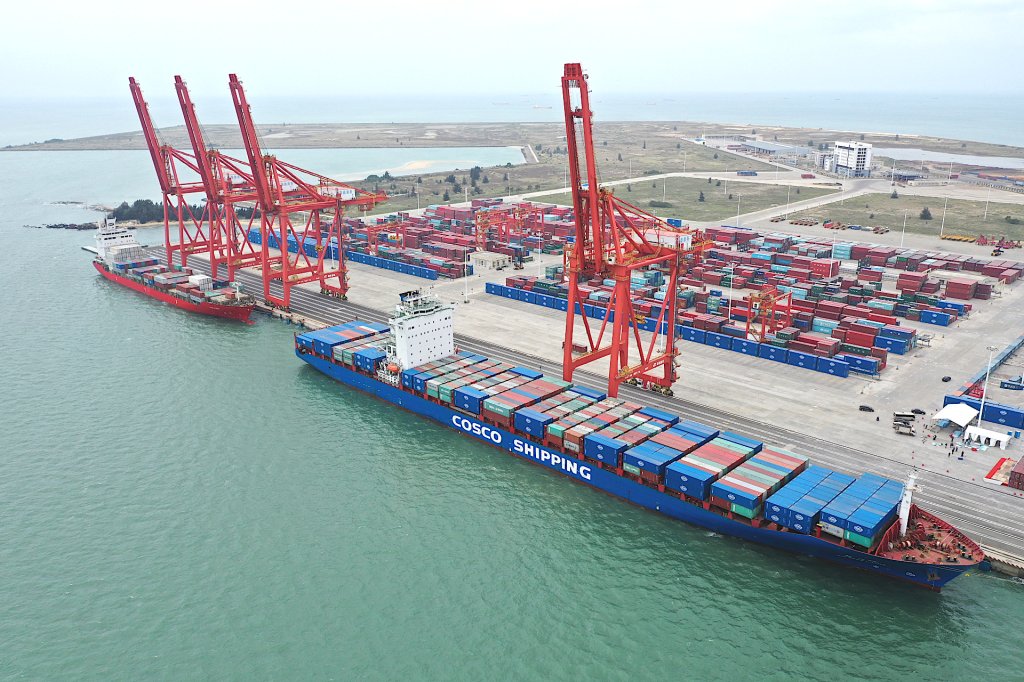
Chinese state-run shipping company COSCO has been using concealed systems on its vessels to gather signals intelligence around North American, European, and Asian coastlines for decades, it has been alleged. Similar claims have been made in the past, and overlap between nominally civilian enterprises in China and the country’s military and intelligence services is well established at this point.

Reuters first reported on the use of COSCO ships as discrete signals intelligence platforms earlier today, citing two unnamed officials within President Donald Trump’s administration.

“The officials, who spoke on condition of anonymity to discuss the U.S. assessment of the Chinese program, said COSCO has a decades-long intelligence-collection partnership with Beijing,” according to the report. “The arrangement allows China to collect communication signals from vessels ​and aircraft operating across Europe, North America and Asia, they said.”

COSCO container ships in port. COSCO

It is worth noting here that China’s National Intelligence Law, enacted in 2017, includes a specific provision that requires all organizations and citizens within the country to support state intelligence work as required. It also obligates the state to protect entities that do so.

“The advanced equipment aboard the ships is intended to enable China ​to gather information about ‘military communications technologies and encryption developments,’ one of the officials said,” Reuters‘ story today added. “The officials did not detail the type of equipment COSCO ships were allegedly using, but said they were ‘sophisticated signals intelligence collection’ platforms, not routine communications hardware.”

Officials at the Chinese Embassy in Washington, D.C., unsurprisingly denied these assertions, according to that outlet.

Purpose-built signals intelligence suites can range widely in size and shape, as can their capabilities. They can be very small and basic or far more elaborate systems. Even the latter could be concealed as modern commercial ships, which already feature lots of antennas.

COSCO

What might happen to intelligence collected by the ships is unknown. At the very least, systems onboard could record the data, which could then be batched out when safe to do so, either physically or via transmission. Basic passive signals suites can also run autonomously, or even be controlled from anywhere in the world if the ship is connected via satellite communications (SATCOM). High-bandwidth SATCOM is very common now on ships around the globe.

Personnel on the ship could also operate the systems, and even process receptions of interest. It might be possible to fit the ships with suitable datalinks to then transmit the collected data in near-real-time to other nodes, including ones back in China, for further analysis and exploitation.

Reuters‘ sources said scooping up data on “military communications technologies and encryption developments” was a priority for the commercial vessels turned spy ships. Signals intelligence can take many other forms, from emissions from radars to communications chatter. Depending on what is collected and how, specialists can use that information to glean details about how systems function, as well as insights into standard operating procedures and other details. This is especially true when multiple forms of intelligence are fused together. Generally speaking, signals intelligence is routinely used to help build out so-called ‘electronic orders of battle’ detailing the disposition and capabilities of an opponent’s forces, especially air defense and command and control networks.

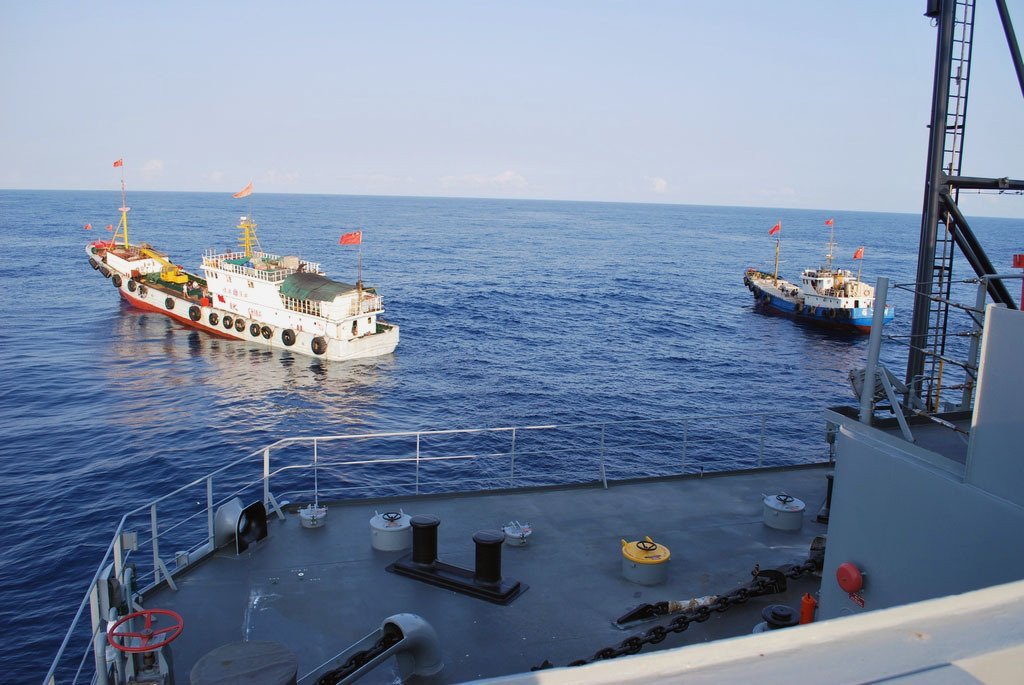
As mentioned, this is not the first time claims in this general vein have emerged, either. At least some evidence has been presented in the past, through open-source analysis. Reuters‘ sources directed that outlet to a report published last year by the China Maritime Studies Institute at the U.S. Naval War College exploring exactly this topic in relation to China’s quasi-military maritime militia. The maritime militia is made up of ostensibly civilian fishing fleets, but has direct ties to the People’s Liberation Army (PLA) and the Chinese Coast Guard. It is routinely used to harass and intimidate foreign vessels in disputed waters, especially in the South China Sea.

Chinese fishing vessels seen stopped right in front of US Navy’s ocean surveillance ship USNS Impeccable in 2009. USN

“Undergirding these operations is a cadre of maritime militia intelligence specialists called ‘information personnel.’ Information personnel are organized into force contingents that support operational militia forces,” according to that report. “Most have day jobs in the fishing industry, but many hale [sic; hail] from other sectors, including marine shipping and even maritime law enforcement units.”

“It is more likely than not that PRC [People’s Republic of China] vessels operating overseas have already begun embarking information personnel to serve intelligence collection and reporting functions. In the case of China’s fishing fleet, serving this foreign intelligence collection function could be as simple as adding a new duty to the ‘information personnel’ that already embark aboard some distant-water fishing vessels,” that report added. “Aside from their primary responsibilities of tallying and reporting production numbers, serving as experts on international and national fisheries regulations that affect their work, and handling interactions with foreign officials while at sea and in port, they might also be tasked with collecting and reporting military and political intelligence while operating overseas.”

“Similar processes may already be in place in the commercial shipping industry,” it continued. “For instance, Guangxi province’s Beihai city has built up its ranks of maritime intelligence specialists by recruiting from among marine shipping personnel.”

No explicit mention is made in the report about signals intelligence gathering.

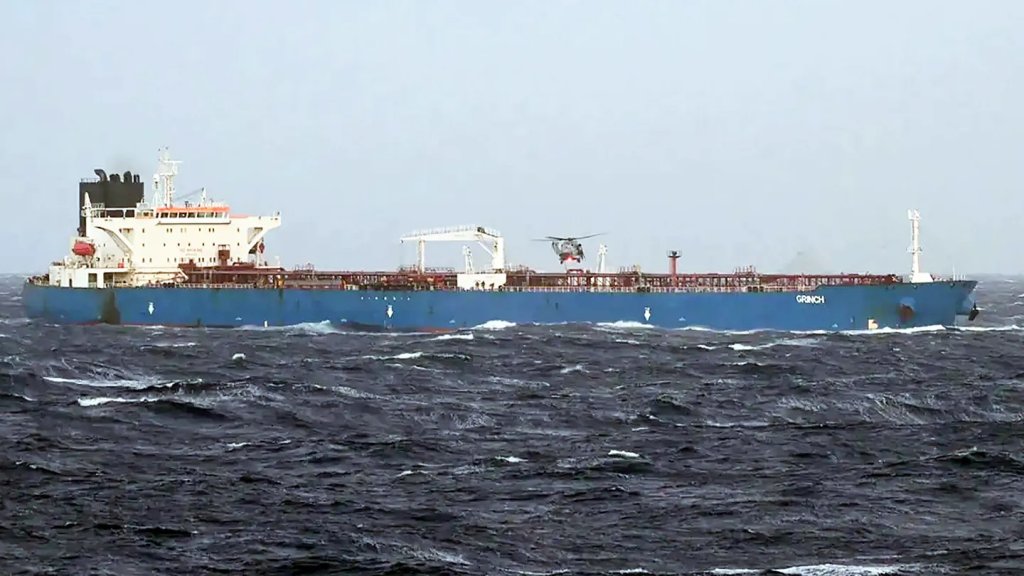
In the past year or so, there have been multiple reports that Russia is also using its so-called ‘shadow fleet’ of oil tanker ships in a secondary role as intelligence-gathering platforms. The primary job of those vessels is to help the Kremlin evade sanctions.

French forces seen boarding the Comoros-flagged tanker Grinch, part of Russia’s so-called ‘shadow fleet,’ in January 2026. French Navy

There is other tangential evidence that also lends credence to today’s report from Reuters. As mentioned, in the midst of still mysterious drone swarms that harassed U.S. Navy ships off the coast of southern California back in 2019, U.S. authorities at least explored the possibility that a Hong Kong-flagged bulk carrier, the M/V Bass Strait, might have been a launch point. It remains unknown, at least publicly, whether the Bass Strait or another nearby ship might have been the source of the harassment, or if it came from somewhere else, potentially further away. TWZ was the first to report on this detail as part of a deeper investigation into these incidents, which came amid a spike in news about claimed sightings of what are now commonly referred to as unidentified aerial phenomena (UAP). We have been saying for years now that, while some UAP sightings do remain unexplained, many more are likely to have been drones (as well as balloons), which foreign governments could be using for intelligence gathering and other malign purposes.

A US Navy briefing slide discussing an interaction with the M/V Bass Strait on July 15, 2019. This says that at least at that time the bulk carrier was assessed to be “likely using UAVs to conduct surveillance on US Naval Forces while transiting to [a] scheduled port of call, [in] Long Beach, CA.” USN via FOIA

It’s also worth noting here that intelligence collection from international waters and airspace is a practice that nation state armed forces and intelligence agencies globally, including those in the United States, engage in regularly with varying degrees of openness. Leveraging nominally civilian ships, as well as aircraft, for these purposes is hardly new.

Despite the official denials to the Reuters piece today, it would be hard to imagine Chinese authorities not making use of commercial ships for this purpose, if possible, given that major deepwater ports worldwide are often dual-purpose civilian/military facilities. Radar sites and other critical facilities are often positioned along or near coastlines. Cargo ships and tankers often pass by major exercises and under major military operating airspace, where they could scoop up critical data.

With commercial ships already plying their routes, this would also just offer the Chinese government ways to readily bolster maritime intelligence-gathering capacity at low cost and low risk. China’s commercial fleets dwarf any other on Earth, making their presence commonplace and providing many opportunities to hide these operations.

A 2021 report published through the U.S. National Geospatial-Intelligence Agency’s (NGA) Tearline Project also highlighted the possibility of Chinese-owned facilities at ports around the world being used for intelligence gathering or even for launching non-kinetic attacks, including electronic warfare jamming. It specifically noted how COSCO’s facility in Belgium’s Port of Zeebrugge is “in close proximity to a Belgian Naval Base and thus could fulfill additional militarized requirements.”

Concerns about land owned by Chinese companies and nationals being used to collect intelligence or for other purposes have become an increasingly hot topic of discussion in the United States in recent years.

Reuters‘ piece does not say what, if any, steps U.S. authorities have taken or may be planning to take now to monitor for or take more active countermeasures against Chinese-flagged ships being used for intelligence gathering, despite this being said to be a decades-old practice. The report does note that “the Pentagon put COSCO on its list of companies linked to China’s military in January 2025, a designation that carries serious reputational costs for companies ​as well as U.S. government procurement ​bans, but does not entail ⁠formal sanctions.”

Though no hard evidence has yet been provided, Chinese authorities using cargo ships as additional discreet signals intelligence-gathering assets is very plausible, and would certainly seem to be an issue that should be taken seriously, if it is not already being addressed.

Contact the author: joe@twz.com

The post Chinese Cargo Ships Clandestinely Gather Signals Intelligence: Report appeared first on TWZ.
  •  

Competing Bradley Fighting Vehicle Replacement Prototypes Delivered To The U.S. Army (Updated)

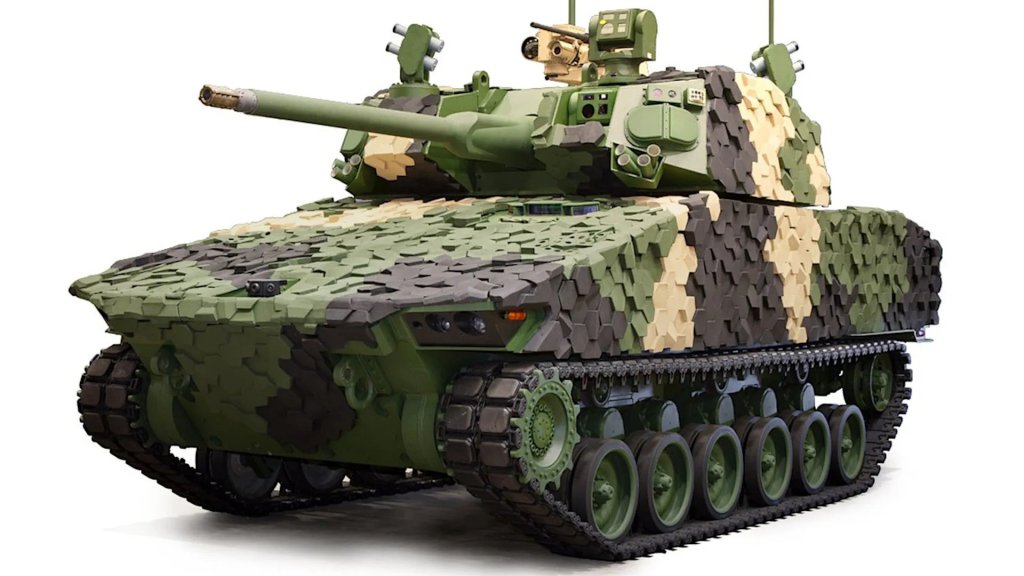
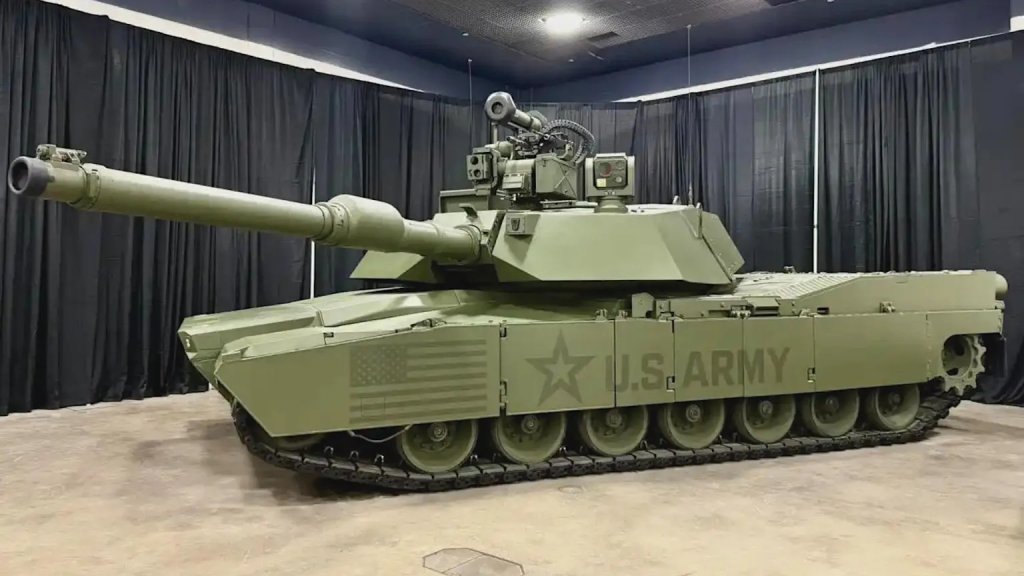
American Rheinmetall and General Dynamics Land Systems have now delivered the first prototypes of their proposed XM30 Mechanized Infantry Combat Vehicle (MICV) designs to the U.S. Army. The XM30 program is the Army’s latest attempt to replace its fleet of Bradley Fighting Vehicles. The competing MICV designs are set to be put to the test alongside early prototypes of the next-generation M1E3 Abrams tank in the spring.

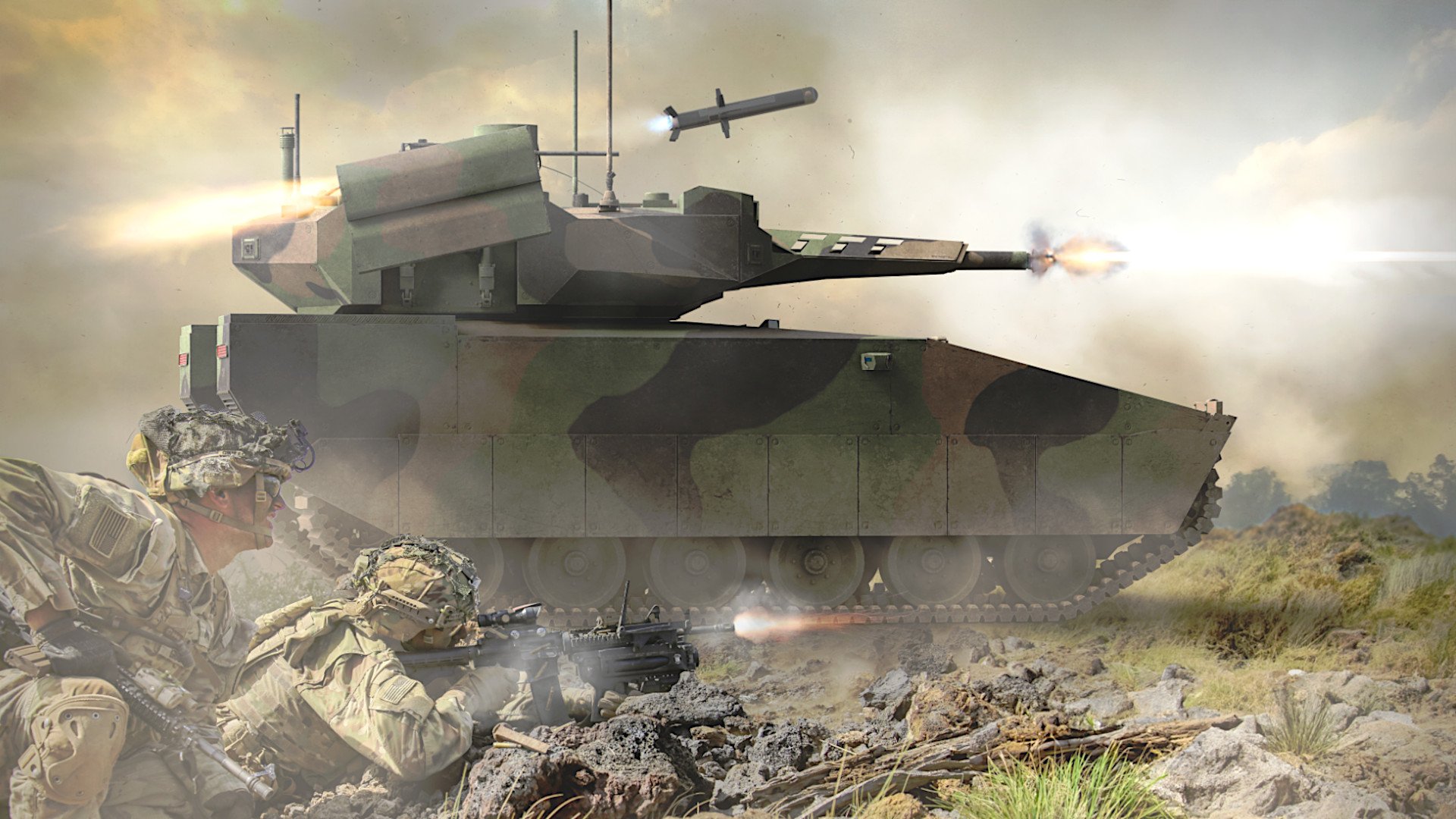
The U.S. subsidiary of Germany’s Rheinmetall has been developing a version of its Lynx family to meet the Army’s MICV requirements, and announced the delivery of the first example today. General Dynamics Land Systems (GDLS), which is offering the Wolf, a further evolution of the company’s Griffin III, itself derived from the ASCOD 2 infantry fighting vehicle, said last week that its first prototype had arrived at the Aberdeen Proving Ground in Maryland. Variants and derivatives of the Lynx and ASCOD 2 are already in service with several countries, which we will come back to later on.

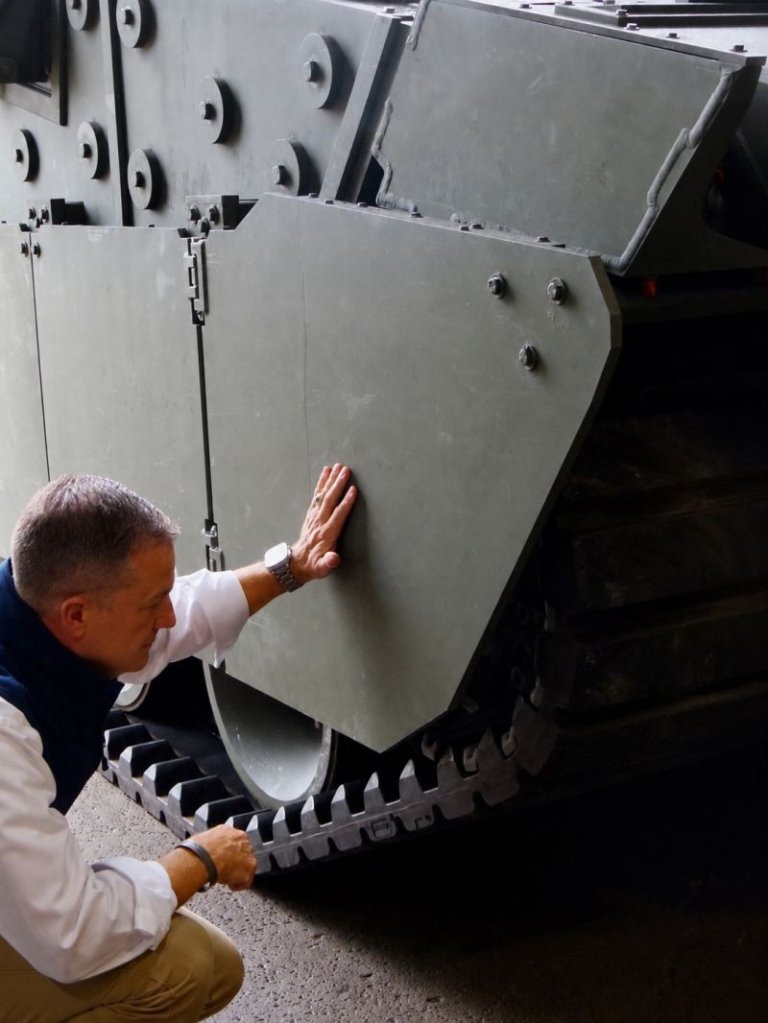
Geoffrey Norman, Director for U.S. Strategy & Growth at General Dynamics Land Systems, shared this picture of him kneeling beside a Wolf prototype in a post on LinkedIn last week. That same post said that the first prototype had been delivered to the US Army. Geoffrey Norman/LinkedIn

The press release today from American Rheinmetall says the company will eventually deliver eight prototypes to the Army for further testing. It is very likely General Dynamics Land Systems will be supplying an equivalent number of vehicles, but the company does not appear to have confirmed that explicitly at the time of writing. Army budget documents released earlier this year show the service is planning to acquire at least 108 XM30s through Fiscal Year 2031. The Army has some 2,500 Bradleys in service today, a figure that includes multiple variants and subvariants.

“Delivering our first prototype to the Army is an important step as the XM30 Combat Vehicle program enters a more visible phase,” Matt Warnick, CEO of American Rheinmetall, said in a statement accompanying the release. “Team Lynx now has the opportunity to show the Army that we can deliver on the promise of a modern replacement for the Bradley.”

“I could not be happier to be part of the GDLS team that is delivering this incredible new capability on schedule to the Army – they need it now,” Geoffrey Norman, Director for U.S. Strategy & Growth at General Dynamics Land Systems, had written last week in a post on LinkedIn. “The work continues as this first vehicle gets into the Army’s hands.”

The Lynx and Griffin III-based XM30 designs both feature hybrid-electric propulsion. This will offer improved fuel economy, added electrical power generation, and other benefits compared to the Bradley with its traditional diesel engine. The vehicles both have remotely operated turrets, with their two-person crews, as well as up to six passengers, all riding in the hull.

General Dynamics Land Systems’ Wolf is based on the Griffin III, an earlier configuration of which is seen here. GDLS

The Army expects the winning XM30 to provide significant boosts in lethality and other capabilities compared to any existing version of the Bradley. The main weapon on both competing designs is an XM913 50mm automatic cannon, offering a significant increase in firepower compared to the 25mm M242 on the Bradley.

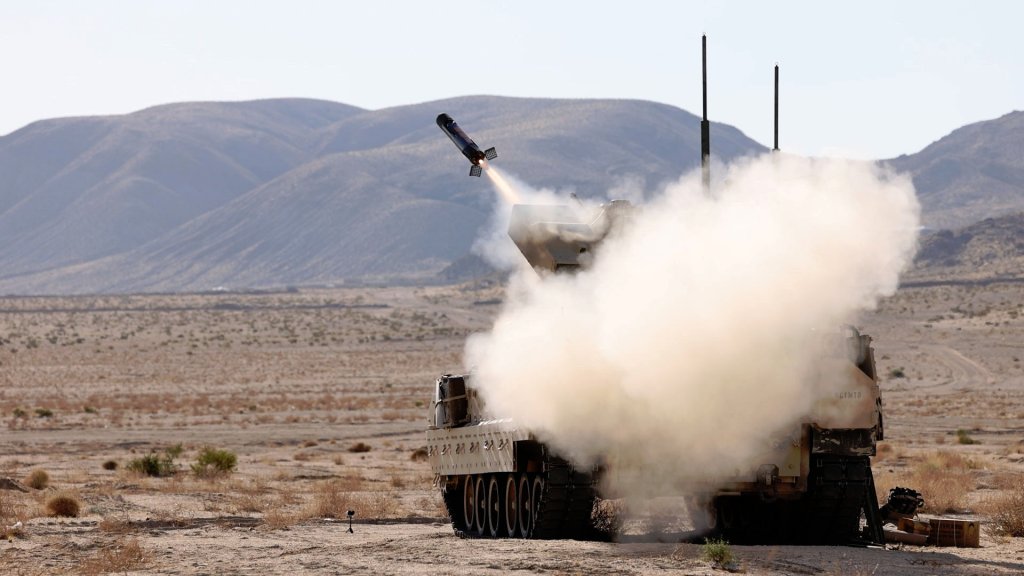
The XM30 will also be able to launch loitering munitions. AeroVironment’s Switchblade 300 has been integrated onto General Dynamics Land Systems’ design. American Rheinmetall’s entry is designed to be able to fire versions of Raytheon’s Coyote Block 3, but whether it can launch other munitions is unclear. The launchers on the Lynx-based XM30 are known to also be capable of firing anti-tank guided missiles, such as the TOW and Javelin. The Army has demonstrated the ability to fire a version of the Coyote from the TOW missile launcher on the Bradley, as well.

A Bradley Fighting Vehicle launches a Coyote LE SR loitering munition from its TOW missile launcher during a test exercise in 2025. US Army

Next-generation fire control, sensor, and networking/communications capabilities are also key to the Army’s current Bradley replacement plans. With its improved network connectivity, the service envisions XM30s acting as controllers for uncrewed ground vehicles, as well. The Army has already been working to prove out future crewed-uncrewed teaming concepts using the Bradley.

Overall, the Army sees the XM30 as a future “cornerstone of the Armored Brigade Combat Team (ABCT), designed to enhance lethality, survivability, and maneuverability in high-intensity combat against near-peer adversaries,” according to the Army’s Fiscal Year 2027 budget documents. “The XM30 is versatile in its operational roles, capable of leading the charge, scouting ahead, or providing overwatch while Soldiers dismount and maneuver. Its ability to control robotic systems and semi-autonomous platforms adds another layer of capability, allowing the formation to extend its reach and maintain dominance across the battlefield.”

“The XM30 program is not just a replacement for the Bradley Fighting Vehicle – it represents a transformative leap in ground combat vehicle development. The XM30 is more than a vehicle; it is a software-defined platform designed for interoperability and adaptability, ensuring it evolves with changing technologies and operational demands,” the budget documents continue. “By leveraging digital engineering and modular open systems architecture (MOSA), the XM30 ensures infantry units always have the cutting-edge tools they need to outmaneuver and outgun the enemy. The XM30 also achieves a level of logistical efficiency that ensures sustained operational readiness while reducing costs and complexity.”

The Army now plans to put the XM30 prototypes to the test during a regular rotation at the sprawling National Training Center (NTC) at Fort Irwin in California next spring, according to a report last month from Breaking Defense. Soldiers assigned to the 1st Brigade Combat Team, 1st Cavalry Division out of Fort Hood in Texas, will operate the vehicles. 1/1st Cavalry is one of the Army’s so-called Transformation In Contact (TIC) units, which are supporting the service’s broader modernization objectives. The brigade is expected to bring prototypes of the next-generation M1E3 Abrams tank to the NTC, as well.

The first ‘pre-prototype’ of the next-generation M1E3 Abrams tank. US Army

The Army has talked in the past about aiming to field a winning XM30 design by Fiscal Year 2029. However, it remains to be seen when it might make a final selection and when the first of those vehicles actually enter operational service.

“We have a plan to carry two vendors as long as we possibly can. It becomes a question about resourcing the money, because you’re not paying necessarily double, but you’re kind of paying double,” Army Brig. Gen. Troy Denomy, Program Acquisition Executive of Maneuver, told Breaking Defense for its story in August. “We’re absolutely trying to keep our options open as long as we can, but money matters.”

That being said, “if there’s not a clear winner at the end of the NTC rotation, ‘then it may be worth not selecting at that point,’ Denomy said,” per Breaking Defense.

This is hardly the first time the Army has attempted to replace the Bradley since it first entered service in the 1980s. Cost, weight, and other factors have derailed several previous attempts, including the Optionally Manned Fighting Vehicle (OMFV) effort that directly preceded the current MICV program. In February, another report from Breaking Defense had raised questions about the XM30’s future after at least a temporary program pause within the last year. That was followed by a new request for information for a different, but very similar-sounding vehicle.

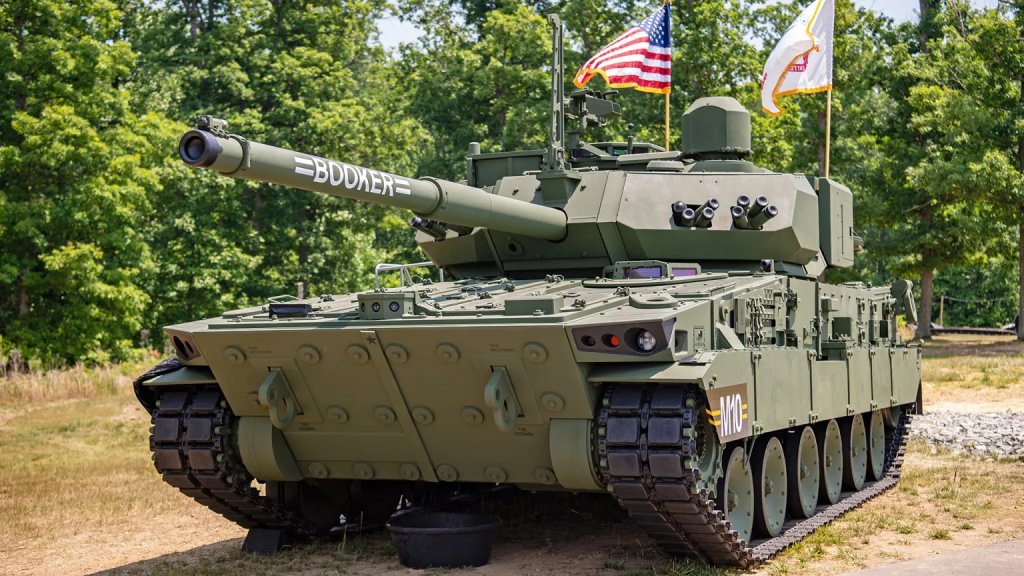
As mentioned, the two competing XM30 designs are based on vehicles that are in operational service today. Hungary became the first operator of a Lynx variant last year, and Ukraine is also in the process of procuring versions of that design. Today, Spain is the primary operator of the ASCOD 2, with Latvia also working to field a fleet of those vehicles. The British Army’s much-troubled Ajax is also derived from the ASCOD 2. The U.S. Army’s now-cancelled M10 Booker ‘light tank’ is another member of this broader family.

The M10 Booker, one of which is seen here, is another member of the larger family of vehicles from General Dynamics Land Systems that also includes the Wolf. The Army cancelled this program in 2025. US Army

It is worth noting here that there has been much debate in recent years about the utility of heavy armored vehicles like the Bradley, as well as the Abrams tank, in future conflicts. Armored and unarmored vehicles face a growing multitude of threats, including more and more capable anti-tank guided missiles and especially kamikaze drones. Reporting earlier on in the conflict in Ukraine had underscored the continued value of heavy armor, including of the Bradley, even if its place as a decisive factor on the battlefield was diminishing. However, a report just last week from The New York Times indicated that tanks, in particular, have become increasingly sidelined, largely due to the threat of drone attacks.

The Army is also now in the midst of a new leadership shakeup with the resignation of Army Secretary Dan Driscoll. Reports say Driscoll’s departure follows growing friction with Secretary Pete Hegseth, including over modernization efforts.

In the meantime, examples of both of the designs competing to become the future XM30 are now in Army hands and are set to be tested alongside the M1E3 next year.

Update: 5:23 PM ET –

GDLS has now put out a brief press release regarding the delivery of the first Wolf prototype to Aberdeen Proving Ground, which it says occurred on August 21.

“This on-time delivery will allow Soldiers to start putting the Wolf through its paces, with the ultimate goal of getting it fielded into armored brigades as quickly as possible,” GDLS’ Norman said in a new statement accompanying the release. “I would like to congratulate our XM30 team on the successful design and production of this game-changing solution. The Wolf is the most technologically advanced combat vehicle ever assembled.”

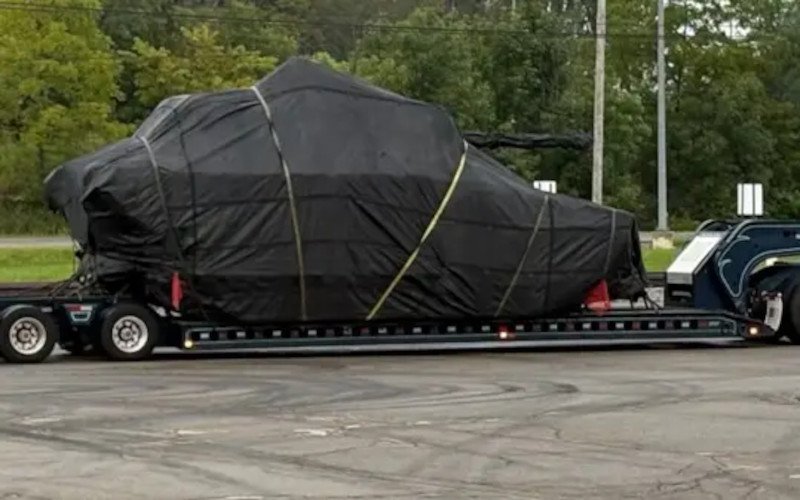
The release also included the picture below, showing the Wolf prototype entirely under wraps on a trailer.

GDLS

Contact the author: joe@twz.com

The post Competing Bradley Fighting Vehicle Replacement Prototypes Delivered To The U.S. Army (Updated) appeared first on TWZ.
  •  

Japan’s First Dedicated Missile Defense Warship Is A Monster

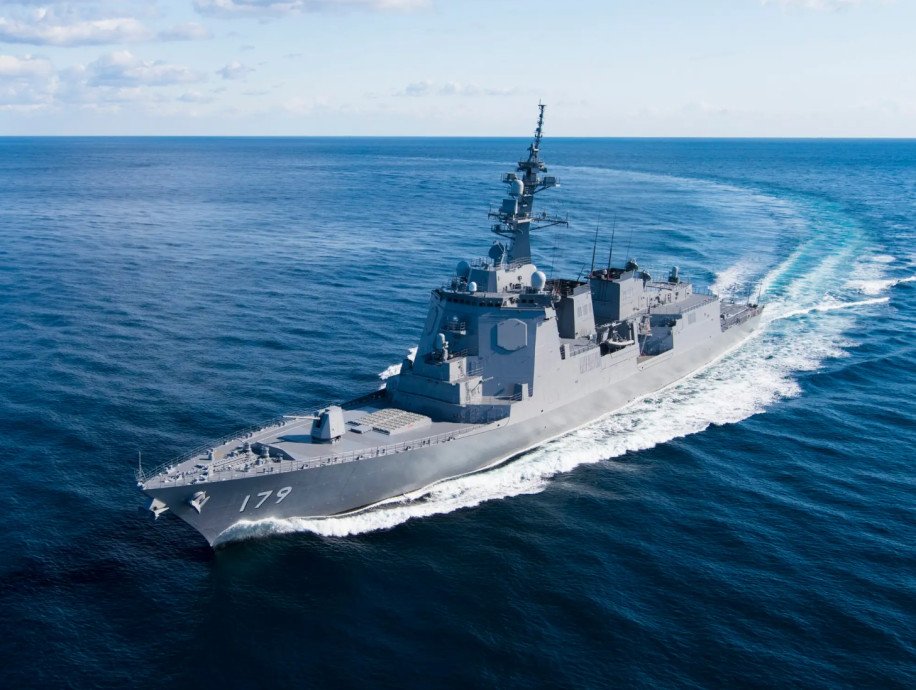
The first of Japan’s two new cruiser-sized Aegis System Equipped Vessels (ASEV) is continuing to take shape, recently receiving its huge main integrated mast, giving the vessel a new and remarkably imposing silhouette. The four very large fixed arrays for the ship’s powerful AN/SPY-7(V)1 radar will eventually be integrated onto this structure. The ASEV’s stated primary mission is missile defense, but Japanese authorities plan to give the vessels additional counter-drone, anti-ship, and land attack capabilities in the future. Tomahawk cruise missiles are notably set to be added to the ship’s arsenal down the line.

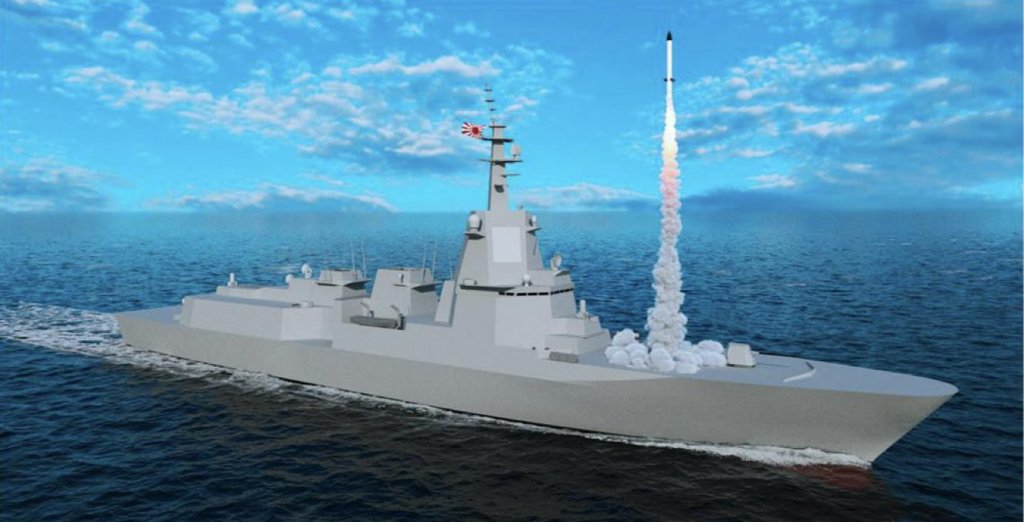
The ASEVs are large surface combatants, set to be some 620 feet long, have a beam (the widest point of the hull) of some 82 feet, and a standard displacement of 12,000 tons. For comparison, Japan’s largest surface combatants today, its Maya class destroyers, are just over 557 feet long, have a beam of some 73 feet, and a standard displacement of around 8,200 tons. It is worth noting here that the size of new and advanced destroyers, often optimized for anti-air warfare missions, has been trending upward globally in recent years. This, in turn, has caused the line between destroyers and what have more historically been categorized as cruisers in certain cases.

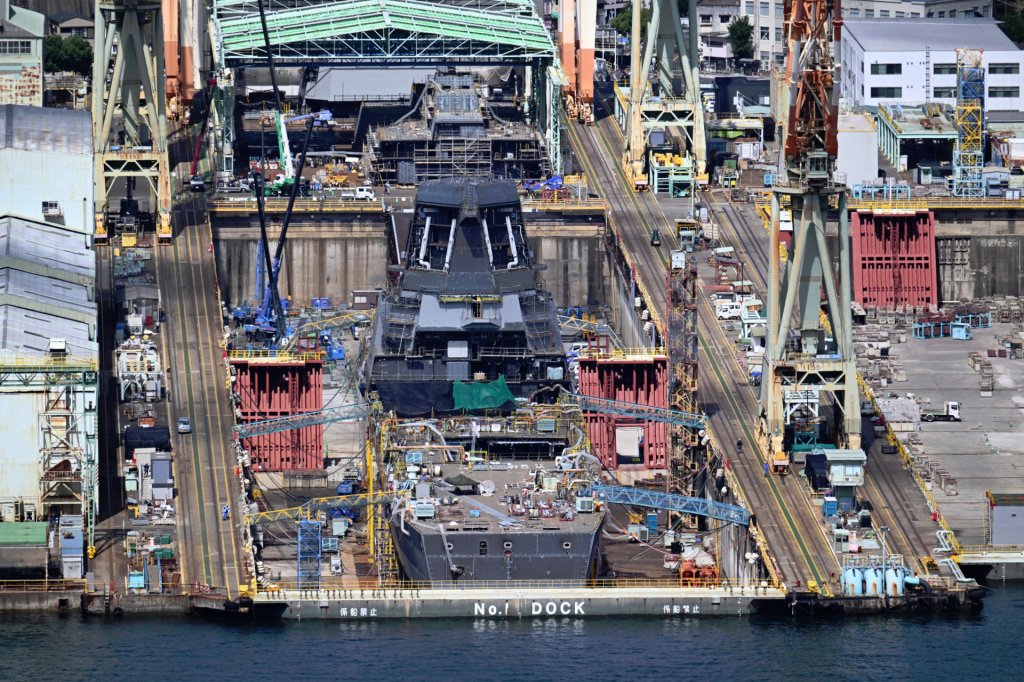
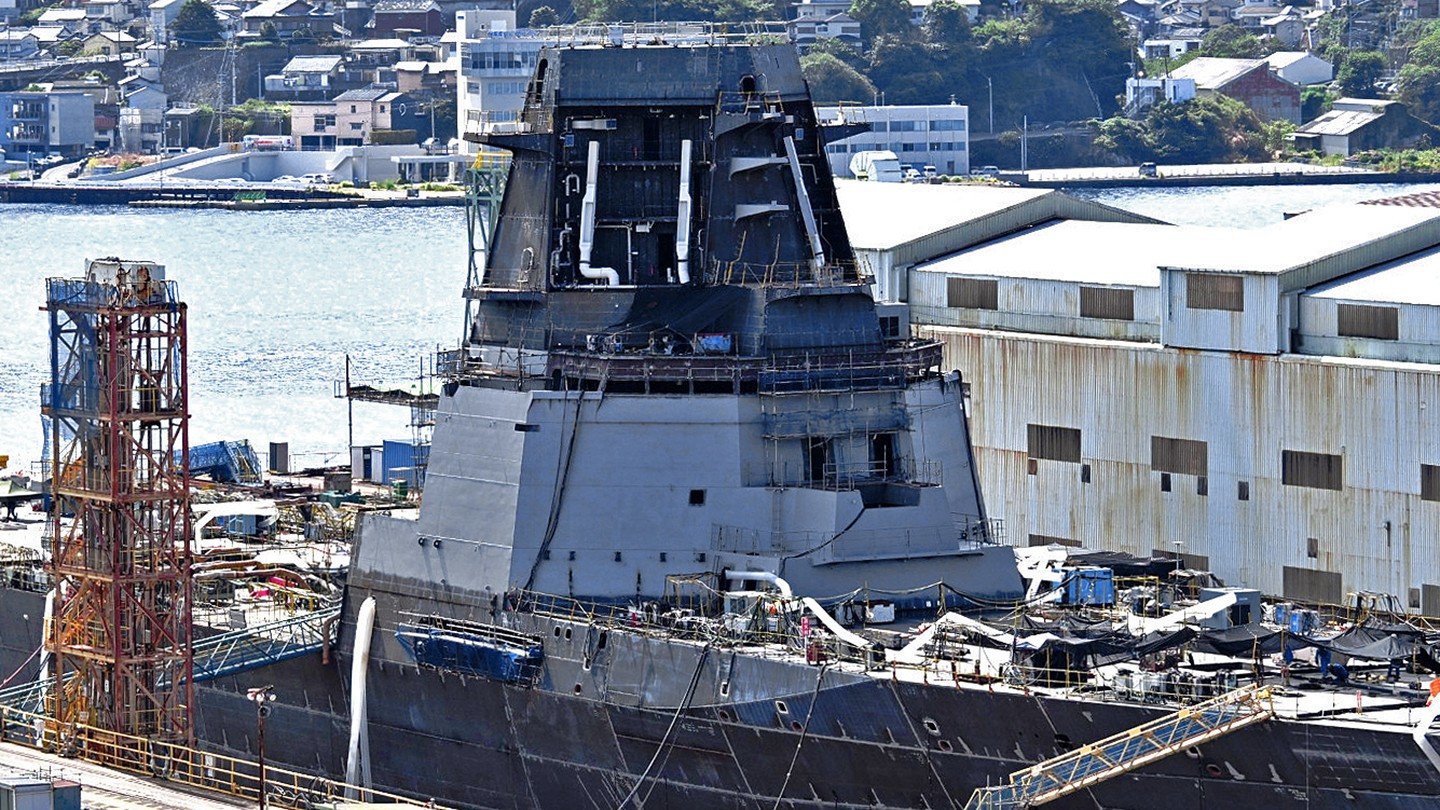
The first ASEV under construction in Nagasaki, as seen from the stern. This picture was taken earlier this month. Sakai/@kensakai9310

The first ASEV was laid down at Mitsubishi Heavy Industries’ (MHI) shipyard in Nagasaki in July 2025. The second was laid down in February of this year at Japan Marine United Isogo shipyard, which is situated in Yokohama City near Tokyo, according to a past report from Naval News. The Japanese Ministry of Defense is currently aiming to have the first of these vessels in service before the end of the country’s 2027 Fiscal Year, which runs from April 2027 to March 2028. The second is expected to follow in the 2028 fiscal cycle, which extends into 2029.

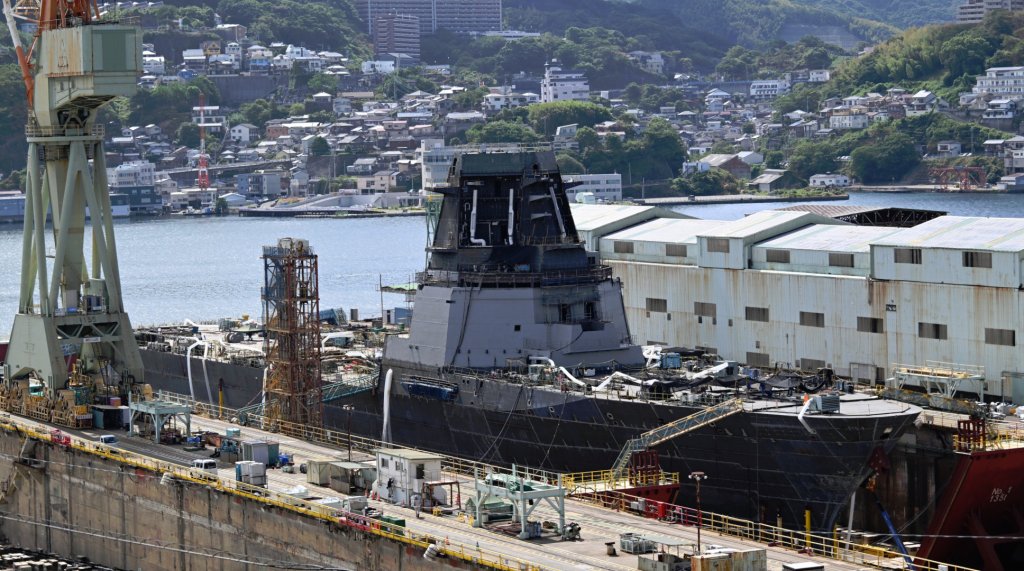
Another view of the first ASEV under construction in Nagasaki. Sakai/@kensakai9310
A rendering of what the finished ASEV is currently expected to look like. Japanese Ministry of Defense

Significant progress in the overall construction of the first ship has been made just this year. The addition of the main mast structure, installed on top of the main superstructure, as seen in pictures at the top of this story and below, has drawn particular attention in recent weeks.

Japanese are very fast with ship building.

March 26 and today. ASEV-class destroyer.

190 m hull, SPY-7 Aegis, 128cell Mk 41 VLS. SM-3 for ballistic missiles, SM-6, plus Japan’s long range Type 12 SSM. pic.twitter.com/RQZixtqWwe

— 信濃 Æýà (@Shinano_AEya) August 30, 2026

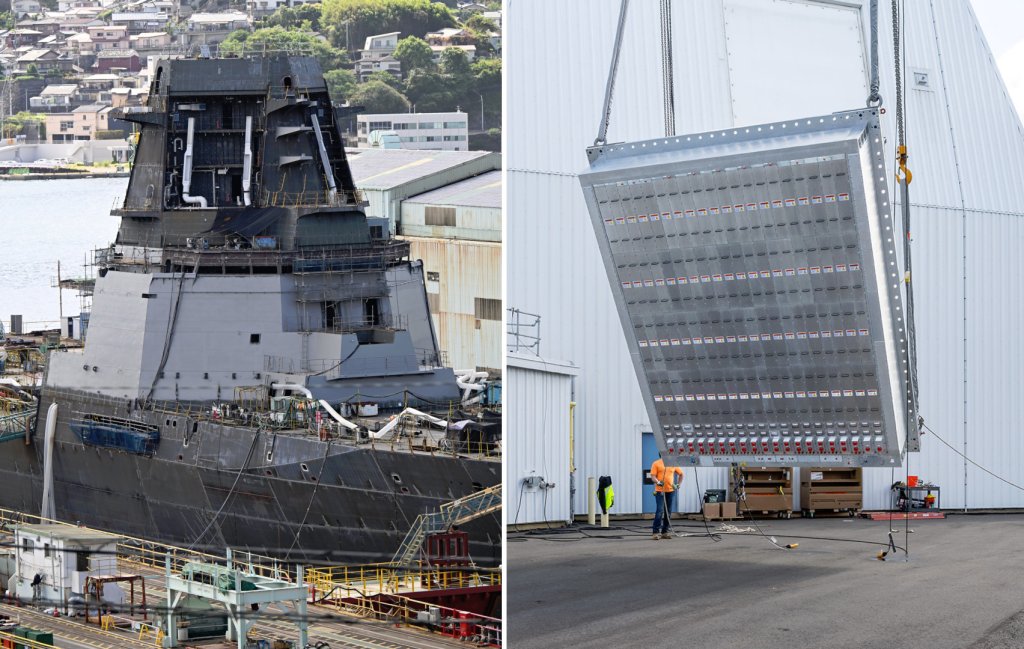
The especially large size of the ASEV’s integrated mast is driven by that of the AN/SPY-7(V)1 active electronically-scanned array (AESA) radar from Lockheed Martin. Each one of the radar’s four rectangular arrays is reportedly around 14 feet (nearly 4.3 meters) tall. This would put them in the same general size category as the arrays for Raytheon’s AN/SPY-6(V)1 Air and Missile Defense Radar (AMDR) found on U.S. Navy Flight III Arleigh Burke class destroyers. That being said, the pictures we have now raise the question of whether the AN/SPY-7(V)1 arrays are bigger than previously assessed. The AMDR is another notably large design heavily optimized for missile defense.

A close-up look at the main superstructure and integrated mast on the first ASEV under construction in Nagasaki, at left, and a stock picture of an AN/SPY-7(V)1 array at right. Sakai/@kensakai9310

The size and location of the mast provide a centralized, elevated position for the AN/SPY-7(V)1’s large arrays, which will also require significant power generation capacity and thermal management to keep everything cool. This is a notable departure from the placement of the arrays on the main superstructure on existing Japanese destroyers, as well as the U.S. Arleigh Burke class, and offers an unobstructed, elevated line-of-sight to the horizon. Beyond the ballistic missile defense mission, this view farther out over the horizon would be important for tracking and engaging low-flying drones and cruise missiles, which might be targeting the ship itself. This is something we will come back to later on.

“With five times the tracking capability of the SPY-1, it [the AN/SPY-7(V)1] counters lofted trajectories and simultaneous multiple ballistic missile threats,” according to a machine translation of a section of the Japanese Ministry of Defense’s 2026 defense policy white paper, which was released earlier this month.

The passive electronically-scanned array (PESA) AN/SPY-1 was the first radar to be paired with the Aegis Combat System, and both were first introduced in the 1970s. Variants of the SPY-1 are still found on a variety of U.S. and foreign Aegis-equipped warships, including Japan’s Kongo, Atago, and Maya class destroyers.

The first-in-class destroyer JS Maya. Japanese Ministry of Defense

The AN/SPY-7(V)1 is also a derivative of the U.S. military’s static, land-based Long Range Discrimination Radar (LRDR) in Alaska. Japan also originally planned to employ the AN/SPY-7(V)1 on land at a pair of Aegis Ashore missile defense sites. However, that effort was subsequently cancelled, with the ASEV emerging to fill the resulting gap.

Additional versions of the AN/SPY-7 with much smaller arrays are also being integrated onto new F110 Bonifaz class frigates for the Spanish Navy and the Royal Canadian Navy’s forthcoming River class destroyers (also known as the Canadian Surface Combatant). The use of the AN/SPY-7(V)1 on the ASEV could impact decisions regarding new radars for other future and existing Japanese warships. Raytheon is also pitching versions of its increasingly popular AN/SPY-6 family for use on a successor to the Kongo class and for refit on the Maya class, according to a recent report from Naval News.

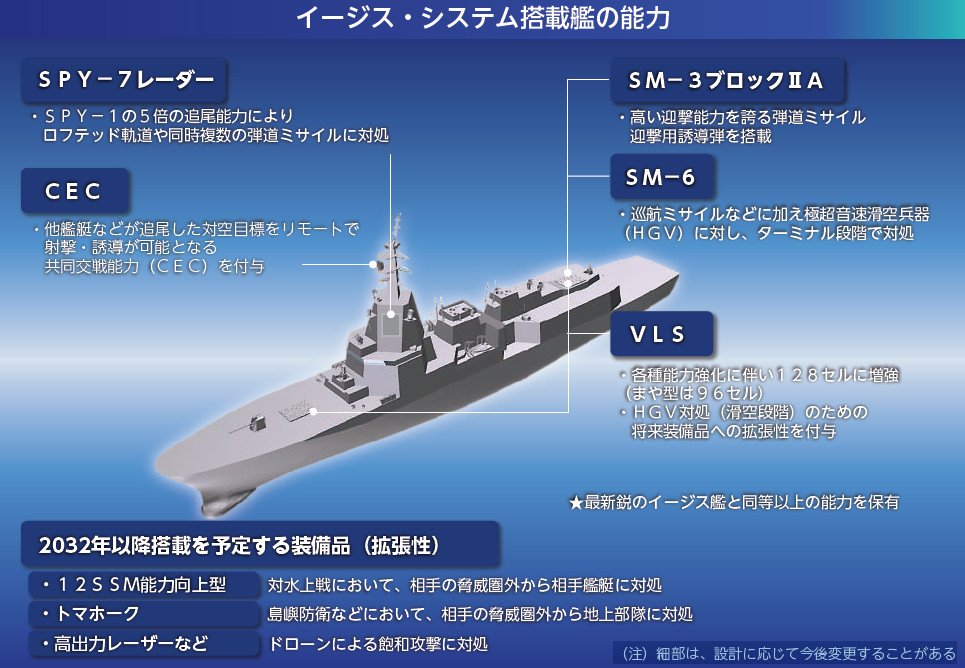
When it comes to the ASEV, as already noted, the AN/SPY-7(V)1 is central to the ship’s main stated missile defense mission. As the name makes clear, the ship will also feature the Aegis Combat System. The vessel will be capable of “remote engagement and guidance against anti-air targets tracked by other vessels” via a “Cooperative Engagement Capability (CEC),” per the Japanese Ministry of Defense’s most recent annual defense white paper.

The video below provides details about the U.S. Navy’s Cooperative Engagement Capability (CEC) developments, which are likely very similar to what Japan has planned for the ASEV.

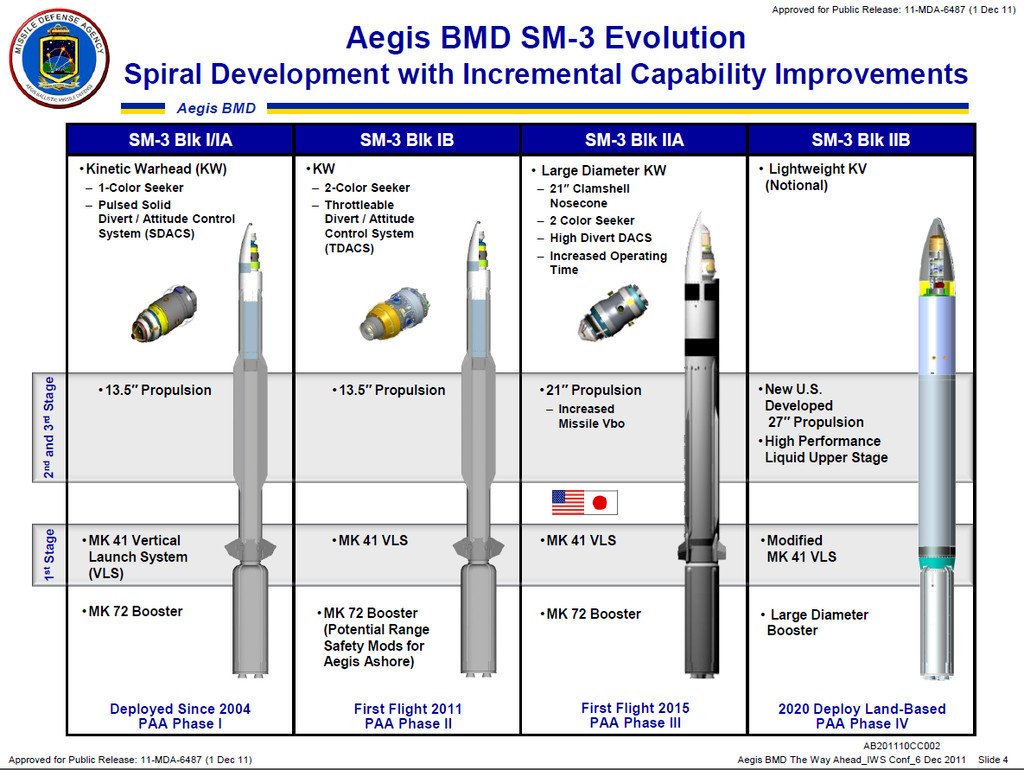
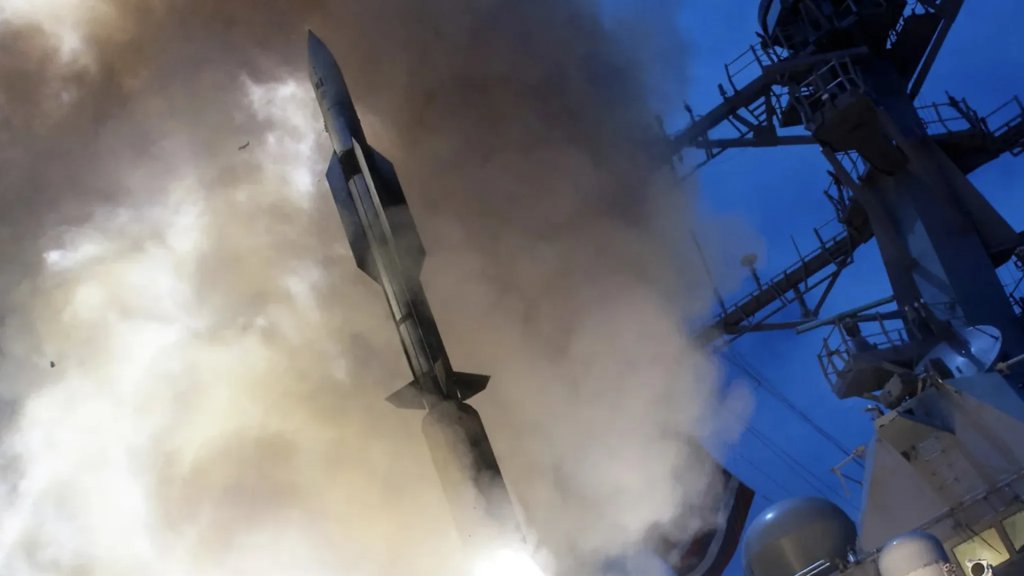
In terms of armament, when the ASEVs first enter service, their main weaponry is expected to be a mix of variants of the Standard Missile-3 and -6 (SM-3 and SM-6). The SM-3 family is designed to engage ballistic missile threats during the mid-course portion of their flights while they are traveling outside of the Earth’s atmosphere. The SM-3 also has a demonstrated anti-satellite capability. The SM-6 is a multi-purpose missile that was originally designed with an anti-air focus. It can be used to target incoming ballistic missiles in the terminal phase of flight and also has at least a degree of capability for engaging hypersonic weapons. SM-6 can be used in a surface-to-surface mode, including against ships, as well. Japan is also a partner in the U.S.-led development of a new Glide Phase Interceptor (GPI), which is being designed specifically to intercept unpowered, but highly maneuverable hypersonic boost-glide vehicles.

A briefing slide breaking down details about the various existing SM-3 variants. Work on the further evolved Block IIB variant seen here was cancelled in 2013. MDA A briefing slide breaking down details about the various SM-3 variants, including the SM-3 Block IIA. Work on the further evolved Block IIB variant seen here was canceled in 2013. MDA
An SM-6 missile seen being launched from a U.S. warship. USN

SM-3, SM-6, and future GPIs will be loaded into either of the ASEV’s two Vertical Launch System (VLS) arrays, one at the bow end and another toward the stern. Each one of the ships will have a total of 128 VLS cells. For comparison, Japan’s Maya class destroyers, as well as the U.S. Navy’s Flight IIA and III Arleigh Burke class destroyers, have 96 VLS cells apiece. The U.S. Navy’s Ticonderoga class cruisers each have 122 VLS cells, and 128 is also the number of VLSs currently expected to be found on the future Trump class battleships.

At the time of writing, Japanese authorities do not appear to have explicitly mentioned plans to arm the ASEVs with other missiles when they first enter service. That being said, any VLS array capable of accommodating SM-3s and SM-6s should be able to fire a variety of other weapons, including shorter-ranged SM-2s and Evolved Sea Sparrow Missiles (ESSM), which the ship could use for more localized air and missile defense, as well as protecting the ship itself.

Renderings and models of the ASEV do show the design also armed with a five-inch naval gun in a turret on the bow, along with two Phalanx Close-in Weapon Systems (CIWS) and other automatic cannons for point defense.

A Japanese language graphic from the country’s 2026 defense white paper discussing the planned features of the ASEVs. Japanese Ministry of Defense

As mentioned, while missile defense is the immediate focus for the ASEVs, there are already plans to significantly expand their capability to engage other ships and targets on land. Tomahawk cruise missiles and a new, extended-range version of the Type 12 anti-ship cruise missile are set to be added to the arsenal of these vessels in the 2032 timeframe, according to the latest official Japanese defense white paper.

Japanese authorities want the ASEVs to eventually be able to help fend off waves of enemy drones, too. High-energy laser-directed energy weapons are set to be integrated onto the ships down the line to help address those threats. The overall size and other general characteristics of the ships would leave the door open to the possible addition of high-power microwaves and other capabilities in the future.

TWZ has long noted that the ASEVs will bring huge new boosts in naval air and missile defense and long-strike capability to the Japan Maritime Self-Defense Forces. The vessels also reflect a significant evolution in post-World War II Japanese doctrine, toward what officials currently frame as a “stand-off defense” construct that remains within the bounds of the country’s current pacifist constitution.

Just with SM-3, SM-6, and GPI, the ASEVs will offer an important addition to the air and missile defense bubbles around Japan’s home islands and outlying territories in the face of growing geopolitical friction with China and Russia, two countries that are increasingly cooperating militarily. The vessels will also add to Japan’s deterrent against long-standing and still evolving threats posed by the regime in North Korea, which has its own close ties to the Chinese and Russian governments. All three of these nations continue to expand their arsenals of ever-more capable ballistic, cruise, and hypersonic missiles. Long-range one-way-attack drones are another growing part of the equation, with the ongoing conflict in Ukraine and fighting in the Middle East in recent years underscoring just how real a threat they pose.

With the addition of Tomahawks, the ASEVs, along with other Japanese warships, will gain the additional ability to threaten counterstrikes against targets on land (and potentially at sea) at least around 1,000 miles in any direction. As part of the broader stand-off defense strategy, the Japan Self Defense Forces is developing new land-based long-range strike capabilities, including hypersonic missiles, as well.

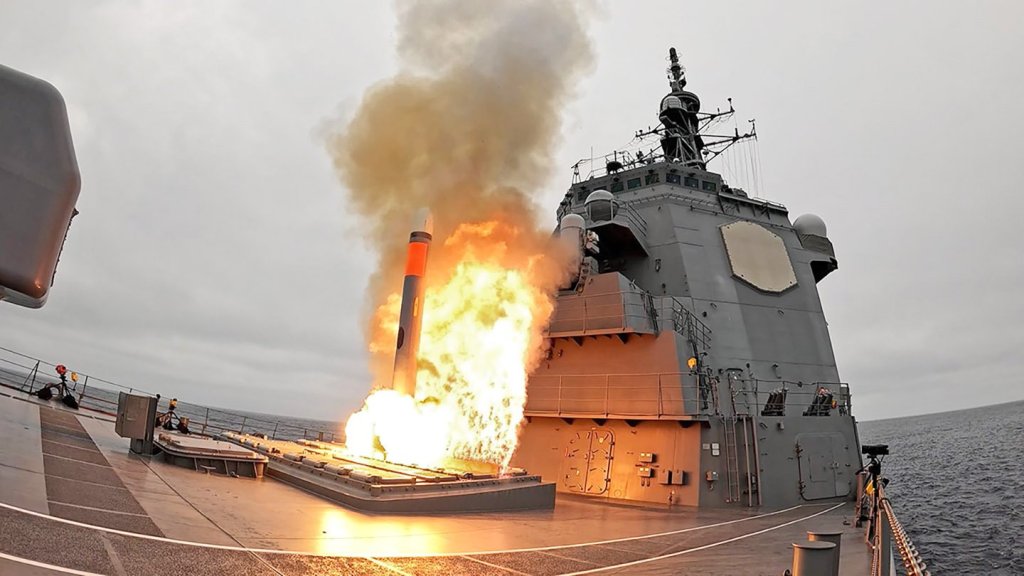
The Kongo class destroyer Chokai fires a Tomahawk cruise missile during a test earlier this year. This was the first-ever launch of a Tomahawk from a Japanese warship. Japanese Ministry of Defense

It is worth noting that with current plans to acquire only two ASEVs, these will be high-value but also low-density assets, which will have to be very deliberately deployed for maximum effect. They will also stand out as top-priority targets in any future conflict, and will need to be protected as such.

It is possible that the roles and missions of the ASEVs, just like their designs, could evolve further as time goes on. The threat ecosystem facing Japan will continue to evolve, likely more rapidly, in the coming years. The country is also expanding its naval capabilities in other ways, and with an eye toward more blue water operations. This includes expanded light carrier capabilities through refits of existing Izumo class ships. Anti-ship ballistic missiles and hypersonic cruise missiles, among large volumes of more traditional threats, could see the ASEVs used as escorts, even if experimentally. While just two hulls are barely enough to keep one on patrol to protect Japan, more could be built for expeditionary applications.

Regardless, the ASEVs are set to be a major addition to the Japan Maritime Self Defense Force’s fleets that will have big ramifications. From the progress that is visible at the shipyard in Nagasaki, MHI looks to be well on track to deliver the first of these ships next year or two.

Special thanks to @kensakai9310 on X, who also goes by “Sakai,” for sharing recently taken pictures of the first ASEV under construction at MHI’s yard in Nagasaki with us.

Contact the author: joe@twz.com

The post Japan’s First Dedicated Missile Defense Warship Is A Monster appeared first on TWZ.
  •  

USAF Stands Up Unit To Fly HH-60W Helicopters In Doomsday Evacuation Role In Nation’s Capital

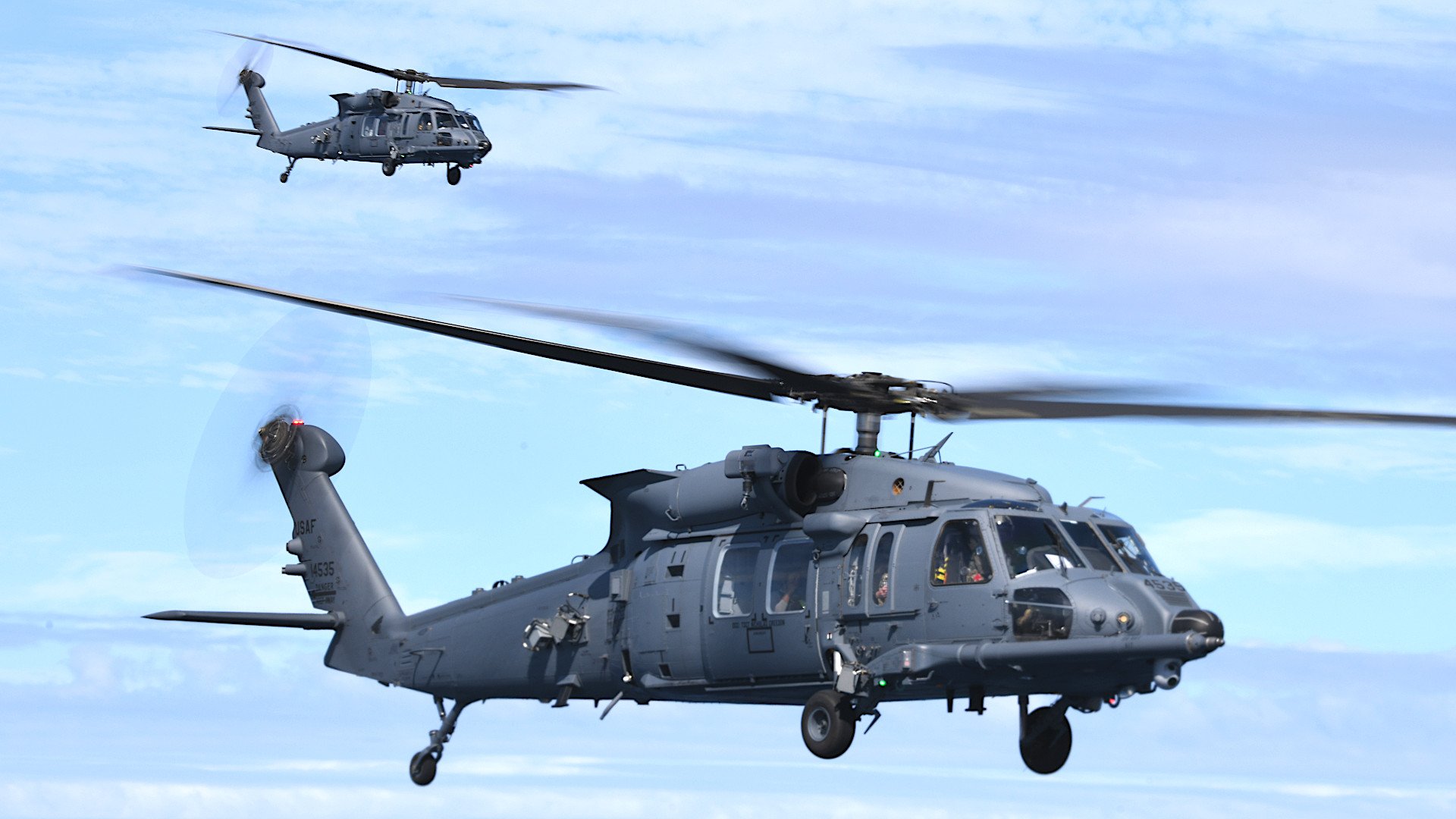
The U.S. Air Force has stood up a new squadron at Andrews Air Force Base to manage the arrival of HH-60W Jolly Green II helicopters to replace aging UH-1N Twin Hueys. Originally designed for combat search and rescue (CSAR) missions, the HH-60Ws assigned to the 5th Helicopter Squadron will be in a specialized configuration to take on the tasks of ferrying VIPs around the nation’s capital and supporting continuity of government plans. Questions have been raised about using Jolly Green IIs in these roles, and how this may impact the ability of the overall fleet of these helicopters to meet CSAR demands.

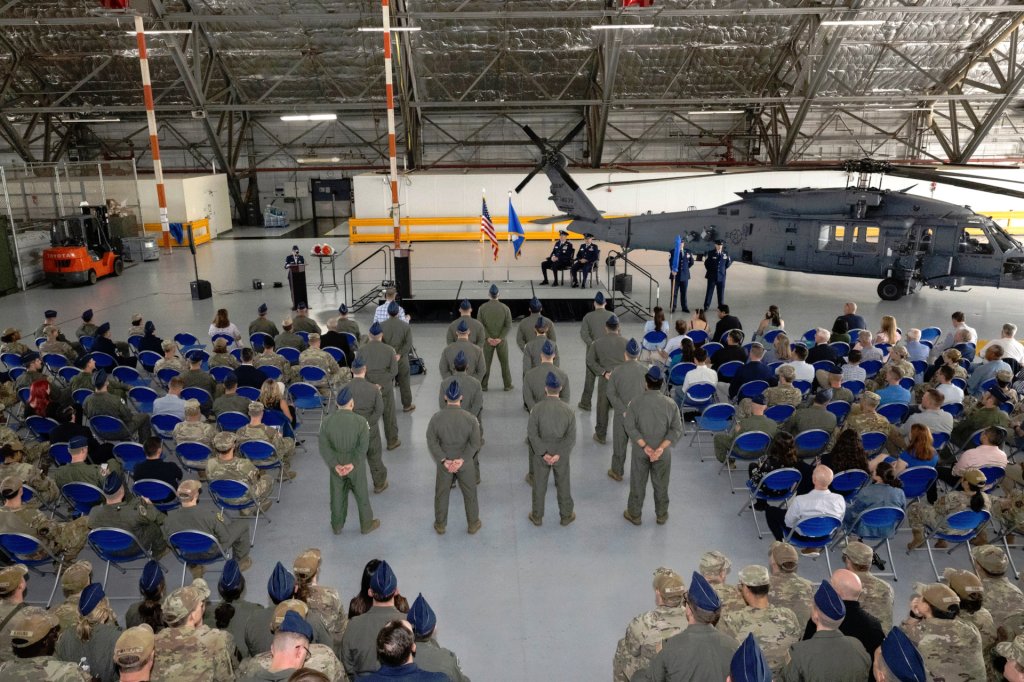
The Air Force held a ceremony at Andrews yesterday to mark the formal activation of the 5th Helicopter Squadron, also sometimes abbreviated as 5 HS. The 1st Helicopter Squadron (1 HS), with its UH-1Ns, will continue to operate throughout the transition to the HH-60W, which is expected to be completed in 2030, to avoid any gaps in capacity to meet critical operational requirements. A total of 26 Jolly Green IIs are set to be based at the facility, which is situated just outside Washington, D.C., a one-for-one replacement for the Twin Hueys that are there now. The arrival of the new helicopters will also lead to a small increase in total personnel, 60 in total, at Andrews.

A view from yesterday’s ceremony marking the activation of the 5th Helicopter Squadron at Andrews. An HH-60W Jolly Green II is seen at top right. USAF

The Air Force originally planned to supplant all of its UH-1Ns worldwide with new MH-139 Grey Wolf helicopters, which is a more direct replacement in terms of size and capability. The service is still acquiring MH-139s to supplant UH-1Ns elsewhere, including ones assigned to Air Force Global Strike Command (AFGSC) units that help provide security around Minuteman III intercontinental ballistic missile (ICBM) silos. We will come back to this later on.

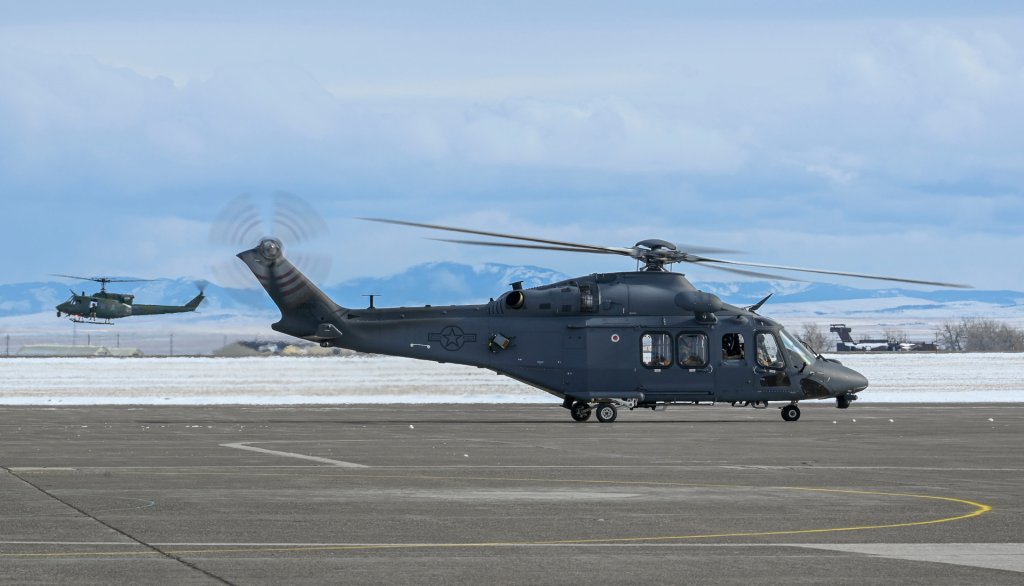
The first Air Force Global Strike Command (AFGSC) MH-139A at Malmstrom Air Force Base in Montana, with a UH-1N seen flying in the background. USAF The first AFGSC MH-139A at Malmstrom Air Force Base in Montana, with a UH-1N seen flying in the background. USAF

“The HH-60W’s increased speed, range and carrying capacity will better deliver safe operations for U.S. senior leaders, service members, and the communities around the region,” the Air Force said in a press release regarding the 5th Helicopter Squadron’s activation.

The Jolly Green II also has in-flight refueling capability, something that is not found on the UH-1N or MH-139, and could be very valuable for missions around Washington, D.C. The HH-60Ws heading to Andrews are set to receive additional modifications, including to the main cabin seating arrangement, communications suite, and defensive capabilities, as you can read more about here.

Graphics depicting how the HH-60W’s cabin can be configured now for CSAR missions. Lockheed Martin

“In the next few years, the 5 HS will train aircrew and maintainers, establish operational and maintenance processes, and receive new aircraft as it prepares to execute the national security mission within the National Capital Region,” the release yesterday added.

National Capital Region (NCR) refers to a larger area that surrounds Washington, D.C., proper. Air Force operations in and around the NCR are primarily managed through a unit called the Air Force District of Washington (AFDW).

The HH-60Ws will be taking over an AFDW mission set from the UH-1Ns that currently includes daily airlift sorties transporting U.S. and foreign VIPs around the nation’s capital. The helicopters will also be in position to swing into action as part of continuity of government plans. In such a scenario, the Jolly Green IIs would be tasked to help rush senior officials and lawmakers to safety to ensure the continued functioning of federal authorities following an attack or a similarly serious contingency. 1st Helicopter Squadron’s role in responding to the terrorist attack on the Pentagon on 9/11 was highlighted during the activation ceremony at Andrews yesterday.

A stock picture of 1st Helicopter Squadron UH-1Ns. USAF

The NCR presents particular challenges for crisis response missions and routine day-to-day flight operations. The airspace around Washington, D.C., is most densely defended and heavily monitored anywhere in the United States, and packed full of military and civilian air traffic every day. Where and when military helicopters can operate over the nation’s capital has been a hot topic of debate since a fatal mid-air collision involving an Army UH-60 Black Hawk and a PSA Airlines Bombardier CRJ700 regional jet in January 2025. The Black Hawk was conducting a continuity of government training flight at the time. This has been more recently highlighted by an incident involving a Marine One helicopter carrying President Donald Trump earlier this month. A subsequent Federal Aviation Administration (FAA) investigation has highlighted communication issues and factors tied to the construction of a new helipad at the White House.

It is also worth noting here that Marine Helicopter Squadron One (HMX-1), the primary unit responsible for the Marine One presidential helicopter mission, would play a role in any continuity of government scenario in the NCR. Helicopters from the U.S. Park Police, as well as ones belonging to other law enforcement and civilian agencies, would be utilized, too.

As mentioned, there are significant questions about the impacts of basing HH-60Ws at Andrews will have on the rest of the Air Force’s Jolly Green II fleet. This is something TWZ highlighted when the Air Force confirmed it was moving ahead with the AFDW HH-60W plan with the release of its 2027 Fiscal Year budget request earlier this year.

A particular issue is the Air Force’s decision years ago to scale back total purchases of HH-60Ws, from 113 helicopters down to 91. If the service does not order more Jolly Green IIs in the coming years, this will mean that roughly a third of the entire fleet will be assigned to the AFDW mission.

The Air Force previously confirmed the plan will involve taking HH-60Ws out of “back up inventory.” In the past, the service has defended this decision as being “more cost effective” than a move to “procure additional MH-139A aircraft” to meet AFDW requirements. Whether or not there were other specific operational considerations that factored into the decision to use Jolly Green IIs to meet these needs instead is unknown. The acquisition plan for the Grey Wolf has also been significantly truncated, with the Air Force now planning to buy just 56 of these helicopters instead of 80.

“The MH-139A Grey Wolf was competitively selected to replace the UH-1N for intercontinental ballistic missile security and National Capital Region missions, including continuity of government and transport of United States government officials and security forces,” members of the House Armed Services Committee wrote in a report accompanying a draft of the annual policy bill, or National Defense Authorization Act (NDAA), for the 2027 Fiscal Year, back in May. “The committee remains concerned regarding the justification for transitioning these missions to an alternate rotary-wing platform and seeks additional details on cost and operational implications.”

At that time, the House Armed Services Committee explicitly directed “the Secretary of the Air Force to submit a report to the congressional defense committees not later than December 1, 2026, assessing operational, cost, infrastructure, and readiness impacts of assigning any non-MH-139A rotary-wing aircraft to continuity of government and transport of United States government officials and security forces in the National Capital Region.” The lawmakers stressed that the report had to include “a comparison of procurement cost, cost per flight hour, infrastructure and aircraft modification requirements, and training and manpower impacts” and an assessment of the cost, schedule, and operational disruption associated with required upgrades to Joint Base Andrews facilities for each aircraft type.”

Separate questions have been raised in recent years about the utility of traditional CSAR helicopters in future operations, especially in the context of a high-end fight, such as one between the United States and China in the Pacific. Air Force officials openly talked about exploring alternatives for rescuing aircrew downed deep inside contested environments, but details about those plans remained limited.

At the same time, demand for traditional CSAR capabilities has certainly not gone away entirely. This was underscored by the operation to retrieve the crew of an F-15E Strike Eagle that went down inside Iran in April. HH-60Ws were part of the larger force package sent into Iranian airspace to help recover those aviators.

Wild footage from a USAF C-130 fueling two helicopters over Iran shared by telegram channels. The cars & the dialect are Iranian and from southwest. pic.twitter.com/K9cufOOY26

— Ramin Khanizadeh (@RKhanizadeh) April 3, 2026

Footage of Iranian police firing small arms at a pair of USAF HH-60Ws searching for the downed F-15E crew earlier today. pic.twitter.com/9SwhyhY1Aw

— OSINTtechnical (@Osinttechnical) April 3, 2026

In the meantime, the Air Force’s UH-1Ns, a type the service first began operating in the early 1970s. are only getting older and harder to sustain, too. Three of the UH-1Ns currently assigned to 1st Helicopter Squadron saw combat during the Vietnam War. Just last week, one of the unit’s Twin Hueys made a precautionary landing in an open field in Maryland “after experiencing unusual mechanical noise” while on a training flight. This is hardly the first time such an incident has occurred.

There is a possibility that Congress could more directly intervene in the Air Force’s move to start flying HH-60Ws around Washington, D.C. With the expectation that UH-1Ns will remain in service at Andrews for another four years, there is time for the service’s own plans to evolve further.

With the activation of 5th Helicopter Squadron, the Air Force has now taken an important step toward an all-new helicopter force in the nation’s capital.

Contact the author: joe@twz.com

The post USAF Stands Up Unit To Fly HH-60W Helicopters In Doomsday Evacuation Role In Nation’s Capital appeared first on TWZ.
  •  

NASA’s Hunt To Replace Its Iconic T-38 Talon Jets Kicks Off

NASA is starting to explore options to fill the gaps that will be left by the eventual retirement of its iconic T-38 Talons. Since the 1960s, NASA has been using the jets to support astronaut training and as chase planes. However, the Talons are aging, supportability is already a problem, and challenges to sustain them further are expected to grow as the U.S. Air Force replaces its T-38 fleet with new T-7A Red Hawks.

The Johnson Space Center (JSC) in Houston, Texas, put out a contracting notice today seeking information about potential T-38 successors. NASA currently has 25 Talons in its inventory, according to the Federal Aviation Administration’s (FAA) online database.

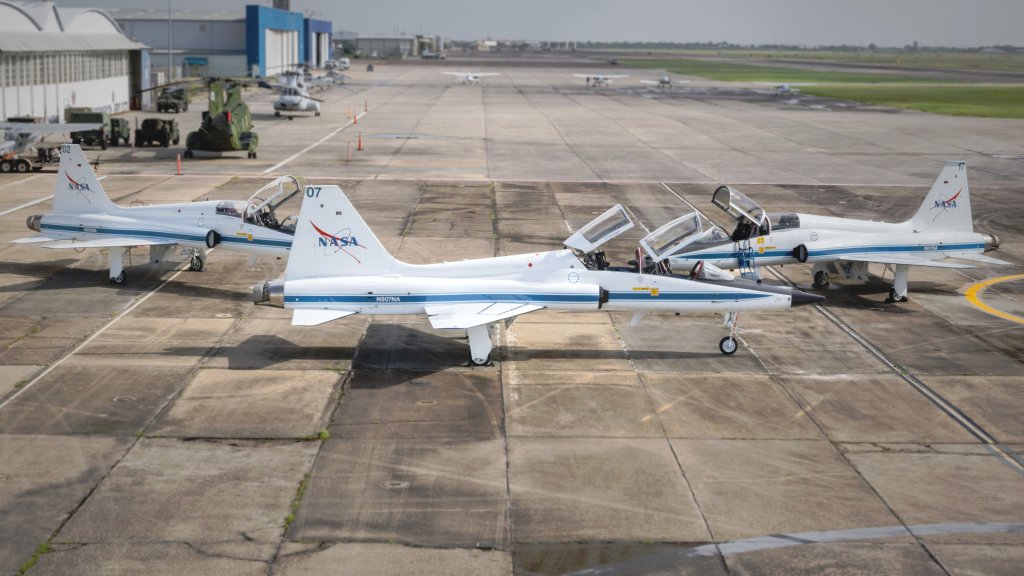
A trio of NASA T-38s at the Johnson Space Center (JSC) in Houston, Texas. NASA

“NASA JSC is conducting market research to obtain industry information regarding availability, capability, schedule, sustainment models, and cost efficacy for modern high-performance jet aircraft that could be used in evaluation and an evaluation program for supporting NASA’s astronaut SFRT [Spaceflight Readiness Training] requirements,” the notice explains. “NASA has operated the T-38N fleet in support of astronaut SFRT for several decades. With the U.S. Air Force planning to retire the T‑38 fleet in the 2030-2035 timeframe, NASA is evaluating options to transition to a more modern high-performance aircraft.”

The T-38N variant is specific to NASA and distinct from the T-38A/B/C variants the Air Force currently operates. The U.S. Naval Test Pilot School also has a handful of T-38Cs. Both the N and C variants are based on the original T-38A, which first entered Air Force service in 1961. The Air Force bailed the first Talons to NASA three years later.

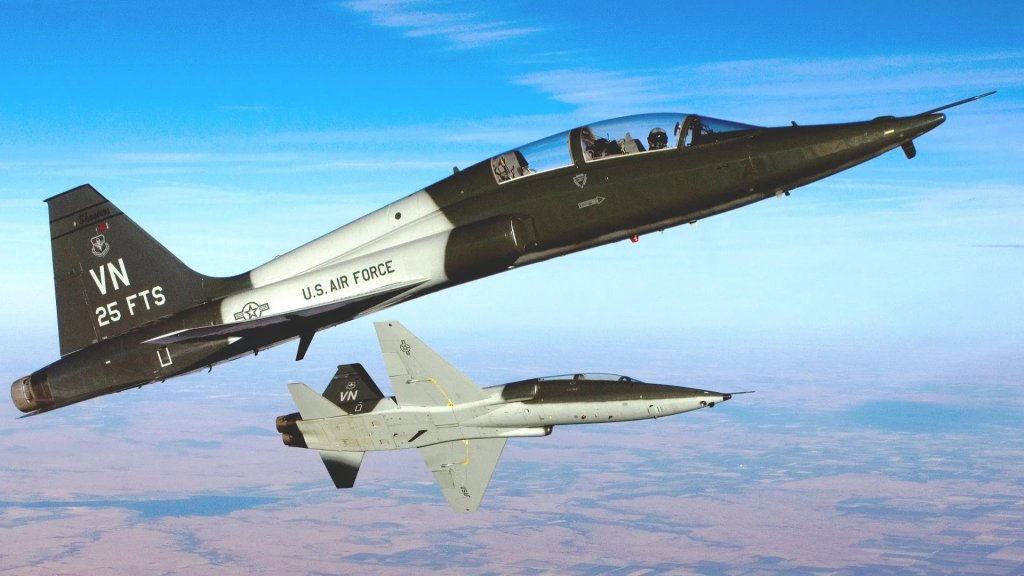
A pair of US Air Force T-38 Talon jet trainers. USAF

The N models have received various upgrades over the years, including the integration of new modern ‘glass cockpits’ with digital displays starting in the 1990s. As of 2011, compared to contemporary C variants, “the T-38N aircraft includes differences in communications and navigation, such as the addition of weather radar, a data link weather system, the terrain avoidance and warning system, the terminal collision avoidance system, GPS with localizer performance and vertical guidance approach capability, and redesigned electrical, inlet, ejector nozzle, and flight management systems,” according to a report from the National Research Council of the National Academies of Sciences, Engineering, and Medicine.

Now, “NASA is seeking information on existing, production, or near-production high-performance jet aircraft capable of supporting SFRT,” per today’s contracting notice from the JSC. “NASA is not restricting industry responses to a specific performance class or aircraft design heritage.”

The notice does provide the following list of desired characteristics:

  • “High reliability with established maintenance documentation”
  • “Self-starting engine capability”
  • “Performance comparable to a modern jet trainer/light fighter aircraft”
  • “Capability to support dynamic maneuvering, formation flying, and cross-country navigation”
  • “Dual-seat, dual-control configuration (tandem or side-by-side)”
  • “Modern avionics compatible with instrument flight operations”
  • “Aircraft capable of being single-pilot qualified from either seat is highly desired”

“Prior to any fleet transition, NASA seeks to conduct a limited-scope evaluation program using a small number of modern aircraft,” the notice adds. “This evaluation program is not a full fleet buy or replacement. It is intended to operate a small number of aircraft within JSC’s existing operational framework to assess compatibility, logistics, cost efficacy, and training impact.”

Furthermore, “NASA anticipates evaluating a small number of aircraft over a multi-year period,” it continues. “NASA requests information on potential procurement options such as lease, lease-to-own, barter, or other arrangements due to limited upfront procurement funding.”

A quartet of NASA T-38 jets flies in formation past Launch Pad 39B at NASA’s Kennedy Space Center. NASA

NASA is looking to be solely responsible for flight operations of the jets, but is expecting contractors to handle maintenance, whether the aircraft are government-owned or not.

The contracting notice does also say that “NASA is open to operating the aircraft under reasonable flight hour limits, maneuver restrictions, or operational envelopes consistent with contractor recommendations.”

Just what kind of limits and restrictions NASA might be willing to accept is unclear. The entire reason for operating the T-38s now is to offer a high-performance platform with a good degree of maneuverability to support the SRFT requirements. These are attributes that are also valuable when flying as a chase plane and otherwise supporting flight research and test activities.

NASA certainly seems to be willing to consider a wide range of potential operations, both in terms of aircraft and operating schemes. When Boeing won the Air Force’s T-X competition to replace the T-38 with what became the T-7A, TWZ noted the possibility that other Talon operators, including NASA, could follow suit.

One of the US Air Force’s New T-7A Red Hawks. USAF The first pre-production T-7A lands at Edwards Air Force Base. USAF

There are a wide variety of other jet trainers available on the open market. This includes Korea Aerospace Industries’ (KAI) T-50, a design capable of supersonic flight that has been offered on the U.S. market before through a partnership with Lockheed Martin. A version of the T-50 was one of the losing entrants in the Air Force’s T-X competition.

There are several private companies that operate relevant jet trainer types to provide flight training and ‘red air’ aggressor services, too. NASA’s current administrator, Jared Isaacman, founded one of those companies, Draken International, making him once the owner of the world’s largest private air force. He has also personally bought various demilitarized fighters and jet trainers over the years. During this year’s July 4th celebrations in Washington, D.C., he somewhat controversially flew over the nation’s capital in one of the F-5 Tiger II jets that he owns.

With expectations that funding for new jet trainers will be limited, at least initially, NASA could well seek to enter into some kind of new arrangement with the Air Force (or another branch of the U.S. military) just like it did in the 1960s. It’s also worth noting here that the T-7A program continues to suffer significant delays due to technical issues and other factors. This has led the Air Force to repeatedly push back its own T-38 replacement timeline. The service’s original goal was to reach initial operational capability with the Red Hawk in October of last year, but it is now targeting August 2027 to achieve that milestone. A full-rate production decision is now not expected to come until January 2029. So, the prospect of NASA actually getting T-7s anytime before the USAF gets all the jets it badly needs is questionable.

There are also no indications that NASA’s SFRT requirements will slow in the meantime, either. If anything, these training demands could grow as work continues toward the resumption of crewed missions to the Moon under the Artemis program. The Artemis IV mission, currently scheduled for 2028, is set to be the first time astronauts have set foot on the lunar surface since Apollo 17 in 1972.

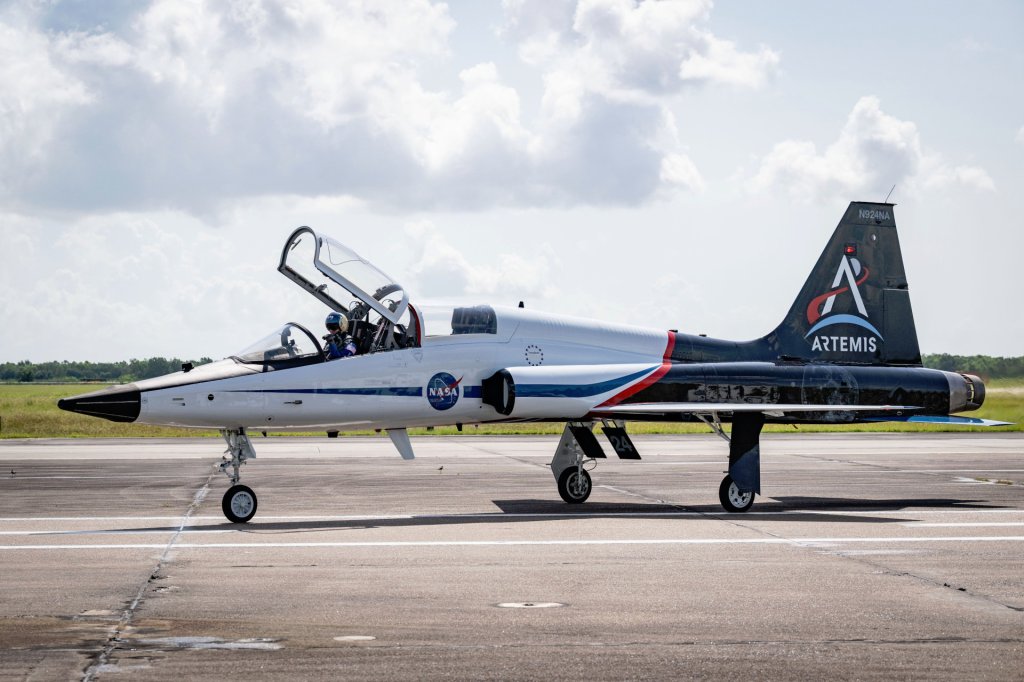
A NASA T-38 wearing a special Artemis program paint scheme. NASA

From the wording of today’s contracting notice from JSC, NASA is still some years away from making a final decision on what will come after the T-38N, but the hunt is now on.

Contact the author: joe@twz.com

The post NASA’s Hunt To Replace Its Iconic T-38 Talon Jets Kicks Off appeared first on TWZ.
  •  

Army Widens Stinger Surface-To-Air Missile Replacement Search

The U.S. Army is calling for new potential options for replacing the venerable Stinger short-range heat-seeking surface-to-air missile. The service has already been funding work on two competing designs from Lockheed Martin and Raytheon under its Next-Generation Short-Range Interceptor (NGSRI) program since 2023. The Army is currently aiming to buy 11,000 NGSRI missiles, as well as 2,200 new man-portable launchers, starting in Fiscal Year 2028.

The Army put out a contracting notice regarding what it is calling the NGSRI Alternate Interceptor Demonstration (AID) yesterday. The service is looking to hold an industry day event regarding its plans for the AID at Redstone Arsenal in Alabama next month.

“The Army is seeking to identify additional potential sources to fulfill the NGSRI requirements,” the notice explains. “The Army plans to conduct a demonstration in the Spring 2027 timeframe. A successful demonstration by an offeror may lead to an award for missile procurement.”

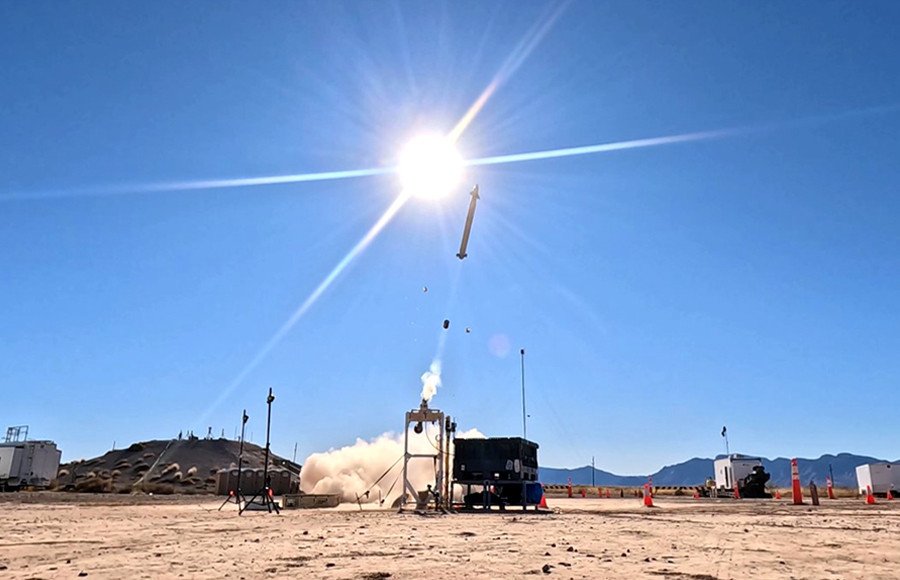
A picture showing a test of Lockheed Martin’s NGSRI entrant, called QuadStar. Lockheed Martin
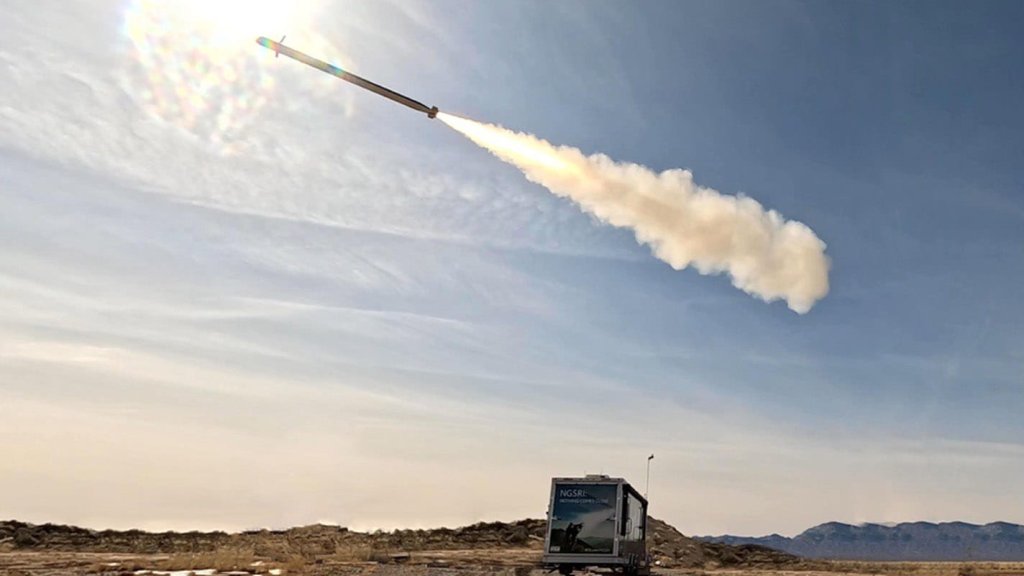
Raytheon has previously released this image in relation to work on its NGSRI design. Raytheon

“The current NGSRI program was initiated to meet the Department of the Army requirement for Maneuver Short Range Air Defense (M-SHORAD) surface to air missile systems to replace the legacy FIM-92 Stinger man-portable air defense system,” the notice adds. “The NGSRI is a high performance, soldier portable, fire and forget, surface to air missile system capable of defeating rotary wing, fixed wing, and Group 2/3 Unmanned Aircraft System threats.”

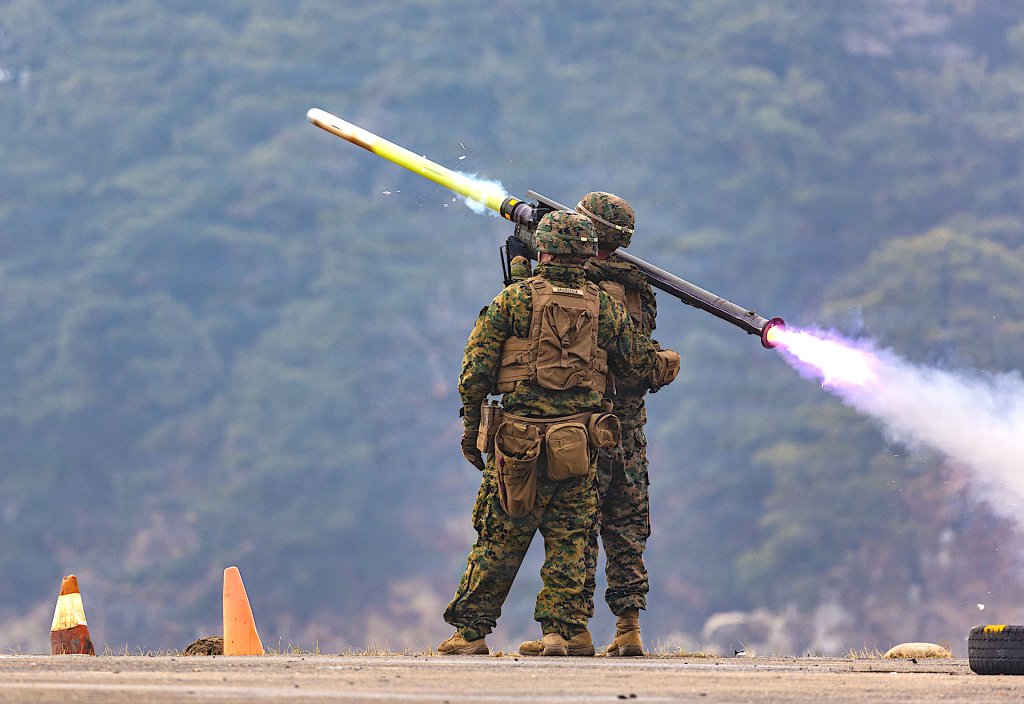
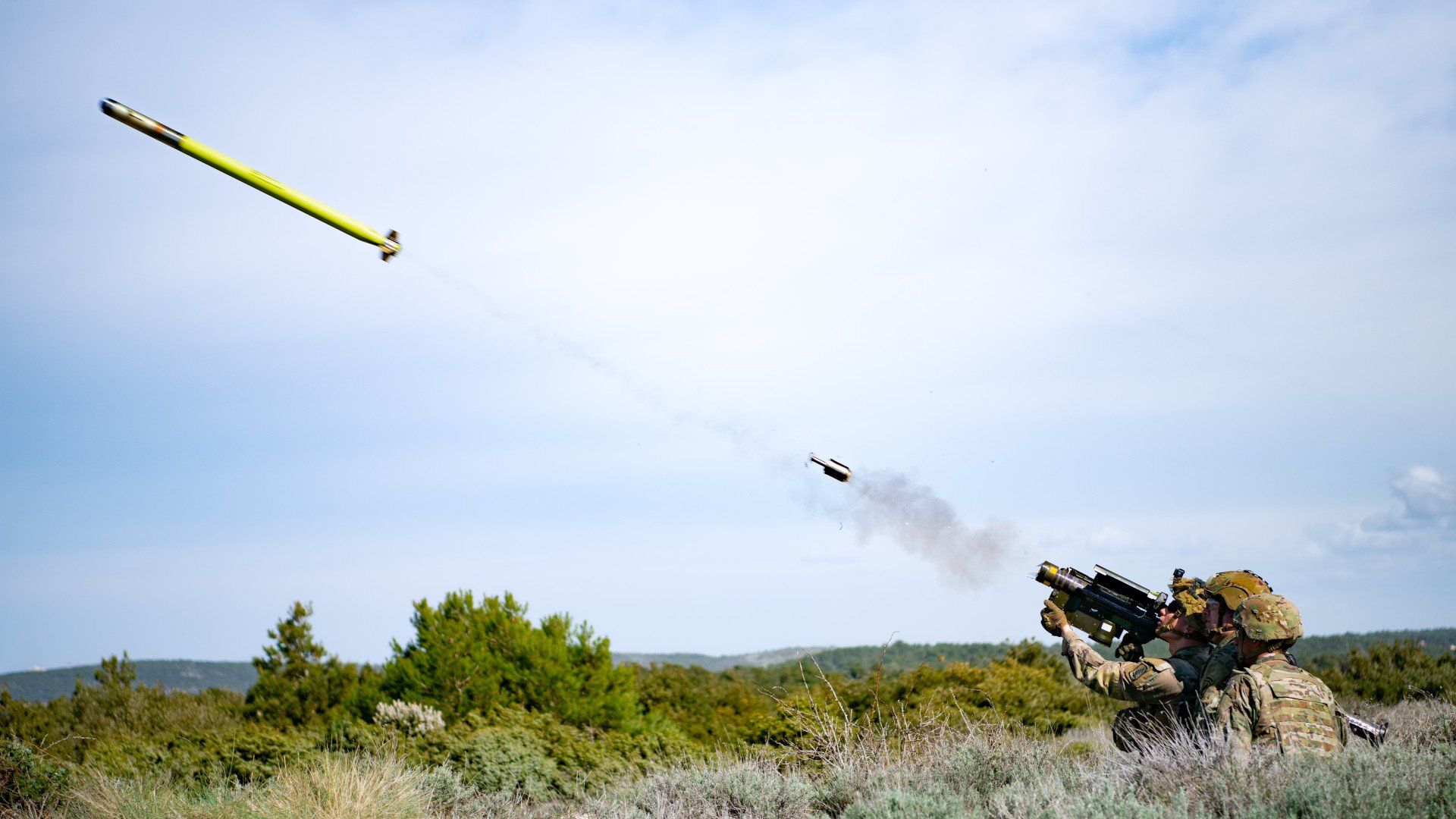
US Marines fire a Stinger missile during training. The NGSRI program is seeking a replacement for Stingers in Army and Marine Corps service. US Army

In U.S. military parlance, Group 2 covers drones with gross weights between 21 and 55 pounds, that can fly up to altitudes of 3,500 feet, and hit top speeds of up to 250 knots. Group 3, the next tier up, is a far broader category that encompasses uncrewed aerial systems weighing anywhere between 55 and 1,320 pounds, with operational ceilings between 3,500 and 18,000 feet, and with top speeds between 100 and 250 knots.

The Iranian-designed Shahed-136 one-way-attack drone is, by far, the best-known example of a Group 3 design, and one that encapsulates the importance of addressing threats in that particular category. Development of kamikaze drones in the Group 2 tier has also been surging globally, including in the United States. Both categories do also include drones configured for surveillance and reconnaissance and other missions.

It is also worth noting here that the Stinger has received upgrades in recent years to improve its effectiveness against drones. You can read more about that missile’s evolution since it was first introduced in the 1970s here.

“The NGSRI missile is backwards compatible with the legacy Stinger missile platforms such as SGT STOUT and Marine Corps Marine Air Defense Integrated System (MADIS),” yesterday’s contracting notice also stresses. This has been a key requirement since the program started.

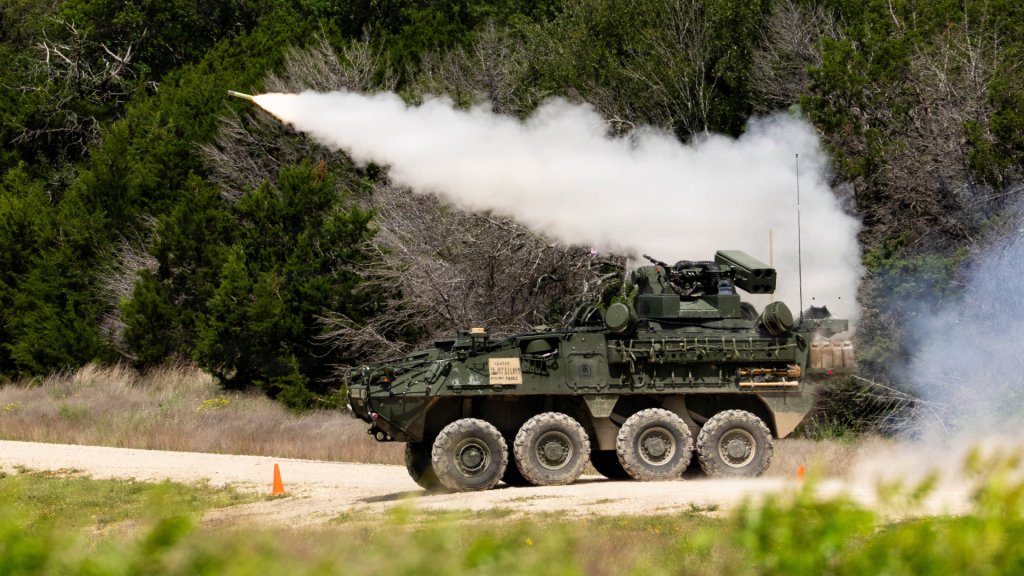
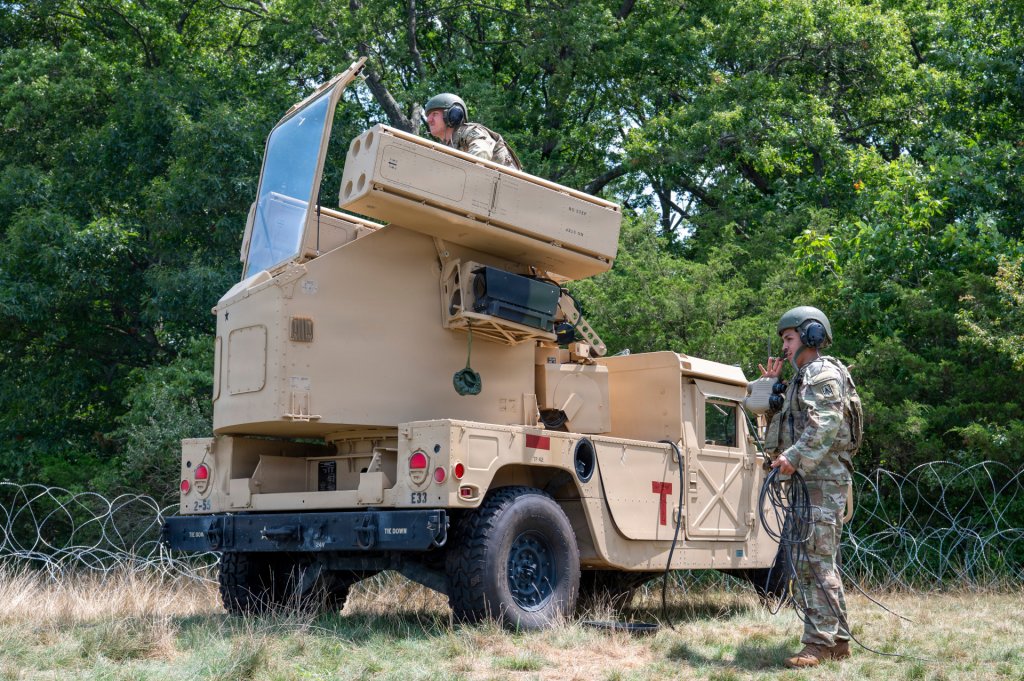
Sgt. Stout is the name given to an air defense system in Army service today that is based on the 8×8 Stryker light armored vehicle. The Sgt. Stout has a turret that can be fitted with up to two four-round launchers for Stingers. Those launchers can also be swapped out for ones that can be loaded with a pair of millimeter-wave radar-guided AGM-114L Hellfire missiles. The turret also has a 30mm XM914 automatic cannon, which can fire proximity-fuzed airbursting rounds against drones and other aerial threats, and a 7.62x51mm M240B machine gun.

A Sgt. Stout air defense vehicle fires a Stinger missile during training. US Army

The four-round Stinger launchers used on the Sgt. Stout are the same ones found on the older Humvee-based Avenger air defense systems, which are in increasingly limited use in the U.S. Army and Marine Corps. Army Avengers were recently in the news after images emerged showing them protecting President Donald Trump at his golf course in Bedminster, New Jersey.

An Army Avenger system seen deployed in Bedminster, New Jersey earlier this month. USAF Lt. Col. Andrew Scott

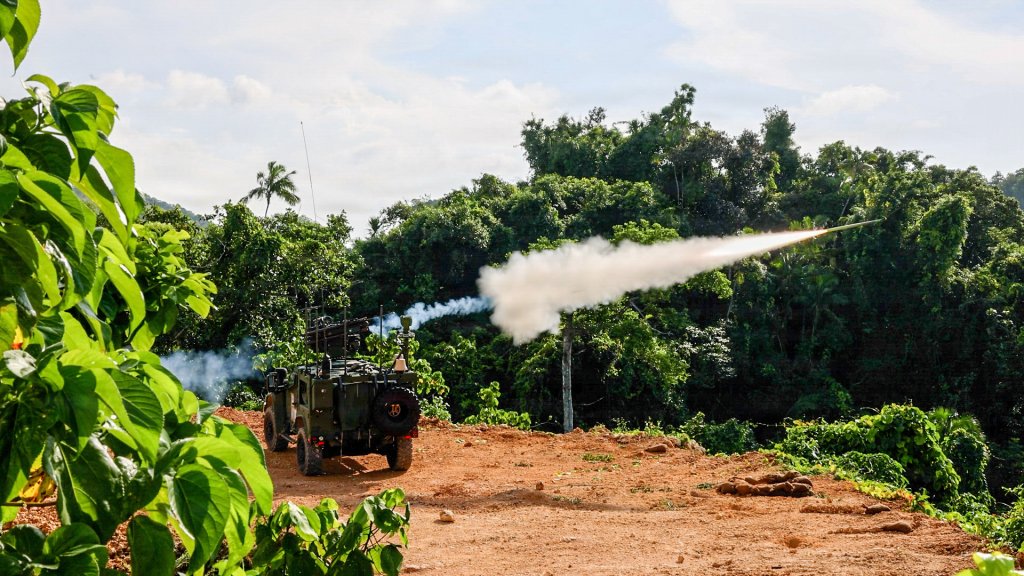
In its current form, the Marine Corps’ MADIS consists of two 4×4 Joint Light Tactical Vehicles (JLTV) in different configurations. One is armed with Stinger missiles, as well as an XM914 cannon and M240 machine gun, all mounted on a single remote weapon station. The other has the same type of remote weapon station, but without Stingers, and also has added electronic warfare, electronic support measures, and sensor capabilities.

A Marine MADIS vehicle fires a Stinger missile during training. USMC

Stinger is still perhaps best known in its shoulder-fired form, also known as the Man-Portable Air Defense System (MANPADS) configuration, as seen in pictures earlier in this piece. The Army has already been pursuing new individual launchers, or Control Launch Assemblies (CLA), for use with existing Stingers, which could also be used with future NGSRI missiles. Lockheed Martin has publicly put forward a new CLA design as part of its NGSRI proposal, which is called QuadStar, as seen in the video below.

Whether or not the newly announced AID plans reflect any major issues with the existing NGSRI competition is unknown. Lockheed Martin and Raytheon have announced the successful passage of major milestones in work on their respective designs at separate points this year. Raytheon is also the current prime contractor for the Stinger.

Stinger is also in widespread service globally. Any replacement the U.S. military might adopt, especially one that is backwards compatible with existing launchers, could easily translate to interest from foreign armed forces. The ongoing war in Ukraine and other conflicts in recent years have contributed to a new surge in demand for MANPADS worldwide, including to help counter growing drone threats.

The U.S. military has been putting new emphasis on diversifying supplier bases and greater government control of intellectual property rights, especially for munitions, in recent years. This is a general focus area that has grown even more since President Trump’s second term began last year. Officials have been open about their desire to reduce reliance on traditional prime contractors and bring in more smaller and non-traditional firms, even for very high-profile weapon system programs. These efforts reflect a particular push to avoid so-called ‘vendor lock’ and promote greater competition, which can also offer benefits when it comes to cost and scaling production.

When it comes to NGSRI, as mentioned, the Army is looking to buy thousands of these missiles, as well as individual launchers, in the coming years. A new demonstration next year would also not preclude the service from ultimately ordering NGSRIs from either Lockheed Martin or Raytheon.

With plans to start production of the selected NGSRI design in Fiscal Year 2028, which starts on October 1 of next year, the Army will need to make a decision about how to proceed with NGSRI relatively soon.

Contact the author: joe@twz.com

The post Army Widens Stinger Surface-To-Air Missile Replacement Search appeared first on TWZ.
  •  
❌