Heat, drought and water scarcity could fundamentally change agriculture in parts of Europe, with some crops no longer viable in the driest areas of the Mediterranean, European Environment Agency (EEA) Executive Director Leena Ylä-Mononen said.
“Some crops will not grow anymore, especially in the most arid Mediterranean, southern European area,” Ylä-Mononen said in an interview with correspondents of the European Newsroom (enr) published Tuesday. More intensive irrigation would not necessarily provide a solution because of water possible water scarcity. Some land currently used for farming might therefore no longer be suitable for agriculture in some regions in Europe, she said.
This summer gave the “clearest possible illustration” of what Europe is facing, she told the enr. “Severe droughts have disrupted agriculture, our transport, and even energy infrastructure. And we have seen intense heatwaves across many parts of Europe that have had huge impacts on the infrastructure, health and well-being of people.” Harvests were coming in late and smaller, “so we may have even food security issues this winter,” Ylä-Mononen warned.
The effects are spreading beyond Europe’s traditional dry zones, according to Ylä-Mononen. She pointed to drought in Ukraine and Hungary, as well as unusually dry conditions in the United Kingdom and her home country, Finland. Although northern Europe could become suitable for some additional crops, it was unlikely to compensate for recurring losses caused by drought, floods and extreme weather elsewhere, she added.
Ylä-Mononen urged European politicians to look beyond the next election and plan for the climate risks already foreseeable over the next decade. “This kind of short-termism is not going to help us,” she said, arguing that infrastructure and agricultural investment decisions needed to take account of ten-, 20- and 50-year time horizons.
The warning comes as the EU’s Joint Research Centre reports drought conditions across half of the EU and the United Kingdom, with low river flows and deteriorating conditions for some crops in several parts of Europe.
In an assessment released in March – ahead of this year’s summer heatwaves – the EEA said “at present, drought (54%), heavy rain (21%), frost (16%), and hail (9%) together account for 80% of agricultural losses in the EU.”
Ylä-Mononen said Europe could no longer treat climate adaptation as an optional policy to be addressed when budgets allow. Heat and drought are already affecting agriculture, water resources, transport and energy systems, and some damage could have been avoided through earlier investment, she said.
The EEA chief stressed that adaptation must complement, not replace, mitigation: Europe needs both to reduce emissions and to prepare for climate impacts that will continue even under ambitious emissions cuts. But the costs of both action and inaction are rising.
Estimates of adaptation costs in the sectors transport, energy and agriculture cited by the EEA range from 53 billion Euro to 137 billion Euro per year until 2050, depending on the scenario of temperature rise above pre-industrial levels.
The European Environment Agency (EEA) is the EU agency that provides independent environmental data, assessments and analysis to support policymaking in Europe.
The blue economy is no longer limited to traditional activities such as fishing, shipping, or offshore energy. A new generation of startups is applying climate technology, AI, robotics, biotechnology, and advanced water treatment to make the use of oceans and water resources cleaner, safer, and more efficient.
EU-Startups’ 2026 coverage shows Europe’s blue economy attracting capital across a widening range of technologies and business models. Among the larger disclosed rounds were €17 million for cargo.onealongside its acquisition of ocean-freight platform Cargofive or €10 million for marine-biofuel developer Kvasir Technologies.
These deals form part of a broader funding landscape in which startups are tackling an increasingly diverse set of challenges linked to how Europe uses, manages and protects its water and marine resources.
From restoring coastal ecosystems and generating tidal power to removing hazardous pollutants, improving wastewater treatment, supporting aquaculture, automating maritime operations, and digitalising shipping workflows. The 10 startups featured below, founded between 2020 and 2026, show how innovation is reshaping the sector, in alphabetical order.
Apolowniais a Paris-based ClimateTech startup committed to making the world more environmentally responsible. It develops end-to-end coastal ecosystem restoration and blue carbon projects, including mangroves and seagrass, which help absorb carbon, reduce coastal flooding and erosion, improve water quality, and provide vital habitats for fish and other marine life.
Its projects use satellite imagery, drones, field data and AI to monitor ecosystem recovery, estimate carbon capture and verify environmental results in a clear, data-driven way. Founded in 2024, it has raised €1 million in funding.
Headquartered in Heidelberg, Blue Activity develops sustainable water treatment solutions for industrial cooling systems. Its technology replaces toxic biocides with natural microorganisms and uses biopolymer-based additives, supported by digital monitoring. This reduces chemical use, water and energy consumption, maintenance needs, and operating costs.
They promote cleaner industrial water use and reduce harmful substances discharged into the environment, contributing to healthier water resources and more sustainable industry. Founded in 2021, Blue Activity secured €8.5 million in funding.
Launched in 2024 in Oxford, Caudal Energy takes a bio-inspired approach to tidal power, using ocean currents to generate predictable renewable electricity. Its system replaces conventional rotating turbines with moving fins inspired by marine animals, offering a lower-impact solution with simpler installation and maintenance.
This activity matters because tidal energy provides a more predictable source of renewable power than solar and wind, which are more dependent on weather conditions. By harnessing ocean currents, Caudal Energy can support the transition away from fossil fuels while making sustainable use of marine resources. Its innovative approach has enabled them to raise €6.43 million in total funding.
Heidelberg-basedEnzofocuses on preventing water damage before it becomes costly. Its one-drop sensor attaches to a building’s main water pipe. The startup uses AI to identify unusual water-use patterns and small leaks in real time, allowing homeowners, property managers, and insurers to act before major damage occurs.
Its activity is especially useful as early leak detection can prevent water waste, expensive repairs, and unnecessary use of materials and energy, contributing to more sustainable water management. Launched in 2021, Enzo raised €6.3 million in funding.
Lir Labsdevelops an AI-powered microscopy for wastewater treatment, turning microscopic activity in water into real-time operational insights. Its automated sensors use deep-learning models to identify changes in microorganisms and particles, allowing treatment plants to detect problems earlier and adjust processes before they become costly or disruptive.
Their approach to better wastewater monitoring can reduce pollution, unnecessary energy and chemical use, and the risk of poorly treated water reaching natural ecosystems. Founded in 2025 in London, Lir Labs raised €245k in funding.
Mirai Robotics is a Maritime Technology startup building AI-powered systems that allow boats and other maritime vehicles to operate with little or no human control. Its technology can guide vessels, process data from onboard sensors, and make real-time decisions during activities such as sea patrols, inspections, monitoring, and transport.
Its activity is relevant to the blue economy because it can make maritime operations safer, faster, and more efficient, particularly in remote or hazardous areas where deploying human crews can be costly or risky. Launched in 2025 in Bari, this innovative approach to maritime automation and safety has helped Mirai Robotics secure €3.6 million in funding.
Founded in 2023 in Ireland, Nernst Electricdevelops on-site oxygen generation for aquaculture. Its technology uses ceramic membranes to separate high-purity oxygen directly from the surrounding air, allowing fish farms to produce oxygen where it is needed instead of relying on costly deliveries. A reliable oxygen supply is essential for maintaining healthy fish and productive farming conditions, particularly at remote sites.
Its efficient way of producing oxygen can make aquaculture more reliable, cost-effective, and sustainable while reducing energy use and dependence on transported liquid oxygen. Nernst Electric has a total funding of €1.7 million.
NPHarvesthas developed a new hardware solution for the collection and recycling of nutrients from wastewater, turning them into valuable ingredients for fertilisers. Installed at wastewater, biogas, and agricultural facilities, its system captures nitrogen and phosphorus that would otherwise be lost as waste and converts them into reusable resources. The technology can recover up to 90% of these nutrients while operating with relatively low energy use.
As excesses of nitrogen and phosphorus can pollute waterways and contribute to eutrophication, managing levels in the water is important. By recovering these nutrients before they reach the environment, NPHarvest supports cleaner aquatic ecosystems while creating a circular source of fertiliser. Founded in 2023 in Espoo, they raised €3.4 million in total funding.
Zürich-based Oxyletackles some of the hardest-to-remove pollutants in water, particularly PFAS, also known as “forever chemicals”. Rather than simply filtering these substances out, the company’s treatment systems break them down at the molecular level, preventing them from being transferred into another waste stream. The technology is designed for contaminated groundwater and industrial wastewater across sectors such as chemicals, pharmaceuticals, semiconductors, and waste management.
Removing hazardous chemicals from wastewater helps prevent them from reaching rivers, groundwater, and marine ecosystems, supporting cleaner and safer water resources. Founded in 2020, Oxyle has raised €19 million in funding.
Founded in 2021 in Berlin, Tillais a MaritimeTech startup bringing greater efficiency to crew changes in the shipping industry. Its digital platform brings voyage schedules, crew information, port services, flights, and travel requirements into one place, allowing shipping companies to plan and manage crew movements with fewer manual tasks, lower costs, and better coordination.
By digitalising a process still heavily dependent on spreadsheets, emails, and manual coordination, Tilla supports more efficient maritime operations and improves the working experience of seafarers. The company raised €4 million in total funding.
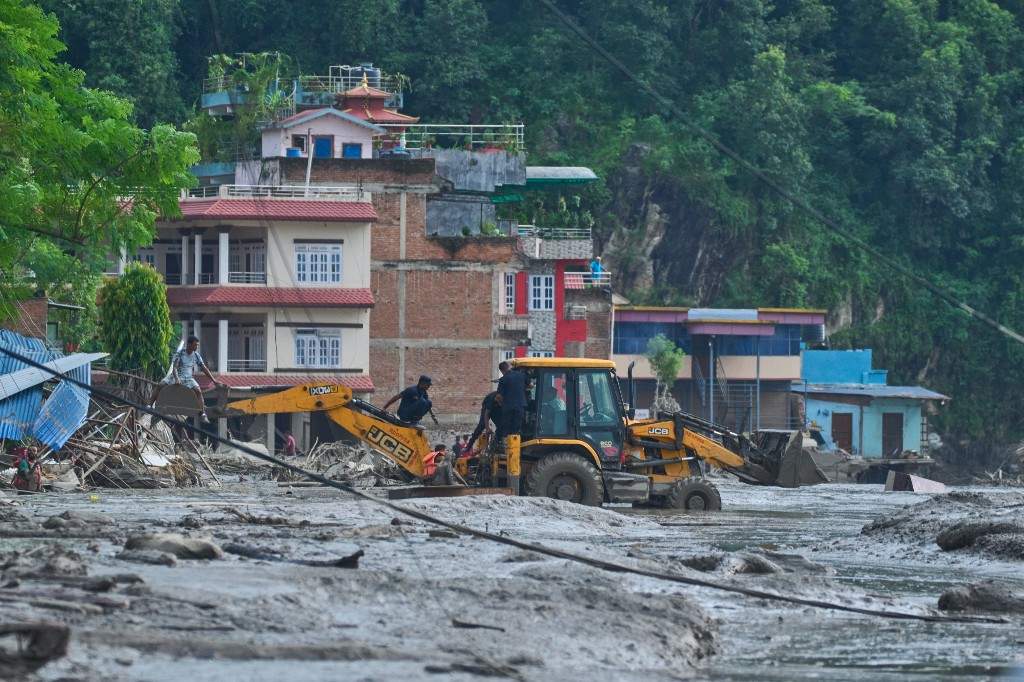
A series of flash floods has destroyed villages in parts of Nepal and Tibet, as experts say a falling glacier likely triggered a chain reaction of events that could get worse.
A series of flash floods has destroyed villages in parts of Nepal and Tibet, as experts say a falling glacier likely triggered a chain reaction of events that could get worse.
Issue 639: A study shows that seagrass meadows have the capacity to be one of the largest carbon sinks among plant ecosystems, with the Mediterranean holding the highest seagrass biomass carbon stock per hectare.
Seagrass meadows, formed by densely growing flowering plants such as Posidonia, Zostera and Thalassia in shallow waters, are key coastal ecosystems. As well as offering important habitat for marine biodiversity, seagrass plays a crucial role in mitigating climate change through carbon storage.
However, these ecosystems are under threat from coastal development, pollution, eutrophication, and climate change, with implications for global carbon stocks. At EU level, conserving and improving seagrass meadows falls under wider legislation such as the Marine Strategy Framework DirectiveandNature Restoration Regulation. The EU has also funded research and innovation projects looking at various threats facing seagrass, and published its Blue Carbon Road Map, which moves towards including ‘blue carbon’ – the carbon stored by coastal vegetation such as seagrasses, tidal marshes, mangroves and seaweeds – in carbon and nature credit schemes (e.g. via the Road Map towards Nature Credits). Additionally, the UN has called for a redoubling of effortson seascape restoration to maximise the potential of blue carbon for climate change mitigation.
Much research has focused on how seagrass promotes the accumulation of organic carbon in seabed soils, as opposed to in plant material above and below the soil. Its net primary productivity (NPP) – the amount of organic carbon the plants absorb minus their own respiration – also deserves more attention, say the researchers behind a new study looking at the importance of seagrass meadows in global carbon stocks.
To better understand the role of seagrass in carbon cycling, researchers in Spain analysed a 2023 dataset on seagrass meadow structure, biomass and NPP, drawn from a major literature review covering 1975–2020. They supplemented this with their own review of studies containing original data, including previously unidentified sources. They assigned data points to global seagrass bioregions and compared above- and below-ground biomass and NPP across different types of seagrass (genera) and in different regions.
They estimated global seagrass carbon biomass at 24-40 megatonnes (Mt) – among the highest plant organic carbon stocks on Earth – with NPP fixing 83-137 Mt of carbon annually. Both metrics varied widely by area, bioregion and country. The Mediterranean had the highest seagrass biomass carbon stock per hectare, followed by the Tropical Indo-Pacific and Atlantic, while NPP was highest in the Temperate Southern, North Pacific and North Atlantic East bioregions. With this in mind, the Mediterranean offers a significant opportunity to maximise the climate benefit of blue carbon strategies through targeted conservation and restoration measures.
They reported substantial differences between genera in carbon biomass stocks, with the highest, Posidonia, holding 50 times more carbon biomass than Halophila, the lowest. Long-lived, large, and persistent seagrass species within the genera Posidonia, Enhalus and Thalassia predominate in bioregions such as the Mediterranean and the Tropical Atlantic, contributing to higher biomass carbon stocks per hectare compared to bioregions such as the Temperate North Atlantic and Pacific, which are dominated by relatively small opportunistic (Zostera, Cymodocea) or colonising (Halophila, Ruppia) genera. However, regions dominated by more transient species still play a significant role in the carbon cycle as they have exceptionally high NPP, exceeding that of regions with larger overall biomass.
Based on the study’s estimates, Australia has the highest annual CO₂ emissions from seagrass loss, accounting for 52% of the global total – followed by Spain, Mexico, Italy and the United States. Targeted conservation efforts in these countries would therefore have the most notable impact in delivering the greatest CO₂ mitigation.
Meanwhile, although net seagrass losses in the Temperate North Atlantic East region are high, the associated emissions are relatively low due to a) the limited biomass carbon storage capacity of the dominant seagrass types in this region (Zostera), and b) their limited extent compared to other bioregions. Emissions within the Temperate North Pacific and North Atlantic West bioregions were negligible due to the absence of net seagrass meadow loss in these areas.
The results suggest that the biomass of persistent, long-lived seagrasses should be included in carbon accounting (assuming that conservation and restoration actions contribute to maintaining these carbon pools in a steady state condition, so they are not lost). The researchers note that there are challenges to scientists’ ability to ‘measure’ organic carbon stocks, with extreme variation between locations and stocks changing over time – as illustrated by the broad estimates in the research. Despite this limitation, the improved data published in this study could inform new frameworks for climate mitigation through carbon sequestration, with the work providing a 91% increase in seagrass biomass data and adding data from previously underrepresented regions.
Reference:
Gomis, E., Strydom, S., Foster, N.R., Montemayor, D., Mateo, M.A., Serrano, E., Inostroza, K., McCallum, R., Lafratta, A., Webster, C.L., O’Dea, C.M., Said, N.E., Dunham, N., Bernasconi, R., Werner, A., Vitelli, F., Puigcorbé, V., D’Cruz, A., Salinas, C., McMahon, K.M., Hyndes, G.A., Lavery, P.S., Pessarrodonoa, A., Duarte, C.M., Serrano, O., 2025. Global estimates of seagrass blue carbon stocks in biomass and net primary production. Nature Communications, 16(1), p.9530.https://www.nature.com/articles/s41467-025-64667-6
To cite this article/service:
'Science for Environment Policy': European Commission DG Environment News Alert Service, edited by the Science Communication Unit, The University of the West of England, Bristol.
Notes on content:
The contents and views included in Science for Environment Policy are based on independent, peer reviewed research and do not necessarily reflect the position of the European Commission. Please note that this article is a summary of only one study. Other studies may come to other conclusions.
The EU economy’s seasonally adjusted greenhouse gas emissions in the first quarter of 2026 were estimated at 837 million tonnes of CO2-equivalents (CO2-eq), a 0.3% increase compared with the fourth quarter of 2025 (835 million tonnes of CO2-eq). At the same time, there was no change to the EU’s gross domestic product (GDP) in the first quarter of 2026, compared with the last quarter of 2025.
The economic sector with the largest increase in greenhouse gas emissions was electricity, gas, steam and air conditioning supply (+4.8%), while households (-1.3%), manufacturing and transportation and storage (both -0.6%) recorded the biggest decreases.
Compared with the first quarter of 2025, emissions went down by 1.2%, while the EU’s GDP increased by 0.8%.
Greenhouse gas emissions decreased in 7 EU countries
In the first quarter of 2026, seasonally adjusted greenhouse gas emissions increased in 20 EU countries and decreased in 7 countries, compared with the fourth quarter of 2025.
The largest reductions in greenhouse gases were estimated for Slovenia (-5.0%), Luxembourg (-3.8%) and Romania (-2.7%).
The largest increases in greenhouse gas emissions were estimated for Estonia (+9.7%), Finland (+6.4%) and Bulgaria (+4.6%). The increases in these countries are largely due to growing emissions by economic producers in construction and electricity, gas, steam and air conditioning supply.
In the first quarter of 2026, 20 EU countries recorded increases in greenhouse gas emissions, out of which 18 also increased their GDP. 7 countries reduced their greenhouse gas emissions. Out of these, 4 countries recorded a higher or stable GDP.
The data presented here are estimates by Eurostat, except for the Netherlands, Slovenia and Spain which provided their own data.
The greenhouse gas emission figures are seasonally adjusted. These adjusted series enable quarter-on-quarter change analyses. Data provided by countries are seasonally adjusted by Eurostat. The GDP figures are seasonally and calendar adjusted. More information on the seasonal adjustment is provided in atechnical note. Eurostat’s methodology attributes international transport emissions to individual countries according to the country of residence of the emitting economic producer, following the international System of Environmental-Economic Accounting (SEEA) standard. This is in line with the European System of Accounts used for the GDP and differs from the UNFCCC and the Paris Agreement rules.
The EU and the EU countries report annually on their greenhouse gas emissions to the UN. The so-called ‘Kyoto basket’ of greenhouse gases includes carbon dioxide (CO2), methane (CH4), nitrous oxide (N2O) and fluorinated gases. They are expressed in a common unit: CO2-equivalents. EU countries are required to monitor their emissions of these gases for all source sectors based on internationally agreed obligations and rules. The EU greenhouse gas inventory managed by the European Environment Agency covers emissions from 1990 to 2 years before the current year and is submitted to the UN each spring after quality checks.
According to theEuropean Climate Law, the EU’s climate target is to achieve a -55% net reduction by 2030 and climate neutrality by 2050. The European Commission monitors and reports progress towards their GHG emission reduction targets on an annual basis using the inventory data in the Climate Action Progress Report.
NC conservation advocates call administration proposal to erase Roadless Rule the 'largest evisceration of public lands in American history.'
Roadless no more? Feds eye rule change in areas of national forests. is a story from Carolina Public Press, an award-winning independent newsroom. Our breakthrough journalism shines a light on the critical overlooked and under-reported issues facing North Carolina’s more than 11 million residents. Please consider making a contribution to support our journalism.
A wildfire that broke out in a forest area in the Pyli area of the island of Kos is ongoing, causing a large mobilization of the fire brigade and the services involved. The fire started around 7:30 in the evening on Friday, August 14, 2026, initially in low -vegetation area of Pyli located in the […]
The Civil Protection in Greece is warning again on Friday of Extreme Fire Risk – State of Alert -(Risk Category 5) for Attica and two other regions in the country as well as of Very High Fire Risk (Risk Category 4) for another eleven regions for today August 14, 2026. Reason for the Extreme circumstances […]
Greece’s Civil Protection is warning of Extrem Fire Risk – State of Alert -(Risk Category 5) or Attica and four other regions in Greece as well as of Very High Fire Risk (Risk Category 4) for another eleven regions for today, Thursday, August 13, 2026. Reason for the Extreme circumstances are gale-force north-eastern winds blowing […]
Greece’s Civil Protection warns of Very High Fire Risk (risk category 4) for Wednesday, August 12, 2026. Strong northerly winds and hot-dry weather prevail across the country also today. According to the Fire Risk Forecast Map issued by the General Secretariat of Civil Protection of the Ministry of Climate Crisis & Civil Protection a Very […]
The wildfire in eastern Attica on Monday, August 10, that broke out on Monday morning in Kouvaras, eastern Attica, is being attributed to sparks caused by contact between low-voltage cables belonging to the Hellenic Electricity Distribution Network Operator (DEDDIE/HEDNO). This are the findings of the Fire Brigade’s investigative authorities so far, state-run news agency amna.gr […]
 Login