Two tombs, two very different experiences. Walk into one and the space narrows around you, guiding your eyes along a fixed sequence of images. Walk into the other and the sound itself seems to come apart: voices blur, echoes pile up, and a blue demon painted on the wall seems to lunge straight at you. […]
Galileo Galilei is remembered for pointing a simple two-lens tube at the sky and changing astronomy forever. What he is not remembered for is a four-lens telescope built more than a decade before historians thought such instruments existed — and yet that is exactly what a manuscript unearthed in Spain’s National Library now suggests he […]
A team of paleontologists has discovered on King George Island, in the South Shetland Islands, the first fossil footprint unequivocally attributable to a terrestrial mammal in the Eocene of Antarctica. It is a specimen barely two centimeters long, preserved as a natural mold in fine-grained volcanic sediment, providing direct evidence of the presence of a […]
The world’s most sensitive dark matter observatory, the LUX-ZEPLIN (LZ) experiment, has detected a particle interaction that cannot be explained by conventional background radiation models, a finding that, although still far from being confirmed as a definitive discovery, has sparked cautious optimism in the international scientific community. The event, recorded nearly a mile underground at […]
An international study published in Nature Communications reveals that minimal changes in solar radiation were enough to relocate the dominant winds of the North Atlantic and permanently alter the pulse of glacial cycles. The work, authored by scientists from the Environnements et paléoenvironnements océaniques et continentaux (EPOC) laboratory, under Bordeaux INP, CNRS, EPHE–PSL, and the […]
An international team of researchers has published a study that questions one of the most widespread theories about the disappearance of Neanderthals. According to their findings, climate change and the resulting fragmentation of habitats did not play a decisive role in the extinction of this human species, which occurred approximately 40,000 years ago. The work, […]
In these years, when climate change dominates much of the public conversation, it is worth looking back and remembering that the planet already experienced, just over two centuries ago, a sudden and devastating climatic upheaval, although of a very different origin than today. It happened in 1816, a year that the chroniclers of the time […]
The seasonal scarcity of fruits and vegetables drives bearded capuchin monkeys to significantly increase the hunting of small vertebrates, a behavior that researchers directly link to survival strategies that the ancestors of human beings may have used during periods of climatic instability. This is the main conclusion of a study published in PLOS One by […]
Scientists are growing miniature human brains in labs around the world. (Yep, you read that right.) For Wired, Claire L. Evans reports on the latest research in the field of organoid intelligence, or OI, where scientists are artificially growing brain organoids from tiny human samples, whether skin, blood, teeth, or even hair. As these seed-sized globs mature, they are able to send and receive electrical signals, and even learn to remember and anticipate them. In other words, this living matter is programmable. “And this is where things get truly weird,” writes Evans.
For now, these neural computers are mostly of interest to researchers who want to work with neurons without taking on the tedious wet-lab husbandry themselves. Eventually, however, the company hopes that neurons will prove themselves to be an energy-efficient, resilient substrate for more general computing applications—including some tasks currently handled by AI, like image recognition and classification.
“When you think about what you want from AI, it’s biology,” said Brett Kagan, Cortical Labs’ chief operating officer, when I reached him over Zoom. “You want it to be self-repairing as much as possible. You want it to be adaptable. You want it to be long-lived. You want it to be energy-efficient. These are all features you get for free in biology.”
For Nautilus, Charles Digges recounts a massive undertaking begun in 1970 by the Soviet Union: As part of its science program, they decided to dig into Earth. Known as the Kola Superdeep Borehole, at 40,230 feet, it was—and is—the deepest human-made hole on the planet. While the hole didn’t go as deep as they planned, the project gave geologists a new understanding of the subterranean world and the earth’s deep continental crust—a place more alive and dynamic than they ever thought possible.
Other discoveries proved just as momentous. Nearly 22,000 feet beneath the surface, drill cores contained microscopic fossils from two dozen species of plankton that had drifted through an ancient sea more than 2 billion years ago. This showed that even after billions of years of burial deep within the continental crust, unmistakable evidence of some of Earth’s earliest life had survived. Between 16,000 and 23,000 feet, the borehole encountered saline water circulating through fractures in crystalline rocks that geologists had long considered essentially dry. Rather than groundwater that had somehow seeped miles underground, the fluids appear to have originated within the crust itself. As ancient minerals were transformed by heat and pressure, they released chemically bound water, while reactions between water and iron-rich rocks generated hydrogen gas, showing that the supposedly inert continental crust was still chemically active billions of years after it had formed.
Carleton Gajdusek won the Nobel Prize for his work on a disease in Papua New Guinea. But his biggest experiment was on the children he took from the field to the US—many of whom he sexually molested, with the knowledge and, in some cases, approval of his professional peers and colleagues:
In his journals and in letters to colleagues, Gajdusek was self-righteous, arguing that what he’d done was “no more serious than lying on the grass or picking a dandelion,” and he cited the Anga initiation rites as justification. These ceremonies had brought boys into their communities, as part of a shared passage into manhood, but Gajdusek treated them as a timeless license for the acts that he’d committed privately, one boy at a time. George Klein, a professor at the Karolinska Institute, in Stockholm, who was part of the Nobel Assembly for thirty-six years, validated Gajdusek’s opinions, telling him that he wondered if “the Western world can ‘catch up with you.’” He wrote, “I share your indignation about the typically Jewish-Christian-Moslem hypocrisy on sexual matters.” Gajdusek was troubled, though, by how many colleagues wrote letters saying that they knew the charges must be untrue. “I thought better of my friends,” he said. “They are dissimulating and lying.”
Researchers at the Niels Bohr Institute, at the University of Copenhagen, have managed to reproduce in the laboratory the state of matter that filled the cosmos during its first millionth of a second after the Big Bang, using collisions between atomic nuclei much lighter than what was previously thought possible. This breakthrough, which the scientists […]
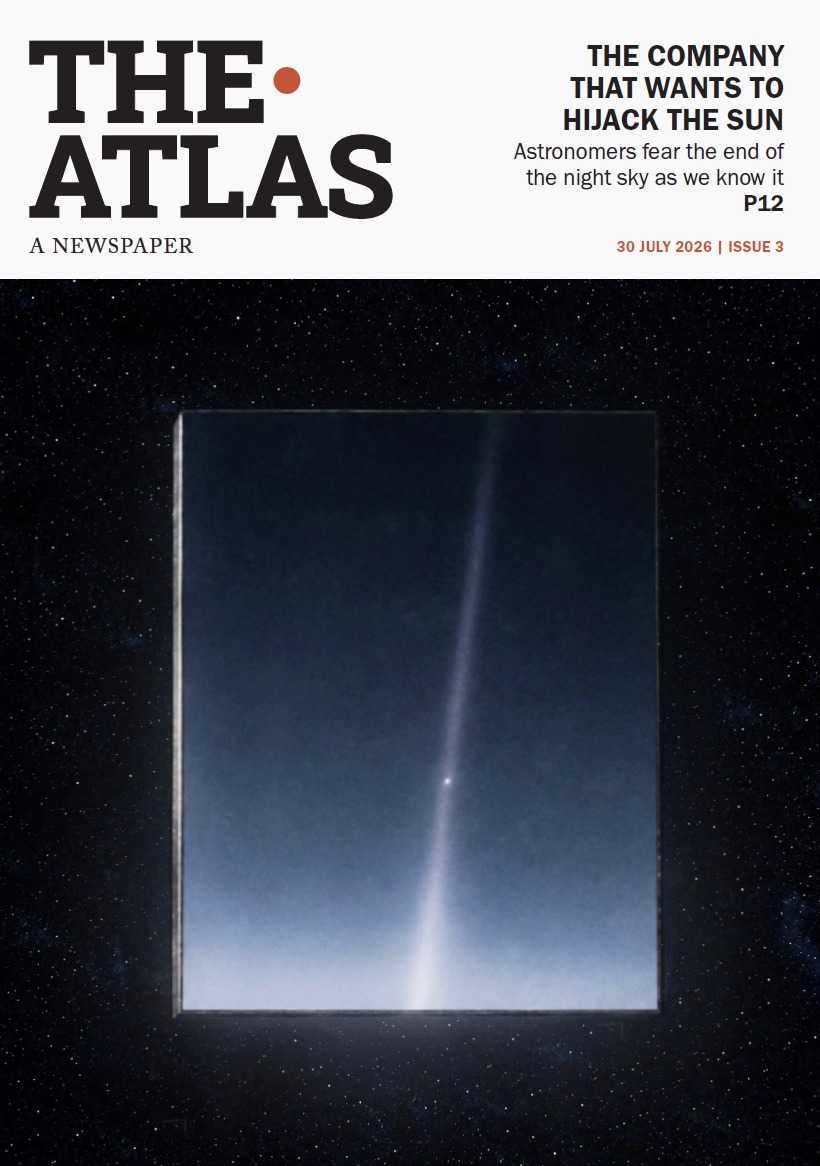
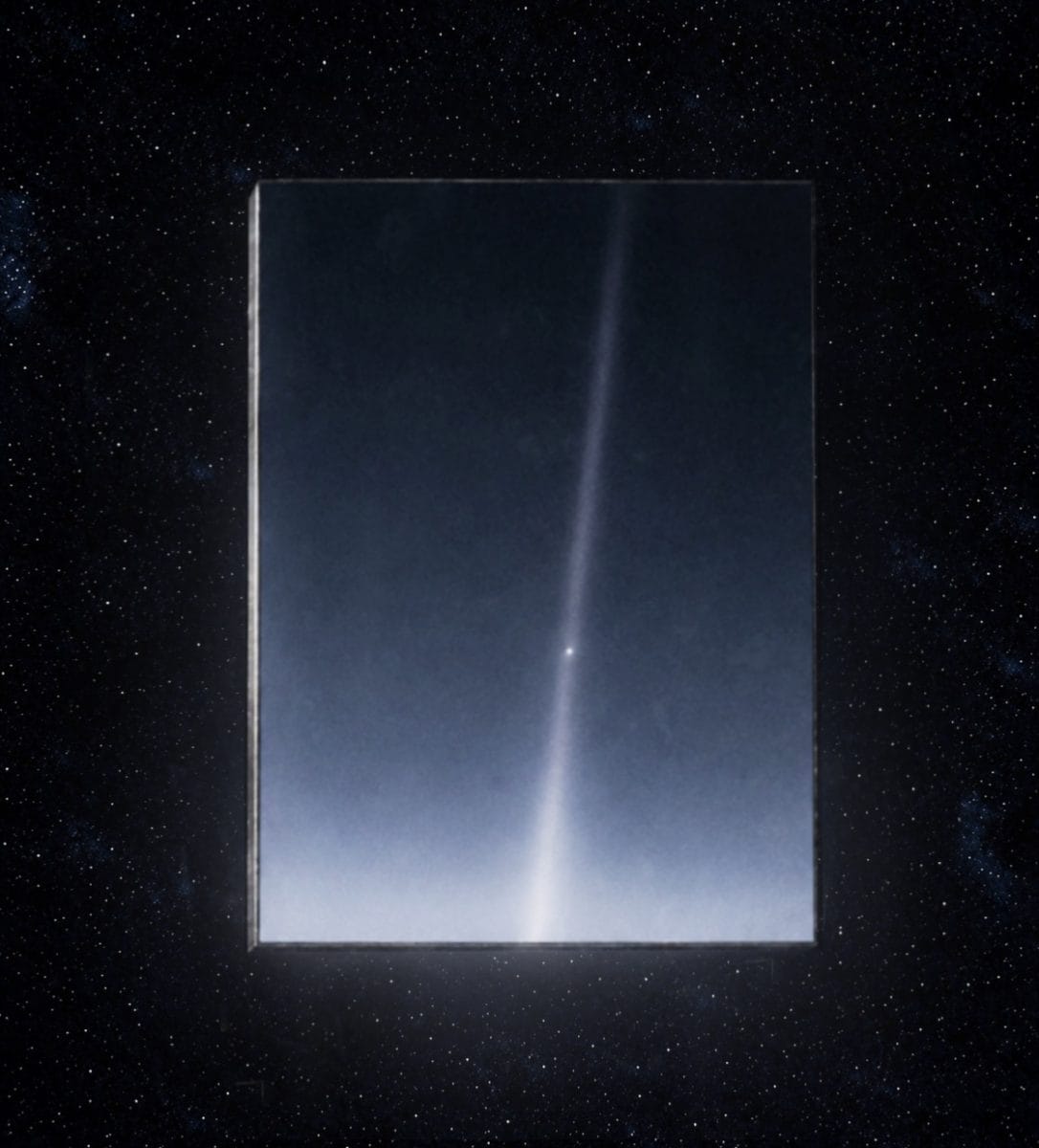
Astronomy, our window into the rest of the universe, happens in the dark. Planets, stars and galaxies – all the mysteries of the cosmos – only reveal themselves at night. But the night sky may be getting much brighter, thanks to an American company with a plan to conquer darkness itself by sending 50,000 giant mirrors into space.
What you are reading first appeared as a cover story for The Atlas, our new global publication with The Continent. Sign up here to get the next edition delivered to your inbox on August 27.
Astronomers are panicking.
It is an “existential threat” to optical astronomy, says the European Southern Observatory. A “disastrous” idea that will “permanently scar” the night sky, according to the Royal Astronomical Society. The American Astronomical Society told Nature it “would probably mean the end of ground-based astronomy, or optical astronomy, at least.”
Sthabile Kolwa agrees. “It will take away a very crucial part of our civilization,” she tells The Atlas. Kolwa, a senior lecturer in astronomy at the University of South Africa, studies the life cycles of galaxies, but today her concerns are more immediate. “It might come to this, that we just have to find them in the parking lot and say, ‘Hey, what are you guys doing? You’re going to ruin science for us.’ ”
Like Uber, but for the sun
The parking lot in question is in Hawthorne, California, outside the headquarters of Reflect Orbital. They call themselves The Sunlight Company. The start-up is celebrating: Earlier this month, the United States Federal Communications Commission (FCC) approved the launch of Eärendil-1, likely in a few months time.
This satellite, named for a character in JRR Tolkien’s The Silmarillion, will unfurl an 18m x 18m mirror in low Earth orbit. It’s designed to reflect sunlight onto the dark side of the earth, lighting a 5km2 patch of land with the strength of four full moons.
It is a proof of concept.
By 2035, Reflect Orbital wants 50,000 of its mirrors in space, delivering illumination “comparable to daylight” on demand to paying customers (“sunlight is the new oil,” says chief executive Ben Nowack). The company says this will allow solar panels to generate clean energy overnight; provide “safer, evenly-lit streets” to cities that pay for it; and keep construction sites and farms working 24/7.
There will be an app, of course, offering “sunlight as a service” – lighting up the night will be as easy as ordering an Uber.
Clean, renewable energy is at the heart of the company’s vision, a spokesperson told The Atlas in a statement. Reflect Orbital declined to respond to specific queries and said it is in constant dialogue with astronomers, scientists and environmental researchers to mitigate the impact of the light pollution: “We are able to dim the brightness of the service and turn it off at any stage. We control where the light shines when serving an authorised customer. Most people and most places will never see this light. It is precise, targeted and customers will require permits to receive the service.”
Circadian arrhythmia
A new research paper, published in May, challenges Reflect Orbital’s position. Its author, the European Southern Observatory’s Oliver Hainault, concluded that the company’s 50,000 satellites would increase the background brightness of the sky by 300% – even when their mirrors are pointed somewhere else. This, coupled with a proposal from Elon Musk’s SpaceX to build vast data centres in space, would go “beyond the limit” of what astronomy can withstand.
What that means, in practice, is that the images from ground-based telescopes will be dramatically less useful, marred by streaks of light from passing satellites. The most distant light sources won’t be visible at all.
This will obscure evidence of other galaxies, hinder research into black holes and other cosmic phenomena, and potentially prevent early warnings of asteroid approaches. Cutting-edge astronomy will only be possible from space-based telescopes like the James Webb and the Hubble – access to which is already massively oversubscribed, and subject to political interference.
The night sky will look different to the naked eye, too. “The next time you’re away from urban light pollution, spend some time outdoors after dark and enjoy the view of the Milky Way and the constellations that have inspired awe since humankind woke to consciousness. Chances are those views are not here to stay forever,” wrote journalist Tereza Pultarova for Space.com.
Anna Jibladze
Running out of space
The night sky is already a lot brighter than it was 150 years ago, when light bulbs started to become commonplace. According to Dark Sky International, a US-based nonprofit that advocates against light pollution, 80% of Earth’s human population already lives under some form of sky glow, most of which is generated on land. This has forced astronomers to seek out “dark sky places,” like the Atacama Desert in Chile or the Upper Karoo in South Africa, for their telescopes.
Humans can adapt to less darkness. But it is much harder for animals and ecosystems that have evolved alongside predictable rhythms of day and night. Nocturnal predators lose the ability to hunt; sea turtle babies can’t find their way to the sea; migratory birds are thrown hopelessly off course; and moths expend all their energy helplessly chasing artificial light sources.
“It’s almost like we are on a mission to obliterate natural darkness from earth,” said Ruskin Hartley, Dark Sky’s chief executive. “And now rather than do it street by street and bulb by bulb, let’s do it from space.”
Space is, in theory, protected by the Outer Space Treaty, a 1967 agreement signed by 110 countries, including all the major space superpowers. It states that “space is the province of all mankind." But that’s not what’s actually happening, Hartley argues. “In the US, it’s the most wealthy, most powerful individuals who are gobbling up as much of that orbital space as they can before someone else can get that opportunity” – with China, Russia and Europe all scrambling too for a greater presence in low Earth orbit.
“Who gets to choose that we light up the night sky? Who gets to make that decision?” Ruskin asks. In the US, it is the FCC’s job to decide what satellites are allowed in space. But it has said that assessing the impact of light pollution or environmental damage is not within its remit. Instead, it wants to slash regulation so American companies can take advantage of the “space industrial revolution.”
And Reflect Orbital has rich and powerful backers. Earlier this year, it secured a $1.5-million contract from the US air force, hinting at possible military applications for its mirrors. Last year, it raised $20-million from three venture capital firms, including Sequoia Capital, one of the biggest investors in Silicon Valley. Sequoia also owns a multibillion-dollar stake in SpaceX, which has its own plans for low earth orbit.
There are already more than 10,000 Starlink satellites up there, giving Elon Musk unprecedented influence over global communications. The company wants to launch one million more satellites over the next few years to build a network of space-based data centres. In addition to the light pollution, astronomers worry the potential for collisions will increase dramatically, as will risks to the ozone layer.
A brighter future
On her blog Higher Dimensions, the astronomy professor Janna Levin contemplates our brighter future. “It is quite possible that the hot glow of the swarm of data satellites will saturate the night, washing out the stars from our perspective on Earth. We’ll look up into the sky and instead of Zeus transformed into a swan outlined in a constellation of a few stars, the machine gods will literally loom above us, glowing with radiant heat, making declarations, predicting the weather, forecasting then determining our fate.”
Kolwa, the South African astronomy lecturer, offers a different metaphor: that of empires “colonizing low Earth orbit.” This was an ambition of one of the most infamous imperialists of them all, Cecil John Rhodes, who said that he looked up at the stars and thought: “I would annex the planets if I could; I often think of that. It makes me sad to see them so clear and yet so far.”
But it hasn’t been colonized just yet.
“I’m still trying to figure out what we can do, what responsibility we have as scientists,” says Kolwa. “How could we engage our communities to stand up to these corporations and say no? We must keep our night skies dark, as dark as possible.”
Ready to test your knowledge of hue, value, and saturation? Rivka Galchen’s latest for The New Yorker is a trove of fascinating details about our understanding of color. Galchen opens with the buzziest tidbit: an experiment conducted by a vision scientist who used a laser to stimulate a selection of his own cone cells and glimpse a color unknown outside of his laboratory. From there, she roams—through philosophy and art history, from studios to pigment shops—complicating our understanding of perception with each new turn of her titular question.
In the children’s novel “The Midnight Fox,” by Betsy Byars, the main character daydreams about digging in his back yard and coming across a “brand-new color.” A friend of mine remembers being captivated by this scene, and trying to picture the color. “I felt like I could conceive of it, but I couldn’t see it,” she said. The eighteenth-century Scottish philosopher David Hume considered at length whether a person who had seen every shade of blue except for one would be able to picture that one un-experienced shade; he concluded that the answer was yes. In my youth, I spent an afternoon wondering if I would have been able to imagine the fluorescent yellow of highlighter markers if I’d never seen it.
In this harrowing, incredibly reported story co-published by Science and Retraction Watch, Brendan Borrell uncovers how “Mei,” a 6-year-old girl in China, died a week after an experimental gene-editing trial went wrong—and how her medical team, led by neuroscientist Zilong Qiu, downplayed the risks to her parents, did not publicly disclose her death, and has faced no real accountability.
On 23 March 2025, the day before the procedure, the family settled into a shared room inside a crowded pediatric ward. When the other girl in the room broke into tears, Mei handed her one of her favorite stuffed animals: a blue bird. “She liked to give things to other kids,” Jason said.
The next day Mei put on a brave face as she was taken to the procedure room. Yu’s handpicked doctor inserted a needle between two vertebrae on her lower back and withdrew just over a teaspoon of spinal fluid to create space for the drug. Then, he swapped syringes and gently pressed down on the plunger, filling her spinal canal with viruses.
The genocide in Gaza has created some 60 tons of rubble. In doing so, it has released asbestos, lead, and other toxic materials, guaranteeing “an epidemic of cancer, lung disease, and brain damage,” Helen Epstein writes, “[that] could come to rival in lethality the war’s bombs and bullets.” Research is starting to make visible the scale of dangerous fallout, but there are limitations:
To confirm [scientist Yaakov] Garb’s estimates, it would be necessary to test soil samples from the areas he has identified as particularly likely to be contaminated. But the Israeli government seems to be obstructing efforts to carry out such tests, let alone assist the current and future victims of this environmental catastrophe. Aid workers and others entering Gaza attend an official briefing where they are informed that it is forbidden to leave the enclave with even small amounts of soil or sand. Once in the Strip, any scientists surreptitiously collecting research material risk being spotted by overhead surveillance drones. At departure checkpoints every piece of luggage is emptied onto a conveyor belt, and border guards carefully inspect each item. Several people told me they knew researchers whose soil samples had been confiscated. Palestinian researchers in Gaza have no capacity to conduct such experiments on their own, since the enclave lost all twelve of its universities and scores of scientists in the bombing. Without the Israeli government’s cooperation, only remote assessment and modeling like Garb’s can even begin to determine the scale and location of toxic contamination in which Gaza’s population now lives.
I’d be lying if I said I understand everything Michael Levin believes. But I’m also not alone; sometimes his own colleagues can’t even follow his arguments. Elizabeth Weil’s profile of the renegade (and genius) biologist bridges that gap, sketching out Levin’s research and claims in a way that’s just grokkable enough to blow your mind. I mean this as a true compliment: When’s the last time we had a genuine mad scientist on our hands?
Critics accuse Levin of all kinds of teleological crimes — making unfalsifiable claims, using words in ways that render those words meaningless. Levin is unfazed. In his talks, he tries to disarm his detractors by preempting the accusation that he’s nuts: “I have some unusual things to say and then I have some crazy things to say”; “So this is a kind of crazy claim I’m making.” His true retort is his wet lab. There, at the bench, he’s working to prove his metaphysics by running old-school (in a way) biological experiments. He studies flatworms with two heads. Frogs with eyes on their stomachs. Little round creatures called xenobots, synthesized from frog skin cells. They swim like tiny Pac-Men. They do not exist in nature.
“The only thing that ever settles arguments is technology,” Levin tells me, a line he borrowed from biophysicist Chris Fields. “People have been saying for thousands of years what they think” about minds, consciousness, souls, energy fields. “What I can contribute is ways to test some of those things.”
For Men’s Health, Brian Underwood investigates the flood of sunscreen misinformation on Instagram and TikTok, where influencers push inaccurate data about chemical UV filters, play chemist and promote their own DIY formulas, or even encourage no sun protection at all. Underwood sorts fact from fear, talking with dermatologists, chemists, and professionals who are working to reshape the messaging around sun exposure and sunscreen.
Environmental concerns may have also shown up in your feed, with suggestions that these same filters are poisoning our oceans, giving rise to a whole category of sunscreens labeled “reef safe”—a meaningless marketing term that’s not regulated by the FDA (the same goes for products labeled “natural” or “organic”). Dr. Nelson’s point about “low-relevance models” is something to consider here too: The research demonstrating that oxybenzone, octinoxate, and other active ingredients may lead to reef bleaching was done in a lab setting where coral was exposed to levels of these chemicals significantly higher than has been found in the natural environment. It conveniently left out the fact that inorganic filters like zinc oxide (the one typically used in “reef safe” formulas) would have the same effect in similar doses.

 Login