❌

Reading view

First Look At General Atomics’ Wildfire, Its Successor To The MQ-9 Reaper (Updated)

General Atomics has given us the first look at its new Wildfire drone design. The company is developing this armed medium-altitude, long-endurance (MALE) uncrewed aircraft in response to new U.S. Air Force requirements for a lower-cost successor to the MQ-9A Reaper.

A rendering of Wildfire was included in a video montage, seen below, which General Atomics Aeronautical Systems, Inc. division (GA-ASI) released earlier today. GA-ASI first announced work on this new drone last month. The Air Force, in partnership with the Pentagon’s Defense Innovation Unit (DIU), formally kicked off its new search for a Reaper successor, currently called the Massed Modular Aircraft (MMA), in July. GA-ASI also developed the MQ-9A, which is now out of production.

A good idea spreads like Wildfire.#UAS #Airpower pic.twitter.com/eIONVDjZ1n

— General Atomics Aeronautical Systems, Inc (GA-ASI) (@GenAtomics_ASI) September 9, 2026

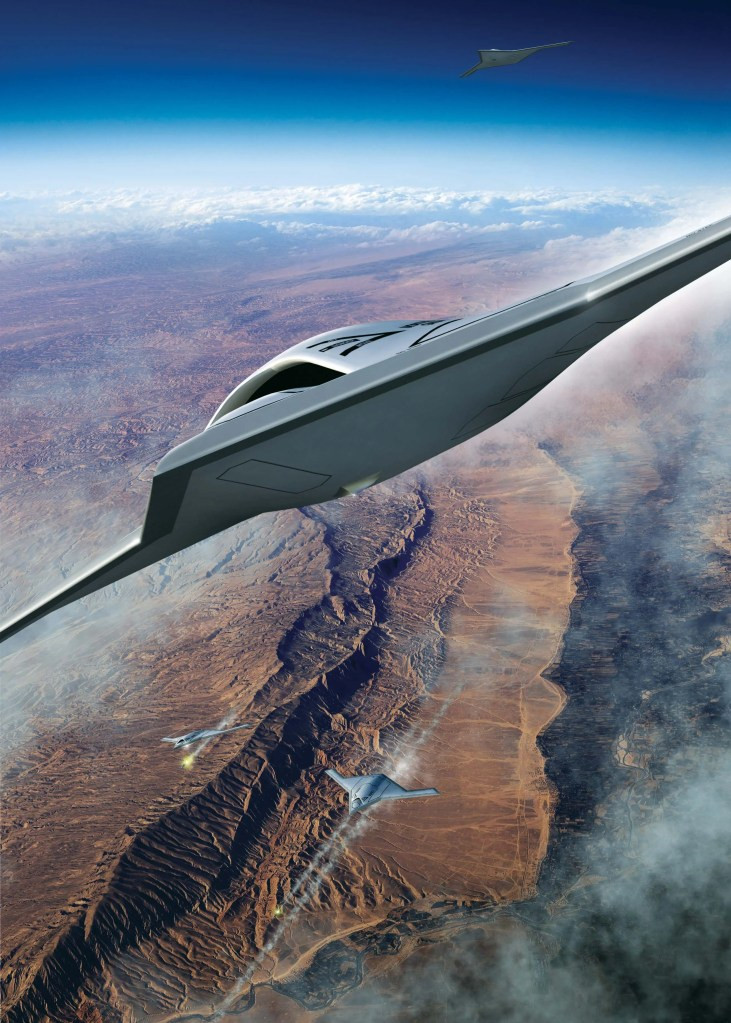
Wildfire’s pusher-prop design shown is clearly an extension of the existing MQ-9 family, with an overall planform that is extremely similar to that of the Reaper. Like the latest versions of the MQ-9A, the new drone has a sensor turret under the nose and a large blade antenna under the rear fuselage.

The rendering of Wildfire, at top, seen together with a stock picture of a US Air Force MQ-9 Reaper, at bottom. General Atomics capture/USAF

Wildfire does notably lack the Reaper’s distinctive hump on top of the forward fuselage. On the MQ-9A, this feature contains the drone’s satellite communications (SATCOM) antenna. What this might mean about how Wildfire is controlled and otherwise communicates is not immediately clear, but it points to the use of a smaller, lower-cost SATCOM terminal. That, in turn, would most likely be tied to a network like Starshield, the government-focused cousin of SpaceX’s Starlink. We could also see greater semi-autonomous control here, or at least a greater reliance on it.

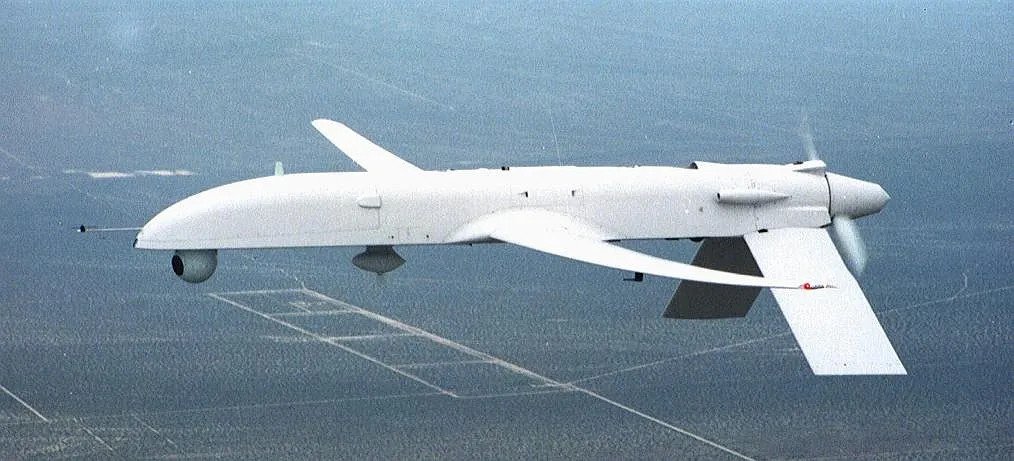
The resulting shape of the forward end of the fuselage is vaguely reminiscent of GA-ASI’s Gnat series of drones from the 1990s, which evolved into the iconic Predator. The MQ-9 family, in turn, is an outgrowth of the Predator.
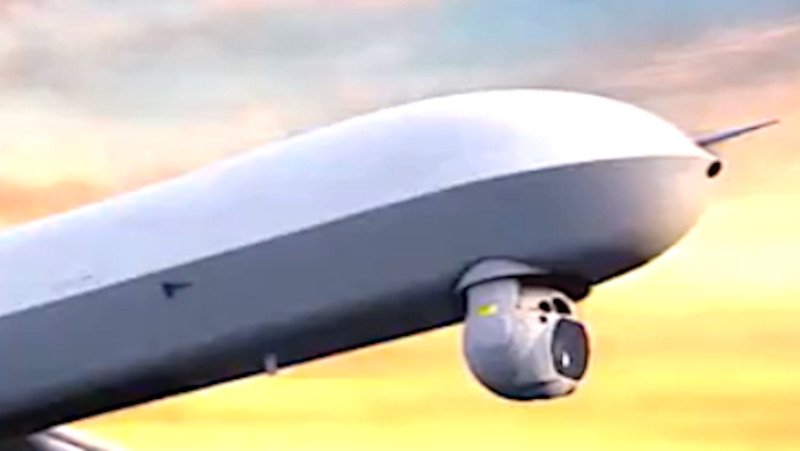
A close-up look at the nose end of Wildfire as seen in the newly released rendering. General Atomics capture
A General Atomics Improved Gnat (I-Gnat) drone. General Atomics

The rendering of Wildfire also depicts the drone armed with four Joint Strike Missile (JSM) cruise missiles, with two loaded on what appears to be a single pylon under each wing. The stealthy JSM can be employed as an anti-ship or land-attack weapon. GA-ASI has released renderings of MQ-9s in the past with similar loadouts. The Air Force is already acquiring stocks of JSMs, primarily to arm its F-35A Joint Strike Fighters. Stand-off munitions like the JSM have long been seen as an increasingly important, if not critical, addition to the non-stealth Reaper’s arsenal, helping to keep the drones further away from potential threats.
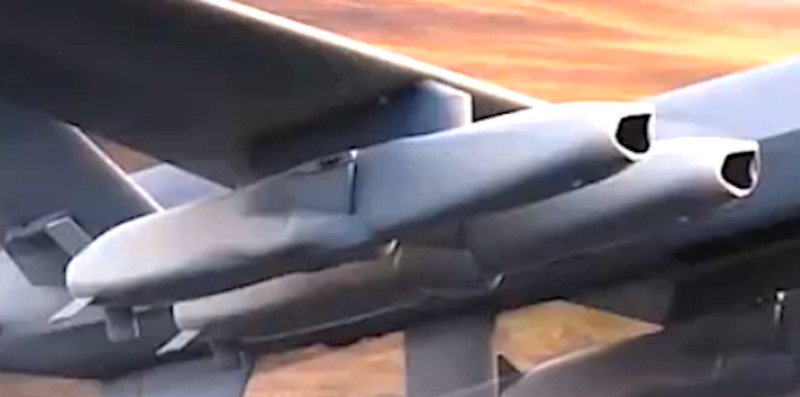
A close look at two JSMs in the Wildfire rendering. General Atomics capture

TWZ has reached out to General Atomics for more details.

“General Atomics is looking at it and asking ourselves, ‘What can we really do? No kidding, no BS, actually do,’” GA-ASI spokesperson C. Mark Brinkley did tell us back in August when asked about Wildfire. “Let’s be honest with ourselves first. How do we come out of the box, day one, with a 10,000-nautical-mile ferry range? Can we carry four LRASMs [AGM-158C Long Range Anti-Ship Missiles]? Can we swarm 100 aircraft under semi-autonomous control? Can we fuse all of that data into a highly effective common operating picture? Can we do that at scalable, affordable mass?”

“So that was the assignment, and our engineers sharpened their pencils and got to work,” he added. “What came out the other side was our new Wildfire UAS. That thing is a beast, and no one who actually does this for a living, and is honestly concerned about America’s warfighting edge, can look at it and not want 100 of them as fast as we can make them.”

Wildfire “addresses all of the concerns posed by the MMA solicitation. We can deliver years earlier and maintain the same high quality. You can have everything that makes Reaper special, plus more, at a price that doesn’t break the bank,” Brinkley also told Breaking Defense for a story published last week.

In terms of what the Air Force has said it is looking for with the MMA, as we have previously written:

“[The service] …wants the MMA drone to perform the same general intelligence, surveillance, and reconnaissance (ISR) and strike missions as the MQ-9A. To that end, stated program requirements to date include a speed of at least 200 knots true airspeed, a munition and sensor payload capacity of at least 2,800 pounds, an unrefueled combat radius of at least 2,300 nautical miles with payload, the ability to self-deploy one-way at least 8,000 nautical miles, and the ability to operate from runways no longer than 6,000 feet. The MMAs also need to be highly modular and use open architecture mission systems to make it easier to integrate new capabilities and functionality down the line.”
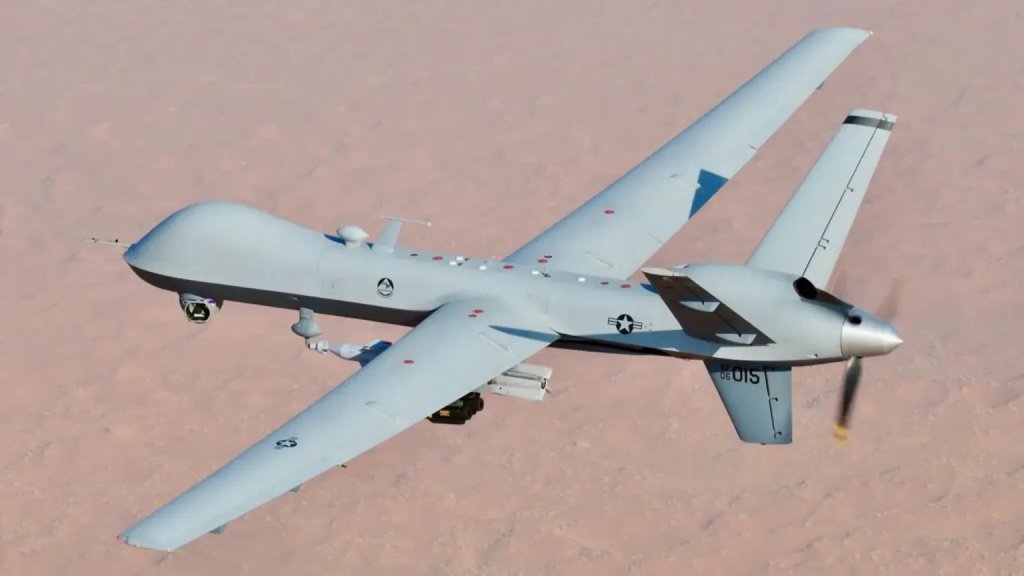
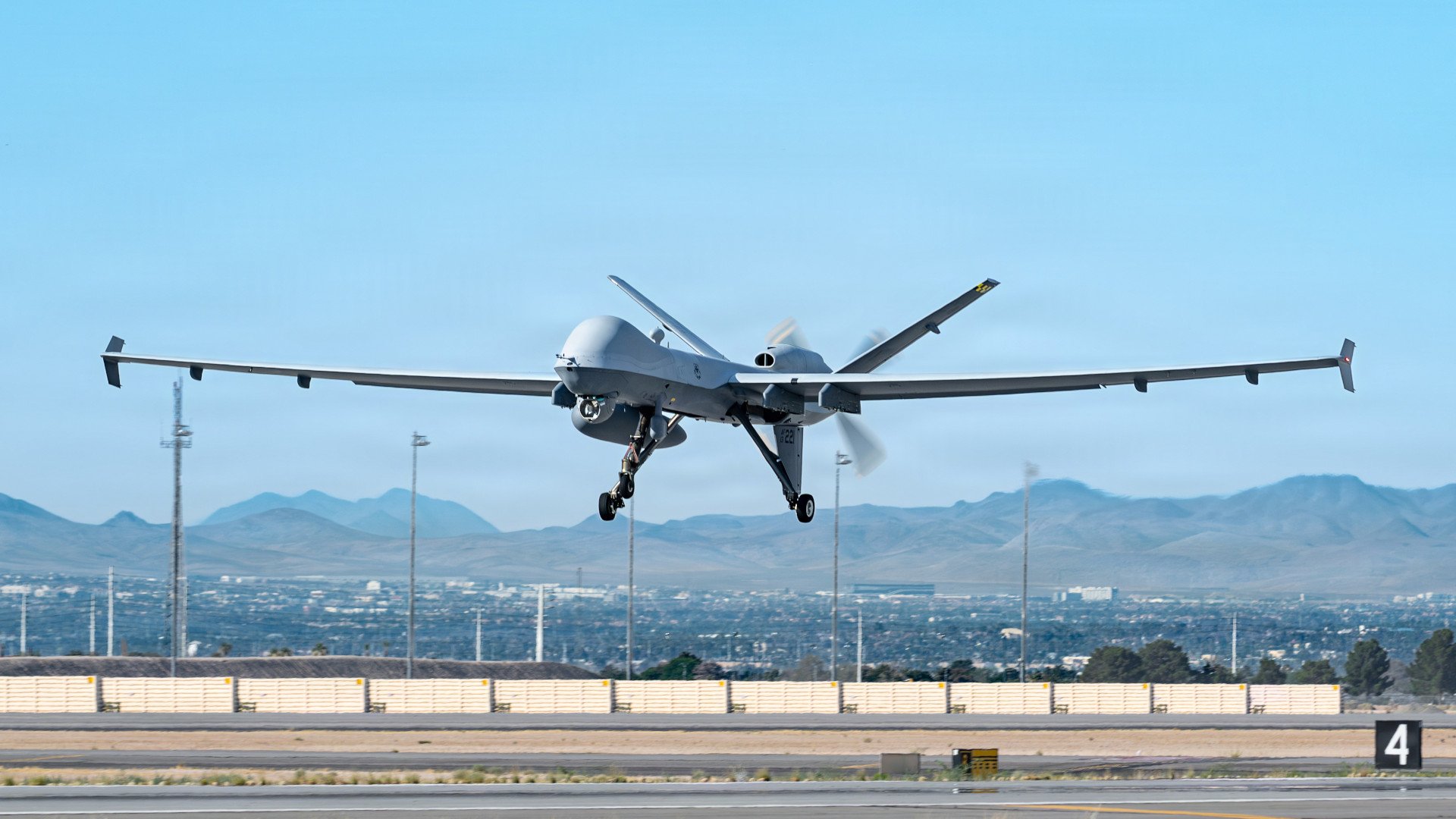
Another look at an example of a typical MQ-9A Reaper in US Air Force service now. USAF

The Air Force also shared last week that it is targeting a roughly $10 million unit cost for the MMA drones, not including sensors and certain other systems. As mentioned, the Reaper is out of production, but the price tag on a fully-equipped Reaper today is widely reported to be between $30 million and $50 million. The Air Force has itself used the $50 million figure as a reference point in discussing its latest plans for what comes after the MQ-9.

It is unclear how Wildfire might achieve this cost goal while retaining so much obvious Reaper DNA, but even a major 30 to 50 percent reduction in the price tag compared to its predecessor would be a huge deal. In the past, General Atomics’ Brinkley has openly questioned just how cheap an MMA drone could realistically be while still offering comparable capabilities to MQ-9.

The original timeline for the MMA program envisioned the Air Force reaching initial operational capability in 2031 after receiving 20 of the drones. The service is now looking to accelerate that schedule by around two years. The Air Force expects to eventually acquire around 180 MMAs.

The Air Force has tried, without success, to develop a successor to the MQ-9 on several occasions in the past. However, a key driving factor now is huge losses of Reapers in the course of the ongoing conflict against Iran. The service’s MQ-9 fleet has already shrunk dramatically in recent years, in part due to additional losses during operations targeting Iranian-backed Houthi militants in Yemen last year.

“Although we have plenty of MQ-9As today, we are going through them at a rate that is concerning to us,” Air Force Lt. Gen. Christopher Niemi, the service’s Chief Modernization Officer, told reporters at a roundtable at the Pentagon last week, according to Air & Space Forces Magazine. “There’s not a lot of good options to immediately replace those aircraft.”

GA-ASI has long had a monopoly on MALE combat drone sales in the United States, and is clearly looking to extend that now with Wildfire. However, this market space has been expanding, and other companies are already competing for what could be a very lucrative new deal with the Air Force. Winning the MMA contract could open doors to opportunities elsewhere within the U.S. government and with foreign countries. Variants and derivatives of the MQ-9 are also in service today with the U.S. Marine Corps, the Central Intelligence Agency (CIA), U.S. Customs and Border Protection (CBP), and several additional air arms globally.
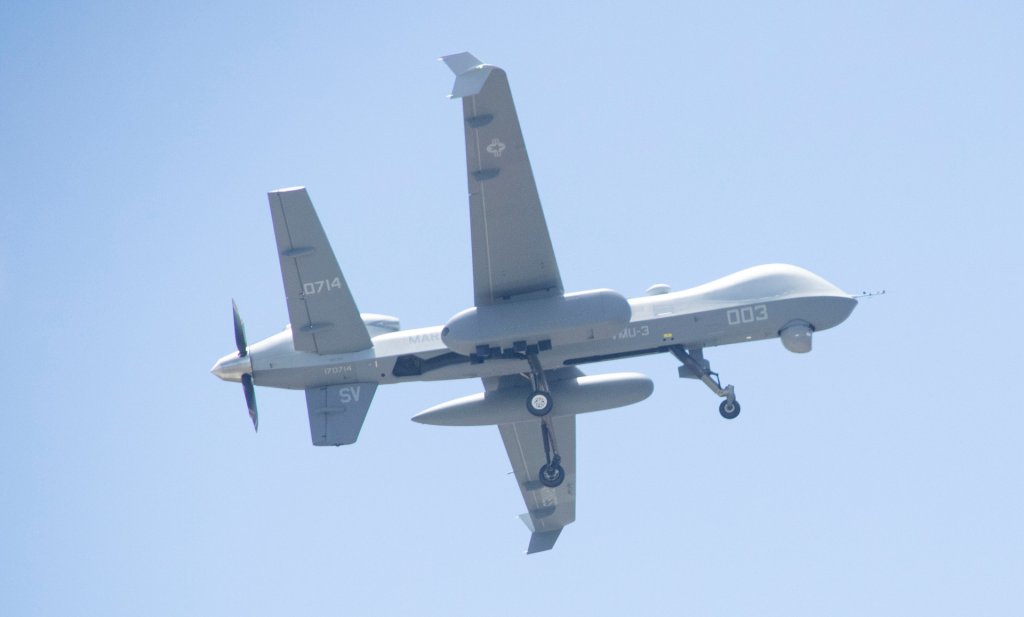
A US Marine Corps MQ-9A Reaper. USMC

More information about Wildfire, as well as its competitors, is only likely to continue emerging as the Air Force pushes ahead with new and aggressive plans to finally acquire a follow-on drone to the venerable Reaper.

Update: 2:15 PM ET –

General Atomics spokesperson C. Mark Brinkley has now shared additional details about Wildfire with TWZ.

“You’re not imagining it. These new Wildfire renders do lack the dorsal hump you see on Reaper, MQ-9B, Gray Eagle, Mojave STOL and many copycat aircraft,” Brinkley explained. “General Atomics has pushed proliferated low-earth orbit controls onto many of our existing aircraft and pioneered that integration across unmanned aerospace. That is a relatively new technology that we already have great experience integrating, and it makes sense to bring that into Wildfire.”

“Proliferated low-earth orbit” (abbreviated variously as pLEO and P-LEO) refers to distributed constellations of hundreds or potentially thousands of satellites in that orbital region. SpaceX’s constellations supporting the aforementioned Starlink/Starshield networks fall into this general category.

“Wildfire is going to leverage ongoing advancements in autonomy on Day One. We envision networking dozens of Wildfires for true combat mass,” according to Brinkley. “Again, not a hypothetical. We’ve been pioneering many advancements in autonomy, AI, and machine learning across the FQ-42A program and using our own MQ-20 Avenger as a CCA [Collaborative Combat Aircraft] surrogate connected to F-22 and F-35. That’s proven, not concept.”

The FQ-42A, also known as the Dark Merlin, is one of two designs now in development under the first phase, or Increment 1, of the Air Force’s CCA program, the other being Anduril’s FQ-44A Fury. The service announced in June that its initial CCA force would be a mixed fleet of FQ-42As and FQ-44As.
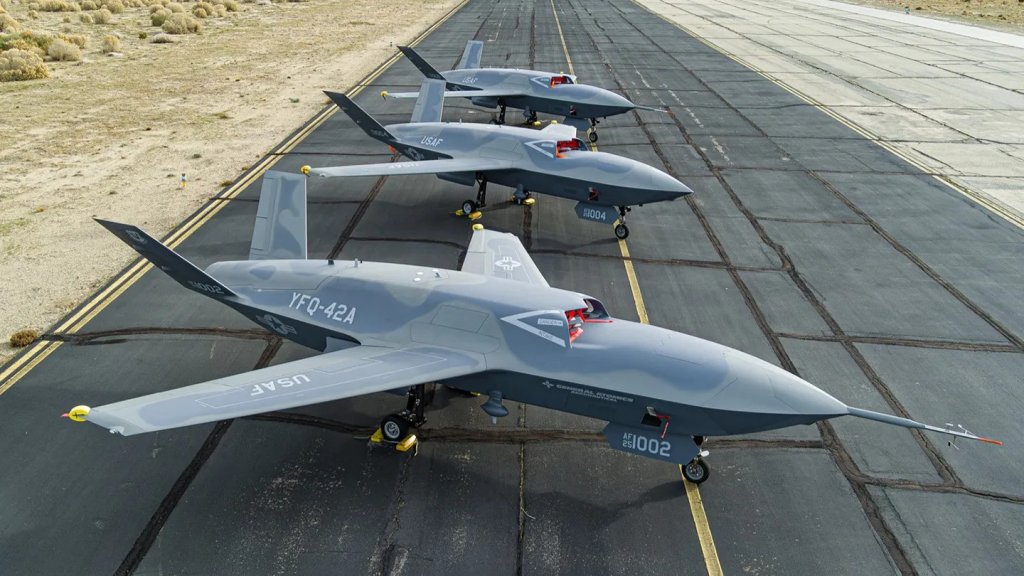
A row of prototype YFQ-42A Dark Merlin drones. GA-ASI

“Four JSMs tells you something about Wildfire overall. We can’t just look at overall external weight limits. You have to consider individual hardpoint capacity,” Brinkley continued. “We’ve concepted four JSMs on MQ-9B before, as a concept, but we’ve never done that on Reaper. Wildfire can absolutely do that, from a hardpoint capacity and also an overall MGTOW [maximum gross takeoff weight] perspective.”

“We’re showing two LRASMs on Wildfire, which is twice as much as the DIU solicitation asked for. If you’re going to build a flying weapons truck, give it some teeth,” he added. “These longer-range missiles also give you increased standoff compared to other weapons you associate with the MQ-9, so that also gives you some flexibility. Wildfire can carry two LRASMs for meaningful combat distances.”

The AGM-158C LRASM (Long-Range Anti-Ship Missile) is a derivative of the AGM-158 Joint Air-to-Surface Standoff Missile (JASSM) family of land-attack cruise missiles, and is also in the Air Force’s inventory today.
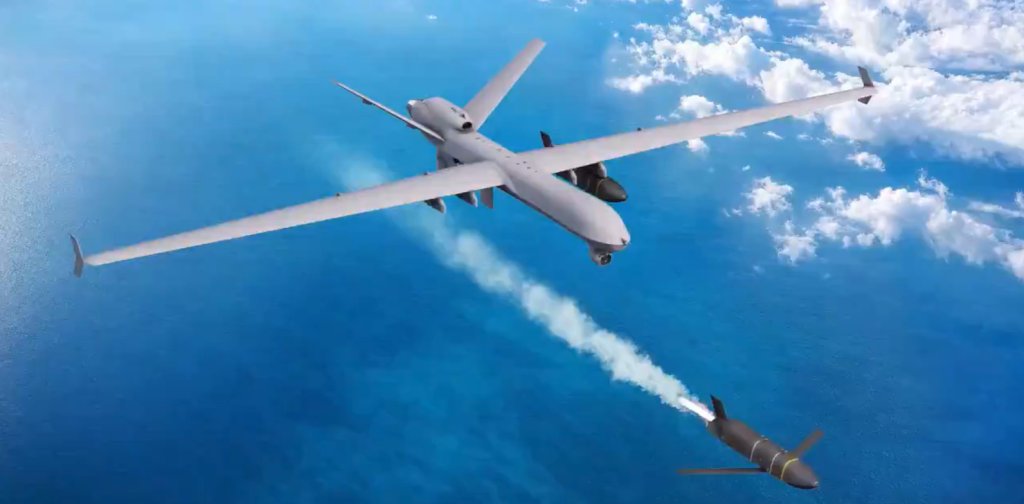
A rendering depicting a Wildfire drone firing an AGM-158C LRASM. General Atomics capture

Brinkley also said that Wildfire’s ferry range will exceed the MMA’s target of 8,000 nautical miles.

“We can deliver way ahead of the original FY 2031 schedule [for MMA]. We can deliver more than twice as many aircraft as requested in the same amount of time, because our manufacturing is real. Our network of suppliers, subcontractors and partners is real,” he added. “The obvious question is always cost, and I struggle to discuss costs because no one ever wants to compare apples to apples. There are stated price targets out there, and we’ll hit those. We’ll do it with an aircraft you can trust. We have nearly 10 million flight hours and more than 1,600 aircraft delivered. This is what we do.”

Speaking more generally, Brinkley also highlighted General Atomics’ extensive experience in developing and producing armed MALE drones, including the MQ-9.
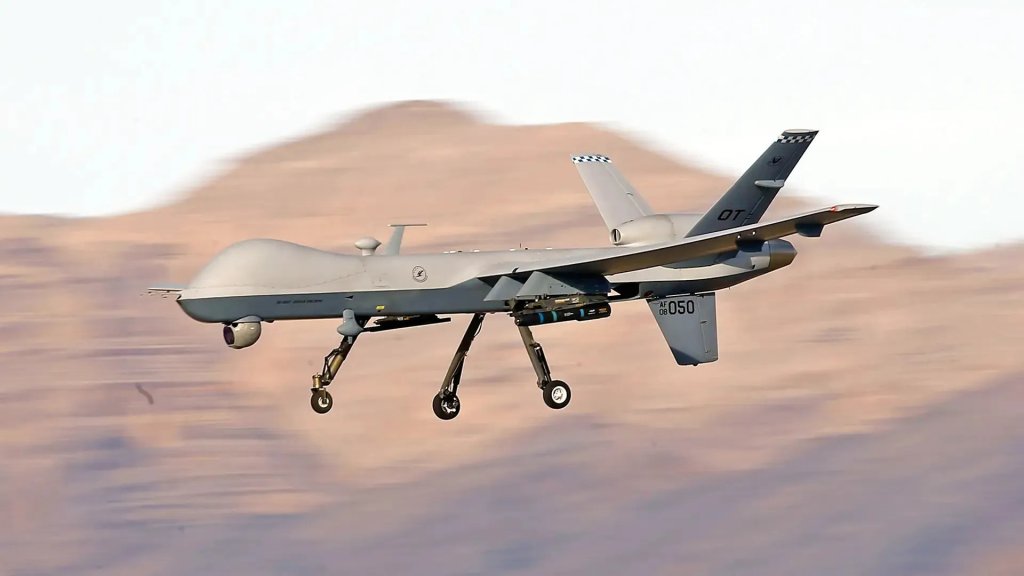
Another stock shot of a US Air Force MQ-9A Reaper. USAF

“It’s important to remember that Reaper made its first flight 25 years ago and was so far ahead of everything else that it still defines the entire category of medium-altitude, long-endurance strike aircraft worldwide. When you build something new to do this kind of work, it rolls out into the Reaper’s shadow,” he said. “I don’t have to defend MQ-9 because the track record speaks for itself. It’s been called the MVP of Epic Fury [the U.S. military’s nickname for the initial phase of operations against Iran this year] for good reason, and I think it has squashed all questions about the relevance of MALE ISR and strike.”

“So that brings us to questions of affordability versus attrition, cost-per-effect, and the true price of combat operations. It also brings up questions of reliability and mission availability, and Reaper excels at both of these, so you can’t replace it with junk and expect to get the same effects,” he continued. “That’s where Wildfire comes in. Our team went to the graph paper and started sketching out what they would do differently and what they would keep the same. Where are the tradeoffs, and what do you change? No one knows this category of aircraft and missions like we do. We’re not guessing and hoping.”

“I can’t get into deep specifics on Wildfire yet, because it’s too early for that and the goalposts seem to move every time I say something publicly. What I can say is that Wildfire takes all of the known quantities of Reaper, blends them with some cutting-edge technologies and manufacturing advancements, and incorporates our more than three decades of lessons learned about large, unmanned combat aircraft to drive cost-per-effect math down.”

Contact the author: joe@twz.com

The post First Look At General Atomics’ Wildfire, Its Successor To The MQ-9 Reaper (Updated) appeared first on TWZ.

  •  

Everything We Know About The U.S. Navy’s Submersible Drone Iran Just Captured

The U.S. Navy has lost an advanced uncrewed underwater vehicle (UUV), and it is now in Iranian hands. Here’s what we know about the Dive-LD drone and its apparent seizure, and its implications.

Authorities in Iran said earlier today that they had retrieved a U.S. Dive-LD uncrewed underwater vehicle (UUV) largely intact near the Strait of Hormuz. The regime in Tehran subsequently released pictures and video clips of the UUV being lifted out of the water, seen at various points below. This looks to be the first known instance of an operational deployment of the Dive-LD. This is still a relatively new capability for the U.S. Navy that only began entering service a little more than a year and a half ago. American officials have previously confirmed the use of UUVs, in general, to help keep the Strait of Hormuz free of Iranian naval mines, one of many threats that have dramatically slowed maritime traffic through this critical waterway.

Iran’s Islamic Revolutionary Guard Corps (IRGC) “captured one of the most modern, unmanned, and smart submarines … at the entrance to the Strait of Hormuz in a complex intelligence and operational action at dawn today,” according to a statement shared earlier today via Iranian state media. The exact circumstances surrounding the seizure remain unconfirmed.

“An underwater drone operated by U.S. forces malfunctioned more than a day ago,” a U.S. official said in response to our queries about the Iranian claims. “It was surveying regional waters in support of ongoing operations. The defective drone was an older model that neither collected sensitive data nor carried any classified sonar or radar equipment. U.S. operations in area waters continue.”

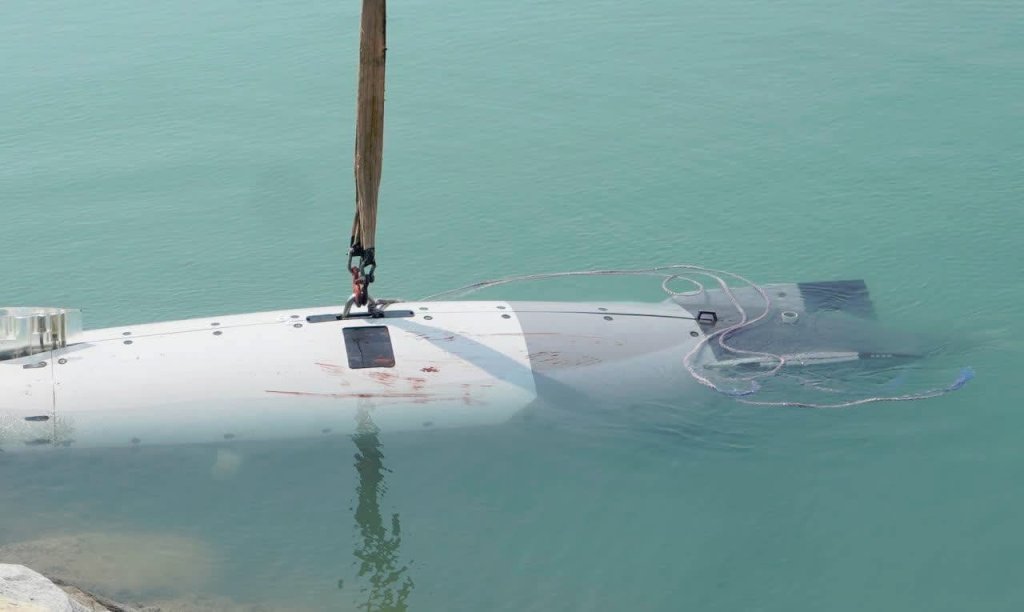
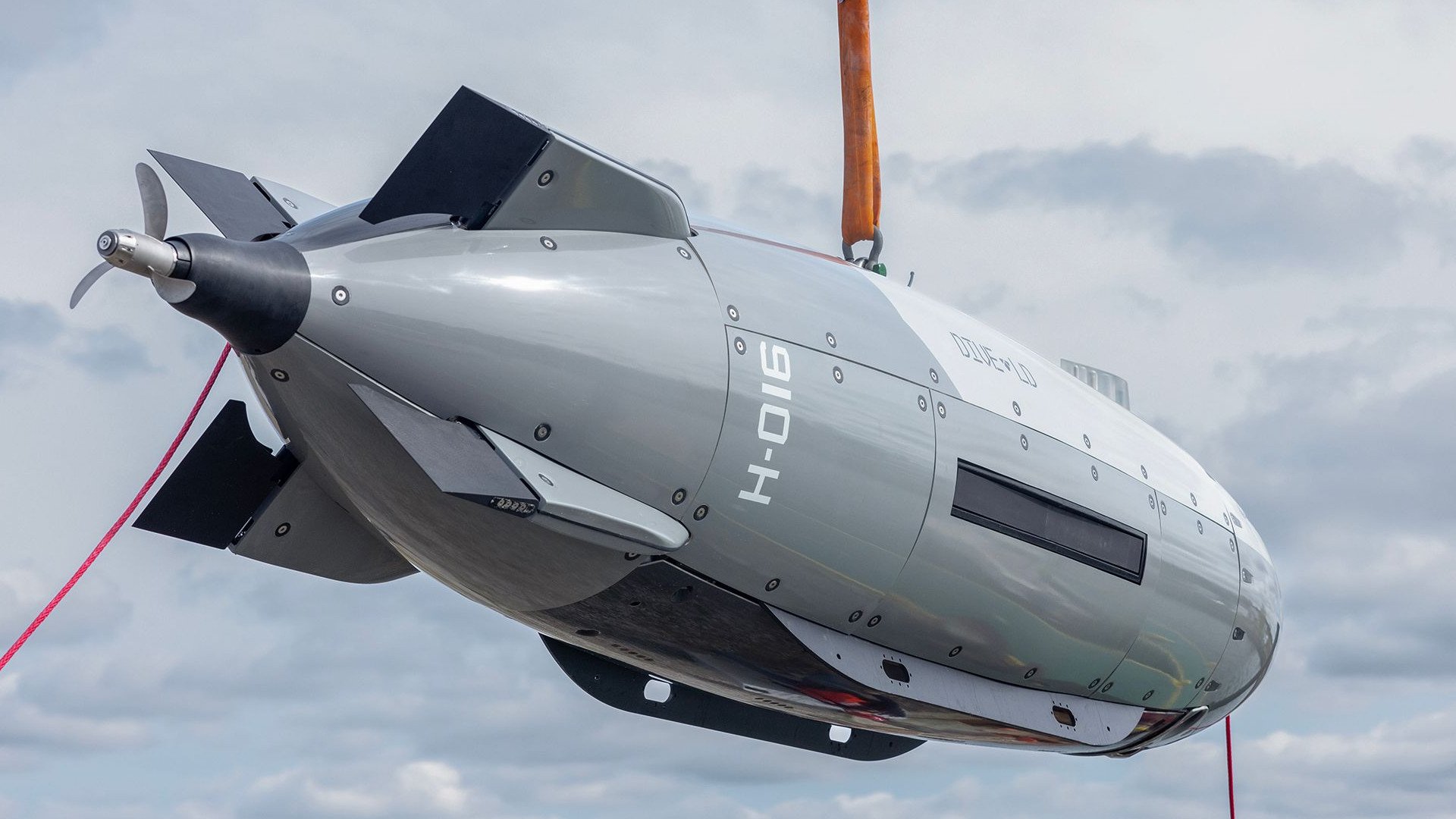
A top-down look at the Dive-LD Iran said it recovered. Iranian quasi-state media via X
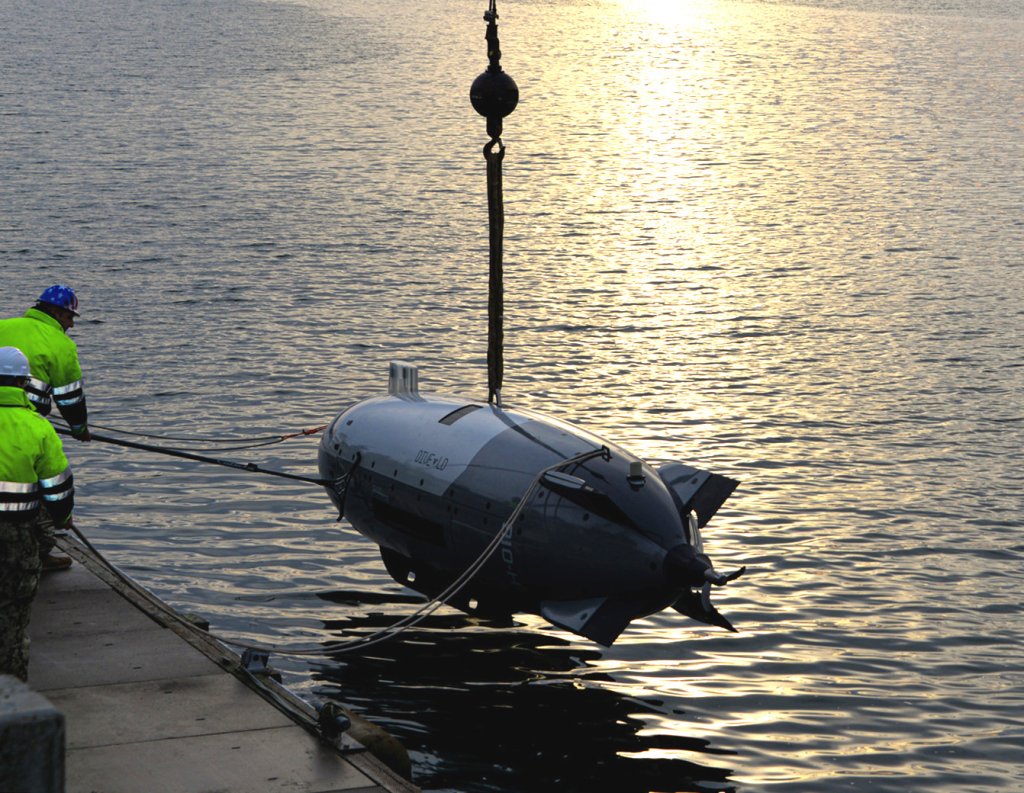
An image showing the Dive-LD UUV being hoisted out of the water. Iranian quasi-state media via X
The Dive-LD markings, with the “V” worn away, seen on the side of the UUV. Iranian quasi-state media via X

The official did not confirm or deny the type of UUV in question, or that Iran had retrieved it. They also did not elaborate on the nature of the malfunction. TWZ also reached out to Anduril, which initially deferred any questions to U.S. Central Command (CENTCOM). However, they subsequently confirmed the loss of a Dive-LD operating in the region.

“Dive-LD is an attritable autonomous system, meaning it is designed from the outset to operate in dangerous environments where loss of the vehicle is an expected possibility. Its purpose is to keep warfighters out of the most dangerous parts of the undersea mission,” an Anduril spokesperson told us in a statement. “This vehicle had already delivered significant value operating thousands of hours in months-long operations in CENTCOM.”

Categorized as a large UUV, the Dive-LD is 19 feet (approximately 5.8 meters) long, four feet (around 1.2 meters) in diameter, and has a gross weight of close to three tons. The design features a 3D-printed exterior, but is said to be capable of diving down to depths of some 19,685 feet (3.7 miles or 6,000 meters). The UUVs can also remain at sea for around 10 days at a time, depending on their exact configuration, and do so with a high degree of autonomy. Dive-LD was originally developed by U.S.-based Dive Technologies, which was founded in 2018 and then acquired by Anduril in 2022.

Anduril announced the delivery of the first Dive-LD to the U.S. Navy’s Unmanned Undersea Vehicle Group One (UUVGRU-1) in April 2025. The Navy had already released a picture of personnel training with one of these UUVs five months earlier. How many Dive-LDs are now in U.S. service is unclear.

Members of Unmanned Undersea Vehicle Group One (UUVGRU-1) and Undersea Vehicle Squadron Three (UUVRON-3) train with a Dive-LD UUV in December 2024. USN

The Dive-LD has a highly modular design. Anduril’s website says that the UUV can be configured for various military missions, including so-called intelligence preparation of the operational environment (IPOE); general intelligence, surveillance, and reconnaissance (ISR); mine warfare; and precision placement of objects underwater. IPOE refers to the collection of various types of intelligence on a specific area as part of planning for upcoming operations.

As mentioned, U.S. officials have previously stated that UUVs have been supporting mine-clearance operations in and around the Strait of Hormuz. Broadly speaking, uncrewed underwater platforms offer a way to find and record the location of naval mines using sonars, cameras, and other sensors, while helping keep friendly forces further away from potential threats. Afterward, depending on the type of mines that are found, various methods can be employed to neutralize them. Mine sweeping is time-consuming and dangerous, even in permissive environments, let alone when conducted under the threat of enemy attack.

This past weekend, the Financial Times newspaper in the United Kingdom published a story saying U.S. forces have been using UUVs in exactly this way to help clear Iranian mines, citing “people familiar with the operation.”

“Mostly at night, it [the U.S. military] sent Navy Seal [sic SEAL] divers, robot boats and specialised underwater craft into the perilous strait for a four-month mine-clearance mission,” according to FT‘s report. “U.S. Navy divers worked in small teams using inflatable-hulled craft. They located Iranian mines with the help of robot boats and submersibles – such as the U.S. Navy’s Common Uncrewed Surface Vessel – operating towed sonar arrays.”

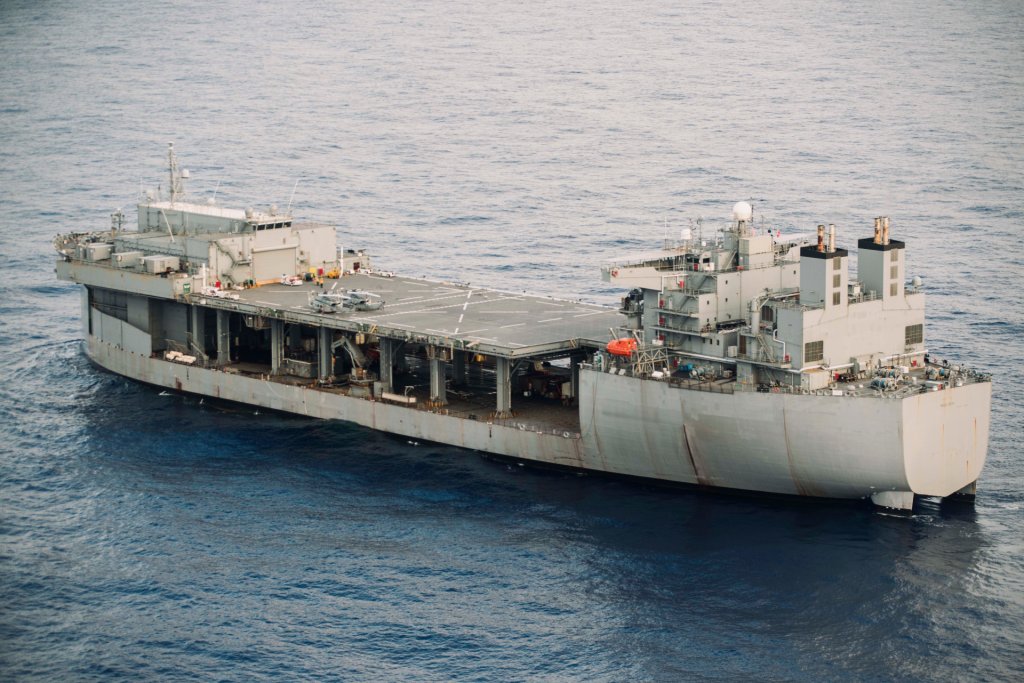
The Common Uncrewed Surface Vessel (CUSV) is a speedboat-sized drone boat that has been in Navy inventory since the early 2020s, explicitly for counter-mine operations. FT‘s story does not say where any USVs, UUVs, and/or boats full of divers were launched from as part of these operations in and around the Strait of Hormuz, but it posited that the Navy’s Expeditionary Sea Base ship USS Miguel Keith could have been involved.

A stock picture of the US Navy’s Expeditionary Sea Base ship USS Miguel Keith. USMC/Sgt. Luis Agostini

A trio of Independence class Littoral Combat Ships specifically configured for mine-sweeping duties, including using CUSVs, had been forward deployed in Bahrain before the start of the conflict with Iran in February. At least two of those ships, USS Santa Fe and USS Tulsa, emerged thousands of miles away in Southeast Asia in March, something TWZ was the first to report on. At the time of writing, those ships currently appear to be in Singapore. The exact disposition of the third of these LCSs, the USS Canberra, is unclear, but USNI News reported today that it is sailing in the South China Sea.

The Navy has a host of other warships in the Middle East that could support counter-mine missions. With a 10-day endurance, Dive-LDs, specifically, could potentially have been launched from locations away from the Strait of Hormuz, including friendly ports.

Dive-LDs could also be used for other missions beyond mine clearance in the region. As mentioned, the U.S. official told TWZ the UUV had malfunctioned while “surveying regional waters.” While this would be a relevant task in the context of a larger mine-sweeping operation, underwater surveys would be valuable for other purposes, too. For months now, U.S. forces have been facilitating the movement of ships in and out of the Persian Gulf via a route that hugs the Omani coastline, keeping them as far from Iranian threats as possible. Having up-to-date and highly accurate maps of the seafloor in these areas would be critical to ensuring they are deep enough for large commercial vessels to pass through safely.

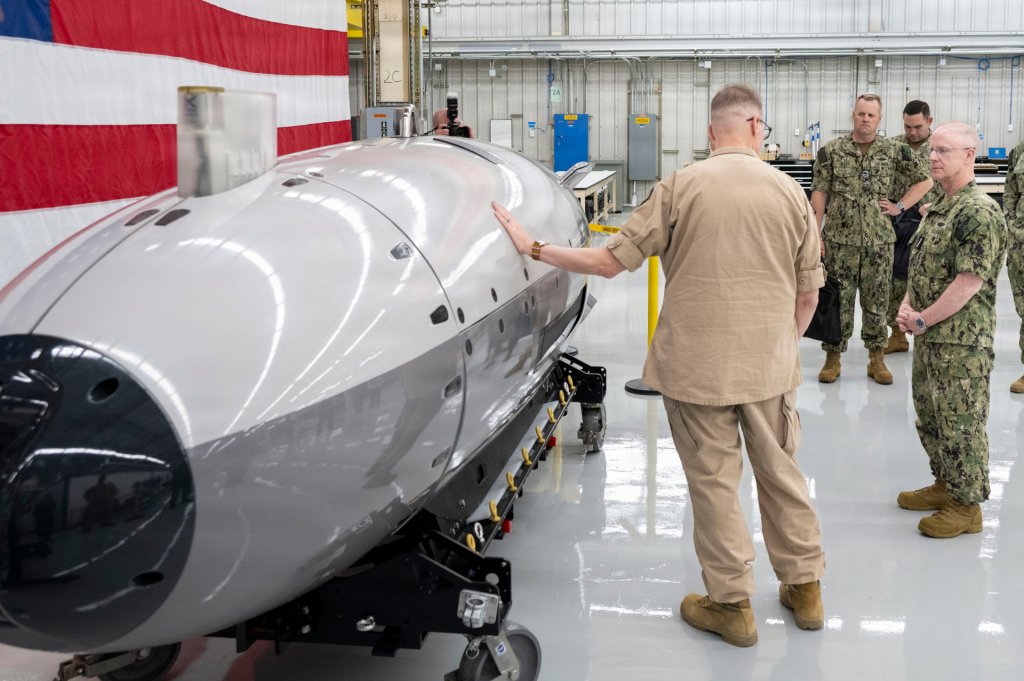
Chief of Naval Operations Adm. Daryl Caudle, at right, is shown a Dive-LD UUV during a visit to Naval Base Kitsap-Keyport, Washington, in June 2026. USN

IPOE and general ISR support, above and below the waves, would be part of any current or future U.S. activities in the region. This includes a new campaign of strikes targeting Iranian tanker ships that began last month and monitoring general port activity in Iran as part of the ongoing blockade.

Employing Dive-LDs in operations against Iran also provides a valuable real-world opportunity to prove out new UUV capabilities and associated tactics, techniques, and procedures, which could prove critical in a future high-end fight against a peer opponent like China. Dive-LD has been feeding into Anduril’s development of an even more capable large UUV called Ghost Shark, the first customer for which is the Royal Australian Navy. Ghost Shark is a militarized version of a design called the Dive-XL that followed the Dive-LD. In March, Anduril announced it was among those selected for the Combat Autonomous Maritime Platform Project (CAMP), an extra-large uncrewed underwater vehicle rapid prototyping effort being run by the Pentagon’s Defense Innovation Unit (DIU) and the Navy. Anduril did not say what platform it would be supplying for that project, but used a picture of Ghost Shark to illustrate the announcement.

The U.S. military is already known to have taken advantage of the ongoing conflict with Iran to demonstrate new weapon systems and other capabilities, including uncrewed maritime systems. In June, a Saronic Corsair drone boat conducted a first-of-its-kind at-sea rescue of the crew of a U.S. Army AH-64 Apache attack helicopter that had gone down in the Gulf of Oman. The following month, U.S. forces launched their first known kamikaze USV attack on Iran’s Bandar Abbas Naval Base using explosive-laden Corsairs.

With all this in mind, it is worth noting that the apparent loss of a Dive-LD intact to Iran is still significant, even if the core design is not brand new and if it does not have any especially sensitive mission systems onboard. It is not necessarily ‘exquisite,’ bleeding-edge technology as it is designed to be optionally attritable, but is still an advanced modern system in operational U.S. service now. Insights into its capabilities and limitations would certainly be of interest to Iran and others. What attempts the U.S. military made to recover the Dive-LD are also unknown. However, the fact that it was not destroyed before or while the Iranians were retrieving it points to American forces having completely lost any sense of its location beforehand.

For its part, Iran has long been a collector of foreign military hardware, primarily U.S. and Israeli, including drones of all types. The capture of a largely intact RQ-170 Sentinel in 2011 is the most famous (or infamous) example. The regime in Tehran also regularly works to reverse engineer what it recovers to varying degrees, and has promised to do the same with the Dive-LD. It could also share its latest prize with its own international partners, including Russia and China, for further analysis and exploitation. The Chinese People’s Liberation Army Navy (PLAN) notably has its own very active UUV programs.

On top of all this, the seizure offers propaganda benefits for the Iranian government, which is already making heavy use of the information space to push back against U.S. military and economic pressure.

Countries seizing foreign USVs and UUVs is certainly not new at this point, even in ostensible peacetime periods. TWZ pointed out that this was only likely to become commonplace, and that steps would need to be taken to address these risks, after a pair of incidents involving Iran in 2022. On August 29 of that year, the Iranian Islamic Revolutionary Guard Corps (IRGC) attempted to capture a U.S. Navy Saildrone USV in the Persian Gulf. Just days later, the IRGC briefly commandeered a pair of American Saildrones in the Red Sea.

The current conflict with Iran has only further underscored the important roles that uncrewed maritime platforms are playing in U.S. operations now, which are only set to keep growing as time goes on. As those same operations expand, so will the risks of capture and other losses.

Contact the author: joe@twz.com

The post Everything We Know About The U.S. Navy’s Submersible Drone Iran Just Captured appeared first on TWZ.
  •  

Trump Threatens Canadian Jets At The Center Of Army Aerial Surveillance Plans

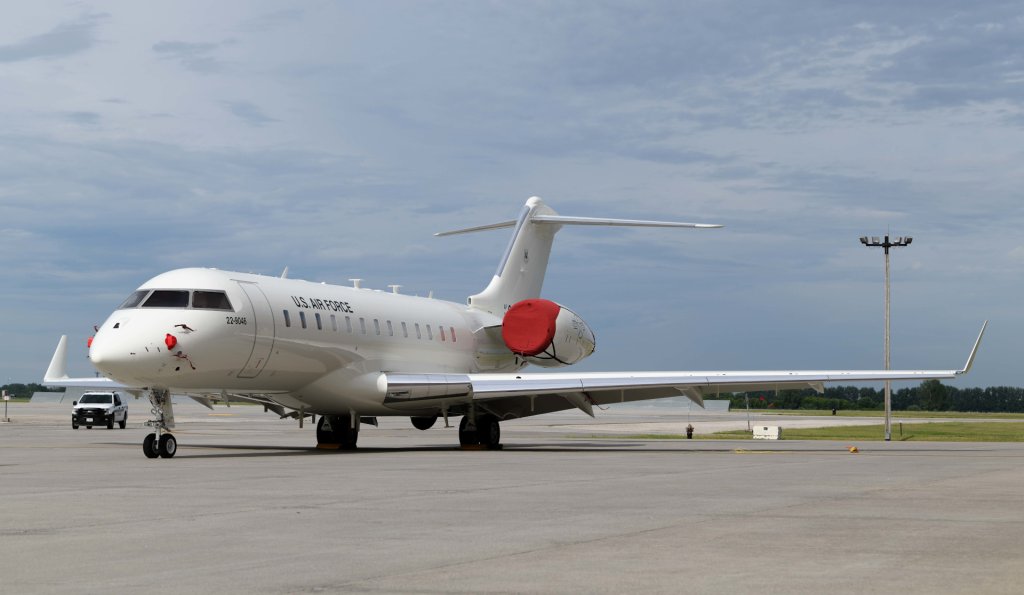
President Donald Trump has threatened to pursue a ban on U.S. sales of aircraft from Canadian firm Bombardier unless they move production south of the border. American officials have not elaborated on how such a total prohibition on domestic sales could take shape, but there are potential ramifications for the U.S. military, as well as commercial operators in the United States. The U.S. Army, in particular, has made Bombardier Global Express 6500-based ME-11B aircraft a cornerstone of its future aerial intelligence, surveillance, and reconnaissance (ISR) plans. For the moment, the U.S. Air Force flies its own fleet of E-11A Battlefield Airborne Communications Node (BACN) communications jets based on the Global Express family.

“NO MORE SELLING BOMBARDIER IN THE UNITED STATES!” Trump wrote in a post on his Truth Social social media platform yesterday. “If they want our Market [sic], they must build here, and stop treating America like a ‘piggyback.’ BUY AMERICAN.”

One of the US Air Force’s Bombardier Global Express-based E-11A BACN aircraft. USAF

The post, which was subsequently reshared by U.S. Ambassador to Canada Pete Hoekstra, also reiterated Trump’s accusations that the Canadian government has been deliberately slow-rolling certification of certain jets from rival U.S. planemaker Gulfstream. Back in January, the President also said he would “decertify” Bombardier aircraft in the United States over this issue, which would prevent them from operating in the United States, but this threat has yet to materialize into reality. Aviation authorities in Canada did certify five specific Gulfstream business jets in March, but do not look to have issued broader type certifications since then. Canada’s demand for more fuel system icing testing, at least on G700 and G800 models, has been cited as a factor in the length of the certification process. The U.S. Federal Aviation Administration (FAA) previously granted Gulfstream a conditional certification for these types that required demonstration of full compliance with domestic aircraft fuel icing regulations no later than the end of this year.

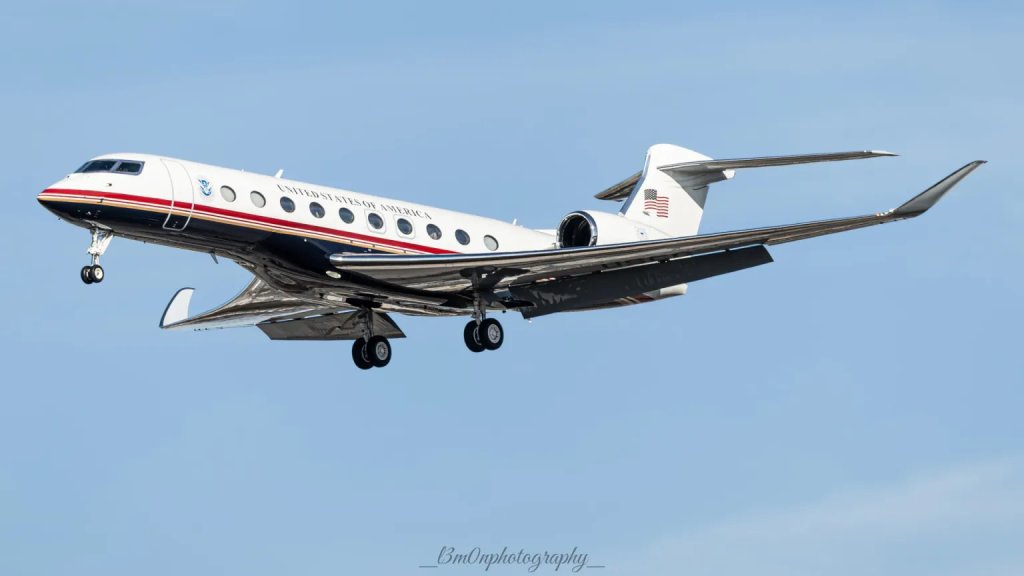
A stock picture of a Gulfstream G700 business jet. Gulfstream

Bombardier and Gulfstream actively compete globally in the large and super midsize business jet categories. A number of airlines in the United States also continue to operate CRJ-series small airliners, which were Bombardier products until 2020, when the line was sold to Mitsubishi Heavy Industries (MHI) in Japan. Today, the Canadian planemaker has a substantial U.S. presence, centered primarily in Wichita, Kansas, but does not build complete aircraft in the United States. We will come back to this later on.

Trump has specifically targeted Bombardier several times across both of his terms amid larger trade disputes with Canada. During Trump’s first administration, the U.S. government notably injected itself into a spat between the Canadian firm and Boeing that ultimately upended a proposed order for F/A-18E/F Super Hornet fighters for the Royal Canadian Air Force.

How the Trump administration might now seek to block sales of Bombardier jets in the United States is unclear. If there is no legal mechanism for instituting an outright sales ban, U.S. authorities could try to decertify jets from the Canadian firm or implement prohibitive tariffs or other economic measures. In addition to retaliatory certification actions, Trump has also threatened to levy tariffs on Canadian aviation firms in the past. Any of these courses of action could draw legal action or other retaliation from the Canadian government.

All of this raises questions about potential impacts on the U.S. military. As mentioned, the U.S. Army is in the process of acquiring a fleet of Global Express 6500-based ISR planes, designated ME-11Bs, under its High Accuracy Detection and Exploitation System (HADES) program. The Army has already divested all of its older turboprop-powered ISR aircraft as part of the transition to HADES. The service has also been utilizing several contractor-operated ISR planes based on different Bombardier business jets in the interim.

A Bombardier Global Express 6500-based Army Theater Level High-Altitude Expeditionary Next-Generation A-ISR (ATHENA) jet the Army has been utilizing as part of the transition to its new ME-11B HADES fleet. US Army

There is also the aforementioned Air Force fleet of E-11As. However, this may increasingly be something of a moot point, as these aircraft are now set to be retired in the 2028 Fiscal Year and supplanted with new space-based communications capabilities. There is still a possibility that Congress could block that plan, at least for a time.

TWZ has reached out to the Army and the Air Force in light of Trump’s latest remarks.

It is important to note that the U.S. certification process for military and civilian aircraft is separate, and that the Trump administration could exempt the former from any new action against Bombardier. After Trump’s decertification threat in January, the White House had told multiple outlets that in-service aircraft would be exempted from any such actions, but would not clarify whether further exemptions would be made for future U.S. military acquisitions.

Upending Bombardier’s business in the United States might have additional downstream effects, including on supply chains that support commercial and military fleets. Disruptions could also negatively impact any future sales opportunities to the U.S. military. When it comes to the latter point, since Trump started his second term, there has been a broader push to recapitalize U.S. government executive aircraft fleets. This has already included the purchase of new Gulfstream G700-based C-39A executive jets for the U.S. Coast Guard.

One of the U.S. Coast Guard’s new C-39A executive jets. Lemon Popp

The Air Force is also working to acquire a successor to its existing Gulfstream-based C-37 executive jets, tentatively designated the C-37C. Multiple branches of the U.S. military operate a host of other Gulfstream-based aircraft, including special mission types like the Air Force’s EA-37B Compass Call electronic warfare jets.

All this being said, there is no guarantee that Trump’s latest threats against Bombardier will materialize, whether or not they might impact U.S. military fleets. The President has already faced public pushback, including from at least one member of his own party, citing the Canadian firm’s existing economic contributions to the U.S. economy through its aforementioned American subsidiary.

“The presence of Bombardier in Wichita supports a local workforce of more than a thousand employees, who contribute their talent and expertise to our nation’s defense and aerospace capabilities,” Senator Jerry Moran, a Kansas Republican, wrote in a post on X yesterday. “This afternoon, I reached out to the Trump administration to make certain the President is aware of the significant contributions of Bombardier to Kansas and the importance of its presence in Wichita to many Kansas workers at Bombardier and in the Bombardier supply chain.”

“I will continue working to see that Bombardier’s manufacturing operations not only remain in Kansas but continue to grow and create American jobs,” Moran added. “Kansas is home to a hardworking, skilled workforce, and I will continue welcoming leaders in aircraft and defense manufacturing to do business here in the Air Capital of the World.”

“Bombardier’s American workers are based all around the United States with sites in Kansas, Texas, Arizona, Florida, Connecticut, Illinois, Delaware, California, Washington D.C. and New Jersey, as well as overall direct employment presence in more than 20 states,” Bombardier said in its own statement response to Trump’s comments, per NBC News. “Bombardier has also announced extensive plans to grow its defense activities as well as its service network and will, later this year, inaugurate a new facility in Fort Wayne, Indiana.”

The threat alone of U.S. government action could still have negative impacts for Bombardier broadly. The company’s stock price fell by some seven percent after Trump’s post yesterday, though it has rebounded somewhat as of the time of writing.

Trump’s trade war with Canada more broadly is still escalating after a new round of talks collapsed last month. The President and other U.S. officials also continue to make remarks about the country becoming the United States’ 51st state.

Many questions remain to be answered about Trump’s new threats against Bombardier and how they could be implemented, if at all. The President has certainly created new uncertainty regarding the Canadian planemaker’s access to the American market without yet definitively clarifying when the U.S. military could be exempted.

Contact the author: joe@twz.com

The post Trump Threatens Canadian Jets At The Center Of Army Aerial Surveillance Plans appeared first on TWZ.
  •  

USAF Wants MQ-9 Reaper Successor At A Fraction Of The Cost At $10M Each

The U.S. Air Force is targeting an approximately $10 million unit price, excluding sensors and certain other systems, for a drone to succeed the MQ-9A Reaper. The cost of a fully kitted-out Reaper today is generally reported to be between $30 million and $50 million. The Air Force is also now pushing to accelerate the program to acquire the new drones, dubbed the Massed Modular Aircraft (MMA), amid what it admits are “concerning” Reaper losses in the course of recent operations against Iran.

Air Force Lt. Gen. Christopher Niemi, the service’s Chief Modernization Officer, told reporters that the goal was for the MMAs to be “closer to half” the cost of a Collaborative Combat Aircraft (CCA), at a roundtable at the Pentagon yesterday, according to Breaking Defense. He also said the service was hoping to see the price tag on its future CCAs fall to around $20 million after full-rate production of those drones gets underway.

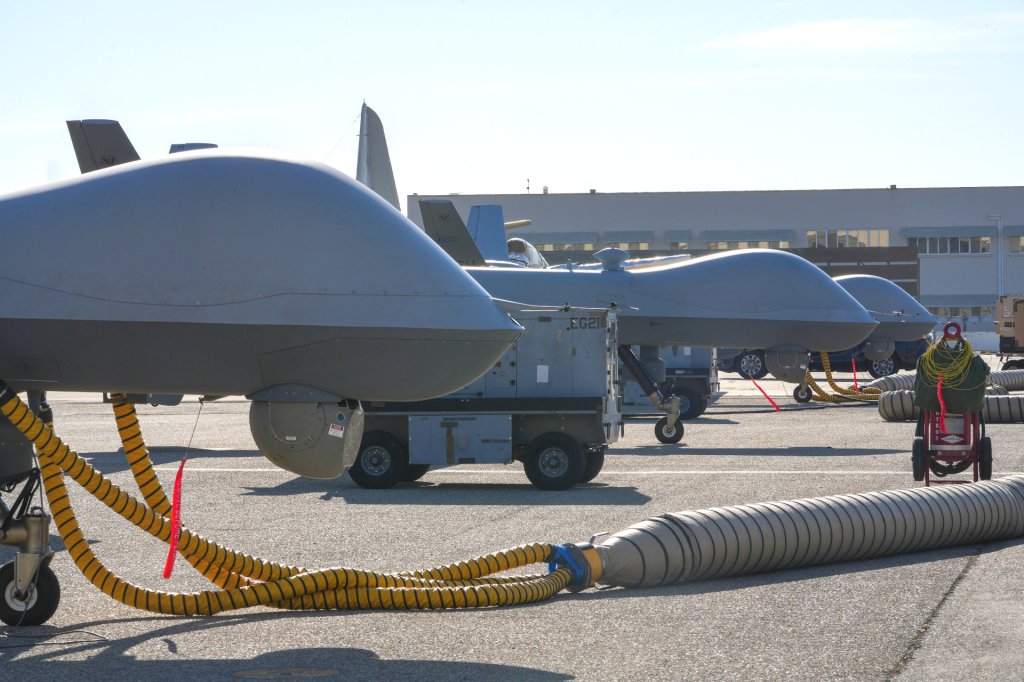
Three U.S. Air Force MQ-9 Reaper remotely piloted aircraft, assigned to the 432nd Wing, are prepared for takeoff during Bamboo Eagle 25-3 on Naval Base Ventura County, Point Mugu, California, August 5, 2025. The exercise tests participants' ability to execute Agile Combat Employment with precision, deploying follow-on forces and adapting to rapidly evolving threats while maintaining operational tempo. (U.S. Air Force photo by Staff Sgt. Ariel O'Shea)
A row of USAF MQ-9A Reapers. USAF/Staff Sgt. Ariel OShea

Beyond cost, the Air Force has previously said that it wants the MMA drone to perform the same general intelligence, surveillance, and reconnaissance (ISR) and strike missions as the MQ-9A. To that end, stated program requirements to date include a speed of at least 200 knots true airspeed, a munition and sensor payload capacity of at least 2,800 pounds, an unrefueled combat radius of at least 2,300 nautical miles with payload, the ability to self-deploy one-way at least 8,000 nautical miles, and the ability to operate from runways no longer than 6,000 feet. The MMAs also need to be highly modular and use open architecture mission systems to make it easier to integrate new capabilities and functionality down the line.

With all that in mind, Niemi’s MMA cost “estimate includes only the cost of the air vehicle, without being fully missionized,” an Air Force spokesperson clarified after yesterday’s roundtable, per Breaking Defense.

The MQ-9A is out of production, but, as mentioned, the full cost of each one in Air Force service today is generally pegged at between $30 million and $50 million, depending on the sensors, weapons, and other mission equipment they carry. Speaking yesterday, Lt. Gen. Niemi explicitly used the $50 million price point to underscore the MMA program’s unit cost target, as well as explain why the Air Force does not view the newer, in-production MQ-9B as a path to meeting its current needs. General Atomics developed the MQ-9B from the Reaper, but the former is a significantly evolved design with substantial differences from its predecessor.

“If you don’t like losing an MQ-9A that cost on the order of $50 million, with the sensors, you’re probably not going to like losing an MQ-9B at a higher price point,” Niemi said at yesterday’s roundtable, according to a separate report from Air & Space Forces Magazine.

An MQ-9B drone. General Atomics

“There’s a, I think, sort of a misconception that because the MQ-9B is in production, we can walk down there with a big fat check and have 100 of them this year,” the general also said, Breaking Defense also reported. “That’s not reality.”

Niemi acknowledged that tradeoffs will have to be made to find an MMA design that is substantially lower cost compared to the MQ-9A.

“You’re going to have to certainly give up something,” he said, per Breaking Defense. “There’s no doubt if we try and pursue the exact same approach that we had with things like the MQ-9, we’re going to get something that costs about the same as an MQ-9.”

However, “what makes the MQ-9 special has nothing to do with the aircraft itself. Like there is no cutting-edge technology for how fast it flies, how high it flies, how far it flies, all that is proven, decades-old technology,” he added, according to that outlet. “So, if you’re focusing on the truck, and you do it in a way where you’re able to make some smart design compromises … we do think you can drive the cost down.”

Niemi said that he expected the MMA, in very general terms, to look much like an MQ-9, including that it would likely also be turboprop powered and have a similarly shaped main wing.

A US Air Force MQ-9A Reaper. USAF

“I think it’s all going to be proven stuff, because that’s how I’m going to drive down the cost so I can get to that goal that I laid out,” Niemi added.

For its part, General Atomics has had choice words in the past regarding discussions about the costs of the MQ-9A and MQ-9B, as well as their capabilities, particularly in light of recent losses. We will come back to the matter of attrition in a moment.

“Some say we need cheaper, disposable aircraft, so that we can use them and throw them away, or lose them and not feel bad about it. No one is talking about actual capability, ready today,” C. Mark Brinkley, a spokesperson for the company, told TWZ back in June after new discussions about a Reaper successor for the Air Force first began to surface. “No one is talking about all of the hard lessons, already learned, about icing and weather and weapons integration. No one is talking about the multiple survivability upgrades available for the existing platforms and the lack of investment in those.”

“These make-believe weapons that don’t exist have the luxury of being anything you imagine them to be,” Brinkley added at that time. “Unscratched lottery tickets, promising all of the win and none of the lose [sic].”

USAF

“I think it’s really unfortunate that MMA has been branded as a ‘Reaper replacement’ because it misrepresents what America needs now and what we need later,” he told us last month. “We need an immediate backfill solution to a critical shortage of unmanned MALE [medium altitude, long endurance] ISR/Strike. We need to get going on that now. MMA isn’t a backfill solution, or even a bridge to a backfill solution. This isn’t that.”

Brinkley was speaking here in the context of a discussion about Wildfire, a new drone General Atomics is now developing in response to the MMA requirements.

Wildfire “addresses all of the concerns posed by the MMA solicitation. We can deliver years earlier and maintain the same high quality. You can have everything that makes Reaper special, plus more, at a price that doesn’t break the bank,” Brinkley also told Breaking Defense for its story yesterday.

All of this brings us back around to the matter of MQ-9A losses and the Air Force’s efforts now to accelerate the schedule for the MMA program.

Exactly how many MQ-9As the Air Force has lost due to enemy fire or for any other reason in the course of operations against Iran this year is unknown, but it is reliably reported to be in the dozens. The service is also understood to have lost dozens more Reapers last year during operations targeting Iranian-backed Houthi militants in Yemen. The service is on record saying that its Reaper fleet had shrunk to 135 airframes as of May, down from an official total of 165 as of the start of Fiscal Year 2026. It is also important to note here that these inventory numbers do not include Reapers operated by the Marine Corps or the Central Intelligence Agency.

A Marine MQ-9 Reaper. USMC

Air Force officials have offered glowing assessments of the MQ-9A’s performance in operations against Iran, despite these losses, but have also said that the level of attrition is worrisome. That reality, in turn, had major impacts on discussions that led to the current MMA program.

“Although we have plenty of MQ-9As today, we are going through them at a rate that is concerning to us,” Niemi said yesterday, according to Air & Space Forces Magazine. “There’s not a lot of good options to immediately replace those aircraft.”

When the MMA program was first announced in July, the stated goal was to have an initial operational fleet of 20 of the drones in service by 2031. The Air Force is now working to push that timeline to the left, but still sees fielding of the new drones as being around three years away, at least. The service eventually hopes to acquire at least 180 MMAs.

“I can’t buy an MMA today. The reality is, based on the budget and other constraints, that I’m not going to buy a whole lot of MQ-9Bs today either,” Niemi conceded, per Breaking Defense.

It is important to remember here that the Air Force has already tried multiple times to develop a replacement for the MQ-9 without success. In that time, the idea of what a successor to the Reaper would look like has changed dramatically. As we’ve written previously:

“The Pentagon has long worked on the basis that a future conflict with a peer rival, and especially with China in the Pacific, would see it facing highly robust anti-access/area-denial (A2/AD) scenarios. With that in mind, previous Reaper replacement studies had suggested that low observability would need to be incorporated into the design.”

“The latest thinking seems to reject that, or at least reorient the program toward a lower-cost platform of the kind that the Air Force would be able to field in mass, as well as to absorb the anticipated attrition in a high-end conflict. This does not preclude this airframe from featuring low-observable elements. In fact, it most likely will. But those would be more aggressively balanced against cost.”

MMA is also looking at a wider slate of potential vendors. General Atomics, which has long had a monopoly on the U.S. MALE combat drone market, is not the only one angling now for an MMA contract.

A rendering of a stealthy concept Northrop Grumman previously put forward as a possible MQ-9 replacement, underscoring how the thinking in this regard has changed over the years. Northrop Grumman

Overall, as we have previously written in the context of the Air Force’s latest effort to move beyond the Reaper:

“…the U.S. drone landscape has changed considerably in terms of manufacturers. A few years ago, Northrop Grumman, Lockheed Martin, and General Atomics would have been seen as the front-runners for the MQ-9 replacement. Now, there are more contenders, often with a founding focus on rapidly scaling up production at low cost. Still, these firms have much to prove, especially considering the risk in replacing an aircraft as important as the MQ-9. At the same time, in the more advanced drone space, the legacy defense ‘prime’ contractors are also making major progress in leveraging new technologies to reduce production costs and migrating away from exquisite, very expensive drones as their default offerings.”

The possibility was reportedly raised yesterday that the MMA program could ultimately lead to the fielding of multiple types of drones through successive incremental development cycles. This is exactly how the Air Force is running its CCA program now.

With the Air Force now pushing for a more aggressive schedule for the MMA effort, more details about the designs it is considering may begin to emerge relatively soon. The service certainly has a pressing need already for these drones after so many MQ-9A losses.

Contact the author: joe@twz.com

The post USAF Wants MQ-9 Reaper Successor At A Fraction Of The Cost At $10M Each appeared first on TWZ.

  •  

The Three Foreign Frigates Being Studied For Possible U.S. Navy Service

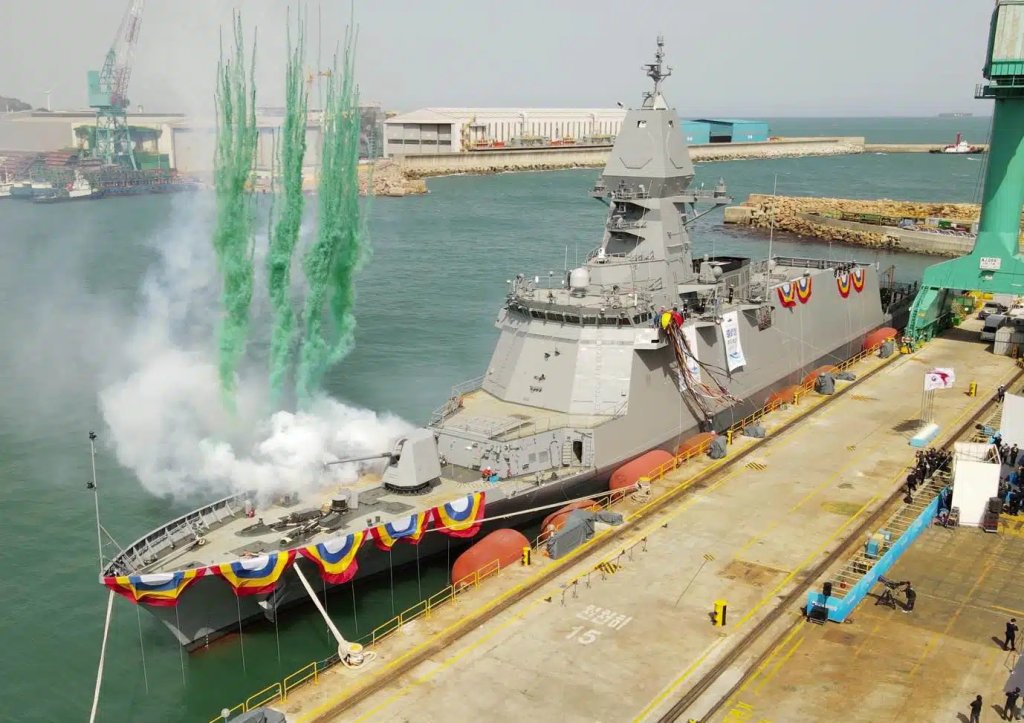
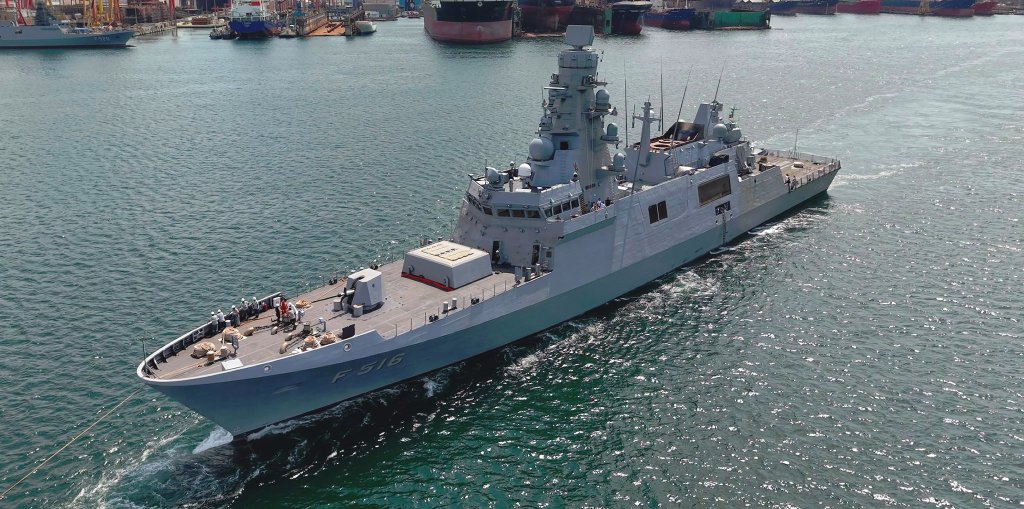
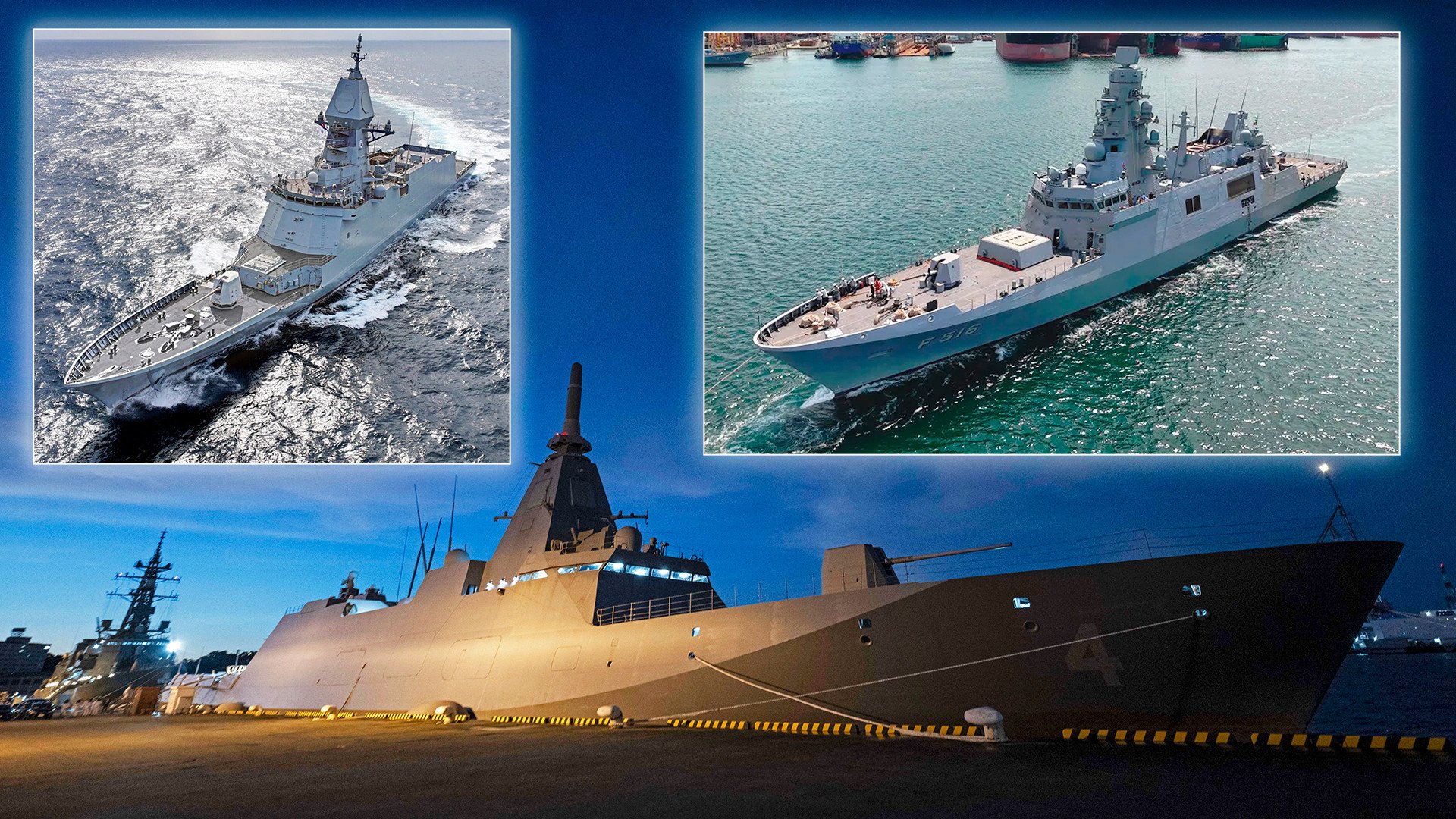
Three foreign frigates – Japan’s Mogami class, the South Korean Chungnam class, and the Istanbul class from Turkey – are reportedly included in a study of ships the U.S. Navy could procure. The Trump administration has been openly pushing to leverage ships designed in friendly countries to rapidly bolster the Navy’s fleet while also working to rebuild America’s shrunken domestic shipbuilding capacity. So, it is worth examining what each design brings to the table, as well as the broader opportunities and major hurdles procuring any of them would represent.

USNI News was first to report on Tuesday that the Japanese, South Korean, and Turkish frigates are included in an ongoing Navy study, citing anonymous sources. The review is in direct response to one of the provisions in a larger memo President Trump sent out last month, titled “Rebuilding the United States Navy and America’s Shipbuilding Industrial Base.” This also comes amid strong opposition in Congress to the basic idea of buying foreign warships for the Navy.

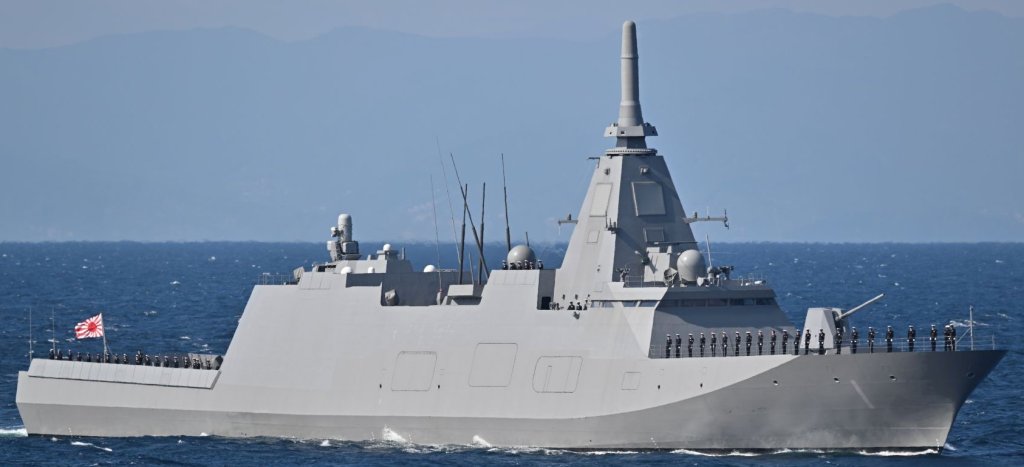
A pair of the Japan Maritime Self Defense Force’s (JMSDF) Mogami class frigates. JMSDF

Per that memo, the Secretary of the Navy (currently Acting Secretary Hung Cao) was directed to “submit a plan to the President … that includes timelines and resourcing requirements, for a new competitive acquisition approach for surface combatants with sufficient inherent capabilities to perform anti‑submarine warfare, surface warfare, and convoy escort duties.” The memo also said the “plan should address meeting the requirements for Consolidated Cargo Replenishment at Sea (CONSOL) Tankers and — separately — Roll-On, Roll-Off Vessels.”

The study could lead to “an international warship competition [that] could include building up to two of the ships in foreign shipyards before transitioning to domestic yards as part of the Trump administration’s push to rapidly expand the fleet, three industry sources familiar with the deliberations confirmed,” according to USNI News‘ report. The outlet also said the Navy declined to “directly address the potential for an open competition for a new frigate” when asked.

The South Korean Navy’s ROKS Chungnam seen during sea trials before its delivery in 2024. HD Hyundai Heavy Industries

The acquisition approach described here is in line with what the Trump administration is currently calling the “Finland Model,” which entails construction of an initial batch of ships overseas before moving further production to yards in the United States. The name comes from a partnership the U.S. and Finnish governments announced last year regarding the construction of new icebreakers for the U.S. Coast Guard. Canada’s Seaspan Shipyards is also involved in that plan.

Broader plans to explore foreign surface combatant designs for the U.S. Navy, and potentially more to acquire one of those ships, were mentioned in the Pentagon’s 2027 Fiscal Year budget request released earlier this year. President Trump, former Secretary of the Navy John Phelan, and other U.S. officials have also openly raised the possibility of cooperation with shipbuilders in Japan and South Korea, specifically, including with regard to surface combatants. USNI‘s report says that the Istanbul class was included in the current review after it came up in discussions between Trump and Turkish officials on the sidelines of the NATO summit in Ankara in July.

Many questions remain, but there are clear signs the Trump administration wants to move in pursuing the acquisition of foreign naval vessels. The particular focus on frigates also aligns with a clear Navy need for new ships in that size class.

Why frigates?

Before exploring the specific designs the Navy is now said to be reviewing, it is worth taking a step back to understand why frigates are so important to the service’s shipbuilding plans, in general. The United States has not technically operated frigates since the retirement of its last Oliver Hazard Perry class type in 2015. The expectation had been that the Freedom and Independence class Littoral Combat Ships (LCS) would fill the resulting gaps. However, those ships struggled for years with a variety of major issues over the years and still have not lived up to their promised potential, despite certain strides having been made in expanding their operational employment in recent years.

The Navy’s announcement of a new frigate program in 2019, dubbed FFG(X), was widely seen as a rebuke of the core concepts behind the LCS. This, in turn, led to the Constellation class frigate, which became a debacle unto itself and was finally cancelled last year. It is important to point out the Constellation design was based on the established Franco-Italian FREMM frigate. The expectation was that only relatively minor changes would be made before putting the ship in American service. In the end, the U.S. derivative had only 15 percent design commonality with its European ‘parent,’ which directly contributed to the demise of the program.

A rendering of a now-cancelled Constellation class frigate. USN

A new FF(X) frigate program has since emerged. Through that effort, the Navy is now in line to get ships derived from the U.S. Coast Guard’s Legend class National Security Cutter (NSC), with the goal being to have the first one in the water by 2028. However, those frigates, at least the ones built in the initial tranche, will lack a Vertical Launch System (VLS) and certain other features that were seen as critical for the preceding Constellation class. This has immediately raised questions about the operational utility of these new small surface combatants, as TWZ has previously explored in detail.

A rendering of the US Navy’s future FF(X) frigate. USN

None of this diminishes the Navy’s current desire for new frigates, and more of them, to provide smaller, lower-cost platforms that can be used to bolster larger surface action groups or operate more independently in roles that do not require larger, more capable designs. When fielded in sufficient volume, they can also free up other types of surface combatants for other, higher priority duties or similar help to relieve strain on those fleets.

Today, the Navy’s fleet of Arleigh Burke class destroyers “gets used with a very high demand signal combatant commanders. The Navy can’t operate with only one size of ship,” Rear Adm. Brian Metcalf, the Navy’s Deputy Portfolio Acquisition Executive Maritime for Combatants, said in an official video in June. “The [FF(X)] frigate will fill that gap. They can be used in less contentious waters. They can be used as high-value escorts. There are all kinds of things the frigate can fill the gap for and allow destroyers to execute the high-end mission set.”

With all this in mind, it is not surprising that the Navy would be seeking to further bolster its future frigate fleets on a shorter timetable by leveraging foreign shipbuilders. There are also clear benefits to taking advantage of capable, in-production designs, which leads us to the Mogami, Chungnam, and Istanbul classes.

The Mogami class

Japan’s Mogami class, with its stealthy design characteristics, has long been a standout among modern frigates currently in production globally. The ship is designed as a multi-mission platform with anti-air, anti-surface, anti-submarine, and mine warfare capabilities, the latter of which includes both mine-hunting and mine-laying.

TWZ has covered the ship in detail in the past, writing:

“The original Mogami class design (also known as the 30FFM), the first of which only entered Japanese service in 2022, is already a very modern design with its shape featuring some stealthy characteristics. The 436-foot-long, 53-and-a-half-foot-wide, 5,500-metric-ton displacement frigates have a combined diesel and gas (CODAG) propulsion system that allows for fuel-efficient normal cruising operations and an additional burst of speed in combat. The ships have an active electronically scanned array (AESA) main radar, as well as a host of other advanced sensors and mission systems. One of the Mogami‘s most distinctive features is its NORA-50 UNIted COmbined Radio aNtenna (UNICORN) mast on top of the main superstructure, which contains various antennas. The frigates also have especially futuristic-looking Combat Information Centers (CIC)…”

The Japan Maritime Self Defense Force’s (JMSDF) first-in-class JS Mogami. JMSDF

“Armament-wise, the baseline Mogami class frigate has two four-round launchers for Type 17 anti-ship cruise missiles, a SeaRAM close-in defense system loaded with RIM-116 Rolling Airframe Missiles (RAM), and a five-inch main gun in a turret at the bow. There are also two remote weapon stations, each armed with a .50 caliber machine gun, on top of the bridge for additional protection against close-in low-end threats.”

“The Mogami design was originally slated to feature a 16-cell Mk 41 launch system array, but the seventh ship in the class, the JS Niyodo, which was commissioned in May, was the first to be fitted with it. The first six of these frigates were delivered without this capability, but they are expected to be back-fitted with it in the future. Mk 41 cells on Mogami class frigates are expected to be primarily filled with domestically-developed A-SAM or U.S.-designed RIM-162 Evolved Sea Sparrow Missiles. Four ESSMs can notably be loaded in a single Mk 41 cell.”

The Mogami class frigates also have a flight deck and hangar designed to accommodate a single Seahawk helicopter. The ships can also deploy uncrewed underwater and surface vessels (UUV/USV), as well as rigid-hull inflatable boats (RHIBs), via a ramp at the stern.

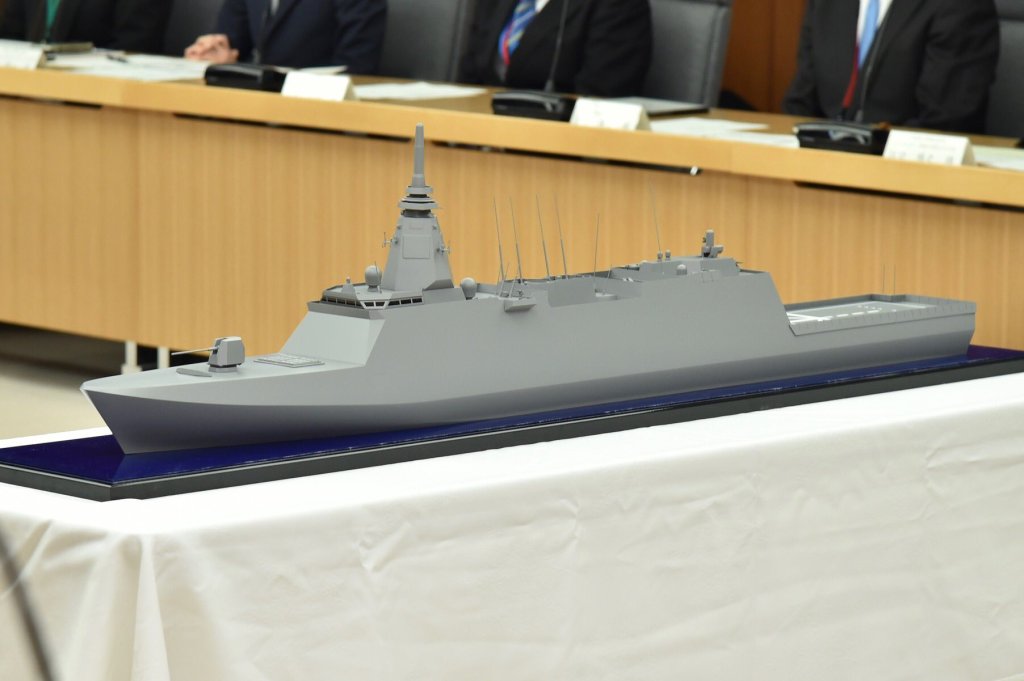
MHI in Japan has also developed an enlarged derivative that is close to 466 feet long, almost 56 feet at its widest, and displaces some 6,200 metric tons. This version also features a 32-cell VLS array, along with an upgraded radar, other improved sensors, and updated mission systems. Last year, the Australian government announced it would be acquiring a fleet of these ships with certain unspecified country-specific features as part of its SEA 3000 program.

A model of the enlarged derivative of the Mogami class. Japan Ministry of Defense

The Australian deal is one of, if not still the most significant foreign arms sale for Japan since the end of World War II. It also helps ensure that the Mogami production line will remain hot for years to come. For the U.S. Navy, sharing a frigate with two of America’s highest-profile allies in the Pacific, and which could therefore be readily serviced in those countries, would be very advantageous.

The Mogami is also a contender to become New Zealand’s next frigate, and there have also been discussions about sales to Indonesia. The Japan Maritime Self Defense Force only has two more of these frigates on order, the last of which is expected to be commissioned into service by March of next year.

The Chungnam class

The Chungnam class (also sometimes referred to as the FFX-III or FFG-III) is the latest frigate for the South Korean Navy, and features a mix of anti-air, anti-ship, and anti-submarine capabilities. The first example entered service in that country in 2024. These ships are just over 423 feet long, approach 49 feet at the widest point in the hull, and displace some 4,300 tons with a full combat load. The design is based on the earlier Daegu class, which was itself an evolution of the preceding Incheon class that traces its roots back to the late 1990s.

As was the case on the Daegu class, the Chungnam class uses combined diesel–electric or gas (CODLOG) propulsion, which offers benefits for power management and efficiency, as well as when it comes to reducing maintenance requirements and operating costs. The design features a prominent integrated mast structure with four fixed-face arrays for the main multi-function AESA radar near the top. The ships have additional radars and other sensors, as well as an electronic warfare suite.

The ROKS seen at the time of its launch. HD Hyundai Heavy Industries

Each one of the Chungnam class frigates has a 16-cell K-VLS array. Domestically developed K-SAAM surface-to-air missiles and Haeseong I anti-ship cruise missiles (also called the SSM-700L or C-Star), as well as K745A1 Hong Sang Eo (Red Shark) vertically-launched anti-submarine rockets, can be loaded into these cells.

The armament package on these ships also includes a five-inch main gun in a turret at the bow, a pair of triple torpedo tubes, and a Close-in Weapon System II (CIWS II) armed with a seven-barrel 30mm Gatling-type cannon.

A look at the CIWS-II, which is part of the full armament package on the Chungnam class frigate. Hyundai WIA

The Chungnam class frigates also have a flight deck and hangar for a single helicopter at the stern.

As it stands now, the South Korean Navy has two Chungnam class frigates in service and has plans to acquire four more over the next few years. The lead ship in the class was built by HD Hyundai Heavy Industries, which is also one of the principal designers of the ship. A different shipbuilder, SK Oceanplant, built the second ship in the class, ROKS Gyeoungbuk, and is now working on the third and fourth examples. Hanwha Ocean is reportedly in line to build the last two ships in the class for South Korea. Hyundai and Hanwha have pitched export designs based on the Chungnam class, with both firms notably in the running to supply new frigates to Thailand.

Hanwha has already been making steady inroads in the shipbuilding industry in the United States, including the acquisition of the Philly Shipyard in Philadelphia, Pennsylvania, in 2024. Hyundai has reportedly been working to do the same. Just last month, Hanwha publicly announced a new $1.2 billion bid to buy out Australian shipbuilder Austal’s U.S. subsidiary, Austal USA. Austal notably built the Independence class LCSs for the U.S. Navy and continues to supply that service with other vessels. Austal subsequently said it was considering the South Korean offer.

The Istanbul class

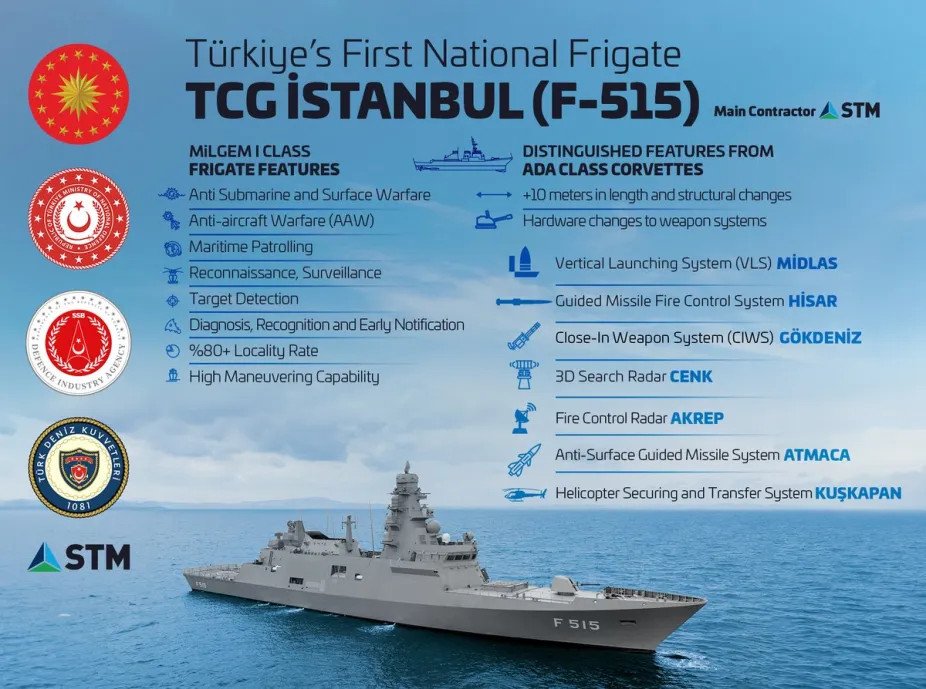
Turkey’s Istanbul class (also known as the Istif class or just I class), developed under the country’s MILGEM national warship program, is not a design that has typically come up in previous discussions about potential foreign-made frigates for the U.S. Navy. It is described as a multi-role frigate with anti-air, anti-surface, and anti-submarine capabilities. The lead ship in this class, TCG Istanbul, entered Turkish Navy service in 2024.

At around 371 and a half feet long and with a beam of just over 47 feet, as well as a displacement of some 3,000 tons with a full combat load, the Istanbul class is notably smaller than either the Mogami class or Chungnam class. Like the Mogami, it uses CODAG propulsion. The Turkish design is understood to have leveraged lessons learned from the Project GENESIS program to upgrade the country’s second-hand ex-U.S. Navy Oliver Hazard Perry class frigates, as you can learn more about here.

TCG Istanbul is armed with a 16-cell MiDLAS VLS array, with past reports saying it is primarily configured to fire Hisar short-to-medium-range surface-to-air missiles. However, just in August, it was revealed that the second ship in the class, the future TCG Izmir, which is undergoing sea trials now, has a new 16-cell version of MiDLAS with visibly longer cells. This would allow the ship to fire larger weapons vertically, such as the Siper medium-range surface-to-air missiles, Atmaca anti-ship cruise missiles, and/or Gezgin land-attack cruise missiles. MiDLAS is a scalable VLS design developed in Turkey as an alternative to the U.S.-made Mk 41.

The future TCG Izmir with its noticeably larger VLS array in front of the main superstructure. Anadolu Shipyard

The initial Istanbul class design already had four deck-mounted launchers that can be loaded with up to 16 Atmaca missiles, in total. The frigates also have a 76mm cannon in a turret on the bow, a Gokdeniz CIWS with a twin-barrel 35mm cannon, two 25mm cannon-armed remote weapon stations, and a pair of twin torpedo tubes.

The main sensor on the Istanbul class is a rotating AESA radar mounted on top of the ship’s main integrated mast structure. It has additional radars and other sensors, as well as electronic support measures and electronic countermeasures systems.

The Istanbul class design also features a flight deck and hangar at the stern, sized around the Seahawk helicopter.

An infographic offering a general overview of the Istanbul class’ capabilities. STM via X

As mentioned, the second Istanbul class frigate for the Turkish Navy is now in sea trials, and the country plans to eventually acquire eight of these warships in total. They are being built through several shipyards in Turkey. Last year, Turkey’s TAIS Shipyards also secured a contract to build at least two Istanbul class frigates for Indonesia.

Growing U.S. roadblocks to any foreign warships

Much remains to be seen about how the U.S. Navy might proceed with the acquisition of new frigates, or any other naval vessels, via foreign shipbuilders. Whether any other relevant, in-production designs are being considered, or could be in the future, is unknown. USNI News‘ report says the current study is scheduled to wrap up in November.

Furthermore, what the Navy might want to do could well turn out to be moot. Members of Congress on both sides of the political aisle have been very vocally pushing back on any plans to acquire foreign warships amid concerns about negative impacts on the U.S. shipbuilding industry.

Current U.S. law would already require the Trump administration to issue a national security waiver to pursue foreign-made naval vessels. A draft of the annual defense policy bill, or National Defense Authorization Act (NDAA), for the 2027 Fiscal Year now making its way through the Senate would eliminate the ability to issue such a waiver. In June, members of the House Armed Services Committee separately moved to outright block any spending on foreign-built warships in a separate draft NDAA.

The aforementioned Finland Model, as outlined in Trump’s August memo, is clearly intended to try to assuage Congressional concerns. Under the stated plan, foreign shipbuilders would be required to make major investments in U.S. shipbuilding enterprises and hire American workers as part of any future contract, even if an initial tranche of vessels is built overseas.

A rendering of one of the future Arctic Security Cutter icebreakers the US Coast Guard is set to acquire in part through a shipyard in Finland. Seaspan

“The Administration strongly opposes section 1025, which would prohibit the use of funds for procurement of initial battle force ships to be built in a foreign shipyard, especially while, in accordance with the ‘Finland Model’ first employed with the Coast Guard’s medium icebreaker program, long-term investments are being made in an American brown or greenfield shipyard,” the White House’s Office of Management and Budget (OMB) wrote in a statement of Administration Policy in July, specifically in response to provisions in the the House’s NDAA draft. “This prohibition fails to seriously address the challenges posed by current shipbuilding backlogs across six major programs in our ‘prime’ shipyards.”

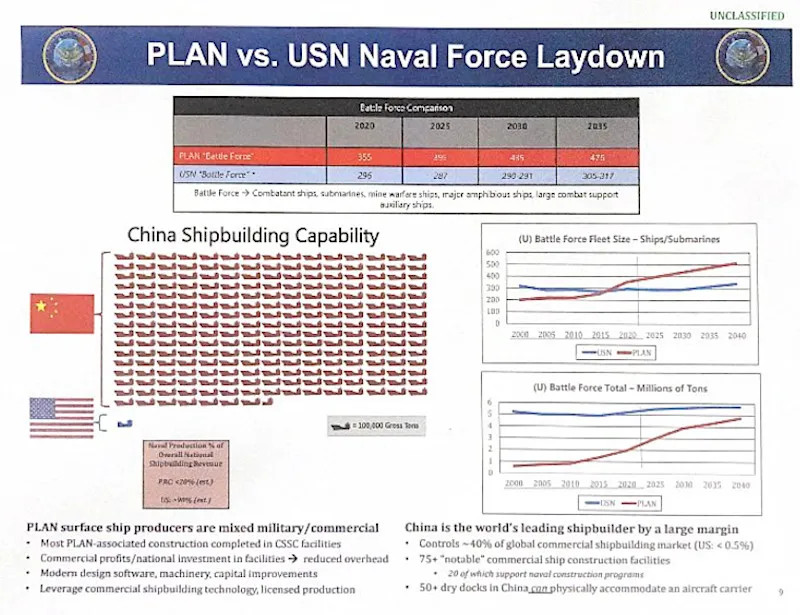
This latter point here speaks to an already worrisome and still-widening gap between U.S. shipbuilding capacity and that of chief global competitor China. The U.S. government has tried to take steps in recent years to revitalize the American side of the equation, but workforce retention and other factors have continued to present serious hurdles. There are additional concerns now about how the addition of work on the Trump class battleship program will affect America’s naval shipbuilding ecosystem, which the Trump administration has separately pushed back on.

An unclassified Office of Naval Intelligence briefing slide from circa 2023 underscoring the disparity between U.S. and Chinese naval shipbuilding capacity. ONI

Continuing U.S. shipyard capacity and quality issues raise their own questions about the viability of the Finland Model. The construct inherently limits the U.S. government’s ability to make use of yards overseas and is heavily contingent on the shipbuilding industry in the United States expanding at a rate where it will be able to absorb the additional production demands. With the naval shipbuilding deficit already becoming extremely problematic, buying examples of relevant classes with minimal changes and having them built where production is already established could arguably be the priority, especially in light of the failures of the LCS and Constellation programs.

Ensuring that any U.S.-specific changes to the design are minimal will also be critical for any such plan to be successful. As mentioned, the Constellation class was undone in large part due to a near-constant stream of changes ordered by the Navy, which negated the benefits of choosing a derivative of an in-production design. The service has stressed its intention to avoid any similar pitfalls with its existing FF(X) frigate program, which also has to be factored into the larger domestic shipyard capacity question.

“The President has directed the Navy to aggressively increase domestic shipbuilding capacity, including leveraging the proven shipbuilding skills and industrial expertise of our allies,” Navy Capt. Ron Flanders said in a statement on Tuesday, according to USNI News. “We are actively developing options to fulfill the President’s intent to deliver ships faster while ensuring long-term investment, technology transfer, and workforce expansion within United States shipyards.”

Signs are certainly growing that the Navy is moving closer to kicking off a formal process to acquire foreign-designed warships, which could include Mogami, Chungnam, and/or Istanbul frigates, to help grow its fleets, especially in the face of growing challenges posed by China.

Contact the author: joe@twz.com

The post The Three Foreign Frigates Being Studied For Possible U.S. Navy Service appeared first on TWZ.
  •  

USS Abraham Lincoln Looks Like It’s Been Through Hell After 286 Days At Sea

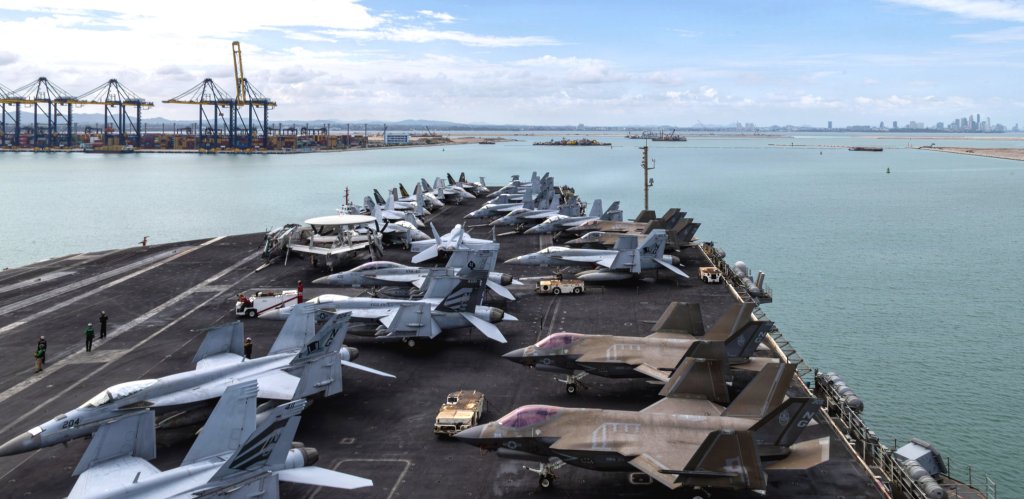
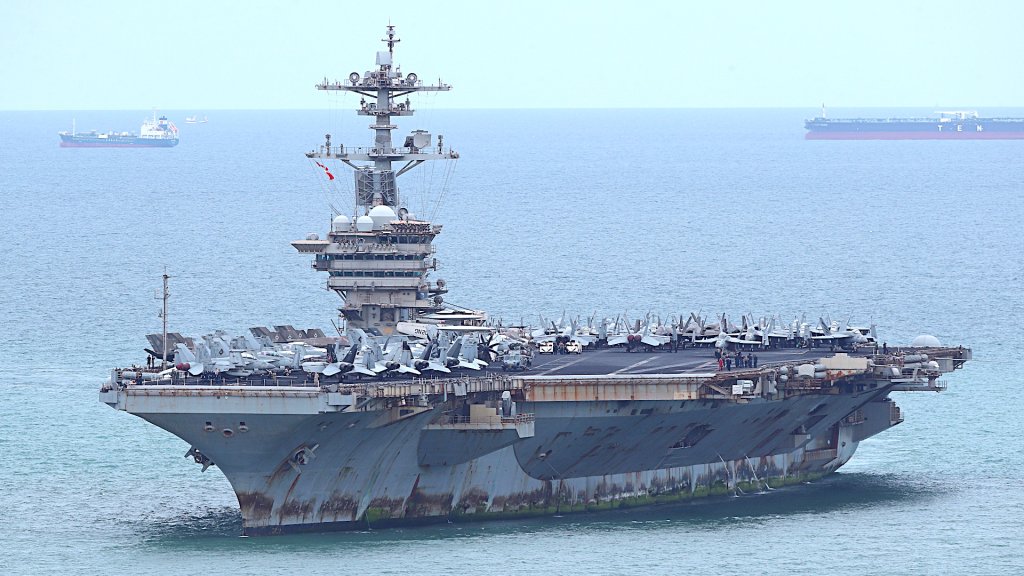
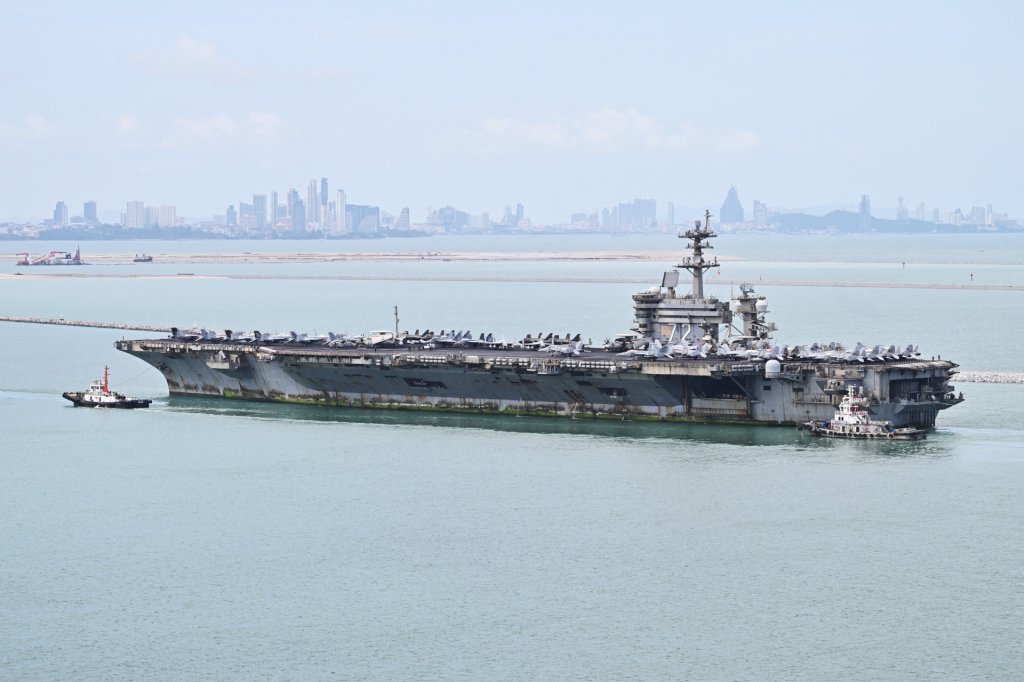
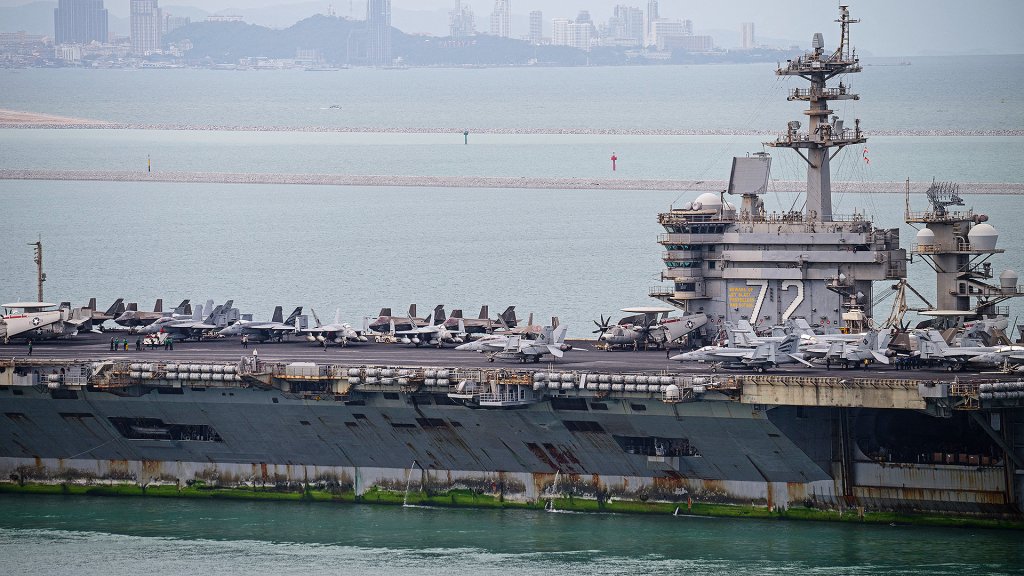
The U.S. Navy’s supercarrier USS Abraham Lincoln is now in Thailand for a much-deserved and highly publicized liberty port call. The carrier had gone 286 days without making such a stop, with much of that time spent executing grueling combat operations against Iran. The ship has been run very hard, relying on at times a rickety conveyor of sea replenishments to continue operating for months on end, and it has the scars to show for it. The Lincoln looks very much worse for wear, with so-called “running rust” and algae caked all along the sides of the hull, as well as around the edges of the flight deck and sponsons on either side. It’s something of a startling appearance for one of the most powerful ships on the planet and a major symbol of U.S. power projection, but it is also a reminder of what the vessel and its crew have endured for months on end.

The Lincoln arrived in the Thai port of Laem Chabang earlier today. The carrier did make a stop in Guam in December 2025 and reportedly made another one somewhere in the Middle East in July. However, in both cases, these have been characterized as brief logistical stopovers that did not offer any real opportunity for personnel onboard to disembark. Thai media reports say the carrier is expected to remain in Laem Chabang through the end of the weekend.

“Our arrival in Laem Chabang provides a well-deserved opportunity for our Sailors and Marines to rest and recharge. It also underscores the strong and enduring partnership and alliance between the United States and Thailand,” Rear Adm. Robert E. Loughran, commander of Carrier Strike Group 3 (CSG-3), said in a statement in a press release today. “What this strike group has accomplished is truly historic. I could not be prouder of the exceptional professionalism and expertise demonstrated by every member of this team during our operations in the U.S. Central Command area of responsibility.”

An official picture the US Navy has released of the USS Abraham Lincoln arriving in Thailand today. USN

Lincoln and its strike group had left port in San Diego in November 2025 for what was originally expected to be a routine cruise in the Pacific. The carrier, its air wing, and escorts were subsequently directed to the Middle East and arrived in that region in January 2026.

CSG-3 took part in the opening salvo of strikes on Iran on February 28 as part of what the U.S. military dubbed Operation Epic Fury. Lincoln and the rest of the strike group continued to support Epic Fury and subsequent operations against Iran for months thereafter. The decision was finally made to rotate the carrier out of the region last month following a raft of reports of severely flagging morale and mental health among the crew, which we will come back to later.

Two of the Arleigh Burke class destroyers assigned to CSG-3, the USS Michael Murphy and the USS Spruance, are still understood to be operating in the Western end of the Indian Ocean. A third destroyer in the strike group, the USS Frank E. Petersen Jr., accompanied the Lincoln to Thailand and is now docked in a separate port in Sriracha, near Laem Chabang. The Ticonderoga class cruiser USS Robert Smalls also helped escort the carrier, and that warship “also arrived in Map Ta Phut, Thailand for their own scheduled port visit,” according to the Navy.

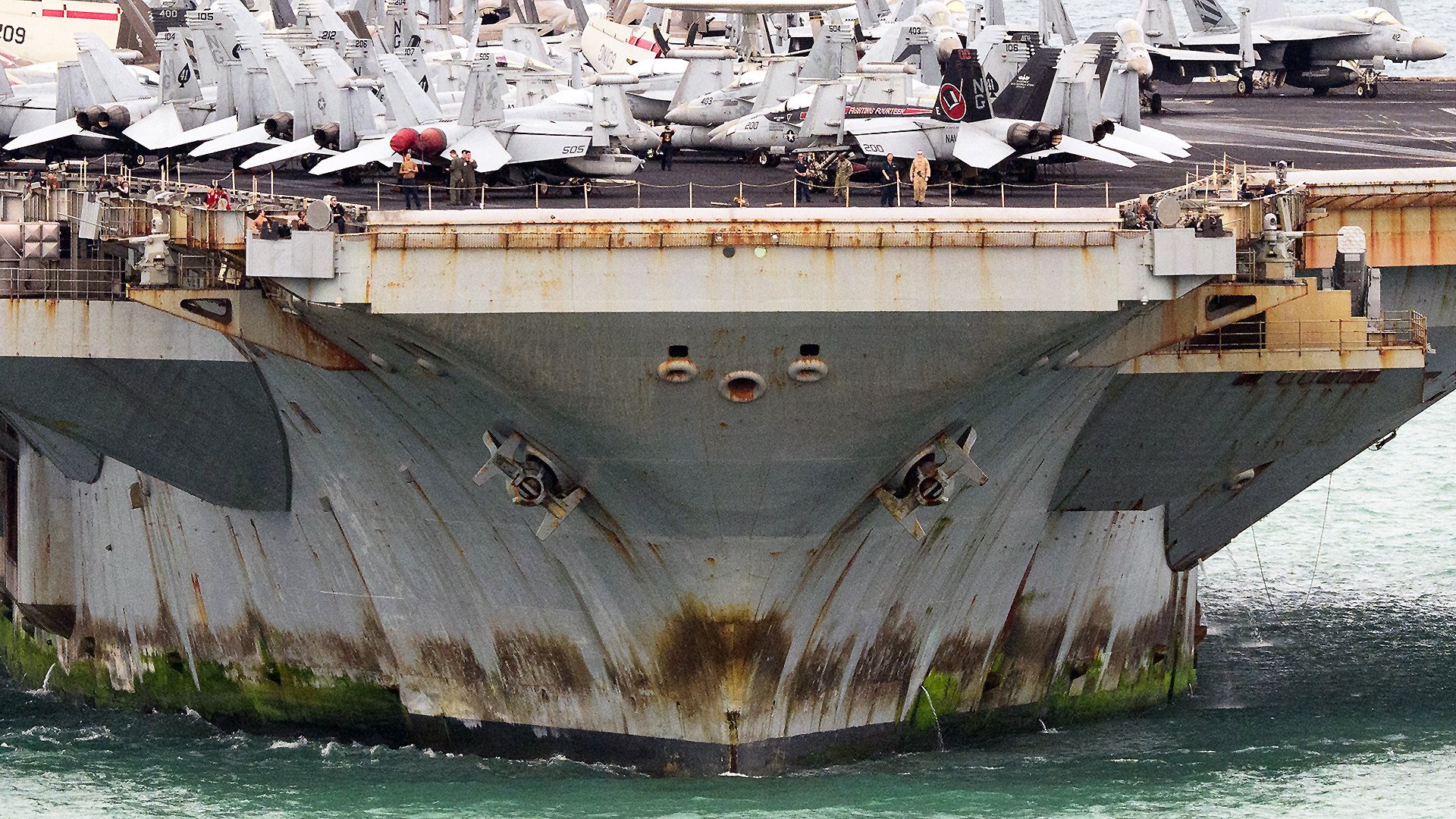
As mentioned, Lincoln definitely looks like it’s been at sea more or less continuously for the last nine and a half months or so. Pictures and videos of the ship in Laem Chabang seen throughout this story plainly show big dark rust stains all around the hull and other similar signs of wear elsewhere. There is also a bright green ring of algae layered on the hull at the waterline. While carriers have very large crews and usually keep the ship’s appearance up relatively well while on cruise, there is only so much that can be done out of port on particularly long deployments, where all resources are focused on sustained high-tempo combat operations.

USS Abraham Lincoln seen arriving in Laem Chabang, Thailand, today. Thananuwat Srirasant/Getty Images
Another look at the Lincoln arriving in Thailand today. ANTHONY WALLACE / AFP via Getty Images
A closer look at the side of Lincoln‘s hull, with ‘running rust’ and algae plainly visible. ANTHONY WALLACE / AFP via Getty Images

Running rust on U.S. Navy ships has been something of a lightning rod for criticism in recent years, including from President Donald Trump. This is in part due to the negative optics of such visible wear and tear on American naval vessels, especially during calls in foreign ports.

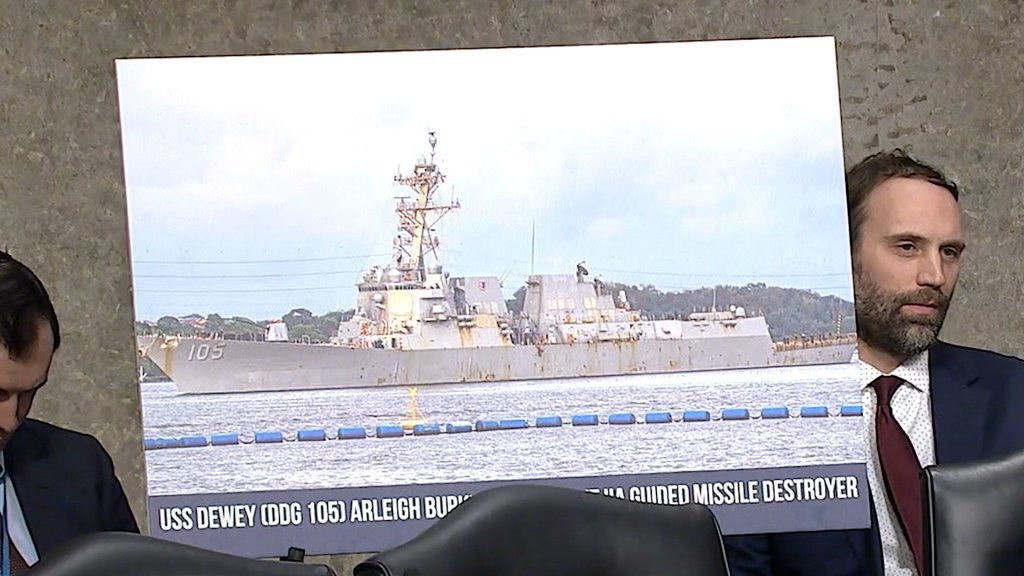
“It’s terrible. I think they should be ashamed,” John Phelan told members of Congress at a hearing last year after being shown pictures of a very worn-looking Arleigh Burke class destroyer, the USS Dewey, during a stopover in Singapore. “Would you want to go on that ship?”

Phelan was testifying at the time regarding his nomination to be Secretary of the Navy. At the time, he said that President Trump had already been texting him in the middle of the night regarding the issue. Phelan was subsequently confirmed and served as the Navy’s top civilian until he was unexpectedly fired in April, reportedly over disagreements regarding the new Trump class battleships and other more general friction within the administration,

A picture of the USS Dewey covered in “running rust” during a recent port visit in Singapore is shown at the confirmation hearing for Secretary of the Navy nominee John Phelan on January 27, 2025. Senate Armed Services Committee capture

Lincoln‘s current condition is, of course, an extreme case that is the result of very specific operational circumstances. The carrier has already been in the news for weeks now due to the aforementioned morale issues, which family members of those onboard have been very vocally calling attention to through the media. One sailor had to be rescued last month after deliberately jumping overboard. There were reports that at least one other individual onboard had attempted to do the same. President Donald Trump and Secretary Pete Hegseth, among others, have pushed back on concerns about mental health and other issues on the ship. In a statement shared on social media on August 16, Navy Adm. Brad Cooper, head of U.S. Central Command (CENTCOM), acknowledged, but still downplayed, the seriousness of the mental health situation, in particular.

At the same time, the carrier’s marathon deployment is indicative of larger shipbuilding, readiness, and other issues that the Navy continues to struggle with. Strains on the service carrier fleets in particular have been steadily building for years and are now becoming a low-level crisis. The USS Gerald R. Ford wrapped up a historic 326-day-long deployment in May. The Navy has publicly said that the USS Theodore Roosevelt, which is set to begin its latest cruise soon, could be away from home for at least eight months. The longer the ships remain deployed, the longer they typically have to spend in port afterward, further compounding the situation with each passing day during months-long extensions. This all has very worrisome cascading impacts on even routine maintenance cycles, let alone deep overhauls and upgrade efforts, as well as personnel management matters, as we have explored in detail in the past.

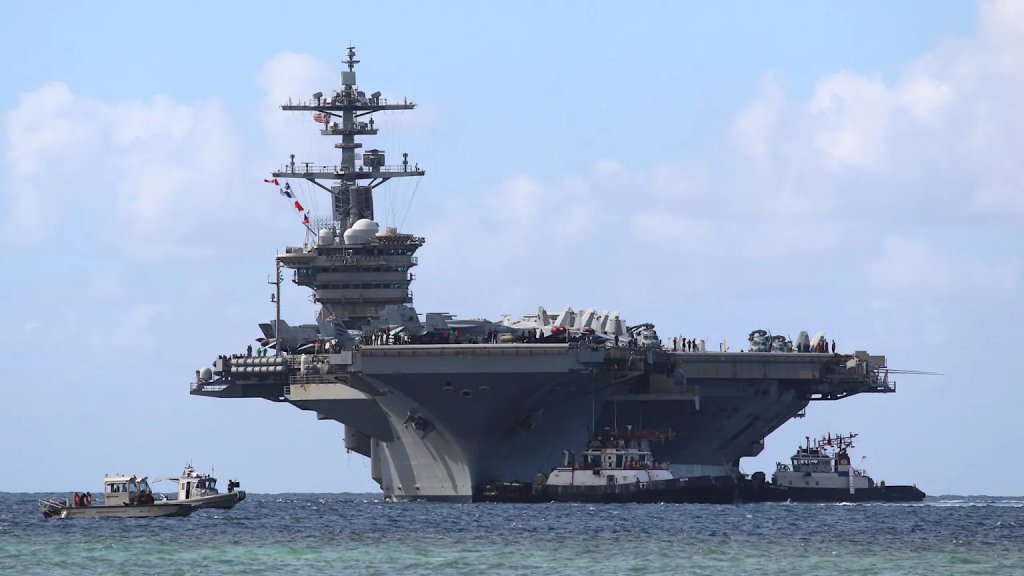
USS Abraham Lincoln in Guam in December 2025. USN

“It’s my earnest attempt to really try to keep those [deployments] at seven months,” Chief of Naval Operations Adm. Daryl Caudle, the Navy’s top officer, said during a question-and-answer session at Fort Meade, Maryland, Monday, which was livestreamed. He also said he wanted a Navy “that can sustain a seven-month deployment and still give our combatant commanders the amount of naval force they need to accomplish their missions, solve their key operational problems, and make sure they have all the naval force necessary to do what they need to do.”

Caudle had notably acknowledged concerns about strains on the Ford while speaking to TWZ and other outlets at the Surface Navy Association’s annual symposium back in January.

The Lincoln‘s visibly worn state certainly draws new attention to the stress on America’s carrier fleets as personnel onboard are now finally getting a much-earned reprieve in Laem Chabang.

Contact the author: joe@twz.com

The post USS Abraham Lincoln Looks Like It’s Been Through Hell After 286 Days At Sea appeared first on TWZ.
  •  

Chinese Cargo Ships Clandestinely Gather Signals Intelligence: Report

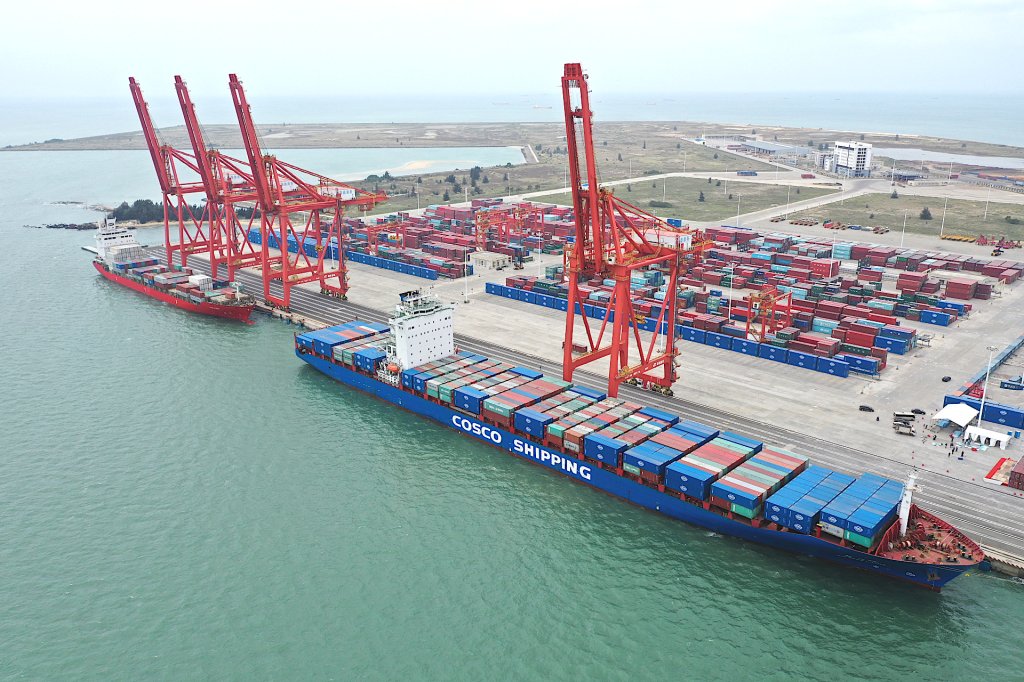
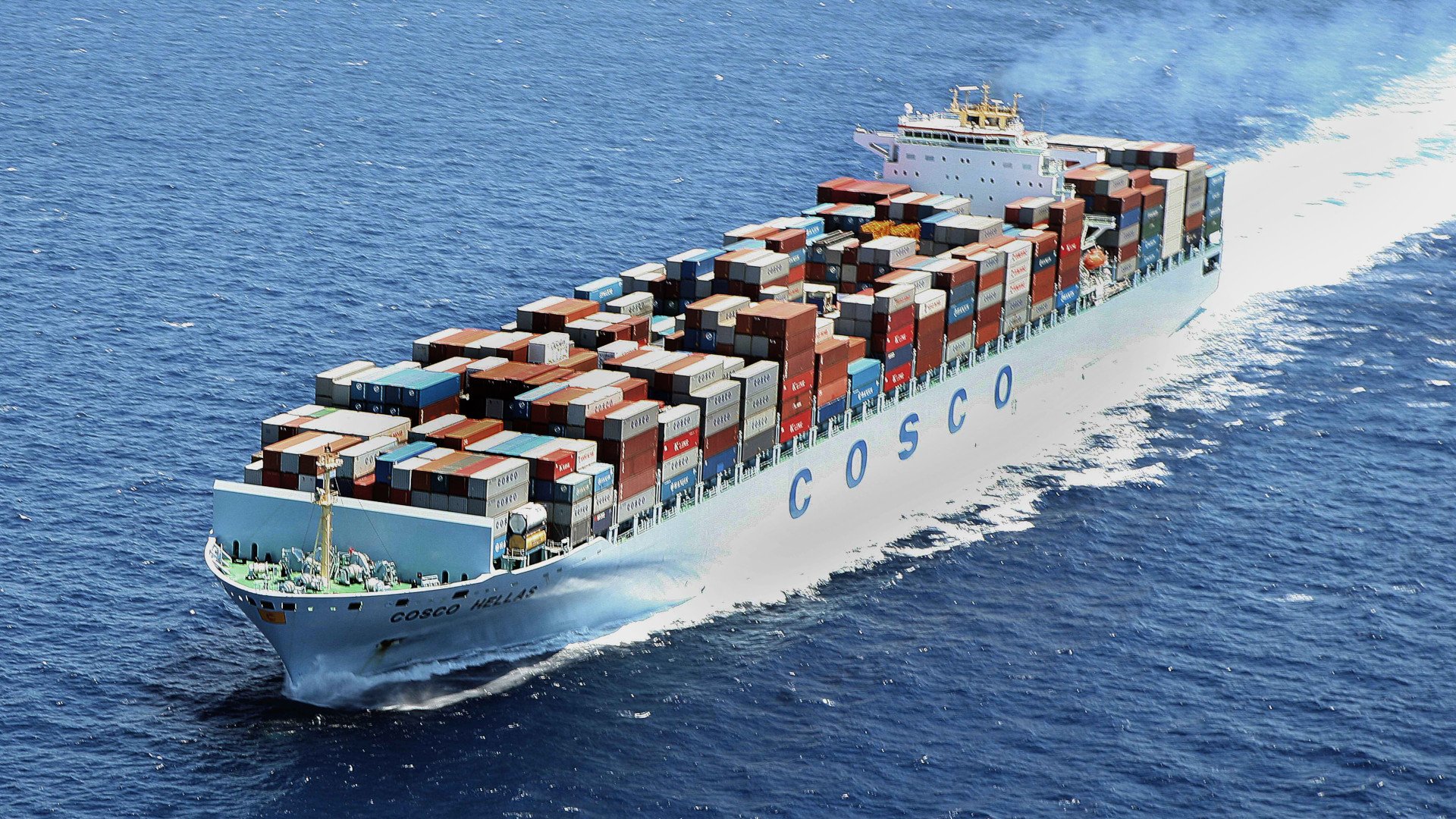
Chinese state-run shipping company COSCO has been using concealed systems on its vessels to gather signals intelligence around North American, European, and Asian coastlines for decades, it has been alleged. Similar claims have been made in the past, and overlap between nominally civilian enterprises in China and the country’s military and intelligence services is well established at this point.

Reuters first reported on the use of COSCO ships as discrete signals intelligence platforms earlier today, citing two unnamed officials within President Donald Trump’s administration.

“The officials, who spoke on condition of anonymity to discuss the U.S. assessment of the Chinese program, said COSCO has a decades-long intelligence-collection partnership with Beijing,” according to the report. “The arrangement allows China to collect communication signals from vessels ​and aircraft operating across Europe, North America and Asia, they said.”

COSCO container ships in port. COSCO

It is worth noting here that China’s National Intelligence Law, enacted in 2017, includes a specific provision that requires all organizations and citizens within the country to support state intelligence work as required. It also obligates the state to protect entities that do so.

“The advanced equipment aboard the ships is intended to enable China ​to gather information about ‘military communications technologies and encryption developments,’ one of the officials said,” Reuters‘ story today added. “The officials did not detail the type of equipment COSCO ships were allegedly using, but said they were ‘sophisticated signals intelligence collection’ platforms, not routine communications hardware.”

Officials at the Chinese Embassy in Washington, D.C., unsurprisingly denied these assertions, according to that outlet.

Purpose-built signals intelligence suites can range widely in size and shape, as can their capabilities. They can be very small and basic or far more elaborate systems. Even the latter could be concealed as modern commercial ships, which already feature lots of antennas.

COSCO

What might happen to intelligence collected by the ships is unknown. At the very least, systems onboard could record the data, which could then be batched out when safe to do so, either physically or via transmission. Basic passive signals suites can also run autonomously, or even be controlled from anywhere in the world if the ship is connected via satellite communications (SATCOM). High-bandwidth SATCOM is very common now on ships around the globe.

Personnel on the ship could also operate the systems, and even process receptions of interest. It might be possible to fit the ships with suitable datalinks to then transmit the collected data in near-real-time to other nodes, including ones back in China, for further analysis and exploitation.

Reuters‘ sources said scooping up data on “military communications technologies and encryption developments” was a priority for the commercial vessels turned spy ships. Signals intelligence can take many other forms, from emissions from radars to communications chatter. Depending on what is collected and how, specialists can use that information to glean details about how systems function, as well as insights into standard operating procedures and other details. This is especially true when multiple forms of intelligence are fused together. Generally speaking, signals intelligence is routinely used to help build out so-called ‘electronic orders of battle’ detailing the disposition and capabilities of an opponent’s forces, especially air defense and command and control networks.

As mentioned, this is not the first time claims in this general vein have emerged, either. At least some evidence has been presented in the past, through open-source analysis. Reuters‘ sources directed that outlet to a report published last year by the China Maritime Studies Institute at the U.S. Naval War College exploring exactly this topic in relation to China’s quasi-military maritime militia. The maritime militia is made up of ostensibly civilian fishing fleets, but has direct ties to the People’s Liberation Army (PLA) and the Chinese Coast Guard. It is routinely used to harass and intimidate foreign vessels in disputed waters, especially in the South China Sea.

Chinese fishing vessels seen stopped right in front of US Navy’s ocean surveillance ship USNS Impeccable in 2009. USN

“Undergirding these operations is a cadre of maritime militia intelligence specialists called ‘information personnel.’ Information personnel are organized into force contingents that support operational militia forces,” according to that report. “Most have day jobs in the fishing industry, but many hale [sic; hail] from other sectors, including marine shipping and even maritime law enforcement units.”

“It is more likely than not that PRC [People’s Republic of China] vessels operating overseas have already begun embarking information personnel to serve intelligence collection and reporting functions. In the case of China’s fishing fleet, serving this foreign intelligence collection function could be as simple as adding a new duty to the ‘information personnel’ that already embark aboard some distant-water fishing vessels,” that report added. “Aside from their primary responsibilities of tallying and reporting production numbers, serving as experts on international and national fisheries regulations that affect their work, and handling interactions with foreign officials while at sea and in port, they might also be tasked with collecting and reporting military and political intelligence while operating overseas.”

“Similar processes may already be in place in the commercial shipping industry,” it continued. “For instance, Guangxi province’s Beihai city has built up its ranks of maritime intelligence specialists by recruiting from among marine shipping personnel.”

No explicit mention is made in the report about signals intelligence gathering.

In the past year or so, there have been multiple reports that Russia is also using its so-called ‘shadow fleet’ of oil tanker ships in a secondary role as intelligence-gathering platforms. The primary job of those vessels is to help the Kremlin evade sanctions.

French forces seen boarding the Comoros-flagged tanker Grinch, part of Russia’s so-called ‘shadow fleet,’ in January 2026. French Navy

There is other tangential evidence that also lends credence to today’s report from Reuters. As mentioned, in the midst of still mysterious drone swarms that harassed U.S. Navy ships off the coast of southern California back in 2019, U.S. authorities at least explored the possibility that a Hong Kong-flagged bulk carrier, the M/V Bass Strait, might have been a launch point. It remains unknown, at least publicly, whether the Bass Strait or another nearby ship might have been the source of the harassment, or if it came from somewhere else, potentially further away. TWZ was the first to report on this detail as part of a deeper investigation into these incidents, which came amid a spike in news about claimed sightings of what are now commonly referred to as unidentified aerial phenomena (UAP). We have been saying for years now that, while some UAP sightings do remain unexplained, many more are likely to have been drones (as well as balloons), which foreign governments could be using for intelligence gathering and other malign purposes.

A US Navy briefing slide discussing an interaction with the M/V Bass Strait on July 15, 2019. This says that at least at that time the bulk carrier was assessed to be “likely using UAVs to conduct surveillance on US Naval Forces while transiting to [a] scheduled port of call, [in] Long Beach, CA.” USN via FOIA

It’s also worth noting here that intelligence collection from international waters and airspace is a practice that nation state armed forces and intelligence agencies globally, including those in the United States, engage in regularly with varying degrees of openness. Leveraging nominally civilian ships, as well as aircraft, for these purposes is hardly new.

Despite the official denials to the Reuters piece today, it would be hard to imagine Chinese authorities not making use of commercial ships for this purpose, if possible, given that major deepwater ports worldwide are often dual-purpose civilian/military facilities. Radar sites and other critical facilities are often positioned along or near coastlines. Cargo ships and tankers often pass by major exercises and under major military operating airspace, where they could scoop up critical data.

With commercial ships already plying their routes, this would also just offer the Chinese government ways to readily bolster maritime intelligence-gathering capacity at low cost and low risk. China’s commercial fleets dwarf any other on Earth, making their presence commonplace and providing many opportunities to hide these operations.

A 2021 report published through the U.S. National Geospatial-Intelligence Agency’s (NGA) Tearline Project also highlighted the possibility of Chinese-owned facilities at ports around the world being used for intelligence gathering or even for launching non-kinetic attacks, including electronic warfare jamming. It specifically noted how COSCO’s facility in Belgium’s Port of Zeebrugge is “in close proximity to a Belgian Naval Base and thus could fulfill additional militarized requirements.”

Concerns about land owned by Chinese companies and nationals being used to collect intelligence or for other purposes have become an increasingly hot topic of discussion in the United States in recent years.

Reuters‘ piece does not say what, if any, steps U.S. authorities have taken or may be planning to take now to monitor for or take more active countermeasures against Chinese-flagged ships being used for intelligence gathering, despite this being said to be a decades-old practice. The report does note that “the Pentagon put COSCO on its list of companies linked to China’s military in January 2025, a designation that carries serious reputational costs for companies ​as well as U.S. government procurement ​bans, but does not entail ⁠formal sanctions.”

Though no hard evidence has yet been provided, Chinese authorities using cargo ships as additional discreet signals intelligence-gathering assets is very plausible, and would certainly seem to be an issue that should be taken seriously, if it is not already being addressed.

Contact the author: joe@twz.com

The post Chinese Cargo Ships Clandestinely Gather Signals Intelligence: Report appeared first on TWZ.
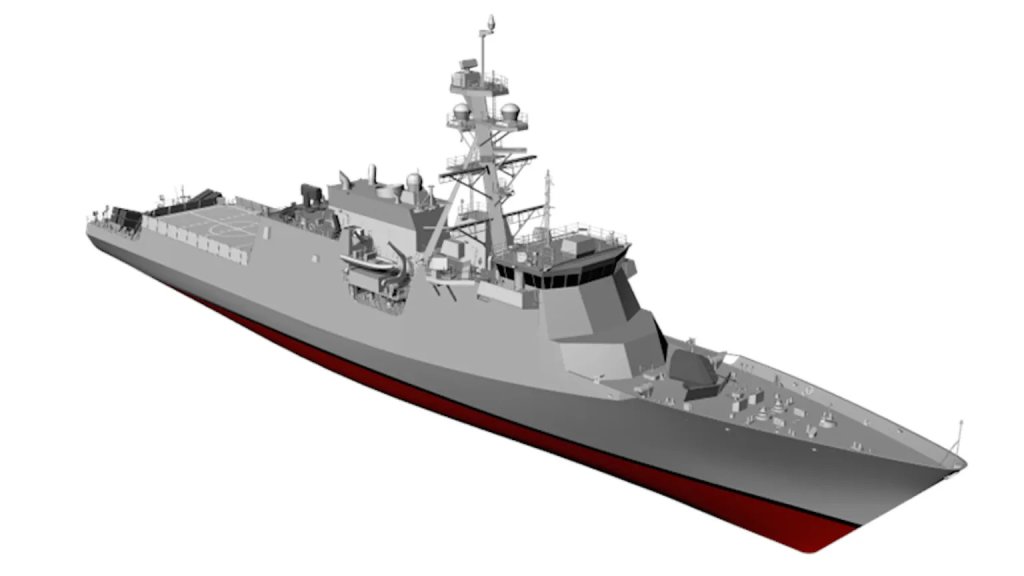
  •  
❌