Inflation in Greece rose to 3.8% in August from 3.4% in the previous month, compared with an increase of 2.9% in August 2025, Greek Statistics Authority ELSTAT announced on Wednesday, September 9, 2026. According to ELSTAT, the development was largely driven by energy prices, as well as increases across a range of services. Price increases […]
The White House ballroom project is wildly unpopular. Donald Trump doesn’t care. Ben Terris reports on Trump’s obsessive bid for architectural immortality, which is now barreling toward completion, and captures the breathtaking sycophancy required to work for this president:
“We had asphalt going into here,” Trump says, standing on the pathway leading to the residence of the White House. “Now you have the best stone.” He points at a pile of square-cut granite—the type being used to replace the asphalt walkway—and looks to his communications director, Steven Cheung, who is accompanying us on this impromptu tour of the White House grounds en route to the construction site.
“That’s some stone, huh, Steven?” he says.
“It’s incredible,” Cheung concurs.
“Look at the thickness of it,” Trump says. “Normally, you use one inch, as thin as you can. It’s the White House—I said, ‘Fuck it, what’s the best you have?’ They said, ‘We have one that’s four inches.’”
“You’re restoring glory to the White House,” Cheung says, shaking his head in apparent awe.
Lo sconto sul diesel costa ed è poco selettivo. Ma aiuti basati sul solo reddito delle persone non garantirebbero più equità. Perché, a parità di risorse disponibili, la necessità di usare l’auto e quindi consumare carburante può essere molto diversa.
Senza conti pubblici credibili, alzare i tassi può aggravare l’inflazione. Ma assecondare il governo può compromettere la credibilità della banca centrale. La via d’uscita richiede un aggiustamento fiscale possibile e una rivendicazione d’indipendenza.
À la Une de la presse ce mardi 8 septembre : le jour d'après en Allemagne, où la victoire, dimanche, de l'AfD en Saxe-Anhalt, est un séisme politique ; la mobilisation, en France, des pompiers pour obtenir plus de moyens après une saison estivale marquée par les incendies ; et une nouvelle tendance (odorante) chez les masculinistes.
A man named Donald Liebenberg tops eclipse-chaser-log.com with a whopping 2 hours, 27 minutes, and 41 seconds of darkness from 27 total eclipses—stats I didn’t even know people tracked until I read Rudi Zygadlo’s piece. It turns out there’s a dedicated subculture of umbraphiles logging every second of totality. Zygadlo meets a veteran British couple who’ve built their lives around these fleeting events, then travels to Spain in August 2026 to see his own first total eclipse. Adding 1 minute 38 seconds to the board earns him a place near the bottom, but judging by the awe he feels in those brief moments of darkness, he may be moving up the league yet.
There are various eclipse-chasing guests in our hotel. You can identify many of them from themed caps and T-shirts. The largest party is an alumni group from UCLA. We meet several by the pool. A couple from Minnesota, a sommelier from New York. “I was in Montreal for 2024,” says Mees from the Netherlands, treading water. “My wife is a virgin.” Everyone is friendly, but somewhat shifty when it comes to the issue of where to watch. We are too.
By 6pm on the day of, we are stationed on the infernal hillside, on a dusty path beneath pine trees and an immaculate sky. There are better vantage points but we have some degree of privacy here. We can hear others, but we can’t see them. The partial phase begins with a yodel at 7:34pm when the sun is eight degrees — or a fist’s length — above the horizon and my father-in-law produces a bottle of local white, which immediately turns warm in the glass. The nibble of the moon turns into a bite then into a crescent and I’m surprised how well my bottom-of-the-range bridge camera with a solar filter over the lens captures the partial phases. Later I’ll wish I never turned the thing on. Meara is quiet. Glowing. She is more pregnant than ever.
A la Une de la presse, ce lundi 6 juillet, le début d’une semaine décisive pour le RN avec la décision, demain, de la justice dans l’affaire des attachés parlementaires européens du FN, qui confirmera ou non l’impossibilité pour Marine Le Pen d’être candidate à la présidentielle de l’an prochain. L’ascension de l’AfD en Allemagne. Les funérailles du Guide suprême Ali Khamenei en Iran. Une nouvelle décision très controversée de la Fifa. Et un concours insolite remporté par la Belgique.
À la Une de la presse, jeudi : les tensions entre l’Allemagne et la Russie, qui menace de répondre aux sanctions allemandes par un "coup direct". Des tensions qui inquiètent les autres pays européens, également dans le viseur de Moscou ; une très mauvaise nouvelle à propos du réchauffement climatique ; mais une bonne pour les kakapos de Nouvelle-Zélande.
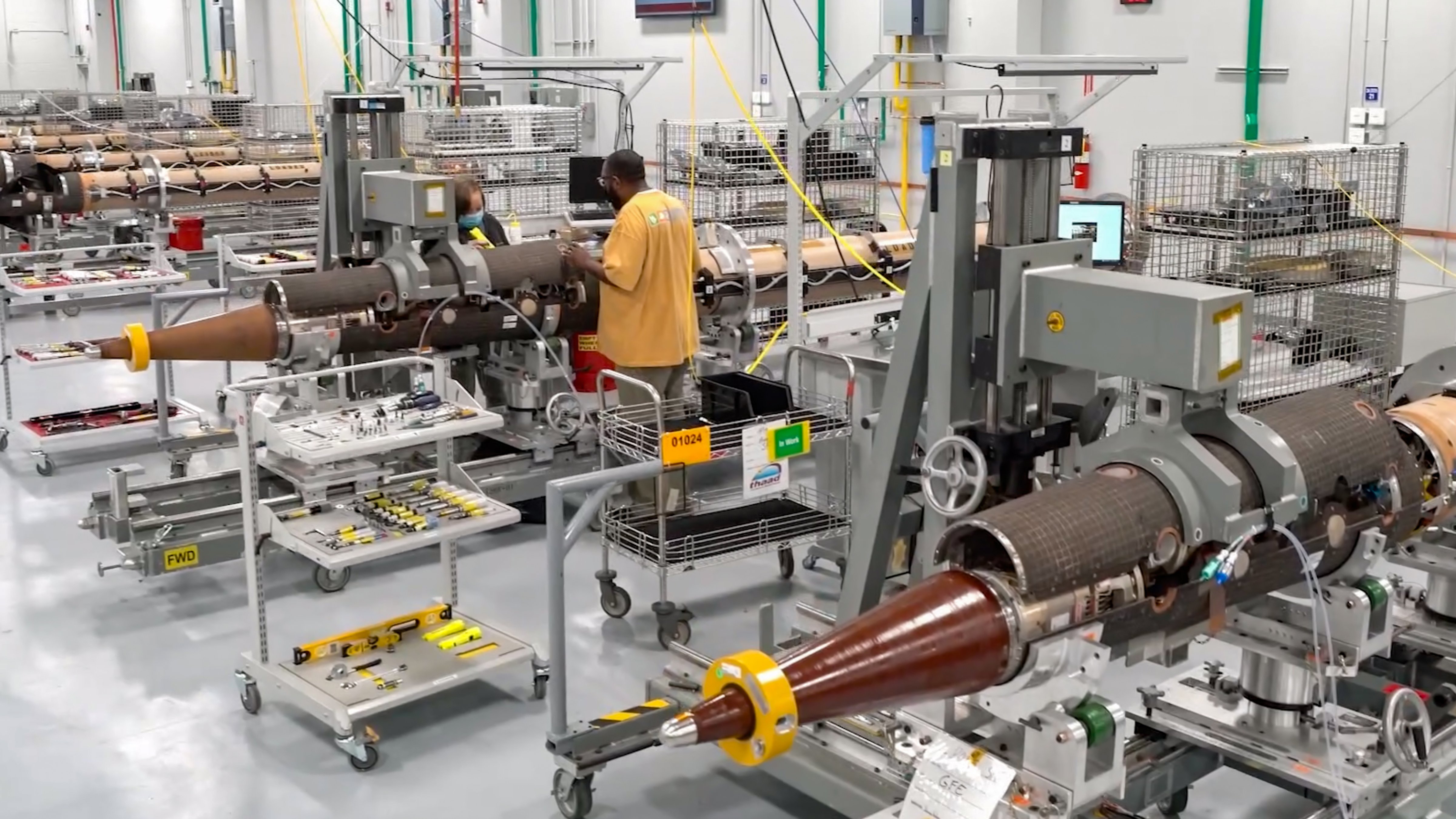
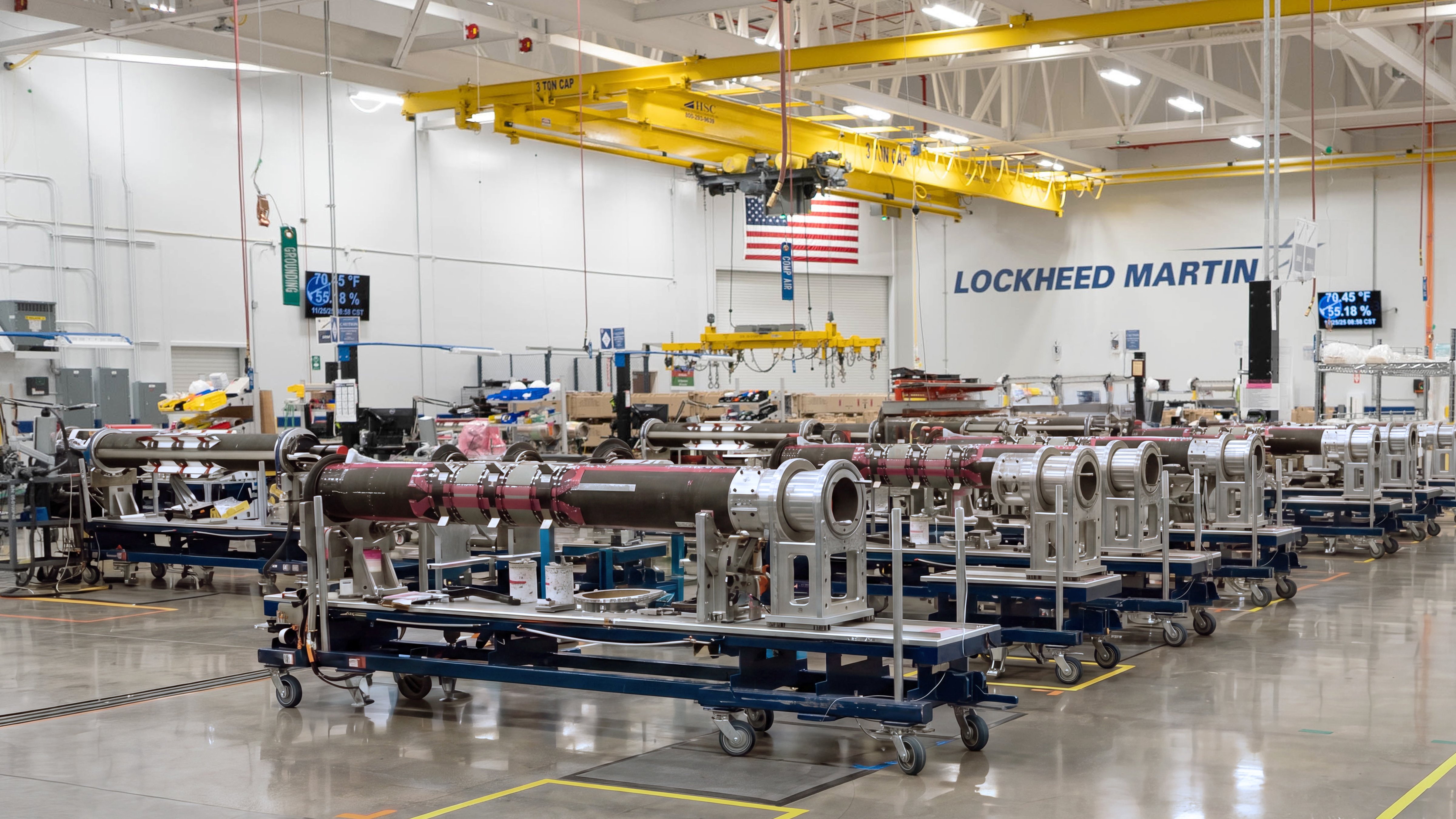
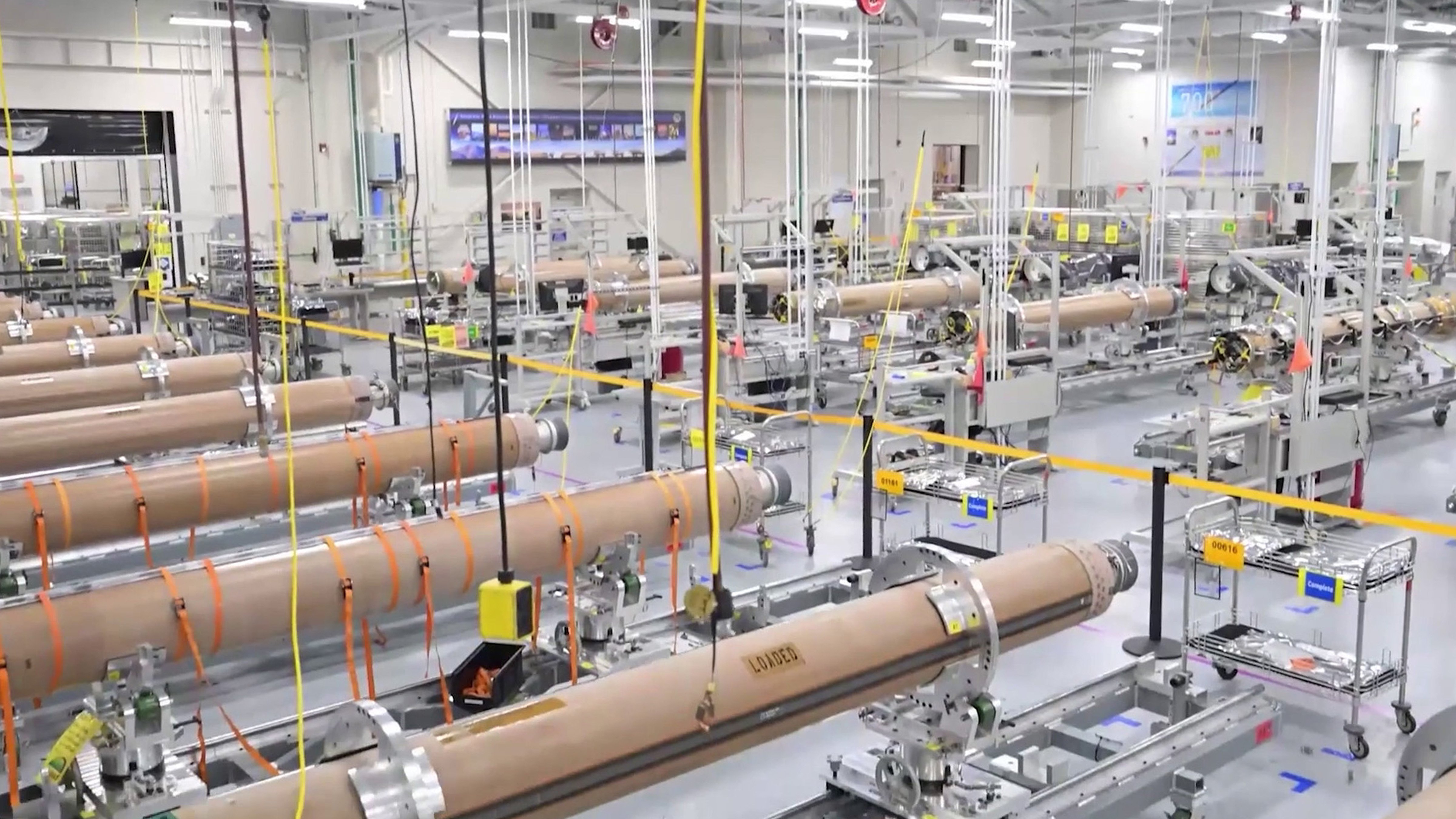
As spades went into the ground to signal the start of construction of the new Building 47 at Lockheed Martin’s Munitions Production Center in Troy, Alabama, it marked a significant development in accelerating production of the company’s Terminal High Altitude Area Defense interceptor, better known as THAAD. The expansion of factory space in Troy is a key element of the company’s $8-9-billion commitment to expand its munitions production footprint across the United States.
The Department of War’s Acquisition Transformation Strategy is part of a long-term plan that signals clear demand for critical munitions and it enables industry to confidently invest in facilities and workforce development, along with supply chain expansion and advanced manufacturing capabilities. In addition to enlarging the facility in Troy, Lockheed Martin is also growing its plant in Camden, Arkansas, which is another site that’s vital for building more munitions at a faster pace.
The THAAD production line in Troy, Alabama. Lockheed Martin
“My job is to interface and collaborate with the Department of War in achieving the call to action to produce these critical munitions, not only at speed but also at scale, multiplying the current production rates by two, three, or even four times the current rates,” Dan Nimblett, Lockheed Martin’s vice president for Munitions Acceleration Integration told TWZ on the ground in Troy during the groundbreaking event.
“Fundamentally what’s occurred changes how acquisition works [with] long term demand agreements. These long term procurement agreements enable Lockheed Martin and our supply base to make the necessary investments with confidence of the future demand. This allows us to make the investments not only in our people and our facilities, but in the technology necessary to build [these munitions] at a scale and a speed that’s relevant to the threat today,” explained Nimblett.
Lockheed Martin was the first company in the U.S. defense industry to announce a framework agreement with the DoW for munitions acceleration of high-demand missiles – initially tripling production capacity of the PAC-3 Missile Segment Enhancement (MSE) interceptor, followed by a second agreement to quadruple the production capacity of advanced THAAD interceptors. These two defensive missiles are cornerstones of a layered air and missile defense system, and both have been integrated together via Joint All-Domain Operations, including with the U.S. Army’s Integrated Air and Missile Defense Battle Command System (IBCS).
In response to the DoW’s call to action, the company has already invested more than $2 billion in its production facilities and in the related tooling, its key suppliers, and its workforce in order to accelerate production rates.
PAC-3 MSE in production in Camden, Arkansas. Lockheed Martin
Lockheed Martin plans to effectively double the factory footprint in Troy and dramatically increase the workforce. “We’re going to increase that [workforce] by drawing in college students, high school students, veterans, everybody’s welcome,” explains Jason Reynolds, vice president and general manager for integrated air and missile defense. “When they come to Lockheed Martin, they receive training, they get opportunity, and because these programs are on a ramp and in production in such high demand, this is where you come to start your career and you [can] work here for a long time.”
Lockheed Martin currently employs around 1,100 workers at its Camden site, but this is also growing. The Camden training center is seen as being critical in providing the swift increase in skilled operators needed to support this acceleration. “We work closely with the state of Arkansas as well on looking at what else we can do in the community and the infrastructure in that community to support people moving, hopefully into Camden as we ramp up,” says Reynolds.
“People here [in Troy] really know their work matters. It’s meaningful for both the community as well as for our national defense. So, we’re really proud of our employees and we’re on a growth trajectory. We’re hiring and we want as many qualified people to come join our team as possible.”
The Camden site is also accelerating its work on the long-range Precision Strike Missile (PrSM), which is also set to quadruple production over the next few years. Reynolds added that building missiles faster using automation and advanced manufacturing technologies, plus increasing the production line capacity, are some of the vital means for success.
Lockheed Martin is developing the new PAC-3 Adapted Capability Effector (ACE) to help build ammunition reserves faster. Lockheed Martin
“PAC-3 MSE and THAAD are the most capable air defense interceptors on the planet. They’re in extreme demand [and] we’re doing everything possible,” says Reynolds. “With PAC-3, we have been doubling that production over the last four years and now, like I said, we’re going to triple it. We’re working very carefully with our suppliers, with the U.S. government and with our partners and allies all around the world to get all the parts in and get them into factories like you see behind us today to assemble them and get them out to the warfighter as quickly as possible.”
Another way Lockheed Martin is accelerating the delivery of advanced air defense capabilities is the through the introduction this summer of the PAC-3 Adapted Capability Effector, or PAC-3 ACE. This new missile leverages the PAC-3 fire-control system and provides for full integration with the Patriot weapon suite.
The main differentiator of PAC-3 ACE is that it would be produced at less than half the unit cost of MSE and first flight could occur within 18 months. A core part of the rapid fielding strategy is an international, joint-development model. Lockheed Martin is partnering with both American and European industry, sharing production lines, supply chains and expertise.
Lockheed Martin says PAC-3 ACE provides a “cost-effective, multi-threat solution.” The interceptor is engineered to engage a broad spectrum of air-breathing threats, cruise missiles, and both short and medium-range ballistic missiles. By offering a low-cost “kill” per-engagement, it is designed to address the current climate that demands deeper ammunition reserves without compromising on performance.
The keys to munitions acceleration
This year, Lockheed Martin has made significant progress in a series of production acceleration projects for munitions programs under its Missiles and Fire Control division. “I was supposed to retire last year. I’m here because this is the most exciting time in the 30 years I’ve been in this industry,” says Dan Nimblett. “These long-term agreements provide us the certainty to enable us to make these investments.”
“What recent conflicts have demonstrated is that Lockheed Martin and the American defense industrial base never lost the technological edge. The technology and the capability has always been there – we have the best systems in the world. We’ve proven that through real world performance.”
Nimblett explained that Lockheed Martin’s supply chain is following suit, and that they are all now investing in similar ways to ensure they meet the demand signals. “We’re evaluating how we produce and increase additive manufacturing and robotics. We’re also looking at how we develop, which I think is a fundamental part of getting capability into the warfighters’ hands at a speed and scale that’s relevant to the threat.”
A PrSM test firing during the missile’s development. Lockheed Martin
Having received Milestone C approval from the U.S. Army in July 2025, PrSM manufacturing has relied on a high level of automation. PrSM was engineered from the start for automated, robot-driven production – automating tasks once done by hand – and that early-stage streamlining is paying dividends as Lockheed Martin seeks to accelerate output.
“We have a lot of robotics built into our munitions production,” explains Gaylia Campbell, vice president, Tactical Missiles. “A lot of times we use robotics to help increase the safety of the assembly, like an explosive charge that has to be integrated into a munition, and we have a robotic arm that places that and tests the placement. We also robotically paint and coat [PrSM]. So, we have a lot of robotics already in Camden and that’s really going to help us with this ramp-up in production – the fact that so much of it is [already] automated.”
Campbell emphasizes that PrSM entered production with a mindset of acceleration. “We got PrSM through preliminary and critical design reviews, and into first flight in times roughly half of what it would normally have taken us. We’ve been amazingly successful on all these flights. Those early [test] flights went off one after the other during the COVID-19 pandemic, at a time when there were a lot of challenges for all of us in our daily lives, and yet we were able to continue to fly and prove the operational performance.”
Lockheed Martin is reshaping the munitions supply chain with an unprecedented slate of manufacturing initiatives that pull together new facilities, strategic partnerships, and workforce development. The company is also expanding a number of its other production facilities, such as a $60-million investment in its complex in Archbald, Pennsylvania, that will add 700 jobs in support of high‑priority programs including PrSM, THAAD, PAC‑3, and Apache sensors. In Orlando, Florida, three legacy paint bays have been merged into a high‑performance shop that can retool a work cell in hours rather than weeks, while Ocala’s new Progressive Work Smart Assembly Line has cut seeker and mission control unit build times by roughly 50 percent.
Production capacity for THAAD is expanding in Troy, Alabama. Lockheed Martin
A partnership with General Motors will bring high‑rate commercial manufacturing expertise into Lockheed Martin’s production processes, and the new Rapid Fielding Center in Grand Prairie, Texas, is tasked to reduce traditional manufacturing development timelines. What once took years of design, testing and tooling is aimed to be prototyped, fabricated and validated in a matter of months.
Echoing endorsement of the DoW’s initiative, Campbell underscores that knowing what the demand signal will be is a critical differentiator when it comes to production ramp-up. “We can plan for some of those really critical rare earth minerals that we need, the batteries for example in our munitions, we need certain rare earth minerals for that. We need to know the total demand signal and that means we can negotiate with the suppliers and guarantee that we have access. That can really help us accelerate.”
To support the wider munitions efforts Lockheed Martin is also investing in solid rocket motor development and production, as well as lower-tier parts that go into solid rocket motors. “We’re working with different suppliers to develop new sources of supply for solid rocket motors,” says Campbell. “We’re investigating heavily right now in designing and prototyping several motors that we plan to test and take to production, and that really will develop a whole new supply chain and will really be critical for all munitions production.”
Having a five-year contract instead of annual contracts allows the manufacturer to have far more buying power to secure sub-components for a far better price point. “I can go and invest. Invest in more capacity, invest in my supplier’s capacity,” explains Campbell.
“Production is all about velocity. Keeping the line moving and not having to stop because we don’t have a part. Being able to order bigger quantities of things up front is really huge when it comes to acceleration.”
In a beautiful and vivid essay on home, time, and family, Diane Roberts reflects on the house that her parents built, and their family’s land in Leon County, Florida, to which she feels deeply connected. I especially love Roberts’s thoughts on a home versus a house—the latter is composed of construction materials, but “home implies a complex neural network of family association and feeling, layers of experience, a shared past.” Despite the tragedies the home holds, it is ultimately a place of memory and meaning.
Home and time are as tangled as the skunk vine and Confederate jasmine choking my backyard fence. I suppose that’s to be expected. My house holds our history and the indispensable relics of former houses, objects cherished by the now-dead: the tiny rocking chair my grandfather made for my mother when she was three; the 1960 TR3 in the barn my brother never quite got around to fixing; the two old rosebushes dug up from the Washington County farm, replanted at Great-Aunt Rilla’s house in Chipley, then dug up again and transported to our front yard. The house didn’t simply belong to us, it was us—our mother, our father, Brad, and me.
The world’s most sensitive dark matter observatory, the LUX-ZEPLIN (LZ) experiment, has detected a particle interaction that cannot be explained by conventional background radiation models, a finding that, although still far from being confirmed as a definitive discovery, has sparked cautious optimism in the international scientific community. The event, recorded nearly a mile underground at […]
ISLAMABAD: Pakistan is set to sign long-delayed agreements with five oil refineries, unlocking more than $6 billion in planned upgrades to modernize aging plants and cut reliance on fuel imports, officials said. But industry warnings that changes to the financial framework could derail the projects overshadowed the announcement. The agreements with Pak-Arab Refinery Ltd., Pakistan ... Read more
Greece and Israel signed on Monday a €3 billion deal for the massive “Achilles Shield” agreement, under which Israel will build Greece a multi-layered air defense array based on Israeli systems architecture. The intergovernmental agreement for the development of an anti-aircraft, anti-ballistic missile and counter-drone shield – known as the “Achilles Shield” – reportedly features […]
O último esforço concentrado do Congresso Nacional para votações antes das eleições termina nesta semana. A principal disputa deve ficar em torno do fim da escala 6×1. Na quarta-feira, a Comissão de Constituição e Justiça (CCJ) do Senado deve analisar a Proposta de Emenda Constitucional (PEC) que reduz a jornada semanal de 44 para 40 horas e garante dois dias de descanso remunerado por semana, sem redução salarial. O relator, senador Omar Aziz (PSD-AM), apresentou na última quinta-feira (27) parecer favorável à manutenção do texto aprovado pela Câmara dos Deputados e rejeitou as 12 emendas apresentadas por outros senadores. Se passar pela CCJ, a PEC ainda precisará ser votada em dois turnos no plenário do Senado.
Também deve ser analisado pelo Senado nesta semana o PL 2.780/2024, sob relatoria do Senador Eduardo Braga (MDB-AM), que cria a Política Nacional de Minerais Críticos e Estratégicos. O tema ganhou peso diante do interesse estrangeiro pelas reservas brasileiras de terras raras e da preocupação em manter no país as etapas de maior valor agregado da cadeia produtiva. A proposta busca estimular a pesquisa, extração, beneficiamento e transformação desses minerais, importantes para setores como transição energética, tecnologia e defesa.
Também está no radar do Congresso a Medida Provisória (MP) 1.357/2026, que suspende temporariamente a cobrança do Imposto de Importação sobre compras internacionais de até 50 dólares, a chamada “taxa das blusinhas”. A medida perde a validade em 8 de setembro, e o presidente da Câmara, Hugo Motta (Republicanos-PB), pretende levar o texto rapidamente aos plenários das duas Casas.
Corrida Eleitoral
A próxima semana será a primeira com exibição todos os dias do horário eleitoral gratuito no rádio e na televisão. A propaganda começou na última sexta-feira (28) e seguirá até 1º de outubro, com programas para presidente às terças, quintas e sábados e inserções ao longo da programação. Além disso, a disputa presidencial também terá uma rodada de sabatinas da Jovem Pan.
A programação começa nesta segunda-feira, 31 de agosto, com Ronaldo Caiado (PSD). A terça será o dia de Renan Santos (Missão), e a quarta-feira terá o presidente Lula (PT). Na quinta-feira, 3 de setembro, a emissora recebe Romeu Zema (Novo) e fecha a programação com o senador Flávio Bolsonaro (PL), na sexta. As entrevistas serão exibidas sempre das 8h às 9h, durante o Jornal da Manhã.
STF e PF: encontro busca reduzir as divergências
Enquanto as campanhas avançam por todo o Brasil, o governo também tenta reduzir uma tensão entre a Polícia Federal (PF) e o Supremo Tribunal Federal (STF). O diretor-geral da PF, Andrei Rodrigues, deve se reunir nesta semana com o ministro André Mendonça. O encontro foi articulado pelo presidente Lula e deverá ser mediado pelo ministro da Justiça, Wellington César Lima e Silva, com possível participação do advogado-geral da União, Jorge Messias. A conversa ocorre em meio às divergências sobre investigações conduzidas pela PF e decisões do ministro em casos de forte repercussão política. Entre eles, as apurações sobre o Banco Master, as fraudes no INSS e as investigações envolvendo o filho do presidente, Fábio Luís Lula da Silva, o Lulinha.
Estão na agenda da semana de 31 de agosto a 4 de setembro:
TSE:
Consulta à seção eleitoral (1/9): A partir desta terça-feira (1º), eleitores poderão consultar, pelo e-Título ou pela internet, a seção onde irão votar, já com informações sobre eventuais transferências temporárias de local de votação. A data é diferente do que havia sido indicado anteriormente: o calendário oficial do TSE estabelece o dia 1º de setembro.
DIREITOS HUMANOS
Câmara
Maioridade penal (Comissão Especial da PEC 32/2015, 1/9, 14h): Comissão especial analisa requerimentos para realização de audiência pública sobre a redução da maioridade penal. O debate deve abordar se a idade penal é protegida como cláusula pétrea da Constituição e os limites para alterar direitos e garantias individuais previstos na Carta de 1988.
Publicidade de bets nas redes sociais (CEXBRLEG, 1/9, 15h): Audiência discute os impactos da publicidade de apostas online e de jogos de azar, como o “tigrinho”, nas redes sociais e nas grandes plataformas de tecnologia. A audiência deve abordar também o papel das chamadas big techs no combate à pirataria e na circulação de publicidade do mercado de apostas.
Fortalecimento do INSS (CDHMIR, 1/9, 16h30): Parlamentares debatem a situação do Instituto Nacional do Seguro Social, com foco na falta de servidores, nas filas de atendimento e na demora na análise de benefícios. Entre os temas está a convocação de candidatos aprovados no cadastro de reserva do Concurso Público Nacional Unificado (CPNU2).
Senado
Tecnologias no combate à violência contra mulheres (CMCVM, 2/9, 14h30): Comissão Permanente Mista de Combate à Violência contra a Mulher discute como ferramentas tecnológicas podem ser usadas para prevenir agressões, facilitar denúncias e ampliar a proteção das vítimas. A audiência reúne representantes do Ministério das Mulheres, Defensoria Pública, polícias e organizações que desenvolvem aplicativos de proteção.
Inclusão de pessoas com deficiência nas eleições (CDH, 3/9, 9h): Comissão realiza audiência pública sobre as barreiras enfrentadas por pessoas com deficiência no processo eleitoral de 2026, incluindo acessibilidade para votar e se candidatar.
MEIO AMBIENTE
Câmara
Multas do ICMBio em Minas Gerais (CFT, CINDRE e CPOVOS, 1/9, 16h): Três comissões realizam audiência conjunta sobre multas ambientais aplicadas pelo ICMBio, a expansão de unidades de conservação e a definição de áreas de amortecimento no Norte de Minas Gerais.
Combustível do Futuro e hidrogênio verde (CEENERG, 2/9, 14h): Comissão especial promove seminário sobre a implementação e os desafios do programa Combustível do Futuro e da produção de hidrogênio verde no país. O debate ocorre em meio à discussão sobre transição energética e novas fontes de energia.
SAÚDE
Câmara
Doenças raras (CDHMIR, 1/9, 10h): Parlamentares realizam audiência pública para discutir o atendimento a pessoas com doenças raras e condições crônicas. O debate trata de acesso a tratamentos, assistência especializada e garantia de direitos.
Agenda da semana daPúblicaé um serviço apresentado aos leitores, concebido com base nas informações dos portais da Câmara, Senado, TSE e STF.
La revue animée par Natacha Polony consacre un ensemble à la tentation hégémonique allemande en Europe ainsi qu'à la liste (fort longue) des différends qui opposent Paris et Berlin, notamment en matière d'industrie de défense. (N° 3, juin, trimestriel, 15,90 euros. — Paris)

 Login