❌

Reading view

Airmen Under Fire: Stories From Iranian Barrages On U.S. Bases

Air Force Chief of Staff Gen. Kenneth S. Wilsbach offered some new insights on Monday into the challenges faced by airmen during Operation Epic Fury as Iranian missiles and drones rained down on them. His comments came during a keynote speech at the Air & Space Forces Air, Space and Cyber Symposium that TWZ is attending. 

“Since becoming the chief, I’ve had the privilege of spending time with airmen throughout CENTCOM [U.S. Central Command],” said Wilsbach, who assumed the position in November. “I have walked flight lines, visited maintenance hangars, and stood inside operations centers where young Americans were managing missions overhead. Let me tell you about a few courageous airmen I met on my recent trip to the Middle East. They told me about their experience on the flight line during an attack.”

Burning Hangar

“As missiles were inbound, airmen sprinted toward bunkers,” the service chief said, without providing details about which base. “Moments later, a missile struck nearby in a hangar, and the aircraft inside burst into flames. The bunker withstood the blast, but the force of the impact damaged the door so badly it wouldn’t open, trapping the airmen inside.”

“Picture the scene,” Wilsbach explained. “Fire was spreading, an aircraft was burning only feet away, their teammates were trapped inside, and they had no way out. Despite the danger, airmen ran toward the flames.”

“A security forces NCO grabbed a pry bar and forced the door open,” he continued. “Calmly communicated with the airmen trapped inside. Seconds later, the ejection seat on the burning aircraft ignited, sending glass and metal fragments through the air. Finally, the door gave way, and the airmen escaped and ran for cover.”

“Wherever I went, I saw airmen with that steely-eyed look of warriors, determined to get the mission done and protect their fellow airmen,” the chief noted. “More than 30,000 airmen deployed in support of Epic Fury to a dozen locations. They served alongside soldiers, sailors, Marines, Guardians, and Coalition partners.”

Launching F-15Es Under Fire

“Operation Epic Fury will be studied for its scale, precision, and speed,” said Wilsbach. “Over 38 days of combat operations, the Joint Force struck more than 13,000 military objectives. Five hundred aircraft executed 10,000 sorties, an average of more than 250 sorties every day. Our airmen accomplished this through 1,200 alarm reds while executing 48 airfield repairs and completing more than 420 reportable explosive ordnance disposal, long lonely walks.”

“That walk is exactly what the name suggests,” Wilsbach proffered. “EOD technician leaving a place of relative safety and approaching a suspected bomb or unexploded munition to render it safe for everyone else.”

“Behind those numbers were thousands of decisions made by airmen who had to keep the mission moving while the enemy was actively trying to stop them,” Wilsbach stated. “One was Garrett, a staff sergeant F-15E crew chief from East Texas. He joined the Air Force to travel and see the world. We sure allowed him to achieve that goal, but I’m not sure the Middle East was exactly what he had in mind. On the second day of Epic Fury, Garrett was on the flight line launching four Strike Eagles when alarm red sounded. Airmen around him started running for shelter. Garrett’s adrenaline spiked. He knew exactly what that alarm meant. Danger was inbound, but his launch was not complete.”
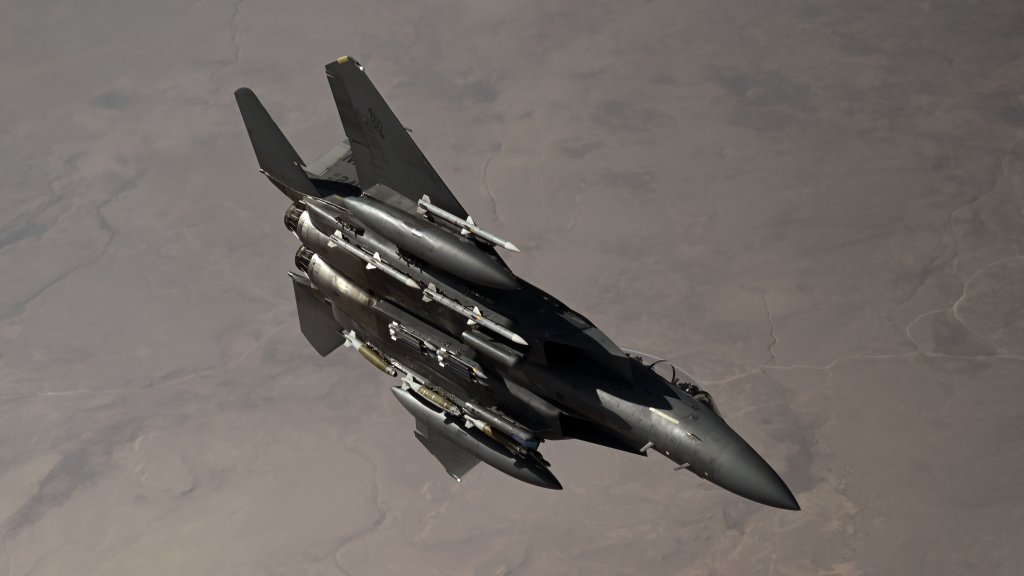
A U.S. Air Force F-15E Strike Eagle conducts a routine combat air patrol over the U.S. Central Command area of responsibility, Jan. 24, 2025. The F-15E is deployed within the CENTCOM AOR to help defend U.S. interests, promote regional security, and deter aggression in the region. (U.S. Air Force photo by Staff Sgt. Gerald R. Willis)
A U.S. Air Force F-15E Strike Eagle in the CENTCOM region. (U.S. Air Force photo by Staff Sgt. Gerald R. Willis) Tech. Sgt. Gerald Willis

“A young airman was working with him, and Garrett sent him to the bunker,” the service chief continued. “Garrett stayed. The rest of the team was separated, so he armed the weapons and cleared the jet. Proceed… While everyone else ran for cover, he decided to stay. Garrett understood why those Strike Eagles were in theater. He knew they were one of their best lines of defense, so he stayed until the job was done. Only after the last fighter taxied out, Garrett finally took cover. Later, when someone asked why, his answer was simple: his fellow airmen needed those airplanes in the air.”

Swatting Down Drones Under Fire

“Hundreds of miles away, two senior airmen, Shanae and Nolan, tracked a swarm of enemy drones headed toward their base,” Wilsbach pointed out. “Shanae joined the Air Force to provide for her family. During the opening days of Epic Fury, she found herself protecting another family – the hundreds of airmen depending on her.”

“People sprinted for shelter as alarm red announced an incoming attack, but Shanae and Nolan stayed focused on the screens in front of them because every inbound track could be a weapon aimed at their teammates,” the general said. “Shanae is 27 years old, and Nolan is 21. Think about the responsibility we placed on these two airmen. Hundreds of lives depended on them to identify the threats and employ countermeasures. Every second mattered. The stakes were life and death. Together, Shanae and Nolan achieved more than 10 surface-to-air kills that night, defeating threat after threat before it could reach the airmen they were protecting. There were moments when they were afraid, and most people would be, but courage is not the absence of fear. Courage is overcoming it. They stayed locked on, trusted their training, and did the job everyone around them was counting on.”

Picking Up The Pieces After An Attack

“Peter is a senior airman from New York who spent nine months in the Middle East as an air transportation airman,” Wilsbach said. “With his team, he moved heavy ordnance, prepared missile systems, and downloaded Patriot equipment, while ballistic missiles and attack drones repeatedly target their airfield.”

“One of those attacks became very personal,” the service chief noted. “Enemy fire destroyed Peter’s living quarters and nearly everything he had brought from home. Imagine coming back after a 12-hour shift to find the wreckage of your hooch. The few pieces of home he carried halfway around the world were gone. Peter’s response told me everything I needed to know about him. He said that his possessions could be replaced, but the mission could not.”

Keeping The Reapers Flying

“More than 4,000 dynamic targets had to be found, identified, validated, and engaged,” Wilsbach said. “Remotely piloted aircraft, airborne ISR platforms, cyber operators, space professionals, and countless others turn enormous amounts of data into intelligence commanders could use.”

“Suit is a first lieutenant with a family tradition of excellence,” Wilsbach said of one MQ-9 Reaper pilot. “Both of his grandfathers served in the Army. I’m sure they wanted a better life for their kids, which is why his parents chose the Air Force. Today, Suit flies the MQ-9 and carries his family tradition forward. He also scored a perfect 100 on its physical assessment this year, so apparently excellence runs in the family.”
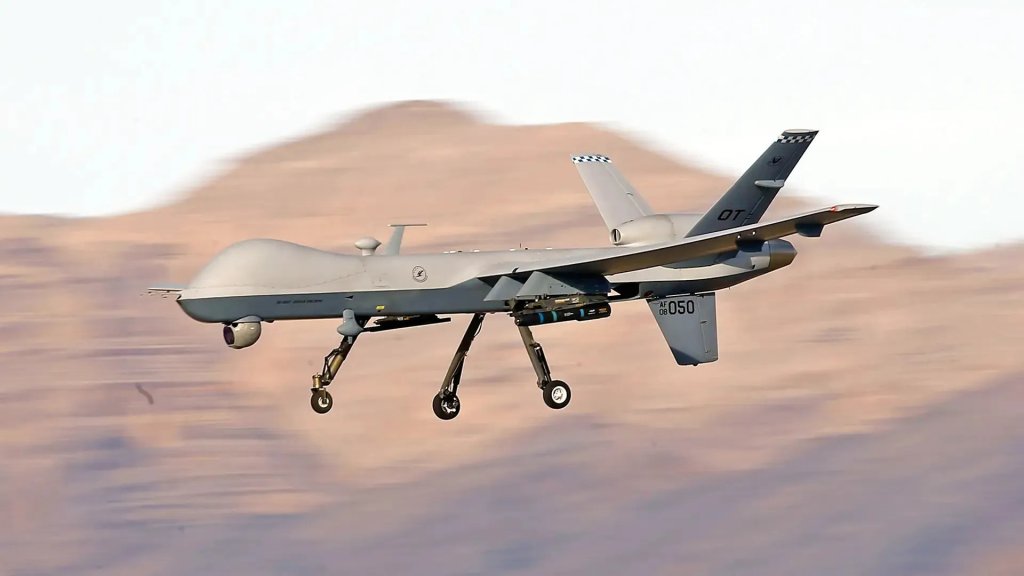
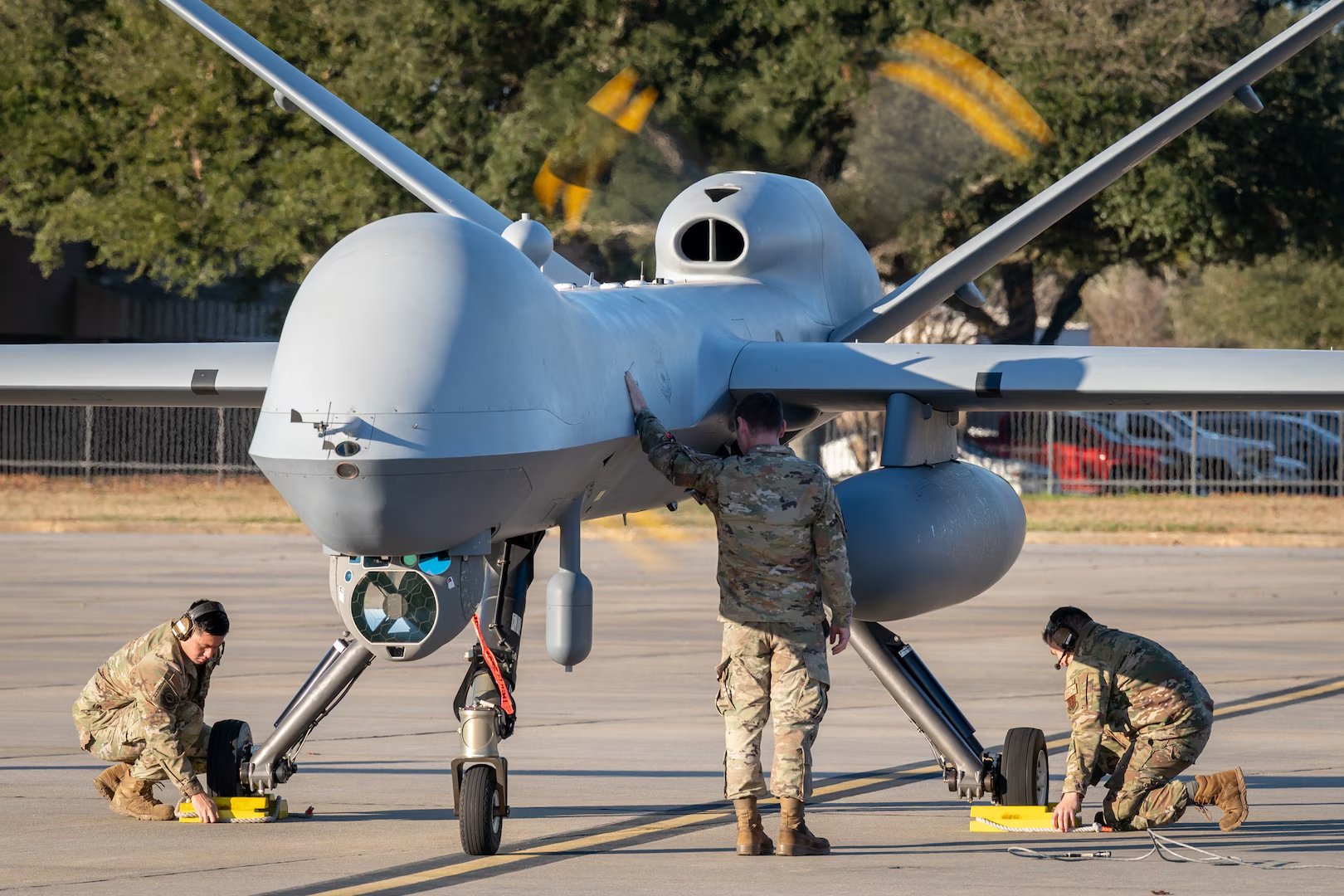
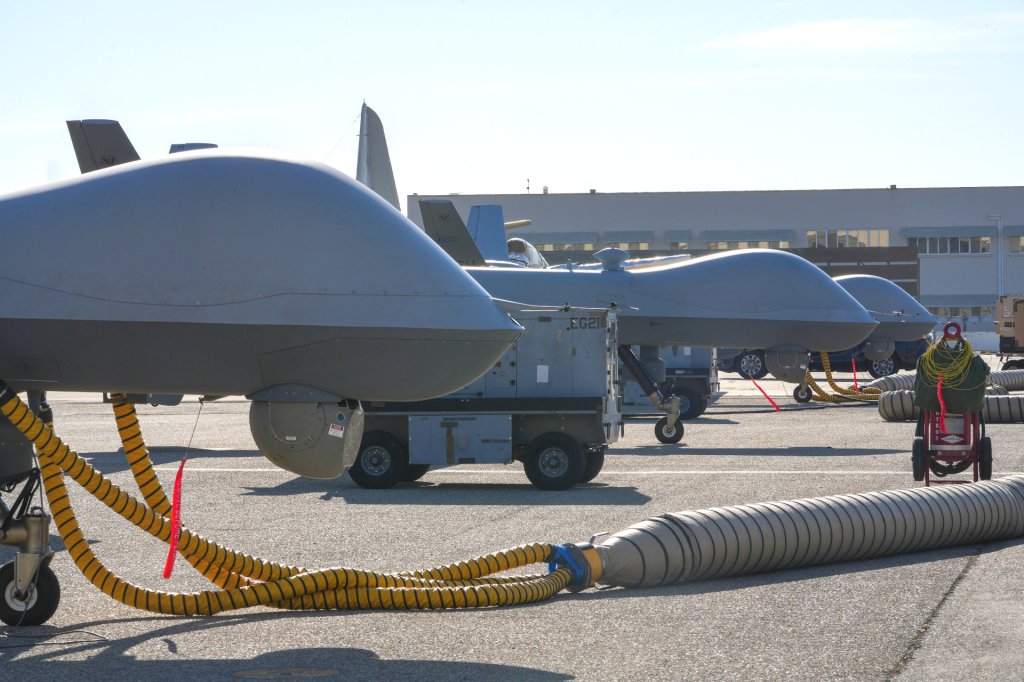
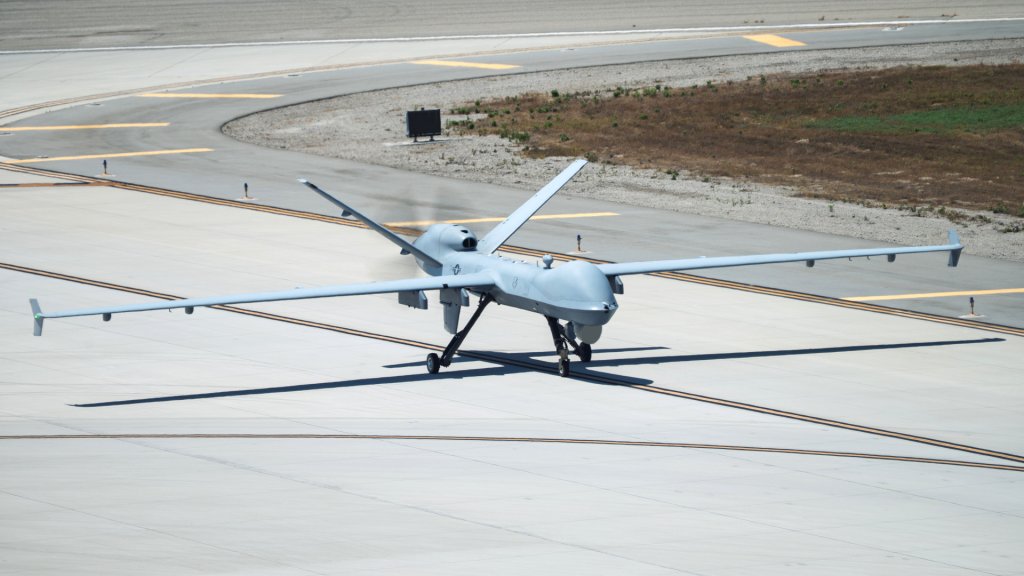
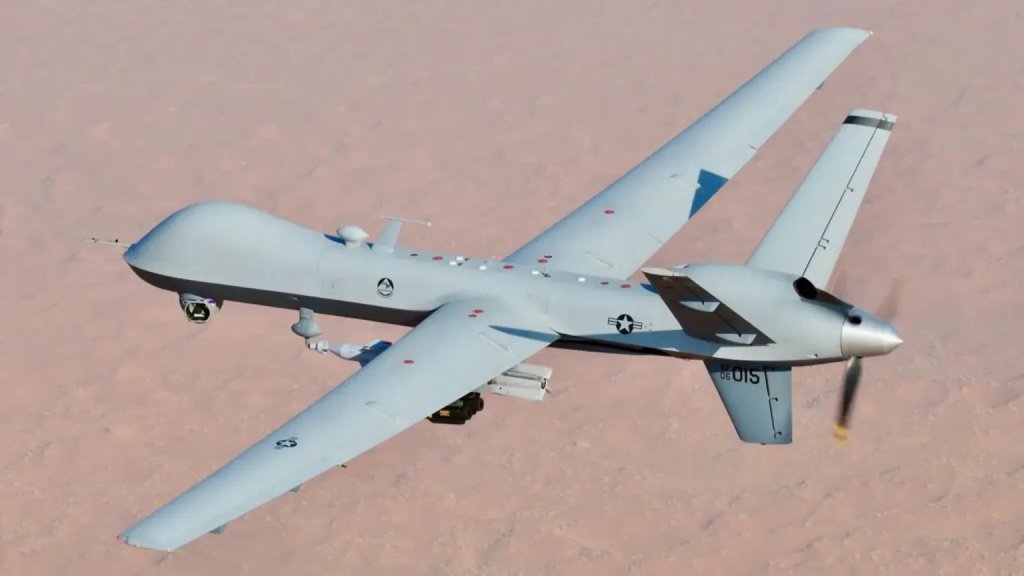
MQ-9 Reaper (USAF)

“MQ-9s flown by pilots like Suit supplied critical ISR and kinetic strike capabilities, launching them from bases within range of enemy fires,” said Wilsbach. “Suit planned and launched an MQ-9 combat sortie during an active attack. While missiles hit the airfield, Suit taxied out and got his Reaper airborne. He handed off control to another crew, then switched to the ground control station to recover a different MQ-9. His crew destroyed a priority target and then turned their sensors back toward their own airfield to inspect the runway for damage and determine whether operations could continue.”

“The MQ-9 was a workhorse for combatant commanders during Epic Fury. It provided real-time intelligence, struck 860 targets, and gave our forces the edge while denying the enemy freedom of movement. Airmen-like Suit made sure this asset stayed in the fight and maximized its impact. The MQ-9 success demonstrates the need for a capable follow-on aircraft that achieves the same effects with greater survivability, adaptability, and at a lower cost.”

Rescuing An F-15E Crew Shot Down Over Iran

“Peaches is an air battle manager from Texas,” the chief stated. “During Epic Fury, she found herself in the middle of a story of her own her family will be telling for generations. Peaches led 134 joint and coalition operators responsible for command and control across a complex battle space. Her team supported operations involving more than 1,000 one-way attack drones and 1,200 enemy ballistic missile threats. Those numbers are difficult to comprehend, but for Peaches, command and control was not a collection of symbols moving across the screen.”

“Every symbol represented something real: an aircraft, a threat, a crew, an airman,” he explained. “It was during this time two of those airmen became isolated inside of Iran. What followed became one of the defining moments of the operation. Over 50 hours, Peaches was one of the many who coordinated the combat search and rescue effort, leading her team to integrate 176 aircraft, fighters, bombers, tankers, intelligence platforms, and Air Force Special Operations Command forces that converged on one objective: bringing those Americans home.”

MUST WATCH: The extended @60Minutes interview with DUDE 44 Bravo https://t.co/HZUr7D4Svk pic.twitter.com/OUrlK072XP

— Rapid Response 47 (@RapidResponse47) September 14, 2026

“Think about the complexity of that problem,” Wilsbach noted. “Aircraft operating at different speeds, altitudes, fuel states, with different sensors, weapons, and responsibilities, while an adversary was actively trying to stop them. Maintenance teams generated additional fighters. Tanker crews extended the range and endurance of the force, intelligence professionals track the threats. AFSOC [Air Force Special Operations Command] airmen brought specialized capabilities need[ed] to reach out to our isolated teammates and get them out. Every one of those airmen was doing something different, yet all were contributing to the same mission.”

“The Dude 44 rescue demonstrates why integration matters,” Wilsbach added. “To someone outside of our profession, committing that much combat power to recover two people might appear extraordinary. To an airman, the reason is simple: we make a promise to one another in our Airman’s Creed. I will never leave an airman behind. If you are isolated, injured, or trapped behind enemy lines, we are coming to get you. The courage and performance displayed during that mission was so impressive that 10 airmen received battlefield promotions. I had the distinct honor of promoting six of those heroes, ranging from staff sergeant to chief master sergeant during a recent trip. Everyone understood that their success depended on someone else doing their job. That is how our air and space forces fight.”

Contact the author: howard@twz.com 

The post Airmen Under Fire: Stories From Iranian Barrages On U.S. Bases appeared first on TWZ.
  •  

Cheaper Reaper? Swarm Aero Unveils Gamera

After the U.S. lost dozens of its MQ-9 Reaper drones to fighting in Iran, newcomer drone-maker Swarm Aero announced Monday that it had developed a drone in the same medium altitude, long-endurance (MALE) class, capable of executing swarm missions and cheap enough to afford losing, even in large numbers. This comes as the USAF is looking for a cheap replacement for the Reaper, targeting just a fraction of the MQ-9’s cost, at $10M per copy.

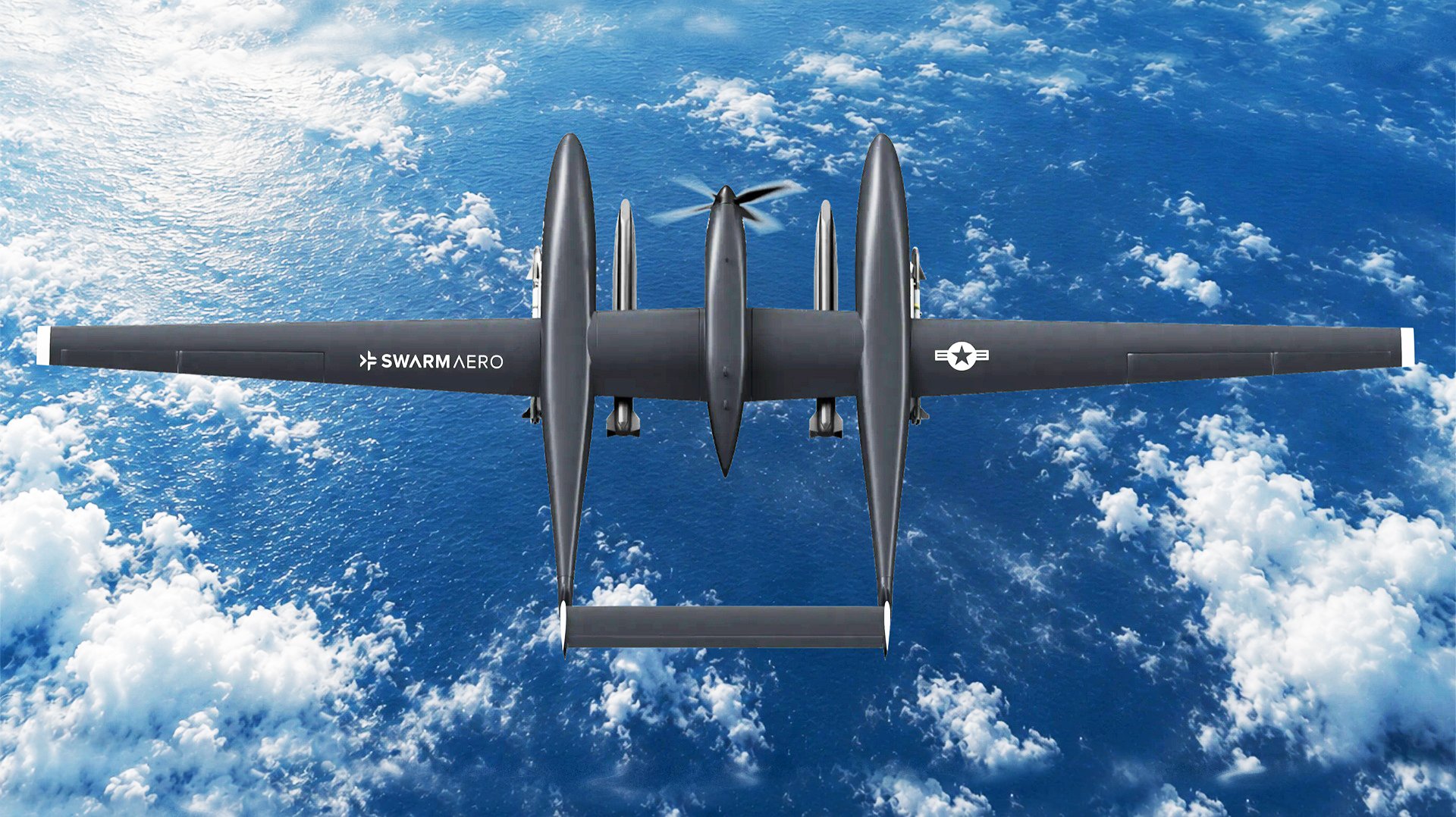
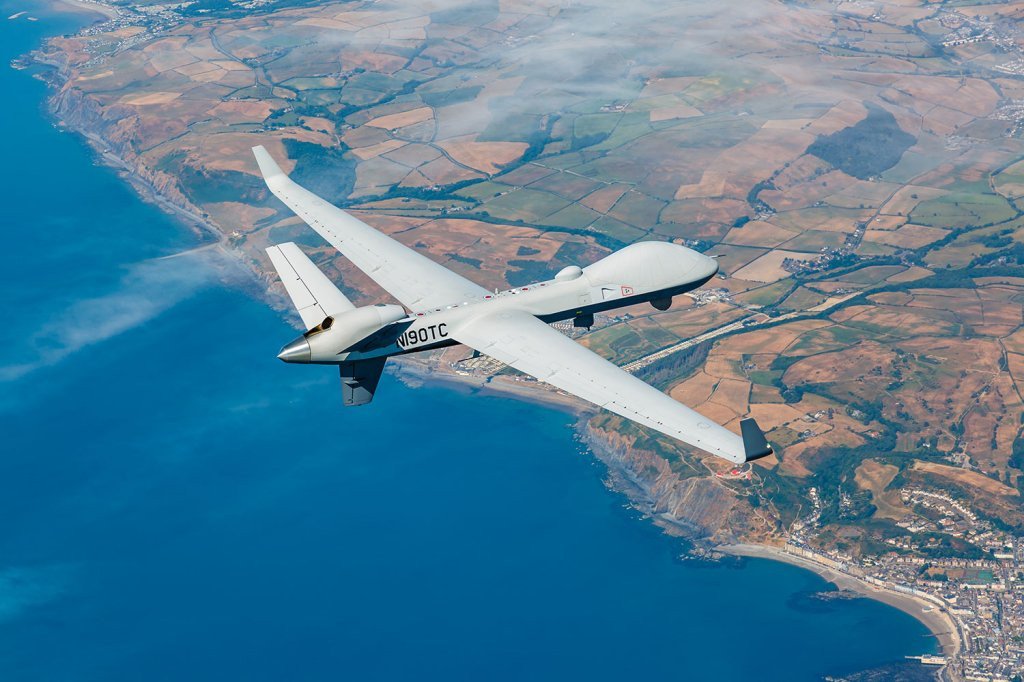
Called Gamera, the new drone, built from a clean-sheet design, has a wingspan of about 72 feet, a payload capacity of 2,800 pounds, a “Pacific-spanning” unrefueled range of 9,000 miles and a combat radius of 2,300 miles with “hours” of on-station time once at its patrol area. Kitted-out Reapers, which reportedly cost $30-50 million apiece, have a payload capacity of up to 3,800 pounds. 

Meet Gamera, a new category of Group 5 strike and sensing UAS that we unveiled at @AFA_Air_Space's Air, Space & Cyber Conference today.

Mass-producible, significantly lower cost than legacy platforms, and the first UAS specifically designed to employ bomber-class strike… pic.twitter.com/UhT9bgcTPn

— Swarm Aero (@SwarmAero) September 14, 2026

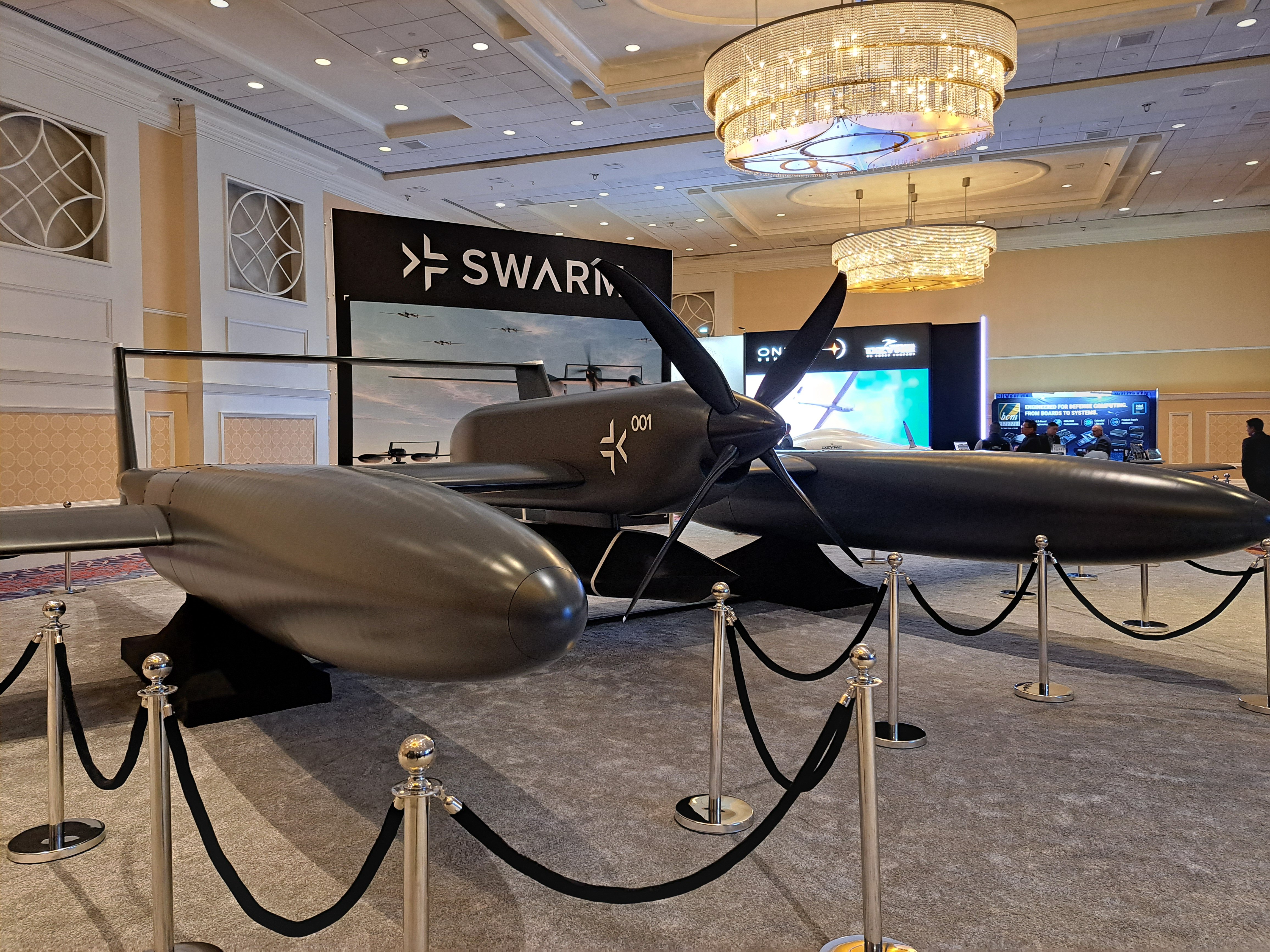
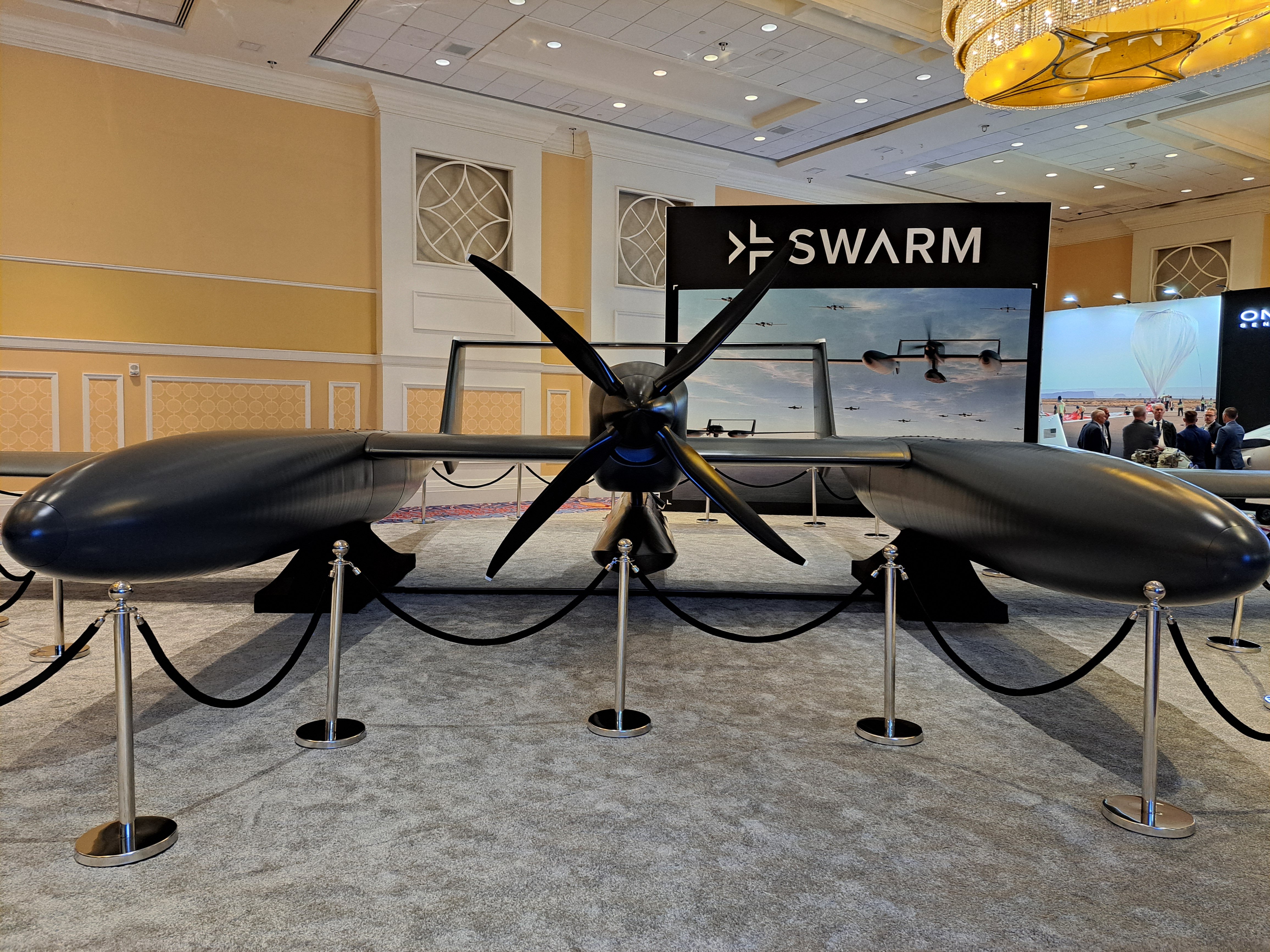
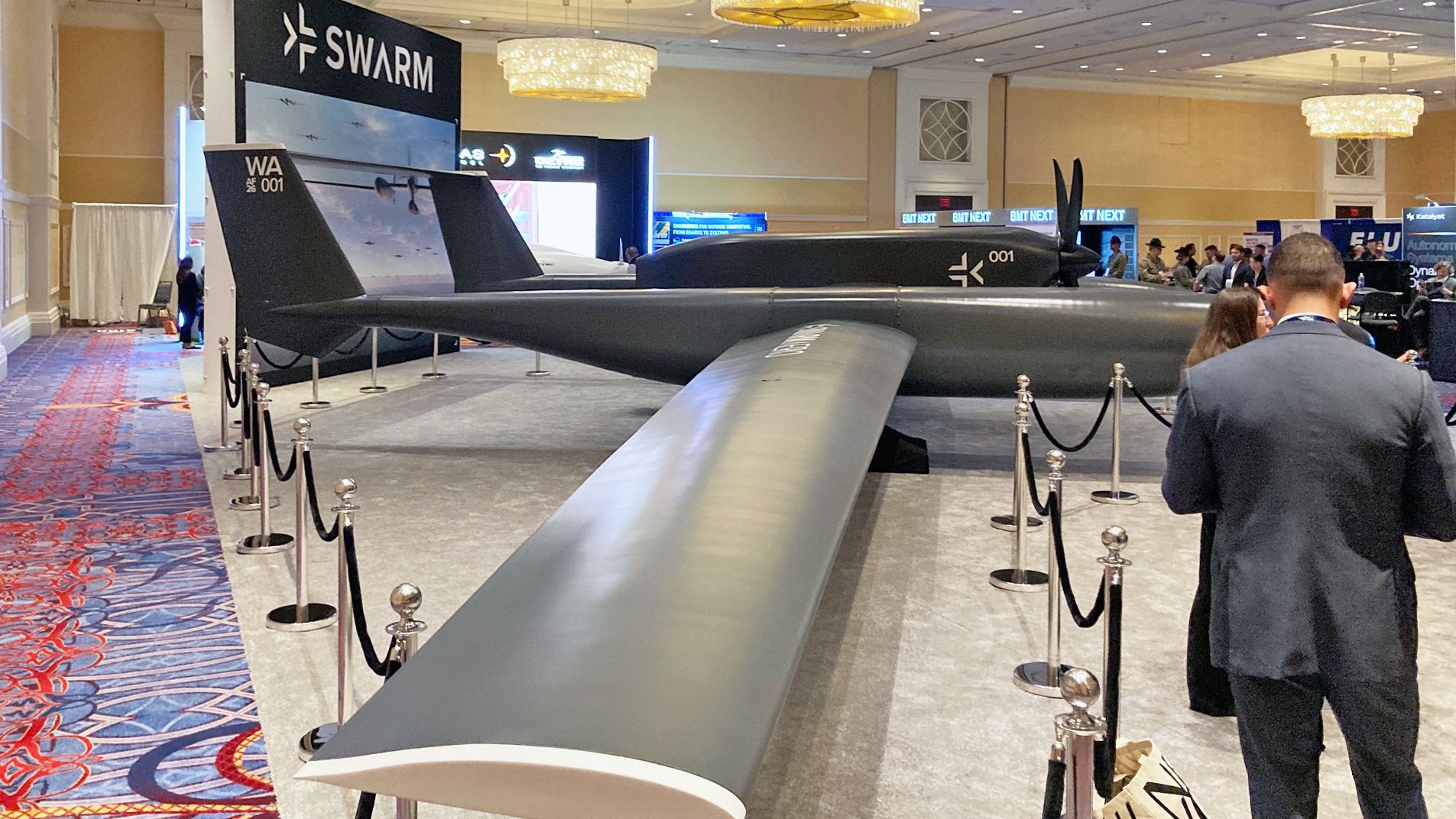
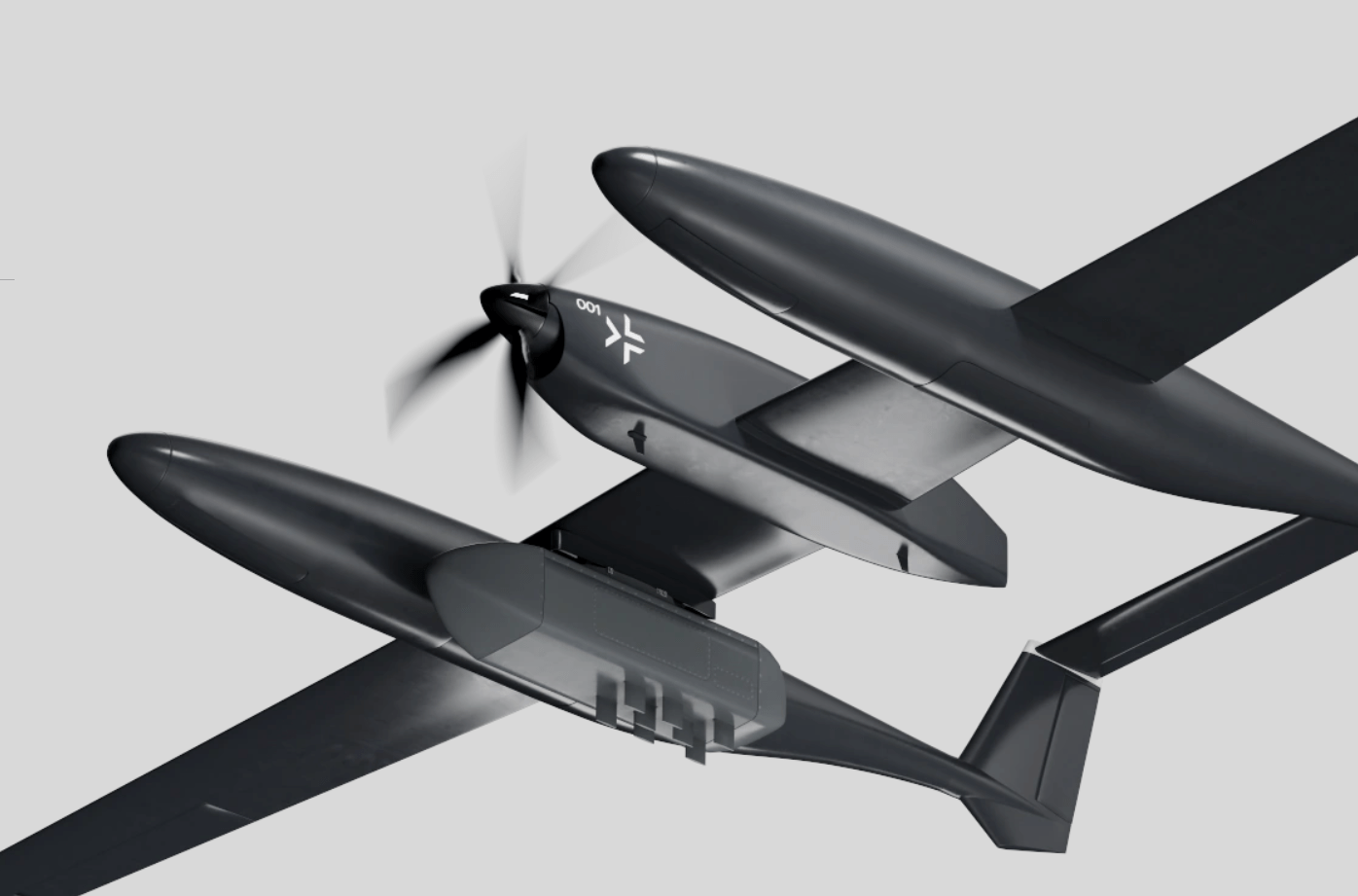
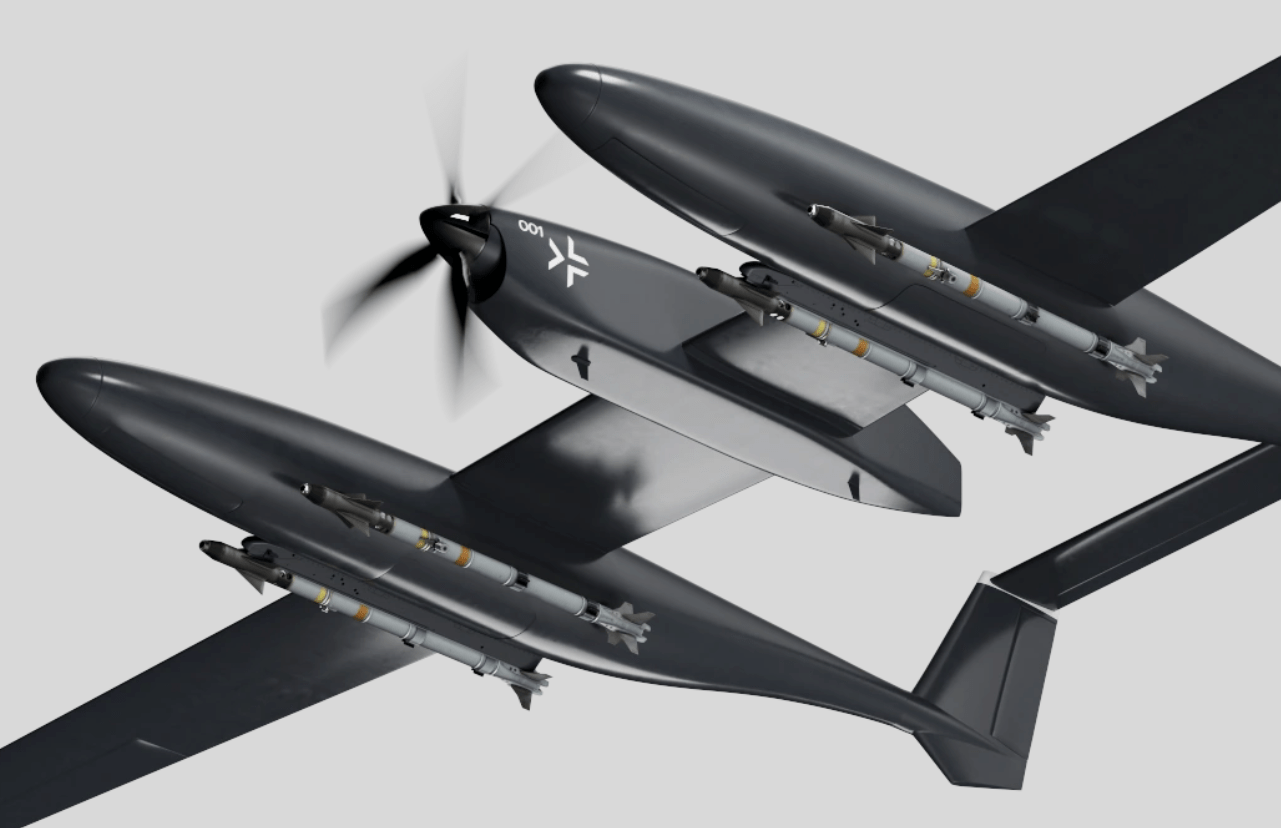
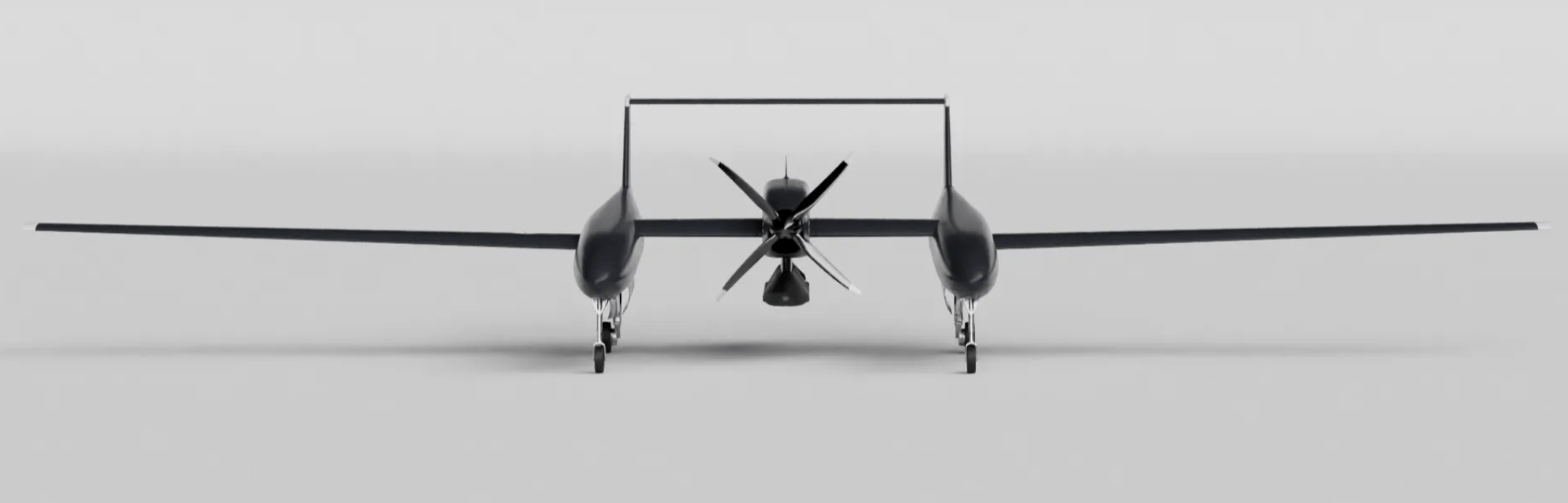
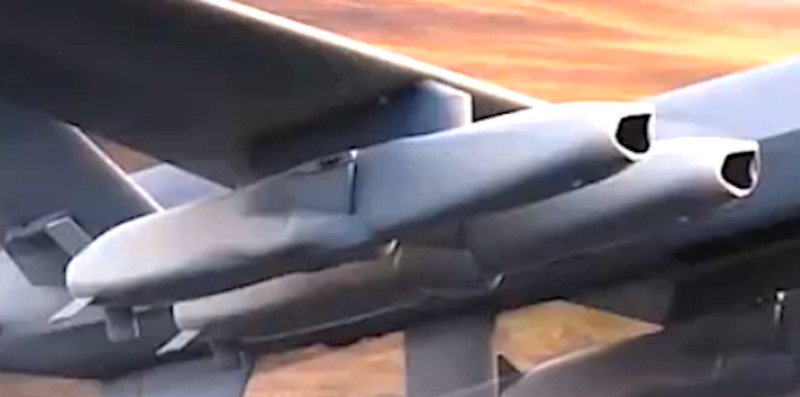
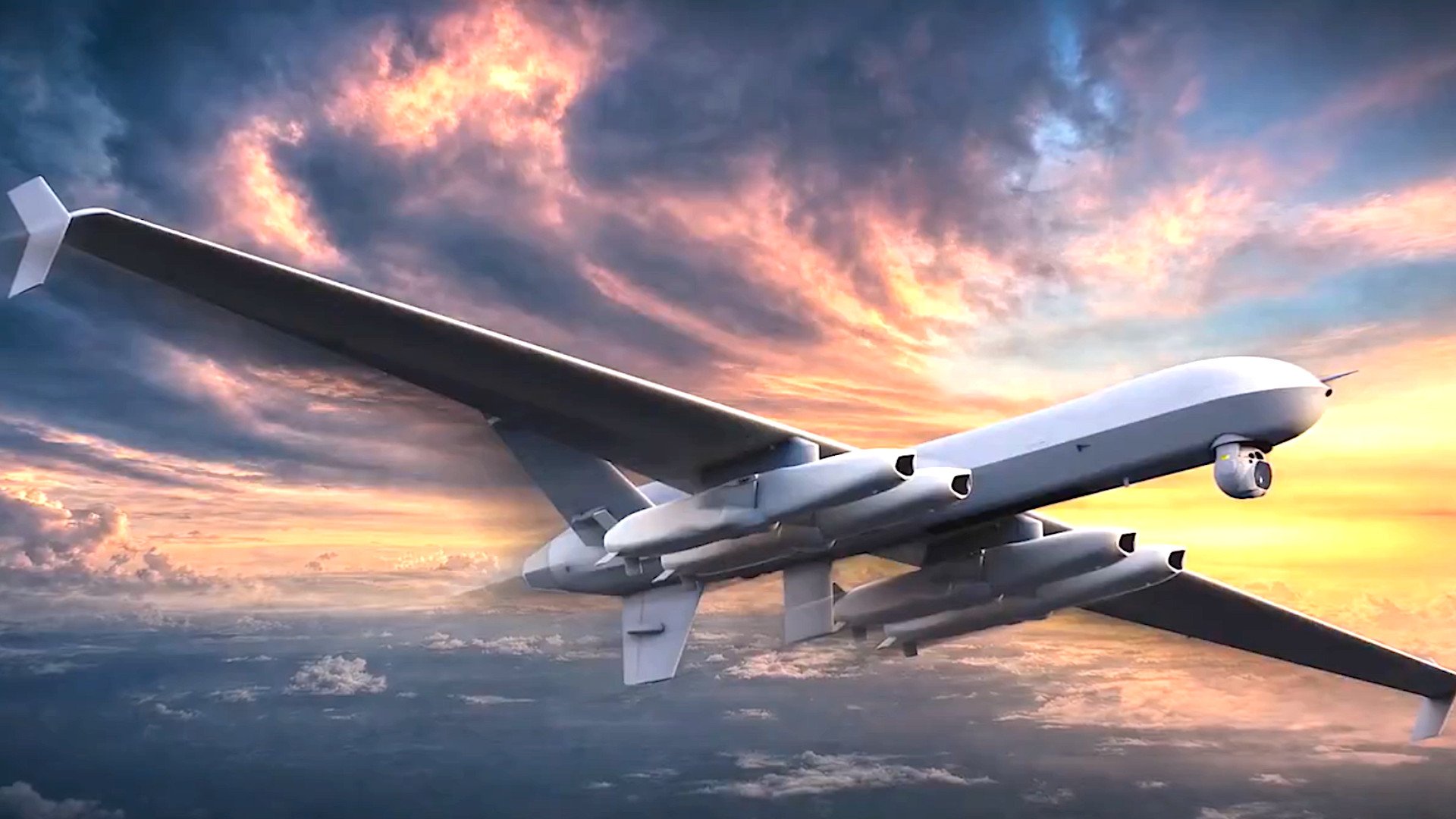
A mockup unveiled at the Air & Space Forces Association’s Air, Space & Cyber Conference in Washington, D.C., underscores the aircraft’s large wingspan and showcases its unique design that is built for cost efficiency, above all else. It features a single propeller, like the Reaper, a central fuselage and hardpoint, large fuel cells in sponsons on either side and an OV-10 Bronco-style twin-boom t-tail.

Gamera at Air, Space & Cyber 2026. (Eric Tegler)
Gamera with a JASSM-ER mockup attached to its centerline hardpoint. The aircraft has seven stores stations in total. (Hope Hodge Seck)

These general design choices were made for efficiency and practicality, Peter Kalogiannis, CEO of Swarm Aero, said in an interview on the show floor.

“The Bronco tail is really there to provide us that flexibility. So it allows us to use a variety of payloads, whether they’re released, whether they’re rocket-powered, and it really gives us it… it really sets into the flexibility goal here, which is we can carry a whole bunch of different payloads, whether they’re strike, whether they’re sensing,” he said. “And it’s also easy to manufacture, right? It’s straightforward, and that’s a design decision that again we’ve made everywhere across the design standpoint.”

Other modularity features include making the wings removable and separate from the fuel system (dry wing), the executive said, which increases efficiency in manufacturing.

(Hope Hodge Seck)

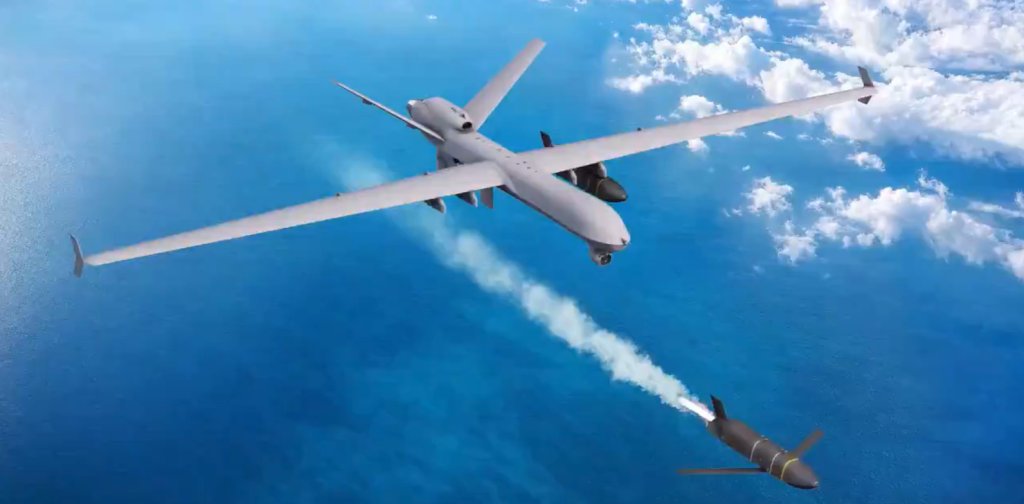
Gamera’s native payload, according to the announcement, will be JASSM-ER cruise missiles, which have a plussed-up range of 600 miles. This payload, the company said, will deliver “comparable strike effects to exquisite systems for roughly one-tenth the cost-per-effect of existing platforms.”

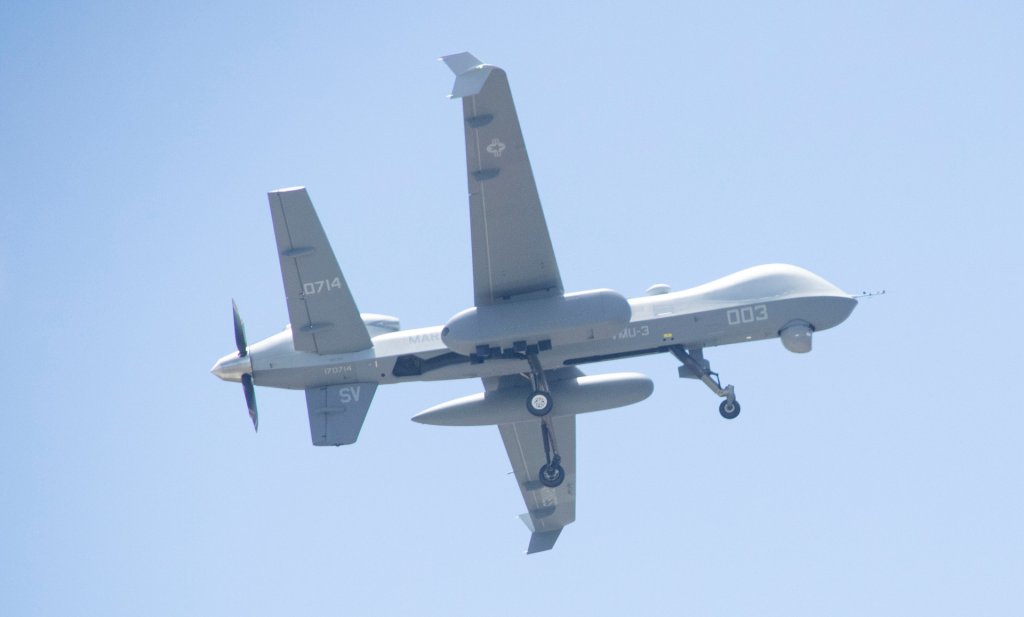
The MQ-9 is in the process of integrating the AGM-158 Joint Air-to-Surface Standoff Missile and other missiles as compatible payloads in a move to turn the drones, which conventionally carry laser-guided Paveway bombs and Hellfire missiles, into more robust standoff “missile trucks.” 

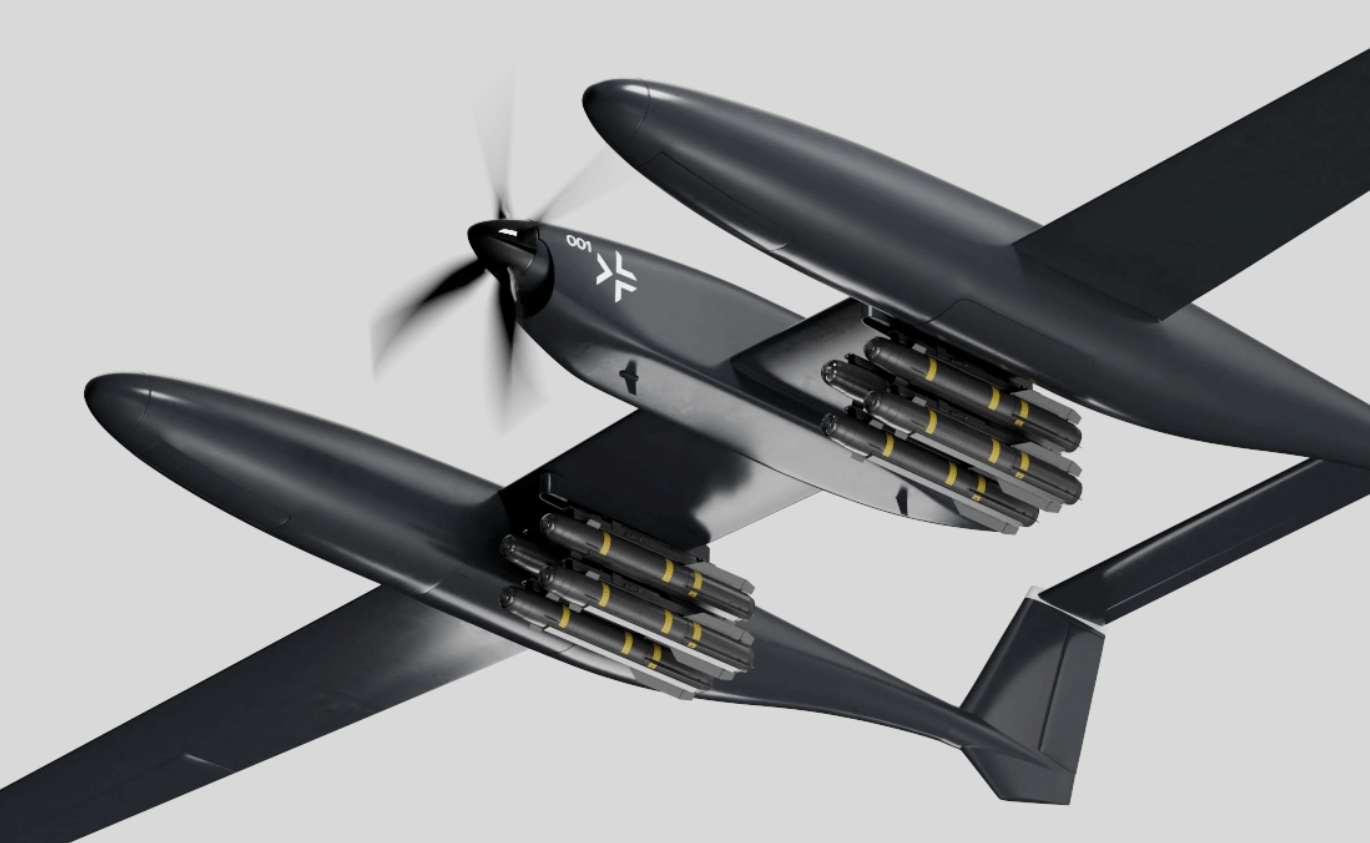
Swarm Aero execs said the aircraft’s six other hardpoints beyond its centerline one allow it to carry many munitions and other payloads. Renderings of a number of configurations show the drone configured for direct strike with Hellfire/JAGM missiles, ISR support with podded sensing payloads, and even air-to-air missiles.

(Swarm Aero)
(Swarm Aero)
(Swarm Aero)

Swarm Aero’s unveiling comes after the Air Force announced its desire for what it’s calling a “Massed Modular Aircraft” – a MQ-9 successor at a fraction of the price point: $10 million per copy. 

Certain announced Gamera specs line up with the Air Force’s MMA wish list, which included a 2,800-pound payload capacity and an unrefueled combat radius of 2,300 nautical miles. 

“Built around a unique manufacturing approach, swarms of these Group 5 UAV give the U.S. Air Force the cost-effective force structure needed for their ultimate goals of surface strike, sensing, and other missions,” the company said in its announcement. “Their tremendous range and payload flexibility fill the gaps between ‘pulsing’ forces to provide highly persistent air dominance over vast areas.”

(Swarm Aero)

Oliver Palmer, Chief Revenue Officer and co-founder of Swarm Aero, said the unit cost of Gamera would come in under the $10 million target. While he declined to say by how much, he maintained that the offering for the Air Force’s Massed Modular Aircraft requirement would be “competitive.”

Kalogiannis said the clean-sheet and targeted approach was critical to achieving cost reduction.

“Low cost isn’t something that you kind of sprinkle on an existing design, an existing engineering system, even an existing organization,” he said. “You have to design the aircraft, design the company around that, and that’s what we’ve done. So every design decision we’ve made has been factoring in cost from the very beginning, and manufacturability and the ability to build these at scale.”

Though the company has been reticent about the main materials in Gamera, executives referred to the $10 million Air Force Research Lab contract the company is executing to develop metal composites. The company’s first engineering hire, they said, was a materials and process engineer.

“We’re demonstrating the progress there and kind of applying those technologies to real aerostructure development,” Kalogiannis said.

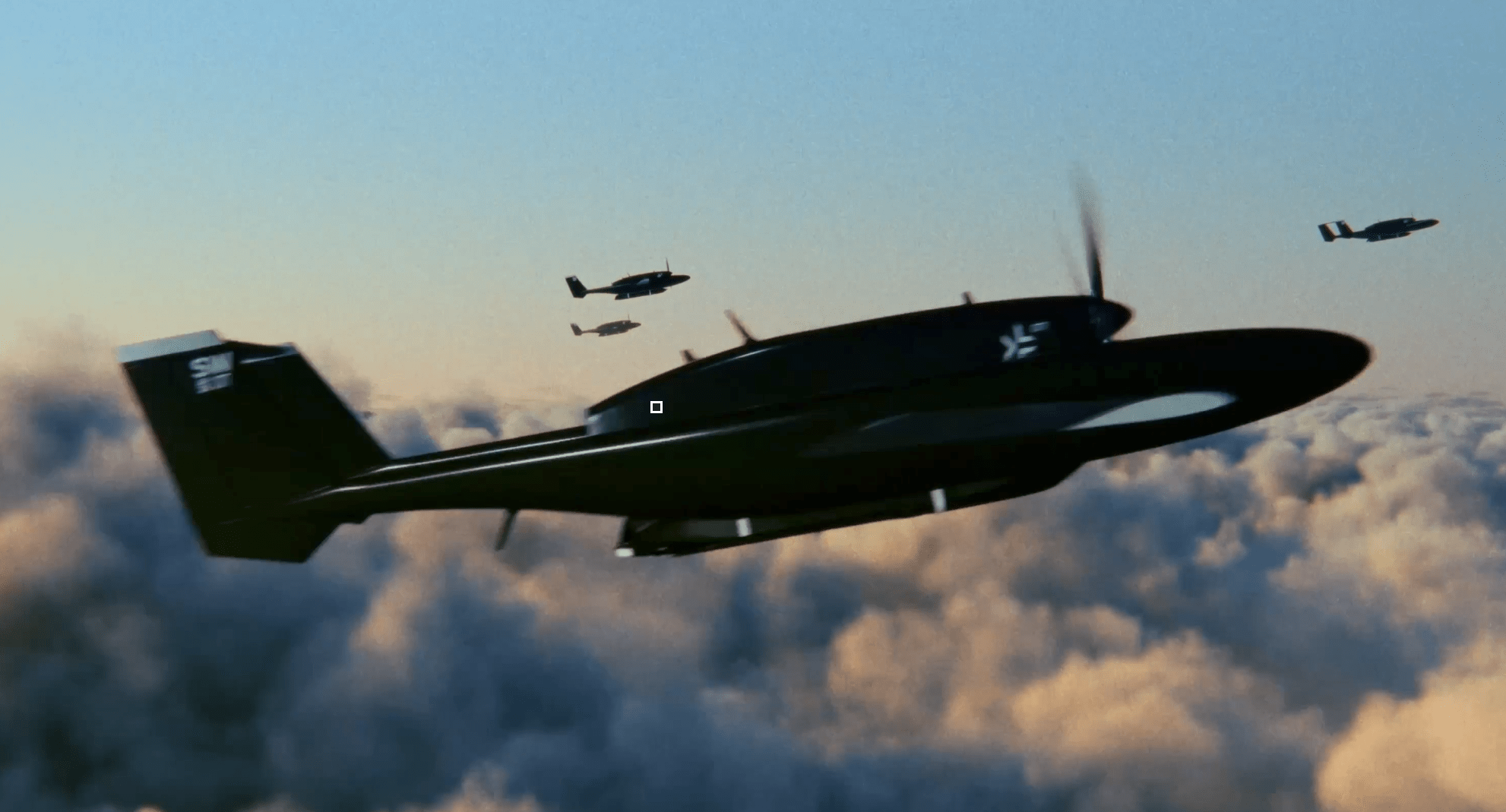
Expanding the picture is the drone’s swarming capability – the company says it’s most effective in “groups of up to 80,” powered by a Swarm Aero command-and-control and autonomy system called Legion. The system purports to let a single military operator or team direct a cluster of dozens of different uncrewed systems across multiple domains at the same time and has already been experimentally deployed by the Navy to direct air and sea drones.

A video screen capture from Swarm Aero showing a large formation of Gameras on a mission. (Swarm Aero)

The company, which was founded in 2022 and is based in northwest Arkansas, also noted that Legion has already been tapped by the Defense Innovation Unit as a C2 source for its Autonomous Collaborative Teaming program.

“At Swarm we’ve inverted conventional wisdom around air power platform design, manufacturing, and combat operations and introduced an affordable, mass-producible strike platform that will re-establish an asymmetric edge over our adversaries,” Palmer said in a statement. 

The Air Force has stressed its desire to develop Group 5 unmanned aerial systems akin to Reaper, emphasizing that attritability is not the same as expendability and the category lives between single-use weapons and more exquisite, higher-cost platforms.

The Air Force’s Reaper fleet is reportedly now around 135 units, down from a desired floor of 189, with dozens lost over Iran and Yemen in recent fighting. But the Air Force has only purchased up to 337 of the aircraft over the 19-year life of the program.

An MQ-9 prepares for a sortie. (Air National Guard)

While the Air Force has said it wants at least 180 MMA units, Palmer suggested Gamera’s low price point and capabilities might push the service toward a higher acquisition target.

“Reaper was very specifically for terrorism, overhead surveillance and strike with very short ranges in uncontested airspace, and really not transiting massive distances to do those operations,” he said. “This is really intended more for long-range strike, and then also can do all of those MQ-9 sensing [and other] missions. It’s a different paradigm. So when we think about how you build out the force, how you size that, it’s really for long-range strike, and that really drives the program and the aircraft into a different direction.”

Just today at the Air & Space Forces Association’s conference, the USAF confirmed it plans to buy 500 MMAs by 2032. So the stakes are high, to say the least.

The Air Force’s quest for a less-expensive Reaper successor will clearly trigger a race to meet the requirement. Earlier this month, Reaper maker General Atomics unveiled Wildfire, a MALE drone developed from the MQ-9 that purports to deliver similar performance to its progenitor, with some key tradeoffs, at a lower cost. The company has been outspoken about how achieving Reaper’s full capabilities at a fraction of the cost will be an unrealistic challenge. General Atomics has yet to provide full specifics on if it will arrive under the $10 million target cost stipulated by the Air Force.

Contact the editor: Tyler@twz.com

The post Cheaper Reaper? Swarm Aero Unveils Gamera appeared first on TWZ.

  •  

Fleet Of At Least 500 Collaborative Combat Aircraft By 2032 Now In USAF’s Plans

The U.S. Air Force is now aiming to have at least 500 Collaborative Combat Aircraft (CCA) in service by 2032. The service also wants to have an equal number of Massed Modular Aircraft (MMA) drones to succeed its MQ-9 Reapers by that time. In terms of stated CCA force structure plans, this is a substantial step up, with the service having most recently talked about acquiring “over” 150 of these drones by the end of the decade.

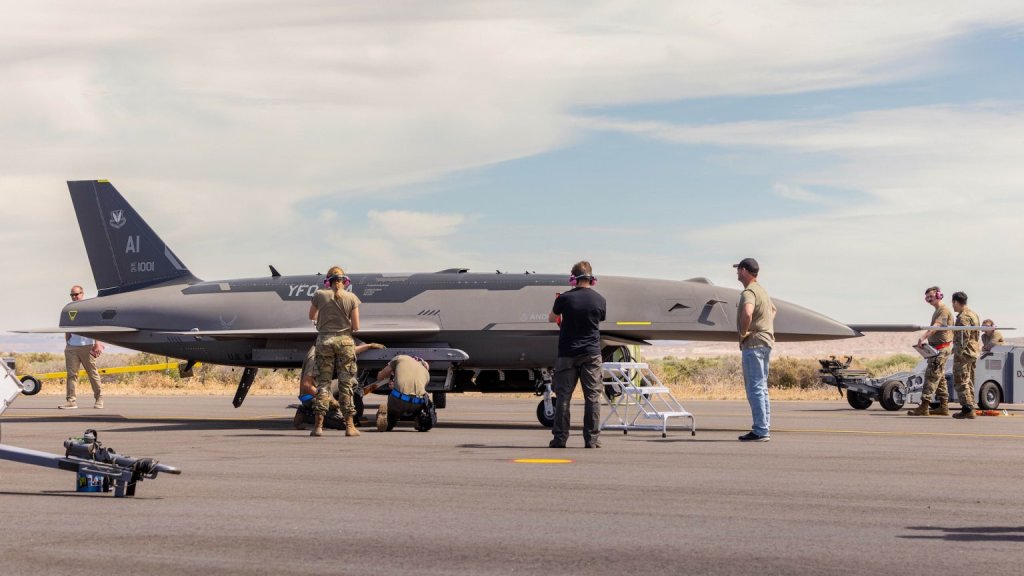
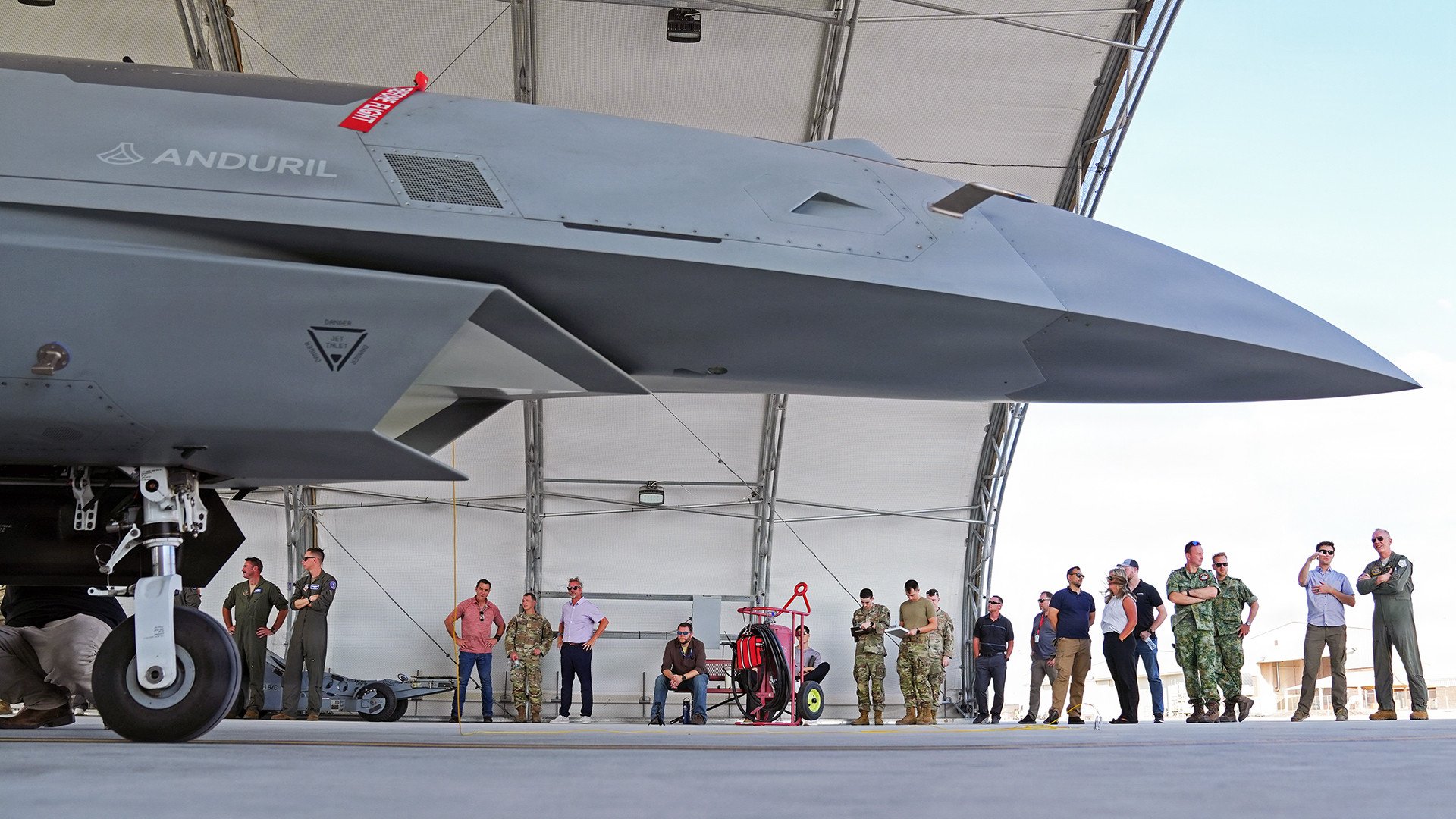
Secretary of the Air Force Troy Meink shared updates on the CCA program during a keynote speech at the Air & Space Forces Association’s 2026 Air, Space & Cyber Conference, at which TWZ is in attendance. The service’s top civilian also announced that General Atomics’ FQ-42 and Anduril’s FQ-44 drones have now received official nicknames: Vengeance and Fury. This only represents a change for the General Atomics design, which the company had previously named Dark Merlin. In June, the Air Force announced that it was ordering both types into production.

A composite image showing the FQ-42 and FQ-44 designs together with their new official nicknames. USAF

“We will have autonomous fighters like the Collaborative Combat Aircraft, or CCA. We intend to have at least 500 of these in service by 2032,” Meink said in his speech. “Our intent is to field 100 MMAs in 2029 at even a lower cost than the CCAs and a fraction of [the] cost of manned aircraft we build today. Then by 2032, 500 of these [MMA] platforms will join our force.”

When it comes to CCAs, “today, the first FQ-42 and FQ-44 increments are already rolling off the assembly line,” Meink added. “They’ll be performing many of the same missions that we do with manned fighters today.”

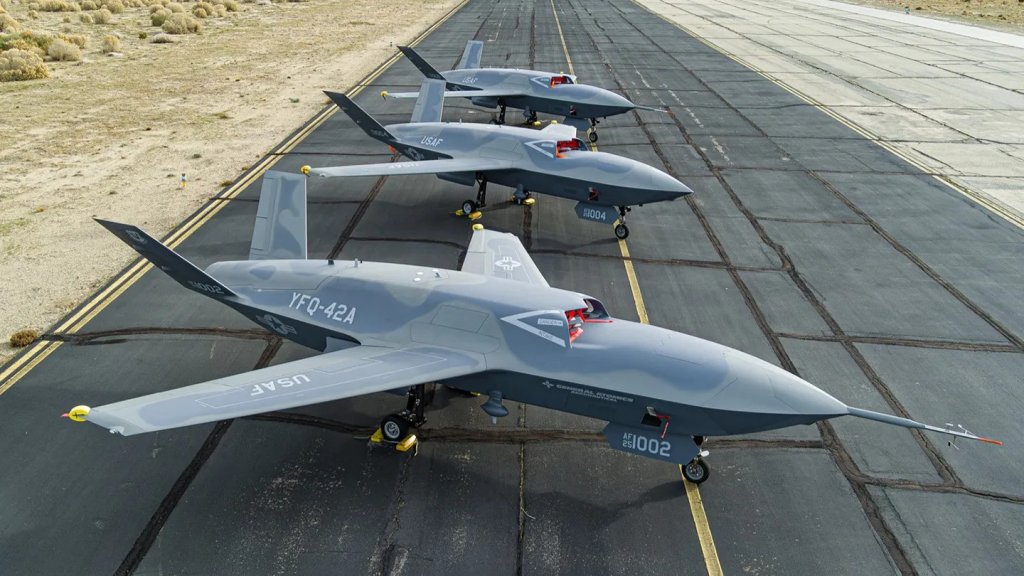
A row of YFQ-42A prototypes. General Atomics previously gave the company name Dark Merlin to this design. GA-ASI

The Air Force’s stated CCA force structure targets have fluctuated significantly in recent years. In 2023, then-Secretary of the Air Force Frank Kendall outlined plans to acquire at least 1,000 CCAs, if not more, across the life of the entire program. However, Kendall and other Air Force officials subsequently talked about a far smaller initial fleet of between 100 and 150 drones.

“These contracts reaffirm our confidence in the strategic path forward for the program to procure over 150 combat capable CCA by the end of the decade,” Meink himself said in a statement in June when the production orders for the FQ-42 and FQ-44 were announced.

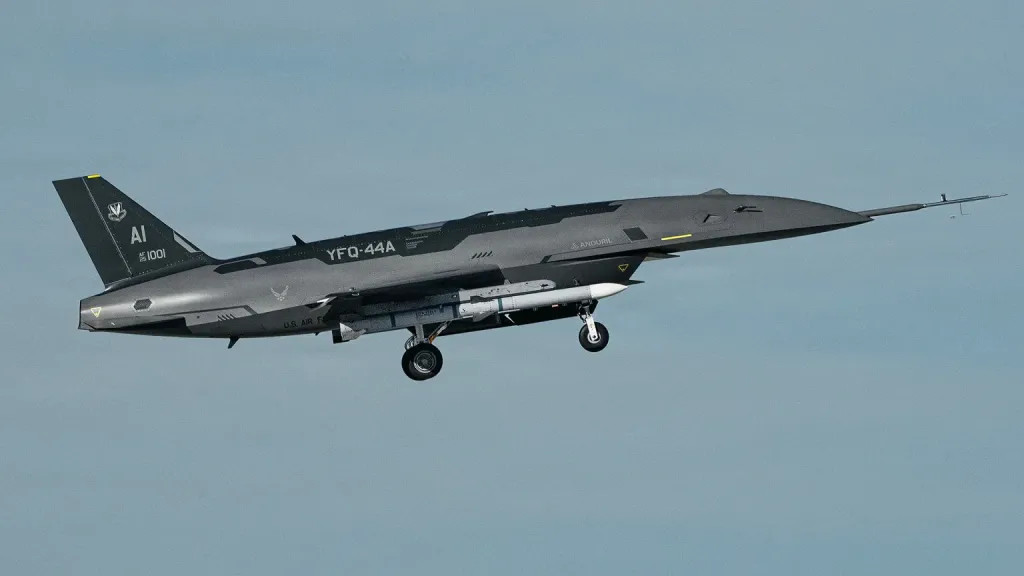
A YFQ-44A prototype, with an inert AIM-120 air-to-air missile under its wing, seen during a test. USAF

The FQ-42 and FQ-44 are also being acquired under the first phase, or Increment 1, of the CCA program. At least one additional increment is planned, and could lead to orders for one or more additional types of CCA. Though it is not immediately clear, it is possible, if not probable that Increment 2 CCAs are factored into the latest 500 drone figure.

TWZ’s Jamie Hunter got a close look at the Skunk Works’ Vectis drone at Air, Space, & Cyber 2026. Photo: Lockheed Martin

“We talk about 500 by 2032, [but] we could actually build more of them than that,” Secretary Meink also said today during a question-and-answer session immediately following his speech. The goal of the CCA program “from the get-go” was “simple aircraft that you could build fast and at a lower cost,” he continued.

“So now we’re in a situation to [sic] where we could actually build more than we can actually afford to buy,” he added.

It is unclear what the unit costs of the FQ-42 or FQ-44 are currently. The Air Force has said previously that it is targeting a price point of around $20 million apiece once full-rate production gets underway.

Beyond any fleet size target, the Air Force is still very much in the process of figuring out how future CCAs will be deployed, launched, recovered, supported, and otherwise operated on a day-to-day basis, as well as employed tactically. During today’s question-and-answer session today, Meink drew attention to a dedicated Experimental Operations Unit (EOU) the service has established to lead the process of laying the groundwork for future CCA operations. The EOU notably led a significant new round of operational testing of YFQ-42 and YFQ-44 prototypes at Creech Air Force Base in Nevada back in July, which TWZ was first to report on. The EOU supported another similar test exercise at Edwards Air Force Base in California in April.

A YFQ-44A at Edwards Air Force Base during a test exercise in April 2026. USAF

“Getting them [CCAs] into these developmental kind of operational units, so they can start experimenting with that – familiarity breeds confidence, right?” Meink said.

The Air Force continues to make it clear that it sees its future CCA fleets as essential for providing capabilities and operational capacity necessary to succeed in future conflicts, especially a potential high-end fight against a near-peer opponent like China.

“Collaborative Combat Aircraft change how we project power and generate mass in highly contested environments,” Air Force Chief of Staff Gen. Ken Wilsbach said in a statement when the FQ-42 and FQ-44 production contracts were announced. “Delivering this capability to our warfighters faster ensures our forces maintain the tactical edge required to deter and, if necessary, defeat any adversary.”

As mentioned, the Air Force also now has plans to acquire 500 very different combat drones under the MMA program, and at a unit cost of approximately $10 million. This is also a notable increase in total planned fleet size for this effort, with a target of at least 180 airframes having been previously shared publicly.

The MMA drones are expected to conduct the same general strike and intelligence, surveillance, and reconnaissance (ISR) mission sets the service’s MQ-9A Reapers perform today. Major Reaper losses in the course of operations against Iran, compounded by significant additional attrition and deliberate divestments in recent years, are key drivers behind the MMA effort, which officially kicked off in July.

A US Air Force MQ-9A Reaper drone. USAF

“As we saw in Epic Fury [the nickname for major combat operations against Iran earlier this year], ISR/strike platforms have been essential. We have used MQ-9 and even now the ULTRA aircraft to great effect,” Meink said during his speech today. The MMA program is “building on these lessons” and “will provide affordable, attritable, long-range strike, and we will be able to field them at scale.”

“MMA is designed to deliver the results our combat commanders need,” Chief of Staff Wilsbach said during his own separate keynote at the Air, Space & Cyber Conference today. “That’s how we stay ahead by moving quickly, investing in new tech, and delivering to our warfighters what they need to win.”

If the Air Force can meet its target of having a fleet of at least 500 MMA drones by 2032, this will be another significant boost to the service’s overall uncrewed capabilities. As of May, the Air Force had 135 MQ-9s left in inventory, and there have been more reported losses since then.

General Atomics, which developed the Reaper, has already put forward a new design called Wildfire as a potential successor. Many other companies are already lining up to submit their own proposals to meet the Air Force’s MMA needs.

Between the latest CCA force structure plans and the new MMA program, the Air Force’s fleets of combat drones are on track to look very different by 2032.

Contact the author: joe@twz.com

The post Fleet Of At Least 500 Collaborative Combat Aircraft By 2032 Now In USAF’s Plans appeared first on TWZ.
  •  

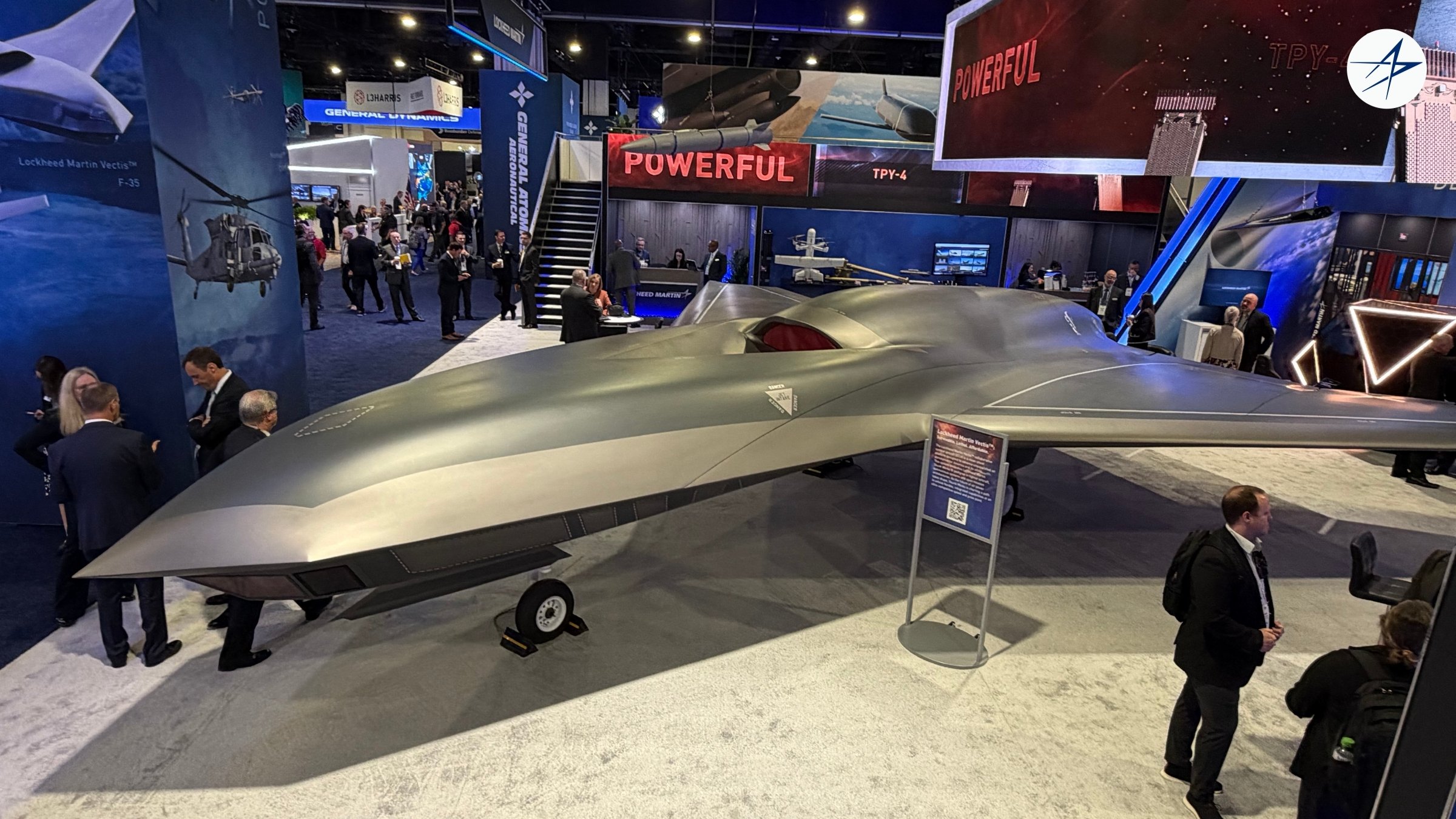
Everything We Just Learned About The Vectis Collaborative Combat Aircraft From The Skunk Works

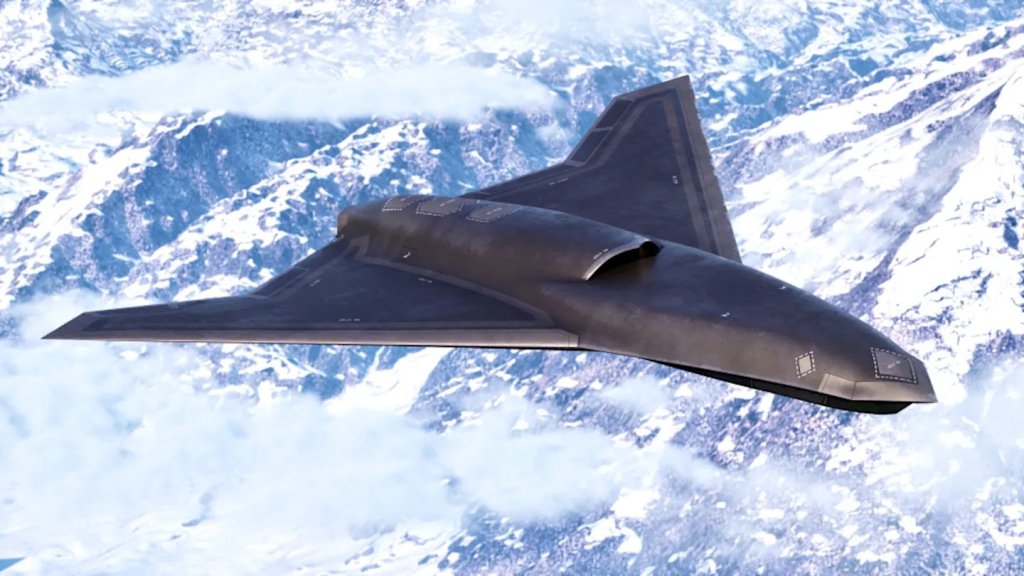
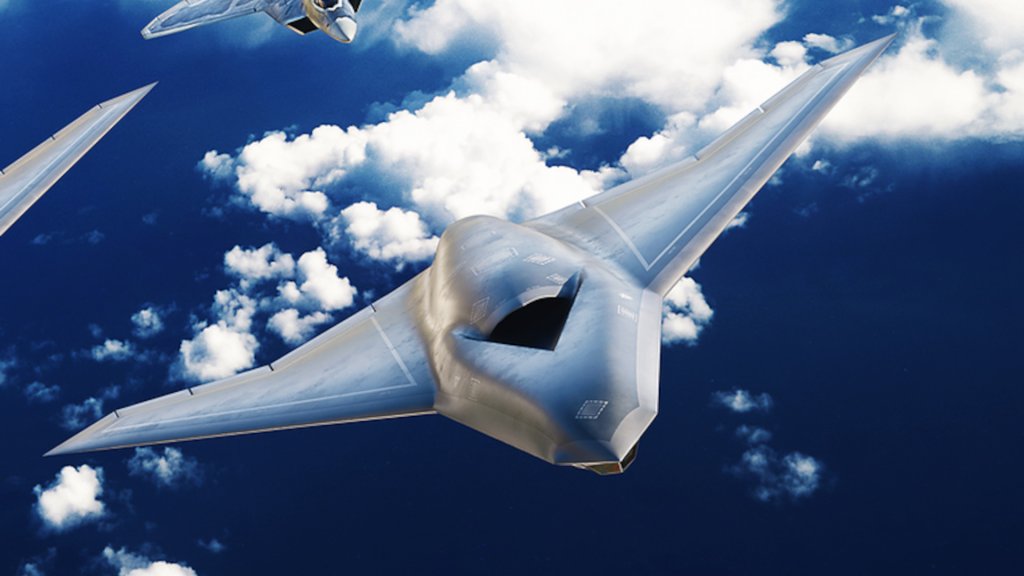
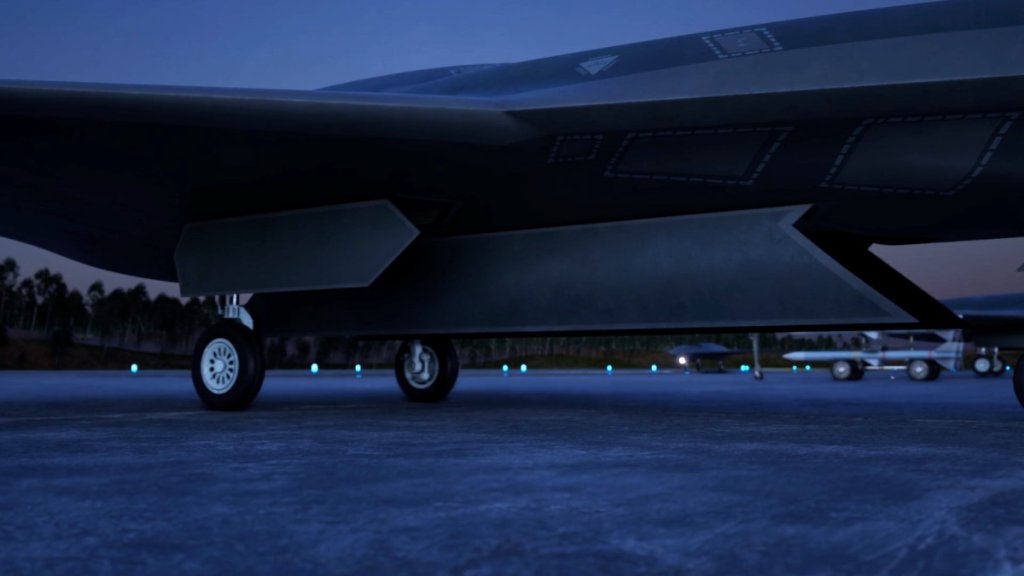
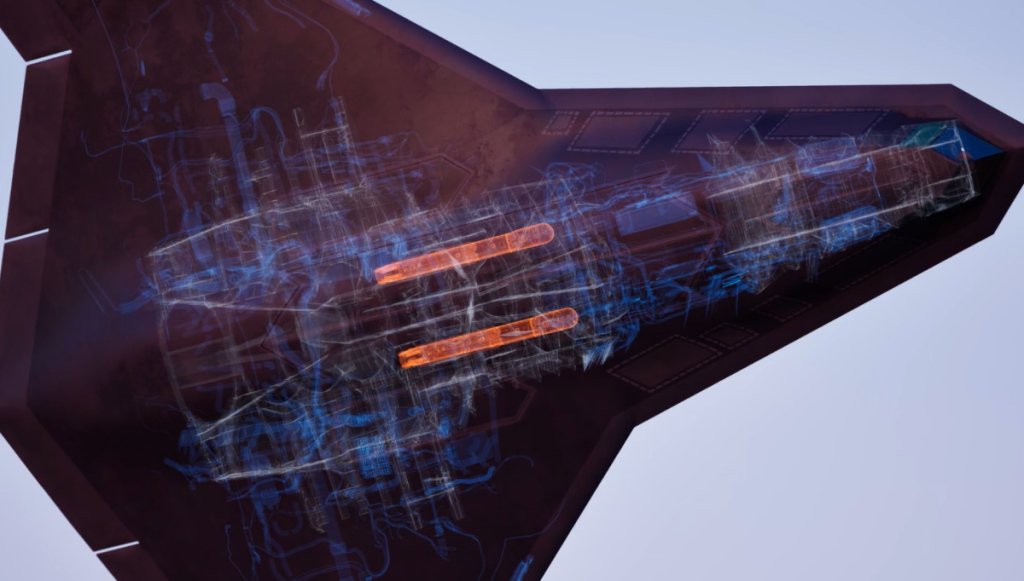
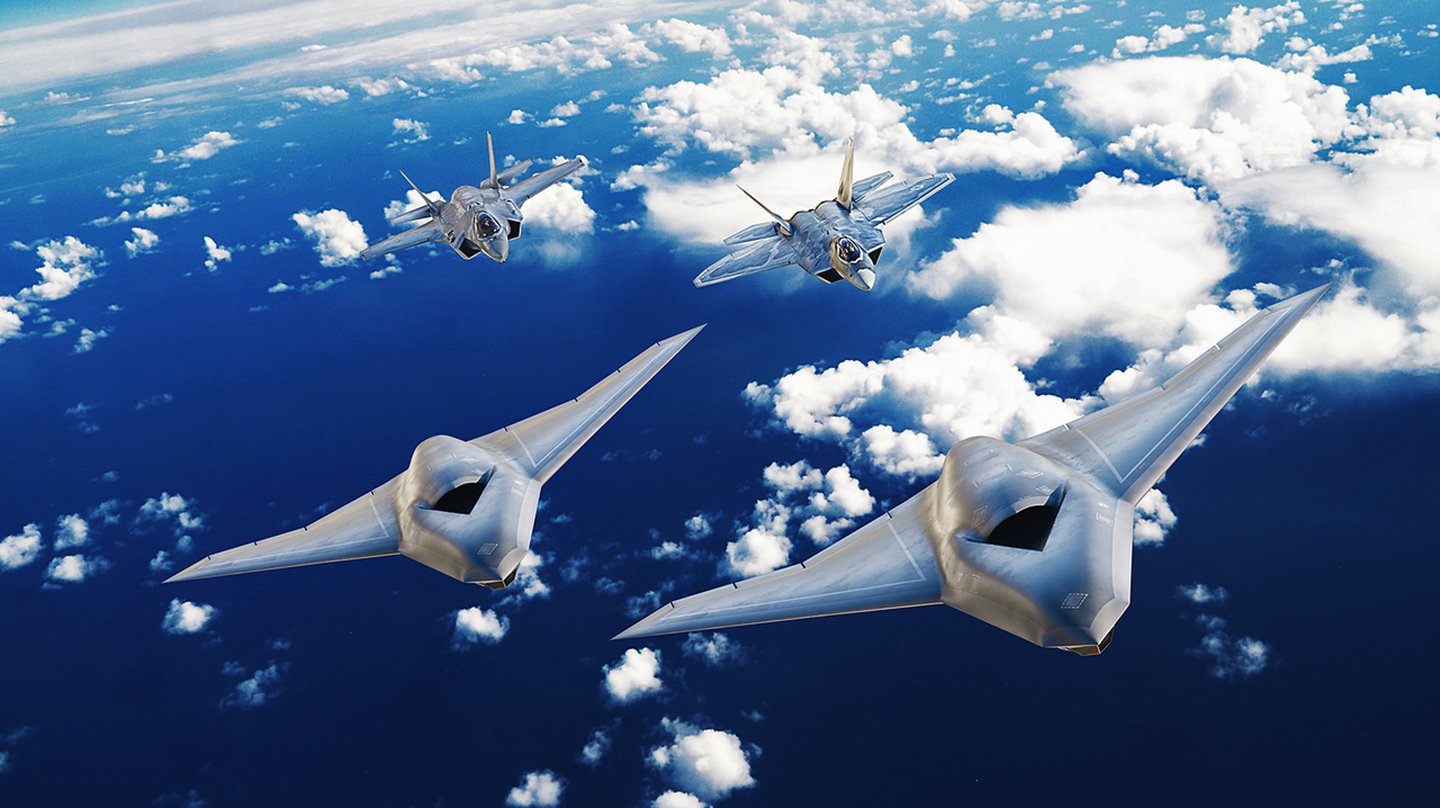
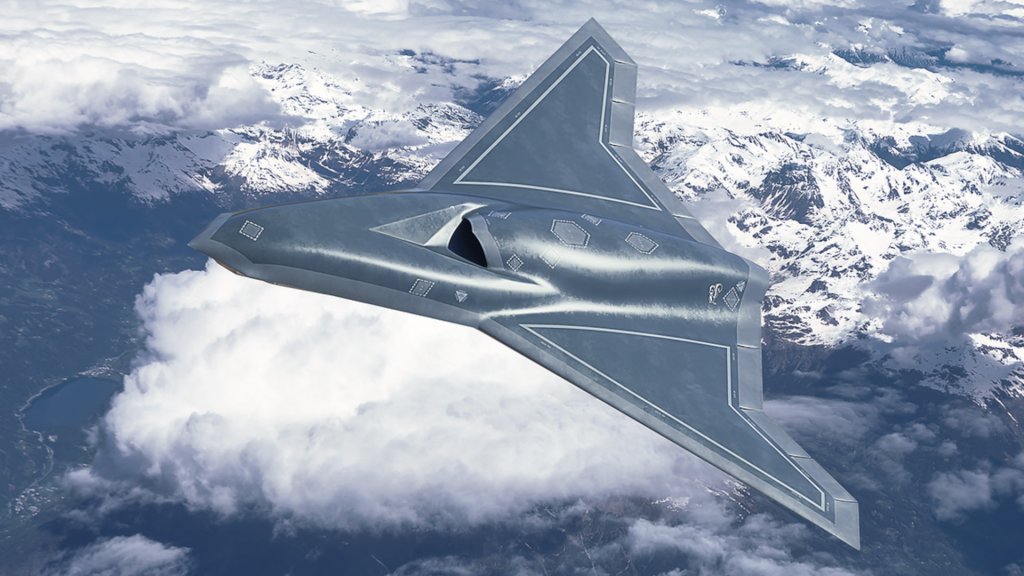
Lockheed Martin’s Skunk Works advanced projects division has shared all new information about its stealthy Collaborative Combat Aircraft (CCA) type drone design named Vectis, which it first unveiled a year ago. One of the most intriguing details is the true nature of its air inlet configuration, pointing to the premium on survivability the Skunk Works has placed on its CCA offering, especially when compared to other CCA designs.

Vectis has a far more exotic, deeply recessed “submerged” top-mounted air intake than was originally disclosed when Vectis first came out of the shadows. This further underscores the heavy emphasis Skunk Works says it has been placing on its CCA’s ability to stay undetected and live to fight another day. Vectis is also the first tailless CCA design we have seen from a U.S. manufacturer.

An updated view of Vectis. Lockheed Martin Skunk Works Lockheed Martin

Ron Fehlen, Lockheed Martin Vice President and General Manager of Skunk Works, gave TWZ and other outlets an update on Vectis last week ahead of today’s start of the Air & Space Forces Association’s 2026 Air, Space & Cyber Conference. Skunk Works says work on constructing the first prototype of Vectis – a word that means lever or pole in Latin, and that Lockheed Martin has said reflects the ‘leverage’ the drone offers – is underway now. The goal is to have it flying by the end of next year. There are already plans to build four more prototypes using internal funding.

Check out the Skunk Works’ new Vectis video below:

Source: Lockheed Martin

“It is designed, as you can likely see, to be both survivable and affordable and flexible across the range of missions that our customers need, have needed, and continue to need into the future,” Fehlen said by way of introduction. “The technical specs, as you can imagine, are designed to meet and, in some cases, exceed the customer sets that we are working with and their requirements and their mission needs.”

The basic core of the single-engine Vectis that we have seen now is largely unchanged from what had been shown at the time of the unveiling last year. It is still a tailless drone that has a lambda wing planform and air intake mounted on top of the central part of the fuselage, as well as a prominent chine line around the forward end and a shovel-like shape to its nose. New renderings do show revised positions for various conformal antennas and/or sensor apertures around the central fuselage. These are all established features of low-observable (stealthy) aircraft designs.

Skunk Works’ Fehlen also shared last week that Vectis is approximately 34 feet long and has a wingspan of around 38 feet. As a comparison, the Navy’s two-seat primary jet trainer, the T-45 Goshawk, is roughly 39 feet long by 30 feet wide.

The biggest new detail, as mentioned, is the shaping and position of Vectis’ air inlet. Fehlen stressed that this is actually not a new feature, and has “been a part of the design since the beginning,” but was not reflected in previously released renderings and scale models.

Another newly released rendering of Vectis showing the submerged intake. Lockheed Martin Skunk Works

The intake was depicted in the past as having a relatively straightforward configuration. It did appear to have a saw-tooth leading edge, another indication of stealthy design considerations. The visuals we have now show the intake is deeply recessed into the top of the fuselage, sitting behind a downward-sloping v-shaped channel.

A rendering of Vectis that Lockheed Martin released last year that did not depict the submerged intake. Lockheed Martin Skunk Works

Vectis doesn’t have a fully flush-mounted inlet, like what is found on Boeing’s MQ-25 Stingray tanker drone, among other designs, but it is close to it, very loosely similar to what’s found on the B-21. The rear is slightly raised above the v-like pocket where air flows down into the intake. Flush or near-flush intakes offer particular benefits when it comes to low-observability (stealthiness) and aerodynamic efficiency, but are also notoriously problematic, especially in certain flight regimes, as you can read more about here. This is even worse for high-performance aircraft that have a wide operating envelope and have to maneuver at higher angles of attack. The CCA would likely fit into this category, at least to a degree.

When it comes to Vectis, “there’s a lot of different reasons behind it [choosing this submerged intake configuration], but I’ll pick up on a couple here for you,” Skunk Works’ Fehlen explained. “The first is it reduces that frontal drag. So, anything sticking out in the wind, as many – as all of you know, I’m sure, creates drag on the aircraft itself. So, if you want better performance from a range, et cetera, then you need to be able to reduce that drag, and that’s an example.”

“It’s also interesting to me, particularly as the Air Force speaks about Agile Combat Employment, the ACE concept, as you’re aware. There is an advantage to having an inlet on the top of the aircraft if you’re out in more austere environments and you’re concerned about FOD [foreign object debris] pickup off of a runway,” he added.

Another newly released rendering offering a different perspective on the submerged intake. Lockheed Martin Skunk Works

ACE refers to a set of U.S. Air Force concepts of operations focused primarily on relatively rapid and irregular deployments, particularly to far-flung, austere operating locations, and with the expectation that logistics support could be very limited. The ACE construct is at the very core of the Air Force’s CCA program requirements and its plans for operating those drones in the future.

Fehlen also confirmed that the inlet’s design has to do with survivability, but did not elaborate in any detail, which is unsurprising considering the sensitivities of such design elements. The original Vectis promotional video Lockheed Martin put out last year, seen below, showed an S-shaped duct behind the air intake and exhaust shrouding, which are features designed to further reduce a platform’s signature.

In terms of performance, Lockheed Martin has yet to share any hard specifications it is targeting for Vectis, or disclose details about the engine the design will use. Fehlen did also highlight the drag-reducing performance advantages of the drone’s tailless design, including for maximizing range.

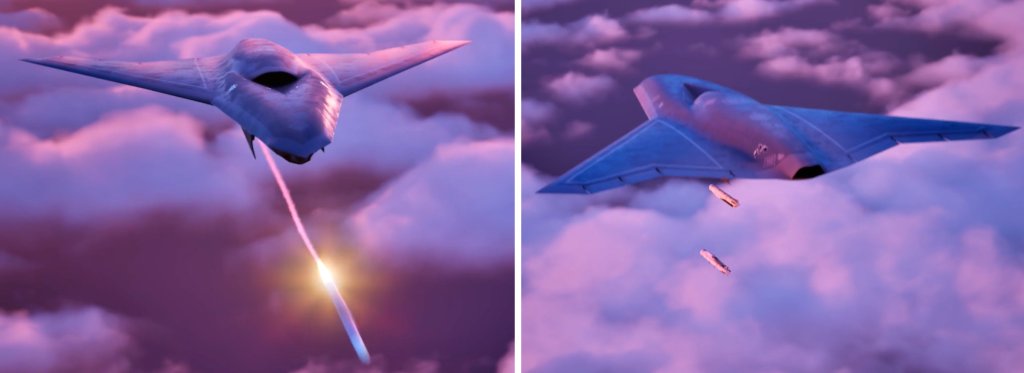
Details about what other capabilities Vectis might have are still limited. Fehlen noted that the design is expected to be capable of both air-to-air and air-to-ground mission sets. In a new computer-generated promotional video, seen earlier in this story, the drones are depicted launching what look to be AIM-120 Advanced Medium Range Air-to-Air Missiles (AMRAAM) and GBU-53/B Small Diameter Bomb II (SDB II) glide bombs, also known as StormBreakers. The AIM-120 has already emerged as something of a default initial weapon for Western CCA-type drones. The video also confirms Vectis has an internal bay that is able to accommodate at least two munitions, likely the size to accommodate medium-range air-to-air missiles.

Captures from Lockheed Martin’s new Vectis promotional video depicting the drones launching what looks to be an AIM-120 missile, at left, and a pair of GBU-53/B SDB IIs, at right. Lockheed Martin captures
A rendering of Vectis with its elongated internal bay open from the new promotional video. Note the AIM-120 in the background. Lockheed Martin capture
Another screen capture from the new Vectis promotional video showing two munitions loaded inside the drone’s internal bay. Lockheed Martin capture

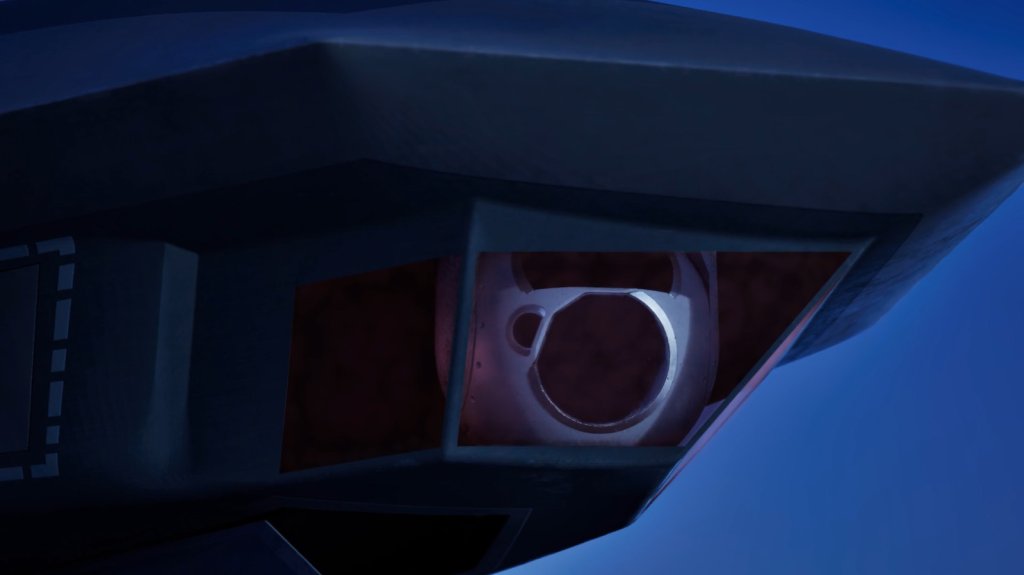
In addition, the video shows Vectis as having a traditional electro-optical/infrared sensor turret behind a stealthy faceted enclosure under the nose. When the drone was first unveiled last year, TWZ noted that it could carry a variety of sensors, including compact radars and/or infrared search and track (IRST) systems, which would be particularly relevant in the air-to-air role.

The sensor turret inside the stealthy faceted enclosure as seen in the new Vectis promotional video. Lockheed Martin capture

During the press call, Skunk Works’ Fehlen reiterated that Vectis is being designed with an eye toward modularity and open-architecture systems. This, in turn, will make it easier to integrate new and improved capabilities and functionality down the line. Open architecture is at the heart of every CCA offering we are aware of at this time.

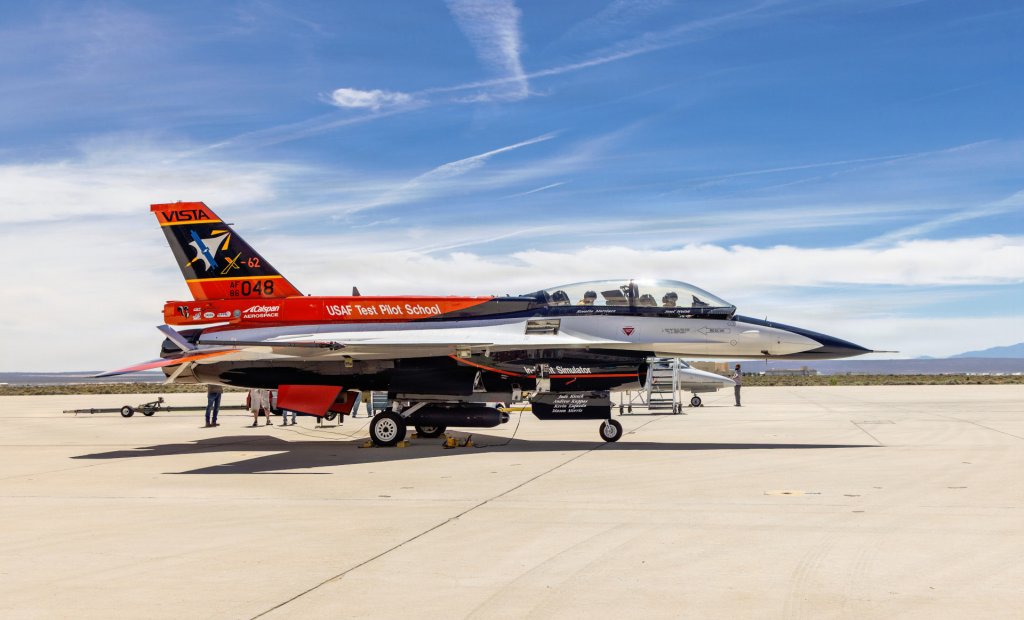
Fehlen further highlighted Lockheed Martin’s extensive work to date on advanced autonomy packages and crewed-uncrewed teaming capabilities. This includes the development of the Multi Domain Combat System (MDCX), an “autonomy platform” that is already central to the U.S. Navy’s plans for the carrier-based MQ-25 Stingray. The head of Skunk Works also explicitly called attention to autonomous air intercept testing conducted in cooperation with the Air Force earlier this year using the unique X-62A test jet, and said that work is feeding into Vectis’ development.

The X-62A test jet seen during the autonomous air intercept testing earlier this year. USAF

On top of all this, Lockheed Martin is already actively laying the groundwork for the U.S. Air Force’s F-22 and F-35 fighters to control future CCA drones, via in-cockpit touchscreen-type user interfaces, likely involving tablets, at least at first.

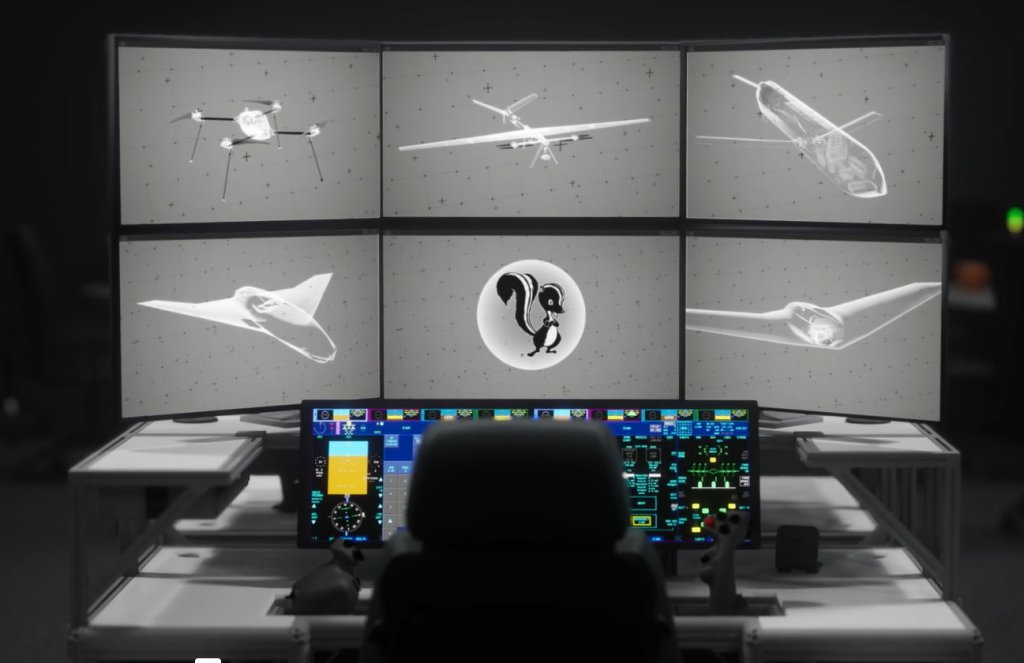
The new Vectis promotional video also shows a traditional ground control station being used to direct the drones, but with the phrase “managed from anywhere” on the screens, as seen below. Fehlen did say that any specific requirements for autonomy, command and control, and other operational capabilities would be up to individual customers, and that third-party vendors could be involved.

Lockheed Martin

Beyond Vectis’ design and expected capacities, Fehlen touted the speed at which work on the first physical prototype is progressing, and highlighted the use of digital design techniques and advanced manufacturing processes.

“This team, when kicked off, took a design on a napkin, which we will likely frame one day in my office … two months later, they were in the wind tunnel validating the design,” he said. “So, in under two months, we’re already getting in the wind tunnel straight from off of a napkin. We had the first digital build in six months, and the first part release in eight months. So it gives you a touch of a sense for exactly how fast we’re moving.”

“This aircraft was designed in a fully integrated digital environment,” he added. “Really, it’s creating that unbroken digital thread from the design all the way through sustainment.”

There has been much talk over the years about whether the promised benefits of digital engineering have lived up to expectations, with former Secretary of the Air Force Frank Kendall having been particularly critical of the technology being at least over-hyped in the past. At the same time, the use of digital design tools has become increasingly commonplace, including on top-priority U.S. military aerospace projects, and not just at Skunk Works.

“We’ve used advanced design and manufacturing processes developed for many years under our own internal investment … for other Skunk Works programs, we’ve pulled that into this, of course, to continue to advance our manufacturing as well as the advanced design capability,” Fehlen continued. “They’re using real production processes.”

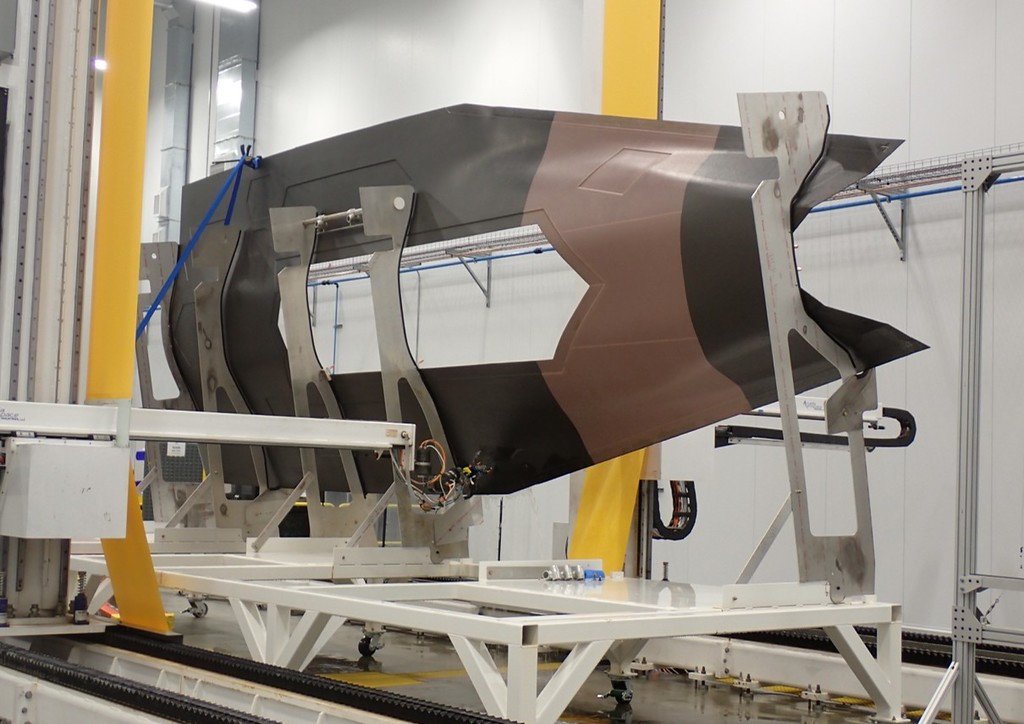
A central fuselage part of the first Vectis prototype now under construction. Lockheed Martin Skunk Works

The Skunk Works boss stressed that this approach offers advantages not just for accelerating development and prototype, but also for reducing costs and positioning Vectis to enter full-scale production.

“It gives you the reliance and the confidence as you continue to move forward that you’re ready to off and build these things because you’re using those real production processes,” he explained. “An example of that is a technique that we call minimal tooling determinant assembly. It’s a technique that really enables an increased level of affordability and speed through really reducing the amount of touch labor required and increasing the first pass yield. We’ve seen, in many cases, an 80 percent reduction in labor hours to build up the aircraft itself.”

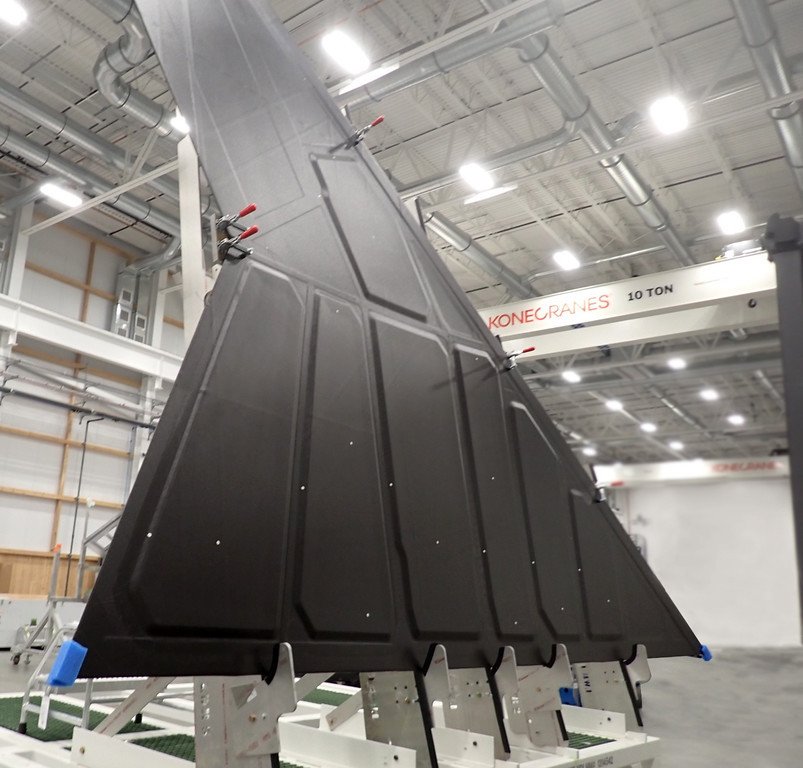
Part of one of the wings for the first Vectis prototype. Lockheed Martin Skunk Works

Fehlen made an indirect reference to flat-pack furniture from IKEA to provide additional context, in extremely general layman’s terms, about what this technique offers.

“That’s what we’re talking about, that idea that it can come together very quickly, limited touch, and limited error. We constrain that to reduce the number of labor hours, which is not just a cost implication, but also buoys the speed and how fast we’re going to be able to produce them,” he said. “You can imagine, as well, there’s a lot of simplification that goes into this. We have significantly reduced the part count. Again, back to simplify the build so that you can have a positive impact on speed and affordability, not new techniques, but we’ve applied them here with vigor to ensure that we are getting to the cost point that the services and our customers need in order to make this system effective.”

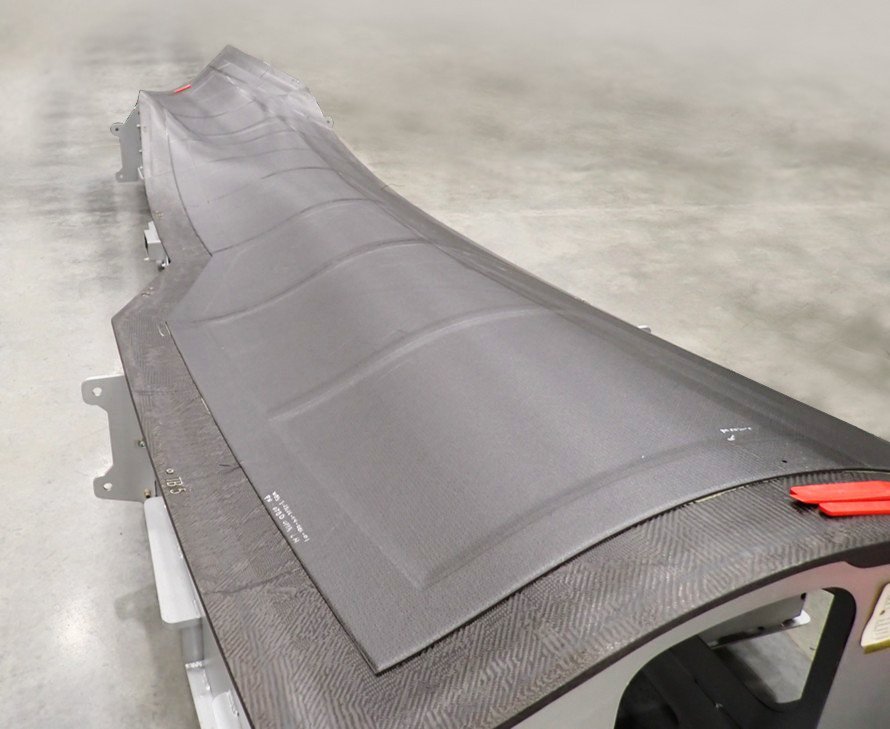
Another element of the first Vectis prototype, which is now being built. Lockheed Martin Skunk Works

In terms of actual unit cost, “we’re always looking at, and, of course, we’re targeting to be [at] the CCA competitive price, so we’re very cognizant of it and make trades associated with that,” according to Fehlen. Vectis is “focused more on the CCA side of the house, and obviously the price points that are highly relevant in that regime, and then, of course, making trades along the way, and to make sure that we can meet it.”

The head of Skunk Works was responding here specifically to a question that mentioned the Air Force’s target of a roughly $20 million unit price for drones acquired under the first phase, or Increment 1, of its CCA program once full-scale production is achieved. The service announced in June that it was ordering fleets of both of the Increment 1 designs now in development, General Atomics’ FQ-42A Dark Merlin and Anduril’s FQ-44A Fury. The Air Force has plans for at least one more increment to this program, and has said in the past that it could pursue lower-cost (and less exquisite) designs.

A trio of YFQ-42A Dark Merlin prototypes. GA-ASI
A YFQ-44A Fury prototype with an inert AIM-120 missile under its wing. USAF

“While not discussing suppliers, you can imagine we are ensuring that all of the decisions we make in the development and then the build out of these aircraft are designed around achieving that competitive cost point, while at the same time maximizing the amount of capability,” Fehlen added. “Those are the things that our customers are looking for, and we put it in a survivable solution.”

“There are some [companies] that are really going down the attritable [route], which defines a different price point than the CCA community has been targeting,” he also noted. Attritable designs are “quite a bit less from a cost point perspective and often from a capability perspective.”

With this in mind, there are still larger questions about where exactly Vectis may fit into U.S. military CCA plans, as well as those emerging from allied and partner air arms globally. Skunk Works has said in the past that it was eliminated from the Air Force’s CCA Increment 1 competition because it put forward a very stealthy “gold-plated” design that was not what the service wanted. Lockheed Martin had also indicated that its view of the capability/cost balance on new CCA-type designs had subsequently shifted very much in the opposite direction. Though it is still not entirely clear, what we’ve learned about Vectis in the past year would seem to signal that the pendulum at Skunk Works has swung back the other way again, at least to a degree.

As an interesting point of comparison, Northrop Grumman had also entered a higher-end design for the Increment 1 competition. In the wake of that loss, the company produced a much more familiar CCA design with a more traditional planform, which is now known as the YFQ-48A Talon Blue.

It’s also worth noting here that Skunk Works had publicly shared a future crewed-uncrewed teaming vision that included multiple tiers of drones back in 2022. This ranged from a cruise missile-like design the company now calls the Common Multi-Mission Truck (CMMT) all the way up to a concept for what could have been a very low-observable (stealthy) and highly autonomous flying wing uncrewed combat air vehicle (UCAV).

“We listen closely to our customers to deeply understand the operational environment and use those insights and our own analysis to inform the diverse solutions we develop for different mission sets,” Lockheed Martin told TWZ directly after the press call last week in response to a follow-up question about whether the 2022 vision was still relevant and if Vectis had supplanted the upper-tier concept shown at that time. “We continue to evaluate a range of crewed and uncrewed concepts against evolving customer needs.”

“Lockheed Martin Vectis addresses a warfighter need for a survivable, flexible and multi-mission capability, both domestically and internationally,” the company added in its statement. “We’re leaning into that demand, making strategic investments to accelerate Vectis’ progress and maturity and to deliver the capabilities our nation and allies need.” 

A screen capture from a more recent Lockheed Martin video showing renderings of various different drone designs, including Vectis (at lower left), the CMMT (at upper right), and the stealthy flying-wing (at lower right). Lockheed Martin capture

Publicly, the Air Force continues to eschew any new plans to acquire and field UCAVs in favor of or even in addition to far less exquisite CCAs. The U.S. Marine Corps has so far put forward a similar CCA vision. However, just at the end of last month, the U.S. Navy released new target requirements for what it called a CCA-type drone, but that described something that sounded much more like a UCAV.

Lockheed Martin and a host of other companies globally are being presented with a clearly expanding CCA market, but there is also still obvious interest in higher-tier UCAVs. China, in particular, has positioned itself as the current leader in the stealthy flying wing UCAV space, as well as a dominant actor in advanced combat drone developments more generally speaking. Russia, India, Turkey, and France continue to pursue flying wing UCAVs, as well. That being said, Skunk Works’ Vectis is arguably the closest we have seen to a low-observable UCAV to come out of recent CCA developments.

Regardless, Skunk Works is confident that there is a place for Vectis, together with autonomy and other capabilities it is developing, domestically and internationally, in this future uncrewed air combat ecosystem. It “is a survivable autonomous multi-mission platform, which we believe is the solution needed within today’s operational environment and into the future,” Fehlen said last week.

Skunk Works is committed to “delivering what’s next across … airframes, open architectures, to include artificial intelligence and autonomy, and then crewed-uncrewed integration,” he added. “Make no mistake, it will take advancements across all these areas to get to where our customers are going. We look at the full picture. Vectis is a holistic weapon system from our perspective.”

Altogether, “it’s an urgent need. We know that. We can hear it.”

UPDATE: 3:10 pm EDT

We now have a photo of the full sized Vectis mockup on the floor or Air, Space, Cyber 2026:

(Lockheed Martin)

Contact the author: joe@twz.com

The post Everything We Just Learned About The Vectis Collaborative Combat Aircraft From The Skunk Works appeared first on TWZ.
  •  

First Look At General Atomics’ Wildfire, Its Successor To The MQ-9 Reaper (Updated)

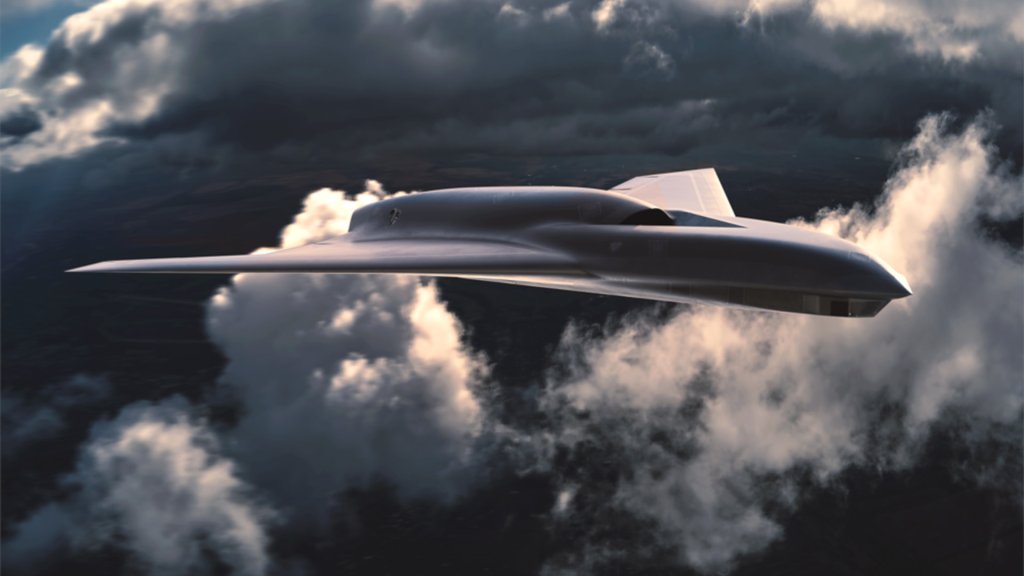
General Atomics has given us the first look at its new Wildfire drone design. The company is developing this armed medium-altitude, long-endurance (MALE) uncrewed aircraft in response to new U.S. Air Force requirements for a lower-cost successor to the MQ-9A Reaper.

A rendering of Wildfire was included in a video montage, seen below, which General Atomics Aeronautical Systems, Inc. division (GA-ASI) released earlier today. GA-ASI first announced work on this new drone last month. The Air Force, in partnership with the Pentagon’s Defense Innovation Unit (DIU), formally kicked off its new search for a Reaper successor, currently called the Massed Modular Aircraft (MMA), in July. GA-ASI also developed the MQ-9A, which is now out of production.

A good idea spreads like Wildfire.#UAS #Airpower pic.twitter.com/eIONVDjZ1n

— General Atomics Aeronautical Systems, Inc (GA-ASI) (@GenAtomics_ASI) September 9, 2026

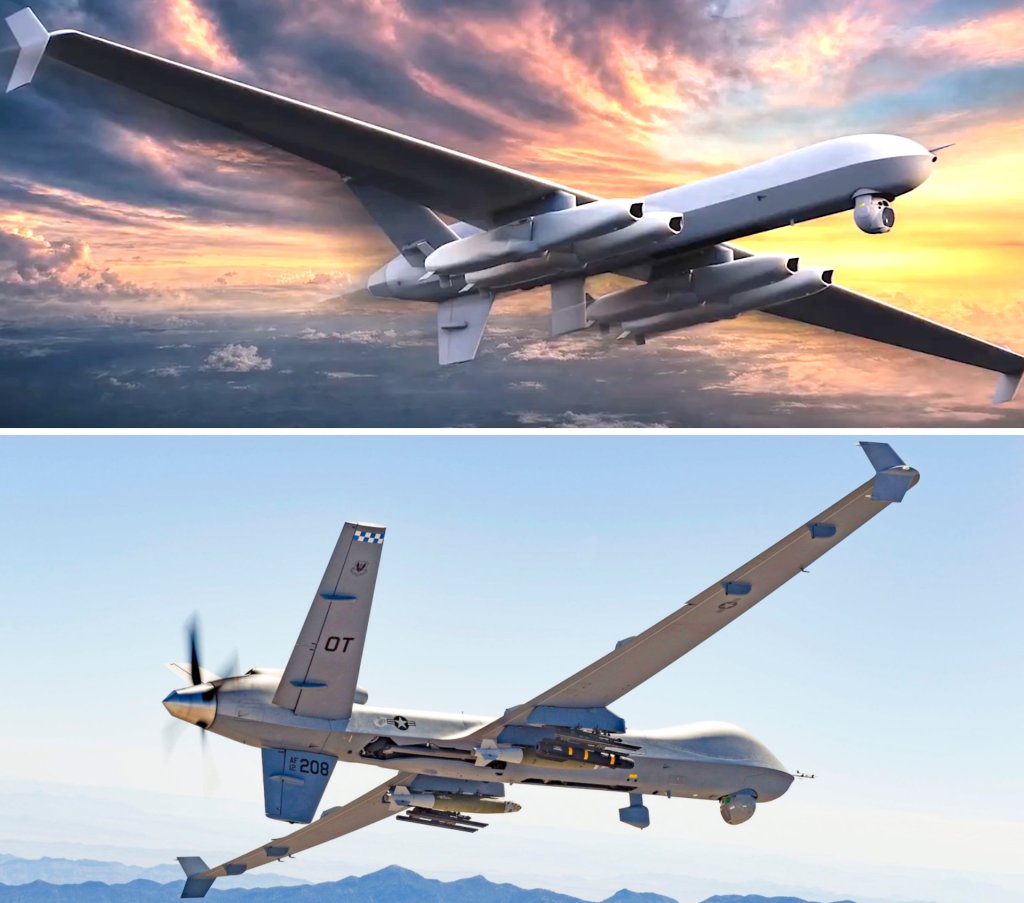
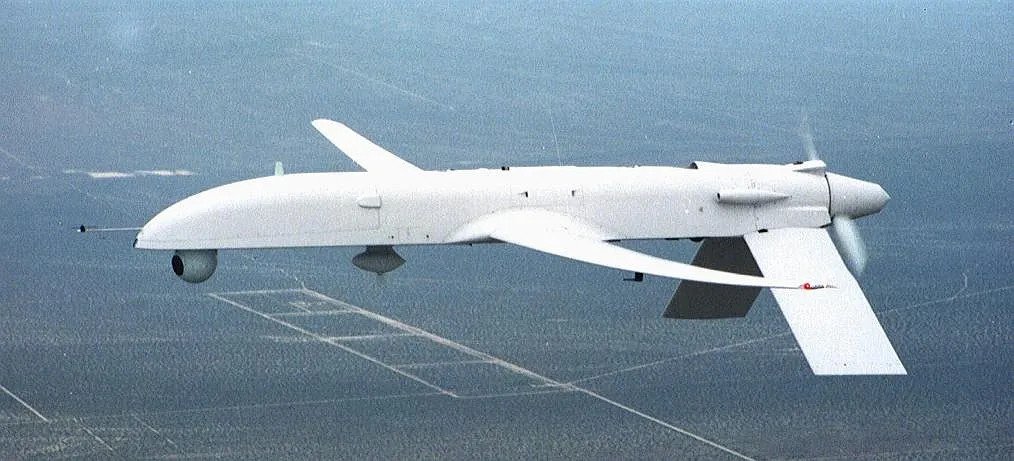
Wildfire’s pusher-prop design shown is clearly an extension of the existing MQ-9 family, with an overall planform that is extremely similar to that of the Reaper. Like the latest versions of the MQ-9A, the new drone has a sensor turret under the nose and a large blade antenna under the rear fuselage.

The rendering of Wildfire, at top, seen together with a stock picture of a US Air Force MQ-9 Reaper, at bottom. General Atomics capture/USAF

Wildfire does notably lack the Reaper’s distinctive hump on top of the forward fuselage. On the MQ-9A, this feature contains the drone’s satellite communications (SATCOM) antenna. What this might mean about how Wildfire is controlled and otherwise communicates is not immediately clear, but it points to the use of a smaller, lower-cost SATCOM terminal. That, in turn, would most likely be tied to a network like Starshield, the government-focused cousin of SpaceX’s Starlink. We could also see greater semi-autonomous control here, or at least a greater reliance on it.

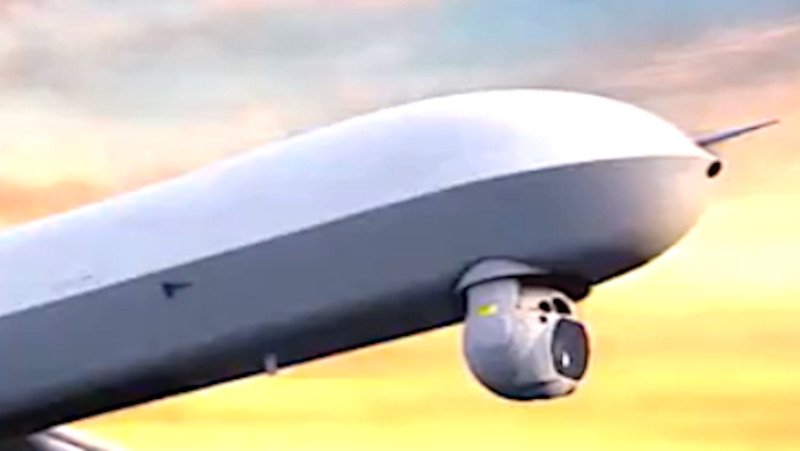
The resulting shape of the forward end of the fuselage is vaguely reminiscent of GA-ASI’s Gnat series of drones from the 1990s, which evolved into the iconic Predator. The MQ-9 family, in turn, is an outgrowth of the Predator.

A close-up look at the nose end of Wildfire as seen in the newly released rendering. General Atomics capture
A General Atomics Improved Gnat (I-Gnat) drone. General Atomics

The rendering of Wildfire also depicts the drone armed with four Joint Strike Missile (JSM) cruise missiles, with two loaded on what appears to be a single pylon under each wing. The stealthy JSM can be employed as an anti-ship or land-attack weapon. GA-ASI has released renderings of MQ-9s in the past with similar loadouts. The Air Force is already acquiring stocks of JSMs, primarily to arm its F-35A Joint Strike Fighters. Stand-off munitions like the JSM have long been seen as an increasingly important, if not critical, addition to the non-stealth Reaper’s arsenal, helping to keep the drones further away from potential threats.

A close look at two JSMs in the Wildfire rendering. General Atomics capture

TWZ has reached out to General Atomics for more details.

“General Atomics is looking at it and asking ourselves, ‘What can we really do? No kidding, no BS, actually do,’” GA-ASI spokesperson C. Mark Brinkley did tell us back in August when asked about Wildfire. “Let’s be honest with ourselves first. How do we come out of the box, day one, with a 10,000-nautical-mile ferry range? Can we carry four LRASMs [AGM-158C Long Range Anti-Ship Missiles]? Can we swarm 100 aircraft under semi-autonomous control? Can we fuse all of that data into a highly effective common operating picture? Can we do that at scalable, affordable mass?”

“So that was the assignment, and our engineers sharpened their pencils and got to work,” he added. “What came out the other side was our new Wildfire UAS. That thing is a beast, and no one who actually does this for a living, and is honestly concerned about America’s warfighting edge, can look at it and not want 100 of them as fast as we can make them.”

Wildfire “addresses all of the concerns posed by the MMA solicitation. We can deliver years earlier and maintain the same high quality. You can have everything that makes Reaper special, plus more, at a price that doesn’t break the bank,” Brinkley also told Breaking Defense for a story published last week.

In terms of what the Air Force has said it is looking for with the MMA, as we have previously written:

“[The service] …wants the MMA drone to perform the same general intelligence, surveillance, and reconnaissance (ISR) and strike missions as the MQ-9A. To that end, stated program requirements to date include a speed of at least 200 knots true airspeed, a munition and sensor payload capacity of at least 2,800 pounds, an unrefueled combat radius of at least 2,300 nautical miles with payload, the ability to self-deploy one-way at least 8,000 nautical miles, and the ability to operate from runways no longer than 6,000 feet. The MMAs also need to be highly modular and use open architecture mission systems to make it easier to integrate new capabilities and functionality down the line.”

Another look at an example of a typical MQ-9A Reaper in US Air Force service now. USAF

The Air Force also shared last week that it is targeting a roughly $10 million unit cost for the MMA drones, not including sensors and certain other systems. As mentioned, the Reaper is out of production, but the price tag on a fully-equipped Reaper today is widely reported to be between $30 million and $50 million. The Air Force has itself used the $50 million figure as a reference point in discussing its latest plans for what comes after the MQ-9.

It is unclear how Wildfire might achieve this cost goal while retaining so much obvious Reaper DNA, but even a major 30 to 50 percent reduction in the price tag compared to its predecessor would be a huge deal. In the past, General Atomics’ Brinkley has openly questioned just how cheap an MMA drone could realistically be while still offering comparable capabilities to MQ-9.

The original timeline for the MMA program envisioned the Air Force reaching initial operational capability in 2031 after receiving 20 of the drones. The service is now looking to accelerate that schedule by around two years. The Air Force expects to eventually acquire around 180 MMAs.

The Air Force has tried, without success, to develop a successor to the MQ-9 on several occasions in the past. However, a key driving factor now is huge losses of Reapers in the course of the ongoing conflict against Iran. The service’s MQ-9 fleet has already shrunk dramatically in recent years, in part due to additional losses during operations targeting Iranian-backed Houthi militants in Yemen last year.

“Although we have plenty of MQ-9As today, we are going through them at a rate that is concerning to us,” Air Force Lt. Gen. Christopher Niemi, the service’s Chief Modernization Officer, told reporters at a roundtable at the Pentagon last week, according to Air & Space Forces Magazine. “There’s not a lot of good options to immediately replace those aircraft.”

GA-ASI has long had a monopoly on MALE combat drone sales in the United States, and is clearly looking to extend that now with Wildfire. However, this market space has been expanding, and other companies are already competing for what could be a very lucrative new deal with the Air Force. Winning the MMA contract could open doors to opportunities elsewhere within the U.S. government and with foreign countries. Variants and derivatives of the MQ-9 are also in service today with the U.S. Marine Corps, the Central Intelligence Agency (CIA), U.S. Customs and Border Protection (CBP), and several additional air arms globally.

A US Marine Corps MQ-9A Reaper. USMC

More information about Wildfire, as well as its competitors, is only likely to continue emerging as the Air Force pushes ahead with new and aggressive plans to finally acquire a follow-on drone to the venerable Reaper.

Update: 2:15 PM ET –

General Atomics spokesperson C. Mark Brinkley has now shared additional details about Wildfire with TWZ.

“You’re not imagining it. These new Wildfire renders do lack the dorsal hump you see on Reaper, MQ-9B, Gray Eagle, Mojave STOL and many copycat aircraft,” Brinkley explained. “General Atomics has pushed proliferated low-earth orbit controls onto many of our existing aircraft and pioneered that integration across unmanned aerospace. That is a relatively new technology that we already have great experience integrating, and it makes sense to bring that into Wildfire.”

“Proliferated low-earth orbit” (abbreviated variously as pLEO and P-LEO) refers to distributed constellations of hundreds or potentially thousands of satellites in that orbital region. SpaceX’s constellations supporting the aforementioned Starlink/Starshield networks fall into this general category.

“Wildfire is going to leverage ongoing advancements in autonomy on Day One. We envision networking dozens of Wildfires for true combat mass,” according to Brinkley. “Again, not a hypothetical. We’ve been pioneering many advancements in autonomy, AI, and machine learning across the FQ-42A program and using our own MQ-20 Avenger as a CCA [Collaborative Combat Aircraft] surrogate connected to F-22 and F-35. That’s proven, not concept.”

The FQ-42A, also known as the Dark Merlin, is one of two designs now in development under the first phase, or Increment 1, of the Air Force’s CCA program, the other being Anduril’s FQ-44A Fury. The service announced in June that its initial CCA force would be a mixed fleet of FQ-42As and FQ-44As.

A row of prototype YFQ-42A Dark Merlin drones. GA-ASI

“Four JSMs tells you something about Wildfire overall. We can’t just look at overall external weight limits. You have to consider individual hardpoint capacity,” Brinkley continued. “We’ve concepted four JSMs on MQ-9B before, as a concept, but we’ve never done that on Reaper. Wildfire can absolutely do that, from a hardpoint capacity and also an overall MGTOW [maximum gross takeoff weight] perspective.”

“We’re showing two LRASMs on Wildfire, which is twice as much as the DIU solicitation asked for. If you’re going to build a flying weapons truck, give it some teeth,” he added. “These longer-range missiles also give you increased standoff compared to other weapons you associate with the MQ-9, so that also gives you some flexibility. Wildfire can carry two LRASMs for meaningful combat distances.”

The AGM-158C LRASM (Long-Range Anti-Ship Missile) is a derivative of the AGM-158 Joint Air-to-Surface Standoff Missile (JASSM) family of land-attack cruise missiles, and is also in the Air Force’s inventory today.

A rendering depicting a Wildfire drone firing an AGM-158C LRASM. General Atomics capture

Brinkley also said that Wildfire’s ferry range will exceed the MMA’s target of 8,000 nautical miles.

“We can deliver way ahead of the original FY 2031 schedule [for MMA]. We can deliver more than twice as many aircraft as requested in the same amount of time, because our manufacturing is real. Our network of suppliers, subcontractors and partners is real,” he added. “The obvious question is always cost, and I struggle to discuss costs because no one ever wants to compare apples to apples. There are stated price targets out there, and we’ll hit those. We’ll do it with an aircraft you can trust. We have nearly 10 million flight hours and more than 1,600 aircraft delivered. This is what we do.”

Speaking more generally, Brinkley also highlighted General Atomics’ extensive experience in developing and producing armed MALE drones, including the MQ-9.

Another stock shot of a US Air Force MQ-9A Reaper. USAF

“It’s important to remember that Reaper made its first flight 25 years ago and was so far ahead of everything else that it still defines the entire category of medium-altitude, long-endurance strike aircraft worldwide. When you build something new to do this kind of work, it rolls out into the Reaper’s shadow,” he said. “I don’t have to defend MQ-9 because the track record speaks for itself. It’s been called the MVP of Epic Fury [the U.S. military’s nickname for the initial phase of operations against Iran this year] for good reason, and I think it has squashed all questions about the relevance of MALE ISR and strike.”

“So that brings us to questions of affordability versus attrition, cost-per-effect, and the true price of combat operations. It also brings up questions of reliability and mission availability, and Reaper excels at both of these, so you can’t replace it with junk and expect to get the same effects,” he continued. “That’s where Wildfire comes in. Our team went to the graph paper and started sketching out what they would do differently and what they would keep the same. Where are the tradeoffs, and what do you change? No one knows this category of aircraft and missions like we do. We’re not guessing and hoping.”

“I can’t get into deep specifics on Wildfire yet, because it’s too early for that and the goalposts seem to move every time I say something publicly. What I can say is that Wildfire takes all of the known quantities of Reaper, blends them with some cutting-edge technologies and manufacturing advancements, and incorporates our more than three decades of lessons learned about large, unmanned combat aircraft to drive cost-per-effect math down.”

Contact the author: joe@twz.com

The post First Look At General Atomics’ Wildfire, Its Successor To The MQ-9 Reaper (Updated) appeared first on TWZ.
  •  

USAF Wants MQ-9 Reaper Successor At A Fraction Of The Cost At $10M Each

The U.S. Air Force is targeting an approximately $10 million unit price, excluding sensors and certain other systems, for a drone to succeed the MQ-9A Reaper. The cost of a fully kitted-out Reaper today is generally reported to be between $30 million and $50 million. The Air Force is also now pushing to accelerate the program to acquire the new drones, dubbed the Massed Modular Aircraft (MMA), amid what it admits are “concerning” Reaper losses in the course of recent operations against Iran.

Air Force Lt. Gen. Christopher Niemi, the service’s Chief Modernization Officer, told reporters that the goal was for the MMAs to be “closer to half” the cost of a Collaborative Combat Aircraft (CCA), at a roundtable at the Pentagon yesterday, according to Breaking Defense. He also said the service was hoping to see the price tag on its future CCAs fall to around $20 million after full-rate production of those drones gets underway.

Three U.S. Air Force MQ-9 Reaper remotely piloted aircraft, assigned to the 432nd Wing, are prepared for takeoff during Bamboo Eagle 25-3 on Naval Base Ventura County, Point Mugu, California, August 5, 2025. The exercise tests participants' ability to execute Agile Combat Employment with precision, deploying follow-on forces and adapting to rapidly evolving threats while maintaining operational tempo. (U.S. Air Force photo by Staff Sgt. Ariel O'Shea)
A row of USAF MQ-9A Reapers. USAF/Staff Sgt. Ariel OShea

Beyond cost, the Air Force has previously said that it wants the MMA drone to perform the same general intelligence, surveillance, and reconnaissance (ISR) and strike missions as the MQ-9A. To that end, stated program requirements to date include a speed of at least 200 knots true airspeed, a munition and sensor payload capacity of at least 2,800 pounds, an unrefueled combat radius of at least 2,300 nautical miles with payload, the ability to self-deploy one-way at least 8,000 nautical miles, and the ability to operate from runways no longer than 6,000 feet. The MMAs also need to be highly modular and use open architecture mission systems to make it easier to integrate new capabilities and functionality down the line.

With all that in mind, Niemi’s MMA cost “estimate includes only the cost of the air vehicle, without being fully missionized,” an Air Force spokesperson clarified after yesterday’s roundtable, per Breaking Defense.

The MQ-9A is out of production, but, as mentioned, the full cost of each one in Air Force service today is generally pegged at between $30 million and $50 million, depending on the sensors, weapons, and other mission equipment they carry. Speaking yesterday, Lt. Gen. Niemi explicitly used the $50 million price point to underscore the MMA program’s unit cost target, as well as explain why the Air Force does not view the newer, in-production MQ-9B as a path to meeting its current needs. General Atomics developed the MQ-9B from the Reaper, but the former is a significantly evolved design with substantial differences from its predecessor.

“If you don’t like losing an MQ-9A that cost on the order of $50 million, with the sensors, you’re probably not going to like losing an MQ-9B at a higher price point,” Niemi said at yesterday’s roundtable, according to a separate report from Air & Space Forces Magazine.

An MQ-9B drone. General Atomics

“There’s a, I think, sort of a misconception that because the MQ-9B is in production, we can walk down there with a big fat check and have 100 of them this year,” the general also said, Breaking Defense also reported. “That’s not reality.”

Niemi acknowledged that tradeoffs will have to be made to find an MMA design that is substantially lower cost compared to the MQ-9A.

“You’re going to have to certainly give up something,” he said, per Breaking Defense. “There’s no doubt if we try and pursue the exact same approach that we had with things like the MQ-9, we’re going to get something that costs about the same as an MQ-9.”

However, “what makes the MQ-9 special has nothing to do with the aircraft itself. Like there is no cutting-edge technology for how fast it flies, how high it flies, how far it flies, all that is proven, decades-old technology,” he added, according to that outlet. “So, if you’re focusing on the truck, and you do it in a way where you’re able to make some smart design compromises … we do think you can drive the cost down.”

Niemi said that he expected the MMA, in very general terms, to look much like an MQ-9, including that it would likely also be turboprop powered and have a similarly shaped main wing.

A US Air Force MQ-9A Reaper. USAF

“I think it’s all going to be proven stuff, because that’s how I’m going to drive down the cost so I can get to that goal that I laid out,” Niemi added.

For its part, General Atomics has had choice words in the past regarding discussions about the costs of the MQ-9A and MQ-9B, as well as their capabilities, particularly in light of recent losses. We will come back to the matter of attrition in a moment.

“Some say we need cheaper, disposable aircraft, so that we can use them and throw them away, or lose them and not feel bad about it. No one is talking about actual capability, ready today,” C. Mark Brinkley, a spokesperson for the company, told TWZ back in June after new discussions about a Reaper successor for the Air Force first began to surface. “No one is talking about all of the hard lessons, already learned, about icing and weather and weapons integration. No one is talking about the multiple survivability upgrades available for the existing platforms and the lack of investment in those.”

“These make-believe weapons that don’t exist have the luxury of being anything you imagine them to be,” Brinkley added at that time. “Unscratched lottery tickets, promising all of the win and none of the lose [sic].”

USAF

“I think it’s really unfortunate that MMA has been branded as a ‘Reaper replacement’ because it misrepresents what America needs now and what we need later,” he told us last month. “We need an immediate backfill solution to a critical shortage of unmanned MALE [medium altitude, long endurance] ISR/Strike. We need to get going on that now. MMA isn’t a backfill solution, or even a bridge to a backfill solution. This isn’t that.”

Brinkley was speaking here in the context of a discussion about Wildfire, a new drone General Atomics is now developing in response to the MMA requirements.

Wildfire “addresses all of the concerns posed by the MMA solicitation. We can deliver years earlier and maintain the same high quality. You can have everything that makes Reaper special, plus more, at a price that doesn’t break the bank,” Brinkley also told Breaking Defense for its story yesterday.

All of this brings us back around to the matter of MQ-9A losses and the Air Force’s efforts now to accelerate the schedule for the MMA program.

Exactly how many MQ-9As the Air Force has lost due to enemy fire or for any other reason in the course of operations against Iran this year is unknown, but it is reliably reported to be in the dozens. The service is also understood to have lost dozens more Reapers last year during operations targeting Iranian-backed Houthi militants in Yemen. The service is on record saying that its Reaper fleet had shrunk to 135 airframes as of May, down from an official total of 165 as of the start of Fiscal Year 2026. It is also important to note here that these inventory numbers do not include Reapers operated by the Marine Corps or the Central Intelligence Agency.

A Marine MQ-9 Reaper. USMC

Air Force officials have offered glowing assessments of the MQ-9A’s performance in operations against Iran, despite these losses, but have also said that the level of attrition is worrisome. That reality, in turn, had major impacts on discussions that led to the current MMA program.

“Although we have plenty of MQ-9As today, we are going through them at a rate that is concerning to us,” Niemi said yesterday, according to Air & Space Forces Magazine. “There’s not a lot of good options to immediately replace those aircraft.”

When the MMA program was first announced in July, the stated goal was to have an initial operational fleet of 20 of the drones in service by 2031. The Air Force is now working to push that timeline to the left, but still sees fielding of the new drones as being around three years away, at least. The service eventually hopes to acquire at least 180 MMAs.

“I can’t buy an MMA today. The reality is, based on the budget and other constraints, that I’m not going to buy a whole lot of MQ-9Bs today either,” Niemi conceded, per Breaking Defense.

It is important to remember here that the Air Force has already tried multiple times to develop a replacement for the MQ-9 without success. In that time, the idea of what a successor to the Reaper would look like has changed dramatically. As we’ve written previously:

“The Pentagon has long worked on the basis that a future conflict with a peer rival, and especially with China in the Pacific, would see it facing highly robust anti-access/area-denial (A2/AD) scenarios. With that in mind, previous Reaper replacement studies had suggested that low observability would need to be incorporated into the design.”

“The latest thinking seems to reject that, or at least reorient the program toward a lower-cost platform of the kind that the Air Force would be able to field in mass, as well as to absorb the anticipated attrition in a high-end conflict. This does not preclude this airframe from featuring low-observable elements. In fact, it most likely will. But those would be more aggressively balanced against cost.”

MMA is also looking at a wider slate of potential vendors. General Atomics, which has long had a monopoly on the U.S. MALE combat drone market, is not the only one angling now for an MMA contract.

A rendering of a stealthy concept Northrop Grumman previously put forward as a possible MQ-9 replacement, underscoring how the thinking in this regard has changed over the years. Northrop Grumman

Overall, as we have previously written in the context of the Air Force’s latest effort to move beyond the Reaper:

“…the U.S. drone landscape has changed considerably in terms of manufacturers. A few years ago, Northrop Grumman, Lockheed Martin, and General Atomics would have been seen as the front-runners for the MQ-9 replacement. Now, there are more contenders, often with a founding focus on rapidly scaling up production at low cost. Still, these firms have much to prove, especially considering the risk in replacing an aircraft as important as the MQ-9. At the same time, in the more advanced drone space, the legacy defense ‘prime’ contractors are also making major progress in leveraging new technologies to reduce production costs and migrating away from exquisite, very expensive drones as their default offerings.”

The possibility was reportedly raised yesterday that the MMA program could ultimately lead to the fielding of multiple types of drones through successive incremental development cycles. This is exactly how the Air Force is running its CCA program now.

With the Air Force now pushing for a more aggressive schedule for the MMA effort, more details about the designs it is considering may begin to emerge relatively soon. The service certainly has a pressing need already for these drones after so many MQ-9A losses.

Contact the author: joe@twz.com

The post USAF Wants MQ-9 Reaper Successor At A Fraction Of The Cost At $10M Each appeared first on TWZ.
  •  

Achilles Shield: Greece and Israel sign €3 billion defense deal

Greece and Israel signed on Monday a €3 billion deal for the massive “Achilles Shield” agreement, under which Israel will build Greece a multi-layered air defense array based on Israeli systems architecture. The intergovernmental agreement for the development of an anti-aircraft, anti-ballistic missile and counter-drone shield – known as the “Achilles Shield” – reportedly features […]
The post Achilles Shield: Greece and Israel sign €3 billion defense deal appeared first on Keep Talking Greece.

  •  

Absolute destruction: 42% of forests in Attica burned 2017-2026 (MAP)

The map of absolute destruction: 42% of the forests in Attica burned in the last 10 years. From 2017 until yesterday, August 3, 2026, a total of 15 major fires have burned more than 800,000 stremma* or 80,000 hectares and approximately 197,684.3 acres acres. The data resulting from the updated analysis of the burned areas […]

The post Absolute destruction: 42% of forests in Attica burned 2017-2026 (MAP) appeared first on Keep Talking Greece.

  •  
❌