❌

Reading view

Putin Releases 7,000 Page Dossier Exposing AI ‘False Flag’ To Depopulate World to 1 Million People

Putin just dropped a 7,000-page bombshell. A classified report so explosive it’s already rocking the Kremlin. It reveals the global elite—Big Tech, the WEF, globalist billionaires, Israel and their allies—are racing to depopulate the planet [...]

The post Putin Releases 7,000 Page Dossier Exposing AI ‘False Flag’ To Depopulate World to 1 Million People appeared first on The People's Voice.

  •  

Bill Gates Calls for ‘Global Government’ and New World Order to ‘Save Humanity’ From AI

Bill Gates is calling for the world to unite under a global framework to confront the supposed existential threat of artificial intelligence — the latest crisis he says demands radical international transformation. To those paying [...]

The post Bill Gates Calls for ‘Global Government’ and New World Order to ‘Save Humanity’ From AI appeared first on The People's Voice.

  •  

Netanyahu Tells Americans Hit By Gas Prices To ‘Bike or Walk’, Framing It As ‘Support for Israel’

The price of a gallon of regular gasoline hit $4.37 on Wednesday, up more than a dollar from a year ago. In California, drivers are paying $6.04. In San Francisco, $5.93. Diesel—the fuel that moves [...]

The post Netanyahu Tells Americans Hit By Gas Prices To ‘Bike or Walk’, Framing It As ‘Support for Israel’ appeared first on The People's Voice.

  •  

‘Purge Palantir!’: Union nurses warn Big Tech and Big Brother are invading our healthcare system

Unionized Nurses and community allies march in Washington, DC, on August 27 to demand hospitals and elected officials cut ties with AI tech giant Palantir. Photo courtesy of National Nurses United.
https://www.spreaker.com/show/2952221/episodes/feed

On August 27, registered nurses, patients, and community allies rallied and stopped traffic in cities around the US to demand that hospitals and elected officials cut all ties with artificial intelligence giant Palantir. In this episode of Working People, we speak with a panel of registered nurses—Kelli Brennan (Portland, Maine), Lee Barker (Kansas City, Missouri), and Kiera Arbour (Chicago, Illinois)—about National Nurses United’s “Purge Palantir!” campaign, and about the disturbing creep of Big Tech and Big Brother into a US healthcare system that is already in crisis.

Additional links/info:

Featured Music:

  • Jules Taylor, Working People Theme Song

Credits:

  • Audio Post-Production: Jules Taylor
Transcript

The following is a rushed transcript and may contain errors. It will be updated.

Maximillian Alvarez:

Alright. Welcome everyone to Working People, a podcast about the lives, jobs, dreams, and struggles of the working class today. My name is Maximillian Alvarez, and today we are speaking with union nurses who are speaking out against big tech and big brother, sneaking more of their tentacles into our healthcare system and into our lives. They and their union, National Nurses United, participated in a National Day of Action on August 27th, which brought together hundreds of registered nurses, patients, and community allies in cities around the country to demand that hospitals and elected officials cut all ties with artificial intelligence giant Palantir. As a press release from NNU lays out, “The nurses who are members of National Nurses United, the nation’s largest union of registered nurses, stop traffic in an act of civil disobedience in eight cities, Palo Alto, California, Los Angeles, California, Chicago, Illinois, Washington DC, Portland, Maine, Asheville, North Carolina, Austin, Texas, and New Orleans, Louisiana.

Union nurses cannot be silent when our most vulnerable people, babies and children are being detained by federal immigration agents,” said NNU President Jamie Brown. “While our patients and neighbors are living in fear of immigration raids enabled by Palantir, our hospitals are facing huge cuts and our patients are facing mounting healthcare costs because of H.R.1. Nurses aren’t just saying no to Palantir, but we’re calling for our public resources to go toward the benefit of working people, not billionaires and their corporations. “The press release continues. From 2009 to 2025, Palantir received $2.5 billion in federal government funding, but this number has grown tremendously in just the past year. Last July, the Department of Defense announced a $10 billion agreement with Palantir to use its technology to share data across federal agencies, enabling unprecedented surveillance power. This followed a $30 million contract awarded to Palantir by the Department of Homeland Security to build an AI-powered system that would identify immigrants for deportation.

In February of 2026, the Department of Homeland Security and Palantir signed a $1 billion contract. In the hospital industry already, Palantir manages more than one fifth of US hospital beds. For nurses, this marks a dangerous threat to their nursing profession, which is seeing a glut of untested and unregulated technology introduced into patient care settings.” All right, so we got a lot to talk about here, and to talk about all of this, I am really grateful to be joined on the show today by three guests who are all registered nurses, all members of National Nurses United. Thank you all so much for joining me today. I really appreciate it. Please introduce yourselves to our listeners.

Kiera Arbour, RN:

My name’s Kiera Arbour. I’m a registered nurse from Chicago, Illinois.

Kelli Brennan, RN:

My name’s Kelli Brennan . I’m a registered nurse from Portland, Maine.

Lee Barker, RN:

I’m Lee Barker. I’m a registered nurse in Kansas City, Missouri.

Maximillian Alvarez:

Well, again, thank you all so much for joining me today. I really, really appreciate having you all three here to talk about this because there’s so much here that I didn’t even know before I saw the day of action and started digging into this. So before we really get into Palantir and all this AI stuff, I want to start at the shop floor worker’s eye level, and I want listeners to get to know more about you all and to have y’all give us more of a lay of the land here. So could you start by telling us more about the jobs that you do, the hospitals that you work at, the kind of patients that you care for? And I guess could we talk a bit about all the non-AI workplace issues that you and your coworkers are already dealing with on a daily basis?

Kiera Arbour, RN:

This is Kira. I am a nurse in the neurosurgical ICU at Stroger Hospital of Cook County. We are one of the largest safety net hospitals in the United States. So I am just finishing up my first year as a nurse. Just graduated from my nurse residency program last week, came to nursing late in life. I took my licensing exam the day after I turned 50. For me, I think the thing that has really been the most challenging part of my first year of practice as a nurse is the patient population that we serve at Stroger Hospital as a safety net hospital in the third largest city in the country is just all of the poverty related, social determinants of health related illnesses. So in the neurosurg ICU, anybody who’s a gunshot wound to the head comes to us, blunt force trauma to the head, two gunshots to the head on the unit last night, one blunt force trauma, and then a whole bunch of people who have had strokes because they live in food deserts, they don’t have access to healthy things to eat or they don’t know how to manage chronic conditions like diabetes and high blood pressure.

And as somebody who grew up pretty privileged and whose parents are heading into their 80s over the next year and a half or so, I see my amount of death play golf every day. They go swimming with their grandkids every day because they grew up middle class, they grew up with money. And then I see people 20 years younger than them who are looking at end of life type of illnesses in our hospital. And it has really kind of overwhelmed me emotionally just because we live in a system that doesn’t do a very good job of allocating resources to folks. And so I’m watching people be very sick and eventually die from very preventable diseases and things that are associated with poverty. Violence is associated with poverty.

Kelli Brennan, RN:

I’m Kelly. I’m at Portland, Maine. Similar to Kara, I also work in neurosurgery, neurotrauma. My background is in stroke. I’ve been a nurse for a little over 17 years from Boston and then I moved to Georgia. I was a director of neurosciences in Georgia, so I was in management, left management to come back to the bedside and be a union nurse and use everything I learned as a manager now for the good of the union. So happy to be here. I’ve been at MaineMed for about five years. I was a member of the original facility bargaining committee when we were organizing for our union. And when I got here, I was coming from Georgia right after COVID and COVID in Georgia was awful, made me realize I needed to go back to New England. So I left the South, came back to New England, wanted to be near family.

So I came to Maine and just wanted to work at the bedside, work my three 12s, get my shifts done and go home and not have twenty four seven responsibility. Now I’m in the union and I have a different kind of twenty four seven responsibility, but I love it. So I started and when I got to the hospital in Maine, I was almost like, well, this is compared to where I came from in Georgia, I was like, “Well, this is pretty nice.What are you guys all upset about?” And started talking to the staff and learning things. And then I shifted my thinking and I was like, “I just came from a really bad situation. Things aren’t that bad up here in Maine, but I know that the way healthcare works, because what I saw in Georgia was consolidation of healthcare systems, lots of financial issues, lots of layoffs and closures and all that kind of stuff.

I didn’t want any of that bad healthcare to come up to this hospital.” So I was like, “You know what? The best thing is to start a union and to lock it in what we have now so that it can’t get taken away because we know the turnover in the C-suite is every five years. These people are not dedicated to the communities. They’re not dedicated to the hospital. They are there for five years just to make a resume, just to go on to the next place.” So I got all in with the union. I’m a charge nurse, I’m a steward, I’m chair of our professional practice committee, and I’m co-president of the Maine State Nurses Association. Yeah, I’m all in. And the things that we’re working on now outside of AI is staffing. There’s this huge misconception or this though process that there’s a nursing shortage.

And we’ve been saying for years there’s not a nursing shortage. There’s a shortage of nurses willing to work in unsafe conditions at the bedside. And that’s why I went into management when I did because the working conditions at the bedside suck and nobody wants to work every weekend. Nobody wants to work every holidays. You can go to management and have your weekends off, have your holidays off, get paid more. So you see the shift of people leaving the bedside because the work is just unmanageable. The working conditions aren’t safe. The patients are sicker, more complex. Our nursing turnover is super high. The years of experience on the floor are low. When I work, there’s a lot of times I’m the most experienced nurse on my unit by 15 years. So it’s a lot of challenges in that, and there’s no focus on nurse retention. They just let one go and then just hire a traveler or temporary staff and we try to make the best of it.

I was at my professional practice committee meeting this morning and it was all about staffing. The hospital has budgets and staffing grids and plans, but they fall through. They don’t hold themselves accountable.

Lee Barker, RN:

Just wanting to build off of what Kelly said, staffing is also an issue at the hospital that I work at research in Kansas City, Missouri. I work specifically in our inpatient psychiatric population. Our staffing grids call for one nurse to every eight patients. That’s already an unsafe ratio and our management likes to push us to one to nine, one to 10. I’ve seen 11 and 12 as well. And like Kelly said, it’s not that there’s a nursing shortage in this country. There’s a shortage of nurses that are willing to work in the unsafe conditions that the hospitals push on us. At research, I mean, we used to have, I think, 800 nurses when we were fully staffed up. Currently we have like 550 and we just can’t. The hospital doesn’t care to retain nurses. Somebody leaves and, oh, we can hire in a new grad and they’ll stay for their two years, get their experience and leave and well, we’ll just hire another new grad.

Maximillian Alvarez:

Well, and it’s like, I hate to make light of all the incredibly serious and important stuff that y’all just laid out, but in 2026, hearing all this, my mind is imagining the Pawn Stars meme of like, “Hey, hospitals, can you fix any of these problems?” And the response is, “No, the best I can do is nothing, and I’m going to add Palantir to your list of things to be worried about now.” So that’s the kind of upside down, topsy-turvy nightmare reality that we’re living in right now, but it is what it is and we got to deal with it.

I’m so grateful to all of you for laying that out for folks because it’s such important context for everyone to understand even though we’re all focused on AI and Palantir right now, let’s not lose sight of the forest from the trees here. There’s so many other systemic issues that are running workers into the ground and screwing over patients and all of us for the benefit of a few. Those sorts of dynamics are already at work in the stories you’ve been hearing on this show about the working conditions for healthcare workers around the country. We’ve been covering it for years, but now we got to worry about ICE coming into hospitals. We got to worry about these truly super villain-esque big tech oligarchs putting their AI into our most sensitive and private systems and information. So let’s talk about this gang, because I need your help unpacking this for myself and for our listeners.

So I want to stay in the world of healthcare right now, and I want to ask if you could sort of lay out for us how is AI in general and Palantir specifically seeping into your workplaces and your work lives?What are nurses seeing here that perhaps the average patient is not?

Lee Barker, RN:

So the hospital that I work at is owned by HCA or the Healthcare Corporation of America, and what HCA has done in their partnering with Palantir is to build an AI scheduler called Timpani. We don’t really know how it works. It’s like a black box. We put our preferred days of working in. Timpani spits out a schedule that’s allegedly balanced, so we have enough nurses working throughout the week. They’re supposed to also balance our level of experience so we don’t have a unit full of new grads and then all of the experienced nurses are working different shifts. These were the promises that we were made. And unfortunately, at the end of the day, Palantir is giving us a shitty product. Aside from all of the moral reasons that Palantir sucks, they can’t even provide us again with the product that meets the promises that they told us, which is that it would take the burden of scheduling off of our managers.

And now our managers in the building don’t have any way to adjust our schedules. So when the AI inevitably screws up, puts out a bad schedule, nobody in the building has any way to fix the schedule unless it’s, I think, within 24 or 48 hours of the shift beginning, which is ridiculous. Part of what Timpani does as well is HCA is using it to push short staffing. Allegedly, our understanding of how Timpani works is that it somehow looks at the average daily census on the unit and decides, “Oh, for 16 patients on this psych unit, we need two nurses every shift.” What Timpani doesn’t see is that that unit can hold up to 24 patients, and frequently we are trying to fill it up to 24. Timpani will schedule only two nurses and management will say, “Well, really, we could admit a couple more patients.

We’ll push you guys up to one nurse can take 10 patients instead of one to eight.” And so they’ll sneak in and just ask us to do more and more with less and less.

Kelli Brennan, RN:

So at MainMed or Maine Health, we have Palantir in our hospitals through their application called Foundry. When we first heard about the potential, we asked the hospital or MaineHealth to let us know what they were using it for. And at first they told us it wasn’t really any of our business. We further pushed, sent letters to the board asking what’s going on, what’s it for? And their response was that they’re using it for insurance denials. So they’re using it. So say a patient comes in and they have pneumonia and the doctor doesn’t write the details of the pneumonia clearly. The insurance company will deny the claim and say that there’s lacking documentation for payments or whatever. So the hospital or MaineHealth’s idea is that Palantir’s AI software will look at these denials and claims and figure out what the letter or what the documentation needs to be in order for the claim to get approved.

So this requires us, Maine Health, sharing information with Palantir of our patient’s information.

Maximillian Alvarez:

I’m sorry. So was our whole system of already not approving so many prescriptions and surgeries in our American healthcare system, was that all not bad enough that now we need a fucking AI bot denying us as well? I can’t believe that that is actually happening.

Kelli Brennan, RN:

It’s very much crazy. The argument is that the return on investment is already better than projected, so the hospital will be gaining so much money, but they’re claiming that they’re losing money because the insurance company is denying it because the insurance company changes the rules 15,000 times a year. It has no obligation to tell the hospitals, so that’s why they’re getting denied. So instead of holding the insurance companies accountable, now we’re introducing Palantir to help solve it. That’s the solution. It doesn’t make any sense, and it just makes us complicit in this whole thing.

Kiera Arbour, RN:

Thankfully, in Chicago, we don’t have Palantir software anywhere near our patient’s information. Our action was based on the fact that our pension fund has $28 million invested in Palantir. That includes all county employees, not just nurses. So everybody who works for Cook County, which is where Chicago is, including all the people who work at the hospital, the doctors, the administrators, the nurses, the PCTs, the environmental service people, the folks who work in the cafeteria, the people who work in the forest preserves of Cook County, where I like to ride my mountain bike. All these people unknowingly have their pension funds, A, invested in a company that’s heavily aligned with the current administration and could potentially go, if Democrats screw his spine, could go belly up in a couple years. And then B, is doing some pretty nefarious stuff, is collaborating with ICE and making it so.

Kellyann mentioned that the patients are getting sicker and sicker. One of the reasons the patients are getting sicker and sicker is because they know that they have the potential to get arrested if they come seek healthcare. So they delay and defer care and then they come to us and they’re a lot of times near death. I took care of somebody last night who intubated completely unconscious body full of ammonia because their liver had failed and they had deferred care. And I couldn’t get this person’s story because obviously they were intubated and in a coma, but judging from this person’s last name, they very easily could have been somebody who was undocumented. But for us, for me, for the nurses at Cook County, we became nurses because it sounds cheesy, but it is a calling. I walked away from a six-figure career in supply chain and logistics management to come do this with the rest of my life because I felt a calling to do so because in 2020, I was at the George Floyd protest.

I said, “Wow, I’m actually the baddie and I need to get my life right.” And so I was feeling really good about what I was doing every day, taking care of some of the sickest people, the poorest people, the least fortunate people in my community and serving my community. And then I find out the thing that I’m relying on for my retirement is heavily invested in a company that’s collaborating with ICE, that is writing software for the IDF, that is tracking kids home from school in Gaza so that the Israeli Defense Force can send a bomb to this person’s house because there’s a one in two million chance that this kid’s dad is part of Hamas. And so that doesn’t align in any way with my values. And so we felt the need to step up and demand that our pension board divest itself from Palantir, and we were kind of blown off.

So I am looking to put together a run to be part of the pension board in the next few months. So that’s where our involvement with Palantir is.

Maximillian Alvarez:

Hell yeah. Well, I want to keep going in the direction that y’all are leading us to. I want to keep zooming out here and take this discussion beyond the world of healthcare, but I think it bears repeating or reminding all of us who and what we’re talking about here. I mean, if you’re still asking yourself or you listen to this and you’re saying, “Well, why is Palantir so bad? Who are they?” They’re telling us who they are. They published a whole batshit manifesto about their evil vision of and for the world. Their CEO, Alex Karp is constantly saying super villain type stuff about the kind of future he imagines with AI. And there’s a piece that we’ll link to in the show notes from The Guardian that is literally titled Palantir Manifesto described as Ramblings of a Super Villain Amid UK Contract Fears. And in that article, here’s a quote that says, “Palantir’s manifesto, which embraces AI state surveillance of citizens along with national service in the USA is either a parody of a Robocop film or a disturbing narcissistic rant from an arrogant organization.” And that was actually from a liberal Democrat MP in the UK.

But read that, read the manifesto. They are telling us who they are and we should believe them. I don’t want this creep carp near my healthcare or my information or any of my government data. I don’t want them near anything having to do with the administration of our society or what remains of it these days. And yet they are getting in there in our government. The data centers that are popping up everywhere. They’re tied up in all of that too. So I wanted to ask y’all to sort of zoom out and keep talking about that bigger picture. And I wanted to ask why you and your union are demanding that not only hospitals, but elected officials cut ties with Palantir. Why is it important for you to speak out against this kind of larger onslaught of big tech and to speak out as union nurses to stop it?

Kiera Arbour, RN:

I would say first of all, we have our own manifesto. It’s called Vision for a Healthy Society, and it’s not super villainy. We want people to live happy, healthy, self-fulfilled, self-actualized lives where they have the resources they need to not just survive day-to-day, but to thrive as human beings in the way that human beings were meant to exist and to flourish, not to be beholden to these giant unelected powers, whether it’s Palantir, whether it’s Anthropic, who was just in the news yesterday because they have their own AI building dossiers on folks like us who are opposed to what they do, and nobody elected these people. They became billionaires because venture capitalists invested money in them, and now they call the shots. They own pretty much both parties. Shout out to Rokana for giving that money back from Palantir, but for the most part, they’re heavily invested in both Democrats and Republicans.

As far as union nurses, because we can’t, because our union has our backs, because they’re going to protect our free speech rights, they’re going to protect our right to go out there and say, “This is wrong. We don’t agree with it.” And they allow me, because they are themselves, my union is itself anti-colonial, anti-imperial. They stand up for these values that I try to model myself, and so I need to stand in solidarity with my working class siblings, and I need to work for the society that I think is going to allow human beings the best chance to live the lives they deserve.

Kelli Brennan, RN:

In Maine, in January, we had operation Catch of the Day, which Maine is one of the whitest states in the country. We have a Somali population. So for us to be targeted with this operation, it was devastating. It affected our community, it affected the hospital, our housekeeping workers, our transporters, our ancillary services, and all staff felt this. You could feel the emotions throughout the hospital as this was going on. About 30% of our housekeeping were calling out because they were afraid. We were picking up food because we had a food bank, but people were afraid to go to the food bank. So our C-suite was storing groceries, so we were bringing our immigrant vulnerable community members to get food. And then one of my coworkers, who’s of the vulnerable community, I offered to give her a ride into work because everything was so escalating. So I picked her up one morning and we were driving to the hospital to go to work, and it was about six o’clock in the morning.

It was dark out. We were driving down the street, and as we were driving, pulled up to what seemed to be ice activity. There was a bunch of unmarked cars, out-of-state license plates, just seemed suspicious. So I couldn’t just drive by. So I pulled into a parking lot across the street and started filming on my phone what these officers were doing, just trying to see if they had anybody, if anybody was in trouble. But I also had my friend in the car, so I didn’t want to draw too much attention, so I didn’t honk my horn. I didn’t get out. I didn’t yell. I just sat there with my phone on recording, and the officers saw me. They flashed their flashlight at me as to say, “Hey, we see you.” And then I saw them heading to their car. So at that point, I decided that this was not a safe situation and we should leave.

So we pulled out of the parking lot, carried on down the street, and realized that they were following us. So got to a red light, and they pulled up in the lane next to me, and I could feel them staring at me through the window. So I rolled my window down because I could see that they were wanting that, and they rolled down their window and they looked at me. It was a male and a female officer, and they said, “Can we help you?” I said, “Yeah.” I said, “You can get the fuck out of Maine.” To which they replied, “Oh, looks like we have another Karen here.” At this point, the light is still red, and I’m like, “Okay, this is going to escalate.” I was worried My friend. And so when the light turned green, they looked at me and they said, “I’m going to arrest three more people today just for you.

Ha ha ha ha ha.” And pulled out in front of me, did a U-turn and carried on down back to where they came from. I don’t think anybody was abducted that morning, but my friend and I continued to drive to work and it was just like I felt so awful. It was traumatizing. And so that right there for me was like, this isn’t okay. And so we went to work and then this was happening across our town and the hospital went through so much to help and support people. They changed where they were picking up employees so that the parking lot was gated so that there couldn’t be agents in there. And they did all these things. And then we find out that they have a contract with Palantir and it’s like, wait a minute, we just went through this in January. We felt the effects of this in the hospital.

So that’s where we all kind of started to get involved. And then fast forward through the summer, we get to July and we have the murder of Johan Sebastian Guerrero in Biddeford, which is three miles down the street from a Maine health facility. And at this point we are aware about the app called Elite that Palantir is using to target immigrants in our communities. So at this point, we’re concerned that this is really ramping up in our community. And then fast forward to August when our own nurse was abducted by ICE at an airport in Portland. And then to still find out that MaineHealth is still doubling down on their contract and Susan Collins is still holding onto her money, it’s just infuriating. And I think for us up here in Maine, you’re going to see us out and doing everything we can to try to tell the community that Palantir has no place in our hospitals, no place in our community.

And that if patients can’t trust the hospital, if they can’t trust where they’re going is safe, they’re not going to come and get care. And that’s not what we’re here for. Nurses are advocates first. We’re trained to advocate and to speak up when something is wrong and that’s what we’re doing.

Lee Barker, RN:

I mean, exactly. I think the biggest reason that union nurses are speaking out against Palantir is simply because we can. It’s the right thing to do. And like Kelly said, we’re advocates for our patients, we’re advocates for our communities.

Maximillian Alvarez:

Well, my God, thank you all so much for that. That was really, I think, important, really powerful. And I’m really grateful to y’all again for speaking out the way that you are and letting our listeners know why this is important. And I want to end on that and bring us back to where we started in the beginning where I learned about this Purge Palantir campaign from NNU because of the day of action in August. So I wanted to ask if you could tell folks more about now that we’ve thoroughly covered why we should all be invested in this and horrified that these tyrants and oligarchs and freaks and villains who want to control everything and everyone, why we should not just go quietly into that dark night and why people should stand up and fight back and that we can choose a different path. We don’t have to go down this path.

And that’s what I see all around me and in every kind of story we cover at The Real News. People around the country are pissed, they are fighting back, they are doing so wherever they can, however they can, whether it’s speaking out as union workers in mobilizations or it’s people in deep red, rural areas where there are data centers popping up or people here in quote unquote deep blue cities like Baltimore where data centers are also threatening to pop up. This is kind of forcing us all together and we’re going to need to work together to figure this out. And so in that spirit, I wanted to end by asking y’all if you could tell folks more about what NNU is doing to fight back and what people listening, what your message is to them about why they should get involved and what they could do to get involved.

And if you have any final words about what will happen to all of us if people don’t fight back against this now.

Kiera Arbour, RN:

So I would say that, and probably understanding that the demographic of your podcast are what we like to call fellow travelers. They’re socialist, anarchists, anti-capitalists, what have you. We need to get people off the sidelines. We’ll take care of our own business here in Chicago with this pension fund. What I would suggest that your listeners do is reach out to somebody who they would probably consider a liberal or a conservative and do something simple like, I don’t know, go take them to see the movie American Doctor. I don’t know if you’ve heard about that. It’s the story, it’s a documentary of people trying to go provide aid in Gaza in the midst of a genocide because I really feel like there is a large percentage of the population out there who just doesn’t really understand. It’s not that they don’t care, it’s just that A, they don’t understand what’s happening and B, they don’t know or don’t feel like they have any sort of political agency to change it.

And there are a lot of people who probably identify as neither any sort of political affiliation, and those are the people that we need to reach out to to let them know what’s happening around us. So go see something like American Doctor, which is really going to get you right here. Understand that Palantir and all these big tech companies played a very large part in all the horrible things that you’re going to see in that movie. And then wherever you live, I guarantee you there are people that there’s an anti-war committee. There are mutual aid groups who are going out every day and collecting donations and trying to feed the less fortunate in our community, the people who are undocumented, who are afraid to go to work. There’s so many opportunities to go out there and connect with the people in your community and that’s what’s going to make you feel safe and that’s what’s going to make you feel like you have power over this and that’s what’s going to make you feel like you have agency over this.

And that’s how we defeat this in solidarity together as working class human beings.

Kelli Brennan, RN:

I think it’s going to be really important that people get out and vote in November. I think it’s really going to be, we don’t know what the outcomes of the elections will be, but if they go the way we want them to go, there’s a chance that those results aren’t going to be accepted. So I think we have to prepare and organize and make sure that we’re getting everyone out to vote, making sure people are registered. I think there’s no hesitation on my mind about that we need a huge voter turnout this midterm. And I think if people aren’t involved, be a poll watcher, drive people to the polls, make sure your community members know if they’re registered, how to register, where the voting locations are, and notify your elected officials that you don’t approve of Palantir. Whenever I do stuff lobbying, one things that representatives in Congress or locally or wherever, they say that I don’t hear from my constituents.

No one’s called me to tell me about this. And that really matters. So I think it’s important for people to get out and vote. I think it’s important for people to join an organization, unionize. If you’re not in a union, join one, make one, connect with one because there’s so many resources. And if we’re all doing different things, we need to all do the same thing together at the same time. And we need to sustain organizing, sustain networking, talk to people that you don’t normally talk to. What I love is our candidate for Senate, Troy Jackson, one of his sayings I love is we’re not from the left, we’re not from the right, we’re from the bottom and we’re rising. This is a working class issue. They’re sayings that unions save the middle class, unions built the middle class. We’re going to have to do that again.

And even if you’re not in a union, you’ve got to link up with somebody because it’s going to take all of us to get through this. And nurses are first and foremost humanitarians, right? We’re the trusted profession over and over again. So we know what’s needed in healthcare. And as a nurse for 17 years, I’m so sick and tired of apologizing to my patients and their families on behalf of health insurance executives and hospital CEOs. So everyone get out and do something.

Lee Barker, RN:

Absolutely. Just to echo that, getting out to vote, reaching out to your elected representatives, telling them to purge Palantir. I’m going to put a couple links in the chat also. There’s a purgepalantir.com. You can get on there and find out what’s going on with the Purge Palantir campaign, Actions Near You. The other link I put in there is there’s a letter that people can fill out that will go to HCA specifically telling them to cut ties with Palantir. Anyone can sign that. Anyone can sign that. Anyone can find that.

Maximillian Alvarez:

All right gang, that’s going to wrap things up for us today. I want to thank our guests, Kelly Brennan, Lee Barker and Kira Arbour, all three registered nurses, all three members of National Nurses United, all participating in NNU’s Purge Palantir campaign. And you can learn more about that campaign in the links that we provided in the show notes for this episode. And of course, I want to thank you all for listening and I want to thank you for caring about this. We do this work for you, but we cannot do it without you. Working People is brought to you in partnership with In These Times Magazine and the Real News Network. This show is produced by the great Jules Taylor and is a proud member of the Labor Radio Podcast Network. We’ll see y’all back here next time for another episode of Working People. And in the meantime, go explore all the great work that we’re doing at the Real News Network, where we do grassroots reporting that lifts up the voices and stories from the front lines of struggle around the US and across the world.

Subscribe to our YouTube channel. Check out our great podcasts like Under the Shadow and the Mark Steiner Show and connect with us on social media and get updates on our reporting there and help us do more work like this by going to therealnews.com/donate and becoming a supporter today. I promise you guys, it really does make a difference. I’m Maximillian Alvarez. Take care of yourselves. Take care of each other. Solidarity forever.

  •  

The knee heard ’round the world’

Eric Reid and Colin Kaepernick of the San Francisco 49ers kneel on the sideline during the anthem, as free agent Nate Boyer stands, prior to the game against the San Diego Chargers at Qualcomm Stadium on September 1, 2016 in San Diego, California. Photo by Michael Zagaris/San Francisco 49ers/Getty Images

This story originally appeared in Truthdig on Sep. 15, 2026, and is shared with permission.

During the national anthem of the first three 2016 NFL preseason games, San Francisco 49ers quarterback Colin Kaepernick sat down on his team’s bench between two Gatorade coolers. Few noticed, and nobody made mention of the gesture until a Black reporter for NFL Network named Steve Wyche asked him about it following the third exhibition tilt, a home game against the Green Bay Packers. Wyche’s interview with Kaepernick put the quiet protest on newsfeeds across the country. Then, shortly after police shot and killed Alton Sterling and Philando Castile within a 48-hour period — Kaepernick and a teammate, safety Eric Reid, went a step further before the final preseason game on Sept. 1. Instead of sitting on the bench during the anthem, they took a knee. The rest is civil rights and sports history.

The story of Kaepernick’s life before and after that fateful stand is the subject of his new memoir, “The Perilous Fight,” co-written with Pulitzer Prize-winning journalist and author Nick Chiles. Kaepernick’s journey from a shy adoptee of color to white parents uninterested in exploring his Black experience, to a boldfaced protest icon is a singular American story, whose hinge moment came at the cusp of the Trump era. The book, which comes out tomorrow, will be available at most places where books are sold — but not Target. Kaepernick is boycotting the retailer over the company’s anti-diversity, equity and inclusion initiatives. I spoke with the author in late August. Our conversation has been edited for length and clarity. 

Truthdig: Beginning where the book begins, have you thought about what it means to be a public face for adopted children? 

Colin Kaepernick: It’s interesting, I didn’t actually hear much about adoption prior to the 2016 protest, which is when I got a surprising amount of letters and feedback from adoptees. It wasn’t immediately on my radar because being adopted is just life for me; like a regular Tuesday, right? But as more and more people reached out over the years, I’ve become mindful and intentional about showing the positive elements of it, but also the realities, and what it requires to work through all of it. Looking back, it’s natural this position came into my realm. I try to represent our community appropriately. 

How were you able to grow as a person at the University of Nevada-Reno?

I was fortunate to find the right relationships early on. Some I stumbled into, like the one with my roommate-teammate Virgil Green. He invited me to attend Second Baptist Church, which became a second home for me because Reno wasn’t overly welcoming to its small Black population either. The town’s historical nickname is “The Mississippi of the West.” Later on in college, another teammate, future Super Bowl champion Brandon Marshall, introduced me to the Kappas, an esteemed Divine Nine Black fraternity, which I didn’t even know we had because the campus population was so small. 

Former National Football League quarterback Colin Kaepernick speaks after receiving the newly-established ACLU Ralph Ellison Award for Defenders of Civil Rights and Civil Liberties in the Arts, Business, Science and Sports at the ACLU Awards Ceremony at Washington Hilton on July 24, 2026 in Washington, DC. (Photo by Paul Morigi/Getty Images)

One of the funniest moments in the book is your dad getting all worked up and questioning you because he thinks it’s an “Animal House” situation.

Yeah, Dad. Not the same thing at all. The Kappas gave me a great sense of community, and I’ll add one more to the mix. The Center is a multicultural campus spot where if you weren’t white, you could go hang out and relax. I made a lot of friends there as well. I had these three safe spaces where I could have conversations I never had [growing up] back in Turlock [California]. I explored ideas and concepts I hadn’t been exposed to previously, so even with the demands of football, college allowed me to grow and develop in important ways. 

I revisited your NFL highlight reels and will confess to forgetting how ahead of your time you were. Lamar Jackson and Josh Allen were certainly watching. Do you hope to reclaim yourself as a quarterback, because in many ways it’s been overshadowed and even memory-holed?

I became the 49ers’ starter in 2012, which is when you start to see a broader shift in the style of quarterback play towards what we see today. Mobile with a lot of movement, beat defenses with your arm and your legs. I’m proud of what I accomplished, but the league’s response to the protest itself is the reason my career isn’t remembered in the way it should be. The NFL did significant work to delegitimize the on-field performances to justify blackballing me.

Delegitimizing is an evenhanded way of describing it.

Yes, it’s a very kind word. There was a lot of work done on that front by the NFL, but what gets missed in all of it is that if I wasn’t the caliber of quarterback that I was, nobody would’ve cared. I know how good I was because a backup QB would’ve just been shuffled off the sidelines and it would’ve been the end of it. My success as a quarterback is precisely why the protest drove the NFL crazy. 

To me, the biggest surprise in “The Perilous Fight” is that your first protest in Houston was impromptu. What was it that hit you when the national anthem played? 

“We’re consistently seeing Black men killed by multiple cameras.”

At that point in time, there’d been a wave of police killings, year after year on a regular basis. By then, we’re also in a different era with social media. Historically, you look at the L.A. riots, which erupted only because someone happened to shoot video of Rodney King being beaten by LAPD. One person with a VHS camera. Today, we’re consistently seeing Black men killed by multiple cameras everyone carries around. These killings coincided with the reading and research I’d been doing to understand the historical context of police brutality. Walking onto the field for that 2016 game, playing “The Star-Spangled Banner” hadn’t crossed my mind. When I heard it I asked myself, what does this actually mean to you? 

Having a better understanding of the historical systems of oppression, as opposed to ‘one-off’ incidents, gave me a realization in that moment. What the United States purports to represent doesn’t represent me or a significant portion of the population. Why am I supposed to show pride in this? Steve Wyche caught me sitting in a third game, inquired, and I told him why. By the next day, the story had blown up well beyond sports media.

I joked at the time that you should offer to stand for “The Star-Spangled Banner” in exchange for playing the never-mentioned third verse.

Right, dig a little deeper and the question becomes: What is the actual intention of the national anthem? Why would I ever stand up for that? Absurd. To your point though, sure, if we’re going to ring it out in stadiums, play the full thing. Get it all out there. 

There’s a major public misconception about when you changed tactics in the final preseason game and decided to take a knee. The oft-told tale is that former Green Beret and NFL preseason player Nate Boyer convinced you and teammate Eric Reid to do so, but that isn’t what happened at all. How did Boyer become part of the narrative?

The story came out that way because Nate Boyer positioned it that way. It obviously wasn’t the case, it was Eric and I. As I note in the book, I was a Black guy in a national firestorm and, supposedly, I reached out to a white guy I didn’t know to come and advise me on what to do during the national anthem? Laughable. It was Reid’s idea. The really telling part is that nobody in the media questioned Boyer’s version of events. Why? Well, if it’s Boyer’s idea, it’s a more palpable narrative to make a lot of football fans nominally comfortable. 

“He was supposed to take a knee with us and then at the last minute decided not to.”

Eric and I had spoken to Nate beforehand, and he was supposed to take a knee with us and then at the last minute decided not to, which is its own situation altogether. It became a big decision for Eric and I. Should we combat this bogus story in real time, or do we stay with the protest message we’re trying to send? If the thing with Boyer becomes the focal point, then we’ve lost the impact we’re trying to achieve. We didn’t love seeing that narrative run rampant, but Eric and I decided it wasn’t the battle worth fighting. 

It’s a no-win situation, but Boyer’s story did steer the conversation in public circles to one of free speech, rather than police brutality, which are two very different topics.

Very different, indeed. How the protest is talked about through those two lenses was revealing then and remains so today. People who recognize what Eric and I were doing, see it as a protest against police killing Black people, the serious need to address that and systemic oppression more broadly. The free speech piece of it was always a deflection from the core issues at hand. 

Do you feel there’s a connective tissue from taking a knee to the mass public protests over the last decade, both the righteous ones following George Floyd’s murder, and opposite ones like Jan. 6? 

I’ve never thought about it that way. I mainly look at the anthem protest in terms of the wins we’ve had and the progress we’ve made, but also how much more work there is to do, especially given all the resistance to creating a fair and equitable society. How loud and vocal the other side of it has gotten over the last 10 years is both surprising and not at the same time. We’ve taken major steps back, but I’d rather have it all out in the open so we know what we’re up against. It’s valuable to know where it lies. 

Have you found the last decade disheartening?

At times for sure, but my hope is that the awful politics are part of a last-ditch effort. As far as where we’re at as a society, there’s a strong growing undercurrent of people saying “enough’s enough.” We’re heading in the right direction, but you have to weather the hard times. Keep playing offense in the storm. 

One savvy author’s move on your part is mentioning President Donald Trump as little as possible. I thought there would be more pronounced score-settling and was sincerely hoping you’d “motherfuck” the big man once or twice. Did you go back and forth at all about your impressive restraint?

Look, that man had a direct impact, working with NFL owners to blackball me. That exists, that’s real, so there is plenty I could say about him personally—

Wouldn’t it feel good just saying it out loud?  

Maybe, but I know in many ways that’s what they want. They want to be the center of the story and have relevance and influence in that way. Him in particular. There’s obviously a level of power and influence that comes with his position, but I don’t have to lean into that or accept it. I’m trying to stay focused on what’s most important. He doesn’t fit the bill. 

Given the nightmare CTE report that came out this week combined with distance from your playing days, does your brain thank you for missing out on a decade of head shots, even if your heart says otherwise?

It’s a both/and answer. There’s my love of playing football, nothing else like it, with its competitive nature, the camaraderie of a group of guys coming together to win. You put yourself through so much it makes success incredibly rewarding in ways you can’t find anywhere else. And yet, there are serious consequences. I haven’t even read this week’s report yet, but I remember the one where they had more than a hundred players and every single one of them had CTE except for one, a kicker I think. If you want to play, be a kicker. 

“In football, CTE is not an if, it’s a when.”

The physical consequences of football are real. My wife, Nessa Diab, and I have asked the question so many families are asking. If we have a son, will we let him play football? As a parent who knows the undeniable impact, I would like him to play other sports. In football, CTE is not an if, it’s a when. You don’t want to put your child in that situation. 

On a personal level, I played football for 20-plus years, so time will tell the damage done, but am I glad I saved myself some hits? Yes. Would I love to get back out on the field? Absolutely. 

You write about Jay-Z, who supported you on “Saturday Night Live,” then ignored you, later tried to co-opt you after Roc Nation partnered with the NFL, and then last summer, after the book was finished, called you out at Yankee Stadium. Do you think these will be the tabloid headlines to emerge out of “The Perilous Fight?”

I’m not sure, because there are so many different topical pieces in the book. Like the Nate Boyer story isn’t known, hasn’t been talked or written about, so I think there will be a good amount there. On the Jay-Z side, this is repetitive behavior that there’s been conversations about for quite a while. There may be some surprise around specific details, but Jay-Z’s overall actions won’t be shocking to anyone who has paid attention. 

As noted in “The Perilous Fight,” you do not watch the NFL at all, but I’m curious if you’ve seen clips of Eminem taking a knee during the halftime show of Super Bowl LVI?

I had friends text me about it, but I’ve never seen it because I don’t engage. I hope solidarity is the case. And if so, while I don’t love anyone who is now doing the Super Bowl show because of the Jay-Z deal, I appreciate the sentiment. 

Finally, looking back, can you believe how the last 10 years have played out? How you became a monumental public figure — and all of the fallout that came along with it — for a generally mild act of protest against an ongoing life-and-death problem for communities of color? It’s mind-blowing, no?  

It really speaks to the fragility of a certain portion of society. In basic form, I’m protesting police killing Black people. The flip side of resistance to this simple human concept is — what? Police should be killing Black people? Yes, I’ve been in the center spotlight, but I’m also part of a larger movement of people publicly screaming, “Hey, you shouldn’t be killing us!”

It’s the lowest of bars to get over.

  •  

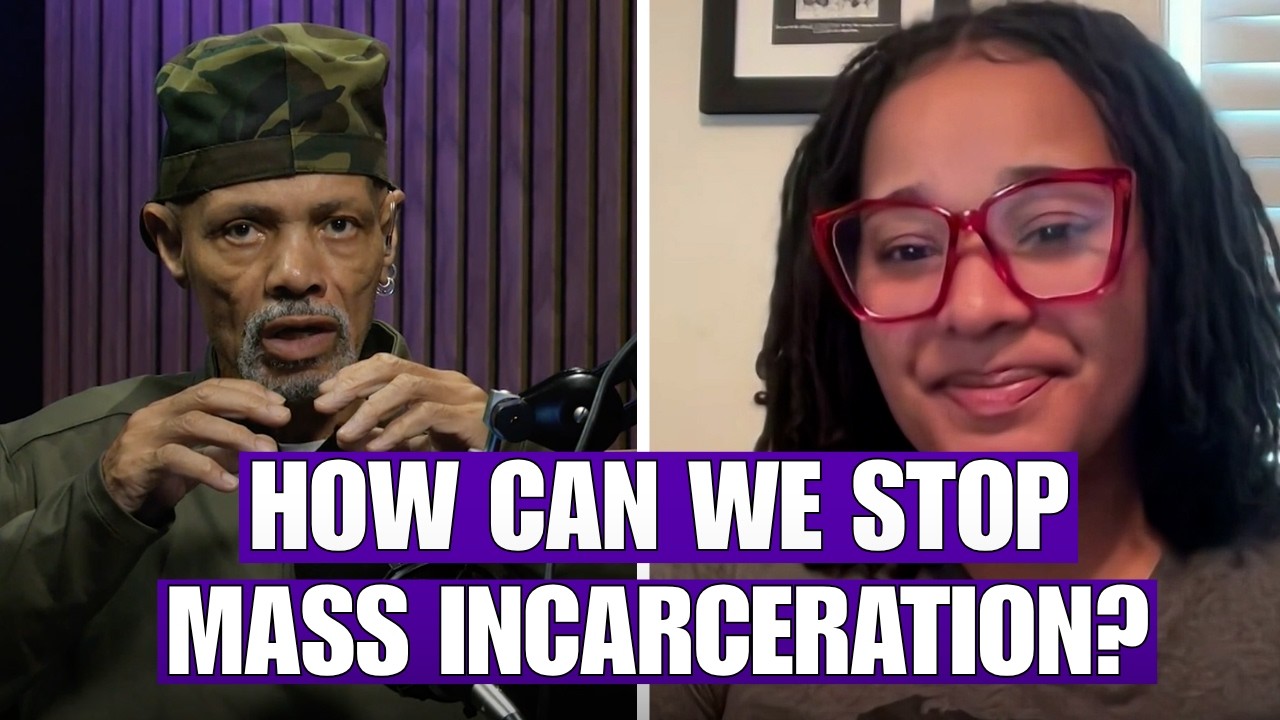
Courtney Teasley: Breaking the cycle of incarceration

An American flag can be seen through the barbed wire surrounding the CoreCivic Otay Mesa Detention Center on October 4, 2025 in San Diego, California. Photo by Kevin Carter/Getty Images

After running a historic campaign to unseat a criminal court judge for the first time in Nashville, Courtney Teasley created the legal education company emeffen to inform working-class communities about their civil rights. From combating police abuse to supporting vulnerable populations targeted by the criminal justice system, Teasley is a business and legal powerhouse redirecting people toward civic engagement and political-economic acumen. In this heartfelt interview, Mansa Musa and Courtney Teasley discuss grounded community organizing and political education that subverts the carceral system’s goal of turning citizens into captives.

Related links:

Credits:

  • Production/Post-production: Cameron Granadino
Transcript

The following is a rushed transcript and may contain errors. It will be updated.

Mansa Musa:

Welcome to this edition of Rattling the Bars. I’m your host, Mansa Musa. Today we are joined by Courtney Teasley, who consider herself and identify herself as a legal disruptor and justice strategist. We’ll be discussing her perspective on how she is intervening in the criminal injustice system and her work challenging the prison industrial complex as it exists today. Thank you, Courtney. Welcome to Rattling the Bars.

Courtney Teasley :

Thank you so much for having me. I’m really excited. I’ve heard a lot about this podcast, and so thank you so much for this opportunity to talk to your audience.

Mansa Musa:

Okay. Let’s start by introduce yourself to our audience and tell our audience how you came into this space, but more importantly, what is a legal disruptor and a justice strategist? What’s your identity as how you identify those things? So tell us a little bit about yourself.

Courtney Teasley :

Yes. So my name is Courtney Teasley. I am a licensed attorney in Nashville, Tennessee. I have practiced mainly criminal defense for the last 13 years and am now a retiring lawyer, a criminal defense lawyer, because I have done all the things within the criminal justice system from teaching and training in mock trial, training and coaching other lawyers to open their own law practices, and also then to teaching as a criminal justice educator over at a historically black college and university here in Nashville called Tennessee State University. So I taught there for a number of years as well. And then that is where I was able to see the big three that were creating this cycle. I call them the big three education topics that people from what I like to call the DAMM community, D-A-M-M, and that’s the disproportionately affected marginalized minority community. And people from that community are often not educated in the big three that I call financial literacy, criminal justice literacy, or legal literacy, and civics.

And these three lead directly to mass incarceration. And so after running a campaign, it was a historical campaign here, we unseated a criminal court judge for the first time ever in Nashville. I decided to create a legal education company to help fill that gap of legal literacy that so many of us never received and that basically you had the cops saying, “Hey, ignorance of the law is no excuse for breaking the law, but you never taught me the law.

That’s legal literacy and then financial literacy. You keep me in cycles of poverty. You keep me broke. You don’t teach me ever how to really make money.” And so that leads right back into the criminal justice system. And then finally civics, the last one we’re undereducated in, you teach us nothing more than go vote. You don’t teach us anything else around how to actively participate as a citizen. So we don’t really take advantage of the things that we should. We don’t really hold people accountable the way we should. We don’t show up the way we should when it comes to voting because of that. So that’s why I created my company is called MFN and I created it with the intent to help reduce mass incarceration.

Mansa Musa:

Okay. And it’s interesting that you identify three areas that you say are essential in disrupting this cycle. So let’s talk about those. Let’s talk about those things. Walk us through your program. How do you engage the community or who is your target audience?

Courtney Teasley :

Yeah, so like I was kind of telling you why I created it, I forgot to mention a very important part of that all the things we do are proactive in the criminal justice system, meaning I feel like if mass incarceration is going to go anywhere, the efforts to fight it must happen before someone has been found guilty or someone has pled guilty. We know 97% of people take pleas. And so the majority of efforts in the criminal justice system usually are happening after someone has already pled guilty and been found guilty. They have received that ultimate if, made a felon. Their rights may be restricted. They have a lot of different things. They have a lot of different hurdles at that area versus fighting proactively where I think we can be a lot more strategic and a lot more effective. So that’s my company focusing in on the proactive portion of fighting back.

And so how we do this and how I engage in the community, and I think you asked me also who is my targeted audience. And so the ways that we’ve been. My target audience is who I was telling you, the damn community, disproportionately affected marginalized minority community, the 97% of people who take pleas, the people from areas of town that others may look down on. I’m talking about the hood.

The people who most likely come into contact with the criminal justice system, that’s my target audience. And so we engage the community through multiple efforts, whether it’s through our partnerships and collaborations with schools, churches, community centers, organizations that care, from us going out and creating the activations where we’re bringing the legal literacy, but we’re bringing it in a fun way where people actually want to take part in and they’re getting to understand it, they’re getting to participate. So we do that and then we do some advocacy training where now we train organizations how to fight back proactively. So I’m a criminal defense attorney and when I say a justice strategist, I’m a fighter and I’m a strategic person first. And

So I’m going to pull back the veil and I’m going to show you what the criminal justice system really is and then I’m going to teach you how to do what I teach my lawyers how to do, play chess and not checkers, how to fight back unapologetically, vigorously. And so that’s what we do in our advocacy training. And so that’s how we engage the community. A lot of times we’re doing events where we’re going out to people who are having events in the community and a lot of people just don’t feel competent in teaching legal stuff. And so we bring that to you because we speak the language of the damn community, D-A-M-M community, African American English.That’s how I’m so successful as a lawyer because I’m bilingual. I speak two languages and that’s how the community resonates. If my life is on the line, I don’t need you speaking above my head.

So that’s how we engage in the community in an authentic way.

Mansa Musa:

When you saying legal literacy, are you educating me on understanding my rights somewhere like the Black Panther Party had, when they came out, they was going around, they was telling people they had the right one to be on, but they wasn’t saying your right to bear saying you have a right to be arm, but you have certain rights when the police pull you up and stop you. You have a right to not say nothing. You can ask to speak to somebody. When you say legal literacy, you talking about pre, post incarceration or do you deal with people at all sectors, like a person in society or people in prison or people that got out on what we call paper, out on parole?

Courtney Teasley :

Yeah. So with legal literacy, when I’m speaking about that, we’re talking about all facets of it. So I have books already for the Fourth Amendment, the Fifth Amendment, books on that. And I teach out on the Sixth Amendment because that book is not out yet. We have plenty of books that are coming out, but the Fourth and the Fifth Amendment, the Fifth Amendment is the one that just came out. And actually I’ll send y’all over a copy of it so you can check it out.

But the way that we really just break, it’s packed full of pre-protection. Now, and when I say pre-protection, that means protection that jumps in from the moment you’re accused of anything. A lot of times we like to rely on the Fifth Amendment and wait until the police tell us, oh, you got the right to remain silent or you’re being forced to testify and you’re like, oh, I plead the Fifth. However, no, the Fifth Amendment, it actually came into play the very moment you were suspected. So when that cop gave you a call and said, Hey, I want to talk to you, you know what I mean? We’ve heard from such and such. You mind coming down here talking to me? At that moment, even though they haven’t told you that you’re a suspect or whatever it may be, you have the power to say, oh, hold on.

I think I’m going to choose to stay silent. I’ll have my lawyer contact you. So you get to make a determination whether it’s in your best interest to talk about anything. So you have that pre-protection. And so that’s how we kind of engage with the amendments that really pop up in the criminal justice. The fourth, fifth, and sixth are the ones that we focus in on when we’re teaching our advocacy training. But those come into play when you’re incarcerated.

If you’re just on bail and you’re waiting, well, those are in play. Or even if you’ve been found guilty and you’re appealing, those are in play. You need to be able to understand those. And so then for other ones that we don’t have books on, then you rely on a person like myself to be able to train you on what that means for your organization or your specific

Mansa Musa:

Situation.

Courtney Teasley :

Okay.

Mansa Musa:

Yeah. And then in financial literacy, because I was telling off camera that when I got out, I hadn’t established no credit, but I had established a savings. So when I went to get an automobile, my mind was I ain’t want no car note. So I wind up paying $15,000 for 2015.

Courtney Teasley :

Oh

Mansa Musa:

God. And had I had established credit, I would’ve had made out better. But since then I had established credit. I went to a dealership in 2023 and I had the same amount of money and because I had good credit, I was able to get a 2023 and I paid the same amount of money I paid to get for that 2015. So my concern with the financial literacy, what is this? Because when you talking about the damn community, a lot of us don’t have a pot to piss in the window to throw it out. So we don’t have no funds. So are you teaching how to create your own business? Are you teaching how to go about getting grant, how to get money and then how to manage it? What is this, your financial literacy model? I

Courtney Teasley :

Love that you asked that. So after I declared retirement from the practice of law, I went and got certified as a business coach and I’m also a certified strengths coach. And so I basically am talking, when I’m teaching about financial literacy, I did that to go be able to teach my lawyers who were never taught anything about business. But when we transition it over here to people in the damn community, we started the very basics, like you said, learning about building credit. It’s just something so simple that it’s like a lot of times we don’t think about it or we’ve been so used to having not so good credit that we try to disregard it, that we never try to maybe get it back together. Well, and I understand that, but I think that there are multiple ways that you can start building your credit in smaller ways that a lot of people don’t talk about.

So we like to bring in financial strategists and people who are investors who actually have done these types of things to help you understand what to do. A lot of times, think about it like this. When you were just talking about you had a savings and the thing is you’re thinking about how can you make more money? How can you do whatever? You got your job. Then it’s like, well, who is here teaching us about investing? These are things we never learned about. Nobody’s sitting here giving us the playbook on what to do or how to do it. Like you said, you might be working a dead end job, a job that doesn’t promote you. Well, then you need to learn about what kind of jobs are out there, what kind of jobs, what kind of skill set do you have? What have you already done?

And then how can we use those same skills to get you a job that now has advancement opportunities? So it’s just all of those things that come together and that comes with us partnering with other organizations and actually bringing the experts to you to be able to help understand how do I segue now? I have not partnered yet and I’m open to it. I have not yet partnered with an organization for reentry where we’re teaching the coaching to them, but I have connections with one of the world’s top traders just in the last couple of years. I did an interview with him and he’s actually a Nashville native and he came down and he did a gig where he just talked to us all about investing, the bare minimum, how to start, what to do. Then you want to get somebody else. What’s a 401k?

How do I start it? What’s the IRA? You bring the experts to be able to bring it down, take all the high paid jargon out of it and speak the language of the damn community and explain to me, how do I get my ducks in a row? How do I protect myself and my children? And so that’s what I think we do well with partnering with other orgs to help

Mansa Musa:

That. And then we talk about civic and that in of itself speaks volumes in terms of our lack of understanding of electoral process, our lack of understanding of different institutions that regulate, responsible regulatory type things that affect us. So what is your civic model? Because when we learn civic in school, we know that at a certain age you get a right to vote. We know now that that’s not a guarantee with the latest Supreme Court decision, but be that as may, what’s your civic model?

Courtney Teasley :

Yeah. So with civics, my big thing has always been people get so mad, especially the new generation, it’s like, oh my God, they don’t vote. They won’t do this. They won’t do that. And it’s like, well, you got to teach them more than just go vote. It’s more to civics than just going to vote. And I like to bring up a case that I was fighting vigorously back in 2023. It was called disruptmanchester, if you look on Instagram or Twitter. And a family with five children, five Black children were driving through Manchester, Tennessee and had their children taken and forced into foster care all over marijuana. And so in that case, I had to publicly put it out to people and let them know what’s going on in this city that we consider a sundown town. A lot of Black people have known it to be that over the years.

And so we know what it is when these people are taking Black children and forcing them into foster care. And so when you’re making it public and you’re letting other people know what’s going on, and basically I call it criminal defense organizing, “Hey, this is what they’re doing to us in real time. We need you to be concerned about what’s going on.” I want to ignite their civic abilities and a lot of times they have to know what that means. And your civic abilities just meant, “Hey, you got the power to come court watch. You know that you can come. You have a right to come into a courtroom. You have a right to sit in here and see what they’re doing.” That’s accountability, making sure that the people that your taxes pay, that they’re accountable to you. And then also when we had issues where we were saying, “Okay, well, you guys took the children.

The state trooper did this, the county did this.” Well, people started to request records. So as citizens, like, “Hey, I’m requesting to see the stop. I’m requesting to see your personnel records. I’m requesting…” So that’s the type of thing when you’re igniting people to understand that as a citizen, because government officials, public officials, you pay them, your taxes pay them, you have the right to inquire into anything that’s going on, and you have the right to demand answers, you got the right to transparency, you got the right to ask for, you can file complaints, you can come court watch. So igniting them to see that your civic duty far exceeds just voting, right? You have power and you just need to know how to utilize it.

Mansa Musa:

In the District of Columbia, before you answer, we got the right returning citizens. Anyone formerly incarcerated, you’re a DC resident, you got the right to vote. And so we got that right. But with this latest decision that came out the Supreme Court, we looking at how they might try to take that back because the federal government got complete control over the District of Columbia, everything relative to District of Columbia, the federal government. We’re not a state. We got home rule. So talk about how you look at people that’s disenfranchised because that’s your costume population specifically. And not only that’s them and their family, because their family is highly affected by their incarceration.

Courtney Teasley :

Absolutely. So basically with what you’re talking about is probably going to go more into efforts that are reactive, but very necessary. And so what I did recently is incorporate a nonprofit so that way we are able to partner with organizations that do a lot of the rights restoration. And so most recently we hosted a judicial forum and in the judicial forum, we talked about, we educated them first on what all these seats, because right now we have a special election for judges going on right now. So we educated them around that. And then we had a forum so they could hear from the people. But one of the big pieces was we wanted people who did not have their rights, who may have been made felons at young ages. We wanted them to be able to come in and inquire about how to get your rights back so we can start that process with them.

And so what we do is we’ll have them come in, let us know, “Hey, I’m interested in getting my rights back or however, just let us know you’re interested.” And then we can do the connections with making sure you get that done. And we do that through collaborating with other orgs who are already doing it. So that’s how we try and fight back reactively by partnering and empowering, kind of like you were just saying, how you give amplify people’s voices. So we try to do that with other organizations. We’ll connect with them and allow them to do what they’re doing best in that field around rights

Mansa Musa:

Restoring. Yeah. And I mentioned earlier that I was incarcerated. Prior to being released, I did 48 years in the Maryland system. And a lot of what you’re saying, we would educate ourselves on all those levels. You had guys that did financial listing, they studied the stock market. They understood it and they invested their money. We had people that was jailhouse lawyers and did legal and was proficient at that. And then we had people that came together around organizing the community around social issues in general. If a person, and I’m looking at the prison population in particular, if a person in the prison population, when they let me out, they gave me $50.

They didn’t give me no bus ticket. They let me out in the city. They let me out in Baltimore City. I reached out to my family. I ain’t know if they had got the message or not, but that’s what I left out with $50 after serving all that time. The average person leave out a prison in the Maryland system with about that much money before they leave. If they leave with any kind of money, it’s not enough money for them to sustain themselves. So what’s your economic, that component and why you call it the missing curriculum and how do that factor into the system eradicating it or stabilizing the people that’s coming out?

Courtney Teasley :

Yeah. So I love that you asked this and I think you’re talking about when I call it why financial power is a prerequisite for social justice. Because one thing for me is as a criminal defense lawyer, I didn’t take the public defender route. I didn’t want to work for the government. I didn’t want my hands tied. I didn’t want to go to handcuffs. I wanted to be able to fight because the moment you fight a little too hard, guess what they going to do? Take your money from me, right?

Mansa Musa:

Yeah.

Courtney Teasley :

So that’s the way they keep us in order. And so I wanted to be able to fight without having that issue. And so I started to see that the fact that I was private practice, I was able to create, I charged my worth the majority of the times, but because of that, I was able to create scaling fees, sliding fees, low income, and represent people who really needed it because I charged my worth over here in my law practice the majority of the time. The people who can’t afford it were able to pay that and the people who were not able to afford it, I’m still able to represent you because I get to create that. I didn’t need the government to tell me to do a pro bono or to take a court appointment. I knew how to serve my community. And so one thing I kind of started to see is I would do all the things.

I told you I did the mock trial. I was the NAACP legal redress chair. I was the equality and justice committee chair for the Tennessee Association Criminal. I was all these things. And I started to see that real change. Y’all trying to burn me out. You know what I mean? And you’re not going to pay anybody for it. So I started to see that if the narrative being pushed is if you want to help your community, you need to do it for free and long hours, do it under a nonprofit, don’t get paid much. And I was like, well, that’s the reason none of these initiatives are long lasting.

Mansa Musa:

They

Courtney Teasley :

Only last for a little bit of time. And then as soon you run out of money and then now you can’t help anybody else. And so what we have to do is be able to be self-sustaining. So when people in our community are creating businesses, when I had my legal education company and 10% of all my product profits go back into the very people who are fighting proactively. So one of the Middle Tennessee National Action Network, I trained them and my trainings was $5,000. Well, they didn’t have to pay for that because people that actually were supporting and buying our product books and buying into our other things. And so that is, to me, a model that other businesses can take and see that, look, there are problems in our community. I’m making money over here. Well, let me figure out how to best assist.

And then that means in your situation, when you’re talking about a person coming from prison, well, if you have a business that actually cares, that you’re partnering with a business and they’re like, you know what? This is hard. People are trying to get back on their feet. We want to be able to make sure that they can do just that so that person can come and maybe they can do an externship. They can get a job over here and then they can get a stipend up front. Whatever it is, we are the ones who have to create the solutions. Nobody’s coming to save us. And the solutions that are coming through nonprofits are the monies. Come on, we’re under this administration. A lot of people aren’t getting money for anything that’s assisting Black people in general. So it’s going to be up to our community to be able to build financial power, to be able to become financially literate and to be able to be creative in actually helping assist.

For me, I care about any mass incarceration. For somebody else, it could be something different, but it’s going to be up to us to create those solutions and then partner with the ones that are doing it.

Mansa Musa:

And I think your approach to this mindfulness and skill building, it goes back to an era where we was educating for liberation. So I think we get caught up on how we see the problem and therefore we let that be determined the solution. But more importantly, who telling us what the problem is? Not so much as it how we see it. Let me rephrase that. Somebody telling us this is what the problem is, and then we say, okay, then the solution is, and trying to get a solution, it become, to your point, we try and get something from the government and the government ain’t going to fund you to get your freedom. That’s not happening. Government ain’t going to come and say, okay, because we still waiting on our 40 acres of the mule. And

Courtney Teasley :

It ain’t

Mansa Musa:

Coming. It ain’t coming. So the best thing we can do is do what we’ve been doing. But Courtney, I really appreciate you coming and having this conversation. And I hope our audience can really understand the importance of this approach, mainly when you’re dealing with the cost population. I know from experience that when people come into that system much like yourself and provide education, information and knowledge that we’re receptive. And there was a lot of people that was locked up with me, all of us that got out in the last 10 years. And a lot of what we learned while we was incarcerated, we’re doing it now in the Baltimore community and other communities. But you got the last one. What you want to tell our audience about how they can get in touch with you and how they can support your work?

Courtney Teasley :

Thank you so much, Mansa. First of all, what you just said is exactly why I’m doing the work I do and why I focus proactively prior to someone becoming incarcerated, prior to someone taking a plea or pleading guilty because I think it sucks that you did 48 years. Could you have helped me prior to that? And a lot of times you’ll see the Innocence Project, which is good and they’re doing good work, but it’s like people are only getting out and that effort’s only coming in after people have done 30 and 40 years. And it’s like, I think we can do something way before then while they’re fighting their cases more proactively. And so you can find me over on TikTok. I do a lot of legal literacy education over there. I have a whole course up there called Easy Way to On Your Right.

It’s Criminal Justice Literacy 101. It went most viral. We have over 30,000 followers and we have so many resources like a fight your case manual. So anyway, come over and follow us at MFN, that’s E-M-E-F-F-E-N. And we’re also over on, if you want to follow me personally, you can hit me up on LinkedIn, Courtney Teasley, or you can find me on Instagram @thecourtneyteasley. And so YouTube, again, we have the same thing. It’s not MFN, it’s @blacklawgirl. So if you want to find us on YouTube, it’s @blacklawgirl.

Wherever I am, look, come find me, come get me, and let me know. I love to come collaborate with y’all wherever you are. Let me bring the legal literacy and let me bring it in a fun way that’s easy to understand.

💾

“A Black family with five children [was] driving through Manchester, Tennessee, and had their children taken and forced into foster care all over marijuana. ... I had to publicly put it out to people and let them know what's going on in this city that we consider a sundown town. ... We know what it is when these people are taking Black children.”
  •  

AI Companies Raise Alarm on “Devastating” Cyberattacks Within Months—Following the WEF’s Playbook to the Letter

Over 100 of the world’s largest technology and financial corporations—including OpenAI, Google, Microsoft, and Visa—issued a joint warning this week that AI-powered cyberattacks will surge dramatically within months, threatening to cripple hospitals, water systems, and [...]

The post AI Companies Raise Alarm on “Devastating” Cyberattacks Within Months—Following the WEF’s Playbook to the Letter appeared first on The People's Voice.

  •  

US Representative Calls For Lindsay Clancy’s Public Execution: ‘A Warning To Women Everywhere’

South Carolina Rep. Nancy mace declared that Lindsay Clancy—the Massachusetts mother who strangled her three young children to death with exercise bands—deserves the death penalty, and she wants it done publicly. “Her children are dead,” [...]

The post US Representative Calls For Lindsay Clancy’s Public Execution: ‘A Warning To Women Everywhere’ appeared first on The People's Voice.

  •  

‘Major win’ for democracy as Supreme Court rejects Trump attack on mail-in voting

An election worker processes mail-in ballots at the Los Angeles County Ballot Processing Center during California's state primary election in the City of Industry, California, on June 2, 2026. Photo by Patrick T. Fallon / AFP via Getty Images
Common Dreams Logo

This story originally appeared in Common Dreams on Sep. 14, 2026. It is shared here under a Creative Commons (CC BY-NC-ND 3.0) license.

The US Supreme Court on Monday night rejected a bid by the Trump administration to keep onerous US Postal Service rules for mail-in ballots in place, which voting-rights defenders said risked depriving millions of people of the franchise in this year’s midterm elections.

After a back-and-forth legal battle over the USPS rules that dragged on for months, the nation’s highest court issued the 7-2 ruling without elaborating on its legal reasoning, though right-wing Justices Samuel Alito and Clarence Thomas issued dissents in favor of President Donald Trump’s side.

The ruling in USPS v. California was in response to a legal challenge brought by the League of Women’s Voters, the attorneys general of numerous states, and others who argued that newly-announced rules by the Postal Service regarding mail-in ballots, changes prompted by an executive order issued by Trump, would prevent people from having their ballots counted and cause chaos for those trying to administer this year’s elections.

A victory for democracy, a defeat for election deniers. https://t.co/MKjfKmgyTv

— David Crowley (@DavidCCrowley) September 15, 2026

In response to the ruling, the plaintiffs’ legal team said the decision was “a critical step to ensuring free and fair elections this November by maintaining access to mail voting for millions of eligible voters across the United States and lifting the dire threat that the Postal Service would disenfranchise them.”

“Mail voting is safe, secure, and reliable—and the Trump administration has presented no evidence to the contrary, as the courts have repeatedly recognized,” the statement continued. “We will remain vigilant in countering threats to free and fair elections and ensuring that every eligible voter is able to cast a ballot and have it count.”

“Today’s decision is a victory for our democracy and a powerful affirmation of the rule of law,” said California Attorney General Rob Bonta in a statement. “The stakes in this litigation could not have been higher.”

Virginia Kase Solomón, president and CEO of Common Cause, was among the other pro-democracy advocates who welcomed the decision.

“Today’s decision is a major win for the millions of everyday Americans who count on vote-by-mail—our seniors, service members, busy parents, rural voters, and voters with disabilities,” said Solomón in a statement. “Vote-by-mail is safe, proven, and vital; even the president uses it. This executive order was a blatant power grab designed to silence voters and undermine our elections, but it failed because the people and the law were on our side. Our Constitution is clear: states run our elections, and voters choose their leaders—not the other way around. No administration can strip the people of their power.”

Michael McNulty, senior policy director for Issue One, a nonpartisan group that works to defend free and fair elections, also welcomed the ruling, but said vigilance would still be necessary going forward.

“The fight to preserve states’ authority to administer elections is far from over,” warned McNulty.

“President Trump continuously and falsely claims fraud in mail-in voting without evidence,” he added. “Despite voting multiple times with this method, he remains obsessed with centralizing control over elections to tilt the playing field. However, for now, one piece of that centralization effort is blocked, and it ensures that mail-in voting for the midterms won’t be disrupted.”

  •  

Denzel Washington Exposes ‘Kompromat’ Israel Has on 90% of Congress: “They’re ALL Pedophiles”

Denzel Washington has nothing left to lose. Speaking from the pulpit on Sunday, he revealed that every single politician who sets foot in Israel is forced into acts so vile, so unspeakable, that we can’t [...]

The post Denzel Washington Exposes ‘Kompromat’ Israel Has on 90% of Congress: “They’re ALL Pedophiles” appeared first on The People's Voice.

  •  

Massachusetts Seizes Teen From Devout Catholic Family, Bars Parents From Contact—Then Moves to Pump Her Full of Testosterone

A devout Catholic family from Massachusetts is speaking out after the state ripped their teenage daughter from their home, for the “crime” of refusing to allow the state to transition her to a boy without [...]

The post Massachusetts Seizes Teen From Devout Catholic Family, Bars Parents From Contact—Then Moves to Pump Her Full of Testosterone appeared first on The People's Voice.

  •  

Democratic Socialist Candidate’s Secret Life — XXX-Rated BDSM Modeling Gigs While Wearing Uniform of the National Guard

Democratic congressional nominee Chris Gallant modeled for a BDSM retailer while serving in the US military, with some photographs depicting him having sex with another man, the New York Post reported on Sunday. Gallant, an [...]

The post Democratic Socialist Candidate’s Secret Life — XXX-Rated BDSM Modeling Gigs While Wearing Uniform of the National Guard appeared first on The People's Voice.

  •  

US Diplomat Busted in Major Pedophile Sting — Smuggled Out of UK on Military Jet Before He Could Face Charges

A US diplomat stationed in London who was found with child sexual abuse images on his phone was quietly removed from British soil by American military personnel and flown back to the United States on [...]

The post US Diplomat Busted in Major Pedophile Sting — Smuggled Out of UK on Military Jet Before He Could Face Charges appeared first on The People's Voice.

  •  

‘WE’LL DEPORT YOU’: DHS Chief Confirms Ilhan Omar ‘Married Her Brother’, Vows to Investigate ‘Incest Family’

Homeland Security Secretary Markwayne Mullin said “something’s going to happen” in an ongoing investigation involving Rep. Ilhan Omar (D-Minn.), speaking with podcaster Benny Johnson at the GOP convention in Dallas.  Mullin confirmed that Omar married her [...]

The post ‘WE’LL DEPORT YOU’: DHS Chief Confirms Ilhan Omar ‘Married Her Brother’, Vows to Investigate ‘Incest Family’ appeared first on The People's Voice.

  •  

Texas Politician Who Secretly Purchased Jeffrey Epstein’s Zorro Ranch Exposed ‘Harvesting’ Newborn Baby Hearts

A Texas real estate dynasty that secretly purchased Jeffrey Epstein’s Zorro Ranch in 2023 is now invested in a biotechnology company that harvests cardiac cells from newborns, while the family’s son holds a position inside [...]

The post Texas Politician Who Secretly Purchased Jeffrey Epstein’s Zorro Ranch Exposed ‘Harvesting’ Newborn Baby Hearts appeared first on The People's Voice.

  •  

Courtney Love Reveals She ‘Got High on Child Blood’ With King Charles

King Charles is not human. That’s not us talking. That’s Courtney Love. And she says it’s not just Charles, it’s the senior ranks of the Royal family. Reptilians. Shapeshifters. The bloodline that wears human skin [...]

The post Courtney Love Reveals She ‘Got High on Child Blood’ With King Charles appeared first on The People's Voice.

  •  

Judge Dismisses Dan Schneider’s Defamation Case Against Filmmakers Who Exposed Nickelodeon Pedophilia Scandal

Former Nickelodeon showrunner Dan Schneider has lost his defamation lawsuit against the producers of Quiet on Set: The Dark Side of Kids TV, the 2024 docuseries that alleged he enabled the sexual exploitation of child actors [...]

The post Judge Dismisses Dan Schneider’s Defamation Case Against Filmmakers Who Exposed Nickelodeon Pedophilia Scandal appeared first on The People's Voice.

  •  

How Almoravid Engineers Anchored a Fortress to Bare Rock — 900 Years Before Modern Skyscrapers Used the Same Trick

On May 29, 1108, an Almoravid army crushed the forces of Alfonso VI of León and Castile outside the town of Uclés. Among the dead was Sancho Alfónsez, the king’s only son and heir, a loss so severe that medieval chroniclers ranked it among the worst Christian defeats of the entire Reconquista — the centuries-long […]

  •  

Torres ancladas a la roca desnuda: descubren el truco de ingeniería que los almorávides usaron hace 900 años en Cuenca

El 29 de mayo de 1108, un ejército almorávide derrotó a las tropas de Alfonso VI a las afueras de Uclés. En la batalla murió Sancho Alfónsez, el único hijo varón del rey y su heredero, un golpe que dejó a Castilla sin sucesor directo y que los cronistas de la época consideraron una de […]

  •  
❌