❌

Reading view

General Atomics FQ-42A Vengeance CCA Now Flying Together With USAF Fighters

General Atomics has given us the first look at its FQ-42 Vengeance Collaborative Combat Aircraft (CCA) drone flying in formation with crewed fighters. The U.S. Air Force is continuing to expand crewed-uncrewed teaming and other testing of the FQ-42, as well as Anduril’s FQ-44 Fury, as it aims to start fielding both types around the end of the decade.

The newly released picture from General Atomics’ Aeronautical Systems, Inc. division (GA-ASI), seen at the top of this story, shows an FQ-42 in flight together with an F-35A Joint Strike Fighter and an F-15E Strike Eagle. The company has also disclosed the delivery of another Vengeance drone to the Air Force, this time to the service’s main drone operations hub at Creech Air Force Base in Nevada.

“The FQ-42 that arrived at Creech will continue regular test and evaluation operations with the Air Force aimed at experimentation with the new aircraft,” according to a press release GA-ASI put out today. “Previous efforts with Vengeance and other GA-ASI jets, including [the] XQ-67A Off-Board Sensing Station and MQ-20 Avenger – have found the trio of combat jets flying in various scenarios that push the boundaries of combat aviation. GA-ASI’s jets have flown semi-autonomously and autonomously with various AI pilots and under collaborative control of human fighter pilots operating F-22 Raptor and F-35 Lightning II jets.”

From top to bottom, General Atomics MQ-20 Avenger, XQ-67 OBSS, and YFQ-42 drones. GA-ASI

GA-ASI has previously confirmed that the XQ-67A, an earlier experimental drone TWZ was first to report on, served as a prototype for the development of the FQ-42. The Air Force’s F-22s also look set to be the first operational airborne controllers for USAF CCAs.

As mentioned, the Air Force is steadily working to broaden the scale and scope of testing involving the FQ-42 and FQ-44 to include more and more operationally relevant scenarios. Both types are set to make their first appearance at a large-force employment (LFE) exercise in December, offering a valuable new opportunity for deeper and more realistic integration with crewed fighters.

The Air Force otherwise continues to lay the groundwork for future CCA operations, including through a major round of testing at Creech in July, which TWZ was first to report on. The service is heavily focused now just on figuring out how the drones will be deployed, launched, recovered, supported, and otherwise operated on a day-to-day basis. A dedicated test squadron called the Experimental Operations Unit (EOU), established at Nellis Air Force Base in Nevada, has been leading those efforts.

Work is also underway to demonstrate tactical capabilities, such as the FQ-44 launching an AIM-120 Advanced Medium-Range Air-to-Air Missile (AMRAAM) for the first time earlier this year.

New test footage: first missile shot from YFQ-44A.

YFQ-44A executed an end-to-end, beyond-line-of-sight strike against a simulated target.

The test, executed out of @EdwardsAFB, represents an important step in turning CCA into an operational capability. pic.twitter.com/70cRIs6uXJ

— Anduril Industries (@anduriltech) July 15, 2026

“We’re on path right now to do our air-to-air shot coming up here in the near future,” Mike Shortsleeve, Vice President for Strategy Business Development at GA-ASI, told TWZ‘s Jamie Hunter on the floor of the Air & Space Forces Association’s (AFA) 2026 Air, Space & Cyber Conference last week.

Last week, GA-ASI separately announced a new demonstration of semi-autonomous air-to-air combat capability involving crewed F-5AT Advanced Tiger jets belonging to private adversary air contractor Tactical Air Support, Inc. and an unspecified “CCA test aircraft.” The company did use a picture of an Avenger drone to illustrate the press release. The F-5s and the CCA surrogate were equipped with infrared search-and-track sensors (IRST) during the testing.

The stock picture of an Avenger drone that General Atomics used to illustrate its press release last week. General Atomics

“The live exercise proved that a CCA and a manned fighter can collaborate to fuse sensor data from AMS-GRA-compliant sensors to track, engage, and eliminate an airborne target while using a Beyond Line of Sight (BLOS) data link to accomplish seamless coordination between the two aircraft,” according to the GA-ASI release.

“The demonstration utilized BLOS communication between the CCA and the airborne F-5, enabling the Advanced Tiger to send data about targets from an AMS-GRA-compatible system. These commands were relayed to the CCA’s TacACE [Tactical Autonomy Ecosystem software] system,” the release added. “This flight showed that many companies’ platforms can interoperate using the plug-and-play government reference architectures ecosystem. The U.S. Air Force isn’t locked into using a single vendor or system.”

GA-ASI has previously demonstrated the ability of MQ-20s flying with podded IRSTs to detect and track aerial targets semi-automatically. Generally speaking, IRSTs look set to be an important sensor for future CCAs, and are particularly relevant in the air-to-air role. As we have written in the past:

IRSTs are especially valuable for helping spot stealthy targets with features designed to reduce their radar cross-sections since they detect and track infrared emissions. By extension, IRSTs are also immune to radio frequency electronic warfare jamming. As passive sensors, they do not emit their own signals that could alert a target to the fact they are being tracked, either. IRSTs can still be used to cue or otherwise be linked to other sensors, including active electronically-scanned array radars. Fusing data from multiple sources can provide higher fidelity tracks of multiple targets, as well as improved situational awareness overall.
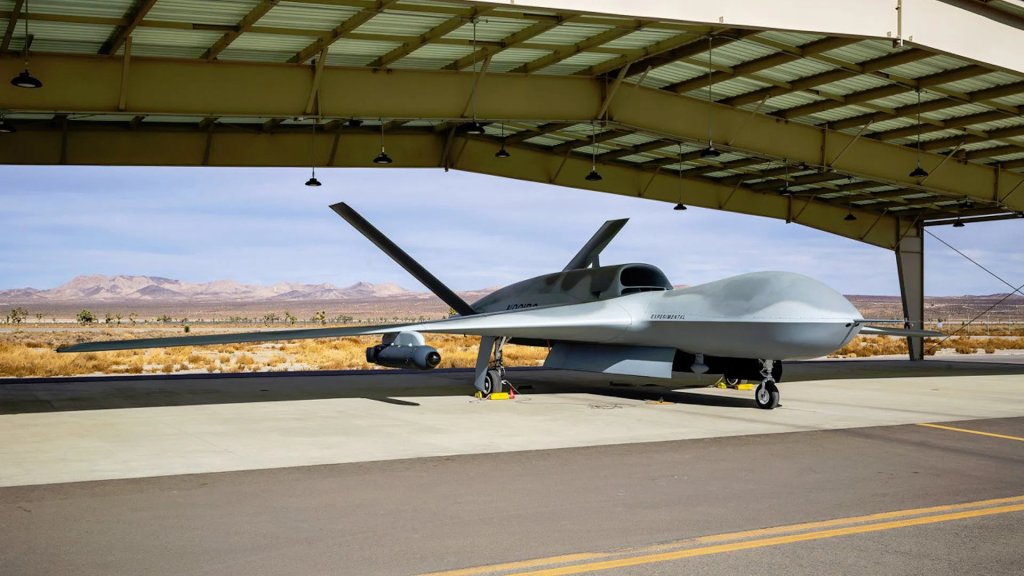
An Avenger drone with a podded IRST sensor under its wing. General Atomics

Air-to-air combat is expected to be the primary mission set, at least initially, for Air Force CCAs. At the same time, an air-to-ground role for the FQ-42 and FQ-44, and/or other future CCA-type drones the Air Force might acquire, is emerging on the horizon. Anduril has already fit-checked a variety of air-to-ground ordnance on Fury.

As it stands now, the Air Force is looking to have its first operational CCAs in service toward the end of the decade. The service is also presently aiming to have a total fleet of at least 500 CCAs of all types by 2032.

“If we can’t be ready, then certainly you’re not going to have the forces that you need and the numbers that you need going forward. This signifies that mass is certainly important again, but also autonomy is just as important,” General Atomics’ Shortsleeve told us last week in talking about the Air Force’s CCA fleet size target. “So the ability to have these autonomous systems, whether they’re bringing in additional weapons, sensing capability, whatever it is, all of those working in a collaborative environment, whether it’s manned, unmanned teaming, or unmanned and unmanned capabilities, that right there is what’s going to help the warfighter in the future.”

“And when we say autonomy, it’s not just strictly this is going to go off and do its own thing. It’s going to be directed,” he added. “Whether it’s on the ground, in the air, [it] makes no difference to the system itself. It’s going to work hand-in-hand [with humans]. So that human-machine teaming, that’s what they’re really focusing on. There is figuring out how to best use this capability in the advancement of actually having to employ it in [the] real world.”

Though just flying in formation is very different from collaboration with a high degree of autonomy, the new picture of the FQ-42 together with the F-35A and the F-15E is a window into the future teamed operations the Air Force is hoping to build.

Contact the author: joe@twz.com

The post General Atomics FQ-42A Vengeance CCA Now Flying Together With USAF Fighters appeared first on TWZ.


  •  

8-year-old child caught driving an ATV motorcycle on Paros

An 8-year-old child was caught driving an All-Terrain Vehicle (ATV) widely known in Greece as “γουρούνα” (quad bike) at the port of the island of Paros on Saturday. The child was accompanied by a 33-year-old US national sitting on the back seat. According to some media, he was the child’s father. The vehicle had overturned, […]

The post 8-year-old child caught driving an ATV motorcycle on Paros appeared first on Keep Talking Greece.

  •  

Ex neo-Nazi Golden Dawn official declares support for new far-right party

Ilias Kasidiaris, a former MP of the neo-Nazi Golden Dawn party, who was released from prison last week, announced on Monday, his support for a new far-right party called the Alliance of Greeks. As KTG reported last week HERE, Kassidiaris is eager to return to politics, however, legislation makes it impossible for convicts for crimimal […]

The post Ex neo-Nazi Golden Dawn official declares support for new far-right party appeared first on Keep Talking Greece.

  •  

Femicide in W. Greece: Young man stabs to death former partner

A 27-year-old man stabbed to death multiple times his former partner, a 25-year-old woman, and staged a robbery to cover up the murder. The victim was found in a pool of blood by a passerby at a gazebo at the end of a bicycle path in Igoumenitsa, western Greece, on Sunday night. He called the […]

The post Femicide in W. Greece: Young man stabs to death former partner appeared first on Keep Talking Greece.

  •  

Greece Weather Warning: Heavy rainfalls, thunderstorms and lightning

Greece’s National Meteorological Service EMY issued a weather warning on Monday, September 21, 2026. Heavy rainfalls, storms and and lightning are forecast to affect several regions in the country as of Tuesday, September 22. The weather deterioration is forecast to be of short duration, starting from the early hours of Tuesday, September 22, through the early […]

The post Greece Weather Warning: Heavy rainfalls, thunderstorms and lightning appeared first on Keep Talking Greece.

  •  

Republicans Who Support War in Iran Are Giving Democrats Chance To Control Congress

The three top headlines in the Sept. 18 Drudge Report said: “Blue Wave Builds, Dems 84% Chance to take House – 55% Senate, Weeks Before Midterms – EVERYTHING Getting More Expensive.” Newsweek carried a story headlined “Texas Republicans Face ‘Generational Wipeout’ Amid Disastrous Polls.” Many other publications, both in print and online, have reported that […]
  •  

One dead after elderly men argue over a sunbed at Athens beach

A 82-year-old man was reportedly beaten to death by a 76-year-old man during a argument over a sunbed in a popular organized beach in Vouliagmeni in Athens Riviera on Sunday. According to initial information, the 76-year-old who was accompanied with a 21-year-old woman argued with the victim over the sunbed. Quickly the situation went out […]

The post One dead after elderly men argue over a sunbed at Athens beach appeared first on Keep Talking Greece.

  •  

New Details About Secretive RQ-170 Sentinel Drone Squadron Shared With New Award

An annual award has gone to one of the U.S. Air Force’s most secretive drone squadrons, offering a very rare window into its activities. The 30th Reconnaissance Squadron is one of two units known to operate the stealthy RQ-170 Sentinel, and it is unusual to hear anything about its operational exploits. Much about the RQ-170 itself remains highly classified 17 years after its existence was first officially acknowledged.

The General Atomics Remotely Piloted Aircraft (RPA) Squadron of the Year award for 2025 was presented to the 30th Reconnaissance Squadron at the Air & Space Forces Association’s (AFA) 2026 Air, Space & Cyber Conference on Tuesday, at which TWZ was in attendance. The AFA’s Mitchell Institute for Aerospace Studies works together with General Atomics’ Aeronautical Systems, Inc. division (GA-ASI) to recognize an Air Force drone unit in this way each year.

“The RPA Trophy is awarded annually at the USAF level for outstanding performance of active duty, Air Force Reserve, and Air National Guard … squadrons in achieving persistent attack and/or reconnaissance over the preceding calendar year,” the Mitchell Institute told TWZ in a statement. “Squadrons are judged on performance across their specified mission sets, exercise participation, and squadron and individual achievements.”

The RPA Squadron of the Year trophy seen at the 2026 Air, Space & Cyber Conference this week. The name and unit insignia of the 30th Reconnaissance Squadron are seen on a plaque on the front of the base. Air & Space Forces Association

The institute sent an additional statement regarding this year’s particular award to the 30th Reconnaissance Squadron, which is as follows:

“Through relentless combat support, operational agility, and enterprise leadership, the 30th Reconnaissance Squadron – known as the Blackbirds – has set the standard for the remotely piloted aircraft community and strengthened the Joint Force’s intelligence advantage. In 2025, the 30th Reconnaissance Squadron conducted intrusive intelligence, surveillance, and reconnaissance missions across three areas of responsibility, filling critical intelligence gaps and disrupting enemy networks. In the face of urgent deployment requirements, the squadron demonstrated exceptional agility, rapidly pivoting resources to establish forward operating locations and execute critical missions under severely compressed timelines. The Blackbirds’ accomplishments paved the way for future remotely piloted aircraft capability, distinctly identifying them as the Air Force’s most outstanding RPA squadron.“

Larry Stutzriem, the AFA’s Executive Vice President, while presenting the award to representatives of the 30th Reconnaissance Squadron ahead of a panel at the Air, Space & Cyber Conference.

“In 2025, the 30th Reconnaissance Squadron conducted 87 ISR [intelligence, surveillance, and reconnaissance] missions across three different AORs [areas of responsibility], filled critical intelligence gaps, and disrupted enemy networks,” Stutzriem said. “On the unit mobility side, the Blackbirds executed 7.2 million dollars worth of airlift in six movements across four combatant commands, moving 250 tons of personnel, top secret material, and equipment to provide low-observable RPA support for a critical Secretary of War-directed mission.”

“With their deployments, the Blackbirds demonstrated exceptional agility under extremely compressed timelines,” he added.

The official unit insignia of the 30th Reconnaissance Squadron, with its prominent blackbird motif. USAF

Furthermore, during 2025, the squadron “also executed six large force exercises to develop tactics, techniques, and procedures; validated joint force tactical objectives in land and maritime environments; and provided combat-relevant training,” according to Stutzriem. “Instructors and evaluators graduated the largest ever combat mission-ready class, 30 percent ahead of schedule, and accelerated mission-ready status 33 percent, while increasing total unit aircrew by 26 percent.”

Though Stutzriem noted that the 30th Reconnaissance Squadron provided “low-observable RPA support,” no explicit mention was made of the RQ-170. Whether or not the squadron may now operate other kinds of low-observable (stealthy) drones is unknown. As mentioned, to date, the Air Force has only confirmed that Sentinels are assigned to two units, the other being the 44th Reconnaissance Squadron. Both the 30th and 44th are assigned to the 432nd Wing at Creech Air Force Base in Nevada. Between 20 and 30 RQ-170s, in total, are understood to be in the Air Force’s inventory.

What three specific AORs the 30th Reconnaissance Squadron operated in during 2025 is also not known.

However, at least one, and possibly two, RQ-170s took part in the mission to capture Venezuelan dictator Nicolas Maduro in January of this year, as you can read more about here. It’s very likely that the Sentinels were tracking Maduro ahead of the operation. In December 2025, Air Forces Southern (AFSOUTH) had also made a post on X that included a picture of an individual wearing a name patch with the silhouette of Sentinel and the sleeve insignia of the 432nd Wing, prompting questions about whether the drones were operating in the region. The post was subsequently deleted.

Another footage of U.S. RQ-170 stealth drone returning to Puerto Rico from Venezuela. https://t.co/c7yKubc7jc pic.twitter.com/PLaxEaxFcX

— Clash Report (@clashreport) January 3, 2026

The original AFSOUTH post, the RQ-170 patch is on the first image on the right. https://t.co/UdsT33sX6s pic.twitter.com/z7FjKBjgPl

— SA Defensa (@SA_Defensa) December 19, 2025

Further in the past, RQ-170s are also known to have been deployed to the Middle East, Central Asia, and the Pacific. The Sentinel first emerged publicly in Afghanistan in the late 2000s, prompting the U.S. military to confirm its existence in 2009. Sentinels are notably understood to have surveilled Al Qaeda founder Osama Bin Laden’s compound in Pakistan in the lead-up to the raid that led to his death in May 2011.

Later in 2011, one of the drones infamously went down in Iran while presumed to be on a mission to monitor aspects of that country’s nuclear program. With that in mind, it is possible, if not extremely probable, that RQ-170s likely played a role in relation to the Operation Midnight Hammer strikes on Iranian nuclear sites last year. Sentinels could have provided direct surveillance over the sites in question, as well as collecting post-mission bomb damage assessments and other intelligence. These are exactly the kinds of missions the drones were designed for and that operators have trained for.

A satellite image available through Apple Maps, seen below, also shows an RQ-170 at Naval Air Station Sigonella in Italy, likely in the 2023-2024 timeframe, based on the state of construction visible elsewhere at the base. It is not known how many Sentinels were deployed to Sigonella and for how long. The Apple Maps image does lend some credence to earlier reports that these drones may have flown missions in the Black Sea region, gathering intelligence on Russian forces on the heavily defended, occupied Crimean Peninsula, between 2022 and 2023.

Apple Maps

Overall, the RQ-170 does still appear to be a go-to for performing penetrating tactical reconnaissance missions, especially when there is a need to provide persistent surveillance in denied areas, resulting in extremely important intelligence collection.

Again, it is important to reiterate here that we do not know if the 30th Reconnaissance Squadron operates any other stealthy drones beyond the RQ-170, or has in the past. A very stealthy high-altitude, long-endurance (HALE) surveillance and reconnaissance drone commonly and unofficially referred to as the RQ-180, or an evolution thereof, burst into the public eye in March after it was spotted landing in broad daylight at a base in Greece. Much about the drone, including what units are involved in its operation and where the home base of the fleet is, as well as the reasons for its deployment to the region, has yet to emerge. It does seem unlikely that the 30th would have taken on operation of the RQ-180, which is a larger strategic reconnaissance-focused platform compared to the smaller, tactically-minded, and less exquisite RQ-170. This is also just one example of what could still be lurking in the classified realm.

American RQ-180 stealth drone landing in Greece, supporting US operations against Iran. pic.twitter.com/Go5YHBM1p8

— OSINTtechnical (@Osinttechnical) April 6, 2026

Whether or not the awarding of the 2025 RPA Squadron of the Year trophy to the 30th Reconnaissance Squadron might now point to a new willingness to talk about that unit’s activities and/or the RQ-170 remains to be seen. Regardless, the award and its description are yet more reminders of just how important the Sentinel remains nearly two decades after it first appeared.

Contact the author: joe@twz.com

The post New Details About Secretive RQ-170 Sentinel Drone Squadron Shared With New Award appeared first on TWZ.

  •  

Margarita Chant-Papandreou, women’s rights activist, dies at 103

Margaret Chant-Papandreou, second wife of former Prime Minister Andreas Papandreou, and women’s rights activist, has died at the age of 103, media reported on Friday. The American-born women’s rights advocate played a prominent role in efforts to strengthen the legal and social rights of women in Greece. Chant-Papandreou was the wife of former prime minister […]

The post Margarita Chant-Papandreou, women’s rights activist, dies at 103 appeared first on Keep Talking Greece.

  •  

Stay up to date with EU Reporter’s live EU institutions news feed

Access Live News Feed

Keeping up with developments across the European Union can be a challenge. EU Reporter’s live EU institutions news feed makes it easier to stay informed and in touch with what is happening across Brussels and beyond.

The service brings together up-to-date news and information from the European Parliament, European Commission, Council of the European Union, European Council and other key EU institutions in one convenient place.

For policymakers, diplomats, businesses, journalists and everyone with an interest in European affairs, the feed provides a straightforward way to keep track of institutional developments throughout the day.

From Commission announcements and parliamentary activity to Council decisions, legislative developments and major policy updates, the EU Reporter live feed helps readers remain connected to the issues shaping Europe.

Rather than searching across multiple institutional websites, readers can use EU Reporter as a central point for following the latest developments from the heart of the European Union.

Alongside EU Reporter’s original journalism, analysis and multilingual coverage, the live feed provides another way for readers to keep up to date, stay in touch and remain informed about Europe as events develop.

EU Reporter — Real time. Real Europe. Stay informed. Stay ahead.

  •  

Commission approves new geographical indication from Italy

The European Commission has approved the registration of Olio dei Colli de Bologna from Italy as a Protected Geographical Indication (PGI).

Olio del Colli di Bologna is an extra virgin olive oil from the Emilia-Romagna region, located in northern Italy. The area is part of the ‘Evaporitic Karst and Caves of Northern Apennines' natural site, which was added to the UNESCO World Heritage list in 2023. The Olio del Colli di Bologna is characterised by very low free acidity levels. It is a balanced oil with medium fruitiness, bitterness and pungency intensity.

This new designation joins the more than 3,900 protected names already listed in the eAmbrosia database. More information is available on the Quality Policy pages.

  •  

FIDE presidential race faces new scrutiny over Wadim Rosenstein’s Russia-linked business

With the FIDE presidential election approaching in Samarkand, one of the candidates, Wadim Rosenstein (pictured), has become the subject of a formal appeal by a Ukrainian lawmaker. Oleg Dunda, a member of the Verkhovna Rada, is asking Ukrainian and German officials to examine whether Rosenstein and WR Group Holding may have violated sanctions rules.

The appeal was directed to Kyrylo Budanov, head of the Office of the President of Ukraine, Foreign Minister Andrii Sybiha and German Ambassador Boris Ruge. Dunda’s request goes beyond a general review: he wants the German side to consider a criminal investigation and has also asked for possible Ukrainian sanctions against Rosenstein.

At the center of the case described by Dunda are media investigations into LLC WR Rus. Ukrainian publications cited in the request say that Rosenstein controls the Russian company either directly or through his German business structure, WR Group. The company’s reported financial performance has expanded sharply. From 2023, revenue allegedly rose almost fifteenfold and reached €18 million, while net profit increased about three-and-a-half times to €1.8 million.

The same investigations pointed to the identity of some of the company’s customers. The reporting claimed that WR Rus worked with entities connected to Russian oligarchs already under sanctions. It also described a 2025 shipment of Italian footwear worth more than €500,000 that was allegedly imported for Anastasia Zadorina, identified as the daughter of Russian FSB Colonel General Mikhail Shekin.

Attention has also been drawn to a separate company belonging to Rosenstein’s brother Mikhail. His logistics firm, LLC 2R Integra, reportedly saw its revenue climb almost forty times after Russia’s full-scale war against Ukraine began, reaching €21 million. The Ukrainian reports cited by Dunda alleged that the company continued sending industrial products to Russia through sanctions-avoidance channels, including dual-use goods from the Indian manufacturer Polycab.

The issue had already entered the chess world before Dunda’s intervention. Vladimir Kovalchuk, vice-president of the Ukrainian Chess Federation, previously called for similar measures. He argued that money generated through Russian business activity could contribute to the country’s broader wartime economy. Kovalchuk also said Rosenstein should consider ending his campaign voluntarily before the September 26 vote.

The Ukrainian Chess Federation has taken a prominent position on sanctions within international chess. The source states that it was among those pushing for sanctions against former FIDE president Arkady Dvorkovich. After his inclusion on EU sanctions lists, Dvorkovich left the presidency.

More recently, the federation succeeded in excluding the Russian team from the World Chess Olympiad, which is scheduled for late September in Samarkand. FIDE’s presidential election is also expected to take place there.

Rosenstein is not the only candidate. The source identifies two other contenders: Timur Turlov, a businessman from Kazakhstan, and Jan Henric Buettner, a well-known German venture investor and multimillionaire. Yet the election may encounter logistical problems unrelated to the controversy. An official FIDE statement cited in the text says that some voting delegates have faced visa issues, raising uncertainty over whether the ballot can be held on schedule.

  •  

Commission issues €11 billion in its 8th syndicated transaction of 2026

The European Commission is empowered by the EU Treaties to borrow from the international capital markets on behalf of the European Union to finance selected EU policy programmes. The Commission has raised €11 billion of EU-Bonds in its 8th syndicated transaction for 2026.

The dual-tranche transaction concerned a €6 billion new 3-year EU-Bond maturing on 12 March 2030 and a €5 billion new 30-year EU-Bond maturing on 12 October 2056.

Building on the pricing of recent syndications against the EU Bond curve, both maturities were priced against reference points in the EU Bond curve. The approach reflects the growing liquidity of the EU-Bond curve, which can be used more frequently as a reliable reference point for pricing of syndicated issuances when deemed desirable.

The transaction is part of the Commission's €80 billion funding target for the second half of 2026.

More information is available in the press release online.

  •  

EU Commission head stops short of calling for ban on trade with Israeli communities in Judea and Samaria

European Commission President Ursula von der Leyen, while condemning the Israeli government’s plans to advance settlement construction in the E1 area of the West Bank (Judea and Samaria), stopped short of proposing a ban on trade with the Israeli communities in the area, in contrast with an initiative pushed by some EU member states and EU’s foreign policy Kaja Kallas, writes European Jewish Press, Yossi Lempkowicz.  

She spoke on Wednesday (16 September) during her annual State of Union address to the European Parliament in Strasbourg.

Von der Leyen received a round of applause for condemning the Israeli government’s plans to advance construction in the E1 area, a strategi area between Jerusalem and Maale Adumim. ”The Israeli government’s decision to advance the illegal E1 settlement projects is unacceptable,” she said, after deploring the ”deep suffering in Gaza and unchecked settler violence in the West Bank” which, she said, ”have deeply affected Europeans.”

”It is painful for many Europeans that member states have been unable to build the necessary majorities for a unified response,” she added, noting that ”some member states have been unable to build the necessary majorities for a unified response. Some member states have moved ahezd. Others are considering doing so.”

A group of over 100 MEPs, mainly from S&D, The Left, the Greens and Renew groups, had written a letter to the President of the European Commission to make an “urgent appeal for a Commission legislative proposal to ban EU trade with illegal Israeli settlements”.

Until now, EU member states are divided about the proposal to ban trade from Judea and Samaria.. Countries like Slovenia and Czechia, but also Germany and Italy, have blocked such sanctions.

Von der Leyen highlighted the Commission’s efforts to mobilise funding for the Palestinian Authority and for the reconstruction of Gaza.

‘’We have delivered more aid than anyone else. Through the Palestine Donor Group and the Team Gaza Initiative, we have brought together 65 delegations. Together we have sanctioned nearly 1 billion Euro to rebuild Gaza and support a modern Palestinian Authority,’’ she noted.

She concluded her statement on the Israeli-Palestinian conflict by stressing that ‘’ Europe supports the right to self-defense for Israel.’’

”The Palestinian people have an equal right to live in safety and in dignity. It is Europe’s role to keep the blame of the two-state solution alive,’’ the EU Commission President added.

Yossi Lempkowicz is Editor-in-chief of European Jewish Press (EJP).

  •  

Commission proposes ambitious measures to strengthen fair labour mobility

The European Commission has adopted the Fair Labour Mobility package to guarantee clear social rights for everyone, everywhere in the EU, regardless of where they choose to live and work.

The package will enable workers to prove and claim their social security and health insurance rights, and have their qualifications understood everywhere in the EU and formally recognised where the profession is regulated. New rules and tools will better protect mobile workers from abuse and remove slow and complex administrative procedures that hinder companies from recruiting talent or providing services across the EU. National administrations will benefit from more efficient cooperation to enforce workers' rights and to fight fraud.

Commission President Ursula von der Leyen said: “The single market must also become a genuine skills market with more opportunities for workers and businesses. And that is what this package sets out to do - tackling two of the Terrible ten barriers and making the most of the talent we have in Europe, and attracting more. Simplification and stronger enforcement go hand in hand - skills, recognition and protection will move seamlessly across borders. A win-win.” 

The package includes a Communication on fair labour mobility and five legislative proposals:

  • A Regulation establishing a European Social Security Pass;
  • A “Skills Portability Act”, a Regulation on digital and comparable qualifications;
  • A Regulation to strengthen the European Labour Authority;
  • An amending Directive on professional qualifications; and
  • A Directive on qualifications of third-country nationals.

Once fully in place, the package will deliver an estimated €6 billion in benefits by 2040, by faster recognition of professional qualifications, real time verification of social security documents and other savings for business, workers and authorities, as well as by fraud avoidance.

Using digital documents across borders

The European Social Security Pass (ESSPASS) will enable people to request and receive social security documents fully online, including the European Health Insurance Card and portable document A1 for posted workers.

Through the EU Digital Identity Wallet, people moving to another EU country will be able to store and present these documents digitally, while administrations will be able to verify them quickly and securely. This digital space will be available to people and companies across the EU by the end of the year.

Over 12 years, digitalisation could save up to €64 million for businesses, €69 million for healthcare providers, and €72 million for labour inspectors through faster cross-border verification. Digital signatures could avoid up to €277 million in fraud over the same period.

Helping skills and qualifications travel across borders

Qualifications will be issued in a standardised digital format and be available in the EU Digital Identity Wallet. This will make it easier to verify the authenticity of qualifications. The Commission also proposes to provide a new EU qualifications comparison tool, drawing on information from national qualifications databases. This will give employers and workers a simple, free way to understand and compare qualifications across Member States.

The Commission has also proposed updating rules for recognising professional qualifications in regulated professions. A mandatory digital procedure will make cross-border recognition for professionals such as doctors, nurses, engineers and teachers faster (five weeks instead of three months), cheaper and more secure, while maintaining high public safety, consumer protection and professional standards.

Through common training frameworks, the Commission will extend automatic recognition to more regulated professions, notably those registering shortages based on a preliminary list of 10 additional professions. Today, the Commission adopted the first such framework for physiotherapists, one of the most mobile professions in the EU.  

New rules will also set common standards for recognising qualifications obtained outside the EU for EU citizens and for third-country professionals working in the Single Market or applying from abroad. Such procedures take today 14 months on average, while the common standards will bring them to 4 months, cutting by as much as half the administrative costs of hiring for employers. For seven professions where EU-wide training standards already exist, qualifications delivered by accredited institutions outside the EU and reviewed by European quality assurance bodies will be recognised automatically. Member States keep full control over who is admitted to their territory and over the standards to practise a profession.

Strengthening the European Labour Authority

Once adopted, the Commission's proposed regulation will equip the European Labour Authority (ELA) with stronger tools to support member states in enforcing EU law. It will allow ELA to improve its capacity to provide risk assessment for inspections to help national inspectorates better target controls. It also proposes to reinforce cross-border cooperation and expertise with dedicated national inspection liaison officers. It will further improve access to information on rights and obligations by providing grants to organisations that support people working in other Member States and employers providing services or recruiting across EU borders.

The proposal further expands the mandate of ELA to tackling abuses against third-country nationals working in the EU and combatting illegal employment. It will also simplify ELA's mediation procedure, helping Member States resolve cross-border disputes more quickly and avoiding litigation, thus reducing costs and uncertainty, and improving administrative cooperation.

Next steps

People will see the first practical benefits once the initiatives are adopted by the European Parliament and the Council and the main measures enter into force.

Social security documents will be digitalised in stages, starting with the portable document A1 for posted workers one year after the ESSPASS Regulation enters into force, followed by the European Health Insurance Card and other documents within three years.

Changes to qualifications and skills portability will also be phased in: simpler recognition of non-EU qualifications within two years of adoption, while digital qualifications in the EU Digital Identity Wallet and easier recognition for regulated professions within three years.

Once the revised mandate is adopted, ELA can begin implementing changes, with improvements expected over 2028–2030.

Background

In 2024, 14 million Europeans lived in another EU member state, including over 10 million people of working age (3.9% of the EU working-age population). At the same time, 18% of respondents in a recent Eurobarometer survey said they would like to work abroad.

At the March EU summit, EU leaders called for measures to enhance worker mobility by improving the mutual recognition of professional qualifications and strengthening the portability of skills, including through digitalisation. This package delivers on the One Europe, One Market road map, which identified the fair labour mobility package and the skills portability initiative as priority deliverables for a more integrated Single Market.

For more information

Questions and answers

Factsheet on European Social Security Pass

Factsheet on strengthened European Labour Authority

Factsheet on skills portability initiative

Communication on Fair Labour Mobility Package

ESSPASS Regulation

Regulation to strengthen the European Labour Authority (ELA)

Skills Portability Act

Amending Directive on professional qualifications

Directive on the recognition of qualifications of non-EU nationals

  •  

What is needed for the circular textile economy to work in the EU?

“The European Union has decided that the textile and clothing sectors must become circular. But there is a gap – one that no one has yet measured – between the strategy set out in Brussels and the factory that has to implement it, and it is this gap that will determine whether or not the European textile and clothing industry will survive its own transition,” writes César Araújo, President of ANIVEC, the Portuguese Association of Clothing, Apparel and Fashion Industries, and Chair of the Executive Committee of the Lusitano Project Consortium.

The textile and clothing sectors are by no means minor players in the European industrial landscape. We are talking about a turnover of around 166 billion euros, nearly 1.2 million jobs and almost 200,000 companies – the overwhelming majority of which are micro, small and medium-sized enterprises. We are talking about an industrial sector which, according to the latest figures from EURATEX (the European confederation for the sector, of which ANIVEC is a member), exports €61 billion worth of goods and, in 2024 alone, invested a total of €5.3 billion in tangible assets.

This is an industry that has demonstrated truly exemplary resilience within the European Single Market, operating in a highly competitive and profoundly unequal environment; one that is open to all manner of external sources, whose requirements are applied relentlessly to domestic producers, but which, in practice, operates without any form of effective control or trade safeguards vis-à-vis external producers.

Without first rectifying the unfairness in the European Single Market, new requirements are now being imposed on the European textile and clothing industry, requiring it to absorb, simultaneously and within a short space of time, new eco-design rules, the introduction of the digital product passport and extended producer responsibility, amongst countless other demands.

The decision to move towards a circular economy is not in question. Indeed, this is probably the only way forward for an industry that Europe should wish to retain within its borders. The problem lies in the way this future is being shaped: with rules devised exclusively from the top down, aimed at a sector that continues to compete on a daily basis under conditions that no one else would tolerate. We are, moreover, well aware of the measures, support and initiatives from which the European automotive industry has benefited, precisely because it is now experiencing what the textile and clothing sectors have been facing for decades.

Let’s look at what happened a few weeks ago in Paris, on the fringes of Première Vision. The European textile and fashion federations have once again joined forces to denounce the competitive imbalance caused by fast fashion. The abolition of the customs exemption for low-value parcels and the introduction of a transitional customs duty of 3 euros were a first step. But that is just that: a first step. Now, the federations are calling for a more ambitious European handling fee, closer to 10 euros, capable of reflecting the real cost of customs control, market surveillance and the safety of the millions of products entering the EU every day. We continue to demand of compliant European brands what we do not demand of those who flood our market from outside. What is being called for is not protectionism; it is simply reciprocity.

That is why circularity cannot be treated as a mere exercise in documentary compliance. A factory that already complies with strict European environmental and social standards, operates under recognised certifications and ensures traceable supply chains, should embark on this transition with a real advantage. But this advantage will only translate into competitiveness if the EU is able to distinguish it – and reward it – from production that disregards circularity criteria and, consequently, does not internalise these costs in the final price of the product.

We have long known what needs to be done to ensure that, by 2030, we have sustainable and circular textiles and clothing in the EU. European industry is the right partner to drive the value chain forward, ensuring that products placed on the market are genuinely durable, repairable and recyclable; made largely from recycled fibres; free from hazardous substances; and produced with full respect for social rights.

However, whilst we must ensure fairness within the Single Market, the key question that remains to be answered in order to realise the 2030 vision is not a conceptual one, but a strictly operational one. Who collects? Who sorts? Who recycles? Who pays and on what scale? What is needed for textile recycling to move beyond the pilot project stage and truly become an industry?

It is to answer these questions, backed by data and practical experience, that ANIVEC, CENIT and the Lusitano Project are organising a meeting at the European Parliament in Brussels on 30 September. Under the patronage of MEPs Paulo Cunha (PT/EPP) and Bruno Gonçalves (PT/S&D) and under the theme “Making circular textiles work in Europe: Transparency, Recycling and Industrial Competitiveness” (https://shorturl.at/r8Ml4), the aim is clear: to bring together European institutions, industry and organisations that are already implementing circular solutions on the ground – with practical experience in extended producer responsibility and recycling – to discuss what is actually needed for textile circularity to work on a European scale.

At the end of the day, the question is not whether the European textile and clothing industry wants to be circular. The answer to that question is given in the affirmative, every single day, by our companies. The question on the table is whether Brussels wants to rely on the European textile and clothing industry as its chosen partner to make this circularity a reality within the European Single Market. To this end, it is imperative to ensure the industrial and commercial conditions that make circularity genuinely competitive. If the response continues to be regulation without reciprocity, we run the very real risk of being left with only the world’s most stringent standards whilst exporting whatever production we have left.

  •  

Pentagon Cuts New AIM-260 Air-To-Air Missile Production Deal, Testing Accelerating

The Pentagon has reached an agreement with Lockheed Martin to lay the groundwork for stepped-up production and delivery of new AIM-260 Joint Advanced Tactical Missiles (JATM) to the U.S. military and allied air arms in the coming years. The AIM-260 is still in development, but the head of the Air Force Test Center also touted efforts to further accelerate that work just earlier this week. From the start, the U.S. military has presented JATM as especially critical for ensuring China, with its own growing array of longer-range air-to-air missiles, does not gain an edge in future air combat.

The new framework agreement announced today “is critical to ensuring long-term demand signals flow to key suppliers, allowing Lockheed Martin and the munitions supply chain to invest in manufacturing capacity, workforce, and production efficiencies,” according to a Pentagon press release. “It establishes a framework for future Multi-Year Procurement (MYP) of JATM, executing congressional authority to secure the nation’s highest-priority missile systems.”

“This agreement forms the foundational agreement for a multiyear procurement contract, pending Congressional approval, that provides long-term demand to strengthen and expand the defense industrial base for the program,” according to a separate release from Lockheed Martin.

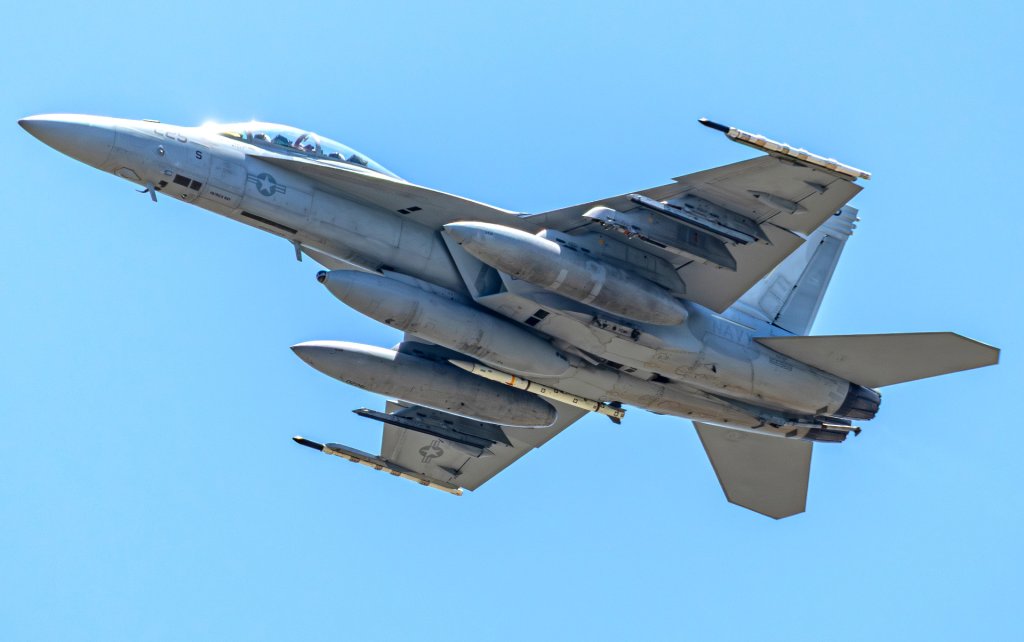
A US Navy F/A-18F Super Hornet seen carrying an AIM-260 Joint Advanced Tactical Missile (JATM). Jonathan Tweedy/ @flightline_visuals

In response to questions from TWZ, the Pentagon declined to comment on the projected number of JATMs covered under this agreement, as well as estimated costs and delivery schedules.

U.S. Navy F/A-18E/F Super Hornets and U.S. Air Force F-22 Raptors are expected to be the first types to fly operationally armed with AIM-260s. Integration on other platforms, such as variants of the F-35 Joint Strike Fighter and the Air Force’s forthcoming F-47 sixth-generation fighter, is expected to follow. JATM, which is designed to have the same general form factor as the existing AIM-120 Advanced Medium Range Air-to-Air Missile (AMRAAM), has been discussed as part of the arsenal for the Air Force’s future Collaborative Combat Aircraft (CCA) drones, as well.

A rendering depicting an F-22 Raptor firing an AIM-260 JATM. USAF

The releases today from the Pentagon and Lockheed Martin confirm that the new framework deal also includes planned foreign military sales of AIM-260s. Australia, one of America’s top allies, is the first confirmed international customer for the JATM, and plans to integrate the missiles on its F/A-18Fs, F-35As, and EA-18G Growler electronic warfare jets. The Royal Australian Air Force’s MQ-28 Ghost Bat CCA-type drones, initial versions of which are already capable of firing AIM-120s, might be another AIM-260 launch platform in the future.

The AIM-260 remains in development, with the Navy and Air Force test communities supporting that work.

“We are accelerating weapons development from high-end air dominance weapons like the JATM to hypersonic strike systems like the Hypersonic Attack Cruise Missile,” Air Force Brig. Gen. Mark Massaro, head of the Air Force Test Center (AFTC) at Edwards Air Force Base in California, told TWZ and other outlets at a media roundtable yesterday. The roundtable took place at the Air & Space Forces Association’s (AFA) 2026 Air, Space & Cyber Conference.

“We’re actively testing JATM, and it’s progressing along its program path. In test, we are working through the development stages there,” Massaro added. “So, we’re testing it in [sic] the ground with models, like I mentioned. We’re testing it in the air on aircraft. So, from a performance standpoint, I’ll hold on to that from an operational security perspective. But we’re happy seeing where it’s going, and we expect that to be a key piece of capability for our warfighters to have.”

“Just from a testing perspective, we’re always looking at making sure that we’ve got the throughput,” he added when asked if he could talk about challenges or other issues AFTC has run up against in work on the AIM-260. “So, from a test perspective only, infrastructure and throughput to make sure that we can get things out … and make the testing happen. But I’m not, from a capabilities perspective, worried about the system.”

Another look at the AIM-260 loaded on the Navy Super Hornet. Jonathan Tweedy/ @flightline_visuals

It is unclear when the first operational AIM-260s may begin entering the U.S. inventory. When the program was first disclosed to the public in 2019, the stated goal was to start fielding the missiles in 2022. There were also reports in late 2025 that funding issues had caused a three-month delay, based on a fact sheet distributed to some members of the U.S. House Committee on Armed Services. The committee later said that the information was incorrect.

Work to date on JATM has been conducted under a heavy veil of secrecy, with the existence of the program only being announced in 2019. The first public glimpse of the missile only emerged in May of this year. Beyond the aforementioned size requirement and that the new missile will offer significantly greater engagement range over the AIM-120, details remain limited. Readers can learn more about what we do know so far here.

What is clear is that the growing reach of Chinese air-to-air missiles has been a key driver behind the JATM program, with Air Force officials having explicitly mentioned the PL-15 in the past. China continues to pursue even longer-ranged and otherwise more advanced air-to-air missiles, as you can learn more about in this past TWZ feature. The Air Force has previously raised the prospect of a general threat ecosystem that includes anti-missiles with ranges of up to 1,000 miles emerging by 2050.

The AIM-260 is not the only longer-ranged air-to-air missile known to be in development in the United States, either. In 2024, the Navy revealed it had begun fielding an air-launched version of the surface-launched Standard Missile-6 (SM-6), called the AIM-174B Gunslinger, at least on a limited level. Just in August of this year, the service disclosed the existence of another very long-range air-to-air missile, the AIM-424 Malice, which has already reached the flight testing phase of development.

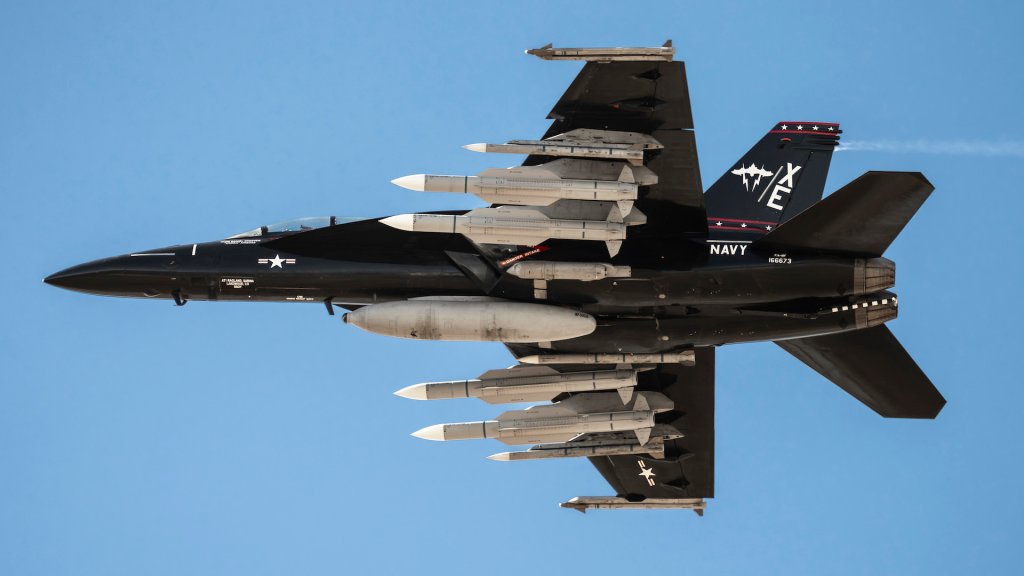
A US Navy F/A-18F Super Hornet test jet with four AIM-174B missiles under its wings. point_mugu_skies
A US Navy Super Hornet test jet carrying a load of AIM-424 Malice missiles. USN

An Air Force spokesperson told Air & Space Forces Magazine last month that the service was “closely following” the Navy’s work on the AIM-424. In June, the Air Force itself shared details about another potential future air-to-air missile, dubbed the Air Force Long Range Weapon (AFLRW), including a target requirement for a maximum range of at least 1,000 nautical miles.

Based on past experiences with public disclosures about the AIM-260, AIM-174B, and AIM-424 programs, additional work on advanced longer-range air-to-air missiles is certainly ongoing in the classified realm.

Today’s announcement about the new framework agreement, together with Brig. Gen. Massaro’s brief update yesterday, makes clear there is a continued commitment to JATM amid a still-growing field of new, longer-range air-to-air missiles.

Contact the author: joe@twz.com

The post Pentagon Cuts New AIM-260 Air-To-Air Missile Production Deal, Testing Accelerating appeared first on TWZ.

  •  

QR Code to be installed at private doctors’ practices, says Health Minister

Greece’s Health Minister Adonis Georgiadis has been reiterating since Monday morning that he will seek to enhance patients’ protection by installing an QR Code at the entrance of private doctors’ practices. Though his smart phone the apparently tech savy “patient will be able to confirm whether the practice is legal or not,” Georgiadis said. Surprise! […]

The post QR Code to be installed at private doctors’ practices, says Health Minister appeared first on Keep Talking Greece.

  •  

Côte d’Ivoire : libération immédiate de Justin Koné Katinan et de tous les détenus politiques

Le Parti communiste français condamne avec la plus grande fermeté l’arrestation et le placement sous mandat de dépôt de Justin Koné Katinan, quatrième vice-président du Parti des peuples africains — Côte d’Ivoire (PPA-CI) et ancien ministre. Cette arrestation fait suite à une conférence de presse du 3 septembre 2026, où Justin Koné Katinan dénonçait la responsabilité […]

L’article Côte d’Ivoire : libération immédiate de Justin Koné Katinan et de tous les détenus politiques est apparu en premier sur .

  •  

Mandatory rent payment through bank account postponed to summer 2027

The starting date for the mandatory payment of rent exclusively through a bank account has been postponed until July 1, 2027, following a decision signed  by the governor of the Independent Authority for Public Revenue (AADE), Giorgos Pitsilis. According to an AADE announcement on Thursday, the extension was considered necessary in order to complete a […]

The post Mandatory rent payment through bank account postponed to summer 2027 appeared first on Keep Talking Greece.

  •  
❌