❌

Reading view

How Modi silenced Kashmir

On 19 November 2025, Indian police raided the ‘Kashmir Times’ in Jammu. They said they were on an “anti-terror” operation. The offices had been shut since 2022 and were in dilapidated condition, the equipment largely defunct. Yet, the police claimed to have recovered a “pistol and live AK-47 cartridges.” 

Since 2018, only five journalists have faced cases under India’s draconian anti-terror Unlawful Activities (Prevention) Act. Trials rarely start, leaving journalists in a state of perpetual purgatory, even if they are out on bail under onerous conditions.

Before the police came charging into these unused offices last year, the ‘Kashmir Times’, founded by my father in 1954, had long suffered sustained persecution – the seizure of records, of equipment, the harassment of staffers, the use of social media to spread slurs, trumped up charges of tax evasion and the embedding of spies.

The first ever copies of Kashmir Times, initially a weekly, were seized by the government. In 1983, my father survived a murderous assault with serious injuries inflicted by a Hindu nationalist mob. I joined the newspaper in 1989, as the armed militancy, the ‘insurgency’ against the Indian state, became widespread, and experienced firsthand the struggle to report the news accurately and truthfully. The government would frequently withdraw its advertising, which was the main source of funding for most news outlets. We were besieged on several fronts, facing down the state, militants and aggressive Hindu nationalists.

Kashmir Times front page, January 1972. Image courtesy of Kashmir Times / Anuradha Bhasin digitized by Stanford Libraries.

In 2019, as Indian prime minister Narendra Modi began his second term in office, his government removed the special autonomous status granted to Jammu and Kashmir and protections that had existed for nearly 70 years. Once a state, Jammu and Kashmir was split into two federally governed territories. The Indian-administered part of Kashmir – the subject of several military conflicts between India and Pakistan, with both countries claiming the entire disputed territory while controlling a portion of it – had effectively become a police state and control of the media was a critical component of this transformation.    

As Executive Editor of the ‘Kashmir Times’, one of the oldest newspapers in the region and the largest, with four editions, I petitioned India’s Supreme Court against the six-month-long internet shutdown that the Modi government imposed in 2019. But by 2020, three editions of the ‘Kashmir Times’ had shut down and the fourth only limped along, a once daily newspaper that was now only occasionally published. By February 2022, even this edition was shut down. I left India with my husband Prabodh Jamwal, the editor of the ‘Kashmir Times’, and revived it as a digital newsroom in exile in the United States in November 2023. 

Prabodh Jamwal, Editor of The Kashmir Times, at his office in Srinagar in early 2020. Nasir Kachroo/NurPhoto via Getty Images.

But, as the so-called terror investigation and the mysterious discovery of weapons in our long disused office in 2025 showed, the ‘Kashmir Times’ remained a thorn in the side of the Modi government. The Indian prime minister has frequently presented India on the international stage as the “mother of democracy” and the “Vishwaguru”, a moral exemplar and teacher to the world. Just last week, between September 12 and 13, Delhi hosted Vladimir Putin, Xi Jinping and Iranian president Masoud Pezeshkian as part of the annual BRICS meeting, the global group founded initially by Brazil, Russia, India, China and South Africa (hence the acronym) that is increasingly being presented as an alternative power centre to the American-led Western alliance. For an India seeking to portray itself as not just an emerging superpower but as a democratic force, it is vital that Kashmir remain repressed, hidden away from global scrutiny.  

It’s why, even as a newsroom in exile, we continue to be pursued by an Indian government seeking to tarnish our credibility, to deny us the right to report on Kashmir. We are being subject to a vendetta and it represents what has happened to journalism in Kashmir. Journalists have been silenced by the Modi government, Kashmiri voices strangled, and the local media industry deliberately destroyed. 

What is happening to journalism in Kashmir is a harbinger of what lies ahead for the rest of India.

A model of suppression

Geeta Seshu of Free Speech Collective, which monitors press freedoms in India, argues that Kashmir is a laboratory where every strategy of media suppression is tested and perfected for use elsewhere. India, which once had a noisy, argumentative press, now ranks at a lowly 157 out of 180 countries in the World Press Freedom Index. Reporters Without Borders, which compiles the ranking, says “press freedom is in crisis” in Modi’s India. 

The 2023 Digital Personal Data Protection Act provided a “dangerous framework for expansion of surveillance and censorship” across the country. It empowered the government to demand data from any entity, including journalists, effectively requiring them to reveal their sources. The amendments to the 2020 Information Technology Rules already burden intermediaries with harsh obligations and have been used to arrest journalists, block websites and compel social media platforms to restrict content. Recently, Instagram restricted posts about reports of Kashmiris shot by Indian security forces using pellet guns on unarmed protestors. 

Seshu’s fear that what happens in Kashmir will be replicated in the Indian mainland has largely been borne out. For example, in 2023, nearly 50 journalists associated with the portal ‘NewsClick’ – some only vaguely – were subject to arrests and interrogations. Many had their devices seized without due process. Their alleged crimes were essentially guilt by association, charges manufactured not from evidence but from a, frankly, lazy piece of journalism published in the  ‘New York Times’ about NewsClick’s funding. The charges were eventually quashed by an Indian court.  

The "To Defend Journalism" protest at New Delhi's Press Club of India, October 2023. Vipin Kumar/Hindustan Times via Getty Images.

Such court rulings are less likely in Kashmir. As a Kashmiri journalist based in Delhi says, “unlike the rest of India, Kashmir is a police state, and state control requires any independent journalism to be shut down.” 

In Kashmir, the Indian state has engineered a sophisticated edifice of control through securitization, surveillance and interrogation. It is invisible, intangible, and all-pervasive, a model that extracts quiet surrender and obedience. Unlike the targeted killings of journalists in Gaza, in Kashmir the control of information is seamlessly embedded in everyday life, requiring no enforcement, no traces of brutality. The journalists are essentially cowed into submission.

It began with the world’s longest internet shutdown – a complete lockdown for six months and a partial one for another year. What the shutdown created, despite a court verdict restoring communications, was fear among journalists compelled to work out of a government-surveilled computer facility, and then a perpetuation of that fear through consistent localized and temporary digital shutdowns. So commonplace are these shutdowns that they no longer warrant reporting or commentary.

In June 2020, the Modi government introduced a 53-page document called ‘J&K's Media Policy’ which gave the authorities sweeping powers to monitor, judge, and punish journalists, branding critical reporting as “fake news”, “unethical”, or “anti-national”. The authorities would also routinely remove government advertising from cash-strapped outlets and provide accreditation only to journalists deemed loyal, thus turning bureaucrats into arbiters of what constitutes news and who gets to report it. The effect is chilling.

And then there’s the monitoring of communications.

An Indian security personnel in Srinagar, Jammu and Kashmir, August 2026. Firdous Nazir/NurPhoto via Getty Images.

“I can’t say if they’re using Pegasus or some other spyware or technology,” a journalist told me about being interrogated over emails sent to an editor, “but they knew everything about our conversations.” In a 2021 leak, it turned out the Indian government was using Pegasus to spy on at least 40 Indian journalists, only one of who was Kashmiri.

But, a Kashmiri journalist says, “officials have told us ‘nothing in Kashmir is end-to-end encrypted’ and digital activity is clearly being constantly monitored.” No Kashmiri journalist I spoke to for this story, including those who contribute to the ‘Kashmir Times’, have the encrypted messaging Signal app, used worldwide by journalists, on their phones. Devices are routinely checked when journalists are summoned to police stations in Kashmir for questioning. Some said their devices were returned after being tampered with. “You face humiliation and beatings for using Signal and VPNs,” many journalists said. “You can only get away with it if you’re not on their radar,” said one. 

In November 2025, the Indian government issued a directive insisting on verifying the “bona fides” of journalists working in Jammu and Kashmir, and the police followed up by requiring journalists to part with personal information including biometrics and bank statements. In January this year, senior journalist Basharat Masood of The Indian Express spent seven hours at a Srinagar police station, then was summoned for three more days and told to sign a bond promising not to “repeat his mistake” – for reporting on the surveillance of mosquea surveillance, even as officials had already admitted to large-scale data collection and verification. 

Surveillance normalized

Police also surveil Kashmiris through the use of drone cameras, a network of 1,000 electronic cameras installed at major traffic junctions, and through unrestricted access to people’s social media activity across platforms ostensibly to track anti-India activity. During an illegal “Census 2024” drive, the police collected residents' personal data and GPS-tagged coordinates of homes. And the soon-to-be-rolled-out Jammu and Kashmir-specific digital identity cards that collects the data of entire households, purportedly to ensure the smooth rollout of welfare schemes, has also sparked local anxieties. 

Still, as pervasive as the surveillance is, it is journalists that find themselves in the firing line. Any critical word warrants a summons to a police station, interrogation, intimidation and even detention. This happens repeatedly, with journalists never aware of what specific “offence” might trigger a police summons. The reflex, after several such visits to police stations, is self-protection and self-censorship.

A Kashmiri journalist told me that the language the police use to summon journalists for questioning is particularly sinister. It is almost as if the police are enjoying instilling fear. “Aaj dastarkhan par aapki dawat hai”, for instance, is a typical summons. You are invited to a feast, the police say cynically, knowing a journalist is likely to be harshly questioned, even beaten.
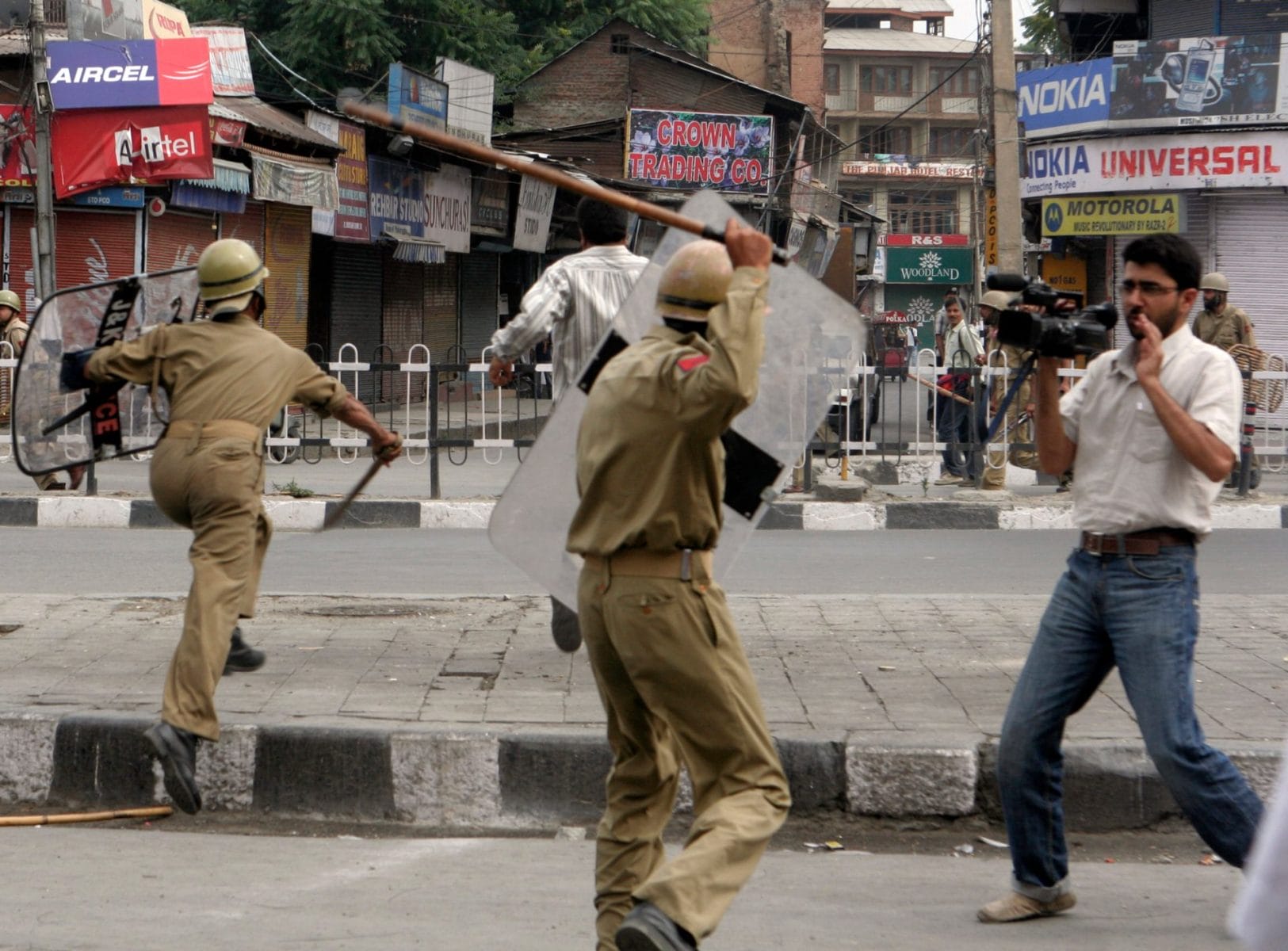
Indian police confront journalists and civilians during a protest on July 10, 2009 in Srinagar in the Indian Administered Kashmir. Yawar Nazir/Getty Images.

Often, Kashmiri journalists, without notice, are placed on no-fly lists. Sanna Irshad Mattoo, a Pulitzer Prize-winning photojournalist, was twice prevented from travelling abroad for exhibitions and award ceremonies, a pointed message that even international recognition offers no protection. At least twelve journalists have had their passports revoked; two of them were already abroad at the time, rendering them stateless. 

The Free Speech Collective filed a Right to Information (RTI) query in March 2024 to ascertain exactly how many Kashmiris had had their passports revoked or cancelled. The plea was rejected by the government on grounds of “national security”.

As India continues to press its case as a formidable, if still rising power, citing its 7.8% growth rate over the past quarter, it continues to be defensive and secretive about Kashmir. Foreign journalists are largely barred, or at least heavily restricted, from reporting from both Indian and Pakistani-administered Kashmir. In May, last year, India and Pakistan exchanged air strikes after a terrorist attack in Indian-administered Kashmir and Modi fell out with Donald Trump over the latter’s claim to have stopped both nuclear powers from accelerating towards a disastrous war.

Despite Kashmir being a long-standing issue that merits global attention, reporting from the region has reduced to a trickle. 

Mohammad Amin Lara outside his shop in Sopore, Jammu and Kashmir. The shop, once a fully occupied newspaper store, is now a grocery store due to the decline in newspaper sales. Nasir Kachroo/NurPhoto via Getty Images.

A Google search of Kashmir-related news floods your screen with links, but it is bulk without substance. Articles read like a log of official announcements and statements, punctuated by the occasional piece on a shrinking water body, a development project, a political tussle over a non-issue, or unemployment figures. Each report floats like a loose, individual particle suspended in air, packaged and presented as definitive. No investigation into context. No excavation of the past. No interrogation of contributing factors. A story about an alleged terrorist’s hair transplant and cosmetic dentistry, based entirely on police sources, is passed off as an investigation into Kashmiri insurgency. A superficially detailed piece on anti-encroachment drives or home demolitions will carry little beyond the grief of the displaced, or the remarks of a politician whose interest in the community begins and ends with votes. A terrorist’s hair transplant story, based on the police version, passes off as an investigation into Kashmir’s complex insurgency dynamic. 

Kashmir fell off the radar a long time ago, says Free Speech Collective’s Geeta Seshu.  

Even mundane stories are difficult to report. No one wants to be quoted. A university professor said he could once “talk to journalists and trust they understood the context. Now, a single sentence can be pulled out, circulated on WhatsApp, and suddenly I’m either an anti-national or a government stooge. Both sides will use the same quote to attack you differently. Why would I take that risk?”

Tarushi Aswani, an Indian journalist, told me that “a curtain has been pulled over Kashmir by silencing journalists who ask questions.” Instead, she added, “press release journalism fills the vacuum, erasing the truth about Kashmir, its history, its politics, its development, environment and aspirations.” Kashmir is no longer looking at a mirror. The lack of truthful reporting means nothing is reflected back. Instead, Kashmiris are looking into the lens of a surveillance camera. 

*The eight Kashmiri journalists interviewed for this story spoke on condition of anonymity.

The post How Modi silenced Kashmir appeared first on Coda Story.

  •  

Septembre en perspective

JPEG - 90.7 kio
Jules Tavernier. — Yosemite - Forest Fire in Moonlit Landscape (Feu de forêt dans un paysage éclairé par la lune), 1881.

Cet été, la « succession des rouleaux caniculaires a ressemblé à une submersion », relève Mohamed Larbi Bouguerra en « Une » de notre édition de septembre. Mégafeux, baisse du niveau des fleuves, impact « dramatique » sur les cultures agricoles… « En matière d'approvisionnement alimentaire mondial, ce tableau vient noircir un horizon déjà assombri par le conflit russo-ukrainien ainsi que par la guerre israélo-américaine contre l'Iran. » Fortement touchés, les pays du Sud attendent encore d'affronter un épisode « redoutablement puissant » d'El Niño, dont l'effet « sur les denrées de base sera d'autant plus fort qu'il se conjuguera à celui des guerres et de la sécheresse ». En Afrique, les politiques publiques misent sur des modèles productivistes, encouragées par les occidentaux et leurs grands groupes industriels, qui échouent et aggravent les problèmes structurels. « La situation ici dépeinte ne résulte d'aucune fatalité. Elle est la conséquence logique, et attendue, d'un modèle d'organisation sociale et de décisions politiques prises en toute connaissance de cause », rappelle Mohamed Larbi Bouguerra.

Aux États-Unis, après avoir définancé des universités déjà en péril, sous prétexte de lutte contre l'antisémitisme, dans le cadre d'une « nouvelle ère de répression de la liberté d'expression », le président Donald Trump s'attaque à la gauche et ses nouveaux élus, des « terroristes communistes qui conspirent pour détruire [ce] cher pays », comme le résume Serge Halimi dans nos colonnes. « Ces affabulations, susceptibles de favoriser de nouvelles mesures liberticides ou la contestation des prochains résultats électoraux, ne sont pas réservées à la consommation intérieure » ajoute-t-il : Washington voudrait les exporter avec notamment une conférence sur « le terrorisme politique », évidemment de gauche, tenue le 16 juillet dernier. La France y a participé.

Militarisation allemande, recomposition majeure au Proche-Orient, prédations de la dette américaine… cette sélection d'archives met, comme chaque mois, « en perspective » les questions abordées dans le journal en kiosque.


  • →

    Les biscuits mémoriels du président Macron

    Thomas Deltombe • octobre 2025 Aperçu
    →

    Fin de règne chaotique pour le président français

    Serge Halimi • janvier 2025 Aperçu
    →

    Les paris diplomatiques perdus du président Macron

    Marc Endeweld • avril 2022 Aperçu

  • →

    Quand la Fondation Gates sème la faim

    Christelle Gérand • juin 2022 Aperçu
    →

    Conflits et sécheresses affament le continent noir

    Cécile Marin • octobre 2017 Aperçu
    →

    Aux origines climatiques des conflits

    Agnès Sinaï • août 2015 Aperçu

  • →

    Une journée comme une autre

    Benoît Bréville • mai 2026
    →

    Universités américaines, un modèle qui chancelle

    Martin Barnay • juin 2025 Aperçu
    →

    M. Trump en guerre contre la libre expression

    Eric Alterman • mai 2025 Aperçu

  • →

    Faire la guerre pour faire l'Europe

    Pierre Rimbert • avril 2025 Aperçu
    →

    L'Europe martiale, une bombe antisociale

    Frédéric Lebaron & P. R. • mars 2025 Aperçu
    →

    Les Verts, moteur du militarisme allemand

    Fabian Scheidler • février 2025 Aperçu

  • →

    Comment l'austérité a vaincu la Bundeswehr

    Thomas Schnee • novembre 2023 Aperçu
    →

    Faut-il applaudir le réarmement allemand ?

    Philippe Leymarie • avril 2022 Aperçu
    →

    Les ambitions de l'Allemagne unifiée

    Norman Birnbaum • juillet 1996 Aperçu

  • →

    Mission séduction pour l'armée française

    Ph. L. • août 2010 Aperçu
    →

    L'armée, miroir d'une France sans boussole

    Allan Popelard • octobre 2023
    →

    Ah Dieu ! que la guerre est jolie

    Th. J. • mai 2026 Aperçu

  • →

    Vers un nouvel ordre régional au Proche-Orient

    Hicham Alaoui • juin 2025 Aperçu
    →

    Mortel engrenage au Proche-Orient

    Akram Belkaïd • « Géopolitique, un monde sur le pied de guerre », Manière de voir nº 192, décembre 2023 - janvier 2024 Aperçu
    →

    Géographie du chaos au Proche-Orient

    Alain Gresh • L'Atlas Mondes émergents, 2012 Aperçu

  • →

    Le continent africain divisé face à Tel-Aviv

    Alhadji Bouba Nouhou • février 2024 Aperçu
    →

    La Corne de l'Afrique dans l'orbite de la guerre au Yémen

    Gérard Prunier • septembre 2016 Aperçu
    →

    Somaliland, le pays qui n'existe pas

    G. P. • octobre 1997 Aperçu

  • →

    Comment fut inventé l'astronaute

    Irénée Régnauld & Arnaud Saint-Martin • février 2024 Aperçu
    →

    L'odyssée de l'espace

    Charles Perragin & Guillaume Renouard • « Chine - États-Unis, le choc du XXIe siècle », Manière de voir nº 170, avril-mai 2020 Aperçu
    →

    Les ambitions de Pékin bousculent la donne spatiale et nucléaire

    Olivier Zajec • mai 2013 Aperçu

  • →

    Ruée vers le rosé

    J. R. • janvier 2024 Aperçu
    →

    Où va le vin va le monde

    Jonathan Nossiter • « Ce que manger veut dire », Manière de voir nº 142, août - septembre 2015 Aperçu
    →

    Le vin, du terroir à la marque

    Sébastien Lapaque • octobre 2013 Aperçu

  • →

    Le climat, facteur démultiplicateur des migrations

    Angélique Mounier-Kuhn • « Immigration, illusions, confrontations, instrumentalisations », Manière de voir nº 194, avril - mai~2024 Aperçu
    →

    Dérèglement climatique, la responsabilité des pays riches

    • mars 2024 Aperçu
    →

    Le climat à l'épreuve des portes closes

    Claude Garcia & Pierre Henri Guignard • mars 2024

  • →

    Dollar détonateur ?

    Frédéric Lordon • La pompe à phynance (Les blogs du « Diplo ») • 10 septembre
    →

    Ruée mondiale vers l'or

    Tristan Coloma • mars 2025 Aperçu
    →

    Est-ce vraiment la fin du dollar ?

    R. L. & Dominique Plihon • novembre 2023 Aperçu

  • →

    Le hadj, l'autre pétrole des Saoud

    M. L. B. • août 2020 Aperçu
    →

    Et l'Europe créa Compostelle

    Lola Parra Craviotto • août 2018 Aperçu
    →

    Lourdes derrière la façade

    Hubert Prolongeau • juin 1997 Aperçu

  • →

    Impunités patronales

    Alexia Eychenne • décembre 2024
    →

    Des médecins au service des employeurs ?

    Selim Derkaoui • mai 2023 Aperçu
    →

    Invisible pénibilité du travail féminin

    Cécile Andrzejewski • décembre 2017 Aperçu

  • →

    Une définition très large du « terrorisme »

    Mona Chollet • « Gaza, témoigner, comprendre, résister », Manière de voir nº 205, février - mars 2026 Aperçu
    →

    Chasse aux migrants en Russie

    Alexeï Sakhnine & Lisa Smirnova • février 2025 Aperçu
    →

    M. George Bush chasse les sorcières islamiques

    Cécile Raimbeau • « Obsessions sécuritaires », Manière de voir nº 71, octobre - novembre 2003 Aperçu

  • →

    Femmes reporters dans la lumière

    Éric Dussert • septembre 2017
    →

    Envoyés spéciaux de la guerre d'Espagne

    A. M. • août 2016 Aperçu
    →

    Le « deuxième sexe » du journalisme

    Florence Beaugé • juillet 1998 Aperçu

  • →

    La génération de l'inquiétude

    A. M. • janvier 2021 Aperçu
    →

    La tribu des clochards célestes

    Hubert Artus • avril 2015
    →

    Quand les écrivains américains regardent leur pays

    Claude Grimal • décembre 1990 Aperçu

  • →

    En Australie, une saison en enfer

    Maxime Lancien • janvier 2020 Aperçu
    →

    Les pompiers entre dévouement et amertume

    R. P. • mars 2017 Aperçu
    →

    Catastrophes naturelles : une liaison dangereuse entre sinistrés et sauveteurs

    Michel Pichol • juillet 1982 Aperçu
  • Voir en ligne : /2026/09/A/69963
    •  

    The manufactured crisis of Ceuta

    A ride from Tangier, the largest city in northern Morocco to the Spanish enclave of Ceuta takes less than two hours. The border crossing has its own, sleepier rhythm, quite different from the tourist-driven bustle of Tangier. In Ceuta, traders run their errands, Morocco-based expats make visa runs and Spanish people catch ferries to the mainland. On most days, the border crossing seems almost ordinary. The fences, though menacing and topped with razor wire, are less imposing up close and officers make small talk with the expats waiting to get their visas stamped. 

    Then there are those days when the routine collapses and Ceuta becomes the center of Europe’s migration debate. 

    The territory is a geographic and political paradox. Despite falling under Spain’s — and the European Union’s — jurisdiction, it sits on the northern edge of Africa, surrounded by Morocco and separated from the Spanish mainland by the Strait of Gibraltar. It is an entry point to Europe, yet not fully part of the Schengen zone, requiring additional immigration checks for travelers crossing to the mainland. 

    When more than 60,000 people — mostly Moroccan men and teenagers — rushed into Ceuta (almost doubling the coastal city’s population), the images reverberated across Europe. There seemed to be no dramatic buildup to the incident, nor any obvious explanation why thousands of people chose that day to make their way to Spain. 

    Europe’s far-right politicians seized the narrative, portraying the influx as an imminent invasion, warning that the men were on their way to “Calais” and “Germany.” Italy temporarily suspended the Schengen free movement regime with Spain, meaning travellers arriving by sea and air would now be subject to border checks. Spain threatened to take “proportional measures” in response and did so at midnight on August 8, when it imposed similar checks for visitors from Italy. 

    The standoff between European governments — led by socialist Pedro Sánchez in Spain and conservative Giorgia Meloni in Italy — is not simply a test for European border security. Instead, what transpired in Ceuta poses bigger questions about the shifting nature of state sovereignty itself: How are we to understand borders, if they’re shaped by forces beyond the state’s reach? 

    Borders are not just lines separating geographic entities. They are systems built on surveillance, diplomatic bargains and digital networks. Ceuta is the place where all three converge. Its borders, already protected by the sea, have been fortified with steel, outsourced through diplomacy and tested by coordinated rumors.

    Steel

    The crossings into the enclave are blocked by a multi-layered barrier of fences and wire. Morocco administers a fence separating it from the neutral area between the two countries. Two fences on the Spanish-controlled territory follow, creating an enclosure monitored by the Spanish Civil Guard. The physical infrastructure is reinforced with motion sensors, thermal and CCTV cameras, maritime communication systems and facial recognition technology. 

    Even the sea has now been incorporated into the border system. Just three days after the Ceuta border chaos, Spanish authorities installed a 500-metre floating barrier and anchored naval buoys to create another monitored enclosure. 

    The EU has funded most of the fortifications. The Border Violence Monitoring Network’s report says that since the construction of Ceuta’s border barrier in the 1990s, the EU has spent tens of millions of dollars to make the Spanish-Moroccan frontier more secure, technologically up-to-date and heavily surveilled. With the recent mass crossing, Spain will now receive additional emergency financial aid. 

    Yet, the architecture of physical surveillance, built and re-built with European money for decades, cannot prevent the human cost of attempting to cross a border. In Ceuta alone, at least 100 people died according to local authorities. “The rationale behind increasing surveillance is that you'll be able to save lives and smash the [people trafficking] gangs, right?” asked Nathan Akehurst, who has written about Ceuta’s border for Jacobin. “Where was that in this case?” 

    Diplomacy

    Akehurst’s question touches upon the human-centered rationale for heavy border surveillance. But there is also a political one. It is not only Spain, as a EU member, that receives funds to manage migration. Morocco has received €427 million since 2015, for migration-related expenses, including technology and training. That’s part of Europe’s wider strategy of border externalization, a practice where Europe moves border control beyond its own territory. 

    The practice has been around for decades, but went into overdrive after 2015, when approximately 1.3 million people, mostly from Syria, came to the continent seeking asylum. Many of them reached Europe through Turkey, prompting the EU to strike a deal with Ankara: €6 billion in funds, visa liberalization and EU-ascension negotiations in exchange for stricter border controls and curbing irregular arrivals to Greece. The EU also agreed to resettle within Europe one Syrian from Turkey for every Syrian returned to Turkey from Greece. But by 2020, when the EU failed to resettle Syrians, Turkey’s president Recep Tayyip Erdoğan declared he would no longer prevent migrants from crossing Turkey en route to the EU. 

    “Border externalization is basically paying other countries, but also subjecting them, through a carrot and stick approach, to performing functions that are usually performed by a state itself at their borders,” explained Josephine Solanki from the Transnational Institute, an Amsterdam-based think tank. It leaves space for leaders like Erdoğan, Solanki added, to bargain for influence by turning migrants “into political leverage.”

    The cost of outsourcing borders is not just material. It is measured in control that Europe cedes to the foreign governments it relies on for migration policy enforcement. 

    Relatives and friends waited by a fence topped with barbed-wire for the return of people who had previously crossed into Ceuta. Spanish authorities claim to have sent almost everyone back to Morocco. Abdel Majid BZIOUAT / AFP

    In Ceuta, migrants claimed local authorities did not stop them from crossing the border. A young Moroccan man told the New York Times a day after the event: “They opened the border and let everyone go by.”

    Border outsourcing agreements were made, among others, with authoritarian regimes in Tunisia, Egypt and Libya, where EU funds were used to detain migrants and quell domestic protests, rights organizations say. Alliances with “deeply unreliable and authoritarian actors” in the name of stability, said Nathan Akehurst, “is short-termist, insane and loses Europe any credibility it has left.” These alliances also allow Europe to “shift the blame to the Moroccans, the Eastern Libyans, the Turkish or whoever decides to take advantage of that moment.”

    Rumors 

    It is yet to be revealed who, if anyone, has taken advantage of the mass crossing into Ceuta. Local and international media have uncovered now-deleted posts that shared tips on routes and equipment for the journey. One of the main networks was called Hrig Sebta network — “Sebta” being the Arabic name of Ceuta and “hrig” being the Maghrebi term for undocumented migrants, literally referencing the burning of identity papers. 

    In the wake of Ceuta, European ministers pledged to tackle online misinformation to avoid migration crises, but remained cautious when asked about thousands of posts reportedly linked to Russia. Other theories attributed the crossing to Morocco’s tensions with Spain over its closer ties with Algeria, or to Spain’s position on Palestine.

    But those rumors, and what appears to be a weeks-long coordinated online campaign behind them, reveal something deeply human that fences can’t deter: movement that is spurred by hopes for a better life. 

    “[The crossing] would have happened anyway at some point,“ Akehurst argues. “There would have been a crossing because all of the circumstances that generate that are already there before someone with a twitter account throws a match on the fire.”

    Yet, let’s pause at the match. It’s not about someone with a social media profile creating chain messages. It is about the ecosystem that can jeopardize borders by creating information flows, turning rumors into perceived opportunities.

    Moroccan newspaper TeleQuel already published a report about social media posts amplifying the next hrig — another attempted crossing into Ceuta — on August 15. 

    When packaged to a hungry audience, rumors carry the currency of truth. They’ve driven migration long before social media was even conceptualized. Now those rumors speed through digital space owned and operated by private companies not prone to accountability and sitting well outside the reach of any single state.

    And the EU has understood that for years. “It is necessary to structure the information space, as we have organized in the past the territorial space, the maritime space and the air space,” Thierry Breton, the European Commissioner for Internal Market of the EU said back in 2018. He warned about Big Tech companies treating digital space as a no-man’s-land that they would write rules for. 

    The no man’s land between Morocco and Spain appears calmer now. But the turmoil of the crossing revealed a new, digital dimension to border governance. Information has always found a way to spread; digital platforms have given it new channels: ones which allow those behind the information to remain faceless, while the information itself passes from screen to screen. It reaches a boiling point, spills over from the digital space and then can be disappeared, even before anyone has had a moment to scroll back.

    The post The manufactured crisis of Ceuta appeared first on Coda Story.

    •  

    FIFA’s games betray our trust

    A lot is written about corruption, but fundamentally it’s about trust and how healthy societies can’t exist without it; and the World Cup has shown what happens when trust breaks down. The decision to allow U.S. striker Folarin Balogun to play in the World Cup match against Belgium was, according to FIFA, made by the relevant disciplinary committee in a routine manner. However, following the similarly generous treatment accorded to Portuguese megastar Cristiano Ronaldo before the tournament began, a lot of people not unreasonably questioned whether the rules were being set aside for commercial reasons.

    It’s only football, so does this matter? In some ways, of course not. But I think the episode is instructive of how quickly trust can disappear. No one is under any illusions that FIFA is motivated purely by the desire to spread sweetness and light, thanks to corruption scandals, the grotesque “peace prize,” and all the other nonsense. But previously, what happened on the pitch was assumed to be sacrosanct, which is why these disciplinary decisions mattered more than it at first might appear.

    Shortly after the U.S.-Belgium game, Argentina played Egypt, coming back from a two-goal deficit to achieve a remarkable 3-2 victory. I watched the game with my family, and it was notable how — instead of being amazed by Lionel Messi’s wizardry — all of us focussed instead on a refereeing discrepancy that led to a goal for Egypt being ruled out, and a seemingly identical one for Argentina being allowed. 

    Previously we would have given the referee the benefit of the doubt: even if he’d made a mistake, we’d accept it was an honest one. But now we knew that the tournament had intervened to keep bankable stars playing for longer, in violation of its own precedents and regulations. Any decision that has that effect, as this one did, was immediately suspect. 

    In the past, particularly when living in Russia, I used to hear a lot of Westerners being quite enthusiastic about corruption: it was nice they’d say, if they’d been stopped speeding, to be able to pay the police officer a bribe on the spot, and skip all the annoying paperwork. But that was a short-sighted way of looking at it: once a police officer, or anyone else in a position of power, gives anyone special treatment, then the trust that keeps all our interactions civilised, starts to break down. The more it is broken down, the harder it is to repair.

    I am not particularly interested in football (Welsh rugby, on the other hand), which is a game I find both dull and mercenary. Besides, the Welsh team tends not to be very good. But I am interested in corruption, and I was surprised by how angry the Balogun affair made me. If you love a game, you need to hate its arbiters giving out special treatment, even if you are the beneficiary of it. That is a lesson quite a lot of politicians need to learn, both in the United States and elsewhere.

    A report from the Anti-Corruption Data Collective makes particularly grim reading in this light. Lobbying by “high-risk foreign individuals” is higher under Donald Trump than it has previously been; the amounts being spent are often obscure; much of the lobbying is to overturn previous anti-corruption efforts; and, most worryingly, efforts are aimed not just at individual cases, but at the whole principle of fighting corruption.

    “If these influence campaigns are successful, this sets a dangerous precedent where the standard for holding corruption accountable shifts according to whoever holds power in Washington. For those seeking to undo consequences of their corrupt acts, each time lobbying works, it confirms that there is a price at which these consequences can be undone,” the report notes. So just like football then.

    Cometh the hour, cometh the bin

    Sunlight, it is often said, is the best disinfectant. Though I don’t know if that’s literally true when it comes to bacteria, transparency is certainly a useful antidote to the kind of backroom deals that make corruption possible. Generally speaking, politicians honour this idea in principle, if not necessarily in practice, so it’s unusual for British far-right politician Nigel Farage to have launched an election campaign on the single issue that he personally should be allowed to keep his financial affairs secret.

    All the other major parties have decided to sit this one out until the official inquiry into Farage’s finances is concluded, at which point there may well be another by-election anyway, leaving serial novelty candidate Count Binface to provide the main opposition. It’s odd to think that someone who obscures his face behind a giant rubbish bin and pretends to be a spacelord from the planet Sigma IX could be the voice of transparency, but it’s 2026, and that appears to be where we are. It would be genuinely hilarious if he won.

    Of course, while we’re distracted by the attention-seeking behaviour of tiresome bores like Farage, actually important things are happening elsewhere. It’s definitely worth taking a look at this report into the Iranian drone industry, which illustrates how changes in the world economy have led to a weakening of American influence in particular, and Western influence in general.

    This growth of a multi-node decentralised trade system is paralleled by the growth of the large and highly-efficient ‘Chinese Money Laundering Networks,’ which operate with the same scale and speed as any large financial institution, and now dominate illicit crypto activity. This is an interesting paper on how military strategists should think about money laundering, considering its significance in allowing adversaries to buy components for drones, and so on. 

    We also need to remember, however, that by using money laundering legislation and sanctions profligately, we are lessening their effectiveness by teaching people how to evade them. Like antibiotics, we’ll miss them when they don’t work anymore.

    A version of this story was published in this week’s Oligarchy newsletter. Sign up here.

    The post FIFA’s games betray our trust appeared first on Coda Story.

    •  

    Holding the U.S. to account, Tether exits EU & Congo’s conflict coltan

    The United Kingdom has taken over the presidency of the Financial Action Task Force, the global standard-setter on tackling money laundering, and seems determined to keep calm and carry on despite the gigantic Donald Trump-sized hole being blasted in everything it’s trying to do.

    The new president of the Financial Action Task Force is Giles Thomson, a career civil servant and archetypal safe pair of hands, who’s declared that the organisation’s priority for the next two years is fighting fraud. He estimated the global cost of fraud at $500 billion, which — if compared to the standard estimates of the volume of global money laundering as making up 2 to 5% of everything — means it contributes between a tenth and a quarter of all profits from financial crime.

    Fraud is clearly thus a Very Big Deal, and therefore a well-chosen target for Thomson because everyone (including me) agrees that we need to hit it. However, I think I saw a hint of other perhaps more controversial tasks in the rest of his proposed priorities. The suggestion, for example, that the Financial Action Task Force (FATF) will conduct “proportionate assessments of lower capacity countries” looks to me like a recognition that it needs to stop criticising poorer countries that don’t actually launder money just because their legislation isn’t perfect.

    This has been a weighty accusation in the past, not least because of the implicit suggestion of racism, made by, among others, regulator Charles Littrell, who summarised the FATF’s great flaw in 2022 thus: “the vast majority of dirty money and assets resides in, passes through, or is facilitated by the world's largest and richest countries. How then do the world's main [anti-money laundering] risk rankings invariably centre blame upon small, relatively poor, and nonwhite jurisdictions?”

    This is not an academic question. Being blacklisted by the FATF is serious, and there has been definite unfairness in the past in which countries have ended up being singled out for a punishment beating. Hopefully a recognition of this reality is hidden somewhere inside Thomson’s rather gnomic utterance that “the FATF will support countries and the private sector to focus effort where the threat is greatest.”

    Fortunately, the FATF will have an immediate opportunity to demonstrate that it shows neither fear nor favour when it comes to doing the right thing when it publishes the results of the ongoing evaluation of the United States. 

    The U.S. was last evaluated in 2016, and the FATF made various recommendations, which Washington was supposed to have implemented within three years, and sort of did. With the passage of the Corporate Transparency Act in 2020, some progress was made, but since Donald Trump returned to the White House that has gone into screeching reverse.

    Prosecuting foreign corrupt practices is “not a priority, ”transparency around residential ownership has been suspended, the Corporate Transparency Act  has been gutted, and crypto is everywhere. Above all, of course, the president himself has been making money at a rate that even Vladimir Putin would have to admire. His headline earnings figure —  $2.2 billion in the first year of his second term —  is clearly unprecedented, but so are the details. 

    What for example will future historians make of the fact that the president declared his ownership of the trademark for “THINK BIG AND KICK ASS”? Ha, trick question, there won’t be any historians. They’ll have been replaced by AI.

    Tether watch

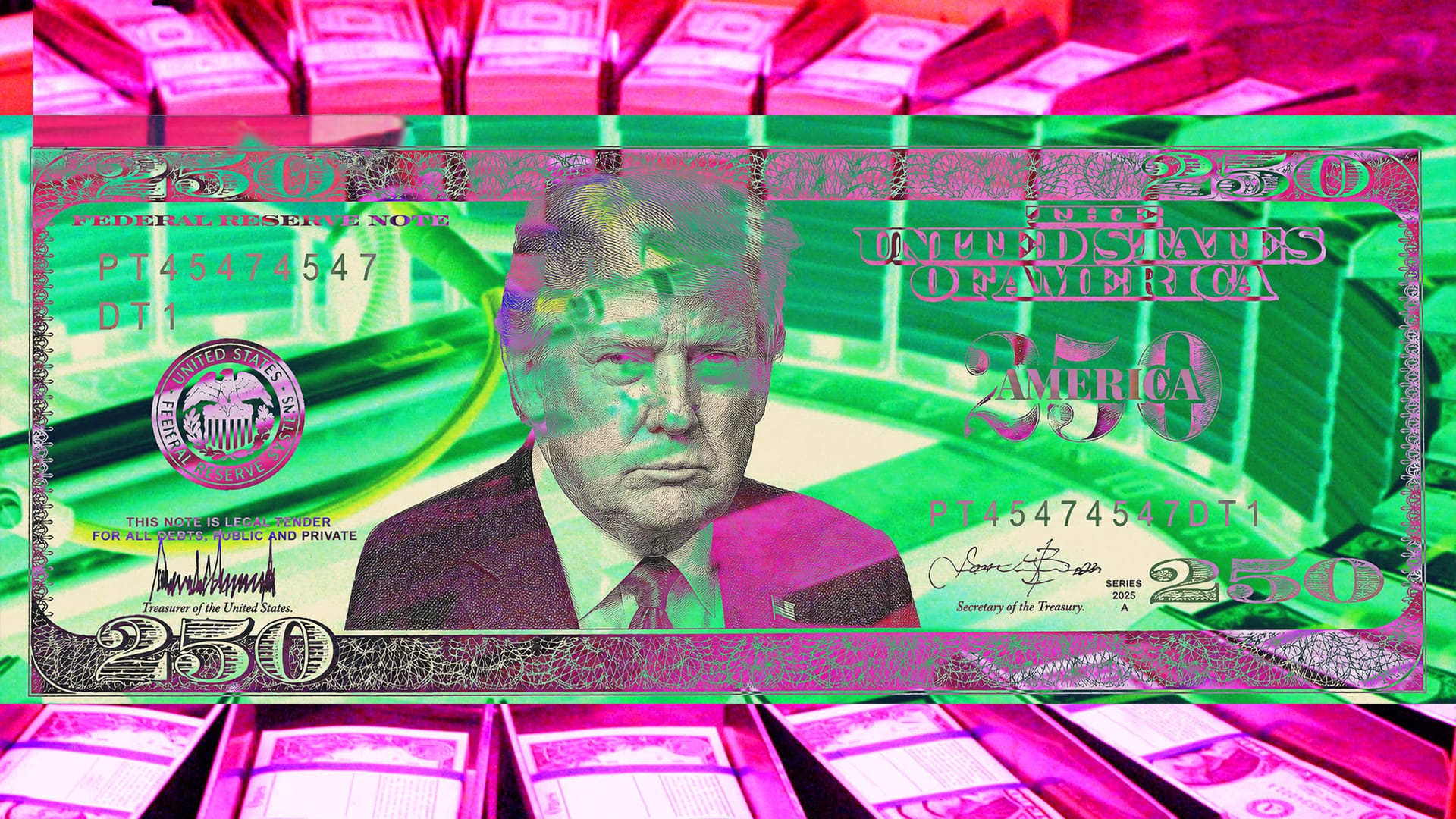
    Talking of history, I had slightly been hoping that the U.S. dollars in circulation might hit the appropriately round number of $2.5 trillion to mark the round 250th anniversary of the Declaration of Independence, but it was not to be. If only the Fed had launched the $250 bill in time, perhaps it would have got there, but we’ll just have to wait.

    Meanwhile, there’s an interesting time ahead for Tether, this newsletter’s favourite cryptocurrency, which is sailing into choppy waters. It has decided to pull its USDT out of the European Union rather than to comply with the Markets in Crypto Assets regulations on stablecoins, which is a boost for its great rival Circle (USDC), which is very much available in Europe. 

    The two big stablecoins have markedly different strategies: Tether is dismissive of regulators, while Circle cosies up to them. And now here comes a new rival in Open USD, which is backed by many of the world’s largest banks and tech firms, and which also promises to abide by everyone’s regulations. Is Tether at risk of becoming irrelevant?

    Congo’s conflict coltan

    Huge credit to the good folks at Global Witness for this report from the Democratic Republic of the Congo, where coltan smuggling is helping to perpetuate the grim conflict in the east of the country. It is the kind of methodical, thorough research that really helps open your eyes to how grim things can be, and how complicit the rest of us are in a global supply chain forged from conflict. 

    Congolese people hack coltan out of the ground under the eyes of M23 guerrillas, who then smuggle it into Rwanda, where it is repackaged as Rwandan and given certification intended to show it’s not from a war zone. It is then shipped to refiners in China or Kazakhstan to be processed into tantalum, which is in turn sold to leading companies to be incorporated in the phones, tablets, jet engines, and other products that we all rely on for our lovely modern lives.

    “Rwandan official figures show that coltan exports have increased more than 2.5 times between 2021 and 2025,” the report notes. “Coltan is an important revenue stream for Rwanda, which levies a 5% tax on exports. Since 2023, it has become the country’s second-largest export earner, after gold.”

    And where does the gold come from? Also from the Congo, which is why the U.S. Treasury sanctioned a Rwandan gold refiner last month, following action taken by the European Union against the same company last year, but it has done little to rein in M23.

    A version of this story was published in this week’s Oligarchy newsletter. Sign up here.

    The post Holding the U.S. to account, Tether exits EU & Congo’s conflict coltan appeared first on Coda Story.

    •  

    How governments enable kleptocrats by doing nothing

    I was listening to Ezra Klein interviewing a left-wing Democratic Party strategist the other day about what a post-Trump U.S. foreign policy might look like, and it was a pretty striking demonstration of Europe’s irrelevance right now that the only Western European country mentioned in the 90 minutes of the chat was the UK, and that was solely in the context of how it helps kleptocrats.

    But aha, a notional Brit might have replied, at least we are about to convict Diezani Alison-Madueke, former head of OPEC, ex-Nigerian oil minister, for her alleged egregious corruption. That notional Brit would be feeling pretty foolish right now though, because this was yet another flop, with her being acquitted on all charges. 

    Britain has a dire record both when it comes to enabling corruption and when it comes to successfully investigating it, as the failure of yet another high-profile prosecution shows. This latest fiasco should be the impetus the country needs to at last provide the resources and officers that its law enforcement agencies require.

    Alison-Madueke saw the hand of divine providence in her acquittal. “It has been a hard journey,” she said, “but I tell you this, God will always do as he will. God will be God and God is not a man that he should lie; when he promises you something, he will see it through” — and who am I to say that she’s wrong? However, there are other potential explanations for what has happened beyond the Almighty manifesting at Southwark Crown Court to give instructions to the jury, including the entrenched incompetence of British police agencies.

    It’s hard not to see a parallel with the failed attempt six years ago to investigate Dariga Nazarbayeva, daughter of the former president of Kazakhstan and possessor of a reasonable-to-large London property portfolio, which saw the National Crime Agency (NCA) being comprehensively outwitted by defence lawyers, just as it has been again.

    “Today’s verdict is a major blow for the NCA who have come away empty-handed in one of their highest-profile corruption cases, which took over a decade to progress to trial,” said Zainab Saleem, Legal Fellow at Spotlight on Corruption. "It is vital that the UK government properly resources law enforcement agencies tasked with investigating complex bribery and corruption cases and does not take this defeat as grounds for rowing back on anti-corruption enforcement.”

    It will be interesting to see what, if anything, results from the suggestions that the new Supreme Leader of Iran has been moving his wealth merrily around with the help of various Western banks, all of it now being investigated by the U.S. Department of Justice. “Funds for the transactions have been routed through financial institutions in the UK, Switzerland, Liechtenstein and the UAE,” reports Bloomberg.

    What is the answer? Whatever it is, it will be even more embarrassing for the UK if it doesn’t come up with something plausible by the time it convenes its Illicit Finance Summit in December. (Unless it ends up being rescheduled again, like one of those meetings that no one actually wants to attend but also no one wants to be responsible for cancelling.)

    Still, credit where it’s due, at least efforts to improve Companies House — the UK’s formerly-disastrous corporate registry — appear to be finally bearing fruit. It has sent almost a million enforcement letters to people who haven’t verified their identity, which must have been — at the very least — a useful money-spinner for the post office.

    The idea of increasing funding to law enforcement agencies is something that Americans would do well to consider too, particularly when it comes to the Internal Revenue Service. “In 2022, under President Joe Biden, Congress approved an $80 billion increase in IRS funding over a decade, with more than half of it slated to restore the agency’s ability to go after the super-rich. This victory was short-lived. By March 2025, Republicans had slashed that $45.6 billion enforcement budget to just under $4 billion — “a 91% decrease,” it notes in this fascinating book excerpt.

    I have been interested for a while in the idea of government’s being engaged in “legalisation by under-enforcement,” which is something we see with tax evasion, pollution of waterways, and almost anything else when the rules not being enforced benefit the kind of people who donate money to political parties. But I need a better name for the phenomenon, so please help me out and send one in.

    Talking of phenomena that we need a new name for, Elon Musk’s wealth is doing weird things to the Forbes billionaires list. Whoever runs it appears to have decided to only display his net worth to two significant figures. That means that, while we can see an assessment of the wealth of relative paupers like Sergey Brin to the nearest $100 million ($277.6 billion, as I write), we only get a round $1.2 trillion for Musk. Or a round $1. 4 trillion, depending on what day it is, which means his wealth jumps up and down in a minimum increment that, on its own, would be sufficient to make its possessor the richest person in every country in the world except Spain, Canada, Mexico, the United States or France.

    And talking of France, the G7 summit in Evian is over. It was of course at a previous French G7 summit when participants created what became the Financial Action Task Force. That was the 1980s and they were concerned about the spread of illegal drugs, the harm they were causing, and the fact that more countries were producing them, and wanted to stop drug dealers being able to keep their profits. Among other things they committed — in the words of the 1989 communiqué — “to prevent the utilization of the banking system and financial institutions,” which is part of the clause that gave birth to the entire global anti-money-laundering system. Well, 37 years have passed, so let’s check in on how that’s going. 

    This year the G7 communiqué expressed concern about the spread of illegal drugs, about the harm they’re causing, and about the fact that more countries are producing them. “We emphasize the continued need to strengthen the global anti-money laundering architecture to prevent financial crime and improve enforcement and asset recovery outcomes, in line with the Financial Action Task Force standards,” this year’s summit document states. 

    Plus ça change. Maybe in another 37 years, they’ll look up and wonder whether they should try something else, and indeed whether the FATF standards aren’t ripe for reconsideration.

    A version of this story was published in this week’s Oligarchy newsletter. Sign up here.

    The post How governments enable kleptocrats by doing nothing appeared first on Coda Story.

    •  

    Trillionaires are a national security risk

    I’ve been writing this newsletter since 2020, and in my first edition I marvelled at the concept of the centi-billionaire, and the fact there were at the time three people with 11 zeros in their net worth. What a six years it’s been. When I started writing this week’s edition, Elon Musk was a mere David Sun away from becoming the world’s first trillionaire, and now as I’m finishing it, Musk is worth the scarcely conceivable sum of $1.1 trillion. Nothing like this has ever happened before and there is no sign it is going to stop happening. There is no reason at all to suppose that in another half-decade I won’t be writing about how deci-trillionaires are the new thing.

    This increasingly extreme inequality is a challenge for social cohesion, democracy and civilisation that we haven’t seen in modern times, second only to climate change as a threat to our future. Although in some ways, they’re the same challenge, considering the disproportionate share of emissions coming from rich people.

    In some ways, if Musk’s wealth seemed to be making him happy it wouldn’t be so bad, but it appears only to make him angrier. I like to think that if I had a trillion dollars, I’d do something more constructive than stir up protests against ethnic minorities.

    Reducing inequality is the right thing to do for every reason, not least because it would deprive very rich people of the ability to stoke pogroms anywhere they like. But how to do that? The only thing that has previously reduced inequality to any significant extent has been the 20th century’s series of global conflicts with massive destruction of life and property, and that’s the kind of thing it would be good to avoid.

    I think there is a strong argument to be made, however, that the financial trickery abused by the very rich is also bad for national security, and it’s one nicely made here by Matthew McGlynn, who specialises in researching Russia. By degrading the ability of oligarchs to cheat their way to riches, we’d also limit the space of billionaires to dodge taxes and accountability.

    It is notable that expert after expert speaking to the House of Representatives Committee on Financial Services about Chinese Money Laundering Networks pleaded for the Corporate Transparency Act to be properly implemented. “When a laundering network operates by scattering its footprint across hundreds of student accounts, dozens of shell companies, and multiple jurisdictions, traditional compliance frameworks may treat flags as isolated, minor incidents. The systemic risk is consistently underestimated, and responses remain heavily reactive,” noted Louis DeTitto.

    If first we come for the money launderers, then the billionaires won’t speak out because they’re not money launderers. Also, it would mean we’d do a better job of tackling money laundering, which would be nice. 

    While on the subject of congressional hearings, there are interesting moves by Senator Richard Blumenthal to probe how Iranian and Russian sanction-dodgers are using cryptocurrencies. In April, he wrote to Binance requesting further information, and now he’s written to Tether asking for information about misuse of its USDT stablecoin.

    The details he’s requesting are far-reaching and potentially highly consequential, since they relate to connections with Iran and Russia, including A7, issuer of the leading ruble-denominated cryptocurrency. Perhaps most important, however, is his first question: “What legal jurisdictions does Tether believe it is subject to for USDT, in particular for anti-money laundering rules, reporting obligations, asset seizures, and sanctions compliance? Does Tether believe it is legally required to comply with Department of Treasury sanctions for USDT and issue suspicious activity reports (SARs) to the U.S. government?”

    If the U.S. asserts regulatory authority over dollar-denominated cryptocurrencies as it has over all transactions in dollars then that would significantly undermine their attractiveness to illicit actors, and also do a lot to reassure people like me. Tether, meanwhile, has been bigging up its cooperation with law enforcement agencies, and says it’s frozen $450 million globally.

    “For the past few years, stablecoins have come to dominate the landscape of illicit transactions, and now account for 84 percent of all illicit transaction volume,” concluded Chainalysis in 2026’s crypto crime report. It estimated total illicit transactions at $154 billion last year, so the stablecoin share of that was almost $130 billion. That is a fraction of the amount of money laundering estimated to move through either the trade system or indeed the formal financial network, but still a lot of money. It’s interesting to see, however, how Chainalysis still holds out hope for well-regulated cryptocurrencies helping to solve problems caused by standard finance.

    “Stablecoins and on-chain settlement mechanisms in particular offer low-cost, borderless avenues for remittances, payments, and savings,” Chainalysis said. “If coupled with sound regulation and inclusive policy frameworks, these tools could help governments leverage crypto not just for resilience, but also for broader financial inclusion as part of economic recovery.”

    Seeing will be believing.

    A version of this story was published in this week’s Oligarchy newsletter. Sign up here.

    The post Trillionaires are a national security risk appeared first on Coda Story.

    •  

    AI is not the answer to AI-enabled fraud

    A top banker has got in trouble by referring to employees whose jobs will be replaced by AI as “lower-value human capital.” But he’s just saying the quiet part out loud: compliance officers have been expected to work like inefficient computers for years already anyway. Standard Chartered CEO Bill Withers used the unfortunate phrase when describing how the bank plans to keep hitting its profitability targets by cutting 15% of back office staff, and has tried to backtrack a little after a predictable storm of criticism, including from the former president of Singapore. 

    It would be nice to think of bank employees deployed to fight financial crime as super-effective old-school gumshoes, with a bottle of bourbon in the bottom drawer and an inexhaustible stock of one-liners, but in reality their jobs are more like something from ‘The Office’ than ‘The Big Sleep’.

    Thousands of people sit in cubicles in Warsaw or Bengaluru, checking through transactions flagged as possibly abnormal by banks’ automated systems, and confirming that 99% of them are, in fact, normal. Anything that might conceivably be abnormal gets sent up the chain, where someone more senior will almost certainly decide it wasn’t. 

    It is a ruinously expensive process and, as far as we can tell, completely ineffective. The best estimates we have for the size of the criminal economy suggest it has grown, untroubled, along with everything else for decades despite all the laws, fines, and prosecutions that we’ve thrown at the problem. 

    But banks’ financial crime compliance isn’t about stopping financial crime at all: it’s about stopping banks from being fined, as Standard Chartered has previously been, enormous sums in both the U.S. and the UK. As long as banks can be sure that AI checks boxes in ways that satisfy regulators, then they’ll be happy.

    This is a little bit worrying because AI is already getting very good at fraud. I am very alert to attempts to trick me but was sufficiently fooled by an AI email yesterday to forward it on to someone. Fortunately, a very similar one arrived (purportedly from someone else) a few minutes later, alerting me to my mistake. Money laundering is a laborious activity and criminal gangs will be as keen as banks to cut their back office expenditure, and AI could help automate the processing of the many small transactions that add up to a large amount of money. Phishing and smurfing are just a couple of its use cases, however.

    “Scammers can leverage AI to scrape data from social media and dating platforms to identify vulnerable targets (e.g. lonely individuals, recent retirees, or people interested in finance) for pig butchering scams,” notes TRM Labs. “Bots can sustain long-term, emotionally persuasive conversations without tiring or making mistakes, making the scam more scalable.”

    And that’s before you get onto AI’s ability to exploit cryptocurrencies and smart contracts to really start rampaging through the crypto world. “TRM observed a roughly 500% increase in AI-enabled scam activity over the past year. The convergence of generative AI, programmable financial infrastructure, and global crypto liquidity has altered the economics, velocity, and scalability of fraud,” the blockchain analytics firm said in a follow-up report. This is very bad indeed.

    So, although I can see why people are annoyed that Withers referred to his bank’s employees in such a disparaging way, I am more troubled that he’s planning to replace them with AI, rather than to retain them and train them in how to counter it.

    It was remarkable, however, to see Warren Davidson, chair of the illicit finance subcommittee at the House of Representatives Financial Services Committee, draw precisely the wrong conclusion from all this. Although he was correct in condemning the defensive nature of compliance, and its focus on generating paperwork over results, he then got lost in praising the White House’s decisions to attack corporate transparency legislation.

    "As we focus on risk, we must also ensure that tools like artificial intelligence are fully deployed to counter the AI-enabled crimes of today,” he said, without realising that, without reliable information to train the AI models on, this is as useless an approach as the one he says has failed. If you don’t know who owns what, neither will a computer, no matter how cleverly it can pretend to be human.

    I sincerely hope he listened to the testimony of Carole House of the Atlantic Council who forcefully pointed out the harm to national security and to ordinary Americans caused by the United States’ failure to create even an approximation of a decent corporate registry, as well as the historic idiocy of its current crypto policy. “Without a secure identity foundation, AI agents will simply scale up fraud at a speed and volume that human investigators can't possibly track, destroying trust in the whole system,” she said in testimony that I highly recommend you take a look at.

    I very much doubt Davidson was listening, however, because that is not the direction the Republican Party is going in right now. I would write more about that, but frankly it’s all too depressing, and I’d rather move on.

    So let me point you towards this excellent paper on how online scam marketplaces work, with criminals using the messaging app Telegram and the stablecoin Tether to launder hundreds of billions of dollars. It argues that our current approach of sanctioning exchanges is futile since their owners just shut them down and switch to a new platform that works in the same way but hasn’t yet been sanctioned.

    “As long as the underlying digital infrastructure remains permissive, criminal syndicates will simply migrate to new channels. To move from reactive disruption to systemic prevention, the international community must shift its focus toward the structural enablers of these marketplaces,” Elliptic’s Tom Robinson argues. Elliptic is unusual among blockchain analytics companies in being willing to name Tether as a major vector for money launderers. Its rivals tend to just say “stablecoins,” I have no idea why.

    Meanwhile, there is something grimly depressing about the fact that — against the backdrop of, well, everything — the UK has postponed June’s illicit finance summit due to “scheduling issues in the international calendar.” Everyone is so busy dealing with the consequences of illicit finance, that no one has time to talk about illicit finance.

    A version of this story was published in this week’s Oligarchy newsletter. Sign up here.

    The post AI is not the answer to AI-enabled fraud appeared first on Coda Story.

    •  

    Crypto’s corrupt American dream

    The United States is inching closer to passing a gigantic piece of legislation to put cryptocurrencies on a secure footing, with the bill emerging unscathed from the Senate’s banking committee. Opinions differ as to what this means: crypto people are thrilled, while anyone who knows about money laundering is terrified. Passage of the so-called CLARITY bill has been a key goal of crypto enthusiasts since Donald Trump came to power, since it would give them the legal certainty to engage in “financial innovation” without worrying about a return to the Biden-era policy of trying to regulate them as if they were normal people.

    Committee chairman Tim Scott is delighted: “For me, this is personal. My mother raised my brother and me with faith, grit, and determination, and she taught me that the American Dream should be within reach for every family, including single mothers working hard to build a better life for their children.”

    I quote Scott partly because it’s such a weird justification for passing crypto regulation (or perhaps he just says that sort of thing about literally everything he ever does?), but mainly because it’s pretty clear that the bill as it stands will be a disaster for the kind of vulnerable people he claims to be fighting for.

    In a sign of experts’ concerns, Transparency International’s U.S. office put out a statement quoting nearly all the most respected voices on money laundering in America arguing that the bill needs better safeguards against dirty money. “At a time when we know that hostile actors like (Iran’s Revolutionary Guards) are looking to circumvent U.S. sanctions to rearm and threaten Americans and U.S. interests around the world, it is inconceivable to me that we would open new, effective channels for sanctions evasion,” said Richard Nephew, former U.S. Coordinator on Global Anti-Corruption and Deputy Special Envoy for Iran.

    “Terrorists, violent drug traffickers, and organized criminals who prey upon the elderly and unlearned in increasingly sophisticated financial and AI generated schemes are, quite literally, getting away with murder, funded by untraceable cryptocurrency transactions hidden behind an anonymous block chain,” said former FBI agent Karen Greenaway.

    There is an awful lot of money in crypto, and Tether alone now has three people among the richest 100 in the world. Tether’s largest single shareholder Giancarlo Devasini’s wealth has grown from $9.2 billion in 2024 to $89.3 billion now, while chief executive Paolo Ardoino and former CEO Jean-Louis van der Velde have done pretty well too. Though none of them have done quite as well as Changpeng “Binance” Zhao, crypto’s only centibillionaire (so far).

    In the UK, there’s a lot of concern about the millions of pounds going from crypto investors to Reform’s Nigel Farage, who has become a crypto champion, no doubt coincidentally. But, wow, look at what’s happening in Alabama for a sign of what the future looks like if crypto people really get their hands on the purse strings and try to buy their way into the Senate. 

    That much money doesn’t just help supporters win, it also terrifies opponents: standing up to the crypto lobby guarantees you’ll be swamped in hostile advertising. How do you want to be paid, as Pablo Escobar used to say, in silver or lead? 

    But why should the rest of the world care that this is happening? I’m sure I’m not the only foreigner who’s been staring in bewilderment at the growth of U.S. prediction markets, and how efficiently they allow insiders to monetise their privileged access to inside information. A lot of those markets are barred in other countries, but the U.S. soldier who was arrested for betting on the Maduro capture was trading on polymarket, a crypto-denominated market which is blocked in the United States too, despite Donald Trump Jr. being an investor.

    Such restrictions can be easily bypassed by using a Virtual Private Network, so U.S. regulators are using artificial intelligence to track down insider trading on polymarket. After that soldier’s arrest, I suspect Americans will be much more careful about what they do.

    Prediction markets claim they don’t want insiders trading on privileged information. But if the markets are to function in a way that supports their founders’ justification for them, as a price signal for future events, they rely on people with knowledge to be using them to make bets and thus to move prices in a useful direction. So clearly the temptation will always be there for anyone with inside information to use it to make some easy money.

    And does anyone think U.S. regulators will care about Indians, Brits, South Africans Ukrainians, or other foreigners using crypto to trade on information from their own countries? They after all have a track record of treating foreigners and U.S. citizens differently. That’s why it was Francesca Albanese, with her American husband and daughter, who managed to have sanctions cancelled for daring to investigate Israel’s behaviour in Gaza, whereas non-U.S. connected people have failed to do so.

    The new U.S. crypto bill coupled with U.S.-based crypto-denominated prediction markets points towards the United States becoming a gigantic offshore enabler of corruption for the rest of the world; a digital version of what Switzerland was in the analogue years, with everyone else reduced to begging its regulators for assistance. 

    “Crypto prediction markets are accessible to anyone with an internet connection and a wallet, pooling liquidity from a global user base rather than a regional one,” says Chainalysis. I think they mean that to be a good thing, because the blockchain is transparent and malefactors can be spotted easily yada yada, but it sounds beyond dystopian to me. I’m genuinely a bit terrified of what this will mean for corruption in the next few years, and I haven’t heard of any politicians who are alert to it yet.

    A version of this story was published in this week’s Oligarchy newsletter. Sign up here.

    The post Crypto’s corrupt American dream appeared first on Coda Story.

    •  

    The new samizdat

    While much of the media industry focused on the churn of headlines, we became increasingly interested in the undercurrents beneath them: the hidden systems, infrastructures and ideologies shaping events across borders and over time.

    Again and again, our reporting led us back to the same realization: for a long time, the struggle over information was understood primarily as a question of censorship or access. Who controls information? Who gets to publish? Who gets silenced?

    Those questions still matter. But they no longer fully describe the world we live in.

    Today, the struggle over information is about who builds the systems through which reality is organized, distributed and trusted. From state propaganda to algorithmic feeds, from platform monopolies to AI-generated noise, the battle is not over facts. It is over the infrastructures that determine which narratives spread, which voices are amplified and which communities remain connected.

    Over the past year, these questions led to a collaboration between Coda and The Continent, the pan-African newspaper founded in Johannesburg by Simon Allison and Sipho Kings. Although our reporting emerges from very different histories and geographies, we found ourselves arriving at remarkably similar conclusions about power, fragmentation and the future of journalism in an age of informational instability.

    This two-chapter essay is the beginning of that collaboration, and marks the start of a new project called The Atlas. Pilot edition is available here — please feel free to share with friends, family and colleagues, preferably in its entirety.

    In Chapter One, I return to the world of my Soviet childhood: propaganda, samizdat and the search for trustworthy signals through noise.

    In Chapter Two, The Continent co-founder Simon Allison presents the Parable of Sinn Sisamouth: the story of how some of the greatest songs ever written were nearly lost, and then found, and then lost again. 

    Taken together, these essays ask what journalism becomes in a world where information is no longer organized primarily to inform, but to capture attention, manufacture reaction and shape perception at planetary scale.

    The Atlas grows out of that question.

    Chapter One: Through the Static

    Whenever I am asked why I decided to become a journalist, an image from my childhood pops into my head. It’s dusk. I am 10, sitting in the kitchen with my mom. She is glued to a shortwave radio. Outside, the Soviet Union is on the cusp of collapse. Georgia, where we are, is on the brink of civil war. We didn’t use the term back then, but fake news was all we got through official channels. Real news — coming from the West — felt like a lifeline. I was in awe of the crackling radio that held my mother’s full attention. I wanted to become that voice.

    Illustration: Anna Jibladze.

    Years later, I got my dream job at the BBC and spent much of my adult life moving between wars, uprisings and authoritarian states. Again and again, I found myself in places where truth was contested terrain: Baghdad, Damascus, Donetsk, Sana’a. But over time I realized something fundamental had changed. Modern authoritarianism no longer relied primarily on suppressing information. It had discovered something more effective.

    Information could simply be drowned out by static.

    That realization became stark for me in eastern Ukraine in the summer of 2014. I arrived in a field of bright yellow sunflowers where the bodies from Flight MH17 still lay scattered across the ground. A Russian missile had blown the passenger plane out of the sky, killing all 298 people on board. Yet almost immediately, the Kremlin flooded the information space with competing explanations. It was a Ukrainian fighter jet. A failed assassination attempt on Putin. The plane had been filled with corpses before takeoff. Each theory contradicted the next, but that hardly mattered. The point was not to persuade, it was to exhaust. It was to create so much noise that truth itself began to feel unstable.

    Over the following years, I watched versions of the same logic spread far beyond Russia. Social platforms transformed public conversation into a permanent stream of outrage, performance and distraction, collapsing vastly different kinds of information into the same endless feed. War footage, propaganda, conspiracy theories, journalism and gossip all began competing inside systems designed not to inform people but to capture and hold attention.

    Noise became the new censorship.

    And increasingly, I found myself thinking about the world of my childhood again. Not because history was repeating itself neatly, but because the emotional landscape felt strangely familiar: confusion, exhaustion, distrust, the constant sense that reality itself was becoming slippery. Back then, people searched desperately for clear signals through the static of Soviet propaganda. Today, we are drowning in a different kind of static, but the instinct, the search for clarity feels remarkably similar.

    In the Soviet Union, people developed ways of navigating that confusion. Among my strongest memories from that time is the sound of my parents’ typewriter late at night. Friends would pass around copies of banned Soviet literature and my parents would sit at the kitchen table all night, retyping them page by page so they could be shared again. It was my first encounter with samizdat, although I didn’t know the word then.

    Looking back now, what strikes me is that samizdat was never simply about forbidden texts. It was about building trusted alternative systems of circulation when official systems had lost credibility.

    At Coda, we have spent years building journalism against the logic of noise. We slowed stories down. We followed themes instead of headlines. We built a reporting system designed to connect events across borders and over time, helping readers see patterns instead of fragments. But as our globally distributed newsroom adapted to an increasingly fractured information landscape, it became clear that journalism alone was not enough. Distribution shapes understanding as much as reporting does.

    Around the same time, in Johannesburg, Simon Allison, Sipho Kings and their team were building something that challenged many of the assumptions dominating digital media. The Continent, their pan-African newspaper, spreads largely through direct sharing networks: passed from reader to reader rather than pushed by algorithms.

    Illustration: Wynona Mutisi.

    Different histories had brought us to remarkably similar questions. What does journalism look like when trust is collapsing, attention is fragmented and the systems that carry information have themselves become instruments of power?

    Out of that convergence came The Atlas: a new publication that brings together Coda’s methodology of following systems across borders and over time with The Continent’s radically distributed model for reaching readers beyond algorithmic feeds.

    The Atlas is built on a shared conviction: as fragmentation, distrust and informational overload spread across the world, some of the clearest ways through will come from places that have already spent decades navigating propaganda, instability and contested reality. Places once treated as peripheral are becoming essential to understanding the defining question of this age: how can meaning survive systems designed to overwhelm it.

    Michael Macor/San Francisco Chronicle via Getty Images.

    Chapter Two: The second silencing of Sinn Sisamouth

    Imagine if your favourite song disappeared, forever. 

    Almost every album I have ever loved was recommended to me by my friend An-Rui. A few months ago, he sent me a track by the undisputed King of Khmer Music, the Golden Voice, the Cambodian Elvis himself – Sinn Sisamouth.

    I had never heard of him.

    I didn’t respond at first, so he nudged me. That night, after the kids were asleep, I put on my headphones, sat in the garden and immediately lost myself in Cambodia’s psychedelic rock scene of the 1960s and ‘70s. I don’t know enough about music to explain exactly what I fell in love with, but within weeks I was, according to Spotify, among the top one percent of Sinn Sisamouth listeners worldwide.

    An-Rui had added a note to his recommendation. “the songs are happy but since i know what his fate was and i don’t understand the words, it sounds incredibly sad to me”.

    The story goes something like this: A small-town boy with an extraordinary voice moves to the big city, and conquers all before him. He writes hundreds of songs, bridging Khmer musical traditions with new western influences: jazz, rock & roll, bossa nova, blues, the Beatles, and, of course, Elvis Presley. He toured the country. He toured the world. He made music with an actual King, Norodom Sihanouk, and became Cambodia’s most beloved rockstar.

    Then, in 1975, the Khmer Rouge seized power. In the course of committing a genocide, the communist regime disappeared Sinn Sisamouth, and banned his music. He has never been seen, or heard from, again.

    But his music never died. It lived on brittle records, hidden for generations under floorboards. It lived on scratchy cassettes, passed hand to hand among the diaspora.

    It was only decades later that his music was digitised and remastered, and made available on streaming platforms to the likes of me.

    When I listen to Sinn Sisamouth, I can’t help but think about how easily we could have lost his masterpieces entirely. And I wonder what else might have been lost that we have not been able to recover.

    And then it happened again.

    There’s a particular track that I like to play in my car, where I can turn the bass up as high as it goes. I was driving one afternoon and looked for it on Spotify. It was gone, even though the rest of the album was there. 

    I looked again on my laptop at home. Nothing. Gone from Spotify. Gone from Apple Music. Gone from YouTube. Like it had never been there in the first place. I started to wonder if I had gone crazy, and maybe imagined the song entirely. And then I started to panic: What if I never heard it again?

    Eventually, I found a bootleg YouTube version, using a different transliteration of the Khmer title – Kanlang Pnheu Pran, instead of Konlong Phner Bran. Before I tracked that down, I had to wade through dozens of AI-generated Sinn Sisamouth ‘cover versions’, all uploaded to YouTube within the last few months. If I had never heard it before, I would never have been able to tell which was the original.

    It’s not unusual for songs to disappear from the Internet, especially when the music is from non-English-speaking countries. I’ve had similar experiences with the music of Sharhabil Ahmed, the Sudanese jazz legend, and Ethiopia’s Tilahun “The Voice” Gessesse.

    In fact, it’s not unusual for other kinds of information to disappear from the internet; to be edited after the fact; or to be simply lost among all the digital noise. Digital information is incredibly precarious, and becoming more so by the day. AI slop is taking over social media platforms. Algorithms determine what information we can and can’t see, shaping our cultural and political preferences. And powerful interests are becoming increasingly bold when it comes to brazenly manipulating information in their favour – or, of even greater concern, restricting the flow of information across borders.

    Amazon changes the contents of books on people’s Kindles without telling anyone. News websites quietly alter critical stories, post-publication, to remove evidence of wrongdoing (my favourite example: the Financial Express published a story critical of India’s richest family; only to replace it with a glorified press release a few days later. They neglected to amend the URL, however, which contains the original headline). Governments shut down internet access on a whim, or legislate which apps and websites are available to specific populations.

    For journalism, this is an existential threat. Our job is not just to hold power to account – it is also to write the first draft of history. But if we can’t preserve that first draft, or distribute it effectively, then what, exactly, is the point?

    The Continent and Coda Story are working together to try something different. We want to publish news about the world, produced and verified by humans, that cannot be edited after the fact; and to distribute it in a way that dramatically decreases our reliance on unaccountable algorithms or search engine optimisation. The Atlas — pilot edition available here — is our answer to the precarity of information online. It’s a work in progress.

    Stay tuned: if we’re going to succeed, we’ll need your help. And if we do succeed, the secret of our success will be those very same transnational networks that kept the music of Sinn Sisamouth alive. Communities of like-minded people, of friends and families will always find a way to stay connected, no matter how vast the distances between them, or how great the obstacles. So what does a global newspaper look like if we design it with exactly these communities in mind?

    As soon as I found that bootleg on YouTube, I ripped an MP3 copy and sent it to An-Rui on Signal. “KEEP THIS SAFE,” I told him. I don’t know what happened to the song on Spotify, or if it is ever coming back. But I can’t take the risk of never hearing that bassline again. And here it is, in case you want to hear it too.

    The post The new samizdat appeared first on Coda Story.

    •  

    Legalize Cocaine to save democracy

    Nigel Farage, the leader of the UK’s right-wing Reform UK party, has taken millions of pounds from crypto people, including one convicted of financial crimes in the United States. There are, despite Farage’s insistence to the contrary, questions around whether he followed the rules. Nonetheless, his party has swept local elections. There’s a lesson here for progressive parties everywhere, including in the United States where senators are seeking documents relating to financial ties between the commerce secretary and Tether. What if you get your ‘gotcha’ moment, turn around to the voters with a broad smile… and they vote for your opponents anyway?

    Believers in democracy need to start advocating for more transparency, more enforcement and more restrictions on murky finance if they want to stop unaccountable money from buying influence in their countries. It is not enough to rely on journalists and activists to produce the occasional investigation, and expect voters to do the rest: we need properly-resourced agencies that can keep dirty money out of our systems if we want them to remain clean. If history tells us anything, it’s that criminals get elected all too often.

    This is urgent. Tether made more than $1 billion in profits this year, in the first quarter, and is thinking hard about the midterms and how candidates might be encouraged to fight for crypto. And that’s just one company. Progressives who believe in fairer finance, a state’s right to regulate its own economy and the power to oversee who’s buying whom, don’t have that kind of money to spend to influence elections, so they need to start making the argument for campaign finance restrictions much more forcefully.

    But there’s another point here too. I am working on an article about money laundering at the moment, and was chatting to two UK detectives last week. They led a successful operation in their city (I’ll post the article when it’s done) and I asked if they thought it had made a lasting difference. “With all crime, you take one out and there is another,” one of the detectives told me. “I'd like to think it has made a dent but there will always be more.”

    In the case they worked on, gangs were bringing cash generated via the cocaine trade to be laundered into crypto (no prizes for guessing which cryptocurrency they preferred). The detectives identified £53 million in turnover over two years. It’s great that they jailed the ringleaders, but you can see why they’re not getting too carried away. That total is about a quarter of a percent of the UK cocaine market’s turnover, so the gangs really won’t have noticed the loss. And, for the police, it was five years’ work.

    To a fairly large extent, since the first U.S. operation in Miami in 1980, when we’ve spoken about fighting dirty money, we have really been talking about stopping cocaine gangs by taking away their ability to make a profit. And, despite occasional successes like the one I’m writing about, this approach has overall been a catastrophic failure. Cocaine is cheaper, more abundant, and more widespread than ever before.

    This is important for many reasons, obviously because entrusting the supply of a dangerous substance to criminals is bad, but also because the existence of a vast underground financial system to move the cocaine trade’s profits creates a mechanism through which Russian spies, terrorists and others can hide their cash too. For me though, the real problem is that we have an urgent threat to democracy posed by hidden unaccountable money. Instead of tackling that problem though, our police officers are fighting an endless war against drugs that was lost decades ago.

    My modest proposal therefore is to legalise cocaine. It’s available everywhere already, so there’s no downside. We should tax it, regulate it, make sure kids can’t buy it and, as a useful side effect, take all the liquidity out of the underground economy. Our police officers could then stop running to go backwards, and instead fight a battle they might actually win, which is to stop fascists and kleptocrats from buying our democracies.

    Use oligarchs to undermine Putin

    Here’s a good article from The Economist by “a former senior official in the Russian Government,” arguing that Vladimir Putin is losing his grip. Now, I’m always a little cautious about articles that tell me what I want to hear, as well as the veracity of information and analysis provided by Russian officials, former or current, but it does make some very interesting points.

    Of particular interest to me is the idea that Russia’s elite is annoyed with Putin because its members are worried about having their assets stolen, with $60 billion worth of property nationalised or seized by corrupt officials in the last three years. 

    “Previously their property rights were outsourced to the West. They used London courts, offshore structures and international arbitration to resolve conflicts or seek protection. Now conflicts must be resolved domestically, without functioning institutions. Demand for rules grows more urgent as redistribution of assets gathers pace,” the article states.

    One of the reasons why democracy failed in Russia is because the oligarchs were able to keep their wealth offshore, and thus to essentially colonise their own country, secure in the knowledge they were themselves immune from the unfairness. It would be a pleasing irony if the horrific war in Ukraine ended up undermining not just Putin, but Putinism as a whole.

    There is a huge opportunity here for Western governments to capitalise on the dissent, and to start quietly offering sanctions relief to Russians willing to break with Putin, and who’re prepared to surrender a decent chunk of their wealth to help Ukraine in return for being able to keep the rest. There aren’t enough police officers to actually bring the cases needed to investigate, prosecute and confiscate the oligarchs’ wealth anyway (see item above), so we may as well start negotiating and see what they’re willing to do to get it back. In short, this is a big week for me making unfashionable policy proposals.

    AI-generated launderers

    There’s debate in the United States about getting rid of the Corporate Transparency Act, with Jeff Bezos’ Washington Post supporting repeal, even though the law has never actually been implemented. Opaque shell companies are a weird outgrowth of capitalism that corporations’ original inventors — who wanted to create insurance for entrepreneurs, not getaway vehicles for crooks — never intended to happen, so it’s very odd that they’re now being presented as some kind of human right.

    If you want a reason why the appallingly lax American system should be cleaned up, here’s a post on X about someone who tasked two AI agents with making money, and came back to find out they’d registered a Wyoming LLC all by themselves. This suggests the opening of a whole new frontier of automated money laundering, and the consequences are frankly pretty terrifying. The Corporate Transparency Act should be strengthened, not abolished.

    A version of this story was published in this week’s Oligarchy newsletter. Sign up here.

    The post Legalize Cocaine to save democracy appeared first on Coda Story.

    •  

    How Brazil is starting to rein in Big Tech

    On April 24, Brazil’s competition authority, the Administrative Council for Economic Defense (CADE) announced it was opening an investigation to assess whether Google’s use of news content amounted to unfair competition practices against the Brazilian press. The announcement was welcomed by civil society organizations that have tried to push regulation to limit the reckless power of Big Tech for years. Ajor, Brazil’s Digital News Association, said that “a balanced relationship between digital platforms and journalism organizations is fundamental to the flourishing of journalism committed to the public interest. By ensuring a fair competitive environment, Cade directly advances that goal.”

    In spirit and intent, CADE’s investigation into Google is similar to legislation in Australia that recognized that value is being extracted from news publishers without proportionate recompense. In Brazil, the case has been debated since 2019, but the adoption of AI Overviews helped alter the perspective of Brazilian judges. The overviews are artificially generated summaries that synthesize information from several sources and appear at the top of Google Search results. They “raise potentially more concerns,” ruled Judge Camila Cabral Pires Alves, “as they may more profoundly alter the economic function of the interface and expand the ability to retain attention within the platform's own environment.”

    CADE will now investigate whether Google should be sanctioned for “alleged abusive exploitation of a dominant position, in light of the technological evolution of the conduct.” While there is perhaps a greater global appetite to regulate the impacts of AI – even the Trump administration has recently acknowledged that some oversight may be necessary – the CADE judges have been under considerable pressure from Big Tech executives to stop investigations into how their control of the market harms Brazilian businesses. 

    For those of us who have reported on Big Tech, this aggressive lobbying is not surprising. Companies like Google, Meta, Twitter, TikTok, Amazon, and Microsoft have long attempted to interfere in any decision or legislation that can harm their interests in Latin America. According to a joint investigation by journalists across 13 countries, Big Tech lobbyists got away with convincing legislators in Colombia to weaken a rule meant to protect children’s mental health and prevent enforcement of privacy regulations in Ecuador. It took a team of over 40 journalists from 13 countries to uncover this while reporting on the ‘Big Tech Lobby’ in the continent and across the world.   

    Threats by the U.S. government to retaliate against any country or international entity that sought to regulate Big Tech added another layer to an already complicated and uneven relationship with Silicon Valley. “Digital Taxes, Digital Services Legislation, and Digital Markets Regulations are all designed to harm, or discriminate against, American Technology,” wrote Donald Trump on social media. “Show respect to America and our amazing Tech Companies or consider the consequences!” During the past year, Trump’s envoys have forced dozens of governments around the world to dilute or even shelve regulation in exchange for lifting tariffs. 

    In “Big Tech’s Invisible Hands,” which I coordinated alongside Maria Teresa Ronderos, from CLIP (Centro Latinoamericano de Investigación Periodistica), journalists mapped a total of 75 executives that were part of “public policy” or “government relations” teams in Brazil. Tech companies utilized a “revolving door” in which public sector employees could go straight into highly paid jobs leveraging their contacts and influence. Doors opened more easily. Invitations to hangouts and events were more likely to be accepted. 

    Brazilian President Luiz Inacio Lula da Silva meets with U.S. President Donald Trump at the White House on May 7, 2026. Brazilian Government / Ricardo Stuckert / Handout/Anadolu via Getty Images.

    Lobbying in Brazil is dialed up to eleven. The country has 163 million internet users, with over 150 million on WhatsApp, and over 120 million on YouTube, Instagram and Facebook. With AI, Brazil is a similarly large, influential market. Portuguese is the sixth most widely-spoken language in the world, with 70% of speakers based in Brazil. Which means that, if an LLM has been trained in this language, it probably used content created by millions of Brazilians going about their business of making friends, debating politics and football online. It’s not just about journalists; we are all unpaid labor for Big Tech. 

    In the words of Arthur Lira, the Speaker in Brazil’s Congress who filed a criminal complaint against Big Tech executives in 2023, companies adopted a variety of tactics “to shut down democratic debate and intimidate lawmakers” and defeat any attempt at using legislation to force accountability. Google, he said, used its search homepage, used by over 85% of Brazilians, to spread fear that proposed laws would “make the internet worse” or “make it harder to know what is true or false on the internet.” A report by the Federal University of Rio de Janeiro found that Google invested in ads on its own platform so extensively that it tweaked the search, prominently featuring the word “censorship” in connection to the Brazilian bill. Google also hired Michael Temer, a lawyer and former President of Brazil, to influence lawmakers and Supreme Court Justices. Of course, it was not Google alone. Meta executives, for instance, even argued that proposed legislation in Brazil could lead to the Bible being censored.

    But Brazilian lawmakers, the Supreme Court, and civil society have persisted. On August 28, 2025, the “Felca Law” was approved, after a video by the influencer Felca denounced the exploitation and exposure of children on social media. The law establishes that digital platforms must take measures like verifying user age, implementing parental controls, and preventing children's exposure to adult content, gambling, and pornography. They must create reporting channels and may face fines of up to 10% of their annual revenue in Brazil.

    Brazil’s president Luiz Inácio Lula da Silva and Donald Trump have had a testy relationship, in part because of Lula’s criticism of Big Tech. In February, at the AI Impact Summit in New Delhi, Lula called for global governance of AI, warning: “When few control the algorithms, it is not innovation, but domination. Regulating the so-called Big Tech companies is linked to the imperative of safeguarding human rights in the digital sphere, promoting information integrity, and protecting our countries’ creative industries.”

    By sticking to his guns, Lula may now be seeing the tide turn. He was in the White House on May 7, and though neither he nor Trump took questions, both appeared encouraged by the meeting. “Very dynamic,” was how Trump described Lula, while Lula said he was “very, very satisfied” with how the talks went. With a general election in Brazil approaching in October, Lula will be sensitive to how the White House, as it has done in other elections, and Big Tech might offer vocal support for right wing candidates.

    But his willingness to stand up to Big Tech is popular with voters. A recent poll found that 78% of Brazilians want to see tech companies being held responsible for the content they publish. Another poll found that 55% of Brazilians defend regulating Big Tech, with 43.9% against it. 

    And as scams, fake news, and AI slop dominate ever larger swathes of all our digital space, in Brazil, as in much of the rest of the world, the entire experience of the internet is becoming more unappealing. Big Tech, with the assistance of the U.S. government, may be succeeding in slowing down the pace of regulation and watering down the content of that regulation, but in the long run its victories might be pyrrhic. People have had enough and their governments might be forced to listen.

    The post How Brazil is starting to rein in Big Tech appeared first on Coda Story.

    •  

    The afterlife of empire

    On May 3, an unusual procession moved through Washington DC. Several hundred people walked beneath the monuments of the American capital carrying portraits of Red Army soldiers. Children waved Soviet flags. A live orchestra played wartime songs at the World War II memorial. The Russian embassy had filed the permit; the DC Metropolitan Police provided an escort. Russian state media celebrated the event as proof that, with the return of Donald Trump, historical truth too had returned to America.

    One organizer told Russian state television: “We love, respect Russia, honor the memory of our heroes.”

    Similar marches took place in Paris, Amsterdam and Busan. In Berlin, authorities announced that Soviet flags, Russian symbols and military songs would once again be banned near Soviet war memorials during May 8 and 9 commemorations.

    But in Moscow, Victory Day itself appeared haunted by fear.

    For decades, May 9 has been Russia’s most sacred annual political ritual, binding victory, patriotism and state power into a single language. But this year, Kremlin spokesman Dmitry Peskov was reduced to announcing that the Immortal Regiment march in Moscow would continue only “in electronic format.”

    The run up to this year’s Victory Day became the most anxious Moscow has experienced in recent memory. The Kremlin canceled the traditional procession in the Russian capital, moving it online. Military equipment was removed from the parade. Mobile internet access across Moscow was intermittently shut down in the days leading up to May 9. Spectator numbers in St. Petersburg were reportedly slashed from thousands to just a few hundred. The Victory Parade in Kaliningrad was canceled entirely. Russian media outlets published extraordinary reports about Vladimir Putin retreating deeper into protected bunkers amid fears of Ukrainian drone strikes and assassination attempts.

    Russia’s Foreign Ministry even warned foreign governments to evacuate diplomats from Kyiv before May 9, threatening massive retaliation if Ukraine targeted the celebrations with drones.

    And then came another extraordinary twist. Volodymyr Zelensky publicly “allowed” the parade to proceed. In a deliberately tongue-in-cheek decree issued after negotiations around a temporary ceasefire, the Ukrainian president formally excluded Red Square from Ukraine’s operational strike plans for the duration of the celebrations, even listing the exact geographic coordinates of the square itself.

    Watching it all unfold, I kept wondering whether empires collapse more easily than the systems of feeling they create. The Soviet Union fell apart more than 30 years ago, but the architecture built around victory, sacrifice and historical grievance survived it, stretching across borders, diasporas and rival political projects. What began as Soviet myth-making about liberation has evolved into a transnational political language through which governments, activists, diasporas and rival ideological movements compete over legitimacy, victimhood and belonging.

    Over the years, at Coda, in our Rewriting History current, we have tracked how the remembrance of World War II became central to Putin’s machinery of legitimacy and repression. Soon after he came to power, Russian public culture became saturated with stories of the Great Patriotic War. Watching Russian state television often felt as if the war had ended yesterday. New films, schoolbooks, drama series, speeches, parades and television specials turned victory into the emotional foundation of Putin’s Russia. Scholars of Russian memory politics have described how, under Putin, collective memory of the war became a tool for claiming legitimacy, discrediting opposition and presenting the Russian state as the eternal defender against fascism.

     It resonated because it tapped into genuine emotion passed on for generations. It was never just propaganda. It rested on something real: the scale of Soviet loss and the private grief carried by millions of families.

    The Immortal Regiment began in 2012 in the Siberian city of Tomsk as a local act of remembrance. Ordinary people walked through the streets carrying photographs of relatives who died in the war. By 2015, Putin was leading the Moscow procession himself, while state-backed organizations coordinated chapters in dozens of countries. But in Putin’s Russia, where victory had already become the central organizing myth of the state, the boundary between private mourning and political mythology dissolved.

    The speed of that transformation still feels important to me. It says something about the way modern political systems absorb private emotion and fold it back into the language of the state.

    The Kremlin framed these Victory Day rituals as a defense against what it called Western attempts to “rewrite history” by minimizing the Soviet role in defeating fascism or equating Stalinism with Nazism. Ukraine and many Eastern Europeans came to see the marches instead as vehicles for imperial nostalgia and wartime propaganda. 

    But the argument, it seems, is no longer only about what happened in the past. It is about who gets to turn memory and grief into political legitimacy in the present.

    This year Germany found itself in the extraordinary position of having to ban Soviet flags and military songs near Soviet memorials, effectively regulating the symbolic language of antifascism itself. Historian Timothy Snyder once warned that “if fascists take over the mantle of antifascism, the memory of the Holocaust will itself be altered.” That is precisely the moral and historical dilemma Berlin has now forced into the open. What happens when the symbols of genuine antifascist sacrifice become inseparable from the imagery of an ongoing war? When the flags carried by the soldiers who liberated Auschwitz are also flown at embassy-organized rallies while Russian bombs fall on Kharkiv? 

    At Coda, we explored some of these tensions years ago, in our documentary “What To Do With Stalin,” which examined the strange afterlife of Stalin’s image across the former Soviet world. While filming in Georgia, we encountered arguments that now feel strikingly familiar: whether remembering Stalin represented patriotism or denial, historical pride or historical amnesia.

    https://www.youtube.com/watch?v=NdfTH6rfe7E

    Even then, it was obvious these battles were never really about the past.

    Putin himself acknowledged as much during this year’s Victory Day speech, describing the war in Ukraine as a “just” continuation of the struggle against fascism and accusing the West of fueling confrontation with Russia “to this day.” Hours later, he suggested the war might finally be over. “I think that the matter is coming to an end,” he told reporters.

    Victory Day 2026 may ultimately be remembered not for the military parade itself, but for revealing how unstable that memory system has become. Moscow performed triumph while fearing attack. Berlin restricted Soviet symbols in the name of democratic security. Washington hosted embassy-linked Soviet commemorations beneath American monuments.

    I was ten years old when the Soviet Union collapsed. For those of us who grew up inside it, the end of the empire felt at once chaotic and exhilarating. Borders opened, old certainties disappeared and ideology lost its grip almost overnight. I still feel fortunate that, as a child, I witnessed an empire built on terror and repression collapse into history.

    In the decades that followed, we watched Russia slowly turn the symbols and emotional reflexes of the Soviet system into instruments of political power once again. Victory Day became one of the most potent of these instruments: a ritual that fused together grief, patriotism, historical trauma and state legitimacy into a single, powerful sentiment.

    Russia’s ambassador to Washington, Alexander Darchiev, praised what he described as the Trump administration’s dramatically changed attitude toward Victory Day commemorations. The holiday, he said, now played “an unequivocally positive role” in Russia-US relations. He pointed specifically to the marches held in the center of Washington, DC.

    But the more I think about this year’s Victory Day, the less it feels like a story about Russia alone. When the Soviet Union collapsed, many of us assumed its emotional architecture would disappear with it. Instead, parts of it were patiently cultivated and repurposed for a new era by the men in charge of Putin’s Russia.  

    The emotional logic that once underpinned the Soviet system no longer belongs only to Russia and the shattered geography of its former empire. Grievances, historical trauma and rituals of belonging now shape political life all around the world. Digital networks and algorithmic systems did not create these emotional impulses, but they amplified them at a scale the Soviet state could only dream of. Perhaps that is the true afterlife of an empire: not the survival of its borders or ideology, but of the emotional systems it builds to organize fear, belonging and historical destiny.

    Additional research by Masho Lomashvili and Irina Matchavariani

    The post The afterlife of empire appeared first on Coda Story.

    •  

    Wealth is health, Insider betting & Trump will see himself in court

    Inequality is bad for you, and new figures in the UK show that the number of years when people can live healthy lives have fallen everywhere and furthest in the country’s poorest areas. This is partly a lingering after-effect of COVID, but is mostly a result of cuts imposed on health services by the last government. The results are dramatic, with the average person in a wealthy area expected to enjoy almost 20 years more good health than someone in a more deprived area. The situation in the United States is similar, and declines in health have also been observed in Germany, Canada and the Netherlands.

    “Reducing smoking and improving diet and physical activity can delay the onset of illness and improve day-to-day wellbeing,” notes this extremely commonsensical analysis from the UK healthcare think tank The Health Foundation. “Secure work, good-quality housing and supportive local environments all influence physical and mental health.”

    Being unhealthy is just terrible in all ways, and the problem is clearly getting worse, so you would expect the disrupters of our new economy to be finding ways to respond to this challenge. And at first glance, the Sam Altman-backed Retro Biosciences — with its focus on targeting “aging mechanisms to increase healthy lifespan” — looks promising. So does Altos Labs, with its mission to reverse “disease, injury, and the disabilities that can occur throughout life.” And there’s Saudi Arabia’s Hevolution, which is catalysing “the shift from lifespan to healthspan.”

    And that’s before we get to the start-ups operating in a “free city” off the coast of Honduras, which has the brave approach of basically letting people do whatever medical research they like (“Prospera is a unique place where we can do such things,” says one businessman) to help drive progress towards an illness-free future.

    But don’t get your hopes up. They’re not looking at ways to help people to get vaccinated, eat healthily, stop smoking or do more exercise. Instead, they’re working on gene therapy, stem cells, and other extremely expensive treatments that will only benefit people who can afford them, and who are thus already likely to be doing well. In the UK meanwhile, Genflow is also aiming to slow the ageing process in dogs, to make sure the super-rich aren’t left without their pets in this artificially prolonged future.

    It’s tempting to see this as a metaphor for late-stage capitalism in the West, with its focus on the needs of the few (and their pets) rather than of society as a whole, except that we’re seeing a similar pattern in other places too. In Russia, Moscovites live longer than people from the provinces (although the picture is complicated by the relatively good health of the non-drinkers from Muslim regions), so you would have expected Vladimir Putin to be concerned about how to close that gap. But when he was chatting with Xi Jinping last year in China (where inequality has also harmed health), they were instead more focused on how to live forever. 

    “Human organs can be continuously transplanted, and people can live younger and younger, and even achieve immortality,” Putin said. (Three important questions: firstly, does this mean he will be president of Russia literally forever, the world’s first un-dead head of state? Secondly, are they farming people as a source of organs for him? Thirdly, does he really believe this?)

    “This century, there's a chance of also living to 150,” replied Xi, who could — under that scenario — rule China for another 77 years, which is longer than he’s been alive, by which time his nation’s population could well, according to UN estimates, have halved.

    I, for one, wouldn’t mind having a vote on whether this is a future I want to be a part of.

    An insider betting scam

    Here’s a fascinating piece of research from the Anti-Corruption Data Collective about prediction markets, looking at how often “long shot” bets on military and security matters pay off compared to what you would expect: fully 52% succeed, compared to only 14% across Polymarket as a whole.

    “Government officials and members of our military being able to turn a profit on insider information incentivises corrosive corruption in public office and undermines national security,” notes David Szakonyi, Co-Founder of the Anti-Corruption Data Collective.

    The analysis follows the indictment of a U.S. serviceman who made $400,000 betting on the bid to capture Nicolas Maduro in Venezuela, with 13 “yes” wagers on various aspects of the operation in December and January. And that was only a comparatively small military campaign. Just imagine how much money privileged insiders could have made in the past, if only they’d had access to prediction markets before D-Day, before the first nuclear bomb test, or before the assassination of Archduke Ferdinand in Sarajevo.

    I really enjoyed this recent episode of Planet Money about prediction markets, particularly with its clear explanation that — like so much “financial innovation” of the past — they’ve not invented anything new at all; they’ve just found a clever way around regulations that previously stopped people making bets in this way.

    There is fierce competition between the two leading players — Kalshi and Polymarket — although they have common ground in one area: they both employ Donald Trump Jr.

    Trump sues his own government

    There are so many things happening in the United States at the moment that it’s hard to keep track, but I did like this analysis from David Allen Green of a particularly strange lawsuit, in which President Trump is suing the federal government for $10 billion. The judge is, unsurprisingly, concerned about a situation where the president is basically suing himself, and wants more information about how that’s going to work.

    This could, however, be a whole new money-making front for the first family, and why should the Trumps stop at just $10 billion? They could presumably take the government for every penny it’s got. I’m amazed no one has done this before.

    A version of this story was published in this week’s Oligarchy newsletter. Sign up here.

    The post Wealth is health, Insider betting & Trump will see himself in court appeared first on Coda Story.
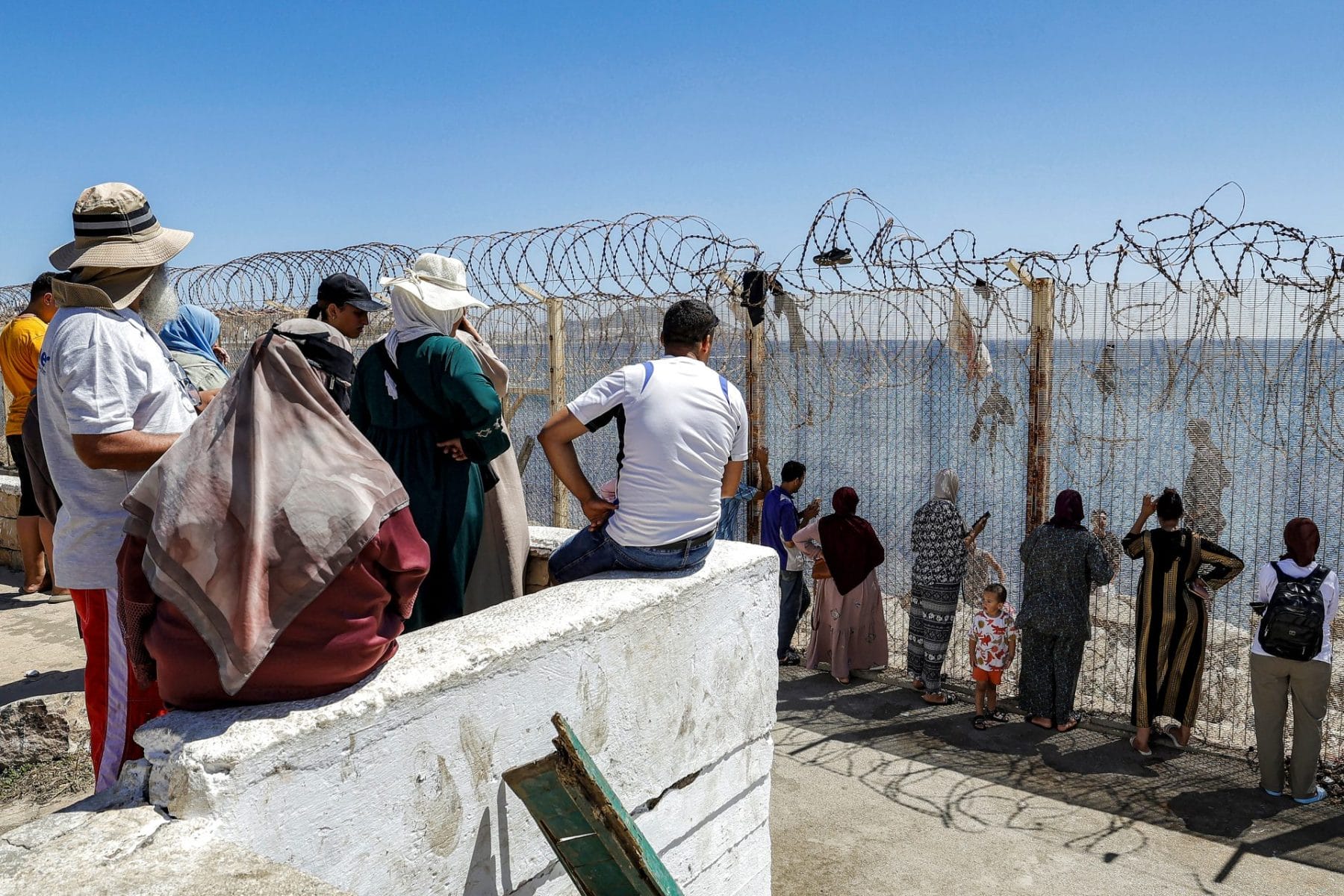
    •  

    Why Trump-backer Justin Sun is suing the Trumps’ firm

    Donald Trump and the crypto world have done well out of each other. The Trump family has made profits of several billion dollars, and ‘cryptopreneurs’ have found the United States a newly supportive environment for their products. But the crypto world is not a single entity, and there are potential differences of opinion and approach between the parts that specialise in fraud, money laundering, and speculation (as well as the small number of societally beneficial uses), and a court case between billionaire Justin Sun and the Trump family’s World Liberty Financial threatens to blow those divides wide open.

    Sun is a colourful gentleman and a firm favourite of this newsletter, thanks to his efforts to essentially buy the Pitcairn Islands, his voyage into kind-of space, his consumption of a $6.2 million banana, his stewardship of the Tron blockchain, his premiership of Liberland, and his frankly adorable continued usage of “H.E.” (his excellency) as a title despite losing his Grenadian ambassadorship three years ago after being accused of fraud by the Securities and Exchange Commission.

    He also had a key role in transforming Trump from cryptosceptic into cryptoenthusiast after investing millions of dollars in World Liberty Financial in late 2024, which helped to persuade the president — then running for re-election — that there was money to be made on the blockchain. 

    Considering the improbability of the Trump family building an actually successful crypto company, and the strong likelihood World Liberty Financial would find a way to keep investors’ money as has happened with Trump ventures in the past, quite a lot of people assumed Sun’s money was in reality more of a gift than an investment. But it appears these doubters were wrong, at any rate that’s what it says in the suit that Sun has filed in California alleging that World Liberty Financial has abused his rights.

    “Mr. Sun invested $45 million to purchase $WLFI tokens from World Liberty not only because of the project’s claims that it would promote adoption of decentralized finance… but also because of the Trump family’s association with the project,” his claim states. “But as Mr. Sun unfortunately has learned, World Liberty’s operators, including Chase Herro, see the project as a golden opportunity to leverage the Trump brand to profit through fraud.”

    Sun has been careful to make clear this is not an attack on the president (“Unfortunately, certain individuals on the World Liberty project team have been operating the project in a manner that goes against President Trump’s values,” he posted on X), who is, he says, being betrayed by underlings — as autocrats have always been throughout history —  but he is certainly airing a lot of dirty laundry, which is likely to upset influential people.

    Perhaps the most significant allegations, which World Liberty Financial denies, is that the Trump family’s company is on the verge of collapse, having paid most of its money to its owners, and that it tried to extort money from Sun to keep it in business. This is not just significant for its investors but also for America’s diplomatic ties, since Abu Dhabi has invested $2 billion via World Liberty Financial’s USD1 stablecoin, and the United States can ill-afford to further irritate its allies in the Gulf right now.

    The timing of the lawsuit is interesting. It was notable that, shortly after Trump returned to the White House, the Securities and Exchange Commission paused its investigation into Sun. In March, that investigation was finally wrapped up, with Sun paying $10 million but not admitting wrong-doing, so he is perhaps no longer concerned about facing legal action himself.

    Sun was also a major investor in Trump’s memecoin, but is not the only person who seems to have soured on that particularly unlovely project. One of the perks of being an investor in the token is the right to have dinner with Trump, but the value of that ticket dropped this year to just $539,000 from $3.28 million in 2025, with the Financial Times quoting an expert as calling the friendship between Trump and the crypto-world “a shotgun marriage,” which seems fair.

    The Trump family has, however, made $320 million in fees from the memecoin alone, so I suspect they’re not that bothered.

    A tale of two scammers

    There was, hard though it is to imagine, a time when Trump was just a strangely-tinted TV personality with strong views on where Barack Obama was born. And back then, in those prelapsarian days, 2014’s billion-dollar Moldovan bank fraud was a big deal. It’s great to see that mega-oligarch Vlad Plahotniuc has been jailed for 19 years for his involvement in a crime that ruined his homeland.

    Moldova has struggled through the resulting period of economic, financial, diplomatic and political turmoil, and it was great to see that Viktor Orbán’s defeat in Hungary has meant it can make progress on its movement towards membership of the European Union.

    The other mastermind of the bank fraud is pro-Kremlin politician Ilan Shor who was convicted and sentenced in absentia. He remains, of course, at liberty. Though his A7A5 sanctions-evading cryptocurrency has still not recovered the trading volume it had before the recent hack of the Grinex trading platform where people bought and sold it. Grinex blamed the hack on Western intelligence agencies, but Chainalysis has an interesting alternative explanation, based on the fact that A7A5 is gradually being squeezed by Western sanctions (including the latest ones from the European Union).

    “Faced with mounting international pressure and a shrinking operational footprint, actors associated with Grinex could be using the guise of an alleged hack to quietly siphon liquidity and execute an exit scam,” Chainalysis suggested. I’m not saying that is what happened and to be honest, I think it’s more likely that this was the handiwork of Ukrainian hackers or standard financial criminals. I mention it, however, because Shor does have a previous record when it comes to setting up a money laundering scheme and then defrauding everyone who was foolish enough to trust him with their money. 

    The billion-dollar bank fraud was a clever way to profit out of the ‘Moldovan Laundromat,’ which had been allowing Russians to smuggle money out of their homeland before Shor and his co-conspirators destroyed the Moldovan banking system and stole everyone’s cash. It would be remarkable if he had basically done the same thing for a second time with his stablecoin. Crypto people call it a rug pull.

    A version of this story was published in this week’s Oligarchy newsletter. Sign up here.

    The post Why Trump-backer Justin Sun is suing the Trumps’ firm appeared first on Coda Story.
    •  

    Why Europe must disable Russia’s crypto ecosystem

    Someone recently asked me what mark out of 10 I’d give for the efforts of governments to tackle financial crime. It got me thinking about that one bright spot of recent times — the West’s response to Russia’s full-scale invasion of Ukraine four years ago — and how it is now looking. Back in 2022, a lot of us were pleasantly surprised by the speed and ambition with which Western governments sanctioned the Russian government, state-owned companies and wealthy individuals. While Western pressure did not prevent the war, the asset freezes did impose a real cost on those conducting it. Four years on, however, those sanctions are beginning to look a bit shopsoiled. If they began at 7/10, they’re now scoring a lot lower.

    There are reasons for this: Donald Trump does not appear particularly interested in Ukraine; the now former Hungarian prime minister Viktor Orbán has been snarling things up; and so on, as laid out in this analysis from Tom Keatinge. To make things worse, Trump’s latest adventure in Iran has pushed the oil prices sharply higher, earning more money for Russia while also giving Trump cover to lift sanctions, a temporary measure he has recently extended.

    Keatinge argues that European countries need to be far more focussed on going after Russia’s payment mechanisms, particularly digital. “The extent to which crypto activity supports Russia’s war effort is clear,” he writes, “yet repeated initiatives to elevate the importance of opening a concerted line of effort on this issue are ignored. This must change.”

    I agree, though it won’t be easy, considering the diffuse crypto ecosystem, and the increasing sophistication of Russian involvement in it. As long as Telegram is willing to host markets, the markets will continue to function to some extent whatever Western countries do (see the story of Xinbi, a Chinese-language hub for illicit crypto.) However, it does look like someone somewhere has lost patience with the ease with which Russia is funding itself.

    “The sanctioned Russia-linked cryptoasset exchange Grinex announced an immediate suspension of its operations, citing a ‘large-scale cyberattack,’” reports Elliptic. According to the statement, which Kyrgyzstan-registered Grinex posted on Telegram, it lost around $13 million worth of USDT in the hack, blaming the theft on Western intelligence agencies.

    “Today the attempts to destabilise our fatherland’s financial sector hit a new level, with the direct theft of the assets of Russian citizens and companies with the involvement of complex cyberattacks,” the statement said. Grinex is the successor to Garantex, which was shut down just over a year ago after years of effort by Western law enforcement. I would be surprised if Western countries had decided to take direct action against Grinex, as the exchange claims they did. Westerners tend to be a bit too legalistic for this kind of smash-and-grab, and I would expect any operation to more closely resemble what worked a year ago, conducted with Tether’s cooperation.

    Instead, I suspect this attack is the work of hacktivists, perhaps working for or with the Ukrainians. Whatever the answer, it is embarrassing for the Russians, shows their crypto-security is not impregnable, and has made a noticeable dent in trading volumes of the A7A5 ruble-denominated stablecoin, which has become a key sanctions evasion tool. Three birds with one stone.

    The important point is that sanctions were never supposed to be permanent: they are a foreign policy tool, not a law enforcement one. Hundreds of billions of Russian-owned dollars are languishing in various frozen bank accounts, and Western countries need to start thinking about what to do with them. They can confiscate them, investigate them or — if they’re feeling brave — use their potential return as leverage to persuade wealthy Russians to break with the Kremlin. What they shouldn’t do is leave them as they are to gather dust.

    Hopefully, now that Orbán is out of the way, European countries will be able to take firmer collective action but they also need to be imaginative, and to start behaving as if they actually want Ukraine to win, rather than just not lose.

    A defeat for transparency 

    Of course, the United States will have a lot to say about that too, and what it ends up saying about how to tackle the Russian crypto operations will depend on what happens in the midterm elections this year. So, it strikes me as a big deal that crypto firms are once more pouring tens of millions of dollars into campaign vehicles in their quest for, what they euphemistically refer to as, “regulatory clarity.” Among them, of course, is Tether.

    If you’re wondering quite how it’s possible to spend that much money on elections, I draw your attention once more to the great Integrity Index, with its records for who’s been spending what. It boggles my mind that, for example, the three Democratic rivals to the Republicans’ Susan Collins for the Maine Senate seat have raised more than $17 million just for the primary. Collins herself has raised over $10.5 million. There really shouldn’t be that much money in politics.

    Besides, when it comes to value for money, investing in court cases beats investing in politics every day of the week. I don’t know how much the (ironically) anonymous plaintiffs in the 2022 case against corporate transparency in Luxembourg paid their lawyers, but its effects just seem to keep compounding to the benefit of those who want to hide their wealth from society. 

    The European Union’s retreat from revealing the ownership of shell companies has given cover for Britain’s tax havens as they resisted efforts from London to force them to open up their own corporate registries. It looks like those efforts may have finally failed. “We are committed to full transparency, but I don’t think there will be any turning back,” said the British Virgin Islands’ Junior Minister for Financial Services Lorna Smith in comments confirming that the islands are in fact very much not committed to full transparency.

    A version of this story was published in this week’s Oligarchy newsletter. Sign up here.

    The post Why Europe must disable Russia’s crypto ecosystem appeared first on Coda Story.
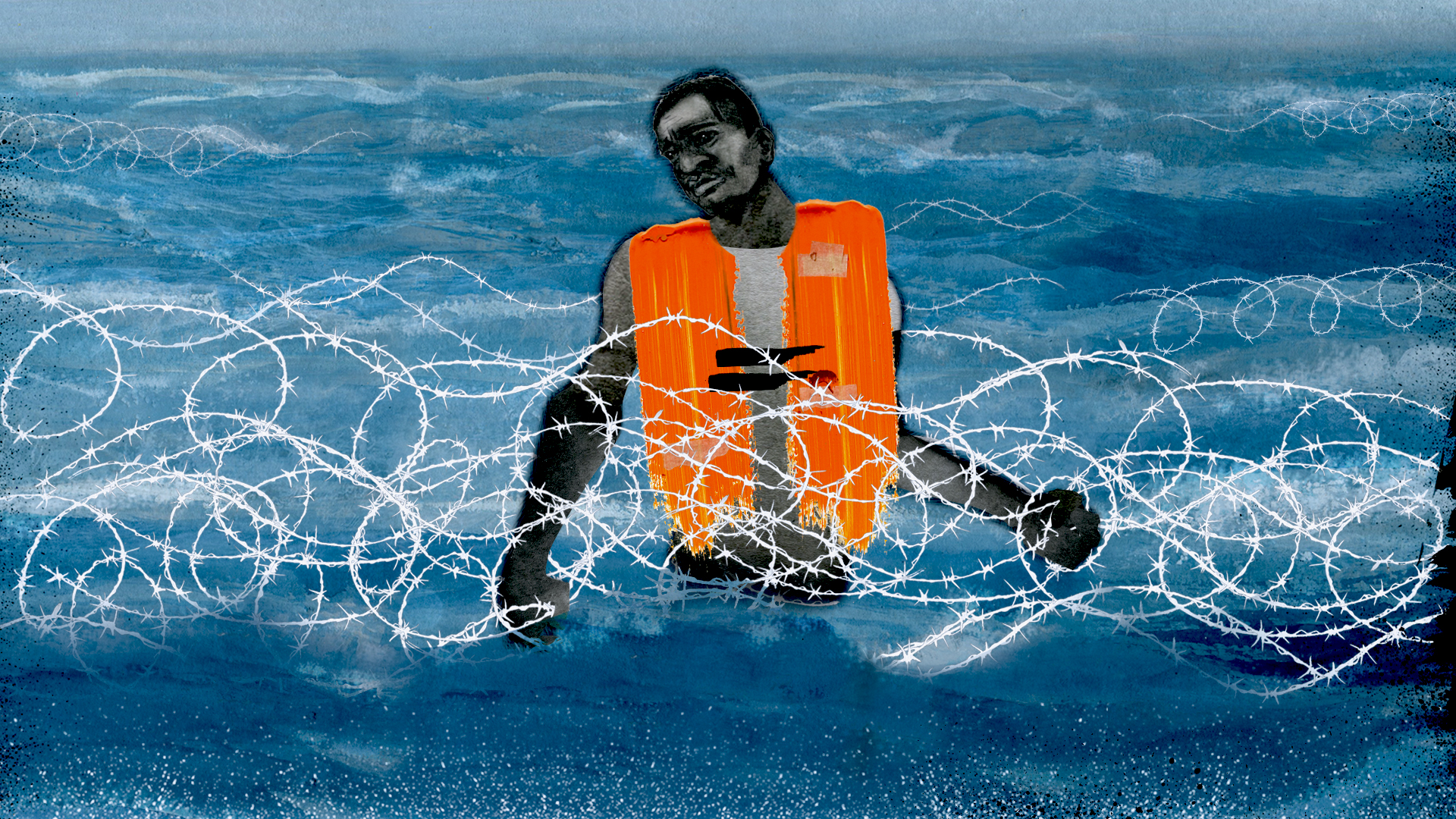
    •  

    Peter Thiel is building a parallel justice system — Powered by AI

    In 2016, when Peter Thiel killed Gawker, he insisted that he wasn’t attacking journalism writ large. 

    On the contrary, he told the New York Times, he’d spent $10 million secretly backing Hulk Hogan’s lawsuit against the news outlet because: “I saw Gawker pioneer a unique and incredibly damaging way of getting attention by bullying people even when there was no connection with the public interest… if I didn’t think Gawker was unique, I wouldn’t have done any of this. If the entire media was more or less like this, this would be like trying to boil the ocean.” 

    10 years later with the aid of an “AI tribunal,” a team of intelligence and law enforcement veterans, and a political climate vastly more hostile to press freedom, he is trying to do exactly that, bypassing the courts, short-circuiting the first amendment, and making it much, much cheaper to indulge in the quasi legal harassment of journalists.

    Objection.ai is a new startup funded by Thiel, and cofounded by Aron D’Souza, who worked closely with him on the Gawker case. It promises “a fast affordable way to challenge statements in the media.” Anyone can file an objection, which will trigger an investigation by a team hired, the company says, from the CIA, FBI, and British intelligence agencies. Targeted outlets and reporters will have an opportunity to respond, and the results will be fed to an AI model, which will render a verdict. The complainant, and the target, are asked to agree to binding arbitration, with an unspecified range of potential consequences. Financial details are vague, but the company has said the process will cost around $2,000 — far less than the retainer of a crisis communications expert.

    An initial slate of cases includes objections against the New York Times, for reporting on how Thiel’s fellow traveller David Sacks, former PayPal chief operating officer and Donald Trump’s former “AI and Crypto Czar,” uses his White House position to benefit Silicon Valley connections; The Wall Street Journal for its revelations about the doodle contributed by Donald Trump to Jeffrey Epstein’s birthday book (a case recently dismissed by a federal judge); and British reporter Hannah Broughton for an aggregated story in the UK tabloid the Mirror about allegations that Amazon workers were told to continue working while a colleague lay dead on the warehouse floor. A smattering of social media provocateurs (Candace Owens) and politicians (Bernie Sanders) round out the roster, but the aggregate effect is indisputable: Thiel’s animus was about journalism all along. Indeed, the Objection.ai team couldn't be clearer about that.

    “Gawker was not unique,” writes D’Souza on the company’s website. “It was simply the first large media company to be tested against reality in the age of clicks, outrage, and algorithmic amplification. Since then, the same structural failure has spread everywhere.”

    “Peter Thiel and I … did not just fight Gawker,” he goes on. “ — We demonstrated that facts still mattered if someone was willing to enforce them.”

    This is worse than revisionism. D’Souza is banking on everyone having forgotten that the Hulk Hogan case had nothing to do with “reality.” It was undisputed that the sex tape published by Gawker was real. The original suit, which failed, was for copyright infringement and the ultimate $140 million award that bankrupted the company was for invasion of privacy and intentional infliction of emotional harm. 

    This foundational lie is important, because it is a warning against the temptation to engage Objection.ai on the merits. It would be easy enough to conduct a good faith debate to take at face value D’Souza’s argument that tech platforms and algorithms amplify false claims to millions, that courts are expensive and slow, media ombuds toothless, and fact-checkers partisan. And it would not be hard to demonstrate that he is harnessing widely shared concerns about a disordered information environment to mobilize support for an AI powered justice system controlled by a hyperpartisan private company with a track record of attacking the very institutions that are holding the line on consensus reality.

    It would also be a mistake. There is nothing good faith about this effort. Rather, it is classic Thiel: an attempt to hack the principles of accountability, and turn them against journalism. Leave it to his less sophisticated Silicon Valley peers to rail against the media, create in house news outlets or buy them. The PayPal co-founder is going for the heart of the system, and financing infrastructure that will enable anyone who can afford a used Honda Civic to launch a harassment campaign, cloaked in the language of legitimate investigation. James O’Keefe, but with the judicial rather than journalistic process as its governing metaphor.

    It will be tempting, too, to question the likely financial sustainability of Objection. That will be the least of its founders' concerns. The for-profit structure supports a story about the company’s purpose. It may work, or not, but its goals are nonfinancial. We reached out to Thiel for comment on Objection.ai before publication and will update this article as soon as he responds.

    Providing funding, alongside Thiel, is Balaji Srinivasan, the investor and author of “The Network State,” a book about social networks with “a sense of national consciousness” replacing the nation state. He once outlined an early version of the Objection.ai model in an email to the far right theorist Curtis Yarvin about dealing with critical coverage. "If things get hot,” he suggested “it may be interesting to sic the Dark Enlightenment audience on a single vulnerable hostile reporter to dox them and turn them inside out with hostile reporting sent to *their* advertisers/friends/contacts."

    These men understand the limits of the Gawker verdict’s impact. It bankrupted the company, a personal victory for Thiel, but perhaps the least important outcome of the case. At a more systemic level, it struck fear into the hearts of media insurers and newsroom counsel, focusing attention on third party litigation finance as potential threat. 

    If people with limitless resources could sponsor litigation against news organizations they disliked, constitutional protections would be no match for the sheer cost and complexity of defense.

    Now, they’ve found an AI-assisted way to supercharge those effects. 

    The Gawker case routed around the First Amendment by relying on a privacy claim. Objection.ai does so by building a hallucination of the legal process. Any journalist foolish enough to agree to binding arbitration by the company probably deserves what they get, but that will be a vanishingly small minority. For those who don’t, a phone call, or a knock on the door from a former FBI agent, or defense intelligence operative, will be chilling, and an ex-parte verdict rendered by Thiel’s custom-tuned AI will act as a cudgel on social media and via traditional PR. Journalists will be assigned a “trust score” to act as an additional goad.

    In an environment of less peril for press freedom, it might be easy to laugh off Objection.ai as the confection of a thin-skinned millenarian. Right now, with the crony capture of broadcast news far advanced, swathes of the tech community openly hostile to journalism, and the White House onside, it would be wise to take it seriously. That starts with seeing it for what it is, and refusing to engage with a process which, unlike the real courts, Peter Thiel has no legal power to compel. 

    The post Peter Thiel is building a parallel justice system — Powered by AI appeared first on Coda Story.

    •  

    The performative war on money laundering

    Dutch friends like to tell me that their nation’s primary characteristic is bluntness, and the Netherlands’ Court of Audit has done nothing to challenge the stereotype with its bracing assessment of the country’s and, by extension, the world’s failure in fighting money laundering. Published last month, after an extensive analysis of the country’s efforts to stop dirty money, the Court’s report concludes that the system is expensive, discriminatory, and — possibly — completely ineffective. No one has really checked on that last point, so they can’t be sure, which if anything makes it all worse.

    The Netherlands hosts the largest port in Europe, and is therefore home to a vast smuggling industry — Dutch politicians not infrequently warn that it’s becoming a narco-state — which requires an equally vast money laundering industry to service its profits. The Court of Audit set out to check the government’s response to this challenge, concluding that it cost banks €1.6 billion a year. It’s a price tag that has increased by almost 17% between 2021 and 2024, during which time the number of reports the banks’ 13,000 compliance officers made more than doubled.

    “We think it is important that these employees make a meaningful societal contribution to preventing and combatting money laundering. There is no evidence that shows that they do,” the report witheringly observes.

    The court sent surveys out to “politically-exposed people” (PEP is a jargon term meaning anyone in a position of power, or a close relative or associate) asking about their experiences. One person’s 83-year-old mother was asked to explain the source of an inheritance she received after the PEP applied for a loan. It is an eye-opening section, revealing how process is prioritised over any kind of judgement about where the risk of money laundering genuinely lies, but the real shock is in the section about different religious groups, which shows how the transactions of immigrant-focussed churches and mosques are systematically checked more thoroughly than local Protestant or Catholic congregations.

    “A bank told a mosque that it was not possible to collect so much money after a prayer meeting,” the report notes. “The mosque’s trustees said the bank could come and see for itself but the bank declined. Feeling powerless and unable to deposit the money with the bank, the trustees hid it in the mosque.”

    Imagine if we had an ongoing health crisis. And imagine that the government had created an expensive, intrusive system to tackle it, which was generating an endlessly increasing amount of paperwork, employing thousands of people and actively discriminating against religious and ethnic minorities. Surely, someone would at least put in the hours to check if the system worked, whether it was making people healthier, and assess therefore whether all these bad side effects were justified? 

    With anti-money laundering policy, that is simply not happening. It’s based on faith rather than facts: we just need to do more of the same thing, and eventually we’ll get the results we want; if we don’t, we need to do the same thing even more. Interestingly, Texan judge Jeremy Kernodle — fresh from gutting the Corporate Transparency Act — has returned to the fight against anti-money laundering regulation. He has killed Geographic Targeting Orders, which were supposed to collect information around real estate transactions. “FinCEN’s explanations are vague, conclusory, and unpersuasive,” the court ruled. “The fact that some bad actors have conducted non-financed real estate transactions does not make such transactions categorically ‘suspicious.’”

    I’m not saying I agree with Mr. Kernodle, because I don’t, but I don’t think pushback on anti-money laundering orthodoxy is necessarily a bad thing, since it obliges us to think more deeply about what actually works, rather than just going along with ineffective old policies. I hope people outside the Netherlands read the Court of Audit’s report and start wondering whether this approach isn’t long past time for a complete overhaul.

    How do you solve a problem like crypto?

    It’s quite unusual for there to be a divide in the UK’s anti-corruption community, which tends to agree on technocratic solutions to the problems around illicit finance, but one has emerged around the role of cryptocurrencies in political donations. Spotlight on Corruption doesn’t think the government’s moratorium on crypto donations goes far enough. There needs to be a ban, they argue, in primary legislation with additional safeguards. I agree.

    The folks at RUSI, on the other hand, think a moratorium on crypto donations is a better idea since it would prime the country to take regulating cryptocurrencies more seriously, and prepare the way for them to be widespread. Take a look, judge for yourself, and let me know what you think. The difference may reflect deeper and unresolvable political differences in how countries should respond to globalisation, but it’s an interesting one to think about.

    One thing I think we all agree on is the need for an urgent overhaul of all rules around electoral finance, while there’s still an honest system to approve them.

    On that note, interesting news from Cambodia, which has extradited Li Xiong to China. Xiong, who is accused by governments worldwide of playing a key role in the now-collapsed Huione group, which was laundering money for crime syndicates on an industrial scale, with particular expertise in cryptocurrencies. Of course, the criminals have not stood still and have new markets up and running, but it is striking how quickly the extradition went ahead.

    In contrast, the legal proceedings around the mammoth tax fraud exposed two decades ago by Sergei Magnitsky grind tortuously on, with the culprits still safe in Russia. They certainly enjoyed themselves in Europe for a while, however, as a court case in Paris shows. “The spending spree included: €668,517, ($771,703) at a Parisian art and antique gallery; €696,015 ($803,445) across two high-end French women’s fashion brands; €96,814 ($111,757) at a luxury jewellery store in Courchevel, an exclusive ski resort in the French Alps; and €127,182 ($146,813) for a Courchevel tour package.”

    There are few things that reveal the moral bankruptcy of the regime in the Kremlin more than this case. It’s not enough that corrupt officials could kill a good man who exposed their $230 million theft from the Russian people, but the Russian state then shielded them while they splashed the loot on European luxury holidays, and continues to do so to this day. 

    Nothing on the same scale is happening in the United States of course, but still this analysis of how enforcement of the Foreign Corrupt Practices Act is being politicised is a bit grim: “The transformation of U.S. antibribery tools into economic weapons also threatens to undo the global system the United States helped establish to punish business corruption.”

    A version of this story was published in this week’s Oligarchy newsletter. Sign up here.

    The post The performative war on money laundering appeared first on Coda Story.

    •  
    ❌