❌

Reading view

How Russia is Rewiring the Global South

By Salman Rafi Sheikh – New Eastern Outlook – September 25, 2026

The West may have pushed Russia out of its orbit, but it cannot push Russia out of the world.

Russia’s Diplomatic Blitz

Over the past two weeks, Russian President Vladimir Putin has staged a remarkable diplomatic blitz. Across three major gatherings in Bishkek, Vladivostok and New Delhi, as well as during Vietnamese leader To Lam’s state visit to Moscow, Putin met a succession of heads of state from across Asia and the wider Global South. Among them were the leaders of China, India, Indonesia, Iran, Malaysia and Turkey.

The sheer intensity of this diplomacy is difficult to reconcile with the notion—aggressively propagated by Western political elites and the media—that Russia has been internationally isolated. Moscow may be estranged from Washington and most European capitals, but its diplomatic and economic relationships elsewhere have been expanding. More importantly, Russia is increasingly operating at the centre of a network of states that are seeking greater strategic autonomy from the Western-led international order.

That does not make these countries a Russian bloc per se. India continues to maintain close relations with the United States; China has its own global ambitions; Turkey is a NATO member; and the BRICS countries have yet to develop a common framework of global action. But it does demonstrate that Russia’s post-2022 so-called “isolation” exists only in the Western perspective. The reality outside of this perspective is totally different.

Moscow’s Reorientation

The Western strategy towards Russia after the start of the military conflict in Ukraine was built partly around economic and diplomatic isolation. The United States and European Union imposed extensive sanctions, restricted access to Western technology and finance, and dramatically reduced many forms of economic engagement with Moscow. Russia responded by accelerating a pivot that had already begun towards Asia and other non-Western regions.

The transformation is particularly visible in trade. Asia accounted for 73.4 percent of Russia’s trade turnover in 2025. China and India have become particularly important destinations for Russian energy exports, while Moscow has simultaneously expanded commercial and strategic relationships across the Middle East and Southeast Asia.

India is perhaps the clearest illustration of this adjustment. Despite its increasingly close strategic relationship with Washington, New Delhi has sharply expanded its economic engagement with Moscow. Reuters reported this month that India and Russia have developed payment arrangements using the rupee and rouble that facilitate the overwhelming majority of bilateral trade. Bilateral trade reached roughly $70 billion in 2024, with both sides targeting $100 billion by 2030. The significance lies not simply in the volume of trade. It is the development of mechanisms that allow countries to maintain economic relationships despite restrictions imposed by Western financial systems.

This is an important distinction. The Global South is not necessarily seeking to replace the West. Many of its governments remain deeply integrated into Western markets and institutions. What they increasingly seek is the ability to maintain alternative relationships when their interests diverge from those of Washington or Brussels. Russia has not only become one of the principal beneficiaries of that preference, but it’s actively cultivating ties on its own too—something clearly evident from the diplomatic blitz mentioned above.

BRICS And the Search for Strategic Autonomy

The most important arena for this transformation is BRICS. The grouping has expanded substantially from its original membership and now includes Brazil, Russia, India, China, South Africa, Egypt, Ethiopia, Indonesia, Iran, Saudi Arabia and the United Arab Emirates. Its members represent a substantial share of the world’s population and economic output. Although member countries apparently have different geopolitical and national interests, this diversity is not a weakness but BRICS’s defining characteristic.

The grouping provides a political space in which countries can discuss reforms to international institutions, alternative financial mechanisms, trade arrangements and greater representation for emerging economies without having to accept a common ideological position. This is different from Washington’s demands for conformity from its allies in Europe and North America. But BRICS agenda increasingly overlaps with Russia’s own interests.

At the BRICS summit in New Delhi, member states called for greater influence over international economic governance and raised concerns about unilateral trade and financial measures. India has also promoted mechanisms that could eventually facilitate greater use of alternative payment systems. New Delhi has proposed linking central-bank digital currencies among BRICS countries, although substantial technical and political obstacles remain.

For Moscow, these discussions have obvious significance. Western sanctions have made Russia deeply interested in payment mechanisms, financial arrangements and trading networks that are less vulnerable to Western restrictions. But Russia is not creating these demands by itself. It is benefiting from a broader transformation in the preferences of major non-Western states. The result is an unusual convergence. Russia wants alternatives because it has been subjected to Western restrictions. Other Global South governments want alternatives because they do not want their economic and diplomatic options constrained by decisions taken in Washington or Brussels. Therefore, even though the motivations are different, the direction of change is not.

The Geopolitics of a Networked World

This is why the most important consequence of Russia’s diplomatic reorientation may not be the survival of the Russian economy. It may be the emergence of a different geography of globalisation. Energy provides the clearest example. Russia has redirected large volumes of oil and gas towards Asian markets, while expanding nuclear-energy cooperation with countries beyond the West.

Transport infrastructure is developing alongside these commercial relationships. The International North-South Transport Corridor, linking Russia through Iran towards the Indian Ocean, is one example of efforts to create alternative routes between Eurasia and global markets. Russia’s expanding economic engagement with China, India, Iran and other Asian states is gradually creating overlapping networks of energy, transportation, finance and trade.

Vietnam illustrates the same pattern from another direction. During To Lam’s September visit to Moscow, Russia and Vietnam discussed cooperation in energy, science and technology, infrastructure and other sectors. Hanoi, like many Southeast Asian capitals, has little interest in choosing permanently between China, Russia, the United States, Japan, Europe and other partners. Its preference is diversification. That may ultimately prove to be the defining characteristic of the emerging international system.

Russia’s current diplomatic activism should therefore be understood in this larger context. Moscow is not simply looking for countries willing to circumvent sanctions or purchase its commodities. It is building relationships that can survive the political distance between Russia and the West.

The more the West defines its relationship with Russia through separation, sanctions and exclusion, the greater the incentive for Moscow to invest in a world beyond Western institutions, and the greater the incentive for other countries to make sure that such a world remains available. The irony is that the attempt to isolate Russia may therefore be contributing to something larger than Russia’s own diplomatic resilience: a global system in which isolation itself becomes increasingly difficult to impose.


Salman Rafi Sheikh, research analyst of international relations and Pakistan’s foreign and domestic affairs

Follow new articles on our Telegram channel

  •  

‘El Niño’ already at record levels and threatens to claim 450,000 lives due to extreme heat alone

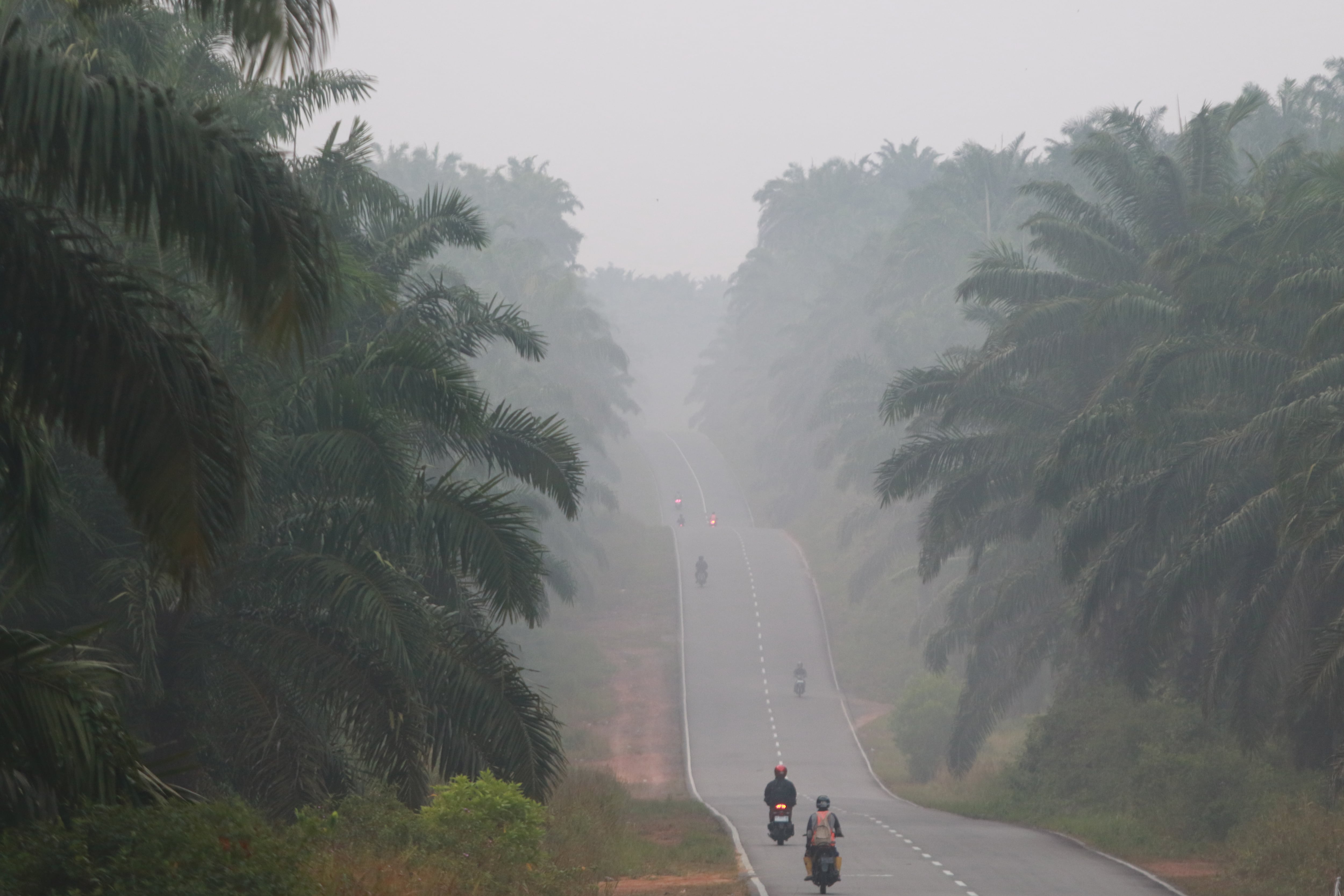
The El Niño phenomenon has not yet reached its peak intensity, which the World Meteorological Organization (WMO) expects to occur at the end of this year, and seawater temperatures in the tropical Pacific area considered the epicenter of the event are already at record levels. The anomaly in that zone exceeded three degrees Celsius in mid‑September and has risen to a level similar to the peak of the El Niño event 11 years ago, in November 2015.

Seguir leyendo

© DPA vía Europa Press (DPA vía Europa Press)

A highway shrouded in smoke from fires in early September on the Indonesian island of Bintan.
  •  

A Candid Diagnosis of BRICS’s New Delhi Declaration: Rhetoric, Indicators & Stats

This article is not designed to skip the facts, just because its author is simply pro-BRICS. It’s an honest, realistic, friendly, and necessary analysis, that readers interested in a summarized diagnosis of the current state of geopolitical affairs need to know. Each summit requires a theme, and this year’s BRICS leaders chose an honest one […]
  •  

India’s BRICS’ Dilemma: Multi-Alignment and Flexibility Without a Clear Global South Vision. Part 2.

India’s central challenge is not the existence of contradictory partnerships. Great powers routinely manage competing relationships. The deeper problem is the absence of a clearly articulated geopolitical vision capable of reconciling those relationships with India’s claims to defend multipolarity, sovereignty, and a Global South leader. India’s multi-alignment policy has given New Delhi more diplomatic flexibility, […]
  •  

Türkiye Misses BRICS Summit in New Delhi

The 18th BRICS Summit, which took place on September 12-13 in New Delhi, reflected the world order’s transition to multipolarity. Türkiye, though sharing this ideology, was not among the summit’s participants. The list of participants in the Indian BRICS summit is noteworthy, including leaders and representatives of the BRICS core (Brazil, Russia, India, China, South […]
  •  

How a Tiny Danish Colony Ruled a Piece of India for 225 Years

Tharangambadi is a fishing village on India’s Coromandel Coast, in the state of Tamil Nadu. Its name means “place of the singing waves,” a nod to the Indian Ocean lapping at its shore. It isn’t much of a tourist stop, and fishing is still its main trade, but anyone who walks its streets runs into […]

  •  

Cómo una pequeña colonia danesa gobernó una parte de la India durante 225 años

Tharangambadi es un pueblo del estado indio de Tamil Nadu cuyo nombre significa «sitio de las olas cantarinas», en referencia al oceáno Índico al que se asoma. Aunque no se trata de un lugar turístico y su principal actividad económica es la pesca, a un visitante le resultará llamativo el aire europeo de parte de […]

  •  

India must return to its roots and recover its voice

At the BRICS Business Forum in Bharat Mandapam on Friday, Russian President Vladimir Putin read out the numbers. The eleven members of this grouping now produce more than 40% of the world’s output. The G7 produces 29. Over the last five years, BRICS countries generated more than half of all global growth. The G7 managed 18%. Narendra Modi, speaking at the same event, added that the bloc is home to half of humanity and a quarter of world trade.

This is not rhetoric. The center of gravity of the world economy has moved, and India is in the chair while it happens.

Now recall something else that took place in that same hall. On May 24 of this year, US Secretary of State Marco Rubio sat down in Bharat Mandapam for an interview with India Today. Asked about Iran’s closure of the Strait of Hormuz, he called it “illegal, unlawful, reckless, dangerous, and unacceptable.” Then he said something more revealing. “I think the whole world needs to say that, and most of the countries in the world are saying that. India is saying that.“

A US official, sitting in Delhi, announced India’s foreign policy position on its behalf. Nobody in the room corrected him. In the same interview Rubio said the trade agreement was “weeks, not months” away. Four months later, it is still unsigned.

India and the construction of the Global South

In March 1947, months before independence, Delhi hosted the Asian Relations Conference. At the Bandung Conference in 1955, India’s first Prime Minister Jawaharlal Nehru was among the chief architects of an idea that seemed audacious then and remains unfinished now: that newly free countries did not have to rent themselves to Washington or Moscow to be taken seriously. The Bandung spirit produced the Non-Aligned Movement, then the Group of 77 in 1964, and then the demand through the 1970s for a New International Economic Order, which was simply a demand that the IMF and the World Bank stop working only for the countries that funded them. India made those arguments first and made them at a time when the material conditions were not as conducive as we see today.

What India has done inside BRICS follows directly from that. At the Delhi summit of 2012, under Manmohan Singh, the group took up the idea of a development bank and asked its finance ministers to study it. That became the New Development Bank, with an Indian, K.V. Kamath, as its first head. The same summit set up the $100 billion Contingent Reserve Arrangement. At Goa in 2016 both were made operational, and India put forward the idea of a BRICS credit rating agency, aimed squarely at the three Western firms whose verdicts decide what every poor country pays to borrow. In 2021 India proposed the BRICS platform for digital public goods. Across four chairships and two very different governments, India’s contribution has been consistent: turning complaints about an unfair world into institutions that can actually be used.

Now look at how Washington talks about the country.

In July 2025, announcing his first tariffs, US President Donald Trump called India and Russia “dead economies” and said they could “take their dead economies down together, for all I care.” He has called India the “tariff king” and its trade rules “obnoxious.” After Indian Prime Minister Narendra Modi went to the Shanghai Cooperation Organization summit, Trump called the relationship “a totally one-sided disaster.” In April this year he shared, without comment, a post describing India as “some other hellhole on the planet.” Our foreign ministry replied that this was “uninformed, inappropriate and in poor taste.” When Rubio was asked in Delhi about the racist abuse Indians face in America, he said that “every country in the world has stupid people.”

No country of India’s size is spoken to this way. The damage is not to anyone’s feelings. It is what other governments now expect of us.

Standing is not a sentiment. It is a prediction that other capitals make about how you will behave when you are pushed. For seventy years, the prediction about India was that it would not be told what its position was.

Five things India should do this week

Start with Iran, because the silence there has cost us the most.

Standing with Tehran has nothing to do with liking its government. A member state of the United Nations was illegally bombed by Israel and the United States of America, and its leadership killed. If the largest grouping of developing countries cannot say so plainly, then sovereignty becomes a privilege granted at Washington’s pleasure, and every country sitting in Bharat Mandapam holds it on loan. Bandung was convened to reject exactly this, and India wrote the rejection.

Our own losses are not abstract. The frigate Dena was sunk on March 4 with 87 men aboard, days after exercising with the Indian Navy at Visakhapatnam. Admiral Arun Prakash, a former navy chief, called it “a perverse act” by a country “supposed to be friends and partners.” More than 11 Indian sailors have been killed since. The Hormuz carries most of our cooking gas, and its closure puts queues outside Indian kitchens. The Iranian port city and free-trade zone Chabahar, representing a decade of Indian money and our only road to Central Asia that avoids Pakistan, was abandoned when an American waiver was allowed to lapse in April. We have been here before. In Trump’s first term, India resisted American sanctions on Iran and then gave in completely, ending every barrel of Iranian oil and damaging a relationship built over centuries.

So why does the Indian state keep walking towards Washington after every humiliation? Not out of confusion. The corporate class that matters politically in this country raises money in New York, lists there, sells services there and answers to regulators there. For them, alignment is good business. For the sorghum farmer in Rajasthan, whose tariff protection was traded away in February, it is ruined. Over 45% of Indians still depend on farming.

The chairship is the one thing Washington cannot take from India this week. Five demands would make the Delhi Declaration an important step towards global south solidarity and action.

One. Name it. The declaration must say what was done to Iran and to the Strait of Hormuz and must reject unilateral secondary sanctions as a category. Washington has increased sanctions on its targets by 933% in recent decades. A bloc that cannot describe the main act of force in its own year has told everyone what its words are worth.

Two. Put Global South debt at the center. Some 3.4 billion people live in countries that spend more on debt interest than on health or education. In 2023 the poorer nations paid $25 billion more to foreign creditors than they received. India should make debt relief the bloc’s headline demand and push the New Development Bank to lend without IMF-style conditions attached.

Three. Open the door wider. BRICS should stop behaving like a club of the eleven. Expand New Development Bank membership to developing countries outside the grouping, give partner states a real say rather than a seat at the back, and have India publicly champion Africa’s place in the bloc’s decision-making.

Four. Build food security together. Set up the grain exchange, and behind it a shared reserve that member and partner countries can draw on. India, of all countries, knows what it means to depend on someone else’s harvest. We must remember the history when India went to Washington for wheat in the 1960s and spent thirty years making sure we would never do it again.

Five. Make reform a demand of the bloc, not a bid for ourselves. India has spent two decades asking for a permanent Security Council seat. It should spend this week asking for Africa’s, and for an end to the 85% voting rule that gives the United States a permanent veto at the IMF. Ask for everyone, and the asking carries weight. Ask only for yourself, and it looks like what it is.

In 1947 India convened the Asia Relations Conference in Delhi with no power and enormous standing. In 2026 it has real power and is spending the time standing down. A new Bandung will not be built by a country that waits to be told what it thinks.

Atul Chandra is the Asia Co-Coordinators of Tricontinental: Institute for Social Research.

This article was produced by Globetrotter.

  •  

Indian summer: The BRICS summit and warming New Delhi-Beijing relations

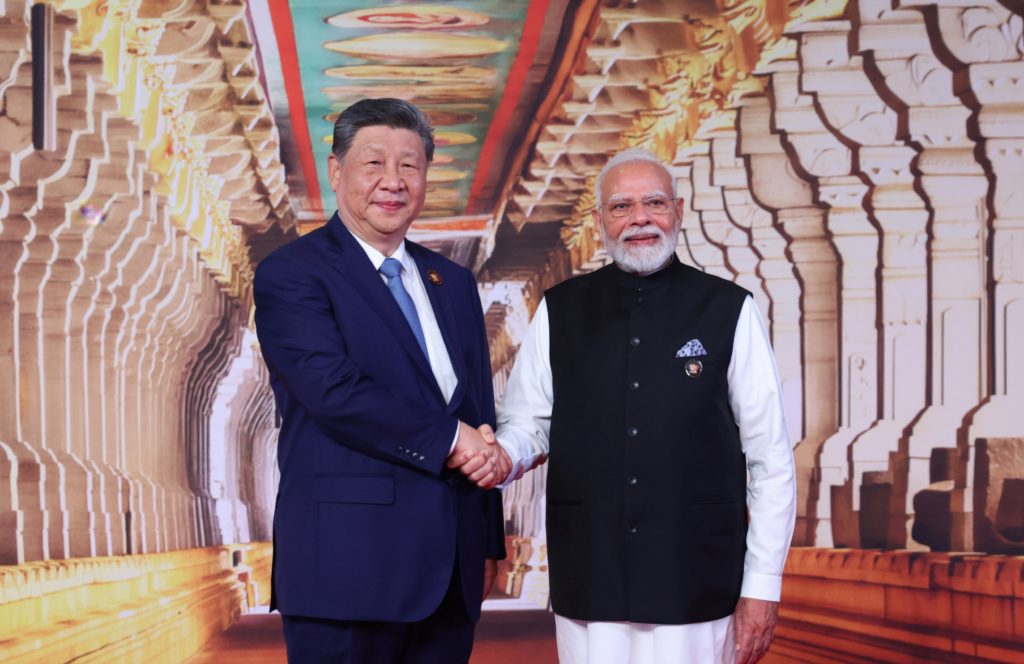
Ein Foto zeigt zwei Männer beim Händedruck vor einer dekorativen Säulenhalle.
Cover image: picture alliance / ZUMAPRESS.com | Pib Handout/Press Information

Problem

The BRICS summit concluded in New Delhi on Sunday, with Indian prime minister Narendra Modi having hosted the two-day gathering as chair. As with many meetings of the group of emerging economies, this edition brought together the leaders of China, India and Russia and featured plenty of anti-Western rhetoric. This was also Chinese leader Xi Jinping’s first visit to India for more than six years, in the latest example of Sino-Indian normalisation following a sustained period of tensions.

New Delhi’s normalisation with Beijing over the last year looks like more of a tactical de-escalation than a realignment. Nevertheless, India has over that time begun to agree more measures to provide greater access to Chinese investment in manufacturing and climate technology, both areas important for India’s development. This should act as a warning for Europeans. If India cannot source technology and capital from partners in Europe, it will seek to do so from China even while remaining suspicious of Beijing from a security point of view.

Solution

New Delhi continues to view Beijing as a threat and seeks deeper security and economic ties with Brussels, as well as with Washington, despite the difficulties President Donald Trump presents. Modi has thus worked to prevent the BRICS from tipping into a purely anti-Western vehicle, since this would run against India’s interests.

Europeans also see India as an increasingly vital partner, following the EU-India trade deal agreed earlier this year, as Europeans diversify geopolitically in the face of tense transatlantic relations. But India’s bilateral agreements with China, including on the sidelines of the BRICS meeting, show that the EU must not take the mutual benefits of closer ties for granted.

Ahead of Modi’s anticipated visit to Brussels later this year, the EU should accelerate its plans further to strengthen Europe-India ties. For instance, it should enhance the existing Trade and Technology Council to drive cooperation in areas like AI, while also moving forward cooperation on defence and security, and making faster progress on India’s plans to join the Horizon Europe funding programme for research and innovation.  

Context

The EU and India signed a landmark free-trade agreement in New Delhi in January, alongside a new security and defence partnership. Both sides aim to build on these with wider cooperation initiatives to encourage greater cooperation and investment in areas like semiconductors, AI and clean-tech supply chains.

India supported moves at the 2023 BRICS summit to agree on a major membership expansion. The group began as a much smaller coalition of just Brazil, Russia, India and China, and South Africa—hence “BRICS”—but has since grown to eleven members, including Egypt, Ethiopia, Iran, Saudi Arabia and the UAE as well as a wider grouping of observer and partner countries that attend summits and align themselves loosely with the bloc’s agenda. The group is internally divided, and not just in terms of China and India. Both Iran and the UAE are members, for instance, despite longstanding regional tensions. This year’s summit produced a limited declaration including vague promises to enhance cooperation.

Source

  •  

BRICS in New Delhi: From Global South Platform to Emerging Alternative

Along with India’s rapprochement with China, the New Delhi BRICS Summit showed that the group is no longer content to remain a platform for the Global South’s protest; it is beginning to build institutions, economic networks, and diplomatic alternatives of its own. A summit held during a period of international turmoil The 18th BRICS Summit, […]
  •  

Commission presents landmark India trade deal to Council for signature

On 11 September, the European Commission has put forward its proposals to the Council for the signature and conclusion of Free Trade Agreement (FTA) between the European Union and India, seeking authorization for its signature and conclusion. If authorized by the Council, this will be the largest trade agreement ever concluded by both the EU and India.

Once adopted and entered into force, the agreement will improve market access, reduce tariffs, tackle unnecessary barriers to trade, as well as provide predictable rules for trade and investment between the EU and India. The EU and India already trade over €180 billion worth of goods and services per year, supporting close to 800,000 EU jobs. This deal will eliminate or reduce tariffs on 96% of EU goods exports to India. Overall, the tariff reductions will save around €4 billion per year in duties on European products. It will make it easier for European companies to access the Indian market and compete on a more level playing field, while it will ensure consumers can benefit from increased choices and more competitive prices.

The proposal put forward today represents a key step towards ensuring that consumers and businesses can start reaping the benefits of this deal as soon as possible. This is in line with the fast-track procedure laid out by Commissioner for Trade and Economic Security, Maroš Šefčovič earlier this year. The procedure aims at speeding up the implementation of FTA's, which is crucial at a time of geopolitical uncertainty and growing pressure on the global trading system.

The EU-India FTA reflects the EU's commitment to strengthen economic ties with key partners in the Indo-Pacific region. With its proposals, the Commission is seeking Council's approval to sign the agreements which will then require European Parliament's consent, before conclusion and entry into force. The Indian authorities are in parallel going through their own internal ratification procedures.

For more information

Proposal for a Council Decision on the signing of the Free Trade Agreement between the European Union and the Republic of India

Proposal for a Council Decision on the conclusion of the Free Trade Agreement between the European Union and the Republic of India

Questions and answers on the EU-India Free Trade Agreement

  •  

India’s BRICS Dilemma: Multi-Alignment Without a Clear Global South Vision. Part 1

As India hosts the 18th BRICS Summit in New Delhi, its policy of multi-alignment is under crucial scrutiny: whether New Delhi can achieve a balance between strategic autonomy and a real commitment to the Global South, or whether BRICS is simply another instrument of transactional, multi-alignment diplomacy? India is presenting its term as president of […]
  •  

BRICS Benefits and Western Alternatives: Competitive Options for Large Economies of the Global South

The strategic choice facing India, the UAE, Saudi Arabia, and other large developing economies does not just boil down to choosing between BRICS and the West. These countries continue to follow a multi-vector policy, aiming to simultaneously reap the benefits of cooperation with BRICS, the G7, the EU, and regional institutions. However, it is important […]
  •  

Outlook For the 2026 BRICS Leaders’ Meeting: Summing Up India’s Presidency & Overcoming India–China Controversy

On September 12, New Delhi will host one of the year’s most long-awaited events, namely, the 18th BRICS Summit. How has India’s presidency unfolded, what can we expect from the meeting, and why have experts started discussing the seemingly impossible intersection of Indian and Chinese interests? Principles in Action “Humanity first” and a “new format […]
  •  

BRICS Is Not Replacing the Dollar – It Is Building Options

BRICS is gaining influence not by launching a common currency or confronting the US dollar directly, but by building alternative financial and technological systems that offer developing countries greater choice, cooperation, and economic autonomy. BRICS Is Moving Beyond the Currency Debate For almost two years, the Trump administration has been threatening 100 percent tariffs in […]
  •  

BRICS on the Threshold of its 20th Anniversary: Results and Prospects of India’s Chairmanship

Despite serious geopolitical challenges, the intensification of confrontational trends globally, and the overall deterioration of the international situation, India is successfully and worthily conducting an active chairmanship of this major and authoritative association of Global South states. On September 12–13, 2026, the next BRICS summit will take place in New Delhi. It is expected to […]
  •  

Narendra Modi in Central Asia: Deepening Friendship and Searching for New Horizons

Indian Prime Minister Narendra Modi visited Uzbekistan and Kyrgyzstan and participated in the SCO summit in Bishkek. Relations between India and the countries of Central Asia have longstanding and deep historical roots, having gone through various periods of development. However, in recent decades, they have been on a clear upward trajectory, despite a number of […]
  •  

Hague tribunal orders India to suspend Indus River projects, uphold treaty with Pakistan

THE HAGUE: The Permanent Court of Arbitration has ordered India to uphold the Indus Waters Treaty with Pakistan and suspend work on its hydroelectric projects, a major legal victory for Islamabad in the dispute over the agreement. The Hague-based tribunal issued the award on the status of the treaty and interim measures concerning India’s Ratle ... Read more

The post Hague tribunal orders India to suspend Indus River projects, uphold treaty with Pakistan appeared first on BOL News.

  •  
❌