It has been a good week for Russian soft power in the sporting world.
On Tuesday (22 September) in Brussels, the EU lifted a visa-ban on a portly 73-year-old Russian billionaire, Alisher Usmanov, who is head of the International Fencing Federation.
And on Saturday in Samarkand, FIDE, the world chess body, elected a Kazakh billionaire, Timur Turlov, who has no professional chess rating, but who does have strong links to Russia, to be its next president.
On paper, Turlov ended 30 years of Russian rule at FIDE, but at a closer look, his victory seems like its continuation under a false flag.
The 38-year-old financier was born in Moscow and made his fortune there, but left Russia after its 2022 invasion of Ukraine, renounced his Russian citizenship, and divested most of his Russian holdings, giving him a nice alibi against Western sanctions.
But he has still been blacklisted by Ukraine for ongoing business ties to Russia’s oil and gas sectors.
This article continues, but the full version is available only to EUobserver.com subscribers. Visit account.euobserver.com/membership
Ever been called 'far Right' for wanting low taxes, free speech and controlled immigration? You're in good company: JFK wanted much the same. The label is ludicrous – and the elites know it, says Dr James Allan.
Suppressing debate about English ethnicity, and labelling those who claim to be ethnically English 'fascists', doesn’t prevent resentment – it fuels it. Konstantin Kisin is right and Rishi Sunak is wrong.
The newly inaugurated Museum of Word in Kolkata opens up the scope and range of how we think about the word, about language, and their role in society and human civilisation.
Greek Prime Minister Kyriakos Mitsotakis used the example the famous Bayeux Tapestry – made in Britain, stored in France – to bring the return of the Parthenon Sculpture back on the agenda of public discussion. On an opinion article in The Guardian, the Greek PM that Greece can not accept the museum’s proposal for a […]
In the heart of Eurasia, the largest youth forum on the planet has come to an end. The NEO author went to Yekaterinburg and heard what the festival’s participants from all over the world had to say. World Youth City The main industrial and cultural center of the Urals is welcoming guests with well-prepared infrastructure […]
Earlier this year I reported how President Trump issued an executive order mandating domestic production of glyphosate-based herbicides for use in agriculture and the military.
Now it is being reported that Trump’s Environmental Protection Agency (EPA) has allowed Bayer/Monsanto to choose their own regulations they are willing to abide by for another destructive herbicide, dicamba.
US environment agency let Bayer pick regulations for destructive weedkiller, documents show
Environmental Protection Agency asked firm to choose rules it wanted for dicamba, then put the choices in a proposed federal rule
The EPA allowed pesticide giant Bayer to pick from a menu of regulation options for the controversial and destructive weedkiller dicamba, newly released internal agency documents show.
The documents provide an unusually clear look into the process of developing pesticide regulations, which is typically done out of public view.
It shows in detail how the EPA asked Bayer which regulations it wanted, received a response from Bayer, then put Bayer’s choices into a proposed federal rule.
Dicamba is drift prone and kills vegetation and crops for miles around fields where it is sprayed, and is linked to liver cancer and Non-Hodgkin lymphoma.
Courts have twice ordered it off the market because of its drift problems, but the EPA has re-approved it.
If you want to learn more about the herbicide dicamba, here are a couple of articles about the history of the use of this dangerous herbicide in the U.S. that the EPA continues to allow:
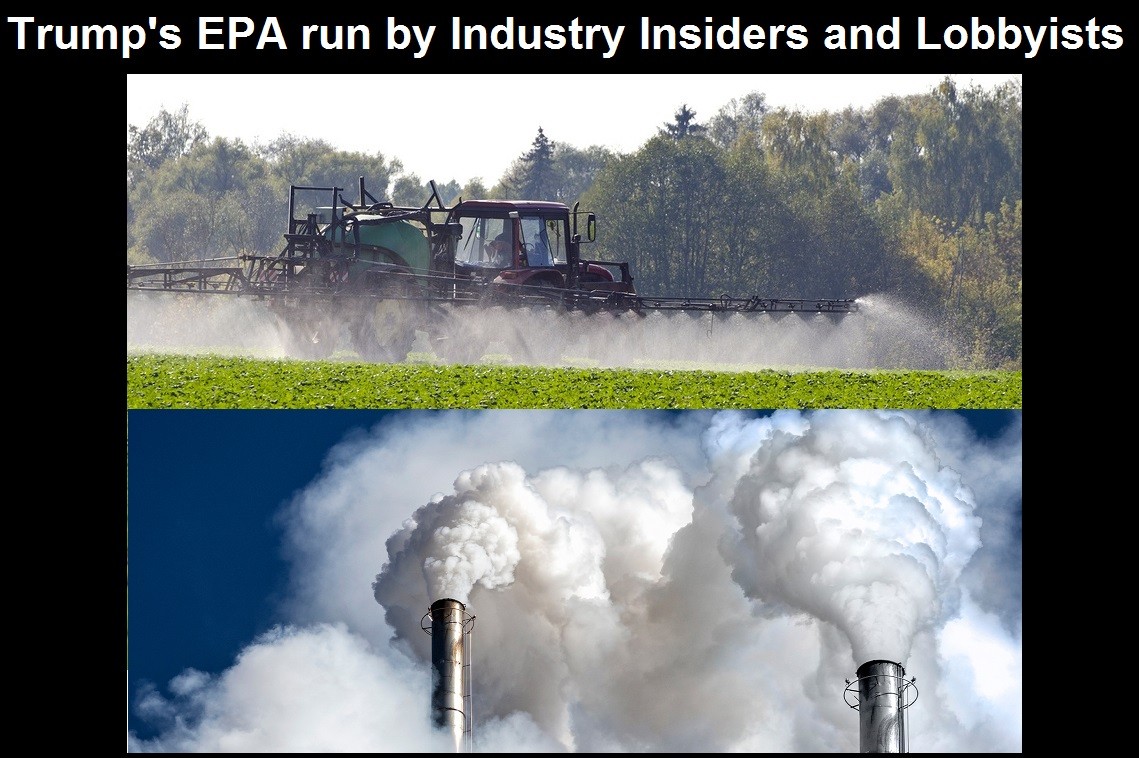
It has been well documented that Trump’s EPA in his second term is run by former industry insiders and lobbyists from the very industry it is supposed to regulate. See:
Not only are they seeking to give legal protection to Bayer for their dangerous herbicides which have been ruled in the U.S. Courts to cause cancer and other diseases, they have also removed regulations for power plants that pollute the air so that data centers can be built very quickly to fuel the energy needed for more AI development.
These actions are being sold to the Conservative MAGA movement as necessary to roll back “climate change” regulations by “the liberals” which they claim are based on bad science, and hamper industry development.
But these actions have nothing to do with fighting back against the “climate change agenda”, and have everything to do with enriching the pockets of Trump’s friends in the industry who do not want to be regulated anymore for purely economic reasons that have nothing to do with the environment or the health of the U.S. population.
Americans from both sides of the political spectrum are now opposing things like these data center developments, so don’t fall for the partisan political games!
It is getting more and more dangerous to purchase food from the big box retailers stocking commodity food. Your beef could be from Argentina from shipments that were rejected by China (source), and much of the food you purchase could be contaminated with chemicals that have been banned in most other countries and have been legally shown to cause disease in a court of law.
Your government here in the U.S. is NOT looking out for you! So you need to become a health-conscious consumer, and try to purchase food where you know where it came from and how it was produced.
My own online story, Healthy Traditions, provides options for food produced by small-scale family farmers where we have thoroughly tested it.
We are sourcing more and more of our food from outside the U.S., due to necessity. Starting this year, 2026, we are only purchasing grains from Italy, where their standards for food are far superior to the USDA national organics program.
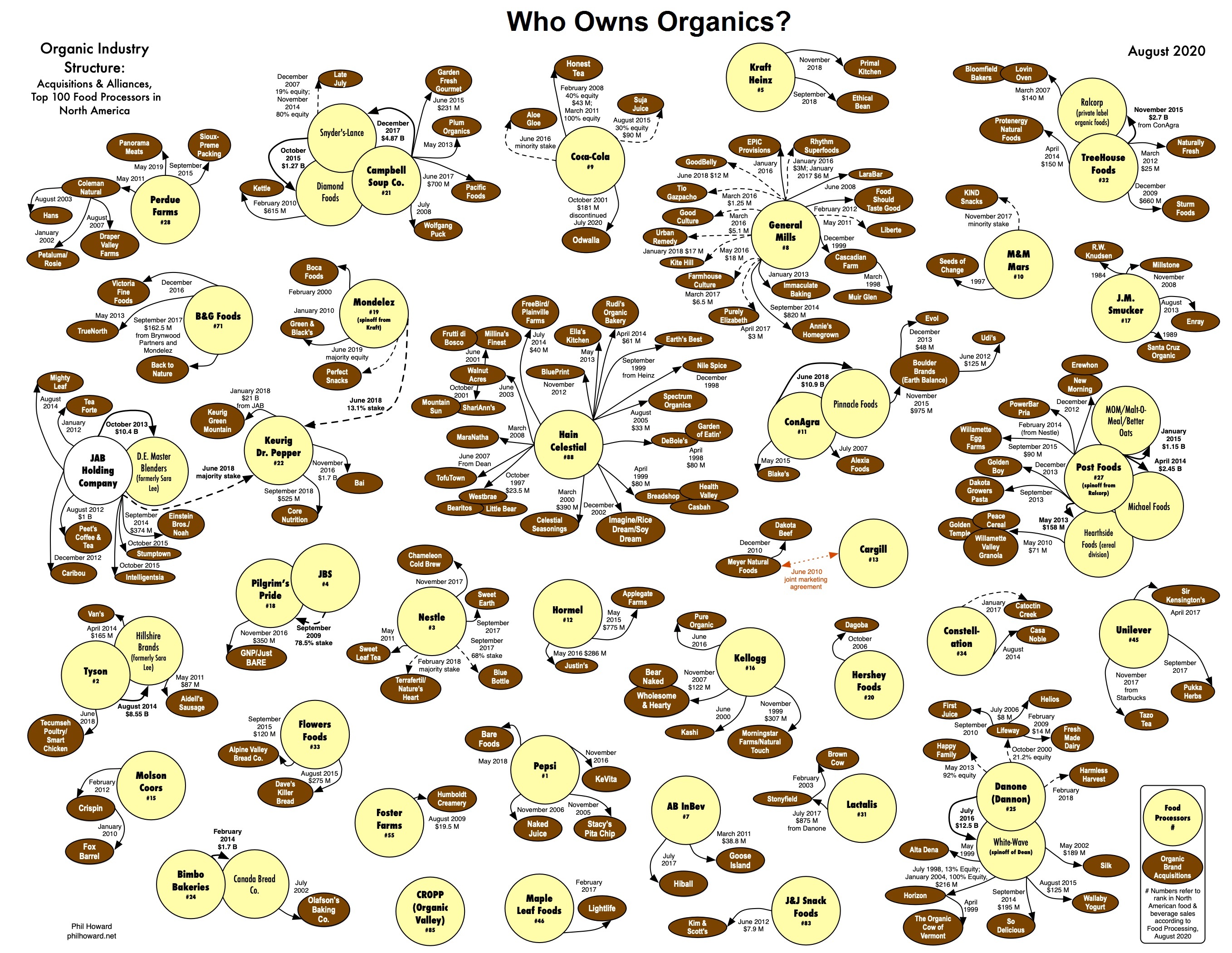
We stopped participating in the USDA organic program years ago, due to the influence of Big Food that has watered down the standards and still allows trace amounts of herbicides and pesticides. See:
We have consistently tested products in the U.S. that claim to be “organic” or “GMO free” and have routinely found these products contaminated with dangerous herbicides like glyphosate, and GMO DNA.
And they are not even violating USDA organic standards.
In Europe, and especially in Italy, if someone makes a claim to having a European organic certification and then those products are tested to be contaminated, they lose their license to sell, and face criminal charges, unlike the U.S.
Americans have no one to blame for the sad state of our food and food production here in the U.S., however, except themselves, because the American consumer still has the largest voice and the most influence when it comes to food standards.
But people buy in to the partisan political debates and falsely think they can just vote the right person into power to solve their problems.
The most effective way, however, to bring about change, is by voting with your dollars and where you spend your money.
This is the only thing that will affect change, but it takes a lot more effort to seek out ethical food producers in your community and support them instead. It is just so much easier to stop at the Big Box grocery stores where you can get all your shopping done in minutes.
Convenience has a price: and it may cost you your life.
This article was written by Human Superior Intelligence (HSI)
See Also:
Understand the Times We are Currently Living Through
Fifteen antiquities that had been illegally removed from Greece will be returned to the country from the United States. They were handed over to Minister of Culture Lina Mendoni at a special ceremony held at the Manhattan District Attorney’s Office. According to a statement by the Ministry of Culture, with this latest repatriation, the number […]
Despite stereotypes, for international news and relations in the sphere of culture, summer is no time for rest and relaxation. RT. Doc Screenings Screenings of the RT. Doc film “Starobelsk. Children Should Not Die” were held at Russian Cultural Centers abroad. It was watched by many people in various languages, despite attempts by pro-fascist circles […]
In the year of the 250th anniversary of US independence, the bipartisan US Semiquincentennial Commission released “America’s Soundtrack: The Sound of 250 Years.” Perhaps unsurprisingly – because the initiative was planned over the course of a decade with the support of corporations like Amazon, Oracle, and Palantir – the playlist is a romantic ode to the most paternalistic and militaristic sides of the United States.
However, activists have pointed out that there are “Two Americas at 250.” In other words, there is a working-class history and culture that directly contradicts the imperialist project of the billionaire class. Therefore, we must study another soundtrack: one based on the struggles, desires, and traditions of the people. One person that represents this soundtrack is “America’s favorite blues man,” 34-year-old Buffalo Nicols.
Music characterized Carl Nichols’s upbringing in Milwaukee, Wisconsin. Though not surrounded by musicians, he always had the sounds of jazz on the radio, his mother‘s music collection, his older brother’s hip-hop, and his older sisters, R&B, punk, and metal. This was the context in which he taught himself to play his sister’s guitar at the age of 12.
Performing with bands throughout high school, Carl found kinship among the West African community. As he played a cheap banjo along with a friend on the instrument known as the xalam, he embraced music as an opportunity to learn about other cultures. Traveling through countries like Senegal, Romania, Hungary, and Ukraine in his early 20s and learning their sonic traditions, motivated him to study Black American music with the same rigor.
Performers like Lead Belly, Pete Seeger, and Woody Guthrie left a lasting mark on him, specifically relating to communal and commercial music. Similarly, the writing of Etheridge Knight, Langston Hughes, Zora Neale Hurston, and Amiri Baraka helped him understand the blues as “a living thing” rather than a set of important names and dates. He said, “There’s always been this connection between activism and folk music because I think trying to exist as an artist in America has been a political thing.”
His 2025 song “Belly of the Beast“ is one example of this because it asks about the responsibility which domestic victims of US imperialism have for protecting victims abroad. Written during the heightened media coverage of the Israeli genocide in Gaza, the song calls attention to the relationship between Black Americans and Palestinians. He conceptualized the song following a period of political education defined by a collection of Malcolm X speeches and Régis Debray’s 1967 “Revolution in the Revolution?”
I live in the belly of the beast
Though I only meant to look into his mouth
It was not opportunity but chains he used to capture me
And every day I’ve tried to get back out
While these lines of the chorus speak from the individual or first person perspective, Nichols uses them to describe a common experience.This is why the song ends with the collective “we live in the belly of the beast.” The song is neither nihilistic or romantic in its allusion to topics like police killings, occupation and ethnic cleansing. Rather, in verse four, the singer puts his hope for change in the hands of the people, saying “we cannot win ’till we get organized.”
Some, who mistake folk music as apolitical, took offense to this song. They attack him in social media comments, direct messages, and hate mail. In the spirit of the blues, Nichols said he laughs at their assumption that they can hurt him. The same minority of listeners attacked him for his 2025 song “Ice Age Blues.”
He wrote the song in response to the second Trump administration’s escalation of ICE terror. Specifically, on the widespread sense of surprise that law-enforcement would use deadly force against the US residents. He said that it reminded him of the same realization among new activists during the 2020 uprising for George Floyd. However, Nichols shows that he was not shocked by the contradiction – he ends the song by asking,
You think all that money is for war fought abroad?
They won’t hesitate to kill you in your own backyard.
They’d be happy to kill you in your own backyard.
Nichols said that political finger pointing will not help identify the common perpetrator of a shared oppression. Instead, he urges readers to understand the state and how it works against the people; to study the basis of its patterns and changes. By doing so, he calls listeners attention to the basis of repression rather than simply what accelerates it.
Similarly, he recommends the new generation of blues people to “return to the root.” That is, to disregard stereotypes about their Black art and study those – like Zora Neal Hurston – who preserved long-standing traditions. By reclaiming their legacy, he said that culture workers can affect consciousness on a mass level.
I know no artist really wants to be a role model or to be representing an entire people but the reality is that Black culture is such a fragile, delicate and important thing that we have to be more mindful of how we share it and how we interact with it.
Buffalo Nichols is currently touring through states like West Virginia, North Carolina, Illinois, and Minnesota.
Flûte dont le nom persan signifie « roseau » et dont on joue dans les mondes arabe, turc et persanophone. Connu dès l'Antiquité, cet instrument se décline en de nombreuses tailles.
5 millions de tonnes de CO2
C'est la quantité de dioxyde de carbone ou équivalent émise lors des quatorze premiers jours de la guerre, soit autant qu'un pays comme l'Islande en un an, selon une estimation du Climate and Community Institute. C'est aussi l'équivalent des rejets annuels d'un total de 1,1 million de véhicules à moteur à combustion.
Source : Fred Otu-Larbi, Patrick Bigger et Benjamin Neimark, « Two weeks of war in Iran unleashed more carbon pollution than Iceland does in a year », Climate and Community Institute, 21 mars 2026.
Fierté
« C'est en lisant les vers du poète du Xe siècle Ferdowsi (940-1020) que j'ai compris la fierté du peuple iranien mais aussi sa longue tradition révolutionnaire : cette alliance impétueuse de dignité et de fureur me convient parfaitement ! »
Bertrand Badie, politiste de père iranien Source : Le Monde, 20 mars 2026.
« Mort à l'Amérique ! »
Ou « Marg bar Amrika ! » en iranien. Slogan repris et popularisé par les étudiants durant la prise d'otages de l'ambassade américaine de Téhéran en 1979, et qui fut promis à une longue prospérité sur les murs des villes ou dans les manifestations pro-régime. Dans ses Mémoires, l'ancien président Hachémi Rafsandjani (1934-2017) affirme qu'en juillet 1984 le Parlement avait décidé de l'abandonner, tout comme le slogan « Mort à l'Union soviétique », mais que le moment propice n'est pas venu.
Opération « chat botté »
Parmi ses projets pour abattre le régime iranien, le renseignement extérieur israélien (Mossad) œuvrait au retour au pouvoir de l'ancien président Mahmoud Ahmadinejad à la faveur d'un soulèvement militaire des forces d'opposition kurdes. Pour mémoire, le concerné, qui fut président de 2005 à 2013, fut l'un des plus violents contempteurs d'Israël, et c'est sous son mandat que la question du programme nucléaire iranien est devenue une source de tension majeure entre Téhéran et Tel-Aviv.
Source : The New York Times, 13 juillet 2026.
Frantz Fanon à Alo Shariati
« Ton interprétation de la renaissance de l'esprit religieux et tes efforts pour mobiliser cette grande puissance — qui à l'heure actuelle est en proie aux conflits internes ou atteinte de paralysie — dans un but d'émancipation d'une grande partie de l'humanité menacée par l'aliénation et la dépersonnalisation et dont le retour à l'islam apparaît comme un repli sur soi sera le chemin que tu as pris (…). Quant à moi, bien que ma voie se sépare, voire s'oppose à la tienne, je suis persuadé que nos chemins se croiseront finalement vers cette destination où l'homme vit bien. »
Lettre de Frantz Fanon à Ali Shariati, penseur de la révolution iranienne et qui avait traduit ses œuvres en persan. Source : Frantz Fanon, Écrits sur l'aliénation et la liberté, La Découverte, Paris, 2015.
Savak, CIA et Mossad
De sinistre mémoire, l'Organisation pour le renseignement et la sécurité nationale (Savak selon l'acronyme persan) était connue pour sa brutalité, ses arrestations arbitraires, le recours à la censure et une surveillance étroite de toute la société. Cette police politique du chah a vu le jour avec l'aide des services secrets américains en 1957. Dans le cadre des bonnes relations avec Israël — que l'Iran avait reconnu dès 1950 —, les services de renseignement de Tel-Aviv (Mossad) formèrent les officiers iraniens aux techniques d'interrogatoire, de surveillance et de contre-espionnage.
PIB en berne
La « pression maximale » exercée par les États-Unis sur l'économie iranienne aurait entraîné une contraction du produit intérieur brut de 7,3 % entre 2018 et 2022, selon l'économiste Vali Nasr (Iran's Grand Strategy. A Political History, Princeton University Press, 2026). La pauvreté aurait augmenté de 11 %.
Un nez parfait
Les rues de Téhéran grouillent de jeunes (surtout des femmes) avec le nez dans le plâtre ou affublé d'un pansement. Les rhinoplasties sont à la mode, et certains Iraniens branchés portent un plâtre sans avoir subi d'opération, seulement pour afficher leur statut social. Comment expliquer une telle mode ? De nombreuses raisons ont été avancées. La première serait le code vestimentaire — de moins en moins respecté ces dernières années — selon lequel les femmes doivent se couvrir les cheveux et le corps et qui fait du visage le centre de l'attention et de l'apparence. La seconde tiendrait au désœuvrement des jeunes, qui rêvent de ressembler aux vedettes de Hollywood.
Tapis
C'est à Pazyryk, une vallée du Haut-Altaï, en Sibérie méridionale, que des archéologues soviétiques découvrirent en 1949 dans le pergélisol un tapis de laine de mouton noué et finement tissé à la main. Préservé par le gel, ce tapis daté du IVe ou IIIe siècle avant notre ère est le plus ancien connu de cette qualité. Il proviendrait soit des Scythes, soit des Perses achéménides. Les tapis persans noués à la main demeurent à ce jour les plus célèbres et les plus recherchés des tapis d'Orient.
Voie nucléaire
« L'un des principaux dirigeants réformateurs iraniens, Saeed Laylaz, a déclaré récemment que l'Iran était contraint par les événements de devenir une puissance nucléaire. Il indique que, depuis quarante ans, l'Iran a déclaré à de nombreuses reprises aux Américains être prêt à telle ou telle concession, pensant que ces derniers allaient le laisser tranquille. Mais le résultat a été davantage de pression, puis la guerre. Les Iraniens n'ont donc plus le choix : soit ils deviennent une puissance nucléaire, soit ils meurent. La seule issue de cette guerre serait un Iran nucléaire. »
Source : Siavosh Ghazi, Carnet de guerre. 40 jours dans Téhéran sous les bombardements, First, Paris, 2026.
208 (milliards de barils)
Réserves prouvées de pétrole de l'Iran en 2025, selon l'Organisation des pays exportateurs de pétrole (OPEP), soit près de huit fois la consommation annuelle mondiale. Le pays occupe la troisième place dans le monde derrière le Venezuela et l'Arabie saoudite, devant le Canada.
Le persan en héritage
Langue officielle de l'Iran, le persan est compris par la plupart des Iraniens, bien qu'il ne soit la langue maternelle que d'un peu plus de la moitié de la population. Il est parlé en Afghanistan et au Tadjikistan, pays où il est également la langue officielle. L'histoire de la région fait aussi que le persan a beaucoup influencé d'autres langues, proches comme le kurde, mais aussi distinctes comme le turc ottoman et surtout l'ourdou du Pakistan, lui-même très proche de l'hindi, officiel en Inde. Plus largement, la plupart des langues d'Asie du Sud et du Sud-Ouest appartiennent à la famille indo-iranienne.
Michel Foucault et l'Iran
« Il n'y a, certes, aucune honte à changer d'opinion ; mais il n'y a aucune raison de dire qu'on en change lorsqu'on est aujourd'hui contre les mains coupées, après avoir été hier contre les tortures de la Savak. (…) La spiritualité à laquelle se référaient ceux qui allaient mourir est sans commune mesure avec le gouvernement sanglant d'un clergé intégriste. Les religieux iraniens veulent authentifier leur régime par les significations qu'avait le soulèvement. On ne fait pas autre chose qu'eux en disqualifiant le fait du soulèvement parce qu'il y a aujourd'hui un gouvernement de mollahs. »
Michel Foucault s'explique dans Le Monde du 11 mai 1979. Envoyé spécial pour le Corriere della Sera, le philosophe s'était beaucoup vu reprocher son intérêt pour cette révolution religieuse et ses propos sur l'unité populaire contre le chah, le « soulèvement de toute une société ». En réalité, il s'intéressa davantage au « mouvement » de délégitimation du politique qu'à son débouché.
« Axe du mal »
« Des États comme ceux-ci [Corée du Nord, Iran et Irak], ainsi que leurs alliés terroristes constituent un axe du mal qui s'arme pour menacer la paix mondiale. En cherchant à se doter d'armes de destruction massive, ces régimes représentent un danger grave et croissant. Ils pourraient fournir ces armes à des terroristes, leur donnant ainsi les moyens d'assouvir leur haine. Ils pourraient attaquer nos alliés ou tenter de faire chanter les États-Unis. Dans tous ces cas, le prix de l'indifférence serait catastrophique. »
George W. Bush, discours sur l'état de l'Union, 29 janvier 2002.
Impayés
En juillet 2026, les autorités iraniennes recensaient 20 676 personnes et entreprises n'ayant pas régularisé des revenus estimés à 94,4 milliards d'euros, des sommes principalement liées au rapatriement des revenus d'exportation. À eux seuls, 225 grands débiteurs concentreraient 53 milliards d'euros. Cela ne signifie toutefois pas que ces montants ont disparu : selon l'Organisation générale de l'inspection, une partie importante correspondrait à des erreurs d'enregistrement douanier, notamment au niveau des sociétés pétrolières publiques, ou à des devises déjà utilisées pour financer des importations. L'affaire révèle surtout l'opacité du circuit des devises en Iran.
« Tahdig »
Cette couche croustillante et savoureuse qui se forme au fond de la casserole lors de la préparation du riz est la gourmandise convoitée d'un repas persan. Souvent parfumée au safran et au beurre, elle doit être soigneusement surveillée pendant la cuisson. Les cuiseurs à riz modernes permettent de la réussir plus facilement.
Armes chimiques
Durant la guerre contre l'Irak, l'Iran a subi plusieurs attaques chimiques lancées par Bagdad. Le régime de Saddam Hussein fit ainsi usage de 54 000 obus d'artillerie et de 27 000 missiles chimiques, ainsi que de 19 500 bombes gazeuses aériennes.
Source : Vali Nasr, Iran's Grand Strategy. A Political History, Princeton University Press, 2026.
Golfe Persique ou Arabique ?
« Il y a plus de deux mille ans que le golfe en question s'appelle le golfe Persique : en fait, depuis que les Perses se sont installés dans la province de l'Iran qui le borde. Au cours de ces deux millénaires, jamais ce nom n'a changé. Tous les géographes et les historiens de l'Antiquité n'ont connu le golfe que sous le nom de Persique… En Europe, à partir du XVIe siècle, dans les grands atlas — comme ceux de Gerard Mercator et d'Abraham Ortelius, par exemple —, c'est exclusivement la désignation de “Sinus Persicus” qui est utilisée. Jusque vers 1960, tous les atlas et ouvrages de géographie, même les manuels scolaires publiés dans les pays arabes, n'ont utilisé que “khaleej al-farsi”. »
Extrait d'un courrier de protestation de l'ambassade d'Iran en France adressé au « Diplo » après la publication d'un article mentionnant le « golfe Arabique » (Jean-Pierre Viennot, « Nouveaux affrontements dans la région du golfe Arabique entre éléments traditionalistes et forces révolutionnaires », Le Monde diplomatique, janvier 1970).
Mise en garde
« Au président iranien Rohani : NE MENACEZ PLUS JAMAIS, AU GRAND JAMAIS, LES ÉTATS-UNIS, SINON VOUS EN SUBIREZ DES CONSÉQUENCES QUE PEU DE PERSONNES DANS L'HISTOIRE ONT JAMAIS CONNUES. NOUS NE SOMMES PLUS UN PAYS QUI TOLÉRERA VOS PAROLES DÉMENTIELLES DE VIOLENCE ET DE MORT. SOYEZ PRUDENT ! »
Donald Trump, en 2018 Source : compte Twitter de Donald J. Trump (@realDonaldTrump)
103 milliards de dollars
Ce serait le bilan financier des cent vingt premiers jours de guerre pour les États-Unis, selon l'estimation du chercheur Stephen Semler, qui prend non seulement en compte le coût des opérations, mais aussi celui des munitions et des pertes. Selon l'Institut international de recherche sur la paix de Stockholm, les dépenses militaires de l'Iran en 2025 auraient été de 7,5 milliards de dollars.
Source : Stephen Semler, « US spent $103 billion on the Iran war in four months », Newsletter n° 345, Polygraph, 13 juillet 2026.
« Khar kardan »
Expression familière qui signifie « faire un âne de quelqu'un », autrement dit l'amadouer, le duper ou le prendre pour un imbécile. En écho, un dicton célèbre affirme que « Mieux vaut être embrassé par un âne qu'être “rendu âne'' par un baiser ». Autrement dit : un baiser de peu de valeur est préférable à celui qui manipule et fait perdre la tête.
« Tondre la pelouse »
« La communication du commandement interarmées américain qui couvre le Moyen-Orient indique que les États-Unis devront probablement conduire des frappes de manière assez régulière pour empêcher l'Iran de reconstruire ses capacités balistiques et son infrastructure de radars. L'expression, quelque peu vulgaire, qui résume cette stratégie est : ''tondre la pelouse''. Autrement dit, empêcher Téhéran de reconstituer ses arsenaux. »
Martin Quenez, chercheur en relations transatlantiques au German Marshall Fund Source : Cultures Monde, France culture, 2 septembre 2026
55 kilomètres
C'est la plus faible distance entre les deux rives continentales du détroit d'Ormuz. Les îles Larak (Iran) et l'archipel de Salamah (Oman) ne sont distants que de 38 kilomètres. Cet étroit passage maritime permet l'acheminement de l'essentiel du pétrole et du gaz produits par l'Arabie saoudite, les Émirats arabes unis, le Koweït, le Qatar, l'Irak, Bahreïn et l'Iran. En 2025, un quart du transport maritime mondial de pétrole et un cinquième du commerce maritime mondial de gaz naturel liquéfié (GNL) a franchi ce détroit.
Source : « Détroit d'Ormuz : quelle importance dans le transport de pétrole et de gaz ? », www.connaissancedesenergies.org, 26 avril 2026.
Turcs, Iraniens et Arabes
« C'est en Turquie que j'ai compris à quel point la vision du monde arabe à l'égard de l'Iran est biaisée. Les Turcs voient dans les Iraniens des égaux. Ils n'ont pas d'idées préconçues à leur égard et encore moins du racisme ou du mépris. Ces deux pays sont pourtant rivaux, mais le peuple turc a le sentiment d'être face à une civilisation qui mérite le respect. Les Arabes ont beaucoup à apprendre de cela. »
Abdelkader Fayez, directeur du bureau d'Al-Jazira en Iran Source : Iran Podcast (en arabe), 8 janvier 2025.
Palme d'or et menacé de prison
Le cinéaste Jafar Panahi a été moult fois récompensé pour son œuvre : Caméra d'or à Cannes pour Le Ballon blanc en 1995 ; Lion d'or à Venise pour Le Cercle en 2000 ; Ours d'or à Berlin pour Taxi Téhéran en 2015 ; Palme d'or à Cannes en 2025 pour Un simple accident. Condamné par contumace à un an de détention en décembre 2025, pour « activité de propagande contre l'État », Panahi a vu sa peine confirmée en juin 2026. Un recours restait néanmoins possible selon son avocat. Il a déjà fait deux séjours en prison, en 2010 et entre 2022 et 2023. Il a choisi de rentrer dans son pays pour continuer son travail après sa dernière récompense à Cannes.
250 000
Nombre de millionnaires en dollars que compterait le pays, selon le magazine Forbes (21 juin 2021).
« Grand Satan »
En farsi, « Sheytan bozorg ». Expression utilisée par l'ayatollah Rouhollah Khomeiny pour désigner les États-Unis d'Amérique et reprise dans nombre de publications, qu'elles soient officielles ou non.
« Balaal kababi »
Vendu par des marchands ambulants, ce mets est emblématique de la cuisine de rue iranienne. Il consiste en du maïs grillé sur du charbon de bois et se consomme généralement en été.
Ski
Prisé des alpinistes et des skieurs-alpinistes, le mont Damavand est le point culminant de l'Iran, à 5 610 mètres. Ce volcan iconique fait partie de la chaîne de l'Elbourz, qui sépare Téhéran de la mer Caspienne. De nombreux textes mythologiques s'y réfèrent.
Digérer l'envahisseur
« Bien que plusieurs fois envahis par les Grecs, les Arabes, les Turcs et les Mongols, les Iraniens n'ont jamais été détruits ou, pire encore, assimilés. Leur culture, leur peuple ont survécu à tous les traumatismes, même les plus violents. (…) Vaincus, les Iraniens ? Alors qu'ils finissent toujours par intégrer l'envahisseur, l'étranger, en l'“iranisant'', un fait extrêmement rare dans l'histoire des peuples ? Face à l'invasion arabe, la civilisation égyptienne s'est perdue en l'espace de deux générations. Il n'y a pas eu de phénomène semblable en Iran. »
Ardavan Amir-Aslani, avocat et essayiste. Source : De la Perse à l'Iran. 2 500 ans d'histoire, L'Archipel, Paris, 2018.
Effacer la mémoire
Les bombardements américains et israéliens ont également touché les lieux où l'Iran transmet son savoir et conserve son histoire. Plus de trente universités ont ainsi été endommagées. Le patrimoine n'a pas davantage été épargné : le palais du Golestan à Téhéran, la mosquée du Vendredi et les palais d'Ali Qapou et de Chehel Sotoun à Ispahan ont subi des destructions.
Sources : AFP, Reuters, Unesco.
Ouverture d'esprit
« À Téhéran, quantité de gens qui n'auront jamais l'occasion ni les moyens de voir Paris parlent parfaitement français. Et ce n'est pas le résultat d'une influence politique ni — comme l'anglais en Inde — d'une influence coloniale. C'est celui de la culture iranienne, curieuse de tout ce qui est autre. »
Nicolas Bouvier, L'Usage du monde, La Découverte, Paris, 2014 (1re éd. : 1963).
Précarité
Selon l'économiste iranien Mohammad Maljoo, la proportion de travailleurs concernés par des contrats à durée déterminée, équivalents aux CDD en France, serait passée d'environ 6 % en 1989 à plus de 90 % en 2017.
Drapeau
Le 29 juillet 1980, l'Iran se dote d'un nouveau drapeau pour signifier la rupture avec le régime du chah. L'emblème porte deux phrases calligraphiées en langue arabe : Allah Akbar (« Dieu est plus grand ») et La ilah illa Allah (« Il n'y a de dieu que Dieu »). Pour signifier leur défiance à l'égard de la République islamique, de nombreux groupes d'opposition utilisent soit le drapeau au lion et au soleil, soit le drapeau tricolore vert-blanc-rouge sans emblèmes. Tous les deux ont été interdits par la Fédération internationale de football association (FIFA) lors des Coupes du monde de football en 2022 et en 2026.
« Enfer ardent »
« Tout le peuple iranien est uni face à toute attaque et à toute menace. Pour tout envahisseur, l'Iran se transformera en un enfer ardent. »
Mohammad Khatami, 10 février 2005. À l'époque président de la République islamique, ce réformateur a subi des restrictions de déplacement et de parole depuis le soutien qu'il a apporté au « mouvement vert », provoqué par l'élection controversée de M. Mahmoud Ahmadinejad en 2009.
Jeunes prodiges
En juin 2026, l'équipe nationale iranienne de mathématiques a remporté l'Olympiade internationale de mathématiques et de sciences (IMSO) organisée par la Chine. Cette compétition annuelle destinée aux élèves du primaire (âgés de 13 ans et moins) a réuni des représentants de 49 pays.
3 millions
C'est le nombre d'étudiants dans l'enseignement supérieur, dont le tiers est inscrit en sciences de l'ingénieur.
« Femme, Vie, Liberté »
« Zan, Zendegi, Azadi » : slogan d'abord scandé par des femmes kurdes et des militants du Parti des travailleurs du Kurdistan (PKK, Turquie). En septembre 2022, à la suite de la mort à Téhéran de Mahsa Amini, une étudiante iranienne arrêtée trois jours plus tôt par la police religieuse pour « port de vêtements jugés inappropriés », les manifestants se l'approprient, et il est désormais célèbre dans le monde entier.
Des sirènes hurlantes, des embouteillages monstres étendus sur des kilomètres, des forces de l'ordre déployées dans les rues pour dissuader émeutes, manifestations et pillages tandis que quatorze millions d'habitants évacuent Téhéran et sa banlieue. Ces scènes dignes d'un film dystopique auraient pu avoir lieu. Ce n'est pas la menace du président américain Donald Trump de faire disparaître la civilisation iranienne en une nuit (lire « Une journée comme une autre ») qui en aurait été la cause, mais un ordre des autorités de la République islamique. En novembre 2025, les pluies d'automne ne sont pas au rendez-vous. L'Iran connaît la pire sécheresse depuis un siècle. Les cinq barrages qui approvisionnent la capitale sont presque à sec et les coupures d'eau sont quotidiennes, surtout la nuit. La tension est identique dans la ville de Machhad (nord-est), que quatre barrages environnants sont bien en peine d'alimenter. Le président Massoud Pezechkian met alors en garde ses compatriotes. Si la situation ne s'améliore pas, il faudra évacuer la mégapole et ses environs (1). Pour le long terme, il évoque même un possible transfert définitif de la capitale surpeuplée vers la région de Makran, près du détroit d'Ormuz. Un projet jugé irréalisable par nombre d'experts mais dont l'évocation frappe tout de même les esprits, tant elle conforte l'idée d'un choc environnemental majeur à venir.
Des villages entiers sont privés d'eau potable, l'exode rural s'aggrave, les équilibres sociaux et territoriaux sont bouleversés
La hausse, toute relative, de la pluviométrie au premier semestre 2026 a conjuré le scénario de l'évacuation forcée, mais le problème de fond demeure. Trente-cinq millions d'Iraniens sont confrontés quotidiennement à la pénurie d'eau. Les réserves totales ont diminué de 211 kilomètres cubes entre 2003 et 2019 — l'équivalent de deux années de consommation nationale —, tandis que le niveau moyen des nappes souterraines a fortement baissé (2). Dans certaines régions, notamment dans l'Est et dans le Sud, l'eau potable n'est accessible aux habitants que via des camions-citernes payants, ce qui provoque de longues files d'attente. Une centaine de zones humides ont disparu, et l'assèchement des rivières contribue à l'aggravation des tempêtes de poussière qui sévissent à partir du printemps.
Contrairement au discours officiel, la sécheresse et le réchauffement climatique, présentés comme une fatalité, ne sont pas les seuls responsables de cette crise. C'est aussi, et avant tout, une affaire de mauvaise gestion et de politiques environnementales erratiques depuis les années 1970. « La pénurie d'eau en Iran, particulièrement à Téhéran, n'est pas un phénomène passager ou le résultat d'une seule année de sécheresse, écrit ainsi le très critique quotidien économique de Téhéran Jahan-e Sanat. C'est le signe d'un déséquilibre profond et structurel du système national d'approvisionnement et de consommation » (17 février 2026).
Autrement dit, l'Iran manque d'une politique centralisée et cohérente de l'eau qui arbitrerait entre les besoins. Les efforts consentis en faveur de l'agriculture — laquelle représente 90 % de la consommation des ressources hydriques — sont pointés du doigt. Afin de procurer des revenus décents aux populations rurales, mais aussi pour garantir la sécurité alimentaire d'un pays exposé aux sanctions internationales, les autorités ont multiplié les mesures pour doper la production agricole. Des dizaines de barrages et de retenues plus modestes ont été construits un peu partout, le plus souvent sans planification ni études préalables, déplaçant des populations et affectant les écosystèmes. Faute d'entretien, nombre de ces structures sont délabrées ou connaissent des taux d'envasement élevés. Le gouvernement est tout aussi incapable de contrôler la consommation d'eau des sites industriels, surtout quand ils sont liés à des dignitaires du régime ou à la galaxie interlope des gardiens de la révolution.
Dans le même temps, les forages illégaux se multiplient et contribuent à la diminution des ressources. Un comble quand on sait que l'Iran s'enorgueillit de techniques plurimillénaires de gestion rationnelle de l'eau souterraine — tels les fameux qanat ou galeries. La corruption et le népotisme endémiques ont ainsi engendré des passe-droits qui génèrent le gaspillage et des inégalités d'accès. Tout le contraire de la traditionnelle « justice de l'eau » garantissant sa répartition équitable.
« Des groupes paraétatiques et paramilitaires contrôlent les ressources naturelles, notamment l'eau, à travers la construction et la gestion de barrages », confirme la chercheuse Dorna Javan (3). Tout cela a un coût. Des villages entiers sont privés d'eau potable, l'exode rural s'aggrave, et ce sont les équilibres sociaux et territoriaux qui sont bouleversés.
Jusqu'à présent, le régime a minimisé, pour ne pas dire nié, l'importance des problèmes écologiques. La recherche sur ces thèmes est entravée, comme l'a montré la répression subie par les personnes qui ont lancé l'alerte, il y a plus de dix ans, concernant le brutal assèchement d'Ourmia, qui fut le plus grand lac du Proche-Orient et qui a quasiment disparu. Mais la réalité risque fort de rattraper un pouvoir de plus en plus contesté. On le sait, l'absence de libertés individuelles et politiques, la corruption, la crise économique, l'effondrement de la monnaie, les sanctions internationales et les attaques américano-israéliennes sont autant de dangers pour la pérennité du régime islamique. Mais, avec la crise de l'eau, c'est l'avenir d'un pays et de son peuple qui se joue.
(2) Peyman Saemian, Mohammad Tourian, Amir AghaKouchak, Kaveh Madani et Nico Sneuuw, « How much water did Iran lose over the last two decades ? », Journal of Hydrology : Regional Studies, vol. 41, Amsterdam, juin 2022.
Le 3 octobre, Axel Illary publiera sur Amazon Peau noire, Dieu blanc. Essai sur l’aliénation spirituelle des Noirs, déjà disponible en précommande numérique. Le titre place face à face une identité, « peau noire », et une représentation, « Dieu blanc ». Le nouvel essai du journaliste-écrivain s’attaque aux effets de la domination coloniale sur […]
Thousands of Greeks accompanied popular singer Giorgos Mazonakis to his final resting place on Monday after an overnight vigil in Nikaia, suburb of Piraeus, where he grew up. With tears in their eyes holding roses or flower bouquets in their hands, a sea of deeply touched young and old people paid the last farewell to […]
The European Commission has proposed an overhaul of the European Capitals of Culture programme beyond 2033, aiming to make it easier for cities to join forces, involve more young people and turn a year in the cultural spotlight into a lasting legacy.
The plans draw on more than 40 years of experience and would simplify selection and open the door wider to joint bids, including cross-border partnerships. Inclusive and sustainable urban development would also play a bigger role.
“A city holds the European Capital of Culture title for one year, but the community and its people should feel the benefits for a generation,” said Roxana Mînzatu, Executive Vice-President for Social Rights and Skills, Quality Jobs and Preparedness. “Our proposal puts that lasting legacy at the heart of the initiative.”
Glenn Micallef, Commissioner for Intergenerational Fairness, Youth, Culture and Sport, said the new framework would bring “broader territorial participation, stronger youth involvement, new horizons for artists and creative industries, and greater attention to long-term legacy”.
Surge in visitor numbers
A Commission-funded study found that host cities staged an average of 1,000-1,200 cultural activities in their title year, drawing 38.5 million audience attendances and visitor numbers jumped by an average of 30–40%.
The investment impact was also significant: a modest EU investment of €3-5 million helped per year had leveraged around €900 million in cultural investment across Europe between 2013 and 2022.
Long-term benefits
The benefits can stretch well beyond the title year. The evaluation points to urban regeneration, increased cultural budgets, stronger creative sectors and greater civic participation. It also highlights the programme’s European added value in fostering international cultural cooperation, cultural diplomacy and a shared European identity.
Launched in 1985, the initiative has had 85 title-holders. Oulu and Trenčín hold the title in 2026, followed by Évora and Liepāja in 2027.
Under the proposal, third countries participating in or associated with Creative Europe could compete from 2034. The European Parliament and Council will now negotiate the plans, with a final agreement targeted for mid-2027.
Around 1590 BCE — more than 800 years before Rome was founded, and before Tutankhamun was even born — a small number of people in what is now southeastern Poland started eating a cereal that had never grown in their fields. It wasn’t a local crop, and it didn’t belong to any plant known elsewhere […]
The European Commission has adopted a Communication on a new Strategic Approach to Research and Innovation for competitive, resilient and sustainable agriculture, forestry, rural areas and food systems. This strategic document brings together two closely interlinked frameworks, to guide future research, innovation, deployment and uptake across the entire agri-food sector. These frameworks are AgRI 2040, focusing on agriculture, forestry and rural areas, and Food 2040, focusing on food systems, including fisheries and aquaculture.
The Communication aims to strengthen the agri-food innovation ecosystem from early-stage research and innovation to deployment and market uptake, and to accelerate the uptake of knowledge and innovation across the entire sector. It puts greater emphasis on users’ challenges and needs and on the delivery of real impact on the ground by bringing together multiple actors including end users, researchers and businesses, to co-create, test and demonstrate solutions in real-world settings. This will also help startups, scaleups and SMEs to move promising innovations closer to the market.
The Communication will help turn Europe’s scientific excellence into practical solutions for farmers, foresters, rural communities, researchers, food businesses and consumers, for a more competitive, resilient and sustainable agri-food sector. It contributes to the objectives of the Vision for Agriculture and Food and the Strategy for European Life Sciences and complements the EU Bioeconomy Strategy by supporting innovation and sustainable value creation.
By developing the AgRI 2040 and Food 2040 frameworks, a common strategic approach for EU-funded R&I that enables competitive, sustainable, resilient and fair agri-food systems will be ensured. Both frameworks will be deployed under Horizon Europe 2028-2034 and relevant parts of the European Competitiveness Fund.
Agriculture and Food Commissioner Christophe Hansen said:
"Research and innovation can make a real difference to how we farm and manage our rural areas: from crops that can better withstand drought and extreme temperatures, to faster ways of detecting plant diseases, more sustainable crop protection and digital tools for smarter use of resources like water. Our task is to make sure these ideas do not stay in the laboratory, but are tested, adapted to local conditions and turned into practical solutions that can be used and scaled up. In this way, research can have a real impact on the ground, helping farmers and foresters respond to new challenges and build a more competitive, resilient and sustainable agri-food sector."
Startups, Research and Innovation Commissioner Ekaterina Zaharieva said:
"Europe is leading in science and research, but too many breakthrough solutions still struggle to reach consumers and markets. The ultimate goal is to help innovators, start-ups and businesses turn bold ideas into innovative solutions that boost competitiveness, strengthen food security, food safety, sustainability and resilience, and deliver real benefits for people and the planet. Europe can lead with confidence, unity and ambition."
The next major milestone will be the EU AgRI 2040 Conference – “Future-proofing EU Agri-Food through research and innovation”, taking place in Brussels on 24 and 25 September. Christophe Hansen, Commissioner for Agriculture and Food, and Ekaterina Zaharieva, Commissioner for Startups, Research and Innovation, will open the conference, which will bring together key stakeholders from across the agri-food sector and the research and innovation community to contribute to shaping future EU research and innovation priorities.
Background
Vision for Agriculture and Food and Life Sciences Strategy
The new Strategic Approach brings the Vision for Agriculture and Food and the Strategy forEuropean Life Sciences together to cover agriculture, forestry, rural areas and food systems, providing long-term policy direction without prejudging the next EU budget negotiations.
The agri-food sector is strategically important for Europe’s food safety and security, jobs and skills, competitiveness and strategic autonomy. It faces increasing challenges from climate change, resource constraints, geopolitical instability, labour and skills shortages, changing consumer attitudes and global competition.
AgRI 2040 and Food 2040
AgRI 2040 will focus on agriculture, forestry and rural areas. Its eight preliminary areas of action will cover soils and agri-ecosystems, cropping and livestock systems, the bioeconomy, multifunctional forests, rural areas and stronger agri-food value chains, as well as digitalisation, artificial intelligence and robotics.
Food 2040 will focus on food systems, including fisheries and aquaculture. Its six areas of action will address place-based food systems; healthy and sustainable diets; resource efficiency and zero pollution in food systems; food environments and consumer empowerment; scaling innovations, business models and fair food systems solutions; and aquatic food.
The two frameworks are guided by six shared priorities: competitiveness, startups and scaleups; food security, resilience and preparedness; natural resources and circularity; food and feed safety, nutrition and health; fairness; and global cooperation. Common enablers include governance, technologies, and territories and communities.
Evidence and stakeholder engagement
The Commission Staff Working Document accompanying this Communication provides the evidence base for the new approach. It assesses the achievements, investments, results and implementation experience of the 2016 strategic approach to agricultural research and innovation, and the Food 2030 framework.
Stakeholder consultations highlighted the need for stronger links between research, deployment and market uptake, better alignment with users’ needs, improved monitoring and governance, and greater attention to competitiveness, resilience, sustainability, strategic autonomy, health, circularity, fairness and public trust. Their engagement will continue as AgRI 2040 and Food 2040 are implemented.
Future-proofing EU agri-food through research & innovation
Il parle d’histoire, conscient que le passé engage directement l’avenir. Il parle de culture comme d’une arme. Il parle de spiritualité comme d’un territoire à reconquérir. Et lorsqu’il évoque les États-Unis d’Afrique, il ne s’agit pas pour lui d’un simple slogan panafricaniste. Écrivain, essayiste et journaliste culturel, Axel Illary poursuit depuis plusieurs années un même […]
Greek popular singer Giorgos Mazonakis died suddenly on Wednesday at the age of 54. According to initial information, the beloved artist died in Elpis hospital in Athens from a heart attack. Media reported that the ambulance service EKAV received a call at 4:30 on Wednesday afternoon from a private doctor’s clinic in Kolonaki district of […]

 Login