For decades, the global outlook for food and agriculture has brought heightened concerns as climate patterns create a mix of droughts and floods across the world. Consequently, fears of diminishing crop yields and livestock shortages have dominated the headlines. Amid the ensuing food security crisis, scientists are wondering if communities can turn toward local plant diversity as insurance against subsequent food shocks. A recent study published in People and Nature examines how pastoralist communities in a Ugandan subregion contend with food shortages by adopting previously unused wild edible plants. The study comes on the heels of 2024 research on wild edible plants by local NGOs in Karamoja, a semiarid region in northern Uganda. That earlier study found “that people had developed uses for plants they had not used before,” Emiel De Meyer, a postdoctoral researcher at the State Natural History Museum in Germany, explained by email. Spurred by this discovery, De Meyer led a team of researchers across five agro-pastorialist communities in Karamoja, interviewing members of the local communities on their knowledge of edible wild plants. Through a mix of qualitative and statistical methods, the researchers also probed the reasons behind the adoption of particular plants and how this knowledge was transmitted. In the five villages covered in the study, the authors recorded 27 plant species previously unused as food and now eaten as leafy vegetables. Of these, 20 were reported to be indigenous to Uganda. Although all these plants were mostly harvested during the wet season, at least three…This article was originally published on Mongabay
Most indicators suggest that the Republicans in the House and Senate are going to face a brutal backlash from the American people in November. Polling with generic ballots suggest a big win for the Democrats and likely the loss of Republican control of both houses of Congress. There is little reason to cheer a Democratic […]
COLOMBO – For generations, the sight was familiar in towns and villages across Sri Lanka of a man playing a flute sitting on his haunches next to a woven basket, from which a cobra raised its gently swaying hood, drawing a curious crowd of onlookers. The performance appeared almost magical, as the cobra would seem to have been charmed by the flute’s notes, moving its hood rhythmically like performing a dance. But behind the spectacle was a community with its own traditions, knowledge and relationship with snakes — one that is quickly fading away. Known locally as the Ahikuntika, this small nomadic tribe is also referred to as Sri Lanka’s gypsies or Sri Lankan Telugus. They’ve traditionally traveled from place to place, and men have performed as snake charmers and monkey performers, with the women primarily associated with fortune-telling or soothsaying. Historical accounts describe temporary settlements and an itinerant lifestyle in which families moved between communities to earn a living through performances and traditional livelihoods. Today, however, snake charming has become rare. A group of snake charmers perform with their cobras. Image courtesy of Anslem de Silva. “During our childhood, we could regularly see snake charmers. They were often seen near markets, while groups of itinerant performers would also travel from village to village, announcing their arrival by beating a small hand drum,” recalled 75-year-old retired schoolteacher Chandrasena Liyanarachchi. Sri Lankans have a long-inherited fear of the venomous cobras (Naja naja), yet also accord them cultural significance, and often watch…This article was originally published on Mongabay
OTAGO PENINSULA, Aotearoa New Zealand — Sandfly Bay was long a key nesting area for yellow-eyed penguins (Megadyptes antipodes), noisy, pink-footed birds that spend long days foraging at sea. But this wild beach on the Otago Peninsula, like others nearby, has gone quiet. In 2024, the last breeding-age female at Sandfly Bay, who’d been consistently producing chicks for a dozen years, drowned in a fishing net. Fishing has been one of many factors driving the species, which is only found in Aotearoa New Zealand, toward extinction. In the 2008-2009 breeding season, there were 739 breeding pairs in the “mainland” New Zealand population, which includes pairs on nearby islands. But the population has dropped since then to 117 pairs — a decline of more than 80%. These figures don’t account for yellow-eyed penguins on New Zealand’s remote southern islands, which are poorly surveyed. The IUCN, the global wildlife conservation authority, listed the species as endangered in its last assessment, in 2020, when the mainland population was still twice what it is now. Several experts told Mongabay that the species’ chances of survival are slim, though most said they still had faith. “I think I’d always like to say that there’s hope because otherwise why do you do what you do, but things are pretty dire,” Trudi Webster, a marine scientist who’s worked on research and conservation of the species for the past decade, told Mongabay. A number of organizations are working to save the yellow-eyed penguin, and much of the conservation…This article was originally published on Mongabay
This story is a part of the weekly newsletter about security, defence, and tech in the eastern flank of Nato, How we cee it.
Over the past few weeks, a new wave of fear has engulfed Europe. A number of intelligence and government officials have spoken out, saying Russia could possibly attack a Nato country within months, not years.
On 18 September, Polish prime minister Donald Tusk warned that Russia is planning hybrid strikes with drones or rockets on European countries that support Ukraine, such as Poland.
Two days later, Czech intelligence chief Michal Koudelka told the Guardian that, as well as increased drone activity, a small-scale invasion of Nato territory bordering Russia could be part of the Kremlin’s plans.
Then, last Thursday, Denmark’s defence intelligence service said that Russia is likely to intensify its hybrid war against the West in the coming months, with more frequent attacks against Nato countries.
On the same day, speaking at the Council on Foreign Relations in New York, Poland’s foreign minister Radosław Sikorski said, according to TVP World: “We are receiving information … that Russia is preparing something big this year.”
This is not the first time a wave of comments like this has appeared. A similar situation arose last year, when various officials in Europe took turns escalating their rhetoric about the Russian threat.
It is possible that they are speaking out again because new information has surfaced within the intelligence community. The communication goal could be letting Russia know that they know. Much like CIA director John Ratcliffe’s visit to Moscow last month, this could be an effort to make sure Russia doesn’t miscalculate.
The warnings also come in a different context from last year, when the Baltic countries were sounding the alarm. Russia has noticeably been turning up the temperature of its activity around Europe.
Back in July, a cruise missile crashed in Poland. According to experts, it was not a misguided missile, but one deliberately aimed at Poland. Then, in early August, a drone carrying an explosive device was discovered at Leipzig/Halle Airport in eastern Germany, close to Ukrainian cargo planes.
Germany’s interior minister Alexander Dobrindt said the Leipzig airport attack followed the “well-established pattern of Russian hybrid operations in Europe,” the BBC reported.
According to German investigators, who spoke to Frankfurter Allgemeine Zeitung, the incident was also connected to other events, such as an attempted arson attack on a drone manufacturer in eastern Slovakia, and an arson attack in Munich on September 3, when several incendiary devices were thrown from a passing car onto a construction site near the headquarters of defence firms Rohde & Schwarz and Helsing.
In fact, there have been so many different incidents recently that the semi-regular drone incursions into Romania and the Baltics have become almost normalised and struggle to make headlines anymore.
Hypothetical scenarios abound
Scenarios of where Russia could take its hybrid attacks next are as abundant as onlookers’ creativity allows. They range from small attacks on factories, through the seizure of a small piece of land by an elite drone unit, all the way to the capture of the Suwałki corridor – a strategic piece of land between the Baltic states and mainland Europe.
Most recently, the CIA warned that while all eyes had so far been on the Baltics, Russia may be preparing a drone strike against Spain, France, and Italy.
According to Marko Mihkelson, chairman of the Estonian parliament’s foreign affairs committee, the snowball of speculation about an imminent Russian attack on Europe is gathering pace.
But as he sees it, isolated facts are being mixed with wishful thinking, worst-case scenarios and, at times, little more than the need to grab attention.
As he wrote in an opinion piece for the Estonian news agency ERR: “Russia understands that it can confuse and paralyse us through information operations alone. Constant speculation about the Baltic states and Poland risks creating the impression that this is primarily a problem for two or three countries on Russia’s doorstep, while the rest of Europe can somehow remain untouched.”
According to Mihkelson, Russia’s campaign against the West would not necessarily begin with a conventional attack.
It could start by undermining Nato from within: interfering in elections, amplifying polarising narratives, exploiting political divisions, and spreading fear. It could seek to isolate Ukraine by limiting Western support, and then test Nato’s willingness to stand together.
As for worries that Russia will attempt to grab land from the Baltics or Poland, there are no significant material or military changes to note along the borders.
Belarus did hold a four-day military exercise near its border with the Suwałki corridor in mid-September, but that is nothing close to the signals we were getting from Russia just before the full-scale invasion of Ukraine. Back then, physical military infrastructure was being constructed ahead of the attack.
There are also no significant changes in the Russian military’s posture to launch a land attack against the Baltics.
Estonian government officials confirm this. According to Estonia’s minister of defence, Martin Herem, its assessment of the Russian threat remains unchanged.
That means Russia’s main effort remains focused on its war in Ukraine, and neither Estonia, Denmark, nor other Nato allies currently see a threat requiring raised military readiness.
Military experts in Lithuania also see no signs of new escalation. This doesn’t mean Russia won’t continue to be dangerous. It means that Russia has been engaged in provocations against Nato countries for years already, and similar behaviour will continue.
“No one is currently planning to conquer us – not at this moment, nor this year. In this case, specific, very precise attacks or provocations are more likely, designed not so much to cause physical damage as to sow serious panic in people’s minds,” Deividas Šlekys, a professor at Vilnius University’s Institute of Political Science and International Relations, told the Lithuanian wire LRT on Monday (28 September).
And so, while last autumn it was the Baltic states sounding the alarm about a potential Russian attack, now their officials are looking to calm the panic about their aggressive neighbour.
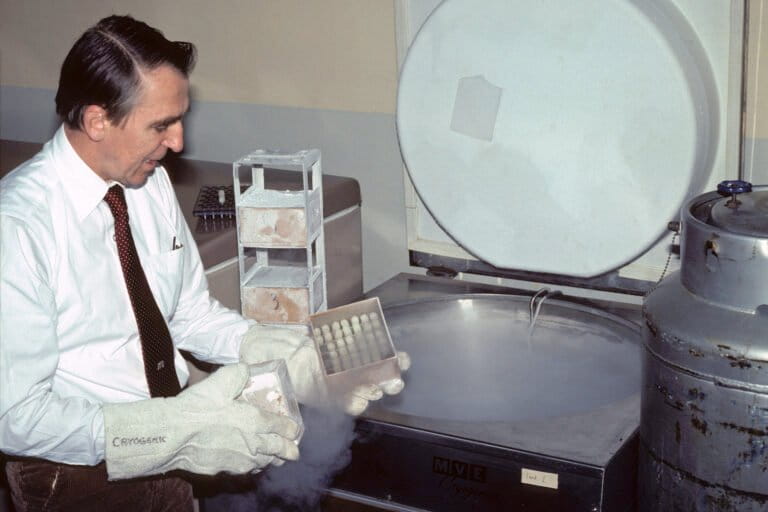
Kurt, a Przewalski’s horse, was born at in Texas in August 2020. Less than three years later, Ollie followed. Out in the wild, their species had gone extinct in the 1960s. Both individuals, born of a surrogate mother — a domestic horse — were the first Przewalski’s horses (Equus ferus przewalskii) to be successfully cloned from another of their species whose DNA had been preserved at the San Diego Zoo for 40 years. At the San Diego Zoo Wildlife Alliance’s Frozen Zoo, the largest initiative of its kind in the world, genetic materials from animals and plants are stored — cryopreserved using liquid nitrogen at temperatures as low as -196° Celsius (-320° Fahrenheit) — for posterity. But the Frozen Zoo is only part of the alliance’s broader biodiversity banking initiative, which also includes a native plant gene bank and a tissue and DNA bank. “I think of it as saving DNA for the future,” Katie Heineman, conservation program leader for biodiversity banking at the San Diego Zoo Wildlife Alliance (SDZWA), told Mongabay in a video interview. “It really is an optimistic act to conserve biodiversity for a time where we’ve solved the threats facing nature.” Applications are aplenty. Biodiversity banking can help not just in the recovery of threatened species, but also in preserving genetic diversity. It’s also crucial for scientific research. However, given the pace of habitat degradation and biodiversity loss, Heineman said there’s an urgency to build capacity around the world to ensure more samples are collected and…This article was originally published on Mongabay
JAKARTA — Indonesia’s parliament has passed a law intended to resolve long-running land conflicts and curb land concentration, but civil society groups say provisions in the final draft could limit redistribution, leave state-controlled land difficult to challenge and expose some land occupants to criminal charges. The House of Representatives, known as the DPR, approved the Agrarian Reform Regulation Law on Sept. 22, after lawmakers and the government agreed on the bill the previous day. The law establishes a framework for resolving structural conflicts over agrarian land ownership, restoring land rights and redistributing land, among other aims. The final enacted text has not yet been made publicly available, leaving some details of how the law will operate unclear. The debate over the efficacy and the implementation of the law comes amid a long-standing pattern of land disputes in Indonesia. The Agrarian Reform Consortium (KPA), an advocacy group, reportedly recorded 3,234 agrarian conflicts affecting 7.4 million hectares (18.3 million acres) and 1.8 million households between 2015 and 2024. KPA and other advocates have argued that many conflicts arise from overlapping government authority, land allocations and competing claims involving communities, companies and state institutions. Indigenous communities, farmers and fisherfolk can be affected when their customary or livelihood areas overlap with concessions, state-designated land or infrastructure projects. The new law is intended to address what lawmakers describe as fragmented authority and regulations that have complicated conflict resolution. The parliament said the bill’s provisions include land-use planning and controls, mechanisms for resolving conflicts and restoring…This article was originally published on Mongabay
CANBERRA — Australia has a problem with the very creature that is its official national symbol: The kangaroo. Endemic to Australia, they live across the country, from north to south, and from east to west. Australia has four main kangaroo species: The red kangaroo (Osphranter rufus), the largest of all species, mainly found in the outback through the Northern Territory; the western grey kangaroo (Macropus fuliginosus), in the southeastern part; the eastern grey kangaroo (Macropus giganteus), in most eastern states, including Tasmania; and antilopine kangaroo (Osphranter antilopinus), in the northern part. Population surveys by the Department of Climate Change, Energy, Environment and Water estimate there are between 30 million and 50 million kangaroos in Australia. Their number fluctuates from year to year depending on drought periods, and it even exceeds the country’s 27.8 million human population. The abundance of the macropods across the country creates a conservation dilemma. They have been blamed for overgrazing and causing environmental damage such as soil degradation and biodiversity decline. Many Australian states have resorted to kangaroo culling. A recent culling in the Australian Capital Territory (ACT), which includes the federal capital Canberra, encapsulates the controversy about the policy. The Australian Capital Territory, home to an estimated 122,000 eastern grey kangaroos, has one of the highest recorded densities in Australia. Image by Shane Lin via Flickr (CC BY-NC 2.0). Record kill At 2,358 square kilometers (910 square miles), the ACT is only slightly smaller than Luxembourg. The territory, home to an estimated 122,000 eastern grey…This article was originally published on Mongabay
SINGAPORE — “For seven thousand years, Singapore has changed around these reefs,” says Debby Ng, a Singaporean biologist who studies the city-state’s shrinking coastal and marine habitats. “They are still here.” Despite colonization, war, shipping and industrialization, reefs a few kilometers south of Singapore’s gleaming shoreline have endured. “It would be a tragedy if we were to lose them now — in peacetime, at the height of our prosperity, when we possess more knowledge and capacity to protect them than any generation before us,” Ng tells Mongabay. At a National Day rally on Aug. 23, Prime Minister Lawrence Wong announced plans to merge a cluster of islands sprawled across a few thousand hectares of seascape into a new “western island” for advanced manufacturing, energy and defense. No timeline for the western island project was given. Wong said reclamation would take place “over the coming decades” and that plans were being studied carefully. But the announcement has alarmed Singapore’s marine conservation community, which says the project could affect some of the country’s most biodiverse waters. The islands include Pulau Semakau, which houses Singapore’s offshore landfill, and Pulau Bukom, home to an oil refinery, as well as Pulau Sudong and smaller islands including Pulau Hantu, Pulau Jong and Pulau Sebarok. The area is estimated to contain some 590 hectares (1,460 acres) of coral reefs — about 60% of the total in Singapore — along with 22% of the city-state’s seagrass meadows and 5% of its mangroves. Black sun coral (Tubastraea micranthus), Singapore.…This article was originally published on Mongabay
An analysis by the London-based group Zero Carbon Analytics (ZCA) supports a claim conservationists have made for decades: Tropical forests are worth more standing than cleared, with the Amazon as the world’s “crown jewel” in this context. According to the ZCA analysis released in July, tropical forests worldwide could hold a median of $714 billion — within a range of $382 billion to $1.176 trillion — in potential commercial value from undiscovered drugs based on flowering plants. The Amazon alone holds around $215 billion, or roughly 30% of the total, the largest share compared with regions such as Southeast Asia and the Congo Basin. Natural compounds are central to medicine. Roughly three in four cancer drugs approved between 1940 and 2014 were derived from or inspired by natural products, and an estimated 99% of the chemical compounds plants produce remain unscreened. In that logic, the Amazon stands out: It “hosts potentially the greatest commercial option value for medicines from flowering plants” of any major forested region, co-author of the ZCA analysis Joanne Bentley-McKune told Mongabay. But deforestation is eroding this value. ZCA estimates that tropical forest clearing since 2001 has already put $86 billion in commercial drug value at risk globally. In the Amazon, the pharmaceutical benefits of some extinct species may be gone forever. “Over the last 20 years, many endemics, or plants that occur nowhere else, might have been lost due to deforestation in Brazil, across different regions,” Bentley-McKune said. The Amazon alone holds roughly 30% of the…This article was originally published on Mongabay
‘Page Six Hollywood’ recently declared: “War of Open Letters Erupts Between Pro-Israel and Pro-Palestine Factions in Hollywood.” Only a few years ago, a headline like this would have seemed unthinkable. The article described an increasingly open struggle between pro-Palestine and pro-Israel forces within the entertainment industry. On one side are artists and other industry figures […]
Dear Members of Congress, In truly deranged remarks to world leaders at the UN, Donald Trump declared that “I have a big decision to make,” whether to negotiate a deal with Iran or instead to “annihilate the Islamic Republic” and drive Iran “into hell with no chance of survival.” He posed it as his personal […]
Uma delegação do PCP visitou na passada segunda-feira, dia 24 de fevereiro, o Agrupamento de Escolas de Almancil, podendo constatar a “existência de diversos problemas: A escola-sede do Agrupamento (EB 2,3 Dr. António de Sousa Agostinho) encontra-se sobrelotada em resultado de um acentuado crescimento do número de alunos (que quase duplicou nos últimos anos letivos). Apesar desta circunstância e do facto de os edifícios da escola estarem bastante envelhecidos, não estão previstas obras de expansão e de remodelação. Acresce ainda que a cobertura dos telheiros na escola-sede é de fibrocimento, contendo amianto. Nos anos letivos de 2011/2012 e 2012/2013 terão sido realizadas medições da quantidade de fibras respiráveis de amianto em suspensão no ar, sem que, contudo, sejam conhecidos os resultados dessas medições”, critica o PCP.
“Também na EB1 n.º 1 de Almancil, pertencente ao mesmo agrupamento, os telhados são de fibrocimento, contendo amianto. Não há indicações que nesta escola tenham sido realizadas medições da quantidade de fibras respiráveis de amianto em suspensão no ar. A presença de fibras de amianto em materiais de construção constitui um grave problema de saúde pública, já que, de acordo com a Organização Mundial de Saúde, a inalação continuada destas fibras pode originar doenças graves, incluindo o cancro de pulmão. Assim, impõe-se, por parte do Ministério da Educação e Ciência, uma ação decisiva no sentido de proceder à remoção do amianto presente nos materiais das escolas.
Aliás, a Lei n.º 2/2011, de 9 de fevereiro, que estabelece “procedimentos e objetivos com vista à remoção de produtos que contenham fibras de amianto na construção ou requalificação de edifícios, instalações e equipamentos públicos”, determina que cabe ao Governo efetuar o levantamento de edifícios, instalações e equipamentos públicos com amianto, tornar pública a listagem que resultar deste levantamento e elaborar um plano calendarizado quanto à monitorização regular a efetuar e às ações corretivas a aplicar, incluindo a remoção do amianto. As entidades que gerem os edifícios, instalações e equipamentos públicos com amianto devem informar os utilizadores da existência de amianto e da previsão do prazo de remoção desse material.
Contudo, desde a entrada em vigor da Lei n.º 2/2011, não se conhece qualquer processo de concretização deste diploma legal, nem do anterior Governo do PS nem do atual Governo do PSD/CDS.
O Agrupamento de Escolas de Almancil dispõe apenas de um psicólogo a meio tempo, o que é manifestamente insuficiente, já que o Agrupamento tem 1.500 alunos, incluindo 55 alunos com necessidades educativas especiais. Num contexto de profunda crise económica e social, o papel dos psicólogos escolares assume importância redobrada, nomeadamente, nos projetos de combate ao abandono e insucesso escolares e no acompanhamento das crianças/jovens com necessidades educativas especiais. Vários indicadores nacionais e internacionais apontam para a adequação do rácio de um psicólogo para 500 a 1000 alunos; no Agrupamento de Escolas de Almancil este rácio é de um para 3.000!
Assim, o Grupo Parlamentar do PCP questionou o Ministério da Educação e Ciência sobre a realização de obras de expansão e remodelação na Escola Básica 2,3 Dr. António de Sousa Agostinho, em Almancil; sobre a monitorização e remoção do amianto da EB 2,3 Dr. António de Sousa Agostinho e da EB1 n.º 1 de Almancil; e sobre a contratação efetiva de um psicólogo a tempo inteiro para o Agrupamento de Escolas de Almancil”, conclui o PCP.
Cumpridas as 3 primeiras etapas do Campeonato Nacional de Futevólei 2012, a última das quais aconteceu no passado fim‐de‐semana em Matosinhos, num grande espectáculo desportivo, o Futevólei faz na presente edição a sua primeira aparição no sul do país, mais precisamente na vila de Santa Luzia, concelho de Tavira.
Serão cerca de 20 as duplas, nomeadamente 40 atletas, provenientes de norte a sul do país, sendo ainda que 3 das duplas presentes provêm do sul de Espanha, e que irão evoluir no areal do recinto desportivo instalado no Jardim Público de Santa Luzia (Tavira) durante os dois dias de prova em busca do mais alto lugar do pódio e de mais alguns preciosos pontos no ranking nacional.
O evento terá o seu início cerca das 18h00 de sábado, 28 de julho, num sistema competitivo de dupla eliminatória, e irá prolongar‐se noite dentro, em clima de grande animação, até serem encontrados os primeiros 8 finalistas da prova.
A prova prossegue no domingo, 29 de julho, a partir das 17h30 com os Quartos‐de‐final, seguindo‐se as Meias‐Finais e já muito próximo das 21 horas terá lugar o momento mais decisivo da etapa com a grande final.
Uma organização conjunta da Federação Nacional de Futevólei com o Clube Recreio e Desporto Santaluziense, apoiada pelo Município de Tavira e Junta de Freguesia de Santa Luzia.
MTV Portugal está de volta ao Algarve com mais uma Festa MTV Insomnia na discoteca NoSolo Água na Marina de Portimão
Os insonolentos da MTV Portugal vão rumar ao sul do país no próximo dia 29 de julho, domingo, para mais um grande evento MTV Insomnia, na discoteca NoSolo Água, na praia da Marina de Portimão, a partir das 23 horas.
Com a assinatura “Festas Top, Energia Non Stop!”, a Festa MTV Insomnia será palco de um line-up de luxo com animação dos artistas Funkyou2 e Club Banditz, convidados especiais da MTV Portugal, que prometem levar os insonolentos ao rubro na pista de dança e fazer desta a noite mais quente do verão algarvio.
A definição do que é o espaço público, o enquadramento legal, a importância do projeto e o papel do projetista, aspetos polémicos e perguntas frequentes foram os temas abordados em mais uma sessão das Jornadas “Desafios no Espaço Público”, dedicada aos espaços lúdicos e elementos construídos. “Desafios no Espaço Público” regressa a 25 de setembro para abordar o tema da Água e da Rega
No dia 24 de julho decorreu mais uma sessão das Jornadas “Desafios no Espaço Público”, desta feita dedicada aos espaços lúdicos e elementos construídos. A iniciativa que é organizada pelo município de Albufeira, através do Gabinete de Reabilitação Urbana (Grua) em parceria com a seção regional da Associação Portuguesa dos Arquitetos Paisagistas (APAP) e o apoio de algumas empresas da área, teve lugar na Biblioteca Municipal Lídia Jorge.
Jorge Coelho da APAP salientou, mais uma vez, a importância da parceria com a Câmara Municipal de Albufeira para a realização destas ações, bem como a imprescindibilidade de abordar os espaços de convívio na sua globalidade e especificidade.
As técnicas do Grua, Manuela Santos e Isabel Valverde, referiram a preocupação da Autarquia em criar, na malha urbana, espaços com características funcionais, lúdicas, com qualidade e segurança, com o objetivo de responder às diferentes necessidades da população. Como exemplos destacaram “um conjunto de espaços públicos contínuos, que definem um anel na cidade, nomeadamente o Parque da Alfarrobeira, o de Valemangude e o Parque Lúdico”.
O arquiteto paisagista Fausto Nascimento referiu que os espaços lúdicos, quer os mais complexos quer os mais simples, todos contribuem para o bem-estar da população e salientou “a importância de se conhecer a realidade das pessoas que vivem os espaços e dos gestores desses mesmos espaços, por forma a ir ao encontro dos desejos dos utilizadores e garantir a sua qualidade”
Por sua vez a arquiteta paisagista Milva Maggioni, da empresa Playplanet, destacou a importância da tecnologia nas nossas vidas, referindo que as crianças têm perfis diferenciados em relação às de antigamente. “Atualmente os jogos exigem menos habilidades motoras e requerem maior capacidade de concentração, daí a necessidade de proporcionar elementos lúdicos no exterior que simultaneamente contemplem estas capacidades e a interação virtual”. A acessibilidade a todos e a diferentes faixas etárias de utilizadores, o divertimento e a segurança foram outras das preocupações referidas por Milva Maggioni.
A XXII edição da Feira de Artesanato, Agricultura e Recreio de Moncarapacho (FARM) tem início já no dia 2 de agosto, prolongando-se até domingo, dia 5. O evento decorre na Escola EB 2,3 Dr. António João Eusébio e acolhe expositores de todo o País.
Artesãos do concelho, da região e de outros pontos do País mostram o que de melhor fazem, nesta feira com grande tradição no concelho de Olhão. Também os produtos agrícolas, sobretudo regionais, estão em destaque, assim como empresas e entidades públicas, as habituais tasquinhas com sabores regionais e, claro, muita música.
O certame abre ao público às 19h00 de quinta-feira, 2 de agosto, onde será possível, tal como nos restantes dias, visitar o Espaço Alengarb – “Sabores e Temperos do Sul”, mas também fazer degustações de azeite, mel e doces regionais ou provar vinhos de quintas do Algarve.
Uma prova de Futsal Veteranos começa às 20h00 e meia-hora depois começa a animação musical com a atuação do grupo de música popular Onda Pop (21h30), o Encontro de Bandas Filarmónicas (Banda Filarmónica 1º Dezembro, de Moncarapacho e Banda Musical de Tavira, a partir das 22h00) e o DJ Zoon dá música aos visitantes das 00h00 às 02h00, hora de encerramento da feira.
Na sexta-feira, 3 de agosto, a FARM volta a abrir portas às 19h00 e encerra à 01h00. Esta noite será dedicada ao fado, com as atuações de Pedro Viola, Teresa Viola e Cidália Moreira.
O concerto da banda olhanense Íris, às 22h00, marca o dia de sábado, 4 de agosto, na FARM, mas também haverá uma Gala de Artes Marciais, às 20h30, e das 00h00 às 02h00 volta o DJ Zoon.
No domingo, 4 de agosto, último dia deste evento que, todos os anos, atrai muitos milhares de pessoas a Moncarapacho, a FARM também abre às 18h00 e encerra à 01h00. Haverá um jogo de Futsal Iniciados às 20h00 e a partir das 22h00 a noite é, como habitualmente, dedicada à música popular, com a realização do XXVII Festival Internacional de Folclore.
O PARTIDO SOCIALISTA APRESENTA CARLOS NÓBREGA COMO CABEÇA DE LISTA À CÂMARA MUNICIPAL DE CASTRO MARIM
Um empresário de sucesso em Castro Marim (Altura), com vários prémios conquistados
Carlos Nóbrega, candidato independente, apresenta formalmente a sua candidatura pelo Partido Socialista à Câmara Municipal de Castro Marim, nas próximas eleições autárquicas, em 2013, no dia 30 de julho, às 18H00, no Club House do Golf Quinta do Vale, em Castro Marim.
Como presidente do Olhanense, Carlos Nóbrega (1º. da esqª) ficou ligado à modernização e estruturação que permitiu o regresso dos “leões” de Olhão à I Liga
O candidato do PS Castro Marim Carlos Nóbrega irá, na apresentação, revelar as principais linhas do programa eleitoral.
Nos próximos dias 28 e 29 de julho (SÁBADO E DOMINGO), pelas 18H30, no Teatro Experimental de Lagos, os Fantoches Fantásticos vêm dar as boas vindas ao público mais jovem e a toda a família. Uma história sobre o fabuloso Dragão Matias, com música ao vivo.
Tina Kress de Espinosa Arcos / teatro de fantoches
O montante da dívida do Serviço Nacional de Saúde (SNS) a empresas de dispositivos médicos ascendia, no final de Junho de 2012, a 1.130 milhões de euros, o correspondente a um prazo médio de pagamento de 613 dias, alerta a Associação Portuguesa das Empresas de Dispositivos Médicos (APORMED).
“Constatamos que os pagamentos já efetuados pelos hospitais permitiram uma amortização parcial do montante em dívida, mas isso não impediu que esta situação continuasse a agravar-se”, comenta Humberto Costa, secretário-geral da APORMED.
E acrescenta: “Existe uma preocupação crescente por parte das empresas de dispositivos médicos sobre o calendário e a forma como a restante parcela dos 1.500 milhões de euros disponíveis para pagamentos ao sector da Saúde irá ser distribuída, dúvidas estas que as reuniões com os responsáveis da Saúde não permitiram esclarecer. Pensamos que o único critério que salvaguarda os princípios de equidade nos pagamentos é o da antiguidade das faturas”.
A APORMED alerta ainda para o facto de se estarem a registar aumentos de alguns consumos de dispositivos médicos sem emissão das correspondentes notas de encomenda, o que contraria o disposto na Lei dos Compromissos e provoca atrasos na faturação a efetuar pelas empresas.
A APORMED, a maior associação nacional das empresas que atuam no sector dos dispositivos médicos e tecnologias para a saúde, foi fundada em 1990 e conta atualmente com 47 empresas que representam cerca de 60% do mercado de dispositivos médicos.
O sector de dispositivos médicos é caracterizado por empresas que investem regular e fortemente na inovação, de forma a permitir o acesso dos doentes a terapias associadas a importantes ganhos em saúde.

 Login