❌

Reading view

Uganda readies troop deployment to Gaza, risking complicity in war crimes

The Ugandan army, which had offered to capture Iran’s capital within 72 hours for Israel earlier this year, is now readying a troop deployment to Gaza under US command.

Discussing the deployment, senior Ugandan military officers were at the US-led Civil-Military Coordination Center in Kiryat Gat on August 17. The town on the edge of the Negev desert – barely 25 km from the northern Gaza Strip – was established in 1955 after depopulating the Palestinian villages of al-Faluja and Iraq al-Manshiya during the Nakba.​

Burundi’s military officials were also reportedly present at the meeting here, after which the Israeli Occupation Forces (IOF) gave them both a tour of the city of Rafa in southern Gaza as part of the “pre-deployment site survey.”

Burundi is yet to confirm the deployment of its troops. However, Uganda’s parliament, practically a rubber stamp with over 70% of the seats held by the ruling party, approved the deployment of its troops on August 6.​

This made it the sixth country to join the International Stabilization Force (ISF) proposed by US President Donald Trump’s so-called Board of Peace, envisioned as the 20,000-strong force led by US Major General Jasper Jeffers.

The remaining five contributors of troops hold relatively diverse positions on the Israel-Palestine question. Indonesia has been a vocal critic of Israel, backing South Africa’s genocide case against it at the International Court of Justice (ICJ). It maintains no diplomatic ties with Israel. The largest contributor has reportedly put its 8,000 troop deployment on hold, although it hasn’t formally withdrawn from the ISF.

Kazakhstan, on the other hand, has maintained deep diplomatic ties with Israel since 1992. Morocco joined the Abraham Accords in 2020. Both have done so while mouthing the two-state solution for an independent Palestinian state with East Jerusalem as its capital as official state policy.

The remaining two European countries are staunchly pro-Israel. Albania has announced plans to open a commercial liaison office in Jerusalem. Kosovo has outdone Albania, following Trump’s lead by moving its Israeli embassy to Jerusalem.​

The sixth country to come on board, Uganda, professes a commitment to Israel that dwarfs that of the European troop-contributors.

Offering to join US-Israeli war on Iran​

“Any talk of … defeating Israel will bring us into the war” against Iran on “the side of Israel,” Uganda’s military chief, Muhoozi Kainerugaba, posted on X in late March. He is the son and heir apparent of Uganda’s 81-year-old president, Yoweri Museveni, ruling the country since 1986.

After 40 years of rule, Museveni was handed a seventh term by the Electoral Commission in January, following an election marred by “widespread repression and intimidation against the political opposition, human rights defenders, [and] journalists,” according to the UN.

Soon after the results, Kainerugaba began hunting down Museveni’s political opponents, forcing his main challenger in the election, Bobi Wine, into exile, bragging about killing 30 of his party’s members, and swearing to “get them all.”

Israeli military technology, from weapons to surveillance equipment, has long enabled Museveni’s domestic crackdown. Recalling that Israel has supported his regime for decades, “Why wouldn’t we defend her now?” asked Kainerugaba. He added in a subsequently deleted post that the Ugandan military had offered to join the US and Israel in their war efforts against Iran, claiming, “We could have captured Tehran in 72 hours.”

Read more: Ugandan military chief announces willingness to join the US-Israeli war on Iran

This bold claim of being able to defeat the world’s 16th largest military power, with a military ranked 107 out of 145 countries, was gently mocked, even in the Israeli media at the time.  

“Gaza, here we come”: Ugandan soldiers post on social media

Nevertheless, barely five months later, Ugandan soldiers began uploading posts on social media, captioned, “Gaza, here we come,” filming themselves loading equipment onto planes – taking off and landing in undisclosed locations.​

These posts by Ugandan soldiers began circulating on social media after the Ugandan parliament approved the troop deployment on August 6.​

Military deployment as a diplomatic strategy

Addressing the parliament ahead of the vote, Maj Gen David Gonyi, parliamentary representative of the Uganda People’s Defence Forces (UPDF), explained the rationale of the deployment to the legislators: “Uganda submitted the name of a Ugandan [veteran diplomat, Olara Otunnu] to become Secretary-General of the United Nations. It would be like shooting ourselves in the foot to say that Uganda should not participate in [the] deployment in Gaza.”

Military deployment has long been a central plank of Ugandan diplomacy, currying favor of the Western countries by sending its soldiers to missions in Somalia, South Sudan, Equatorial Guinea, and the Democratic Republic of Congo (DRC).

Its Somalia deployment has been especially crucial for the Ugandan army to receive training and support from the US Marine Corps and US Africa Command (AFRICOM).

Last November, Johan Borgstam, the European Union (EU) Special Representative for the Great Lakes Region, met Kainerugaba to propose expanding Ugandan troop deployment in DRC, on behalf of Brussels. Borgstam brought this proposal, despite the UN confirming the validity of the DRC’s accusation that Uganda is supporting the M23 armed group, a proxy of Rwanda which, along with its army, has occupied large swathes of the region in a war for DRC’s minerals.

Presenting this Western demand for Ugandan troops as a diplomatic success, Major General Henry Masiko, another parliamentary representative of the UPDF and the Joint Staff Political Commissar, told the legislators: “The UPDF is viewed as the anchor of stability in a sea of turbulence, regionally and now globally.”

He went on to add in his remarks to the parliament that the “doctrine of the force is that we go out not to dance but to confront threats against society and humanity,” in a thinly veiled reference to Palestinian resistance.

“Some troops will return in coffins,” warns opposition MP

Opposition politicians have raised concerns that deploying troops when the Ugandan government has done little to conceal its neutrality may have consequences. 

“Some [troops will] return in coffins,” warned Jamal Ayagalaki. “We need answers on who will pay the UPDF, what the terms and conditions of service will be, and what support will be available to soldiers and their families.” He further warned that Uganda’s involvement in a conflict “that is not ours” could expose the country itself to new security threats.

A more thorough criticism of the deployment came not from an opposition leader but from retired General David Sejusa, who had served Museveni as a senior presidential adviser and intelligence coordinator from 2005 to 2013.​

The “parliament passed a resolution for peacekeeping, [but] what peace is [there] is Gaza?” he questioned, pointing to the lack of agreement between Israel and Hamas.

Uganda risks complicity in war crimes: former intelligence chief

“The permanent decommissioning of weapons from non-state armed groups” – i.e. the Palestinian resistance – is one of the tasks the International Stabilization Force must carry out in coordination with Israel, according to the resolution adopted by the UN Security Council in November 2025, with abstentions from Russia and China.

Hamas has refused to hand over weapons to Israel or any foreign force. It has called for the creation of a Palestinian national committee, which will hold the weapons collected from Hamas and other resistance groups within Gaza.

This transfer of weapons, however, can only happen after Israel withdraws from Gaza, Hamas insists. Israel, on the other hand, has refused to withdraw from Gaza until the resistance is completely disarmed.​

Therefore, in the absence of any “clear implementable political framework,” Uganda will be deploying troops in an “un-militarized active conflict area … where a belligerent state continues strikes on the occupied population,” Sejusa said. This, he warned, places Ugandan troops at the “risk of complicity in war crimes.”

  •  

Israeli authorities order total shut down of West Bank

On Sunday, September 27, the Israeli occupation authorities announced a multi-day comprehensive closure of all crossings into and out of the West Bank, coinciding with the Jewish holiday of Sukkot.

The closure will continue until at least Saturday, October 3, further exacerbating already stifling restrictions on movement across the occupied territories.

The move came days after the Israeli forces blocked the main entrances and exits to the central West Bank governorate of Ramallah and Al-Bireh, which constitutes a major commercial hub and connects the territory’s northern governorates with those to the south.

In recent days, thousands of Palestinians were stranded at Israeli military checkpoints due to these restrictions that eventually culminated with the holiday-related closure. This includes vulnerable people such as patients, elderly people, pregnant women, and even preschoolers unaccompanied by their parents.

On Friday, September 25, media outlets reported that kindergarten students waited at the Atarah military checkpoint in northern Ramallah for nine hours the previous night, with their bus finally managing to bring them home after 10:30 PM. 

Meanwhile, BreakThrough News documented the delay an ambulance of the Palestine Red Crescent Society (PRCS) faced at the same checkpoint on Monday, September 28.

On Sunday, Israel announced a comprehensive closure of all crossings into and out of the West Bank for the Jewish holiday of Sukkot. This has left Palestinians – workers, students, and even ambulances transporting patients – stranded at checkpoints for hours.

BT's Aseel Saleh… pic.twitter.com/XbI2o928QM

— BreakThrough News (@BTnewsroom) September 29, 2026

BreakThrough News also spoke to some Palestinian citizens at the checkpoint, who affirmed that they had to wait for many hours at each checkpoint inside the governorate on a daily basis.

A cargo driver from the southern governorate of Hebron, who travels to Ramallah every day, said that he sometimes has no other choice but to sleep in his car when facing extended delays.

Another Palestinian, who spoke on condition of anonymity, suggested that the Israeli measures in place aim to make the Palestinian people in the West Bank feel frustrated about their daily life, pushing them to leave their homeland permanently.

Illegal Israeli settlers storm different parts of Ramallah during the holiday

The provocative acts related to the current holiday were not limited to the comprehensive closure. On Tuesday, September 29, over 100 illegal Israeli colonists stormed the town of Beitunia and the nearby Ein Jaryout area, west of Ramallah, under protection of the Israeli forces.

Palestinian movement was heavily restricted and the entrances to the targeted areas were blocked by the Israeli military to clear the way for a large convoy of settler vehicles. 

Moreover, the event involved the assault and detention of Palestinian residents and damage to property, alongside a religious march and prayers by settlers.

Journalists were also reportedly prevented from covering the events, under the direct threat of firearms. 

On that same day, a group of settlers entered the Al-Tireh neighborhood and the adjacent town of Surda, situated just a short distance from Beitunia. During the incident, they raised Israeli flags at Al-Awda Square, obstructed traffic intersections, and hurled stones damaging vehicles.

The incursions in Ramallah were carried out one day after Israel’s National Security Minister Itamar Ben-Gvir led hundreds of Israelis in a raid on Al-Aqsa Mosque.

During the assault, they performed dances inside the courtyards of the Al-Aqsa Sanctuary.

Referring to the Al-Aqsa Mosque as the Temple Mount (a biblical name), Ben-Gvir declared from there:

“October 7 was massive and enormous pain, great pain. But today, three years later, on the holiday of Sukkot. We can rejoice in many things.We are the masters of the Temple Mount. We are the masters of the prisons. We turned the lives of terrorists into hell.”

The statement of Ben-Gvir is seen by analysts as nothing but a blatant affirmation that Israel is an apartheid colonial state, which systematically seeks to ethnically cleanse Palestinians.

Read more: Ben-Gvir provokes Palestinians with threat to prominent Palestinian leader and prisoner Marwan Barghouti

  •  

Israel kills son of Gaza health official in latest atrocities

Footage flooded the internet on Saturday, September 19, showing Gaza Health Ministry Director General Dr. Munir al-Bursh asking young men to bring the rest of his son’s body as they carried his remains.

“Bring me his other half!” the grief-stricken father said. “We were supposed to go to heaven together today, but you got there before me, son.” 

According to media reports, Dr. Munir’s son, Bashir (28), was struck by a drone shortly after leaving his family’s tent in the al-Zahra neighborhood, near the Civil Defense headquarters, west of the Jabalia refugee camp in northern Gaza Strip.

Bashir was targeted while helping people fill their water containers, just meters away from his father. For many, the proximity of Dr. Munir implies that he, too, may have been a target of the attack.

Israel’s systematic targeting of health workers

The prominent Palestinian health official has been in the crosshairs of the Israeli forces since the beginning of Israel’s genocidal aggression on Gaza, due to his leading role in managing a crumbling health system that was severely devastated during the war.

Moreover, Dr. Al-Bursh is widely known for frequently reporting on Israeli assaults on the Gaza medical sector, and highlighting the dire conditions of medical facilities inside the besieged areas via international media outlets.

Al-Bursh and his family were previously targeted by Israeli warplanes at the very beginning of the war. In December 2023, his 13-year-old daughter, Jinan, was killed in an Israeli airstrike on a residential building in Jabalia. The aerial attack also resulted in the injury of Dr. Munir and the rest of his family.

The deaths of Bashir and Jinan al-Bursh echo the murder of 15-year-old Ibrahim Abu Safiya by an Israeli drone in October 2024. Ibrahim was the son of the former director of Kamal Adwan Hospital in northern Gaza, Dr. Hussam Abu Safiya.

Read more: ‘They brought me here to kill me,’ Dr. Hussam Abu Safiya tells lawyer

The day Bashir al-Bursh was assassinated, and the days that followed, saw the killing of several people by the Israeli Army across different parts of the war-ravaged enclave.

This took place as world leaders addressed the UN General Assembly. For the third year in a row, these addresses and the deliberations have failed to stop Israel’s aggression against Gaza and its ongoing heinous crimes carried out across West Asia.

  •  

Press TV condemns Israeli abduction of West Bank correspondent Naqaa Hamed

Iranian news outlet Press TV called the detention of its West Bank correspondent Naqaa Hamed by the Israeli forces an “aggressive terrorist operation” aimed at silencing the truth about its occupation and genocide of Palestinians. It demanded the immediate intervention of the international community for her release.

“The desperate attempt by the Zionist war and security machine to block the flow of free news and boycott structured crimes in the West Bank is clear evidence of the occupier’s fear of independent” reporters “who expose widespread human right violations,” the Press TV statement, published on Thursday, September 17, said.

Naqaa Hamed was abducted by the Israeli armed forces from a checkpoint at Tuqu, near Bethlehem, in the occupied Palestinian territory on September 15. 

She, along with her cameraman, were returning after reporting about rising Israeli settler violence on Palestinians in Masafer Yatta.

One eyewitness, a TRT journalist accompanying Hamed in her car, claimed that they were detained at the checkpoint and made to sit on the ground for 45 minutes while Hamed was taken alone for interrogation.

After the interrogation, cameraman and TRT journalists were let go but Hamed was arrested and sent to an unknown location.

Later it was reported that her detention has been extended until September 23 by an Israeli court.

Though no official confirmation has come forward about the charges against Hamed, Israeli media quoted unidentified military sources claiming her arrest was linked to her alleged cooperation with “the enemy entity,” presumably Iran, and espionage.

Hamed (38), a Palestinian-American and mother of three children, has been subjected to repeated physical attacks by Israeli forces in the last few months. She has also been subjected to a smear campaign on social media. 

According to Press TV, rubber bullets were fired at her when she was reporting near Qalandia camp in December 2025. She was injured again in August this year by an Israeli stun grenade and tear gas fire.

The intimidation and smear campaigns on social media, started by pages affiliated with the Israeli occupation regime, targeted Hamed by questioning her credibility and calling her a part of the “Iranian propaganda machine.” 

Israel is the worst place to be a journalist

Israel has one of the worst records when it comes to killing and arresting journalists. Hundreds of Palestinian journalists have been either killed or arrested by the Israeli occupation forces since the beginning of the war and genocide in Gaza. 

According to various sources Israel has killed over 250 journalists and media workers in the West Bank and Gaza since October 2023. 

According to the Palestinian Prisoner’s Society, currently nearly 40 Palestinian journalists are in Israeli detention, including five women. Almost half of these journalists are kept in prison under the draconian provision of Administrative Detention, which allows the authorities to keep them in jail for an indefinite period without any formal charges or trial.

The Iranian media channel Press TV underlined that Hamed’s arrest by Israeli forces violates international laws about immunity to journalists in war zones. It demanded the UN, its High Commissioner for Human Rights, and other international human rights groups to come out of their “shell of inaction and meaningful silence” and take measures to end Israel’s impunity.

“As long as responsible institutions remain in the shell of silence and inaction, Naqaa Hamed will not be the first, nor the last journalist to be targeted by the illegal actions of the Zionist regime,” the Press TV statement said.

  •  

21 displaced people killed in Gaza building collapse

The lethal repercussions of Israel’s three-year genocidal aggression on Gaza continue to unfold. Aside from Israel’s ongoing military assaults after the nominal ceasefire deal, the humanitarian crisis inflicted by the genocide – affecting food, sanitation, medication, and shelter – has become another driver of persistent fatalities. 

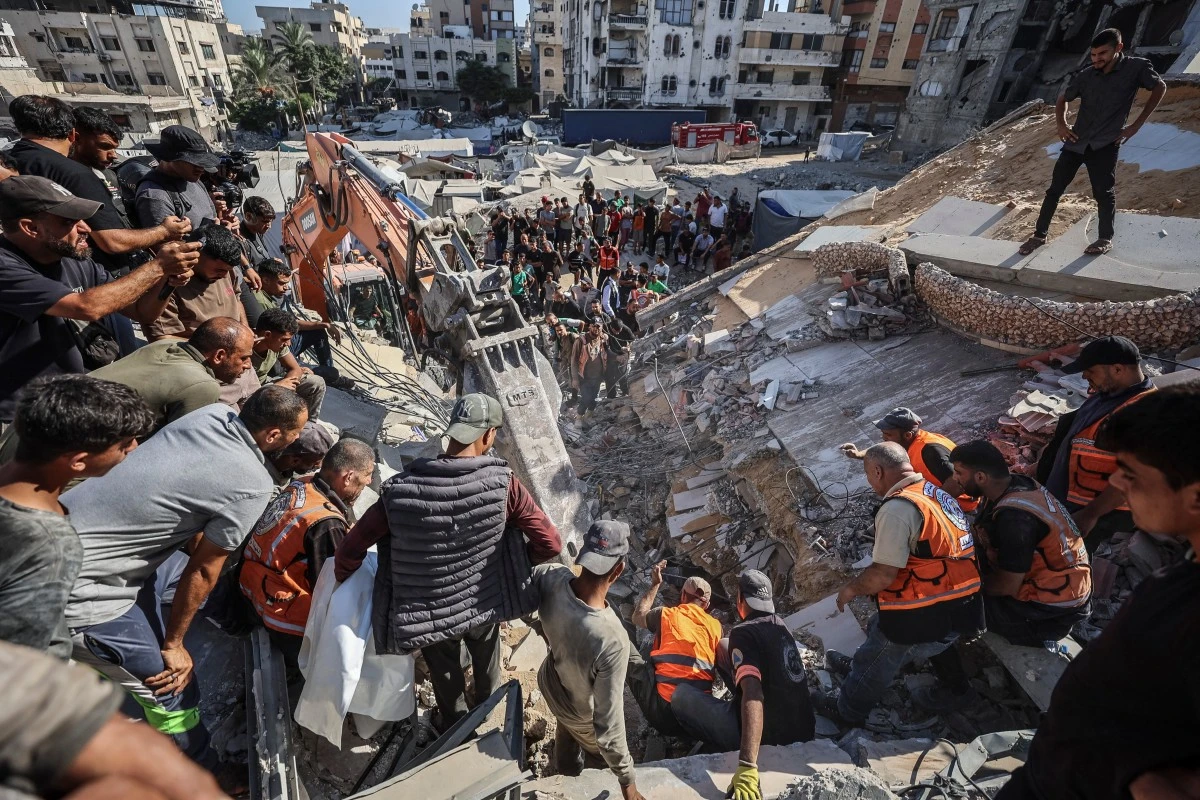
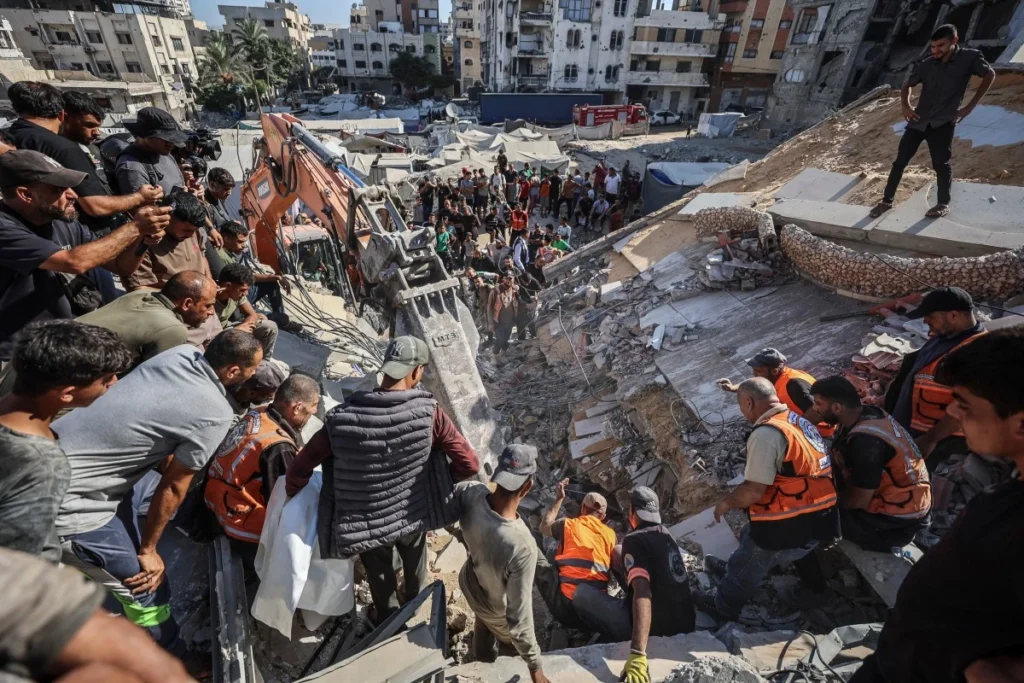
At least 21 Palestinians, including 12 children, died in the collapse of the Al-Saadah building in Gaza City on Wednesday, September 16, while 45 people were rescued from under the rubble. 

According to media reports, the building, already damaged by Israeli airstrikes, was housing 100 displaced people, amid a deepening shelter crisis caused by Israel’s ongoing restrictions on reconstruction materials and humanitarian aid.

Read more: Israel escalates aggression in Gaza, Kushner returns to Washington empty-handed

Hamas holds Israel “responsible for the disaster”

Hamas issued a statement, holding Israel “responsible for this disaster,” and affirming that “the building collapse represents a new chapter in the catastrophic humanitarian repercussions of the war.”

The Palestinian movement pointed out that the massive home and neighborhood destruction has forced thousands of displaced people to take refuge in ruined structures. 

It further cautioned that the severe shortage in heavy machinery for clearing debris and conducting rescue operations endangers more lives. 

Hamas also urged mediators, the US administration, and relevant international bodies to take immediate action to lift restrictions blocking the entry of necessary rescue equipment and vehicles, and to secure safe shelter for the displaced population. 

Meanwhile, the Gaza-based Ministry of Public Works and Housing warned that roughly 3,000 buildings across the war-ravaged enclave are currently deemed dangerous or at risk of collapse, which in turn poses a significant threat to thousands of inhabitants.

  •  
❌