A metal detector has pulled a small lead statuette of Venus Pudica out of a forest in the Buda Hills, northwest of Budapest. It is the first religious object recorded at the Roman village of Pilisszentiván–Hárs erdő, a rural settlement in the province of Pannonia. Eötvös Loránd University (ELTE) has been excavating it for four […]
The former prime minister of Hungary, Viktor Orbán, has denounced a new political offensive against his Fidesz political formation following the arrest and 30-day pretrial detention for Miklós Seszták, a lawmaker and former national development minister under Orbán.
A Budapest court on Wednesday ordered 30 days of pre-trial detention for Seszták following a corruption investigation that may just be beginning of a wave of prosecutions targeting the former Orbán government.
Orbán accused Magyar’s Tisza government of “neo-communist tactics.”
“The Tisza authoritarian rulers are raising taxes, fuel prices are soaring, and they are wrecking the Hungarian economy. Authoritarianism creates new victims every day. Today it’s them, tomorrow it’s you. They would rather stage political theatre than face reality. Our message to every Hungarian is this: the Tisza authoritarian rulers will not break our patriotic community. We will not let them. They cannot imprison half the country,” he continued.
Neo-communist tactics. The Tisza authoritarian rulers are raising taxes, fuel prices are soaring, and they are wrecking the Hungarian economy. Authoritarianism creates new victims every day. Today it’s them, tomorrow it’s you. They would rather stage political theatre than face reality. Our message to every Hungarian is this: the Tisza authoritarian rulers will not break our patriotic community. We will not let them. They cannot imprison half the country.
An investigating judge at the Buda Central District Court found sufficient grounds to suspect official bribery and other offenses and said detention was needed to protect the inquiry, the Budapest Metropolitan Court announced. The ruling is not final. Seszták’s lawyer filed an appeal, and the former minister has maintained his innocence.
The order came two days after parliament voted 139-0 to lift the immunity of Seszták and another Orbán-era minister, Balázs Hankó. Fidesz and its Christian Democratic People’s Party allies boycotted the session and called the proceedings political persecution.
Prosecutors and the newly created National Asset Recovery and Protection Office allege that between 2014 and 2018, Seszták accepted bribes totaling hundreds of millions to more than 11 billion forints (€30 million) from construction contractors tied to state bus company Volánbusz and other projects, together with a former state asset-management official. Seszták has called the accusations baseless.
Balázs Orbán, the former prime minister’s political director, compared the events to 1950s political prosecutions and to cases against conservative politicians in Poland.
“This is the political arbitrariness of the communist 1950s, unfolding in Hungary in real time. You can watch it live on @PM_ViktorOrban’s Facebook page: a former Hungarian minister is being arrested following a direct and public demand by Péter Magyar, the Hungarian Prime Minister backed by Brussels,” he wrote.
This is the political arbitrariness of the communist 1950s, unfolding in Hungary in real time. You can watch it live on @PM_ViktorOrban’s Facebook page: a former Hungarian minister is being arrested following a direct and public demand by Péter Magyar, the Hungarian Prime Minister backed by Brussels.
Magyar’s government rejected the accusations. Officials are attempting to present the probes as an effort to examine alleged corruption from Orbán’s 16 years in power. Magyar noted that a former minister had been placed in pretrial detention for the first time since 1990.
“This is the first time since 1990 that a former minister has been arrested. He is suspected of bribery,” wrote Magyar.
The court has placed @PM_ViktorOrban's former minister and current member of Parliament, Miklós Seszták, in pre-trial detention. This is the first time since 1990 that a former minister has been arrested. He is suspected of bribery involving 12 billion forints.
Fidesz vice president and MEP Kinga Gál called Sept. 28 “a dark day for Hungarian democracy” and accused Magyar of turning police and prosecutors against political rivals.
A dark day for Hungarian democracy. In another chapter in the political witch hunt against right-wing politicians, the Tisza majority in the Hungarian Parliament stripped MPs and former ministers Balázs Hankó and Miklós Seszták of their immunity.Balázs Hankó is the target of a politically fabricated case. We never thought we would see such times return to Hungary. Shameful. The Hungarian PM is pressuring police and prosecutors while building a new political police force to pursue his political opponents. He is trying to silence the opposition and dismantle the rule of law. We condemn it in the strongest terms.
MEP András László said the cases are based on the “political instructions” from the prime minister.
The era of political show trials are back! Today the authoritarian rule in Hungary reached a new low. The judiciary is acting on the PM's personal instructions.
Seszták was taken into custody Monday after walking into the Central Investigative Prosecutor’s Office, saying he intended to give a statement. The new Asset Recovery Office, which began operations Sept. 27, took over the case. His lawyer has argued that parts of the detention process were irregular.
Neither Seszták nor Hankó has been convicted, and both deny wrongdoing.
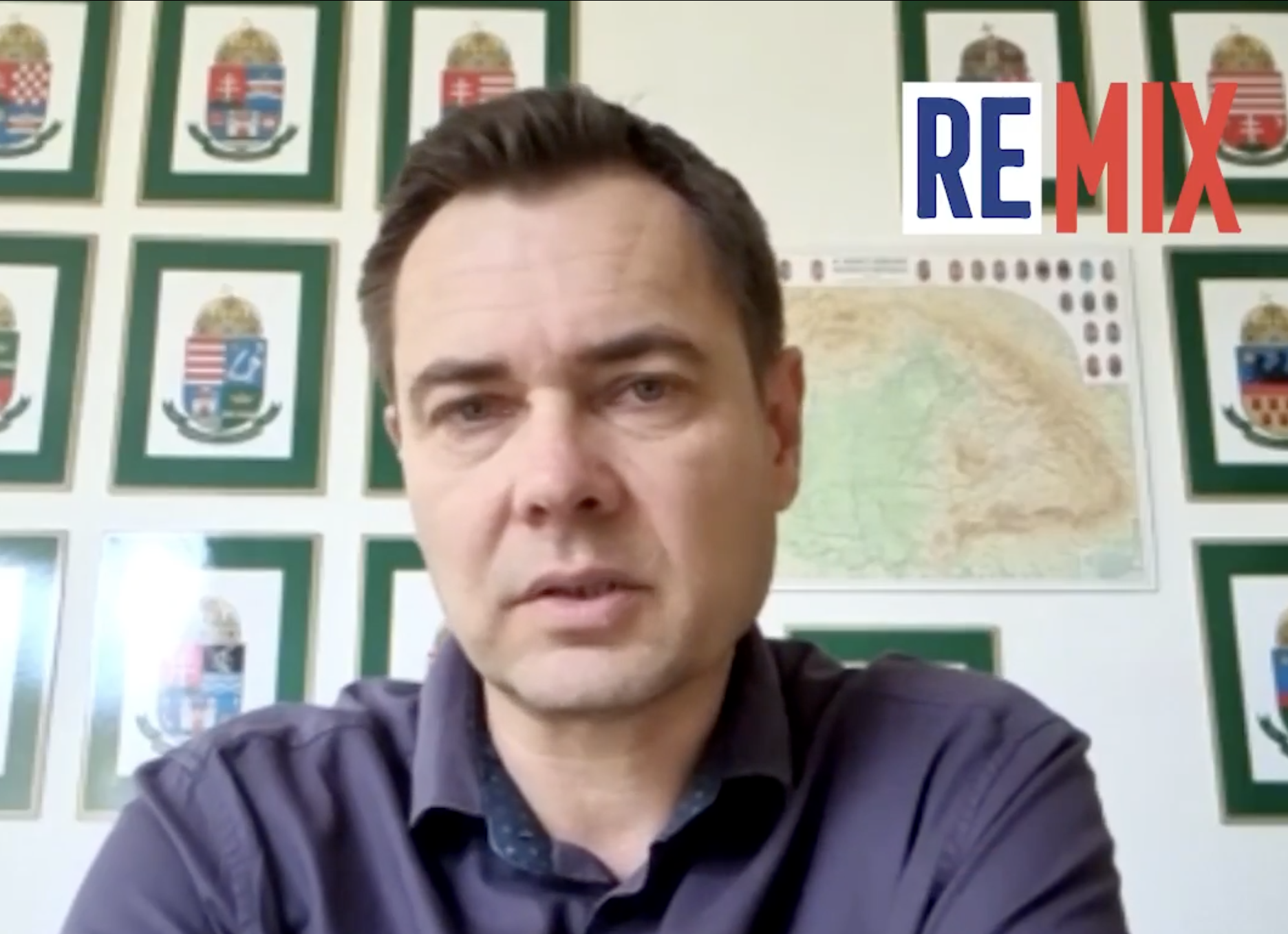
The Hungarian conservative media landscape is in the process of being bankrupted, gutted, or co-opted by the new Hungarian government under Péter Magyar. However, there remain a few holdouts, including Daniel Deme, who serves as the editor-in-chief of the English-language Hungarian news outlet Hungary Today as well as the German-language Ungarn Heute. Deme describes a “dire situation” brought on by a climate of fear, radical purges, mass layoffs, and little to no aid from key allies, including the Trump administration.
What is the current state of the Hungarian media landscape? How does it compare to the situation under the Orbán government?
Under the Orbán government, there were claims from the left that there were no media freedoms here, that journalists were persecuted. None of that was true. I’d say there was already a 60-to-40 split in the media landscape toward the left’s benefit at that time. But a difficult situation arose from the fact that Hungarian conservative right-wing media wasn’t independent enough, and that was really the case. It was very much talking to its own bubble.
I don’t think it was controlled by the government or presenting a government-controlled narrative. I think it was voluntary. But I think the culture of Hungarian conservative journalists was such that they wanted to stick to the central narrative, which was very close to the government.
On the other hand, you had foreign-funded left-wing media outlets. There were a few exceptions that survived commercially, but in very many cases they were funded by the Open Society Foundations and by the Norwegian Oil Fund. There’s a Norwegian radical-leftist sort of fund that is feeding the Hungarian liberal and woke environment, NGOs, and media outlets.
EXCLUSIVE: The Trump administration has largely abandoned Hungarian conservatives after Viktor Orbán’s loss, warns @daniel_deme_HU in an interview with @RMXnews.
“So, I think the State Department of the Trump administration is shooting itself in the foot by leaving this… pic.twitter.com/vOAE8iajro
And of course they were funded by European funds as well—awards, grants. So after the elections, the money that came from government advertising—by the way, they advertised in the left-wing media very heavily as well—just stopped immediately. And from week one, there was a purge of Hungarian right-wing media outlets. It wasn’t just the money that was taken away; the institutional standing was as well.
For example, the largest media conglomerate, Mediaworks, immediately started firing hundreds and hundreds of staff. What we haven’t even seen during communism: it wasn’t just that they removed the former Orbán government’s media managers from these public media outlets—they actually destroyed them. They shut them down.
And it was just outright scary, as if a foreign occupying force had arrived and shot our TV towers to pieces. One day we turned on our TVs and there was a blank screen. There was a black screen with an inscription that the “public media shouldn’t lie, and we are sorry that we lied for years, and this is going to change.” And that was it. That was it for weeks and weeks on end.
At the same time, it also happened with Radio Kossuth, a national institution. That’s a radio station that we used to listen to even during communism. And suddenly they switched it off. They just put some classical music on 24/7, and old people have complained to me that they used to turn it on in the morning and switch it off in the evening when they went to bed. It used to be part of their lives, and then there’s nothing. And now the only public television is completely turned into a Tisza Party mouthpiece.
There are a handful of surviving right-wing publications that, frankly, have not learned their lesson, in my opinion, about how to analyze Hungarian public and political life, and are very much continuing in the same line as before.
There are new shoots, I would say. It’s very hard to tell which ones are going to survive and which ones are not. And this is the situation when you realize one staggering fact: if you find yourself a media manager or an editor-in-chief, you start looking for funds and trying to survive, and you realize that there are no foundations, no grants for national, conservative, patriotic media in the world—anywhere.
Meanwhile there are dozens and dozens of rich funds for liberal, woke media that is spewing propaganda from Brussels or from the Democrats’ set of opinion-makers. So it’s amazing. There were two Hungarian foundations that sponsored some of the patriotic and conservative media in the country. They have both been shut down now and are now controlled by the Péter Magyar government.
So the situation is dire.
On the one hand, the conservative media has completely disappeared. We do not have a single conservative political daily on the newsstands now. Not a single one. Magyar Nemzet, which used to be everywhere, is now nowhere to be found. It has gone into weekly print production. And on the other hand, when you go onto social media and LinkedIn, you see ubiquitous adverts for left-wing journalists at left-wing outlets everywhere. They’re expanding. It’s like a golden age for them.
That’s a pretty dramatic transition. How many people would you estimate have now been laid off in the Hungarian media landscape since Tisza, since Magyar, won?
I would definitely estimate it near 1,000 people. And you have to understand that the Hungarian media landscape is fairly small, and these are almost exclusively members of either the public broadcasters or conservative media—almost exclusively. People have been fired in a completely absurd manner, without any justification, without any wrongdoing on their side. Not even only people who had been biased toward the Fidesz government. Even when they fired the managers of the public media, MTI, they found replacements, a couple of media managers well known in the business, and they were appointed.
One of them was supposed to be the manager of the news department at the Hungarian News Agency, and someone pointed out on social media—I think on Facebook—that yes, he had worked for the left, and he had also worked for right-wing media like Hír TV. Péter Magyar left a single comment on Facebook under one of these comments saying, “I don’t think so.”
The next day, the guy was called into the office of his boss and fired on the spot. When they found out that he had worked briefly at one of the conservative news TV stations, he was fired on the spot and removed. That’s all it takes today: just a short comment on Facebook from our new neo-Stalinist leader, Péter Magyar.
You said there’s not a single foundation in the entire world that supports conservative media in Europe. Liberal institutions outside Hungary were pretty active supporting numerous liberal and left-wing institutions, media outlets, and so on with money—taxpayer money from Europe and corporate money from various corporations, foundations, and so on. Now, where are the Americans? Where is the State Department? Where are the foundations? What is your opinion on this particular issue?
Well, on the one hand, the State Department launched in July a grant for free, sort of conservative institutions in Europe—$5 million, I think, for the entirety of Europe. And I think they have received more than 1,000 applications. Whoever I spoke to, from Italy to Poland, everyone was applying. We applied as well. But it’s a ridiculous amount. $5 million is basically the price of a single bomb in Iraq. So this was just a drop in the ocean.
And I have managed to speak to members of the American State Department—I do not want to describe any more closely who they were—and I basically just asked what they thought about this. And they said, “You’re on your own. You have to fight this fight from your own resources. We have to respect the will of the people.”
And this is very gentlemanly, you know. This is a very noble position from the State Department. They do not want to interfere in other people’s countries. But I have to add very quickly that this is not the way the Democrats see it, or money groups and oligarchs connected to the Democrats. The left does not have these sorts of scruples toward Europe and is continuing to fund the Hungarian far-left media and NGO networks. There’s a glut of funds for them. So I think the State Department of the Trump administration is shooting itself in the foot by leaving this space empty, leaving the Hungarian conservative network to wither. In four years, when they come back, where they used to have allies—honest allies and friends—where they used to have an infrastructure of pro-American political and economic circles, they will have nothing. They will only find NGO networks and political networks that are 100% allied either with the Democrats or with networks funded from the other side of the world, from the East.
I’ve tried to explain this to American diplomats and opinion-makers: there’s been a huge void created after the elections. This void is going to be filled very, very quickly. And if you do not move fast enough, you will find that others will recognize the potential in this network—and so they did. And I do not want to mention the names of the countries, but they are not the United States’ geopolitical allies, let’s say that.
What do you think the motive is from the State Department there? Is it that there are still a lot of left-wing holdouts in the State Department who are directing policy, or do you think this is the conservative mindset of letting the free market work? If the conservative outlets can generate ad revenue and play in this kind of private market, then those are the outlets that deserve to survive. And if they can’t, then they deserve to die.
I think there could be some of this, but the State Department is very well known to be the bastion of the Democrats in the international field. It is still completely dominated by left-wing activist foreign policy. You just have to look at U.S. embassies and their appointments from local talent, or the communications of some of their ambassadors.
We don’t even have an ambassador in Hungary, which kind of shows that our status is not as important for Washington as it probably used to be, or as it should be. You have to remember that Viktor Orbán stood up for Donald Trump in the darkest years and months of the lawfare, when he was being photographed in police stations, when he was getting his mugshot taken by police. Viktor Orbán was the only foreign leader who stood up and paid enormous political capital, invested a lot of political capital, into defending Donald Trump personally and stood by the Republicans in these dark periods.
With Hungarian conservatives face growing persecution, where is Donald Trump?
"You have to remember that Viktor Orbán stood up for Donald Trump in the darkest years of and months of the lawfare when he was being photographed in police stations, when he was getting his… https://t.co/Wtlujt32u2pic.twitter.com/HmHbkdVx9H
And yes, there was a lot of support from the United States before the elections, from JD Vance and Marco Rubio, even from Donald Trump himself. Not the support that we needed. What we needed, first of all, was a good look into the far-left financial networks that are tilting the Hungarian political sphere toward the left, toward Brussels, and toward the Democrats. And the other thing was action on the giant tech firms like Facebook, Google, etc., who are openly censoring Hungarian and European media content, influencers, etc. And they’re doing it so blatantly that we expected the new White House to crack down on this undemocratic, biased behavior. And this didn’t happen.
Do you feel that now that Orbán is out of power, the US is actually betraying the Hungarian conservatives?
I don’t think they’re betraying us explicitly. I think there is a recognition of the seriousness of the situation, but I haven’t heard a single word from Republican circles expressing dismay or concern about what is happening in Hungary, and there’s plenty to be concerned about regarding what has happened in the last four months.
What we’ve seen in Hungary being done by the Tisza government is unprecedented in Europe, even in left-wing countries, even in partial democracies like Germany. There’s persecution of right-wing influencers, etc. I’m not going to go into details, but the U.S. State Department is completely silent about this, and I would say now is about time to open their mouths and take a hard look at what’s going on in Hungary.
Orbán invited JD Vance at a sort of inopportune time for his own election campaign. This had already been after the bombing of Iran, and there was a pretty big energy price increase right before Orbán went to the polls. Some people even said that this may have contributed to a larger loss for Orbán in the end. What is your opinion?
Whether the visits by JD Vance or Marco Rubio helped or not, I think they didn’t sway Hungary either way. They were very much welcomed by the Hungarian conservative networks, and I don’t think any of the Tisza Party’s potential voters changed their minds about voting for Fidesz because they understood how important the support of the American administration is. It is very, very important, but they had their minds made up already, and I don’t think these high-level visits changed anything in any way.
You have to separate Fidesz’s campaign performance from what really happened, the result of the elections. There was such an incredibly violent, intensive, and aggressive communication campaign from Tisza’s international and domestic supporters that throughout my 25 years in communications I have not seen anything like this.
We had the Ukrainians close our oil pipeline, Brussels withheld the European funds from the Orbán government, the Polish secret services were spreading fake news about Viktor Orbán, the British intelligence services were fairly active in Hungary, and on Facebook and Google the salvos of thousands of comments in our comments sections and everywhere else were coming from bot farms and paid influencers. And it was just amazing. I don’t think any society could have resisted this intensity of disinformation and demagoguery that we saw in the elections.
Of course, the other side of the coin is that Fidesz had a terrible election campaign, and it’s kind of universally understood even among conservatives that they really messed up their election campaign, and everyone is paying a very high price for this.
Since the election, I’ve seen polling that shows Fidesz tanking even much further than their election results, and Tisza seems to be more popular than ever. This is about four months in now. What realistic chances do you see of the conservatives coming back to power, and how will the Hungarian media landscape—without a real conservative voice, or not much of one going forward—even present the conservative or right-wing viewpoint?
I think some of those polls are right, and maybe not to the extent that they are showing, but Tisza’s popularity has actually grown since the elections and Fidesz has fallen back. That’s partly because Viktor Orbán was such an incredibly dominant personality in Fidesz, and his removal from the political scene is a huge hit for Hungarian conservatives.
And his replacement, János Bóka, is a young and very well-informed and competent person, but I don’t think he’s a full replacement for Viktor Orbán, and some are skeptical about his charisma, etc.
Fidesz’s performance since the elections can only be described as sketchy, and we are expecting Fidesz to do much more than they are doing. And there’s, of course, the other right-wing party, Mi Hazánk, Our Homeland. They are to the right of Fidesz, and very brave and vocal, and they are organizing demonstrations and are very active in parliament as well. They are getting into debates with Péter Magyar, but when it comes to voting, they almost always vote with Tisza.
They even voted for the so-called Asset Recovery Office, which is an absolute betrayal not just of their voters, but of conservative Hungary as well. That’s just a huge misstep. So they are not to be relied on. I think the only solution we can hope for is the emergence of a new conservative party, but we do not even see the sign of anything happening yet, and it seems Hungarian conservative circles are still in shell shock post-election.
European governments are racing to blunt a fuel shock that even some analysts now refuse to forecast, as Brent crude holds near $100 a barrel and diesel prices climb across Europe.
The international oil market has been expensive for months. What has changed is the confidence of the people paid to explain it. JPMorgan told clients on Sept. 17 that, for the first time since fighting began around Iran about seven months earlier, its commodities team no longer has a baseline view of how the disruption ends.
“We simply don’t know how to model the endgame,” the bank’s analysts wrote, after several economic thresholds they once assumed would force a diplomatic off-ramp, including oil above $100 a barrel, had already been crossed.
The bank said a Brent price near $90 would have been consistent with known supply and demand in September. Futures instead traded around $100 and higher as traders priced the risk of further losses that no one can yet measure. By Monday, front-month Brent was still hovering near $99 a barrel.
Inventories are doing little to cushion the blow. The U.S. Energy Information Administration has said prices are likely to stay elevated until Middle East oil trade is restored and stocks can be rebuilt. The International Energy Agency’s September report put the scale of the drain in starker terms: observed global inventories fell another 95 million barrels in August, taking the cumulative draw since February to 507 million barrels, or about 2.8 million barrels a day. World oil supply is now projected to average 100.7 million barrels a day in 2026, down 5.7 million from a year earlier.
Diesel shortages are acute
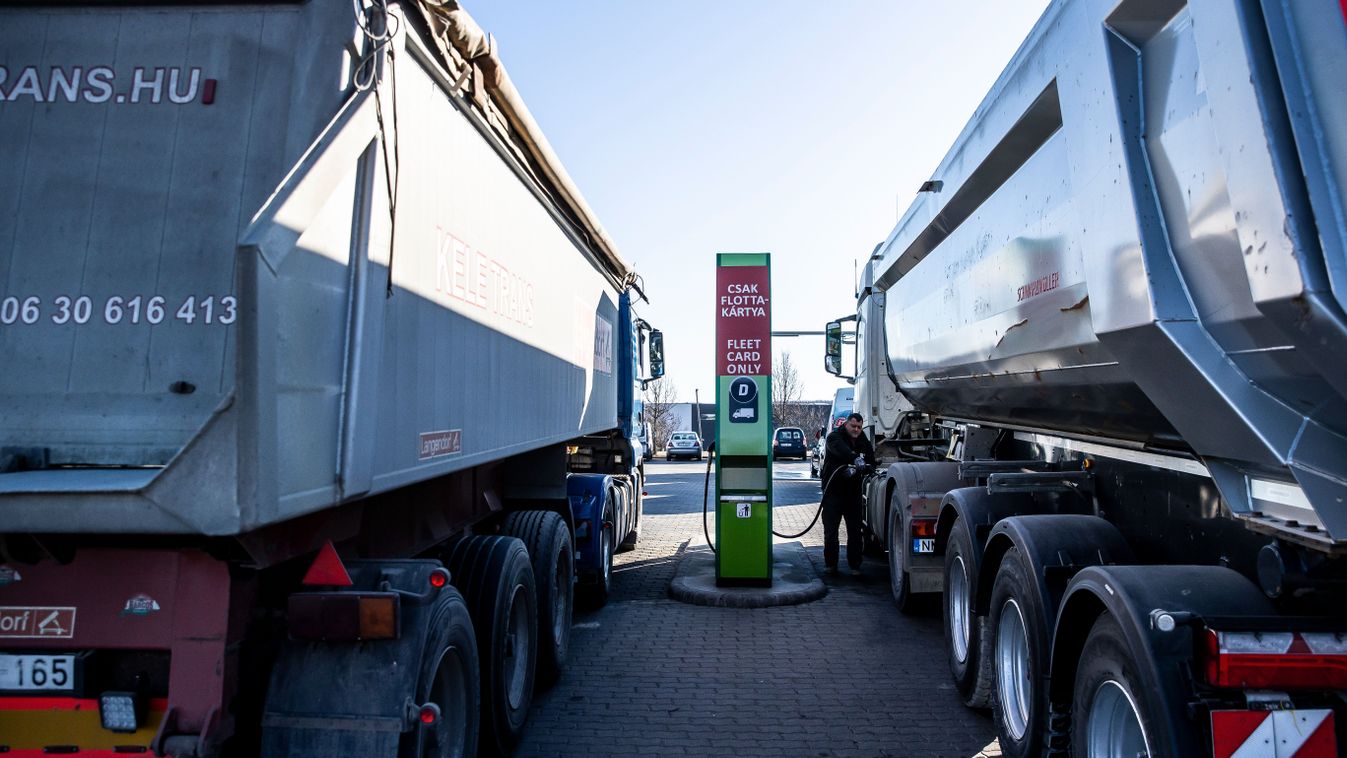
In some countries, such as Hungary, there is a major imbalance in terms of available energy sources. Crude held in strategic storage remains ample, but diesel is quickly running out. Data from the Hungarian Hydrocarbon Stockpiling Association show gas oil stocks at 520.3 kilotons at the end of January and about 390 kilotons at the end of both July and August. That thinner diesel cushion matters in a country where more than 1.3 million passenger cars run on the fuel and the regional market is competing for the same scarce imports.
Pump prices have already moved. Official and commercial trackers put Hungarian diesel around 701 forints a liter in late September on some official series and closer to 730 forints on daily station averages — well above the roughly 593 forints recorded at the end of June. The original worry in Budapest was not whether prices would rise, but how quickly 800 forints would stop looking like a distant ceiling.
That speed is not a mystery to central bankers. Bank of Slovenia research covering euro-area data from 2005 through 2026 found that a 10% rise in Brent lifts pretax diesel and gasoline prices by about 6.5% and 6.2%, respectively, over the longer term. A large share of the increase shows up at stations within the first two weeks — faster than the physical chain of shipping, refining and wholesale delivery would suggest.
The European Central Bank has reached a similar conclusion and added an unwelcome twist: refinery margins can amplify the shock. During the spring spike, Brent briefly reached $138 a barrel while diesel at the refinery gate jumped to $197. ECB staff later estimated that refining margins were contributing about 41 euro cents a liter to euro-area retail diesel in mid-September, and they told reporters those diesel margins may not peak until October.
The way down is slower than the way up. Taxes, refining and transport costs, inventories, margins and local competition all delay relief when crude finally eases. That asymmetry is why governments are acting now, before higher fuel bills work through freight, food and services and lift broader inflation.
Europe-wide crisis
The policy dilemma is the same from Lisbon to Warsaw: protect households and trucking firms without writing a blank check for fossil-fuel consumption. Europe has answered with a patchwork rather than a single rule. Some governments cap retail prices. Others cut excise taxes, sometimes below the European Union minimum. A third group aims help at farmers, haulers and other heavy users. A few still let global prices hit consumers with no cushion at all. The result is that the same barrel of oil can produce pump prices that differ dramatically at the pump across Europe.
Here are just a few examples of what Europe looks like in this regard.
Austria has been running a mineral-oil tax cut of 1.9 euro cents a liter into the end of September.
Belgium has implemented an official price ceiling.
Croatia cut diesel excise duty by another 3 cents, taking it 10 cents below the EU floor; Zagreb says the average diesel price is 1.91 euros a liter instead of 2.26 euros without the intervention.
Cyprus is offering an 8.33-cent discount through Nov. 30.
Luxembourg is absorbing 5 cents of the pump price from July through December.
Malta is using direct state aid to keep prices below the euro-area average.
Portugal decided on Sept. 17 to recycle extra value-added tax receipts from more expensive fuel into tax relief worth about 1.3 billion euros through year-end.
Slovenia posted official maxima of 1.748 euros for gasoline and 2.012 euros for diesel in the week of Sept. 22-28.
Spain has kept an excise cut below the EU minimum through Sept. 30.
Italy reduced and capped diesel duty into early October.
Montenegro and Serbia combine retail caps with lower excise taxes.
Targeted aid is running in parallel
Greece extended a 10-cent-a-liter diesel subsidy into October and is preparing a heating-oil package.
France steered relief to agriculture, high-mileage workers and construction rather than a blanket cut.
Ireland is rebating duty for commercial haulers and bus operators.
Spain added a 402 million-euro program for truckers on top of its general tax reduction.
Italy is offering carriers a tax credit for earlier extra costs.
Larger packages are still moving through parliaments
Germany will cut energy tax by 14 cents a liter from Oct. 1 through year-end, about 17 cents once lower VAT is counted, in a 2.5 billion-euro package.
Chancellor Friedrich Merz said drivers who depend on a car every day “are reaching their breaking point.”
Berlin is also talking with the oil industry about a temporary price cap modeled on Luxembourg or Belgium, aimed at Jan. 1, 2027.
The Czech government will restore a station-margin ceiling from Oct. 1, cut diesel duty to the EU minimum and cap retail margins at 2.50 koruna a liter.
Poland has floated a 60% levy on oil companies’ extra profits to finance about 4 billion zlotys of price relief, though the plan faces parliamentary and constitutional hurdles.
The International Energy Agency has described the response as global, not merely European. In a matter of months, the number of countries applying fuel subsidies rose from 16 to 38, and the number cutting energy taxes rose from 40 to 57. Pew Research Center, drawing on IEA tallies from mid-June, counted 113 countries that had taken at least one energy-cost measure after the Iran war, including tax changes in 55 countries and fuel subsidies in 32. The agency’s own warning is implicit in those numbers: governments are treating the symptom at the pump because they cannot reopen the Strait of Hormuz from a finance ministry or end the war in Ukraine.
Péter Magyar’s government has officially announced a foreign policy break with Viktor Orbán’s course; however, this rhetorical shift toward the European consensus poses serious risks for Hungary due to the country’s continued critical dependence on Russian energy resources. On August 25, 2026, the government of Hungarian Prime Minister Péter Magyar published guidelines for Hungary’s delegation […]
András Baka has been elected President of the Republic of Hungary, and in his first speech, he already criticized former Prime Minister Viktor Orbán.
On Tuesday, Aug. 11, 2026, the parliamentary majority of the Tisza Party, led by Prime Minister Péter Magyar, elected the 73-year-old former president of the Supreme Court as the next head of state by secret ballot, with 140 votes in favor, six against, and no abstentions.
Fidesz, Viktor Orbán’s former ruling nationalist party, and its long-time ally the Christian Democratic People’s Party (KDNP) did not participate in the vote. In their view, the vote was possible only through the illegal removal of Tamás Sulyok, the previous president appointed under Orbán. His term was ended last month, July 2026, by a constitutional amendment passed by the Tisza majority after he refused to resign.
Shortly after the result was announced, Baka took the presidential oath in parliament. In his first address immediately after the election, he strongly criticized the Orbán governments for “wasting a generation’s time.” He claimed that Orbán had produced deep crises across the rule of law, society, the economy, public finances, energy, the environment, healthcare, education, and child protection.
He said he would reject revenge politics, stating: “We cannot build the new Hungary on revenge.”
However, he emphasized that accountability is necessary, while noting that the degree of responsibility differs among those who held power.
Baka defined the presidential role as expressing national unity through party-political neutrality, but not value neutrality. He would not sign laws as a mere formality, would not act as an “extended arm” of the parliamentary majority or the government, and would speak out when fundamental constitutional questions are at stake.
Baka will formally assume office on Aug. 19, 2026, with his term expected to last five years.
The election of András Baka already seemed very likely a few weeks earlier, when Péter Magyar posted a joint photo with him and Bálint Ruff on his Facebook profile. The Tisza parliamentary group finally nominated Baka by secret ballot from a shortlist of three.
The former chief justice’s candidacy was attacked from both the left and the right.
Pro-Tisza commentators again pointed out the complete lack of wider social consultation before his election. From the right-wing perspective, Baka’s previous judicial roles were criticized. First, the fact that he had served as a judge at the European Court of Human Rights in Strasbourg for 17 years is deemed highly suspicious. While he was Supreme Court president, he also opposed the 2011 Nullity Act that annulled certain convictions of protesters arising from the 2006 protests and police actions, during which protesters were violently beaten by police while the left was in power.
András Baka was removed from office in 2011–2012 by the Fidesz government through the abolition and reorganization of the Supreme Court, which was replaced by the Kúria. The European Court of Human Rights later ruled that this premature removal violated his rights. The aggrieved former chief justice – who briefly served as an MP for the Hungarian Democratic Forum in 1990–1991 – now assumes the largely ceremonial office of President of the Republic following the similar early removal of Tamás Sulyok.
Viktor Orbán, Hungary’s prime minister since 2010, faces an election dogfight. Behind in the polls, he has been effectively endorsed by both the Kremlin and the White House, and a host of conservative world leaders. As wars in Iran and Ukraine exacerbate the fissures that have weakened NATO, as well as the U.S.’s relationship with the European Union, this is an election that is being followed with bated breath in Washington, Moscow, Kyiv and Brussels.
Before the elections on April 12, a scandal engulfed the Hungarian government. On leaked recordings, foreign minister Péter Szijjártó can be heard deferentially acquiescing to his Russian counterpart Sergey Lavrov and passing on information from EU meetings. Szijjártó appeared willing to help the Kremlin’s cause in Brussels, to remove oligarchs and their relatives from the EU blacklist, and to block efforts to aid Ukraine. Hungary’s advocacy for the Kremlin’s agenda culminated in its recent veto of fresh sanctions on Russia and over $100 billion in loans to Ukraine. On X, Polish prime minister Donald Tusk wrote that while “Hungary is and will be in the European Union, Victor Orbán and his foreign minister left Europe long ago.” And the Irish taoiseach Micheál Martin described Szijjárto’s calls with Lavrov as both “sinister” and “alarming.”
Szijjárto alleged that “foreign intelligence services, with the active involvement of Hungarian journalists, have been intercepting my phone calls.” It is a plot, the Hungarian government claims, to influence the upcoming polls. Orbán directly blames Ukraine for seeking to unseat his government. The opposition, led by Peter Magyar, has a healthy lead in the polls and describes the Hungarian government’s closeness to the Kremlin as “treason.” According to European intelligence reports, Moscow sent a three-person team to Hungary, overseen by Putin confidant Sergei Kiriyenko who ran an operation to interfere in the Moldovan election back in September. His tactics encompassed “vote-buying networks, troll farms, and on-the-ground influence campaigns.” A Kremlin-linked media consultancy, facing EU sanctions, was hired to dismiss Magyar as a Brussels stooge and portray Orbán as the only candidate strong enough to to be treated as an equal by world leaders, as evidenced by the strength of his relationship with Trump.
Despite a war with Iran that doesn’t appear to be going entirely to plan, the U.S. president took time out to back Orbán with enthusiasm and at considerable length on Truth Social. Trump said Orbán was “a true friend, fighter, and WINNER.” JD Vance, the vice president, is scheduled to visit Hungary on April 7, just five days before the election. And secretary of state Marco Rubio went to Hungary in February. It is now part of the U.S. National Security Strategy to work towards “cultivating resistance to Europe’s current trajectory within European nations.” To that end, notes the U.S. government, “the growing influence of patriotic European parties indeed gives cause for great optimism.” Orbán speaks MAGA’s language on immigration, traditional values and the Christian essence of Western societies. He is, like Putin and Trump, in MAGA’s view, an implacable opponent of secular, progressive, globalist politics as symbolised by Brussels.
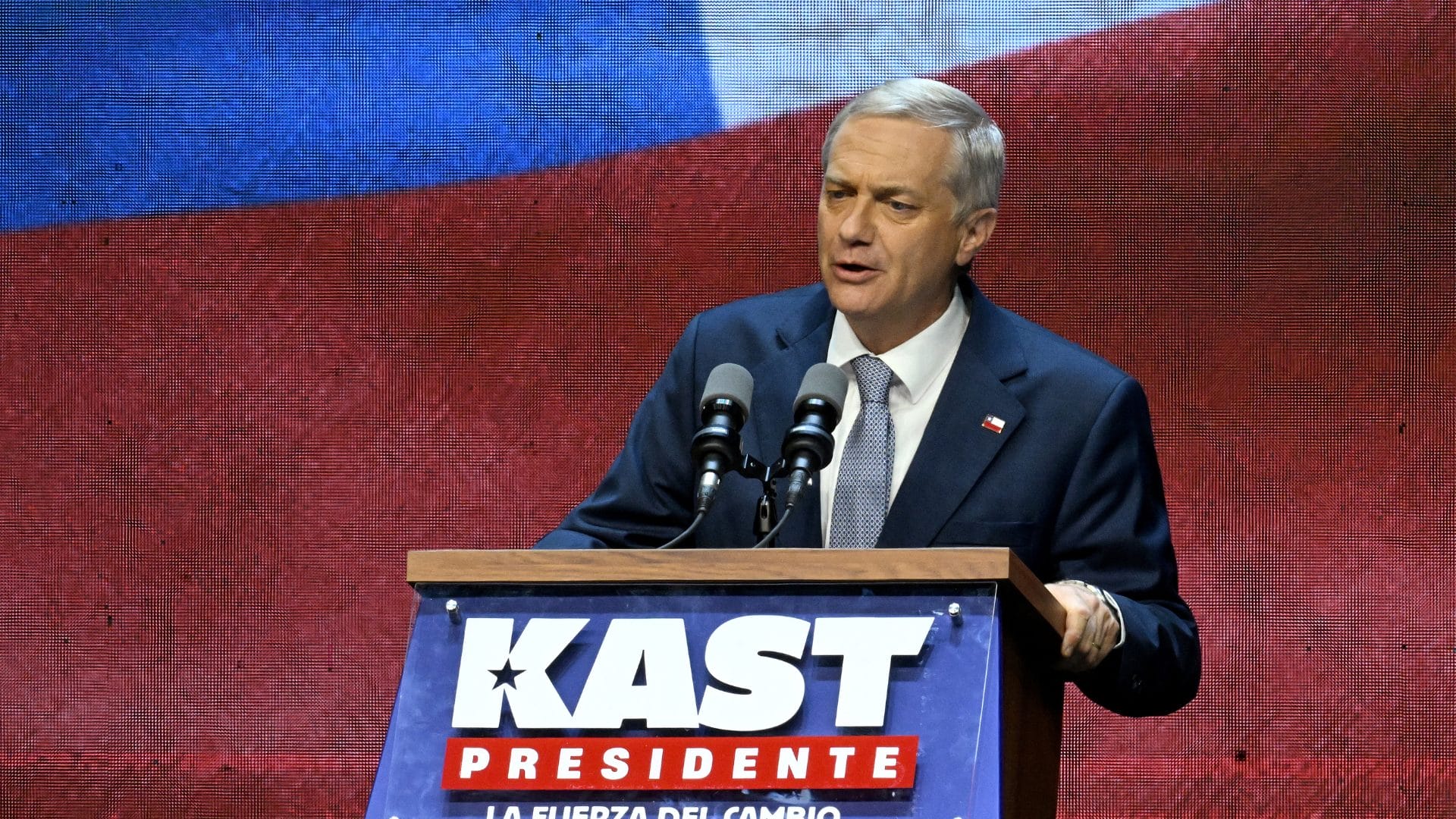
Orbán, the longest serving current head of government in the EU, has become a figurehead for populist, nationalist movements across the world. The recent CPAC Hungary summit was attended by several of these leaders including France’s Marine Le Pen, Italian deputy prime minister Matteo Salvini, and the Netherlands’ Geert Wilders,who called Orbán “a lion on a continent led by sheep.” Latin American leaders close to Trump , including Javier Milei of Argentina and Jose Antonio Kast of Chile, also attended. Milei, who gave the longest speech at the summit, said Orbán was “a beacon for all… who refuse to accept that the West's destiny is one of managed decline.” This international network, with the United States and Russia included, has a vested ideological interest in seeing Orban continue to remain a thorn in the EU's side.
But what can Brussels do? The answer, it appears, is not much. The EU is consensus driven; it needs all its parts to act in concert, giving holdouts like Orbán considerable power to hold the whole bloc hostage. But given Orbán’s prominence as an ideologue, when Hungary blocks sanctions or delays support for Ukraine, it is more than a single nation going rogue. Alice Weidler, co-chair of the far-right AfD, the largest opposition party in the German Bundestag, was among those who spoke at the CPAC Hungary conference last month. Robert Fico, prime minister of Slovakia, is an Orbán ally. On April 19, Bulgaria will have its eighth general election in just five years. Former president Rumen Radev’s new Progressive Party leads the polls and shares Orbán’s pro-Kremlin, anti-EU inclinations.
So polarized is the Hungarian election, that right wing groups are deploying their own observers from Argentina, Austria, the Czech Republic, Kenya, Poland, Germany, Italy, Spain, Serbia, Tanzania and the United States to monitor proceedings. EU observers have said the Hungarian government controls the national media and a recent documentary alleges that a desperate government is resorting to vote-buying, gerrymandering and intimidation tactics. It’s hard to see how either Orbán or Magyar will accept the election result without protest, unless the margin is crushing. But, given Trump’s disdain for NATO allies and the EU, an Orbán election defeat would be a much-needed victory for European unity.
A version of this story was published in this week’s Coda Currents newsletter. Sign up here.

 Login


 (@laszloan)

 EXCLUSIVE: The Trump administration has largely abandoned Hungarian conservatives after Viktor Orbán’s loss, warns
 With Hungarian conservatives face growing persecution, where is Donald Trump?