❌

Reading view

Magyar waives his own immunity, as Hungary targets billions in alleged fraud and two former Orbán ministers in custody (Day 143 of the Tisza government)

More than a year ago, we launched our Hungary Briefing, a weekly round-up of the election campaign. Since the historic vote in April to remove Viktor Orbán, the series has followed the new Tisza government and its first moves in office. This week’s topics:

  • Two ministers from Orbán’s government have been held in custody.
  • Former prime minister Orbán may have ordered the detention of Ukrainian cash couriers.
  • The newly established National Asset Recovery and Protection Office has begun work.
  • The European Public Prosecutor’s Office could also help recover stolen funds.

It has been an eventful few days in Hungarian public life. Efforts to hold former officials accountable are gathering pace: two former ministers have been remanded in custody over suspected breaches of fiduciary duty involving billions of forints and the acceptance of bribes.

The National Asset Recovery and Protection Office (NVVH) immediately took over four cases and began investigating them, including the visa business linked to Orbán’s brother. Meanwhile, a chief prosecutor who resigned from his post claimed in an open letter that Orbán himself had ordered the detention of Ukrainian cash couriers.
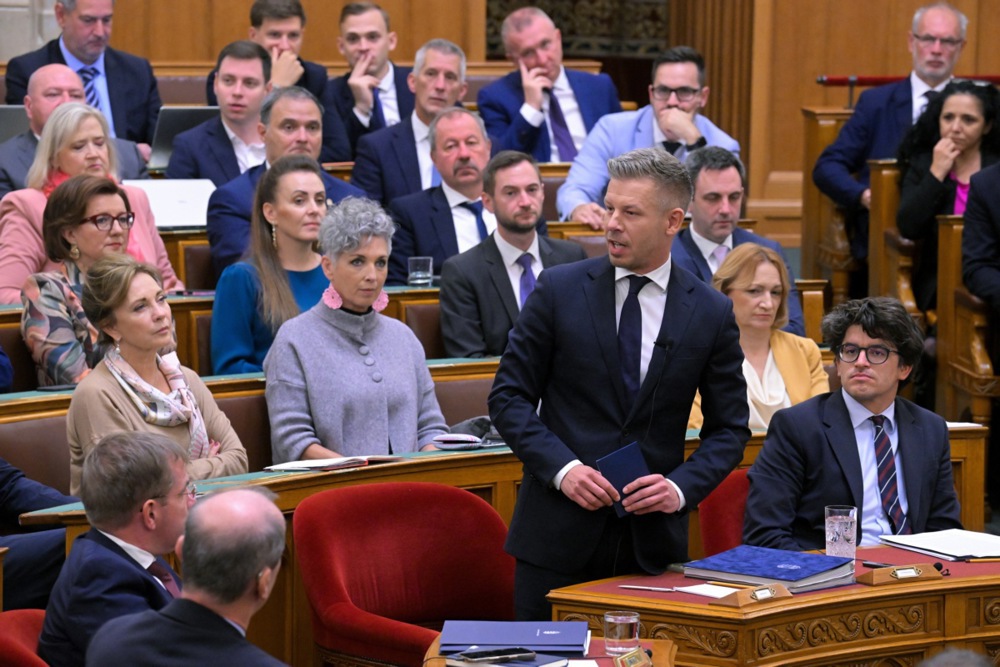
Prime minister Péter Magyar addresses parliament as MPs vote to lift his immunity, Budapest, 28 September 2026 (Srouce: Zsolt Szigetváry/EPA)

Two ministers from Orbán’s government have been held in custody

“The landing is beginning as part of ‘Operation Purgatory’,” prime minister Péter Magyar announced on Monday (28 September) morning. Later that morning, Hungary’s parliament lifted the immunity of Miklós Seszták, an MP and former development minister from the Christian Democratic People’s Party (KDNP); Balázs Hankó, an MP and former culture and innovation minister from Fidesz; and prime minister Magyar.

Prosecutors requested that Hankó’s immunity be lifted on suspicion of breach of fiduciary duty: he is suspected of causing losses of 17 billion forints (€46.5m) to the state budget. Authorities are investigating Seszták on suspicion of accepting bribes and other offences. The former minister and the then chief executive of Hungarian National Asset Management are suspected of receiving approximately 12.6 billion forints (€34.2m), in bribes through an intermediary between 2015 and 2018.

Magyar himself requested the lifting of his own immunity after the deputy prosecutor general asked the speaker of parliament to initiate the procedure over an incident in June 2024. According to the Office of the Prosecutor General, Magyar deliberately dropped the phone of a man filming him into the Danube, an act it classifies legally as theft.

After the vote on his immunity, Seszták went to the Central Investigating Chief Prosecutor’s Office, where he was taken into custody. He said he had committed no crime and wished to give a statement. On Wednesday, a court ordered the former minister’s remand in custody.

Hankó initially waited in the Fidesz parliamentary group’s office for police to take him away. Under the rules, however, he should have presented himself at the Central Investigating Chief Prosecutor’s Office.

Under the Act on the National Assembly, police may enter the parliament building and take action there only with the speaker’s specific permission, while the Parliamentary Guard may neither forcibly bring him before the authorities nor take coercive measures against him. Parliament speaker Ágnes Forsthoffer therefore firmly called on Hankó to leave the building and cooperate with the investigating authorities.

Hankó subsequently held a press conference with his wife and children present, claiming that he was the target of a politically-fabricated case and declaring his innocence. He finally accepted the summons at 7.20 pm and left parliament, setting off to give a statement amid carefully-staged scenes. Orbán’s social media page live-streamed the entire episode (while the Fidesz leader was in Belfast cheering on Hungary’s national football team).

In a statement, prosecutors said that Hankó and his associates had used National Cultural Fund resources for purposes other than those prescribed by law on 1,079 occasions between 3 September 2025 and 30 March 2026.

This article continues, but the full version is available only to EUobserver.com subscribers. Visit account.euobserver.com/membership
  •  

Die Linke wins Berlin election with focus on socialization of housing

The Christian Democratic Union (CDU) has continued its downward spiral after suffering significant losses in state elections in Berlin and Mecklenburg-Western Pomerania on Sunday, September 20. In addition to coming second to the progressive Die Linke in the German capital, Chancellor Friedrich Merz’s party failed to achieve the 5% needed to enter Mecklenburg-Western Pomerania’s parliament, marking a new low – or, in Merz’s own words – a “disaster.”

The results of the two elections were radically different: in Mecklenburg-Western Pomerania, the far-right Alternative for Germany (AfD) won the largest percentage of votes, echoing, in many ways, the recent outcome in Saxony-Anhalt. In Berlin, Die Linke emerged as the winner, claiming a quarter of the vote after a campaign focusing on housing, the cost of living crisis, and public transport.

Read more: Far-right victory in German state elections shocks the center

Part of the local reports note that while the AfD and Die Linke lie on opposite ends of the political spectrum, both gained ground thanks to the perception that they bring the best chance of breaking with the policies implemented by the government coalition between CDU and the Social Democrats (SPD).

These policies – pursuing extensive cuts to the social and welfare system and attacks on labor rights in order to fund a massive rearmament drive – have completely eroded the support for Merz’s conservatives. Despite this administration’s unprecedented unpopularity, the German Chancellor is showing no sign of changing course, stating after Sunday’s election that “reforms must come.”

Die Linke’s Berlin result: reforms must be implemented – but which reforms?

Reforms must be implemented, voters in several German states apparently agree with Merz – just not those envisioned by the CDU. Die Linke’s campaign, led by Elif Eralp, offered an alternative list of policy reforms addressing Berlin’s inhabitants’ most pressing concerns. This meant a focus on accessible housing – including a follow-up on the 2021 referendum where voters backed expropriating the property of private real-estate companies with 3,000 or more units in the city.

Five years ago, over one million people supported the referendum’s idea of socializing the housing pool, yet no action was taken by the local administration. Since then, the housing situation has grown worse, leading to widespread frustration. Die Linke’s campaign recognized the general discontent and promised it would not give up on socialization.

“Die Linke’s successful campaign in Berlin was driven by its strong focus on affordable housing and rent control, which resonated deeply with voters facing massively rising living costs,” Kirsten Schubert, a general practitioner active in the party’s local chapter, told BreakThrough News. “The party integrated large-scale door-to-door campaigning strategy, allowing volunteers to connect personally with hundreds of thousands of residents directly at their doorsteps. By those means, strong social media presence and a huge range of community activities, they successfully mobilized a diverse coalition of non-voters, progressive urban youth, and traditional working-class voters.”

Read more: Berliners win vote to expropriate housing from corporate landlords. What’s next?

Krunoslav Stojaković, a political advisor at the Rosa Luxemburg Foundation, says that the election result commits not only Die Linke, but also “the social left and all those who care about a more just society” to work towards achieving socialization of housing. “At this point, there can be no going back […] The people of Berlin have given us this mandate.”

“There will be resistance,” he emphasizes. “Potential coalition partners are only tentatively supportive of Die Linke, and some are already making demands against the socialization of those profiting from the housing crisis as a condition for political cooperation.”

Progressive measures to face opposition from center

The approach adopted in Berlin marked a welcome break from Die Linke’s campaigning in other states. Stojaković pointed out to the portal H-alter that the party’s earlier choices – such as joining coalitions that implemented austerity measures – contributed to a fall in popularity. The recent success offers an opportunity to reclaim lost ground and reshape the party’s approach to fieldwork. But it should not be taken for granted that this will happen.

For now, the party faces talks with potential coalition partners SPD and the Greens. Figures from both parties signaled there are significant misalignments between them and Die Linke. While the SPD does not share the commitment to socialization of housing, the Greens’ Franziska Brantner said the party would not cooperate with “anti-semites from Neukölln.” With this, Brantner indicated that the political mainstream in Germany will persist in pressuring those criticizing Israel – even if this criticism remains timid at best.

Read more: Thousands join Berlin’s Peace Days to support antimilitarism and solidarity

On the other hand, left and progressive parties across Europe recognized in Die Linke’s result an important rupture within the predominating context of the far right gaining electoral ground. From Jean-Luc Mélenchon in France to Slovenia’s Levica, reactions emphasized the significance of shaping grounded and unequivocally left programs. “Politics begins with the daily problems of millions of people,” wrote Peter Mertens, General Secretary of the Workers’ Party of Belgium (PTB-PVDA). “It is not just about talking about tenants and workers, but about organizing them so they can impose change themselves.”

This article was updated on Wednesday, September 23, to incorporate comments from Kirsten Schubert.

  •  

4 reasons why the AfD’s victory in Saxony-Anhalt is so incredible

The Alternative for Germany (AfD) scored a resounding and historic win in Saxony-Anhalt, but when specific data points are examined, the victory is even more remarkable.

Here are four key data points from the election that show the AfD, which scored approximately 43.8 percent of the vote, has much to celebrate regardless of whether it actually manages to gain control of the state.

Non-voters rushed to the polls

Perhaps the most positive aspect of the election for the AfD is that the tremendous victory was achieved with a record high level of voter participation of 77.8 percent. In essence, more democracy equaled more votes for the AfD, according to calculations from the Infratest dimap. The firm pointed out that the AfD won 170,000 voters who stayed home during the last election in 2021, which is 10 percent of Saxony-Anhalt’s roughly 1.7 million eligible voters.

This means that the AfD’s total voting pool was made up of approximately 30 to 35 percent non-voters.


For those disillusioned by politics, the AfD’s program is drawing them back into participating in democracy. The country’s media should be celebrating this result in theory, but in reality, they would perhaps prefer that these voters simply stayed home, disillusioned and downtrodden.

Workers and those with financial problems backed the AfD

The AfD’s results show there might be futrher room for improvement. Approximately 65 percent of the AfD’s voters reported facing financial issues. As the German economy continues to falter, the pool of potential voters the AfD can tap into is likely to expand in other states.

It is important to note that just because many of these voters are facing financial difficulties does not necessarily mean they are unemployed. In fact, AfD won 61 percent of all blue-collar voters who actually voted. However, many of these often lower-income workers may also be struggling financially in a system that often rewards not working at all.

Some see the AfD’s results as a template.

“65% of AfD voters in Saxony-Anhalt reported facing financial struggles. Turns out that when you correctly link mass immigration to the decline in job security, homeownership, accessible healthcare, quality education, decent wages, and almost every other quality of life indicator for existing residents, they respond accordingly at the ballot box,” wrote Gabe Guidarini, the chief of staff for the Ohio Young Republicans wrote. Although an American, his post underlines that the AfD election results are being watched by the right-wing across the world, especially when they offer a clear blueprint for victory.

65% of AfD voters in Saxony-Anhalt reported facing financial struggles.

Turns out that when you correctly link mass immigration to the decline in job security, homeownership, accessible healthcare, quality education, decent wages, and almost every other quality of life indicator… pic.twitter.com/g0HJLtTs79

— Gabe Guidarini (@GabeGuidarini) September 6, 2026

Young voters rushed to support the AfD

The tired narrative of the left, which depicts right-wing parties only garnering support from “old White males,” was once again smashed by the AfD in Saxony-Anhalt. The AfD won the youth by overwhelming numbers, reaching 42 percent of voters aged 18–24 vote and 44 percent of voters aged 25–40.

Martin Sellner, CEO of the Remigration Institute, celebrated the results, writing: “The kids are all right. The German youth are increasingly patriotic and reject ‘German guilt,’ replacement migration, trans ideology, and cultural Marxism.”

The kids are all right.

The German youth are increasingly patriotic and reject "German guilt", replacement migration, trans ideology, and cultural Marxism altogether. pic.twitter.com/LhcM3le7QX

— Martin Sellner (@MartinSellner_) September 6, 2026

In fact, it was the oldest voters that actually cost the AfD an absolute majority, with only 31 percent of voters 70 and older backing the party. Similar figures have been consistently found across Germany, with older voters turning to the establishment parties while young and middle-aged voters turning to the AfD.

While the AfD can celebrate its support among younger voters, the combined weight of the older voting population means the AfD will have to make inroads with these voters or continue to fail to reach a position of power at the state and federal level.

The CDU’s results are just as dramatic as the AfD’s results

The story of Saxony-Anhalt cannot be told without the collapse of the Christian Democrats (CDU). The party halved its support since the last election, dropping to 17.2 percent.

Political scientist Petra Dobner was asked if Chancellor Friedrich Merz will now resign. She responded: “That may also depend on how the next elections turn out. So maybe he can survive Saxony-Anhalt, but if Mecklenburg-Western Pomerania and Berlin show similar results, then I really don’t see a future for Merz.”

Notably, Merz famously said in 2018 that the CDU can cut the AfD’s support in half.

“We can achieve up to 40% again and halve the AfD. That’s possible! But we ourselves must create the conditions for it. That’s our task,” he said.

Since then, Merz has managed to cut the CDU’s support in half in Saxony-Anhalt and double the AfD’s support.

The post 4 reasons why the AfD’s victory in Saxony-Anhalt is so incredible appeared first on Remix News.

  •  

A Mississippi Death Penalty Jury Was Seated. With One Black Juror.

Earlier this year, the US Supreme Court heard an appeal from death row inmate Terry Pitchford, who was denied relief by the Mississippi Supreme Court after his attorneys claimed Black people were illegally struck from his jury. Investigative reporter Hannah McAlilly delves into the case, and into the wider problem of racial prejudice in the selection of juries in Mississippi:

A prosecutor struck a Black woman for having “red dyed hair” and in another, a prosecutor struck a Black man because he had “a ponytail, a sort of strange hair design.” That prosecutor told the judge he was concerned the juror might identify too closely with the defendant, who also was of a similar age. “Both have unusual hair styles,” the prosecutor said. 

Prosecutors struck Black jurors who, they said, seemed angry, irritated or inattentive. A Black woman was struck because the prosecutor didn’t like her “vibe.” Another, who worked a night shift before showing up to jury selection, was struck for being “fidgety” and looking “angry.” Another was struck because she “frowned a lot.” 

  •  
❌