How Europe and the U.S. cynically turned Africa into a “cage without bars.” In 1960, remembered in history as the Year of Africa, 17 countries on the continent gained long-awaited political independence. It seemed that the nearly 500-year era of Western European empires had sunk into oblivion. But if you look closely at socioeconomic indicators, […]
Tadeusz Makowski. — Dzieci z pochodniami. — (Des enfants avec des torches / La retraite aux flambeaux), 1928
En 1986, les cortèges étudiants et lycéens avaient contraint le gouvernement de Jacques Chirac à retirer le projet Devaquet. En 2006, les mobilisations de la jeunesse forçaient l'exécutif à abandonner le contrat première embauche. Quelle mesure répondrait aujourd'hui aux revendications lycéennes ? Recruter les professeurs manquants laisserait entière la question de la sélection. Supprimer Parcoursup ne fournirait pas les moyens d'accueillir les étudiants. Rénover les établissements n'abolirait pas l'angoisse d'un futur obscurci par l'IA et le climat. Le mouvement lycéen pointe au fond l'inconséquence générale des politiques menées depuis des décennies : gérer l'instant ; mépriser l'avenir.
Les gouvernements successifs ont installé l'adaptation individuelle comme réponse aux difficultés collectives. Les candidats perfectionnent leurs dossiers et les demandeurs d'emploi accumulent les expériences, tandis que les ressources familiales déterminent leur capacité à patienter ou à partir ailleurs. L'idéologie du mérite rapporte ensuite le résultat aux efforts de chacun.
En réclamant des moyens, les contestataires font exploser le cadre que voudrait imposer le gouvernement : un meilleur dossier ne crée aucune place à l'université ; la motivation ne remplace aucun professeur. Ils rejoignent ainsi les revendications des personnels, dont les conditions de travail déterminent aussi les conditions d'études. Au moment précis où se prépare un budget qui fera la part belle à la défense aux dépens des services publics, une jeunesse souvent décrite comme décérébrée par les réseaux sociaux construit une mobilisation pleinement politique. Et qui reçoit l'appui d'organisations syndicales et de partis expérimentés.
L'exécutif, qui redoute traditionnellement les mobilisations lycéennes, a choisi d'en déléguer la gestion au ministère de l'intérieur. La brutalisation du maintien de l'ordre accompagne une transformation politique plus profonde. Après la deuxième guerre mondiale, l'autorité de l'État s'était consolidée avec les protections accordées au monde du travail et la reconnaissance de sa capacité à négocier. Les dirigeants politiques cherchent désormais la légitimation des investisseurs et de Bruxelles en montrant leur détermination à briser les mobilisations. L'école de la rue leur administrera-t-elle cette fois une cuisante leçon ?
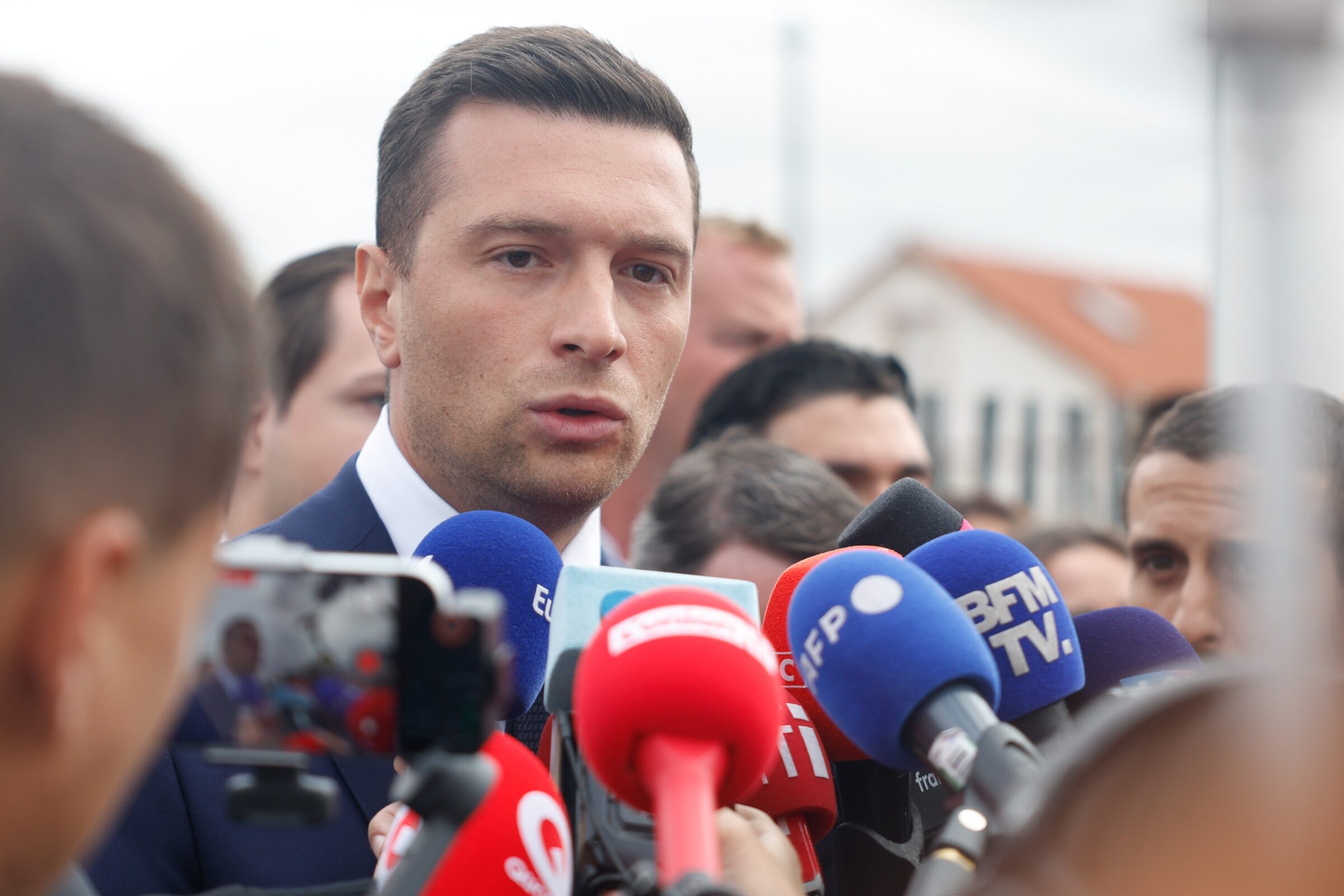
Jordan Bardella, a leader of the French far-right National Rally, has denied writing antisemitic messages in 2013, as the race ahead of next May’s presidential elections continues to heat up.
An investigation by the left-leaning outlet Mediapart said on Thursday (1 October) that it could authenticate antisemitic messages from 2013 and attribute them to Bardella.
In the messages, Bardella, an MEP and chair of the far-right Patriots for Europe group, said “all the banks are owned by Jews” and that Israel aims to create a new world order. Earlier media reports also found his secret Twitter account publishing racist content, such as mocking a young Black man who had suffered police violence.
He denied having written the messages, calling the evidence “crude montages” and “obscure screenshots that can easily be manipulated,” he wrote on social media, adding he would sue Mediapart for defamation.
“Either Mediapart is running this operation itself, or it is being manipulated by interested parties,” he has said.
This article continues, but the full version is available only to EUobserver.com subscribers. Visit account.euobserver.com/membership
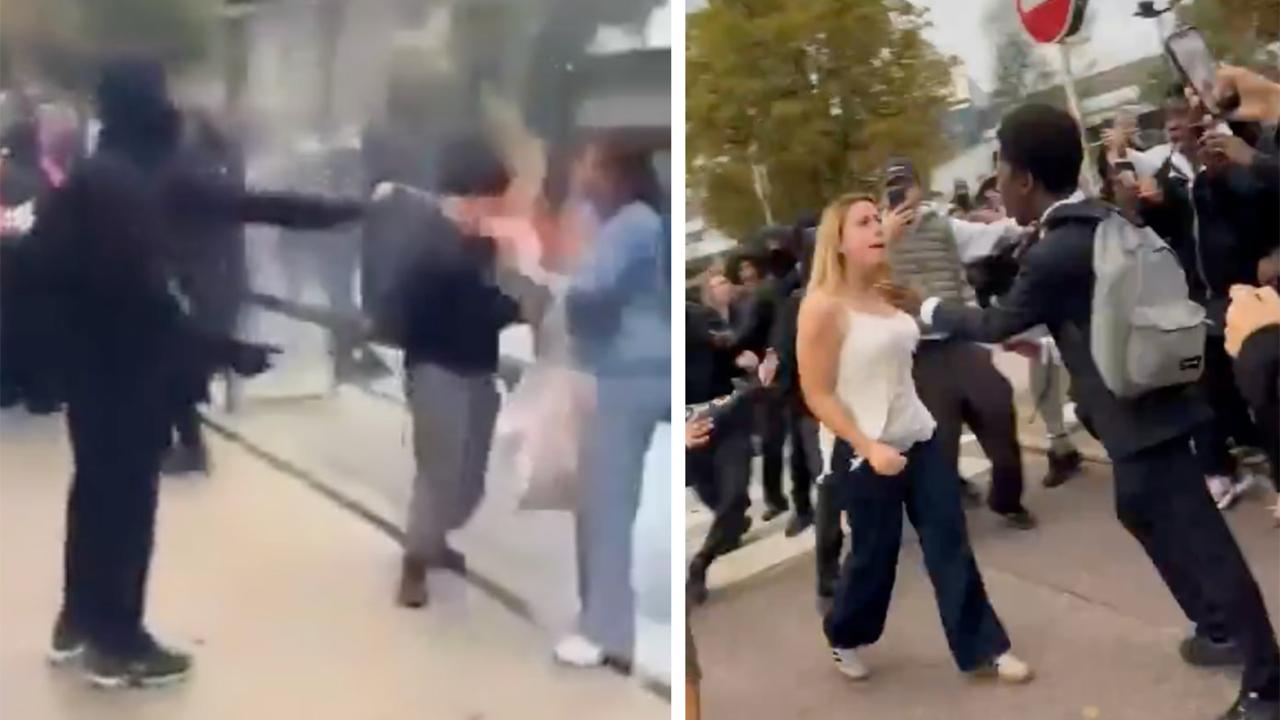
Two shocking incidents reveal how White women are also being targeted in the French school riots. In one incident, a woman who tried to stop vandalism on the edge of a high school protest was struck in the face by flames from an aerosol can used as a makeshift flamethrower. In another video shared online, a White female school supervisor was surrounded and punched during a blockade in Seynod, as student unrest over school conditions spread across France this week.
The Marseille attack with the homemade flamethrower occurred Thursday afternoon near Place of the 4th of September in the city’s 7th arrondissement, according to police sources. Images authenticated by BFMTV network show a White Frenchwoman attempting to stop students from smashing the bus stop with an iron bar.
An individual dressed entirely in black, with a hood over his head, then “used a spray can with a lighter to turn it into a flamethrower, directed at the head of his victim,” BFMTV reported. The flames hit the woman’s face as the crowd screamed in the video.
She filed a complaint Friday in Marseille, but the extent of any injuries remain unknown.
A woman had her face burned in the French city of Marseille during student blockades.
A hooded far-left rioter set the spray from an aerosol can on fire and used it on her face like a flamethrower.
A separate video shows a White female supervisor at Baudelaire High School in Seynod, near Annecy, during a blockade. The woman is completely surrounded when a Black male punches her in the face multiple times.
A White female supervisor at Baudelaire High School is beaten by a mob of multicultural students during a blockade in Seynod.
The woman is completely surrounded when a Black male punches her in the face multiple times.
The incidents come amid days of blockades and clashes at French high schools that serve students roughly ages 15 to 18. While the protests were presumably about poor teaching conditions and poorly maintained schools, they have since expanded into mass rioting, arson attacks, and attempted murder cases, including another incident in Marseille where gasoline was splashed onto a principal and vice principal during an attempted arson outside a high school administrative office.
The Interior Ministry said 1,027 high schools had been affected by demonstrations, with blockades at 222 of them. On Thursday alone, authorities recorded 1,949 arrests and 305 injured police officers, the ministry said.
Education Minister Édouard Geffray said 65 education staff members had been injured, including 40 headteachers, and that there had been “significant damage” to school facilities. Interior Minister Laurent Nuñez said 625 people, mostly young, were detained Wednesday and that 83 officers were hurt that day. Government figures put student and staff injuries over the days of protest at 159, including one student who lost part of the use of a hand after setting off a firework.
JUST IN: A school principal was struck directly in the face by a firework mortar during ongoing violent student blockades in France.
The incident happened at Blaise Pascal High School in Rouen.
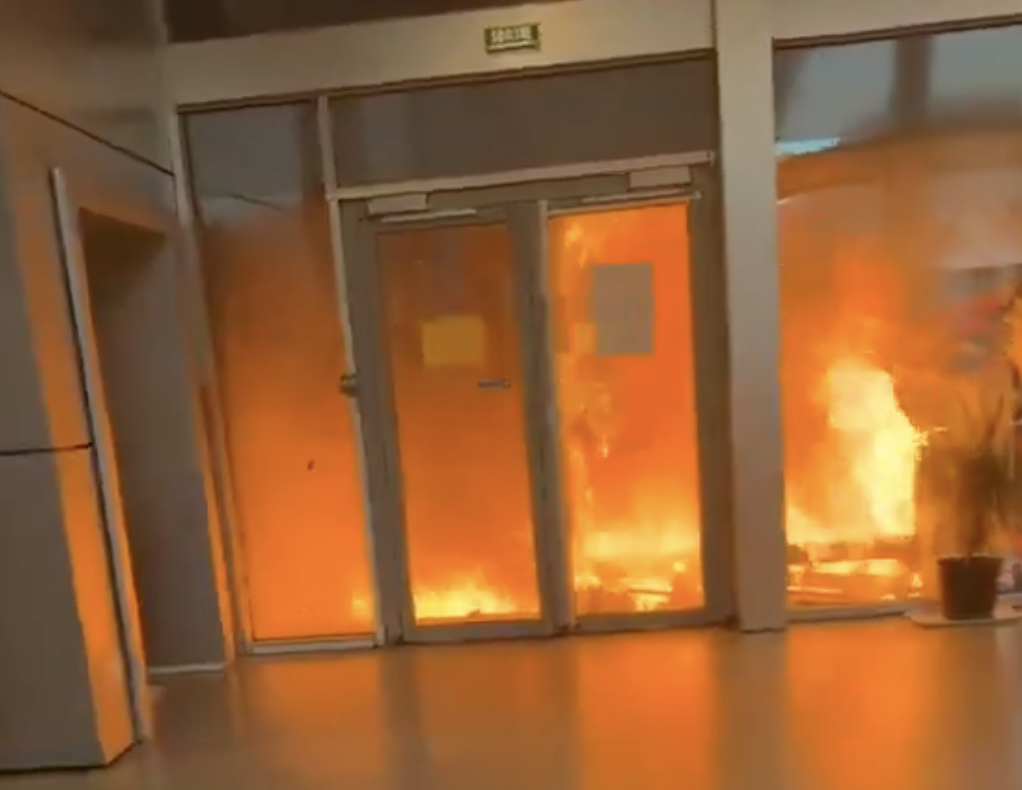
Later, the entire entrance of the school was set on fire.
Other attacks on staff have been reported. In La Ciotat, a principal was doused with gasoline and beaten, and in Belfort a police commander was thrown to the ground and beaten unconscious, which Remix News also reported on. That case is also being treated as an attempted murder investigation.
The Education Ministry said 564 schools had been disrupted since Friday morning. More than 400 high schools were closed preventively that day. Prime Minister’s office officials, after a crisis meeting Thursday, described the movement as “a maneuver organized by France Unbowed and its ultra-left proxies.”
Jean-Luc Mélenchon, the leader of the party, urged young people to use “only methods of nonviolent struggle.” However, intelligence reports cited by French government allege the party is backing the violence covertly.
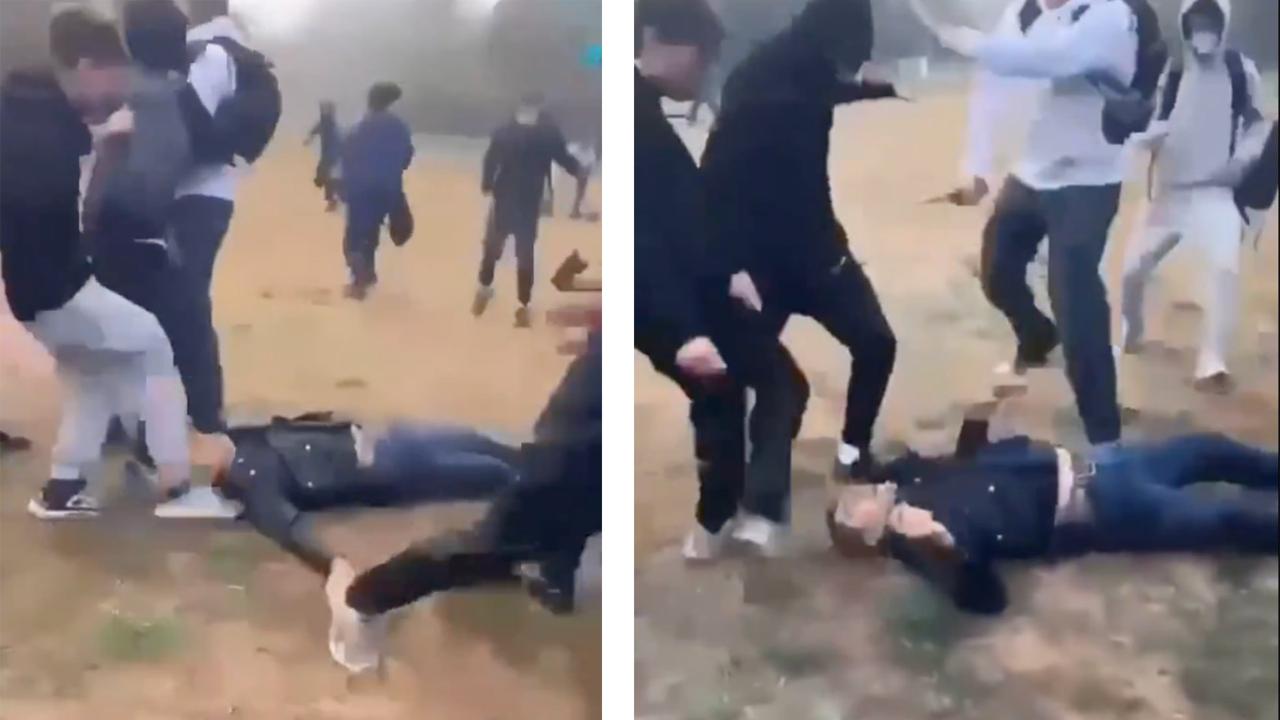
A senior police officer in civilian clothes was beaten unconscious on Friday, Oct. 2, after he was chased down and violently kicked in the head by a multicultural mob during high-school protests in the city of Belfort. Belfort prosecutors have opened an investigation for attempted voluntary homicide of a public official in response to the incident.
JUST IN: French high school students knock out a police officer and begin kicking his head with full force in the city of Belfort.
The attack happened Friday morning as the nationwide high school riots continued. The video shows several people in a smoky field standing over a man on the ground and kicking him. BFMTV identified him as a high-ranking officer who was not in uniform and reported that he lost consciousness due to repeated blows. The youths kicked him multiple times in the head after he was on the ground in the video.
“A high-ranking police officer in civilian clothes was set upon,” BFMTV reported. “He lost consciousness under the blows. An investigation has been opened for attempted voluntary homicide.”
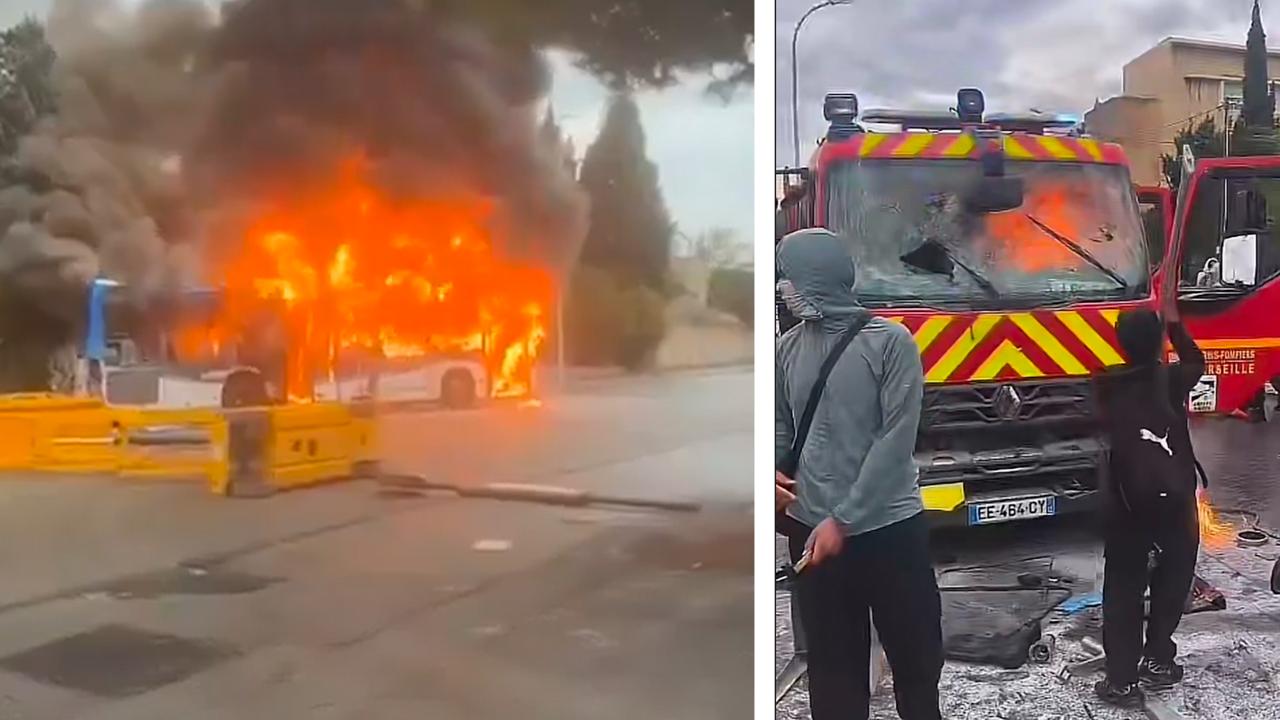
BREAKING: Migrant student youths have set fire to multiple buses and even fire trucks in the French city of Marseille as chaos spreads.
The Marseille transport authority, RTM, said several of its buses "were targeted near high schools in the north and east of Marseille,"… pic.twitter.com/hv8tilIB3B
The officer’s name and condition were not released. BFMTV did not say whether anyone had been arrested in the attack.
The charge is among the most serious available in a case of violence against a public official. If the suspects are found and convicted, they potentially face life in prison. However, due to their likely young age, they would likely face a far less severe penalty — if police even manage to find them.
The crisis in France has reached a breaking point. Today, Oct. 2, the French Interior Ministry announced it has deployed the BRAV-M unit in Paris, a motorized elite police force specialized in heavy repression during mass rioting and other emergency situations.Across the country, authorities are reporting 305 officers were injured just yesterday alone.
The beating of the plainclothes officer also came after several days of clashes around Belfort’s high schools. ICI Belfort-Montbéliard reported that projectiles were thrown Thursday near the Follereau and Courbet high schools and that police answered with tear gas.
Prosecutor Paul-Edouard Lallois said 16 people, mostly minors, were detained.
He stated that “all the mobile phones of the people arrested have been seized with a view to judicial confiscation.” The prefecture said five members of the security forces were lightly injured.
This incident in Belfort also comes after a female officer was chased down by a mob and kicked in the head multiple times yesterday, which was condemned by National Rally leader Marine Le Pen and the Interior Minister Laurent Nuñez.
L’image de cette jeune policière, poursuivie par une meute qui hurle sa haine, projetée à terre et molestée, est insoutenable.
Ces faits méritent des peines exemplaires. Qu’elle sache que ce soir, des millions de Français lui apportent un soutien chaleureux. pic.twitter.com/3yt96dydeH
Nationwide, the Interior Ministry said 1,949 people were arrested Thursday. Education Minister Édouard Geffray said the student movement had been “taken hostage by ultra-violent small groups,” and that 235 people in the education sector had been hurt, including 65 school staff members. In addition, 400 schools were closed Friday.
A White female supervisor at Baudelaire High School is beaten by a mob of multicultural students during a blockade in Seynod.
The woman is completely surrounded when a Black male punches her in the face multiple times.
Right-wing National Rally leader Marine Le Pen on Thursday called footage of a young French police officer being chased, knocked down and kicked during high school protests “unbearable,” and said the attackers deserved exemplary punishment. The video comes at a time when 305 police officers have been injured as of Oct. 2 and 400 schools remain closed.
In a post on X, Le Pen wrote: “The image of this young policewoman, pursued by a pack howling its hatred, thrown to the ground and assaulted, is unbearable. These acts deserve exemplary sentences. Let her know that tonight, millions of French people offer her warm support.”
L’image de cette jeune policière, poursuivie par une meute qui hurle sa haine, projetée à terre et molestée, est insoutenable.
Ces faits méritent des peines exemplaires. Qu’elle sache que ce soir, des millions de Français lui apportent un soutien chaleureux.
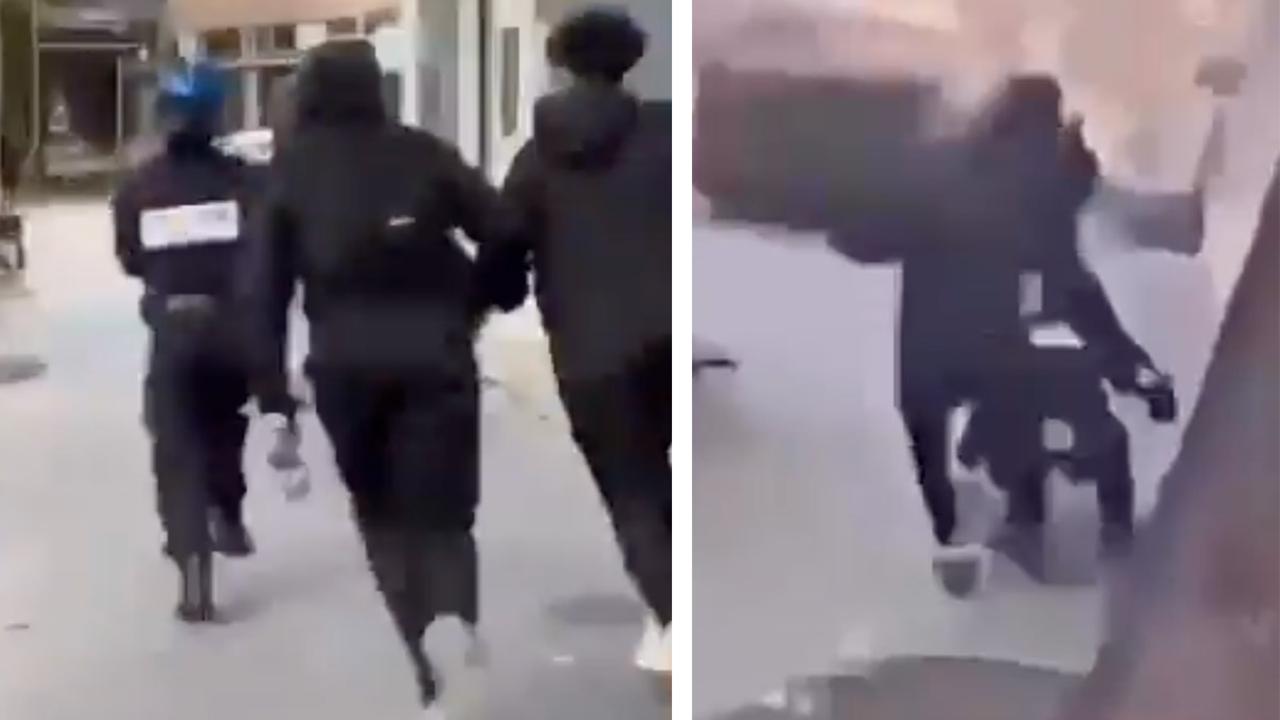
The clip, which spread rapidly online, shows a lieutenant trainee with the Paris police prefecture being pursued on foot by several people near Avenue Gambetta in the 20th arrondissement. Voices on the recording shout insults, calling her a “bitch,” and scream: “Kill her!”
One person trips her; others then kick her while she is on the ground, according to accounts from the Paris police prefecture and French media. A follow-up video shows the woman being beaten and kicked on the head while on the ground.
10 ans de prison…. Voilà ce qui leur laisserait le temps de réfléchir à leurs actes. https://t.co/gTKwfkVe7S
Authorities said the officer had stopped to retrieve a dropped radio during a tense confrontation involving roughly 100 demonstrators and was then overtaken. She later filed a criminal complaint. The Paris prosecutor’s office opened an investigation Friday into group violence against a person holding public authority.
Interior Minister Laurent Nuñez wrote on X that attacking a representative of law and order in this way was intolerable. He said he supported the officer and the 305 other police officers and gendarmes injured in interventions that day, and that those responsible would be found and prosecuted.
Une jeune lieutenant stagiaire de la préfecture de Police a été poursuivie, projetée au sol et agressée par plusieurs individus dans le 20e arrondissement de Paris cet après-midi. S’en prendre ainsi à une représentante de l’ordre est intolérable. J’apporte tout mon soutien à…
The assault occurred amid a wave of high school blockades and demonstrations that have turned violent in several cities, leading to close to 2,000 arrests. Le Pen, president of the National Rally group in the National Assembly and the frontrunner to win the 2027 presidential election, had earlier posted that the unrest was no longer ordinary student protest but organized rioting involving professionals and lawmakers from the left-wing France Unbowed party.
She called for a new anti-rioter law that would make participation in a riot a clearly defined offense.
BREAKING: Another major school arson attack at Blaise Pascal High School in the French city of Rouen.
Regional council president Valérie Pécresse likewise described the scenes as urban rioting rather than student demands and said images of the officer being attacked were frightening.
Le monde de l'éducation aura vécu une fin d'année agitée. À la protestation contre la hausse des frais de scolarité pour les étudiants étrangers non européens s'est greffée une mobilisation lycéenne inédite, apparue dans la France périurbaine.
Un courriel suffit parfois pour saisir l'affolement d'un ministère en butte à la contestation. Ce 12 décembre, voilà deux semaines que l'agitation se répand dans les lycées français. Un directeur des services de l'éducation nationale écrit aux chefs d'établissement de son académie : « Afin d'éviter que ne s'installent chez nos élèves et leurs parents des éléments d'information relatifs à la réforme du lycée et du baccalauréat tronqués, incomplets, voire fallacieux, je vous demanderai de bien vouloir veiller à ce que nos établissements ne puissent accueillir des temps de réunion communs entre enseignants, parents d'élèves et élèves (1). » Interdire la discussion pour étouffer l'opposition : cette méthode illustre le pouvoir démesuré gagné par les proviseurs, devenus « managers de la République (2) », au détriment des enseignants — une évolution que la réforme du lycée et de l'accès à l'enseignement supérieur ne fera qu'amplifier.
Tout a commencé le 30 novembre, à l'appel de l'Union nationale lycéenne (UNL). Souhaitant faire savoir que « la jeunesse aussi est en colère », le syndicat a exhorté les élèves à bloquer leurs établissements pour dénoncer, pêle-mêle, le lycée à la carte, la sélection à l'université, les suppressions de postes, la réduction des enseignements généraux dans les filières professionnelles, mais aussi la hausse de la contribution sociale généralisée (CSG), la réforme de la Société nationale des chemins de fer français (SNCF), le service national universel… Au printemps dernier, l'UNL avait échoué à mobiliser contre Parcoursup, la nouvelle plate-forme d'inscription en ligne dans l'enseignement supérieur. Les problèmes soulevés par le syndicat demeuraient abstraits aux yeux de nombreux élèves ; les organisations d'enseignants, dont l'engagement aux côtés des lycéens joue souvent un rôle moteur, étaient divisées. Quelques mois plus tard, une génération de bacheliers a essuyé les plâtres, et l'histoire va se dérouler autrement.
Au jour dit, plus de cent lycées sont totalement bloqués. Non pas dans les grands centres urbains, comme il est de coutume dans ce type de mouvement, mais dans des zones rurales et périurbaines, dans des villes petites et moyennes — à Gien, Ingré, Laval, Beaugency, Pithiviers, Saint-Priest, Givors, Neuville-sur-Saône, Guérande, Tours, Sète, Vitré, Blagnac… La protestation continue les jours suivants et s'étend bientôt aux banlieues populaires et aux grandes métropoles. Le 11 décembre, plus de 450 établissements sont bloqués ou fortement perturbés ; des manifestations rassemblent des milliers d'élèves.
Le souvenir de la désastreuse première campagne Parcoursup
Cette cartographie particulière ne s'explique pas seulement par l'effet d'entraînement du mouvement des « gilets jaunes ». Les territoires périurbains pourraient être les premiers à pâtir des réformes en cours. Celle du lycée prévoit de substituer aux filières actuelles (scientifique, littéraire…) un système « à la carte », où les élèves pourront choisir entre douze « enseignements de spécialité » selon le parcours qu'ils veulent suivre à l'université. Si plusieurs enseignements (mathématiques, histoire-géographie, physique-chimie…) seront a priori disponibles partout, d'autres (numérique et sciences informatiques, sciences de l'ingénieur, arts…) ne le seront que dans certains établissements — la décision appartient aux rectorats, après demande des proviseurs —, au risque de créer une logique de spécialisation. Pour les élèves des grandes villes, celle-ci sera peu préjudiciable : il y aura bien, dans les environs, un établissement proposant le bon cocktail. Mais, dans les petites villes, les lycéens devront-ils renoncer à la formation de leur choix ? Ou parcourir des dizaines de kilomètres ?
À cette crainte s'ajoute le souvenir de la désastreuse première campagne Parcoursup : des dossiers d'inscription pléthoriques, des listes d'attente interminables, l'angoisse des réponses négatives, l'opacité de la procédure… Tout le monde connaît quelqu'un qui voulait s'inscrire dans une discipline mais s'est retrouvé dans une autre ; ou qui a pu rejoindre la filière désirée, mais à trois cents kilomètres de chez lui. Lors de sa conférence de presse de rentrée, la ministre de l'enseignement supérieur, Mme Frédérique Vidal, avait minimisé ces difficultés. Selon elle, Parcoursup a été une « vraie réussite » qui, loin d'avoir instauré la sélection, a « favorisé la démocratisation de l'enseignement supérieur », tous les candidats ayant reçu des propositions « au plus près de leurs vœux ».
En réalité, il est très difficile de mesurer le niveau de satisfaction des élèves, un élément rarement pris en compte dans le discours institutionnel — sans même parler de leur niveau d'anxiété. Chaque candidat de terminale était invité, en mars, à émettre dix vœux, sans les hiérarchiser (3). On pouvait donc « accepter une proposition d'admission », mais par défaut, car on jugeait sa place trop incertaine sur la liste d'attente de la filière désirée. Parmi les 583 000 candidats ayant accepté une proposition (sur 812 000 inscrits en mars 2018), plus de 71 000 conservaient à la fin de la procédure principale (le 5 septembre) d'autres vœux en attente ; on peut supposer qu'ils espéraient mieux (4). À ces insatisfaits il faut ajouter près de 40 000 « inactifs » — les radiés du système, restés trop longtemps passifs — et les quelque 180 000 candidats ayant « quitté la procédure ». Soit parce qu'ils n'ont pas obtenu le baccalauréat (la moitié), soit parce qu'ils ont disparu des radars. Ont-ils renoncé aux études supérieures ? Se sont-ils inscrits dans un établissement privé ? Le ministère ne donne aucun détail. Mais nombre d'écoles privées se sont félicitées d'une explosion des demandes.
L'angoisse générée par Parcoursup a particulièrement frappé les élèves des établissements accueillant une population défavorisée, où les premiers résultats ont fait l'effet d'une douche froide. À Nanterre, 76 % des élèves d'une classe de filière littéraire n'ont alors eu que des réponses négatives ou « en attente ». La proportion s'élevait à 82 % dans une terminale technologique de Beauvais, et même à 92 % dans une classe technologique d'Asnières-sur-Seine (5). En moyenne, 71 % des élèves de série générale ont reçu une réponse positive dès le premier jour, contre 50 % dans les séries technologiques et 45 % dans les séries professionnelles (6). Si ces résultats ne valaient pas rejet définitif, ils furent source de frustration et de découragement pour de nombreux élèves, poussés à sauter sur le premier accord en sous-estimant leurs chances d'obtenir mieux. Parcoursup a ainsi pénalisé les bacheliers des filières professionnelles, dont les inscriptions à l'université ont chuté de 13,7 % entre 2017 et 2018. « Nous ferons en sorte que l'on arrête, par exemple, de faire croire à tout le monde que l'université est la solution pour tout le monde », avait annoncé le président Emmanuel Macron peu après son élection. En ce sens, la plate-forme a effectivement été une « vraie réussite ».
La gestion du temps s'est imposée comme un critère central de l'accès à l'enseignement supérieur. En 2018, la procédure s'étalait sur près de neuf mois, de janvier à septembre. Pendant l'été, environ 66 000 candidats se trouvaient toujours sur liste d'attente. Cela a désorganisé les filières du supérieur, qui se voyaient dans l'impossibilité de dresser la liste de leurs inscrits, et retardé l'accès au logement des étudiants : difficile de postuler pour une place dans une résidence universitaire sans connaître son lieu d'études… « La durée de la procédure a entretenu un sentiment d'insécurité », a reconnu Mme Vidal, qui a décidé d'écourter l'anxiété de deux mois pour la session 2019.
L'élève devient le produit d'une série d'opérations qu'il ne contrôle pas
Cet ajustement n'est pas seulement technique. Le dispositif Parcoursup saucissonne le jugement scolaire — le processus de classement, d'appréciation, de notation des élèves — en une suite de phases auxquelles le lycéen doit se conformer. Il structure l'orientation et la candidature selon un parcours linéaire qui ne souffre aucun accroc : de décembre à avril, l'information et la formulation des vœux ; d'avril à mai, l'attente des résultats ; de mai à juillet, le choix. La plate-forme s'impose ainsi comme un levier proprement « disciplinaire », au sens où elle contraint chaque famille et chaque élève à des cycles et à des tâches ritualisées face auxquels tous ne sont pas égaux : aller chercher l'information sur les filières, préparer les lettres de motivation… Pendant de longs mois, le lycéen devient le produit d'une série d'opérations de tri, de classement et de calcul qu'il ne contrôle pas. Son avenir se joue à coups d'algorithmes fondés sur des critères dont il ne connaît rien, ou presque.
Dans un tel système, le droit à l'erreur ou le droit de « ne pas savoir quoi faire » n'existe pas. Tout déraillement, tout ralentissement est sanctionné par un rappel à l'ordre. On pense aux mises en garde adressées par l'administration aux lycéens demeurant « en attente » d'une réponse alors qu'une formation leur avait déjà donné un accord. « On encourage tous ceux qui ont eu une proposition à aller s'inscrire », n'a cessé de répéter le ministère. Pour faire plier les hésitants, les règles ont même changé en cours de route. À partir de juillet, les inscrits n'avaient plus que trois jours pour confirmer un vœu, faute de quoi toutes les propositions étaient annulées. Ces candidats indécis espéraient sans doute une meilleure proposition, mais on les accusait de ne pas libérer les places assez vite. Ils étaient rendus responsables non seulement de leur propre attente, mais aussi de celle des autres.
Traditionnellement, les sociologues considèrent que la légitimité du jugement scolaire relève de l'organisation de sa procédure. Son caractère acceptable dépend de la transparence des critères, de l'équité de leur usage, mais aussi de la publication des résultats dans un délai raisonnable. Or les élèves des filières professionnelles, souvent issus des milieux populaires, ont patienté en moyenne dix-sept jours pour recevoir une première réponse positive, contre quatre pour les titulaires d'un bac général. L'attente est devenue le reflet des inégalités sociales, incarnant et redoublant la violence du classement.
Avec Parcoursup, des dizaines de milliers de jeunes sont restés dans l'incertitude durant des mois, pour des raisons qui leur paraissaient obscures et parfois injustes. En procédant ainsi, l'institution les a poussés à perdre confiance en eux, mais également à douter du système scolaire, social et politique qui produit le classement — un constat également valable pour l'enseignant qui prépare l'élève et pour la famille qui l'accompagne. Voilà, pour le moment, le principal acquis des réformes éducatives de la présidence de M. Macron.
(1) Courriel révélé par le Syndicat national des enseignements de second degré (SNES).
(2) Anne Barrère, Sociologie des chefs d'établissement. Les managers de la République, Presses universitaires de France, coll. « Éducation et société », Paris, 2013.
(4) Ministère de l'enseignement supérieur, de la recherche et de l'innovation, « Tableaux de bord Parcoursup », « Parcoursup 2018 : propositions d'admission dans l'enseignement supérieur et réponses des bacheliers », note Flash no 17, Paris, octobre 2018, et « Inscription de nouveaux bacheliers entrant en première année à l'université en 2018-2019 », note Flash no 20, novembre 2018.
Il faudrait désendetter la France pour ne pas obérer l'avenir de sa jeunesse. Les gouvernants, les chefs d'entreprise le répètent à l'envi. Pourtant, il y a longtemps que les jeunes sont considérés comme redevables : à eux de convaincre de leur bonne volonté, en particulier de leur « employabilité ». Et peu importe que la Constitution garantisse à chacun le droit d'obtenir un emploi.
« La jeunesse n'est qu'un mot. » Citer le sociologue Pierre Bourdieu sur le flou de cette catégorie devient presque un lieu commun (1). Mais, de fait, les inégalités au sein des classes d'âge tendent toujours à s'accroître et, au sein de la jeunesse, la variété des situations apparaît particulièrement importante. Si 75 % des femmes et 67 % des hommes de 18 à 20 ans étudiaient en 2020, cette proportion tombe à 45 % chez les jeunes de 21 ans. Un étudiant sur trois est boursier, quatre sur dix travaillent pendant l'année universitaire. Le taux de chômage des jeunes actifs atteint, lui, presque 20 %, tandis qu'un tiers des jeunes de moins de 30 ans sont en emploi ; un dixième ni en emploi, ni en formation, ni en études (2).
La jeunesse n'est donc pas un corps homogène, mais elle est bien un objet de politiques publiques. Stages, emplois aidés, volontariats, dispositifs de « seconde chance », service national universel (SNU, bientôt abandonné), « garantie jeunes » et autres « contrats d'engagement », service civique, service militaire adapté (SMA) pour les ultramarins, « cordées de la réussite », apprentissage… Les dispositifs ne manquent pas, qui compensent l'allongement de la période dite d'insertion professionnelle. Leur empilement peine à occulter l'absence d'une politique qui viserait à combler les inégalités inter- et intragénérationnelles. Mais ils n'en sont pas moins cohérents. Tous visent à occuper le temps avant l'inscription dans l'emploi, avant le début de la vie adulte définie par l'accès à un emploi stable, le départ du domicile parental, l'autonomie financière, voire la parentalité. Tous façonnent des subjectivités de travailleurs en devenir, disponibles, dépendants des institutions qui les mettent en compétition les uns avec les autres. Ensemble, ces dispositifs servent une politique de l'attente, de la mise à disposition, de la concurrence, qui mobilise les jeunes à court terme pour les gouverner à long terme.
Ces dispositifs méritent d'être réinscrits dans une histoire longue. Jusqu'à la première guerre mondiale, la conscription reste la seule mesure à destination de jeunes. Puis l'entre-deux-guerres connaît une explosion des mouvements de jeunesse. Au sein du gouvernement du Front populaire, Léo Lagrange gagne le surnom de « ministre des auberges de jeunesse ». Mais c'est sous l'Occupation que la transition vers l'âge adulte devient objet de politiques publiques, « un des corps de la société que la puissance publique doit promouvoir et encadrer (3) ». Le maréchal Philippe Pétain crée un commissariat aux sports et un secrétariat général à la jeunesse, dont la fusion à la Libération donne naissance à un sous-secrétariat d'État.
Population à problèmes
Si les pouvoirs publics et le mouvement associatif se préoccupent alors surtout d'éducation populaire, l'orientation change bientôt, tandis que s'assombrit le regard porté sur cette classe d'âge — ses « mauvaises filles », ses « blousons noirs »… Les jeunes ne sont plus l'« avenir idéalisé de la société », constate le sociologue Olivier Galland, plutôt un « ferment potentiel de désagrégation sociale ». Les mouvements étudiants de la fin des années 1960 justifient une prise en charge du « péril jeune ». Lors de la décennie suivante, le chômage explose, en particulier chez les moins de 25 ans, sous le double effet d'une diminution de l'emploi ouvrier et de la concurrence intergénérationnelle. Assignés aux emplois peu qualifiés, les jeunes hommes des milieux populaires et immigrés sont constitués en population à problèmes. En particulier quand, en 1979, des violences urbaines inédites éclatent dans les banlieues lyonnaises.
Dès lors, il ne s'agit plus d'intégrer chacun dans une société englobante, mais d'amener vers l'emploi des groupes cibles. À une politique d'« insertion » qui entend encore concourir à l'intérêt général — les travaux d'utilité collective (TUC) créés en 1984, les emplois-jeunes conçus en 1997 — succèdent bientôt des politiques dites d'« activation », qui exigent du bénéficiaire qu'il prouve sa bonne volonté et fournisse des heures de travail, souvent non ou mal rémunérées : revenu de solidarité active (RSA) jeunes actifs en 2010, garantie jeunes en 2013. En contrepartie de leur allocation, équivalente au RSA, les titulaires d'un contrat d'engagement jeune (CEJ) — créé en 2022 — doivent justifier d'une activité de quinze à vingt heures par semaine, au contenu variable — une conseillère de mission locale valide par exemple la garde d'un petit frère, une autre refuse d'enregistrer les démarches engagées pour le contrôle technique d'une voiture (4)…
Ces dispositifs distinguent les bénéficiaires méritants des « assistés » ; mais, même à ceux qui parviennent à se conformer aux attentes, aucun emploi n'est garanti. Car désormais la responsabilité de l'insertion incombe aux jeunes. Par une formidable inversion de la dette, ils sont devenus redevables : ce n'est plus la société qui leur doit un revenu, un emploi — comme le proclame pourtant la Constitution —, une sécurité, un avenir en somme. C'est à eux de faire leurs preuves, de justifier de leur bonne volonté, de démontrer leur « employabilité ». Les droits sociaux ne leur sont plus acquis, ils doivent les mériter en acceptant les rares tâches qui leur sont accessibles ou en s'impliquant dans des formes de travail gratuit.
Difficultés de logement, souffrance psychique, renoncement à des soins, repas sautés pour des raisons économiques : la crise sanitaire a rendu visibles les multiples problèmes rencontrés par la jeunesse. Face aux effets du confinement, le gouvernement propose en juillet 2020 le plan « Un jeune, une solution ». Celui-ci suppose implicitement que chaque jeune rencontre un problème (voire en est un), à traiter au cas par cas. Avec un objectif unique : l'entrée dans la vie professionnelle. Pour améliorer l'insertion, le plan propose des aides aux employeurs qui recrutent des alternants, (re)crée des emplois aidés et soutient certaines formations courtes. Il s'adresse aussi à la jeunesse dite « éloignée de l'emploi » en multipliant les dispositifs individuels d'accompagnement.
Cette politique, pour chaque jeune plutôt que pour tous les jeunes, n'offre aucune prise en charge globale des difficultés rencontrées par cette tranche de la population. Dans la continuité des politiques d'activation, elle entend plutôt la rendre « employable », c'est-à-dire adaptée aux exigences des employeurs. Plus encore, elle invite les jeunes gens à devenir « entrepreneurs d'eux-mêmes », à naviguer parmi des dispositifs à la carte, censés leur permettre de « gagner des points » en ajoutant des lignes sur leur curriculum vitae, à améliorer leur réseau… Vieux comme le monde, le soupçon d'indolence et d'oisiveté pèse toujours…
La crise sanitaire marque aussi le retour dans les médias des discours sur une « nouvelle » relation des jeunes au travail, forcément plus distante. En réalité, depuis plusieurs générations, ce rapport a assez peu changé. Alors qu'en 2012, déjà, une recherche universitaire avait montré la centralité du travail dans la vie des jeunes générations, en 2023 une note d'expert établit l'importance des questions de salaire ou de sécurité de l'emploi pour les 18-24 ans ; à contre-courant des discours sur la mobilité des digital natives, il s'avère que 29 % d'entre eux espèrent rester au sein de la même entreprise toute leur carrière. Parmi les jeunes actifs, 41 % de ceux qui travaillent, et 73 % de ceux qui se trouvent au chômage, jugent prioritaire la stabilité de l'emploi, selon le Centre d'études et de recherches sur les qualifications (Cereq) (5).
Les discours de suspicion visent notamment les jeunes des classes populaires, alors même que l'attachement au travail comme valeur va en déclinant à mesure que le niveau de diplôme s'élève. En effet, la revendication d'un « nouveau rapport au travail », plus émancipateur, plus acceptable idéologiquement, caractérise plutôt la jeunesse des catégories dominantes. Une fracture de classe s'ajoute ainsi à un conflit intergénérationnel : d'après le Cereq, 73 % des jeunes issus de familles de cadres accèdent durablement à l'emploi trois ans après leur sortie du système éducatif, contre 56 % de leurs homologues ayant des parents ouvriers ou employés, et 49 % de ceux issus de l'immigration. Bref, c'est bien plutôt l'emploi qui ne veut plus de la jeunesse.
Même la précarité devient un luxe
En 2019, plus de 50 % des jeunes de moins de 25 ans en emploi étaient en contrat à durée déterminée (CDD), en intérim, en contrat aidé ou en apprentissage — ce qui ne concernait, au début des années 1980, que 20 % de la même tranche d'âge —, quand 42 % des autoentrepreneurs ont entre 20 et 34 ans (6). L'insertion s'accomplit au terme de parcours de plus en plus sinueux, lors desquels il est souvent nécessaire de travailler sans rémunération. Construire son « employabilité » consiste en effet à cumuler les expériences, les compétences. Il faut souvent « travailler gratuitement ou en étant très peu payé, dans l'espoir que ce travail gratuit (…) débouche sur un travail rémunéré, des opportunités d'emploi (7) ». Ce labeur gratuit reproduit les assignations et les inégalités préexistantes au marché du travail. Dans un secteur comme la culture, par exemple, seuls ceux qui peuvent être pris en charge par leur famille consolideront une position. La précarité devient alors un luxe, dont on n'est jamais sûr qu'elle conduira à l'emploi.
Toutes les politiques publiques à destination des jeunes ont en commun de leur faire une promesse d'avenir qu'elles n'ont pas les moyens d'honorer. De la promesse de mobilité sociale sans démocratisation de la formation initiale à la promesse d'insertion sociale sans capacité de fournir un revenu minimum aux jeunes… L'État, lui, se fait l'intermédiaire de cette mise au travail. Il en produit les conditions matérielles, mais aussi les régimes de justification. Il se met ainsi au service des employeurs, pour préparer les travailleurs de demain, à qui personne ne promet plus ni amélioration des conditions de travail, ni retraite sécurisante. Et, finalement, au moyen d'un espoir qu'il contribue à produire, l'État encaisse lui aussi le travail gratuit.
(3) Olivier Galland, Sociologie de la jeunesse, Armand Colin, Malakoff, 2022.
(4) « Des conseiller·es et des jeunes : usages, parcours et pratiques d'accompagnement autour du CEJ », rapport pour la direction de l'animation de la recherche, des études et des statistiques (Dares), ministère du travail, Paris, à paraître en 2025.
(6) Insee, Emploi, chômage, revenus du travail, (PDF), Insee, 2020 ; Sarah Abdelnour, Moi, petite entreprise. Les autoentrepreneurs, de l'utopie à la réalité, PUF, Paris, 2017.
(7) Maud Simonet, Travail gratuit. La nouvelle exploitation ?, Textuel, Paris, 2018.
The principal of a French high school in Rouen was struck by a firework mortar and the school’s entrance was set on fire, resulting in a massive blaze, on Thursday. The arson attack is one of many targeting schools today, Oct. 1, which also saw mass violence, buses and fire trucks set on fire, and even a case being treated as attempted murder.
The latest incident in Rouen saw a student aim a firework mortar and hit the principal of the Blaise Pascal High School at the school gate shortly before 8 a.m., Paris Normandie reported. A video of the incident showed the principal being hit directly in the face and retreating into the school.
JUST IN: A school principal was struck directly in the face by a firework mortar during ongoing violent student blockades in France.
The incident happened at Blaise Pascal High School in Rouen.
Later, the entire entrance of the school was set on fire.
Burning trash bins were placed outside the entrance around the same time, producing heavy smoke and causing major fire damage at the doorway. Video of the blaze has also spread on social media.
BREAKING: Another major school arson attack at Blaise Pascal High School in the French city of Rouen.
Classes were canceled due to the violence. About 30 police officers were nearby, and at least one person was arrested at the school.
The Normandy education authority said the Blaise Pascal principal and the principal of Elisa Lemonnier High School in nearby Petit-Quevilly were both injured in the morning unrest and quickly treated by emergency services.
The authority condemned “inadmissible attacks of unprecedented violence” against the two school leaders “on the sidelines of the mobilizations.”
The Seine-Maritime prefecture said five people were hurt in the department and that intrusions occurred at several schools. Authorities reported 14 arrests in Seine-Maritime on Thursday, which are included in the figure of 23 total arrests since Tuesday.
BREAKING: Nelson Mandela High School is currently on fire in the French city of Nantes.
Schools across France are being set on fire as student protests and blockades rage on.
Fires and blockades were also reported at other schools in and around Rouen, including Marcel-Sembat High School in Sotteville-lès-Rouen, where bins and barriers burned and mortar shots were heard, and at Flaubert High School and Camille Saint-Saëns High School. In Le Havre, fires damaged entrances or streets outside several high schools, and at least two cars burned near one campus.
The clashes are part of high-school protests that began last week in the Paris region and have spread nationwide. However, what began as protests over overcrowded classes, missing teachers and poor facilities, has come to be described as race-fueled rioting predominantly in schools with large migrant populations.
Critics say the students’ response of burning down schools is especially contradictory when the students are supposedly claiming their schools are in poor condition and not well-maintained.
BREAKING: Schools are burning across France as violent student blockades grow. The mayhem shows no sign of slowing down despite 625 arrests.
Oct. 1 Nelson-Mandela high school in Nantes burned, façade and hall destroyed. The school is expected to be closed for several… pic.twitter.com/v1fxbNuWfH
Earlier this week at Blaise Pascal, student Malo Leleu-Marret told Paris Normandie, “There is a lack of staff, we end up with 35 students per class in rooms that are too small.”
It is unclear how shooting the principal with a mortar and burning the school will help deliver a better teaching experience for students.
Prime Minister Sébastien Lecornu has said fireworks, fires, and violence near schools cannot be justified. Interior Ministry figures from earlier in the week showed over 650 arrests across France, most involving minors, along with injuries to officers, students, and school staff. Up to 50 officers were wounded and multiple teachers and staff were assaulted, including an incident today in Marseille, Oct. 1, in which saw students doused school leaders in gasoline. Police are reportedly treating the case as attempted murder.
Police continued to investigate the Rouen-area attacks Thursday as blockades persisted at multiple campuses.
Face à l'augmentation des prix des carburants, le G7 a décidé vendredi de libérer jusqu'à 100 millions de barils de gazole et de pétrole brut dans les quatre mois. Les dirigeants ont également rejeté l'interdiction des exportations américaines de gazole. Emmanuel Macron a annoncé que les prix des carburants devraient ainsi baisser.
On 26 August 1346, English and French armies met at one of the most important battles of the Hundred Years’ War: Crécy. Edward III’s English army crushed the French army of Philip VI. The defeat was so complete that it allowed Edward to lay siege to Calais and tilt the whole war in his favour. […]
Dig a trench for a canal that will run 107 kilometres (66 miles) across northern France and you expect scraps: a stretch of road, perhaps, or a lone farmstead. At Sermaize, in the Hauts-de-France region, archaeologists from France’s National Institute for Preventive Archaeological Research (Inrap) found something much rarer. It is a complete workshop, with […]
“Marine Le Pen has reinvented herself. Her style now is more moderate,” reckons Jacques Rupnik, a French political scientist, ahead of the country’s widely anticipated battle for the presidency.
Many voters in France will vote for the candidate they see as having the best chance of defeating the far-right leader, Rupnik explains.
“All polls show that if the far-left Jean-Luc Mélenchon faced Marine Le Pen in the second round of France’s presidential election, Marine Le Pen would win,” he says, explaining that many French votes are unwilling to back Mélenchon.
In his interview with Denník N, Rupnik claims Mélenchon is the first French presidential candidate to seek support from immigrants so explicitly.
Find out:
How Marine Le Pen and Jean-Luc Mélenchon have used the migration debate for their campaigns.
Why the presidential frontrunners do not understand economic issues.
Rupnik’s assessment of Emmanuel Macron’s two presidential terms.
Who does Marine Le Pen look up to?
Polls suggest that if France held a presidential election now, far-right Marine Le Pen and far-left Mélenchon would make the second round. What does this tell us about France?
France is divided and polarised. Young people in particular tend to lean towards more radical parties. Establishment parties are old and worn; they have lost their appeal. They have little to say, except for claiming that others are dangerous or worse. But you must bring something new to an election. But after ten years of Macron, that is very difficult.
And it is not entirely true that all polls predict Mélenchon will reach the second round; they often place former prime minister Edouard Philippe ahead of him. Mélenchon is powering ahead in polls because he has launched his campaign and is very good at it. But, nothing is decided.
In French presidential elections there are two rounds. In the first round, you vote for your preferred candidate; in the second, you vote for the lesser evil. So, for most voters, the question will not only be whom they prefer, but also who has the best chance of defeating Le Pen in the second round.
And that is very important. All polls say that if Mélenchon faced Le Pen in the second round, he would lose. Many people are not willing to vote for Mélenchon. A centrist candidate has the best chance of defeating Le Pen, so for now it looks like former prime minister Philippe.
But only if another former prime minister, Gabriel Attal, withdraws his candidacy.
Yes. We have two strong parties at the extremes, and the space in the centre has shrunk. The narrower it becomes, the more candidates appear within it. Every week, another politician tells media: “You know what, I would give it a go.”
Attal, of course, wants to win over Macron supporters — that is, voters on the centre left. The fact he is in the race matters even if he withdraws and endorses another candidate. That may prove a good strategy.
If Le Pen and Mélenchon reach the second round, many would vote Le Pen. Why?
Marine Le Pen has reinvented herself. Not in the sense that she has been thinking about what new ideas to bring forward, but now her style now is more moderate. It is no longer the brash style associated with her father.
Perhaps she took her cue from Italian prime minister Giorgia Meloni, seeing a candidate whom everyone feared, but no radical changes followed her election because she adapted quickly to European realities.
Le Pen points out that in several European countries, including Finland and Sweden, the far right has been in government and nothing has happened.
At the same time, Marine Le Pen managed to break through a certain barrier, and some moderate rightwing voters have shifted to her side.
How did that happen?
Previously, the moderate right was stronger and Le Pen’s camp was weaker. The type of rightwing voters who voted for Jacques Chirac have now shifted their weigh behind more radical options. The balance has shifted, and right-wing voters are saying: “Why should we, the right, be excluded from politics simply because Macron has failed and the Le Pen has grown stronger?”
Immigration is another reason behind growing support for Le Pen. Mélenchon is also capitalising on the immigration debate, but in the opposite way to her.
Please explain that.
Mélenchon opposes Le Pen’s position by arguing that immigrants integrate. The Le Pen camp says: “No, they have come from a different culture and their attitude is anti-French.” Le Pen’s camp says that integration works poorly, that immigrants do not even want to integrate instead preferring to live in their own communities.
“Mélenchon has therefore adopted the theory of grand remplacement, but instead of presenting it as a threat, he has turned it into a huge opportunity.”
And Mélenchon argues that it is fine for immigrants to remain in their own communities, practise their own religions, for women to wear headscarves and so on.
The great replacement conspiracy theory (“grand remplacement“) should be mentioned since the far right embraced it long ago. It is the idea that the native French population will gradually be replaced by new immigrants.
And Mélenchon now says: “What great replacement? On the contrary, it is an opportunity for France. He says: “The more of us there are, the better.”
Mélenchon has therefore adopted the theory of grand remplacement, but instead of presenting it as a threat, he has turned it into a huge opportunity. Of course, everyone knows what he is aiming for. It is an election campaign, and he is appealing to voters who are themselves immigrants.
Previously, no one focused on immigrants in elections except Le Pen who used them as a bogeyman. And now Mélenchon says: “We are appealing to Muslims.” He says Muslim headscarves are fine and religious symbols are fine. He says anyone who opposes this is racist.
On the contrary, such statements mainly play into Mélenchon’s hands. Of course, calling a referendum on the issue in France is not so simple since such laws already exist. The law states clearly that you can do what you want at home, but if you work in the public sector you must refrain from displaying your religion. There are laws covering this, and there is absolutely no need to devise new ones. Le Pen’s ideas in this regard seem to be mere campaign slogans; we cannot take them literally.
Yet, a major Le Monde poll shows the French are more concerned about the economy than immigration. Immigration ranks fourth, after social issues and ecology.
That is true, but other polls show that, for many voters, the issues of migration and safety overlap considerably.
So, as concerns about security become increasingly prominent, people are more concerned about security and often link it to migration. Marine Le Pen will certainly try to make it one of the key issues, alongside the economy.
This article continues, but the full version is available only to EUobserver.com subscribers. Visit account.euobserver.com/membership
Images of burning schools, buses, and vicious assaults, along with a report of attempted murder, have once again hit France this morning, Oct. 1, as high school blockades mark their second week across France. What began as protests demanding better conditions for students and teachers has devolved into violence at dozens of locations, concentrated at schools with large immigrant populations
This morning, Oct. 1, further clashes, burning buses, and arson attacks have been reported. French news outlet BFMTV is even speaking of murder attempts being carried out by certain students in one incident where the leadership team of one school in Marseille was doused in gasoline. In response, French Prime Minister Sébastien Lecornu is convening an interministerial emergency meeting at 1 p.m. to contain the crisis.
BREAKING: Migrant student youths have set fire to multiple buses and even fire trucks in the French city of Marseille as chaos spreads.
The Marseille transport authority, RTM, said several of its buses "were targeted near high schools in the north and east of Marseille,"… pic.twitter.com/hv8tilIB3B
In Marseille, the regional government said an “unacceptable line” had been crossed at Victor Hugo High School, where “the principal, the deputy principal, the general secretary and the team leader were assaulted and doused with gasoline,” according to the Provence-Alpes-Côte d’Azur region, cited by BFMTV.
BFMTV also reported that a naval firefighters’ vehicle was looted and set on fire in the city. Viral videos also show a bus on fire with numerous Black and Arab youths pelting the bus with stones and dancing on its roof. The Marseille transport authority, RTM, said several of its buses “were targeted near high schools in the north and east of Marseille,” that “drivers had to leave their vehicles in a hurry, and one of them was assaulted.”
The transit authority condemned “these irresponsible acts.” ICI reported that two buses caught fire in northern Marseille and that two buses were damaged near Floride High School in the 14th arrondissement. A dumpster was also set alight outside Victor Hugo High School. Authorities said 40 high schools in the Bouches-du-Rhône department were affected Thursday, and 18 of them were fully blocked.
The regional authority said the violence was no longer a protest.
“Mortar fire at staff, vehicle fires, gates torn down, stoning and intolerable intrusions: this is not contestation, it is delinquency,” it said, according to ICI. “Those who burn our high schools are attacking the Republic.”
BREAKING: Nelson Mandela High School is currently on fire in the French city of Nantes.
Schools across France are being set on fire as student protests and blockades rage on.
In Nantes, the hall of Nelson-Mandela High School was destroyed by what deputy principal Gaëlle Cordier called a “deliberate” fire that spread to the façade before firefighters brought it under control, RTL and Ouest-France reported. The school was expected to stay closed for days, and RTL said the administration expected a closure of several weeks.
The Nelson Mandela High School of Nantes actually just had a major “eco-friendly inclusive” renovation. The building cost €77 million in taxpayer money. However, the all-wooden design, with the interior reportedly designed for “positive energy,” has now gone up in flames. It could cost tens of millions to rebuild.
Despite the threat to life and property, the far-left pro-migration party France Unbowed (LFI) has tried to bolster the student movement, which is now spiraling out of control.
BREAKING: Schools are burning across France as violent student blockades grow. The mayhem shows no sign of slowing down despite 625 arrests.
Oct. 1 Nelson-Mandela high school in Nantes burned, façade and hall destroyed. The school is expected to be closed for several… pic.twitter.com/v1fxbNuWfH
A fire at the private Talensac High School in the city center destroyed the entrance doors.
“The same wreckers everywhere. The same violence everywhere. The same political exploitation everywhere,” Christelle Morançais, president of the Pays de la Loire region, wrote. “No demand to satisfy, just the will to sow chaos and destroy everything. This is not the youth of France.”
Staff have also been repeatedly attacked in other schools by migrant students hunting in packs.
France in chaos: Youths are literally hunting teachers and school staff in packs.
A chemistry teacher was violently attacked and kicked in his back as rioters chase him at the César Baggio high school in Lille, France.
Elsewhere Thursday, the prefecture said the façade of Lumière High School in Lyon’s 8th arrondissement was set on fire, Actu Lyon reported. In Annecy, fires were set outside the Berthollet, Baudelaire and Sommeiller high schools. Firefighters said they were working to keep the flames from reaching the buildings.
The unrest built through the week. On Wednesday, Interior Minister Laurent Nuñez said 356 high schools were disrupted, 625 people were arrested and 83 police officers and gendarmes were injured, in a tally he described as not yet final, Europe 1 reported. Education Minister Édouard Geffray said 119 students and staff had been injured since the blockades began, including 34 staff members. “That is unprecedented in the national education system,” he said.
In addition, the following cases have been reported:
In Wattrelos, in the Nord, a car was driven against the gates of the Émile-Zola middle-and-high school and set on fire Wednesday. The school was closed, and prosecutors opened an inquiry for arson, Le Figaro reported.
In Montpellier on Tuesday, a fire destroyed the caretaker’s lodge at a side entrance of Jean-Mermoz High School and the school was evacuated.
In Bordeaux on Wednesday, a bin fire outside Gustave-Eiffel High School spread to the façades of two houses across the street, and firework mortars were fired toward the school, ICI reported. Ten people were arrested in the Gironde for arson, damage and throwing projectiles.
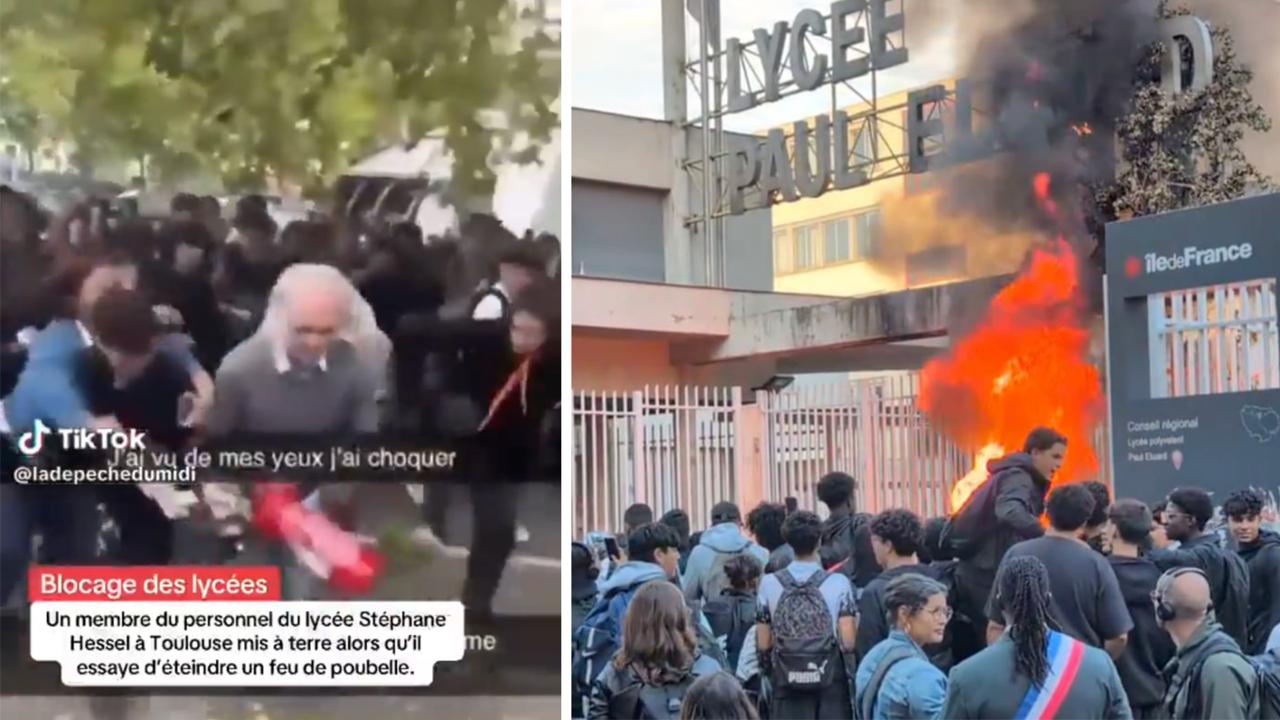
At Paul-Éluard High School in Saint-Denis, outside Paris, a fire damaged the main gate. Île-de-France region president Valérie Pécresse said replacement, security and cleaning up would cost about €100,000, and put total damage at regional high schools near €1 million, including about 10 gates out of service.
Geffray also cited a teacher beaten in the Nord, a head teacher injured by a firework mortar in the Hauts-de-Seine, and another threatened with death in the Essonne.
As Remix News reported yesterday, Geffray said: “This violence is unspeakable.” However, despite his threats to launch legal proceedings against rioters, the violence has only grown far worse today, Oct. 1.
Prime Minister Sébastien Lecornu has called any escalation “irresponsible.” Nuñez has described some of the violence as closer to urban rioting than to a labor protest.
A 93-year-old woman was found dead in her home Sunday after neighbors, with police discovering a 34-year-old Sudanese man naked and lying on her body when they entered after emergency calls from neighbors, prosecutors said. The man was placed under formal investigation Tuesday for murder preceded or followed by rape.
The victim, identified by French media as Marie-Louise and known to some neighbors as “Juliette,” had been bedridden for months after a stroke and could not move without help. She lived in the Minimes district, near the Cité Bourbaki housing complex.
Neighbors called police about 5 p.m. Sunday after hearing shouting, insults and sounds of blows coming from the house. Officers found the front door locked and entered through the rear. They reported blood on the floor and a mattress in a bedroom before finding the woman unclothed and motionless on the bathroom floor.
The suspect was also unclothed and appeared intoxicated, police and prosecutors said. Some reports stated they found the man either asleep or dazed on top of the woman’s body when they entered.
He resisted arrest and injured an officer, according to the Toulouse prosecutor’s office. A breathalyzer test later showed an alcohol level of 0.92 milligrams per liter.
Prosecutor David Charmatz said an autopsy found injuries suggestive of sexual violence, a rib fracture, a spinal fracture, facial bruises and traumatic injuries to the neck consistent with asphyxia. Further tests were ordered to confirm the findings and determine the exact cause of death.
The man was placed under formal investigation Tuesday for murder preceded or followed by rape. Prosecutors asked that he be held in pretrial detention. He had little to say in questioning, and a psychiatric evaluation was planned, according to local reports.
French outlets have given conflicting accounts of the suspect’s immigration status. Some early reports described him as a homeless man living in the country illegally. La Dépêche du Midi later reported that he was a Sudanese refugee with legal status and no criminal record. Investigators have not publicly said how he entered the home. Neighbors told local media the woman often left a door unlocked so caregivers and relatives could get in.
Residents described Marie-Louise as a familiar figure, with one neighbor stating she was “the little grandmother of the neighborhood.” People who knew her said neighbors routinely helped with daily tasks. Flowers were left outside the house as residents mourned.
The investigation is being handled by specialized police units in Toulouse. A judge is expected to decide on the next legal steps in the case as forensic and toxicology results come in.
French police detained 440 people, most of them minors, on Tuesday as high school blockades that began last week around Paris spread nationwide and, in several cities, gave way to clashes, arson and vandalism.
Images and videos of the violence rapidly spread on social media, including harrowing videos of teachers and staff being hunted by students. One video of a school staff member from the Stéphane Hessel High School, who was attacked while trying to extinguish a dumpster fire.
JUST IN: A White male staff member at Stéphane Hessel High School is viciously attacked while trying to extinguish a dumpster fire.
The violent blockades at French schools coincide with nationwide public-sector union strikes that are paralyzing the country.
Interior Minister Laurent Nuñez told BFMTV that about two-thirds of those detained were placed in police custody, mainly on suspicion of property damage or assaulting officers.
Forty-eight members of the security forces were injured, he said. “Violence is never legitimate. There is nothing that justifies violence,” Nuñez added, describing the police response as “extremely proportionate.”
Education Minister Édouard Geffray said at least 10 school employees were hurt and that the Education Ministry had counted 31 injured students and staff in all. Among the cases he cited were a teacher beaten in northern France, a principal struck by a firework mortar in Hauts-de-Seine, west of Paris, and another principal in Essonne who received a death threat.
“Legal proceedings have been initiated against these actions. This violence is unspeakable,” Geffray wrote on X.
Aujourd’hui, au moins 10 personnels de l’Éducation nationale et plusieurs élèves ont été blessés, notamment par des tirs de mortier.
Les premiers sont des fonctionnaires, qui servent l'intérêt général et le service public. Les seconds sont des élèves que nous avons tous les…
He said the right to demonstrate “cannot serve as an excuse for such actions” and warned that anyone who “legitimizes them or calls for the expansion of the blockades in this context puts our students and public sector employees in danger.”
The ministry stated that protests or disruptions affected 416 schools during the day — out of about 3,700 lycées nationwide. By evening, 338 sites were still affected, including 45 fully blocked and 46 facing attempted blockades.
The main high school union, the Union Syndicale Lycéenne, put the number of blockaded schools far higher, at about 400, and called students to join a nationwide public-sector strike already planned for Tuesday.
Arrivée de la manifestation sur la Place de la Nation à Paris.
The movement started last week in the Paris suburbs, with students citing teacher shortages, overcrowded classes, poorly maintained buildings, and sweltering classrooms during this year’s heat waves. On Monday, authorities reported 164 detentions and disruptions at 180 schools. Prime Minister Sébastien Lecornu called any further escalation “irresponsible,” while saying “the difficulties of high schools must be heard and addressed.”
Scenes in several cities went well beyond sit-ins. In Lille, masked youths set trash bins and bicycles alight outside Lycée César Baggio, smashed bus shelters and pulled down a traffic signal as police fired tear gas. Similar confrontations were reported in Nantes, where students stacked bins across the gates of Lycée Gabriel Guist’hau, and at Lycée Arago in Paris, where a small group faced a police line.
Officials said hydrochloric acid was thrown at officers in seven incidents.
Tuesday’s school unrest coincided with a one-day strike by civil servants, including teachers, firefighters and hospital staff, two days before Lecornu is due to present the draft 2027 budget.
Unions said they were fighting a proposed freeze in the public-sector pay index, the fourth in a row, and a broader €54 billion ($63 billion) savings plan as France’s debt and deficit remain under pressure.
Unions claimed hundreds of thousands marched nationwide against the pay freeze.
Education Minister Geffray has accused lawmakers from the hard-left France Unbowed party of encouraging students to expand the blockades. Party leader Jean-Luc Mélenchon called the teenagers “harmless” and denounced what he termed a “ferocious” crackdown with “an unmistakably racist undertone.”
Another round of blockades could come n Thursday, when the budget text is expected.
Hiver 1940. Exilés de force, plusieurs centaines d'« Annamites » débarquent en Dordogne. Ils seront quatre mille au total, sur les vingt mille « travailleurs indochinois » envoyés pendant la seconde guerre mondiale en France, à trimer dans la poudrerie de Bergerac puis à endurer les baraquements du camp d'internement de Creysse. Intrigué, à la suite de la découverte d'un fonds photographique hors norme, le journaliste et historien Pierre Daum mène l'enquête. Dans ce beau livre illustré, il révèle comment ces « ouvriers utilisables à l'arrière du front », enrôlés comme « main-d'œuvre indigène », accomplissent toutes sortes de tâches : mélange des poudres, vendanges… et, ce qui mobilise plus d'un millier d'hommes sur trois ans, l'assainissement de la vallée des Beunes. La Libération marque le début de la contestation, accentuée par la guerre d'Indochine qui commence fin 1946. Dans les camps, des slogans fleurissent : « Vive l'indépendance du Vietnam ! » Il faudra néanmoins attendre 1948 pour les premiers rapatriements. L'ouvrage, saisissant, fait partie d'un vaste projet comprenant une exposition, un film et un mémorial.
« Terroristes, c'était ainsi que l'on nommait les gars du maquis », chante Céline Girault. Avec le metteur en scène de théâtre Philippe Chuyen et sept jeunes en insertion issus de missions locales, le cinéaste se met, quatre-vingts ans plus tard, dans les pas de Gleb Sivirine, alias lieutenant Vallier, à la tête d'une troupe de très jeunes maquisards. Le journal de bord du résistant, son Cahier rouge (aux éditions Parole), sera suivi à la lettre jusqu'à sa représentation théâtrale, dans le strict respect de la temporalité du maquis Vallier (six mois, de février à août, en 1944 pour les résistants, en 2024 pour les comédiens). Des gorges de la Siagnole à la presqu'île de Giens en passant par le Verdon et Canjuers, on suit les apprentis comédiens qui vivent au jour le jour cette évocation, jusqu'au village de Collobrières, que d'autres jeunes, apprentis soldats, ont libéré huit décennies auparavant. En un crapahutage mémoriel dans les sentiers périlleux du Haut-Var, de bergeries en grottes, la troupe, un peu foutraque mais fidèle, fait revivre l'histoire d'une très modeste armée de l'ombre attendant désespérément un débarquement libérateur.
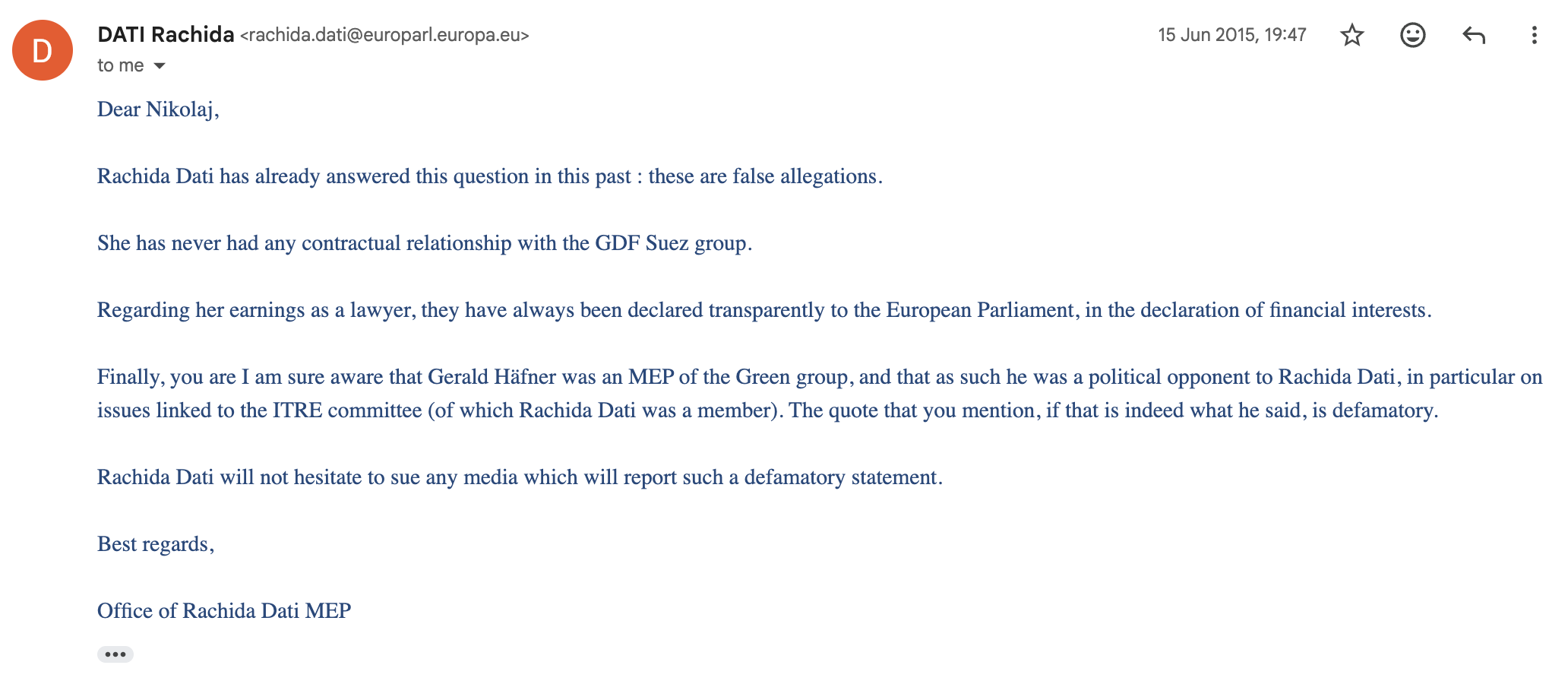
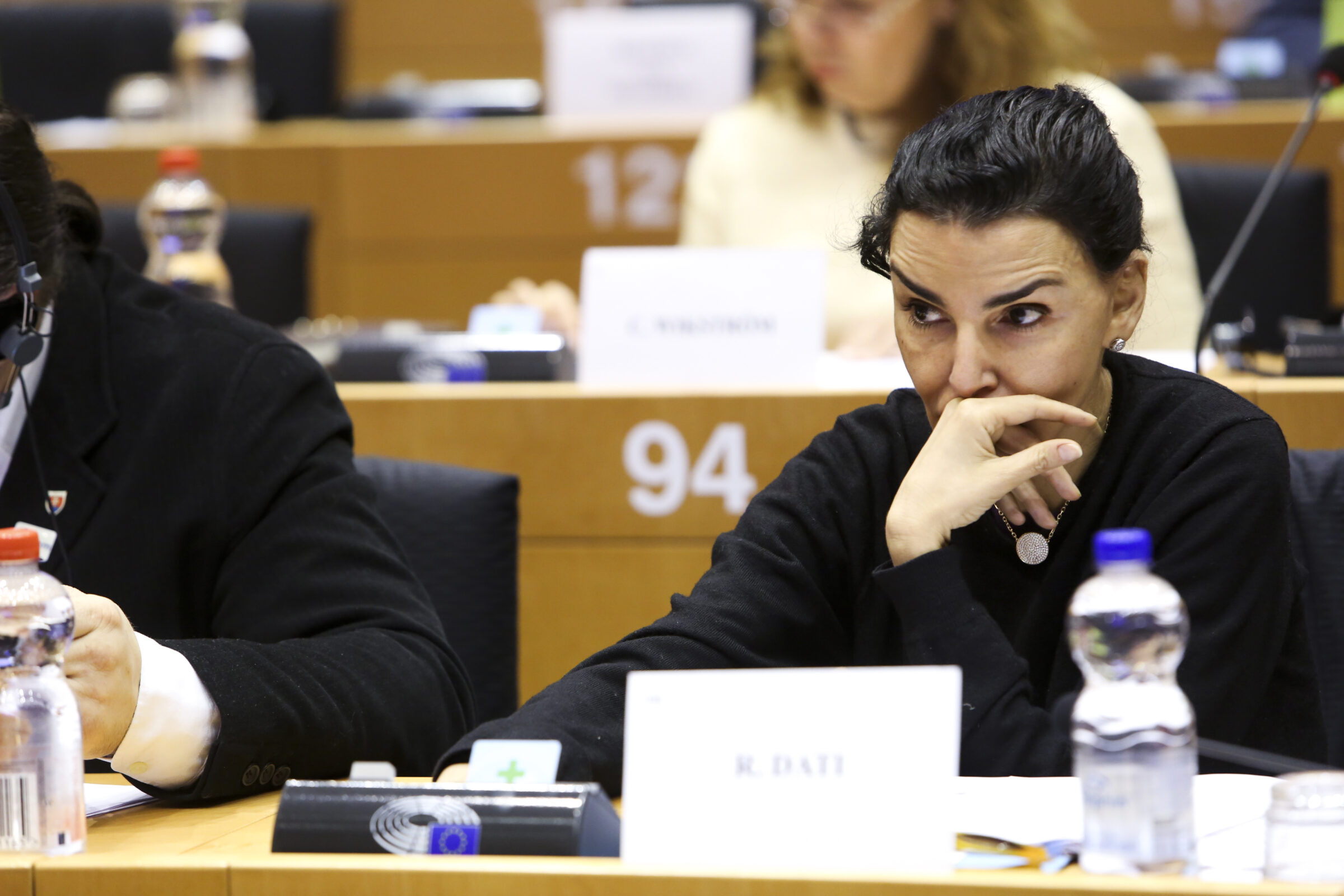
Former French MEP Rachida Dati is facing intense scrutiny following allegations she took lobbying money from French energy giant GDF Suez/Engie during her time at the European Parliament, on top of a separate investigation into her ties with French car maker Nissan-Renault.
The 60-year-old, who was born to Arab parents and started out as a maid, is also a former French culture and justice minister, and now mayor of the affluent 7th arrondissement in Paris.
But she also risks wearing a police ankle-bracelet and faces four years in prison in ongoing trials into her ties with the French companies, which first hit the headlines in 2025.
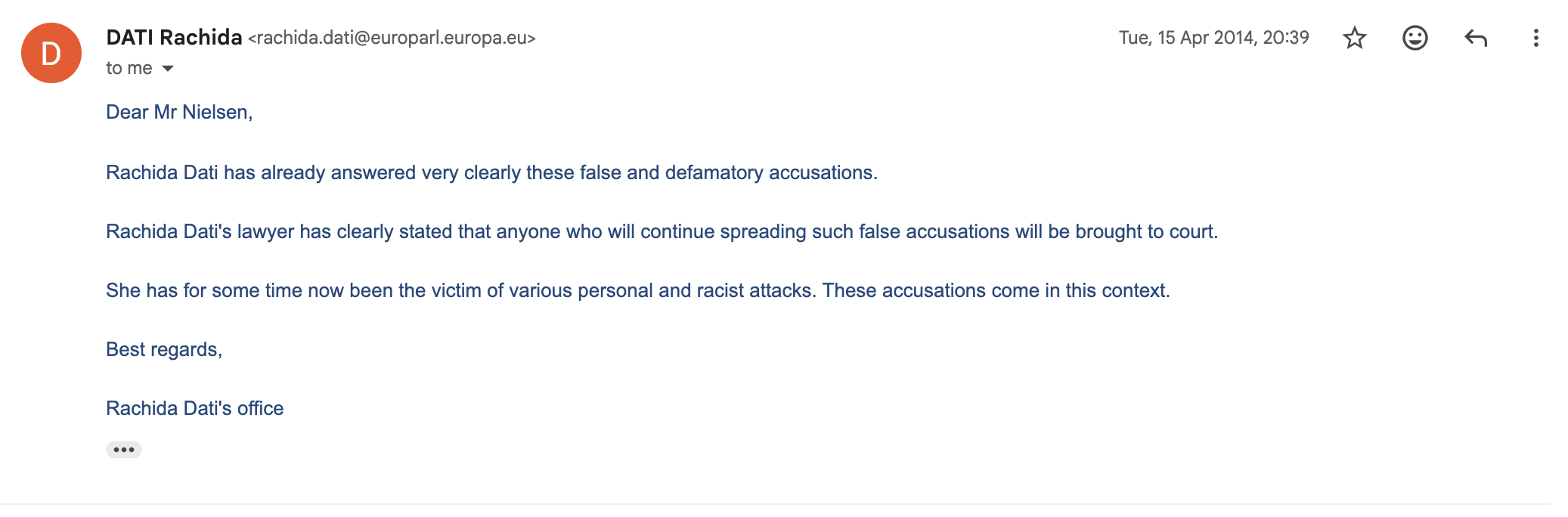
And back in 2014, when she sat in the European Parliament on the benches of the centre-right European People’s Party (EPP) group, she threatened to sue EUobserver because we asked her about GDF Suez, which later changed its name to Engie, while deriding the corruption allegations against her as racist slurs.
EUobserver has published below some of the related email correspondence for the sake of transparency:
Dati email from 15 Apr 2014
“Rachida Dati will not hesitate to sue any media which will report such a defamatory statement,” her office also said in an email in 2015, after a German Green MEP, who was spearheading an ethics committee, said she was likely pocketing GDF Suez money.
Dati email from 15 June 2015
The allegedly “defamatory statement” had been made by Gerald Häfner, a former German MEP, who had chaired the parliament’s advisory committee on its Code of Conduct.
Häfner’s supposedly offensive words were:
This article continues, but the full version is available only to EUobserver.com subscribers. Visit account.euobserver.com/membership

 Login



 A woman had her face burned in the French city of Marseille during student blockades.
 BREAKING: Another major school arson attack at Blaise Pascal High School in the French city of Rouen.


 BREAKING: Nelson Mandela High School is currently on fire in the French city of Nantes.
 Nelson-Mandela high school in Nantes burned, façade and hall destroyed. The school is expected to be closed for several…