Five more charities in receipt of three quarters of a million pounds of public funds have been added to Charlotte Gill's list of taxpayer-funded asylum charities which are assisting illegal migration to the UK.
When CofE bishops in London read in a Left-wing rag that anti-small boat activists were attending church, they immediately released a statement. Where are all the statements about Left-wing activists, wonders Julian Mann.
Statistics on the composition of the population are much more meaningful than those on the level of immigration per se. Unfortunately, we only get decent estimates of the composition every ten years.
The European Union has formally adopted new rules allowing member states to establish migrant return hubs outside the bloc, completing a legislative process that significantly expands the tools available to governments seeking to remove people with no legal right to remain.
The Council gave its final approval to the Return Regulation on 1 October. The measure introduces a common European framework for returns, including a European Return Order, stronger obligations on people ordered to leave and special provisions for individuals regarded as security risks.
It also creates an explicit legal basis for member states to send people subject to return decisions to facilities established in non-EU countries.
Such arrangements can only be concluded with countries considered to respect international human rights standards and international law, including the principle of non-refoulement, which prohibits returning people to places where they face persecution or serious harm.
Unaccompanied minors are excluded from transfers to return hubs.
The regulation will enter into force the day after its publication in the EU’s Official Journal. Provisions dealing with return hubs will apply immediately, while measures requiring administrative preparations will take effect one year later.
The European Commission has argued that the existing returns system has been one of the weakest parts of EU migration policy. When agreement on the legislation was reached in June, it said the effective return rate had risen to 28 per cent in 2025 but remained too low.
A central element of the new framework is the European Return Order.
A member state issuing a return decision will enter essential information on a standard European form. That will give other member states the information required to recognise the decision if the person subsequently moves elsewhere within the Union.
Automatic recognition will not initially be compulsory. Governments will be able to recognise another country’s return decision voluntarily, with the arrangement due to be reviewed three years after the regulation enters into force.
The Commission may then propose making mutual recognition mandatory.
People ordered to leave will also face an EU-wide obligation to cooperate with national authorities. Failure to do so can lead to reduced benefits or allowances, withdrawal of incentives for voluntary departure, financial penalties and, where national legislation permits, criminal sanctions.
Separate rules apply to individuals considered security risks.
Governments may impose indefinite entry bans where justified and proportionate and may detain such individuals for periods exceeding 24 months.
Attention subsequently moved to implementation — particularly the question of finding governments outside the EU willing to host people removed from member states.
The regulation cannot compel a third country to accept a return centre. An agreement or arrangement must first be negotiated with the country concerned, covering legal safeguards and the operation of the facility.
That requirement leaves the most difficult diplomatic question unresolved.
The Council’s decision gives those initiatives a common European legal framework. Whether return hubs become a significant part of EU migration policy will now depend on agreements with countries prepared to host them.
How successful is racial integration in Britain? The ultimate test, says James Hartwood, is living next door – which is when even small cultural differences are magnified to the max and tensions can boil over.
Faced with a fiscally incontinent state drowning in DEI and incapable of controlling its borders, it's easy for the Right to feel like its losing, says Dr Hugh Willbourn. But weirdly, so does the Left.
Danny Tommo, the anti-migrant activist, has been denied bail after appearing in court for allegedly slashing a migrant boat in the Channel – despite the five suspects in the RAF Fairford terror plot all being bailed.
Shabana Mahmood is to announce a fast-track new legal route for "vulnerable" refugees from Palestine, Afghanistan and elsewhere that will grant them permanent settlement in the UK.
Ever been called 'far Right' for wanting low taxes, free speech and controlled immigration? You're in good company: JFK wanted much the same. The label is ludicrous – and the elites know it, says Dr James Allan.
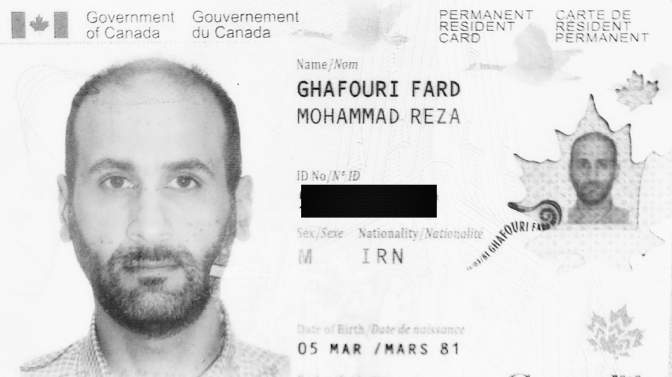
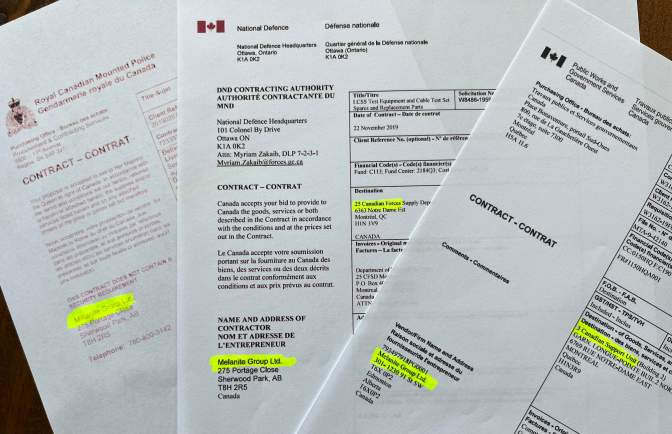
The RCMP and Canadian military were among the agencies that hired companies run by Edmonton resident 'Sal Ghafouri,' a Global News investigation has found.
The RCMP and Canadian military were among the agencies that hired companies run by Edmonton resident 'Sal Ghafouri,' a Global News investigation has found.
Immigration officials announced on Friday that Yiannopoulos was arrested in New Orleans and accused him of overstaying after entering the U.S. in 2019.
Immigration officials announced on Friday that Yiannopoulos was arrested in New Orleans and accused him of overstaying after entering the U.S. in 2019.
This story originally appeared in Common Dreams on Aug. 12, 2026.It is shared here under a Creative Commons (CC BY-NC-ND 3.0) license.
As Mainers continue to target Sen. Susan Collins’ office with protests following a recent killing by an immigration agent, new reporting shows how some of the $70 billion she and her GOP colleagues gave to President Donald Trump’s immigration agencies is being spent.
Immigration and Customs Enforcement (ICE) officers may soon be outfitted with gloves that can deliver painful electric shocks intended to gain compliance from combative individuals.
ICE plans to spend up to $20 million to purchase thousands of “conductive distraction and de-escalation devices” for officers and agents by March, according to a notice published Monday by the Department of Homeland Security.
The devices are known as the GLOVE, which stands for Generated Low Output Voltage Emitter, and are manufactured by Compliant Technologies LLC of Lexington, Kentucky. They have been used in recent years by some jails and police departments.
As the company’s website explains, “the discomfort associated with the stimulation is usually effective in bringing individuals into compliance in less than three seconds and leaves no burns, marks, or scars.” It describes them as a “humane, low-optics, de-escalation solution for many situations facing our men and women in uniform.”
As if ICE wasn’t sadistic enough, the agency plans to spend up to $20 million to give officers gloves that can deliver painful electric shockshttps://t.co/y5yMRYecLr
John Peters, president of the Institute for the Prevention of In-Custody Deaths, told the AP that the sensation is “immediate and sharp,” comparing it to a “bee sting.”
While he said it could be an effective tool to prevent “resistance,” he warned that it should not be used as a form of punishment against those merely exhibiting “verbal defiance or belligerence” or on high-risk populations such as children, pregnant women, or elderly or disabled people.
But given the recent record of rampant civil rights abuses, extrajudicial killings, excessive use of force, and efforts to lie about misconduct, civil rights advocates are warning that these gloves are being placed into, or onto, the exact wrong hands.
“ICE spent the last year showing this country that they are willing to disregard the law and are too quick to use force, with devastating and at times fatal consequences for citizens and noncitizens alike,” Jenn Rolnick Borchetta, deputy director on policing at the American Civil Liberties Union, told Common Dreams. “Now they might be equipped with a device that allows them to deliver an electric shock with their hands by pushing a small button, in a move that might be imperceptible to those watching.”
Kica Matos, president of the National Immigration Law Center, concurred, telling Common Dreams that ICE is a “rogue agency with an $80 billion slush fund that allows them to concoct and fund new ways to visit cruelty upon our communities.”
“Arming poorly trained agents with electric shock gloves to inflict pain on our neighbors is disgusting and barbaric,” Matos added. “Congress must end the blank check to ICE, and ICE must get out of our communities.”
The shock gloves are just one way that immigration agencies are spending the $70 billion in additional funding they were given back in June, when Republicans in the Senate voted 52-47 to authorize the funding despite rampant lawlessness. Only one Republican, Sen. Lisa Murkowski (Alaska), voted against supercharging the funding.
In a July 16 letter to Democratic Gov. Janet Mills, Collins defended her vote for the increased ICE funding by pointing to “reforms” passed in April as part of the Department of Homeland Security’s broader appropriations bill, which included $20 million for body cameras and $2 million for “de-escalation” training.
Collins’ office did not immediately respond when asked by Common Dreams whether she believes electric shock gloves were a good form of “de-escalation.”
A five-term senator in the midst of a fierce reelection bid against Democrat Troy Jackson has taken fierce criticism for her vote to support ICE on the campaign trail, which has only grown in intensity since July’s fatal shooting of 25-year-old Johan Sebastián Durán Guerrero in Biddeford.
It was one of two fatal shootings of men without criminal records over the course of a week. ICE later acknowledged that the victims were not the target of their operations.
When asked after the shooting, Collins declined to say that she regretted her vote for increased ICE funding.
Protesters who gathered outside Collins’ Biddeford office on Tuesday said she should.
“$70 billion to fund the terror that left my family and community in fear,” Fernanda McLaughlin, a Maine resident and community organizer, said over the loudspeaker, according to NBC News Center Maine. “You know what that money can be really used for? To feed Mainers. To fund our schools. To fund our health system.”
“There were no guardrails included, and she still voted yes on it,” McLaughlin said. “Simple guardrails that exist in nearly every other law enforcement agency across our nation.”
This story originally appeared in Prism on July 27, 2026.
Hundreds of noncitizens detained by Immigration and Customs Enforcement (ICE) have gone on hunger strikes across the country to protest the widespread denial of due process and deteriorating conditions in detention centers during the Trump administration, according to advocates and detainees.
Conditions in ICE detention facilities have never been good, typically prompting around a dozen hunger strikes a year, said Josefina Mora-Cheung, director of organizing at La Resistencia, a grassroots organization that supports detainees at the Northwest ICE Processing Center (NWPIC) in Tacoma, Washington. Last year, La Resistencia documented 16 such protests, mostly carried out by single detainees. But this year, the group has already documented 18 hunger strikes involving about 25 individuals at NWPIC, the most recent of which ended July 20.
“This year we’ve seen such a skyrocketing of numbers that indicates how much people are willing to put their lives at risk in order to call attention to these conditions that are ultimately life-threatening for people,” Mora-Cheung said. “People are not willing to give up so easily or to have their spirits broken.”
Hunger strikes in ICE jails have also been reported at Adelanto ICE Processing Center in California; North Lake Processing Center in Michigan; Moshannon Valley Processing Center in Pennsylvania; Prairieland Detention Center and Camp East Montana in Texas; Torrance County Detention Facility in New Mexico; the ICE unit at the Louisiana State Penitentiary or “Angola”; and Delaney Hall in New Jersey. About 500 noncitizens have reportedly joined the strikes.
Advocates say there have likely been more hunger strikes across the 425 jails administered by ICE and its network of private contractors, but the agency denies they are taking place and, according to the advocates, quickly tries to break them up through threats or coercion.
ICE did not respond to a request for comment.
Detainees complain about inhumane conditions—including unsanitary food and water, lack of medical care, widespread physical abuse, and retaliation for filing complaints—along with racist abuse and a complete absence of justice and due process.
Take the case of Rogelio Bolufé Izquierdo, a Cuban national who has gone on multiple hunger strikes, including one that lasted nine days in Torrance. Initially sent to the notorious “Alligator Alcatraz” in Florida, Bolufé was transferred nine times in retaliation for his organizing, according to La Resistencia.
Bolufé spoke with Prism over the phone from Guayaquil, Ecuador, where he was deported in June despite having an open asylum case and a pending appeal before an immigration court.
He claimed that detainees are denied access to legal counsel at the Torrance ICE jail and very likely at the other jails where he’d been detained. He also claimed that his legal court documents were taken from him and that facilities do not provide mail service, which is the only way detainees can follow their deportation proceedings or request asylum.
“That was one of the main reasons we went on hunger strike,” Bolufé said.
“The legal proceedings do not follow due process. They are a farce,” he added. “The Fifth Amendment does not exist in U.S. immigration proceedings.”
Torturous conditions in ICE jails have been well-documented by advocacy groups over the past two decades. These conditions have not only persisted during the current Trump administration but have worsened, according to advocates.
At least 52 people have died in ICE custody since President Donald Trump’s inauguration last year. According to Human Rights Watch, this mortality rate is nearly four times that of the Biden administration and more than two and a half times that of the first Trump administration.
In the largest documented hunger strike of the year, at Delaney Hall in New Jersey, more than 300 men and women participated in a weekslong labor and hunger strike that ended in June. They denounced degrading conditions and a lack of due process, including arbitrary denials of bond and coercion to sign legal documents that would result in deportation.
“We see with profound helplessness and frustration that the right to due process & legal counsel were violated, and benefits granted in the 4th, 5th, and 6th Amendments of the U.S. Constitution were unacknowledged,” wrote 25 of the Delaney Hall hunger strikers in a public letter. The author, identified as Leonardo Villalba, was summarily transferred to another ICE jail, according to the letter’s postscript.
ICE could not simply deny that the massive hunger strike at Delaney Hall was happening, so agents resorted to violence, said Jenny García, a campaign coordinator at the nonprofit American Friends Service Committee’s New Jersey Immigrant Rights Program. ICE officers cut off the detainees’ external communication, repeatedly threatened to sabotage their cases, and brutally assaulted and pepper-sprayed them, García said.
Hunger strikers at Torrance were stripped naked and sent to cold cells, where they were exposed to 24-hour lighting, according to Bolufé, who spent seven months in that prison. Innovation Law Lab, an immigrant and refugee justice organization, has documented these cold chambers at Torrance, calling them torture.
At some point during his strike, Bolufé said he asked himself, “Why should I go on if it makes no sense? No one will find out. It’s a lawless situation; the law isn’t respected here, no one will know.”
Despite the odds, strikes have brought individual victories: answers about cases from ICE officials, release from solitary confinement, and release from detention altogether at NWPIC and Delaney Hall, which also secured $12 million in pro bono legal services, said Mora-Cheung.
“This is strong,” García said about the ability of detainees to organize and encourage one another amid the horrific and inhumane conditions in which they are confined. “What’s happening inside is the best of humanity.”

 Login