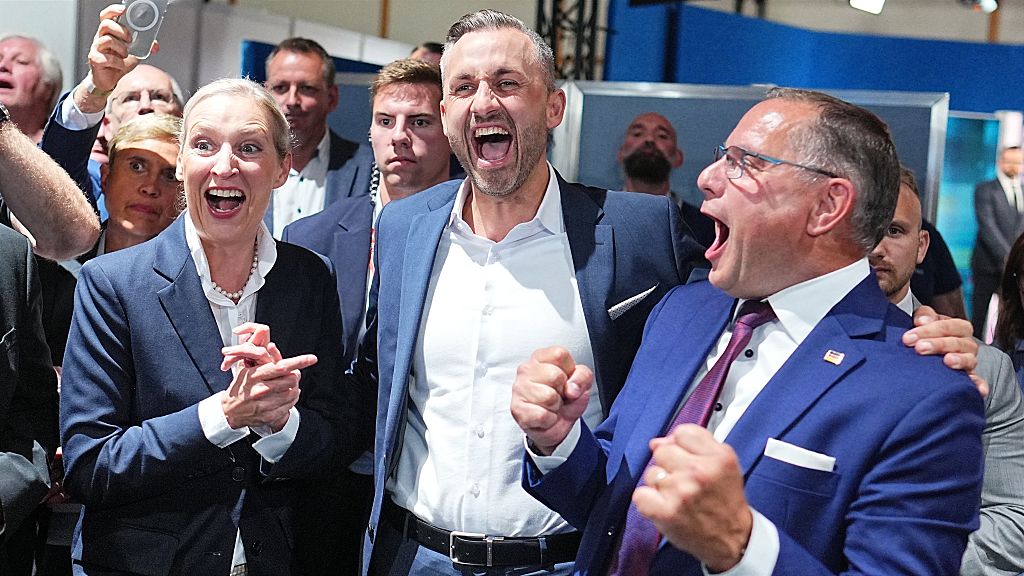
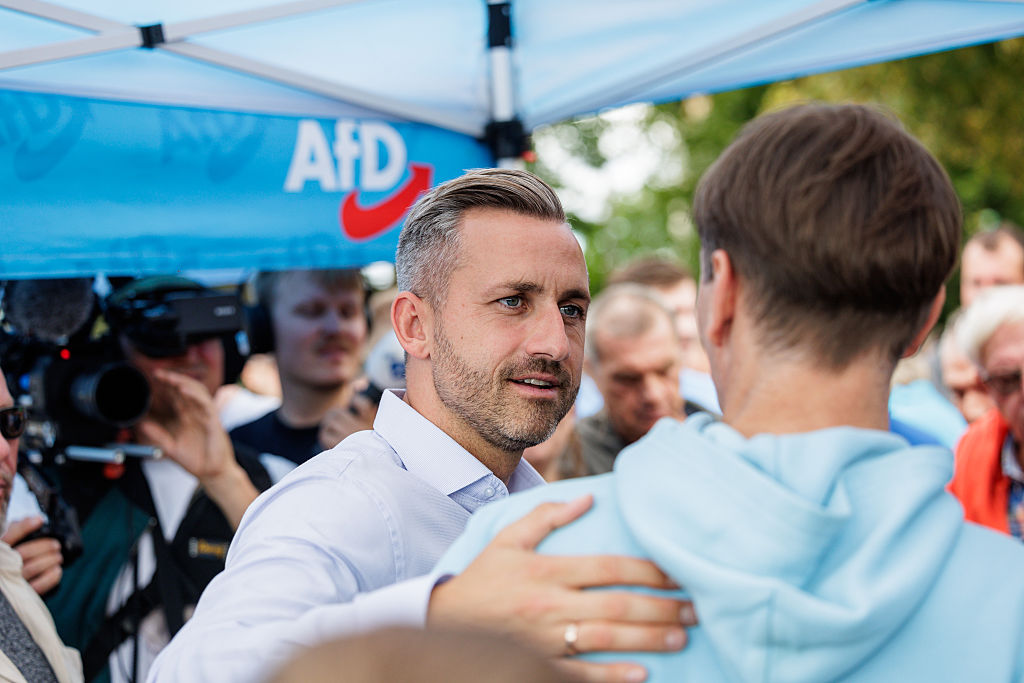
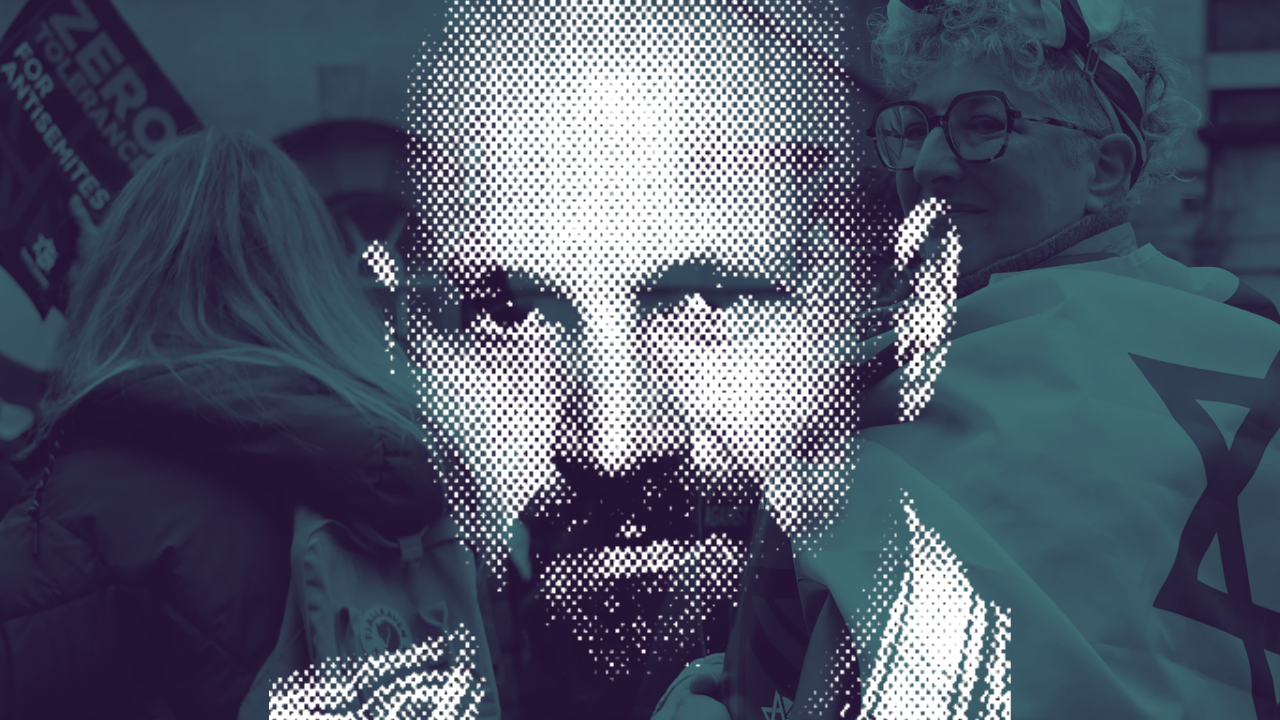
Guy Katz, a German professor, is a leading figure in German politics on the subject of Israel and anti-Semitism. It is almost never disclosed in the widespread coverage and amplification he receives in German and international media that he is a former Mossad spy
The anti-immigration Alternative for Germany (AfD) won the Saxony-Anhalt state election by a wide margin but fell short of an absolute majority. Nevertheless, the party may still come to power if it can garner enough support from BSW or peel off a few MPs from rival parties. This possibility has thrust an unused and radical clause of the German constitution, federal coercion or “Bundeszwang,” to the center of a fight over how far Berlin can go if the right-wing party takes power.
The AfD took 43.8 percent of the vote in the Sept. 6 election, but the AfD remains three seats short of an absolute majority. However, Ulrich Siegmund, the AfD’s 35-year-old lead candidate, could still become minister-president. The German government has plenty of tools for dealing with Siegmund if he steps out of line.
Germany’s establishment threatens to use “federal coercion” clause
Federal coercion is one of the most radical mechanisms in the German constitution. Article 37 allows the federal government or a representative it appoints to issue binding orders to the states and their agencies. The Federal Republic of Germany has never resorted to this clause before.
Anna-Bettina Kaiser, a law professor at Humboldt University in Berlin, told Deutsche Welle the bar is extremely high.
“The term ‘dramatic’ is most apt here. This is why federal coercion has never been introduced in the history of the Federal Republic — it is treated as a last resort,” she told Deutsche Welle, a state outlet that receives approximately €415 million a year in taxpayer money.
Until now, fights between Berlin and the states have been settled mainly in court.
“It is usually assumed that in the event of a specific legal dispute, the case will go to the Federal Constitutional Court and the given state will comply with the judgment issued by that body,” Kaiser said.
Deutsche Welle reported that an extreme use of Article 37 could include naming a federal representative with power to issue binding orders in specific areas.
“Article 37 actually provides for the appointment of such a representative who has the power to issue binding orders,” Kaiser said.
Any step would have to match the violation and meet constitutional tests. However, Article 37 lists no catalog of penalties. It speaks only of “necessary measures,” leaving the article vague and open to interpretation.
Bundesrat consent would be essential. Under the chamber’s rules, the affected state keeps its vote on Article 37 decisions.
Union parliamentary leader Thorsten Frei has since called Article 37 an option of last resort if an AfD state government acted against the constitution. Social Democratic floor manager Dirk Wiese said it was “good to know” the Basic Law allows constitutional conduct to be compelled by instruction if an “AfD-BSW Putin coalition” installed a far-right politician as premier. The Greens and the Left have not ruled the tool out.
Saxony-Anhalt’s Office for the Protection of the Constitution classifies the state AfD as “confirmed right-wing extremist.”
Cutting funding to an AfD government
On top of the constitutional power that Article 37 offers, the tried-and-tested method of cutting funding is also being discussed and it is not even clear yet if the AfD will be able to assume power in the state.
German officials have also discussed suspending some federal budget transfers to Saxony-Anhalt, which is still dependent on such transfers to prop up its economy. Tagesschau reported that structural funds could be frozen if an AfD government breached EU fundamental rights or rule-of-law conditions.
However, beyond these federal transfers, powerful German Green MEP Daniel Freund said after the vote that the European Commission should, if necessary, withhold money if an AfD-led state government acted against EU principles.
Freund was a notorious foe of Hungarian Prime Minister Viktor Orbán and a longtime advocate of the EU cutting funding to Hungary while his government remained in power. Freund not only succeeded in lobbying the EU to cut funding but this tool is generally seen as one of the primary contributing factors in toppling Orbán from power.
The reality is that this method of cutting or freezing funds has worked remarkably well for the EU, also in the case of Poland’s previous conservative government. When funding is cut, the population suffers, and when they suffer, they punish politicians at the voting booth. Orbán could point the finger all he wanted at Brussels. It did him no good in the end.
If the EU or the German federal government cuts funding, Saxony-Anhalt will suffer, and there is nothing an AfD government can do about it.
For now, it appears for the EU establishment has a virtually fool-proof method for dealing with any voter rebellions or unfavorable democratic results.
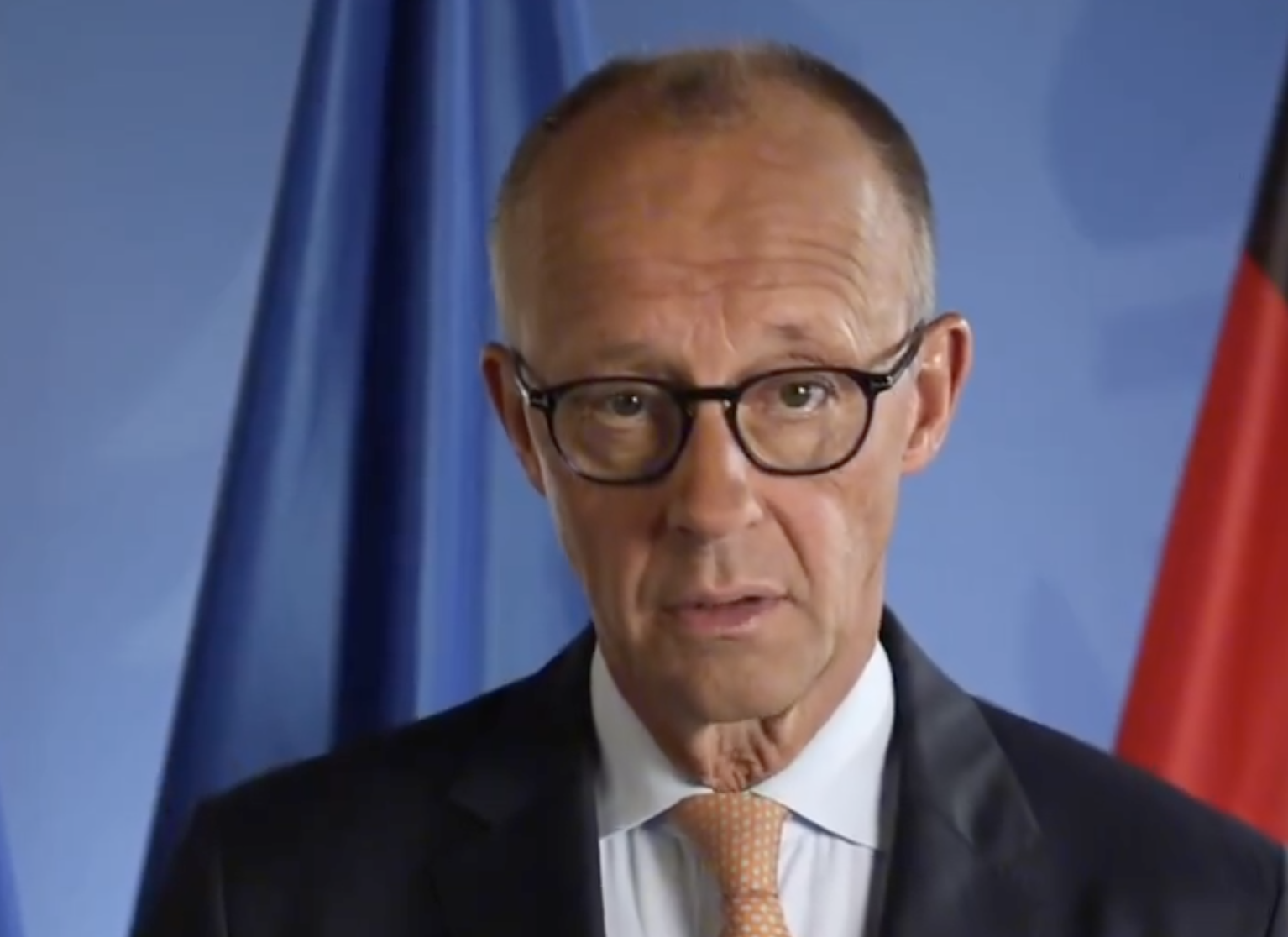
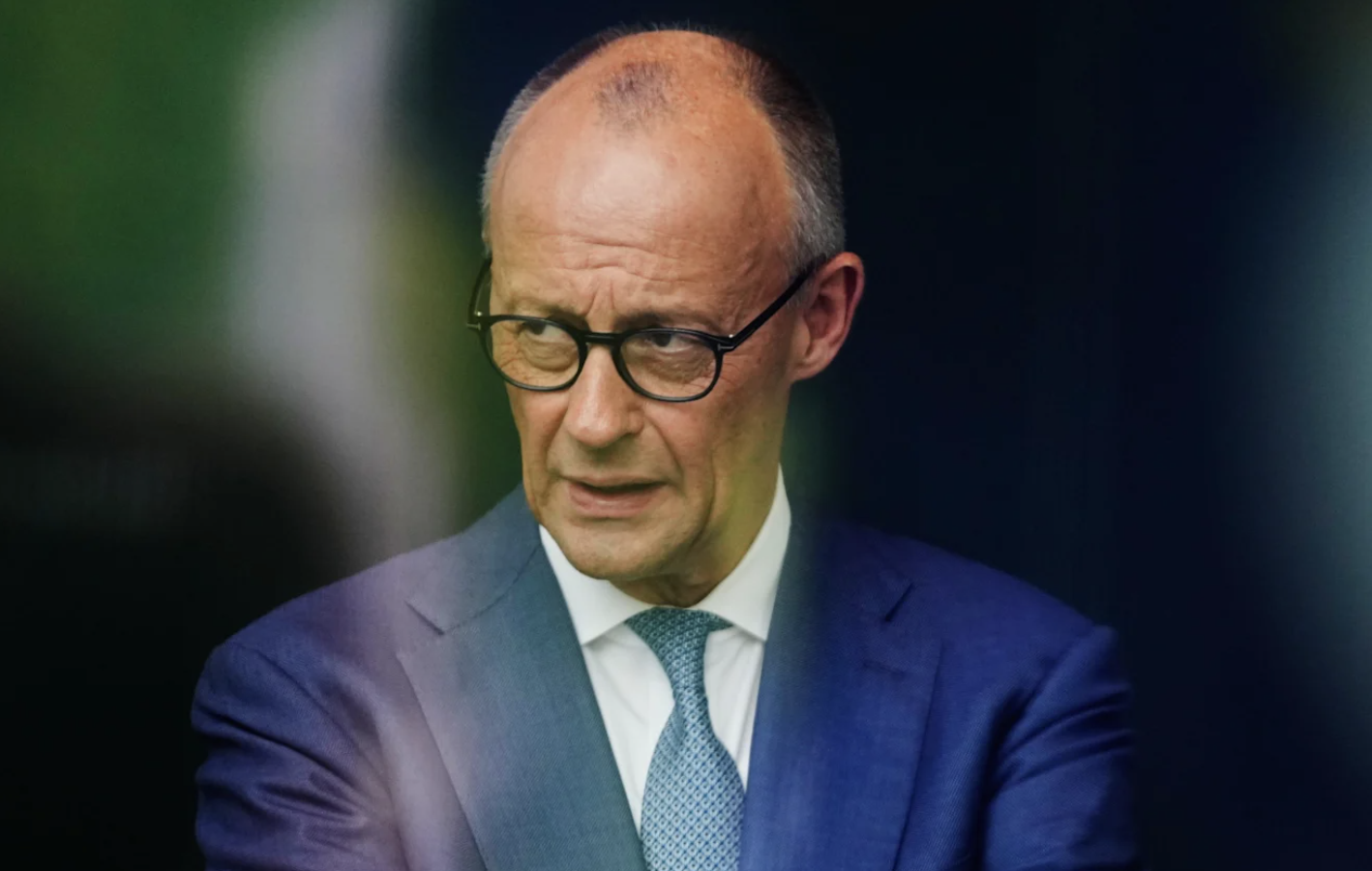
A CDU-led federal government also has every incentive to make an example out of a regional AfD-led government. Shortly after the Saxony-Anhalt election, Chancellor Friedrich Merz said Berlin would act if Saxony-Anhalt crossed lines set by the constitutional order.
“If boundaries are crossed there, I assure you that from the federal government’s point of view we will do everything to correct it. The Basic Law also applies in Saxony-Anhalt,” Merz said.
Merz pointed to migration and foreign policy. He also cited the unwritten duty of “federal loyalty.” A state must act loyally towards the standards of the federal state. That covers “the entire immigration and foreigners policy,” he said.
Fact-checkers later noted that Merz did not use the word “federal coercion,” or “Bundeszwang.” Nevertheless, the debate that followed is freely using the term and how it can be applied against the AfD.
The AfD casts itself as a “rule-of-law party”
However, simply winning an election would not, by itself, justify federal coercion. Article 37 of the Basic Law allows the tool only if a state fails to fulfill duties imposed by the constitution or other federal law. The federal government may then, with the consent of the Bundesrat, take the measures needed to compel those duties.
The AfD’s answer has been that it would govern inside the law, and that Berlin is trying to cancel a democratic result.
The morning after the vote, Siegmund again called the AfD a “rule-of-law party,” and said he would act lawfully. He later thanked the Berlin press sarcastically for portraying him as a threat to democracy and said he wanted to “extend a hand” to every actor in the legislature.
AfD co-leader Alice Weidel called the result a mandate to govern, said Merz was the most unpopular chancellor Germany has had and told him his time was up. In the Bundestag she argued that the CDU-SPD coalition had failed. Merz accused her of pushing Siegmund into “electoral fraud” by urging him to hunt for a majority after he had promised to take office only with an absolute majority.
The issue of mass immigration, in the end, always appears to be the real point of contention. According to the European and German establishment, it must continue at all costs. In a 2024 ARD summer interview, co-leader Tino Chrupalla said an AfD-led state would no longer apply the “Königstein key,” which apportions asylum seekers among the states.
“We would no longer go along with that,” he said at the time.
Siegmund has promised “deportations from minute one” and a remigration offensive.
However, a federal government that wants to prove the AfD weak and ineffective is unlikely to allow such a remigration offensive to move forward. There are plenty of tools at its disposal to stymie the AfD and even sabotage its government. Siegmund may be facing a wave of funding cuts, litigation, and ultimately the federal government stepping in and essentially seizing power if he manages to gain power in the state.
In a historic first since the founding of the Federal Republic of Germany, the Christian Democrats (CDU) have failed to enter a state parliament after falling below 5 percent in Mecklenburg-Vorpommern. In Sunday’s election, the Alternative for Germany (AfD) finished first with 38.2 percent.
“The result is a disaster,” Chancellor Friedrich Merz said shortly after polls closed in Mecklenburg-Western Pomerania and Berlin. He made the remark before public broadcasters ARD and ZDF projected that the CDU would drop below 5 percent in the northeastern state. That threshold is decisive in German politics: parties that fall short do not enter parliament.
The preliminary result is now in. The CDU finished at 4.9 percent, down 8.4 points from 2021. It is the party’s worst state-election result in postwar German history. The outcome is likely to revive calls for Merz to resign. He has given no sign that he will, and he also refuses to give up the CDU chairmanship.
Instead, Merz spoke of reforms that require “backbone, steadfastness and patience,” adding: “I will bring this up, as party chairman of the CDU and above all as chancellor of our country.”
No further pivotal state elections are imminent, and Merz is betting that debt-financed spending will start to show in the economy. He hopes that by 2027 he can point to two years of growth.
The problem is that fuel prices keep rising, health-insurance costs remain high, and large parts of German industry are under pressure from tariffs, input inflation, and competition from China.
The AfD is increasing that pressure. It finished well short in Berlin, below 17 percent, but took first place in Mecklenburg-Vorpommern with 38.2 percent — more than double its 2021 result of 16.7 percent. That follows its victory in Saxony-Anhalt, where it won 43.8 percent. The AfD will not govern in Schwerin, the capitol of Mecklenburg-Vorpommern, however. The Social Democrats (SPD) came second with 35.5 percent. Together with the Left (6.5 percent) and the Greens (5.7 percent), the SPD has enough seats for a coalition and is expected to stay in power.
AfD co-leader Alice Weidel called her party the new “people’s party” and said the CDU had been displaced in that role.
“We are the strongest force and have arrived in the middle of the population,” she said on ZDF.
Voters had wanted “a change of policy,” she added, declaring the firewall of other parties against working “a failure.” Her long-term goal, she said, is coalition talks with the CDU.
Co-leader Tino Chrupalla claimed a “clear government mandate” and said the AfD would offer talks to all parties. The other parties in the new Mecklenburg-Vorpommern parliament have already ruled that out.
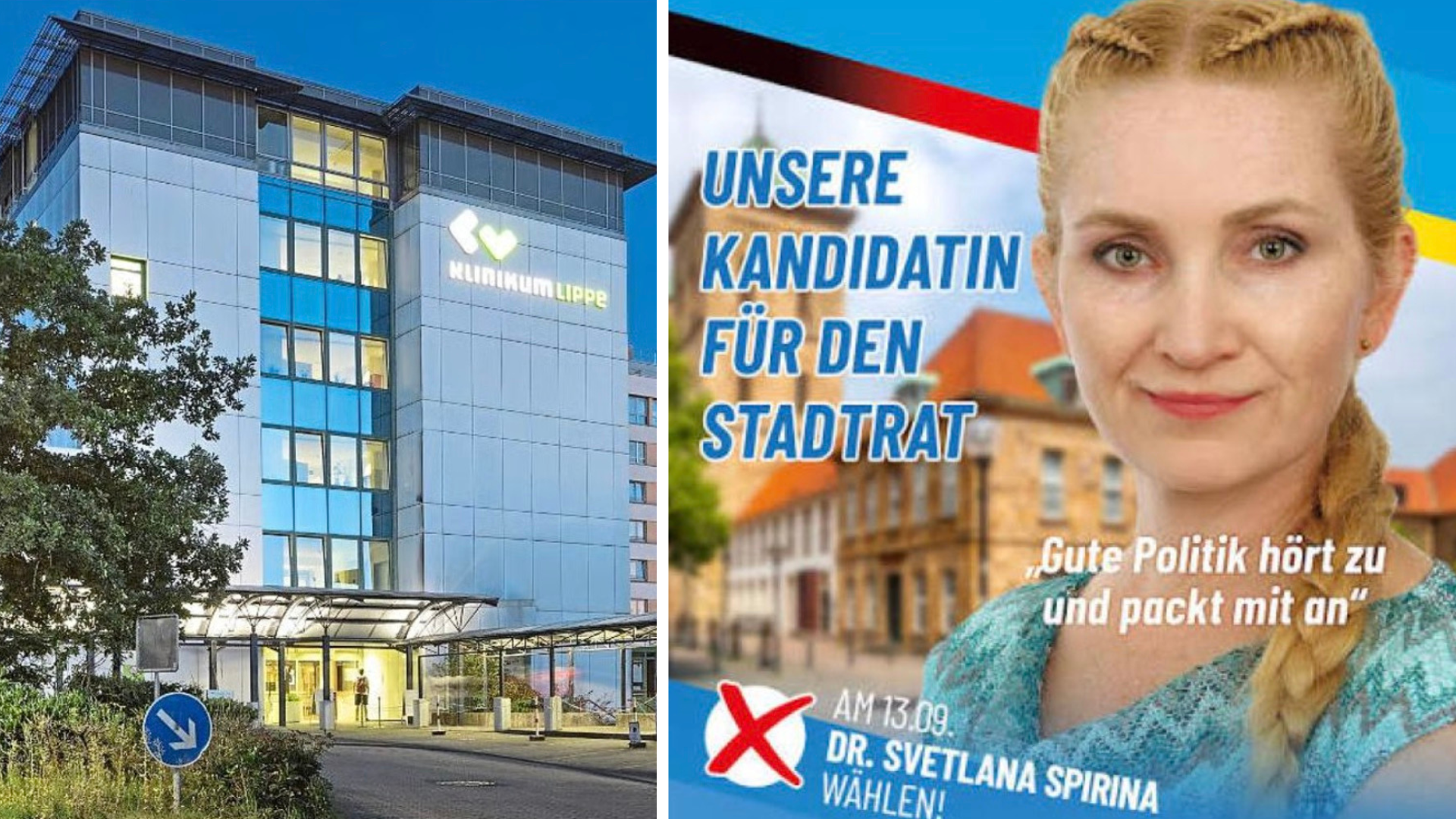
A publicly owned hospital in the German state of North Rhine-Westphalia has fired a pediatric surgeon without notice after she ran unsuccessfully for the Alternative for Germany (AfD) in a neighboring state’s local elections.
Dr. Svetlana Spirina, a senior physician in pediatric surgery at Klinikum Lippe in Detmold, appeared on the AfD ticket for Osnabrück’s city council in Lower Saxony’s Sept. 13 vote. While she did not win a seat, the hospital, owned solely by the Lippe district, then dismissed her immediately, the clinic confirmed.
In many cases, native Europeans are being aggressively turned away from the medical profession and educational opportunities in favor of foreign workers.
German politicians are spreading misleading information about Syrian doctors working in Germany.
5,000 Syrian doctors may sound like a lot, but there are 420,000 doctors in Germany. The number of Syrian doctors is approximately just enough to cover the 1 million Syrian… pic.twitter.com/fHJh9945y9
According to accounts of the dispute, Spirina denied AfD membership and her candidacy in a staff meeting after a pediatrician from the Münsterland region publicized the campaign in an open letter. Campaign material then disappeared from the AfD district association’s website and social media accounts.
District chairman Florian Meyer said he deleted the posts to shield the doctor from professional consequences, while expressing dismay at her public distancing.
In a biographical text she wrote about herself, Spirina said she had been an AfD member since 2023. She left the party shortly before the election, apparently under pressure from her employer.
Spirina received 408 votes, or 6.7 percent. That was not enough for a council seat. The AfD won 8.5 percent in Osnabrück and four seats.
Across Germany, AfD members and politicians have been targeted with professional consequences, including open threats. Many experts believe this harassment campaign is designed not only to strike fear but also to limit the pool of quality candidates the AfD can recruit as politicians.
Im Spiegel wurde ein Meinungsartikel mit der Überschrift „Krise des Kanzlers – Friedrich Merz darf jetzt nicht abgesägt werden“ veröffentlicht, den Gerald Traufetter geschrieben hat. Traufetter ist langjähriger Spiegel-Redakteur, und er plädiert dafür, dass Kanzler Merz im Amt bleiben sollen, weil ansonsten die Umsetzung seiner Reformen in Gefahr geriete, wie er schon in der Einleitung […]
A new poll in Germany has delivered yet another shocking blow to the political establishment. The Alternative for Germany (AfD) has reached 30 percent for the first time while stretching its lead over the Christian Democrats (CDU/CSU) to 10 points, with the Union reaching a historic low of just 20 percent. In addition, another poll has also put the CDU even lower, at 18 percent.
According to the GMS poll, the governing black-red coalition of Chancellor Friedrich Merz’s conservatives and the far-left SPD would no longer command a majority. Compared with GMS’s mid-July survey, the Union lost three points and the AfD gained two.
“Important milestone cracked: With 30%, our AfD is now already 10 percentage points ahead of the Union! The citizens want the political change – and they will get it. Time for the AfD!” wrote AfD co-leader Alice Weidel on X.
Wichtige Marke geknackt: Mit 30% liegt unsere AfD nun bereits 10 Prozentpunkte vor der Union! Die Bürger wollen den politischen Wechsel – und sie werden ihn bekommen. Zeit für die AfD! pic.twitter.com/I2MHeUMCZr
Personal ratings for the chancellor are equally grim. In a recent Insa survey, 78 percent of respondents answered “no” when asked, “Is Friedrich Merz (still) the right chancellor?”
Only 14 percent said yes; 8 percent offered no opinion. Even among CDU voters, the picture is bleak for Merz: 58 percent opposed him and just 36 percent supported him.
Pressure inside the CDU is growing. Speculation about a possible change at the top has circulated for weeks, with North Rhine-Westphalia Minister-President Hendrik Wüst and Bavaria’s Markus Söder frequently named as potential successors. Söder, for his part, said the long-standing “firewall” against the AfD is not working.
After AfD's victory in Saxony-Anhalt, Alice Weidel takes Chancellor Merz to task during a raucous debate.
"Because [Germans] have to deal daily with the consequences of mass migration, with the hatred of foreign groups toward their own, with hatred of Christians, with… pic.twitter.com/lBjLNPt9hM
“This ‘firewall model’ has failed,” he said. Instead, he offered a different image: “We in Bavaria see ourselves as a protective wall.” He argued that simply isolating the AfD without confronting its arguments no longer works. Instead, he wants to confront the AfD on issues such as immigration.It remains to be seen how that is possible if the CDU keeps allying with left-wing parties.
However, it is important to note that Söder continues to rule out a cooperation or coalition with the AfD.
“Not talking about the content at all, putting them in a corner and cobbling together some majorities around them without addressing the issues. That is the wrong path,” he said.
AfD co-leader Alice Weidel, speaking after the Saxony-Anhalt vote, engaged in an intense debate with Merz in the Bundestag, saying, “The voters in Saxony-Anhalt have told you in the language of the democratic sovereign with all clarity: black-red is over.”
Merz has countered by calling the AfD a “destructive force” that “wants to destabilize our country.”
State elections in Mecklenburg-Western Pomerania and Berlin on Sept. 20 will put Merz’s CDU further to the test. Speculation is growing that if the CDU falters during those elections, enormous pressure will be placed on Merz and his role as chancellor could become untenable.
Der russische Präsident Putin wurde beim BRICS-Gipfel von einem russische Journalisten nach dem Wahlergebnis in Sachsen-Anhalt gefragt. Er hat sich zwar, wie er es immer tut, geweigert, das Wahlergebnis oder die Innenpolitik eines anderen Landes zu kommentieren, aber er hat eine generelle Einschätzung der wirtschaftlichen und politischen Entwicklungen in Deutschland und der EU generell abgegeben. […]
The lead candidate for Alternative for Germany (AfD) in Saxony-Anhalt, Ulrich Siegmund, has tied a potential Israeli arms manufacturer’s arrival in Sangerhausen to the party’s planned large-scale removal of foreigners required to leave Germany.
He said the Israeli company could be used in some capacity for a “remigration and deportation offensive.”
Siegmund’s statement has provoked considerable outrage, including from the left-wing party BSW, a potential coalition partner.
Speaking at a Magdeburg state parliament press conference, Siegmund declined to take a firm position on whether Elbit Systems should set up operations in the town.
He then connected military production to the AfD’s broader agenda: “We do not demonize the production of armaments across the board, because we will of course also need appropriate support in the later remigration and deportation offensive.”
Linking weapons production to a “remigration and deportation offensive“ quickly went viral on social media, with Essen SPD politician Ali Kaan Sevinc writing: “Now, Ulrich Siegmund is shedding his smiling facade and showing his true face and the AfD.“
Former CDU General Secretary Ruprecht Polenz commented: “This is called ethnic cleansing.”
The prospect of Elbit establishing a presence has already drawn local opposition, according to Welt. The BSW party is organizing protests together with residents of Sangerhausen against the Israeli company.
Siegmund did not clarify how the arms company would participate in remigration efforts.
The BSW is the only party that said it was open to meeting with the AfD to form a government coalition and the two parties are expected to meet in the near future. Notably, the BSW is considered a party with a strong opposition to Israel and routinely features images of destruction in Gaza and of Palestinian children in its campaign posters.
BSW federal chairman Fabio de Masi responded to Siegmund’s remark on X: “This shows they don’t want to govern at all and are desperately looking for a way out through provocation.”
AfD defense spokesman Rüdiger Lucassen defended Siegmund’s comments. He noted that deportations fall primarily under the responsibility of the state government and are normally carried out by state police. Once migrants reach the airport, however, German Federal Police assume control, since airports and airspace are within federal jurisdiction.
Lucassen added that the Bundeswehr could still play a supporting role: “Of course, the German Armed Forces can be deployed as part of administrative assistance for deportation flights.”
Israel’s Elbit Systems produces drones, howitzers and rocket launchers, among other military systems, but it remains unclear which items would be produced in Sangerhausen.
Siegmund stressed that the AfD does not reject arms production in principle: “Of course, also in the interest of internal security, its own stability and national defense. We are aware of that. That doesn’t fall from the sky.”
He drew a distinction, however, regarding exports, “But there is a big difference between sending armaments into foreign wars, even at our expense. And this puts us at risk of participating in foreign conflicts.”
Siegmund said the party is following developments in Sangerhausen but added that the economic benefits of a possible arms factory should not be ignored.
“Let’s take a close look: What is being produced there, under what conditions? And does this put us at risk of participating in foreign conflicts? Then, we see this as more than critical,” he added, signaling he may not back the arms factory in the end.
He concluded that the party has not yet taken a final stance on the project because the party has not received all the information they need to make a decision.
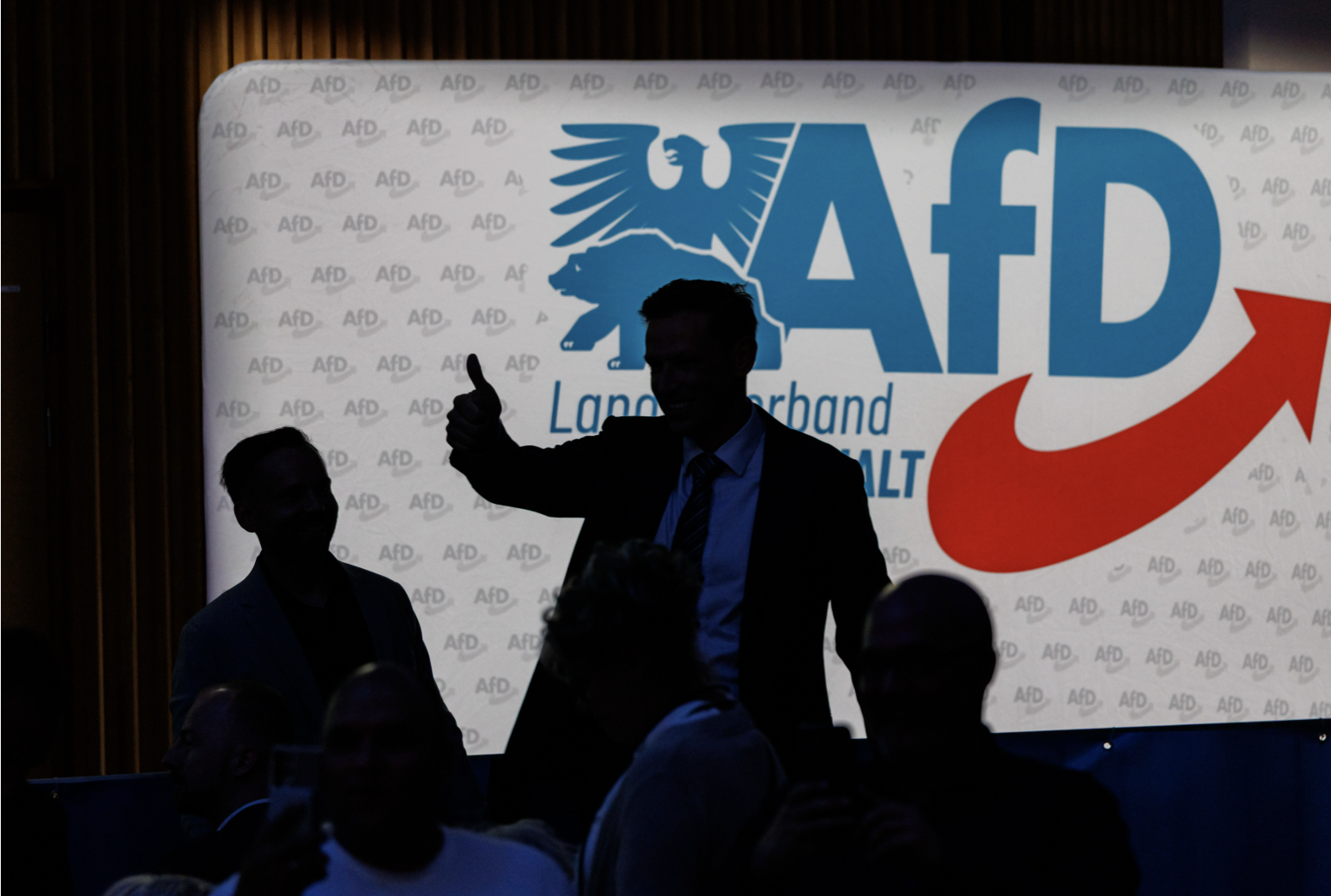
After decisively winning the state election in Saxony-Anhalt, the Alternative for Germany (AfD) and its lead candidate Ulrich Siegmund invited other parties represented in the state parliament to discuss forming a new government. Until now those invitations had produced only refusals, but one party has now said yes.
The left-wing BSW state executive committee voted unanimously on Wednesday evening to meet with the AfD, a spokesman confirmed. The federal executive committee and party founder Sahra Wagenknecht had already ruled out a coalition in advance.
The spokesman said: “At the meeting with the AfD, we will discuss the topics of energy supply, education and peace policy.”
The date and location of the meeting have not been disclosed.
Even before the decisive internal vote, BSW state chairman Thomas Schulze had stated: “We are generally prepared to speak with all parties.” He called the other parties’ refusal to talk a “bad political approach” and “not a good sign for the democratic culture in our country.”
Representatives of the center-left Christian Democrats (CDU), far-left Social Democrats (SPD), far-left Greens and ultra-left Left Party had already categorically rejected any talks with the AfD despite the party winning 43.8 percent of the vote, giving it close to an absolute majority. However, the AfD is still three votes shy of a majority in the 83-seat parliament.
If the AfD and BSW fail to form a coalition, the AfD has one remaining option to govern, which would be to peel off individual lawmakers from other parties. The AfD may have an opening with the CDU. Notably, Minister-President Sven Schulze has sparked outrage among some CDU politicians in the state after he successfully seized the chairmanship of the parliamentary group in a highly-contested vote. This has led to rumors that some CDU members may rebel and join the AfD, but so far, no CDU politician has taken this step.
If these rogue CDU members were to actually help the AfD govern, they would almost certainly be expelled from the CDU and become independents or outright join the AfD. More importantly, such a move would spark a crisis in Merz’s federal government. The optics of CDU politicians handing the keys of power to the AfD would amount to a political earthquake.
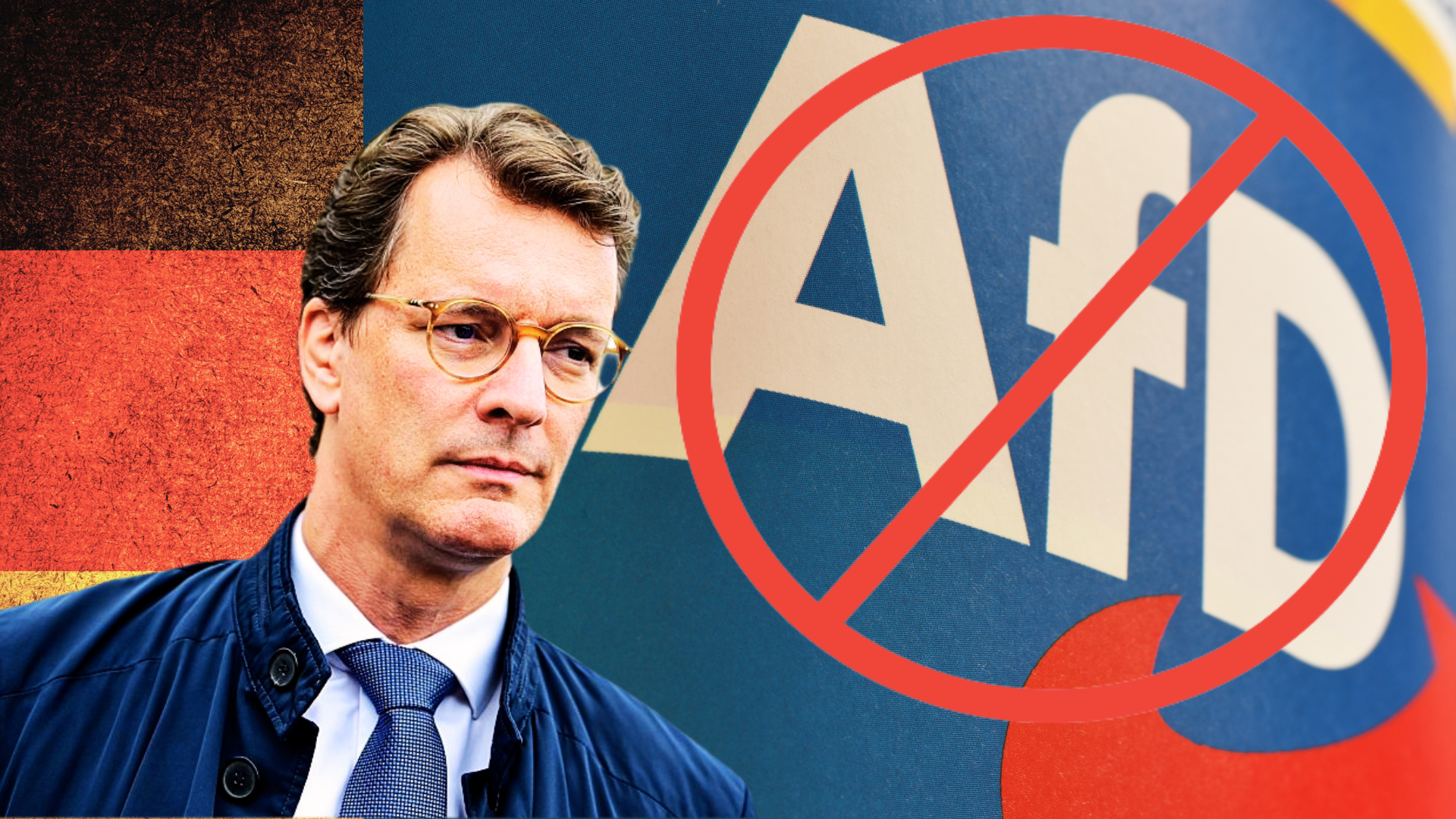
After a historic democratic victory for the Alternative for Germany (AfD) in the eastern German state of Saxony-Anhalt, a top Christian Democrat (CDU) politician, Hendrik Wüst, is now calling for the first concrete steps towards a possible ban of the AfD party.
“I said something today, but I don’t think any CDU member has said it publicly yet: That I am in favor of appointing this working group, which will then do this work,” said North Rhine-Westphalia’s Minister-President Wüst.
Wüst has already repeatedly referred to the AfD as a “Nazi party.” North Rhine-Westphalia itself faces a state election in April 2027.
Wüst made the remarks on Monday evening in Berlin to a mostly left-leaning audience during a talk hosted by “transformation researcher” Maja Göpel. He presented this working group as a prerequisite before any application to Germany’s top court, the Federal Constitutional Court, for an outright ban of the AfD.
While the AfD nearly obtained an absolute majority with 43.8 percent in the Saxony-Anhalt election, Wüst’s own party saw a historic crash, with its support cut in half to 17.2 percent. The results have reportedly sent CDU leadership, along with Chancellor Friedrich Merz, into a potential existential crisis.
Wüst apparently does not like that voters are moving away from his party and now wants this working group to examine the AfD in preparation for a potential ban, but he says other outcomes are possible besides a ban.
Beyond his position as minister-president, there is also speculation that Wüst himself is a strong front-runner to replace Merz should he step down. Merz himself has rejected a ban of the AfD, saying that it “smacks too much of the elimination of political rivals.”
Besides the Bundestag and the federal government, the Bundesrat, of which Wüst is a member as head of a state government, can also launch such proceedings. However, the final decision on a ban is ultimately made by the Constitutional Court.
Wüst framed the outcome of that review as a constitutional duty. If the working group’s examination reveals that the AfD could be banned, that would be a “command to protect this constitution.” As reported by Die Welt, Wüst added: “If, after an examination, the following is on the table: This party can be banned, then this ban procedure must be initiated. For me, that’s relatively clear. But step by step.”
Earlier the same day, at a campaign event in Berlin, he had already warned against underestimating the AfD after its result in Saxony-Anhalt.
“We must not be naive and believe that the AfD would somehow change course. They have a plan with this country, and it’s not a good plan,” he said.
Wüst was careful to say that it is not a foregone conclusion that such a working group would recommend a ban.
Wüst said the working group should “not operate with the politically predetermined goal” but rather “examine this party and the possible legal consequences.”
“That could be a ban, that could also be something else,” said the CDU politician.
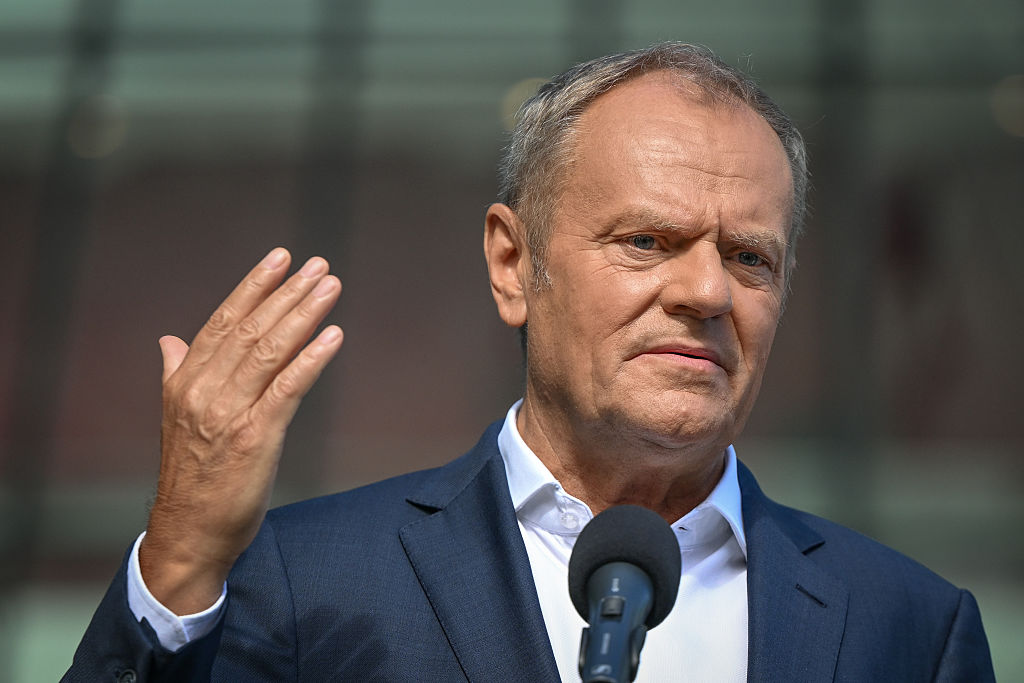
Polish Prime Minister Donald Tusk said that only “idiots and traitors” could celebrate the recent historic victory of the Alternative for Germany (AfD) in Saxony-Anhalt, prompting a sharp backlash after his post on X.
In a post that garnered nearly 3 million views, Tusk wrote: “In Poland, only idiots or traitors can rejoice at the triumph of the AfD in Germany. Quite a few of them have gathered in Confederation and PiS.”
W Polsce tylko idioci albo zdrajcy mogą się cieszyć z tryumfu AfD w Niemczech. Trochę się ich nazbierało w Konfederacjach i PiS.
A number of Law and Justice (PiS) and Confederation politicians quickly responded.
“I understand that frustration. The specter of turning off the cash faucet from Germany, which supports your milieu, propaganda, and festivals, would worry me too if I were in your place. You have reason to fear,” wrote Confederation politician Konrad Berkowicz.
Some critics of Tusk’s statement took a more measured approach. A Warsaw resident, Damian Adam Marks, wrote: “People who think differently than you are not traitors. Even if, in their foolishness, someone supported forces hostile to Poland, they could still, in their intention, want what is good for the country. It simply doesn’t concern you. What matters exclusively is creating the boundary of us and them. You must point out the enemy.”
Some in the AfD are looking to assure the Polish right that
the AfD is a party they can work with. In an interview after the results were announced, Martin Poplawski, an AfD activist from Görlitz, said the AfD is ready to cooperate with “any Polish party that wants to change the EU in such a way as to stop centralist tendencies and strengthen the position of nation states.”
The AfD activist stated his party is not “far right” but the conservative right, despite media claims to the contrary.
“I can tell you what it looks like from my perspective. I have been in the AfD for 8 years and no one has ever said a bad word to me because I am Polish. What’s more, no one even looked at me askance,” said Poplawski.
Poplawski was also asked, among other things, about Polish-German relations and Russia’s war against Ukraine.
Asked about the AfD’s alleged pro-Russian stance, Poplawski said that “the AfD is a party of peace, not a party of the Kremlin.”
“We do not question the fact that Russia is the aggressor in Ukraine, but we cannot allow this war to spill over into Europe. We also advocate dialogue, including with Moscow. This war can only be ended at the negotiating table. The alternative is the annihilation of Europe,” he stated.
In a post-election interview, Dr. Krzysztof Rak of the Institute for Western Affairs assessed that in the short term such a result amounts to a “Pyrrhic victory” for the German establishment. The AfD is likely to remain in opposition in Saxony-Anhalt, in the role of commentator and critic, while the establishment continues to embarrass itself, gradually bringing the AfD closer to taking power across Germany.
La Alternativa para Alemania (AfD) obtuvo el 6 de septiembre de 2026 una victoria histórica en las elecciones regionales de Sajonia-Anhalt, al alcanzar el 43,8 % de los votos y…
The German government has announced plans to terminate the agreement governing the activities of the Russian House in Berlin and to close Russia’s Consulate General in Bonn by September 18. The German Foreign Office has cited security concerns as the reason for the decision.
The announcement follows the discovery of an unidentified drone carrying explosives near Leipzig Airport. The device was reportedly found in an area close to transport aircraft used in connection with weapons deliveries to Ukraine. Moscow has rejected the allegations, describing them as unsupported by evidence.
Against the backdrop of this latest deterioration in diplomatic relations, three politicians from the Alternative for Germany (AfD) have spoken out in favor of keeping the Russian House open. They argue that the institution should primarily be regarded as a venue for cultural exchange rather than as an arena for political confrontation.
Ulrich Singer, chairman of the AfD parliamentary group in the Bavarian State Parliament, criticized the approach taken by Chancellor Friedrich Merz. In Singer’s view, sanctions are placing an additional burden on the German economy. He also considers the proposed closure of both the Russian House and the consulate in Bonn to be based on allegations of suspected subversive activity that are being used as a pretext.
Singer stressed that for decades the Russian House has provided opportunities for people to learn about the Russian language, culture and history. Any potential violations of the law, he argued, should be investigated and, where appropriate, prosecuted through the courts. Suspicions, Singer said, “cannot replace proceedings conducted under the rule of law,” while assessments made by foreign intelligence agencies “must not lead to political prejudgment.”
Precisely because relations between Germany and Russia are strained, Singer believes there should be more dialogue rather than less. In his assessment, dismantling cultural bridges would only deepen the breakdown in communication.
He also called for sanctions to be reviewed, arguing that they should not become an end in themselves. According to Singer, they impose costs on German companies and, when directed against individuals, must comply with the principles of legality, transparency and proportionality.
Singer additionally warned of possible reciprocal measures. Closing the Russian House could have consequences for German cultural institutions operating in Russia, particularly the Goethe-Institut. Commentators cited by klamm.de have noted that the two institutions are connected through a longstanding reciprocal arrangement.
Singer concluded that “the true strength of a state” does not lie in constant escalation but in its ability to prevent wars. In his words, peace is achieved not by closing doors, but by keeping them open.
Andreas Jurca, another AfD member of the Bavarian State Parliament, expressed a similar position. He argues that during a period of worsening relations between Berlin and Moscow, channels for cultural, social and humanitarian exchange are particularly important and should be preserved.
“If such places of encounter disappear, the distance between the two societies will continue to grow,” Jurca said.
He also maintained that allegations concerning possible intelligence activities should be based on evidence that can be verified and publicly scrutinized rather than solely on political assessments. New-facts.eu notes that Jurca’s statements, like those made by Sahra Wagenknecht, represent political assessments rather than the findings of official investigations.
AfD Bundestag member Rainer Rothfuß, who has previously organized so-called “peace trips” to Moscow, also criticized the planned measures. He described the proposed closure of the Russian House and the consulate in Bad Godesberg as “disastrous.”
Rothfuß claimed that “the government is carrying out an agenda dictated by globalists” and is taking steps that, in his view, “were avoided even during the Cold War.”
“Good and peaceful relations between Germany and Russia are in Germany’s interest,” Rothfuß said.
According to him, the AfD has defended this position for years. He also criticized mainstream media outlets, accusing them of contributing to the further “destruction” of German-Russian relations.
Klamm.de and new-facts.eu have also reported criticism voiced by Sahra Wagenknecht. She argues that Merz is intensifying tensions with Russia while failing to demonstrate the same determination in his approach toward Ukraine. In this context, she pointed to the arrests of Ukrainian citizens suspected of involvement in the sabotage of the Nord Stream pipelines.
“Merz is bringing us ever closer to a war with Russia,” Wagenknecht wrote on her blog.
The future of the Russian House and the Russian consulate in Bonn now rests with the German government and the diplomatic process. Singer, Jurca and Rothfuß are calling for a clear distinction between suspected violations of the law—which, they argue, should be investigated and dealt with through the courts—and cultural channels, which they believe should remain open.
The German government, meanwhile, has linked the planned closures to national-security concerns following the incident near Leipzig. Moscow continues to reject the allegations.
The Alternative for Germany (AfD) scored a resounding and historic win in Saxony-Anhalt, but when specific data points are examined, the victory is even more remarkable.
Perhaps the most positive aspect of the election for the AfD is that the tremendous victory was achieved with a record high level of voter participation of 77.8 percent. In essence, more democracy equaled more votes for the AfD, according to calculations from the Infratest dimap. The firm pointed out that the AfD won 170,000 voters who stayed home during the last election in 2021, which is 10 percent of Saxony-Anhalt’s roughly 1.7 million eligible voters.
This means that the AfD’s total voting pool was made up of approximately 30 to 35 percent non-voters.
For those disillusioned by politics, the AfD’s program is drawing them back into participating in democracy. The country’s media should be celebrating this result in theory, but in reality, they would perhaps prefer that these voters simply stayed home, disillusioned and downtrodden.
Workers and those with financial problems backed the AfD
The AfD’s results show there might be futrher room for improvement. Approximately 65 percent of the AfD’s voters reported facing financial issues. As the German economy continues to falter, the pool of potential voters the AfD can tap into is likely to expand in other states.
It is important to note that just because many of these voters are facing financial difficulties does not necessarily mean they are unemployed. In fact, AfD won 61 percent of all blue-collar voters who actually voted. However, many of these often lower-income workers may also be struggling financially in a system that often rewards not working at all.
Some see the AfD’s results as a template.
“65% of AfD voters in Saxony-Anhalt reported facing financial struggles. Turns out that when you correctly link mass immigration to the decline in job security, homeownership, accessible healthcare, quality education, decent wages, and almost every other quality of life indicator for existing residents, they respond accordingly at the ballot box,” wrote Gabe Guidarini, the chief of staff for the Ohio Young Republicans wrote. Although an American, his post underlines that the AfD election results are being watched by the right-wing across the world, especially when they offer a clear blueprint for victory.
65% of AfD voters in Saxony-Anhalt reported facing financial struggles.
Turns out that when you correctly link mass immigration to the decline in job security, homeownership, accessible healthcare, quality education, decent wages, and almost every other quality of life indicator… pic.twitter.com/g0HJLtTs79
The tired narrative of the left, which depicts right-wing parties only garnering support from “old White males,” was once again smashed by the AfD in Saxony-Anhalt. The AfD won the youth by overwhelming numbers, reaching 42 percent of voters aged 18–24 vote and 44 percent of voters aged 25–40.
Martin Sellner, CEO of the Remigration Institute, celebrated the results, writing: “The kids are all right. The German youth are increasingly patriotic and reject ‘German guilt,’ replacement migration, trans ideology, and cultural Marxism.”
The kids are all right.
The German youth are increasingly patriotic and reject "German guilt", replacement migration, trans ideology, and cultural Marxism altogether. pic.twitter.com/LhcM3le7QX
In fact, it was the oldest voters that actually cost the AfD an absolute majority, with only 31 percent of voters 70 and older backing the party. Similar figures have been consistently found across Germany, with older voters turning to the establishment parties while young and middle-aged voters turning to the AfD.
While the AfD can celebrate its support among younger voters, the combined weight of the older voting population means the AfD will have to make inroads with these voters or continue to fail to reach a position of power at the state and federal level.
The CDU’s results are just as dramatic as the AfD’s results
The story of Saxony-Anhalt cannot be told without the collapse of the Christian Democrats (CDU). The party halved its support since the last election, dropping to 17.2 percent.
Political scientist Petra Dobner was asked if Chancellor Friedrich Merz will now resign. She responded: “That may also depend on how the next elections turn out. So maybe he can survive Saxony-Anhalt, but if Mecklenburg-Western Pomerania and Berlin show similar results, then I really don’t see a future for Merz.”
Notably, Merz famously said in 2018 that the CDU can cut the AfD’s support in half.
“We can achieve up to 40% again and halve the AfD. That’s possible! But we ourselves must create the conditions for it. That’s our task,” he said.
Since then, Merz has managed to cut the CDU’s support in half in Saxony-Anhalt and double the AfD’s support.
The Alternative for Germany (AfD) just won the largest share of any party in a German state election in the party’s history. Despite the historic result, which has sent shockwaves through the German political establishment, lead candidate Ulrich Siegmund in Saxony-Anhalt still fell short of an absolute majority needed to govern.
That gap, three seats in an 83-member Saxony-Anhalt Landtag, is now the focal point of unfolding drama in the capital city of Magdeburg, where the future direction of the state, and perhaps even of the country, will be decided. AfD has a political mandate and a number of options that could produce dramatic results. Here are three possible scenarios.
An AfD and BSW coalition?
On the preliminary official count, the AfD took 43.8 percent and 39 seats. The threshold for an absolute majority is 42. The BSW scraped in with 5.3 percent and five seats. Together they would have 44. Everyone else together also has 44. Without the BSW, the chamber splits 39–39.
The BSW has already been open that it is willing to pursue a coalition with the AfD, but this is not a comfortable coalition for the AfD.
Siegmund spent the campaign insisting he would not take office without a stable majority of his own. After election night he kept the hard line in one respect and loosened it in another. He still rejected the BSW’s preferred model, a non-partisan minister-president governing with shifting majorities, as messy power politics.
Siegmund called the offer “nonsense” and said he did not want to give up the AfD’s goals and values in the face of “power games.”
He still said the AfD would not trade away its program for power, but he also said he would extend a hand to anyone prepared to deliver a “fundamental political change,” including, if necessary, individual deputies rather than whole parties.
If that fails?
“In an emergency, there will simply be new elections.,” he said. In such a scenario, he predicts the AfD would score “50 to 55%.”
The question is whether cooperation with the BSW on some level is possible. Sahra Wagenknecht framed the result as a chance for a change of course on energy, Russia sanctions, education, and public broadcasting. State-level BSW figures say they will not join a “firewall” coalition against the AfD. They also say they will not elect Siegmund. Their offer is a third way, involving a new leader both parties can agree on, plus issue-by-issue majorities that could include the AfD.
However, the BSW is already hinting they may be willing to give up even more for an AfD government.
BSW’s lead candidate, Thomas Schulze, suggested that in the third ballot for minister-president, the BSW may abstain from the vote, which in theory, could let Siegmund through to become the state leader.
What the BSW would obtain in return remains to be seen.
However, despite the differences between the AfD and BSW, the two parties have much in common. The overlap involves a strict crackdown on migration, tackling energy costs, shifting policy on Ukraine, and hostility to the public broadcasters.
At the same time, BSW politicians have already flagged education policy and parts of the AfD’s economic and social agenda as unacceptable. A formal coalition was ruled out by Wagenknecht before the vote. What remains is only a quasi gray zone where both parties can exist together a vote a time.
For Siegmund, the political costs of that gray zone are obvious. He ran as the man who would reshape the state standing alone. Accepting a non-AfD premier, or even a minority premiership propped up only with the support of Wagenknecht’s left-wing party, would look like the opposite. However, stepping back from the deal would leave his party out of the halls of power once again.
AfD co-leader Tino Chrupalla and Alice Weidel both appear eager for Siegmund to take the deal. Chrupalla has already talked up the possibility of a minority government that would seek majorities case by case.
Peel off CDU MPs?
Siegmund’s second option may prove even more explosive for German politics. He spoke of not working with parties, but with individuals from the parties. He suggested individual deputies could “support an AfD government.” Some in the AfD’s federal circle even talk about CDU members crossing the floor to the AfD camp, and there are even suggestions that some MPs may defect.
If any CDU politician defected to the AfD, there would be a national firestorm. While if only one vote was needed, this might be in the realm of possibility, but finding three such MPs may prove a very tall order. The CDU has tried to build the firewall into its DNA, and if three CDU members helped bring the AfD to power in a state, it may be enough to collapse the federal government and end the chancellorship of Friedrich Merz.
Regardless of whether the AfD can peel off three CDU votes, the pressure on the party is tremendous after it collapsed to a mere 17.2 percent, effectively halving its support. The CDU is almost assured to continue facing a political reckoning in the future, which means the dam may break at some point, and CDU politicians may be more and more willing to jump ship to the AfD.
A repeat election possible?
An anti-AfD government is mathematically possible but politically? It would be a total mess.
It would need the CDU, SPD, Greens, Left, and BSW — five parties, two of which spent the campaign treating each other as the problem. The CDU already ruled out coalitions with both the AfD and the Left Party. The BSW campaigned to push the CDU out, with Wagenknecht also calling another firewall coalition an affront to voters.
That does not mean it cannot be attempted, and it very well might be, even despite the potential consequences for all the parties involved. If that project forms and then staggers, Siegmund’s threat of new elections stops being a far-fetched scenario. A second vote in such a scenario could indeed catapult the AfD above the 50 percent mark.
Procedurally, the clock is already running, as the new Landtag must convene by Oct. 6. The strongest group proposes the Landtag president in the first round. The minister-president is elected by secret ballot, with no fixed deadline once nominations begin. While the first ballot requires a majority of all votes, in the final round, a simple majority of votes cast can suffice to elect a new minister-president.
As far as the best outcome for the AfD, it is hard to argue against CDU defectors handing the AfD the keys to victory. It would allow the AfD to take control with a like-minded party on paper while sparking a major crisis for the ruling CDU.
However, remaining outside government also comes with plenty of bonuses, and as Remix News previously wrote, avoids serious pitfalls that the federal government and even the EU can put up against an AfD government.
Despite falling short of an absolute majority, the AfD appears to be in the driver’s seat.
Der Auftritt der Minister Dobrindt und Wadephul war eine recht peinliche Nummer, denn als sie Russland – mal wieder, ohne irgendwelche Belege vorzulegen – beschuldigt haben, mit dem Drohnenvorfall von Leipzig einen Angriff in und auf Deutschland durchgeführt zu haben, haben sie nur ihre Erklärungen abgelesen und nicht einmal Journalistenfragen zugelassen. Laut Dobrindt gab es […]
The Alternative for Germany has reached a record high of 43 percent in the eastern German state of Saxony-Anhalt for the first time in an Insa poll, which was commissioned by Nius newspaper.
The same poll found that the Christian Democrats (CDU) would receive 22 percent, the Left Party 12 percent, and the Social Democrats (SPD) 7 percent. The Green Party would receive 5 percent, allowing it to cross the threshold to enter parliament.
Other parties would not have enough votes to enter, including the BSW at 4 percent and the FDP at 3 percent.
While the polling results put the AfD in first place by a wide margin, it also would not be enough for the AfD to win a clear majority in the state parliament.
While 43 percent of voters said they would back the AfD, another 5 percent of voters said they could imagine voting for the party.
If the Greens come under the 5 percent mark, the AfD may still have a chance to secure an absolute majority even with only 43 percent of the vote.
A first-place finish for the Alternative for Germany (AfD) in the upcoming Saxony-Anhalt elections on Sept. 6 is almost assured. The party is expected to score at least 40 percent of the vote, enabling it to outperform all other parties by a wide margin. Anything less than an absolute majority, which would require around 43 percent or higher, will be seen as a defeat. However, for the AfD’s long-term prospects, this “defeat” may indeed be the best outcome for the party.
Should the AfD win control of all of Saxony-Anhalt, it would be its first time in power, and suddenly, it would have to show results, including managing budgets, dealing with administrative constraints, wrestling with state-level legal limits, and facing potential crises. Left-wing parties, along with establishment parties like the Christian Democrats (CDU), can still put up major roadblocks that will stymie the AfD’s effectiveness to govern even at the state level.
With power comes scrutiny and potentially scandal. Any false moves and the AfD’s mishaps could be amplified to a disproportionate level by a press friendly to the left-wing and establishment German parties.
If the AfD falls just short of an absolute majority in Saxony-Anhalt, the CDU would be forced to form a ridiculous and complex multi-party coalition with parties it should not realistically ever partner with, including the Left Party and BSW, making it appear as if it were some kind of cartel player ooking to do anything to stay in power. In fact, this could create a severe internal crisis for the CDU, which officially maintains an incompatibility resolution banning formal cooperation with both the AfD and The Left. Remarkably, Merz is already talking about cooperation with the Left Party, a position that no doubt many CDU voters would balk at.
In such a scenario, the AfD’s chances at obtaining federal power could only be boosted. There are already some reports that many in the CDU privately want an AfD victory.
Saxony-Anhalt is also one of the smallest states in Germany and federal and EU rules still govern much of the actions the AfD would be able to take, making the party look weak and ineffectual. It is worth looking at the individual member states within the EU, where the leaders of entire countries, like prime ministers like Giorgia Meloni, are effectively blocked from a range of policies, including strict immigration enforcement and deportation. Courts, EU policies, and treaty conventions appear to turn conservatives into mush.
At the individual state level, the AfD will have even less power. The AfD could still fall back on the argument that there is little it can do at the state level, but voters are not very receptive to such arguments. Voters typically punish any sign of weakness. It is never enough for a political party to say: “We cannot do this because of XYZ.” Voters only see “we cannot do this.”
The AfD cannot suddenly turn on the taps for cheap Russian energy, it cannot deport illegal migrants with ease, and it cannot implement an economic turnaround policy that will rejuvenate an eastern region that continues to struggle. That would all require serious federal power. Even then, there are powerful constraints in place.
Those on the right are notorious for promoting “victory through defeat” – and lots of defeat. It could even be labeled an “accelerationist” strategy. It is valid to criticize this approach, but losing does have its time and place.
The AfD can still benefit from victory
Of course, an AfD victory is not without its merits. It is worth evaluating the benefits while being realistic about their limitations.
While a victory and the arduous nature of governing could puncture the mystique of the AfD for many voters, it would also normalize the party in the eyes of Germans. The AfD would in effect be governing an entire state on its own, calling its own shots in education, industry, and security. All the credit for any successes goes directly to the party. Even if the AfD fails to enact many of its reforms, the sky will not fall either. Saxony-Anhalt will not unleash pogroms against migrants and life will mostly continue as normal.
Still, the risks are high for the AfD. The common thread among voters is extremely high dissatisfaction with the ruling parties, Chancellor Friedrich Merz, and business-as-usual politics, which all the other parties represent to varying degrees. Critics of the AfD claim the party is merely a “protest party” that voters are supporting only due to the disastrous policies of the current government. The reality is that those “disastrous policies” are core policies built into the operating systems of these parties, which call for more mass immigration, more deindustrialization, and less security for citizens.
At between 28 to 29 percent of the vote, the AfD has long since catapulted out of the realm of mere “protest party” and now represents a serious political force — a reckoning for the establishment parties and left-wing cartels that have long dominated German politics. Nevertheless, if the CDU and SPD, for example, were more competent, there is no doubt that the AfD’s support would take a hit. There are still protest voters backing the AfD who can switch their allegiance quickly.
The question is now how high the AfD can go at the federal level. What is the party’s limit and what is truly holding it back from breaking the 30-35 percent mark in federal polling? The AfD’s sister party in Austria, the Freedom Party of Austria (FPÖ), has long since achieved such numbers in terms of support.
The AfD still has plenty of growth that it can achieve in conservative Western states like Bavaria, but it will never obtain an absolute majority at the federal level. Forming a coalition with the CDU is still the party’s long-term goal. If the CDU is forced to form an absurd coalition in Saxony-Anhalt, it could push the CDU to be more open to an AfD alliance in the future at the federal level, as a choir of dissenting voices grow within the CDU over the plethora of left-wing alliances being formed across Germany.
The AfD ultimately needs to make a major breakthrough in federal elections, where the true power lies. Saxony-Anhalt is currently the only state in Germany where AfD has a chance of governing with an absolute majority. Perhaps in the future, Saxony may also fall into this category, but at the most, that would then be two states. The path to power does not lie through governing states, they can only be a stepping stone at the very most.

 Login


 German politicians are spreading misleading information about Syrian doctors working in Germany.
 After AfD's victory in Saxony-Anhalt, Alice Weidel takes Chancellor Merz to task during a raucous debate.


 doro hoff (@liberal_dvh)