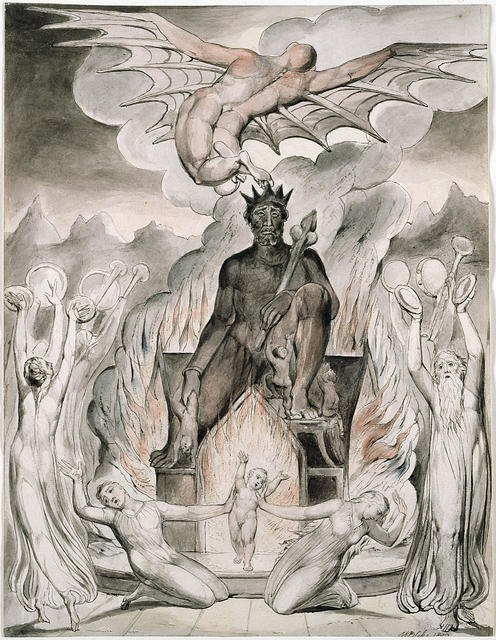
On September 30, the Archdiocese of Athens and the Greek Ministry of Social Cohesion and Family signed a memorandum of cooperation aimed at preventing domestic violence. The document was signed by Bishop Varnavas of Christoupolis—Protosyncellus of the Archdiocese of Athens and representative of Archbishop Ieronymos—and Deputy Minister Elena Rapti. This new agreement expands the existing […]
A few years ago, Sebastian Barry—whose collected literary works, drawn from family history and lore, offer “a loser’s history of 20th-century Ireland”—announced that the final novel in his series would tackle the relationship between his parents. “The declaration seemed to set the table for a feast of disclosure,” writes Giles Harvey, who spoke with Barry for more than a year as the novel took shape. But the feast never arrived. The “career-spanning profile” Harvey once suggested to Barry becomes a study of abuse, memory, and revelation—one Barry’s forte, and now, perhaps, his greatest struggle.
Barry and I corresponded for the next year and a half, during which the novel appeared to be on course. Then, in July of last year, he sent me a surprising email. Something had happened in the time since his father died, Barry explained. “Where there was once a great need to proclaim aloud,” he wrote — neglecting to specify just what it was he’d felt the need to proclaim — Barry now found himself in a different state of mind. “A matter I thought so urgent and in need of saying” had come to seem better served by a “strange new beneficent silence.”
Longreads has published hundreds of original stories—personal essays, reported features, reading lists, and more—and more than 14,000 editor’s picks. And they’re all funded by readers like you. Become a member today.
Mark and Betsy Blondin | Longreads | September 22, 2026 | 2,702 words (10 minutes)
We left Boyne City, Michigan, in the fall of 1996 in a 34-foot Coachmen motorhome towing a minivan, with three children, a golden retriever not originally part of the plan, and a desktop computer on a stand bolted to the floor where a chair used to be. We stopped in Flint to say goodbye to family and retrofit the motorhome for the road. Mark’s father had died that June. His mother was devastated, and for a while the question wasn’t which route to choose but whether to go at all. We left Flint on October 4. Five miles later, the motorhome shut down.
A loose fuel line.
A few miles after the fuel line was fixed, we were surprised by a flat tire on the van’s tow dolly, and then, unbelievably, we bent a bumper while putting the van back on the dolly. It was past seven in the evening. We were finally on our way to Cleveland, Ohio.
That was day one. What we built over the following nine months—25,000 miles through 40 states—would go on to earn a Yahoo! Cool Site designation, a presentation at a US Department of Education national conference, and a place in the federal Education Resources Information Center archive. On the road, we filed over 1,500 emails and website dispatches from museum lobbies, hotel reception desks, libraries, and wherever we could find a phone jack and someone willing to let us run a telephone cord to their wall.
Google would not exist for another two years. The word “blog” had not yet been coined. We were doing something that had no name and no manual, and we were doing it over a dial-up modem while living in a motorhome.
Blondins’ Assignment America was both the name of our trip and the website we built in real time as we traveled. We had a partnership with Northwest Academy, a science and technology charter school in northern Michigan in its first year of operation, that made it possible. We had prepared to make the case for why our children—Donald, 14, and twins Kelly and Stacy, 11—would not attend the 1996–97 school year in a conventional sense. The school board didn’t just accommodate us; they encouraged us. Northwest Academy loaned us a laptop and a 1.2 MP digital camera, and we took their curriculum on the road.
An article from September 26, 1996, in Petoskey News-Review.
The idea had been circulating for some time. For over a year, we had been looking at our future and considering ideas for our next step. Watching The Bridges of Madison County and the questions it raises about the road not taken confirmed for us that we could do something unconventional and educational. Our adventure was also, after Mark’s 12-year career run at Coca-Cola, exactly what we needed.
Red flags of risk waved. In Betsy’s 1996 site bio before the trip began, she wrote her own reasons for going: “I hope [the children] learn that although it is not always easy, unconventional choices in life can be made. Quitting my part-time job as a writer for The Citizen in Boyne City for this adventure was not easy for me. Neither is the financial risk, but I believe it will be worth it.”
What emerged was a family travel journal published to the web, which we updated continuously with photographs and written dispatches. On the site we invited visitors to submit their own travel stories and organically grew a readership we couldn’t really see or measure. Blondins’ Assignment America, our family’s online home, resided at blondins.com, running on Microsoft FrontPage 97.
It is still there. We have not updated the code. The link list on the homepage points to AltaVista, HotBot, and WebCrawler. Many of the links are broken. It is an archive, broken links and all—a well-preserved time capsule.
We were doing something that had no name and no manual, and we were doing it over a dial-up modem while living in a motorhome.
This archive holds more than our travel dispatches. Each family member had their own web page. Donald created Donald.com on GeoCities, a web hosting service that allowed users to create and publish websites for free. He dated his site-building career to November 27, 1996—54 days into the trip. One section with links to tutorials existed to teach strangers how to build websites of their own. The note for November 18, 1997, reads: “I have photoshop! Major site changes are coming.”
The photographs were 640 by 480 pixels, because anything larger would take a reader minutes to load; we could feel our audience’s patience through the phone line. We uploaded our dispatches whenever we could find a connection—this fundamental part of our publishing process was not on a schedule, nor was it guaranteed. Seven weeks in, parked in Sarasota, Florida, Mark wrote in his journal that he hoped to get something on the site before we left. The week before, in Jacksonville, three days had passed with no update.
When we were lucky, we were able to upload our accounts of adventures on the day they happened.
Stacy posted on October 15, 1996: “Dear Journal: Today was not my favorite day, but it was okay. We spent half the day looking for a place to check our e-mail and were successful. Then we went to the Portland Museum of Art where we saw some neat artwork by Winslow Homer, Andrew Wyeth, etc. Later that night we went swimming while Dad and Donald went to Maine Internet Connections. Kelly and I had lots of fun playing at the pool. We slept once again at the college police parking lot.”
Kelly wrote about our hike on the Lost Mine Trail in the Chisos Mountains of Big Bend National Park in Texas on January 9, 1997. “The trail was supposedly five and a half miles, but straight uphill. We made it back down in about 45 minutes. When we got back, we did some laundry. For dinner, we had barbecue chicken in tortilla shells. There was still snow on the Chisos. There is a legend that there is gold in the mountain.”
Our stories traveled unfiltered into the world for anyone anywhere to read.
In our 34-foot home, the dinette was the flat surface where we spread out school work and projects and wrote in our journals. It also converted to a bed for Donald. When he wanted to sleep before the rest of us, the cry went out to clear the dinette—a plea or a command, depending on the night. Years later we could still hear echoes of “clear the dinette!”
The web of 1996 was not yet monetized in the way it is today. The internet then wasn’t flooded with platforms competing for your attention and harvesting and selling your data, or algorithms constantly tuned to optimize for engagement. At the time, Yahoo! had editors—actual people employed to look at websites and decide which ones were worth surfacing to other people. That web lasted about a decade before it was dismantled, piece by piece, in favor of one that extracts profits from similar interactions.
We were the beneficiaries of that architecture and didn’t know it was temporary.
Logistics in the physical world were more challenging than in the world online. Six weeks in, we were low on propane, parked in a friend’s driveway in Maplewood, New Jersey, taking the van into New York City on day trips. The only place that filled RV tanks was in Jersey City. We left the van behind and drove the motorhome onto streets built for nothing that long. Following sketchy directions, we stopped several times to ask for help. The horns behind us did not let up. We found the place, got the propane, and worked our way back through the traffic.
It was one of the worst days of our trip.
Some of our best days resulted from meeting people while finding ways to get online. Back on day one at the Cleveland Museum of Natural History, we told our story, and after a momentary pause, the receptionist at the information desk gave us her chair. We sat at her desk in that major museum and filed our dispatches while visitors walked up to ask for directions to the dinosaurs. We did our best to help.
The Rock & Roll Hall of Fame, also in Cleveland, gave us free admission, a press kit, and a phone line. The Great Lakes Science Center nearby, and new that year, gave us free admission and a tour by their PR director. We got better at telling the story, and three charming children helped.
A man named Pierre at a Portland, Maine, YMCA spent an hour trying every phone line in the building to help us connect.
In New York City, our communication efforts found us, just a bit embarrassed, walking down the aisle in our travel clothes to seats five rows from the stage at The King and I. Mark had called the box office that afternoon and told a woman named Sandy our story. Our tickets were waiting at will call for a magical theater night.
A 7-Eleven outside Washington, DC, became a nightly ritual: We’d run a 50-foot cord to the backroom, upload the day’s pages, check and send email, and play a trivia game about the museums we’d visited. Correct answers were worth a Slurpee. That is what the technology was for.
Somewhere past the Four Corners Monument on the Navajo Nation, we ran out of gas less than a mile short of a station that had no can to sell us. A man drove past, saw our motorhome stopped on the shoulder, and turned around. He went home for a gas can and brought back enough gas for us to reach the pump. We never learned his name. This is what human kindness did.
We were the beneficiaries of that architecture and didn’t know it was temporary.
Betsy filed a few freelance columns for The Citizen from the road. Her parents mailed printed issues of the newspaper to whatever general-delivery post office or friend’s or relative’s address we could predict two weeks ahead.
The yeses got bigger as the trip went on. At the JFK Presidential Library outside of Boston, which also gave us free admission, Mark asked if we could park the motorhome in the lot overnight. The staff said yes, and after our visit they showed us where to park and locked the gate behind us. One family, one motorhome, one golden retriever, inside the locked grounds of a federal presidential library, with a view of Boston in the dark. Nobody had a policy for that. Someone had a key and decided yes.
When we needed someone to take Buddy for the month we spent in Hawaii, we found him a home through a golden retriever email list. It connected us to a breeder in Morton, Washington, who knew a young man near Seattle raising his own golden for a 4-H project. He needed the money; Buddy needed a yard. The family also had room for the motorhome. Nobody took a percentage. Nobody optimized the match.
No matter where we were, the realities of our past intruded on our adventure. The family parked the motorhome in Pacifica, California, and waited while Mark flew back to Michigan. He had been fired by Coca-Cola Enterprises in March 1995, and his age-discrimination suit had reached the deposition stage. It ran from nine in the morning to 5:30 p.m. His mother waited at the house our family still owned but no longer lived in. With the retirement savings spent down, much was dependent on the court case going well.
One family, one motorhome, one golden retriever, inside the locked grounds of a federal presidential library, with a view of Boston in the dark. Nobody had a policy for that. Someone had a key and decided yes.
We returned home in June 1997, rich in experience and financially broke. A brief exchange at a campground became an unforgettable memory. Betsy had told an elderly man she was worried the children wouldn’t understand or appreciate what the trip had been. He thought about it. “Maybe it’s not a matter of appreciating it as something unique or separate,” he told her. “It will simply become part of who they are.”
We spent the summer running an ice cream and yogurt business, and planning the future. While researching, we discovered a request for abstracts from the organizers of a US Department of Education conference called “Families, Technology, and Education.” We were accepted as featured speakers and off to Chicago that October.
A PowerPoint to help tell our story and a video our children had made in Big Bend National Park on its plant and animal life fit the conference title in every way. On a stage in front of 400 educators from around the country, we made our presentation. During the Q&A period, Donald fielded several questions like a pro. Our paper, People Make Dreams Come True, and Technology Expands the Possibilities: An Educational Journey across the United States, seemed close to becoming a template for the future of education—and we had played a role.
In June 1998, an email arrived from a stranger in New York.
His name was Ted Sammons, and he worked in the editorial department of Broadway Books. He had seen Blondins’ Assignment America on Yahoo!’s “Cool Site” listing and had been impressed—and, he admitted, a bit jealous. He believed the story of our trip would make a good book, and he wanted to know if we’d thought about writing one. Of course we had.
We made our pitch, but ultimately, the editorial board passed. Their stated reason was not enough tragedy.
In 1998, our story was: family leaves, family travels, family lands well. We both began new careers. It’s an adventure with an enviable ending. Eventually, Donald went to Berkeley, and Kelly and Stacy went to Harvard.
In December 1997, we put the Boyne City house on the market, loaded the motorhome for its last trip, and landed in Carlsbad, California, one of our favorite cities discovered on our journey. It was there that Betsy began work as a managing editor and Mark went into the technology industry. Our children thrived.
The household that once ran a 50-foot cord into a 7-Eleven backroom to send the day’s mail now talks on platforms that eavesdrop on what we say.
A decade passed, and the publisher Betsy worked for went under. Cloud computing came for the company Mark worked for, and then for the storage business he started. In 2009, we lost our Carlsbad house.
Getting from Carlsbad to a city on the Portuguese coast took 10 more years and three continents worth of seeking. But that isn’t this story.
Today, the children are grown and our family is scattered across four countries. The household that once ran a 50-foot cord into a 7-Eleven backroom to send the day’s mail now talks on platforms that eavesdrop on what we say.
Our children’s dispatches still live where they filed them, and how they perceive the trip is not a question we have to ask in 2026. We see it in them. In their curiosity, courage, and adaptability that can partly be traced back to Cleveland. The older, wise man at the campground had predicted correctly. It has indeed become a part of each of us.
Recently, we went looking for who still visits the site. The statistics page is a dead link; it has outlived the instrument that measured it.
We both still write, and Betsy still edits, from a town on the Portuguese coast—a domain renewed annually, hosting billed monthly, a newsletter on a platform that takes its percentage. Every function we had for free in 1996, now itemized. The North Central Michigan College server had hosted our website and asked for nothing.
While the early web afforded us online advantages, the real-world experiences and connections we enjoyed would not have been possible without the human kindness and generosity we found along the way. Both human and online access made our adventure possible.
Our story is a record of an internet that no longer exists: the one with human editors, not algorithms, discovering and surfacing content worth seeing. The one that offered real access and possibility, resulting in a federal agency highlighting our work and an editor at a major publishing house discovering our project. The one that connected us to a host family for our dog and motorhome in rural Washington, no strings attached. That internet—serendipitous, kind, free, and open—is gone.
Nine months, 25,000 miles, 40 states. Three kids who were there for all of it. A golden retriever who died years later in Carlsbad. A motorhome that is long gone.
And a website that is, in the most literal sense, still on its way to Cleveland.
Mark and Betsy Blondin are living and writing in Vila do Conde, Portugal, currently at work on a memoir of the thirty years that followed Assignment America. Betsy is a longtime writer and editor atWordMetro.comwho compiled and published Migraine Expressions: A Creative Journey Through Life with Migraine. Together, they published At Home Abroad: Today’s Expats Tell Their Stories. Mark’s work has appeared inThe Humanist, and he writes atmarkblondin.comandMaterial Witness.
This story moves chronologically through a marriage that begins to unravel—with fatal consequences. The victim is Dan Markel, the ex-husband of Wendi Adelson, but it’s the involvement of Wendi’s domineering mother, Donna, and her brother, Charlie, that leads to his tragic end. Katherine Laidlaw shows how there were far more than two people in this marriage—and far more than two lives destroyed when it fell apart.
Harvey was nominally the breadwinner, but Donna ruled the family. She had strict ideas about how her children should live, pushing them to earn advanced degrees and build prestigious careers. Rob became a doctor, and Charlie became a periodontist, eventually buying his father’s dental practice. Donna obsessed, too, about her children’s love lives, scrolling through online dating profiles and sending them lists of promising candidates. When Rob started seeing a woman who wasn’t Jewish, Donna interfered so aggressively that he eventually broke it off and briefly married someone else. (He has since married his original non-Jewish girlfriend.) At first, Donna was thrilled that her daughter was seeing Dan, then a lawyer at a boutique firm. She was less thrilled when he left to pursue academia, a path that she felt paid poorly and lacked cachet.
Public records show that businesses associated with Tavira have undergone changes to their custody operations following regulatory intervention in Dubai and Monaco. Separately, Tavira Monaco is a defendant in English civil proceedings concerning shares provided as collateral for a stock-backed loan.
The civil allegations remain disputed, and the public judgments reviewed for this article do not establish that Tavira knowingly participated in fraud. Neither Tavira nor its founder, Eliot Goodfellow, is charged in the related United States criminal case.
An international financial group
Tavira was founded in London in 2005 as Tavira Securities. It has since expanded into areas including agency brokerage, asset management, corporate broking and custody.
The group has operated through regulated businesses in several jurisdictions, including the United Kingdom, Monaco, Dubai, Australia and the United States.
Goodfellow remains Tavira Financial Limited’s controlling shareholder. Companies House records state that he owns at least 75 per cent of its shares and voting rights and has the right to appoint or remove directors.
Tavira Financial’s accounts for the year ending 31 March 2025 reported increased revenue alongside a wider annual loss. The accounts also referred to the closure of its contracts-for-difference business and restructuring of its custody activities as the group concentrated on agency brokerage, asset management and corporate broking.
The Salinas civil proceedings
Tavira Monaco is one of six defendants in English civil proceedings brought by Mexican businessman Ricardo Salinas Pliego and Corporacion RBS.
According to the claimants’ case, as summarised in a 2024 High Court judgment, Salinas transferred Grupo Elektra shares worth more than $400 million to two custodians, Weiser Global Capital Markets and Tavira Monaco. The shares were provided as security for loans under a stock-loan agreement concluded in July 2021.
The claimants allege that they entered the transaction after being led to believe that the lender was associated with the prominent American Astor family and that the shares would not be sold unless an event of default occurred.
They further allege that Vladimir Sklarov, who used the name “Gregory Mitchell” in connection with the transaction, caused the shares to be transferred and sold without their authority and used part of the proceeds to fund the loans themselves.
Financial Mail reported in June 2025, citing trading logs reviewed by Salinas’s team, that some of the disputed shares were sold through transactions involving Morgan Stanley, BBVA and Merrill Lynch. The report did not allege that those banks knew of or participated in the alleged fraud. Their appearance in a transaction chain does not, by itself, establish misconduct or knowledge of any underlying dispute.
These remain allegations in continuing civil litigation. In the interlocutory proceedings, the Sklarov defendants maintained that the transaction documents entitled them to trade the collateral and that Salinas’s advisers had been told this. The public decisions reviewed for this article do not amount to a final determination of Tavira Monaco’s liability.
The High Court granted freezing and proprietary injunctions in August 2024. An application by the Sklarov defendants to discharge those injunctions was rejected in October 2024. Later appellate proceedings concerned procedural and evidential issues rather than a final trial of the underlying claims. Tavira Monaco was not involved in the most recent appeal.
Separate US criminal case
A US federal indictment filed on 30 April 2026 and unsealed in May charges Sklarov with conspiracy to commit wire fraud, wire fraud and conspiracy to commit money laundering.
The US Attorney’s Office for the Southern District of New York alleges that Sklarov operated an entity presented as an established stock-backed lender associated with the Astor family. Prosecutors allege that he used aliases and false representations to obtain control of shares worth approximately $450 million.
Sklarov has not been convicted in that case. The charges are allegations, and he is presumed innocent unless and until proven guilty.
The publicly available indictment charges Sklarov, not Tavira Financial, Tavira Monaco, Goodfellow, Morgan Stanley, BBVA or Merrill Lynch. The existence of the criminal case should therefore not be taken as establishing criminal conduct by any of those companies or individuals.
Restrictions in Dubai
On 10 September 2024, the Dubai Financial Services Authority imposed restrictions on Tavira Financial Limited’s Dubai branch.
According to the DFSA public register, the firm was restricted from soliciting or conducting specified regulated financial-services business with new clients. It was also restricted from soliciting or onboarding new clients in connection with financial promotions.
The public register does not state the reason for the restrictions and does not connect them to the Salinas litigation.
Tavira’s accounts subsequently referred to a decision to close the Dubai branch’s custody operation and to restructure custody activities across the group. The DFSA register nevertheless continues to list Tavira Financial as an authorised firm, subject to the published restrictions.
Companies House records show that Goodfellow ceased to be a Tavira Financial director on 13 September 2024, three days after the restrictions were imposed. Neither the DFSA entry nor the Companies House filing gives a reason for his departure or establishes that it was connected to the restrictions or the Salinas proceedings.
Monaco sanction suspended pending challenge
Tavira Monaco has also been the subject of regulatory action.
On 12 February 2026, Monaco’s Commission de Contrôle des Activités Financières ordered the withdrawal of Tavira Monaco’s authorisation after upholding four regulatory breaches.
The published CCAF decision found that the company had failed to submit required accounts, activity reports and auditors’ reports within statutory deadlines. It also found that the company had not continuously maintained two people responsible for its strategic direction and management, had lacked a bank account in its own name with a Monaco credit institution since July 2023, and had lacked sufficient human and technical resources since 2023.
Tavira Monaco challenged the decision. On 21 May 2026, the President of Monaco’s Supreme Court suspended its execution. According to the CCAF’s current case notice, Tavira Monaco’s application to annul the decision remains pending.
The withdrawal decision should therefore not be described as presently effective without also reporting the suspension and continuing challenge.
Questions about custody controls
The Dubai restrictions, restructuring of custody operations and Monaco proceedings raise legitimate questions about governance and operational controls. They do not, by themselves, prove any connection to the alleged misconduct in the Salinas transaction.
The English civil case raises separate, disputed questions about the instructions received by Tavira Monaco, the authority it understood the relevant parties to possess, the movement of the collateral and the custody records maintained during the transaction. Those matters remain for determination in the civil proceedings.
Right of reply
EU Reporter sent Tavira Financial, Tavira Monaco and Eliot Goodfellow a detailed summary of the matters in this article and asked for their responses concerning the civil allegations, regulatory decisions, custody restructuring and Goodfellow’s departure from the board. EU Reporter has received no replies from Tavira Financial, Tavira Monaco and Eliot Goodfellow
EU Reporter also asked Morgan Stanley, BBVA and Bank of America, the parent company of Merrill Lynch, whether they could confirm the reported transactions and whether they wished to comment. Morgan Stanley replied, saying “no comment”. The others, BBVA and Bank of America, the parent company of Merrill Lynch, have not replied at all.
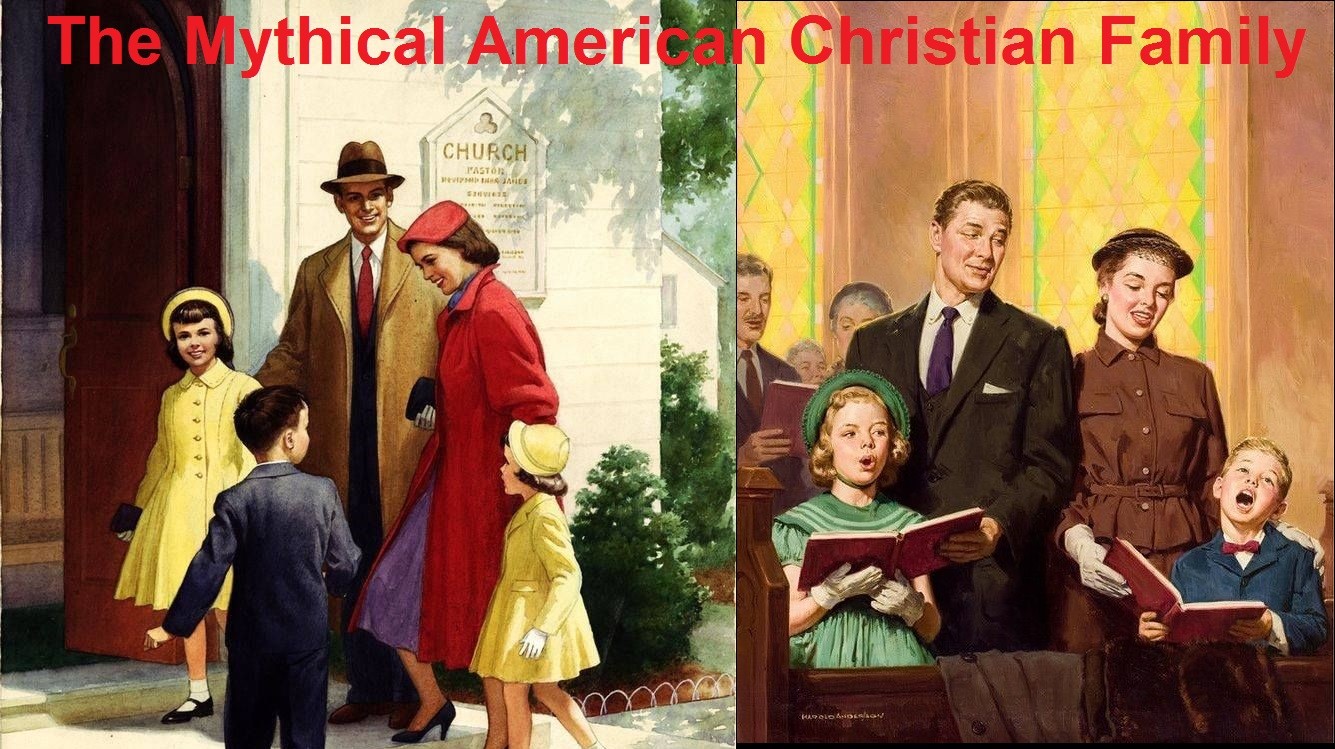
Today we are releasing the second edition of my eBook, The Concept of the American Christian Family is a Myth and is NOT Found Anywhere in the Bible.
Two new chapters have been added from some of my recent articles on “the family.”
It remains free, and you can download it from my online store, Healthy Traditions. While you are there, I hope you will purchase some of the finest products available in the U.S. to support my work here at Health Impact News, where I offer all of my writings to the public for free with no paywall.
I am not aware of any other similar writings on the topic of “family” anywhere else, taking an honest look at what the Scriptures actually teach on this topic, as opposed to religious dogma on the topic.
Because I am not employed by Christianity, nor even a member of the Christian religion, I am free to follow the truth wherever it leads, even if it is not popular.
Here is the Introduction to this book and the Table of Contents.
Introduction
The purpose of this book is to show what the Bible actually teaches about families, which contradicts the “Judeo-Christian” view of the family that is taught throughout Christianity.
This book is composed of five articles I have previously published on the Health Impact News network.
The mythical “Christian Family” is not found anywhere in the pages of the Bible, either in the Old Testament or New Testament.
My intended audience in writing this are all the people in modern western culture who are labeled as “broken” or from “broken families” who have been beaten down by Corporate Christianity and western culture because of this mythical definition of “family” that is considered “good” or “Christian,” and which, as a result, conditions people to feel guilty and inferior because their own family situation does not come close to this mythical one that has been portrayed pretty much since the advent of TV and movies in mass media just after World War II.
To everyone who has been conditioned to believe that they are failures and inferior because they come from “broken” families, I am declaring to you today, that you are NOT broken!
You are “normal,” and you are just like every other family of believers that we get glimpses of in the historical records of the Ancient Scriptures, the Bible. Brian Shilhavy
Table of Contents
Chapter 1: The Western Concept of “Family” is Unknown in the Ancient Biblical Literature • Jesus’s “Family”
• Call no Man your “Father”
• Slaves or Freemen – The Household of God and the Children of Satan
Chapter 2:The Concept of the American Christian Family is a Myth and is NOT Found Anywhere in the Bible
• No Perfect “Good” Families Recorded in the Bible
• The “Christian Family” is a $Multi-Billion Dollar Industry
• The New Testament Model: The “Household of God” is More Important than Biological Families
Chapter 3:Jesus’s Teaching on Family vs. Christian Teaching on Family – Polar Opposites
• The Teaching of Jesus Regarding Biological Families
• The Call of Jesus to Follow Him: Leave Behind Biological Family Members
• When Biological Family Members Oppose our Loyalty to Jesus Christ, They Become Our Enemies
• Follow the Christian Crowd or Follow Jesus Christ – You Cannot do Both
Chapter 4:When Jesus’s Own Family Turned Against Him
• Were members of Jesus’s family among the disciples who stopped following him and turned against him?
Chapter 5:Christian Teaching on Sex and Marriage vs. The Actual Biblical Teaching
• Marriage in Ancient Cultures and the High Value of Children
• “Husband” and “Wife”
• Marriage
• Dating and Sex
• True Sexual Cultural Revolution is Needed
• Practical Advice for the 21st Century
i have been struggling in the last couple of days to get the facts right and make an update on that horror story of the dead infant found in a deep freezer at an Airbrb apartment in Kypseli district of Athens on August 31. The more I delay to write down and post the update, […]
In a beautiful and vivid essay on home, time, and family, Diane Roberts reflects on the house that her parents built, and their family’s land in Leon County, Florida, to which she feels deeply connected. I especially love Roberts’s thoughts on a home versus a house—the latter is composed of construction materials, but “home implies a complex neural network of family association and feeling, layers of experience, a shared past.” Despite the tragedies the home holds, it is ultimately a place of memory and meaning.
Home and time are as tangled as the skunk vine and Confederate jasmine choking my backyard fence. I suppose that’s to be expected. My house holds our history and the indispensable relics of former houses, objects cherished by the now-dead: the tiny rocking chair my grandfather made for my mother when she was three; the 1960 TR3 in the barn my brother never quite got around to fixing; the two old rosebushes dug up from the Washington County farm, replanted at Great-Aunt Rilla’s house in Chipley, then dug up again and transported to our front yard. The house didn’t simply belong to us, it was us—our mother, our father, Brad, and me.
What defines success when it comes to music? For Hrishikesh Hirway, who wrote four albums under the name The One AM Radio, it meant commercial attention. His interest in making music cooled after sales and airplay failed to materialize; he went 15 years without releasing an album. In this essay for The Bitter Southerner, Hirway looks at how he overcame perfectionism to write and record In the Last Hour of Light, an album heavy on collaboration.
“But Phil was echoing something I’d heard in the interviews I’d conducted and read about in books on writing: separate your creative, generative side from your editing, critical side. They push in opposite directions, and as soon as you start to edit, you’re no longer as free to play.”
“It was two days after my 47th birthday, which had left me feeling melancholy about reaching middle age and still feeling so far from my goals. I sat on my couch, put my headphones on, and played the album. Something had shifted for me. Somewhere around the third song, I felt something for the first time: I loved what I was hearing.
The music brought back memories with perfect clarity: what it felt like to write each song, to record them, the long journey to transform a part of myself into this music. It was no longer a question of the music’s worth. I can say to myself: this album is a document. And in it —listen!—you’re alive.”
In Wilbert L. Cooper’s new memoir, The Black Shield, he tells two intertwining stories: the history of the city’s Black Shield Police Association, one of the country’s oldest Black policing organizations, and the multigenerational narrative of his own family, embedded in the police force. Both of his parents and sister are retired Black Cleveland cops, and on his mother’s side, there’s been a Cleveland cop in the family since 1950. In this book about race, policing, and power, Cooper examines the complex duality of the Black cop, what it was like for his parents to navigate an institution that was hostile to their own community, and, ultimately, what this all has meant for him.
This excerptcombines the prologue and a chapter focused on his mother’s beginnings in Cleveland’s police department. Two individuals mentioned spearheaded legal efforts in the 1970s to diversify the department: Fred Johnson, the association’s president who led a lawsuit over the department’s discriminatory hiring and promotion practices, and Jean Clayton, a policewoman and the organization’s secretary whose parallel lawsuit disbanded the segregated Women’s Bureau and integrated women into the department. Below, Cooper recounts how his mother, Gayle, walked through the door that they opened. But it was not without a struggle.
—Cheri Lucas Rowlands
The gun was always there. I used to see it in flashes as Dad would get ready to leave the house. After he doused himself in spicy cologne and sliced a plastic comb through the waves of his jet-black Jheri curl, I would catch that 9-millimeter sliding between the small of his back and the belted waistband of his blue jeans.
Mom had her own. She kept it in her purse. One of those big leather bags, the kind they show behind the counter at Dillard’s, with shiny metal clasps and countless compartments. Her gun would be in there with red lipstick, a double-sided compact mirror, and her bulky pager. I knew the gun was there because I sensed its heft whenever I’d have to move the bag off the kitchen table to do my homework. It felt like a bowling ball in a pillowcase.
Dad used to store his 9-millimeter above the fine china, on top of the large, baby-pink Victorian-style cabinet in our dining room. One time while he was sleeping, I climbed on top of the pink-velvet-upholstered chairs to get a good look at it through the scrollwork. When I came face-to-face with the gun, I was too intimidated to actually pick it up and play with it.
It took a few moments for me to work up the gumption to run my little fingers across the raised bumps of its grip. Then I touched the ridges of the slide and the smooth, cold, hard barrel from where bullets burst. And just that alone felt crazy to me. Even in the dusty, mundane space of the cabinet, the stock-still object pulsated with wild energy. It was like petting a tiger.
Even now, it’s overwhelming for me to imagine that all that calamitous potential to take life, to inflict pain, to inspire fear, to demand subservience, to have your way with the world, to finally be the actor instead of the one who is acted upon—was right there and it was theirs.
I was 7 or 8 when I saw Dad shoot that gun. It must have been the summer, because I still remember the heavy outside air kissing my arms and legs, the suburban sunlight beaming on me. I see that light reverberating off the concrete, making vivid every blade of green grass in the yard and every goose-egg stone in the gravel strips. But I cannot hear the gunshot. I cannot tune in to the boom. All I sense is the fear, because it is so foreign. I’m still there. Standing in the driveway. Stuck and dumbfounded. Until Dad’s shouts break through, begging me to run inside before those crackers come back, commanding me to have Mom call the cops.
Have you heard of Pastor Leon McCray? The man of faith who saw two White people dumping a refrigerator on his property. When McCray tried to stop them, the duo threatened him. One of the Whites ran off to grab three more racists. McCray says that’s when they all ganged up on him. That’s when they told him that his “Black life didn’t matter.” The beating didn’t stop until McCray pulled out his gun. When the police showed up at the scene, they handcuffed McCray and put him in the back of the cruiser. His assailants laughed and waved at him as he was taken off.
But at least McCray survived. You know that many of us aren’t so lucky: The police shot and killed the father Philando Castile during a traffic stop after he told them he had a firearm. The police shot and killed the father John Crawford while he was carrying a pellet rifle inside the Walmart that retailed the damn pellet rifle. Police shot Emantic F. Bradford Jr. at a shopping mall while they were responding to a call about gunshots at the mall. Witnesses say they killed Bradford as he was trying to direct shoppers to safety.
These killings now give shape and sharpness to that immense and totalizing fear I felt in the driveway as a child. That American malice is always there anytime we try to commandeer a power that wasn’t intended for us. Black people are killed or incarcerated every day for much less than what Dad did. Simply owning a gun can put a bullseye on your back. Pulling one on a White man can turn you into a hashtag.
So why did Dad want to call 911? I know that he’d tell you it was because his gun was different from Pastor Leon’s. Dad didn’t buy it at Walmart or Bass Pro alongside camouflage galoshes and fly-fishing rods. He didn’t pick it up at a gun shop with a shooting range full of targets depicting men in turbans and hip-hop gear. He didn’t procure it across state lines at a gun show with bundles of cash and no identification or background check. And he didn’t get it off the street, with scratched-out serial numbers and bodies on it.
Dad got his gun from the City of Cleveland. That’s where Mom got hers, too. Both are tools of policing, the Cooper family business. They hold up those guns and their power to use them as symbols of our freedom in a country that will not stop killing or incarcerating Black folks. When I was a child, I never questioned that contradiction. But to become my own man in the America I inherited, I realized I’d have to try to solve the paradox of my parents.
By the time the Black Shield had forced the hand of the Cleveland Police Department in 1977, Gayle had given birth to another child—a little boy named Geoffrey. Now with three kids, she was even more entrenched in a wrathful marriage and farther away from the working world. And losing her uncle Lloyd, which felt a lot like losing a father, only made her feel that much more alone. When he died, the dream of becoming a cop and the freedom the job promised died with him.
It was at the moment that she’d almost completely resigned herself that it all came raging back. She opened up an issue of the Plain Dealer to find that people who’d taken the test with her and were lower than her on the eligibility list were being appointed to the police academy. And quickly, her despondency turned to confusion. And then her confusion turned to anger. She said to herself, “I know my number is higher than this and they’ve gone eighty past me and I’m not getting called?!” As she started to look into the issue, she found out that the city had expunged her from the eligibility list. “They were trying to lose Black folks’ stuff,” she told me. The city claimed it was because her addresses had changed and she hadn’t notified the civil service. To get back on the list, she had to go to court. “They claimed I had moved, but I owned my own home!” she said. “I told them, ‘I bought this house, I haven’t gone anywhere.’” As soon as she prevailed in her hearing, a White officer walked up to her in court. He simply said, “I’m from the academy.” He took her information. And then he said, “You will start the police academy on Monday.”
Later that same night, Fred Johnson called Gayle’s phone. It was the first time she’d ever spoken to the man. Lloyd was never big on the Shield Club, and Curtis was much closer with her younger brother, his namesake, who would join the police department five years later. Gayle didn’t have a complete idea of what the Shield Club had been up to at that point, or of how much it had shaped the situation she was walking into. Because of all the lawsuits, more than 40 percent of her classmates would be people of color and women. But the department they were entering was only 9 percent Black or Hispanic, and 2 percent women. For his part, Johnson stressed the struggle happening in the city to resist the change that Black women like Gayle represented. The academy was framed as a contentious environment controlled by people who were intent on destroying Gayle’s professional prospects and her spirit.
Despite the reforms that resulted from the Shield Club and the Women’s Law Fund cases, Gayle was still put through a series of tests, during which she could still be expunged. She had to meet with a psychiatrist, who asked her questions about her affiliations. Although this test had been revised thanks to the efforts of Fred Johnson and the Shield Club, it remained biased. As many of us conclude from a life living in this country run by White people, Gayle figured the best way to stick around was to hide herself. Her strategy was to answer every question like a White man of modest intellect.
In the 1970s, Gayle had spent a few years in the Nation of Islam. Although she never really let go of Jesus, she converted aesthetically and culturally to satisfy the whims of her second husband. She traded her hot pants for conservative flowing dresses. And instead of sweet potato pie, she started baking bean pies. When she did make a Polish Boy, she did it with beef sausage. She even traveled to Chicago once for Saviours’ Day to see the honorable Elijah Muhammad with her own eyes. But she put all that behind her when she found out that her proud Muslim husband was sleeping with a fellow “sister.” By the time she took the psych test to become a police officer, she’d gone back to straightening her hair and listening to gospel music. But some of the political knowledge she gained from the Nation, especially its perspective on America, stuck with her. She understood things differently than most—like the “riots” that happened in Hough and Glenville. She saw them as a natural reaction to the way her people had been done in this city and done in America. To her, the people who stormed the streets weren’t criminal. The crimes being committed were by the landlords renting rat-infested apartments and the Board of Education shoving kids into overcrowded schools and businesses charging a premium for rancid meat. She had a lot of ideas about these sorts of things, but none of them could feed her kids or free her from her marriage. And so she kept them to herself during her psych test.
The new hires were also required to do a complete physical examination. This was especially humiliating for Gayle. The whole ordeal was a perverse take on the idea that if women want to be in the academy, if women want to do what the men do, then they have to go through the exact same processes. For the physical exam, this meant standing around nearly nude to be ogled by their peers. “They made us stand up there in paper gowns and these guys were trying to catch glimpses at us. And they make you do stuff in the gowns so the gowns get all torn up. My breasts and everything were just hanging out,” Gayle recalled. She was so thoroughly humiliated that a fellow female in the academy came to her with some Scotch tape to try to cover her up. “They did that kind of thing because they wanted us to quit. The guys didn’t want us, their wives didn’t want us, it was terrible. They treated us like new meat, picking out which one they were going to take.”
Fred Johnson made himself available to all the Blacks in the academy because he was prepared for the city to try to find excuses to fail them. Gayle didn’t think she’d have a problem. She was voted the vice president of the academy class and consistently scored high on all of the interstitial tests. Those high scores were attained by studying alongside her new girlfriend. But when they both got good grades on a test with similar answers, they were accused of cheating and threatened with expulsion from the academy. Fred Johnson had to step in and help them prove that they’d arrived at the same answers because they’d been preparing together.
After passing the academy, but before they could be sworn in as officers, they were also required to take a qualification test administered by the State of Ohio that evaluated their skills. Cadets could fly through the academy with high marks and still get disqualified to be a police officer. Although policewomen in Cleveland had been in the academy before the 1970s, they weren’t required to take the qualification test because officers in the women’s bureau didn’t carry guns. Anticipating that they would do whatever they could to disqualify her, Gayle prepared for the test with the desperate intensity of a woman fighting for her life. “To prepare for the running test, I used to run up and down the steps whenever I’d put the kids down for nap,” she told me. To make her qualifying time, she outran some Vietnam veterans, who threw up before they crossed the finish line. The state also required people to do a series of chin-ups and push-ups and dips that demanded upper body strength that seemed to favor the male physique, but Gayle fought her way through those. When she finally had to take her shooting test, the last phase, it was 19 degrees below zero. In 1977, Cleveland was in the midst of one of its coldest winters ever. But one of the essential rules of the academy was that it never canceled or postponed qualification tests for any reason, in an effort to help simulate what it’s like to be a police officer and have to work when everyone else gets the day off. And so Gayle stood at the outdoor range with the soft skin of her red-nailed fingers sticking to the ice-cold metal of her gun, her body involuntarily shivering, hoping the icy air didn’t tank her shot.
The first night Patrolwoman Gayle Smith reported to the Fifth District of the Cleveland Division of Police in the winter of 1977, her supervisor showed her two things: the coffee machine and the broom. It was expected that she would be the shift’s glorified janitor. But she bucked back. “I did not go through all that training to do no housekeeping. I came here to be a police officer,” she remembers saying to him, surprised by her own candor. Ridiculous as it seems now, perhaps this kind of insult by her male colleagues should have been expected. After all of the efforts by the Women’s Law Fund and Jean Clayton to break down the formal barriers in the CDP, women still constituted only 2.3 percent of the police force when Gayle started. The assholes she was working with had almost no experience working alongside women as equals and little incentive to see them as such. Gayle was basically a guinea pig. Ironically, it was because of Jean Clayton, Gayle’s initial inspiration to become a lady cop, that the women’s bureau was dissolved and lady cops ceased to exist. Although Gayle had been intent on following Clayton’s path, she found herself involved in something entirely new.
While most of the male cops were unhappy with the gender integration of the department, a lot of the women officers were displeased, too. They were especially pissed at Jean Clayton and her damn lawsuit. These were women who had no interest in being partnered with men and participating in a form of policing that oriented itself around violence and punishment. There were certainly fair criticisms of the women’s bureau, from its troubling focus on purity to the fact that its diversion efforts and empathy weren’t as equally distributed to Black suspects as they were to Whites. But I wonder if the department would be less lethal and repressive today if the men on the Cleveland Police Department had become more like the women and their women’s bureau. Instead, the women became more like the men. After the women’s bureau closed, some of its important work, such as sex crimes, was shamefully ignored or mishandled. Gayle would see this firsthand. But first she needed to get out of coffee duty.
It took some convincing, but eventually Gayle got her first assignment outside the district. After roll call, she would be taken to White City Beach, a former park on Lake Erie that in the 1940s was home to attractions like Bonavita the lion trainer, along with fishing and a yacht club. After natural disasters hurt the park and desegregation saw the City of Cleveland give up on supporting community spaces shared by both Blacks and Whites, White City Beach went the way of Euclid Beach. By the 1970s, it became a dumping ground for garbage and a place where the city parked vehicles that were towed to clear the streets for snowplows or as the result of car wrecks. That year, it was overflowing with gnarled automobiles. It had been the coldest Cleveland winter of the century, complete with “superbomb” blizzards and scores of days that were more than 20 degrees below zero. There were more than one thousand cars down there at White City Beach, but not another soul in sight.
“They dropped me off at White City Beach every night and stuck me in a shell of a car that was up on bricks and cinder blocks, with a wire heater inside of it. There was no bathroom. They’d leave me there all night and they’d come back and get me in the morning. I was just down there by myself in pitch blackness and cold. Even if I had wanted to get out, I couldn’t go nowhere. If someone had tried to steal the cars down there, there is nothing I could have done about it. It was demoralizing.”
Mom told me this in the kitchen, where I’d often heard her talk about the bad early days on the job. I’m not sure whether this was the first time I was really listening, or if she was telling it differently. Usually, her stories were never this detailed and specific. It was just “racism” and “men being nasty.” Perhaps because I was taking a real interest, she started accessing parts of the story she had often left untouched in her recounting.
There is a feeling of humiliation that stings long after an event has passed. It doesn’t just hurt because of what was done, it hurts because you feel as though you had some agency in the matter. That you let it happen. When she started telling me what it was like, I could feel her own surprise at the disregard she had endured. In the zone car with White partners, she was beneath speaking to. These were men who would greet a dog if they saw it on the street, but wouldn’t say one word to her. In this sense, despite the lawsuit and the consent decree, not much had changed on the job since the late 1950s, when White officers would “throw a shoe” to avoid being paired up with Curtis and Fred Johnson.
“When they finally had two guys take me out, they put me in the back seat where a prisoner would sit. And they didn’t let me touch the radio. They were supposed to show me some things. But instead, they got out of the car and went to eat. They just left me locked in the back of that car without saying anything. I’m just beating on the door and everything.”
It wasn’t until an old, White, Catholic officer who looked like Santa Claus decided to take Gayle under his wing that she finally got to learn a bit about real policing. The rotund veteran with snow-white hair explained to Gayle the first time she got in the car with him exactly why he was willing to teach her. It wasn’t that he was pleased about working with Blacks or with women. He simply realized the futility of resistance: “If we get rid of her, they will just send another one of them down here.”
“It was crazy to have me on the job that length of time and nobody taught me nothing except what I learned in the academy,” she remembered of her time wasted on frivolous assignments. “When he took me out, the first thing he ever told me was this: He said, ‘Okay, kid, what time is it?’ I looked for my watch. He said, ‘That is the first rule. Don’t you ever take your eye off anybody. If they ask what time it is, say you don’t know or your watch is broke. But you don’t look down.’”
It was with Santa Claus that she got to see how the men handled sex crimes now that the women’s bureau was closed. The first rape call that they ever responded to together involved a White woman. The lady had walked three doors over from where she lived to bum a cigarette from her neighbor. Before she could get back home, three men had grabbed her off the street, dragged her into a car, and took turns raping her. While Gayle was wrenched by the story, calling back to her own experiences of sexual abuse, the veteran was incredulous. “He talked to that girl so bad, I felt sorry for her,” she remembered. “He asked her, ‘What were you wearing?’ ‘Why were you out at that time of night?’ ‘What did you expect was going to happen?’ It was horrible . . . I will never forget it. That girl ended up not even filing.”
It was also alongside Santa Claus that she finally proved she could be real police, like the men. The call was a robbery at a drugstore that drew several cars to the scene. The suspect was a young Black man who managed to run out the back door. To show her tenacity, Gayle took off after him ahead of the rest of the cops, moving just as she had when she was training for the department’s entrance exam, going up and down those steps. Santa, who was heavy and plodding with bad knees, couldn’t keep up as Gayle tailed this man through an alleyway. And then from behind her, a shot rang out.
When a police shooting happens, officers come together to get their story straight. Although this was an era when it was still legal for officers in Cleveland to shoot fleeing felons, all the patrolmen made sure they agreed on what took place. After they were finished, they looked over at Gayle to see if she saw it the same way they did. Forget the police academy. The offensive rape call was a pop quiz, and this shooting was the final exam of real police shit. And Gayle passed with flying colors. “After that, I started having people to work with,” she told me. “It didn’t feel good, but I had a demon behind me.”
This excerpt is protected under copyright laws and reproduction of the text in any form for distribution is strictly prohibited. The right to reproduce or transfer this work via any medium must be secured with the copyright owner.
Wilbert L. Cooper grew up in the suburbs of Cleveland, Ohio. He studied journalism at Ohio University and earned a master’s degree in publishing at New York University. He has written for outlets such as The Guardian, The New York Times, The Marshall Project, and The Wall Street Journal. His Vice documentary The Cleveland Strangler was nominated for a National Magazine Award. In 2024, he was the recipient of the Richard J. Margolis Award. The Black Shield is his first book.

 Login