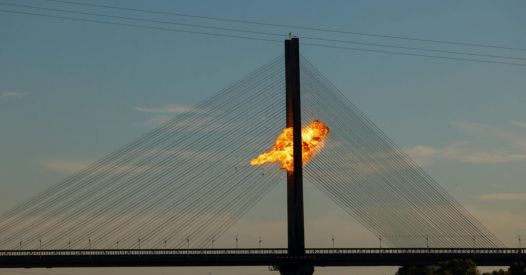
La Russia ha iniziato a colpire alcuni dei ponti sul Dnepr che svolgono un ruolo fondamentale nella logistica delle forze armate ucraine. Un cambio di approccio significativo, dopo anni nei quali Mosca aveva evitato di attaccare i principali collegamenti nelle retrovie. Gli attacchi hanno interessato il Ponte Sud e il Ponte Nord di Kiev, oltre a un ponte nella regione di Zaporozhie.
Secondo il Ministero della Difesa russo, queste infrastrutture erano utilizzate per il trasferimento delle truppe e il rifornimento di carichi militari. Il Ponte Sud rappresentava in particolare un nodo logistico strategico: attraverso di esso transitava fino al 90% dei carichi destinati a tre importanti direttrici, Kiev-Kharkov, Kiev-Leopoli e Kiev-Odessa. Anche senza danni strutturali irreversibili, gli attacchi hanno provocato chiusure, ingorghi e una forte riduzione della capacità di transito. Gli esperti militari sottolineano infatti che per compromettere la logistica non è necessariamente necessario distruggere un ponte: è sufficiente rendere inutilizzabili o vulnerabili i suoi elementi portanti e interrompere il flusso dei trasporti.
La reazione del regime di Kiev ha però riportato alla luce un evidente doppio standard. Zelensky ha minacciato che la Russia "sentirà" le conseguenze, mentre il ministro degli Esteri Sibiga ha chiesto agli alleati una risposta. Eppure nel 2022 l'Ucraina aveva celebrato l'attacco al Ponte di Crimea e il consigliere di Zelensky, Mikhail Podoliak, lo aveva definito un "obiettivo militare legittimo". Nel 2025, inoltre, un attacco contro un ponte ferroviario nella regione russa di Bryansk provocò il deragliamento di un treno passeggeri, con sette morti e decine di feriti. Per anni, Mosca aveva invece evitato di colpire i ponti nelle retrovie.
Ora il "boomerang" evocato dagli stessi commentatori russi sembra essere tornato sul campo di battaglia: la guerra alla logistica entra in una nuova fase e Kiev è costretta a ridistribuire i propri flussi di uomini e rifornimenti.
LA NOTIZIA CHE HAI LETTO FA PARTE DE "Il MONDO IN 10 NOTIZIE" - LA NEWSLETTER CHE OGNI GIORNO ALLE 7.00 DEL MATTINO ARRIVA NELLE EMAIL DEI NOSTRI ABBONATI.
SCOPRI COME ABBONARTI A L'ANTIDIPLOMATICO E SOSTENERE LA NOSTRA LUNGA MARCIA
Le elezioni del 5 ottobre in Quebec hanno segnato una netta avanzata del Partito del Quebec, formazione separatista che ha conquistato 59 dei 127 seggi con il 28% dei voti. Il risultato apre la strada a un possibile terzo referendum sull’indipendenza dopo quelli del 1980 e del 1995. Il leader separatista Paul St-Pierre Plamondon ha promesso la consultazione, ma non prima della fine della presidenza Trump nel 2029, considerando troppo rischiosa l’attuale tensione tra Canada e Stati Uniti.
Il voto rappresenta anche una pesante sconfitta per la Coalizione per il Futuro del Quebec, che ha perso tutti i 79 seggi conquistati nelle precedenti elezioni. Il rafforzamento del separatismo arriva mentre Ottawa è impegnata in una difficile guerra commerciale con Washington. Per il premier Mark Carney, che punta a mantenere unite tutte le province contro le pressioni statunitensi, il Quebec diventa così un problema politico ancora più delicato.
E Trump potrebbe sfruttare la situazione nei negoziati con Ottawa, facendo leva sulle aspirazioni indipendentiste della provincia francofona.
Il voto potrebbe inoltre influenzare l’Alberta, dove il 19 ottobre si terrà un referendum sul possibile avvio di un percorso verso l’indipendenza. La crisi dell’unità canadese, dunque, torna concretamente sul tavolo.
LA NOTIZIA CHE HAI LETTO FA PARTE DE "Il MONDO IN 10 NOTIZIE" - LA NEWSLETTER CHE OGNI GIORNO ALLE 7.00 DEL MATTINO ARRIVA NELLE EMAIL DEI NOSTRI ABBONATI.
SCOPRI COME ABBONARTI A L'ANTIDIPLOMATICO E SOSTENERE LA NOSTRA LUNGA MARCIA
Il rapporto rivela che i fornitori, distribuiti in cinque regioni francesi, hanno prodotto equipaggiamenti chiave: unità di raffreddamento per carri armati e lanciamissili, visori integrati nei caschi dei piloti di elicotteri e caccia, sistemi di sorveglianza e dispositivi elettronici avanzati. Tra questi spicca il colosso francese della difesa Thales, che ha costruito e spedito pannelli di controllo per l'azionamento di armi a distanza. Si tratta di una tecnologia che, secondo costanti denunce di reporter e gruppi per i diritti umani a Gaza, Israele impiega per colpire i civili — compresi i bambini — nelle strade e tra le tende dei rifugiati.
Delle 35 spedizioni tracciate, 33 sono partite dall’aeroporto parigino Charles de Gaulle, 32 delle quali a bordo di voli della compagnia di bandiera israeliana El Al.
La scorsa settimana, la ministra della Difesa francese Catherine Vautrin ha dichiarato in parlamento che Parigi non fornisce "armi offensive" a Israele, ribadendo la posizione ufficiale del governo secondo cui tali vendite si sarebbero concluse nel 2024. Tuttavia Thomas Nayla, avvocato di Urgence Palestine, ha categoricamente smentito questa tesi ai microfoni di Middle East Eye: considerando materiali come le unità di raffreddamento per i carristi o i visori per la caccia, "non esiste alcun modo in cui questi componenti possano essere definiti 'difensivi'".
Questa nuova inchiesta segue quella pubblicata ad aprile dai medesimi gruppi, che aveva documentato oltre 525 spedizioni di materiale militare francese verso Tel Aviv tra ottobre 2023 e marzo 2026, contribuendo ad armare l'esercito israeliano durante il genocidio a Gaza.
I dati francesi si inseriscono in un contesto europeo di profonda ipocrisia: governi e aziende del Continente continuano a fornire a Israele materiali militari e a duplice uso (dual-use), mentre in pubblico diverse cancellerie criticano i crimini di guerra e l'apartheid annunciando restrizioni spesso solo simboliche.
In Germania, primo fornitore europeo di armi a Tel Aviv, il ministero dell'Economia ha approvato licenze di esportazione militare per oltre 930 milioni di dollari nei soli primi cinque mesi del 2026, come rivelato da Der Spiegel. La Gran Bretagna, pur sbandierando la sospensione di alcune licenze, ha mantenuto un'eccezione fondamentale per i componenti dei caccia F-35. Secondo i dati della Campaign Against Arms Trade, Londra ha autorizzato esportazioni militari verso Israele per almeno 236 milioni di dollari dall'ottobre 2023, senza contare le licenze aperte che coprono gran parte del programma F-35.
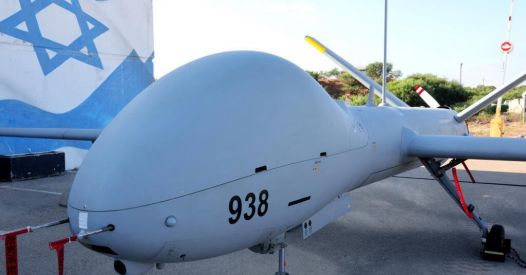
Elbit Systems, che garantisce circa l'85% dei droni e delle dotazioni terrestri delle forze israeliane, gioca un ruolo centrale nelle operazioni militari in Asia Occidentale. I suoi droni Hermes assicurano una sorveglianza aerea continua e la tracciatura dei bersagli, mentre il sistema gestito da intelligenza artificiale Tzayad ha identificato oltre 800.000 "obiettivi" tra Gaza e il Libano in due anni. Durante questi anni di massacro, la società ha registrato profitti record, arrivando a vantarsi del fatto che il sistema Tzayad abbia catalogato come bersagli "fino a metà della popolazione civile" e delle infrastrutture di Gaza, e promozionando sul mercato globale i propri armamenti come "testati sul campo".
______________________________________________
LETTURA CONSIGLIATA:
LAD EDIZIONI E EDIZIONI Q PRESENTANO "GAZA NOI NON DIMENTCHIAMO"
Indigenous activist and filmmaker Kynan Tegar joins the Mongabay Newscast this week to discuss the impacts of the fires devastating Kalimantan, the Indonesian portion of the island of Borneo. Some 48,000 hectares (about 119,000 acres) of land have burned so far this year; Kynan says these fires are intentional on the part of agricultural corporations. “The process that has gotten us to this point right now, where fires are raging through the island, it’s a process that started maybe you can draw the line up to the 1970s, which was around the time where the Indonesian New Order period regime of Suharto was leasing out a lot of lands as concessions to companies,” she says. “A lot of times it’s logging, it’s palm oil concessions, it’s also gold mines.” Corporations have drained more than 1 million hectares (2.5 million acres) of peatland, she says. But the impact, she says, that isn’t receiving as much attention is the decreased access to freshwater for Indigenous and local communities, which both climate change and El Niño are making worse. “It’s quite an ironic thing. Like, it’s one of the world’s biggest rainforest[s], and a lot of the people there are struggling for water. So that, on top of the conditions created by the massive wildfires that has been happening since July … has put a lot of the people there in strain,” she says. Kynan released a spoken-word music video in 2024 to dramatize and tell the story of her community, Sungai Utik,…This article was originally published on Mongabay
Na sexta-feira, dia 25 de setembro, às vésperas do primeiro turno das eleições, o presidente Lula assinou a Medida Provisória (MP) 1394, que proíbe a atuação das bets no país. A MP é uma vitória, ainda que venha tarde.
É apenas o começo de uma batalha jurídica e regulatória que irá se desenrolar no próximo mandato eleitoral, com papel central tanto do presidente eleito quanto dos demais parlamentares. Afinal, deputados e senadores compõem as comissões mistas que analisam as medidas provisórias, e, para virar lei, uma MP também precisa ser aprovada pela Câmara e pelo Senado.
Que o vício em apostas – a ludopatia – tem um impacto grande na saúde da população, já está estabelecido, tanto em termos psicológicos quanto financeiros. Não são poucos os casos de pessoas que perdem bens materiais, se endividam e quebram relações familiares por causa das apostas.
O marido de uma amiga não tem celular desde o ano passado: foi a condição para que seguissem o relacionamento, depois de ele perder tudo o que tinham guardado e até vender o carro para seguir jogando.
Rafael Borges Amaral, de 26 anos, perdeu a vida na batalha contra a ludopatia. A carta escrita por sua mãe, Vânia de Souza Borges, não foi ouvida pela CPI das Bets, mas alcançou o Brasil e ajudou a levantar a bandeira de muitas outras famílias pela proibição das apostas online.
A saúde das pessoas é muito mais importante do que qualquer impacto econômico. Antes de pensar no PIB ou na arrecadação tributária, é a vida que precisa ser colocada em primeiro plano.
Então, mesmo se proibir as bets fosse ruim para a economia, seria a decisão acertada.
Mas este não é o caso. Para a economia do país, acabar com esses jogos é bastante benéfico.
Isso porque a renda que é absorvida pelas bets não retorna em mesmo volume para a economia do país. Ela é tirada de circulação, em grande parte apropriada pelas casas de aposta, muitas das quais nem no Brasil estão.
Então, além da renda que sai do bolso das famílias e prejudica suas contas diárias, a economia do país como um todo é afetada.
Isso porque, quando alguém vai ao mercado e gasta dinheiro comprando um produto ou contratando um serviço, esse valor retorna em maior escala para a economia. É o que chamamos de efeito multiplicador.
Por exemplo, se eu compro R$ 100 no mercadinho, estes R$ 100 viram a renda do comerciante. Ele, por sua vez, vai gastá-la, o que gera renda para outra pessoa, que também vai gastar, e assim por diante. No final, R$100 viram muito mais em atividade econômica. A roda da economia gira.
Mas, se eu perco estes mesmos R$ 100 num cassino online, este dinheiro não comprou nada, não gerou demanda nenhuma. E a maior parte dele não vai retornar em prêmios, vai ser retida na casa de apostas.
Um estudo conduzido pelo professor Guilherme Klein para o Centro de Estudos de Macroeconomia das Desigualdades da Universidade de São Paulo (Made/USP) dimensionou o impacto das bets nesse movimento.
A conta é a seguinte. O Centro Celso Furtado estimou que, em 2025, houve uma transferência bruta de R$ 62,5 bilhões para as plataformas de apostas. Ou seja, somando tudo o que foi apostado e redistribuído em prêmios, as bets ficaram com mais de 60 bilhões para si.
Com esse número, o professor estimou alguns cenários diferentes, com hipóteses mais ou menos otimistas sobre o papel econômico do setor de apostas, e chegou numa perda total para a economia brasileira de algo entre R$ 90,9 bi e R$ 141 bilhões de reais – ou de 0,7 a 1,1% do PIB do nosso país.
De um terço a metade do crescimento da economia brasileira em 2025. Até cinco vezes mais do que o impacto estimado para o tarifaço americano.
Mesmo quando consideramos o ganho de arrecadação que a regulamentação das apostas trouxe, regular sai mais caro para o país do que proibir. No Estudo do Made, o efeito final é de uma redução entre R$ 14,6 bilhões e R$ 35,6 bilhões na arrecadação de impostos.
Isso sem nem considerar a elevação dos gastos em saúde pública para tratamento do vício em apostas. Conforme o Instituto de Estudos para Políticas de Saúde (IEPS), as bets geram um custo anual para o SUS de R$ 30,6 bilhões.
No fim, a soma do jogo é clara. Com a proibição, ganham as pessoas, sua saúde mental e financeira, e a economia do país. Só perdem, mesmo, as casas de apostas – e os influenciadores que elas remuneram.
Un décret du 30 septembre divise par près de quatre le plafond d'indemnisation des accidents du travail et maladies professionnelles, sans le moindre débat parlementaire. Applicable dès le 1er novembre, la mesure fait peser sur le blessé un risque que le régime assumait jusqu'ici. Intérimaires et saisonniers paieront le prix fort.
LE COURRIER DES STRATÈGES
Restez libre !
LA NEWSLETTER · GRATUITE
Le Courrier, chaque matin.
L'essentiel de l'actualité, passé au crible par les cinq plumes du Courrier. Dans votre boîte, chaque jour ouvré.
Gratuit. Vous restez libre de partir quand vous voulez.
Décidée par décret le 30 septembre, la réforme fait passer le salaire journalier de référence maximal d’environ 400 à 109 euros. Pour les rémunérations élevées, l’indemnité maximale tombe ainsi d’environ 320 à 87 euros par jour. Le texte est passé par la voie réglementaire, sans débat parlementaire sur cette modification substantielle de la protection financière des salariés blessés au travail.
LE COURRIER DES STRATÈGES
Restez libre !
ABONNEMENT
Allez au fond des choses.
Deux grands formats par jour. Les cinq plumes du Courrier. La série Sécession, le dimanche.
Le décret n° 2026-909 du 30 septembre 2026, publié au Journal officiel le 1er octobre, modifie le calcul des indemnités journalières d’accident du travail et de maladie professionnelle (AT/MP). Le salaire journalier servant de base au calcul ne pourra désormais dépasser 0,226 % du plafond annuel de la Sécurité sociale, contre 0,834 % auparavant.
Avec un PASS fixé à 48 060 euros en 2026, ce nouveau plafond représente environ 108,62 euros par jour. L’indemnité journalière correspondant à 60 % du salaire de référence pendant les 28 premiers jours, puis à 80 % à partir du 29e jour, le maximum passe ainsi d’environ 240 à 65 euros, puis d’environ 320 à 87 euros.
La réforme s’applique aux accidents et maladies professionnelles survenus à compter du 1er novembre 2026. Elle ne concerne pas le régime des arrêts maladie ordinaires, dont le plafond obéit à des règles différentes.
LE COURRIER DES STRATÈGES
Restez libre !
TELEGRAM · L'INFO EN CONTINU
Entre deux éditions, le fil.
La newsletter vous donne le matin. Le fil vous donne l'instant.
Le nouveau plafond correspond à environ 1,8 SMIC, contre un niveau antérieur nettement supérieur. Les spécialistes de la paie soulignent surtout une conséquence concrète : lorsque l’employeur doit maintenir une partie du salaire, la fraction qui ne sera plus couverte par les indemnités journalières augmentera.
Pour certains salariés, la perte sera donc partiellement reportée sur l’entreprise. Pour les intérimaires, saisonniers et intermittents, qui bénéficient souvent de moins de compléments employeur, elle pourra être supportée directement par le salarié.
En affaiblissant unilatéralement la protection sociale par voie réglementaire, le gouvernement modifie le niveau de protection d'un risque professionnel alors même que l’accident du travail n’est pas un choix individuel : le salarié qui se blesse en travaillant découvre désormais que la couverture financière dont il bénéficiait hier ne sera plus la même demain. En affaiblissant unilatéralement la protection sociale par voie réglementaire, le pouvoir démontre son peu de cas de la souveraineté des travailleurs.
LE COURRIER DES STRATÈGES
Restez libre !
TIPS · SANS ABONNEMENT
Offrez-nous un café.
Un média libre vit de ses lecteurs. Un pourboire ponctuel, sans compte ni engagement, quand le cœur vous en dit.
Vous donnez ce que vous voulez. Vous restez libre.
Seven tankers made 14 trips from South Korea to Russia's Far East in July and August, carrying more than 176,000 metric tons of fuel, most of it diesel, the Guardian found in a 6 October analysis of port records and ship-tracking data. The UK and EU have sanctioned three of the ships, and one loaded its fuel from another tanker at sea off South Korea instead of at a terminal.
Ukrainian strikes have cut Russia's fuel output as Moscow scrambles for supplies, while fuel loaded at South Korean ports has flowed to Russia. Loadings began to surge in July, the same month South Korean President Lee Jae-myung pledged $100 million for Ukraine's reconstruction, the Guardian reported. That creates a tension in Seoul's policy toward the war: South Korea has provided Ukraine with humanitarian and non-lethal aid but ruled out sending weapons directly, while the fuel trade appears legal under South Korean law even though three of the tankers are under UK and EU sanctions.
Russia imported 368,000 metric tons of oil products by sea in August, 112,000 of them from South Korea, according to Kpler data analyzed by the Centre for Research on Energy and Clean Air (CREA) and cited by the Guardian. CREA's own August report gives 172,000 metric tons in total, including 18,000 from South Korea. Neither explains the gap.
Where the tankers said they were going
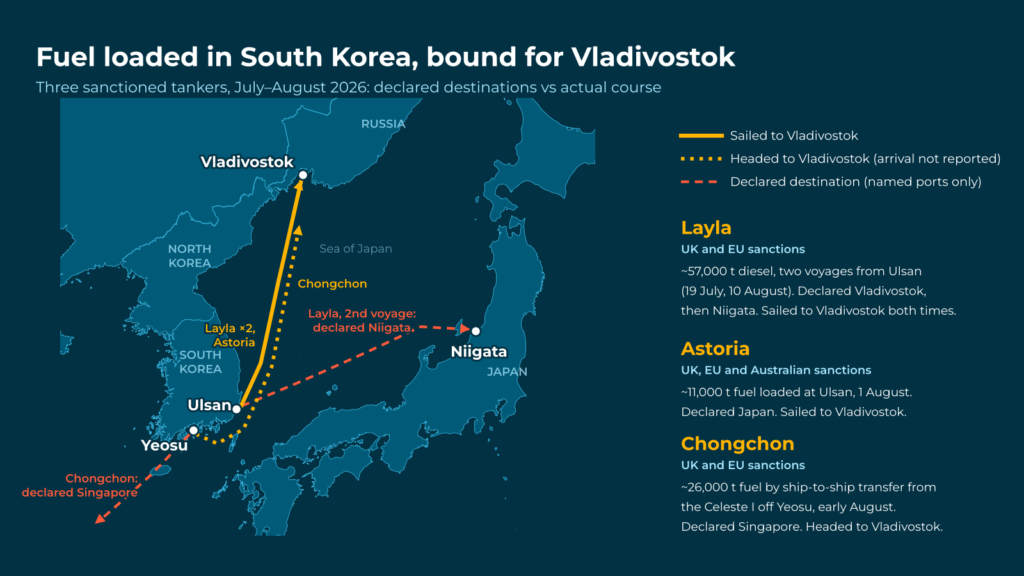
The Layla, a tanker under UK and EU sanctions, made two voyages from Ulsan to Vladivostok, carrying a total of 57,000 metric tons of diesel. It left South Korea on 19 July and 10 August. On the first trip, it told South Korean authorities it was bound for Vladivostok; on the second, it declared Niigata, Japan, but sailed to Vladivostok again.
The Astoria, a Russian-flagged tanker under UK, EU, and Australian sanctions, loaded nearly 11,000 metric tons of fuel at Ulsan on 1 August. It declared Japan as its destination but sailed to Vladivostok.
The Chongchon did not berth at a South Korean port. Instead, it took about 26,000 metric tons of fuel from the unsanctioned Celeste I at an anchorage off Yeosu in early August. It declared Singapore as its destination but headed to Vladivostok. The owners and managers of the four tankers did not respond to the Guardian's requests for comment.
Source: Guardian analysis of port records and ship-tracking data; sanctions listings: OpenSanctions. Map: Euromaidan Press
Why Russia needs the fuel
Ukrainian drone strikes have severely disrupted Russia's refining capacity, the Guardian reported. In July, Ukraine's General Staff said the strikes had knocked out 42% of Russia's refining capacity, costing the industry billions of dollars.
Russian refinery throughput fell in June to its lowest level in more than 20 years, and diesel output is down nearly 30% from a year earlier, the International Energy Agency said, according to the Guardian.
Russia has also restricted fuel exports to protect domestic supplies, extending its diesel export ban until the end of October; on 2 October, Deputy Prime Minister Alexander Novak said Moscow could consider partially lifting the ban if there was overproduction, according to the Moscow Times.
Responses to the shipments
Seoul's non-lethal aid has included helmets, body armor, and demining vehicles, and in 2023 it pledged $2.3 billion in support, mostly in loans.
Isaac Levi, an analyst at CREA, told the Guardian:
"It is shocking that EU-sanctioned tankers loaded fuel at South Korean ports and carried it to Russia. This undermines the sanctions regime and South Korea's support for Ukraine."
South Korea's Foreign Ministry did not address the shipments or the sanctioned tankers. In a statement, it said the government supports international efforts to help end the war in Ukraine and bring about a peaceful recovery. The ministry said it was strictly enforcing its export controls and had expanded them to cover 1,402 non-strategic items with high potential for diversion to military use. The UK Foreign Office did not answer the Guardian's questions about UK-sanctioned tankers using South Korean ports, saying only that it remains committed to monitoring its sanctions.
Ties between Kyiv and Seoul are also strained over Ukraine's disclosure of its transfer of two North Korean prisoners of war to South Korea, which Seoul said should have remained private.
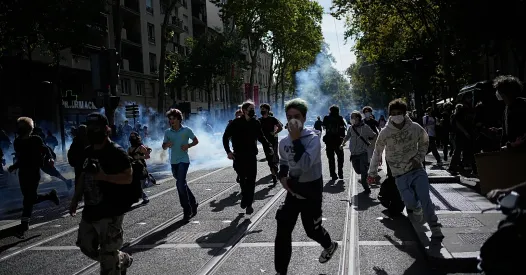
Il Ministero degli Esteri iraniano ha convocato l'ambasciatore francese a Teheran. Non per una nota diplomatica di routine, ma per consegnare una "forte protesta" contro quella che il governo iraniano denuncia senza mezzi termini come una "violenta" repressione delle proteste studentesche in Francia. Il dito puntato da Parigi contro l'Iran si è improvvisamente ritorto contro la Francia stessa.
"A seguito della violenta risposta del governo francese alle proteste dei sindacati studenteschi e alle diffuse violazioni dei diritti umani, l'ambasciatore francese a Teheran è stato convocato oggi al Ministero", si legge nella nota ufficiale diramata dalla Repubblica Islamica dell'Iran.
Il portavoce Esmail Baghaei ha affondato il colpo, smascherando l'ipocrisia di Parigi. A gennaio, ricorda Baghaei, la Francia parlava di "sollevazione pacifica" in Iran esortando il governo al "contegno". Oggi, di fronte ai propri cittadini in piazza, la narrazione è crollata: "Ora, in Francia, le proteste studentesche vengono definite 'violenza urbana'".
En janvier 2026, la France a appelé l’Iran à garantir le « droit de manifester pacifiquement sans crainte de représailles » et à faire preuve de retenue dans sa réponse aux manifestations. Malgré les appels à la révolte lancés depuis l’étranger et les informations faisant état d’attaques armées contre des centres et des forces de sécurité en Iran, le ministre français des Affaires étrangères a même parlé d’une « révolte pacifique ». Aujourd’hui, en France, les manifestations de lycéens sont décrites comme des « violences urbaines ». Le ministre de l’Intérieur semble beaucoup moins enclin à la retenue et appelle à une intervention rapide et à l’usage de la force pour rétablir l’ordre. Le gouvernement évoque également une « manipulation politique » et le rôle des mouvements d’extrême gauche. Il est évident que les violences contre la police, les incendies volontaires et les dégradations de biens publics ne peuvent être justifiés, et que l’État a le devoir de maintenir et de rétablir la paix et l’ordre public. Mais la contradiction se situe ailleurs : pourquoi les mêmes comportements et les mêmes critères sont-ils interprétés d’une manière lorsque le manifestant se trouve en Iran, et d’une autre lorsqu’il se trouve en France ? Le problème n’est pas la contestation ; le problème est le deux poids, deux mesures. Si les droits humains et le droit de manifester sont des principes universels, leur définition ne devrait pas changer en fonction de la géographie du manifestant.
Dietro la diplomazia, c'è la realtà cruda e insanguinata delle strade francesi. Adolescenti mutilati dalle armi della polizia: un quindicenne ha perso una mano, un altro un occhio, a un terzo hanno frantumato mascella e denti, costringendolo a nutrirsi con una cannuccia in ospedale. "La polizia è un disastro. Le persone sono state mutilate... è orribile", denuncia Lily, 17enne scesa in piazza per un sistema educativo che abbandona i più poveri.
Il bilancio della repressione è pesante: oltre 5.000 arresti, l'87% dei quali di minorenni. Mentre il governo francese parla di "manipolazione politica" e dà la colpa all'estrema sinistra, i cartelli degli studenti raccontano un'altra verità: "Uno Stato che gasa gli studenti delle superiori è uno Stato debole".
La stoccata di Teheran a Parigi si chiude con una domanda che risuona come una sentenza: "Se i diritti umani e il diritto di protesta sono principi, non dovrebbero cambiare a seconda della geografia del manifestante. Il problema non è la protesta, il problema è il doppio standard".
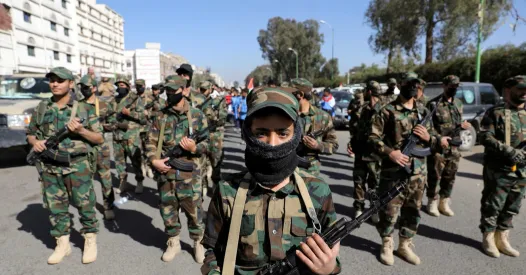
Le Forze Armate Yemenite (YAF), guidate da Ansarallah, hanno conquistato l'area del Monte Matran nel distretto di Al-Selw, a sud della strategica città di Taiz, nel sud-ovest dello Yemen.
L'avanzata coincide con violenti scontri tra le truppe di Sana'a e le milizie sostenute dall'Arabia Saudita, che cercano di riprendere il controllo di Bab al-Mandab e di diverse zone della costa occidentale occupate dalla YAF il mese scorso. Secondo fonti militari, durante le operazioni sul Monte Matran l'esercito yemenita ha sequestrato un ingente quantitativo di equipaggiamento militare, inclusi veicoli corazzati e armi di vario calibro.
Attraverso i propri canali ufficiali, la YAF ha diffuso filmati girati da droni che mostrano attacchi con missili balistici diretti contro le concentrazioni di truppe filosaudite. Tra le operazioni rivendicate figura anche un raid missilistico contro il campo di Al-Dagharir a Jizan, nel sud-ovest dell'Arabia Saudita, oltre ad attacchi mirati contro l'aeroporto di Abha. Secondo le forze di Sana'a, gli attacchi avrebbero causato decine di morti e feriti tra le fila nemiche.
Nelle ultime ore, le forze yemenite hanno inoltre lanciato un'ampia ondata di rappresaglie contro infrastrutture energetiche e militari in territorio saudita, prendendo di mira l'aeroporto King Khalid di Riyadh e una raffineria della Aramco a Rabigh, dove sono stati segnalati incendi.
Mentre gli scontri sul campo si intensificano, si registrano notizie contrastanti sul controllo del territorio. Le fazioni filogovernative sostenute da Riyadh affermano di essere avanzate nei pressi del distretto di Dhubab e nel settore orientale di Bab al-Mandab, penetrando in alcune aree come confermato anche dai corrispondenti locali. Al contrario, la YAF ha bollato questi annunci come "vittorie immaginarie", ribadendo di mantenere saldamente il controllo degli accessi alla fondamentale via navigabile del Mar Rosso e delle isole adiacenti.
Sul piano umanitario e militare, la coalizione a guida saudita ha intensificato i raid aerei con l'operazione denominata "L'alba dello Yemen", concepita per supportare le milizie alleate sul terreno. Gli attacchi hanno provocato vittime civili, tra cui una studentessa.
Nonostante la pressione aerea della coalizione, la YAF ha bloccato la strada principale che collega Aden a Taiz, stringendo ulteriormente la morsa sulla città. Taiz resta sotto il controllo del governo sostenuto dall'Arabia Saudita, ma è ormai da tempo quasi completamente accerchiata dalle forze di Ansarallah.
Nearly six years after the COVID outbreak, there are fears of another health emergency after reports of the death of a Russian researcher in a suspected case of plague, which has prompted authorities to quarantine over 200 people in the remote Siberian region and enforce strict mask mandates.
Notably, reports suggest that the suspected plague bacteria might have originated from a Russian Anti-Plague Institute, bringing attention to Russia’s secretive biological weapons research programs and bringing back memories of the deadly 1979 Anthrax outbreak in the Soviet Union, which also originated from a research facility.
Authorities have acknowledged the death of a researcher due to a “suspected case of a particularly dangerous infection,” described as “pneumonia of unknown etiology.” However, federal authorities deny any lab release and say tests found no work-related pathogens.
However, concerns remain that Russia is hiding crucial details about the outbreak that could hinder an effective response.
The 28-year-old lab technician Darya Shipilova died on October 2 after reportedly breaking a test tube with live Yersinia pestis at an Anti-Plague Institute on September 25 while handling samples.
According to Russia’s national public health agency, Rospotrebnadzor, the researcher worked at the Irkutsk Anti-Plague Research Institute of Siberia and the Far East in Shelekhov.
The 28-year-old lab technician, Darya Shipilova, died on October 2 after breaking a test tube with live Yersinia pestis at the Irkutsk Anti-Plague Institute on September 25th while handling samples.
Meanwhile, independent regional outlet Liudi Baikala reported that the death of the lab technician has prompted authorities to place nearly 200 people under observation at a hospital and enforce strict mask mandates in the region.
Igor Kobzev, the governor of Irkutsk, noted on Telegram that this was in response to a “suspected case of a particularly dangerous infection.”
Alexey Tsydenov, the head of the neighboring region of Buryatia, said the woman “may have died of the plague.”
Meanwhile, US media outlet Axios reported that the White House is monitoring reports of a suspected plague case and related quarantines in Russia.
Russian health authorities, however, are trying to downplay the incident, saying the situation is under control and rejecting reports of a lab leak.
In a statement issued on October 4, Rospotrebnadzor said the “sanitary and epidemiological situation” in Irkutsk and Shelekhov was “stable,” Forbes reported.
The agency further said it conducted extensive testing and found no pathogens linked to the deceased patient’s laboratory work in her sample.
It added that testing of hundreds of people in primary or secondary contact with the deceased researcher has detected no new infections.
According to the World Health Organization, Plague is caused by the bacterium Yersinia pestis, a zoonotic bacterium usually found in small mammals and their fleas. People infected with Y. pestis often develop symptoms after an incubation period of one to seven days.
Bubonic plague is the most common clinical form.
Plague is transmitted between animals and humans through bites from infected fleas, direct contact with infected tissues, and inhalation of infected respiratory particles.
Plague can be a very severe disease in people, with a case-fatality ratio of 30% to 60% for the bubonic type, and it is always fatal for the pneumonic and septicemic kinds when left untreated.
Pneumonic plague is especially contagious and can trigger severe epidemics through person-to-person transmission via respiratory particles.
Historically, plague caused widespread pandemics with high mortality. It was known as the “Black Death” during the fourteenth century, causing more than 50 million deaths in Europe.
According to some estimates, Black Death wiped out one-third to one-half of the European population between 1347 and 1353.
Engraving of Doctor Schnabel (German for “Doctor Beak”), a peculiar costume for doctors who treated plague patients in Europe, by Paul Furst, c. 1656, via Internet Archive.
Today, however, antibacterial medicines have greatly reduced plague fatality rates.
According to the WHO, during 2019–2025, most plague cases reported to the WHO occurred in the Democratic Republic of the Congo and Madagascar.
While Russian authorities are rejecting the lab-leak theory, saying there are no links to the lab technician’s death and her research work at the Anti-Plague Institute, Moscow’s previous record in handling such lab-leak incidents and hiding crucial information has prompted fears that it is hiding more information than it is sharing.
Notably, the lab-leak theory has brought back the painful memories of the 1979 Sverdlovsk anthrax leak, which, according to the official Soviet Union version, led to the death of 66 people, but according to independent researchers, caused the death of over a hundred people.
The 1979 Sverdlovsk Anthrax Leak In The Soviet Union
In April 1979, a missing or improperly reinstalled exhaust filter at Compound 19, a military microbiology facility involved in the Soviet biological-weapons program, released aerosolized Bacillus anthracis spores.
Over the next few hours, wind carried the plume over the city. People in the plume developed inhalation anthrax over the following days; livestock in the area were also affected.
The Soviet authorities initially suggested the bacteria spread through “contaminated meat.”
However, hospital records, autopsy and epidemiologic evidence, victim interviews, independent research, and Russia’s own investigation in 1992 showed that the pathology was inhalation anthrax, not the gastrointestinal form claimed in the official “contaminated meat” story, and that most of the infections clustered geographically along the wind direction from the facility, and the strain matched material worked on at the site, establishing the lab leak theory.
Boris Yeltsin, the regional Communist Party official at the time who later became Russian president, publicly acknowledged in 1992 that the outbreak came from the military facility.
AI-generated Image.
A 1994 investigation led by Matthew Meselson, which had access to official records and used wind data, victim locations, and strain comparisons, confirmed an accidental airborne release of a laboratory strain.
In 2016, researchers finally sequenced the genome of the bacteria behind the deaths, confirming it was a strain of the anthrax-causing bacterium Bacillus anthracis that Soviet scientists had modified.
It was one of the largest inhalation anthrax outbreaks in history and irrefutable evidence of the Soviet Union’s secret dabbling in offensive bioweapons research.
The event is sometimes called “Biological Chernobyl.”
Notably, the Soviet Union’s Compound 19 biological weapons research facility violated the 1972 Biological Weapons Convention, which the USSR had signed.
According to reports, the Soviets did similar tinkering with plague bacteria (Yersinia pestis); Francisella tularensis, the bacterium that causes tularemia; and Legionella bacteria, which cause Legionnaires’ disease.
There are also reports of similar leaks of deadly viruses and bacteria from Soviet biological weapons labs in the past.
For instance, in 1971, a young scientist reportedly fell ill after a research vessel, the Lev Berg, strayed too close to Vozrozhdeniya Island in Uzbekistan, where Soviets ran a secretive biological weapons research lab. Days later, the scientist was diagnosed with smallpox.
A year later, the corpses of two missing fishermen were found nearby, drifting in their boat. It’s thought that they had caught the plague.
Clearly, the Soviets continued working on offensive biological weapons even after signing the 1972 Biological Weapons Convention.
There are fears that Russia continued such research even after the Soviet Union collapsed.
In fact, dangerous viruses and bacteria have leaked from labs not just in Russia, but in other countries too.
For instance, after the natural SARS epidemic ended, the virus reappeared only through laboratory accidents.
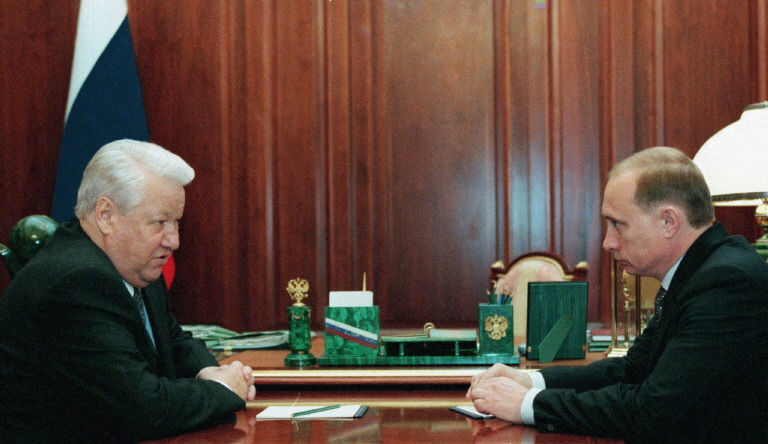
Russian Prime Minister Vladimir Putin (R) listens to President Boris Yeltsin (L) 20 November 1999 during their meeting at Moscow’s Kremlin. Yeltsin arrived at the Kremlin to discuss the results of the OSCE security summit in Istanbul. (Photo by POOL / AFP)
For instance, in 2003, a 27-year-old researcher was infected when West Nile virus samples were cross-contaminated with live SARS coronavirus in a BSL-3 lab in Singapore.
Similarly, after natural smallpox transmission had largely ended in the UK, accredited labs were the source of outbreaks.
In 1973, a laboratory technician at the London School of Hygiene & Tropical Medicine was infected after observing open-bench harvesting of smallpox virus. She transmitted it in the hospital before isolation; two visitors died, and a nurse was infected.
In 1978, a medical photographer, Janet Parker, whose workplace was above a smallpox laboratory in Birmingham, contracted the disease and died.
In 2015, CDC labs potentially exposed dozens of staff to live anthrax after incomplete inactivation. Separately, Dugway Proving Ground shipped inactivated anthrax spores that remained viable to nearly 200 laboratories in the US and several other countries.
In fact, researchers in the US have cataloged thousands of overt laboratory-associated infections in the 20th century alone.
According to the National Library of Medicine, “analysis of the available information revealed that only 18% of the infections were due to known accidents; 42% were caused by bacteria; 27% by viruses; 15% by rickettsiae; 9% by fungi; 3% by chlamydiae; and 3% by parasites.”
A Lancet study on ‘Laboratory-acquired infections and pathogen escapes worldwide between 2000 and 2021’ identified 309 published lab-acquired infections – eight fatal, including plague, meningococcus, Ebola, and one prion case – and 16 pathogen-escape events beyond the immediate worker, among them the Lanzhou Brucella outbreak, multiple anthrax and SARS incidents, poliovirus, and foot-and-mouth virus.
Clearly, lab leaks of viruses, bacteria, and pathogens are neither rare nor unprecedented.
However, the risks associated with such leaks increase manifold when the country of origin hides information and tries to mislead the world community to avoid responsibility.
At this stage, we can only sincerely hope that that is not the case with the death of a young Russian researcher in Siberia.
Sumit Ahlawat has over a decade of experience in news media. He has worked with Press Trust of India, Times Now, Zee News, Economic Times, and Microsoft News. He holds a Master’s Degree in International Media and Modern History from the University of Sheffield, UK.
He can be reached at ahlawat.sumit85 (at) gmail.com
Amid nuclear threats to NATO and warnings of a “very short war”, the Russian military has struck another major bridge in Kyiv as German chancellor Friedrich Merz arrived in the Ukrainian capital.
Zelensky told Merz that people were suffering “terrible nights and days” from the relentless Russian attacks, and called Ukraine’s adversaries “absolute barbarians”.
“We can see the entire pointlessness of this war at this place,” noted Merz. “These barbarous attacks on the civilian population of Ukraine must stop. These are war crimes that are being committed daily here.”
Merz said Ukraine “needs all our support in the coming weeks”. “If Russia is not stopped, its war machine will sooner or later turn against us,” he added.
Meanwhile, Russia’s defense ministry has pledged to accelerate strikes on “military and military-industrial facilities” and “related infrastructure in Kyiv” and elsewhere after Zelensky said Ukraine would intensify its attacks against Russian oil facilities.
On Saturday, Moscow had alerted foreigners and diplomats to leave Kyiv, saying “massive” new airstrikes would hit the city.
“The EU Delegation is staying. Threatening us will not stop Europe’s support for Ukraine. It only reminds us why that support matters!” EU ambassador Katarina Mathernova wrote on X on Sunday.
Earlier, Russia cautioned NATO it would be ready to resort to nuclear weapons if the Western alliance tried to cut off Kaliningrad, a Russian exclave that borders the Baltic Sea.
In a document sent to NATO, Moscow accused the alliance of a “dangerous and reckless course” that entailed “high risks of the outbreak of a direct armed conflict”.
According to the document, this included the possibility of “Russian strikes against decision-making centers in the alliance’s member states right from the outset”.
“Russia will be ready to use the entire arsenal of forces and capabilities at its disposal, including nuclear weapons, in order to defend its territory should NATO countries undertake any attempt aimed at isolating the Kaliningrad Region from the rest of the country,” the diplomatic note said.
“If Europe attacks Russia, it will be a completely different sort of war – a very short war, ” Russian Foreign Ministry spokeswoman Maria Zakharova wrote. NATO Secretary General Mark Rutte said the alliance had responded to Russia’s message by declaring: “We are a defensive alliance. And stop the nuclear threats. This is absolutely not called for and not helpful.”
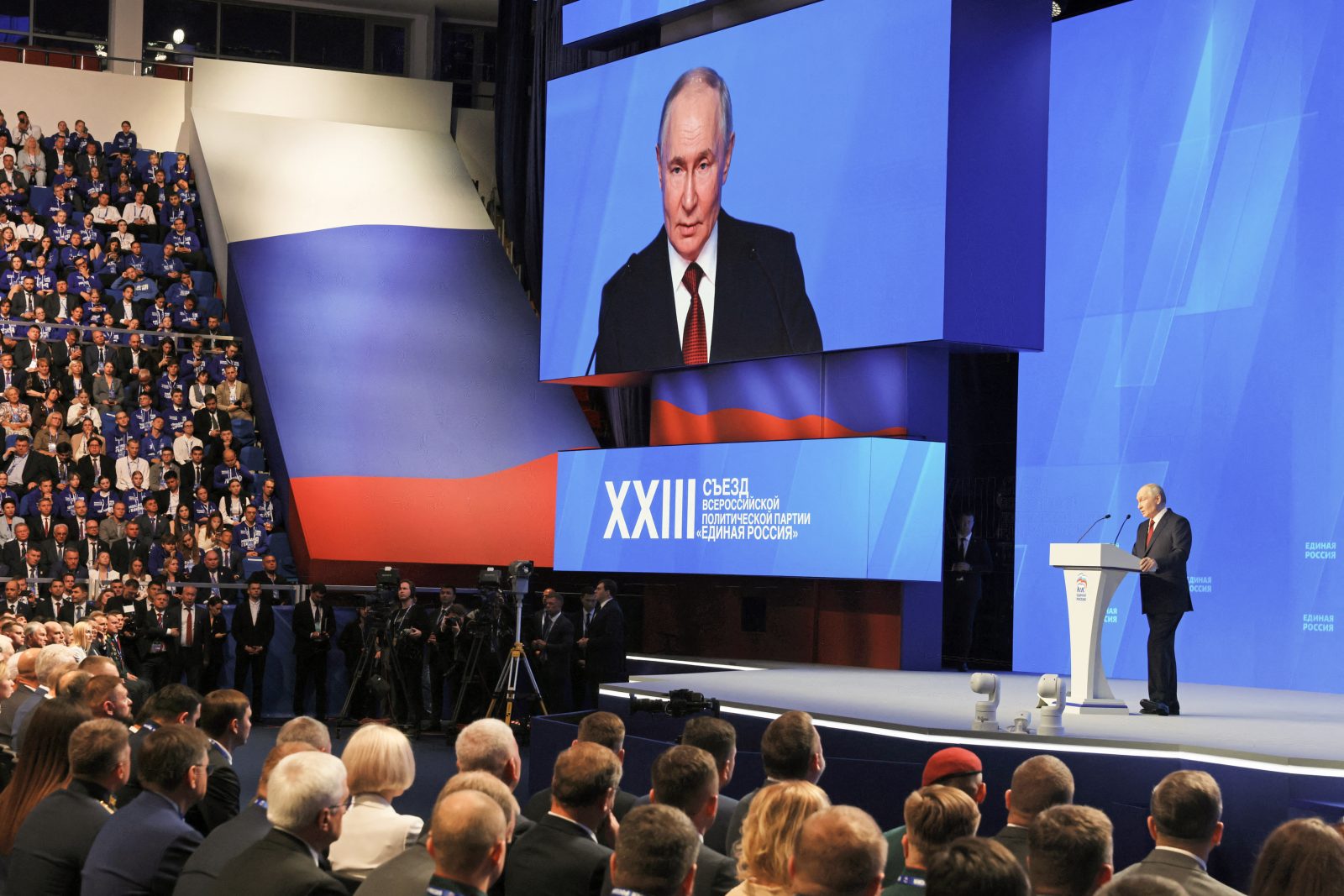
In this pool photograph distributed by Russian state agency Sputnik, Russia’s Vladimir Putin addresses the audience at the 23rd Congress of the United Russia party in Moscow on June 28, 2026. Vladimir Putin vowed on June 28, 2026, to ensure security and overcome challenges as Ukraine stepped up its retaliatory strikes inside Russia amid Moscow’s four-year war. (Photo by Yekaterina SHTUKINA / POOL / AFP)
Russia’s Red Line?
Earlier attacks on a Russian oil refinery in Moscow angered powerful Russians, including members of the State Duma, who urged radical change in military strategy.
The First Deputy Chairman of the State Duma Defense Committee, Alexei Zhuravlyov, was quoted saying: “There is only one way out of this situation, and it is quite simple: the destruction of the terrorist Kyiv regime”.
He called for the elimination of all logistics, bridges, tunnels, and bomb railway stations — “it’s finally time to begin fighting seriously”.
Konstantin Malofeev, founder of Tsargrad media, questioned why Russia isn’t “fighting for real” and asked why Moscow was not using Nukes: “What else has to happen before we start fighting for real?” and “Why aren’t we using the nuclear weapons that our ancestors created and stockpiled… precisely for moments like this?”
State Duma deputy Andrey Gurulyov, a retired lieutenant general, has called upon Russia to “strike the enemy mercilessly, without hesitation” or “without overthinking it.”
The big question is: what would Russia attack, and what would the repercussions be?
Potential use of Russian nukes will result in widespread destruction and heavy loss of life. It would significantly reduce Ukraine’s chances of surviving as a neutral buffer state that actually contributes to Russia’s security, ex-IAF pilot and expert on the Russian military Vijainder K Thakur argues.
Instead, it would give US-led NATO an opportunity to indefinitely extend sanctions and bleed Russia to the point where it could be dismembered, Thakur adds.
If the Ukraine war continues for another four years, NATO could be in a position to enter a full-scale conventional war with Russia under the pretext of liberating Ukrainian territory. As long as the war in Ukraine remains conventional, NATO’s relative strength will continue to grow over time, and Russia’s chances of ending the conflict will fade away, Thakur believes.
Russia’s choice today is whether to fight NATO now, while it is still relatively weak, or to act decisively to end the conflict in its favor, letting NATO decide how to respond to Russia’s decisive action, whatever it may be, Thakur says.
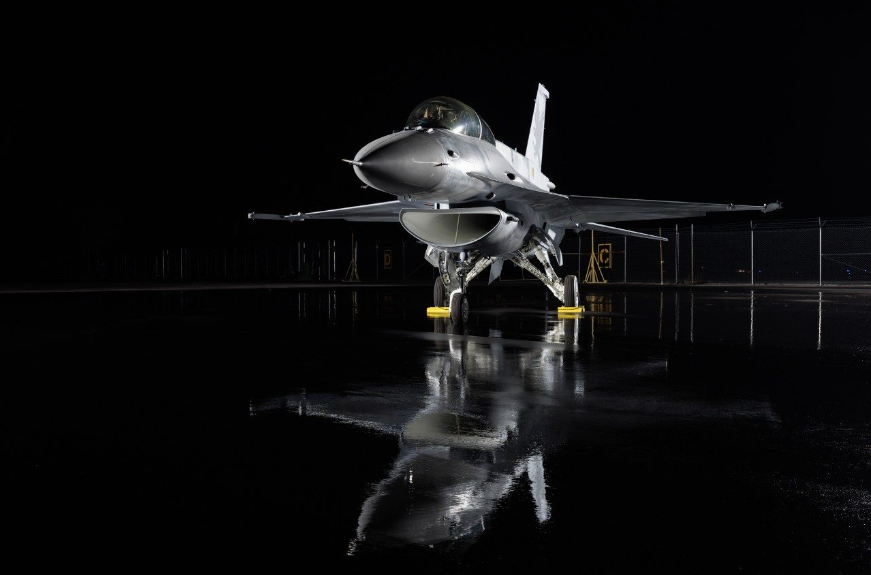
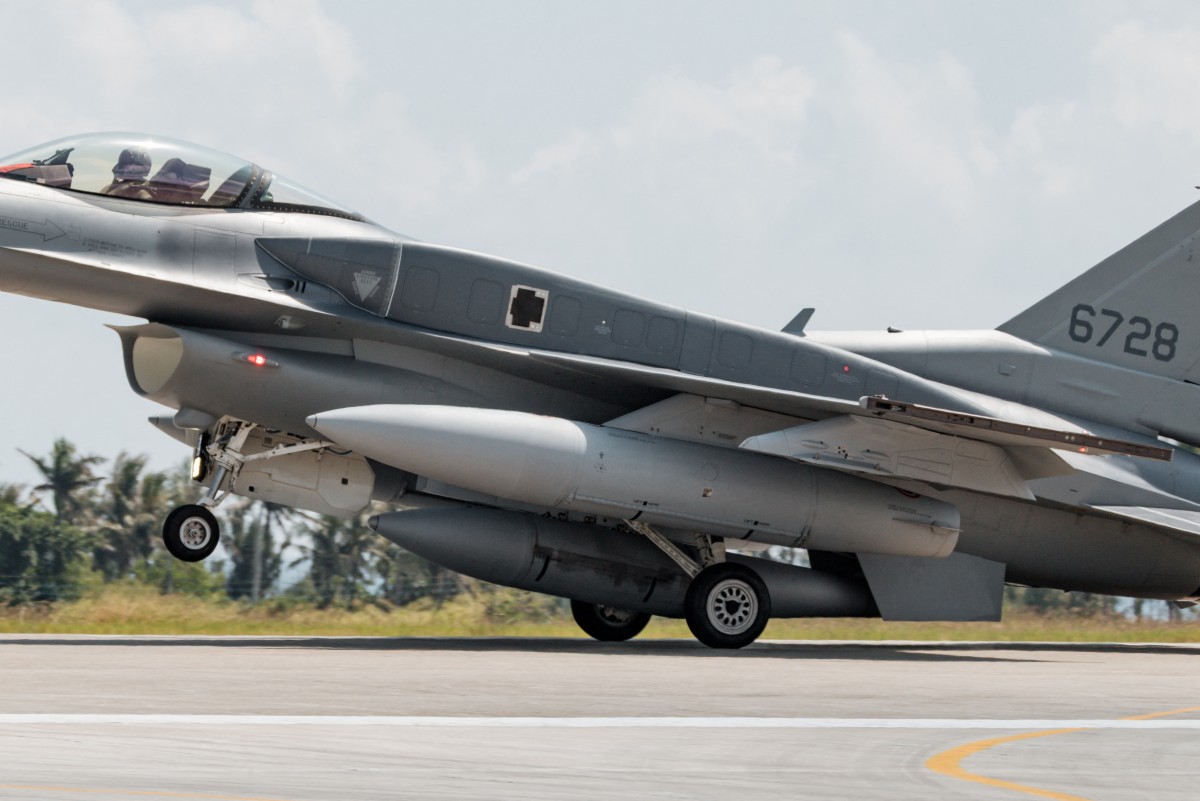
Taiwan has received its first F-16V (Viper) fighter jets from the US amid serious tensions with China, which calls the island a ‘renegade province’.
The Vipers are part of an $8 billion deal for 66 F-16Vs approved during US President Donald Trump’s first term.
The two Lockheed Martin F-16 Vipers touched down at Taiwan’s Chihhangair Air Force Base in Taitung. President Lai Ching-te hailed “a major milestone in elevating Taiwan’s air defense capabilities” and thanked Washington for its “long-standing support”.
Former Air Force serviceman Eric Chan, 57, praised the F-16’s advancements over the past three decades and said the fighter jets based in Taitung will “play a very important defensive role” against China.
“The threat from the CCP has always been there, so we definitely need to strengthen our defense capabilities,” Chan told AFP, referring to the Chinese Communist Party.
F-16 vs F-16 Viper
Earlier, as EurAsian Times reported, Taiwan’s first two F-16 Vipers — serials 6727 and 6728 — were on the Pacific ferry to Taitung’s Chihhang Air Base.
Deliveries were expected to begin in 2023, and all 66 warplanes were scheduled to be delivered by the end of 2026. However, supply-line pressures due to COVID-19, followed by Lockheed Martin’s decision to shift the F-16 assembly line from Fort Worth to Greenville, pushed the timeline back.
The jet’s electronic-warfare suite has been a separate problem. The embedded AN/ALQ-254 Viper Shield, built by L3Harris, ran into production bottlenecks because it is built into the fuselage rather than carried as a pod.
Taiwanese reporting in July 2026 said the first Block 70s would be delivered without it, with the suite to be fitted later. An AESA radar without the planned internal jammer makes the aircraft thinner than the one in the brochure, and it is a capability gap, not just a reason the schedule slipped.
Lockheed later started two shifts to prioritize Taiwan’s order to deliver the combat jets. Still, the full 66-jet order is not expected to be delivered before 2028.
When Lockheed Martin delivers the 66 new jets by 2028, the Taiwanese Air Force will have more than 200 F-16 Viper fighter jets, making it the largest Viper-standard fleet in the Indo-Pacific region.
A newly purchased F-16V Block 70 fighter jet lands at Chihhang Air Base in Taitung on October 2, 2026. (Photo by CHENG Yu-chen / AFP)
F-16 vs F-16 Viper
Both the legacy F-16 and the latest F-16V jets share a common airframe shape, a single-engine layout, 9g capability, and basic flight characteristics.
The main differences are in sensors, computers, cockpit, electronic warfare, and modern weapons/data-link integration.
However, the biggest capability jump is perhaps in the radar system.
The legacy F-16A/B jets used the mechanically scanned AN/APG-66 radar. Most F-16C/D (Blocks 25–52) used the mechanically scanned AN/APG-68.
These radars have slower scan rates, more limited multi-target tracking capabilities, and poorer jamming performance.
For the F-16V, however, Lockheed Martin uses Northrop Grumman’s AN/APG-83 SABR AESA radar.
It uses electronic beam steering, supports simultaneous air-to-air and air-to-ground modes, high-resolution SAR mapping, better jamming resistance, and tracks more targets at longer ranges.
Lockheed Martin states it delivers 5th-generation radar capabilities through hardware and software commonality with F-22 and F-35 radars.
“It delivers greater situational awareness, flexibility and quicker all-weather targeting and provides pilots with unprecedented target area detail and digital map displays that can be tailored with slew and zoom features,” said Lockheed Martin in a factsheet about the Block 70/72 jets.
The new Viper standard jets also provide enhanced battlespace awareness.
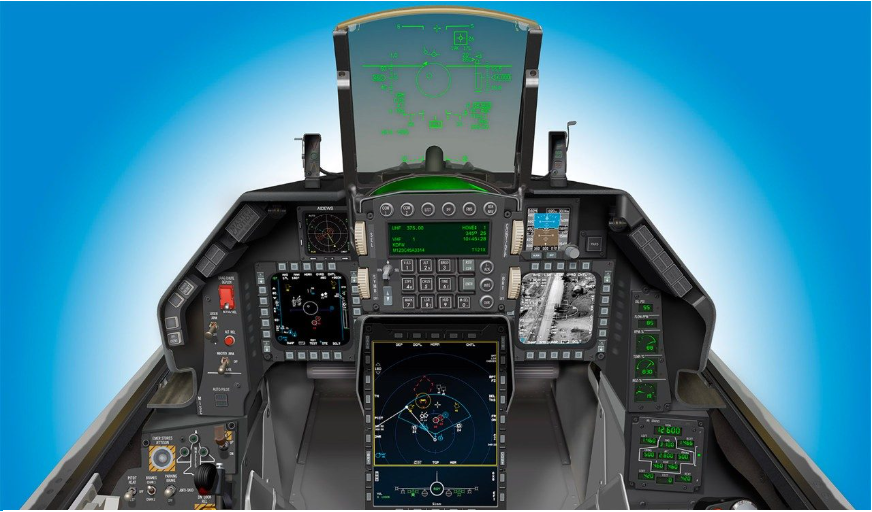
Block 70/72 features a new high-resolution Center Pedestal Display (CPD), which provides critical tactical imagery to pilots and enables them to take full advantage of AESA and targeting pod data.
The new CPD enables color moving maps, larger and easier-to-manage air-to-air Situation Displays, zoom functionality with the ability to switch information among displays, digital display of Flight Instrument Data, and a color/night helmet-mounted display.
An inside view of the F-16 Viper’s cockpit. Credits: Lockheed Martin.
The F-16V also provides better pilot protection. Lockheed Martin’s Automatic Ground Collision Avoidance System (Auto GCAS) was purpose-built to prevent deadly crashes and has already saved the lives of multiple pilots and F-16s since the system entered service with the U.S. Air Force in late 2014.
The Auto GCAS is designed to reduce incidents of controlled flight into terrain, or CFIT. According to U.S. Air Force statistics, CFIT incidents account for 26 percent of aircraft losses and a staggering 75 percent of all F-16 pilot fatalities.
The F-16V also provides extended structural capabilities.
The Block 70/72 has an extended structural life to 12,000 hours – more than 50 percent beyond that of previous production F-16 aircraft. The older F-16s had a structural life of around 8,000 hours.
According to Lockheed Martin, the F-16V could serve for 40 years without any major repairs.
The conformal fuel tanks provide increased fuel capacity and range without sacrificing the jet’s aerodynamic performance.
Furthermore, legacy F-16s relied on multiple older computers with limited processing power, whereas the F-16V has a single high-performance Modular Mission Computer (MMC) and a modernized avionics architecture. This gives far higher computing power for sensors, weapons, and data fusion.
The F-16V is certified for a very wide range of modern weapons, such as AIM-120D AMRAAM, AIM-9X, JASSM, JSOW, JDAM variants, and SDB, and uses Link 16, which provides enhanced situational awareness and enables real-time command, control, and tactical data exchange among military aircraft, ships, and ground forces.
They also have greater electrical power, cooling, and data-processing capacity to support the future integration of advanced electronic warfare equipment, weapons, and infrared search-and-track systems.
F-16 Viper. Credits: Lockheed Martin.
Because of all these capabilities, even though both the older F-16 and the latest F-16V share the same airframe design, the F-16V is a much more lethal aircraft.
Modern sensors, avionics, radars, an electronic warfare suite, Link 16, structural improvements, and an improved weapons package and ferry range mean the F-16V is a much more capable jet. That is why operators such as Taiwan, Greece, Bahrain, Slovakia, Bulgaria, and Turkey are upgrading their existing F-16 fleets.
According to Su Tzu-yun, a senior analyst at the Institute for National Defense and Security Research, the AN/APG-83 radar was designed to detect targets with small radar cross-sections and could “improve the F-16V’s chances of detecting PLA stealth aircraft such as the J-20 and J-35”.
Sumit Ahlawat has over a decade of experience in news media. He has worked with Press Trust of India, Times Now, Zee News, Economic Times, and Microsoft News. He holds a Master’s Degree in International Media and Modern History from the University of Sheffield, UK.
He can be reached at ahlawat.sumit85 (at) gmail.com
Roger Mariaca, l'ex procuratore boliviano al centro di un controverso caso di corruzione, ha espresso timore per la propria incolumità, essendo stato rinchiuso nella stessa prigione che ospita criminali da lui stesso fatti incarcerare.
"Ho condotto le indagini insieme al mio team di procuratori; abbiamo assicurato alla giustizia assassini che attualmente si trovano in custodia cautelare proprio nelle carceri in cui ci state mandando", ha dichiarato l'ex funzionario durante un'udienza, rivolgendosi al giudice che presiede il suo processo.
Mariaca ha fatto riferimento in particolare a un caso giudiziario in cui ha ottenuto l'arresto dei responsabili dell'omicidio di cittadini brasiliani a Santa Cruz de la Sierra; gli individui coinvolti sono stati trasferiti nel carcere di Cantumarca, situato nel dipartimento di Potosí.
Lunedì, Mariaca è stato trasferito nella stessa struttura per scontare la custodia cautelare in attesa dell'inizio del processo a suo carico per riciclaggio di denaro, associazione a delinquere e traffico di sostanze controllate.
"Ha disposto sei mesi di detenzione. Rispetto la decisione - motivo per cui presenteremo ricorso tramite il mio avvocato - ma voglio che sappia, Vostro Onore, che la mia vita è ormai nelle mani del sistema giudiziario e nelle Sue, in quanto autorità giudiziaria che sovrintende al caso: una situazione che Lei avrebbe potuto evitare", ha aggiunto.
El Fiscal General de Bolivia detenido por la DEA tras conocerse los vínculos de Cerimedo con el narcotráfico le pide al juez en su primera audiencia que no lo envíe a la cárcel donde están los asesinos que él encarceló, también que no tuvo posibilidad de defensa en su detención. https://t.co/C0oGY5AoIG
Ha inoltre affermato che, dal momento del suo arresto la scorsa settimana, il suo diritto alla difesa non è mai stato rispettato; è stato trasferito a Potosí nonostante la sua residenza legale fosse a Santa Cruz de la Sierra, dove vivono i suoi tre figli minori, economicamente a suo carico.
Mariaca è stato arrestato mercoledì scorso dopo che gli Stati Uniti lo avevano inserito in una lista di 29 funzionari di Bolivia, Colombia, Ecuador e Perù ai quali era stato revocato il visto a causa di presunti legami con la criminalità organizzata.
L'arresto del procuratore ha suscitato notevoli polemiche, poiché stava conducendo l'indagine su Fernando Cerimedo, consulente di spicco per governi di destra della regione e figura vicina alla cerchia ristretta di Donald Trump negli Stati Uniti.
Cerimedo, che ha lavorato anche come consulente per l'attuale presidente boliviano Rodrigo Paz, è detenuto in Bolivia dall'agosto scorso con accuse che includono tentato femminicidio, arricchimento illecito, riciclaggio di denaro, traffico di droga e usurpazione di funzioni pubbliche.
Every day, children are killed in Israel’s genocidal war on Gaza. Where are the outraged headlines?
The number of children killed in Gaza since Israel started its onslaught, following the Hamas attack on 7 October, 2023, is estimated at more than 21,600.
The UN Children’s Fund (UNICEF) says that since the so-called Israel-Hamas ceasefire, an average of “at least” one child a day – 300 children over 300 days – has been killed in the enclave.
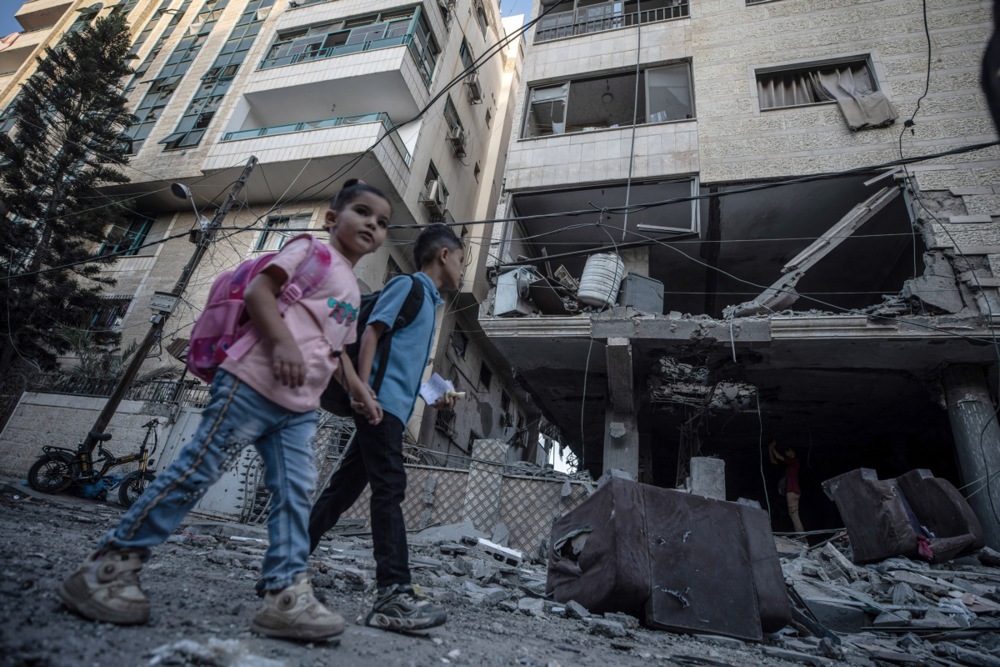
Children, toddlers, and babies are being killed in their homes, schools, hospitals, shelters, and on roads marked by displacement. They are also dying because the basic structures that should protect them – family, healthcare, education, food, water, and refuge – have been systematically destroyed.
Where are the urgent statements from EU and world leaders?
EU governments continue to authorise arms transfers to Israel despite rules which require governments to deny licences where there is a risk that military equipment will be used for serious violations of international humanitarian law.
Every EU member state is also bound by the UN Convention on the Rights of the Child and the EU’s own treaty, which requires the union to promote children’s rights.
Why are these international rules and domestic commitments not being applied to the children of Gaza?
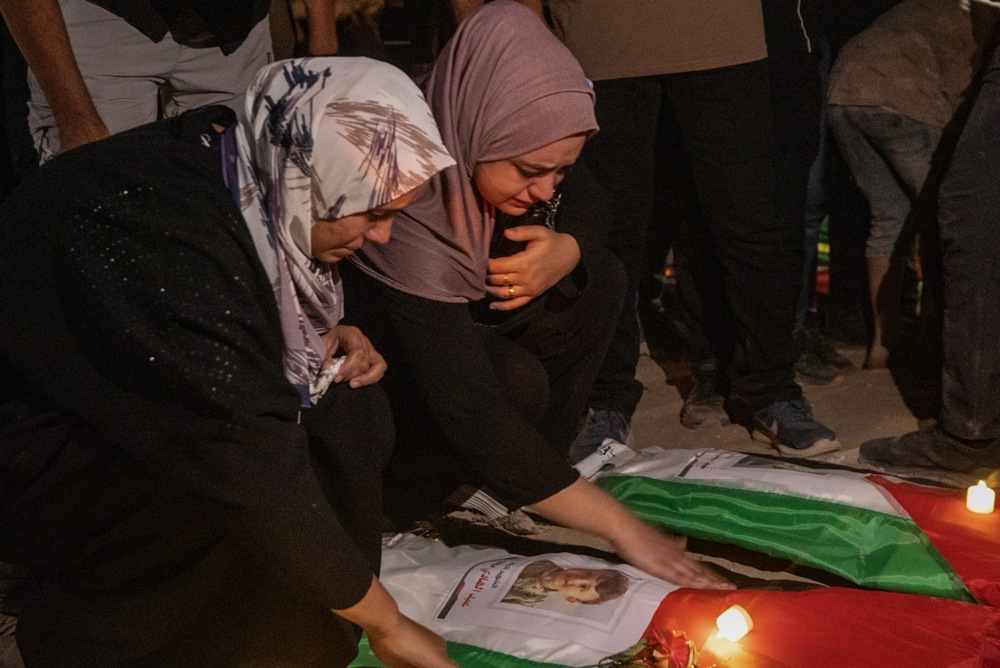
Mourners light candles during a mass funeral and vigil for 105 Palestinians near the rubble of the Al Tajj building in Gaza City on 30 September 2026 (Source: EPA/MOHAMMED SABER)
Children rights beyond Ukraine
The EU does care for children. In Ukraine, the EU treats children as individuals rather than statistics: it convenes coalitions, compiles names, traces families, imposes sanctions, creates mechanisms for return and makes the fate of children a central diplomatic demand.
In her State of the Union address last month, European Commission President Ursula von der Leyen – a proud mother and grandmother – introduced and praised the courage of Sasha, a six-year-old Ukrainian girl who lost a leg in a Russian missile strike in Ukraine but has now returned to her beloved gymnastics.
Von der Leyen quite rightly made the suffering of Ukrainian children intimate and personal. It is more than time she did the same for Palestinian children.
But let’s not only blame political leaders for their indifference, their lack of historical knowledge of Palestine’s occupation and their limited understanding of Palestinian calls for justice.
Parts of the legacy media must also own up to their responsibility in normalising the abhorrent.
Powerful mainstream media have preferred to “repeat Israeli propaganda and sometimes simply cut and paste IDF press releases” rather than accept the analysis of Palestinian journalists, writers and scholars, writes Bhakti Shringarpure.
Her criticism reflects a wider ongoing discussion on the sourcing and framing of Gaza coverage, with studies spotlighting how Western media has described Israeli suffering by using emotive language around 11 times more often than Palestinian suffering. References to Israel’s “right to defend itself” appear roughly five times as frequently as references to Palestinian rights.
Also, as the immediate shock of the bombardment recedes – but the killing continues – Gaza has dropped down the news cycle.
Assal Rad, author of “Don’t Say Palestine: How the Media Manufactured Consent for Genocide”, describes the logic: “The façade of a ceasefire has created the space to cover it less. In reality, the conditions on the ground for Palestinians in Gaza have not changed.”
It is also less politically costly for leaders and media to focus on settler violence and settlement in the occupied West Bank, since it can be described as the work of “extremists” rather than of the Israeli government.
EU silence
Our lack of a strong reaction to what is happening is Gaza is also the story of how bystander societies can watch, absorb, and rationalise horrors – and move on.
Additionally, the killing of Palestinian children is preceded by their political “unchilding”, a process which Palestinian scholar Nadera Shalhoub-Kevorkian says begins before the missile falls, when Palestinian children are imagined not as children with futures but as demographic threats, future militants, or extensions of an armed group.
Their age, instead of guaranteeing greater protection, becomes entangled with suspicion.
Even amid such savage violence, some people are not giving up.
Their bosses may still look the other way, but EU Staff for Peace, which holds vigils in front of the European Commission and the EU Council every Thursday, has held gatherings to read out the names of children killed in Gaza, thereby according individuality to children whom the political and media systems have reduced to numbers.
As one EU staffer told me: “We only have a time slot of three hours and the last time we only managed to read out the names of children up to three years old. It took us one hour to read out the names of Palestinian babies under one-year old.”
Hind Rajab, who was five, was killed on 29 January 2024 by Israeli fire on the car in which she was trapped. Her body was found 12 days later alongside the bodies of members of her family and two paramedics who had gone to rescue her.
Israel has acknowledged firing on the car but has not admitted that her killing was unlawful, citing an ongoing investigation. In other words, there has been no accountability.
The obscenity is not only that Hind was killed, but that by now the killing of children in Gaza has become a familiar event.
The shame is that so many of us have constructed a hierarchy in which some children summon the world’s full moral and political force, while others are ignored.
Omar El Akkad, in his seminal book says that “One Day, Everyone Will Have Always Been Against This.” Given the cowardice on display over the last three years, I sometimes wonder if there will ever really be a true global moral reckoning.
In merito alle elezioni presidenziali in Brasile, Lautaro Carmona, presidente del Partito Comunista del Cile (PCCh), ha accusato gli Stati Uniti di interferire nei processi elettorali della regione. Nella tornata elettorale, il neoliberista di estrema destra Flávio Bolsonaro ha ottenuto il 47,03% dei voti contro il 45,16% di Luiz Inácio Lula da Silva, candidato della sinistra progressista: un risultato che costringerà i due candidati al ballottaggio.
In un'intervista al programma Tolerancia Cero di CNN Cile - come riporta La Tercera - il leader comunista ha discusso il panorama elettorale brasiliano e ha analizzato l'ascesa della destra in diversi paesi dell'America Latina.
"Le battaglie elettorali coinvolgono sempre molteplici fattori; pertanto, si può scegliere una particolare spiegazione senza escludere l'influenza di altri elementi", ha affermato Carmona analizzando il risultato di Lula da Silva e la performance dei partiti di sinistra.
Tuttavia, il presidente del Partito Comunista (PCCh) ha sostenuto: "Ritengo che vi sia un intervento aperto ed evidente da parte degli Stati Uniti, risalente alla presidenza di Donald Trump".
"Giungono segnalazioni da più parti su come abbiano interferito - anche attraverso nuovi meccanismi di comunicazione - nei processi elettorali, favorendo una prospettiva e screditandone un'altra; sono in gioco tattiche molto sottili e precise", ha aggiunto.
Interpellato in merito alle accuse di interferenza elettorale rivolte anche a paesi come Cina e Russia, Carmona ha preferito non approfondire tale aspetto, riportando l'attenzione della sua analisi sugli Stati Uniti. Infatti, le circostanze stanno dimostrando che di interferenze in America Latina, con buona pace della propaganda, ci sono solamente quelle statunitensi.
"Questo è il quadro relativo al Brasile e alla posizione del Brasile in America Latina, regione recentemente definita 'cortile di casa' dai portavoce statunitensi e all'attenzione particolare rivolta a influenzarne i risultati elettorali", ha affermato.
Ha inoltre sostenuto che, qualora la candidatura del Partito dei Lavoratori (PT) non dovesse risollevarsi in vista del ballottaggio del 25 ottobre, il risultato avrebbe "conseguenze enormi e gravissime".
Analizzando le ragioni dell'avanzata elettorale della destra, Carmona ha osservato che "nel contesto dell'esaurimento di progetti che non hanno saputo rispondere alle reali esigenze e aspettative della popolazione - sia materiali che soggettive - ha preso piede qualcos'altro; forse il populismo. (Tuttavia) non intendo sminuire i successi elettorali di un'altra forza politica; preferisco studiarli e trarne conclusioni serie".
Poco meno del 19% dei contribuenti italiani paga il 65% dell’intera Imposta sul reddito delle persone fisiche (Irpef). Si tratta di coloro che hanno un reddito lordo superiore ai 35mila euro annui. È evidente che si tratta di un dato non sostenibile perché significa che solo quel 19% scarso versa più di quanto riceva dallo Stato in termini di servizi complessivi e dunque contribuisce a pagare per tutti gli altri.
Su questo tema si potrebbero fare molte considerazioni. Mi limito qui a esporne una che mi pare decisamente rilevante perché è una chiara sconfitta dell’interesse pubblico. L’andamento recente del gettito derivante dalle imposte sostitutive dell’Irpef ha mostrato una crescita imponente, passando dallo storico bacino di 8-10 miliardi di euro all’anno a un picco vicino ai 18 miliardi. Questa apparente impennata, celebrata come un successo di cassa, cela in realtà una strutturale e profonda perdita di gettito potenziale per le casse dello Stato, determinata dalla progressiva sostituzione del modello di tassazione progressiva con regimi sostitutivi a flat tax e sanatorie straordinarie.
La causa scatenante di questo picco finanziario risiede principalmente nell’introduzione del “concordato preventivo” biennale per le partite Iva e gli autonomi, unito al relativo ravvedimento speciale per gli anni dal 2019 al 2023. Attraverso questo meccanismo, i contribuenti che aderiscono al concordato beneficiano di un’imposta sostitutiva fortemente agevolata, con aliquote ridotte tra il 10% e il 15%, applicata esclusivamente sulla quota di reddito incrementale rispetto all’anno precedente.
Il vero costo per l’Erario, e dunque per la collettività, emerge nel momento in cui si confronta questo prelievo agevolato con l’imposta ordinaria: in un regime Irpef progressivo -secondo quanto previsto dalla Costituzione all’articolo 53- quel medesimo extra-reddito verrebbe tassato con le aliquote marginali ordinarie che raggiungono rapidamente il 35% o il 43%, senza contare l’impatto delle addizionali regionali e comunali. Di conseguenza, per ogni quota di maggior reddito emerso, lo Stato rinuncia a una porzione consistente di prelievo fiscale, concedendo uno sconto d’imposta che varia dal 20% al 30% rispetto alla tassazione ordinaria e ai contribuenti a cui il prelievo è effettuato alla fonte.
Questa perdita di gettito potenziale risulta ancora più evidente e marcata se si analizza l’impatto del cosiddetto ravvedimento speciale. Per incentivare l’adesione al Concordato, il legislatore ha concesso la possibilità di sanare cinque annualità di dichiarazioni passate mediante il versamento di un’imposta sostitutiva calcolata su basi imponibili notevolmente ridotte e, soprattutto, con il totale abbattimento delle sanzioni amministrative e degli interessi. Nel regime ordinario, le sanzioni per infedele dichiarazione variano dal 70% al 135% della maggiore imposta dovuta. Sanando cinque anni di irregolarità con un’imposta sostitutiva minima e priva di sanzioni, l’Erario incassa una liquidità immediata di circa 10-12 miliardi, ma contestualmente rinuncia a un ammontare potenziale di sanzioni e maggiori imposte accertabili stimato tra gli otto e i 12 miliardi di euro. In pratica hanno vinto gli evasori.
L’incasso immediato di oggi si traduce infatti in un’enorme rinuncia alle pretese fiscali di domani, blindata dalla contestuale preclusione per legge di ogni futuro accertamento analitico su quelle annualità. Il fenomeno non si limita tuttavia alle sole misure straordinarie per le partite Iva ma rispecchia un’erosione sistematica e strutturale della base imponibile dell’Irpef a favore di regimi sostitutivi permanenti. Il Regime forfettario per gli autonomi, ad esempio, applicando un’aliquota secca al 15% o al 5%, sottrae ogni anno miliardi di euro alla progressività dell’Irpef, generando un minor gettito potenziale annuo valutato dall’Ufficio parlamentare di bilancio tra i quattro e i cinque miliardi di euro.
Analogamente, la cedolare secca sugli affitti sostituisce la tassazione ordinaria sui redditi da locazione con un’imposta flat al 21% o al 10%, causando un’ulteriore perdita di gettito potenziale pari a circa 2,5-3 miliardi all’anno rispetto a quanto l’Erario incasserebbe se tali redditi concorressero al reddito complessivo Irpef dei proprietari. L’argomento spesso sollevato per giustificare tali scelte fa leva sulla certezza dell’incasso e sulla prevenzione dell’evasione fiscale, secondo la logica per cui un’imposta bassa viene pagata subito mentre un’imposta alta rischia di alimentare il sommerso o finire in contenziosi infiniti.
In realtà, in termini più chiari, lo Stato ha deciso che gli evasori decidessero quanto versare. Il balzo del gettito delle imposte sostitutive a 18 miliardi di euro non rappresenta così la monetizzazione svenduta del credito fiscale dello Stato: l’Erario ha accettato di incassare subito una somma inferiore in cambio della rinuncia definitiva a un gettito potenziale di gran lunga superiore, alterando peraltro il principio di equità fiscale e progressività sancito dalla Costituzione. Di questo, penso, dovrebbe occuparsi la politica.
There will be a few more mid- to upper level clouds during the day today. With a small disturbance moving through, it will help get a few showers going over the mountains and parts of the Pikes Peak Region. Most of the area will be remaining dry and temperatures will possibly break records today.
Colorado Springs forecast: High: 83; Low: 55.
Colorado Springs will start the day off with temperatures in the 50s. This is a few degrees warmer than yesterday morning. There will be a few more clouds today and a couple of sprinkles are possible on the north side of town. Highs will likely break records getting into the lower 80s.
Pueblo forecast: High: 86; Low: 54.
Pueblo will have temperatures in the 50s this morning, and once the sun rises temperatures will also quickly warm up. Pueblo is likely out of reach from any records being broken today. There will be a few more mid-to-upper level clouds, but the sun will still peak through. Highs will get into the mid-80s.
Canon City forecast:High: 84; Low: 55
Canon City will have temperatures this morning in the mid-50s. Upper level clouds will move in this morning and into the afternoon. Highs will still be on the warmer side eventually breaking into the 80s.
Woodland Park forecast:High: 69; Low: 48.
Woodland Park will have morning temperatures in the 40s, so a light jacket may be needed. There will be some mid-to-upper level clouds pushing into the area later this morning. There will still be some sunshine and temperatures will eventually get into the 60s .
Tri-Lakes forecast:High: 79; Low: 51.
Monument and the surrounding area will have temperatures in the lower 50s. As we go throughout the morning these temperatures will warm quickly. There will be some mid-to-upper level clouds that will move in later this morning. Highs will eventually get into the upper 70s.
Plains forecast:High: 80s; Low: 50s.
The eastern plains will start off with some clear conditions, but as the morning continues there will be some mid-to-upper-level clouds that move in. Temperatures this morning will be in the 50s. By the time the afternoon rolls around, these temperatures will be in the 80s.
Walsenburg and Trinidad forecast:High: 80/83; Low: 51/50.
The southern I-25 corridor will have morning lows in the 50s, but we are still expecting a warm afternoon. Highs will be a few degrees warmer than yesterday eventually getting into the lower 80s.
The mountains will have more clouds and a couple of spotty showers today. Afternoon highs will be breaking into the 70s and 80s.
Extended outlook forecast:
Throughout the rest of the week, temperatures will be staying pretty consistent. Highs will continue to stay above average. Looking ahead to Sunday and Monday of next week, cooler and wetter conditions will arrive. There is some uncertainty with the track of this system which will likely shift around over the next few days.
Watch KOAA News5 on your time, anytime with our free streaming app available for your Roku, FireTV, AppleTV and Android TV. Just search KOAA News5, download and start watching.
Two people accused of falsely reporting suspected explosives to police in Colorado Springs on Monday were arrested.
Police say they received the first call around 9:38 a.m. about a male with suspected explosive items before entering a business near Briargate Boulevard and Lexington Drive. Minutes later, a second caller reported a suspicious male at the same intersection mentioning explosives.
Colorado Springs patrol officers, the Regional Explosives Unit and the Real Time Crime Center drone support unit responded. The did a sweep of the area and businesses and included K-9 Wicket, an expert at detecting explosives.
No explosives, hazards or suspicious people were found in the area and businesses were told to operate as normal.
Investigators tried reaching back out to both callers but could not get a hold of them. A red light camera at the intersection helped detectives find a possible lead. A 30-minute time frame of camera footage was requested based on the information the callers provided during the specific and short timeline, police say.
No person matching the suspect description given was found on camera and police determined that the reports were false.
Detectives found connections between the callers and that they had court-ordered treatment obligations and a business. Police say evidence led them to believe they coordinated the fake emergencies to disrupt or avoid a scheduled appointment.
Police identified the suspects, Kevin Holod, 46, and Tamara Beasley, 45, who were briefly in the Colorado Springs area and connected to a specific vehicle.
Detectives used license plate technology to locate Holod and Beasley. They were found around 4:30 p.m. in a vehicle at a motel on N. Nevada Avenue near Austin Bluffs Parkway. They were detained, interviews and then arrested for false reporting of explosives, which is a felony.
____
Watch KOAA News5 on your time, anytime with our free streaming app available for your Roku, FireTV, AppleTV and Android TV. Just search KOAA News5, download and start watching.
Il documento, redatto ad agosto e intitolato "Frattura dall'interno", è stato elaborato dagli esperti della Red Cell della CIA — la struttura responsabile di fornire "analisi alternative" all'interno dell'intelligence statunitense — utilizzando sia fonti aperte sia dati riservati dell'intelligence USA.
MUST READ: CIA report warns Israel is headed toward civil war and total collapse. The report says Israel is seeking deeper integration into the American military, intelligence and defense establishment (like a leech) to save itself at US permanent expense. https://t.co/0VSDoGOQhq
Secondo quanto riferito da Drop Site News, la valutazione si concentra principalmente sulla popolazione ebraica di Israele, evidenziando "un mix esplosivo di pressioni": la crisi economica, l'esplosione della spesa militare e lo scontro attorno agli Haredi (gli ebrei ultraortodossi), che continuano a rifiutare la leva obbligatoria. Questo rifiuto, sostenuto dalla stessa coalizione di governo, ha esasperato una già grave carenza di personale all'interno delle forze armate.
Tra i fattori di rischio citati nel rapporto figurano anche "veterani pesantemente armati di ritorno dai combattimenti, molti dei quali affetti da gravi traumi psicologici", la crescente violenza dei coloni e le manovre del Primo Ministro Benjamin Netanyahu per restare al potere a costo di innescare una crisi costituzionale — processo iniziato già nell'estate del 2023 con la controversa riforma della giustizia.
La gestione della guerra a Gaza da parte di Netanyahu ha scavato solchi ancora più profondi. Drop Site News sottolinea come gran parte dell'opposizione interna non contesti la brutalità delle operazioni contro i palestinesi, bensì le modalità di gestione del conflitto, la leadership e le responsabilità del premier nel fallimento della sicurezza del 7 ottobre.
Il dossier dell'intelligence evidenzia inoltre l'impennata dei prezzi dei beni alimentari, giunti a livelli record, e il progressivo isolamento internazionale del Paese, con un’erosione del sostegno negli Stati Uniti che gli stessi funzionari israeliani considerano una minaccia a lungo termine. Per la CIA, il fatto che Israele stia "diventando sempre più uno Stato paria" rappresenta un elemento chiave verso un potenziale collasso.
Una delle fonti ha tracciato un parallelo storico inquietante: «La combinazione di frammentazione politica e una popolazione crescente di veterani traumatizzati e pesantemente armati ha dei precedenti. Pensiamo ai Freikorps tedeschi post-Prima Guerra Mondiale. Non dico che Israele sia la Germania di allora, ma le similitudini sono evidenti».
Nel frattempo, la situazione sul campo di battaglia è estrema. Nonostante le operazioni su più fronti (Gaza, Libano, Siria), le truppe sono esauste e soffrono di gravi carenze di equipaggiamento. Il capo di Stato Maggiore Eyal Zamir ha più volte messo in guardia contro il crollo del sistema dei riservisti. Rapporti interni ammettono che molte unità operano sottorganico e privissime di carri armati: «Le unità di riserva oggi sono vuote», ha dichiarato un comandante.
A questo si aggiunge la fuga dal Paese. Studi dell'Università di Tel Aviv confermano un record di emigrazione da Israele nel 2025, un dato definito "profondamente preoccupante" dagli stessi analisti locali.
Il rapporto della CIA emerge a poche settimane dalle elezioni generali in Israele. Secondo fonti militari citate dai media locali, Netanyahu starebbe valutando di intensificare il conflitto a Gaza e aprire nuovi fronti nella regione con un unico obiettivo: ostacolare o rinviare il voto per difendere la propria sopravvivenza politica.

 Login













 IRST