❌

Reading view

Fighting big money in politics: California’s Community News Act

California Gov. Gavin Newsom signs the Community NEWS Act on Sept. 30, 2026. Photo via Office of Gov. Gavin Newsom

This article originally appeared on Dean Baker’s Patreon. It is reprinted here with permission.

Virtually everyone who is not a billionaire, or owned by one, agrees that we have to limit the ability of the rich to buy elections. While the Republican Party has taken “policy for sale” politics to a new level, there are plenty of Democrats who have been happy to support obviously awful policy in exchange for contributions from the AI industry, the pharmaceutical industry, the crypto industry, and Wall Street more generally. It costs a lot of money to run a competitive campaign and it’s hard to raise that from small contributions, so there will always be a temptation to bend policy positions to get some serious money.

While most people favor limits on campaign contributions, the current Supreme Court has made this very difficult. They have ruled that campaign contributions are speech and therefore any effort to limit campaign contributions is an unconstitutional restriction on speech.

There are some promising alternative paths that focus on making small donors matter. Seattle has a system of “democracy vouchers” that give every voter in local elections a modest sum that they can contribute to a candidate(s) of their choice. To qualify to get the vouchers, candidates must agree to limits on spending and large contributions.

Super-matches are a comparable system. Under this system, small dollar contributions can be matched up to 8 to 1, which means that even a $50 contribution can make a difference to a campaign. New York City, along with several other cities, have gone this route.

While these paths for amplifying the voice of ordinary people are promising, it will take much more to match the power of the billionaires. It is important to realize they exercise their political power in ways other than campaign contributions, primarily through their ownership of the media.

The importance of billionaire ownership goes far beyond the constant stream of lies and right-wing propaganda from Fox News. Last year, the very Trumpy Ellison family took control of CBS and immediately began to shift its news to the right. They are now taking control of CNN through the merger of Paramount and Warner Brothers. They also got control over TikTok, after Trump wrestled it away from a Chinese company for them.

Trumper Mark Zuckerberg owns Facebook and Instagram and is not shy about banning political material he doesn’t like. And Elon Musk bought Twitter, explicitly to advance his right-wing agenda. The rest of the media landscape doesn’t look much better. The rich and very rich own the countries’ newspapers and broadcast outlets, and most of these people lean right, even if they have not yet joined the Trump Reich.  

And let’s just be clear. The idea that the campaign ads bought by the rich can influence votes, but not the material that people see between the ads, is beyond absurd. Even if we banned all political contributions from rich people and corporations, the rich could still control elections by showing us nothing but their propaganda on television, in newspapers, and on social media.

This is why the Community News Act that Governor Gavin Newsom just signed is so important. The measure provides $20,000 each for up to five journalists per news outlet covering local news. This subsidy can keep newspapers and news sites across the state in business and help to support new ones that might start up. It is similar to other programs that have been started in Illinois, New York, and New Mexico.

This might seem like small change in a world with multi-billion dollar media empires, but it is not realistic to imagine matching the super-rich dollar for dollar; the goal is to sustain reality-based reporting that people can rely upon. (Repealing Section 230 protection for the mega-platforms like Facebook and X would be a big step towards leveling the playing field.) And support for local news reporting is likely to also lead to better national and international reporting, both by training more reporters and also increasing the comfort level with public funding, perhaps opening the door for a national system.

To be clear, there are no political conditions attached to this funding. Conservative news outlets are as eligible for this subsidy as more liberal ones. The point is to support local journalism, not to favor a particular political perspective.

To my view, this system is not ideal. I prefer support coming through an individual refundable tax credit to support local news. This would allow people to have a more direct attachment to the news outlets being supported with public money. Ideally, this would give them a sense of ownership that many feel towards other community organizations.

But whether or not this is the best approach, there is no doubt that the California bill, along with the ones already passed in other states, are big steps forward. It will help to reverse the collapse of local news reporting, which is giving corruption free rein in many areas. We need to build on the positive and make it better, rather than reject a plan because it may not be ideal. Progressive opponents of California’s wealth tax initiative may want to give that point some thought.
  •  

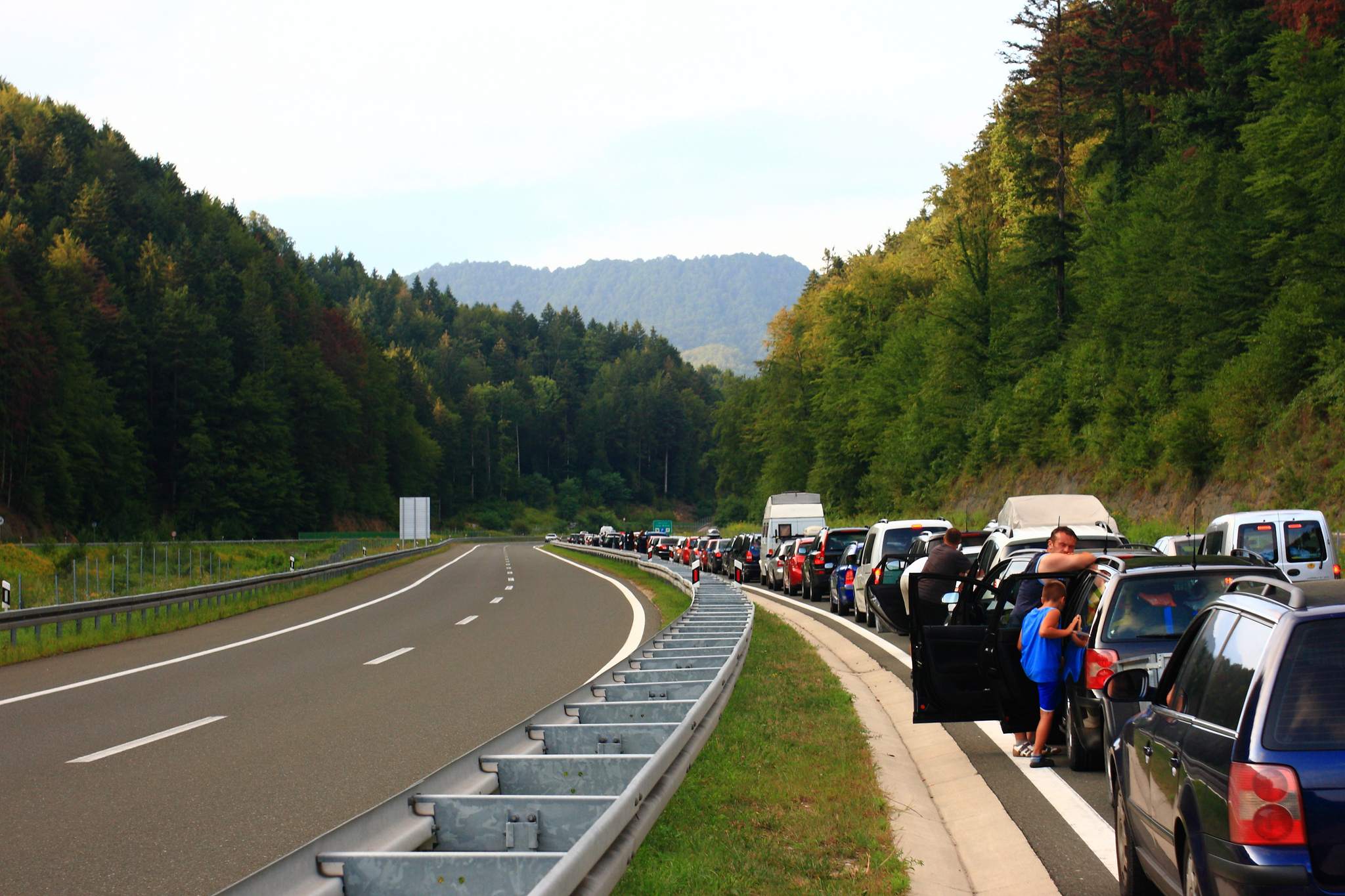
Broken promise of ‘European solution’ on migration overshadows next week’s summit

Twelve years ago, EU summit leaders announced they had a strategy to tackle unprecedented migrant arrivals.

Next week, they will meet again in Brussels and to tell us something similar.

We journalists will report on the latest twists and turns, hoping to get some sort of angle that hasn’t been covered. But the reality is that our leaders have broadly failed.

Dozens of EU summit conclusions have been published since 2015, when one around million Syrians arrived in Europe to seek protection.

We need stronger external borders to preserve the Schengen passport-free zone, they said. We need partnerships with foreign states to save lives. We need to step up deportations. We need a European solution.

All of these ideas and strategies have found a home in council conclusions, in various iterations, since 2015. All of them.

Some have actually panned out, including an EU migrant swap deal with Turkey and other deals with autocrats in Tunisia, Egypt and elsewhere. Others like internal reforms on asylum have also been delivered.

Yet the sense of urgency to tackle these issues continues because there is an obvious disconnect between what has been delivered, the promises made and the lived experience on the ground.

People still come. Some 80,000 arrived in the Spanish enclave of Ceuta end of July alone.

Many are still fleeing violence, war and economic hardships. Others are lured by the promise of labour in Europe by Europeans willing to exploit them.

I remember meeting a group of boys from Bangladesh on the Ocean Viking, freshly rescued in the middle of the night, asking when they would be able to start working in Italy.

One of them was still shaking with fear and sobbing, following a near death experience.

The European Commission is now claiming that the drop of irregular arrivals is due to their migration policy reforms, as if the fall of the murderous Assad regime in Syria had no discernible impact.

Perhaps some of that is true. But there is no disputing that Syrians accounted for over 100,000 irregular crossings in 2023, a year before Assad fell. It then dropped to around 6,000. Today, it is around 1,000, according to Frontex.

At some point, one has to wonder if these conclusions, repeated ad nauseam, is nothing but political theatre by a leadership that has run out of ideas.

  •  

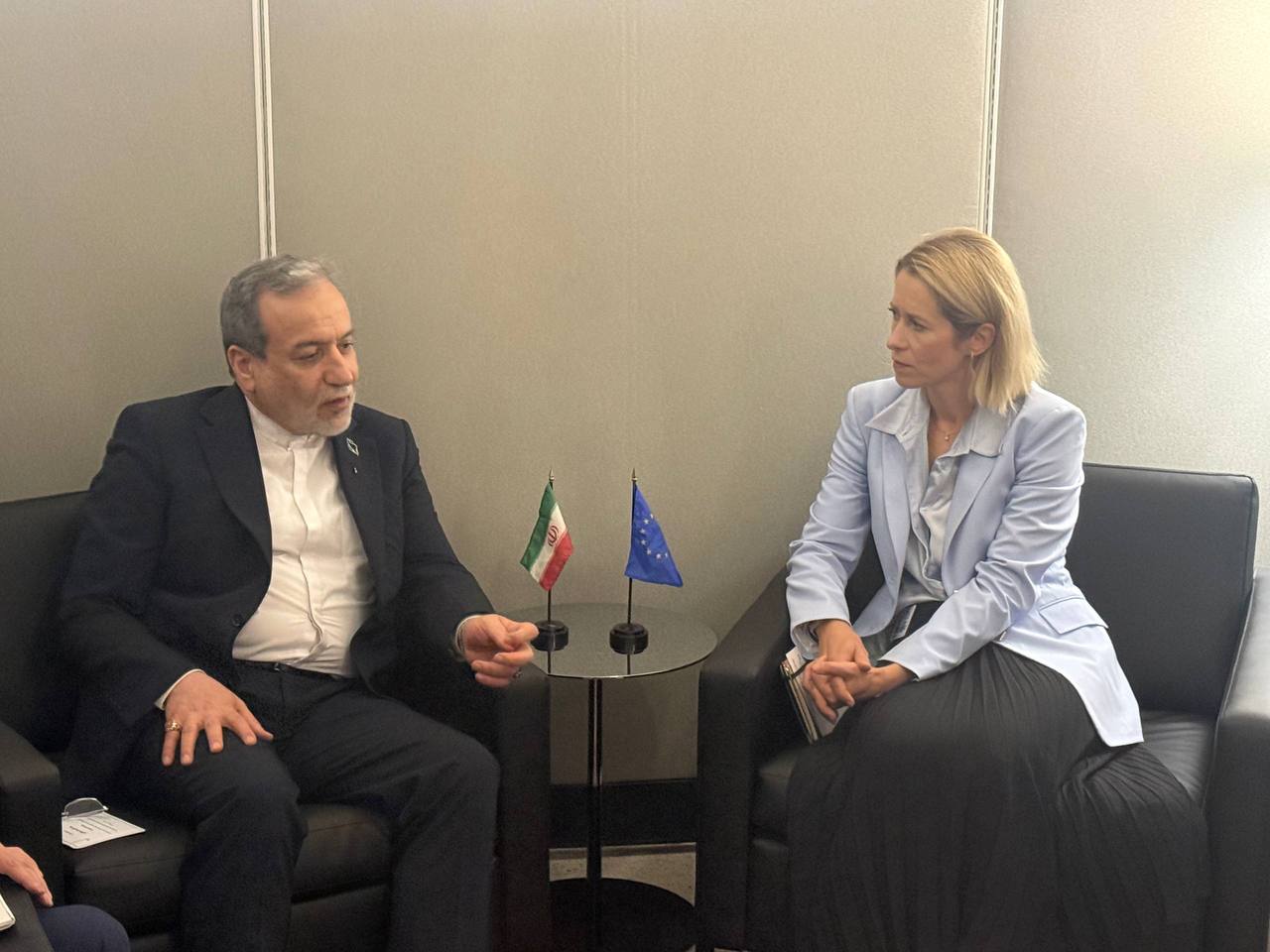
Sanctions in February, handshakes in September: EU’s flip-flop Iran policy is putting lives at risk

Why would the European Union list the Islamic Revolutionary Guard Corps as a terrorist organisation in February, and then, seven months later, have its top diplomat sit down with the foreign minister of the government the Guard Corps defends?

At the UN General Assembly last month, EU chief diplomat Kaja Kallas met Abbas Araghchi, who served in the Guard Corps during the Iran–Iraq war.

Dutch prime minister Rob Jetten met president Masoud Pezeshkian, who in 2019 joined fellow parliamentarians in wearing the Guard Corps uniform to protest Washington’s terrorist designation of it. France, Italy, and Norway held meetings of their own.

These talks came less than nine months after Iranian security forces, on 8 and 9 January, killed protesters on a scale without precedent in the country’s modern history.

The human rights group HRANA has verified more than 7,000 deaths, and the UN special rapporteur warned that the toll may exceed 20,000.

In September, the UN fact-finding mission concluded that the crackdown amounted to crimes against humanity. Nor has the killing stopped: Iran Human Rights counted at least 532 executions in the first eight months of this year, including protesters arrested in January.

After a massacre, a foreign policy guided by European values should pursue one aim above others: making a repetition more costly for those who would order and carry it out.

Naming and shaming raises the reputational cost of repression, targeted sanctions raise its material cost, and delegitimisation raises the political cost of staying loyal to the regime.

They work only in combination, since sanctions without delegitimization tell the regime’s elite that their assets are at risk, but their standing is not.

EU vs US sanctions

Europe has used the first two instruments. The EU listed the Guard Corps in February and sanctioned additional Iranian officials for human rights abuses.

However, these measures target assets and individuals, while the government that presided over the killing keeps its seat at the top table.

The UNGA in New York showed how little the third instrument has been used.

The terrorist listing freezes the Guard Corps’ funds. Neither Araghchi nor Pezeshkian is on an EU sanctions list.

Yet it leaves a question unanswered: how far should the logic of a terrorist designation extend to the government that funds and publicly defends it?

Article 21 of the Treaty on European Union requires the Union’s external action to be guided by human rights and to be consistent.

Branding the Guard Corps a terrorist organisation in Brussels while posing for photographs with the government it defends in New York sits uneasily with that obligation.

This inconsistency is costly. In a study in foreign policy analysis, my co-authors and I examined how Iranians reacted to US sanctions. Comprehensive sanctions produced a rally around the government, even among reformists.

The 2019 designation of the Guard Corps, by contrast, produced almost no rally outside the regime’s hardliner core. Thus, targeted pressure on the security apparatus does not drive Iranians into its arms.

Handshakes, on the other hand, may give the apparatus exactly what targeted sanctions are meant to withhold: international legitimacy.

The photographs from New York reach two audiences.

The first sits inside the state: an officer deciding whether to fire on a crowd, or to step aside, weighs one question above most others, namely whether the regime will survive, and each of those photographs suggests an answer.

The second audience is the families of those killed, executed, and blinded since January. For them, the message is that Europe has moved on after eight months.

A picture is worth a thousand words

I am not against diplomacy. Kallas raised the sharp rise in executions with Araghchi, and Jetten raised human rights and Iranian actions on Dutch soil with Pezeshkian. Channels on shipping, detained Europeans, and de-escalation should stay open.

My objection concerns the level and the format: a meeting between leaders, photographed at the General Assembly with no public conditions attached, is not a technical channel.

Concerns voiced in private do not travel as far as the photograph, which signals normal relations with a government that has done nothing to earn them.

Four steps would help.

First, the Council should agree on a common line: contact at the technical and envoy level, and leader-level meetings only on public conditions, beginning with a halt to protest-related executions.

Second, human rights sanctions should move up the chain of command, to those who answer politically for the security forces.

Third, member states should invest in accountability that does not depend on Tehran, such as universal jurisdiction cases and evidence-sharing with the UN mission.

Finally, Europe should engage openly with Iran’s democratic opposition.

The EU has already decided, in law, what the Guard Corps is. Its leaders have yet to act accordingly. A massacre answered with sanctions in February and handshakes in September does not raise the cost of the next one. It lowers it.

  •  

Indonesia’s bourse rebuild is really a monetary policy story

For decades, the Indonesia Stock Exchange has run like a members’ club, where the brokers who trade on the IDX also own it. But that cozy arrangement is about to end under an amended financial sector law that requires the exchange to demutualize. The Financial Services Authority, or OJK, has issued a new regulation on […]

The post Indonesia’s bourse rebuild is really a monetary policy story appeared first on Asia Times.

  •  

EU will need to tax AI ‘workers’ to keep funding human pensions

Every major technological shift reshapes not just the economy but the tax system that pays for it. When big corporations emerged, corporate and payroll taxes followed. When mass car ownership took hold, fuel duties emerged to pay for the roads it required. 

As AI shifts work from people to machines, it will force a rethink of who gets taxed, on what, and where. Nowhere is that question more urgent than in Europe, which funds the world’s most comprehensive welfare states primarily through taxes on work.

Taxes on work make up 51.5 percent of all tax revenue in the EU-27, according to the European Commission’s latest Taxation Trends data — a share that rose in 2024. These charges are taken straight from the payslip. They’re hard to avoid, and scale with employment.

AI, by replacing human work with software and machines, eats away at exactly this tax base. 

The International Monetary Fund (IMF) estimates that around 40 percent of jobs worldwide are exposed to AI. If that leads to fewer workers, it will also mean fewer payslips, pension contributions and social charges, weakening the revenue streams that fund Europe’s pension and healthcare systems. This is not a distant problem; the costs are already mounting.

Shift the burden to corporate profits

The obvious response is to shift more of the tax burden onto corporate profits, which will increasingly reflect the gains firms make by deploying AI instead of hiring workers.

Unlike a tax on machines and equipment themselves, a profit tax falls mostly on excess profits and need not distort investment. The case for shifting weight from payroll taxes to profits is strong and strengthens as AI replaces more workers with machines.

But profits, unlike payrolls, move. A company can locate its intellectual property in a low-rate jurisdiction — a pattern Europe knows well from decades of profits routed through Ireland and Luxembourg — and ensure that profits are booked far from where the jobs are lost. It is how the world’s largest technology and AI firms already operate.

Two-pillar answer

The Organisation for Economic Co-operation and Development’s (OECD’s) Inclusive Framework was designed to address exactly this: profits shifted across jurisdictions to avoid tax, and e-commerce allowed sales where firms have no physical presence. AI makes these reforms more urgent. 

Pillar One of the framework put forward by the Paris-based wealthy nations’ club addresses where a corporation is taxed. It shifts partial taxing rights for the largest multinationals away from where they are headquartered and toward where their customers and users are located. 

Still under negotiation, it would apply only to a handful of the largest firms, but many AI companies would qualify. 

These firms are concentrated in a select number of countries, very few of them European, but the displacement they cause, and the public services that displaced workers will require, will weigh heavily on European budgets.

Pillar Two of the OECD framework introduces a global minimum corporate tax of 15 percent on multinationals with revenues above €750m.

The EU moved first and furthest: Council Directive (EU) 2022/2523 made the minimum tax binding across the Union from 2024, and 22 of the 27 member states now apply it in full. The United States, notably, has not implemented the rules. 

Politics is undermining the fix

But the obstacles are real. US ratification of the OECD proposals is unlikely, and many of the largest companies are headquartered there. 

The pressure is already reshaping Europe’s own rules: under the G7’s June 2025 ‘side-by-side’ agreement, US-parented groups would be exempt from the EU’s minimum-tax rules: a carveout the European Commission confirmed in January 2026 and which several member states consider legally fragile. 

The Commission also dropped its proposed EU digital levy under US trade pressure, leaving a patchwork of national digital services taxes in France, Italy, Spain, Austria, and elsewhere.

Such exceptions and carveouts show that big-power politics can hollow out the framework. These reforms were designed to address the tax challenges for an AI-economy. They were good policy then. They are fiscal necessities now. Fairer corporate taxation will not be enough, but it is a start. 

Europe’s choice

The EU has instruments on the table, the BEFIT common corporate tax base and the proposed Corporate Resource for Europe, but both remain politically contested.

European governments that fail to act will be managing the social costs of technological disruption with a tax system built for the industrial age, while the profits that fund their rivals accumulate beyond their reach.

Even if Europeans work less, their needs for health care, pensions, and consumption remain. As wage-based contributions shrink, Europe must shift more of the tax burden onto corporate profits and close off the routes that let those profits move beyond the reach of the states bearing the costs of automation. 

Productivity gains may soften the arithmetic; they will not repeal it. The tax base must follow the economy. 

  •  

Trump finds it’s funny to joke about Iran bombing California

In a stemwinder of a speech in Nebraska, our mentally ill president joked around that if Iran took out Los Angeles and San Diego, it would be a small price to pay for keeping the rest of the country safe. Or at least that is what he appeared to say. What his slurred free association […]

The post Trump finds it’s funny to joke about Iran bombing California appeared first on Asia Times.

  •  

How bad does it have to get for the ECB to save France?

French borrowing costs are surging and central bankers are starting to fret. Some of them, at least.

The head of the French central bank, Emmanuel Moulin, told the Financial Times that his country risks being “strangled by interest rates”.

The best solution, he made clear, was for the French government to cut costs and reduce the deficit, which, in an unchanged scenario, could reach upwards of six percent next year.

Last week, the French minority government proposed €43bn worth of cuts for 2027. But pushing them through parliament is a tall order in a divided country.

Meanwhile, investors are dumping French bonds, pushing up French government borrowing costs compared to German benchmark Bunds. This is already immensely costly to French society.

“In three weeks, we’ve lost the equivalent of €15bn a year in higher debt-servicing costs over a 10-year horizon, or almost €100bn cumulatively over 10 years!”, French economist Shahin Vallée said on social media last week.

The gap, or spread, between French and German bond yields, historically around 50 basis points (0.5 percentage points), was 109 basis points when he wrote it on Wednesday. It is now 30 points higher.

Spreads are a crucial marker for financial stability because they show how nervous investors are. The bigger the spread, the higher the perceived risk.

And France’s parabolic bond spread is already bringing back unwelcome memories of the eurozone crisis in November 2011, when the spread reached 200 basis points.

Bypass parliament?

The question is what to do about it, and who is best positioned to act. The French government could bypass a parliamentary vote or push through the budget by ordinance, under articles 49.3 and 47 of the constitution, respectively.

This article continues, but the full version is available only to EUobserver.com subscribers. Visit account.euobserver.com/membership

  •  

The children of Gaza are being killed every day. Where are the headlines?

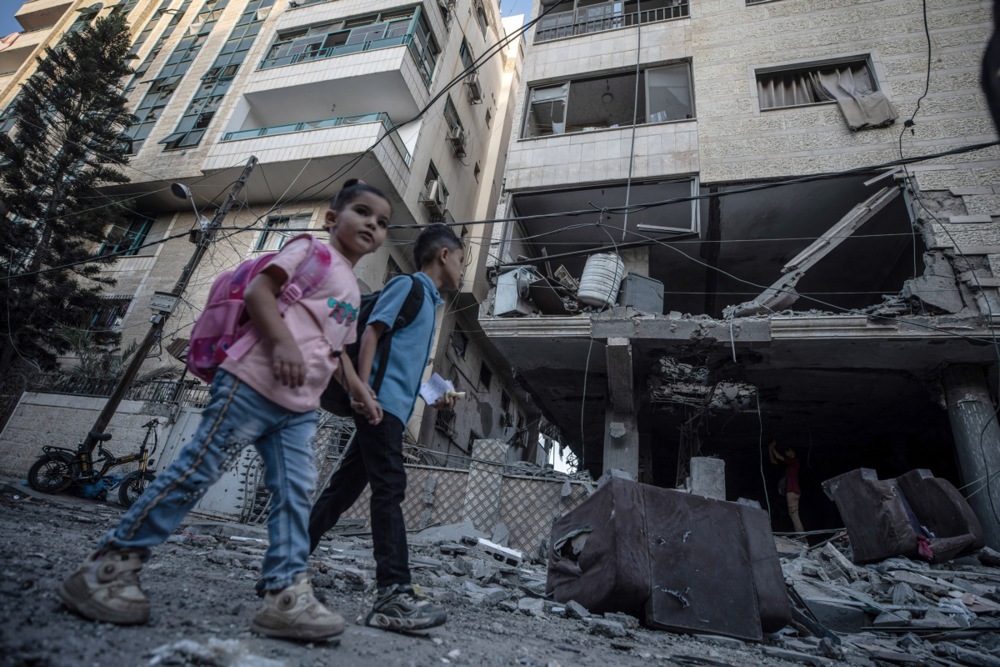
Every day, children are killed in Israel’s genocidal war on Gaza. Where are the outraged headlines?

The number of children killed in Gaza since Israel started its onslaught, following the Hamas attack on 7 October, 2023, is estimated at more than 21,600. 

The UN Children’s Fund (UNICEF) says that since the so-called Israel-Hamas ceasefire, an average of “at least” one child a day – 300 children over 300 days – has been killed in the enclave. 

Children, toddlers, and babies are being killed in their homes, schools, hospitals, shelters, and on roads marked by displacement. They are also dying because the basic structures that should protect them – family, healthcare, education, food, water, and refuge – have been systematically destroyed.

Where are the urgent statements from EU and world leaders?

EU governments continue to authorise arms transfers to Israel despite rules which require governments to deny licences where there is a risk that military equipment will be used for serious violations of international humanitarian law. 

Every EU member state is also bound by the UN Convention on the Rights of the Child and the EU’s own treaty, which requires the union to promote children’s rights. 

Why are these international rules and domestic commitments not being applied to the children of Gaza?

Mourners light candles during a mass funeral and vigil for 105 Palestinians near the rubble of the Al Tajj building in Gaza City on 30 September 2026 (Source: EPA/MOHAMMED SABER)

Children rights beyond Ukraine

The EU does care for children. In Ukraine, the EU treats children as individuals rather than statistics: it convenes coalitions, compiles names, traces families, imposes sanctions, creates mechanisms for return and makes the fate of children a central diplomatic demand. 

In her State of the Union address last month, European Commission President Ursula von der Leyen – a proud mother and grandmother – introduced and praised the courage of Sasha, a six-year-old Ukrainian girl who lost a leg in a Russian missile strike in Ukraine but has now returned to her beloved gymnastics.

Von der Leyen quite rightly made the suffering of Ukrainian children intimate and personal. It is more than time she did the same for Palestinian children.

But let’s not only blame political leaders for their indifference, their lack of historical knowledge of Palestine’s occupation and their limited understanding of Palestinian calls for justice. 

Parts of the legacy media must also own up to their responsibility in normalising the abhorrent.

Powerful mainstream media have preferred to “repeat Israeli propaganda and sometimes simply cut and paste IDF press releases” rather than accept the analysis of Palestinian journalists, writers and scholars, writes Bhakti Shringarpure.

Her criticism reflects a wider ongoing discussion on the sourcing and framing of Gaza coverage, with studies spotlighting how Western media has described Israeli suffering by using emotive language around 11 times more often than Palestinian suffering. References to Israel’s “right to defend itself” appear roughly five times as frequently as references to Palestinian rights.

Also, as the immediate shock of the bombardment recedes – but the killing continues – Gaza has dropped down the news cycle. 

Assal Rad,  author of “Don’t Say Palestine: How the Media Manufactured Consent for Genocide”, describes the logic: “The façade of a ceasefire has created the space to cover it less. In reality, the conditions on the ground for Palestinians in Gaza have not changed.”

It is also less politically costly for leaders and media to focus on settler violence and settlement in the occupied West Bank, since it can be described as the work of “extremists” rather than of the Israeli government.

EU silence

Our lack of a strong reaction to what is happening is Gaza is also the story of how bystander societies can watch, absorb, and rationalise horrors – and move on. 

Additionally, the killing of Palestinian children is preceded by their political “unchilding”, a process which Palestinian scholar Nadera Shalhoub-Kevorkian says begins before the missile falls, when Palestinian children are imagined not as children with futures but as demographic threats, future militants, or extensions of an armed group. 

Their age, instead of guaranteeing greater protection, becomes entangled with suspicion.

Even amid such savage violence, some people are not giving up. 

Their bosses may still look the other way, but EU Staff for Peace, which holds vigils in front of the European Commission and the EU Council every Thursday, has held gatherings to read out the names of children killed in Gaza, thereby according individuality to children whom the political and media systems have reduced to numbers.

As one EU staffer told me: “We only have a time slot of three hours and the last time we only managed to read out the names of children up to three years old. It took us one hour to read out the names of Palestinian babies under one-year old.”

Hind Rajab, who was five, was killed on 29 January 2024 by Israeli fire on the car in which she was trapped. Her body was found 12 days later alongside the bodies of members of her family and two paramedics who had gone to rescue her.

Israel has acknowledged firing on the car but has not admitted that her killing was unlawful, citing an ongoing investigation. In other words, there has been no accountability.

The obscenity is not only that Hind was killed, but that by now the killing of children in Gaza has become a familiar event. 

The shame is that so many of us have constructed a hierarchy in which some children summon the world’s full moral and political force, while others are ignored.

Omar El Akkad, in his seminal book says that “One Day, Everyone Will Have Always Been Against This.” Given the cowardice on display over the last three years, I sometimes wonder if there will ever really be a true global moral reckoning.

  •  

Asia’s growth now belongs to Silicon Valley

Southeast Asia’s growth next year will be decided at meetings its finance ministers won’t attend. A few executives in California will soon settle next year’s spending on data centers. Their decisions will do more to shape growth in Vietnam, Malaysia, Thailand and the Philippines than any budget those governments pass. The World Bank has just […]

The post Asia’s growth now belongs to Silicon Valley appeared first on Asia Times.

  •  

CPEC 2.0 will be won or lost on keeping China’s investors safe

CPEC 2.0 aims to move past the infrastructure-heavy first phase toward industry, agriculture, mining, technology, green development and business-to-business investment. That shift could deepen economic ties between Pakistan and China, but it also changes the nature of the security challenge. Big infrastructure projects can be guarded behind fixed perimeters. Industrial zones, mines, private businesses and […]

The post CPEC 2.0 will be won or lost on keeping China’s investors safe appeared first on Asia Times.

  •  

Centre-right’s Muslim Brotherhood witch-hunt in EU Parliament risks criminalising everyday activism

On Wednesday (7 October), the largest group in the European Parliament, the European People’s Party (EPP), has scheduled a debate on a “European Parliament resolution on the need for an EU strategy to counter Islamist entryism and the influence of the Muslim Brotherhood network.”

The move follows the adoption of an EPP party resolution that treats Muslim civic engagement as inherently suspect and collective religious practice as a potential threat.

It largely mirrored the German Christian Democratic approach of criminalising Muslim civic engagement.

As Brussels-based EU expert and EUobserver’s columnist Shada Islam put it, the supposed fight against “political Islam” “places Muslim political and civic activity inside an almost exclusively security framework,” and thus “European democracy is hollowed out rather than reinforced when an entire religious or ethnic minority and its civil society are regarded as permanently suspect.”

Also, the resolution protects religious freedom for Muslims only as an individual right, explicitly stating that it seeks to ensure “equality among citizens, rather than collective claims,” leaving the collective expression of Islam unprotected and thus hollowing out the very idea of religious freedom.

As also the to be debated motion shows, it is unclear where protected religious activity ends and dangerous political activity begins.

Islamophobic conspiracies

The notion of “Islamist entryism,” imported from France, has become a way to criminalise Muslim participation in civil society and politics.

The resolution describes it as “a political strategy of influence, progressive structuring, institutional penetration and ideological legitimisation,” which it separates from the “peaceful practice of Islam.”

But how does one tell the “good” Muslims, who engage peacefully in politics and lobby policymakers to stand up for their rights, from the bad? Or is the good Muslim simply the apolitical one, who does not stand up for the protection of their collective human rights?

If “political Islam” is a problem because it is described “as a societal project,” how does it differ from the collective efforts of Jews, Christians, and others, who also “produce collective norms,” as the motion puts it?

And if “Islamist influence operates through a broad and fragmented ecosystem of associations, foundations, cultural, educational, religious, charitable, university, youth, anti-discrimination or social action structures,” something equally true of Christian, Jewish, and other religious groups, then where does the EPP draw the line between peaceful Muslim activity and Islamist activity that has to be banned?

Isn’t the claim that Muslim “community allegiances placed above common law” a typical Islamophobic allegation, familiar from the old mistrust of Jews as more loyal to a global Jewish community than to the nation-state?

Is this the old antisemitism in new “Muslim” clothes?

Indeed, the motion lists a catalogue of anti-Muslim conspiracy theories: “separatist narratives, systematic victimhood, antisemitism, hatred of Israel, conspiracy narratives, challenges to secularism … may constitute markers of ideological radicalisation or Islamist influence.” They may. And what if they don’t?

Guilty until proven innocent

What follows seems to be one of the motion’s primary goals: cutting funds for Muslim and anti-racist civil society organizations such as the Forum of European Muslim Youth and Student Organisations (FEMYSO) and the European Network Against Racism (ENAR), who are both registered in the EU transparency register of Belgium and annually audited.

These CSOs are seen as a manifestation of political Islam per se even though they have denied any those connections.

And it is a form of innocence that cannot easily be proven.

The EPP motion claims that “some Islamist networks are able … to adopt the vocabulary of fundamental rights, inclusion, diversity, intercultural dialogue, anti-racism and the fight against discrimination, while promoting in other spaces logics of separation, community pressure or contestation of democratic principles.” In other words, the better integrated Muslims in Europe are, the more suspicious they may become.

Shaky legal foundations

The EPP’s motion builds on highly problematic bills, legislation and political procedures. It quotes the French ministry of the interior’s 2025 report “Muslim Brotherhood and political Islamism in France,” which has been harshly criticised.

It also cites a resolution of the French National Assembly from January 2026 that urged the European Union to add the Muslim Brotherhood to its list of terrorist organisations and to lobby for it.

The resolution was voted against by 101 members of parliament, some of whom called it “Islamophobic.” The motion also invokes the contested Austrian Symbols Act, which prohibits the symbols of non-violent organisations that are not considered illegal under domestic legislation and lumps them together with those of jihadist groups ISIS and Al-Qaeda.

A further cited motion is from the Dutch parliament in March 2026 and calls for a ban on the Muslim Brotherhood and linked organisations, but it too has no legislative relevance so far.

None of these motions or laws has outlawed “Islamist entryism” or the “Muslim Brotherhood networks.”

Yet the EPP resolution builds on exactly this shaky ground while pretending that its own motion is solid.

More importantly, the way Austria and France treat their Muslims is well documented: from the infamous, massive and racist police raids known as Operation Luxor to the French state’s Systemic Obstruction policy, which resulted in 101 government units nationwide monitoring Islam and Muslims, 24,887 Muslim organizations and businesses placed on a secret blacklist and under strict monitoring, and the closure of 718 Muslim-owned organizations and businesses, with €46m seized. There is nothing here that should be emulated elsewhere.

Crude logic

The EPP’s argument that “Hamas on the EU list of terrorist organisations historically originates from the Muslim Brotherhood movement” rests on crude logic.

Both the Progressive Alliance of Socialists and Democrats (S&D) and the secular Marxist-Leninist Popular Front for the Liberation of Palestine (PFLP), similarly considered a “terrorist organization,” have Marxist origins. Outlaw the S&D as a consequence?

Today, it is Muslims who are being surveilled, monitored and criminalised. Who is it tomorrow? If this resolution passes, life for politically conscious Muslims who are defending their right to exist in Europe will become even more difficult. And tomorrow potentially everybody’s life.

  •  

US enshittification vs Chinese involution

It’s getting better all the time (Better, better, better) It’s getting better all the time I admit it’s getting better –The Beatles In an X post, Marko Jukic, senior analyst at Bismarck Analysis, lamented: “Enshittification” is sort of a “safe horny” term for what is really just outright impoverishment and declining living standards due to […]

The post US enshittification vs Chinese involution appeared first on Asia Times.

  •  

Logistics test: sustaining Northeast Asia trilateral deterrence

Originally published by Pacific Forum, this article is republished with permission. While operational planners in the United States, the Republic of Korea and Japan have made historic strides institutionalizing trilateral security cooperation, the credibility of deterrence ultimately hinges on a more punishing variable: wartime sustainment. Washington, Seoul, and Tokyo have expanded joint exercises, real-time missile […]

The post Logistics test: sustaining Northeast Asia trilateral deterrence appeared first on Asia Times.

  •  

Why ‘Made in Europe’ could push Burnham’s UK back into the EU’s arms

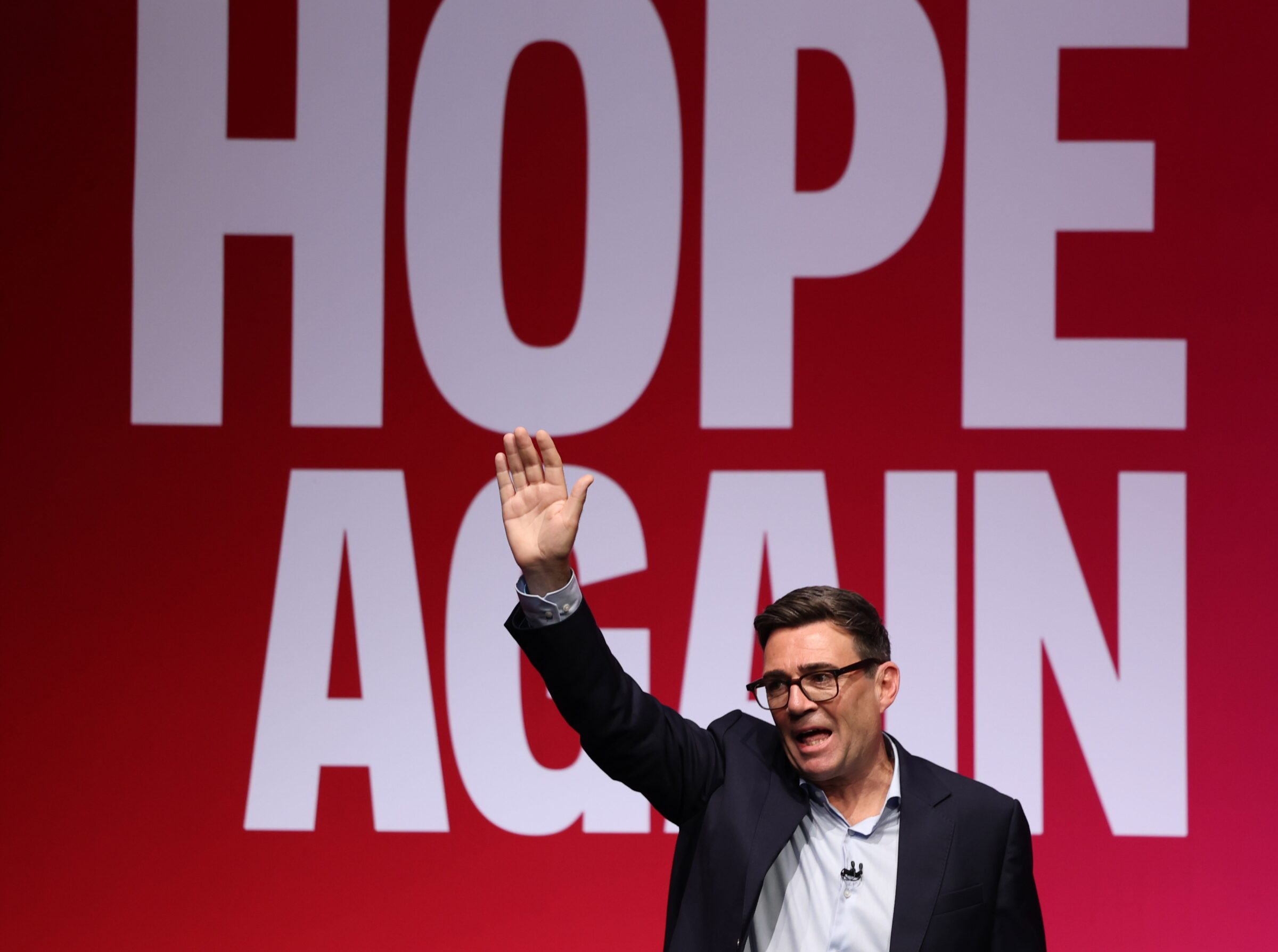
Having said several months ago that he had no intention of a ‘rerun’ of the Brexit debate, UK prime minister Andy Burnham told Labour delegates at the party’s annual conference in Liverpool last week that nothing should be off the table as far as EU-UK relations are concerned. 

Brexit had “done more harm than good”, he said, adding that “we will not give Britain the clear path we need into the rest of the century until we decide on a long-term relationship with what is still our largest market.” 

In fact, Britain could “go all the way” back into the EU, said Burnham.  

The new prime minister is still enjoying something of a honeymoon period. His Labour party now tops the opinion polls, albeit by less than 30 percent, and his early policy announcements on nationalising utilities and pension reform are the most radical in a generation. 

Even so, Burnham’s remarks were a surprise that left pro-European columnists positively giddy with optimism over the weekend. 

In truth, rejoining the EU – if it happens – would probably take a decade. 

Burnham didn’t offer any timetable or any other specifics, and has said that no moves towards EU membership would be taken before the next UK election due in 2029. And talk of rejoining the EU is not purely borne out of pro-European enthusiasm. 

This article continues, but the full version is available only to EUobserver.com subscribers. Visit account.euobserver.com/membership

  •  

Russia courts the Taliban without dropping Pakistan

I have watched Pakistan-Afghanistan relations long enough to distrust easy headlines, and last week’s news produced a few of them. At the Center-2026 (Tsentr-2026) war games in Russia’s Chelyabinsk region, Taliban officers stood among the foreign observers. Reports say it was the first time Moscow had invited a Taliban military delegation since the movement returned […]

The post Russia courts the Taliban without dropping Pakistan appeared first on Asia Times.

  •  

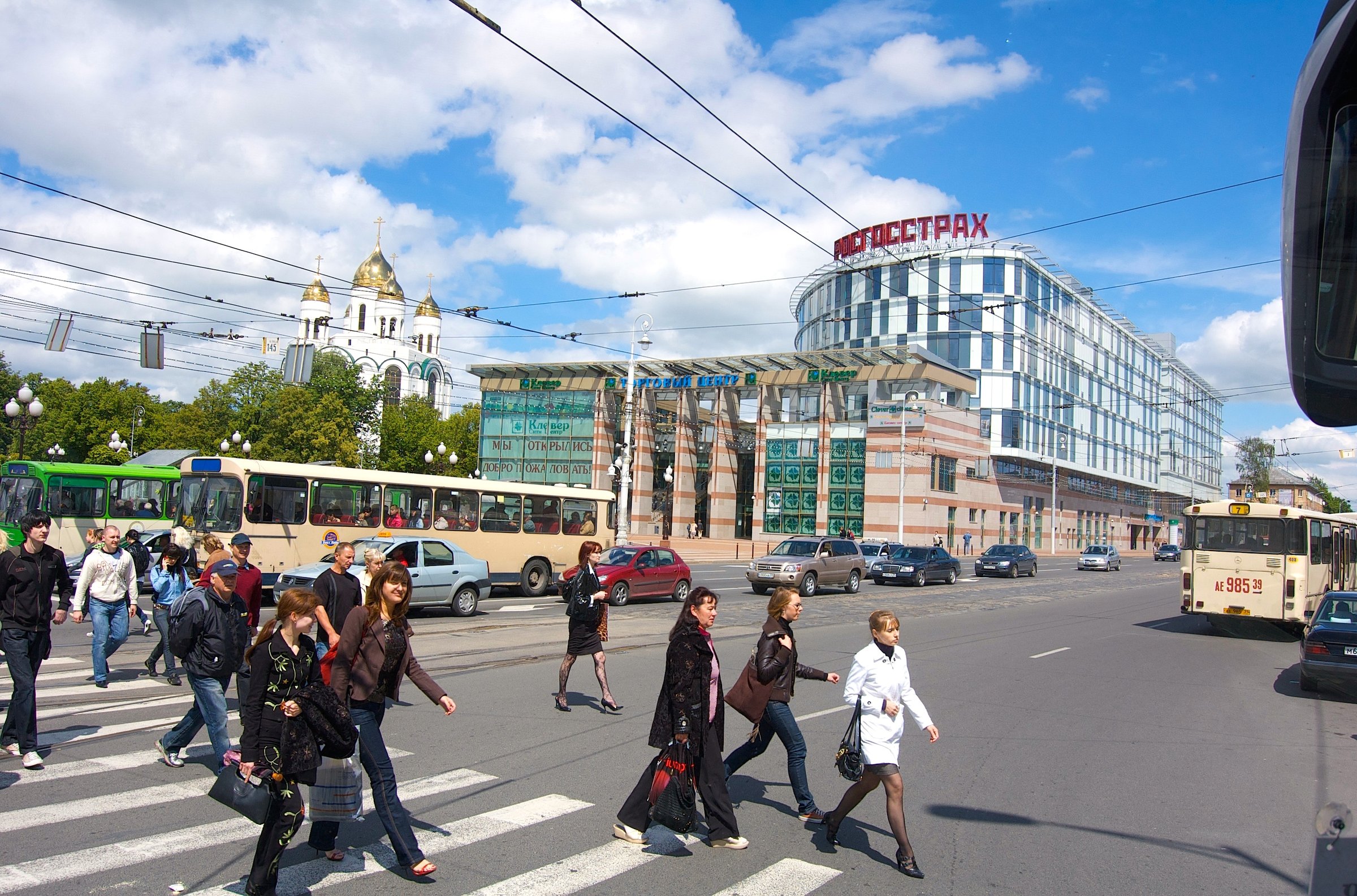
Russia is losing its grip on Kaliningrad, despite using the exclave for anti-Nato scare stories

Russia will use nuclear weapons if Nato tries to blockade Kaliningrad. That was the blunt warning from the Kremlin last week. In truth, this is an empty threat against an invented danger. Russia’s nuclear bluff is worn out from overuse, and Nato has no such intention.

But the outburst does signal something useful: Russia’s sensitivity about Kaliningrad.

The northern half of the former German territory of East Prussia is the Kremlin’s last great trophy from the Soviet victory over Hitler in 1945.  

Like many trophies, it is less impressive on close inspection. Kaliningrad is an artificial creation, from its name (after the war criminal Mikhail Kalinin) to its population (imported after ethnic cleansing) and its southern border (a crude straight line, of the kind European colonists inflicted on African countries). 

Now Moscow’s grip on this exclave — an island of Russian territory sandwiched between Poland and Lithuania — is increasingly fragile. Not because anyone will sever the precarious air, sea, and land routes that keep it supplied, but because of Russia’s all-too-real, corrupt, authoritarian, and incompetent system of government.

The weakness of the Russian system, aggravated by the cost of the disastrous war in Ukraine, makes holding on to Kaliningrad unsustainable: economically, socially, demographically, and politically.

Outside commentary mostly misses this, depicting Kaliningrad as a fortress from which Russia can menace its neighbours.

It is more realistic to see it the other way round, as Russia’s greatest strategic vulnerability: an Achilles’ heel. 

The think-tank the Baltic International Security Centre (BISC) is conducting a big research project called Kaliningrad 2050.

The name poses an implicit question: do you really believe that Kaliningrad will still be under Moscow’s rule by the middle of the century? It looks increasingly unlikely.

BISC will this week convene 20 experts for crisis simulations examining how Kremlin rule might unravel, and how neighbouring countries could, would, and should react.

The causes are imaginary, for now. But an environmental disaster, a breakdown in fuel supplies, or a public-health emergency, such as the one now unfolding in Siberia, are all entirely possible in Russia’s current ramshackle state. Decision-makers will have to react to the resulting refugee flows, pollution, and humanitarian needs. 

We do not yet know the BISC study’s outcome: as with military ‘war games’, the aim of these exercises is to test how different scenarios play out. We hope the conclusions will be useful for those who deal with these dilemmas in real life.

Next up will be a book, Fragile Fortress, to be published later this year. Edited by the British Russia-watcher Christopher Peters, and written by local and foreign experts, it explores topics including memory politics, economic weaknesses, internal repression, and the state of public opinion. The main message: Kaliningrad survives only thanks to economic subsidy and political support from Moscow.

These efforts could hardly be more topical.

While the Kremlin blusters about a threat from Nato, social media scare stories depict supposed Russian invasion plans to be launched from Kaliningrad, with maps showing thick red arrows piercing the Suwałki Gap, a strategic stretch of land which links Poland and Lithuania.

But as the book’s military chapter shows, such an attack is impossible in current (or likely) conditions. Russia has almost no ground forces left in Kaliningrad: they have all gone to Ukraine. Nor does the Russian air force there have the kind of airfields and hangars needed for a real war.

Nato, especially since Sweden and Finland joined the alliance, is overwhelmingly dominant in land, sea, and air in the region: a point underlined by its recent surveillance exercises in the region. 

In short, the nuclear bluster is irrelevant. Nobody is menacing Kaliningrad from the outside. And the real question is when and how, but not if, the Kremlin will lose it in the end. 

  •  

Russia’s new strategy aims to make Ukrainian cities unlivable

The Russians are struggling on land and at sea, and are having real difficulty protecting themselves from Ukrainian long-range attack. That has left them with one real strategic “advantage” and that is what we will see the next few months. As reports this week made clear, the Russian strategy is now to make Ukraine unlivable, […]

The post Russia’s new strategy aims to make Ukrainian cities unlivable appeared first on Asia Times.

  •  

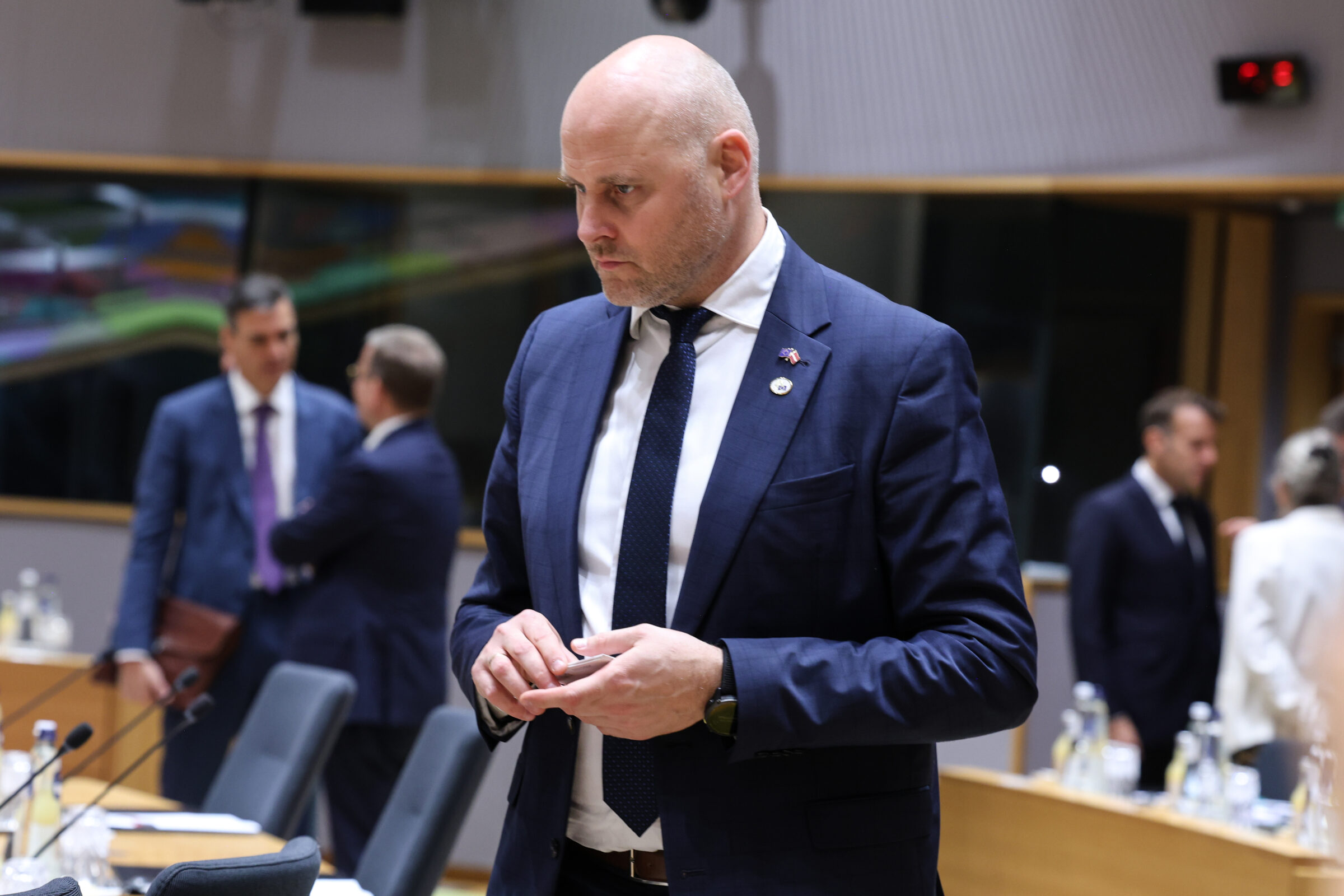
Latvian PM holds onto power as Russia-Ukraine war shapes election

Russia might not have directly interfered in Latvia’s election, but the vote still showed how the Ukraine war was distorting European democracy.

Latvia’s VDD intelligence service did not detect any of Russia’s classic interference tactics in the run-up to Saturday’s (3 October) vote, such as a spike in disinformation, vote buying, or a manufactured security scare.

The centre-right prime minister Andris Kulbergs retained power with 35.8 percent of the vote, even if coalition-building might take a while.

And voters’ concerns included the cost of living and failing healthcare, in what also sounded normal.

But despite the ordinary appearances, Russia’s war in Ukraine still influenced the election in fundamental ways, in a strange new normal for Europe that most of us had hardly imagined just five years ago.

This article continues, but the full version is available only to EUobserver.com subscribers. Visit account.euobserver.com/membership

  •  

Poll finds 49% of Britons support rejoining the European Union

Nearly half of voters in the United Kingdom support rejoining the European Union, according to a survey released as Prime Minister Andy Burnham reviews the country’s options for its long-term relationship with the bloc.

The Messina Group polled 11,461 people between 12 and 24 September. It found that 49 per cent supported EU membership and 28.5 per cent opposed it. The findings were weighted by respondents’ votes in the 2016 referendum, according to the survey results.

Several other options for closer cooperation also received more support than opposition. Retaining the current relationship while removing as many trade barriers as possible was backed by 48.2 per cent, with 20.9 per cent against. A customs union was supported by 47.1 per cent and opposed by 20.7 per cent.

Joining the single market was supported by 45.1 per cent, while 45.5 per cent backed associate membership. The existing relationship without further changes received 42 per cent support. Moving further away from the EU was the least popular option tested: 27.9 per cent supported it and 41.2 per cent opposed it.

The figures show support for a range of possible arrangements, but do not establish agreement on what Britain should seek or on the terms it should accept.

On timing, 25.9 per cent said the UK should rejoin immediately, 22.9 per cent favoured doing so within three years and 8.4 per cent within the next decade. A further 23 per cent said they did not want closer relations with the EU.

Respondents were also asked whether leaving the bloc had been the right decision. Some 52.4 per cent said it was wrong, compared with 29.7 per cent who said it was right; 17.9 per cent were undecided. Asked whether Brexit had been a success or failure, 54.9 per cent called it a failure and 12.2 per cent a success. Nearly a quarter, 23.2 per cent, said neither, while 9.7 per cent did not know.

The poll tested the possible electoral effects of different Labour positions on Europe. It found that scenarios involving closer ties could increase the party’s vote share by between 4.3 and 7.4 percentage points. The largest potential rise was linked to a proposal for a referendum in which Burnham campaigned for Britain to rejoin.

Burnham has said Labour will review the choices available, including keeping current arrangements, joining a customs union, returning to the single market or seeking EU membership. He plans to set out the options around the next UK-EU summit, expected in November. In recent remarks, he said the government would assess “what is doable” and the “pros and cons” of each option.

The review marks a shift from Labour’s 2024 election manifesto, which ruled out rejoining the EU, single market or customs union. Burnham has not proposed an immediate application or referendum. A UK bid for membership would require negotiations with the EU and unanimous agreement from member states.

The question of whether a referendum should come first also remains open. Almost a third of respondents said a vote would be needed before rejoining. More than one in six thought a general-election mandate would be sufficient, with a similar proportion saying Parliament could make the decision.

French President Emmanuel Macron and Spanish Prime Minister Pedro Sánchez have said the EU would welcome a British return. Their comments followed Burnham’s call for a review of Britain’s options, as EU Today reported this week. Earlier EU Today coverage also examined British and EU public support for a possible return.

  •  

Big Oil fears the evidence of its deliberate climate lies

No one knows how the US Supreme Court will rule in Suncor v. Boulder, the case that will kick off the court’s fall term next week and will likely decide whether the city and county of Boulder, Colorado, will be able to put oil giants ExxonMobil and Suncor Energy on trial for deceiving the public for decades about the climate harms of fossil […]

The post Big Oil fears the evidence of its deliberate climate lies appeared first on Asia Times.

  •  
❌