❌

Reading view

Kashmir’s ‘Halla Bolle’ Conclave: Old Script, New Venue. Venom Against India But Mum on Pakistan: OPED

Recently, during the 5th Halla Bolle Conclave held at the Radisson Collection in Srinagar, Jammu and Kashmir, the same separatist discourse once again found space.

The conclave brought together mainstream political leaders and a former separatist figure, with discussions focusing on issues such as restoring statehood, Article 370, autonomy, political rights, governance, youth aspirations, reconciliation, and India-Pakistan relations.

Many of the questions asked and answers given reflected narratives that have long been nurtured in the Valley and closely resemble Pakistan’s longstanding propaganda on Kashmir.

The participation of mainstream political leaders alongside former separatist figures also showed how some of these old narratives still find space in Kashmir’s contemporary political discourse.

Selective Politics of Kashmir’s Mainstream Leaders

Aga Syed Ruhullah Mehdi, the National Conference Member of Parliament (MP) representing the Srinagar Lok Sabha constituency, who behaves like some philosopher-king, is systematically promoting Pakistan’s propaganda and narratives.

He tries his best to hurt India whenever he gets the chance.

For instance, when asked to state his position on the situation in Muzaffarabad and Pakistan-occupied Jammu and Kashmir (PoJK), he said that he would not talk about it until people in the Valley were ‘empowered’, deflecting by declaring, ‘Return our dignity & we will talk about Muzaffarabad’. He then went on to claim that Kashmiris face the status of ‘second-class citizens’ in the Valley, asserting that ‘our reality is that we are disenfranchised as second-class citizens.’

This is exactly the problem. He avoids questions concerning PoJK but remains extremely vocal when criticizing India.

He is actually misusing his constitutional right to freedom of speech and expression and using Indian democracy as a shield while promoting narratives that are completely in line with Pakistan’s interests. He actually doesn’t want to hurt his masters sitting in Rawalpindi.

He also claims that there is no freedom of speech, frequently protesting that, “as a Kashmiri Muslim voice, I was denied the opportunity to speak.” Yet his actions contradict this narrative. He himself makes the most noise, using every available platform to speak publicly, give interviews, address gatherings, speak in Parliament, and criticize India regularly.

If he is supposedly not allowed to speak, then how is he able to constantly and systematically spread venom and engage in anti-India propaganda repeatedly?

There is a clear difference between legitimate democratic criticism of a government and repeatedly using the democratic space available in India to promote narratives that portray India itself as the source of Kashmir’s problems while giving Pakistan a free pass for its sponsorship of cross-border terrorism and the killing of innocent civilians in J&K and the rest of the country.

Then, an audience member asked National Conference president Farooq Abdullah why Kashmir had aligned with ‘Hindu-majority India’ in 1947. The very framing of the phrase ‘Hindu-majority India’ exposes the toxic ideology behind the question.

However, those who push such narratives desperately need to look at what actually happened to the regions that joined Pakistan in 1947, as well as those parts of the subcontinent that were forcibly taken by Pakistan, and the misery their people endure today.

Look at Balochistan. Look at Khyber Pakhtunkhwa. Look at the political and institutional failures that ultimately led to the secession of Bangladesh, demonstrating that a shared religious identity alone could not keep Pakistan united. Most importantly, look at the disaster that is Pakistan-occupied Jammu and Kashmir (PoJK) today.

For years, the people of PoJK have taken to the streets to protest Islamabad over basic political, economic, and social rights. The recent protests have faced deadly crackdowns, reportedly leaving more than 150 people killed, while the brutal authorities have even gone so far as to restrict the supply of essential goods, including food, flour, medicines, and fuel, during periods of unrest.

When Pakistan’s Failures Are Blamed on India

Yet Pakistan’s propaganda machinery has repeatedly played its cards well in Kashmir. Its influence remains deeply entrenched in the Valley, allowing narratives about Pakistan and India to persist regardless of what happens inside Pakistan.

Pakistan can have Imran Khan in jail, political repression, a deeply constrained democratic system, and an army that continues to exercise enormous influence over the country’s politics, elections, government formation, policymaking, and even the broader political system, yet people in Kashmir are repeatedly told that Pakistan’s problems are somehow the result of an Indian conspiracy.

Even when Pakistan itself is burning, its failures are deflected towards India rather than examined as the consequences of its own political and institutional failures.

This should force Indian authorities to rethink their approach and ask why such narratives continue to resonate in the Valley. Simply dismissing them as propaganda will not be enough. There needs to be a serious effort to understand the channels through which they spread, the political actors who amplify them, and the reasons they continue to influence public discourse.

Certain mainstream political parties and leaders in Jammu and Kashmir have also played a major role in keeping this discourse alive. They have repeatedly used the blood and suffering of Kashmiris for their own political objectives. Rather than challenging narratives promoted by Pakistan, they have often sustained and magnified them.

Take PDP chief Mehbooba Mufti, for example. She has advocated opening the Line of Control in Kashmir so that trade can take place with Central Asia, Afghanistan, and other regions, invoking the old Silk Route and China’s connectivity. One has to ask: what world is she living in?

Does she not understand the region’s geopolitics? Does she not understand the cross-border terrorism and terrorist infrastructure operating from Pakistan-occupied territory? Does she not understand the India-Pakistan dispute over PoJK? Does she not understand China’s illegal territorial claims against India in Jammu and Kashmir, the Shaksgam Valley territory ceded by Pakistan to China in 1963, the recent Galwan clashes, and China’s broader geostrategic interests in the region?

It is not simply a matter of opening India’s borders and assuming that will solve everything. Other players have their own interests and nefarious designs, and they too have agency. Besides, extra-regional powers have their own interests. The region is not operating in a geopolitical vacuum.

The problem with Kashmir’s political leadership is that they rarely talk about the issues that actually matter to the people, for which they were elected, and instead think that by playing separatist politics, they can secure their votes and political future.

They rarely talk about how to improve the living standards of common people, eliminate corruption, generate employment, improve infrastructure, attract investment, or make governance more accountable and responsive.
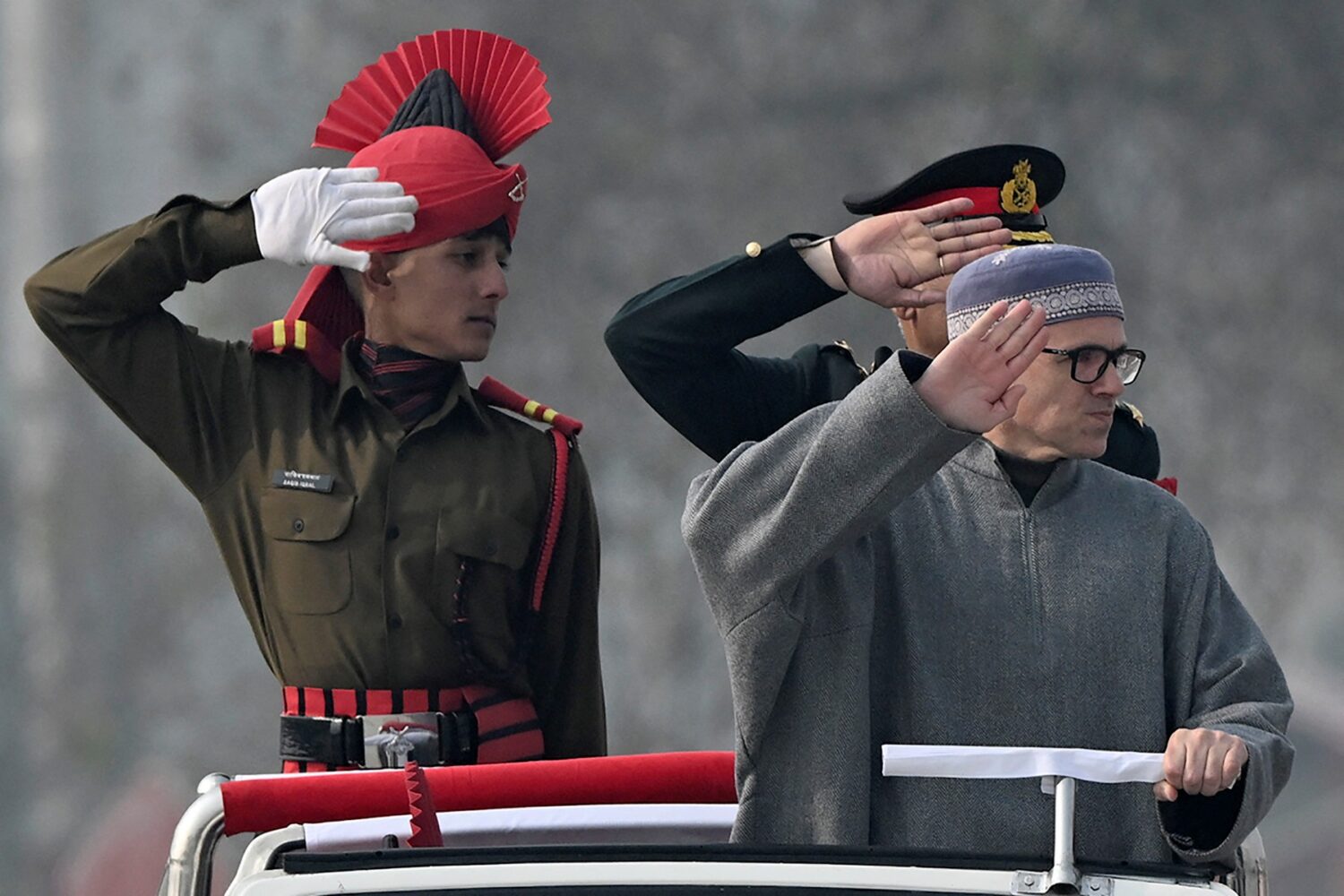
IMAGE FOR REPRESENTATION: Omar Abdullah (R), Chief Minister of Jammu and Kashmir, salutes as he inspects newly recruited Indian Army soldiers from the Jammu and Kashmir Light Infantry (JAKLI) during a passing-out parade at the JAKLI Army headquarters in Srinagar on December 4, 2025. (Photo by Tauseef MUSTAFA / AFP)

Instead, they have often tried to frame the relationship between the people of Kashmir and the central government in colonial terms, as a master-slave relationship. They repeatedly use words such as “Delhi,” while saying that Kashmiris have to “fight Delhi.” They rarely speak about constructive engagement with the central government.

They now say that Kashmiris have been “disempowered” after the abrogation of Article 370 in 2019. But what happened before 2019? Were Kashmiris not being described as “alienated” and “disempowered” before 2019 as well? Were these same political leaders not making exactly the same arguments then?

If they were making the same arguments before 2019, then what exactly did they do for the people of Kashmir when they had the political power they now claim to have lost?

This is something that needs to be asked.

Need to Move Beyond the Politics of Alienation and Victimhood

Moreover, the words “alienation” and “disempowerment” are not being used accidentally. They carry a specific political meaning and fit into a particular narrative. The problem is that these leaders have never really looked at the relationship between Jammu and Kashmir and the central government in the same way that political leaders in other parts of India look at their relationship with the Center.

The current noise over statehood also needs to be understood in this context. They present the demand for statehood as though it is entirely about the interests of the common people. But is it?

Of course, statehood is important, and people can legitimately demand its restoration. But it also involves political interests. These political parties want more political power and greater control over the administration.

After losing statehood, they feel they lost a significant part of their political authority. They also want statehood because it would give them greater political control and a shield from the scrutiny and accountability they currently face from different agencies and institutions. In this sense, the demand for statehood is also about restoring their own political power and reducing accountability.

But the common people have other priorities. They want good governance. They want corruption to be eliminated. They want development, employment, better infrastructure, better public services, and an improved standard of living.

The question is: when there was statehood before 2019, what did they do to improve the lives of common people?

If the mainstream political parties in Jammu and Kashmir had pursued positive, constructive, forward-looking, and pragmatic politics instead of sustaining and magnifying narratives that have served Pakistan’s interests, the Valley could have been very different.

Political parties have every right to criticize the government. They have every right to demand statehood, greater powers, development, and political representation. But when criticism of India becomes constant while questions concerning Pakistan are systematically avoided, and when every issue is presented through the prism of alienation and disempowerment, it becomes necessary to ask whose interests this politics is ultimately serving.

The mainstream political leadership in Jammu and Kashmir needs to understand that the people of Kashmir cannot be kept permanently trapped in the politics of grievance, alienation, and victimhood. The people deserve politics that focuses on their future, not politics that continuously recycles past narratives.

  • Views Personal of the Author
  • The author is a prominent journalist from Jammu & Kashmir and wishes to keep his identity concealed for security reasons.
  • For any feedback on the story, email us at editor (at) eurasiantimes.com

The post Kashmir’s ‘Halla Bolle’ Conclave: Old Script, New Venue. Venom Against India But Mum on Pakistan: OPED appeared first on EURASIAN TIMES.
  •  

Hasina’s Return to Bangladesh is the Price of PM Tarique Rahman’s Visit to India. Are Delhi & Dhaka Both Stuck

OPED by Mahendra Ved  

Indian High Commissioner Dinesh Trivedi has conveyed a few home truths to his host country, Bangladesh.

They seem to have been forgotten while demanding that ousted former Prime Minister Sheikh Hasina be returned: on August 5, 2024, she was “not brought by the Indian Air Force or the Indian Army.”

India had “hardly any choice” and was “unprepared” when she arrived.

Now a diplomat, the politician avoided stating the obvious: she was brought from Dhaka to India on a Bangladesh Air Force aircraft.

Another reminder: “At that point in time, Hasina was still the prime minister of Bangladesh.”

He said that legal procedures were ‘underway’ for her extradition, and that they take time.

Of course, he didn’t mention Hasina’s repeated announcement in December that she would return of her own discretion.

How times have changed! Once considered the ‘friendliest’ in South Asia, India’s relations with Bangladesh have become complex, even delicate.

Sheikh Hasina’s exile in India and her proposed return have added another layer of complexity to an already extraordinarily complicated relationship.

Addressing the media and her Awami League cadres through audio calls, she has repeated that she will return home, despite knowing that arrest and prosecution await her.

Seeking international support from lawmakers and human rights organizations, she has addressed seminars in London and Geneva via audio.

Prime Minister Tarique Rahman’s government expressed ‘outrage’ at her audio address in Delhi and has banned domestic media from reporting it. It did not respond to India’s twin invitations, one bilateral and the other for the BRICS summit in New Delhi.

A brief update is essential.

Following Hasina’s ouster, an interim government led by Muhammad Yunus sustained itself on anti-Hasina and, since she was in India, anti-India sentiment.

Since this year’s February elections, a party with a history of problematic relations with India has been in power. The elections also brought to power an opposition force of Jamaat-e-Islami and students who worked to oust Hasina and see India as an adversary.

As India tries to rebuild bilateral ties under totally changed circumstances, hosting Hasina has complicated them. Rahman’s possible visit in November has been discussed at different levels, but exploring dates and announcing final dates are different.

To anyone unversed in India-Bangladesh ties, the two issues—Hasina’s return and Tarique’s visit—may appear separate. In reality, they are closely intertwined.

The government in Dhaka wants Hasina back, convicted of serious crimes and sentenced to death. Since it involves a bilateral extradition treaty, India cannot simply hand her over.

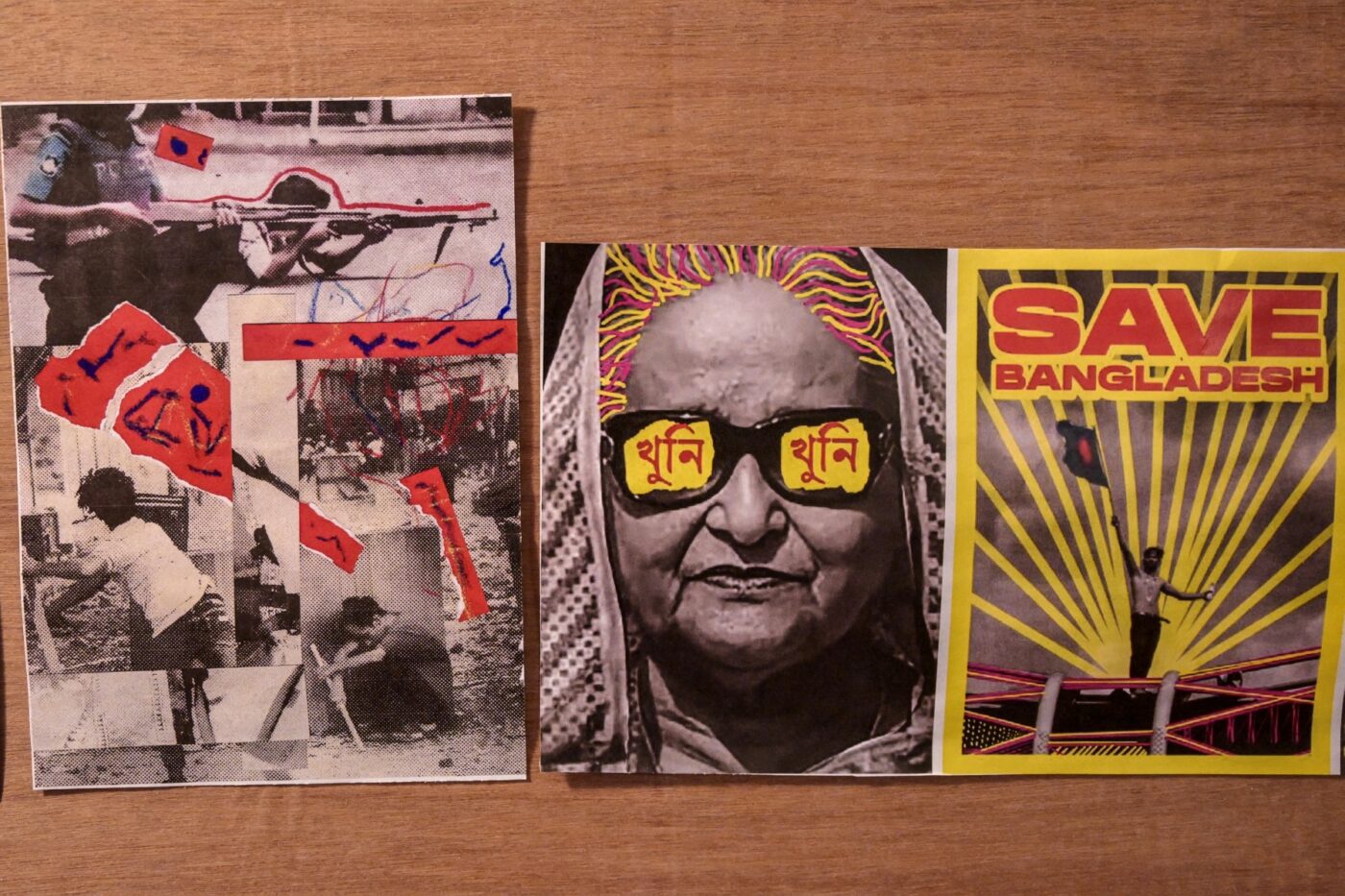
In this photograph taken on July 28, 2025, images and cartoons related to Bangladesh’s ousted prime minister Sheikh Hasina are seen pasted on a board inside her former official residence before the inauguration of the July Memorial Museum in Dhaka. Once a heavily guarded palace, the former official residence of Bangladesh’s ousted prime minister Sheikh Hasina is being turned into a museum as a lasting reminder of her autocratic rule. (Photo by Munir UZ ZAMAN / AFP) /

As Rahman faces pressure, especially from the opposition, he must weigh in on Hasina’s presence while visiting India. His government’s grievance, also used as leverage, affects ties with Delhi.

Delhi, meanwhile, has a larger strategic interest: building a workable relationship with the government in Dhaka, whoever leads it. Bangladesh is too important to India to let the relationship remain permanently hostage to a former prime minister’s fate.

That is why the proposed Tarique visit matters. But it is also why it is difficult. There is a certain diplomatic stalemate.

Dhaka cannot easily separate Hasina’s presence in India from its own domestic politics. It wants Delhi to accept the new political reality. Yet the Hasina question remains the most emotionally and politically charged issue between them.

Both neighbors want a relationship based on mutual interests and reciprocity. But neither wants to be seen conceding on Hasina to facilitate Rahman’s visit. Any ‘understanding’ with India on this would expose Rahman at home to the charge of having surrendered.

This explains why Rahman’s visit in November is possible, but not certain.

Because after November comes December.

Assuming Hasina returns, another question becomes unavoidable: what happens to her safety?

If the Rahman government arrests and prosecutes her, it is also duty-bound to protect her.

It may regard her as responsible for grave political and human-rights abuses. It may even seek to establish her responsibility through courts. But it cannot allow her fate to be decided by an assassin, a mob or an extremist organization.

With several past attempts on her life, Hasina herself has acknowledged that she could face death if she returns. The Bangladesh government has responded by saying that she would receive full security and legal protection.

The world witnessed the assassination of another former prime minister, Benazir Bhutto of Pakistan, in 2007. It reminds us that government protection does not make an extremist threat disappear. A politically prominent person can remain a target even when the state has formally undertaken to protect her.

One would not like to push the Benazir angle too far. Nothing so far suggests a conspiracy or that Hasina is destined to meet the same fate. But religious extremism has deep roots in Bangladesh. It also witnessed killings of people in jail in 1975. Hence, the threat to Hasina’s life cannot be dismissed.

That creates a paradox for Rahman’s government. It is not just a political gesture to an adversary; Hasina’s protection is a state obligation.

Indeed, this matters because Hasina is not merely another former prime minister. She is the daughter of Sheik Mujibur Rahman and has been at the center of Bangladesh’s political life for decades. To her supporters, she represents a political tradition that is now under assault. To her opponents, she represents a period of authoritarian rule for which she must answer.

If she returns and faces trial, Bangladesh will certainly be under an international microscope. If the proceedings are conducted peacefully and in accordance with the law, the government can argue that the country has chosen the judicial route.

If she is imprisoned, the government will have to show that imprisonment is not an excuse for political revenge.

And if, despite state protection, she were killed by extremists, the political consequences could be enormous—even if the government itself had nothing to do with the assassination.

Hasina could become a martyr. The now-banned Awami League could acquire a powerful new symbol. The new government’s credibility could be damaged. And Bangladesh’s already polarised politics could become even more dangerous.

Both must consider the wider strategic considerations.

India cannot build its Bangladesh policy entirely around Hasina.

Her nearly 16-year rule created a close relationship between New Delhi and Dhaka, particularly on security and connectivity. But governments change. India has to deal with the Bangladesh that exists, not simply the Bangladesh it would prefer to see.

That means engaging Tarique Rahman’s government. It means rebuilding political contacts and restoring economic and commercial links. It means addressing border security, connectivity, water, the Northeast, and China’s growing influence. It means recognizing that the new Bangladesh will have its own political priorities.

But normalization does not require India to forget Hasina. Nor does it require Bangladesh to abandon its demand for justice.

Perhaps the two countries can eventually learn to separate these questions.

Tarique Rahman can visit India.

  • OPED by Mahendra Ved
  • President (2016-2022), Commonwealth Journalists Association (CJA)

The post Hasina’s Return to Bangladesh is the Price of PM Tarique Rahman’s Visit to India. Are Delhi & Dhaka Both Stuck appeared first on EURASIAN TIMES.

  •  

OPED: While Pakistan Guns Down Civilians in PoJK, Mainstream Politicians Play the Separatist Card in Jammu & Kashmir

For decades, Kashmir’s mainstream political parties have been accused of using separatist rhetoric as a tool for electoral mobilization while shaping narratives that, critics argue, benefited Pakistan’s propaganda

Recently, Mehbooba Mufti, the president of the Jammu and Kashmir People’s Democratic Party (PDP) and former Chief Minister of Jammu and Kashmir, announced that the party will hold protests across all district headquarters in Jammu and Kashmir on August 5, demanding the return of special status and asserting that the Kashmir issue must be resolved.

At a time when many people in the Valley have moved on from such issues, Mufti appears to be trying to keep separatist ideology and sentiment alive by once again raising these themes and playing the separatist card to achieve her political objectives.

Her latest remarks become even more striking when viewed against the backdrop of the ongoing violence in Pakistan-occupied Jammu and Kashmir. (PoJK).

As the Pakistani forces are killing innocents in PoJK, the situation has worsened drastically, with 80 people killed since June, including a brutal escalation in which over 20 civilians were gunned down in just 24 hours.

During the long march, Pakistani forces, Rangers, and snipers deployed across Rawalakot and Mirpur have been directly firing live ammunition at unarmed civilians, leaving hundreds critically injured. The Pakistani forces have also reportedly occupied hospitals, cut off electricity and water supplies, and are not allowing the wounded to receive treatment while enforcing a total communication blackout.

There are also reports that the bodies of those killed are being taken from hospitals and that injured civilians are being removed from medical facilities by security forces. But in Kashmir, no mainstream political party, so-called activists, or others will condemn these Pakistani atrocities because they do not want to upset or openly criticize Pakistan.

Mainstream Political Rhetoric and the Separatist Narrative

More importantly, many Kashmiris on social media, instead of condemning these actions, are justifying them by saying that similar things happen in Yemen and other conflict zones, thereby trying to dilute the impact of the atrocities taking place there. In reality, the atrocities committed by Pakistani forces against innocent civilians have severely damaged their evil agenda and their larger game plan to undermine India. Therefore, they cannot condemn these killings or show solidarity with the victims, choosing instead to deflect attention away from Pakistan’s brutality.

Earlier also, Mehbooba Mufti made highly controversial statements painting a false picture of peace in PoJK, claiming that the people there were happy under Pakistan’s administration. Her dangerous rhetoric was instantly weaponized by Pakistani intelligence agencies and state media for anti-India propaganda.

Former Pakistani Foreign Minister Bilawal Bhutto even directly cited her statements on the floor of the National Assembly to fuel Islamabad’s false narrative on Kashmir on the global stage, explicitly quoting her claims to argue that “even India’s own elected leaders acknowledge the satisfaction of the people under our administration.”

Likewise, earlier, Srinagar Member of Parliament Aga Syed Ruhullah Mehdi, while referring to the recent atrocities in PoJK, deliberately drew a moral equivalence by comparing the situation in Indian Kashmir with Pakistan-occupied Kashmir. Speaking in Budgam, Mehdi claimed that people on both sides of the Line of Control have “suffered” equally and have been rendered “powerless”.

By stating that the situation is essentially the same “there and here,” his remarks explicitly serve to downplay the horrific atrocities, live ammunition firing, and brutal crackdowns that the Pakistan Army and Rangers are committing against innocent civilians in PoJK.

Instead of directly and unequivocally calling out Islamabad’s severe state-sponsored violence, his deliberate attempt to equate India’s democratic governance with Pakistan’s oppressive military occupation reveals a calculated agenda to dilute the gravity of Pakistan’s human rights violations, showing that certain mainstream leaders are more interested in deflecting for Pakistan than standing up for the truth.

Recently, he also went to Jantar Mantar when hundreds of students, backed by the Cockroach Janta Party movement, were holding major demonstrations demanding examination transparency over national exam controversies like the NEET-UG paper leaks. Instead of talking about the examination irregularities, addressing the plight of the distressed aspirants, or showing genuine solidarity with the students demanding accountability, he hijacked the platform to preach about the restoration of Article 370—an agenda that had absolutely no connection to the education crisis at hand.

He asked the crowd, “Did Article 370 come from Pakistan’s constitution or India’s constitution? These were the constitutional guarantees of this country.” He further shifted the focus by stating, “Kashmir has lived through this silencing for years. Today, the same is happening to you. This chain must break.” This blatant exploitation of a student-led grievance to push his own regional political narrative proves that his priorities lie entirely in keeping his separatism-tinted propaganda alive.

Similarly, earlier, when the Jammu and Kashmir Union Territory Budget was announced, and grants were provided by the Central Government, PDP youth leader Waheed-ur-Rehman Para launched a malicious attack on India’s financial system by explicitly comparing the budget allocation to “colonialism.”

Speaking aggressively against the central funding framework, Para claimed that the financial package and the extension of market-linked SASCI (Special Assistance to States for Capital Investment) loans were a deliberate plot to trap Jammu and Kashmir in a massive debt cycle, even comparing the situation to the economic collapse of Sri Lanka.

By labeling the central government’s development grants as a tool of colonial exploitation, his toxic rhetoric deliberately treated Kashmir’s integration into the national fiscal framework as an external imposition. Through this narrative, he acted as if Kashmir were a separate, occupied nation rather than an integral part of India, proving once again that these leaders will shamelessly manipulate financial data to fuel their anti-India propaganda.

Repeatedly, many mainstream leaders have used separatist language in Kashmir, such as making highly dangerous and unsubstantiated claims about demographic change, and making other rhetorical statements against India.

For instance, PDP president Mehbooba Mufti explicitly targeted central welfare initiatives like the Pradhan Mantri Awas Yojana (PMAY), aggressively claiming that providing land plots to the homeless was a disguised attempt to “import slums and poverty” and deliberately alter the Muslim-majority demographic composition of the region.

She went as far as tweeting that state-backed infrastructure and urban township proposals were part of a “deliberate state engineering” plan for mass settlements. Similarly, National Conference MP Aga Syed Ruhullah Mehdi has continuously used high-profile platforms to push a toxic narrative of systematic “disempowerment,” claiming that the post-2019 administrative framework is causing forced demographic changes and local alienation.

By generating these toxic domestic narratives, these leaders directly fuel the anti-India propaganda machinery operated by Pakistan, proving that their rhetoric is perfectly aligned with Islamabad’s agenda to undermine India’s sovereignty.

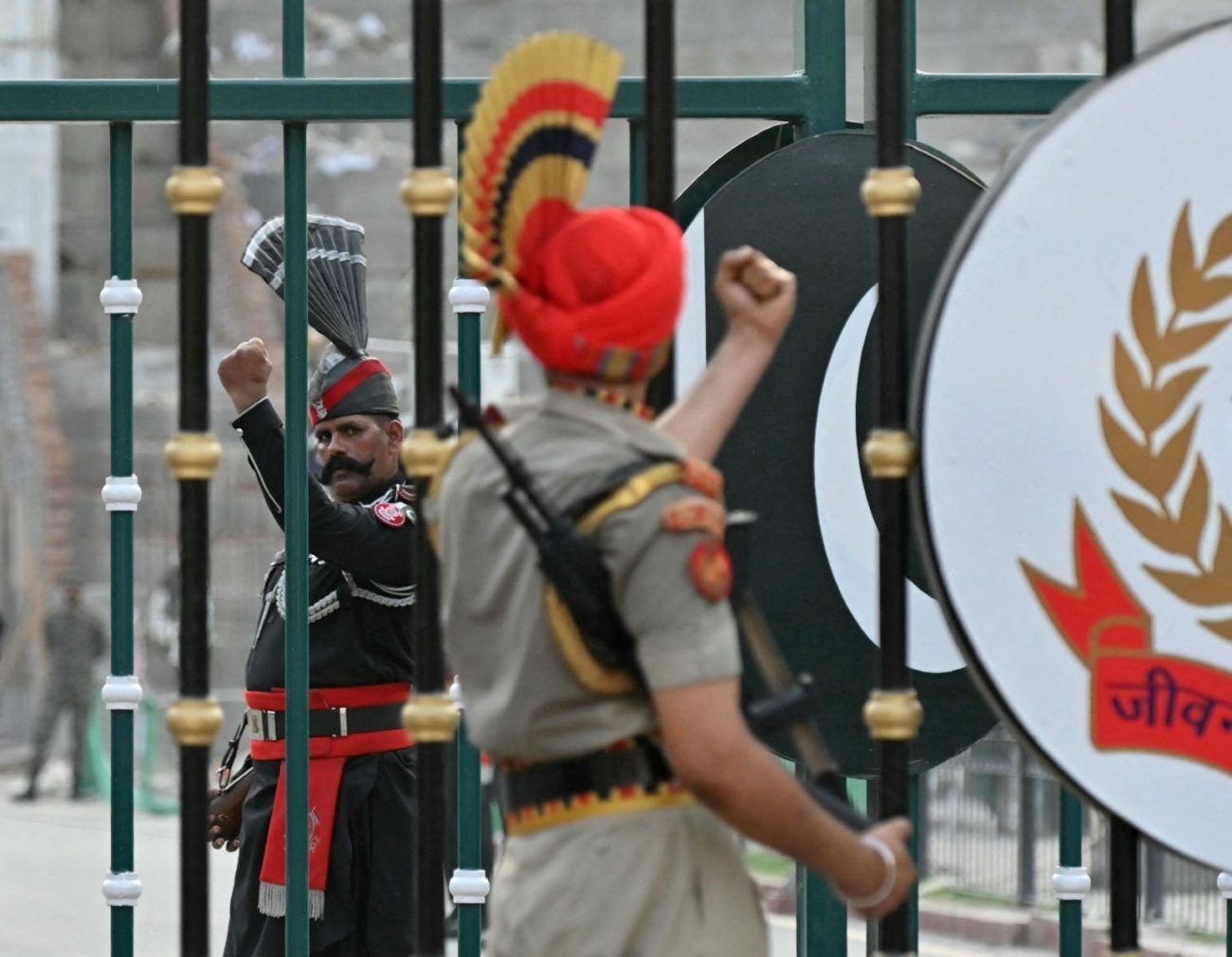
Pakistani Rangers (L) and Indian Border Security Force (BSF) personnel perform during the beating retreat ceremony at the Attari-Wagah border between Pakistan and India, on the outskirts of Amritsar on May 20, 2025. India said on May 20 it would resume a daily border ceremony with neighbouring Pakistan which it briefly halted earlier this month following the most serious conflict between the nuclear armed arch-rivals for decades. (Photo by Narinder NANU / AFP)

Political Ecosystem That Sustained Separatism

Who can forget the Assembly elections in J&K when some of these regional parties used to orchestrate a highly calculated booth-capturing tactic? They would deliberately instruct their dedicated voters and cadre to cast their votes early in the morning, within a strict, specific timeframe right as the polling booths opened.

Immediately after securing their own voter base, their party workers and mobilized miscreants would launch heavy, pre-planned stone-pelting campaigns directly targeting the polling stations to enforce a terror-induced shutdown. This violent strategy effectively blocked the general public and voters supporting other nationalist or mainstream parties from ever reaching the booths.

Later, instead of exposing this local voter suppression, these same regional leaders and separatist elements would project the dismal voter turnouts at the global level as a voluntary political “election boycott” by the people of Kashmir.

This deceptive narrative was instantly grabbed and weaponized by international forums and Pakistani state networks to run an extensive, malicious propaganda campaign against India, falsely claiming that Kashmiris had completely rejected the Indian democratic process when, in reality, their democratic rights had been violently hijacked by local party-backed stone-pelters.

If Pakistan has been responsible for spreading terrorism in J&K, these certain local mainstream parties, through their rhetoric and political strategies, have also been equally responsible for perpetuating and sustaining this separatism. Even during elections, and even today, they repeatedly use the separatist card and raise such issues as if Kashmir were a distinct territory. Whenever they ask for votes, they use separatist rhetoric to achieve their political objectives.

They have exploited the unrest in Kashmir in the past while amassing immense wealth, building massive private empires through rampant corruption and nepotism. For decades, they constantly provided misinformation to the Central Government, deliberately painting J&K as an unmanageable powder keg and keeping New Delhi in a permanent state of fear by misrepresenting the actual ground situation to sustain their own political monopolies.

Even when India historically abrogated Article 370 on August 5, 2019, they shamelessly resorted to the exact same fear-mongering and provocative statements. Most notoriously, PDP president Mehbooba Mufti explicitly declared that if Article 370 were ever removed, “there will be no one left in Jammu and Kashmir to hold the Indian tricolor,” a highly inflammatory claim designed to spark mass violence.

Even during the 1990s and afterward, some of these regional parties and their leaders actively worked with separatists, maintaining close ties with them and with Pakistan to play both sides against each other.

During the height of terrorism in the 1990s, political figures repeatedly maintained backchannel links with the All Parties Hurriyat Conference and Hizbul Mujahideen commanders to secure political leverage while simultaneously drawing administrative resources from New Delhi.

Dismantling the Remaining Separatist Ecosystem

The credit goes to the Central Government after 2019 for bringing monumental changes by dismantling the ecosystem of subversion, but much more still needs to be done. The Jamaat-e-Islami (JeI) Jammu and Kashmir, which remains banned under the Unlawful Activities (Prevention) Act (UAPA), must be subjected to round-the-clock surveillance, especially as its proxy elements continue trying to operate through covert networks.

There must be a razor-sharp focus on the massive inflow of funds coming into the region through fake charities, hawala routes, and cross-border shell entities. At the same time, social media platforms should be closely monitored for coordinated influence operations, disinformation campaigns, or content that unlawfully incites violence or supports terrorism, including attempts to downplay or justify Pakistani atrocities.

The comment sections of social media posts related to these incidents should also be closely watched, as they may reveal coordinated campaigns to deflect attention from or justify such violence.

At the higher education level, the politics and history of Jammu and Kashmir taught in universities and colleges should also be reviewed to ensure that the curriculum does not reinforce narratives portraying the region as inherently separate from the rest of India by overemphasizing notions of a “distinct identity,” “special status,” or political exceptionalism in a manner that fosters feelings of separateness.

Specifically, modules covering the Dogra period, the 1947 Instrument of Accession, and post-independence constitutional history should be re-examined. Instead, academic content should be factually rigorous, balanced, and aligned with constitutional values and the broader objective of national integration. Such vigilance should extend beyond educational institutions to the wider information ecosystem.

Furthermore, the state must implement rigorous audits and oversight mechanisms over all regional publications. The radical literature and ideological publications of any organization—including JeI’s propaganda materials or local newspapers in Jammu and Kashmir that may act as mouthpieces for Islamabad—must be strictly monitored and checked.

Allowing local platforms to subtly print soft-separatist columns or spread Pakistan’s twisted narrative under the guise of free press directly fuels radicalization.

Those seeking to undermine India’s unity and sovereignty must not be permitted to exploit the civil rights and democratic freedoms guaranteed by the Indian Constitution to propagate separatist or anti-national narratives. Freedom of expression cannot be used as a shield for promoting ideologies that threaten the constitutional order and national integrity.

Enforcing the J&K Media Policy with zero-tolerance penalties is essential to ensure that no platform is ever weaponized to promote separatism or undermine national sovereignty.

  • The Author is a prominent writer from Jammu and Kashmir. He has requested to remain anonymous due to security reasons.
  • THIS IS AN OPINION ARTICLE. VIEWS PERSONAL OF THE AUTHOR

The post OPED: While Pakistan Guns Down Civilians in PoJK, Mainstream Politicians Play the Separatist Card in Jammu & Kashmir appeared first on EURASIAN TIMES.

  •  

NATO Faces Biggest Challenge in Years: Military Power Grows, Political Consensus Shrinks — Threatening the Alliance

OPED by Wg Cdr J P Joshi (Retd)

For nearly eight decades, NATO has been the most successful military alliance in modern history. Created in 1949 to deter Soviet expansion and defend Western Europe, it prevented a major conflict on the continent, survived the Cold War, adapted after the collapse of the USSR, expanded from the founding 12 to 32 members, and regained strategic relevance after Russia’s invasion of Ukraine.

Yet NATO’s success has produced an unexpected dilemma.

The Alliance has never been militarily stronger. European Allies and Canada are assuming greater responsibility for their security, defense spending is increasing, defense industries are expanding, and capabilities are improving. But military strength alone does not determine the effectiveness of an alliance.

The more fundamental question is political: For what purpose should that military power be employed?

The challenge confronting NATO today is no longer merely building stronger armed forces. It is achieving a common political understanding among 32 sovereign democracies about when, where and why those forces should be used.

The NATO Summit held in Ankara in July 2026 brought this paradox into sharp focus.

President Donald Trump described the summit as a “tremendously successful summit.”

The statement was significant because the meeting took place amid considerable political turbulence. In the period preceding the summit, President Trump had criticized Allies over defense spending, questioned burden-sharing, described Spain as a “terrible partner” and a “wasted cause,” and adopted a more transactional approach towards alliance relationships.

Yet the institutional message from NATO was one of confidence.

Secretary General Mark Rutte emphasized that the Alliance had delivered: increased defense investment, improved capabilities, expanded defense-industrial production and greater responsibility being assumed by European Allies and Canada. “We are rebalancing our security for the better, and that is what NATO 3.0 is all about,” he stated.

The Ankara Summit Declaration reaffirmed the traditional foundation of the Alliance by stating, “We, the Heads of State and Government of the North Atlantic Alliance, have gathered in Ankara to reaffirm our ironclad commitment to our collective defense under Article 5 of the Washington Treaty and to the transatlantic bond.” Thus, measured against immediate objectives, Ankara was a success. NATO demonstrated unity. It strengthened deterrence. It accelerated military adaptation. However, beneath the declarations of unity lies a deeper question.

Has NATO’s military adaptation proceeded faster than its political adaptation? The Ankara summit answered the question of capability. It did not fully answer the question of purpose.

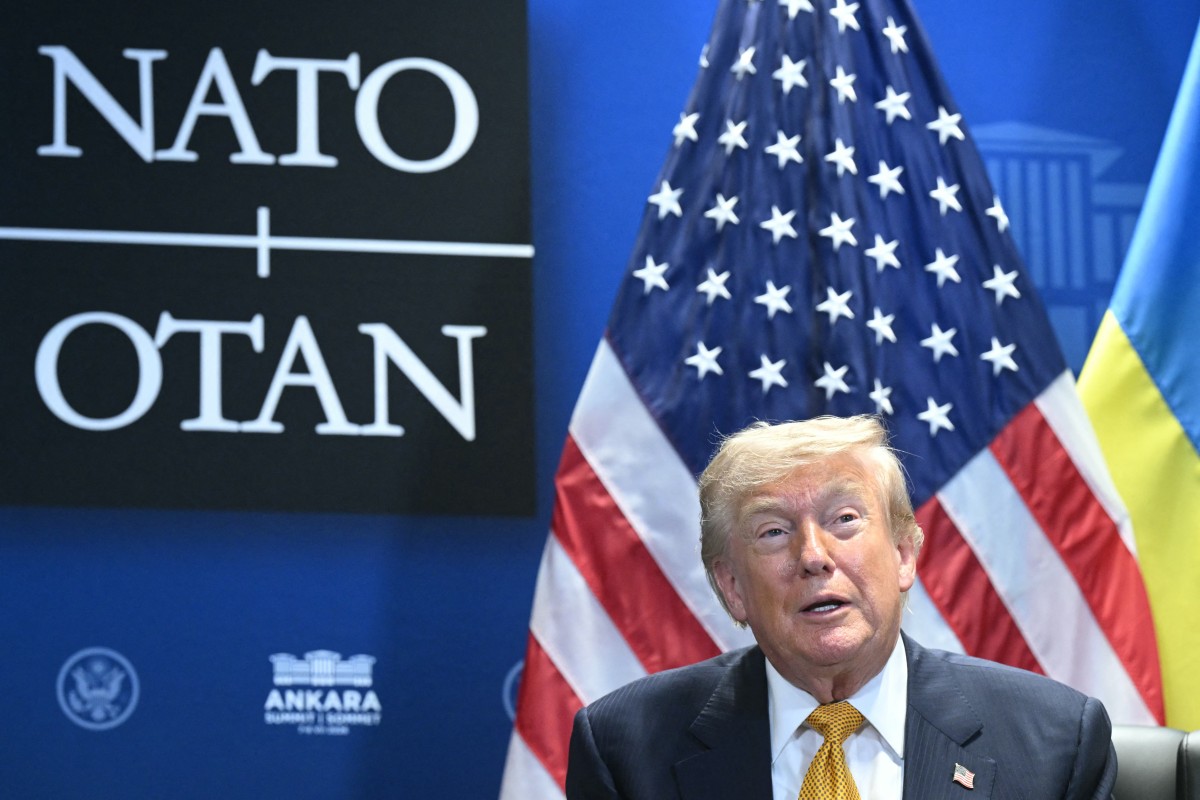
US President Donald Trump meets Ukraine’s President (not pictured) on the sidelines of the NATO Summit at Bestepe Presidential Compound in Ankara, on July 8, 2026. The summit comes at a fraught time for the 77-year-old transatlantic alliance, with the US President demanding members make good on a pledge to ramp up defence spending as Washington takes a step back from Europe. (Photo by SAUL LOEB / AFP)

The Original NATO Compact

To understand the current dilemma, it is necessary to return to its origins.

When the Washington Treaty was signed in 1949, the strategic environment was fundamentally different from today. The threat was identifiable, geography was defined, and the nature of conflict was understood.

The Soviet Union represented the principal military challenge. NATO was created to answer a straightforward question: What should the Alliance do if the Soviet Union attacked Western Europe?

The answer was Article 5, which stated, “The Parties agree that an armed attack against one or more of them in Europe or North America shall be considered an attack against them all.” Article 6 further defined the geographical scope of this commitment.

The original NATO framework rested on three assumptions: a defined geographical theatre; a clearly identifiable adversary; a conventional understanding of armed attack.

These assumptions created strategic clarity.

However, another feature of Article 5 was equally important: ambiguity.

The Article did not create an automatic declaration of war by all members following an attack. Instead, it stated that each Ally would take “such action as it deems necessary, including the use of armed force.”

This ambiguity was deliberate. The architects of NATO understood that an alliance of sovereign democracies could not function if governments surrendered independent control over decisions involving war and peace. The United States Senate would not have accepted an unconditional commitment to fight in every possible circumstance. European democracies would not have accepted such a structure either. The compromise was thus carefully designed.

Article 5 created deterrence by assuring adversaries that an attack against one Ally would involve all. At the same time, it preserved political sovereignty by allowing each member to determine the nature and scale of its response. The ambiguity was not a weakness. It was the political innovation that made NATO possible. During the Cold War, this formula worked because the political compass and the military instrument were aligned: The adversary was clear, the geography was clear, and so was the purpose.

Today, the challenge is not that Article 5 has become irrelevant. The challenge is that the world in which Article 5 operates has changed from one threat to multiple challenges.

The first major test of NATO’s traditional understanding of collective defense came not from a conventional military adversary, but from terrorism. The attacks of 11 September 2001 transformed the strategic environment. For the first, and only, time in NATO’s history, Article 5 was invoked.

The United States had suffered an attack on its territory, but the attacker was not another state. It was Al Qaeda, a transnational terrorist organization, operating from Afghanistan. The invocation demonstrated political solidarity. However, the military response revealed an important distinction. NATO could agree that an attack had occurred.

Achieving agreement on the objectives, duration and methods of response proved far more difficult. The operations in Afghanistan were supported by individual Allies according to national decisions and domestic political processes. The United Kingdom joined the United States in military operations against the Taliban. Germany’s participation required parliamentary approval. Other Allies faced their own political constraints.

The lesson was significant. Collective defense and collective action were not necessarily the same. This distinction became even clearer during the Iraq War. Although Iraq was not an Article 5 operation, the conflict produced deep divisions among Allies. Some supported the intervention; others opposed it.

Afghanistan and Iraq demonstrated that even close allies may agree on the existence of a security challenge while differing on the appropriate response. The ambiguity built into Article 5 remained intact. But the political consensus required to employ military power became more difficult to achieve.

 A Larger Alliance, A More Complex Consensus

The post-Cold War period transformed NATO in ways its founders could not have anticipated. The disappearance of the Soviet Union removed the adversary around which the Alliance had been organized.

Some questioned whether NATO had a future. Instead, it adapted: It expanded; it developed partnerships; it undertook crisis-management operations; it addressed new forms of conflict. This adaptability became NATO’s greatest strength.

However, it also introduced a fundamental challenge: the broader the Alliance became, the more difficult it became to maintain a single strategic perspective. NATO’s expansion from 12 founding members to 32 members today represents one of the Alliance’s greatest achievements.

For countries that had experienced Soviet domination, membership represented not merely a military commitment but a historic political transformation. It brought former adversaries into a community built around democratic values and collective security. Yet enlargement also changed the internal dynamics of NATO.

The original members largely shared a common understanding of the Soviet threat. Today, Allies do not necessarily perceive security challenges in the same way. For countries on Russia’s flank, particularly after Russia’s invasion of Ukraine, Moscow remains the immediate and existential concern.

For southern European members, instability in the Middle East and North Africa, terrorism and migration pressures remain significant security challenges.

For the United States, strategic competition with China increasingly defines the long-term challenge.

These differences do not indicate a failure of Alliance solidarity. They reflect the reality that a larger alliance of sovereign democracies will naturally contain different national priorities. The challenge is to convert these different priorities into a common strategic purpose.

It is not only the different priorities; the strategic environment has also transformed over the years.

A Changing Definition of Attack

In 1949, geography largely defined security; an attack meant military forces crossing borders; aircraft striking territory or naval forces threatening allied nations.

Today, conflict increasingly occurs across multiple domains. Cyber operations can disable critical infrastructure without conventional military action. Attacks on satellites can affect military capabilities and civilian systems.

Sabotage of undersea cables can disrupt communications and economic activity. Disinformation campaigns can weaken democratic institutions. Economic coercion can become a strategic weapon. The question facing NATO is therefore more complex than it was during the Cold War.

What constitutes an attack serious enough to trigger collective defense? Would a major cyberattack qualify? Would destruction of critical infrastructure? Would sustained hybrid operations designed to destabilize an Ally?

These questions do not make Article 5 obsolete. They make political interpretation more important. The ambiguity that strengthened deterrence during the Cold War now requires greater clarity among Allies about how emerging forms of aggression should be addressed.

In 1949, geography defined the threat and military force defined the attack. In 2026, neither assumption remains sufficient.

The China Question

The rise of China represents perhaps the most significant debate about NATO’s future role. The United States increasingly views China as the principal long-term strategic competitor. Washington has encouraged European Allies to recognize that economic, technological and military competition with Beijing has implications beyond the Indo-Pacific.

However, European perspectives remain more cautious. Many European countries recognize China’s growing military capability and strategic influence, but do not view Beijing as a direct military threat to European territory in the same way as Russia. To them, China represents an economic partner, a technological competitor, and a strategic challenge simultaneously. This complexity makes consensus difficult.

The limited emphasis on NATO’s Indo-Pacific partnerships at the Ankara Summit reflected this unresolved debate. The fundamental question remains: Should NATO remain primarily a Euro-Atlantic defense alliance, or should it evolve into a broader organization addressing global security challenges?

Both approaches carry risks. An alliance that expands its mission excessively risks strategic overreach. An alliance that refuses to adapt risks strategic irrelevance.

Iran and the Limits of Military Solidarity

Iran illustrates another dimension of NATO’s challenge. Most Allies recognize concerns regarding Iran’s nuclear ambitions, missile capabilities, regional influence, and support for proxy groups. Yet recognizing a threat does not automatically create agreement on the use of force.

The US-Israel military operation against Iran highlighted this distinction. The decision for military action was primarily a US-Israel decision. However, expectations that NATO Allies would support secondary tasks, including maritime security operations in the Strait of Hormuz, revealed differing political perceptions.

The issue was not simply whether Allies possessed the capability. The issue was whether they possessed the political mandate. Military power is ultimately a tool to achieve political ends. Without political consensus, even the most capable alliance faces limitations.

Ukraine: Unity With Boundaries

The war in Ukraine has been the most significant test of NATO’s post-Cold War relevance. The Alliance demonstrated remarkable unity. Members provided weapons, intelligence, training, financial assistance and political support. However, Ukraine did not receive NATO membership or the security guarantee of Article 5. This reflected a difficult balance.

NATO wanted to support Ukraine’s sovereignty and resist Russian aggression. At the same time, Allies sought to avoid direct military confrontation between NATO and Russia. Ukraine therefore illustrates both NATO’s strength and its restraint. The Alliance possesses enormous military capability. However, political decisions determine how that capability is employed.

The Trump Factor: An Accelerator, Not the Cause

President Trump’s transactional approach to alliances has intensified debates within NATO. His criticism of defense spending, questioning of burden-sharing and expectations of greater Allied support have brought existing tensions into sharper public view.

However, these challenges did not originate with one individual or one administration.

Differences over defense priorities, Russia, China, European strategic autonomy and the global role of NATO have existed for years. President Trump has acted less as the cause of NATO’s uncertainty than as an accelerator, forcing Allies to confront unresolved questions.

Ankara: A Stronger Sword, But an Uncertain Compass

The Ankara Summit should therefore be viewed in context. It was a success in terms of military adaptation. Defense spending commitments increased. Capabilities improved.

Industrial capacity expanded. NATO demonstrated that it could sharpen its sword. But the summit also highlighted the continuing challenge of political purpose.

Disagreements over defense commitments, China, Iran, Ukraine and the future role of NATO indicate that the Alliance’s central challenge is not military weakness.

It is strategic convergence.

The Political Compass: Article 2 and Article 5

The future of NATO depends not only on Article 5 but also on Article 2. Article 5 is the sword. Article 2 is the compass.

The Washington Treaty’s Article 2 commits members to “strengthening free institutions”, by “promoting conditions of stability and well-being”, maintaining consultation among Allies. During the Cold War, political consultation created the shared understanding necessary for collective defense.

Today, NATO’s military commitment remains strong. The greater challenge is maintaining the political consensus required to determine when that commitment should be employed.

The present dilemma is therefore not primarily an Article 5 problem. It is an Article 2 problem. The Alliance does not lack a collective defense commitment.

It faces a more difficult question: Can thirty-two democracies maintain a shared strategic understanding of the threats they face and the circumstances under which military power should be used?

Conclusion: NATO’s Sharper Sword Needs a Clearer Strategic Compass

NATO has repeatedly demonstrated its ability to adapt. It adapted after the Cold War. It adapted after 9/11. It adapted after Russia’s invasion of Ukraine.

The Ankara Summit demonstrated another phase of military adaptation. Defense spending is rising. Capabilities are improving. The defense industrial base is expanding.

NATO has sharpened its sword. But history shows that military power alone does not determine the success of alliances.

The effectiveness of an alliance depends on the relationship between capability and purpose. The ambiguity of Article 5 was not a weakness in 1949. It was a carefully designed political achievement that allowed sovereign democracies to unite while preserving national decision-making. The question today is whether that same flexibility can continue to provide strategic clarity in a world where threats are increasingly complex and perceptions increasingly diverse.

NATO’s future will not be determined solely by defense budgets, weapons systems or military readiness. It will depend on whether its members can sustain a shared political purpose that provides direction to their collective power. The challenge confronting NATO is no longer merely building stronger armed forces. It is achieving a common understanding of when, where and why those forces should be employed.

NATO has sharpened the sword. Whether it also possesses a shared political purpose that can serve as a reliable strategic compass remains the defining question confronting the Alliance.

  • Wg Cdr J P Joshi is a veteran of the IAF, a regular contributor, who has commanded a front-line fighter squadron; is a graduate of Air Command and Staff College, Maxwell AFB, AL, USA; and has been a Directing Staff at the Defense Services Staff College, Wellington.
  • Contact the author at: jpjoshiindia (at) yahoo.co.in

The post NATO Faces Biggest Challenge in Years: Military Power Grows, Political Consensus Shrinks — Threatening the Alliance appeared first on EURASIAN TIMES.

  •  

“This is Ultimately Iran’s War to Lose”: Ex-Indian Ambassador on Tehran’s Dangerous Hormuz Strategy

OPED by Raghu Gururaj, Retired Ambassador and former Indian diplomat

The Gulf crisis has crossed the boiling point. As Donald Trump bombarded key Iranian infrastructure targets this week to force a negotiation, defiant Tehran promptly retaliated, killing three US soldiers at a military base in Jordan and attacking a desalination plant and an oil facility in Kuwait

Few wars in recent history have threatened to inflict such enduring damage on the global economy while offering so little strategic payoff.  Until recently, one of the world’s busiest and most critical maritime corridors, Hormuz, had been a theatre for geopolitical confrontation.

Prosperous Gulf economies, long regarded as islands of stability, now find themselves under the constant shadow of missile strikes.

Irrespective of the eventual military outcome, the economic costs of the ongoing Gulf war will far outlive its battlefield gains. Even if one accepts that Israel and the United States initiated the military confrontation, Iran is now compounding that error by widening the battlefield to Gulf states.

Iran is playing a dangerous game and may have crossed a strategic Rubicon. There are many reasons why this war is working against Tehran’s long-term interests.

Iran cannot change its location

Firstly, Iran’s decision to militarily attack Gulf countries is strategically perplexing. Even those Gulf states that had sought a pragmatic modus vivendi with Iran now view it through a harsher security lens. Israel has the backing of the United States.

The Gulf monarchies possess enormous financial reserves and can rebuild damaged infrastructure. Global shipping will eventually find alternative routes. But Iran cannot change its geography. It will remain surrounded by the very Gulf states whose trust it is now eroding.

Throwing away painstaking regional diplomacy

Secondly, Iran may well remember where it was only a few years ago. Ironically, it entered this decade with an opportunity to escape years of isolation. The restoration of diplomatic ties with Saudi Arabia (brokered by China), improved relations with the UAE and a broader desire for regional deescalation offered Tehran a chance to re-enter Gulf politics as a legitimate regional stakeholder.

By widening the conflict, Iran now risks throwing away years of diplomatic rehabilitation.

Iran’s structural economic weakness

Third, Iran’s own economy cannot sustain permanent confrontation. It entered the conflict from a position of structural weakness. Years of sanctions, inflation, currency depreciation and under-investment have left little margin for prolonged regional confrontation. Every additional crisis further discourages investment, accelerates capital flight and youth unemployment, and delays economic recovery.

Iran’s ability to influence regional disparities is a double-edged sword

Fourth, a strategic advantage which Iran possesses is that it derives influence from regional divisions. But any future reconciliation between Israel and an Arab neighbor, every settlement in Yemen or Lebanon, every alternative trade and energy corridor to the Strait of Hormuz reduces Tehran’s strategic relevance.

The most effective response to Iranian coercion is therefore not more coercion, but making Iran gradually less central to the region’s security and commerce.

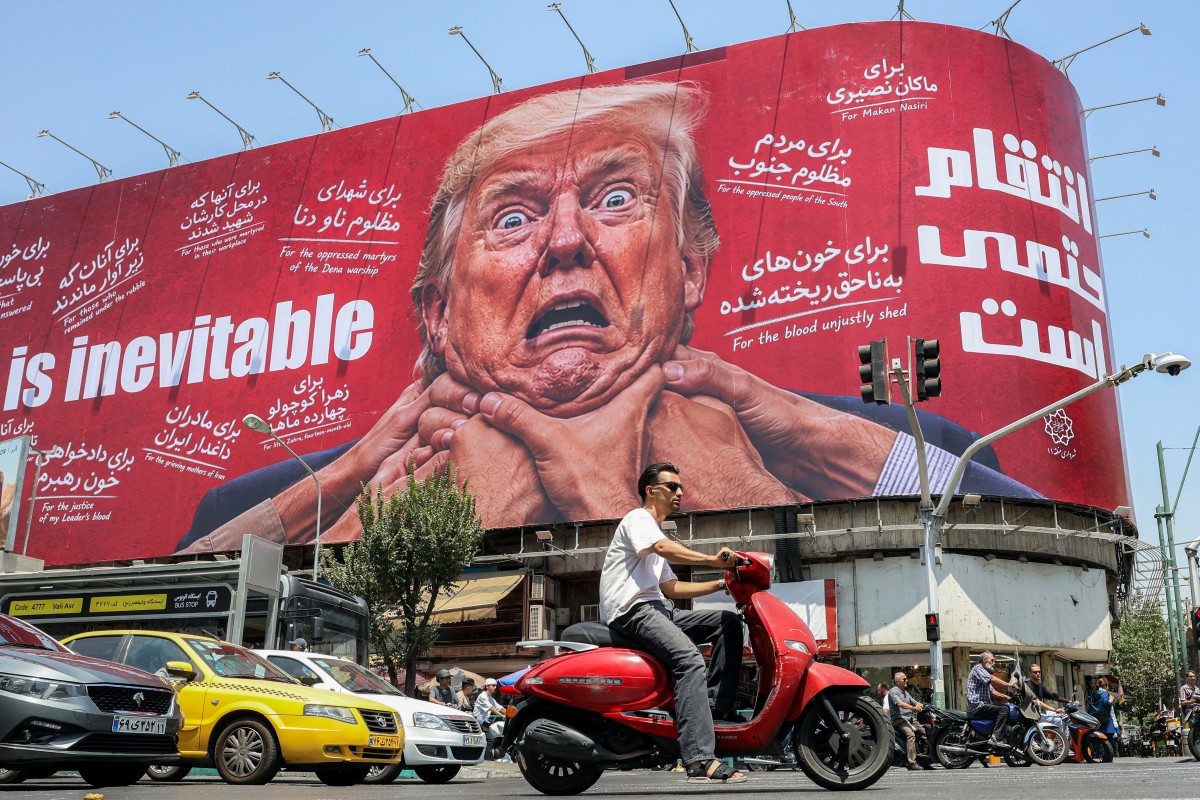
Motorists drive past a large billboard pledging revenge against US President Donald Trump along Jomhouri Street in central Tehran on July 27, 2026. Iran’s foreign ministry said on July 27 that the US was not involved in recent talks with Oman over the administration of the strategic Strait of Hormuz. Traffic through the vital global shipping route has been under Iranian control since the outbreak of war with Israel and the United States on February 28. (Photo by AFP) /

Iran’s control over Hormuz is not absolute

Fifth, Iran is possibly making a strategic mistake forcing the rest of the world to find a sustainable and structural solution to get around the Hormuz problem. No doubt, Hormuz gives Iran leverage that cannot simply be wished away overnight.

The question, then, is how to reduce Iran’s ability to weaponize that leverage? This disruption has already compelled many Gulf States to launch or revitalize alternate energy infrastructure corridors. The UAE’s construction of a new pipeline and a new deep-water port on its east coast in Fujairah aims to reduce dependence on Hormuz.

A pipeline project to connect Iraq to Jordan to provide Kuwait, Bahrain, and Qatar alternative outlets for their energy exports is under serious discussion. If the India-Middle East-European Economic Corridor (IMEC) takes off, it will boost Gulf corridor connectivity.

During the Cold War, the West never tried to eliminate the Soviet Union’s strategic advantages overnight. Instead, it invested in alternatives until those advantages mattered less. The same logic could apply to Hormuz.

Iran’s post-war diplomacy faces challenges

Iran will find its post-war diplomacy challenging as long as it continues to threaten the security of the Gulf nations. India’s interests are already directly harmed through attacks affecting Indian nationals, shipping, or energy security.

The USA, Europe,and Israel remain firmly opposed to Tehran anyway. In this scenario, Iran’s diplomatic options narrow considerably. It would increasingly depend on China for energy purchases and investment and Russia for military, diplomatic, and technological cooperation.

It could also depend on a limited network of partners such as Iraq, Syria (contingent on developments), and some non-state allies. That is not an enviable position to be in. Excessive dependence on China and Russia also weakens Iran’s strategic autonomy because Beijing and Moscow will prioritize their own interests over Tehran’s in the long run.

What US strategy can alter Iran’s incentives?

 Whatever one’s assessment of how this conflict began, the United States also has choices to make to create an acceptable off-ramp for the major stakeholders. It has many levers, but only some are likely to change Iran’s strategic calculus. Iran’s economic reintegration is the strongest positive lever.

Iran desperately needs sanctions relief (even though it has lived under sanctions for decades), foreign investment, access to international banking, and modernization of its oil and gas sector. The US cannot offer these unconditionally, but it can make them contingent on Iran ending attacks on Gulf shipping, proxies, and regional infrastructure.

Iran wants recognition as a legitimate regional power. The US can either facilitate or block Iran’s entry into regional security dialogues and international economic forums. This matters because Iran has long argued that it deserves a seat at the regional table. The implicit bargain is that Iran can either remain isolated and economically stagnant or become a normal regional power. That is probably the most powerful long-term incentive.

The paradox is that Washington need not defeat Iran to change Iranian behavior. It only needs to convince Tehran that every attempt to exploit geography accelerates the world’s search for alternatives, weakens Iran’s regional standing and leaves it increasingly dependent on a shrinking circle of partners.

For that to happen, the US will have to find ways to gain some trust with the Iranian leadership. Iran will most likely dismiss American pressure with hostility, but may find it harder to ignore simultaneous pressure from a coalition comprising India, Japan, South Korea, the UAE, Saudi Arabia, the EU and others that have traditionally tried to maintain working relations with it.

A coalition in defense of freedom of navigation and regional stability would appear more reasonable to Iran than a coalition against itself.  China’s influence is often overlooked. It buys Iranian oil in bulk and wants uninterrupted Gulf trade. If Iran keeps threatening Hormuz, Beijing eventually has an incentive to pressure Tehran because instability hurts Chinese energy security.

A key insight for Iran

The key insight for Iran is that it can weaponize Hormuz only so long as the world remains highly dependent on it. Every missile that threatens the Gulf accelerates investments that reduce Iran’s leverage.

Every attack on shipping strengthens international resolve to diversify away from Hormuz. Every strike on a neighboring state diminishes the diplomatic goodwill Tehran will desperately need once the guns fall silent.  Iran can hold the world hostage for a while, but cannot build its future by doing so.

is the strategic paradox Tehran has to consider. That is why this is ultimately Iran’s war to lose.

  • Raghu Gururaj is a former Indian foreign service officer. He last retired from the post of Ambassador of India. His diplomatic assignments include Yemen, Singapore, Argentina, Switzerland, Saudi Arabia, Vietnam, Kazakhstan, Indonesia, and the Republic of Saotome and Principe. He has a master’s in economics and political science and a diploma in journalism. 
  • This is an Opinion Article. Personal views of the Author
  •  He can be reached on X: @Rgururaj7

The post “This is Ultimately Iran’s War to Lose”: Ex-Indian Ambassador on Tehran’s Dangerous Hormuz Strategy appeared first on EURASIAN TIMES.

  •  
❌