❌

Reading view

Ukraine’s Frodo robot carries wounded soldier in first reported evacuation

frodo robot

A company of unmanned ground systems from Ukraine's 92nd Assault Brigade used the robotic system Frodo to evacuate a wounded soldier, Frontline Robotics told Militarnyi on 7 October.

Ground robots are being used to evacuate wounded soldiers from the drone-dominated "kill zone," a band tens of kilometers deep on both sides of the front line. About 112,000 logistics and evacuation missions by ground robotic systems were recorded from January through August 2026, according to Ukraine's Defense Ministry.

Operator credits speed and suspension

The operator, callsign Tango, named speed and the ability to perform complex maneuvers as the robot's main advantages, according to Militarnyi. The unit also praised Frodo's adaptive suspension, which it said smoothed out rough terrain and kept the wounded soldier's transport relatively comfortable.
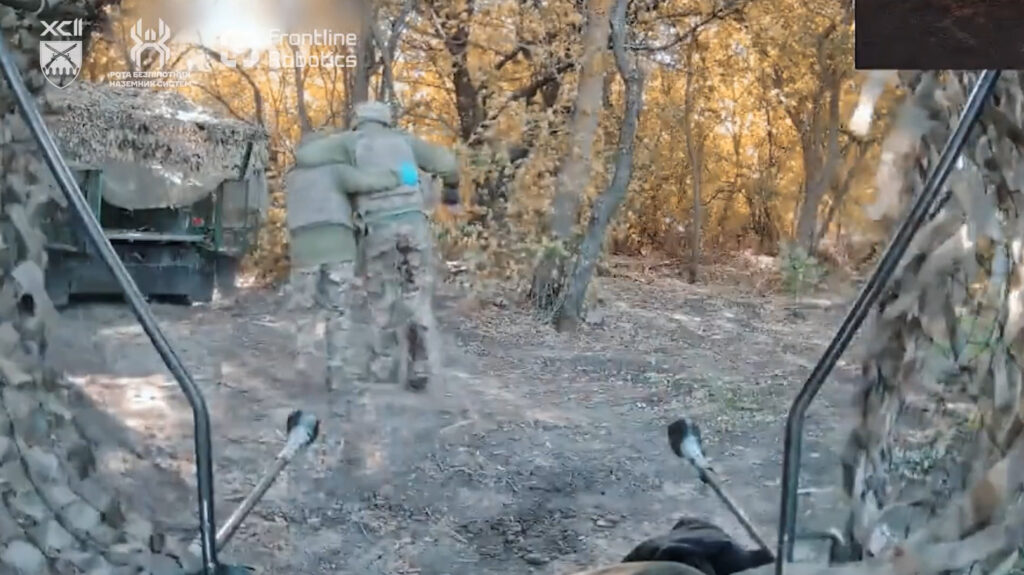
The Frodo ground robot during an evacuation mission with Ukraine's 92nd Assault Brigade
The Frodo ground robot's evacuation mission with Ukraine's 92nd Assault Brigade, autumn 2026. Screenshot from video: Frontline Robotics

What Frodo can carry, and how far

The robot has a 6×6 wheel layout with independent suspension, adjustable ground clearance of 170–330 mm, and a top speed of 40 km/h. Its recommended payload is 200 kg, and its maximum is 400 kg, according to Frontline Robotics. The company lists its range as 150 km on asphalt and up to 90 km over rough terrain with the recommended load. Frodo supports several communication channels, and one person can swap its batteries in about two minutes.

Frodo had passed the Defense Ministry's codification and could carry remote-controlled modules such as the Burya turret, Militarnyi reported on 30 September.

The 92nd Brigade had used ground robots to evacuate wounded soldiers before. In September 2025, the brigade evacuated three wounded soldiers using a ground robot, according to Militarnyi.

  •  

Russia’s jet drones fly near 600 km/h now. Ukraine is building simulators for the 900 km/h ones it expects next

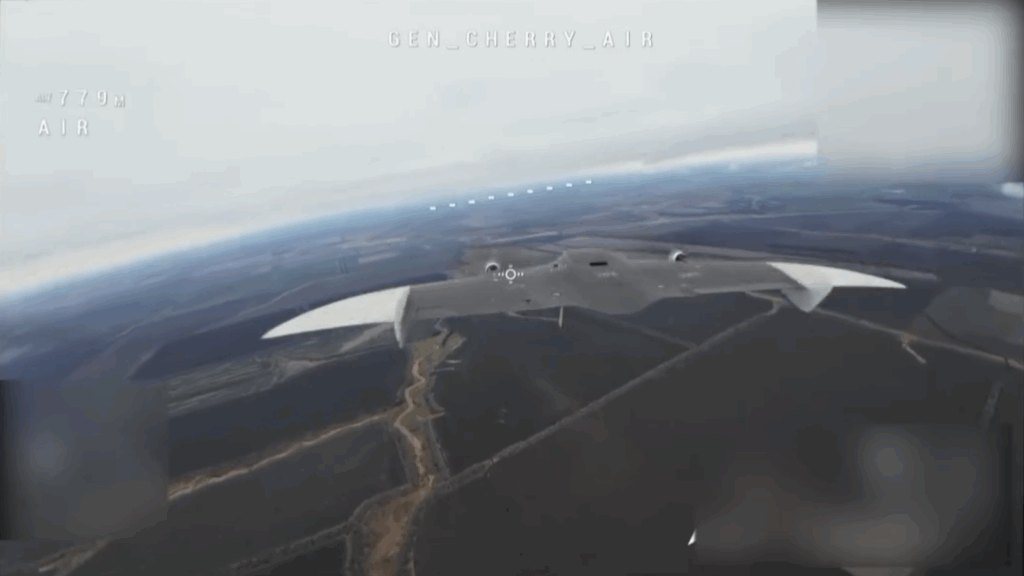
Russian "Knyaz Veshchiy Oleg" reconnaissance drone as seen from a Ukrainian "General Cherry AIR" interceptor drone, just before strike. Screenshot from video: General Cherry

Russia's jet-powered attack drones could eventually reach 800–900 km/h, and intercepting them will demand new piloting skills—so Ukraine has asked the makers of its interceptor drones to build simulators to train the crews, a senior Air Force officer told a parliamentary commission on 6 October, Suspilne reported.

Russia keeps modifying its jet Shaheds faster than Ukraine can field the drones meant to catch them, and Kyiv is now preparing crews for speeds its interceptors have never faced—a sign the air war is shifting from a contest of volume to one of raw speed.

The speed Russia hasn't reached yet

Colonel Yurii Cherevashenko, deputy commander of Ukraine's Air Force, told the commission that Russia's jet drones fly at around 600 km/h today but could eventually reach 800–900 km/h—speeds he said have not been recorded so far. That range sits near the cruising speed of a commercial airliner.

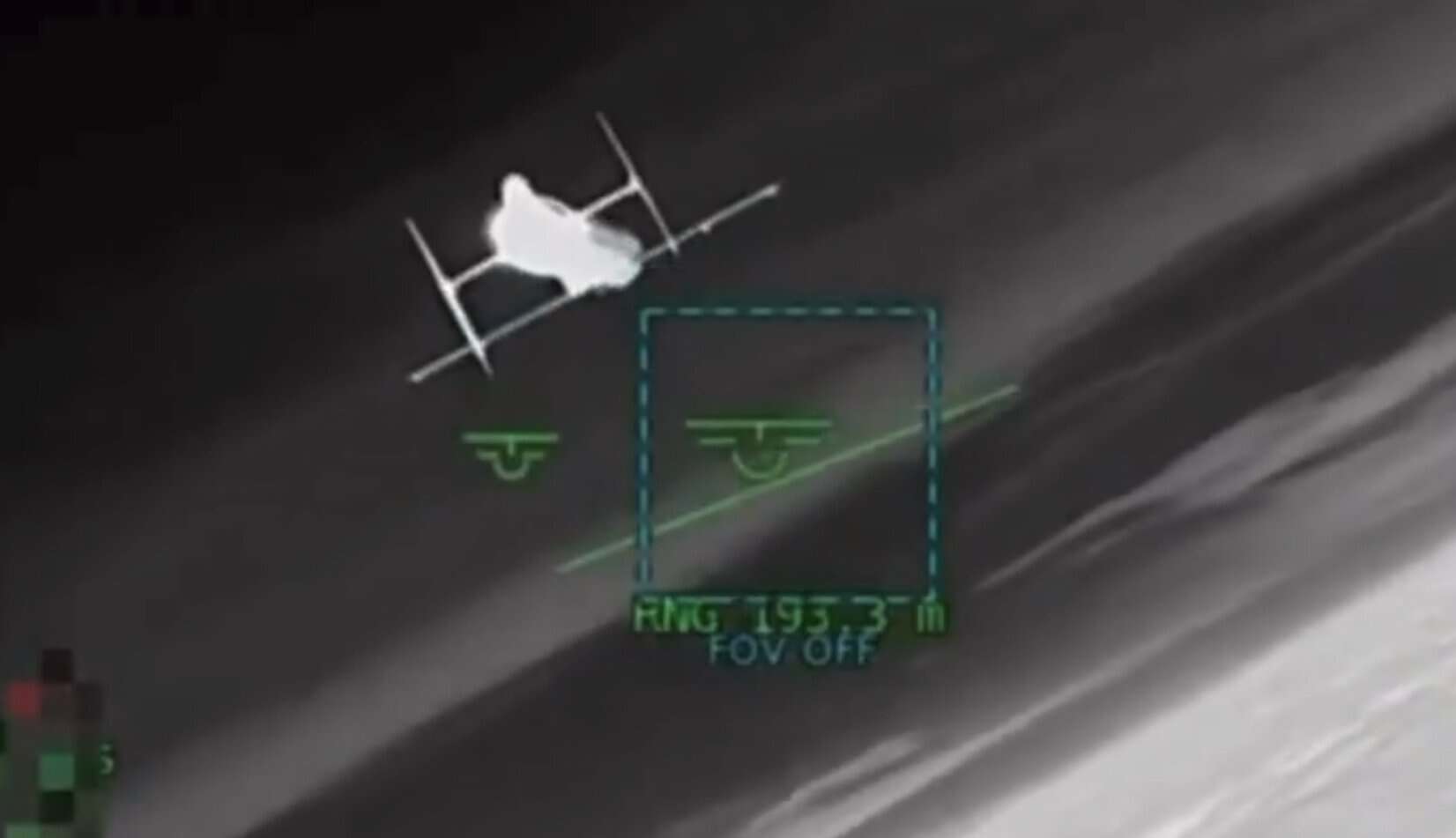
A Ukrainian interceptor drone chases a Russian Geran-5 jet-powered drone. September 2026.
Explore further

Ukraine just caught a Geran-5 at 425 km/h—the jet drone that has often outrun Ukrainian interceptor drones since January

Intercepting such targets will take specific piloting skills, Cherevashenko said. When an interceptor and its target move at roughly the same speed, he noted, the pilot barely perceives the difference in their speeds. To train for that, Ukrainian interceptor-drone makers have been tasked with building simulators where crews can practice against high-speed targets.

Where Ukraine stands now

Ukraine already downs 85% to 90% of Russia's slower, propeller-driven drones, Ukrainian President Volodymyr Zelenskyy has said, but the jet models remain a tougher problem—Ukrainian interceptors scored their reportedly first kill of a jet-powered Shahed in November 2025. In a 28 September evening address, Zelenskyy put the jet-drone interception rate at about 57%, lower than required. Days later, he said Ukraine is testing five interceptor-drone models and could be producing about 400 of one of them by the end of October. Asked when jet-drone interceptors would arrive at the scale needed, Cherevashenko answered: "Not before the end of November."

  •  

Ukraine’s drone pilots hit 76.5% more Russian infantry than two months ago: 2,699 in first five days of October

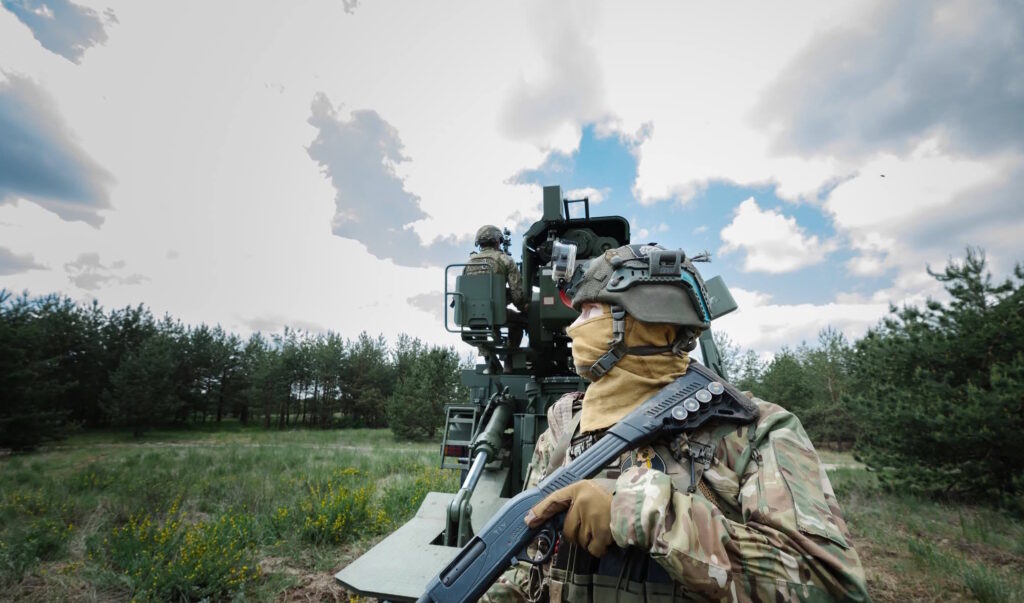
The image shows Ukrainian soldiers. Source: The 80th Separate Air Assault Halytska Brigade

Ukraine's drone pilots are killing and wounding far more Russian infantry than they did a month ago. Ukraine's Unmanned Systems Forces confirmed that their pilots took out 2,699 Russian infantry from 1 to 5 October, 39.7% more than in the first five days of September, Commander Robert "Madiar" Brovdi wrote on Telegram on 6 October.

The Unmanned Systems Forces, the branch of Ukraine's military that fights with drones, count only losses verified by their own pilots in the military's Delta system, so the full picture of Russian losses is larger, Brovdi stressed. Compared with the first five days of August, the rise is 76.5%, from 1,529 losses, which he ties to denser and more frequent Russian assaults.

The sharpest growth occurred in the area of the 1st Azov Corps of Ukraine's National Guard on the Dobropillia-Pokrovsk axis in Donetsk Oblast, as fighting for fortress-belt cities continues. Drone pilots recorded 1,268 Russian losses there, 43% more than the 884 of early September and 91% more than the 664 of early August.

"Russia's hidden mobilization is in action. This is the beginning," Brovdi said ironically.

Russia doubles its monthly recruitment pace

Russian recruitment, mobilization, and contracts run at about 70,000 people a month, twice the 35,000 monthly average from January to August 2026, Brovdi noted on 16 September, when he forecast 12,500 losses for his pilots in September.

He expected the toll to keep climbing. Bigger records still lie ahead because of Russia's unannounced mobilization, Brovdi added on 24 September.

Drone pilots outpaced August by a quarter

September was completed above that forecast. The pilots logged 13,358 Russians killed or wounded, 25.35% more than the 11,010 of August, an average of 445 a day against 355, Brovdi reported. By his count, that equals the full assault infantry of one battalion every day, and his pilots hit a Russian target every 42 seconds.

Two sets of axes took the heaviest toll. In the first 24 days of September, the Dobropillia and Pokrovsk axes accounted for 4,018 losses, and the Oleksandrivka and Huliaipole axes for 3,021, according to Brovdi. The first of those groups covers the same Dobropillia-Pokrovsk axis where the Azov corps zone recorded the sharpest October rise.

  •  

Russia’s new strategy aims to make Ukrainian cities unlivable

The Russians are struggling on land and at sea, and are having real difficulty protecting themselves from Ukrainian long-range attack. That has left them with one real strategic “advantage” and that is what we will see the next few months. As reports this week made clear, the Russian strategy is now to make Ukraine unlivable, […]

The post Russia’s new strategy aims to make Ukrainian cities unlivable appeared first on Asia Times.

  •  

Trump’s bid to stop Ukraine’s Russia strikes a strategic disconnect

In a recent phone call, Donald Trump urged Volodymyr Zelensky to stop Ukrainian attacks on Russian oil refineries. Whether a request or a demand, this appears, certainly at first glance, fundamentally different from the Biden administration’s policy of restricting the use of US long-range missiles to hit targets inside Russia. The US president has justified […]

The post Trump’s bid to stop Ukraine’s Russia strikes a strategic disconnect appeared first on Asia Times.

  •  
❌