The story is as underreported as it is consequential for the entire planet. Three Turkish-owned cargo ships out of Ukraine have been hit in EU waters by suspected Russian drones. One, the Togo-flagged Alfa Watan, sunk on Tuesday off Bulgaria. Ten Egyptian and Syrian crew members are missing. For its part, Ukraine has been hitting Russian tankers in the Black Sea, with no sign of a return to a UN-brokered deal to allow oil, grain and fertiliser ships to pass.
Horrifying stories from the occupied Ukrainian town are mounting.
Two clans have emerged in Oleshky — those who support Putin can get food.
According to experts, Russia is fundamentally violating international law and using residents’ vulnerability as a weapon.
Putin’s tragic gift: the death toll in Pryluky rose to 22; 12 people were killed on a bus the following day.
Maps of the day: Operation Vivaldi continues to make gains in Donbas.
Videos of the day: an FPV drone attacked a fully occupied quad bike; a refinery is on fire.
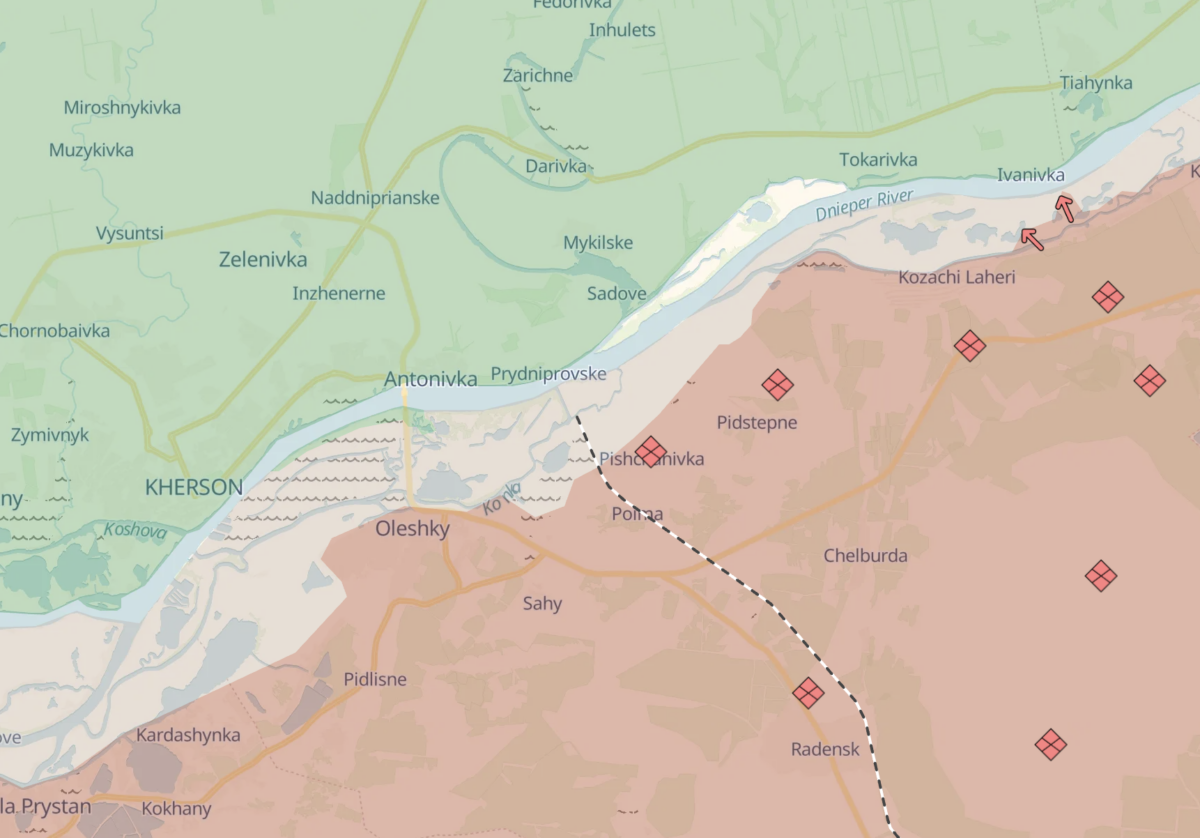
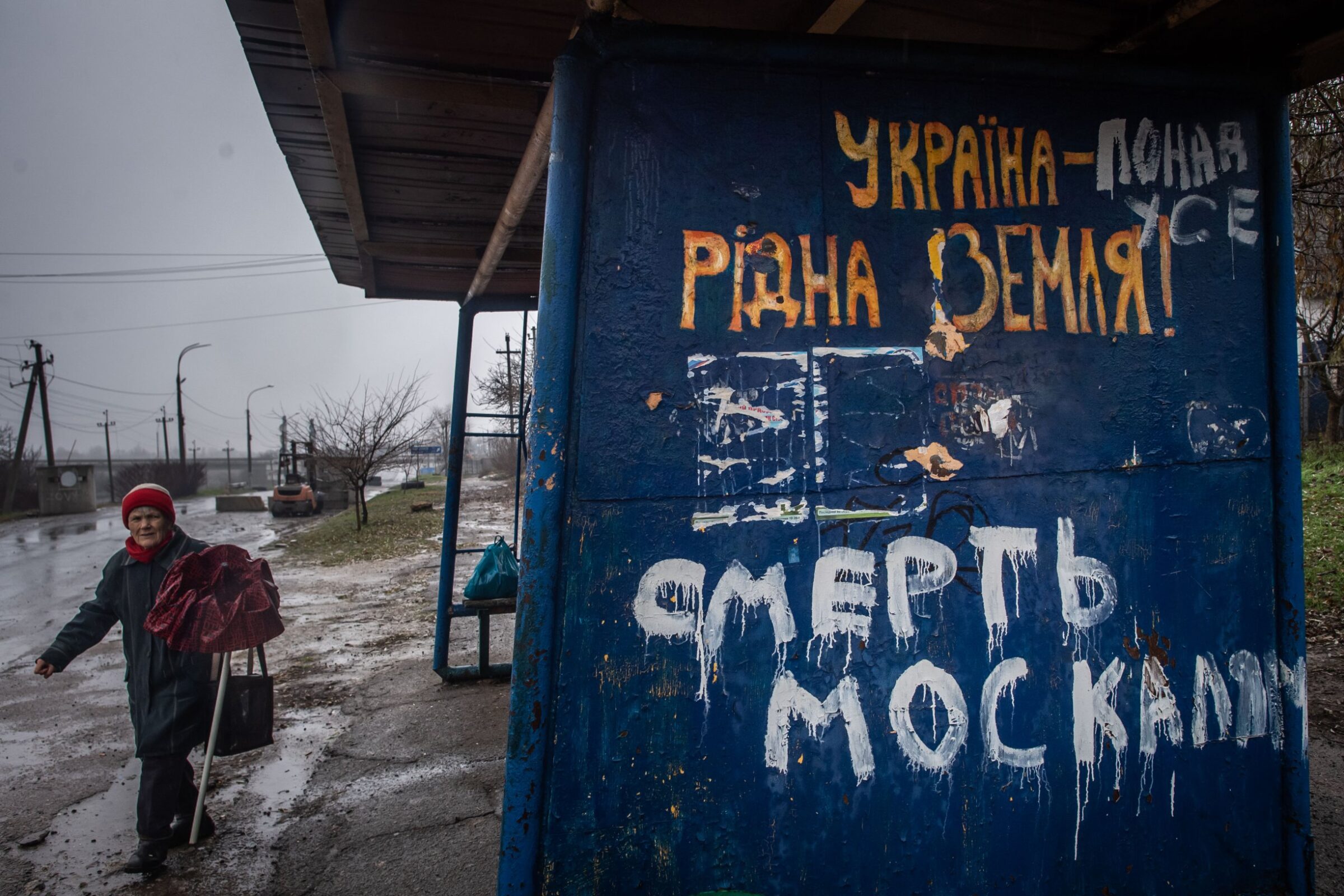
Horrifying stories from the occupied town are mounting. The situation in Russian-occupied Oleshky, in Ukraine’s southern Kherson region, has long been extremely tense.
Around 2,000 residents have long faced a severe humanitarian crisis and isolation. Before the Russian invasion, 24,000 people lived in the town.
And the situation of local residents left behind shows how Russia, as an occupying power, treats civilians brutally and deliberately violates international agreements.
Map — DeepState
“There is a lack of food and healthcare. Since the destruction of the hydroelectric power plant, there has been no drinking water, electricity or gas. They do not even have wood for heating. Not only is it impossible to live with dignity, it is also impossible to bury people with dignity, because the occupiers even prohibit the burial of the dead,” Tetiana Hasanenko, head of Ukraine’s military administration for Oleshky, told Denník N.
Russia is also using Oleshky to shell the right bank of the Dnipro, especially the city of Kherson, just nine km away. Fierce fighting is under way over the surrounding islets. This turns Oleshky residents into human shields and prevents their safe evacuation.
According to the BBC, Oleshky is trapped by both geography and war. “To the north and west, it is cut off by the river and destroyed bridges, while to the south and east it is cut off by dangerous or impassable roads,” the report said.
The situation in the town had already been dramatic in 2023, when the destruction of the Kakhovka dam caused flooding.
A few days ago, special units of the SBU security service and Ukraine’s National Guard launched, according to the RBK-Ukraine website, a new operation to deliver humanitarian packages containing food, water and medicines across the Dnipro.
The aid totalled around four tonnes, with each package weighing 19 kg.
Footage from the mission can be viewed in this video by Suspilne television.
In these difficult conditions, heavy Vampire drones — dubbed Baba Yaga by Russians — are, according to a Ukrainian website, one of the few ways of providing aid to people on the occupied side of the river. Ukrainian soldiers often deploy them at the front for their own logistics in areas that are extremely dangerous.
Last year, the drone was even described as the most effective combat vehicle changing the course of the war.
According to Hasanenko, Ukraine’s armed forces have regularly dropped food by drone into the occupied area since March.
“They did it, but not on such a large scale. And every time drones fly over, the occupiers punish local people for it,” said the Ukrainian woman, who is in contact with people from Oleshky.
She said people try to immediately transfer the aid into unmarked containers to avoid punishment. “The occupiers believe that if people accept help from the Ukrainian armed forces, they supposedly have some connection with them and are betraying the country — which is not actually their country. And that is why they punish them,” Hasanenko explained.
In recent months, Oleshky residents have relied mainly on their own harvests, but at the end of the season they face a critical food shortage.
There have even been reports that residents were forced to eat dogs. A BBC report from late September revealed shocking findings from the town: people had learned to cook even with weeds.
Some, according to Ukrainska Pravda, caught pigeons or pheasants, while others cooked borscht “in a new way” — from eggs, courgettes, tomatoes and herbs.
“Prices there are not merely high but almost astronomical. Eggs sell for 800 hryvnias a dozen (€19), potatoes and onions for 500 (€11.90), courgettes for 250 (€5.95), and tomatoes for 200 (€4.76), because there was a good harvest,” the website wrote.
Despite the risk of being killed by a mine, residents travel along a “road of death”, lined with burnt-out cars, to the nearest town, Radensk, for food. This was also confirmed by Reuters, which spoke to people who still have relatives there.
“The choice Russia imposes on civilians every day: stay and die of hunger, or leave and risk being blown up by a landmine,” the agency quoted Ukrainian ombudsman Dmytro Lubinets as saying.
Two categories of people and harassment over humanitarian aid. In the hospital, where dead bodies have been lying in the basement for four months, people have been divided into two clans, according to witnesses.
“Those loyal to the Russian regime have some food, sometimes even meat and alcohol. The people they call Ukraine-lovers have nothing. The hospital director took everything from the latest deliveries provided as humanitarian aid and handed it out to his own people,” Ukrainska Pravda quoted the son of a man who remained in Oleshky as saying.
When Ukrainians succeeded in dropping humanitarian aid into Oleshky, a new phase of psychological warfare by the Russian Federation began.
Under normal circumstances, an operation to drop humanitarian aid would not attract so much attention, but according to Ukraine’s SBU security service, the Russian response reached particularly absurd proportions.
According to its information, Russian soldiers were ordered to arrange a series of interviews aimed at discrediting the Ukrainian side.
The recorded interviews were meant to include claims that Ukrainians were shelling Oleshky, positive views of Putin’s regime and expressions of gratitude. The SBU therefore urged Ukrainians to treat such reports cautiously and not spread unverified information.
According to information from the Ukrainian resistance movement in the Kherson region, which cannot be independently verified, those who received the aid faced abuse during interrogations.
According to Hasanenko, the most important thing now is to evacuate people from the town.
“Even what humanitarian missions are doing now, dropping food, will not solve their problems. I have reports in which people wrote that they had food left for two days and that this saved them. But it will not save them forever. Many people are dying there because of drones and artillery shelling. We need to establish a humanitarian corridor,” said the head of Oleshky’s military administration, adding that last winter had already been difficult and that they might not survive this one.
She herself has received reports that people have lost 10, 20 or even 40 kg. “There is one case: a woman wrote that she weighed 110 kg and now weighs 67. She has lost 40 kg and writes to me that she is dying.”
Violations of international law. During the recent UN General Assembly session, Ukrainian foreign minister Andrii Sybiha spoke about Oleshky. Ukraine’s main aim, he said, was to establish a humanitarian corridor in the area and safely evacuate people who have not accepted the Russian occupation.
It is precisely because of this stance, Kyiv says, that the Russian army is retaliating by blockading the town, where tourists had before the war come for its unique natural environment of pine forests and Dnipro inlets.
“There is no supply of electricity or gas. Over the past month, the delivery of food, medicines and other basic necessities has been completely blocked. Horrifying testimonies are coming from occupied Oleshky about how people are trying to survive under a blockade imposed by Russia: they are looking for scraps of food and gathering grass because there is simply no other food,” Ukrainian website NV quoted the foreign minister as saying.
Another dimension of Russian terror, he said, is the hunting of civilians. Russian FPV drones pursue and attack people, turning even an attempt to leave one’s home or move around the town into a deadly risk.
According to TSN, Russia is artificially creating food shortages in Oleshky, selling an ordinary food package for 50,000 hryvnias — nearly €1,000 — compared with a standard price of up to 2,000 hryvnias (€40). When people have no money, they offer their jewellery in exchange for food.
Food was last delivered to the town at the end of May, and according to Ukrainska Pravda, no further attempt to bring in food was made. When locals tried on 2 June, their four cars were blown up by anti-personnel mines, killing two people.
Legally, the humanitarian crisis in Oleshky, as well as the use of the population as human shields, constitutes, according to Ukrainian website Rubryka, a violation of the Fourth Geneva Convention — on the protection of civilians in time of war — and a war crime under Article 8 of the Rome Statute of the International Criminal Court (ICC).
An occupying power is responsible for those living in occupied territory. “It must provide people with food, medical care and proper sanitation. But Russia is indifferent to all international requirements,” Ukrainska Pravda wrote.
According to the Institute for the Study of War, Oleshky has become a test of Russian dominance in an area “characterised by population decline, damaged infrastructure, chronic insecurity and growing isolation from the rest of Ukraine”.
Rather than reversing these conditions, the think tank said, Russia governs through them.
“Oleshky demonstrates that the humanitarian crisis unfolding across many Russian-occupied communities is not merely a byproduct of war but increasingly appears to be the result of an occupation system that tolerates, exploits, and sustains civilian vulnerability as a means of maintaining control,” wrote US experts.
According to Hasanenko, Russian fears of Ukrainian operations are also behind this. “I think they are simply trying to prevent the Ukrainian armed forces from crossing the Dnipro, because they could begin liberating the left bank. And people simply serve as human shields for them, while they mine everything completely,” she told EUobserver.
A tragic toll on Putin’s birthday. At least 22 people were killed, including five children, in a Russian Kh-101 cruise missile attack on an apartment building in Pryluky, in the Chernihiv region, on 7 October. Rescue workers pulled many people from the rubble of the destroyed building. According to local authorities, Russia fired as many as six cruise missiles at the town.
“This is the ‘gift’ Putin gave himself for his birthday. Killing children, killing people. There were new attacks with Shahed drones and aerial bombs during the day. It is important that leaders do not remain silent about what happened,” said Ukrainian president Volodymyr Zelensky, calling on the West to help with air defence.
Brutal Russian attacks continued the following day. As many as 12 people were killed after Russia hit a bus in the Donbas city of Kramatorsk. Putin’s regime is currently facing a crisis at the front, which it is trying to address through massive shelling of Ukrainian cities.
Maps of the day
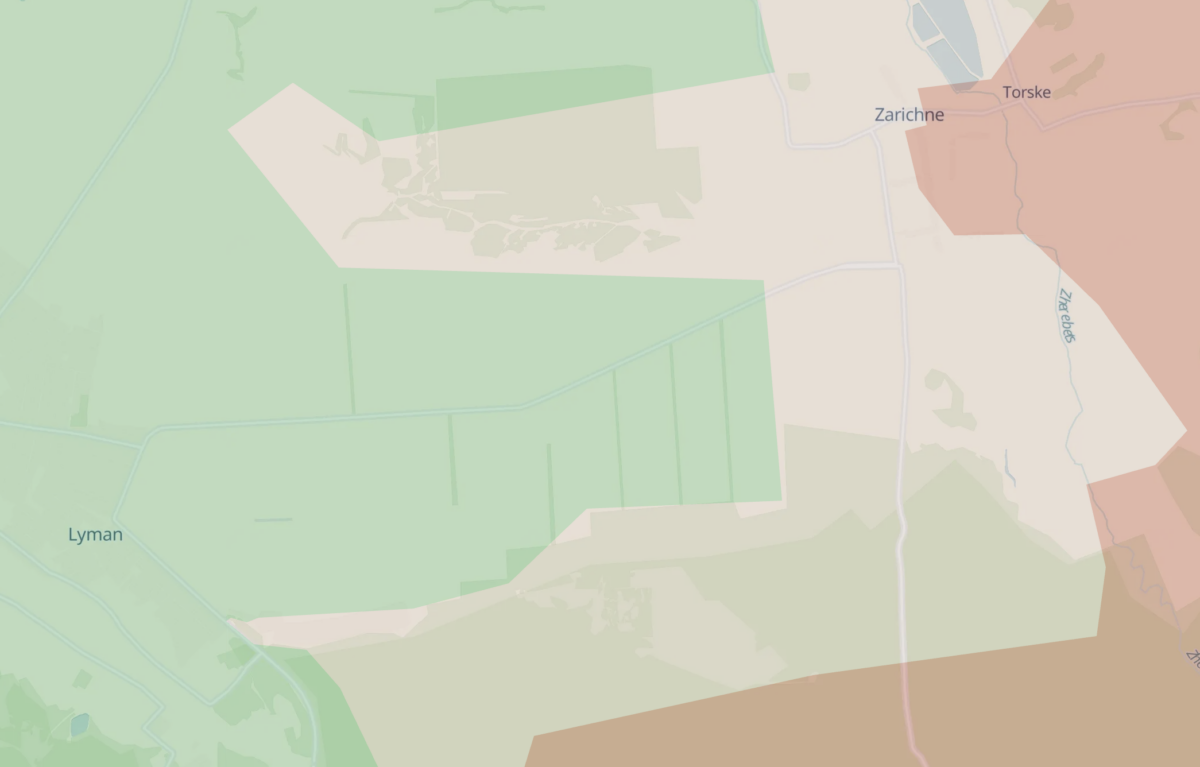
Ukraine’s successful Operation Vivaldi continues. According to a report by the Institute for the Study of War, Ukrainian forces are continuing counterattacks towards the eastern bank of the Zherebets River, northeast of Lyman. The numerical superiority of Ukrainian forces and drones there is preventing Russian forces from consolidating their positions in the town.
Map — DeepState
According to September statistics, which we wrote about a few days ago, Russia has just had its worst month in Donbas for the past three years. The US newspaper The New York Times also charted this on its map.
— Institute for the Study of War (@TheStudyofWar) October 7, 2026
Videos of the day
Smoke over a distant refinery. Ukraine continues to launch drone attacks on Russian energy infrastructure. Most recently, it caused a fire at the Gazprom Neftekhim Salavat plant in the Bashkir region, one of Russia’s largest refineries. It is located around 1,300 km from the front line.
A fatal quad bike ride. The Hornets of Dovbush, from the 68th Brigade, released a video showing five Russian soldiers on a quad bike coming into view of their FPV attack drone. The location of the attack is unknown.
What are the losses
No update on Thursday.
By Monday (5 October), Russia had verifiably lost 24,170 pieces of heavy equipment (24,138 on Tuesday, 22 September). Of these, Ukrainians destroyed 19,133 (19,105), 1,003 (1,000) were damaged, 1,194 (1,194) were abandoned by their crews, and the Ukrainian army captured 2,840 (2,839). This includes 4,452 (4,448) tanks, of which 3,357 (3,353) were destroyed in combat.
Ukraine lost 12,238 (12,175) pieces of equipment, of which 9,633 (9,579) were destroyed, 711 (702) were damaged, 695 (695) were abandoned and 1,199 (1,199) were captured. This includes 1,466 (1,464) tanks, of which 1,126 (1,125) were destroyed in combat.
Note: Neither side regularly reports its own dead or destroyed equipment. Ukraine publishes daily figures for Russian casualties and destroyed equipment, which cannot be independently verified. This overview uses data from the Oryx project, which has compiled a list of equipment losses documented exclusively by photographs since the start of the war.
from ZeroHedge: The U.S. Army’s McAlester Army Ammunition Plant is a massive munitions plant located in southeastern Oklahoma and will soon be producing warheads for former Google CEO Eric Schmidt’s suicide drone arsenal. Defense Blog reports that McAlester plant officials held a “ribbon-cutting ceremony to open the partnership” with Schmidt’s drone company, Perennial Autonomy. TRUTH LIVES […]
by Steve Watson, Modernity News: A California labor-and-delivery nurse says her Fresno hospital went from a handful of stillbirths a year to more than 20 in a single month once COVID shots were pushed on pregnant women, then answered the pile-up with an email on how to handle the dead. The same product is now […]
by Paul Craig Roberts, Paul Craig Roberts: Two days ago on Sunday Larry Sparano and I discussed On Target the latest claims by US Central Command, the US Treasury Secretary, and the London Telegraph that the US was in complete control of the Strait of Hormuz and had been for the past few months during which […]
by Lance D Johnson, Natural News: The Pentagon has just moved space-based solar power a step closer to becoming a military capability. It awarded Virginia-based startup Overview Energy a contract to design, build and test a precision homing beacon that would allow satellites to identify, lock onto and beam concentrated solar energy to authenticated locations […]
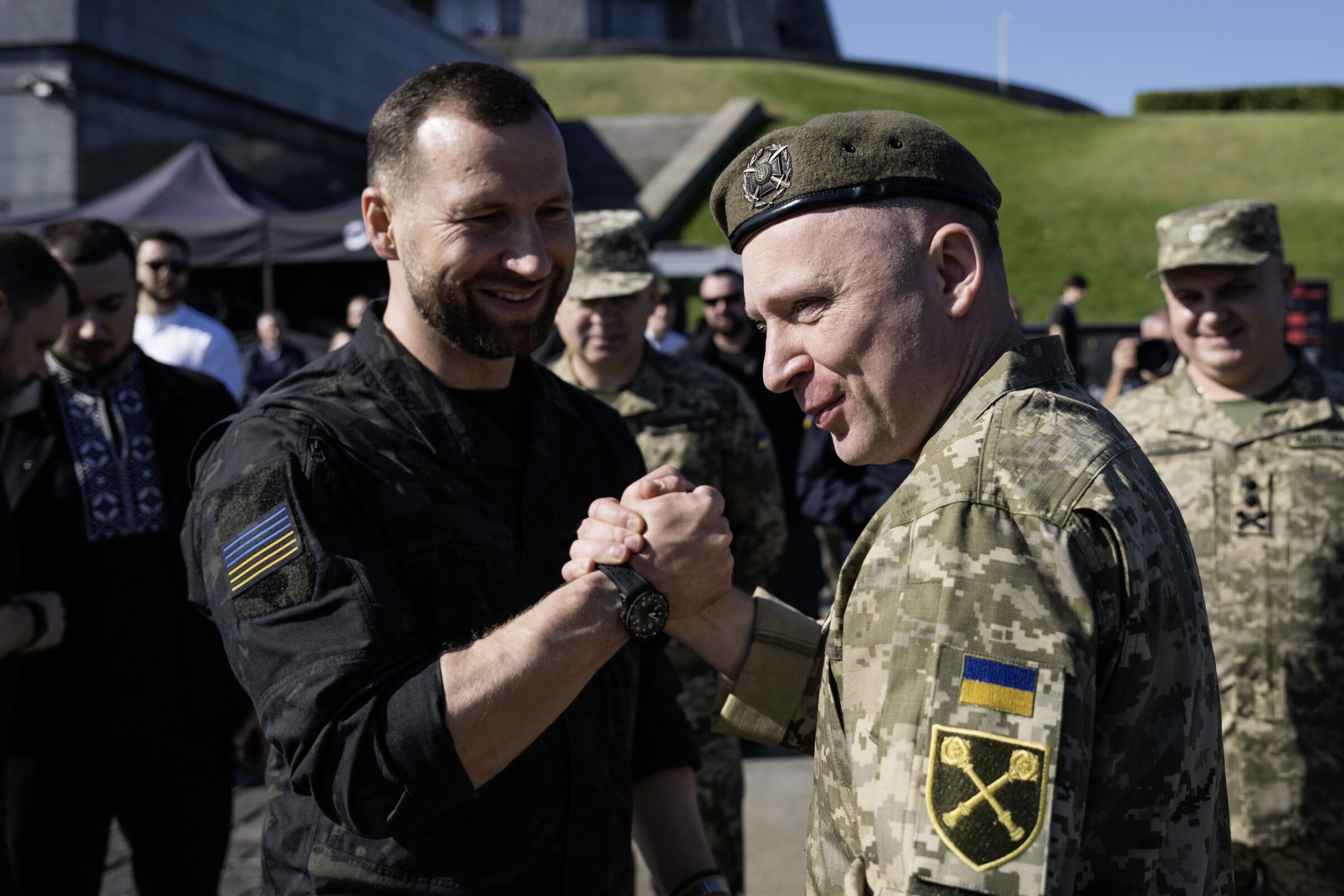
What Ukrainian officers say about the changes brought by the new commander-in-chief, Mykhailo Drapatyi.
He has appointed people in their thirties and forties to important positions, often those who did not suit Syrskyi.
According to Ukrainska Pravda, Ukrainians are preparing a war plan to clarify the Ukrainian army’s long-term objective.
Russians attacked Ukrainian cities during Putin’s birthday, damaging apartment blocks and killing at least 11 people.
Charts of the day: How far production at Russian refineries has fallen; exports of oil and oil products have declined, but Trump is indirectly keeping profits from them high.
Videos of the day: a blazing sunset in Sochi; the music plays on; an unmanned Humvee; a robot’s duel with a drone; what the road to Crimea looks like.
Two and a half months have passed since major general Mykhailo Drapatyi became commander-in-chief of Ukraine’s armed forces. That may not be enough time for major reforms. But in recent days, articles have begun to appear about how the new commander is trying to change the Ukrainian army.
Unlike his predecessor, Oleksandr Syrskyi, Drapatyi does not promote himself much on social media. He has not made a single Facebook post since July, and his Telegram profile has similarly remained silent.
Ukrainska Pravda journalist Olha Kyrylenko tried to fill this “information vacuum”. She spoke with around 20 senior officers in the Ukrainian army.
Based on their anonymous testimonies, she sought to convey how Drapatyi had changed the Ukrainian army over those two and a half months.
The army is currently performing well at the front: Russians are suffering heavy losses and advancing very slowly, if at all. The protection of military, industrial and civilian sites in the rear against Russian air attacks is worse.
The article she wrote presents Drapatyi in a very positive light. According to Kyrylenko, the first word brigade and corps commanders use to describe the changes he has brought is “freedom”.
Drapatyi gives units considerable freedom and does not seek to micromanage everything at the front, as Syrskyi did.
“Unlike his predecessor, who told some brigade commanders how and where they should fight — and even specified the coordinates where they should establish a position — Drapatyi chose a different approach. He decided to decentralise command and abandon ‘micromanagement’,” Kyrylenko wrote.
Drapatyi is not as concerned with what is happening on each section of the front. He is more interested in statistics, analyses and the broader picture of the war.
“Syrskyi listened to reports from everyone every day and could give specific instructions on how to respond to developments, including where units should advance. Drapatyi does not do this; it is the task of the commanders of military groupings. Drapatyi focuses on strategic and systemic issues,” an unnamed senior military officer told Ukrainska Pravda.
The newspaper also adds that Drapatyi travels to visit units less frequently.
After taking up the post of commander-in-chief, he made several personnel changes. Broadly speaking, he is promoting younger commanders proven in the current war to replace older officers of the old Soviet school.
By contrast, he is moving the latter to rear-area and training roles, or they are retiring.
They are being replaced by younger commanders; Drapatyi himself is only 43. For example, Denys Prokopenko, a general with a far-right past, was put in charge of the important area near Dobropillia, where Russians are currently exerting the greatest pressure, despite being only 35.
Drapatyi has also rehabilitated some commanders who fell out of favour with the command under Syrskyi because of their criticism. One example is Serhii Sobko (42), who resigned last year from command of a brigade after the high command refused to send him reinforcements and would not allow his units to withdraw from a threatened area. Drapatyi appointed him as his deputy.
Emil Ishkulov (39), meanwhile, was sidelined after criticising the previous command over the campaign in the Kursk region, which ultimately ended with the withdrawal of Ukrainian soldiers. Drapatyi made him commander of the 11th Army Corps.
Ukrainska Pravda mentions an example from early summer under Syrskyi, when the 7th Corps was moved from Dobropillia to the Belarusian border in the Volyn region. The command said this would deter a possible Russian attack from Belarus.
After taking office, Drapatyi reversed this decision and sent the corps to defend the Zaporizhzhia region. The units themselves said they had had nothing to do at the Belarusian border for two weeks.
Ukrainska Pravda writes that a war plan is being prepared under Drapatyi. It is intended to define the Ukrainian army’s real long-term objectives and how to achieve them in this war.
“We need a grand strategy for 30 years, so that we as commanders know where we should be heading,” one of the corps commanders said, according to Ukrainska Pravda. The National Security and Defence Council is currently working on the plan.
Journalist Kyrylenko says this is probably the first such plan. However, the Thornpill account wrote that similar plans had already been prepared in 2017 under General Valerii Zaluzhnyi.
The Kyiv Post also published an article headlined that Ukraine’s army is winning under Drapatyi.
“Drapatyi is reshaping Ukraine’s armed forces to focus on drone-intensive warfare, decentralised command and younger combat commanders,” it wrote.
However, the steps taken by the previous command have also had a major influence on the current situation. For example, Operation Vivaldi, through which Andrii Biletskyi’s 3rd Army Corps has been liberating territory north of Lyman, has been under way since May, although its results are only being published now.
Ukrainska Pravda also recalls that Syrskyi handed Drapatyi an army in a better position than the one he had “inherited” in 2024 from the dismissed General Zaluzhnyi. At that time, the Russians were advancing rapidly and captured Avdiivka, for example.
The current commander-in-chief had an “easier start” in July.
“Drapatyi took office at a time when the front had been relatively stabilised, with Ukrainian armed forces even holding the advantage on the battlefield in some places. According to Ukrainska Pravda’s sources, the corps reform initiated by Syrskyi played a key role in this. Not all corps managed to develop into strong units, but the 3rd Corps, for example, substantially strengthened and literally retrained the relatively weak brigades it had received for combat duty,” Ukrainska Pravda added.
Nevertheless, several Western analysts shared the current reports about Drapatyi’s initial changes, especially his granting greater freedom to commanders. “It is a pity that Syrskyi was not replaced by Drapatyi much earlier — Ukraine would be in a better position now,” said Jakub Janovský, an OSINT analyst at Oryx, for example.
Russia again attacked Ukraine overnight into Wednesday. This time, it deployed at least five ballistic missiles, nearly 50 cruise missiles and 130 drones, 46 of them jet-powered. The fairly respectable 83-percent interception rate for jet-powered drones is noteworthy.
However, Russian missiles and drones also struck several locations and residential buildings. “Today, on Putin’s birthday, the Russian army ‘gave’ him the destruction of a residential building in Pryluky, in the Chernihiv region. It was an ordinary five-storey building. Unfortunately, according to current information, five people were killed and 26 injured, including five children. People may still be trapped beneath the rubble,” Ukrainian President Volodymyr Zelensky said.
The Russian attack damaged five apartment blocks in Dnipro and four in the city of Kremenchuk. This is what the situation in Kremenchuk looked like.
This is my hometown in the video, and today it suffered too. This is Kremenchuk – a city in Ukraine whose name doesn't pop up in news feeds very often, but tonight it got hit as well. One of the missiles hit a courtyard between high-rises: windows, cars parked in the yards, and… pic.twitter.com/PeeUkU19dZ
As can be seen in these photographs, a ballistic missile fell in Kyiv but did not explode; Ukrainian bomb disposal experts tried to render it harmless.
An unexploded Russian Iskander 9M723 ballistic missile lies among residential buildings in Kyiv’s Darnytskyi district, where Ukrainian bomb disposal teams are conducting a complex operation to neutralize it.
— Special Kherson Cat 🐈🇺🇦 (@bayraktar_1love) October 7, 2026
Chart of the day
Ukrainians claim that their attacks on refineries have put more than 50 percent of Russia’s oil-processing capacity out of action. Michael Bohnert, an analyst at the RAND think tank, wrote on X that this was not entirely accurate. According to his calculations, current fuel production at Russian refineries stands at 3.22 million barrels per day. Before the war, it was usually around 5.5 million barrels per day, meaning a fall of about 40 percent.
There has also been a monthly decline of 0.36 million barrels per day, apparently owing to the latest attacks on refineries, for example in Moscow and Samara.
Ukraine says its strikes have taken out more than half of Russia’s refining capacity. Live crude runs do not show that.
My bottom-up tracker (41 refineries plus the mini-tail, version 2) puts national throughput at about 3.22 mb/d as of 6 Oct. That is down 0.36 mb/d over the… pic.twitter.com/RhXrzGlnJS
According to Bohnert, this is the third time Ukrainians have managed to reduce Russian oil processing so substantially. There was a drop of around 40 percent last autumn and in July this year. “3.2m barrels per day is roughly the point at which things start becoming uncomfortable for Moscow,” he wrote.
Unlike last year, however, Russia is helping itself through imports. The country, once the world’s third-largest fuel exporter, has sharply curtailed its exports. At the same time, it is partially making up for the shortfall in domestic production through imports.
South Korea is also helping it in this respect. According to information from the Guardian, 176,000 tonnes of fuel, mainly diesel, arrived from South Korea at Russian ports in the Far East in July and August. Seven tankers made a total of 14 voyages to Russia. Three of the tankers are on the European Union’s sanctions list.
Overall, Russia imported 368,000 tonnes of petroleum products by sea in August, a third of them from South Korea. The country, which once supported Ukraine not only verbally but also through non-military aid, is now helping Russia cope with Ukrainian attacks on refineries.
High petrol prices are also working in Russia’s favour. Analysts at the Kyiv School of Economics Institute published a chart showing that Russia exported the least oil and petroleum products in August since 2018. As the final bar in the left-hand chart shows, this was mainly due to a decline in petroleum-product exports.
Nevertheless, revenue from sales remains at last year’s level (the purple line in the left-hand chart). This is mainly due to the rise in their prices on global markets as a result of the US-Israeli war against Iran.
1/9 🛢️ Russia’s crude oil and oil product exports fell to their lowest level since 2018 in August. Despite higher prices, oil export revenues increased by just $0.3B to $13.9B. September Russian Oil Tracker by @KSE_Institute 👉 https://t.co/Rk4hd5OiA6pic.twitter.com/KdVMj4QjVV
This was the sunset seen by residents of the Russian coastal city of Sochi on Tuesday. A tanker sailing under the Liberian flag was burning close to shore. Footage showed that it was ablaze along virtually its entire length.
The Russian Rybar channel wrote that it had been hit by naval drones. It was therefore probably a Ukrainian attack on Russia’s shadow fleet, which exports oil around the world and thereby finances the war.
The oil-laden tanker was travelling from Novorossiysk to India. Local residents reported an explosion and feared that oil would spill into the sea.
🔥🚢 A dramatic view from the Russian Sochi right now, where the burning oil tanker off the port has turned into a massive wall of fire pic.twitter.com/oFKrLRTIuw
— Special Kherson Cat 🐈🇺🇦 (@bayraktar_1love) October 6, 2026
This is a rather surreal continuation of the previous video. A man is playing guitar on the promenade in Sochi while an oil tanker burns behind him, sending up an enormous plume of smoke.
Recorded on October 6, 2026, in Sochi, Russia. A street musician continues to play music on the waterfront while an oil tanker burns offshore in the background. pic.twitter.com/5lcfiOqZD2
Ukrainians are experimenting with remotely controlled vehicles. This video shows how a US Humvee off-road vehicle was converted into a remotely operated ground drone. It was loaded with wooden beams, which it delivered to soldiers building fortifications.
A Ukrainian HMMWV converted into a remotely controlled UGV is being used for frontline logistics, delivering timber for the construction and reinforcement of defensive positions. pic.twitter.com/NxQnuoa6Xf
— Special Kherson Cat 🐈🇺🇦 (@bayraktar_1love) October 7, 2026
This video shows a duel between a Ukrainian robot and a Russian FPV drone. In this case, the robot ultimately won, neutralising the drone by ramming it.
A Ukrainian ground robotic system rammed and destroyed a Russian FPV drone on the Pokrovsk axis. The UGV, operated by the 25th Sicheslav Airborne Brigade of Ukraine’s 7th Air Assault Corps, was returning from a combat mission when the FPV began pursuing it. The operators… pic.twitter.com/dIPGuEMVVC
Ukrainian attacks on the land route to Crimea continue. This is what one of the roads to Crimea currently looks like, with numerous damaged and destroyed lorries visible.
This is only part of the road now referred to as the land corridor to Crimea. Another road has turned into a "road of death" for the Russians. pic.twitter.com/D0fKAXQdGo
By Monday (5 October), Russia had verifiably lost 24,170 pieces of heavy equipment (24,138 on Tuesday, 22 September). Of these, 19,133 (19,105) were destroyed by Ukrainians, 1,003 (1,000) were damaged, 1,194 (1,194) were abandoned by their crews, and 2,840 (2,839) were captured by the Ukrainian army. This includes 4,452 (4,448) tanks, of which 3,357 (3,353) were destroyed in combat.
Ukraine has lost 12,238 (12,175) pieces of equipment, of which 9,633 (9,579) were destroyed, 711 (702) damaged, 695 (695) abandoned and 1,199 (1,199) captured. This includes 1,466 (1,464) tanks, of which 1,126 (1,125) were destroyed in combat.
Note: Neither side regularly reports its fatalities or destroyed equipment. Ukraine publishes daily figures for Russian casualties and destroyed equipment, which cannot be independently verified. This overview uses data from the Oryx project, which has compiled a list of equipment losses documented exclusively by photographs since the start of the war.
🚨BILL GATES: DIGITAL ID WILL CONTROL YOUR EVERY MOVE — YOUR BODY, YOUR MONEY, YOUR FOOD, AND YOUR VACCINES WILL DECIDE IF YOU GET “PERMISSION TO LIVE” OR GET SHUT DOWN! Gates praises the merger of biometric digital ID, bank accounts, payment systems, health records, and farm data into one giant global surveillance matrix. Your […]
from WND: ‘We analyzed official U.S. government data from 21,990 children and found a consistent association’ There’s a new study out, called “Neurodevelopmental Outcomes in COVID-19-Vaccinated Versus Unvaccinated U.S. Children: Analysis of the National Health Interview Survey, 2022–2024,” with very bad news for parents who followed the political agenda during COVID and had their children given shots. […]
This is the single most terrifying most evil conspiracy out there. That those with high levels of heavy metals in their Blood are gonna get fried. https://t.co/fXOb4YI3j0 — Concerned Citizen (@BGatesIsaPyscho) October 6, 2026
by Steve Watson, Modernity News: Researchers using official U.S. data say the signal was strongest in the youngest multiply dosed children A new analysis of the federal National Health Interview Survey finds children who received a COVID-19 shot had higher odds of autism, ADHD, anxiety, asthma and special-education use than children who did not. The […]
by Paul Craig Roberts, Paul Craig Roberts: What is the point of eliminating meaning from language? Who brought us “inclusive terminology” and for what purpose? Moreover, it is most certainly not inclusive. For example, it eliminates “mother” and “father” and replaces them with “parent” or “care giver.” What is inclusive about eliminating gender identification? “Mother” of “father” conveys far […]
L’arrestation d’Ian Proud par la police secrète à l’aéroport de Londres marque un nouveau plus bas dans la mesure où l’État profond peut aller pour contrôler un faux récit.
L’arrestation d’Ian Proud par la police secrète à l’aéroport de Londres marque un nouveau plus bas dans la mesure où l’État profond peut aller pour contrôler un faux récit. Mais cela montre aussi un nouveau niveau de peur.
Aussi fou que cela puisse paraître, il semble bien que les nations d’Europe occidentale, du moins, se préparent à entrer en guerre contre la Russie à un moment donné dans un avenir pas trop lointain. Ce qui est particulièrement inquiétant, c’est qu’il semble y avoir un vide distinct dans tous les domaines de ce que nous pourrions appeler largement les « médias » pour remettre en question ce récit. Il y a trente ans, il était considéré comme normal que les journalistes soient la source de questions embarrassantes envers les acteurs étatiques et soient généralement une épine dans le pied, puisqu’ils remettaient en question chaque décision prise et chaque idée présentée. Notre travail était d’être anti-establishment et d’adopter un point de vue très cynique sur la « politique ». Cela n’avait rien de remarquable. C’était ce que nous faisions. Être méprisé par les grandes puissances faisait partie du travail ; travailler à des heures antisociales et avoir peu d’amis en faisait aussi partie.
Aujourd’hui, il n’y a plus de journalistes dans ce que nous appelons les médias « grand public » pour faire cela. Ils ont été remplacés par des « créateurs de contenu » plus jeunes, plus habiles avec les réseaux sociaux, qui croient que le journalisme est plus ou moins un rôle grammatical, où la matière première vous est remise avec toutes les informations qu’elle contient, et où le rôle du journaliste est simplement de la raffiner au style du jour pour la consommation de masse.
Le danger de cette transition est que presque tout ce qui nous est présenté comme des nouvelles est en réalité faux, ou au mieux lourdement expurgé pour maintenir les masses là où l’élite veut qu’elles soient : contenues, préparées et mal informées.
La guerre en Ukraine en est un excellent exemple. La principale raison pour laquelle les populations aux États-Unis et au Royaume-Uni sont si fabuleusement biaisées contre la Russie et si sympathiques à l’égard de l’élite corrompue de Kiev est que, pendant des années, elles ont été lavées le cerveau avec des « nouvelles » sur la Russie qui étaient négatives et qui alimentaient astucieusement un préjugé raciste – un préjugé cultivé depuis au moins une décennie, sinon plus. Le résultat est qu’aujourd’hui un certain nombre de mensonges sont devenus établis dans les salles de rédaction, où les journalistes, même ceux qui savent, contournent simplement les nuances et présentent une histoire de conte de fées, conçue pour être comprise par les masses qui n’ont pas d’autres sources d’information pour même la remettre en question.
Tout récemment, des médias occidentaux ont rapporté une « peste » en Russie, avec des histoires de « confinement », à la suite du cas d’un travailleur dans un laboratoire mort d’une pneumonie dans des circonstances encore incertaines. Les médias occidentaux, dans le cadre de leur rôle consistant à maintenir la russophobie à son apogée, sont si verrouillés et chargés que leurs réactions « à la gâchette facile » aux mauvaises nouvelles venant de Russie sont compréhensibles. Ils sont aussi avides de contenu accrocheur, et de telles histoires nourrissent un public affamé qui a déjà eu sa première dose de ce genre d’histoires d’hystérie COVID et qui en veut davantage. La vérité est totalement immatérielle. L’hystérie et les mensonges sont ce qui est injecté à un rythme fébrile par des « créateurs de contenu » aux dents et aux griffes rouges, l’écume à la bouche dans leur désir de servir l’État profond et les élites qui ont tant investi dans un agenda.
Le contraste entre la Russie et l’Occident est intéressant, cependant, lorsque nous examinons les médias. Tout récemment en Russie, le correspondant de la BBC basé à Moscou a fait vibrer Internet sur les réseaux sociaux avec sa courte interview du ministre russe des Affaires étrangères, qui a eu la gentillesse de répondre à sa question orientée sur l’idéologie de guerre de la Russie avec l’Ukraine. Ce que absolument personne n’a relevé, c’est à quel point la Russie est heureuse d’accueillir des journalistes étrangers qui ont un agenda si distinct pour alimenter la russophobie chez eux, tandis que les journalistes russes sont interdits dans ces capitales de l’UE depuis des années. La vieille Europe, qui tenait autrefois si cher des valeurs comme la liberté de la presse, a adopté le modèle soviétique, tandis que la Russie est en réalité plus avancée en ce qui concerne ces principes de ce que nous attendons dans une démocratie. La Russie n’a pas peur des questions embarrassantes, contrairement à l’Occident.
Nous devrions nous demander qui bénéficie réellement d’une guerre avec la Russie.
Est-ce trop sceptique et « théoriste du complot » de supposer que le complexe militaro-industriel a fait du lobbying avec succès pour une telle guerre pendant AU MOINS une décennie et, surtout, qu’il a réussi à convaincre l’establishment du renseignement et de l’armée au Royaume-Uni d’utiliser son levier sur les médias pour fournir aux journalistes la matière première qui renforce un préjugé contre la Russie ?
Normalement, une telle idée pourrait être rejetée comme pure absurdité. Mais considérez simplement jusqu’où le Royaume-Uni, par exemple, est allé pour éradiquer toute couverture médiatique pouvant être considérée comme au moins favorable à la Russie – ou même simplement pour tenir le gouvernement britannique responsable en posant les questions que les journalistes britanniques ont cessé de poser. Si l’élite au Royaume-Uni qui contrôle les journaux déficitaires (réfléchissez-y) est si sûre de sa logique selon laquelle la Russie est l’ennemi avec lequel nous devons aller en guerre, pourquoi est-elle si terrifiée par des journalistes – ou quiconque, d’ailleurs – qui expriment simplement un point de vue avec des questions sur le récit ?
Je ne peux pas être le seul commentateur occidental à croire que les agents doubles Sergueï Skripal et sa fille Ioulia n’ont pas été empoisonnés avec l’agent neurotoxique Novitchok à Salisbury en 2018, ce qui a été rapporté à l’époque comme ayant « déclenché une immense crise diplomatique entre la Grande-Bretagne et la Russie ». N’est-ce pas la véritable histoire que les chefs de la sécurité britannique ont décidé, après avoir découvert que Sergueï Skripal était en réalité un triple agent qui transmettait des informations à Moscou, qu’il était dispensable ? Et quel meilleur moyen de soi-disant donner une leçon aux Russes, tout en blâmant Moscou pour sa mort, que de l’assassiner lui et sa fille en utilisant un agent neurotoxique qui était soit du Novitchok – qu’un laboratoire britannique situé juste en bas de la rue où vivaient les Skripal avait commodément dans un réfrigérateur – soit un poison similaire ? Ce qu’il est important de noter à propos du Novitchok, c’est que les victimes meurent généralement instantanément au contact. Ce qui est probable, c’est que les Skripal n’ont pas été empoisonnés par la substance russe mais par une version britannique d’un autre agent neurotoxique. C’est un exemple choquant de la médiocrité du journalisme britannique que les scribouillards au Royaume-Uni rapportent simplement l’incident Skripal d’empoisonnement au Novitchok sans le moindre fragment de preuve pour l’étayer. Ils n’ajoutent même pas une note de scepticisme dans leurs reportages sur la substance et sur qui « affirme » qu’il s’agit de Novitchok.
Nous voyons le même niveau choquant de reportages atroces et biaisés sur la guerre en Ukraine, que le public britannique a simplement été informé par le récit médiatique comme une « invasion » par l’armée de Poutine. Aucun contexte, aucune nuance, aucun aperçu de la perspective russe, car personne ne peut supporter, semble-t-il, que l’histoire soit obscurcie par les faits.
Et c’est la même chose avec l’histoire de la « peste » russe, comme ce fut le cas avec l’histoire de l’« attaque » de la base de la RAF récemment, qui était probablement juste des voleurs locaux achetant de l’essence de contrebande à des soldats américains/britanniques corrompus cherchant à se faire un peu d’argent rapide à la base britannique. Remarquez avec quelle rapidité Trump a utilisé l’histoire comme base pour déplacer tous les bombardiers américains hors de la base et les renvoyer sur le sol américain, où ils sont complètement inutiles dans sa soi-disant guerre au Moyen-Orient. Pour Trump, c’était une occasion pour un autre coup médiatique qui le maintient à la une et tout le monde dans l’expectative. Il était probablement reconnaissant aux Britanniques de lui avoir offert la matière première. Un autre problème de cette nouvelle génération de journalistes est leur complaisance à rapporter des « nouvelles » qui ne sont pas du tout des nouvelles, mais simplement du matériel utilisé comme distraction, un jour à la fois. Trump est un maître dans la manipulation des médias avec ce jeu, disant généralement quelque chose de si stupide et de si controversé, ce qui détourne les journalistes du vrai journalisme. Si vous pouvez occuper les journalistes avec des articles sur le dernier commentaire ou la dernière déclaration idiote de Trump, alors vous les contrôlez en contrôlant leur temps.
Regardez simplement comment l’affaire Epstein n’est pas rapportée ni enquêtée. Comment Trump s’en est sorti impunément, puisque depuis le 28 février l’attention des journalistes a été détournée vers la guerre avec l’Iran – ce qui est l’une des raisons pour lesquelles Trump maintient cette histoire vivante avec des mouvements de troupes constants et des discours sur une attaque massive après les élections de mi-mandat. Les gens n’ont pas fait le lien entre la fuite du matériel Epstein et le déclenchement de la guerre avec l’Iran pratiquement le même jour.
Pour les Britanniques, l’histoire « les Russes arrivent » n’a aucun article cynique de la part de journalistes qui sont à 100 % complaisants avec son récit erroné. La peur des élites à Londres est cependant palpable, celle qu’elle sera toujours remise en question par des acteurs marginaux occupant de la bande passante sur les réseaux sociaux. Dans le passé, c’était le correspondant de RT à Londres, qui pouvait poser des questions difficiles et être généralement une épine dans le pied du village de Westminster qui contrôlait les journalistes comme des rats tenus dans un panier. La principale raison pour laquelle RT a été expulsé du Royaume-Uni était qu’il offrait un style de reportage sur la politique britannique qui nous avait quittés depuis trente ans – tel est le monde trouble de l’État profond et la façon dont il a vu comment, à Bruxelles, les journalistes pouvaient être manipulés jusqu’à devenir des sténographes pour lui.
Pourtant, même avec ce nouveau style stalinien de contrôle des médias au Royaume-Uni, l’État est branlant. Même avec la mise en place impressionnante qu’il a maintenant de domination médiatique totale, où les journalistes débitent des ordures totales sur la guerre en Ukraine ou sur ce qu’on leur dit d’écrire sur le Moyen-Orient, la peur est toujours là.
L’exemple du vidéoblogueur Ian Proud, un ancien diplomate britannique autrefois basé à Moscou, est inquiétant mais poignant. Le simple fait de se rendre à Moscou pour assister à une conférence où Poutine parlait a suffi pour qu’il subisse le traitement complet de la Stasi à l’aéroport de Heathrow – détenu et tout le contenu numérique saisi.
Les interviews YouTube de Proud, avec son style de présentation ringard, s’avèrent populaires car il offre simplement une vision plus sobre de la Russie et du Foreign Office britannique, son ancien employeur. Ces interviews attirent l’attention des espions britanniques, qui sont si nerveux à l’idée que la vérité sur la Russie éclate et que les mensonges honteux qui sont maintenant emballés pour le public britannique soient révélés, qu’ils ont dû infliger à Proud la routine américaine de « fouille en prison ». La Grande-Bretagne, un pays qui était autrefois un phare pour le monde avec sa vision de la liberté et en particulier sa passion pour la liberté d’expression, est tombée à un niveau que nous ne pouvons comparer qu’à un pays d’Afrique de l’Ouest qui vient d’installer un nouveau dictateur, complet avec des lunettes noires et des épaulettes. Ce que l’affaire Proud à l’aéroport de Heathrow montre, c’est que ce nouveau régime au pouvoir ne reculera devant rien pour contrôler un récit, et que le dernier bastion de la liberté d’expression – les podcasts YouTube – est la prochaine cible. Plus la chaîne de Proud devient prospère, plus il est inévitable qu’il soit contraint de quitter le Royaume-Uni et de s’installer en Russie pour continuer à exercer la liberté d’expression. Les glands d’épaule de l’État profond britannique ne dormiront pas bien tant que le pays n’aura pas un récit médiatique qui ferait rougir Joe Staline – et les journalistes britanniques les aident à atteindre cet objectif.
Russia continues to pressure cities, while the first autonomous counter-drone turrets have been deployed in Kyiv.
Ukraine is maintaining pressure on Russia’s oil industry, reporting that it has disabled 51 percent of refinery capacity.
Russia still sees a large pocket of encircled Ukrainians in Kharkiv region, but no such pocket exists.
Ukraine says it destroyed a Russian Su-34 and Su-35 on the ground. Satellite imagery provides no clear evidence.
Maps of the day– Kharkiv region
Videos of the day – intense trench fighting; Russians shot down a balloon carrying an FPV drone; Russia has revived the idea of a barrage of tethered balloons; ground drones repelled an FPV drone attack using a counter-drone net – views from both sides.
Russia continues to pressure cities. Ukraine has begun testing AI-controlled machine-gun turrets in them. The new autonomous weapon is intended to protect key sites from drone attacks, typically bridges and similar infrastructure. Air force spokesperson Yuri Ihnat said on Monday that the AI turrets, which receive information from other air-defence components, had achieved their first shoot-downs, including of Geran-5 drones.
Ukrainian president Volodymyr Zelensky reported on Saturday, before Ihnat’s announcement, that 12 turrets of the kind shown in the military video below had been installed in the capital by that date. Another eight are planned.
They are armed with a 12.7mm heavy machine gun, which is not effective against a Geran flying high and fast, but becomes effective during the final phase of its flight, when it comes within the weapon’s range. The soldier in the footage said 50 rounds were sufficient to shoot down a Geran with AI assistance.
AI is entering Ukraine’s air-defense fight — and it is already helping shoot down Russia’s jet-powered Shaheds.
Air Force spokesperson Yurii Ihnat said AI-assisted turrets using machine vision have already successfully engaged Russian Geran-5 jet-powered UAVs.
Details of the turrets’ precise deployment are, understandably, not yet known. However, both Russian and Ukrainian sources commented on them in interesting ways. Ukrainian expert Anatoliy Khrapchynskyi told the NV website, among other things, about the risk that fully autonomous turrets pose to civilians. Serhii Beskrestnov was the first to warn about it on Monday: “I warn you that, for your own safety, you should not stand by windows during an air-raid alert.”
Khrapchynskyi noted that this rule has applied to any weapon since the start of the war. People should not stand by windows during air raids precisely because air defences or debris from downed weapons can damage buildings and injure people. There is a two-wall rule: if you cannot get to a shelter, hide somewhere in your flat protected from a potential blast by two walls, such as in a corridor.
“This does not mean that robotic turrets will fire at windows. They will target moving aerial targets, but they could hit civilian infrastructure,” Khrapchynskyi conceded.
The Russian Telegram channel Two Majors complained that while Ukraine was already using AI turrets in practice, and although promising projects of the same kind existed in Russia, bureaucracy and high costs were holding back their introduction into service.
The same Russian source was among those that published a video showing an entire bridge across the Dnipro in Kyiv being wrapped in a counter-drone net.
But after several days in which Russian Gerans targeted only Kyiv’s bridges, they attacked Zaporizhzhia in the same way overnight from Monday to Tuesday. Russia injured five city residents, including two Red Cross workers, and halted or restricted traffic on several bridges in Zaporizhzhia, causing traffic jams in the city during the morning.
Zaporizhzhia lies about 30 km from the front and is a natural supply route for fighting units. Taking the bridges out of action would create a serious logistical complication, but the same applies as in Kyiv: their complete destruction is unlikely. Russia will also be satisfied with constant attacks causing minor damage, but sufficient to halt traffic.
Among other sites hit by Russian weapons was one of the hospitals in Kryvyi Rih, which was struck by two missiles. Two people were injured during the air raid.
Ukraine is maintaining pressure on Russia’s oil industry, reporting that it has disabled 51 percent of refinery capacity. “More than half of the enemy’s capacity has been taken out of operation. This is the result of carefully planned, methodical and systematic work aimed at exhausting Russia’s war machine and destroying its military-economic potential,” new minister Yevhen Khmara said.
His statement cannot currently be verified, but footage of another fire at oil infrastructure in Russia emerged on Tuesday morning. It was at the Volodarskaya production and distribution centre in Moscow region. It lies just under 40 km southeast of central Moscow in a straight line, and its premises contain a large oil depot. It is also a pipeline junction through which fuel flows to Moscow, including aviation fuel for Moscow’s airports.
Ukrainian attack drones successfully struck Russia's Volodarskaya LPDS tonight, a major storage and distribution hub supplying jet fuel, diesel, and gasoline for the Russian capital, Moscow.
Ukraine says it destroyed a Russian Su-34 and Su-35 on the ground. Satellite imagery provides no clear evidence. The attack targeted Khanskaya airfield in Krasnodar region, from which a training unit normally operates.
The incident took place over the weekend. Satellite images showing clear traces of explosions and fire appeared relatively quickly, but it is not possible to identify what exploded and burned.
The usual Russian source, Fighterbomber, did not comment on the matter at all.
📍Satellite imagery of the aftermath of the UAV attack on "Khanskaya" airfield.
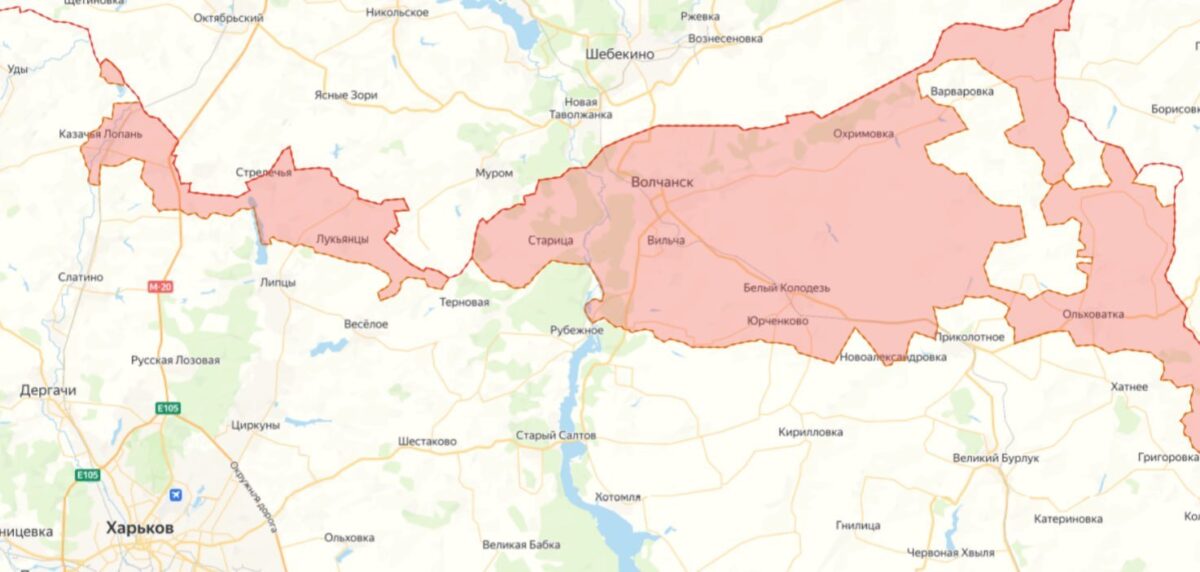
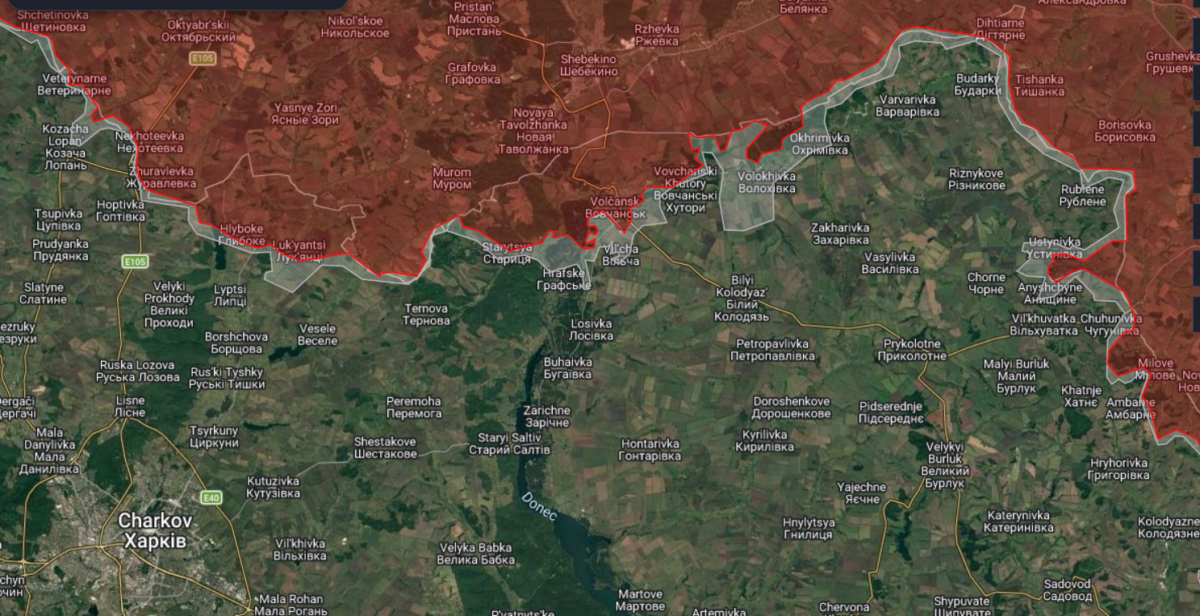
Russia still sees a large pocket of encircled Ukrainians in Kharkiv region, but no such pocket exists. The image below shows a map of the part of Kharkiv region where active military operations are under way. It was produced by the Russian defence ministry and shown by Two Majors on its Telegram account.
Alongside the image, the same source again cited Kremlin claims in listing alleged Russian successes in this sector: “In the Kharkiv direction, the Northern Group of Forces reported further advances. In the Lyptsi sector, our troops advanced near Tokarivka and captured several enemy strongpoints. In the Vovchansk and Velykyi Burluk directions, advances were reported in the areas of Prykolotne, Kotivka, Varvarivka, Reznikove, Mykolaivka, and Annopil.”
We have already written in Ukraine Battlefield update that no pocket exists, and that Ukrainian and independent sources follow the northern part of the front only marginally, because far less is happening there than Russia claims.
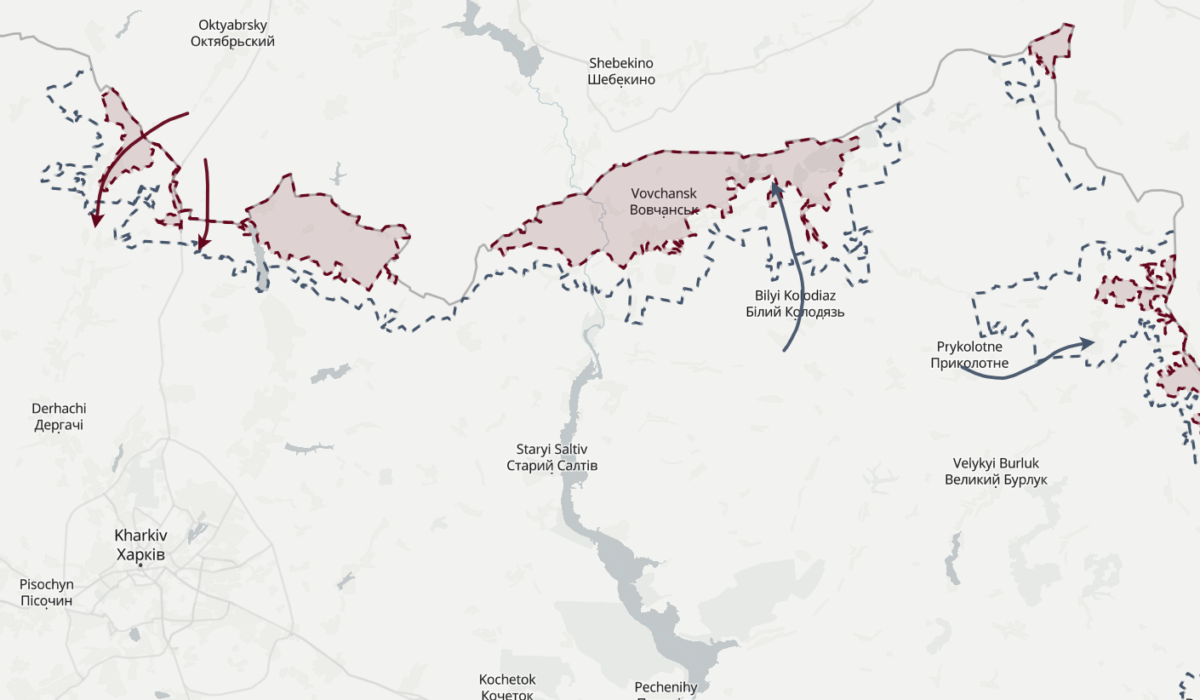
Among respected OSINT projects, Playfra most recently covered this battlefield on Saturday. The first map from this source shows the section of the front located at the top right of the Russian map. This is where the alleged encirclement is supposed to be, which various Russian sources have been reporting for almost a month.
The fighting here consists of Russian infiltration attempts, which are “chaotic and unorganised”. Playfra unequivocally rejects any encirclement.
Bilyi Kolodyaz-Velykyi Burluk directions.
No particular changes. The Russians continue infiltration attempts to encircle Ukrainian units in the Dehtiarne salient, though, once again, for now there is definitely no encirclement of the Ukrainians here. Russian infiltrations remain… https://t.co/ZlzDhwdMDhpic.twitter.com/GZz4lHkxSp
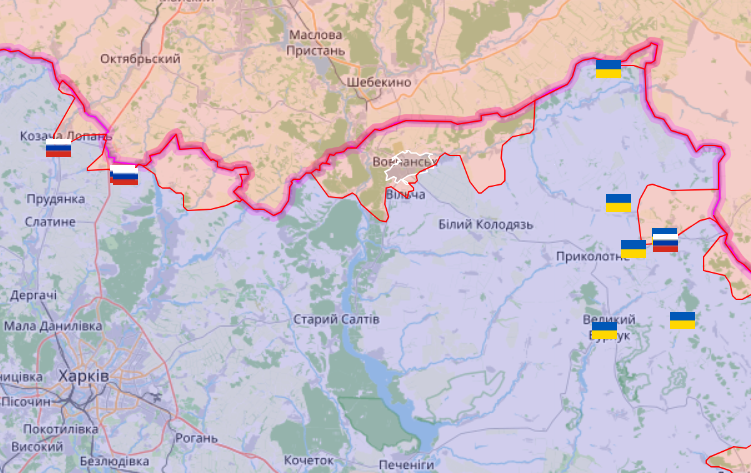
The following map from Playfra shows the same section of the battlefield as that seen in the Russian defence ministry’s version. The gap between reality and Russia’s claimed successes here is among the largest along the entire front, from Sumy to Kherson:
For comparison, the same area according to Finland’s Black Bird Group:
And according to the Russian project Slivochny Kapriz, which is relatively reliable. In all cases, Kharkiv is at the bottom left and the village of Dihtiarne, directly on the Ukrainian-Russian border, is at the top right:
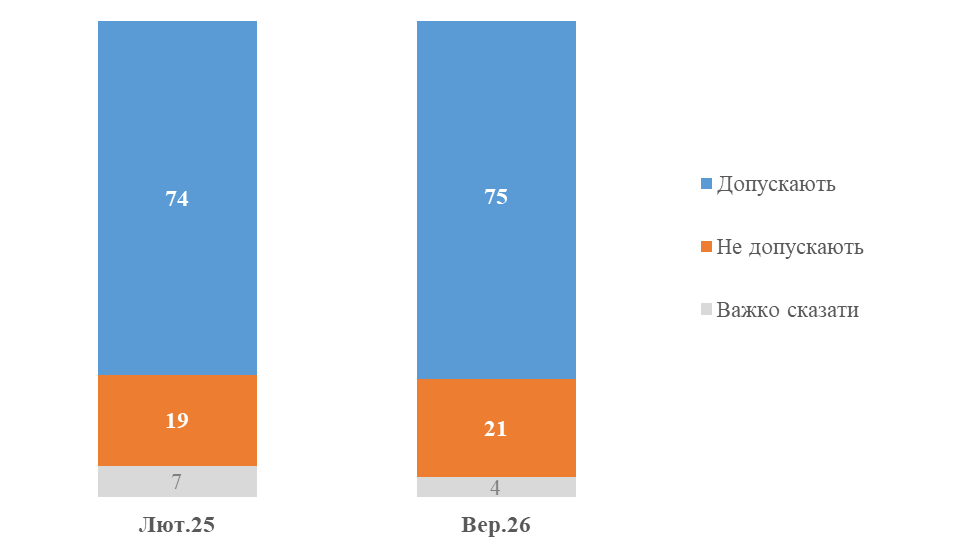
Three-quarters of Ukrainians support peace talks. In the second half of September, the Kyiv International Institute of Sociology asked respondents whether they supported peace negotiations with Russia.
Exactly three-quarters — 75 percent — said they supported peace talks, 21 percent were against, and the remainder could not give a definite answer. This was virtually identical to the result in February 2025, when 74 percent of respondents answered the same question positively.
This is also shown by the Kyiv polling agency’s graph, whose analysts stressed that willingness to negotiate does not equal willingness to accept Russian terms.
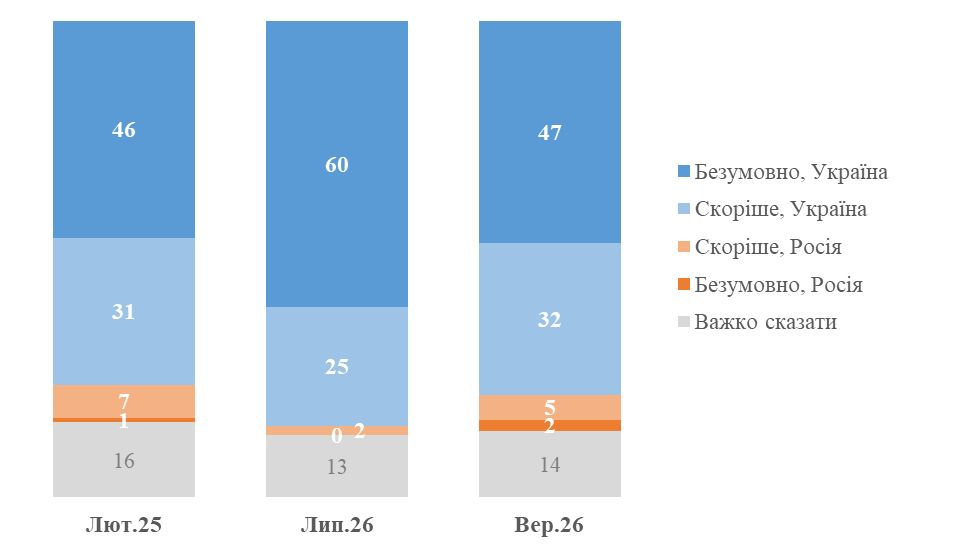
Views on who will win the war have shifted more significantly. As the next graph shows, the difference between February 2025 and September 2026 is again almost zero, but there has been a significant change compared with July this year.
At the beginning of the summer, 60 percent of Ukrainians were certain they would win the war (dark blue), while 25 percent considered it more likely than not. Now, only 47 percent are certain, but 79 percent of respondents in total still expect a Ukrainian victory.
The change was probably driven by optimism in July, when Crimea was almost completely isolated and a successful campaign of medium-range strikes began. Although it continues, the one-off shift in public mood has since returned to its original level.
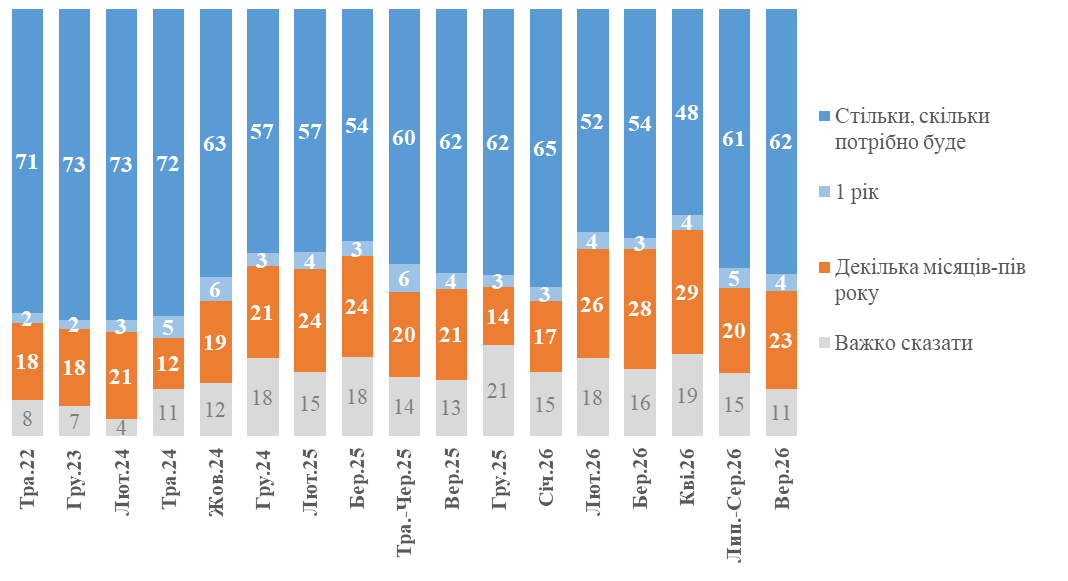
There have been minimal changes in views on how long Ukrainians are prepared to fight. The largest group — 62 percent — said (dark blue) they were prepared to do so for as long as necessary. Four percent (light blue) said one year, while 23 percent (orange) said they could endure only a few more months. However, the number who say resistance should continue for only months has fluctuated around 20 percent for more than two years.
Videos of the day
Videos like this were common in 2023. It is unclear when this one was made, because the prevailing nature of the fighting is different today. The Ukrainian squad in the footage clears Russian trenches.
In the more than seven-minute recording, views from the ground alternate with those from a reconnaissance drone hovering above the battlefield, which gave the Ukrainians an overview of the enemy. The fighting is confused, but the basic orientation is simple: Ukrainians with green identification markings attack from right to left.
Full video.
Original combat POV footage documenting a tactical operation to clear fortified positions in a contested tree line. The video shows real-time close-quarters maneuvers, tactical coordination, and direct trench combat.
— 𝔗𝔥𝔢 𝕯𝔢𝔞𝔡 𝕯𝔦𝔰𝔱𝔯𝔦𝔠𝔱 🦩🇬🇪🇺🇦🇺🇲🇬🇷 (@TheDeadDistrict) October 5, 2026
A Russian drone destroyed a balloon carrying a Ukrainian FPV drone beneath it. Ukraine is trying to use favourable wind currents in this way to extend the range of its small drones, which can then operate deeper in the Russian rear.
Twenty-first-century warfare in Moscow. A Russian soldier with a man-portable air-defence system shot down a Ukrainian drone by firing over a busy road.
Russian channels have released previously unseen footage from a drone attack on Moscow-area refineries.
The footage reportedly shows a mobile air-defense team using 9K38 Igla-series MANPADS engaging a Ukrainian FP/Liuity-type drone moments before it struck an oil storage… pic.twitter.com/9dJXPTZ6XG
Tethered balloons saw their greatest use during the Second World War, when they were deployed by armies on both sides. Balloon barrages protected London in the summer of 1940 and the Normandy landing fleet in June 1944, as well as German cities.
The principle was the same as in this Russian propaganda video. Balloons tethered to the ground by cables floated above cities and militarily important targets to prevent enemy aircraft from flying low. Ideally, they would hit the cables and crash. This principle may now be applied against drones.
👀 Russia has begun producing aerostats to protect oil refineries from drones.
A Russian FPV drone was targeting a Ukrainian unmanned ground vehicle. Just before impact, it successfully deployed a defensive launchable net.
Footage from a Russian FPV drone shows it diving toward a Ukrainian unmanned ground vehicle. Moments before impact, the UGV fires an anti-drone net from its rear section, catching and bringing down the attacking FPV. pic.twitter.com/MednUTUs45
— Special Kherson Cat 🐈🇺🇦 (@bayraktar_1love) October 3, 2026
This was not an isolated case. Another video from a different location shows a similar situation, but this time from the perspective of a camera on the ground drone.
Se me acaban las palabras para describir esto.
Las imágenes proporcionadas por la cámara instalada en un sistema terrestre no tripulado ucraniano 🇺🇦 muestran su sistema de red anti-drones “KARAKURT” funcionando en condiciones reales de combate.
By Monday (5 October), Russia had verifiably lost 24,170 pieces of heavy equipment (24,138 on Tuesday, 22 September). Of these, Ukraine destroyed 19,133 (19,105), 1,003 (1,000) were damaged, crews abandoned 1,194 (1,194), and the Ukrainian army captured 2,840 (2,839). This includes 4,452 (4,448) tanks, of which 3,357 (3,353) were destroyed in combat.
Ukraine lost 12,238 (12,175) pieces of equipment, of which 9,633 (9,579) were destroyed, 711 (702) damaged, 695 (695) abandoned and 1,199 (1,199) captured. This includes 1,466 (1,464) tanks, of which 1,126 (1,125) were destroyed in combat.
Note: Neither side regularly reports its fatalities or destroyed equipment. Ukraine publishes daily figures for Russian casualties and destroyed equipment, which cannot be independently verified. This overview uses data from the Oryx project, which has compiled a list of equipment losses documented exclusively by photographs since the beginning of the war.
from 21st Century Wire: This week on the SUNDAY WIRE, host Patrick Henningsen returns this week with our regularly scheduled program. As elections approach, both Washington and Tel Aviv are becoming increasing desperate to try and sell their disastrous and ill-conceived war on Iran. Enter the season of false flag and other bizarre stunts designed to sell […]

 Login