❌

Reading view

Reducing the Number of Generals Isn’t the Problem

The self-styled secretary of war strode confidently across the stage as he outlined his vision for America’s armed forces. He spoke of establishing an autonomous warfare command and an office of religious affairs, of developing preferred relationships with select universities, of reducing the number of senior officers by 20 percent, and of creating an external team of civilians to chart the future of warfare. Unlike last year, when the senior officers Pete Hegseth called to order in Quantico responded with silent stoicism, this year the junior officers and enlisted troops he addressed gave him a standing ovation.

Some of Hegseth’s supporters have compared him to George Marshall, the legendary U.S. Army chief of staff who reshaped that service before World War II, because Marshall relieved at least 600 senior officers of their positions. He defended the choice on the grounds that “most of our senior officers on such duty are deadwood and should be eliminated from the service as rapidly as possible.” Only 11 of 42 generals retained their commands for combat; only one was given a top command during the war.

But the taciturn, disciplined Marshall would never have crowed that “the ideological clowns are out. The patriotic cowboys are in, with testosterone testing on top,” or suggested that journalists who criticized a military mission were guilty of treason, both of which Hegseth did in his speech. And this is just the beginning of what makes the comparison both ridiculous and patently self-serving for Hegseth.

Marshall had to create a wartime military from an Army that hadn’t fought in 20 years. Hegseth is leading a military that has been at war for more than 25 years. Marshall’s judgments were trained on his long experience in important positions inside the military hierarchy. Hegseth sits in judgment of an officer corps that found his performance wanting at a fairly junior level of leadership. Marshall evaluated combat capabilities through rigorous field experiments known as the Louisiana Maneuvers, in which officers tested new technology, such as tanks, and were assessed by experienced officers. Hegseth proposes to test combat fitness largely through a two-hour written exam administered by an ideologue drummed out of service for insubordination. Marshall gained congressional authorization before enacting his program. Hegseth’s comportment has drawn articles of impeachment from a congressman of his own political party.  

[Listen: The military Pete Hegseth wants]

What Marshall and Hegseth do have in common is that their plans for radically reshaping the military begin with selecting its senior leadership. In Marshall’s day—he was appointed chief of staff in 1939—seniority, meaning time in service, was the main criterion for promotion. But technological advances had increased the Army’s mobility and firepower, and Marshall believed that more imaginative leadership was needed to make the adjustment. At the time, the U.S. Army was rated the world’s 19th-largest fighting force, behind Portugal’s and just ahead of Bulgaria’s.

Marshall established a two-part system of officer evaluation. First, a board of ranking veterans, selected by Marshall for their rigor and judgment, would review the officers’ records. Then the commanders would undergo a demanding field test to evaluate performance in combat conditions. The processes Marshall put in place—merit-based evaluation boards, an up-or-out promotion system, rotations through field testing at a national training center—produced the military leadership that Hegseth is culling.

The U.S. military is, in fact, top-heavy. Congress has authorized 857 general and flag officers for a force of only about 1.35 million active-duty personnel and 771,200 reservists. The National Defense Authorization Act of 2024 called for the armed forces to study the possibility of drawing down the number of such officers, and in 2025, Hegseth directed a minimum 10 percent reduction in general officer billets, and a minimum 20 percent reduction in both four-star and National Guard generals. In his State of the Force speech, Hegseth raised the level to 20 percent, with a deadline of January 2027—just about 90 days from the announcement—while also establishing a new four-star command.

An organization as large as the U.S. military no doubt can, and perhaps even should, cut back its senior management. The proportion of generals has increased by 31 percent over the past 50 years, as have the responsibilities, as the American way of war has come to rely more and more on technology, joint operations, leadership of coalition forces, and managing and reporting on financial resources. Some responsibilities have also migrated from the one- and two-star levels up to the three- and four-star levels, and these could be forced back down the grade structure.

[Missy Ryan: The ‘Top Gun: Maverick’ theory of Pete Hegseth]

But the way Hegseth is doing his job does not merit the benefit of the doubt that was accorded to Marshall—an officer so concerned about even the appearance of political favoritism that he declined to vote. Hegseth, by contrast, claims that he’s eradicating political bias from the military but is in fact importing the culture wars into the force in a way that damages both the military and the public’s trust in it.

He convenes troops for partisan purposes. At the Quantico meeting, he distributed a collection of his speeches titled “The War Department Field Manual.” He relieved or coerced into retirement without explanation 23 senior officers, and in at least two cases replaced them with dramatically less qualified successors. He removed 80 officers from merit-based promotion lists, and precipitated the resignation in protest of the secretary of the Army. He attempted to censure and court martial a sitting senator. He revoked press access to the Pentagon. The U.S. has been at war for five months without a single Pentagon press briefing. Most dangerously, as the Quantico meeting demonstrated, he and the president are corroding the chain of command by encouraging disrespect for “the generals” and inculcating loyalty to themselves instead. Such politicization of the military destroys republics.

Hegseth is arrogating to himself authorities that properly belong to Congress. Article I of the U.S. Constitution vests Congress with the authority to raise armies and maintain a navy. Congress is the body that establishes the standards for appointments, assignments, duties, and grades of general and flag officer positions. Congress determines these officers’ promotions. And this Congress is overdue to protect the American military from a civilian leadership that is its greatest threat.

© Illustration by The Atlantic. Sources: Bettmann / Getty; Alex Wong / Getty.

  •  

China Puts USS Benfold Back in Spotlight. Says Foreign Warship Lost Power While Tracking Its Type 055

After claiming it intercepted foreign aircraft on two separate occasions last year, China has made another major claim: a “foreign warship” lost power while pursuing a People’s Liberation Army Navy (PLA-N) Type 055 destroyer, seemingly an indirect reference to the USS Benfold.

Zhang Jun, a captain on the PLA Navy’s Type 055 “Zunyi” destroyer, said a foreign warship lost power while his warship, engaged in a routine training exercise at the time, the Chinese state-owned publication Global Times claimed.

Speaking on China Central Television (CCTV), the officer said the destroyer had multiple encounters with foreign warships and aircraft during the exercise. 

“During that mission, we were conducting routine training exercises when a foreign warship began tracking our ship. As we sailed at high speed, the foreign vessel had to match our speed. While we were in a standoff, its power and electricity all suddenly went out, its radar stopped emitting, and its navigation lights went dark,” Zhang said. “This lasted for nearly half an hour. But our equipment and our crew had no problems at all,” he added.

When asked whether the engagement made him nervous, the Chinese officer said, “Why should I be nervous? I was definitely not nervous. As long as you are within range of my missiles, I can definitely destroy you.”

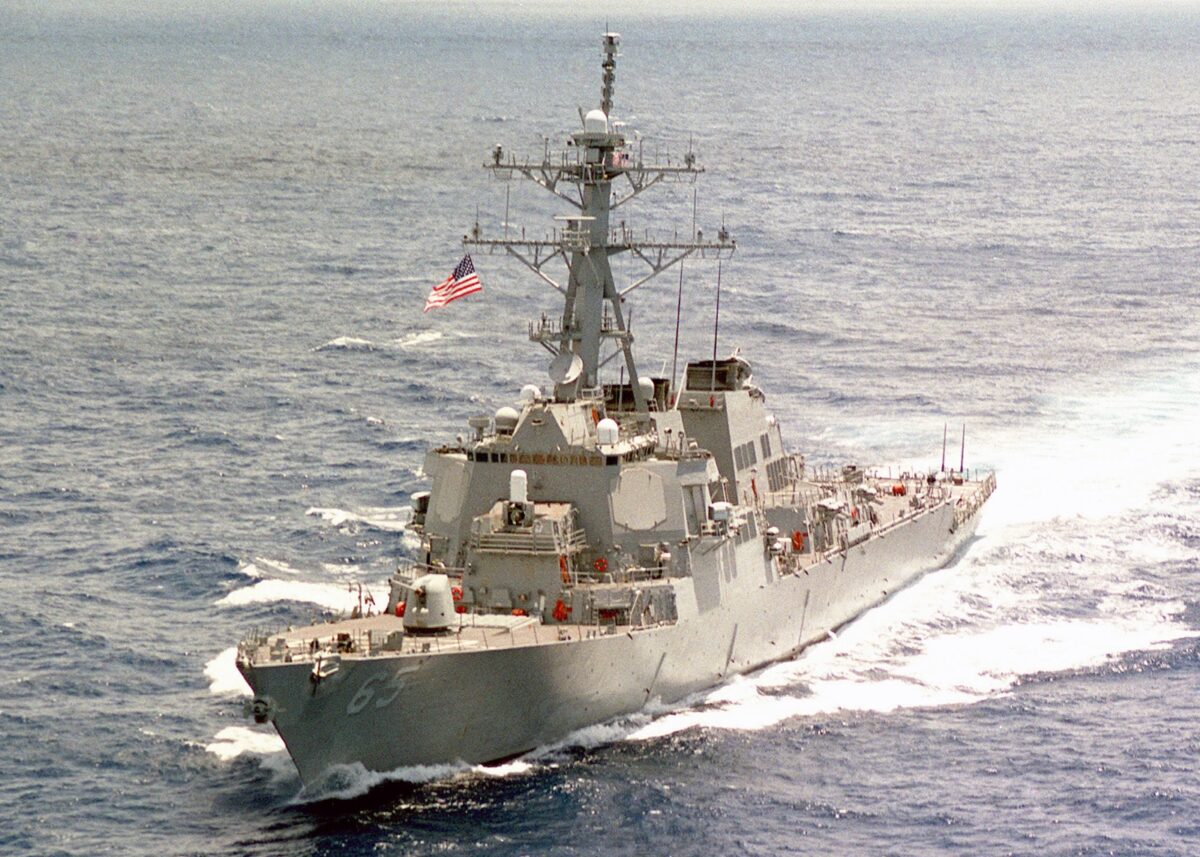
The officer stopped short of providing more details, including the time and place of the encounter and the name of the foreign warship. However, the claims appear aimed at the US Navy warship USS Benfold, which apparently lost power and was stranded in the South China Sea in July 2026, as previously reported by the EurAsian Times.

“On July 24, 2026, while conducting routine operations in the Indo-Pacific, Arleigh Burke-class guided-missile destroyer USS Benfold (DDG 65) reported an engineering casualty involving its generators, causing a loss of power,” Navy Cmdr. Matthew Comer, spokesperson for the 7th Fleet, said in a statement to USNI News in August  2026.

“There were no injuries to the crew, who demonstrated resilience, grit, professionalism and unwavering steadiness in their response,” he added.

The incident reportedly occurred while the USS Benfold was engaged in routine operations in the Indo-Pacific as part of the USS George Washington carrier strike group (CSG).

After the power loss, the guided-missile destroyer reportedly drifted for four days and was supplied by other ships in the South China Sea, which China claims as its sovereign territory and where frequent standoffs occur between Beijing and other forces.

The Seventh Fleet spokesperson did not mention a high-speed pursuit of a Chinese vessel or any engagement between the US carrier strike group and PLA Navy warships, although these encounters are not uncommon in the region.

USS Benfold-Wikipedia

When asked whether China’s claimed scenario is plausible, Indian Navy veteran and commentator Rear Admiral Girish Kumar Garg (retd) told the EurAsian Times, “For an Arleigh Burke-class ship, high-speed propulsion has nothing to do with total power loss. Complete power failure can happen if all onboard power generators fail or the power distribution system malfunctions. Although rare, it is not impossible.”

Further, when probed about potential reasons for the complete power loss, Rear Admiral Garg said, “Can be many reasons- fuel contamination can be a major cause. Power overload due to too many systems operating and loaded on the running generators can also cause them to trip. However, generally, if all onboard power generators are running and connected, then they cater for full ship’s electrical load plus some extra load margin.”

Why Yemen Could be a Graveyard for Turkish & Even Mecca Pact Soldiers: History Has The Answers: OPED

The USS Benfold power loss incident was not the first of its kind. Earlier, the USS Higgins had an “engineering casualty” in its electrical system in May 2026,  which caused it to lose power and propulsion for many hours in the Indo-Pacific area. No chase of another vessel had occurred at the time.

Nonetheless, state media and Chinese experts used the opportunity and their purported claims to highlight the enviable capabilities of the PLAN’s Type 055 warships.

Chinese military expert Shi Hong told the Global Times that the Type 055 is considered the world’s best large destroyer in terms of comprehensive capabilities. Meanwhile, Xu Yi, another crew member on the ship that was involved in the purported encounter, said, “We have a powerful offensive and defensive system. In the future, we will definitely conduct operations externally in formation. In fact, we have already begun integrating multiple formations and exploring what makes for the best combination.”

Some pro-PLA observers on social media widely amplified the Chinese claims, aligning with similar previous instances.

However, Beijing deliberately makes specific claims while avoiding direct naming of the foreign assets to avoid a diplomatic response and to eliminate the possibility of a counter-narrative from official sources and a potential bilateral tussle.

Chinese Military Keeps Confronting Foreign Assets

In the past few years, China has claimed to have intercepted and expelled unidentified foreign aircraft from the same region on multiple occasions.

No Boeing, Lockheed or Any of the Big Five: Musk & Luckey Co-Lead Project Meridian on America’s Future Warfare

Last year, Chinese state media, CCTV, released a video on June 29 showing two J-16 fighter jets—considered the cornerstone of the PLA Air Force’s interception efforts—being dispatched to warn and drive out a “foreign aircraft” that allegedly breached China’s territorial sea boundary. 

“The foreign aircraft flew over at a low altitude, not very disciplined, almost at a vertical 90 degrees, breaching our territorial sea line,” air force aviation brigade member Zhang Zhanfang stated on the broadcast at the time.

The Chinese media did not disclose the exact date or location of the incident, making it challenging to identify the foreign aircraft in question.

Later that year, Global Times reported on a documentary shown on CCTV in October 2025, in which a PLA Air Force (PLAAF) pilot from the special mission aircraft formation claimed he could simultaneously lock two foreign stealth fighter jets while flying the J-16 fighter jet and force both jets to withdraw.

“They headed straight toward our two aircraft. Their intention was very clear—it was a provocation. With our backs to the territorial sea line, we had to intercept them,” Li Chao, a pilot from the People’s Liberation Army’s Western Theatre Command, said while recounting the incident that allegedly took place during a coastal training exercise in 2024.

Although the Chinese did not disclose which foreign stealth aircraft it was referring to, only two aircraft fit the description: the F-22 Raptor and the F-35 Lightning II of the US Air Force (USAF).

Both aircraft are frequently deployed in the Indo-Pacific for training, war exercises, and other operational missions, as the EurAsian Times noted in a detailed report published at the time. 

Washington did not acknowledge the claim, but the incident drew a wide debate over whether a 4.5th-generation jet could intercept US fifth-generation stealth fighters.

Separately, US and Chinese ships have had sporadic encounters in international waters, as the US Navy conducts regular FONOPs (Freedom of Navigation Operations) in the region.

Earlier this year, in January 2026, reports noted that a Chinese warship, CNS Taiyuan, encountered a foreign warship during “a long-range training exercise” in undisclosed waters. The report said the foreign ship meant to provoke the Chinese crew, but the crew instead followed orders and drove the vessel away.

Trump’s Big Taiwan Move: Despite $14B Arms Freeze, Permanent U.S. Military Officials May Sit at MND

Similarly, in January 2025, reports noted that China had claimed that its navy “drove away” a “foreign warship that attempted to spy on its Shandong aircraft carrier during a long-distance training mission. At the time, a Chinese sailor attached to the Type 055 destroyer CNS Yan’an crew said a foreign warship attempted to engage in “illegal reconnaissance” and infiltrate a formation led by the carrier during a routine training mission. 

In June 2023, a US destroyer, USS Chung-Hoon, had a close encounter with a Chinese warship in the Taiwan Strait. The US Navy alleged that the Chinese ship executed an “unsafe” maneuver, crossed the US ship’s path, and forced it to slow down to avoid a collision.

Another significant incident occurred in 2018 when a Chinese warship came dangerously close to the USS Decatur in the South China Sea. The US Navy described the action as “unsafe and unprofessional.

Despite a thaw in ties between Chinese and US leaders, the fight over Indo-Pacific dominance continues.


The post China Puts USS Benfold Back in Spotlight. Says Foreign Warship Lost Power While Tracking Its Type 055 appeared first on EURASIAN TIMES.

  •  

Indonesia should count the real cost of its mineral incentives

Every year, the Indonesian government forgoes taxes it could collect. Through tax holidays, rate cuts and exemptions, it courts investment while easing the burden on households and small businesses. Economists call this “tax expenditure” because giving up revenue is another way of spending public money. The Ministry of Finance expects it to reach 564 trillion […]

The post Indonesia should count the real cost of its mineral incentives appeared first on Asia Times.

  •  

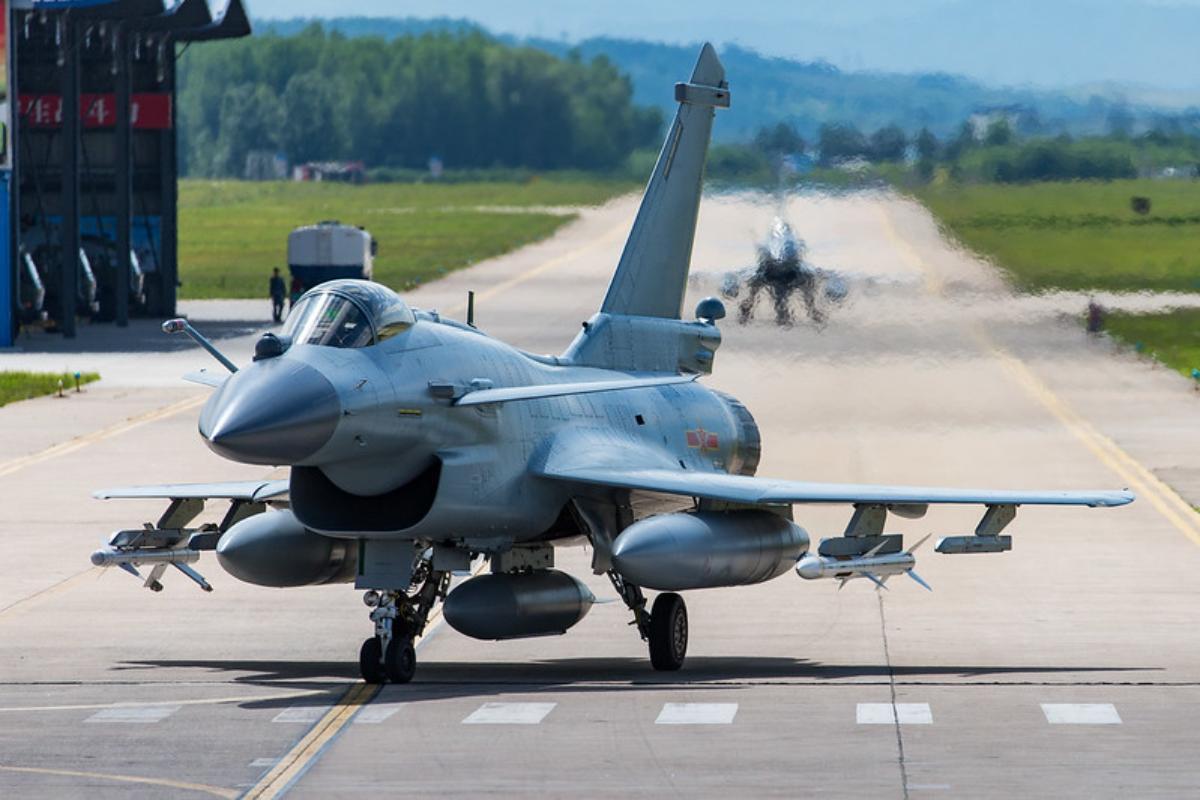
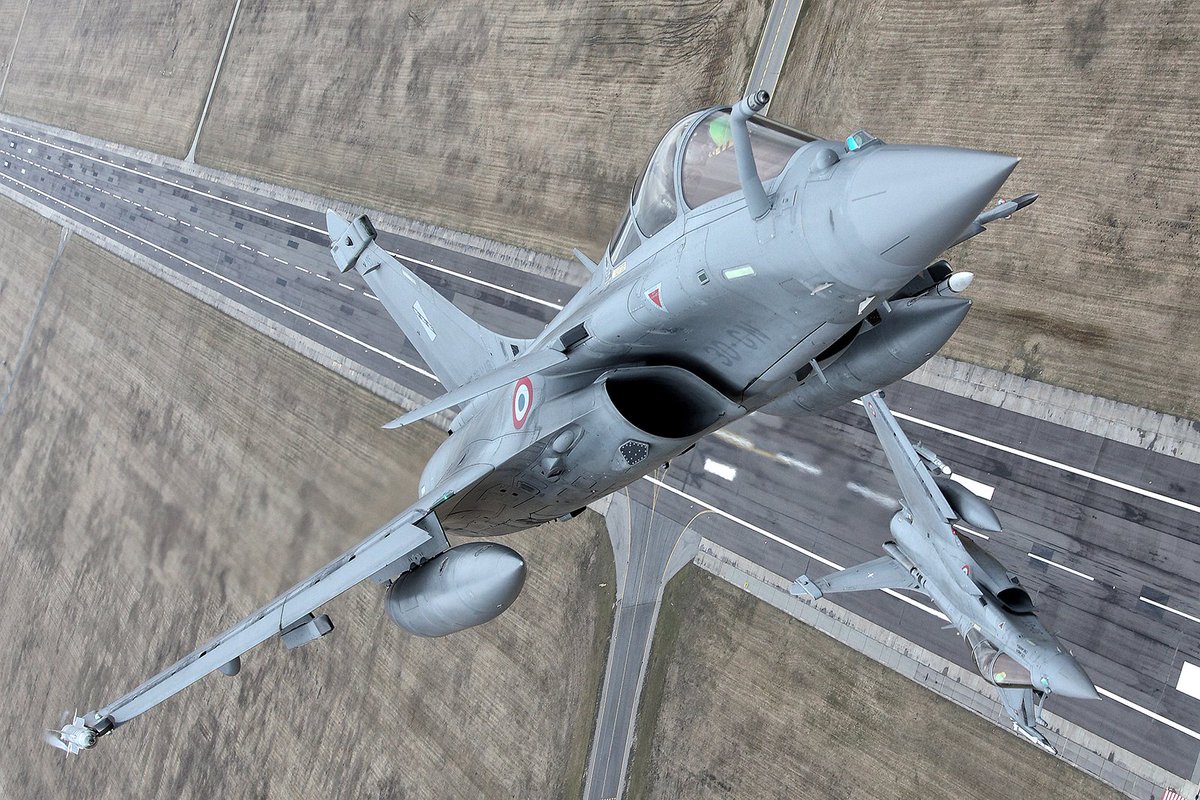
Rafale & J-10C: This Asian Country Could Become The Only Air Force to Fly Both French & Chinese Jets

Indonesia is awaiting the first batch of Chinese J-10C multi-role fighter jets in the first half of next year, according to new reports.

Once and if the aircraft arrive, the Indonesian Air Force could become the first in the world to operate both the Chinese J-10C and the French Dassault Rafale jets.

Indonesia could receive its first Chengdu J-10CE fighter jets in six months, Republika Online, a local Indonesian news outlet, reported. Citing informed sources, the report claimed the first delivery could take place as early as April 2027, although the number of jets to be delivered is currently unknown.

So far, neither the Chinese nor the Indonesian side has officially confirmed it. EurAsian Times has reached out to Indonesian authorities and awaits a response.

However, Indonesian Air Force Chief of Staff Marshal Mohamad Tonny Harjono urged the public to “just wait” for the arrival of the Chinese Vigorous Dragons, according to Republika Online, suggesting a purchase may have been made.

Notably, the reports come a year after the Indonesian Defense Minister Sjafrie Sjamsoeddin confirmed in October 2025 that the country would soon buy the jets from China as part of its military modernization drive.

“They will be flying over Jakarta soon,” Sjafrie said, without providing further details. Separately, Finance Minister Purbaya Yudhi Sadewa had confirmed that his ministry had approved a $9 billion budget to purchase the Chinese aircraft, as the EurAsian Times reported at the time.

File Image: J-10C

Interestingly, Indonesia communicated the decision to buy the aircraft months after its J-10C fighters made their combat debut against the Indian Air Force in an intense four-day conflict in May 2025.

At the time, Pakistan claimed to have downed multiple Indian fighters, including the Rafale, using long-range PL-15 air-to-air missiles launched from the J-10C. India, in turn, claimed to have downed multiple Pakistani jets, including JF-17s and F-16s, but the list did not include China-supplied J-10Cs.

The Rafale shootdown claims, although unverified and not officially accepted by India or Dassault Aviation, were blown out of proportion and amplified by Beijing to promote the J-10C in the international market. French intelligence officials even accused Beijing of running an anti-Rafale campaign to discredit the Rafale jets.

China offered Indonesia a “battle-tested” J-10C less than a month after the May 2025 Indo-Pakistan conflict, according to Indonesia’s Deputy Defense Minister Donny Ermawan Taufanto. By then, only Pakistan had acquired the combat jet, even though Beijing positioned it as an affordable alternative to the F-16, Rafale, and Eurofighter Typhoon.

If reports are to be believed, Indonesia is on track to become the third buyer of the type after Pakistan and Uzbekistan. The latter released footage of its newly acquired J-10CE fighter jets on August 28, 2026, as part of the country’s Independence Day celebrations. In a state broadcast, at least six J-10CE fighters were shown flying in formation, approaching the runway, and receiving a water-cannon salute.

Bangladesh has been exploring the purchase of China’s J-10CE fighter jet to modernize its aging Air Force since 2024.

Separately. China is also reportedly trying to sell the aircraft to Azerbaijan. Last month, it displayed a full-scale J-10CE mock-up in Azerbaijani markings at the sixth Azerbaijan International Defense Exhibition (ADEX-2026), in what appeared to be a targeted appeal.

J-10C & Rafale To Fly Together?

There is no doubt that J-10CE has drawn significant international attention after the Indo-Pakistan conflict. Armed with PL-15 missiles, the J-10CE’s beyond-visual-range air warfare capabilities are impressive.

Meanwhile, Jakarta is undertaking a massive modernization drive to replace aging aircraft like its US-made F-16A/Bs and Russian Su-27 and Su-30 fighters. 

As part of this effort, Jakarta signed a contract for 42 Dassault Rafale F4 fighters from France in 2022, and the first of these jets were delivered earlier this year. In addition, the Southeast Asian country signed a Letter of Intent (LoI) to acquire additional Rafale fighters during French President Emmanuel Macron’s visit in May 2025.

Indonesia also signed a contract to acquire 48 KAAN fighter jets from Turkey in July 2025, covering extensive collaboration in manufacturing, technology transfer, and engineering. 

Rafale Fighter Jet
Rafale fighter jet. Credits: NATO.

Beyond these acquisitions, Indonesia had also committed to co-developing the KF-21, but reportedly abandoned those plans in June this year after a “comprehensive evaluation” of the program’s effectiveness, technology transfer, economic value, and internal defense requirements.

Nonetheless, it would still buy the South Korean jets.

It is currently unclear how the Indonesian government would finance these varied fighter jet acquisitions amid budgetary constraints, and whether buying J-10Cs would mean Jakarta would not place an additional order for French Rafale jets.

If Indonesia goes ahead and acquires J-10C jets, it would be an interesting development because the two aircraft are often compared as rival 4.5-generation multirole fighters in the export market. Both jets use a delta-canard configuration, feature advanced AESA radars, modern electronic warfare suites, and beyond-visual-range missile capability.

However, China is pitching the jets as more cost-effective alternatives with little to no strings attached.

An early delivery of Chinese jets could temporarily strengthen Indonesia’s air combat posture while the Rafale fleet builds up. However, acquiring the J-10C may come with its own risks, particularly those of operating a diverse fleet. Analysts like Nitin J Ticku, who also serves as editor of EurAsian Times, wrote in an article that a mixed fleet could become a logistical nightmare for Jakarta.

Meanwhile, Chinese experts argue that buying weapons from multiple sources would be a smart move to safeguard Indonesia’s interests rather than ‘putting all eggs in one basket.’


The post Rafale & J-10C: This Asian Country Could Become The Only Air Force to Fly Both French & Chinese Jets appeared first on EURASIAN TIMES.

  •  

Burnham’s “Common Good” is Reheated Fabian Socialism

Andy Burnham's vision of the "common good" – with Net Zero at its heart – is just reheated Fabian socialism, says Dr Tilak Doshi – and the fingerprints of Left-wing economist Mariana Mazzucato are all over it.

The post Burnham’s “Common Good” is Reheated Fabian Socialism appeared first on The Daily Sceptic.

  •  

Africa’s monitored wildlife populations declined 80% since 1970, new report says

Africa’s monitored wildlife populations have declined an average of 80% since 1970, according to a new global assessment. The report also points to pockets of recovery where conservation efforts have been maintained over decades. The report on the decline in the average size of monitored populations was released Oct. 8 in the Living Planet Report 2026. It tracked monitored populations of mammals, birds, fish, reptiles and amphibians between 1970 and 2022. Africa’s 80% decline compares with a global average of 73%; Latin America and the Caribbean recorded the largest regional decline, at 95%. The findings come as governments prepare to assess progress on the Kunming-Montreal Global Biodiversity Framework, whose 23 targets include commitments to halt human-induced extinctions and support the recovery of threatened species by 2030. The framework also calls for conserving at least 30% of the world’s land, inland waters and seas by 2030. The Living Planet Index, managed by the Zoological Society of London in partnership with the World Wide Fund for Nature (WWF), draws on 35,803 population trends from 5,790 vertebrate species worldwide. The index measure changes in the average size of monitored populations, it does not mean that Africa lost 80% of its wild animals or wildlife species, a press release obtained by Mongabay cautions. Habitat destruction and degradation are the most frequently reported pressures on the wildlife populations tracked globally, the report finds. Overexploitation, climate change, pollution, disease and invasive species are among the other threats identified. In the Congo Basin, for example, those pressures…This article was originally published on Mongabay

  •  

Noboa government is threatening press freedom in Ecuador, journalists claim after newspaper ceases print edition

October 9 will be the last day that the well-known newspaper Expreso, one of Ecuador’s most important newspapers, is distributed in print. The newspaper, which has historically maintained a center-right editorial line, according to its statement, will limit its operations to its website, which will result in the layoff of dozens of employees.

The company that owns the newspaper, Gráficos Nacionales (Granasa), states that it is not bankrupt but will have to sell several assets to pay debts owed to its employees: “At stake is not only the rights of the shareholders but, above all, those of each and every employee who gave their all to this publishing house.”

And while the company has been reluctant to mention the reasons behind this decision in its most recent publications, several civil society actors have stated it plainly: pressure from the current right-wing government of Daniel Noboa.

One of them was the Inter-American Press Association (IAPA), which called on the government to cease “state harassment against critical media outlets and journalists.” The demand is based on complaints, dismissals, and investigations reported by the newspaper in recent months. “We regret that a newspaper with more than five decades of history is ceasing print publication. Beyond business decisions that are the sole responsibility of its owners, it is impossible to ignore the context of sustained pressure that has surrounded Granasa.”

Likewise, the Observatory for Rights and Justice (ODJ) stated: “We express our deep concern over the announcement of the discontinuation of the print edition of Diario Expreso. After several months of enduring administrative and judicial harassment, and facing government attempts at corporate takeover and censorship against its columnists and representatives, the publication has decided to stop printing copies.”

For its part, the Noboa administration has categorically denied that it took any steps to provoke the crisis at Diario Expreso, and has instead defended the actions of the relevant institutions in investigating alleged crimes “regardless of where they come from” by independent bodies such as the prosecutor’s office and the SRI.

A right-wing newspaper critical of Noboa in crisis: pressure or mismanagement?

One of the most surprising aspects of the case is that Expreso has historically maintained an editorial stance closer to the right. It was one of the newspapers most opposed to the progressive government of Rafael Correa (2007–2017), and many of its editorial writers even went so far as to endorse the recently inaugurated Noboa administration.

However, as the months went by, criticism of Noboa’s administration began to appear in the newspaper’s pages, which, according to some allegations, did not sit well with the central government.

According to these allegations, the Internal Revenue Service – the agency responsible for collecting taxes – as well as the Attorney General’s Office, began to “pressure” Expreso’s major financial backers through investigations, which reportedly led those backers to withdraw their contributions to the newspaper, which has been in circulation in Ecuador for more than half a century.

Added to this is a warning issued by the newspaper’s parent company itself, stating that the Ecuadorian Superintendency of Companies intervened in the company with the alleged aim of “monitoring its financial performance and facilitating the correction of the irregularities identified.”

Likewise, Granasa President Galo Martínez told the SIP that the government was “harassing” the newspaper’s clients who advertised their products and services in its pages, a move seen as a tactic to drive the company into bankruptcy, as it relies on sponsors to operate.

According to an investigation by Ecuavisa, the newspaper Expreso lost nearly 70% of its advertising revenue over the months of government pressure. “The cowardice of a large segment of the business community that prefers to pull its ads – whether due to calls from those in power, which have indeed occurred, or simply out of a desire to look good,” said Martín Pallares, editor-in-chief of Expreso.

The truth is that this pressure is nothing new. Several months ago, one of the country’s leading editorial writers, Roberto Andrade, who worked at the newspaper, resigned from the publication, alleging that members of the Noboa administration had requested his departure.

Pallares also spoke about this alleged government pressure in a recent interview with Ecuavisa: “The newspaper had received a message stating that the government would stop its harassment if three people were handed over: Roberto Aguilar, Eduardo Carmigniani, and myself. The newspaper placed its trust in us; it chose to stand by us rather than give in to the pressure.”

Pallares stated about this alleged government pressure in a recent interview with Ecuavisa: “The newspaper had received a message stating that the government would stop its harassment if three people were handed over: Roberto Aguilar, Eduardo Carmigniani, and myself. The newspaper placed its trust in us; it chose to stand by us rather than give in to the pressure.”

In addition, Pallares, one of the country’s most well-known right-wing journalists, said: “Critical voices bother those in power – this kind of narcissistic power where the official truth cannot be questioned. Take the Progen case [the failed sale of power generators]; it’s crystal clear. If it weren’t for the troublesome media outlets that dig up information, data, and publish chats they manage to obtain, that issue would have already been buried.”

This is not the first instance of conflict between the Noboa administration and the press. Early in his term, journalist Alondra Santiago was deported; later, the program Irreverentes was canceled following harsh criticism of the government; journalists Fausto Yépez, Hernán Higuera, and María Sol Borja reported government pressure due to their investigations; attacks against journalists were reported during the 2025 National Strike; the high-profile case of Gisella Bayona, who alleged that the government was investigating her husband because she had reported a shortage of supplies in the public health system – a situation that has triggered one of the most significant crises in the country’s healthcare history; among other incidents.

Criticism from the right: a dispute among the ruling classes?

Other right-wing journalists have also criticized the government for allegedly having a low tolerance for criticism and taking actions that, they claim, are leading to a loss of freedom of expression.

One of them is journalist and political scientist Carlos Rojas, who stated in an op-ed: “What is happening with the newspaper Expreso is a very serious sign that Ecuador’s democratic health is in poor shape. It’s getting worse … a dangerous clash is reigniting between the current government – which is intolerant of criticism and oversight – and the independent press, a pillar of any liberal democracy.”

For his part, Ugo Stornaiolo wrote about new forms of censorship in Ecuador: “Journalistic oversight is undergoing a transformation that places press freedom at a crossroads. There are no shutdowns of radio stations, no buyouts of opposition media outlets, and no physical attacks. Investigative journalism faces sophisticated mechanisms of coercion: fiscal harassment, the manipulation of state entities, and reprisals against family members and coworkers to silence critical voices regarding President Noboa’s administration.”

According to several analysts, there is clear tension not only between centrist and left-wing movements and parties and the Noboa administration (which is clearly aligned with the right and follows the dictates of the Washington Consensus) but also between the Noboa administration (which belongs to the country’s most powerful family) and the critical positions coming from sectors of the right and a segment of the business community. This would demonstrate clear contradictions within the country’s most powerful economic classes.

The most recent case involved the leader of the business association, María Paz Jervis, who stated at a public event (in reference to the Diario Expreso case) that “Rarely in my life have I seen a business sector so afraid. I had never felt such hopelessness and resignation. I am convinced that there is much that needs to change in our country, and saying that there are things that need to change does not make us anyone’s enemies.” 

Following these statements, Jervis resigned from her position without specifying the reasons for her decision.

  •  

Fighting big money in politics: California’s Community News Act

California Gov. Gavin Newsom signs the Community NEWS Act on Sept. 30, 2026. Photo via Office of Gov. Gavin Newsom

This article originally appeared on Dean Baker’s Patreon. It is reprinted here with permission.

Virtually everyone who is not a billionaire, or owned by one, agrees that we have to limit the ability of the rich to buy elections. While the Republican Party has taken “policy for sale” politics to a new level, there are plenty of Democrats who have been happy to support obviously awful policy in exchange for contributions from the AI industry, the pharmaceutical industry, the crypto industry, and Wall Street more generally. It costs a lot of money to run a competitive campaign and it’s hard to raise that from small contributions, so there will always be a temptation to bend policy positions to get some serious money.

While most people favor limits on campaign contributions, the current Supreme Court has made this very difficult. They have ruled that campaign contributions are speech and therefore any effort to limit campaign contributions is an unconstitutional restriction on speech.

There are some promising alternative paths that focus on making small donors matter. Seattle has a system of “democracy vouchers” that give every voter in local elections a modest sum that they can contribute to a candidate(s) of their choice. To qualify to get the vouchers, candidates must agree to limits on spending and large contributions.

Super-matches are a comparable system. Under this system, small dollar contributions can be matched up to 8 to 1, which means that even a $50 contribution can make a difference to a campaign. New York City, along with several other cities, have gone this route.

While these paths for amplifying the voice of ordinary people are promising, it will take much more to match the power of the billionaires. It is important to realize they exercise their political power in ways other than campaign contributions, primarily through their ownership of the media.

The importance of billionaire ownership goes far beyond the constant stream of lies and right-wing propaganda from Fox News. Last year, the very Trumpy Ellison family took control of CBS and immediately began to shift its news to the right. They are now taking control of CNN through the merger of Paramount and Warner Brothers. They also got control over TikTok, after Trump wrestled it away from a Chinese company for them.

Trumper Mark Zuckerberg owns Facebook and Instagram and is not shy about banning political material he doesn’t like. And Elon Musk bought Twitter, explicitly to advance his right-wing agenda. The rest of the media landscape doesn’t look much better. The rich and very rich own the countries’ newspapers and broadcast outlets, and most of these people lean right, even if they have not yet joined the Trump Reich.  

And let’s just be clear. The idea that the campaign ads bought by the rich can influence votes, but not the material that people see between the ads, is beyond absurd. Even if we banned all political contributions from rich people and corporations, the rich could still control elections by showing us nothing but their propaganda on television, in newspapers, and on social media.

This is why the Community News Act that Governor Gavin Newsom just signed is so important. The measure provides $20,000 each for up to five journalists per news outlet covering local news. This subsidy can keep newspapers and news sites across the state in business and help to support new ones that might start up. It is similar to other programs that have been started in Illinois, New York, and New Mexico.

This might seem like small change in a world with multi-billion dollar media empires, but it is not realistic to imagine matching the super-rich dollar for dollar; the goal is to sustain reality-based reporting that people can rely upon. (Repealing Section 230 protection for the mega-platforms like Facebook and X would be a big step towards leveling the playing field.) And support for local news reporting is likely to also lead to better national and international reporting, both by training more reporters and also increasing the comfort level with public funding, perhaps opening the door for a national system.

To be clear, there are no political conditions attached to this funding. Conservative news outlets are as eligible for this subsidy as more liberal ones. The point is to support local journalism, not to favor a particular political perspective.

To my view, this system is not ideal. I prefer support coming through an individual refundable tax credit to support local news. This would allow people to have a more direct attachment to the news outlets being supported with public money. Ideally, this would give them a sense of ownership that many feel towards other community organizations.

But whether or not this is the best approach, there is no doubt that the California bill, along with the ones already passed in other states, are big steps forward. It will help to reverse the collapse of local news reporting, which is giving corruption free rein in many areas. We need to build on the positive and make it better, rather than reject a plan because it may not be ideal. Progressive opponents of California’s wealth tax initiative may want to give that point some thought.

  •  

B-21 Raider: Northrop, US Air Force Break Ground on New Palmdale Line. Flight Test Runs Ahead of Schedule

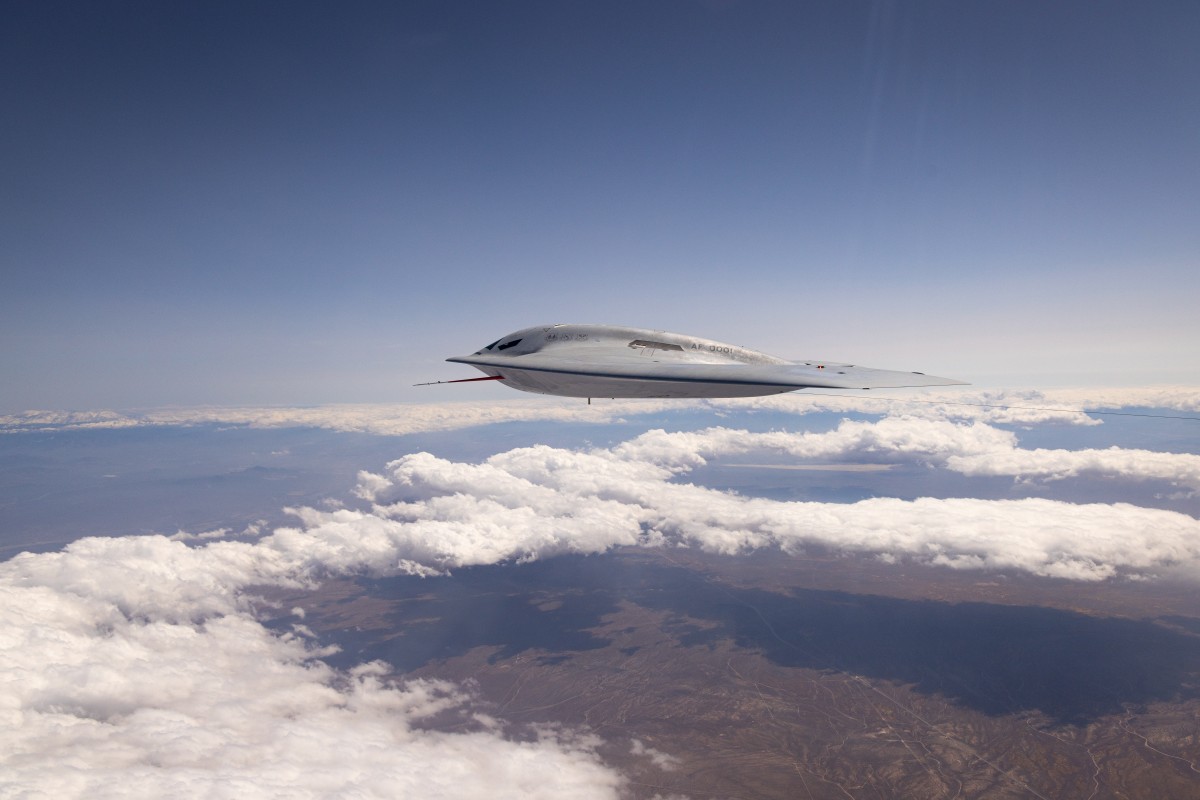
The US Air Force’s next strategic bomber, the B-21 Raider, is moving from flight test to the flight line, and the industrial base is expanding to match that pace. As part of this effort, the Department of the Air Force and the manufacturer broke ground on a new bomber final assembly line at Plant 42 in Palmdale, California.

“It’s more than construction… we’re moving fast to build B-21s! The Department of the Air Force & @northropgrumman have broken ground in Palmdale, CA, on over 1M sq ft of new facilities that will be the final assembly line at Air Force Plant 42,” Secretary of the Air Force Dr. Troy E. Meink recently wrote in a post on  X.

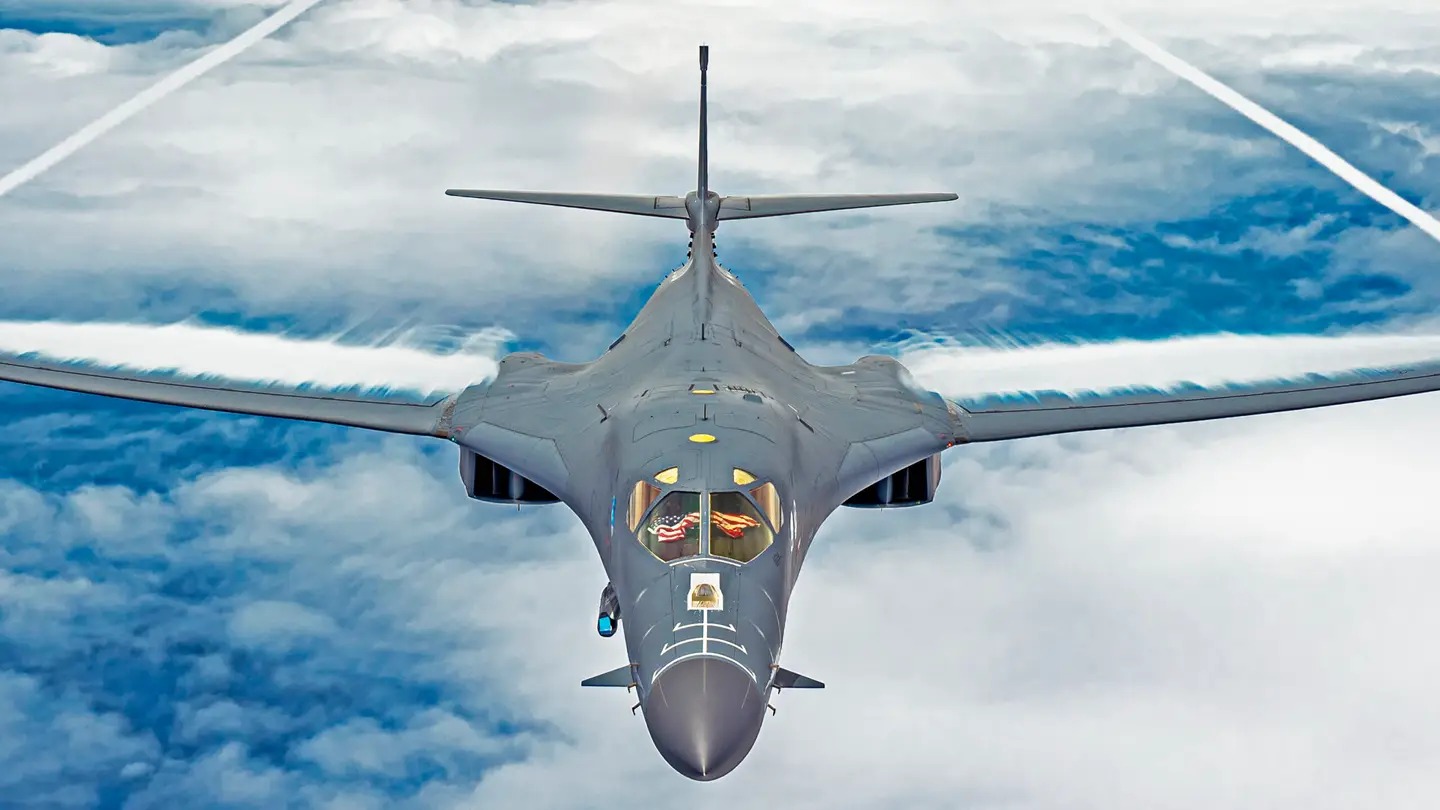
The B-21 Raider is the USAF’s next-generation nuclear- and conventional-capable, long-range penetrating bomber optimized for highly contested environments.

The new assembly line likely supports an agreement signed in February 2026 to increase annual B-21 production capacity by 25% using $4.5 billion in funding from the fiscal year 2025 reconciliation legislation.

Separately, Northrop Grumman is investing approximately $2.5 billion of its own capital over several years in related facilities and capacity. In September 2026, the company also opened the East Gate 3 manufacturing campus in Layton, Utah, to produce key B-21 components.

The construction of an all-new assembly line shows that expansion at the B-21’s production facility has moved from planning and funding to active construction.

This expansion is meant to give the service extra manufacturing capacity as the B-21 advances through flight testing and into initial operational deliveries. 

The USAF plans to buy at least 100 B-21 bombers to replace the B-1B Lancer and B-2 Spirit and eventually complement the B-52 Stratofortress.

The B-21 Raider program remains in low-rate initial production, meaning Northrop Grumman is building a small number of aircraft to test and refine the production process before full-rate production begins.

At the same time, senior officials have said the Air Force may need more than the current minimum of 100.

In April, Defense Secretary Pete Hegseth told the Senate Armed Services Committee that he believed “a lot more” B-21s were needed. Indo-Pacific Commander Admiral Samuel Paparo had earlier said he would favor a fleet of 200 for nuclear deterrence and penetrating strike.

A Mitchell Institute report has likewise argued that 100 is a raid force, not a campaign force. None of those comments changes the program of record, and the Palmdale construction is tied to the February capacity agreement, not to an approved increase in the buy.

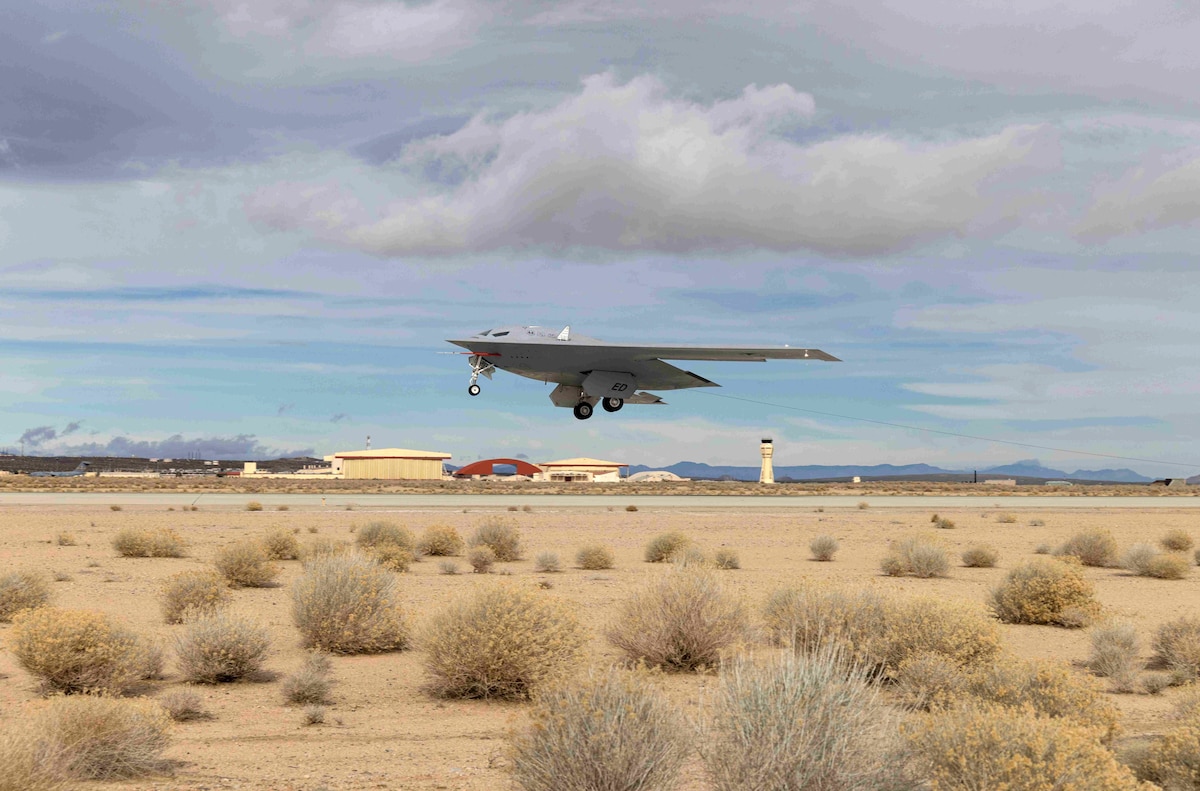
A B-21 Raider conducts flight testing, including ground testing, taxiing, and flight operations, at Edwards Air Force Base, California. Courtesy photo

Furthermore, a report by the Mitchell Institute for Aerospace Studies said the USAF’s current plans to purchase “at least” 100 B-21s match one-time operations into hostile airspace but are insufficient to maintain pressure in a larger conflict because they are “a raid force, not a campaign force.”

Meanwhile, the USAF has said the sixth-generation bomber—which currently has no analogs in the world—is “close” to entering service. In fact, it is expected to reach Ellsworth AFB in South Dakota, one of the three bases selected to host the Raider, in 2027.  

This bomber project has moved at a breakneck pace, going from the official public unveiling in December 2022 to the maiden flight in November 2023. In fact, an operational test pilot flew alongside a developmental test pilot, sharing the B-21 cockpit for the first time in June this year, underscoring the urgency of fielding the bomber.

The B-21 Raider’s rapid path from first flight to operational ramp at Ellsworth AFB in 2027 marks a striking acceleration in how the US fields a complex new strategic bomber.

Observers have lauded the speed, remarking that it has been unusually compressed for a program of this scale and sensitivity. This speed, however, was made possible because of a more fundamental shift: the B-21 was built virtually before it was ever built in metal.

B-21 Raider Rewrote Pentagon Acquisition Rules

For decades, major US defense programs followed the process, but aspirational designs fell behind schedule and prototypes revealed problems missed earlier, delaying programs and driving up costs. Northrop claims to be breaking away from this pattern.

Northrop states that it built the B-21 virtually first, using an extensive digital ecosystem and high-fidelity digital twins long before cutting metal. Succinctly put, unlike previous bombers that were primarily analog and later adapted for the digital era, the B-21 was built to function, endure, and evolve in the contemporary environment.

Developing and producing combat aircraft previously involved designing, building a prototype, testing it, discovering problems, and redesigning. However, Northrop essentially inverted this sequence, using a constantly changing digital model for the Raider.

This gave engineers, manufacturers, and operators a common reference point, enabling them to evaluate and implement design changes almost instantly.

This method enabled engineers to model aerodynamic performance, stealth features, structural loads, and systems integration long before components entered production.

This meant that design modifications that once required expensive rework could be assessed and verified virtually, often in a few hours rather than months. 

The team simulated and refined structural loads, stealth characteristics, flight dynamics, and systems integration in the virtual environment before committing to physical hardware.

As a result, the physical aircraft that emerged from this approach matched or even outperformed the models’ predictions, according to the manufacturer.

This, in turn, has allowed the program to compress testing timelines, accelerate production, and keep costs under tighter control.

File: A B-21 Raider conducts flight tests, which include ground testing, taxiing, and flying operations, at Edwards Air Force Base, California

Unsurprisingly, the result was an unusually mature aircraft when the first Raider took flight. Northrop earlier said, “Before the B-21 ever took to the sky, the flying test bed completed more than 200 test sorties totaling more than 1,000 flight hours, testing production hardware, software, and sensors in a dynamic environment and enabling teams to tackle discovery well in advance.”

The speed with which B-21 moved from production to testing and into an operational setting at a USAF airbase was best demonstrated by the approach the manufacturer and the Air Force took during flight testing. A major 180-day test cycle was reportedly completed in just 73 days, as revealed in May 2026.

Officials have even stated that the program is exceeding expectations, as test aircraft are achieving high “code one” rates, which is the rate at which the aircraft is ready to fly again with minimal issues

The Combined Test Force achieved half the originally planned missions in less than half the planned time, while supporting significant contract value.

This compression was not the product of rushed flying, and reflected fewer surprises, higher aircraft availability, real-time data analysis, and the ability to clear multiple test points on single sorties.

The advantage of building the aircraft digitally has reportedly extended to the production lines. “Where the digital environment meets the production floor, this digital technology expedites configuration management, facilitating communication between technicians and engineers during the build, in some areas already reducing manufacturing hours by roughly a third,” according to the Northrop Grumman newsroom.

Nonetheless, the B-21 is not without risk, though experts think careful digital engineering, precise digital twins, and a conscious move away from sequential physical prototypes can break the long-standing pattern of delays.


The post B-21 Raider: Northrop, US Air Force Break Ground on New Palmdale Line. Flight Test Runs Ahead of Schedule appeared first on EURASIAN TIMES.

  •  

Sanctions in February, handshakes in September: EU’s flip-flop Iran policy is putting lives at risk

Why would the European Union list the Islamic Revolutionary Guard Corps as a terrorist organisation in February, and then, seven months later, have its top diplomat sit down with the foreign minister of the government the Guard Corps defends?

At the UN General Assembly last month, EU chief diplomat Kaja Kallas met Abbas Araghchi, who served in the Guard Corps during the Iran–Iraq war.

Dutch prime minister Rob Jetten met president Masoud Pezeshkian, who in 2019 joined fellow parliamentarians in wearing the Guard Corps uniform to protest Washington’s terrorist designation of it. France, Italy, and Norway held meetings of their own.

These talks came less than nine months after Iranian security forces, on 8 and 9 January, killed protesters on a scale without precedent in the country’s modern history.

The human rights group HRANA has verified more than 7,000 deaths, and the UN special rapporteur warned that the toll may exceed 20,000.

In September, the UN fact-finding mission concluded that the crackdown amounted to crimes against humanity. Nor has the killing stopped: Iran Human Rights counted at least 532 executions in the first eight months of this year, including protesters arrested in January.

After a massacre, a foreign policy guided by European values should pursue one aim above others: making a repetition more costly for those who would order and carry it out.

Naming and shaming raises the reputational cost of repression, targeted sanctions raise its material cost, and delegitimisation raises the political cost of staying loyal to the regime.

They work only in combination, since sanctions without delegitimization tell the regime’s elite that their assets are at risk, but their standing is not.

EU vs US sanctions

Europe has used the first two instruments. The EU listed the Guard Corps in February and sanctioned additional Iranian officials for human rights abuses.

However, these measures target assets and individuals, while the government that presided over the killing keeps its seat at the top table.

The UNGA in New York showed how little the third instrument has been used.

The terrorist listing freezes the Guard Corps’ funds. Neither Araghchi nor Pezeshkian is on an EU sanctions list.

Yet it leaves a question unanswered: how far should the logic of a terrorist designation extend to the government that funds and publicly defends it?

Article 21 of the Treaty on European Union requires the Union’s external action to be guided by human rights and to be consistent.

Branding the Guard Corps a terrorist organisation in Brussels while posing for photographs with the government it defends in New York sits uneasily with that obligation.

This inconsistency is costly. In a study in foreign policy analysis, my co-authors and I examined how Iranians reacted to US sanctions. Comprehensive sanctions produced a rally around the government, even among reformists.

The 2019 designation of the Guard Corps, by contrast, produced almost no rally outside the regime’s hardliner core. Thus, targeted pressure on the security apparatus does not drive Iranians into its arms.

Handshakes, on the other hand, may give the apparatus exactly what targeted sanctions are meant to withhold: international legitimacy.

The photographs from New York reach two audiences.

The first sits inside the state: an officer deciding whether to fire on a crowd, or to step aside, weighs one question above most others, namely whether the regime will survive, and each of those photographs suggests an answer.

The second audience is the families of those killed, executed, and blinded since January. For them, the message is that Europe has moved on after eight months.

A picture is worth a thousand words

I am not against diplomacy. Kallas raised the sharp rise in executions with Araghchi, and Jetten raised human rights and Iranian actions on Dutch soil with Pezeshkian. Channels on shipping, detained Europeans, and de-escalation should stay open.

My objection concerns the level and the format: a meeting between leaders, photographed at the General Assembly with no public conditions attached, is not a technical channel.

Concerns voiced in private do not travel as far as the photograph, which signals normal relations with a government that has done nothing to earn them.

Four steps would help.

First, the Council should agree on a common line: contact at the technical and envoy level, and leader-level meetings only on public conditions, beginning with a halt to protest-related executions.

Second, human rights sanctions should move up the chain of command, to those who answer politically for the security forces.

Third, member states should invest in accountability that does not depend on Tehran, such as universal jurisdiction cases and evidence-sharing with the UN mission.

Finally, Europe should engage openly with Iran’s democratic opposition.

The EU has already decided, in law, what the Guard Corps is. Its leaders have yet to act accordingly. A massacre answered with sanctions in February and handshakes in September does not raise the cost of the next one. It lowers it.

  •  

Trump’s Big Taiwan Move: Despite $14B Arms Freeze, Permanent U.S. Military Officials May Sit at MND

Washington has sent two contradictory signals on Taiwan in the last few days. Whether these signals reflect strategic ambiguity or strategic confusion in the coming days has become a matter of debate among the strategic experts.

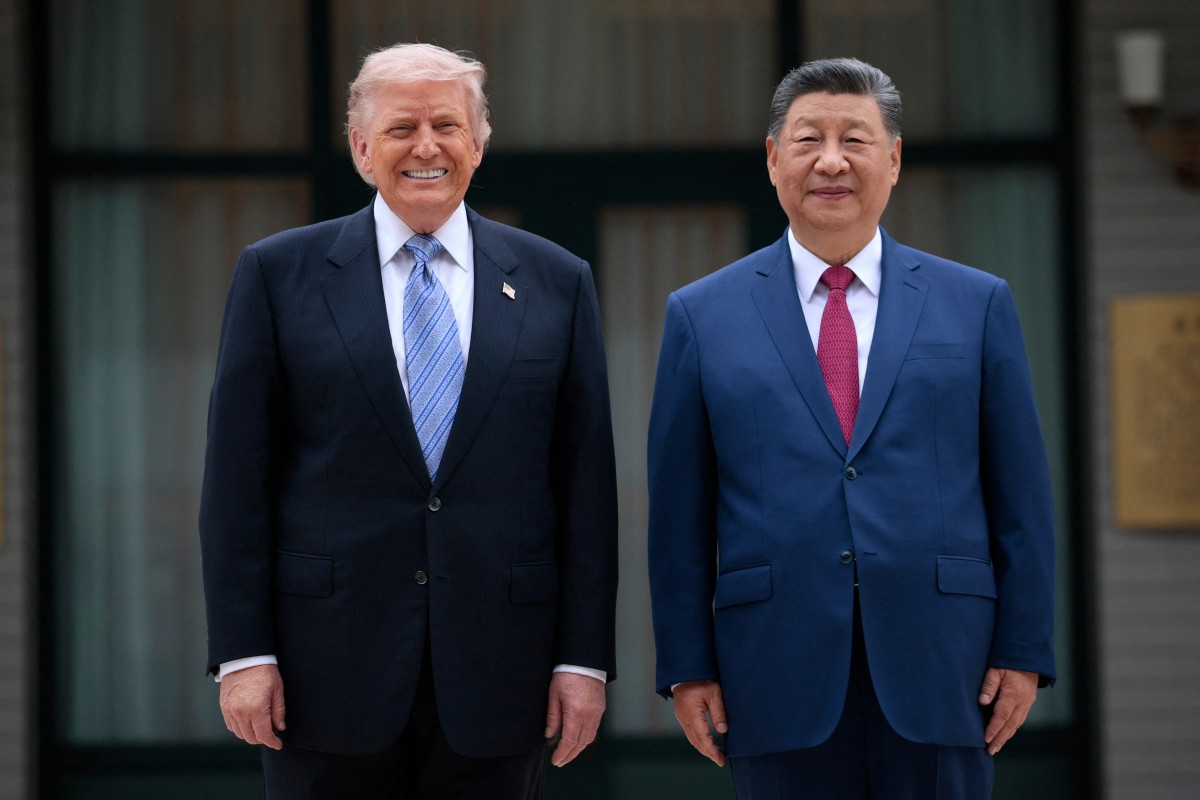
On the one hand, Trump is holding back a $14 billion arms package for Taiwan, pre-approved by the U.S. Congress, despite a bipartisan group of senators explicitly urging him to “formally notify . But the U.S. President has described his decision to pause as a “very good negotiating chip” for his talks with Chinese President Xi Jinping.

Whether that worked in his summit meeting with Xi last week in Washington is not known. But Taiwan’s Defense Minister Wellington Koo confirmed yesterday (October 6) that he has “not heard” of any new sale being cleared, even in smaller chunks.

On the other hand,  the Pentagon is seemingly doing the opposite of this pause.

According to reports, the U.S. Department of Defense will station two representatives on a long-term basis inside Taiwan’s Ministry of National Defense headquarters in Taipei from 2026 to 2028.

One official will come from the Office of the Under Secretary of Defense for Policy [OUSD-Policy] — the office that writes U.S. national security and defense strategy. The second will come from the Institute for Defense Analyses [IDA] — a federally funded think tank that does mathematical modeling for war games and combat capability assessment.

The program is called the “Taiwan-US Defense Ministry Joint Cooperation Assessment,” with a total budget of NT$471 million [$14.8 million], including NT$152.5 million this year for personnel, consultancy, travel, data collection, and even interpretation for classified-level meetings.

If confirmed, this will be unprecedented.

This would mark the first time U.S. defense officials are permanently embedded inside Taiwan’s military headquarters, shifting cooperation away from traditional channels managed through the American Institute in Taiwan (AIT), Washington’s de facto embassy.

The military relationship between the United States and Taiwan is highly integrated yet formally unofficial. It is governed by the legal framework of the “U.S. Taiwan Relations Act” (TRA), which Congress passed on April 10, 1979.

Congress enacted it immediately after the U.S. formally terminated its previous “Mutual Defense Treaty with the Republic of China (Taiwan)” to officially recognize “the People’s Republic of China (PRC)” in Beijing.

Rather than abandoning Taiwan, Congress designed the TRA as a legal framework to ensure that “robust, unofficial security, commercial, and cultural ties” continue uninterrupted.

In short, the TRA provides a domestic legal workaround for treating Taiwan as a country without formal diplomatic recognition. However, under it, the U.S. is also obligated to maintain Taiwan’s capacity to resist force or coercion in general and the forcible annexation by the PRC in particular.

Over the years, U.S. personnel have served in Taiwan as trainers and advisers. Hundreds of active-duty U.S. military advisors—often colloquially referred to locally as “English teachers” to maintain a low profile—are routinely deployed across Taiwan.

U.S. military observers are present within Taiwan’s annual “Han Kuang live-fire military exercises”. They actively guide Taiwan’s defense strategy toward decentralized command, logistics, and real-world combat readiness.

Taiwanese fighter pilots undergo advanced combat training at Luke Air Force Base in Arizona.

The US remains Taiwan’s primary foreign weapons supplier, with a total backlog of orders nearing $20 billion.

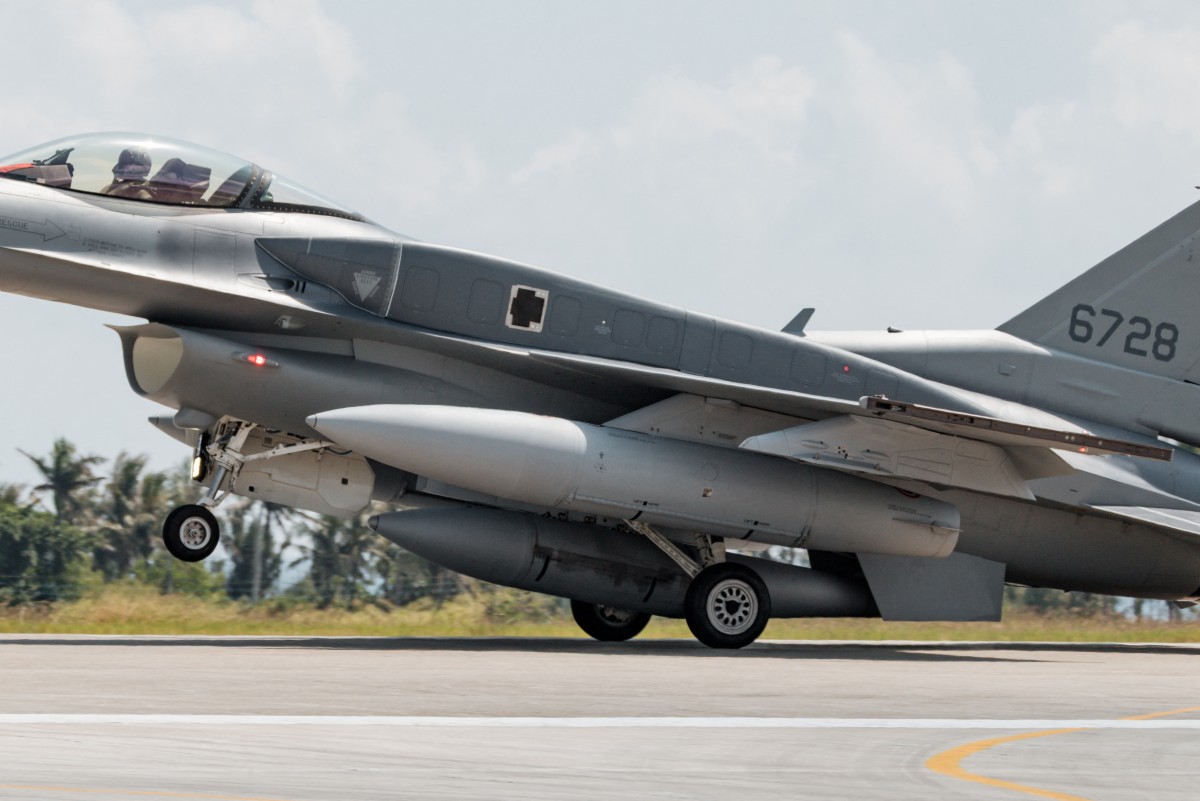
In fact, Taiwan received its first new batch of two advanced Lockheed Martin F-16 Block 70 fighter jets on October 2.  This was part of an $8 billion deal approved in 2019 for 66 new-build F-16 Block 70 jets, with the remaining 64 aircraft scheduled for future delivery.  out of a 66-aircraft fleet on order.

A newly purchased F-16V Block 70 fighter jet lands at Chi-hang Air Base in Taitung on October 2, 2026. Taiwan received its first two US-made F-16V fighter jets as the island democracy upgrades its military capabilities to deter a potential Chinese attack. The warplanes are part of an $8 billion deal for 66 F-16Vs approved during U.S. President Donald Trump’s first term and scheduled for delivery this year. (Photo by CHENG Yu-chen / AFP)

However, all these coordination efforts between Washington and Taipei are usually routed through the AIT intermediary, as the U.S. adheres to its  One China” policy. In that sense, the new proposal to station Pentagon personnel directly inside the Taiwanese Defense Ministry represents a shift from this historical status quo.

The new arrangement puts Americans directly into the core of Taiwan’s defense policymaking, including policy coordination, Han Kuang exercise planning, asymmetric warfare doctrine, and major weapons procurement evaluations, it is said.

Of course, the U.S. routinely sends military and civilian defense officials to work directly inside the defense ministries of partner and allied nations. Established by the Pentagon in 2009, the Ministry of Defense Advisors (MODA) Program specifically trains and deploys high-performing senior U.S. Department of Defense civilians.

These advisors are embedded in partner-nation defense ministries to support institutional capacity building, strategy, financial management, and logistics.

The U.S. also actively deploys specialized defense consultants directly to the defense ministries of nations looking to transition away from historical adversaries such as Ukraine, Moldova, Armenia, and various Balkan nations looking to exit Moscow’s orbit.

The U.S. has a long history of embedding liaison officers in allied countries. For example, it has a Joint Political-Military Group in Israel that embeds officers in missile-defense cooperation for Iron Dome, David’s Sling, and now Iron Beam. But American officials do not operate inside the Kirya (Israel’s defense headquarters).

Similarly, despite 54,000 US personnel stationed in Japan, no U.S. officer sits inside Japan’s Ministry of Defense to assess combat capability.

Perhaps in NATO countries and South Korea, U.S. military officials are believed to sit together often.

There are also “Offices of Defense Cooperation” (ODC), or United States Military Groups, which are technically attached to the local U.S. Embassy for diplomatic protection. These teams provide security assistance and work in routine, day-to-day coordination with host ministry personnel.

However, what makes the proposed U.S. officials sitting directly within Taiwan’s military headquarters unique is that Taiwan is not an ally of America in the strict sense, as the U.S. lacks formal diplomatic recognition of Taiwan, and these officials will bypass the traditional AIT.

Of course, multiple reports in recent years have claimed that U.S. special forces are permanently stationed in Taiwan to assist its 101st Amphibious Reconnaissance Battalion special operations force, though Washington has officially denied it.  The same has been the case with the speculations about the coming and going of U.S. military personnel from the Army Special Operations Command base in Taoyuan.

U.S. President Donald Trump (L) poses for photos with China’s President Xi Jinping during a visit to Zhongnanhai Garden in Beijing on May 15, 2026. (Photo by Evan Vucci / POOL / AFP)

How will Beijing React?

At the time of writing, Beijing had not issued an official reaction, possibly because Taiwanese media outlets only recently brought details of this long-term Pentagon deployment to light. It has not been declared officially.

But it goes without saying that Beijing would be “certain to protest” and could respond “with expanded exercises and intimidation”, according to  Zivon Wang, a military analyst at the Chinese Council of Advanced Policy Studies in Taipei.

He expects U.S. personnel not to wear uniforms at the Ministry of National Defense because it could be interpreted as a more formalized US-Taiwan military relationship and might further provoke Beijing.

Incidentally, China has made more air and naval incursions across the median line in the Taiwan Strait since 2022. Although Chinese military aircraft had occasionally crossed the median line (established informally in 1954) in the past, the practice became significantly more frequent from 2022, particularly after Nancy Pelosi (then Speaker of the House of Representatives) visited Taiwan in August that year. What had once been an informal but largely respected buffer increasingly became a zone of routine Chinese military activity.

Therefore, it remains to be seen whether China will respond to the Pentagon’s proposed deployment with loud exercises.

It may also remain silent, as nothing is official yet and Trump has his “negotiating chip” of holding back Taiwan’s military package.

Trump’s admirers often see his unpredictability as useful in negotiations with an adversary, because the other side cannot be sure how far he is willing to go.

But his critics argue that his unpredictability becomes counterproductive when allies cannot distinguish a negotiating threat from a real change in American policy.

It remains to be seen who will prove to be right in the case of Taiwan.

  • Author and veteran journalist Prakash Nanda is Chairman of the Editorial Board of the EurAsian Times and has been commenting on politics, foreign policy, and strategic affairs for nearly three decades. He is a former National Fellow of the Indian Council for Historical Research and a recipient of the Seoul Peace Prize Scholarship.
  • The author can be reached at prakash.nanda (at) hotmail.com

The post Trump’s Big Taiwan Move: Despite $14B Arms Freeze, Permanent U.S. Military Officials May Sit at MND appeared first on EURASIAN TIMES.

  •  

The Missile That Shot Down U.S. Stealth Aircraft is Coming Back—Mobile. Why India Must Take Note of the Russian Move

Russia appears to be preparing to revive and modernize its inventory of the Soviet-era Pechora S-125 short-to-medium-range surface-to-air missile system, in a move that the IAF leadership could well take note of.

S-125 is the same missile that was used to shoot down the US Air Force’s F-117 Nighthawk stealth fighter-bomber over Serbia on March 27, 1999, during the Kosovo War.

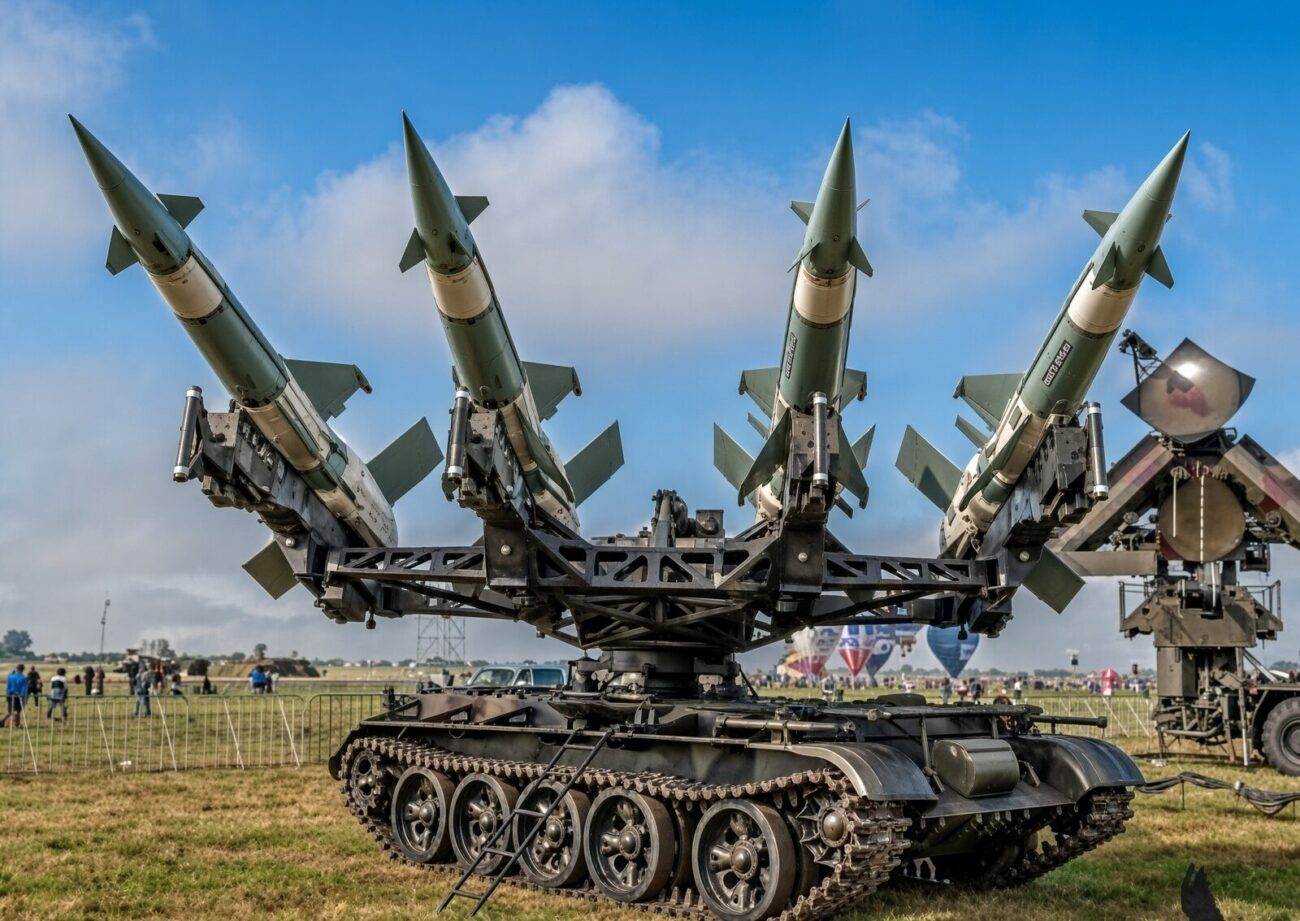
The Pechora S-125 (SA-3 Goa) is a legacy Soviet static, short- to medium-range surface-to-air missile system developed to engage low- to medium-altitude air threats using command guidance.

The IAF also modernized its S-125 inventory to plug an operational gap that widened due to delays in procuring MRSAM and Akash air-defense systems. However, the IAF did not pursue modernization to the extent that the capability gains matched the more comprehensive modernization offered by the Russian Pechora-2M.

According to Militarnyi, a Ukrainian media outlet focused on military affairs, the Minsk Wheel Tractor Plant (MZKT) has signed a contract with Moscow-based JSC Oboronitelnye Sistemi to supply 30 specialized wheeled chassis that appear intended for components of the Pechora-2M system.

The Pechora-2M is a heavily modernized Pechora derivative with a self-propelled truck-mounted launcher, digital electronics, an extended engagement envelope, and day/night electro-optical tracking, giving the system much greater tactical mobility.

Under the terms of the contract, Russia would receive 20 MZKT-8021-021 chassis, as well as five each of the MZKT-8022-021 and MZKT-80211-021.

The MZKT-8021/8022 family of specialized chassis was developed specifically to accommodate components of the Pechora-2M air-defense missile system.

Pechora Revival

The delivery schedule extends to 2029, suggesting a planned multi-year acquisition rather than a one-off procurement to meet an immediate operational requirement.

More likely, Russia is seeking to expand its air-defense capacity in response to the heightened threat from the prolific use of drones and other low-cost aerial threats in modern warfare.

Drone warfare has increased the aerial threat severalfold, so it is logical for any nation to increase the density of its AD systems by a corresponding factor.

Russia appears to be increasing its reliance on legacy systems rather than simply discarding them.

Russian Modernisation

The modernized Pechora-2M system was developed as a deep modernization of the Soviet S-125, incorporating a self-propelled, highly mobile launcher and modernized electronics. The modernization transformed the legacy stationary S-125 into a rapidly deployable air-defense platform capable of shoot-and-scoot tactics, reducing its vulnerability to anti-radiation weapons and precision strikes.

The 2M replaces the legacy four-rail stationary ground launcher (5P73) with a twin-rail launcher mounted on a heavy 6×6 truck chassis. The reduction in launch rails was necessary to maintain launcher stability when mounted on a mobile chassis.

Rafale, Tejas & AMCA: IAF’s “Healthy Mix” of Fighter Jets Leaves Out The Aircraft That May Matter The Most

The legacy S-125 required considerable time to disassemble, pack onto trailers, move, and re-erect at a new site. In contrast, the Pechora-2M can reportedly be brought into action in roughly 20–25 minutes, facilitating shoot-and-scoot operations.

Besides the self-propelled launchers, the tracking/fire-control radar and other system components are also mounted on high-mobility truck chassis rather than being confined to towed equipment.

File Image: S-125

IAF Pechora Modernization

In 2016, the Indian MoD issued a $272-million tender to digitize 16 Pechora systems. The tender was restricted to Indian companies to support the government’s Make in India policy. The eventual contract, worth ₹591.3 crore, was awarded to Alpha Design Technologies Ltd (ADTL) in 2020.

Russia’s Almaz-Antey is the original equipment manufacturer of the Pechora system. At the time, Indian officials indicated that Russian defense companies preferred to work through Russian state-owned entities, limiting the scope for direct OEM participation by Indian companies.

The scope of the Indian Pechora upgrade was primarily the electronic and mechanical modernization of the existing system rather than a fundamental redesign of its architecture. It included refurbishment and digitization of the missile-guidance radar and integration of the system with the IAF’s Integrated Air Command and Control System (IACCS).

Alpha Design Technologies Ltd executed the upgrade, focusing on digitization and electronic modernization. It replaced vintage electronic components with modern semiconductor-based electronics and digital processing, while modernizing operator consoles and other system elements.

No Mobility

The system retained its original static, four-rail, ground-mounted configuration (5P73 launcher) and towed transport arrangement because the Indian upgrade scope did not include mobility.

Because it lacks mobility, the IAF has traditionally used the Pechora for point defense of fixed, high-value infrastructure such as air bases, radar stations, and other military installations.

A statically deployed AD system protecting a high-value asset made considerably more sense when precision-guided munitions were either unavailable or relatively uncommon. In contemporary warfare, where precision weapons can routinely achieve single-digit-meter accuracy, a static air-defense system defending a high-value asset can itself become a priority target.

Recall the failed PAF attempt to strike the S-400 system deployed to defend Aadampur air base during Op Sindoor. With foresight, and by leveraging the S-400’s mobility, IAF leadership relocated the system before the attack. The episode illustrates the importance of mobility and survivability for high-value air-defense assets.

A Still-Capable System

Despite its vintage, the Pechora remains a potentially useful AD system. Endowed with mobility and modern sensors and electronics, it would acquire significantly greater survivability and tactical utility.

One of its strengths is electro-optical tracking, which permits passive target tracking without radar emissions, reducing vulnerability to anti-radiation weapons. Both Russian and Indian modernization programs have improved the system’s electro-optical capability.

The Indian upgrade incorporates thermal-imaging-based fire-control equipment, while the Pechora-2M also incorporates TV and thermal/infrared electro-optical channels.

Thermal imaging provides a passive night-and-day detection and tracking capability and, unlike conventional television cameras, does not depend on visible light. However, adverse atmospheric conditions can degrade its effectiveness.

It is interesting to note that the IAF chose to upgrade its Pechora systems without fundamentally modifying the missile. Contemporary reporting on the original upgrade program indicated that the IAF considered the existing missile adequate and concentrated instead on digitization, radar, communications, networking, and other system improvements.

The 5V27 family missile has a substantial fragmentation warhead of around 70 kg and uses command guidance. Its continued availability is one possible reason why extending the life of the Pechora system remains attractive.

Russia may also be reviving and revitalizing Pechora-2M systems because it has a substantial existing inventory of 5V27-series missiles. If so, the approach illustrates an important principle of modern warfare: the value of an old weapon system can change when it is combined with modern sensors, electronics, mobility and networking.

F-35 Bid Stalls — But Morocco’s 1st F-16 Block 72 Fighter Jet Completes Maiden Flight

What the IAF Should Note

In the immediate future, the IAF will need to deploy many more AD systems than it currently does in order to field a robust air-defense capability spanning the entire gamut of aerodynamic threats—aircraft, helicopters, cruise missiles, guided bombs and drones.

Developing additional AD systems may prove more challenging and time-consuming than upgrading existing legacy systems such as the Pechora.

Upgrading the Pechora to add mobility, modern electro-optical sensors and improved networking should be well within Indian technological capability. Even locally manufacturing additional upgraded systems under an appropriate OEM arrangement could be a cost-effective way to augment India’s air-defense capability.

Russia’s apparent decision to extract additional combat value from an old missile system should therefore be viewed less as a revival of obsolete technology and more as an example of how legacy weapons can be adapted to the changing economics and character of air warfare.

  • Vijainder K Thakur is a retired IAF Jaguar pilot, author, software architect, entrepreneur, and military analyst.
  • Views Personal of the Author
  • Follow the author @vkthakur

The post The Missile That Shot Down U.S. Stealth Aircraft is Coming Back—Mobile. Why India Must Take Note of the Russian Move appeared first on EURASIAN TIMES.

  •  

Germany Holds ‘Exploratory Talks’ to Join Once Rival GCAP 6th-Gen Fighter Program After FCAS Collapse

Months after walking away from the Future Combat Air System (FCAS) project, Germany is quietly testing the waters of a rival alliance led by Britain, Japan and Italy.

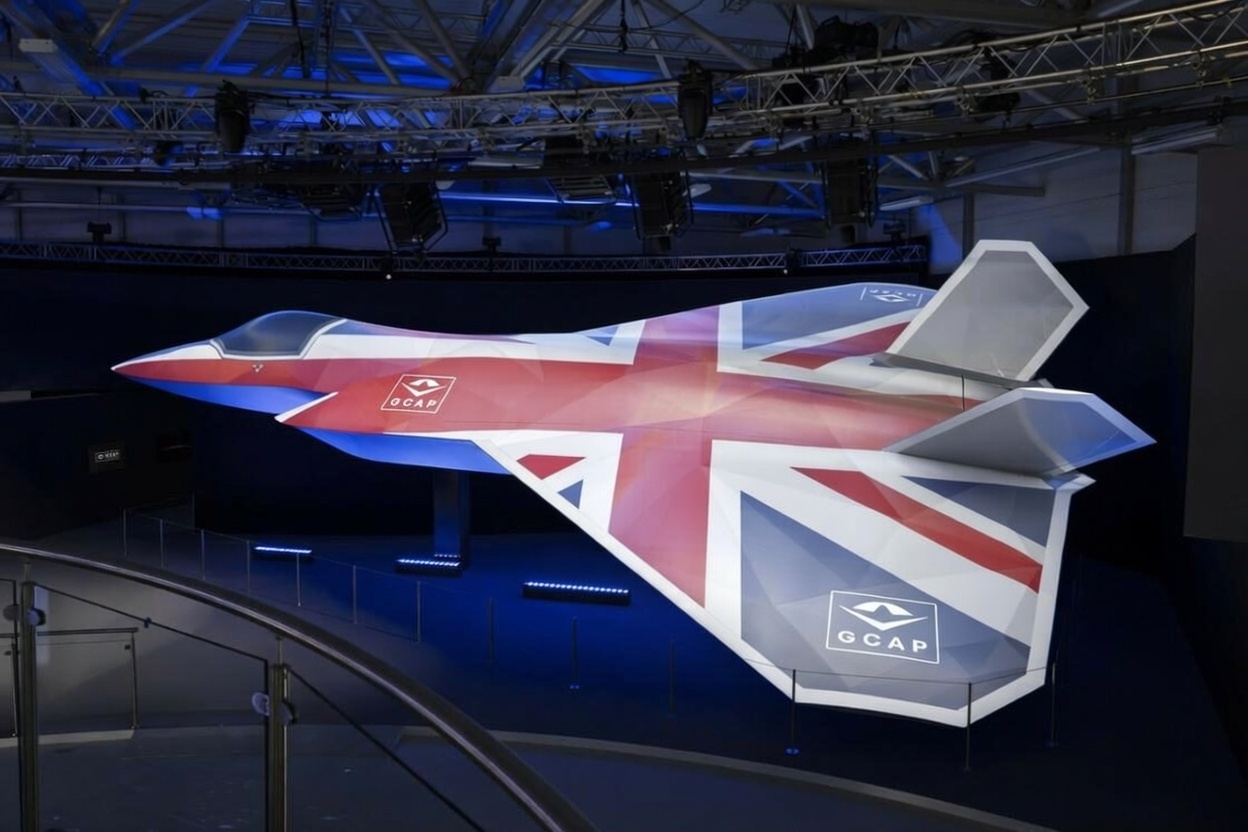
Germany has held “exploratory talks” about joining the Global Combat Air Program (GCAP) as it charts its future after the FCAS collapse.

The confirmation came after Politico accessed internal German government documents that revealed the United Kingdom’s national armaments director, who oversees defense procurement, sought German participation in the next-generation fighter program. The document noted that London wants to discuss the terms of potential cooperation, such as Germany’s military capability requirements and industrial “workshare.”

Notably, the German defense ministry told Politico it held preliminary discussions on GCAP’s fundamental requirements and program substance, without disclosing whether the United Kingdom had officially offered Germany any specific participant status.

The development comes months after the Friedrich Merz government pulled the plug on the FCAS program it was pursuing with France and Spain. The program had remained stalled amid unresolved disputes between Airbus (representing Germany and Spain) and France’s Dassault Aviation over work-sharing, design philosophy, and supplier selection.

After the program ended, an Airbus-led consortium of defense companies known as “Team Gen 6” filed a position paper on a sixth-generation fighter project with the German government, signaling an industry drive to influence the process.

Over a month after Germany abandoned the FCAS, Airbus Defense and Space said at the ongoing Farnborough Air Show in the UK that it was open to joining forces with Britain, Italy and Japan if it had enough control over the program and work share.

“What we’re ready to do is to join something or to build something where we have a significant portion of the work and the leadership. That’s currently being explored,” head of Airbus’s defense division in Munich, Michael Schoellhorn said at the time.

GCAP has been on Merz’s radar since before it walked out of the FCAS in June 2026, as the EurAsian Times had previously reported.

During a visit to Italy in February 2026, Merz raised the prospect of his country joining the GCAP and received a favorable response from Italian Prime Minister Giorgia Meloni.

While Germany is actively looking for partnerships it could forge for a sixth-generation fighter, France appears more undecided for now.

France and its aerospace giant Dassault could go solo with the FCAS, repeating a historical pattern seen in its development of the Rafale. In fact, French officials have repeatedly said France is currently the only country in Europe with the full industrial ecosystem to design and build a fighter completely independently.

In July this year, Dassault CEO Eric Trappier said a next-generation combat jet could be developed solely in France or in cooperation with other partners, but he did not say which countries could be invited to the effort, if at all.

Meanwhile, India has officially initiated efforts to join the FCAS program. “The Ministry of Defence has initiated efforts in a concerted manner to co-join the 6th Generation Fighter Aircraft Development Programme viz. Future Combat Air System (FCAS) spearheaded by the French Government,” the defense ministry said in its report to the Parliamentary Standing Committee on Defense.

File Image.

Germany’s GCAP Decision: Not So Easy?

GCAP is largely on track after it received a fresh impetus last month, with London committing £8.6 billion ($11.7) to the program in the Defense Investment Plan (DIP) earlier this year. GCAP’s industrial joint venture to design and develop the next-generation fighter, Edgewing, is led by Leonardo (Italy), Mitsubishi Heavy Industries (Japan), and BAE (the UK).

Pneumonia Plague in Russia: Boris Yeltsin Admitted the 1979 Lab Leak. But Moscow Says Siberia is Different.

The group formally admitted Canada as an observer to the program in July this year, as the EurAsian Times previously reported. Following that, Leonardo  CEO Lorenzo Mariani said at Farnborough that a country willing to join the GCAP could do so before the end of this year, with a final deadline of another year—signaling an appetite for expansion.

Although the UK and Italy have openly expressed their willingness to welcome more partners into the GCAP, Japan may remain Germany’s only hurdle if it decides to join the trilateral sixth-generation grouping.

Until now, Tokyo has remained reluctant to open the group to more members, citing concerns about delays and an urgent need for the Japanese Air Self-Defense Forces to replace the F-2 with a next-generation aircraft. It earlier opposed Saudi Arabia’s entry into the GCAP despite the resources that the cash-rich country could potentially bring.

Because of “where GCAP partners are in terms of the program at the moment, what they don’t want to do is to start to have to renegotiate stuff, introducing somebody else at this point and then slow the program down,” Douglas Barrie, a senior fellow for military aerospace at the International Institute for Strategic Studies (IISS), told Breaking Defense.

Even if Japan allows Germany entry into the GCAP on the insistence of the UK and Italy, new challenges could arise over the aircraft’s design philosophy. For one, the GCAP is being built around a maritime scenario, whereas Berlin would want an aircraft suited to its own geography and continental use.

There is already a small discrepancy in the GCAP group’s priorities: Japan wants to simply develop a new fighter by the mid-2030s to replace the F-2, while the UK and Italy are reportedly more interested in GCAP developing a cutting-edge “system of systems,” a fighter that works with a swarm of drones under a less stringent timeframe. Admitting a new member could further complicate matters internally and likely cause delays.

Another major challenge for Berlin could be the distribution of work share, which was unarguably the main bone of contention within the FCAS and the last nail in its coffin.

The three Industry partners are already set in their ways, having established the joint venture, divided responsibilities, and set program structures via Edgewing and GIGO (GCAP International Government Organization). At this point, bringing Germany into the GCAP could risk undermining existing partners’ interests and reopening delicate talks on industrial participation, production shares, and intellectual property.

If the terms are renegotiated, Germany may be offered a junior or subordinate role, with limited say over design, architecture, and key decisions—something that may not be acceptable to Airbus, as indicated earlier this year.

In addition to these challenges, Germany views the UK’s BAE Systems with skepticism,  Politico stated, citing the internal German assessment.

The document reportedly highlights what it calls a “bad experience” with the business during Eurofighter development and says it is reasonable to expect BAE will control the new initiative in a manner incompatible with collaboration “on an equal footing.”

It is pertinent to note that Italy’s defense minister claimed in January this year that the UK was not doing enough to share its cutting-edge technology with its partners, calling it “madness,” months after he said in April 2025 that the UK needed to bring down the “barriers of selfishness.

Besides GCAP, Germany is considering an alternative partnership with Sweden and Spain. In fact, the internal document emphasizes that the three nations would start from a more comparable position than Germany would, because their military requirements are closely linked, and recommends exploring that option, as noted by Politico.

Notably, Michael Schoellhorn expressed his excitement about collaborating with Sweden and Saab on the next-generation fighter in March 2026 during an exclusive interview with the Swedish business newspaper Dagens Industri on the fringes of the Airbus Defense & Space Summit. This means that Airbus has been eyeing Saab as a potential partner.

For now, both options remain on the table, and Germany has yet to decide whether to join the GCAP to get a sixth-generation fighter by 2035 or pursue a partnership that starts on equal footing and allows Airbus to take an equal, if not larger, role.

The post Germany Holds ‘Exploratory Talks’ to Join Once Rival GCAP 6th-Gen Fighter Program After FCAS Collapse appeared first on EURASIAN TIMES.

  •  

Saudi & Turkey Chase F-35 Jets, Heavy Skepticism in India. Why IAF Veterans are Not Too Keen on F-35s?

After years of lobbying by Riyadh, the United States recently greenlit a potential sale of F-35 fighters to Saudi Arabia. Meanwhile, Turkey is looking to rejoin the F-35 program and is aggressively pursuing the Trump administration to approve the sale of stealth jets. 

Another interesting case is India, which is hosting Exercise Tarang Shakti, where six F-35 jets are participating. Indian experts call it a unique opportunity for the IAF to evaluate US stealth jets and see how Indian ground and airborne radars detect them.

Notably, this is the first time F-35s are participating in drills with Indian jets on Indian soil.

Many see this as an historic opportunity to train alongside arguably the world’s best jets and give real-time exposure to the IAF’s Rafale, Su-30MKI and Tejas aircraft. Even IAF critics who don’t favor a potential F-35 sale to India see this as a historic opportunity.

Earlier, a EurAsian Times report said the US State Department announced the proposed sale of F-35 Lightning II and related equipment to Saudi Arabia on September 17, 2026. The proposed sale is expected to cover  48 F-35 aircraft and 49 Pratt & Whitney F135-PW-100 engines, along with communications gear, training, spare parts, and other support as requested by Riyadh.

The approval followed years of lobbying by the Saudi kingdom to procure the highly sought-after stealth fighters. Earlier, the Obama administration explicitly ruled it out in late 2015, stating that Israel would remain the sole F-35 recipient in the region to preserve its qualitative military edge (QME).

Later, the Biden administration explored linking a potential F-35 deal to Saudi-Israeli normalization, but talks stalled after the October 7 Hamas attack on Israel.

The US State Department’s proposed sale still requires congressional approval, and analysts believe Saudi’s purchase of the F-35 could hit a roadblock amid concerns about Riyadh’s ties with China and Israel’s opposition to the deal.

Despite being a founding member of the F-35 program and making a significant financial investment, the US expelled Turkey from the consortium and sanctioned it under CAATSA for purchasing the S-400 despite repeated warnings.

Ankara has been actively pursuing a strategy to divest itself of its Russian-made S-400 and sell it off to a potential third-party buyer.

Earlier, the US President similarly responded to questions about lifting CAATSA sanctions on Turkey by saying, “I’ll always speak to President Erdogan. He is a friend of mine, as you know. And I’ll always make him happy.”

As Trump & Xi Talk — U.S. and China’s Nuclear Submarines Race For Dominance in the Indo-Pacific

For now, Turkey’s path to obtaining the F-35s is still full of hurdles that both Washington and Ankara may find hard to remove, including Israel’s stiff opposition, as the EurAsian Times has explained before.

Like Saudi Arabia and Turkey, several countries have made unsuccessful attempts to obtain the F-35, widely regarded as the leading fifth-generation multirole fighter thanks to its advanced low-observable stealth and groundbreaking sensor fusion.

Functioning as a highly networked airborne command node—often described as the “quarterback of the skies”—it shares data seamlessly across friendly platforms. In fact, analysts believe that it is the most capable fifth-generation fighter in service anywhere in the world.

Despite this, India — a country that faces the dual threat of China and Pakistan along its borders — has been somewhat indifferent to what many consider the world’s best jets.

US Pitch for F-35s

Donald Trump unofficially pitched the F-35 to India during a meeting with Indian Prime Minister Narendra Modi in February 2025. “Starting this year, we will be increasing military sales to India by many billions of dollars. We are also paving the way to provide India with the F-35 stealth fighters ultimately,”  he said at the time.

F-35: Image via US Embassy, New Delhi

The F-35s were also displayed at Aero India 2025 the same month, where they met the Russian Su-57 on the tarmac for the first time.

During his April 2025 visit to India, US Vice President J.D. Vance appeared to reiterate the offer.

“We, of course, want to collaborate more. We want to work together more. And we want your nation to buy more of our military equipment, which we believe is the best in class. American fifth-generation F-35s, for example, would give the Indian Air Force the ability to defend your airspace and protect your people like never before,” he said, making a more direct appeal.

Although the US never made an official offer, the verbal F-35 pitch and the prospect of acquiring a cutting-edge stealth fighter looked great on paper, particularly since China operates two fifth-generation aircraft (the J-20 and J-35A) and is allegedly exporting the J-35A to Pakistan.

Rafale, Tejas & AMCA: IAF’s “Healthy Mix” of Fighter Jets Leaves Out The Aircraft That May Matter The Most

However, India’s defense community and Indian Air Force (IAF) veterans seemed unimpressed by the F-35 offer despite acknowledging the aircraft’s potent capabilities, a stance recently reiterated as six F-35s made their debut in India-hosted “Exercise Tarang Shakti 2026” in Jodhpur, Rajasthan.

Seven Reasons Why IAF Veterans Oppose F-35

First, Indian analysts and experts believe that buying an expensive stealth fighter off the shelf from the United States would be a liability, since it would do nothing for the Indian defense manufacturing sector and come with an enormous price tag.

Each F-35 is expected to cost $80 to $120 million, with even higher life cycle costs. Therefore, a fleet of F-35s would impose a heavy financial burden that the Indian Air Force would rather allocate to indigenous programs and more flexible and diverse acquisitions.

Second, analysts and veterans have argued that the US would never part with its technology, eliminating domestic manufacturing. They reckon the F-35 procurement would run counter to the “Make in India” and “Aatmanirbhar Bharat” policies.

Air Marshal Anil Khosla (retd), the former Vice Chief of Air Staff (VCAS), earlier stressed that even with approval of limited technology transfer and local manufacturing, significant challenges would remain. At the time, he highlighted production risks arising from the F-35’s complex global supply chain, noting that Lockheed Martin sources components from multiple countries. He cautioned that any disruption or delay in delivering these parts could halt the entire manufacturing process.

Air Marshal Khosla further noted that India’s continued reliance on foreign suppliers would constrain genuine localization, and the IAF would struggle to manage such disruptions.

Notably, this concern takes on greater significance as delivery of Tejas Mk-1A fighter jets to the Indian Air Force has been delayed due to delays in delivery of F404-IN20 turbofan engines, affecting the service’s preparedness.

Photo by United Aircraft Corporation (UAC)
File: F-35 Lightning II and Su-57 Felon captured in the same frame for the first time in history at Aero India 2025

Third, there is concern that diverting resources to acquiring the F-35 would inevitably affect India’s own fifth-generation Advanced Medium Combat Aircraft (AMCA), which aims to deliver a fifth-generation platform with advanced sensors, electronic warfare systems, and networked combat features while fostering a domestic aerospace industrial base.

Experts have urged the IAF to focus on its indigenous programs rather than getting trapped in another round of imports.

Fourth, analysts have also cited logistical challenges and operational incompatibility with India’s diverse air force fleet comprising a mix of Russian Su-30MKIs, French Rafales and Mirage 2000, and Tejas. They believe that adding another fighter type would further complicate maintenance, training, and logistics for an already varied inventory.

France Fires Nuclear-Capable M51.3 Sub-Launched Ballistic Missile For The First Time Amid Russian Threats

Fifth, India operates Russian-supplied S-400 systems, which previously caused friction between the US and Turkey.

“An F-35A deal would likely come with strings attached—most notably, a U.S. demand that India abandon its Russian S-400 air defense systems in favor of the American THAAD,” IAF veteran and commentator Squadron Leader Vijainder K. Thakur earlier stated.

The S-400 is deeply embedded in India’s layered air defense network, and New Delhi has been considering an additional order, meaning it would inevitably become a point of contention in any potential deal.

Sixth, the US has been flagged as an unreliable partner.

“Putting too many military aviation eggs in the unreliable US basket will also be an issue. Americans can be “very unreliable” when it comes to putting sanctions and freezing spares and maintenance support,” IAF veteran and aviation analyst, Air Marshal Anil Chopra (retd), earlier wrote in a detailed EurAsian Times article.

Adding the repeated threat of sanctions by the US and a rapidly changing geopolitical scenario further complicates the purchase.

Seventh, the F-35 is embedded in the US-controlled networks, including the Operational Data Integrated Network (ODIN), which sends information back to American servers. Indian experts view this as a breach of operational independence.

Tarang Shakti: F-35 and Rafale

Furthermore, they have cautioned that the US imposes stringent operational restrictions on its system and could try to limit the F-35’s use in combat, particularly against Pakistan.

Critics worldwide have also stressed that an unpredictable US administration could restrict free F-35 operations by limiting hardware and software supplies, commonly referred to as a kill switch. In fact, this is the reason why countries like Canada and Portugal decided to look for an alternative to the American stealth fighter.

Indian strategic discussions generally prioritize accelerating Tejas production, advancing the AMCA, and exploring local manufacturing options for platforms such as the Rafale. If a foreign fifth-generation fighter is ultimately considered, many experts have indicated a preference for the Russian Su-57 because of the technology transfer, local production, and twin-seat variant.


The post Saudi & Turkey Chase F-35 Jets, Heavy Skepticism in India. Why IAF Veterans are Not Too Keen on F-35s? appeared first on EURASIAN TIMES.

  •  

Iran Called RAF Fairford a “Legitimate Target.” Now All 12 U.S. B-1B ‘Lancer’ Bombers Have Left the British Base

The US has pulled out all its B-1B Lancer bombers from RAF Fairford in the United Kingdom, a key forward operating location used for long-range missions against Iran. 

The abrupt move appears to be an attempt by the US to safeguard its long-range strategic bombers from the fate suffered by other military aircraft destroyed by Iranian attacks in the Middle East.

The B-1B bombers arrived at RAF Fairford in March 2026 as part of Operation Epic Fury. Although the US and Iran agreed to a ceasefire in April 2026, the B-1Bs remained stationed at Fairford amid sustained hostilities.

However, the US hastily withdrew all 12 B-1B Lancers from the base on October 4, 2026, amid renewed threats of an Iran-backed plot against the facility.  The Pentagon confirmed the bombers have returned to their home bases.

“While operational security precluded us from ​confirming the movement of our assets and forces ​in real-time, ‌we can acknowledge now that all US bombers that were deployed to RAF Fairford have re-deployed to their home ‌stations in the United States,” a Pentagon spokesman reportedly said ‌in ​a statement.

The pullout was extremely unusual since such actions are rarely taken so swiftly from an allied air base thousands of kilometers away from the combat zone. In fact, some of the bombers and their flight crews left RAF Fairford even as aerial refueling aircraft were still being rushed to support the missions to the United States, the New York Times reported.

These claims point towards an uncanny sense of urgency, although the US military has not officially cited a reason for this rushed exodus of bombers from RAF Fairford.

Nonetheless, the move comes days after five British men in their early 20s were arrested near RAF Fairford in Gloucestershire after reports of three suspicious vans approaching the base hosting the US bombers.

They were held on suspicion of Explosives Act offenses and preparing a terrorist act, but were released on police bail with strict conditions the next day. However, a sixth man—identified as a 25-year-old dual UK-Iranian national—was later arrested in London on suspicion of preparing terrorist acts. He was later released on bail.

An investigation into what was believed to be a sabotage operation is now underway. However, both the United States and the United Kingdom have since hinted that Iran has links to the potential attack or sabotage operation.

US President Donald Trump said the suspects had been looking to ‌do “big damage” whereas Secretary of State Marco Rubio said it involved the “hands of a foreign actor,” without directly naming Tehran. Meanwhile, British Prime Minister Andy Burnham said there are “strong indications” that Iran played a role in the security incident at a crucial base that hosts US assets and troops.

Iran dismissed the allegations and has denied any link to the suspected security incident.

“PM Burnham says the UK Government ‘can confirm our belief that we believe Iran to have played a part’ in the RAF Fairford incident,” Iran’s Foreign Minister Abbas Araghchi wrote on X last week. “I can confirm Iran’s belief that releasing supposed terrorists working for foreign states really says it all. You’re barking up the wrong tree.”

Iranian Threats Triggered A Pullout?

The US military has not given any information on the urgent threat, whether it was an imminent strike or a sabotage- or terror-related incident. However, the threats issued by the Islamic Republic and its forces in the past may have influenced the decision to withdraw the bombers.

As the hostilities resumed between the US and Iran in July this year, the Islamic Revolutionary Guards Corps (IRGC) claimed that the US was launching bomber sorties from RAF Fairford to attack Iranian cities, adding that any base used to carry out such strikes would be a legitimate target.

“The American aggressor army, which used to launch cruise missiles from its vessels in the Indian Ocean in its aggression after the official resumption of the war, with the end of the missile reserves of the aforementioned vessels, yesterday switched to using B1 planes flying from Fairford Air Base, England,” Tasnim News Agency quoted the IRGC as saying on July 23. “As the officials of the Ministry of Foreign Affairs also stated, any base that is used to invade Iran’s territory is our legitimate goal.”

In March 2026, Araghchi told the UK Foreign Secretary, Yvette Cooper, that Iran views the UK’s decision to let the US use British bases as “participation in aggression.” Later, it fired two mid-range ballistic missiles at Diego Garcia, the Indian Ocean military outpost jointly operated by the US and the UK.  Although none of the missiles reached their designated targets, the attack was launched after the UK approved the US use of its bases as launchpads for attacks on Iranian sites targeting the Strait of Hormuz.

File:RAF Fairford (14648075034).jpg - Wikimedia Commons
RAF Fairford – Wikimedia Commons

RAF Fairford, for one, has been a key hub for US heavy bombers—including the B-1B and the B-52—conducting missions against Iranian missile infrastructure. Although Washington could fly long-range bombers to attack Iran from its own soil, using RAF Fairford has been significant because it enables long-range strikes and reduces flight times to Iranian targets by over 50% compared to US-based launches, allowing higher sortie rates.

According to media reports, a proxy sabotage or terror operation by Iran on RAF Fairford remains a major possibility. In the past, the United Kingdom has accused Iran of conducting cyberattacks and employing criminal networks and proxies to strike at its critics and dissidents on British soil for years.

Apart from a terror plot, it is hard to say whether Iran has the capability to strike RAF Fairford, or any other base in the United Kingdom. Iran has long claimed a self-imposed limit of about 2,000 kilometers for its ballistic missiles. However, its March 2026 attempted strike on the US-UK base at Diego Garcia demonstrated a much longer reach, and analysts have said it could potentially strike parts of the United Kingdom.

The US currently has about 45 operational B-1B bombers in its inventory, and many are aging airframes with very low readiness rates.

Therefore, losing even a single bomber would remove a scarce, high-payload platform that cannot be rapidly replaced, particularly while the B-21 Raider remains in the early stages of introduction. Additionally, a successful Iranian strike on a high-value asset at a known forward location would also carry symbolic weight, demonstrating an ability to impose costs far from the primary theater.

Vortices and moisture stream from the wings of a B-1B as it flies behind a US Air Force KC-135 Stratotanker, assigned to 506th Expeditionary Air Refueling Squadron, during a Bomber Task Force mission over the Pacific Ocean, June 25, 2022. (USAF)

Moreover, the US military has already faced a trial by fire in the Middle East during the course of this war and lost several military aircraft, many of them on the ground, a fate that it may not wish to befall its highly potent but limited bomber fleet.

On March 27, 2026, for instance, an Iranian drone struck an E-3 Sentry Airborne Warning and Control System (AWACS) aircraft during a strike at Prince Sultan Air Base in Saudi Arabia. Photos published after the strike showed that the rear fuselage of E-3 #81-0005 was completely burned out and destroyed, with debris scattered around the aircraft.

On March 2, CENTCOM reported that three F-15Es were shot down and destroyed by friendly fire over Kuwait; all six aircrew ejected safely and were recovered. The fourth F-15E was shot down by Iran during combat operations over Iran on April 5; both aircrew were safely recovered during separate search-and-rescue operations.

On March 14, media reports stated that five additional KC-135s were damaged on the ground at Prince Sultan Air Base in Saudi Arabia during an Iranian strike.

Later, Iran managed to damage an F-35A fighter jet over Iranian airspace. A recent Congressional Budget Office (CBO) report stated that replacing/repairing the aircraft would cost $120 million, without saying whether it would be written off or repaired.

On April 5, the US forces were forced to destroy two MC-130J Commando II special operations aircraft inside Iran after the planes became stuck and immobilized while supporting combat search-and-rescue efforts for a downed F-15E aircrew. Meanwhile, the US lost an HH-60W Jolly Green II combat search-and-rescue helicopter after it took damage from small-arms fire during the same operation.

In addition to these manned aircraft, the US lost several unmanned aerial vehicles, including MQ-9 Reapers and MQ-1C Tritons. The US has now lost more than 30 Reapers in the conflict with Iran, several destroyed on the ground by Iran across Middle East bases.

If Washington is preparing another round of strikes on Iran, and Tehran answers as it did against US bases in the Middle East, then RAF Fairford could be in the firing line. The IRGC has already called the base a legitimate target. The Pentagon has not said the B-1Bs left because of that threat. Moving all 12 in a day, while tankers were still being scrambled, suggests commanders were not willing to leave a scarce bomber fleet on a base they could no longer treat as safe.


The post Iran Called RAF Fairford a “Legitimate Target.” Now All 12 U.S. B-1B ‘Lancer’ Bombers Have Left the British Base appeared first on EURASIAN TIMES.

  •  

Rafale, Tejas & AMCA: IAF’s “Healthy Mix” of Fighter Jets Leaves Out The Aircraft That May Matter The Most

During his interaction with the press ahead of Air Force Day on October 8, 2026, the Chief of the Air Staff (CAS) stated that, in the near future, the Indian Air Force would have a “healthy mix” of LCA Tejas Mk 1A, LCA Mk 2, the French Rafale and the indigenous fifth-generation AMCA.

On the face of it, there is little to quarrel with what the CAS stated.

These aircraft will undoubtedly constitute important elements of the IAF’s future fighter fleet. However, the projection has some infirmities that are difficult to overlook.

The first question is what the CAS meant by the “near future”.

If the statement is intended to describe the fighter fleet that the IAF will field over the next decade or so, the mix is understandable. But if it projects the force structure into the 2040s—and beyond—it raises a more fundamental question.

How far into the future was the CAS extrapolating current procurement plans to arrive at the projected “healthy mix”?

Based on the past record of Indian fighter aircraft development projects, I would think at least 15 years from now, well into the 2040s.

By then, Tejas Mk 1A, Tejas Mk 2, Rafale and AMCA could indeed form the backbone of the IAF’s manned combat-aircraft fleet. But describing that combination alone as a “healthy mix” ignores a major transformation already underway in air warfare.

The manned fighter is no longer the whole equation

There is little doubt that the IAF will continue to depend predominantly on the 4th-generation fighters named by the CAS, quite possibly for the next 20 to 30 years. Fighter aircraft have long service lives, and India’s continuing dependence on legacy and contemporary 4th-generation platforms is therefore likely to persist well into the 2040s and perhaps beyond.

But the fighter force of the 2040s cannot be assessed merely by counting manned fighters across different generations.

The changing character of air warfare will demand a mix of manned and unmanned platforms, with different levels of survivability, autonomy and weapons heft.

This matters because the most dangerous missions in a future conflict will likely involve penetrating increasingly dense and sophisticated air-defense networks. A manned 4th-generation fighter, however capable, is not necessarily the most appropriate platform for every such mission.

The Unmanned Component

The IAF’s future force structure will therefore need an increasing proportion of unmanned combat aircraft.

At one end of the spectrum would be relatively inexpensive unmanned systems able to perform reconnaissance, electronic warfare, decoy and weapons-truck functions. At the other end would be sophisticated unmanned combat aircraft capable of operating alongside manned fighters as loyal wingmen.

The latter could substantially increase the effectiveness of a manned fighter formation. An unmanned aircraft could carry additional weapons, extend the formation’s sensor coverage, perform electronic attack or act as a decoy, while exposing no pilot to the risk of a mission in heavily defended airspace.

There is also an important economic dimension. An unmanned platform does not necessarily have to replicate the capabilities, complexity, or cost of a manned fighter. A future air force could therefore field far more expendable or attritable unmanned combat aircraft than it could afford to field manned fighters.

This would fundamentally alter the arithmetic of air combat.

Why describe only the present procurement mix?

The “healthy mix” the CAS referred to was therefore, in my view, probably intended primarily for mainstream media consumption.

That is not necessarily a criticism of the CAS.

Mainstream reporting tends to operate at shallow depths and gravitates towards readily understood narratives. In India’s case, the Atmanirbharta (self-reliance) narrative is particularly attractive.

Tejas Mk 1A, Tejas Mk 2 and AMCA fit neatly into that narrative, while Rafale provides the foreign component of the mix.

But the full spectrum of capabilities that the IAF will require in the 2040s is considerably more complicated.

It would include manned 4th-generation fighters, 4.5-generation fighters, 5th-generation VLO aircraft and an expanding family of unmanned combat aircraft ranging from relatively inexpensive attritable systems to sophisticated loyal wingmen.

Image for Representation: Indian Air Force

The Uncomfortable Technological Reality

I suspect that the IAF leadership understands this reality.

India’s indigenous technological capability in unmanned combat aircraft is still far short of what it would take to develop and field the full range of systems a future air force will need.

The problem is not simply the airframe. Autonomous operation, artificial intelligence, manned-unmanned teaming, secure communications, distributed sensing, electronic warfare and the ability to operate in a heavily contested electromagnetic environment all present formidable challenges.

MoD bureaucrats are unlikely to be unaware of these limitations either.

Under the circumstances, articulating the full range of what a truly “healthy mix” would entail would perhaps serve little purpose in a public interaction with the media.

But that does not make the issue any less important.

The Real Challenge

The real challenge is not recognizing that India needs a mix of manned and unmanned combat aircraft. It is developing the technologies and industrial ecosystem needed to field them in meaningful numbers.

The IAF of the 2040s will almost certainly still contain large numbers of 4th-generation fighters. There is nothing inherently wrong with that. The question is what surrounds them.

If the future force consists predominantly of today’s manned fighter concepts, supplemented by a relatively small number of AMCA aircraft, it may represent a healthy mix of India’s current procurement programs.

It may not, however, be a healthy mix for the wars India could have to fight in the 2040s and beyond.

The distinction is important. A force structure should not be called “healthy” merely because it contains a balanced selection of aircraft India can build or procure today.

It should be judged against the operational environment in which that force will actually have to fight.

  • Vijainder K Thakur is a retired IAF Jaguar pilot, author, software architect, entrepreneur, and military analyst.
  • Views Personal of the Author
  • Follow the author @vkthakur

The post Rafale, Tejas & AMCA: IAF’s “Healthy Mix” of Fighter Jets Leaves Out The Aircraft That May Matter The Most appeared first on EURASIAN TIMES.

  •  

2nd Country with Both JF-17 & J-10C Jets? Will Azerbaijan Become 3rd Customer of China’s Vigorous Dragons?

China has displayed a full-scale J-10CE mock-up in Azerbaijani markings at the sixth Azerbaijan International Defense Exhibition (ADEX-2026), which opened at the Baku Expo Center on September 30.

China National Aero-Technology Import & Export Corporation (CATIC), which represents Aviation Industry Corporation of China (AVIC), made its debut at ADEX this year by bringing a range of advanced aviation equipment, including the J-10CE fighter jet, L-15A advanced trainer aircraft, Y-20 transport aircraft, Z-20 helicopter, and Wing Loong drones.

Notably, this comes days after photos of a full-scale J-10CE (Vigorous Dragons) mock-up displayed at ADEX 2026 surfaced on social media, showing Azerbaijan’s national flag markings.

Whether this display leads to a sale of J-10C jets remains to be seen, but analysts see it as a potential pathway.

Azerbaijan has not hinted whether it wants to buy the J-10CE. However, reports of its interest in the aircraft have circulated since the Azerbaijani Air Force Commander, Lieutenant General Namig Islamzade, was photographed examining the aircraft during the Zhuhai Air Show in China in November 2024, as the EurAsian Times reported at the time.

Azerbaijan Air Force already operates the JF-17 Block III fighter produced jointly by China and Pakistan. If Azerbaijan goes ahead and acquires the aircraft, it would become the third country to acquire the J-10C after Pakistan and Uzbekistan, and the second country in the world to operate both the JF-17 and the J-10C after Pakistan.

Image
The J-10CE fighter jet is among a range of Chinese-made aircraft being showcased at ADEX 2026 (Via China Military Bugle on X)

China, for one, has been pushing the J-10CE in the export market by emphasizing that the aircraft has been tested in combat. Pakistan deployed the J-10CE against India during the May 2025 conflict and claimed to have downed multiple Indian Air Force aircraft, including the Rafale, using the long-range PL-15 air-to-air missiles.

IAF called them “Manohar Kahaniya” or Pulp Fiction tales and, in turn, claimed downing nearly a dozen PAF warplanes, including F-16s and JF-17s.

China has positioned itself as a reliable non-Western arms supplier to countries looking to modernize their militaries while reducing reliance on Russia.

Azerbaijan’s existing experience with Chinese avionics, sensors and weapons systems—gained through its JF-17 Block III fleet—could make the J-10CE an attractive option. Chinese experts have presented the more capable J-10CE as a natural high-end complement in a high-low mix, better suited to complex missions than the lighter JF-17.

Coupled with Azerbaijan’s recent acquisition of the Chinese HQ-9BE long-range air-defense system, a J-10CE purchase would integrate Chinese platforms into a cohesive combat architecture for Baku’s forces.

Baku has been considering replacing aging Soviet-era MiG-29s and Su-25s and bolstering its overall military posture to counter Armenia. This could potentially create a perfect opportunity for China’s state export machinery.

Armenia, an arch-nemesis of Azerbaijan, meanwhile, maintains a very limited fighter jet inventory. The bulk of the Armenian Air Force consists of a small number of Su-25 Frogfoots, many of which it lost in the war with Azerbaijan in 2020. It also has older Su-25s and just four Su-30SMs.

Previous reports indicated that Armenia has been in talks with India to acquire 8–12 Su-30MKI multirole fighter jets, in a package variously estimated at $2.5–3 billion, though neither government has confirmed a contract.

Meanwhile, Armenia has emerged as one of the most important buyers of Indian arms, having acquired the Pinaka multi-barrel rocket launcher, the Akash surface-to-air missile system, Swathi weapon-locating radars, ATAGS 155 mm towed howitzers, and the MArG 155 wheeled artillery system.

J-10C

The J-10C is a single-engine, 4.5-generation delta-canard multirole fighter. Its export version, the J-10CE, uses the indigenous Shenyang WS-10 turbofan and carries an AESA radar and an infrared search-and-track sensor. It can be armed with the PL-10, a short-range missile with an imaging-infrared seeker, and the longer-range PL-15.

File Image: J-10C

It also has a glass cockpit, an electronic-warfare suite, beyond-visual-range engagement and precision strike, with in-flight refueling on configured aircraft. A targeting pod supports laser- and satellite-guided munitions. Chinese media often liken it to later F-16s; like the F-16, it uses fly-by-wire to control an unstable airframe.

Chinese state media say the J-10CE will continue to be upgraded for export. Designer Li Jun told China Daily it can be tailored for air superiority or strike, with optional payloads, and that its AESA radar and network-centric systems outperform older mechanically scanned setups. Claims of gallium-nitride radar upgrades, radar-absorbing coatings and engine changes remain unverified.

“The J-10CE can adapt to customers’ needs, including air superiority and strike against ground targets, and can be customized based on the environments and mission requirements of different users. We can also offer optional payload packages to clients,” Li said, making a direct appeal to countries looking to upgrade their fleets.

“The aircraft’s avionics system has received a generational upgrade. Its Active Electronically Scanned Array radar system can rapidly detect and track targets, far outperforming traditional mechanically scanned radars,” Li stated. “The jet boasts powerful features, including network-centric cooperative combat, beyond visual range multiple target engagement in intense electromagnetic scenarios, and multimodal precision strikes. It can also prevail in medium- and low-altitude dogfights,” he added.

However, these reports could not be independently verified.

Despite a coordinated export campaign, the J-10CE has had limited success in the export market.

Countries like Bangladesh and Indonesia have both expressed interest in the jet, but it has not culminated in a deal. Moreover, Egypt recently decided to procure additional Rafale jets (it was also pitched the J-10C).


The post 2nd Country with Both JF-17 & J-10C Jets? Will Azerbaijan Become 3rd Customer of China’s Vigorous Dragons? appeared first on EURASIAN TIMES.

  •  
❌