
❌

Reading view

Steinmeier Warns of German Political Fragmentation After AfD Gains

German President Frank-Walter Steinmeier has warned that political division and disinformation are placing growing pressure on the country’s democratic institutions after a succession of state elections weakened Chancellor Friedrich Merz’s Christian Democrats and strengthened parties outside Germany’s traditional political centre.

Speaking during German Unity Day celebrations, Steinmeier compared the present political climate with divisions associated with the Weimar Republic, while stopping short of saying that Germany had reached such a point.

His intervention follows a difficult September for Merz.

Alternative for Germany won 43.8 per cent in Saxony-Anhalt, while in Mecklenburg-Western Pomerania the AfD finished first with 38.2 per cent. Merz’s CDU recorded just 4.9 per cent in the latter state, leaving it outside the regional parliament for the first time.

Berlin produced a different winner but a similar problem for the established parties, with Die Linke taking first place.

The combined results have accelerated the fragmentation of a party system that for much of the post-war period revolved around two large political blocs.

EU Today examined that shift after the September elections, arguing that Germany’s political centre was losing voters in several directions at once.

Steinmeier did not confine his warning to electoral arithmetic.

He criticised the use of political demagoguery and warned that organised disinformation was damaging democratic debate. He referred to material originating from Kremlin-linked actors, domestic extremists and other networks using digital platforms to amplify manipulated information.

The remarks come during an increasingly difficult period for Merz.

The Chancellor took office promising to restore economic momentum and political stability. Instead, Germany continues to face concerns about industrial competitiveness, living standards, energy costs and the ability of its political system to absorb an increasingly fragmented electorate.

The pressure is particularly evident in eastern Germany.

Before September’s elections, EU Today noted that Merz was approaching a political reckoning in the east, where the CDU was losing ground while the AfD converted dissatisfaction over migration, energy, economic policy and distrust of established institutions into electoral support.

The subsequent results were worse for the CDU than many in the party had anticipated.

In Saxony-Anhalt, the AfD finished more than 26 percentage points ahead of the CDU. In Mecklenburg-Western Pomerania, the CDU failed even to cross the threshold for parliamentary representation.

The consequences extend beyond German domestic politics.

Germany remains the EU’s largest economy and one of the principal states shaping European decisions on Ukraine, defence, migration, fiscal policy and industrial competitiveness. Political instability in Berlin can therefore affect negotiations in Brussels as well as the domestic legislative programme.

Economic policy is central to the dispute.

Germany’s manufacturing sector has faced stronger competition from China, while the rupture of the previous economic relationship with Russia has increased costs for energy-intensive industries. Russia’s continuing war against Ukraine has simultaneously required Berlin to spend more on defence and provide substantial assistance to Kyiv.

The German cabinet’s 2027 budget reflects that change. The government has approved federal expenditure of €555.4 billion, including €109.7 billion for the Defence Ministry and €11.6 billion for continued support to Ukraine.

The political difficulty is that higher security expenditure comes alongside pressure to invest in infrastructure, public services and an economy struggling to recover stronger growth.

The rise of the AfD has consequently become more than a debate over whether other parties should maintain the so-called firewall preventing formal co-operation with it.

The more difficult question for Germany’s established parties is why voters are abandoning them and whether economic and political dissatisfaction can be reversed through government policy rather than coalition arrangements designed chiefly to exclude competitors from office.

Steinmeier’s intervention places that argument inside a historical frame familiar to Germans.

The Federal Republic’s post-war institutions were deliberately designed to avoid the failures of the interwar period. But constitutional safeguards alone cannot prevent political fragmentation if large groups of voters cease to regard established parties as capable of responding to the issues that concern them.

Germany enters the final months of 2026 with that question moving from the margins of its politics to the centre.
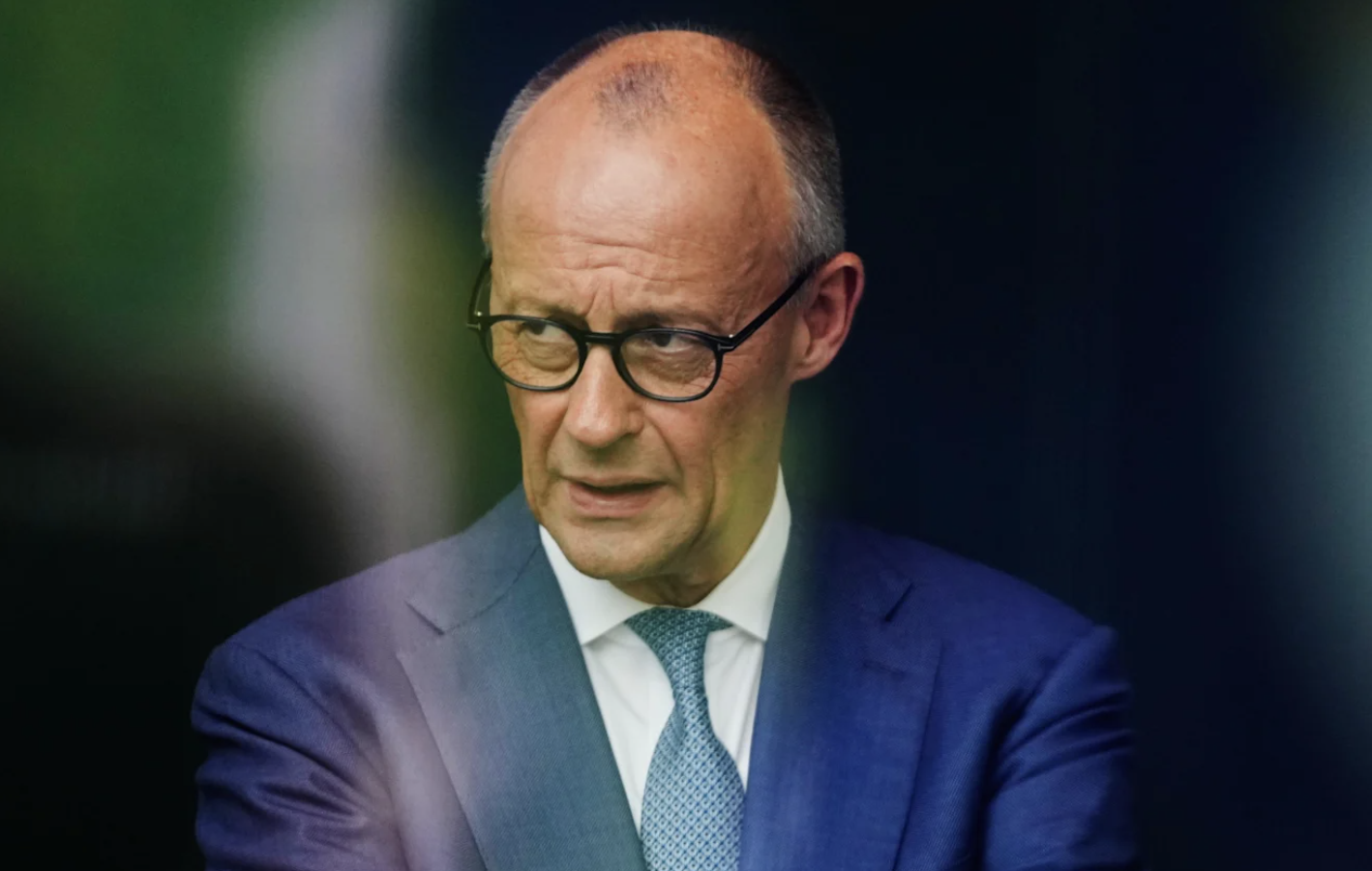
  •  

Germany: AfD roars into first, but CDU looks set to crash out of parliament for the first time ever

In a historic first since the founding of the Federal Republic of Germany, the Christian Democrats (CDU) have failed to enter a state parliament after falling below 5 percent in Mecklenburg-Vorpommern. In Sunday’s election, the Alternative for Germany (AfD) finished first with 38.2 percent.

“The result is a disaster,” Chancellor Friedrich Merz said shortly after polls closed in Mecklenburg-Western Pomerania and Berlin. He made the remark before public broadcasters ARD and ZDF projected that the CDU would drop below 5 percent in the northeastern state. That threshold is decisive in German politics: parties that fall short do not enter parliament.

The preliminary result is now in. The CDU finished at 4.9 percent, down 8.4 points from 2021. It is the party’s worst state-election result in postwar German history. The outcome is likely to revive calls for Merz to resign. He has given no sign that he will, and he also refuses to give up the CDU chairmanship.

Instead, Merz spoke of reforms that require “backbone, steadfastness and patience,” adding: “I will bring this up, as party chairman of the CDU and above all as chancellor of our country.”

No further pivotal state elections are imminent, and Merz is betting that debt-financed spending will start to show in the economy. He hopes that by 2027 he can point to two years of growth.

The problem is that fuel prices keep rising, health-insurance costs remain high, and large parts of German industry are under pressure from tariffs, input inflation, and competition from China.

The AfD is increasing that pressure. It finished well short in Berlin, below 17 percent, but took first place in Mecklenburg-Vorpommern with 38.2 percent — more than double its 2021 result of 16.7 percent. That follows its victory in Saxony-Anhalt, where it won 43.8 percent. The AfD will not govern in Schwerin, the capitol of Mecklenburg-Vorpommern, however. The Social Democrats (SPD) came second with 35.5 percent. Together with the Left (6.5 percent) and the Greens (5.7 percent), the SPD has enough seats for a coalition and is expected to stay in power.

AfD co-leader Alice Weidel called her party the new “people’s party” and said the CDU had been displaced in that role.

“We are the strongest force and have arrived in the middle of the population,” she said on ZDF.

Voters had wanted “a change of policy,” she added, declaring the firewall of other parties against working “a failure.” Her long-term goal, she said, is coalition talks with the CDU.

Co-leader Tino Chrupalla claimed a “clear government mandate” and said the AfD would offer talks to all parties. The other parties in the new Mecklenburg-Vorpommern parliament have already ruled that out.

The post Germany: AfD roars into first, but CDU looks set to crash out of parliament for the first time ever appeared first on Remix News.

  •  

Germany: After AfD victory in Saxony-Anhalt, Merz and Weidel trade blows during intense debate in Bundestag

Three days after the Alternative for Germany’s (AfD) landslide in Saxony-Anhalt, the Bundestag’s general budget debate turned into a verbal battle between AfD co-chair Alice Weidel and Chancellor Friedrich Merz, with the two battling it out over mass immigration, democracy, crime, Ukraine, and the future of Germany.

Heckling filled the chamber. Bundestag President Julia Klöckner repeatedly intervened. The exchange was the first direct parliamentary clash between the two leaders since Sunday’s vote, in which the AfD took 43.8 percent and the CDU collapsed to 17.2 percent.

Weidel opened the debate and treated the election results as a verdict on the ruling federal government coalition led by Merz.

“The voters in Saxony-Anhalt have made it abundantly clear to you, in the language of the democratic sovereign: the Black-Red coalition is over,” she said. Citizens wanted “a change of policy,” she added, “and they do not want more of the same.”

🇩🇪🔴JUST IN: After AfD's landslide victory, Weidel tells Merz that "the voters in Saxony-Anhalt have communicated to you in the language of the democratic sovereign with all clarity: Black-Red (CDU-SPD ruling coalition) is over."
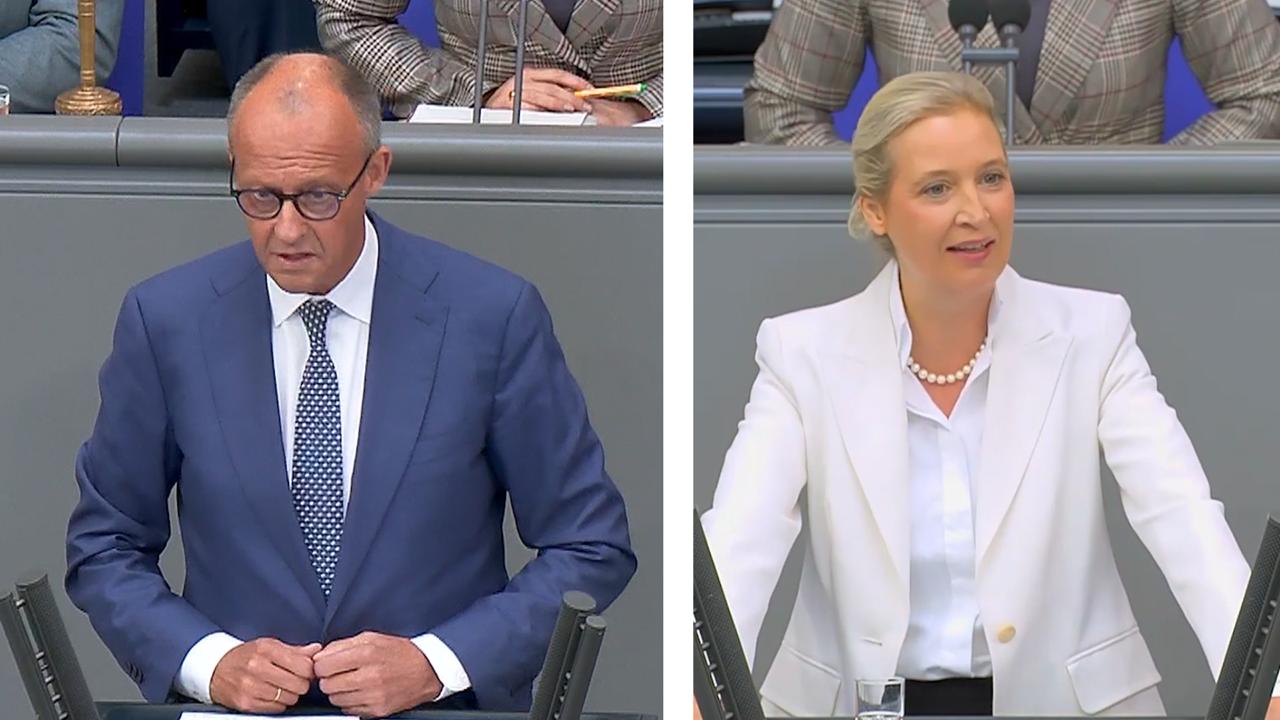
She slammed the government's new budget during a… pic.twitter.com/i9JCrhBDin

— Remix News & Views (@RMXnews) September 9, 2026

Addressing Merz directly, she said he had failed to hear that message.

“That is not especially relevant, because your time has run out anyway. Citizens want a change of policy, and they will get it,” she said.

She turned next to the draft federal budget. Weidel called it a “declaration of surrender” and accused Finance Minister Lars Klingbeil of “unserious budget management.”

““Despite record tax revenues, you are incapable of managing the public’s money wisely. Why? Because you are unwilling to free yourselves from the shackles of green ideology, left-wing mass migration, and socialist redistribution.”

She said the CDU-SPD government planned more than €1 trillion in new borrowing over its term, a figure she described as unprecedented in the Federal Republic. The result, she argued, would destroy future room for maneuver and leave “scorched earth.”

“You are driving Germany into national bankruptcy in record time,” she said.

Weidel also continued to slam Merz on mass migration, a sore spot for the ruling government.

“You declare the migration crisis to be over. Yet, every year, a six-figure number of migrants enters the country through the back door of asylum, plus another major city through family reunification—most of them from Muslim tribal cultures,” she stated, adding: “More than a million refugees live whose asylum application has been rejected more than once. What are these people actually still doing in this country? They should be deported!”

Weidel accused the coalition of declaring the crisis over while still admitting large numbers of people through asylum procedures and family reunification. She claimed more than a million people whose asylum claims had already been rejected remained in the country and should be deported. Ordinary workers, she said, were paying the price.

“Because [Germans] have to deal daily with the consequences of mass migration, with the hatred of foreign groups toward their own, with hatred of Christians, with hatred of Germans, with hatred of Germany, and you are even providing financial support to these people. This must finally come to an end!”

🇩🇪🔴 After AfD's victory in Saxony-Anhalt, Alice Weidel takes Chancellor Merz to task during a raucous debate.

"Because [Germans] have to deal daily with the consequences of mass migration, with the hatred of foreign groups toward their own, with hatred of Christians, with… pic.twitter.com/lBjLNPt9hM

— Remix News & Views (@RMXnews) September 9, 2026

Energy policy drew the sharpest interjections from the government benches. Weidel called the energy transition “the greatest millstone dragging our economy into the abyss” and “lost, burned money.” Germany, she said, was facing a possible winter gas shortage after the destruction of Nord Stream 2 while still sending billions to Ukraine.

She demanded renewed Russian gas deliveries, a return to nuclear power, and peace talks.

“While the United States is making another attempt to end the murderous Ukraine war, you are stepping up the war propaganda and the confrontation with Russia,” she told the chancellor. When SPD deputies laughed, she snapped: “Do you find that funny? Voters out there can see that the SPD finds deindustrialization funny. So stop laughing.”

Merz responds

Merz came out swinging against Weidel, conceding the Saxony-Anhalt result was “remarkable,” but said the AfD had missed its actual goal: an absolute majority of seats.

“Fifty-six percent of voters in Saxony-Anhalt did not vote for you,” he said. “And you will not achieve that anywhere in Germany with this policy.” He accused Weidel of having pushed lead candidate Ulrich Siegmund, within hours of the polls closing, to seek a governing majority after having promised before the election to govern only with an absolute majority.

“You are, and you will remain, Ms. Weidel, a destructive force,” he accused.

The sharpest attack from Merz concerned remigration. He said the concept is “nothing other than a synonym for ethnic cleansing based on origin and skin color.”

🇩🇪Germany

The anti-immigration AfD party is pursuing a plan of "ethnic cleansing based on skin color and origin," said Chancellor Friedrich Merz during a Bundestag debate.

Follow: @RMXnews pic.twitter.com/2BFmeSXztH

— Remix News & Views (@RMXnews) September 9, 2026

If that program were carried out, he claimed, skilled trades, nursing homes, hospitals, and restaurants would cease to function, because one in six workers in the crafts already holds a foreign passport and millions of people with a migration background keep essential services running. The coalition, he said, agreed on deporting people without a right to stay, but distinguished between those who work and contribute and those who must leave. AfD deputies erupted. Several shouted that the claim was false.

On Ukraine, Merz accused the AfD of reversing perpetrator and victim. Neither NATO, the European Union nor Germany had threatened Russia, he said.

“The only thing that truly threatens Russia and Putin is the radiance of democracy.”

The AfD, he added, still stood with Moscow.

“Right there runs the deep rift between you and us, in foreign policy, in European policy, in social policy and in peace policy,” he said.

He also charged that Weidel had said nothing about a failed drone incident at Leipzig Airport, a hacking attack on Berlin infrastructure, or this year’s fires and weather extremes.

“Not a word from you, Ms. Weidel, about what has been going on in this country this year, he accused her.

At one point in Merz’s speech, Klöckner told the AfD that heckling is part of parliamentary life, “but it is not part of constantly interrupting a speaker. You also have to accept that there are other opinions.”

When the noise continued, she warned one deputy: “We are not on the football pitch here right now. Save this for the weekend.” Later she threatened MPs with expulsion.

Merz thanked her and said the interruptions themselves showed the AfD’s “contempt for the German Bundestag,” adding that “listening is not your strong suit.”

With the battle brewing over who controls Saxony-Anhalt still to be decided, and with Merz’s CDU crashing below 20 percent in the latest poll, political tensions are set to rise in the coming month

The post Germany: After AfD victory in Saxony-Anhalt, Merz and Weidel trade blows during intense debate in Bundestag appeared first on Remix News.

  •  
❌