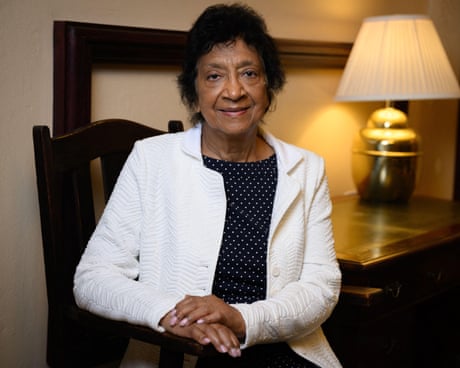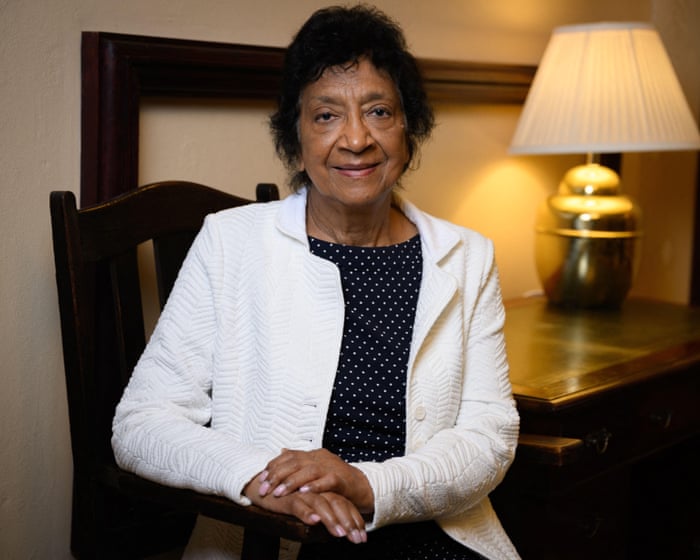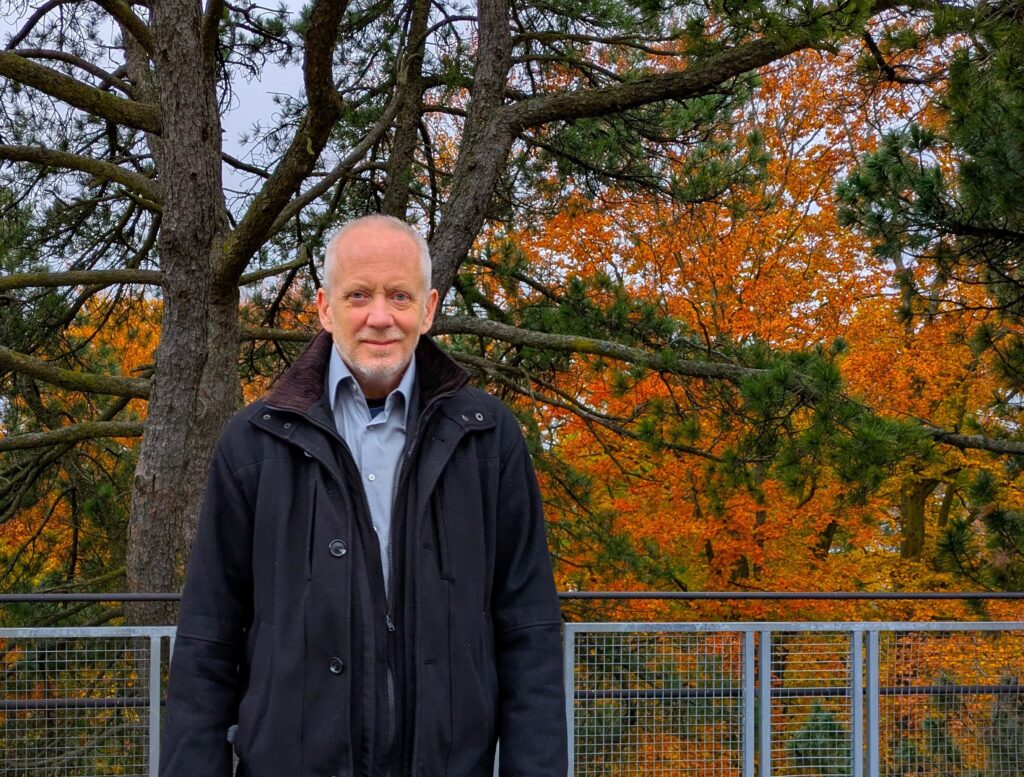
It is rare to hear a European say "I'm sorry" to the Ukrainians. Dag Øistein Endsjø, who nominated the Ukrainian people and President Volodymyr Zelenskyy for the Nobel Peace Prize 2026, shared it several times during our interview.
Mr. Endsjø is a professor of religious studies at the University of Oslo in Norway. He comes across as courteous and reserved. But when he talks about Europe not helping Ukraine as much as it could, his eyes give away deep personal emotion.
"Just thank you for keeping us safe. Thank you for the extreme sacrifice you've been making for all of us. And I'm sorry that my government and the other governments haven't done enough," he said, speaking to me not as a journalist but as one of the Ukrainians.
These words cut through because tens of millions of us live under daily psychological and physical terror, feeling forgotten and betrayed.
At the same time, Professor Endsjø names things as they are, even when it is uncomfortable. When the full-scale invasion began, he says, he doubted Ukraine would hold. And he admits that Norway has profited from the war: by its own Finance Department's calculation, about €106 billion in additional revenue from higher oil and gas prices.
He was honest with us. Our questions were sharp too, even those about US President Donald Trump's chances to win this year's award, and he answered them the way he answers everything: straight.
Do you think people who fight the war can be nominated for a Nobel Peace Prize?
People who defend themselves, yes! Who defends a free and democratic state against unprovoked aggression, yes, I think so.
Many say Ukraine should stop fighting and negotiate. Wouldn't a peace prize reward the war?
It's not a reward for the war, because the war could stop tomorrow if Russia just realized they didn't want to break international rules and pulled out. This is not about continuing the war. On the other hand, the war would stop the moment Ukraine threw out Russia. That, regrettably, seems to take more time.
This is not, in any way, about rewarding or promoting war as such. This is about standing up against war, because not standing up against war has only provoked more war and aggression from Russia.
Russia is attacking free and democratic countries unprovoked. They started in 2008 with Georgia, and then moved on to Ukraine, and as so many others point out, they have their plans.
"Moldova, if Ukraine hadn't been able to resist this invasion, would also have been under Russian rule now for sure. Poland and the Baltics would have been under extreme pressure, maybe also invaded," Mr. Endsjø says.
If there was a moment when you thought that Ukraine might lose the war?
Yes, in the beginning, when I saw those lines of tanks heading for Kyiv, I was afraid that everything was lost. Also noting the lackluster reaction from the free world and how they only came with condemnations and no ammunition, just a flight out.
If Ukraine is defending peace, why is the war getting closer to Europe's borders?
That is because of Russia. If Ukraine hadn't defended itself and just given up, the war would have been even closer to Europe. We would be even more under threat with probably even more degrees of sabotage and terrorist attacks around in Europe.
Does Ukrainian resistance escalate the risk of direct war between NATO and Russia?
No. The other way around. If Ukraine had given up, it would have been a more direct threat to NATO countries.
But some politicians say that in this case, Russia will just negotiate and sell energy as it did in the past
Yes, while sabotaging and even murdering people around in Europe, and acting like a state of terrorism. So, no, it would remain aggressive. You can listen to various prominent Russians on Russian TV. You know, you're not allowed to say anything on Russian TV unless the government approves it...
People are again and again threatening Finland, Poland, Britain, and the Baltic. Just as they made up these fake republics in Luhansk and Donetsk in 2014, they have tried to do the same in Estonia and Latvia already.
So if it hadn't been for Ukraine and Ukraine's resistance, the risk of direct war between NATO and Russia would have been even greater. Because Ukraine keeps Russia at bay.
If Ukraine agrees to a ceasefire, will you consider this a failure or a victory?
I, as a non-Ukrainian but fellow European, like any other European, have no right whatsoever to tell the Ukrainians what to do.
If the Ukrainians themselves find that this most horrible war is too much, and you want a ceasefire and you want to stop, and it's not for me to criticize. It's not for any European to criticize. We cannot tell the Ukrainians what to do after that horrible sacrifice you've made already.
I only hope that Europe and the rest of the free world will assist Ukraine even more, so that you will be even more successful in throwing out the Russian occupation army of the entire of Ukraine, including Crimea.
What if Russia uses nuclear weapons? Can we say that Ukraine brought the world to peace?
They will not use nuclear weapons. If they wanted to do it, they would have done that already. China and India are completely clear that they will not accept any use of nuclear weapons, so that would mean that Russia would be completely isolated and completely devastated economically in weeks. So that's not going to happen.
Putin says the war ends if Ukraine gives up Donbas. Why give a Nobel Peace Prize to a country that refuses?
This is just a proposal from Putin and American so-called negotiators. They're supposed to be negotiating, but this is not a negotiation. This is just about trying to make Ukraine give up without even a fight, which Russia is unable to do, and, incredibly, in some way, try to force Ukraine to give up its rightful ownership of its occupied territories.
This is just appeasement, just as what Chamberlain did in 1938 and what Europe has done again and again in 2008 and 2014. This would be a completely terrible mistake.
"Ukraine deserves the Nobel Prize, no matter how long they keep on fighting against this horrible aggression by this dreadful kleptocracy," Mr. Endsjø says.
Europe says Ukraine keeps the peace for everyone. Can it then demand that Ukrainian refugees go back and fight?
I, as a European, think that other Europeans cannot demand anything of the Ukrainians, whoever they are. This must be up to the Ukrainian people and the Ukrainian government.
Do people in Norway still genuinely believe that Ukraine can win this war, dragging on for so long?
I think so. Very many do believe that. But this depends on whether the West keeps on, and the free world continues to support Ukraine. Here in Norway, we are in a particular situation because, as our own Finance Department calculated last year, we have earned an extra 106 billion euros from the war (additional government revenues generated by high energy prices — ed.) due to higher oil and gas prices.
We don't support you as much as we should. We should have given you those 106 billion euros.
Why should someone in Europe care whether Ukraine wins or loses?
That is the point: that this is a war against the free world from a horrible dictatorship. More or less, you can call it a kleptocracy — that's the most, I guess, the most precise definition of Russia today. It's not a democracy whatsoever. It's most of all a kleptocracy where the top leaders just steal whatever they can get their hands on.
If Ukraine had fallen, it's not just that that would be horrible for Ukraine as such, but that would mean also that Russia would have had its hands on all the immense resources Ukraine has. Also, all the million men and women who probably would have been forced into the Russian army, and made it an even more dangerous enemy to the West.
So this is about the survival of all of us. Ukraine is the free world. We belong together. Ukraine should have been in NATO and the EU a long time ago.
If Russia says it only wants Donbas, why not just give it to them and let the war end?
This is like World War II all over again. They say: "If we only get Donbas, we're going to at least have proper negotiations."
Donbas, that is the Ukrainian Sudetenland. That's just what the West forced Czechoslovakia to do in 1938 and 1939. The Sudetenland wasn't just a nice little border region. It was the defense line of Czechoslovakia. So the moment the Germans got that, they were defenseless against the full-scale invasion that followed in the months afterward.
"Donbas, it's not just a small border region. It's the most important line of defense," Mr. Endsjø says.
Forcing Ukraine to give up anything whatsoever is rewarding the Russian aggression.
But I have to give Putin right in one thing when he says: "We are, you know, continuing World War II." That's true, because you have to remember what Russia did in World War II. They started it together with Nazi Germany in 1939. They occupied the Baltic countries, they occupied Moldova, they occupied half of Poland, they split Poland with Nazi Germany, and they tried to occupy Finland.
When Norway was invaded by Nazi Germany, Russia congratulated Germany. They were on Germany's side. The only thing that made Russia shift sides in World War II was the German invasion. What did they do after World War II? They didn't liberate any country - they occupied. They just changed one occupation for another.
"Eastern Europe wasn't liberated before 1990 and 1991. That's the actual end of World War II, when the Russian occupation of Eastern Europe ended," he stresses.
They even talk about the northern parts of Northern Norway. In 1945, they did have designs. They wanted Svalbard and the northern islands. They had plans to take the regions closest to Norway, which were also part of the Soviet Union. They want everything they have ever had, and they want it back.
Trump has made no secret of his desire for the Nobel Peace Prize. Could the Committee deny Ukraine the award simply to avoid provoking him?
Trump has been nominated for the Peace Prize several times, but I don't think he really has a chance. What I did note is that last year's recipient, Mrs. Machado from Venezuela, was probably chosen partly due to it. I don't criticize the prize, as she is a democratically elected leader, a good candidate, and a good recipient.
"But I believe part of the reason she got it was that the Nobel Committee wanted a recipient who would not provoke President Trump," he says.
I consider that they are going to worry about that again, about whether the recipient is going to provoke Trump or not. You never know what his reaction will be anyway. I don't think they really see him as a serious candidate — someone who just started an immense war in Iran, drawing the whole world economy down.
My nomination has gone viral — there are thousands of posts online. I usually don't get 750,000 views on my Facebook posts, but I did with my post about Ukraine. I really do believe that Zelenskyy and Ukraine are the most worthy recipients at this point in time.
If continuing the war means more Ukrainians will die, why not negotiate to stop the killing? Zelenskyy says Ukraine plans to fight further. Does it bring peace, really?
It does. Look at Norway in 1940. It was peace, but it wasn't peace. It was an occupation. It was killing, it was murder, and even worse in other parts of Europe. What happened in Norway was nothing compared to what happened in Poland, the Baltics, Ukraine, and Belarus.
Thank God the current Western leaders understand this: they are not going to force Ukraine to give up, to let millions of people live under horrible occupation, and give up more land. They stand by Ukraine now, and I hope they will support it even more, especially Norway.

 Login