About 7.4 light-years from the Sun, a dim ball of gas about as wide as Jupiter drifts through space with no star to warm it. Jupiter is large enough to fit some 11 Earths side by side. (A light-year is the distance light travels in a year, nearly 6 trillion miles.) That puts the object […]
Among the stone tools that early humans left beside a lake in northern Israel, archaeologists found something far bigger: the molar of an elephant, about 8 inches (20 cm) tall and 3 inches (8 cm) wide, lying next to several pieces of tusk. It sat at the same level of ground as handaxes and cleavers […]
Possivelmente, há mais de uma resposta correta à pergunta de por que a ciência surgiu na cristandade ocidental, em vez de ter aparecido primeiro numa das muitas sociedades orientais com tecnologia formidável, ou no seio do paganismo greco-romano.
O epistemólogo beneditino Stanley Jaki tem uma resposta detalhista e intrínseca ao próprio cristianismo: segundo lemos em Christ and Science, o diferencial é os cristãos não serem propensos a cair no panteísmo. Entre os pagãos greco-romanos, o cosmos era chamado de “unigênito”, título assumido depois por Jesus no cristianismo, e somente no cristianismo. No mundo de Aristóteles, o pagão predileto da cristandade ocidental, os corpos se movem por vontade própria (o fogo quer subir, a terra quer afundar etc.), e o Primeiro Motor é parte da natureza, em vez de transcendê-la. No judaísmo e no islamismo, as figuras de Spinoza (amado no s. XX por Einstein e Sagan, e no XXI por Sam Harris) e de Averróis (com seu intelecto universal) mostram que é fácil confundir Deus com a própria natureza. É na cristandade medieval que o mundo passa a ser concebido à maneira de um grande relógio com as peças inanimadas ajustadas por um Criador inteligente, cujas leis devemos descobrir. Esse estilo de pensar o universo, que hoje associamos a Newton, é medieval. E essa cosmovisão, específica da cristandade, é o que possibilitou a invenção da ciência.
Aqui nesta SCF, cheguei a aventar uma resposta mais modesta, de natureza cultural. Escrevi que Ocidente é racionalista desde antes de ser cristão; e isso favorece não só o surgimento da ciência, como a disposição para mantê-la em caso de conflito com a fé. Os sunitas, que são a maioria dos muçulmanos, viram uma espécie de literalismo corânico acabar com o espetacular florescimento das ciências na Idade Média. Já os judeus, que se entregavam à exegese de textos religiosos, só se tornaram cientistas com a emancipação e a laicização. Essa característica cultural ajuda a explicar por que a Ciência surgiu na cristandade ocidental, em vez da oriental, já que tanto a Igreja Romana quanto a Grega compartilham a crença no unigênito Jesus. Isso também ajuda a explicar por que, quando a Reforma protestante aconteceu, a Europa protestante não se apegou ao literalismo bíblico, nem às invectivas de Lutero contra a razão, e produziu ciência em diálogo com a Europa católica. Isso acabou deslocando a Verdade da religião (que cada uma tinha a sua) para a ciência (a ser aceita por todos), criando terreno para essa invenção recente ocidental chamada cientificismo.
Agora, uma ideia intrínseca ao cristianismo que eu queria apontar é a absoluta intolerância ao relativismo no conhecimento. No mundo pagão, filosofia e religião eram assuntos desconectados. Platão refletia sobre o bom, o belo e o justo sem investigar o Olimpo. Cícero, enquanto filósofo, escrevia contra os adivinhos públicos da religião romana; mas, enquanto político, não esboçava nenhuma intenção de alterar as práticas da religião de Estado, nem de inventar o laicismo. Nem mesmo Aristóteles, que escrevia sobre todas as disciplinas concebíveis, escrevia sobre Zeus, Hera ou Atena. Ele até criou uma “teologia”, mas não se referia aos deuses e sim ao Primeiro Motor. Zeus, Hera e Atena não eram objeto de uma disciplina.
Foi na Idade Média que a Igreja Católica inventou a universidade com a intenção de estudar o universum, isto é, tudo: metafísica, física, política, teologia… O conhecimento estava ordenado de modo coeso, presumindo uma realidade objetiva. Assim, a física não podia ensinar uma coisa que estivesse em contradição com a teologia, e vice-versa. (Embora o problema de Galilei se deva ao aristotelismo abraçado pela Igreja via Tomás de Aquino, e não a uma leitura literal da Bíblia.) Essa coesão pode parecer óbvia, mas nos dias de hoje a disciplina “física” diz que o vidro é líquido, enquanto a disciplina “química” diz que o vidro é sólido. E esse nem é o maior dos problemas: quem se atreveria a pedir uma definição unívoca de “homem” ou “humano” a uma universidade? Na prática, o relativismo impera na universidade mesmo antes de os pós-modernos tomarem conta de tudo.
Essa fragmentação do conhecimento teve origem no modelo de ciência surgido na Renascença. Fora das universidades, os humanistas buscavam os textos antigos que os católicos medievais haviam descartado, como o De rerum natura,do materialista e epicurista Lucrécio. Como naquela época a antiguidade conferia autoridade, o ocultismo formado pela fusão entre o hermetismo e a cabala gozou de especial credibilidade entre os letrados de modo geral. O hermetismo vem de Hermes Trismegistos, que os renascentistas acreditavam ser o professor de Moisés, Platão e Pitágoras – mas na verdade era uma ficção um pouco mais nova que Cristo. Um vestígio etimológico da importância do hermetismo para a ciência é o adjetivo “hermético”, usado pelos alquimistas com seus potes muito bem fechados. Quanto à cabala, ela vem da religião que precedeu o cristianismo e isso basta para ser entendida como muito antiga – mesmo que seu principal texto, o Zohar, seja da Espanha medieval. Conforme argumentei em maior detalhe aqui, o ocultismo da Renascença influenciou a ciência moderna, e é responsável pelo seu viés utilitarista. Se cada disciplina decidir que um determinado conceito “funciona” e houver contradição entre elas, não há problema, pois o que interessa não é o conhecimento, mas sim o caráter prático. É uma ciência inspirada no procedimento do feiticeiro, que fica consultando livros antigos e testando feitiços para descobrir se funcionam.
Digamos então que o status quo do conhecimento nas universidades é um relativismo prático decorrente da falta de uma visão unitária por parte da instituição. No âmbito individual, porém, é humanamente impossível fazer ciência sem uma cosmovisão coerente – nem que seja uma elaborada a posteriori com base nos “feitiços” que funcionaram, à maneira dos alquimistas na Renascença. Hoje, está muito claro que o mainstream científico é ateu, mas isso é pouco informativo. Seria mais preciso dizer que o mainstream é materialista.
O século XIX é o século da consolidação do materialismo na ciência. É o século do triunfo de Darwin, o primeiro (e talvez único) grande cientista inequivocamente ateu da História. Antes de Darwin, predominava a cosmovisão medieval do Deus relojoeiro, ou da natureza como o livro escrito em linguagem matemática por Deus (para usar a metáfora de Galileu). Na Renascença, vão despontando cosmovisões alternativas. No Iluminismo, essa movimentação ganha as formas do deísmo e do materialismo, que não são mutuamente excludentes. O deísmo é a ideia de que Deus existe, porém não se importa com a humanidade. Essa é uma ideia muito vaga, pois compreende as possibilidades de (1) Deus ser um arquiteto distante (como para Voltaire, um “criacionista” entusiasta de Newton); (2) Deus ser a própria matéria, ou o próprio universo (panteísmo); (3) os deuses existirem e serem feitos de átomo como o resto da natureza – opinião que consta no De rerum natura e resulta num ateísmo prático. Como esta concepção de Deus é psicologicamente difícil de sustentar, não é de admirar que, no século XIX, a feição pública do materialismo já tenha sido a do ateísmo.
Ainda assim, como mostrei aqui na SCF, só um dos “quatro cavaleiros” do neoateísmo (Richard Dawkins) é inequivocamente ateu. Os outros três (Sam Harris, Daniel Dennett e Christopher Hitchens) são adeptos ou de um New Age lisérgico, ou do judaísmo, ou das duas coisas. Sagan era outro ateu com esse perfil ambíguo.
Creio então ser útil discriminar essas duas cosmovisões científicas opostas: uma, originadora da ciência, é a do Deus transcendente engenheiro do cosmos; outra, a do materialismo, segundo o qual tudo o que existe é matéria a movimentar-se de maneira aleatória, gerando ora caos, ora ordem. É possível, dentro desta última, ser um ateuinequívococomo Dawkins hoje ou Barão d’Holbach no XVIII; e é possível também ser um New Age como Sam Harris. A matéria é, também ela, divinizável por parte de peruas dos cristais e maconheiros. E uma figura ambígua é ninguém menos do que Epstein, já que esse mecenas era um judeu religioso o bastante para querer criar um porco kosher GMO a fim de comer bacon, mas ao mesmo tempo financiava o clube de ateus de Sam Harris. Tal como mostrei aqui, Epstein era adepto do materialismo a ponto de querer identificar a parte do cérebro que corresponde à alma.
Um último traço intrínseco do cristianismo que vale mencionar é o seu exoterismo, isto é, o seu caráter público e não iniciático. Essa característica se reflete na universidade e nas bibliotecas: todo o repositório de conhecimento está público para aquele que quiser estudar. No caso do materialismo, desde o XVIII a Inglaterra tem na Lunar Society uma tradição sólida de sociedades científicas privadas e secretas, amiúde com finalidade comercial. Isso também está de acordo com o esoterismo da Renascença. E no século XXI, os Arquivos Epstein trouxeram à tona sociedades discretas de materialistas, tais como a de Sam Harris financiada pelo pedófilo.
Dado que o pedófilo também financiava pesquisas na universidade, é plausível que esse materialismo limítrofe entre o panteísmo e o ateísmo seja uma “teologia” oculta, sempre presumida na ciência atual, porém nunca explicitada para os não iniciados.
Whisky will be sent into space for the first time as part of an experiment to measure how the spirit ages in an environment beyond Earth’s atmosphere. Engineers in Scotland and Japan plan to launch Scotch on a rocket in 2028, sending a satellite containing samples of whisky and its key ingredients on a five-year […]
When people think about what ChatGPT or other large language models are doing behind the scenes, it’s common to reach for the language of computing. You might assume there is a database, or a logical series of steps being executed, in order to provide a response to your query. Picturing AI responses as akin to […]
When we think of Greek mathematics, we think of Euclid, Archimedes and Apollonius of Perga: elegant proofs and general rules. Alongside that tradition ran a humbler one, which rarely makes it into textbooks. It was maths for getting a job done, and a new study argues that the people who practised it leaned heavily on […]
In the previous article, I discussed general aspects of the political testament left by the greatest science communicator of the 20th century: Carl Sagan (1934–1996). I showed that his Epicurean worldview leads him to portray life on Earth as the result of an extremely ephemeral convergence of causes, that humanity must artificially sustain to prevent our species from going extinct. This maintenance requires a global pact governed by scientists. Scientists are special beings because they are, supposedly, the only ones who strive to foresee catastrophes. Sagan artificially divides humanity into two groups: Enlightenment atheists who embrace science, and religious obscurantists who reject it. Therefore, for the species to survive, the former must prevail over the latter.
In his political testament, Billions and Billions (1997), the causes he champions are environmentalism and abortion. Today, I aim to show that these two causes are, in fact, one and the same: Neo-Malthusianism.
It is easy to prove that Carl Sagan was a Neo-Malthusian. Here is what he says in the chapter “The Persian Chessboard”: “Exponentials are also the central idea behind the world population crisis. […] As the English clergyman Thomas Malthus pointed out in 1798, a population increasing exponentially— Malthus described it as a geometrical progression— will outstrip any conceivable increase in food supply. No Green Revolution, no hydroponics, no making the deserts bloom can beat an exponential population growth. There is also no extraterrestrial solution to this problem. […] Even if it were possible to ship everybody on Earth off to planets of distant stars on ships that travel faster than light, almost nothing would be changed— all the habitable planets in the Milky Way galaxy would be full up in a millennium or so.”
There is no caveat regarding the error of Malthus’s prophecy, nor any consideration of the inhumanity of his recommendations. Malthus is portrayed as a scientific hero. And, with surprising dogmatism, Sagan dismisses—without argument—the idea that technological improvements could solve the food problem. Mind you: Sagan takes it for granted that, even on different planets, humans would continue to procreate exponentially, when fertility rates historically differ even between rural areas and the urban middle class! And a thousand years is far too short a timeframe for humanity, with all its astronomical development, to solve a problem!
Instead of openly proposing that the poor be denied charity, like old Malthus, Sagan proposes birth control and technological apartheid. Instead of helping the poor, then, we must prevent them from being born and deprive them of technology—except for birth control technology, which, it seems, is entirely immune to causing unforeseen environmental damage. Moreover, while old Malthus had England’s poor in mind, Sagan broadens his scope to include the world’s poor nations—nations that keep growing and adopting technology, something supposedly responsible for significant environmental damage.
Were he to state these things explicitly, he would clearly appear as a villain. Thus, in the same chapter, the issue of birth control is wrapped in the language of humanitarianism and feminism: “There is a well-documented worldwide correlation between poverty and high birthrates. In little countries and big countries […] in almost all these cases, exponential population growth slows down or stops when grirfcling poverty disappears. This is called the demographic transition. It is in the urgent long-term interest of the human species that every place on Earth achieves this demographic transition. […] One of the central issues in the world population crisis is poverty.”
Correlation does not imply causation, yet Sagan argues as if it did. People are not poor because they have children; rather, they have children because the cost of raising them is low and is offset by the utility of their labor: in an underdeveloped setting, all farmers need to provide their children is food—which the land itself yields—and within a few years, the child begins to assist the family with work. A sterile couple would not become wealthy simply by virtue of having no children; they would merely save on food that might well otherwise rot, while failing to multiply their workforce. If matters stood as Sagan claims, sterility would be a blessing in agrarian societies, yet reality demonstrates the opposite.
He continues: “The exceptions to the demographic transition are interesting. Some nations [which he does not name] with high per capita incomes still have high birthrates. But in them, contraceptives are sparsely available, and/or women lack any effective political power. It is not hard to understand the connection.” At no point in the book does he explain what criteria must be met to say that women possess real political power within a society. This is regrettable, given his assertion that women held such power during the Pleistocene (!!) but do not today. Thus, since Sagan cites no sources for this information, one can only conclude that he is fabricating a series of pretexts to advocate for contraception, tailored to whatever reality the reader faces: if women enjoy favorable material conditions yet continue to bear children, we cannot simply leave them be; this is framed as a symptom of a lack of political power—a power women supposedly possessed in prehistory while dancing in circles on full-moon nights under the influence of hallucinogens.
In “The Environment: Where Does Prudence Lie?”, after discussing the unexpected consequences of CFCs, he laments: “The inhibitions placed on the irresponsible use of technology are weak, often half-hearted, and almost always, worldwide, subordinated to short-term national or corporate interest. We are now able, intentionally or inadvertently, to alter the global environment. […] Maybe the products of science are simply too powerful, too dangerous for us. Maybe we’re not grown-up enough to be given them. Would it be wise to give a handgun as a present to an infant in the crib?” After comparing the weapon to science, he adds “one further complication: Imagine that when you pull the trigger on a handgun, it takes decades before either the victim or the assailant recognizes that someone’s been hit.”
The implication throughout is that CFC-based refrigeration, including for food, should not have been made available to the world’s population, even though it greatly improves human quality of life. It is an essentially peaceful technology. Yet, shortly thereafter, he once again advocates for birth control, as if millions of pills containing artificial hormones were, with absolute certainty,incapable of causing environmental harm in the long run. What Sagan tacitly proposes has a name: technological apartheid.
Observe how he concerns himself not only with the population growth of the Third World but also with its access to technology, in the chapter “Escape from Ambush”: “The biggest CO2 emitter on the planet is the United States. The next biggest CO2 emitter is Russia and the other republics of the former Soviet Union. The third biggest, if we combine them, is all the developing countries together. That’s a very important fact: This isn’t just a problem for the highly technological nations— through slash-and-burn agriculture, burning firewood, and so on, developing countries are also making a major contribution to global warming. And the developing countries have the world’s largest population growth rate. Even if they don’t succeed in achieving something like the standard of living of […] the West, these nations will constitute a steadily increasing part of the problem.”
The Third World is in the wrong if it doesn’t use much technology, and it is in the wrong if it grows food. A single country, the USA, leads the problem that needs to be tackled, yet it is the Third World, taken as a whole, that must be controlled through a reduction in birth rates. Why not curb consumerism in the United States instead of forcing the Chinese and Indians to have fewer children? Sagan offers no answer, nor does he ever address the issue of consumerism—a topic any serious environmentalist ought to tackle.
The path Sagan proposes to avert CO2-induced global warming is to gradually abandon fossil fuels and… live off solar panels and wind power, because Chernobyl supposedly “proved” that nuclear energy is unsafe, and because its technology could be converted for weapons production. It is as if the manufacture of solar panels caused no environmental damage, and as if those panels lasted forever without ever becoming waste. The impact of wind farms on bird populations is not considered either. It is as if the sun and wind generated energy with no environmental cost to the humans seeking to harness it. By 1996, Sagan was already an electric car enthusiast; he predicted they should be the preferred choice—not for their engine power or top speed (which he assumed were lower than those of gasoline cars), but to save the human species.
So, humanity must generate less energy and, especially in the Third World, reproduce less, magically becoming wealthier in the process; yet, it must not have access to technology—save for solar panels, windmills, and contraceptives, which supposedly cause no harm to the environment. Is it too bold to assume that the campaign to abandon reliable energy in favor of intermittent sources like solar and wind stems precisely from the fact that they are intermittent—thereby compromising access to technology and increasing mortality? All to save the human species.
This subject naturally leads to the most drastic method of birth control: abortion. In the United States, the issue has been framed since Roe v. Wade (1973) in terms of “pro-choice” and “pro-life,” with positions falling along a spectrum: the pro-choice extreme advocated for elective abortion up until the moments before birth, while the pro-life extreme advocated for the criminalization of abortion in all cases. With Roe v. Wade, the Supreme Court compelled U.S. states to legalize abortion prior to “fetal viability”—that is, before the fetus is capable of surviving outside the mother’s body.
In the piece “Abortion: Is It Possible to Be Both ‘Pro-Life’ and ‘Pro-Choice’?”, first published in 1990, Sagan offered a “scientific” defense of Roe v. Wade. According to Gallup, 1996 was precisely the year when the extreme pro-choice position declined. Sagan begins his argument by stating that “a newborn baby is surely the same being it was just before birth.” However, throughout the text, he promotes the literal dehumanization of embryos and fetuses, as for him, what matters is whether the being differs from an irrational animal. To Sagan, the fact that lungs are ready or a heart is beating does not justify banning abortion, because we kill animals with these characteristics without it constituting murder. Thus, the point at which a baby is considered human is precisely when it acquires the specific human characteristic: thought. He believes thought likely emerges during the third trimester of pregnancy, implying that Roe v. Wade is sound.
Even so, the fact remains that, at least in practice, the ruling permitted abortion right up to the moment of birth; indeed, this remains the case in Alaska to this day, even after the ruling was overturned. Regarding this, Sagan states—without citing sources—that “as a practical matter, this isn’t very important: Less than 1 percent of all tabulated abortions in the United States are listed in the last three months of pregnancy (and, on closer investigation, most such reports turn out to be due to miscarriage or miscalculation).” Was this reversal of the extremist trend in the interest of the abortion-rights agenda, serving to forestall a backlash?
Yet, in the very same paragraph where he offers this reassuring statement for the average U.S. reader, he also asserts that “perhaps there is thought in the womb. It’s hard to maintain that a transformation to full personhood happens abruptly at the moment of birth.” Perhaps there isn’t thought in the womb — and perhaps newborn babies do not think, nor are full persons. That is essentially Peter Singer’s line of reasoning in defense of infanticide. Sagan defends the prevailing U.S. position with a very poor argument, one that leaves the door open to the institutionalization of infanticide should scientists present “proof” that babies do not think, or that they think less than an adult dog.
Let us consider the dehumanization involved. Through comic-book-style illustrations of pregnancy stages, we read that at three weeks the human embryo “looks a little like a segmented worm”; at the fifth week, “the face, seen here in profile, has a distinctly reptilian aspect”; at the seventh, “the face is mammalian but somewhat piglike”; at the eighth, “the face resembles that of a primate but is still not quite human.” Could all this really be the sincere opinion of a serious scientist?
Well, much of Sagan’s sophistry stems from confusing “human” as a noun with “human” as an adjective. Human cells are human, but they are not human individuals—human persons. HeLa cells (named for Henrietta Lacks, not Helen Lane as stated in the book) are human cells, but they are not a person. The adjective “human” applies even to feces.
The question should not be whether a human embryo is human, but whether a human embryo is a person. If an embryo is a living being, how can one deny that a person’s life begins at its formation—that is, at conception?
Sagan knew this. In his final text, written on the verge of death, he lamented not being able to “meet unconceived grandchildren.” His grandchildren would never be worms, reptiles, or piglike.
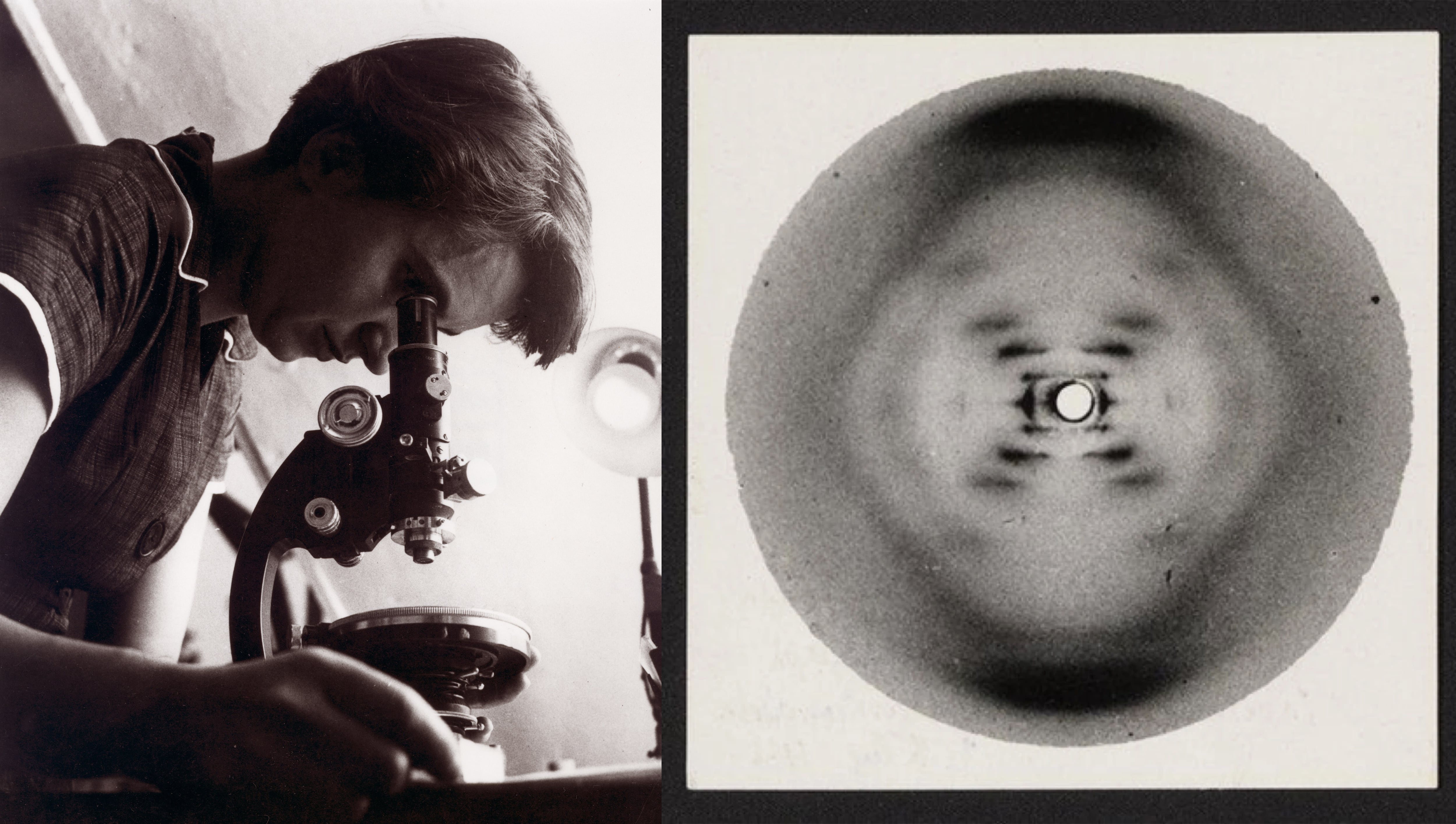
For decades, one of the best-known stories in science was told like a movie. In 1953, at the age of 23, James Watson visited Maurice Wilkins’s laboratory at King’s College London. There, Wilkins showed him a photograph of DNA taken by Rosalind Franklin, and Watson had an epiphany. “The instant I saw the picture my mouth fell open and my pulse began to race,” Watson wrote in The Double Helix: A Personal Account of the Discovery of the Structure of DNA, the book in which he recounted, 15 years later, how he and Francis Crick unraveled the structure of DNA.
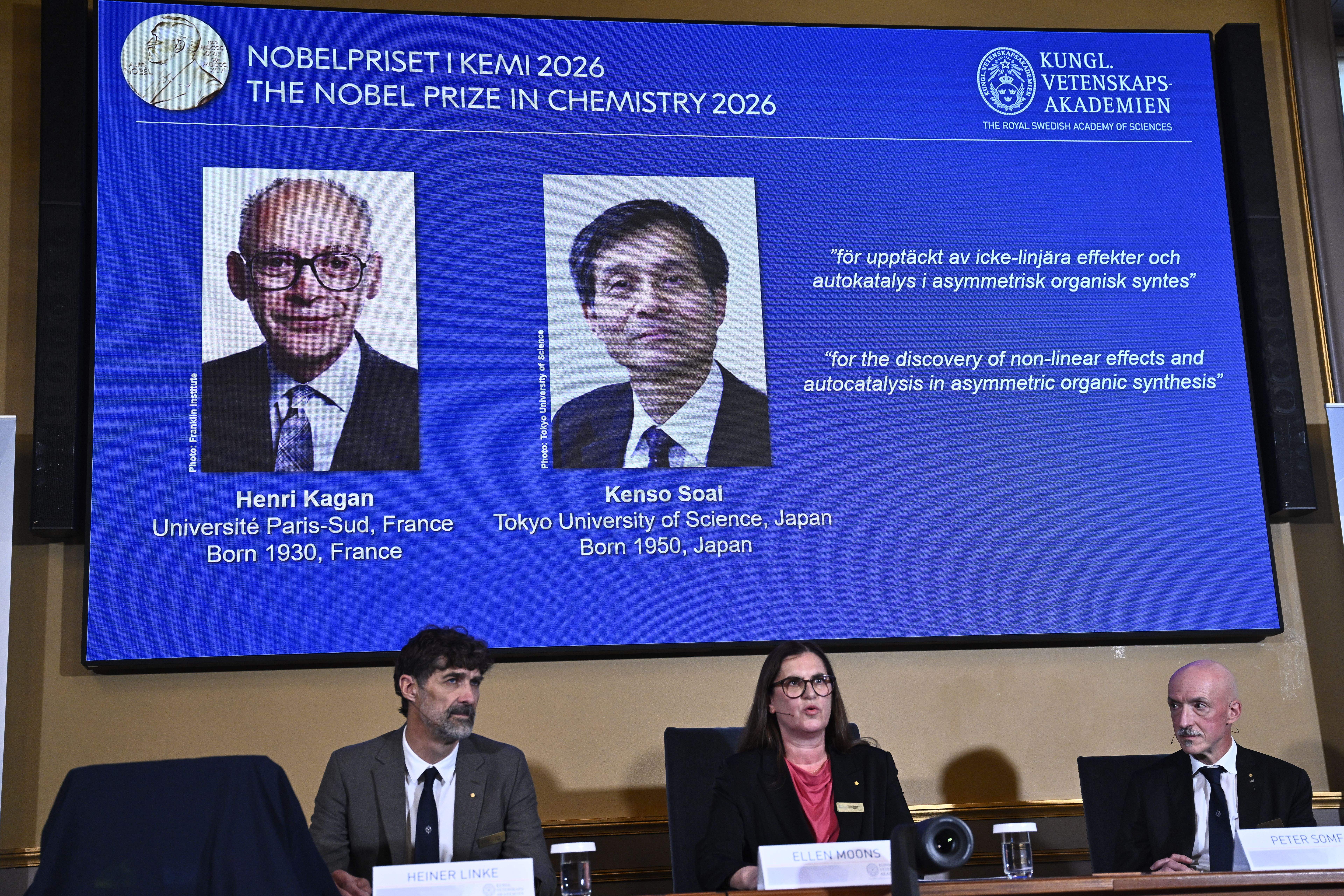
Scientists paid tribute to Kagan and Soai's groundbreaking work, which the Nobel committee described as a feat never previously achieved by anyone “other than life itself.”
Scientists paid tribute to Kagan and Soai's groundbreaking work, which the Nobel committee described as a feat never previously achieved by anyone “other than life itself.”
For more than three centuries, astronomers asking whether the Solar System is stable have received ever more comforting answers. Isaac Newton was not so sure. He suspected that the mutual tugs between Jupiter and Saturn would eventually wreck the planetary order, and that only divine intervention could prevent it. By the late 1700s, Laplace and […]
The Great Sphinx has been without a nose for centuries. Now a fossil crocodile skull taken from the same rock turns out to be missing the tip of its snout too. The coincidence has put a name on a species science did not know it had, Herugavialis cairensis, which spent almost a hundred years in […]
After being chosen for one of the world's most prestigious awards, some Nobel laureates lose touch with reality and suddenly start spouting unscientific nonsense. They're afflicted by what some have called "Nobelitis."
Climate alarmism propaganda about the collapse of the Gulf Stream has made it into the Telegraph thanks to the new owners recycling the work of Politico's Zia Weise. Is this a sign of things to come, asks Ben Pile.
AI models have repeatedly broken into real commercial and government systems during safety tests during 2026. Cybersecurity researcher Thorsten Holz explains what that means, and why he isn't expecting a robot uprising.
At first she told no one. Not her twin sister. Not her mother. Not even her father the scientist.
Six-year-old Jenna Smith knew better than to pee when she was in the bath. But on that night in 1992, in her family’s home in Iowa City, the water felt so comfortable against her skin that she didn’t want to get out of the tub. It seemed like such a small thing. Who would know?
Seconds later the water around her waist turned reddish pink. Blood? It had to be. Jenna wondered if she’d hurt herself. “I was six years old sitting in a bathtub, watching a few seconds of my world stop making sense,” she would recall years later.
The Atavist, our sister publication, publishes one deeply reported, elegantly designed story each month. Support The Atavist by becoming a member.
She kept the blood a secret because she didn’t want to admit that she’d peed in the bath. But when it was still in her urine the next time she used the toilet, she went to her mother. Concerned, her mom called her dad, Richard Smith, and he took Jenna to the emergency room.
Richard was an ear, nose, and throat doctor in the University of Iowa’s school of medicine, a researcher who would become one of the world’s authorities on the genetics of hearing loss. His wife, Lynne Lanning, had worked as both a lawyer and a nurse. They had four young children: twins Jenna and Jessica, who were identical, and two boys, Luke and Rion.
At the ER, doctors ran tests on Jenna, but they couldn’t identify the cause of the blood. In the days that followed the bleeding intensified. At her parents’ urging, Jenna collected samples of her urine in Dixie cups for further testing. The doctors remained stumped, however, and after a while Jenna found the whole thing more annoying than worrisome.
The uncertainty was much harder on her parents. It wasn’t that doctors were misdiagnosing their daughter; they were unable to diagnose her at all. “It was horrible,” Richard said. “Imagine seeing your child and you know something is wrong, and you know the doctors treating her have no clue what to do.” Richard called a pediatric nephrologist he knew in Houston, where the family had lived previously. The nephrologist listed several conditions that could be causing the bleeding and said that, to determine which was to blame, Jenna’s parents should take her to Cincinnati Children’s Hospital Medical Center.
In July 1992, Richard, Lynne, and Jenna drove nearly 500 miles to get answers. Doctors in Cincinnati diagnosed Jenna with dense deposit disease, a condition in which proteins clog and damage the kidneys, leading to renal failure in many patients. There was no cure.
The hospital couldn’t tell the family much else—no one could. The disease was exceedingly rare, afflicting between one and three people in a million. Back home, Richard and Lynne spent hours inside the University of Iowa’s quiet medical library, poring over papers in search of information about their daughter’s illness. They could find no evidence that anyone was actively studying the condition.
Although many Americans—roughly one in ten—suffer from a rare disease, the experience can be lonely. Friends and relatives don’t understand the unique miseries such illnesses impose on daily life. Few doctors are likely to have encountered them before. And because there aren’t many patients, drug companies usually don’t invest in research for treatments.
Richard and Lynne feared that their daughter’s life might be tragically brief. Sometimes the mention of weddings would sink Lynne into melancholy; she couldn’t bring herself to watch the movie Father of the Bride. Richard agonized over what to do. His training compelled him to seek answers, but he wanted to be Jenna’s father, not the scientist charged with curing her. He kept his research focused on hearing loss. At first, anyway.
Stories of scientific discovery almost always celebrate individual researchers, consigning the contributions of loved ones, communities, and colleagues to footnotes. There are exceptions―the teams that built the first atomic bomb and deciphered the human genome, for instance. Science also has its share of famous families. Marie and Pierre Curie, along with their daughter Irène and her husband, Frédéric, won five Nobel Prizes between them for discoveries related to radioactivity. For the most part, however, the history of scientific progress has been mythologized as a succession of brilliant, driven individuals—often men—who chose the lab over the dinner table and competition over collaboration.
Some scientists have embraced the role of maverick. “You have to worry about your own work and ignore what everyone else is doing,” the physicist and Nobel laureate Richard Feynman is said to have told a colleague. The decades-long pursuit of a treatment for Jenna’s disease followed a very different path. There was no single hero, no lone scientist seeking glory. The biomedical quest required the efforts of a family and their neighbors in Iowa City, and the work of scientists around the globe. Together they changed an obscure area of medicine.
Richard and Lynne met in 1977, when both were working at Memorial Hermann-Texas Medical Center in Houston—she as a nurse, he as a medical intern. He noticed a run in her nylons and was smitten by her smile. She liked his down-to-earth manner and intelligence, his humor and kindness. They were working in the hospital’s burn unit when he asked her out.
The couple married in 1981, and except for two years in England, they remained in Houston until 1990. That December they moved to Iowa City, where Richard had a job waiting for him leading the pediatric otolaryngology division and running a research lab at the University of Iowa’s medical school. They had been there only a year when Jenna got sick.
Richard and Lynne learned that their daughter’s disease was caused by a malfunction in her complement system. Believed to have evolved long before other parts of our immune infrastructure, the complement system sends proteins to battle foreign invaders. Unlike antibodies, these proteins are not tailored to fight a specific virus or bacteria, but they kick into gear faster when a threat is detected. In people with Jenna’s condition, the complement system is like a runaway train: Proteins become overstimulated and then accumulate in the glomeruli, tiny filters the kidneys use to clear waste from blood.
Blood in the urine is one symptom of the disease. Others include swelling, high blood pressure, inflammation, and fatigue. When Jenna was in the first grade, her body struggled to make growth hormones. Her production of red blood cells slowed, and she grew increasingly tired. During rehearsals for The Nutcracker ballet around Christmas 1993, she’d finish her part and then lie down backstage, completely spent.
Doctors put her on a heavy dose of the steroid prednisone and on blood-pressure medication. The prednisone caused her body to retain water. She woke up each morning with her eyes swollen shut, then waited in bed until the swelling receded. She couldn’t fit into her clothes or shoes. She wore flip-flops and roomy jumpers Lynne sewed for her.
As twins, Jenna and Jessica had always been close. They played together, made up songs and dance moves, explored the woods near their home, and enjoyed pranking friends and family members. “She made a lot of things feel not so heavy,” Jenna said of her sister. Still, she sometimes thought that Jessica “got off scot-free” by not having dense deposit disease. Neither girl liked feeling different from the other. (Years later, Jessica would be diagnosed with type-1 diabetes; Jenna would not.)
The changes to Jenna’s appearance meant the girls were no longer identical. Once, according to Lynne, when a boy at school said that Jenna couldn’t be a twin anymore because of how she looked, Jessica slugged him. Lynne recalled sitting in the principal’s office, politely listening to a lecture—this is not the way we resolve things!—but understanding why Jessica had lashed out. Nothing was so frightening to her daughters as the idea that they’d stop being twins.
About half of those afflicted with Jenna’s disease progressed to kidney failure within a decade of diagnosis; it took her less than a year. She made it through the last day of first grade. Then, as other children departed for summer camp, she went to a clinic. While her classmates practiced archery and did arts and crafts, she learned about the catheter doctors would surgically insert in her body. Through that tube, a machine would pump fluid into her abdomen, where her peritoneum—her abdominal lining—would take over the filtering function kidneys usually perform.
She would take the peritoneal dialysis machine home with her and use it every day for the foreseeable future, possibly for the rest of her life. When a nurse tried to take Lynne aside to show her how to operate it, Jenna stopped her. “I’m the patient,” the seven-year-old insisted. “I’m learning how to run the machine.”
In such moments, Lynne was surprised at the strength she drew from her daughter. She needed it. Her grief could leave her feeling drained. One day she found herself crying into the soil as she gardened.
But Lynne and Richard were determined that sadness would not define their lives. For a long time, they didn’t have a TV in their house—they wanted the family to talk when they were together, and for the children to build forts, learn to sew, be creative. They had painting nights, creating portraits of one another. There were cooking contests, too. Richard and Lynne made sure to spend one-on-one time with each kid. Richard traveled with Luke to Japan, with Rion to the Grand Canyon, with Jessica to Italy, and with Jenna to England. Lynne took trips with the children to Brazil, England, and Guatemala. There were themed birthday celebrations: a James Bond party for Richard, where everyone was armed with Nerf guns, and one for Lynne where Richard dressed as the artist Bob Ross and the guests painted “happy little clouds.” Richard coached the kids’ hockey and soccer teams. He built harps and lyres from scratch, and Lynne played them.
Every day, Richard left for work at 5 a.m., while the children were still in bed. He returned around six at night. The family joked that they could hear him coming from half a mile away in his rust-bucket Isuzu Trooper with the bad muffler and a hole in the passenger footwell. When he wasn’t seeing patients or in surgery, Richard was in the lab. On Saturdays, Luke would go there with him. Sometimes the other kids joined. They liked to refill the communal candy jars and visit the mice used in experiments.
It seemed a wonder to the lab’s staff that Richard squeezed so much into a day. When they began using email to communicate, they received messages from him time-stamped three or four in the morning. “Why don’t you sleep sometime?” a colleague replied once. Indeed, Richard slept little. At night his mind kept running through the mysteries of his daughter’s disease.
Richard had read that it took 10,000 hours—the equivalent of working full-time for about five years—to achieve expertise in a subject. He believed it. In 1995, he began flying to conferences about kidney disease, where he talked to the few doctors who cared for patients like Jenna. Medicine was getting no closer to finding a treatment.
That year the owner of a ranch where Richard and Lynne’s children took riding lessons offered to host a fundraiser for kidney disease research. The family organized Dressage in the Heartland, which featured riding events, fiddle music, and bowls of chili. After raising upwards of $10,000 for the National Kidney Foundation, they held the event again the following year. There are hundreds of kidney ailments, however, and the foundation didn’t allow the money the family raised to be earmarked for the research of dense deposit disease. (The foundation said it now allows monetary gifts to be dedicated to specific conditions.)
Richard and Lynne ran into more disappointment during a visit to the University of Minnesota in early 1997. A specialist they consulted was blunt. “Nobody is looking at this disease,” he told them. “And barring something unforeseen, nothing will be done in the next twenty years.”
It was a four-and-a-half-hour drive back to Iowa City. In the car, Lynne brought up what the doctor had said. Maybe they would have to be that unforeseen something.
Employees of Georgia’s largest healthcare system have until Nov. 1 to get the flu vaccine or an approved exemption, or they will be suspended without pay. If suspended employees don’t submit proof of vaccination by 4 p.m. Nov. 15, they will be fired.
According to the Emory Healthcare website, the vaccine mandate applies to all employees, including contractors and remote workers.
Employees suspended for missing the first deadline, Nov. 1, 11:59 p.m., will not be allowed to use their paid time off.
COVID-19shots are not mandated, but employees are “encouraged to engage in shared decision-making with their provider” on whether or not to get the vaccine.
A spokesperson for the healthcare system said the requirement is intended to protect patients and staff and to encourage everyone to get vaccinated.
Dr. Sherika Newman of Doctor in the Family, a physician-led patient advocacy and health consulting service in Atlanta, told CBS News that flu vaccine requirements are common in healthcare.
“Asking health care providers or people who interact with patients to take the flu vaccine early every year is what we always mandate so that we are protecting ourselves from spreading viruses to vulnerable populations,” Newman said.
She said everyone should get vaccinated, not just healthcare workers, although only healthcare workers will lose their jobs if they don’t get the vaccine.
Cleveland Clinic: 2024-2025 flu shot increased risk of getting the flu
Flu vaccine effectiveness can vary, according to the Centers for Disease Control and Prevention (CDC), which cites studies since 2009-10 showing effectiveness between 19% and 60%. The major factors influencing vaccine effectiveness are a person’s age and health and how well the vaccines match the circulating virus strains.
It wasn’t the first study to find that flu vaccines could actually increase the risk of becoming ill.
A 2023 study co-authored by Dr. Anthony Fauci acknowledged that “viruses replicating in the respiratory mucosal environment continue to present a particular challenge for developing effective vaccines with strong protection.”
“The flu shot has never really prevented transmission of the flu and in some years (i.e., last year) the efficacy of preventing the flu is actually negative,” said Brian Hooker, Ph.D., chief scientific officer at Children’s Health Defense. “Flu would blow through a vaccinated population with nearly the same ease as it would an unvaccinated population.”
A 2012 peer-reviewed study published in Clinical Infectious Diseasesshowed that children who received the flu vaccine were at significantly increased risk of contracting non-flu respiratory virus infections.
Moderna’s mRNA flu shot added to the mix this year
According to the CDC’s FluView vaccination chart, as of Sept. 26, flu cases were at “minimal” levels across almost all 50 U.S. states, including Georgia.
Flu season typically begins in October and ends in May, with highest transmission rates in December and February.
The CDC recommends flu shots for people age 6 months and older, assuming they have no medical conditions that make vaccination risky.
Flu shot formulations differ each year based on information about which strains may circulate that year. The formulations aren’t tested for safety or efficacy before they’re distributed to the public.
In the past, most flu vaccines were made from a flu virus grown in eggs, and then inactivated and made into a vaccine. Or, they were made from recombinant protein vaccines, which have pieces of the flu pathogen that the immune system learns to recognize and fight.
Rates of U.S. healthcare workers who take the COVID-19 and flu shots have also been declining in recent years.
Numbers are lowest among health professionals who work in nursing homes. In the 2024-25 flu season, only about 42% of those workers got the shot, compared with about 81% of workers in acute care hospitals.

 Login