❌

Reading view

Huckabee aide goes to ‘unusual lengths’ to portray ‘Israel’ positively

 Al Mayadeen | October 9, 2026

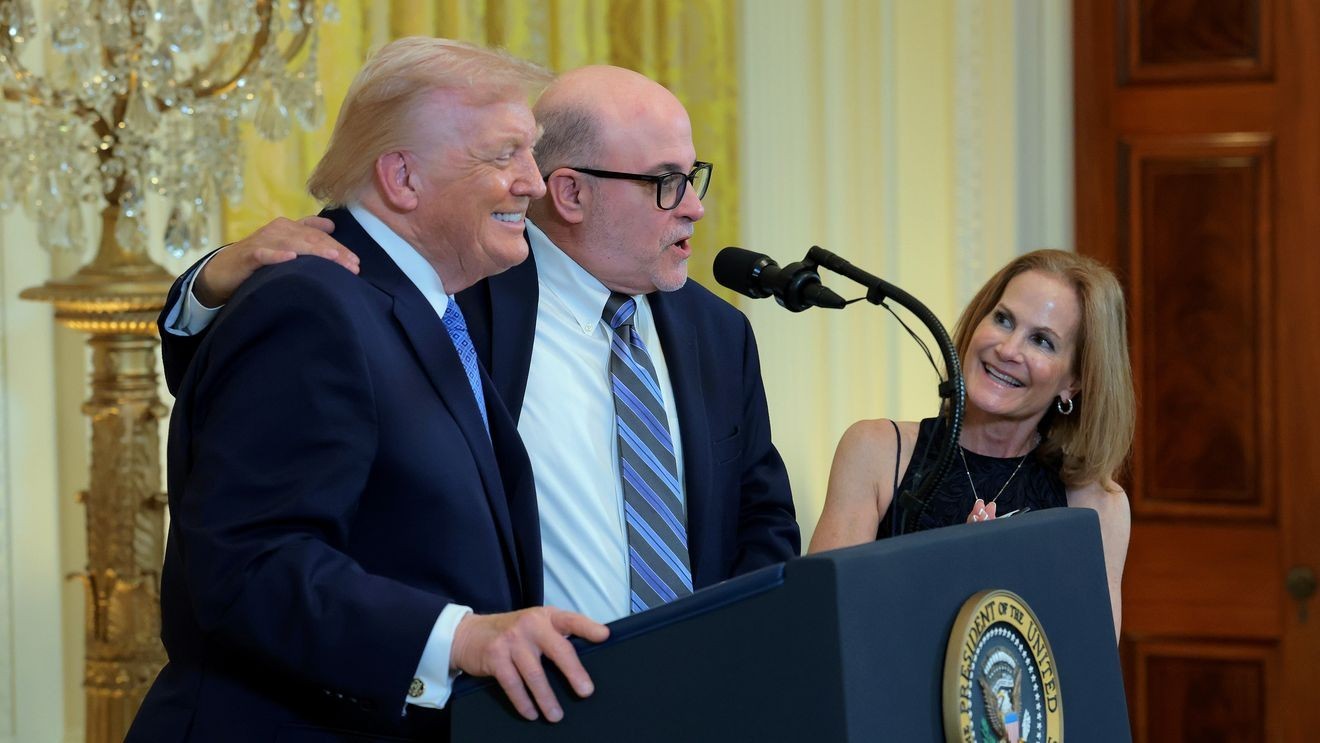
David Milstein, a senior advisor to US Ambassador to “Israel” Mike Huckabee, suppressed an embassy memo critical of the Israeli government’s decision to approve additional settlements in the Israeli-occupied West Bank, The New York Times reported, citing three US officials who work with Milstein.

The officials told the Times that Milstein blocked the memo from being released before it could be shared with lawmakers in Washington. He also insisted on approving communications from the embassy section responsible for Palestinian affairs, according to multiple officials with direct knowledge of the matter.

The officials said they spoke to the newspaper because they were concerned that Milstein’s actions were undermining the normal work of the diplomatic mission, while those who interacted with him told the Times that he went to “unusual lengths” to portray “Israel” positively.

Milstein’s role at embassy comes under scrutiny

Milstein’s LinkedIn profile shows that he previously worked as an aide to Sen. Ted Cruz, R-Texas, and as an advisor to Florida Gov. Ron DeSantis’ gubernatorial campaign, where he handled “Jewish and pro-Israel outreach.” He later served as a special assistant to former US Ambassador to “Israel” David Friedman during President Donald Trump’s first term.

Milstein also drew attention in September after sending wedding invitations requesting “monetary wedding gift[s]” in “U.S. dollars or Israeli shekels” alongside a QR code, according to screenshots reviewed by Politico’s Playbook.

Huckabee defended Milstein following the report, writing on social media, “If there is anyone I’ve worked with presently or over the past 50 years of my adult life which I’ve had absolute confidence in as one with impeccable integrity, it’s David Milstein.”

A source in the intelligence community told Politico, “[Milstein’s] a giant walking counterintelligence red flag … the fact that he is blatantly soliciting donations is absolutely jaw dropping.”

The Trump administration previously dropped sanctions imposed by the Biden administration on extremist Israeli settlers. Huckabee has also condemned settler violence in the West Bank, calling it an “act of terror.”

Huckabee has separately addressed growing dissatisfaction toward “Israel” in the United States, telling NewsNation that social media disinformation and foreign propaganda were responsible for much of the negative perception.

  •  

Metsola apologises to former hostage as Parliament marks 7th October


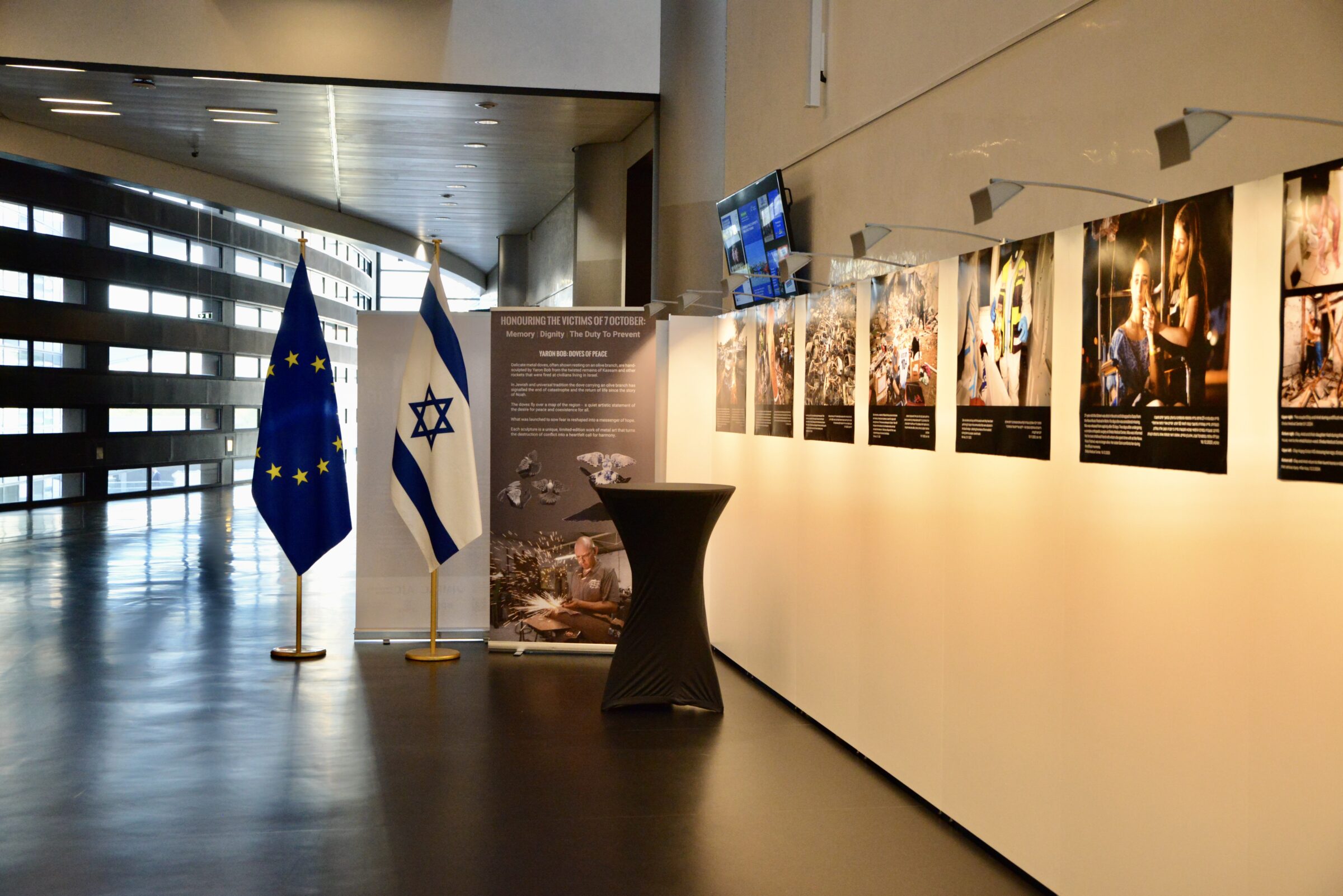
Patricia Teitelbaum, President of the International Movement for Peace and Coexistence, opened the third-anniversary commemoration of the 7th October 2023 Hamas massacre by welcoming guests to an exhibition named Memory, Dignity and the Duty to Prevent.

Held in the European Parliament in Strasbourg on 7th October, it was co-organised by IMPAC and the American Jewish Committee’s Transatlantic Institute, and hosted by Hildegard Bentele, the German EPP MEP who chairs the Parliament’s delegation for relations with Israel. Over 200 were present, including at least 55 MEPs.

Photographs by Israeli Ziv Koren lined the gallery. Sculptures by the Gaza-border blacksmith Yaron Bob, forged from rocket metal, stood among them. Teitelbaum said the gathering was meant to restore dignity stripped from the victims and to commit those present to preventing a repetition. “Our common duty to prevent, to combat extremism and radicalisation, that would be a noble way to honour those who were murdered.”

Benedetta Buttiglione, director of the AJC in Brussels, thanked former hostage Omri Miran for being in the room, and called Bob’s rockets-into-roses a refusal to let destruction have the last word. Memory, she said, because the dead would not be forgotten; dignity, because every victim was a human being and not a statistic; and a duty to prevent, because remembrance meant taking responsibility.

Sarah Mordekhay, from the Eshkol region on the Gaza envelope, then lit candles in memory of some of the victims she knew, such as Bernard Cowan from kibbutz Sufa. She described 7th October as the deadliest massacre of Jews since the Shoah, but this time in their homeland: entire families wiped out, “not for what they did, but for who they were.” Never again, she said, meant no justification for terrorism and no tolerance for antisemitism.

Bentele, as host, recalled that more than 1,200 people were murdered that day, including citizens of EU member states, and that 44 EU citizens were among those taken hostage. Some survivors, she said, later took their own lives because the suffering was unbearable. She turned to Miran, who spent 738 days in Hamas captivity, and called his journey from Israel to Strasbourg an act of courage. “Remembrance is our responsibility,” she said. 

European Parliament President Roberta Metsola spoke next and began with an apology. Two days earlier, French MEP Rima Hassan of La France Insoumise had visited the exhibition and thrown down the Israel flag, causing the EU flag to fall as well. Witnesses said she stepped over the European flag and made no attempt to pick it up.

Addressing Miran, she said she felt she must apologise, nonetheless. “I hope, dear Omri, you know that the actions of one person this week do not reflect the sentiment, ethos or belief of the vast, vast majority of members of this house who are as outraged as me.” The room applauded. She recalled her visit to Kfar Aza and Re’im on 13th October 2023 with the Speaker of the Knesset: the smell of death, a child’s burnt swing, and a make-up brush handed to her in a bus shelter at Re’im, which still sits on her desk.

She named the Bibas children, Ariel and Kfir, and spoke of girls who survived sexual violence in captivity only to meet sceptics. She did not confine the dead to Israel. “So many since also died in Gaza,” she said. “We are not blind to anyone’s suffering.” The way forward, she argued, had to end terror, disband Hamas and its proxies, and renew the fight against antisemitism. “The line between legitimate criticism and antisemitic narratives should be a chasm that no one crosses.”

Yaron Bob then presented Metsola with a sculpture, the Hand of Peace, a hand rising from broken ground to hold a broken olive branch. The branch was broken, he said, because the losses were terrible; the hand still held it because hope had not been given up. “My dream is that one day there will be no more rockets for me to use”, he concluded.

Israel’s ambassador to the EU and NATO, Avi Nir-Feldklein, asked who in the room had woken that morning wondering whether their country would survive the day. He thanked Metsola for speaking when others stayed silent and told Miran that an entire nation had rejoiced at his return.

Miran spoke last. Abducted from Kibbutz Nahal Oz, he described the safe room with his wife Lishay and their daughters Roni, then two, and Alma, six months old; the murder of the kibbutz security coordinator, Ilan Fiorentino; and the moment terrorists used a 17-year-old neighbour to force the family to open the door.

A rifle was pointed at Roni’s head. As he was led away, the child broke free and screamed for her father. He did not look back, afraid they would be shot. He was beaten by a mob on entering Gaza, held in 23 places, including tunnels about 30 metres underground, and filmed for propaganda. His captors, he said, told him they would repeat 7th October “until the last Jew had either left or been slaughtered.”

Asked whether Gaza’s losses had changed their minds, they answered that 50,000 babies had been born that year: “50,000 new martyrs.” Pressure on Israel, and what he called a false symmetry between Hamas and Hezbollah and Israeli self-defence, had been read by those captors as encouragement, not as a call for peace.

Hildegard Bentele, the host MEP, had already given the day’s answer to the flag incident, writing on the evening it happened: “Knocking down the EU and Israeli flags at our commemoration exhibition does nothing to ease that suffering. We should come together to honour the victims and work to ensure such atrocities never happen again. Remembrance deserves respect.”

  •  

Giant Elephant Tooth Reveals the Green Wetland Where Early Humans Lived in the Road Between Africa and Eurasia 700,000 Years Ago

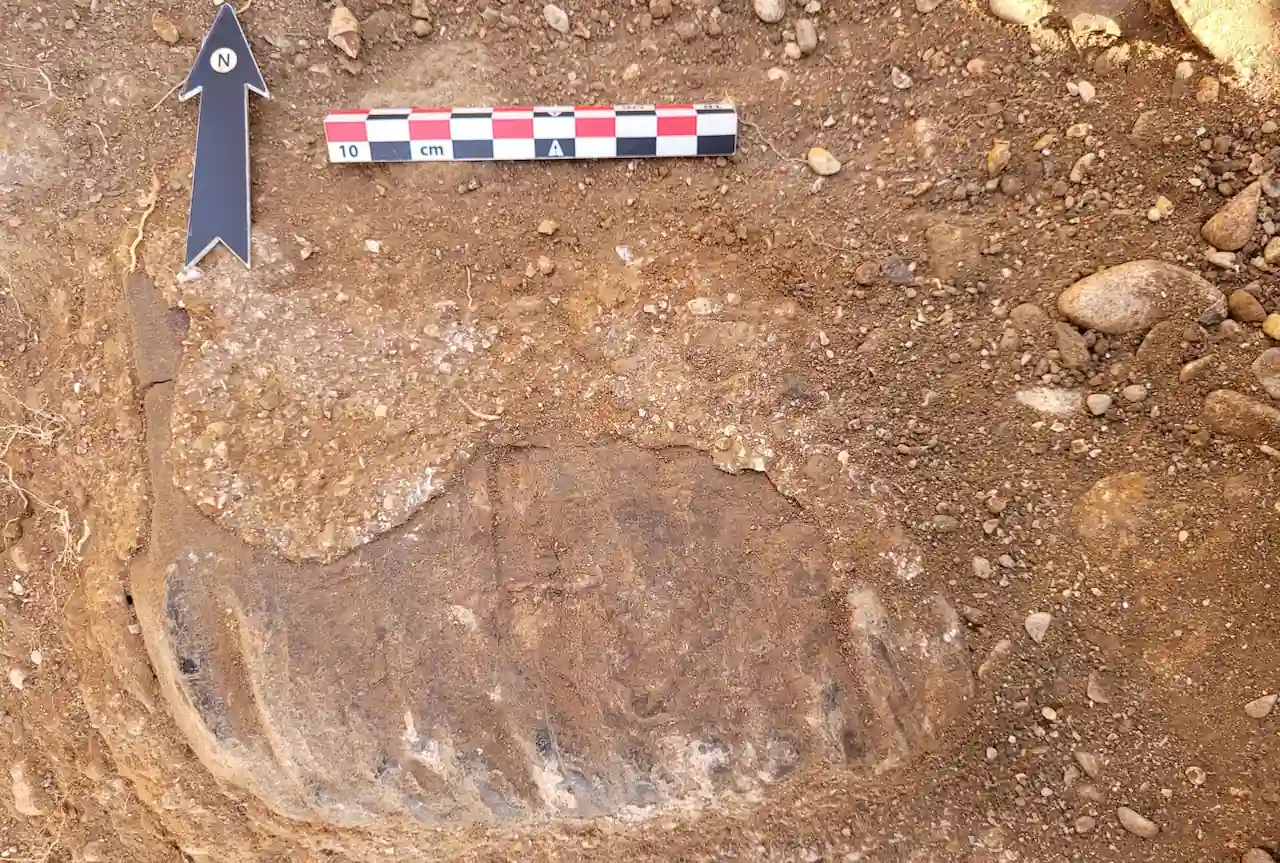
Among the stone tools that early humans left beside a lake in northern Israel, archaeologists found something far bigger: the molar of an elephant, about 8 inches (20 cm) tall and 3 inches (8 cm) wide, lying next to several pieces of tusk. It sat at the same level of ground as handaxes and cleavers […]

  •  

Thousands Are Held in Israeli Torture Camps. This Is What Happens Inside

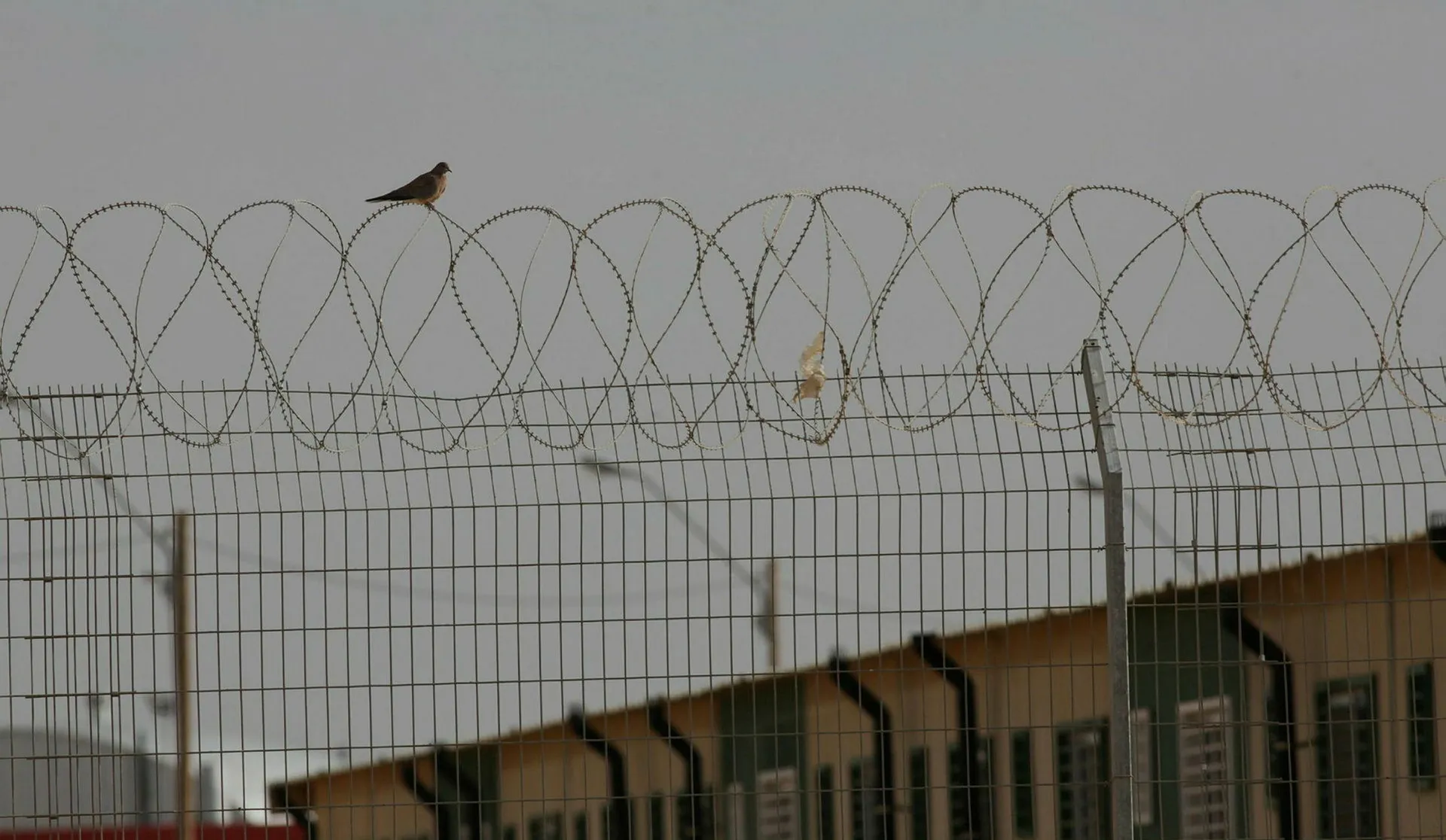
Israeli news shares five testimonies from among thousands of Palestinians who survived hunger, severe violence, scabies, and brutal living conditions which are part of everyday life for thousands of prisoners.

  •  

Nobel Hands Peace Prize to Judge Who Declared Israel Guilty of “Genocide”

The Nobel Peace Prize has been awarded to a South African judge who led the UN panel that accused Israel of genocide, leading Israel to brand the judge a "frontrunner" in "lies, hatred and blood libels".

The post Nobel Hands Peace Prize to Judge Who Declared Israel Guilty of “Genocide” appeared first on The Daily Sceptic.

  •  

La muela de un elefante gigante revela que los primeros humanos de Oriente Próximo vivían en un valle verde de lagos y cañaverales

Entre las hachas de piedra que unos homínidos dejaron junto a un lago del norte de Israel apareció algo bastante más grande: una muela de elefante de unos 20 centímetros de alto y 8 de ancho, acompañada de varios fragmentos de colmillo. Estaban en el mismo nivel del terreno que los útiles, rodeados de hachas […]

  •  

Why is Israel maneuvering to shift the Middle East conflagration to Africa?

From David Ben-Gurion—the architect of a state whose foundations remain a subject of debate—to Benjamin Netanyahu, a master of maintaining constant tension, the “periphery doctrine” has remained a cornerstone of Israeli foreign policy. Its essence lies in forging alliances with states that surround hostile neighbors. Israeli authorities operate on the premise that secure borders do […]
  •  

Syria May Send Troops to Saudi Arabia Amid War with Ansar Allah

By Kyle Anzalone | The Libertarian Institute | October 8, 2026

A US and Syrian official said Syria is considering sending troops to Saudi Arabia as the kingdom battles Ansar Allah in Yemen.

Reuters reported on Thursday that a US official and a Syrian defense official said that Damascus may send Syrian forces to Saudi Arabia. Riyadh has reached out to several allies for support in its war against Ansar Allah.

On Monday, Turkey and Pakistan agreed to provide military support to Saudi Arabia under the Mecca Accords, a mutual defense pact signed by the three countries earlier this year.

A joint statement released by the Mecca Accords members explained, “The Committee decided to move immediately to the practical implementation of the collective defense commitments and to take the necessary measures to provide the agreed military forces and capabilities and ensure their rapid deployment in the Kingdom, in accordance with the approved arrangements and the national legislation of the Parties, thereby enhancing readiness, military integration, and the collective capacity to confront and counter threats.”

Turkey indicated it would provide Saudi Arabia with military capabilities rather than ground troops, which would require parliamentary approval, while Pakistan did not provide details on the forces or capabilities it plans to deploy.

The statement was released following an emergency meeting of the alliance to discuss the situation in Saudi Arabia. The fighting between Ansar Allah and Saudi Arabia reignited in July after the kingdom attacked the Sanaa airport. In recent weeks, Ansar Allah has taken a significant amount of territory from the Saudi-backed forces in Yemen and attacked several energy sites in Saudi Arabia.

Riyadh has reached out to international partners for support. Crown Prince Mohammed bin Salman requested that President Donald Trump order direct attacks on Ansar Allah positions. So far, Trump has limited US involvement to intelligence sharing and battlefield planning, and refused to conduct direct strikes on Ansar Allah.

Saudi Arabia has also asked China and Pakistan to place pressure on Iran to rein in Ansar Allah. According to three Iranian sources speaking with Reuters, Beijing privately asked Tehran to rein in Ansar Allah after receiving a request from Riyadh. The sources told the outlet that Iran responded that stability in the region depended on US and Israeli aggression.

While Saudi Arabia’s ties to the US and Ansar Allah’s relationship with Tehran allow the war between the two to appear to be a part of a larger regional war, the conflict began over a decade ago. Additionally, Ansar Allah did not begin its offensive following the US and Israeli surprise attack on Iran, but rather after Saudi-backed forces attacked the Sanaa airport, prompting Ansar Allah to resume attacks on Saudi Arabia.

Western officials and media often label Ansar Allah as a proxy of Iran. However, while Iran has provided support to Ansar Allah, there is little public evidence that Tehran directs the group’s military operations.

While Syria was a long-time [resistance] ally under the rule of Bashar al-Assad and his father, Damascus fell to rebels, led by former al-Qaeda members, in 2024. Syria is now led by President Ahmed al-Sharaa, formerly known as Abu Mohammad al-Jolani, who previously led al-Qaeda’s Syrian affiliate.

  •  

Southwest Syrian Villages Report Israel Is Encroaching on Their Land With New Fortifications

Among the towns and villages impacted by Israel’s incursions into southwest Syria, few have had more problems than Jabata al-Khashab. The village, in northern Quneitra Governorate, is within the UNDOF demilitarized zone and subsequently is de facto occupied by the Israeli military, who seized much of the UNDOF zone starting at the end of 2024. […]
  •  

Israeli Attacks Kill at Least Three Palestinians in Gaza, Including a Woman and Two Former Prisoners

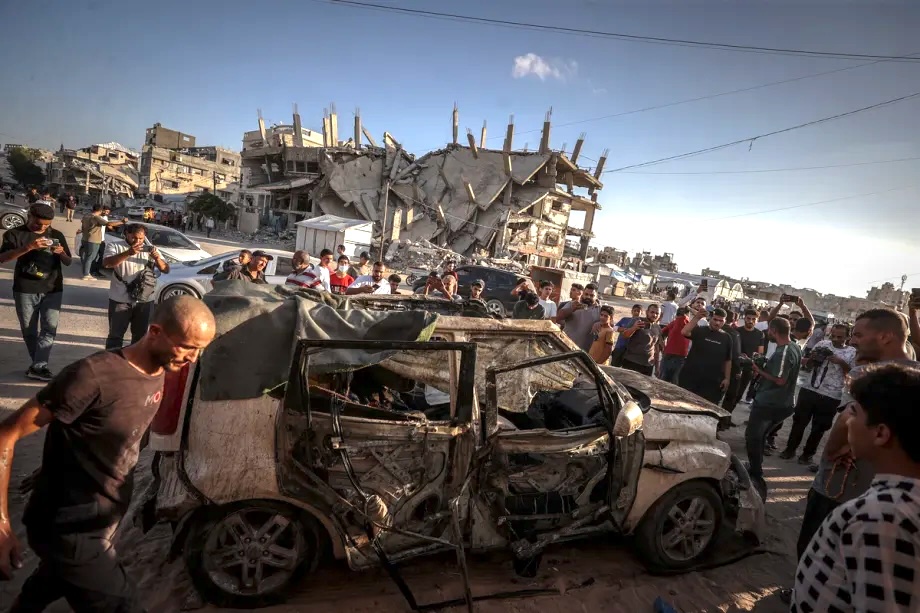
Israeli attacks in Gaza killed at least three Palestinians in Gaza on Thursday as the IDF continues its constant violations of the US-backed ceasefire deal. The Anadolu Agency reported that Israeli shelling hit a tent northwest of Gaza City, killing a woman, identified as Ahlam Mubarak, and injuring her husband and two children. A medical […]

💾

  •  

EU Parliament’s 7 October memorial honours Israelis, sidelines Palestinians — and sows division

An EU Parliament memorial for victims of the 7 October attack caused disarray and anger as well as grief in a divided European house.

It was crowned by a towering Israeli flag, alongside the EU’s.

The exhibit set up in Strasbourg’s parliament included maps showing Occupied Palestinian Territories as part of Israel and sold trinkets made from debris of Israeli missiles.

But it made no mention of the 74,200 people killed by Israel in Gaza in the past three years, after Palestinian militants Hamas killed some 1,200 Israelis in a surprise attack.

This situation struck a chord with the sole Palestinian in parliament, left-wing French MEP Rima Hassan, who tried to take down the Israeli flag in protest, and toppled over the EU one as well in an unwanted domino effect.

“My action was in no way directed at the victims of 7 October or their memory,” Hassan told EUobserver. 

Instead, it targeted “this incessant and untenable double standard, for a Russian flag would never be permitted, and rightly so, within the [EU] institution’s premises”.

The memorial was organised by German centre-right MEP Hildegard Bentele, who chairs the parliament’s Israel delegations, alongside the Israeli embassy, and the The International Movement for Peace & Coexistence (IMPAC) group in Brussels, as well as others.

“During a conversation with a member of my team, the guest artist [at the EU Parliament memorial] claimed that Palestine ‘does not exist’,” Hassan added.

Her family were expelled from their birthplace by Israel in 1948 along with hundreds of thousands of others in what Palestinians call the Nakba (Catastrophe).

But in the cacophony of narratives in the EU assembly, those who saw her anti-Israel flag protest as offensive or antisemitic had echoing voices.

This article continues, but the full version is available only to EUobserver.com subscribers. Visit account.euobserver.com/membership

  •  

Baghaei to Rubio: Distorted narratives cannot erase US record of broken commitments

Press TV – October 7, 2026

Iranian Foreign Ministry spokesman Esmaeil Baghaei has dismissed claims by US Secretary of State Marco Rubio that Tehran has repeatedly squandered chances for an agreement, saying the inversion of historical facts cannot erase Washington’s pattern of treaty-breaking from public memory.

Baghaei, responding to an IRNA question on Rubio’s assertion that “Iran has missed opportunities for an agreement multiple times,” stated on Wednesday, “The inversion of historical truths cannot remove the reality of America’s repeated breaches of commitment from the mind of public opinion.”

He pointed to Washington’s successive acts of bad faith, including its unilateral withdrawal from the nuclear deal on May 8, 2018, the sabotage of diplomatic tracks, military aggression against Iran while negotiations were underway, and the subsequent violation of the Islamabad Memorandum of Understanding Iran reached on June 18.

Baghaei held the United States responsible for the insecurity prevailing in the region and for the economic consequences felt in America and worldwide.

“Blame-shifting and contradictory statements cannot overshadow the demand of American and global public opinion that those responsible for the illegal war and the crimes committed be held to account,” he said.

On the latest developments in contacts with the United States, the spokesman said the Islamic Republic’s considerations and conditions for ending the imposed war on all fronts and restoring security to the Persian Gulf and the Strait of Hormuz have been set out explicitly and decisively.

The necessary response to the other side’s proposals will be conveyed through intermediaries. “The exchange of messages between Iran and the US is being conducted through intermediaries,” he added.

On diplomatic efforts related to regional peace and security, including commercial shipping in the Strait of Hormuz, Baghaei stressed that the security of navigation in the waterway matters more to the Islamic Republic of Iran than to any other party. Iran, in consultation with Oman as the other littoral state, has spared no effort to restore security to the Strait.

“The consultation process between Iran and Oman has proceeded successfully. In addition to agreeing on the geographical coordinates of safe two-way routes in the Strait of Hormuz, the two sides have reached an understanding on how the matter will be presented to the relevant international body, a step that will, God willing, be taken soon,” he said.

Asked about the possibility of a joint meeting involving Iran, Oman, and other Persian Gulf states, Baghaei said Iran will continue its efforts to strengthen trust and engagement among the region’s countries.

“Defenders of the homeland, in both the diplomatic arena and the field, stand shoulder to shoulder, resolute and steadfast in defending Iran’s sovereignty and securing the nation’s interests and security,” he concluded.

  •  

By Netanyahu’s own math, Gaza Is 3,900 September 11ths

By Larry C. JOHNSON

Join us on Telegram, X, and VK.

Contact us: info@strategic-culture.su

Benjamin Netanyahu likes to translate Israel’s grief into American. At the United Nations last month, he took the dead of October 7 and multiplied them by the ratio of America’s population to Israel’s. The 1,200 Israelis killed that day, he said, were “equal to 40,000 innocent Americans slaughtered in less than 24 hours. That’s 16 times 9/11.”

Per-capita comparisons are a perfectly legitimate tool. A small country feels a massacre more than a large one, and Americans should understand what October 7 meant to Israelis. But a method is only honest if you’re willing to apply it to everyone. So let’s apply Netanyahu’s method to the people his army has been killing for three years.

Gaza had about 2.2 million people before the war. The United States has about 341 million, roughly 155 times as many. Take a conservative figure of 75,000 Palestinians killed in Gaza, slightly above the Gaza Health Ministry’s latest count of more than 73,000. Multiply it by Netanyahu’s own logic, and you get about 11.6 million Americans.

Eleven point six million. That is roughly the population of Ohio. It is more than ten times the number of Americans killed in every war the United States has ever fought, from the Revolution to Afghanistan. It is about 15 times America’s deaths in the Civil War, the bloodiest conflict in the nation’s history.

Measured in the unit Netanyahu chose, it is about 3,900 September 11ths.

Run the numbers in Israel’s own terms and the result is the same. Seventy-five thousand dead in a population of 2.2 million is the equivalent of about 340,000 Israelis. Netanyahu built a speech, a war and a foreign policy on 1,200. Imagine what he would say about 340,000.

The convenient multiplier

The prime minister’s defenders will object that the comparison is unfair because many of Gaza’s dead were Hamas fighters. Fine. Subtract every combatant the Israeli military claims to have killed, and apply the multiplier to what remains. Even 50,000 dead becomes nearly 8 million Americans, about 2,600 9/11s. You can argue over every death in the ledger, and the result is still measured in millions.

Netanyahu’s arithmetic has problems even on its own terms. Forty thousand Americans divided by the 2,977 who died on September 11 comes to about 13.4 9/11s, not 16. When the rhetoric needs a bigger number, it seems, the calculator rounds up.

But the real problem isn’t the rounding. It’s the selectivity. Netanyahu’s multiplier is designed to work in one direction only. It enlarges Israeli dead into an American catastrophe so that American audiences will feel what Israelis felt. Applied to Palestinians, it produces numbers so large they would make any American audience ask what, exactly, it has been paying for. That is why he never applies it to them.

What the comparison actually shows

The point of a per-capita comparison is to help outsiders grasp the scale of a loss. Netanyahu wants Americans to imagine 40,000 of their countrymen murdered in a day, and to understand everything Israel has done since as the natural response. Very well. Ask Americans to imagine 11.6 million of their countrymen dead, in a territory sealed off from escape, and to call it self-defense.

No American president would describe 11.6 million American dead as a proportionate response to anything. No American would accept that the dead deserved it because some of them were armed. And no one who has run the numbers can accept the premise of Netanyahu’s arithmetic, which is that Israeli lives scale up and Palestinian lives do not.

The method is Netanyahu’s. So is the answer it produces: by his own measure, the catastrophe in Gaza is about 290 times larger than the one he asks the world to remember.

Original article: sonar21.com

  •  

Is Israel arming one of Brazil’s largest criminal factions?

Israeli rifles seized en route to Brazil’s TCP drug faction – the same group that controls “Complexo de Israel.” Israel armed Medellín in the 80s. Coincidence?

Join us on Telegram, X, and VK.

Contact us: info@strategic-culture.su

Last week, 7 ARAD-7 rifles of Israeli manufacture were seized by the Brazilian Federal Police at a transport company located in Niterói, Rio de Janeiro, while they were being prepared to be sent to drug traffickers of the Terceiro Comando Puro (TCP) organization. These are the same drug traffickers who control a territory called “Complexo de Israel,” which brings together the favelas Cidade Alta, Parada de Lucas, Vigário Geral, Cinco Bocas, and Pica-Pau.

Two years ago, we wrote here at the Strategic Culture Foundation an article about the danger of “narcopentecostalism” – the deep linkage between drug trafficking and neo-Pentecostalism in some favelas – pointing to this new phenomenon as a possible national security threat for Brazil, as well as a potential focus of activities aimed at destabilizing the social fabric and religious persecution. Indeed, in TCP territories, Catholic churches and Afro-Brazilian religious centers are closed and violently attacked.

Nevertheless, at the time we wrote that article, in July 2024, there were not yet enough material elements to incisively affirm the existence of a direct connection between narcopentecostalism and the State of Israel. TCP traffickers exalted the State of Israel, used Israeli patches and uniforms, but all of this was circumstantial and could be explained by mere adherence to evangelical discourse.

Now, however, we have more specific evidence to be able to return to the topic and raise concern about the possible link between Israel and one of Brazil’s main drug trafficking organizations.

After all, to date it is still not known how these modern Israeli rifles reached the logistical branch of an important Brazilian criminal organization, when this specific rifle is still uncommon among Brazilian police forces and nonexistent among the military.

The first objection that could be raised would be about Israel’s “interest” in arming or financing a criminal organization in Brazil. Well, it would not be the first time.

In the 1980s, 500 automatic weapons (including IMI Galil rifles and Uzi submachine guns) and 200,000 rounds of ammunition were found in a warehouse belonging to the Medellín Cartel, one of the largest drug trafficking organizations in Colombia. At the time, “independent investigations” concluded that the person responsible for the operation, the mercenary and retired Israeli military officer Yair Klein, had acted on his own. Klein himself, however, always stated that his activities in Colombia (which involved not only arms sales but also the training of paramilitary groups) had the knowledge and authorization of Israeli authorities.

Klein’s link to the Israeli state apparatus, demonstrating that he was not really an “independent agent,” is confirmed by the fact that when he was arrested in Sierra Leone in 1999 for selling weapons to insurgents of the Revolutionary United Front, the State of Israel intervened to secure his release, as well as refused all extradition requests.

Another interesting and recent piece of news involves Mexico, where authorities declared that 80% of the weapons found with soldiers of the drug cartels were of U.S. origin… and most of the remaining 20% were of Israeli origin. Indeed, Israel officially exported 24,000 automatic weapons between 2006 and 2018 to Mexico’s military and police institutions, and another 18,000 in more recent years. Note, however, that estimates from independent observatories suggest that Mexican cartels as a whole possess an arsenal of several hundred thousand automatic weapons. If something like 15-20% of these weapons are of Israeli origin, then we are talking about any number between 20,000 and 100,000 Israeli-origin weapons in the hands of the cartels. These are numbers that simply do not match the figures of official Israeli arms exports to Mexican security forces.

One last point that may draw attention is the recent attention the U.S. has given to Brazilian criminal organizations, with the PCC and CV groups categorized as terrorist groups by Donald Trump’s government. What draws attention is the fact that the TCP – the 3rd largest criminal organization in Brazil, with a presence in some other countries in the region, operations in several Brazilian states, and at least one verifiable link to an individual connected to Al-Qaeda’s financing network, not to mention an operational alliance with the PCC – was left out of the categorization.

Naturally, it could be a coincidence. But even so, it is an interesting coincidence that the neo-Pentecostal criminal organization apparently armed by Israel is exactly the one that was not categorized as terrorist by the White House.

  •  

Israel votes again but the arithmetic hasn’t changed

TEL AVIV – Every Israeli election of the past decade has been sold as the last chance to save the country, and every one has ended in the same place: a long night of counting, followed by weeks of bargaining among men who swore they would never sit together. The vote on October 27 has a stronger […]

The post Israel votes again but the arithmetic hasn’t changed appeared first on Asia Times.

  •  

MOE: Nearly 22,000 Students and Education Workers Killed

IMEMC | October 7, 2026

Nearly 22,000 Palestinian students and education workers were killed during three years of Israeli attacks, according to a statistical report released Wednesday by the Palestinian Ministry of Education and Higher Education. The report documents Israeli violations against the education sector from October 7, 2023, through October 7, 2026.

Issued under the slogan, “Three Years After the Genocide: Education Is a Will That Cannot Be Broken,” the report said Israeli forces killed more than 19,189 school students and 1,386 university students in the Gaza Strip. Another 28,586 school students and 3,082 university students suffered injuries of varying severity.

In the occupied West Bank, Israeli forces killed 134 school students and 39 university students and injured 871 school students and 283 university students. The forces also abducted 416 school students and 481 university students.

Among educational and administrative personnel in Gaza, Israeli forces killed 805 school employees and 246 university lecturers and staff members.

The report also documented the injury of 3,298 school employees and 1,493 university personnel. In the West Bank, Israeli forces killed seven school staff members and injured 26 others, while abducting more than 176 teachers and school employees and 21 university staff members.

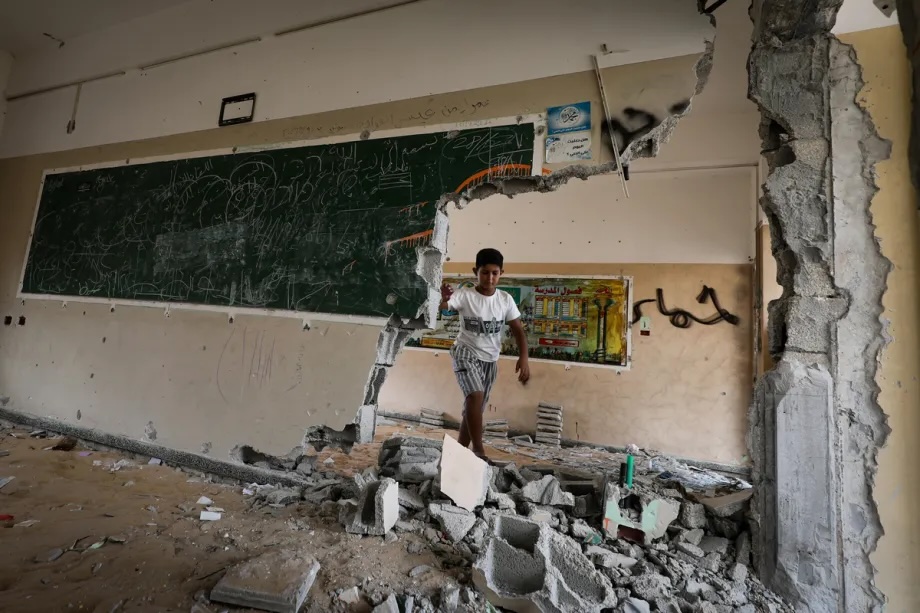
Regarding attacks on educational institutions, the ministry said Israeli forces completely destroyed more than 179 public schools in Gaza and more than 105 schools run by the United Nations Relief and Works Agency for Palestine Refugees (UNRWA). More than 63 university buildings were also completely destroyed.

In response to the widespread destruction and in an effort to maintain the educational process, 700 teaching and learning centers were opened throughout the Gaza Strip, along with 12 virtual schools serving students from Gaza inside Palestine and abroad.

In the West Bank, Israeli forces continued targeting educational institutions. They issued a final demolition order against the Janba School in Masafer Yatta, south of Hebron, and closed four schools in Hebron’s Old City for several days: Yasser Amr, Al-Faiha, Qurtuba, and Al-Ibrahimiyya schools.

Israeli authorities also denied work permits to teachers at private schools in occupied Jerusalem, preventing them from reaching their workplaces, and continued invading Palestinian universities, most recently Birzeit University.

  •  

Guterres in Islamabad: Genocide, cowardice, and the cage of Imran Khan

By Junaid S. Ahmad | MEMO | October 7, 2026

There are careers that end in triumph, careers that end in scandal, and careers that achieve the rarer distinction of staging their own final indictment. António Guterres has found his in Islamabad.

After nearly a decade as Secretary-General of the United Nations, he arrives in Pakistan in the twilight of his tenure and performs the ritual that has come to define him: smile warmly, praise generously, deplore abstractly, and avoid saying anything that might seriously inconvenience the powerful men standing beside him. His record is littered with eloquent concern, grave warnings and solemn appeals. What it has lacked, again and again, is the one quality that gives moral language meaning: courage when courage carries a cost.

In Islamabad, the performance is almost indecent. Guterres praises Pakistan as a source of “solidarity and solutions,” commends the “resilience” of its people, and assures them that the United Nations stands with them. Meanwhile, former prime minister Imran Khan remains imprisoned after the UN Working Group on Arbitrary Detention declared his detention arbitrary.

UN experts have raised concerns about his treatment, prolonged isolation and conditions of confinement; the UN Committee Against Torture has separately highlighted broader allegations of politically motivated detention, torture, intimidation and repression.

Guterres does not need opposition politicians or troublesome journalists to brief him. He could simply read his own institution’s reports. But that would ruin the choreography.

So the Secretary-General moves through meetings with Pakistan’s political and security establishment while one of the country’s most popular and persecuted political leaders sits behind bars. Outside the diplomatic bubble, Khan’s supporters confront barricades, arrests and the familiar machinery of coercion. The Pakistani state, chronically incompetent at governing, once again discovers astonishing administrative efficiency when citizens decide to protest.

And Guterres praises their resilience. The euphemism is almost grotesque. A population is subjected to repression, institutional decay and coercive politics, and the world’s senior international diplomat congratulates it for enduring the experience. It is the diplomatic equivalent of praising a prisoner’s fortitude while refusing to ask who locked the cell.

But Islamabad is not a lapse in the Guterres record. It is the culmination of it.

The same moral evasion has defined his response to Gaza. For years, Guterres has described the catastrophe in increasingly apocalyptic terms: mass death, starvation, displacement, destroyed hospitals, shattered families, collective punishment and violations of international law. He has rarely lacked adjectives for horror.

What he lacked was willingness to name its most consequential possibility. Genocide.

When confronted directly, Guterres retreated into procedure, insisting that such a determination belonged to the courts. It was bureaucratic cowardice dressed as juridical sobriety. Apparently, a Secretary-General may describe the destruction of a people in exhaustive detail, denounce their starvation, mourn their children and warn of their dehumanization — but the moment the facts threaten to crystallize into the politically dangerous word, he develops an almost priestly devotion to institutional restraint.

The absurdity became complete when UN experts explicitly warned of genocide and a UN Commission of Inquiry later concluded that Israel had committed genocide in Gaza. The institution Guterres leads could say what Guterres himself repeatedly would not. This was not neutrality. It was evasion refined into method.

That is the essence of the Guterres tenure: moral vocabulary without moral escalation. He has perfected the art of sounding anguished while remaining politically non-threatening. His speeches travel bravely to the edge of the necessary conclusion, stare into the abyss, invoke international law, then retreat into another carefully worded appeal to governments that have already demonstrated their contempt for it.

Gaza became a theatre of catastrophic adjectives without commensurate political naming. Pakistan now becomes a festival of diplomatic compliments beside a prison cell.

The parallel is devastating. In Gaza, the UN system could document devastation while its Secretary-General recoiled from the word that carried the greatest political charge. In Pakistan, UN mechanisms can document arbitrary detention, abuse and repression while their chief shakes hands with the authorities presiding over the system they have condemned.

That is not merely institutional contradiction. It is leadership failure.

No serious person expects a UN Secretary-General to command armies, free prisoners by decree or compel governments into decency. But the office possesses one form of power that cannot be dismissed so easily: moral authority. Guterres has spent much of his tenure conserving it so carefully that, when history demanded its expenditure, there was often nothing to show for it.

He has confused caution with wisdom and diplomatic acceptability with statesmanship. But statesmanship is not the art of saying only what power can comfortably tolerate. Its purpose, at decisive moments, is precisely the opposite.

And so Islamabad is a fitting final tableau: Guterres praising resilience while surrounded by evidence of why resilience is necessary; representing institutions whose own findings he seems unwilling to embody; smiling through repression in Pakistan after years of speaking around genocide in Gaza.

History will not care how many statements he issued, how solemnly he frowned, or how often he invoked international law.

It will ask what he said when speaking plainly became dangerous. Too often, António Guterres chose not to. He saw almost everything. He described almost everything. And when history demanded courage rather than description, he chose cowardice.

  •  
❌