A Sala da Assembleia de Freguesia de Ferragudo acolhe no próximo dia 30 de outubro, com início pelas 19h00, um debate sobre o futuro do Algarve e de Portugal, o qual conta com a presença de Jack Soifer.
Tendo em conta que o futuro do Algarve e de Portugal também se constrói com conversa, ideias e participação, este debate é aberto à comunidade para refletir, conversar e trocar perspetivas sobre os desafios e oportunidades que o futuro reserva à sociedade, pelo que a autarquia quer que os cidadãos vão participar, questionar, partilhar ideias e fazer parte da conversa.
A sessão contará com Jack Soifer como orador e dinamizador e será realizada em português e inglês, criando um espaço onde residentes de diferentes nacionalidades poderão participar e dar o seu contributo.
Jack Soifer é um investidor, consultor e empresário, com uma carreira internacional de 40 anos em 12 países, residente em Portugal há cerca de três décadas.
O debate realiza-se na Sala da Assembleia de Freguesia de Ferragudo, 1.º andar do Mercado – entrada pela Rua Vasco da Gama -, pelo que tendo em conta que a sala dispõe de apenas 50 lugares, a autarquia recomenda que reserve lugar com antecedência através dos seus contatos.
by Milan Adams, Preppgroup: The notification arrives at 4:47 on a Friday afternoon, from an app you rarely open. It says that one of the big banks, a name you have used for most of your adult life, has been seized by the government. You read it four times before the words settle. Regulators tend […]
by Antonius Aquinas, Antonius Aquinas: CHARLES AUSTIN BEARD, 1874-1948 Charles Beard was born in Knightstown, Indiana on November 27, 1874 in the heart of the state’s corn belt. By the close of his life in 1948, Beard was considered the foremost American historian of the first half of the 20th century, and his works and life […]
from SGT Report: The BOMBSHELL information you are about to hear comes at great cost to the personal safety of Jesse Beltran, Matt Hazen and the whistle blowers who are bringing it to light. We have all been transfected by bioweapons, GHOST technology, RF emitting devices and nanotech which now lives in many of us, […]
by Paul Craig Roberts, Paul Craig Roberts: Bloomberg reports that Oil Soars Above $105 a barrel as Trump orders Pentagon to prepare for renewed attack on Iran. Why renewed attack if the Trump administration is telling the truth that the Strait is open, under US control, and oil deliveries are back to normal? Renewed attack would […]
Montenegro detained Mikhail Zvinchuk, the founder of the Rybar Telegram channel.
Key directions according to Rybar, Ukrainian and independent analysts.
Forget Sloviansk: its capture is currently unrealistic.
Ukrainian pressure continues towards Velyka Novosilka, with fighting already under way near Komar on the eastern bank of the Mokri Yaly river.
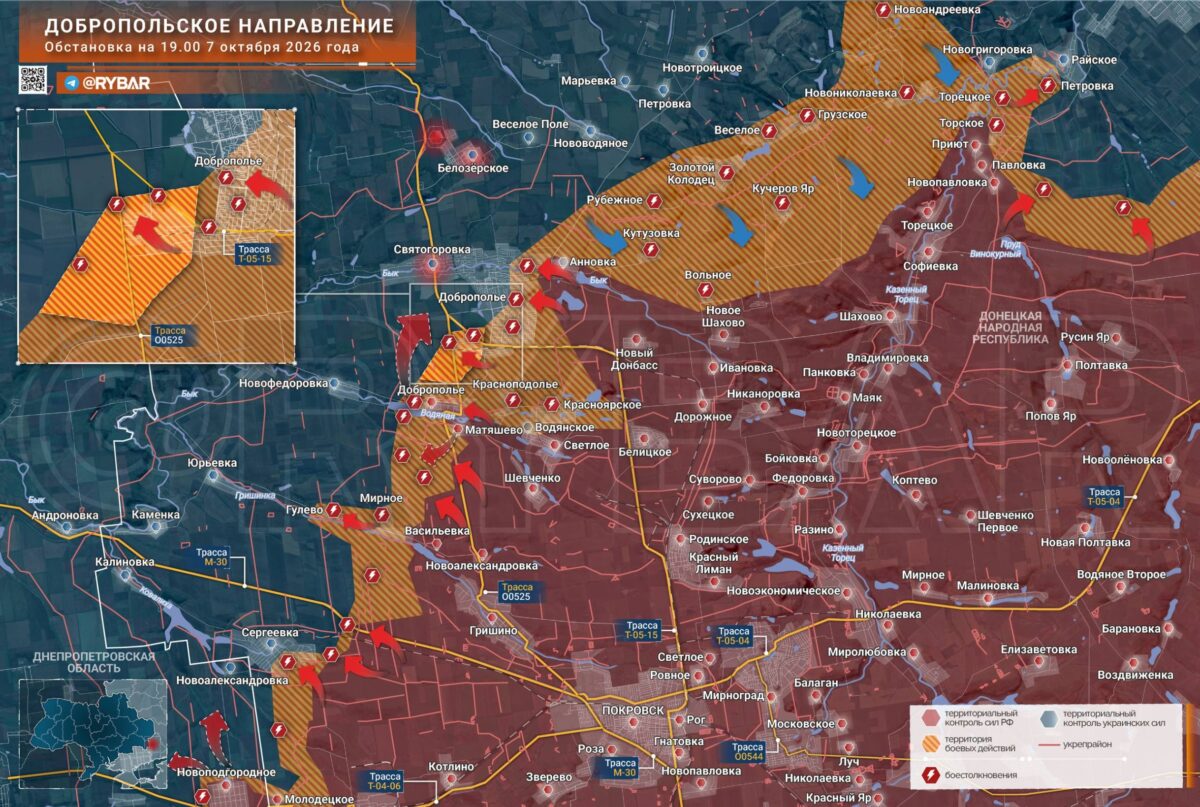
Russians are infiltrating Dobropillia, but a Ukrainian counteroffensive is pressing against their flank from the north.
The battle for data centres is now two-way, with Ukrainians attacking Russia’s ‘Google’.
Maps of the day — Sloviansk direction; Velyka Novosilka direction; Dobropillia direction.
Videos of the day — a scene from the Second World War: a MiG-29 shoots down a drone with its cannon; soldiers clear a network of Russian bunkers; Himars destroys an artillery radar; what the R-280 road to Crimea looks like.
Montenegro detained Mikhail Zvinchuk, the founder of the Rybar Telegram channel, who occupies one of the leading positions in the ecosystem of Russian media supporting the war. His wife and several associates were arrested alongside him. Colleagues in Moscow issued a statement saying they had been planning to film a report on one of the local monasteries, but the authorities of the Nato member state suspected them of conducting a hybrid operation.
At the top of Russian propaganda are the traditional state media, under the Kremlin’s complete control. They have almost no informational value, as they merely repeat the regime’s propaganda.
Below them, however, is a complex structure of Telegram channels that provide more varied reporting, including critical coverage. However, criticism is permitted only of mistakes in the conduct of the war, not of the war itself.
These channels, too, spread propaganda and keep Russian society in a state of war, but they also provide information that helps in analysing the course of the fighting. Rybar is among the largest and most influential of them.
In this case, it is not the work of an individual author but a media outlet with an editorial team and extensive content for 1.5m readers, so Zvinchuk’s arrest does not mean the end of publishing under this brand.
Yet through him, we can follow the fascinating story of a man who came from Russia’s defence ministry to spread its propaganda in the years that followed.
Paradoxically, however, he has recently been one of the few sources in Russia to report regularly on the Russian army’s failures at the front. And the preceding 48 hours were particularly rich in such assessments.
We will therefore gradually describe events in three different directions where, according to Rybar, the Russians are either retreating or at risk of doing so. Coincidentally, these are currently the most important directions of military operations.
We will compare all of its information with independent or Ukrainian sources.
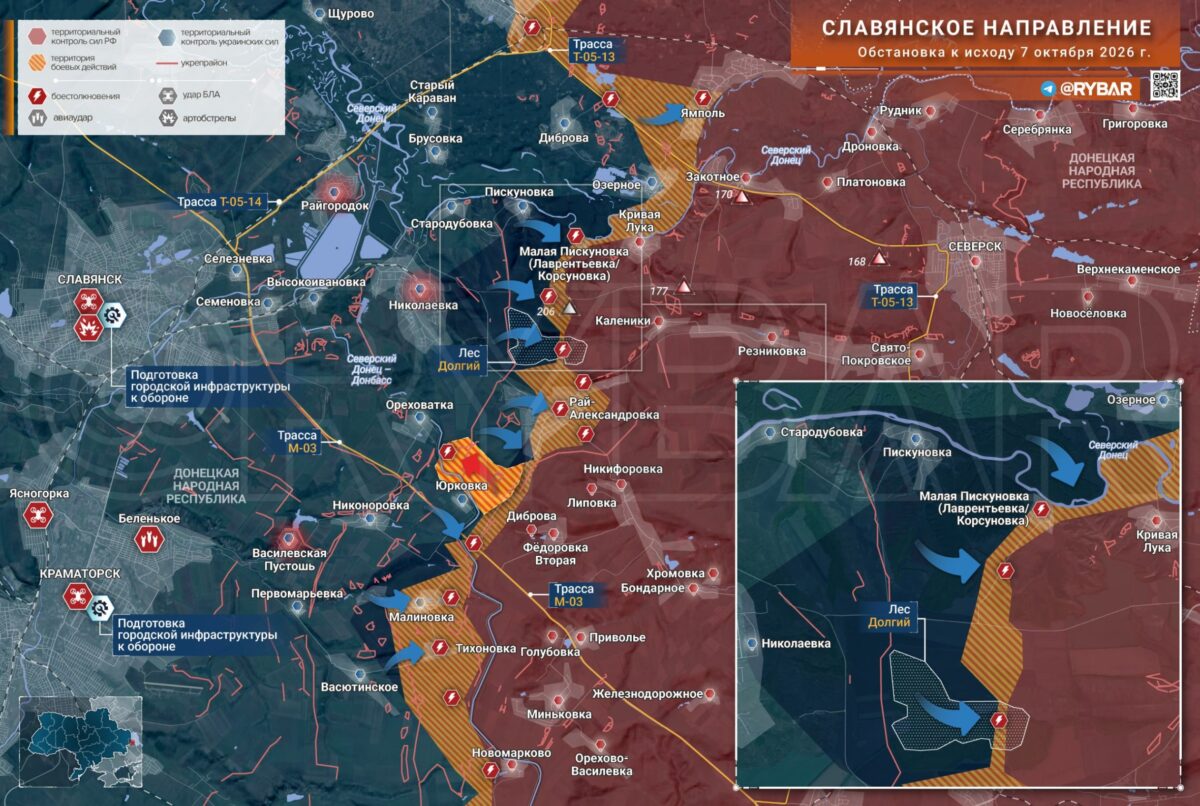
Forget Sloviansk: its capture is currently unrealistic. “The situation is worsening; Sloviansk is being postponed,” Rybar wrote in the first sentence of its latest analysis of the Sloviansk direction. It explained why at length.
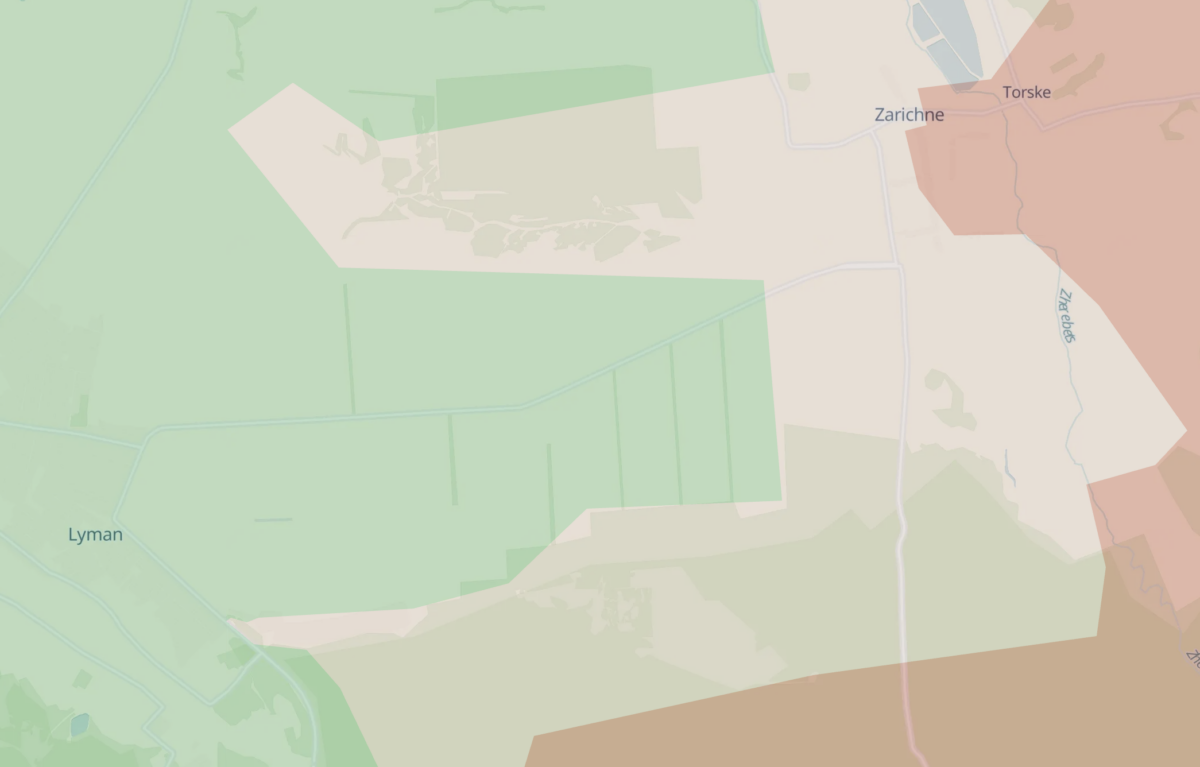
According to it, Ukrainian units in the area are increasing the pressure and exploiting their successes near Lyman, which lies north of Sloviansk. The Russian army has suffered a serious defeat here in recent months, losing a large salient from which it had hoped to bypass the Sloviansk-Kramatorsk agglomeration from the north.
Rybar listed the ensuing complications: according to it, Ukrainians have concentrated fresh drone units around the village of Dibrova; the Russians had to withdraw from the village of Piskunivka and are now trying to save Kryva Luka. Ukrainians are also pressing into the village of Ozerne.
Ukrainian formations are increasing their activity, exploiting successes in the Lyman area, where fresh forces of drone operators have been concentrated around Dibrova.
Russian troops were pushed out of what remained of the village of Piskunivka and are now defending the approaches to Kryva Luka. The enemy is trying to break through there both from the west and across the river from Ozerne.
Moreover, heavy fighting is under way west of the village of Kalynyky, while fighting for Rai-Oleksandrivka is “fierce”, “although it was under the Russian army’s full control only recently”.
Nor is this the end of Rybar’s bad news. An “equally difficult situation” persists on the western bank of the Siverskyi Donets-Donbas Canal, where Russian soldiers are “for now” holding positions in the villages of Malynivka, Tykhonivka, and Yurkivka.
Taken together, all of this means that the prospect of an “attack on the agglomeration has receded considerably”.
“Without control of the forests below Lyman, the offensive is doomed, if not to failure, then to high losses from attacks on its flank,” Rybar added.
Its map fully matches the verbal description. The red arrows running from east to west along the entire stretch have been replaced by blue, Ukrainian arrows pointing from west to east.
Paradoxically, the local Telegram channel Mikolaivka-Sloviansk Online provides a far less optimistic picture.
While Rybar no longer even mentions Mykolaivka, which directly borders Sloviansk, according to this source — which has repeatedly provided highly accurate and widely cited information — Russians are still managing to infiltrate it. On Wednesday, it wrote that “the Russian army is applying pressure from the direction of Rai-Oleksandrivka”, while the village itself is in the grey zone.
The explanation may be simple. Most of the names refer to villages the Russians never fully captured, although they claimed they had — including Rybar itself. This is why its map looks as though a small counteroffensive were under way east of Sloviansk. In reality, it mainly makes its previous misleading claims more realistic.
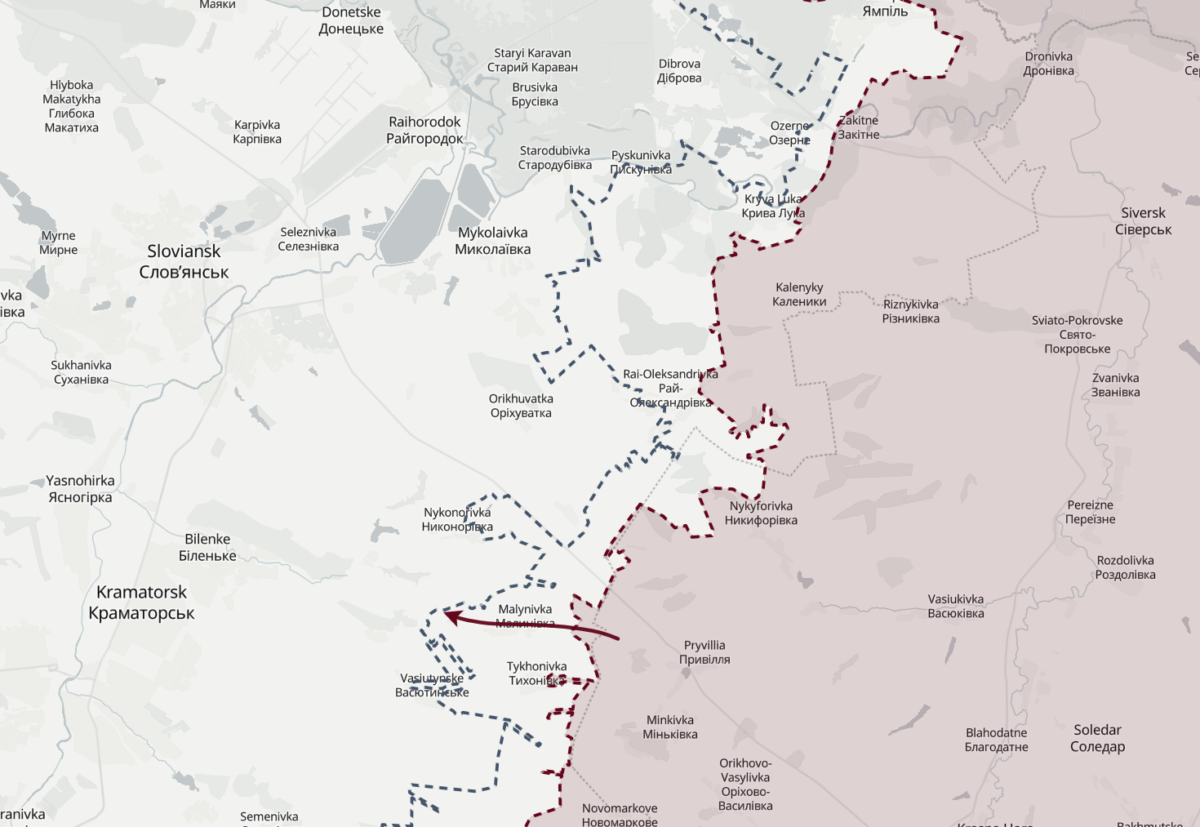
Far more accurate is the map by the Finnish Black Bird Group. Rai-Oleksandrivka is in the middle of the image — no credible analysts have ever considered it occupied by the Russians. Further north are Ozerne and Kryva Luka. Ozerne is particularly interesting.
According to Rybar, the Russians are trying to prevent the Ukrainian army from entering the village; independent analysts show it partly in the grey zone and partly under Ukrainian control. Rybar therefore correctly sees Russian problems, but at this point this is more its usual cartographic “retreat” from unrealistic positions.
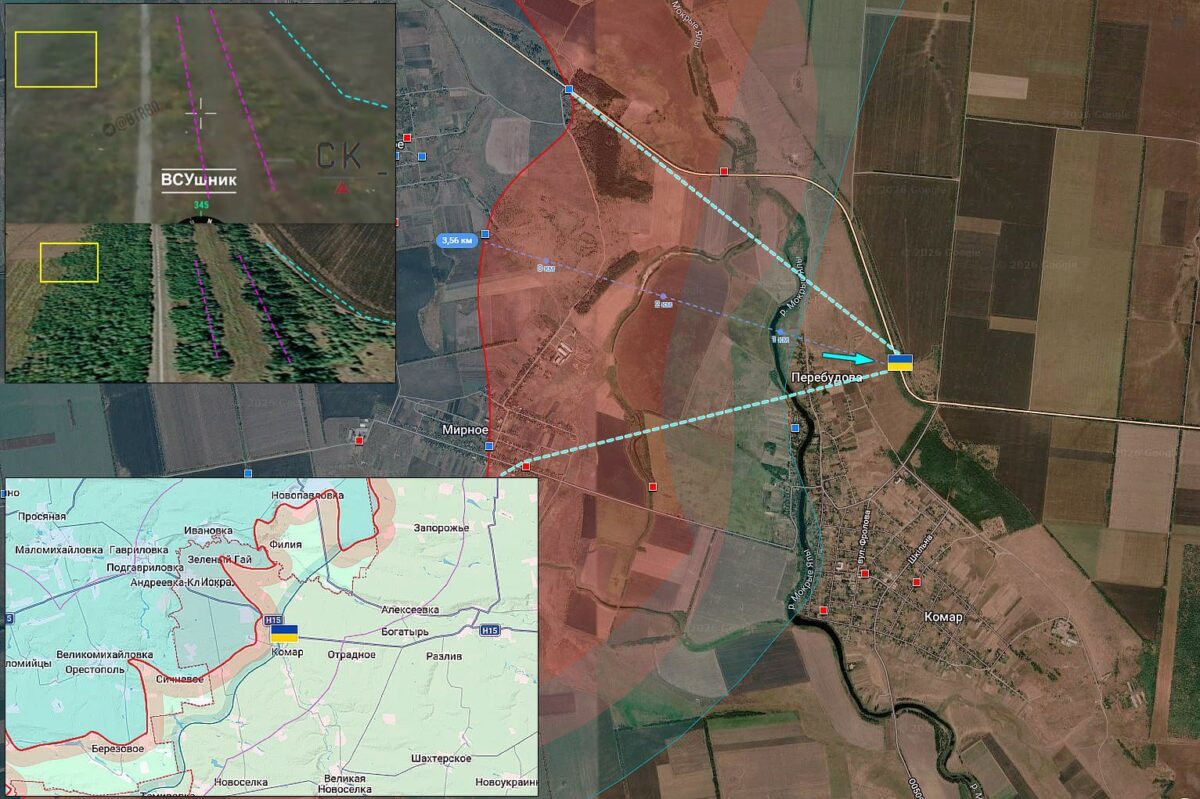
Ukrainian pressure continues towards Velyka Novosilka, with fighting already under way near Komar on the eastern bank of the Mokri Yaly river. This is not entirely new either, but several Russian sources are writing about fighting in this direction with new urgency and, from the Russian perspective, scepticism.
“The situation remains extremely tense. There is mounting evidence that the enemy is seeking to advance around the village of Komar,” Rybar wrote.
This is an important village. When the Russians captured Velyka Novosilka last year after taking Vuhledar, Komar was a significant obstacle to their advance into Dnipropetrovsk oblast.
Fierce fighting took place over the village at the time, and the Ukrainian army lost it in June 2025. The front then moved another 15 to 20 km deeper into Ukrainian territory, but it is now moving back after months of slow advances.
Here, too, Rybar’s map appears more dramatic than the situation actually is. It depicts territory being liberated since February. However, it claims that the situation is worsening and the outlook is negative.
But the information about movements near Komar is genuinely fresh. Other sources agree on it almost metre for metre.
The Russian mapping project Slivochny Kapriz showed the exact location at the northern end of Komar, across the Mokri Yaly river, where Russian drones struck a Ukrainian video.
The Ukrainian Telegram account Petrenko also geolocated the incident at the same location.
Alexander Radov, another pro-war Russian, claimed that testimony from Ukrainian prisoners in this direction indicated that the Ukrainian command’s objectives were Bahatyr, 12 km east of Komar, and Velyka Novosilka itself, 13 km to the south.
This claim cannot be verified, but if it were true, Ukrainian objectives in this sector would be becoming ambitious. (Both Bahatyr and Velyka Novosilka are in the lower-right section of Rybar’s map at the beginning of this section.)
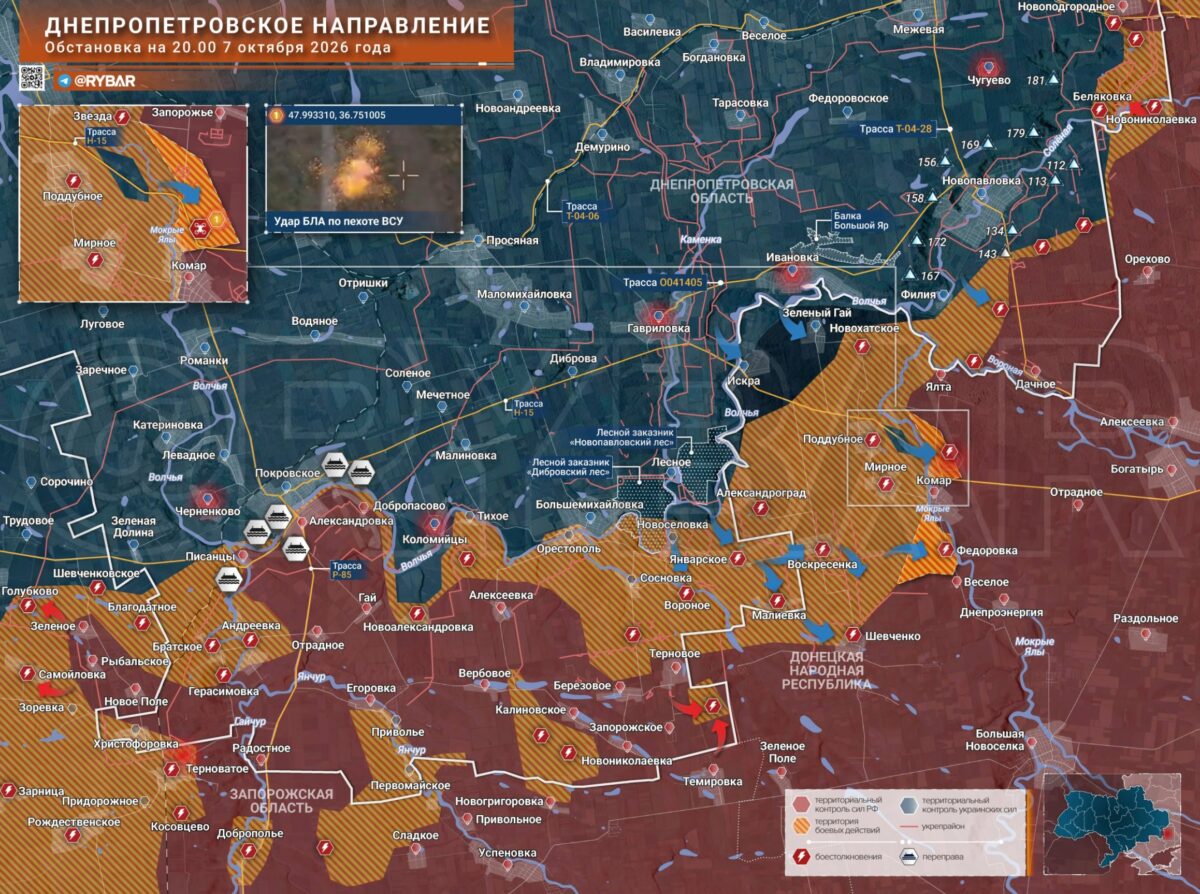
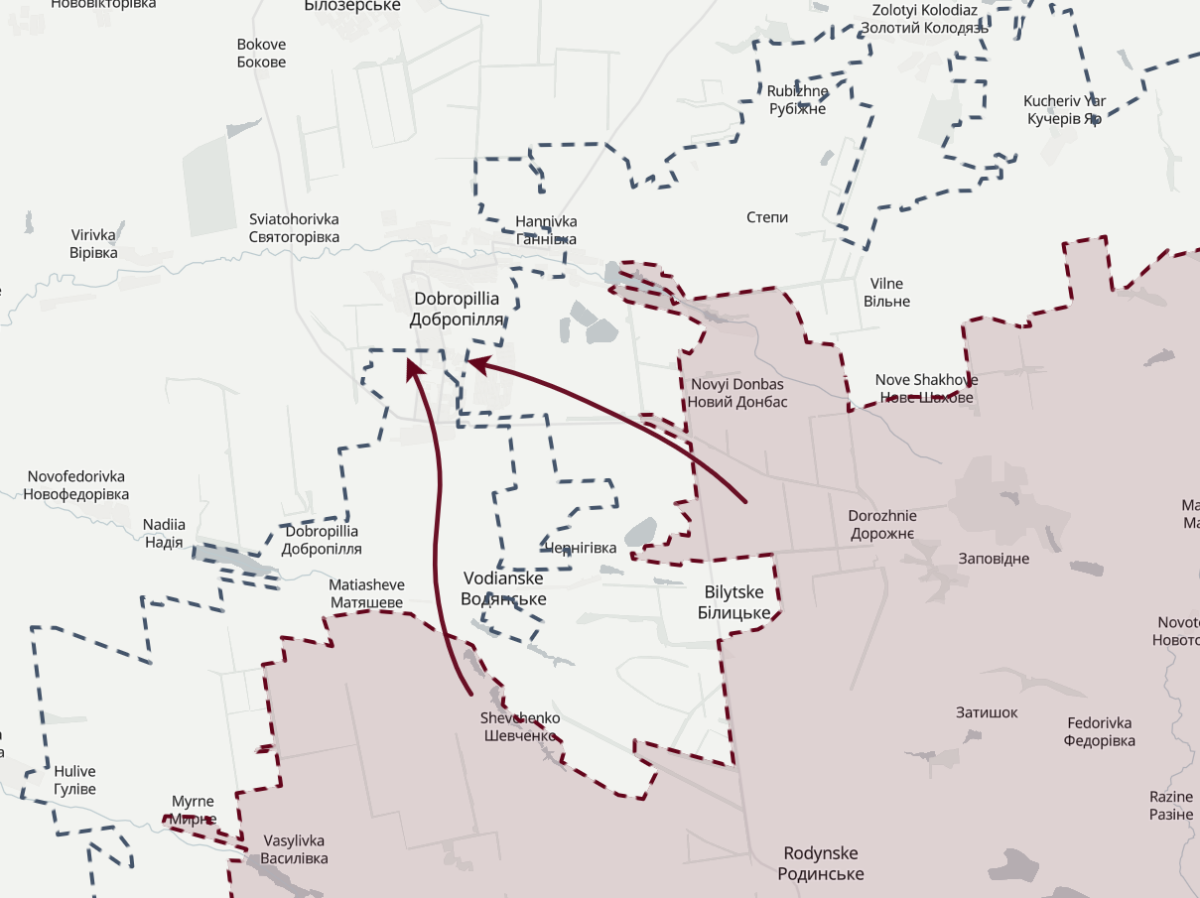
Russians are infiltrating Dobropillia, but a Ukrainian counteroffensive is pressing against their flank from the north. The fact that Russians are already operating in the town has been objectively confirmed by both sides. However, an earlier Russian claim that it had been encircled is false.
Rybar’s map again reflects what was written. In the town itself and its surroundings, red arrows show Russian attacks, while northeast of it, Ukrainian counterattacks are shown against the flank.
The Ukrainian channel Petrenko again serves as a source from the other side. Its map of Dobropillia has three circles, each marking a location where drones spotted Russian soldiers.
A Ukrainian soldier writing under the name Bakhmut Demon also confirmed Russian infiltrations into the town. However, he said they were being eliminated and that Russian losses would rise from November. He probably meant the period when the leaves fall and the terrain begins to turn muddy. Both will make the attackers’ advance more difficult.
Bakhmut Demon also warned that vigilance needed to be increased, as Russians are changing into civilian clothes and trying to infiltrate between Ukrainian positions in them.
Soldiers on the Zaporizhzhia direction described the same practice to us during a recent trip to Ukraine. There, too, they said that men in civilian clothing are sent ahead of infiltration groups in order to deceive drone operators.
Finally, another map by Black Bird Group. It, too, confirms the Russian advance towards Dobropillia, but does not show Ukrainian attacks in the north. The explanation is the same as in the previous cases: Rybar had drawn Russian positions much further forward than they actually were.
The battle for data centres is now two-way, with Ukrainians attacking Russia’s ‘Google’. Yandex is a technology giant that underpins the Russian internet. Its search engine, for example, is used by two-thirds of Russians. But its services are far broader. Among other things, it provides cloud storage to its clients.
The company provides its services through five main data centres. On Thursday, drones attacked the first of them. They struck the facility in Sasovo, in Ryazan oblast.
“This data centre is one of the key and largest data centres in Yandex’s Russian infrastructure. It contains tens of thousands of servers, and the company’s cloud services and computing capacity for machine learning operate on its equipment,” the Russian Telegram channel Military Informant explained the significance of the target.
As a result of the attack, outages in various internet-connected services were reported throughout the day.
The exile website Meduza listed several affected media outlets whose websites either could not be loaded at times or loaded slowly: RBC, Vedomosti, RIA Novosti, Kommersant, Vesti, Interfax, and Rossiyskaya Gazeta.
On Friday, another Yandex data centre was attacked, this time in Kaluga. The company acknowledged damage to equipment and announced that “some Yandex services may experience outages”.
Videos of the day
The events in the following video are almost identical to those witnessed by people in south-east England in 1944. Nazi Germany had then begun using V-1 flying bombs, and the most effective weapon against them was fighter aircraft, which shot down hundreds of these “wonder weapons” just above the sea while flying at the limit of their maximum speed.
Ukrainian pilots are now using the same tactic because of a shortage of air-to-air missiles. In this case, a MiG-29 shot down a Russian Geran-4 jet drone with fire from its 30mm cannon.
The MiG-29 is 17.4 metres long. The distance between it and the drone when firing began was around eight times its length — just under 150 metres. The risks to the pilot are obvious: the cloud of debris endangers the aircraft itself.
Once a common sight, now more of a rarity. A Himars multiple-launch rocket system destroyed a Russian artillery radar.
💥A rare sight these days: a HIMARS strike, apparently using a GMLRS rocket, destroys a Russian Irbis counter-battery radar after it was detected and tracked by reconnaissance drones of Ukraine’s 43rd Artillery Brigade.
— Special Kherson Cat 🐈🇺🇦 (@bayraktar_1love) October 8, 2026
The war has moved underground to an even greater extent than was previously customary. Soldiers at the front are building interconnected underground bunkers. A video by the 5th Assault Brigade shows the clearing of what were probably abandoned Russian positions.
Soldiers throw explosives into the openings. The footage then allows viewers to see, from plumes of smoke and dust pouring from underground, how many entrances the bunker had and how they were arranged.
🇺🇦2nd Assault Battalion of the 5th Assault Brigade clearing a collapsed bunker system, #Huliaipole sector at south eastern front pic.twitter.com/OoVU6x7PIH
By Monday (5 October), Russia had demonstrably lost 24,170 pieces of heavy equipment (24,138 on Tuesday, 22 September). Of these, Ukrainians destroyed 19,133 (19,105), 1,003 (1,000) were damaged, 1,194 (1,194) were abandoned by their crews and the Ukrainian army captured 2,840 (2,839). This includes 4,452 (4,448) tanks, of which 3,357 (3,353) were destroyed in combat.
Ukraine lost 12,238 (12,175) pieces of equipment, of which 9,633 (9,579) were destroyed, 711 (702) damaged, 695 (695) abandoned and 1,199 (1,199) captured. This includes 1,466 (1,464) tanks, of which 1,126 (1,125) were destroyed in combat.
Note: Neither side regularly reports its own dead or destroyed equipment. Ukraine publishes daily figures for Russian casualties and destroyed equipment, which cannot be independently verified. This overview uses data from the Oryx project, which has compiled a list of equipment losses documented exclusively by photographs since the beginning of the war.
by Larry C. Johnson, Sonar21: The global economic damage caused by the closure of the Strait of Hormuz is generally not understood by most policymakers. Public and policy discussion of the Strait of Hormuz closure has fixated on crude oil: tanker counts, Brent prices, strategic petroleum reserves. That focus is understandable, but it misses much […]
by Jim Quinn, The Burning Platform: “And what country can preserve its liberties if their rulers are not warned from time to time that their people preserve the spirit of resistance? Let them take arms. The remedy is to set them right as to facts, pardon and pacify them. What signify a few lives lost […]
by Dr. Gary Null and Richard Gale, Global Research: Since taking office, the Trump administration has pursued an aggressive policy to deregulate the telecommunications industry in order to accelerate 5G technological upgrades and become the global 6G leader. His policies prioritize spectrum network availability or the increasing range of radio frequency (RF) and electromagnetic waves […]
The story is as underreported as it is consequential for the entire planet. Three Turkish-owned cargo ships out of Ukraine have been hit in EU waters by suspected Russian drones. One, the Togo-flagged Alfa Watan, sunk on Tuesday off Bulgaria. Ten Egyptian and Syrian crew members are missing. For its part, Ukraine has been hitting Russian tankers in the Black Sea, with no sign of a return to a UN-brokered deal to allow oil, grain and fertiliser ships to pass.
Horrifying stories from the occupied Ukrainian town are mounting.
Two clans have emerged in Oleshky — those who support Putin can get food.
According to experts, Russia is fundamentally violating international law and using residents’ vulnerability as a weapon.
Putin’s tragic gift: the death toll in Pryluky rose to 22; 12 people were killed on a bus the following day.
Maps of the day: Operation Vivaldi continues to make gains in Donbas.
Videos of the day: an FPV drone attacked a fully occupied quad bike; a refinery is on fire.
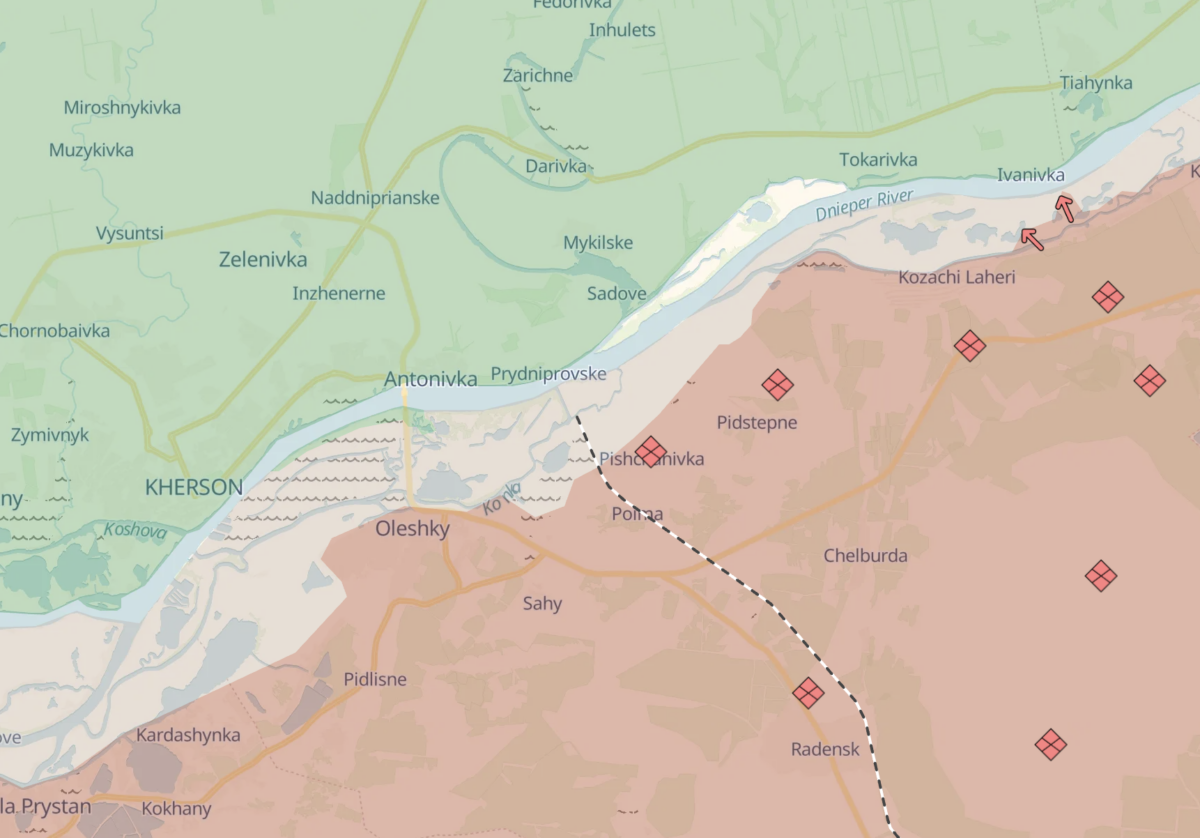
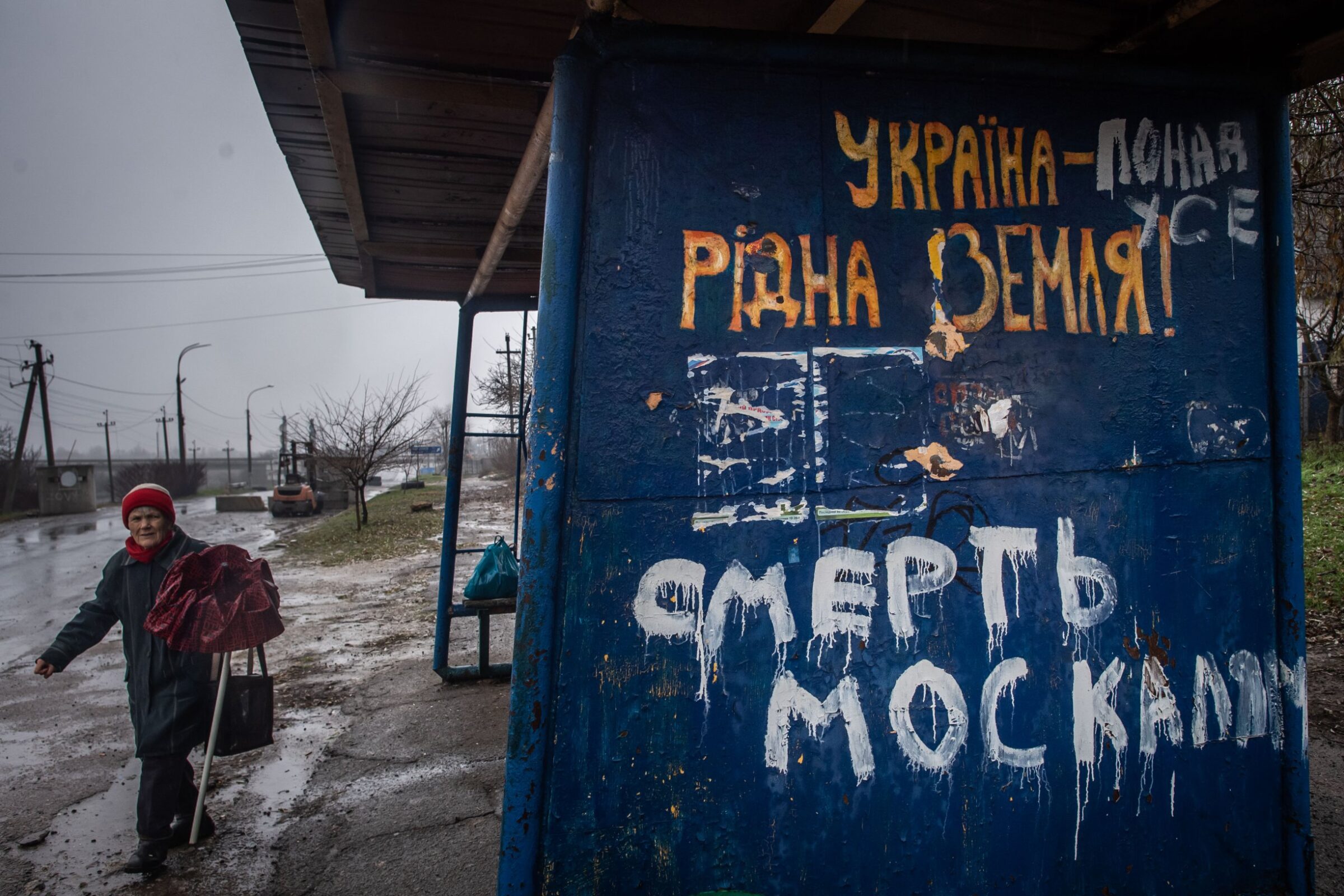
Horrifying stories from the occupied town are mounting. The situation in Russian-occupied Oleshky, in Ukraine’s southern Kherson region, has long been extremely tense.
Around 2,000 residents have long faced a severe humanitarian crisis and isolation. Before the Russian invasion, 24,000 people lived in the town.
And the situation of local residents left behind shows how Russia, as an occupying power, treats civilians brutally and deliberately violates international agreements.
Map — DeepState
“There is a lack of food and healthcare. Since the destruction of the hydroelectric power plant, there has been no drinking water, electricity or gas. They do not even have wood for heating. Not only is it impossible to live with dignity, it is also impossible to bury people with dignity, because the occupiers even prohibit the burial of the dead,” Tetiana Hasanenko, head of Ukraine’s military administration for Oleshky, told Denník N.
Russia is also using Oleshky to shell the right bank of the Dnipro, especially the city of Kherson, just nine km away. Fierce fighting is under way over the surrounding islets. This turns Oleshky residents into human shields and prevents their safe evacuation.
According to the BBC, Oleshky is trapped by both geography and war. “To the north and west, it is cut off by the river and destroyed bridges, while to the south and east it is cut off by dangerous or impassable roads,” the report said.
The situation in the town had already been dramatic in 2023, when the destruction of the Kakhovka dam caused flooding.
A few days ago, special units of the SBU security service and Ukraine’s National Guard launched, according to the RBK-Ukraine website, a new operation to deliver humanitarian packages containing food, water and medicines across the Dnipro.
The aid totalled around four tonnes, with each package weighing 19 kg.
Footage from the mission can be viewed in this video by Suspilne television.
In these difficult conditions, heavy Vampire drones — dubbed Baba Yaga by Russians — are, according to a Ukrainian website, one of the few ways of providing aid to people on the occupied side of the river. Ukrainian soldiers often deploy them at the front for their own logistics in areas that are extremely dangerous.
Last year, the drone was even described as the most effective combat vehicle changing the course of the war.
According to Hasanenko, Ukraine’s armed forces have regularly dropped food by drone into the occupied area since March.
“They did it, but not on such a large scale. And every time drones fly over, the occupiers punish local people for it,” said the Ukrainian woman, who is in contact with people from Oleshky.
She said people try to immediately transfer the aid into unmarked containers to avoid punishment. “The occupiers believe that if people accept help from the Ukrainian armed forces, they supposedly have some connection with them and are betraying the country — which is not actually their country. And that is why they punish them,” Hasanenko explained.
In recent months, Oleshky residents have relied mainly on their own harvests, but at the end of the season they face a critical food shortage.
There have even been reports that residents were forced to eat dogs. A BBC report from late September revealed shocking findings from the town: people had learned to cook even with weeds.
Some, according to Ukrainska Pravda, caught pigeons or pheasants, while others cooked borscht “in a new way” — from eggs, courgettes, tomatoes and herbs.
“Prices there are not merely high but almost astronomical. Eggs sell for 800 hryvnias a dozen (€19), potatoes and onions for 500 (€11.90), courgettes for 250 (€5.95), and tomatoes for 200 (€4.76), because there was a good harvest,” the website wrote.
Despite the risk of being killed by a mine, residents travel along a “road of death”, lined with burnt-out cars, to the nearest town, Radensk, for food. This was also confirmed by Reuters, which spoke to people who still have relatives there.
“The choice Russia imposes on civilians every day: stay and die of hunger, or leave and risk being blown up by a landmine,” the agency quoted Ukrainian ombudsman Dmytro Lubinets as saying.
Two categories of people and harassment over humanitarian aid. In the hospital, where dead bodies have been lying in the basement for four months, people have been divided into two clans, according to witnesses.
“Those loyal to the Russian regime have some food, sometimes even meat and alcohol. The people they call Ukraine-lovers have nothing. The hospital director took everything from the latest deliveries provided as humanitarian aid and handed it out to his own people,” Ukrainska Pravda quoted the son of a man who remained in Oleshky as saying.
When Ukrainians succeeded in dropping humanitarian aid into Oleshky, a new phase of psychological warfare by the Russian Federation began.
Under normal circumstances, an operation to drop humanitarian aid would not attract so much attention, but according to Ukraine’s SBU security service, the Russian response reached particularly absurd proportions.
According to its information, Russian soldiers were ordered to arrange a series of interviews aimed at discrediting the Ukrainian side.
The recorded interviews were meant to include claims that Ukrainians were shelling Oleshky, positive views of Putin’s regime and expressions of gratitude. The SBU therefore urged Ukrainians to treat such reports cautiously and not spread unverified information.
According to information from the Ukrainian resistance movement in the Kherson region, which cannot be independently verified, those who received the aid faced abuse during interrogations.
According to Hasanenko, the most important thing now is to evacuate people from the town.
“Even what humanitarian missions are doing now, dropping food, will not solve their problems. I have reports in which people wrote that they had food left for two days and that this saved them. But it will not save them forever. Many people are dying there because of drones and artillery shelling. We need to establish a humanitarian corridor,” said the head of Oleshky’s military administration, adding that last winter had already been difficult and that they might not survive this one.
She herself has received reports that people have lost 10, 20 or even 40 kg. “There is one case: a woman wrote that she weighed 110 kg and now weighs 67. She has lost 40 kg and writes to me that she is dying.”
Violations of international law. During the recent UN General Assembly session, Ukrainian foreign minister Andrii Sybiha spoke about Oleshky. Ukraine’s main aim, he said, was to establish a humanitarian corridor in the area and safely evacuate people who have not accepted the Russian occupation.
It is precisely because of this stance, Kyiv says, that the Russian army is retaliating by blockading the town, where tourists had before the war come for its unique natural environment of pine forests and Dnipro inlets.
“There is no supply of electricity or gas. Over the past month, the delivery of food, medicines and other basic necessities has been completely blocked. Horrifying testimonies are coming from occupied Oleshky about how people are trying to survive under a blockade imposed by Russia: they are looking for scraps of food and gathering grass because there is simply no other food,” Ukrainian website NV quoted the foreign minister as saying.
Another dimension of Russian terror, he said, is the hunting of civilians. Russian FPV drones pursue and attack people, turning even an attempt to leave one’s home or move around the town into a deadly risk.
According to TSN, Russia is artificially creating food shortages in Oleshky, selling an ordinary food package for 50,000 hryvnias — nearly €1,000 — compared with a standard price of up to 2,000 hryvnias (€40). When people have no money, they offer their jewellery in exchange for food.
Food was last delivered to the town at the end of May, and according to Ukrainska Pravda, no further attempt to bring in food was made. When locals tried on 2 June, their four cars were blown up by anti-personnel mines, killing two people.
Legally, the humanitarian crisis in Oleshky, as well as the use of the population as human shields, constitutes, according to Ukrainian website Rubryka, a violation of the Fourth Geneva Convention — on the protection of civilians in time of war — and a war crime under Article 8 of the Rome Statute of the International Criminal Court (ICC).
An occupying power is responsible for those living in occupied territory. “It must provide people with food, medical care and proper sanitation. But Russia is indifferent to all international requirements,” Ukrainska Pravda wrote.
According to the Institute for the Study of War, Oleshky has become a test of Russian dominance in an area “characterised by population decline, damaged infrastructure, chronic insecurity and growing isolation from the rest of Ukraine”.
Rather than reversing these conditions, the think tank said, Russia governs through them.
“Oleshky demonstrates that the humanitarian crisis unfolding across many Russian-occupied communities is not merely a byproduct of war but increasingly appears to be the result of an occupation system that tolerates, exploits, and sustains civilian vulnerability as a means of maintaining control,” wrote US experts.
According to Hasanenko, Russian fears of Ukrainian operations are also behind this. “I think they are simply trying to prevent the Ukrainian armed forces from crossing the Dnipro, because they could begin liberating the left bank. And people simply serve as human shields for them, while they mine everything completely,” she told EUobserver.
A tragic toll on Putin’s birthday. At least 22 people were killed, including five children, in a Russian Kh-101 cruise missile attack on an apartment building in Pryluky, in the Chernihiv region, on 7 October. Rescue workers pulled many people from the rubble of the destroyed building. According to local authorities, Russia fired as many as six cruise missiles at the town.
“This is the ‘gift’ Putin gave himself for his birthday. Killing children, killing people. There were new attacks with Shahed drones and aerial bombs during the day. It is important that leaders do not remain silent about what happened,” said Ukrainian president Volodymyr Zelensky, calling on the West to help with air defence.
Brutal Russian attacks continued the following day. As many as 12 people were killed after Russia hit a bus in the Donbas city of Kramatorsk. Putin’s regime is currently facing a crisis at the front, which it is trying to address through massive shelling of Ukrainian cities.
Maps of the day
Ukraine’s successful Operation Vivaldi continues. According to a report by the Institute for the Study of War, Ukrainian forces are continuing counterattacks towards the eastern bank of the Zherebets River, northeast of Lyman. The numerical superiority of Ukrainian forces and drones there is preventing Russian forces from consolidating their positions in the town.
Map — DeepState
According to September statistics, which we wrote about a few days ago, Russia has just had its worst month in Donbas for the past three years. The US newspaper The New York Times also charted this on its map.
— Institute for the Study of War (@TheStudyofWar) October 7, 2026
Videos of the day
Smoke over a distant refinery. Ukraine continues to launch drone attacks on Russian energy infrastructure. Most recently, it caused a fire at the Gazprom Neftekhim Salavat plant in the Bashkir region, one of Russia’s largest refineries. It is located around 1,300 km from the front line.
A fatal quad bike ride. The Hornets of Dovbush, from the 68th Brigade, released a video showing five Russian soldiers on a quad bike coming into view of their FPV attack drone. The location of the attack is unknown.
What are the losses
No update on Thursday.
By Monday (5 October), Russia had verifiably lost 24,170 pieces of heavy equipment (24,138 on Tuesday, 22 September). Of these, Ukrainians destroyed 19,133 (19,105), 1,003 (1,000) were damaged, 1,194 (1,194) were abandoned by their crews, and the Ukrainian army captured 2,840 (2,839). This includes 4,452 (4,448) tanks, of which 3,357 (3,353) were destroyed in combat.
Ukraine lost 12,238 (12,175) pieces of equipment, of which 9,633 (9,579) were destroyed, 711 (702) were damaged, 695 (695) were abandoned and 1,199 (1,199) were captured. This includes 1,466 (1,464) tanks, of which 1,126 (1,125) were destroyed in combat.
Note: Neither side regularly reports its own dead or destroyed equipment. Ukraine publishes daily figures for Russian casualties and destroyed equipment, which cannot be independently verified. This overview uses data from the Oryx project, which has compiled a list of equipment losses documented exclusively by photographs since the start of the war.
from ZeroHedge: The U.S. Army’s McAlester Army Ammunition Plant is a massive munitions plant located in southeastern Oklahoma and will soon be producing warheads for former Google CEO Eric Schmidt’s suicide drone arsenal. Defense Blog reports that McAlester plant officials held a “ribbon-cutting ceremony to open the partnership” with Schmidt’s drone company, Perennial Autonomy. TRUTH LIVES […]
by Steve Watson, Modernity News: A California labor-and-delivery nurse says her Fresno hospital went from a handful of stillbirths a year to more than 20 in a single month once COVID shots were pushed on pregnant women, then answered the pile-up with an email on how to handle the dead. The same product is now […]

 Login