❌

Reading view

India Shuts Down F-35 Talk With One Blunt Line. Says U.S. Crew Won’t Even Let Us Near The Stealth Fighter

India’s air force chief said on Saturday that the U.S. has made no formal offer to sell India F-35 stealth fighters, and added that American personnel have not even allowed Indian officers near the stealth aircraft.

Air Chief Marshal Amar Preet Singh made the comments at a press conference marking the end of the multinational Exercise Tarang Shakti-2026 in Jodhpur, while seated alongside U.S. Pacific Air Forces commander Gen. Kevin Schneider.

“Your people don’t even let us go near the aircraft, and you are talking about selling it to us,” Singh said.

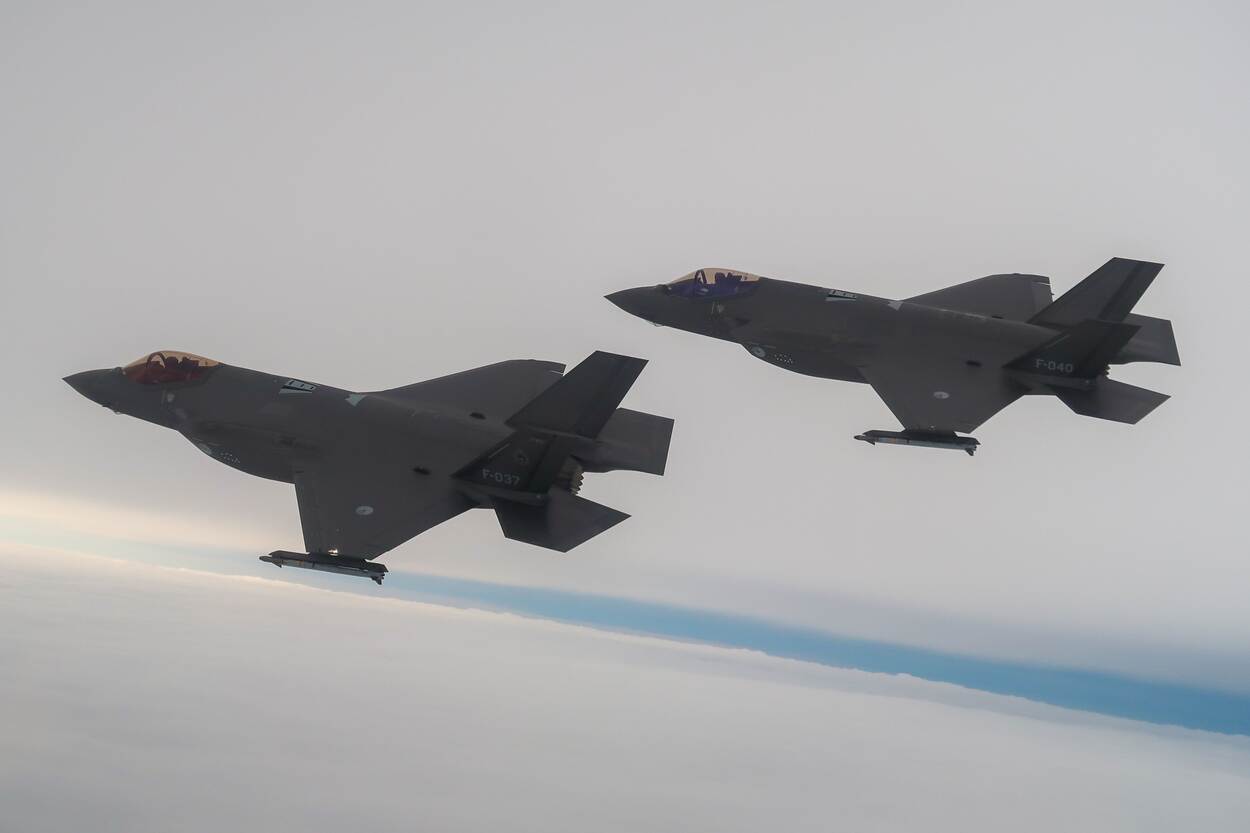
Six U.S. Air Force F-35As, accompanied by more than 200 personnel, participated in Tarang Shakti. This was the first time the American stealth fighters had drilled against Indian jets on Indian soil.

Singh also said the Indian government has not yet decided whether the air force should evaluate Russia’s offer of the Su-57.

“Once the decision is conveyed to us (by the government), we will evaluate how well it meets our requirements,” he said.

Earlier in 2025, U.S. President Donald Trump said, during Indian Prime Minister Narendra Modi’s visit to Washington, that the United States would pave the way for India to acquire the F-35.

Later, Vice President J.D. Vance reiterated the offer during his visit to India in April 2025, saying, “We, of course, want to collaborate more. We want to work together more. And we want your nation to buy more of our military equipment, which we believe is best-in-class. American fifth-generation F-35s, for example, would give the Indian Air Force the ability to defend your airspace and protect your people like never before.”

Earlier, as EurAsian Times reported, Lockheed Martin CEO Jim Taiclet discussed selling the F-35 to India and raised the prospect of selling the F-21, a highly sophisticated F-16 derivative.

“I think the F-16 also has strong legs, if you will, and more and increasing interest as we go forward from several countries that aren’t quite ready for F-35,” Taiclet said. There are “some countries that could see F-21 or F-16, for India, for example, as a stepping stone to F-35.”

The sale of the F-35 is subject to rigorous U.S. export controls under the Arms Export Control Act, which requires approval from the State Department, the Pentagon, and often Congress. The White House maintains strict policies on technology transfers, regional stability, and the internal politics of the potential recipient state to safeguard its sensitive technology.

The U.S. hesitation is straightforward: sharing it with other countries could put sensitive technology in the hands of enemies, especially if the recipient country has ties to countries like China or Russia, which would try to exploit or reverse-engineer it.

Earlier, writing for EurAsian Times, Air Marshal Anil Chopra (retired) said: The F-35 soft pitch faced almost immediate limitations due to subsequent tariff frictions and India’s core push for technology transfer for domestic manufacturing of its AMCA fifth-gen warplanes and aero-engines.

GE Aerospace has faced immense delays on its 2021 contract to supply 99 F404-IN20 engines to Hindustan Aeronautics Limited (HAL) for the Tejas Mk1A fighter program. Only six out of the promised engines have been delivered instead of the targeted 12-plus a year, prompting HAL to invoke contractual penalty clauses.

Saudi & Turkey Chase F-35 Jets, Heavy Skepticism in India. Why IAF Veterans are Not Too Keen on F-35s?

Tariffs on “friend” India and delayed engines for AMCA have badly weakened Indo-US ties.

India also operates Russian-supplied S-400 systems, a factor that previously caused friction between the U.S. and Turkey.

India already operates the Russian-origin S-400 AD System. The U.S. fears these networks could compromise classified F-35 stealth data. The jet relies on the U.S.-controlled Operational Data Integrated Network for software and logistics.

The U.S. may already be accessing such data through many other American platforms on Indian soil.

Meanwhile, introducing a complex new Western platform adds severe maintenance challenges to an already diverse military fleet. Even in the U.S., very few airbases can service stealth coatings.

Buying foreign fifth-generation jets risks diverting funds from India’s indigenous AMCA project. Putting too many military aviation eggs in the unreliable U.S. basket is also a risk. Americans can be “very unreliable” when it comes to imposing sanctions and freezing spares and maintenance support.

Operationally, the F-35 could offer major strategic advantages for the IAF, but any deal involves deep geopolitical, logistical, and financial complexities. Acquisition costs range from $80 to $110 million per jet, plus very high hourly operating expenses, creating budgetary challenges for New Delhi.
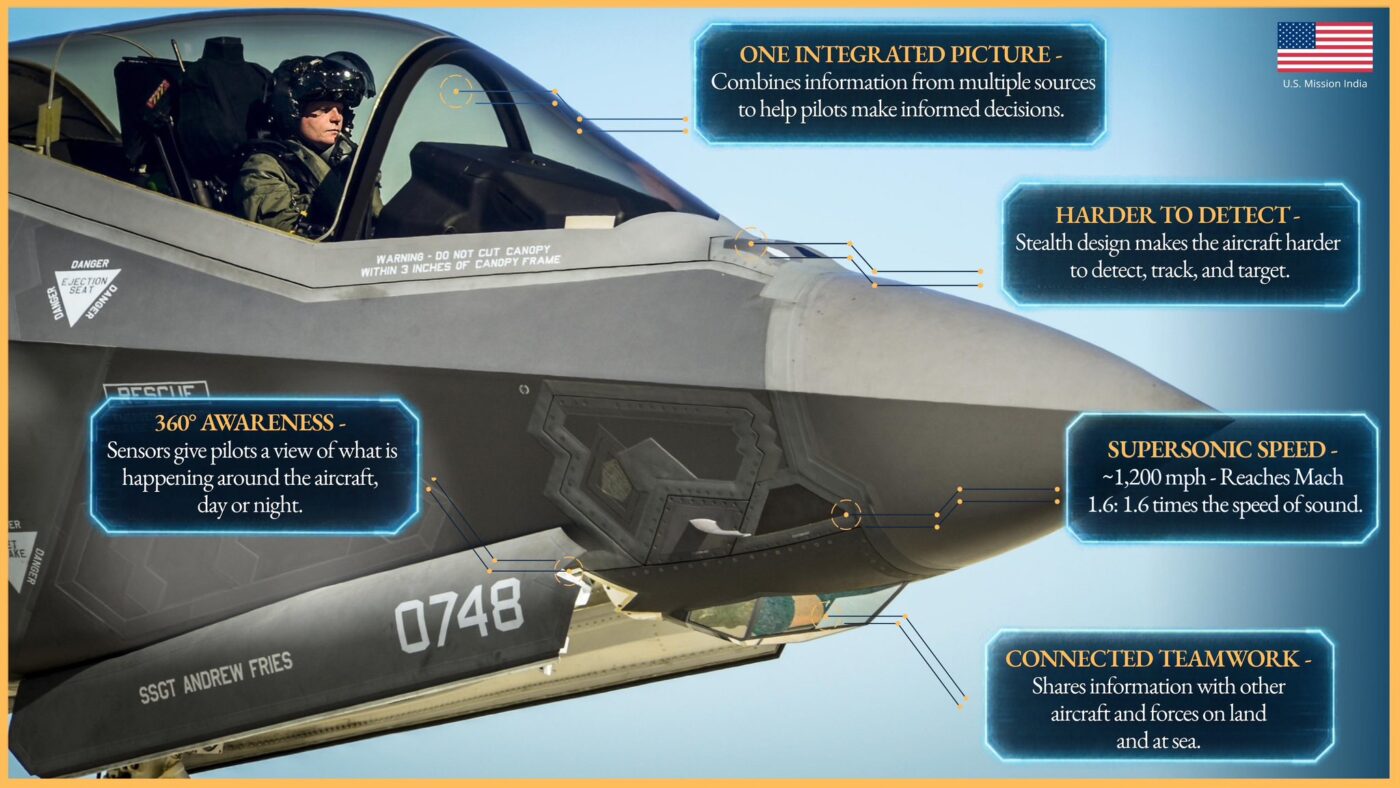
F-35: Image via U.S. Embassy, New Delhi

After two decades of stable ties, the last two years have seen distrust between the world’s largest and oldest democracies.

While many hope this is a transitory phase, it is becoming clear that the U.S. is not interested in India’s rise as a global power. U.S. Deputy Secretary of State Christopher Landau stated at the last Raisina Dialogue in New Delhi that Washington will not repeat its past approach (read: mistake) with China by granting India unfettered market and tech access that could lead to strong commercial competition.

The U.S. wants India strong enough only to serve as a bulwark against China, not to become an independent power center or a technology and economic power.

Why Yemen Could be a Graveyard for Turkish & Mecca Pact Soldiers: History Has The Answers: OPED

The U.S. seems keen only to supply platforms to India through large contracts. Even for aero-structures and smaller components, it prefers make-in-India “Build to Print” over significant technology sharing.

Even the proposed India-USA deal to co-produce GE Aerospace F414 engines with HAL faces major hurdles. The main complications include a nearly threefold cost surge, intense disputes over sensitive hot-end technology transfer, and the risk of delays to India’s Tejas Mk2 and AMCA programs.

Many Indians wonder whether we have invested too much in a partner with a high trust deficit and a vacillating foreign policy. U.S. is known to have “dumped” friends and allies for immediate national interests. The Trump administration’s recent public threats and admonishments to its NATO allies further strengthen Indian concerns.

The U.S. has already deepened its ties with India’s airborne platforms, supplying transport aircraft (C-17, C-130), maritime patrol aircraft (P-8I), UAVs (MQ-9), and helicopters (Chinook, AH-64 Apache, and MH-60R).

For a long time, the U.S. was trying to sell the F-16 ‘Viper’ (renamed F-21) and the F-18 Super Hornet as part of India’s Multi-Role Fighter Aircraft (MRFA) proposal. Later, it offered the F-15EX. The U.S. never officially offered the F-35.

Despite being the oldest democracy, the U.S. finds it easier to deal with dependent military Generals, and West Asian Sheikhs, rather than growing democracies. The U.S. has a poor opinion of India’s “Non-Alignment” and “Strategic Autonomy.”

Su-57 Still Under Review, IAF Boss Says. Can India & Russia Replicate BrahMos Success Story with Felons?

Washington continues to prefer Pakistan, which helps it connect with China, the West, and Central Asia, and is willing to toe the American line for a few bucks. This Pakistan connection further erodes India’s trust.

Most analysts feel that letting the USA into India’s fighter-aircraft ecosystem is not a great idea. Any F-35 deal, like other aircraft deals, will be only a supply-and-support contract. There will be no technology transfer and no “Make-in-India” element.

While India pushes its own AMCA program, the Su-57 may still be the better choice for an interim fighter.

The post India Shuts Down F-35 Talk With One Blunt Line. Says U.S. Crew Won’t Even Let Us Near The Stealth Fighter appeared first on EURASIAN TIMES.
  •  

Portugal Puts F-35s Back on the Table Despite “Kill Switch” Fear. Eurofighter, Rafale & Gripen-E Jets Also in Fray

After EurAsian Times reported on a potential clash brewing between the Dassault Rafale and the Eurofighter Typhoon, Portugal has said it is seriously considering F-35 stealth jets to replace its aging F-16 Fighting Falcons. 

Portugal has not officially launched a formal tender to replace its 28 upgraded F-16M fighter jets, but competition between European and US firms appears to be heating up.

“The Portuguese state will always decide in ‌accordance ⁠with the national interest. There is one point that is also clear: we are seriously considering the F-35 proposal, just as ​we are ​considering ⁠others,” Rangel told a news conference after the meeting.

Meanwhile, speaking in Lisbon, the Portuguese capital, Secretary of State Marco Rubio said the US would make Portugal a “very competitive” offer to replace its F-16 fleet.

Earlier, as EurAsian Times reported, Portugal was reviewing its plans to acquire F-35 jets and eyeing European alternatives.

In a March 2025 interview, Portuguese Defense Minister Nuno Melo rejected the prospect of acquiring the American fifth-generation aircraft, citing Washington’s unpredictability.

File Image: F-35s

“We cannot ignore the geopolitical environment in our choices. The recent position of the United States, in the context of NATO … must make us think about the best options, because the predictability of our allies is a greater asset to take into account,” Melo had stated.

Many European nations are concerned that an ‘unpredictable’ Washington could pause delivery of critical parts or software for the F-35s.

The Portuguese idea of sidelining the stealth US jets may have come after German defense experts said the US could use a “kill switch” on the F-35 to impose its political objectives.

Portugal, like others, believes any F-35 fleet would quickly become ineffective without access to US-controlled maintenance, logistics, and computer networks. Thus, the US would indirectly control F-35 operations for almost any country.

Echoing these concerns, the Portuguese Minister said, “The world has changed … and this ally of ours … could bring limitations to use, maintenance, components, and everything that has to do with ensuring that aircraft will be operational and used in all types of scenarios.”

The Portuguese Air Force first expressed interest in the F-35 in 2023, when Joe Biden was president. At the time, General João Guilherme Rosado Cartaxo Alves, the FAP’s Chief of Staff, stated that the F-35A is the best option to replace the aging F-16 AM/BM jets.

In April 2024, Portuguese Air Force Chief of Staff General João Cartaxo Alves said the service was in a “transition” phase toward the stealth fighter. The Chief also said the program would cost an estimated 5.5 billion euros and take around 20 years to implement—a statement that made it seem like a purchase was imminent.

The Portuguese Ministry of Defense later backtracked and said, “This is a vision for the future, so currently, there is no process for purchasing aircraft to replace the F-16.

Since then, the aircraft has awaited a formal announcement, especially since leadership earlier confirmed that the current F-16 AM/BM fleet would continue to operate until 2030.

However, European policy has shifted dramatically since Donald Trump assumed office in January 2025. While dismissing the idea of acquiring an F-35, the Portuguese Defense Minister also hinted that his country was looking towards Europe.

Without giving specific details, he said, “There are several options that must be considered, particularly in the context of European production.”

Portugal has not opened a formal tender to replace its F-16s. Four aircraft are in contention: Lockheed Martin’s F-35, the Eurofighter Typhoon, Dassault’s Rafale and Saab’s Gripen E.

Lockheed Martin, Airbus and Saab have each signed cooperation agreements with AED Cluster Portugal, the national aerospace and defense industry association.

Saab’s memorandum, covering the Gripen E, was signed in December 2025. The company has also pitched local work through Embraer-controlled OGMA, citing the production model used for Brazil’s Gripen program.

On September 23, 2026, Dassault Aviation said it had signed a memorandum with the cluster on behalf of Rafale partners Thales and Safran. The agreement aims to explore cooperation with Portuguese industry as Lisbon weighs renewing its F-16 fleet.

“Dassault Aviation, representing its RAFALE partners, Thales and Safran, signed with AED Cluster Portugal, Portugal’s association for the aeronautics, space and defense industries, a Memorandum of Understanding (MoU) to explore potential areas of cooperation between RAFALE partners and the Portuguese industrial sector, in the context of the Portuguese Air Force’s F-16 fleet renewal,” it said in a statement.

Airbus said on September 24 that it intends to submit an unsolicited Eurofighter proposal in late October or early November. The offer will include public and private financing “to alleviate the payment plan,” along with military cooperation and industrial work, Eurofighter campaign manager Ivan Gonzalez Exposito told reporters.

Defense Minister Nuno Melo has said the jets will have to be replaced in the near future. Any choice remains subject to a technical evaluation and to the industrial return for Portugal.

After initial apprehensions with the F-35, the biggest question is: will Portugal opt for ‘superior’ F-35 stealth jets or European 4.5-gen alternatives, Rafale, Eurofighter and Gripen-E?

The post Portugal Puts F-35s Back on the Table Despite “Kill Switch” Fear. Eurofighter, Rafale & Gripen-E Jets Also in Fray appeared first on EURASIAN TIMES.
  •  

Pakistan Fighter Jets Bombing Houthis “Fake & Fabricated”. Islamabad Rejects NYT Report

Pakistan has outrighty rejected a New York Times (NYT) report that claimed PAF fighter jets were involved in strikes against Houthis, calling the claim “fake and fabricated.”

“The claim in the above-referenced NYT report that Pakistan Air Force aircraft are being used against the Houthis is fake and fabricated,” Pakistan’s Information Ministry said.

In an X post, Pakistan’s Ministry of Information & Broadcasting wrote: Fact Check | Ministry of Information & Broadcasting NYT above referred story attributing employment of PAF aircraft against Houthis is fake and fabricated. International Media houses are again asked to avoid speculative reporting with regards to employment of Pakistan’s Military Forces under Makkah Joint Defence Agreement. Details of any employment, if necessary will be given by concerned authorities. Truth Prevails over Falsehood.

The report came days after Pakistan and Turkey agreed to deploy troops to Saudi Arabia under the Mecca Joint Defense Agreement.

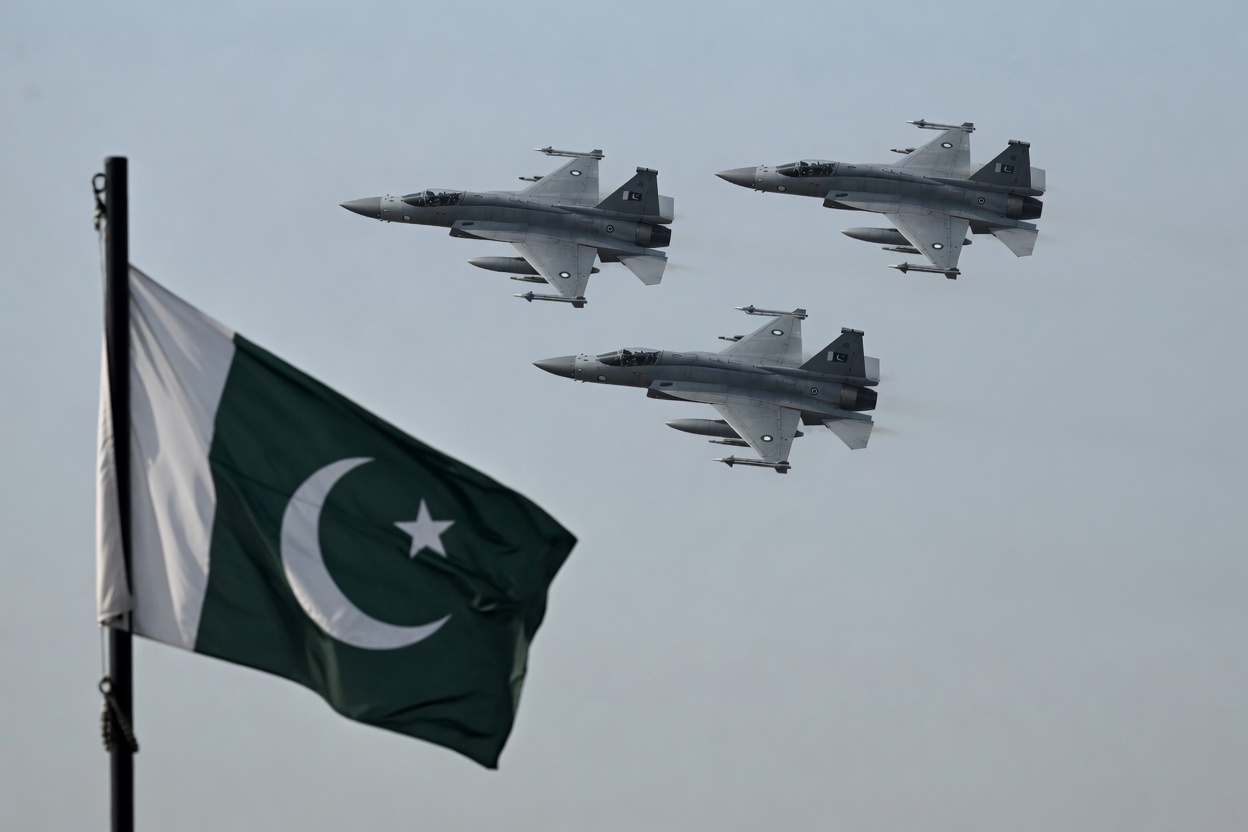
File Image: JF-17 Jets

Earlier, a senior Pakistani military official, speaking on condition of anonymity, told NYT that Pakistan Air Force jets were being used in strikes against the Houthis.

Another Pakistani official said Islamabad’s role was aimed at degrading Houthi drone and missile threats through air support rather than a ground offensive in Yemen, the NYT claimed.

Col. David O. Smith, a former U.S. Army attaché in Pakistan and former Defense Intelligence Agency analyst, said he had no classified figures, but that the analyst consensus was about 8,000 Pakistani troops deployed in Saudi Arabia. He said the force included a Pakistan Air Force contingent and Army air-defense units, that they would likely help secure oil infrastructure, and that Pakistani soldiers were unlikely to fight the Houthis directly because Islamabad is trying to preserve its relationship with Iran.

Pakistan’s military spokesman, Lt. Gen. Ahmed Sharif Chaudhry, confirmed to CNN that Pakistani troops are already in Saudi Arabia and described any role as defensive, without saying whether they would operate across the border in Yemen.

Interestingly, Pakistan earlier furiously denied a social media buzz that claimed Pakistan had lost three JF-17 fighter jets due to a Houthi missile attack that targeted King Abdulaziz Air Base in Saudi Arabia.

“This is absolutely fake. No credible or official source has also reported any sort of damage to PAF JF-17s,” the Ministry of Information reportedly said in its statement. The “deliberate fabrication of damage to PAF aircraft and their alleged evacuation is only blatant Indian propaganda, part of Hindutva deceit and a deceptive mindset,” the Ministry said.

The Pakistani Air Force jets and support aircraft, including JF-17 jets, arrived in April 2026 under the Strategic Mutual Defense Agreement that Pakistan and Saudi Arabia signed in September 2025.

Meanwhile, Turkey’s foreign minister has rejected sending troops to Yemen, despite the “Mecca pact” with Saudi Arabia.

“This is a defense agreement,” said Hakan Fidan, adding: “If one of the countries is attacked, you support its defense. This is not an offensive agreement.” Turkey “will not send its troops to another country’s territory to launch an attack”, he emphasized.

Fidan said Turkish and Saudi military delegations would work together to assess what defensive measures might be needed, without giving details.

  • By ET Desk
  • Mail us at editor (at) eurasiantimes.com

The post Pakistan Fighter Jets Bombing Houthis “Fake & Fabricated”. Islamabad Rejects NYT Report appeared first on EURASIAN TIMES.
  •  

Morocco’s 1st F-16 Block 72 Fighter Jet Completes Maiden Flight. F-35 Bid Reaches Nowhere

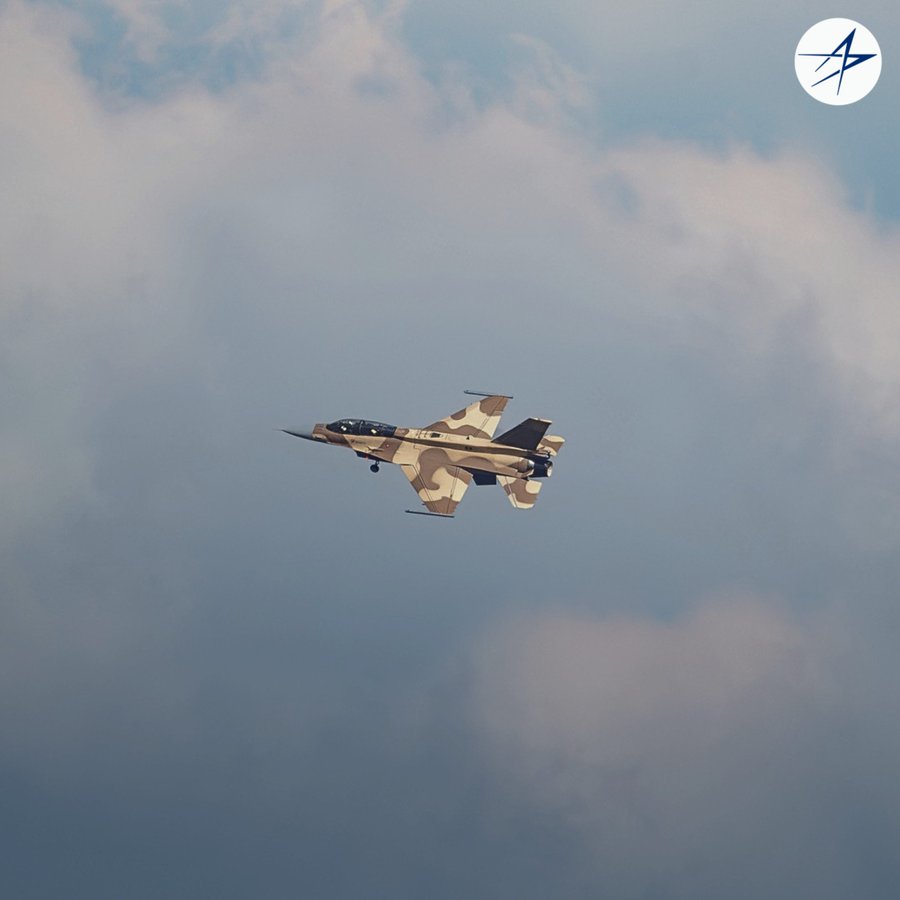
US defense giant Lockheed Martin said the Royal Moroccan Air Force’s (RMAF) first F-16 Block 72 had completed its maiden flight, a test milestone as the fighter jet moves toward delivery.

The company said the Block 72 is the newest variant of the F-16 Fighting Falcon, with updated avionics, sensors and mission systems, and changes intended to improve safety and reliability. Morocco was the launch customer for the configuration when Washington approved the purchase in March 2019.

“This first flight reflects meaningful progress on Morocco’s F-16 Block 72 program and is a critical step in strengthening Morocco’s future airpower,” Mike Shoemaker, vice president and general manager of Lockheed Martin’s Integrated Fighter Group, said. “The F-16 remains a vital component of today’s and future air defense, and we’re proud of the role it will continue to play in supporting Morocco’s sovereignty and contributing to regional stability for decades to come.”

The U.S. Defense Security Cooperation Agency notified Congress of two related sales on March 25, 2019.

One covered 25 new Block 72 aircraft, plus weapons, equipment and services, at an estimated $3.8 billion. The other, valued at more than $985 million, covered upgrades for Morocco’s 23 existing F-16C/D Block 52+ jets to the F-16V standard, which is broadly similar to the new Block 70/72 aircraft, along with related equipment and support.

F-16

If both go ahead, the Royal Moroccan Air Force’s F-16 fleet would roughly double and be built around a common, modernized standard.

“The purchase will improve interoperability with the United States and other regional allies and enhance Morocco’s ability to undertake coalition operations, as it has done in the past in flying sorties against ISIS in Syria and Iraq,” the agency said of the new-aircraft sale. “Morocco already operates an F-16 fleet and will have no difficulty absorbing this aircraft and services into its armed forces.”

The Block 70 and Block 72 differ mainly in the engine. The Block 70 uses General Electric’s F110-GE-129; the Block 72 uses Pratt & Whitney’s F100-PW-229. Morocco’s existing Block 52+ jets already use F100 engines, so the new aircraft fit the support setup already in place.

Morocco’s F-35 Bid

Morocco was looking to acquire U.S. F-35 fighter jets since 2020–22, after normalizing ties with Israel under the Abraham Accords and as Algeria reportedly moved to acquire Russia’s Su-57.

Israeli intelligence firm Jafaj said King Mohammed VI raised tensions with Algeria in a private meeting with Israeli Defense Minister Benny Gantz during his 2021 visit.

Algeria and Morocco have not had diplomatic ties since August 2021.

The firm, citing an unnamed European source, said Rabat wanted Israeli help tracking Algerian troops and militia deployments and was also seeking Israeli surveillance and strike drones.

F-35: Image via US Embassy, New Delhi

Jafaj said Defense Minister Abdellatif Loudiyi told Gantz that Morocco needed more combat aircraft for a possible war with its neighbor, that the F-35 was the preferred choice, and that Israel’s help lobbying the Biden administration would be welcome.

An F-35 was displayed at the 2024 Marrakech Air Show.

In August 2026, the International Institute for Strategic Studies, a London-based think tank, said there had been “little concrete progress” and described the F-35 purchase as hypothetical.

Meanwhile, Lockheed is again exhibiting at the Marrakech Airshow, which runs from Oct. 7 to 10.

Its stand includes an F-35 cockpit demonstrator, with demonstrations for invited guests, and scale models of the F-35A, F-16 and C-130J Super Hercules.

The post Morocco’s 1st F-16 Block 72 Fighter Jet Completes Maiden Flight. F-35 Bid Reaches Nowhere appeared first on EURASIAN TIMES.
  •  

France Fires Nuclear-Capable M51.3 Sub-Launched Ballistic Missile For The First Time Amid Russian Threats

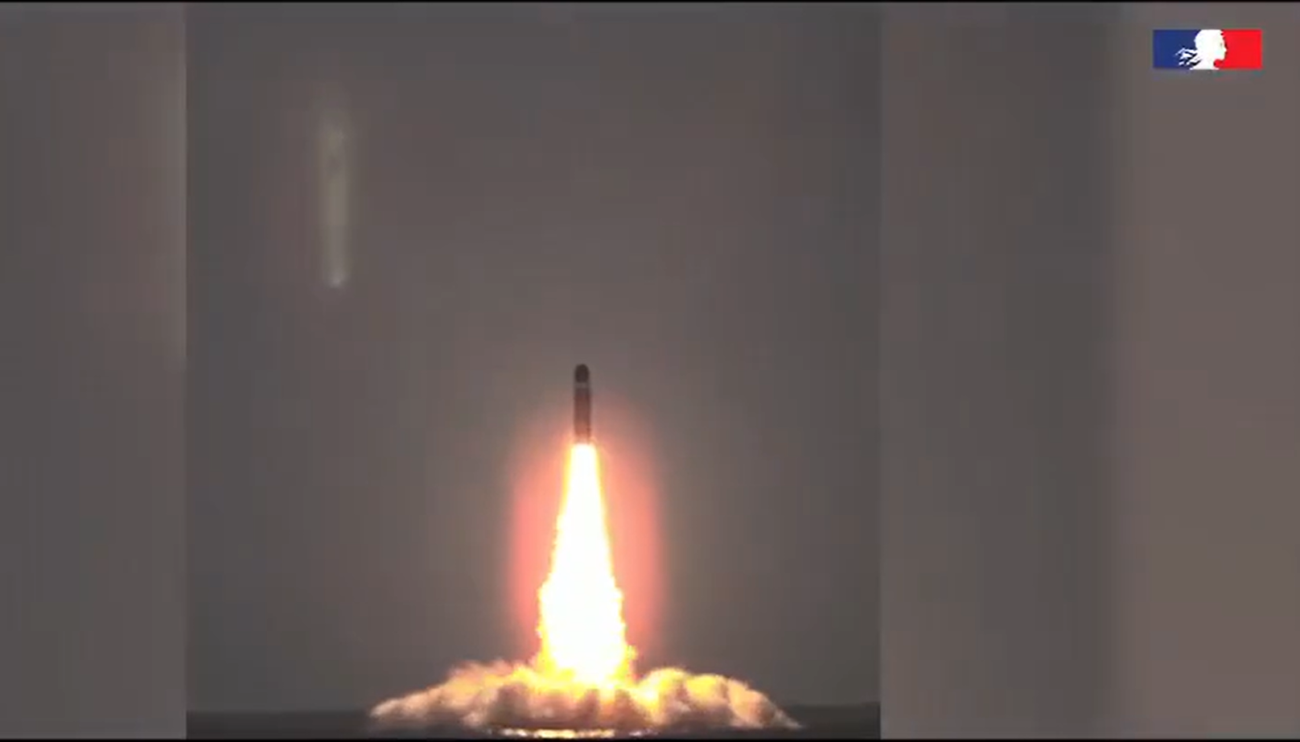
France has test-fired its new M51.3 nuclear-capable ballistic missile for the first time from a submarine.

The missile, the third variant of the M51 sea-launched ballistic missile, was fired from the nuclear-powered ballistic-missile submarine Le Vigilant and impacted in the North Atlantic, “hundreds of kilometers from any coastline,” the defense ministry said.

President Emmanuel Macron watched from a French warship. The Direction générale de l’armement tracked the flight, including with the trials ship Monge.

“The launch was conducted without a nuclear warhead and in strict compliance with France’s international commitments,” the ministry said. It called the shot proof of “the excellence of the high-tech solutions employed by French industry in the field of nuclear deterrence.”

The M51.3, built by ArianeGroup, entered service on 24 October 2025.

An earlier flight, in November 2023, was from a land site.

À bord de la frégate multi-missions Auvergne, j'ai assisté au premier tir du nouveau missile balistique M51.3 depuis le sous-marin nucléaire lanceur d'engins Le Vigilant.

Très peu de nations disposent d'un tel savoir-faire.

Félicitations à tous les acteurs de cette réussite… pic.twitter.com/bElCe99hMd

— Emmanuel Macron (@EmmanuelMacron) October 6, 2026

French President Macron wrote on X (translated): Aboard the multi-mission frigate Auvergne, I witnessed the first firing of the new M51.3 ballistic missile from the nuclear-powered ballistic missile submarine Le Vigilant. Very few nations possess such expertise. Congratulations to all the players in this exceptional achievement: DGA, CEA, Ariane Group, Naval Group, and the French Navy.

Your professionalism, your rigor, and your technical mastery are the pride of France. This technical success is a new demonstration of the credibility of our deterrence, whose sustainability is assured. To be free, one must be feared. And to be feared, one must be powerful. To protect the French in the long term against threats, I launched the renewal of our capabilities for the decades to come as early as 2017. In ten years, the budget for our armed forces will have doubled.

Our future strategic submarines are currently under construction. This year, we launched the program for hypersonic and maneuverable strategic missiles, which will equip our airborne deterrence component. Our nuclear deterrence protects us and will continue to protect us. Long live the Republic, and long live France.

Tuesday’s firing was the first from a submarine, and it closed Le Vigilant’s requalification after a long refit. A navigation warning had closed a box southwest of Penmarc’h from 5 to 21 October. Witnesses at Penmarc’h reported the missile leaving the water shortly after 09:10, with a contrail and a sustained rumble.

Open-source figures put the M51 at about 12 meters, 2.3 meters in diameter and roughly 52 tonnes, with three solid stages, an estimated range of 8,000 to 10,000 km and a speed near Mach 20.

The M51.3 carries the newer TNO-2 oceanic warhead. Analysts usually cite four to six independently targetable warheads of about 100 kilotons, plus penetration aids. Paris says the variant has better range, accuracy, and ability to defeat missile defenses. Exact figures remain classified.

File Image

The missile arms the four Triomphant-class submarines, one of which remains at sea as part of France’s continuous deterrent.

A follow-on, the M51.4, was contracted to ArianeGroup in September 2025. The next submarine class, SNLE 3G, had its first steel cut in March 2024, with the first boat aimed at the mid-2030s.

The test comes as Macron has warned of a change in “Russian aggression and threats” after a run of hybrid attacks blamed on Moscow, and has said those actions would “not go unanswered.” He has also offered European partners a role in France’s nuclear deterrent, the only one in the European Union.

Germany Holds ‘Exploratory Talks’ to Join Once Rival GCAP 6th-Gen Fighter Program After FCAS Collapse

M51

According to Ariane Group, the M51 sea–surface submarine-launched ballistic missile is a solid-propellant, three-stage launcher weighing over 50 metric tons and measuring 12 meters long. Each of the FOST’s SSBNs carries 16 missiles, capable of delivering their payload over intercontinental distances of several thousand kilometers.

Launched from a submarine, the M51 travels through the Earth’s atmosphere into space, reaching an altitude of more than 2,000 kilometers, well beyond low-Earth orbit.

It then re-enters the atmosphere at Mach 20. The M51 is a concentration of space technologies combining power, precision, and reliability. Because deterrence credibility depends on its permanent availability, the system must be fully ready at all times.

Commissioned at the end of 2010, the M51 is the fifth generation of French ballistic missiles.

The missile is developed in increments to respond effectively to changes in the geostrategic context and France’s requirements. This means ArianeGroup, Europe’s only company capable of designing and producing a strategic missile, must stay at the cutting edge of technology and maintain the highest performance.

The M51.2 is the current in-service version.

It will be succeeded by the M51.3 version, which successfully carried out its qualification flight without a nuclear warhead.

With AFP Inputs

The post France Fires Nuclear-Capable M51.3 Sub-Launched Ballistic Missile For The First Time Amid Russian Threats appeared first on EURASIAN TIMES.
  •  

Iran War, China Threat Push U.S. to Accelerate SM-6 Missile Production. Awards $24.4B Contract to Raytheon

The Pentagon recently announced a whopping US$24.4 billion contract to defense giant Raytheon to speed up the production of “three-in-one” SM-6 missiles.

The Pentagon called the SM-6 “a critical anti-air and anti-surface warfare munition.” It said the five-year agreement, with two additional option years, “will drive faster production, increase manufacturing throughput, and deliver significant cost savings.”

The deal “provides the defense industry with the long-term predictability needed to expand workforce capacity and secure critical supply chains,” the Pentagon added.

The award lands after a year in which interceptor stocks were burned down. The US Defense Department’s inspector general reported last month that acquisition officials said: “the munitions expenditure on Operation Epic Fury has resulted in strategic inventory shortfalls and revealed industrial base bottlenecks for munitions resupply.”

A September 15 Congressional Budget Office assessment said the United States has probably used between one-half and two-thirds of its stocks of certain missile-defense interceptors since June 2025, naming the SM-6 alongside Patriot, THAAD and the SM-3.

Rebuilding those inventories would take at least five years even if production rose, the agency said, and would leave the Pentagon with fewer interceptors for a possible clash with China.

The CBO put the cost of a Patriot or an SM-6 at about $4 million a round, compared with about $12 million for a THAAD interceptor and $28 million for an SM-3. It said the weapons were used in large numbers defending Israel and then during Operation Epic Fury.

Outside estimates run higher: a table compiled by the Center for Strategic and International Studies and carried by the Financial Times in April put the SM-6 at $5.3 million a round, with a pre-war stock of about 1,160 and wartime use of 190 to 370.

The Pentagon has not published an SM-6 round count for the war.

Raytheon confirmed in a statement that its SM-6 “has been successfully fired from various US Navy ship-based platforms and launchers on land,” calling it a “combat-proven weapon.”

The weapons-maker also acknowledged increased efforts to meet demand. “By continuously investing in our operations and facilities, we are removing constraints and boosting capacity to ensure we deliver this critical capability our sailors depend on,” Raytheon President Phil Jasper said.

SM-6 Missile

The SM-6 missile was created for extended-range anti-air warfare (ER-AAW), including defense against UAVs, military aircraft, anti-ship cruise missiles, and terminal ballistic missile defense. It also acts as a high-velocity anti-ship missile.

U.S. Awards F-22 ‘Raptor’ Pilots for Ops Midnight Hammer as Pentagon Sends 3rd Carrier Towards Iran

The SM-6 is based on the earlier SM-2ER Block IV (RIM-156A) missile airframe, with the AIM-120C AMRAAM active radar-homing seeker replacing the former design’s semi-active seeker.

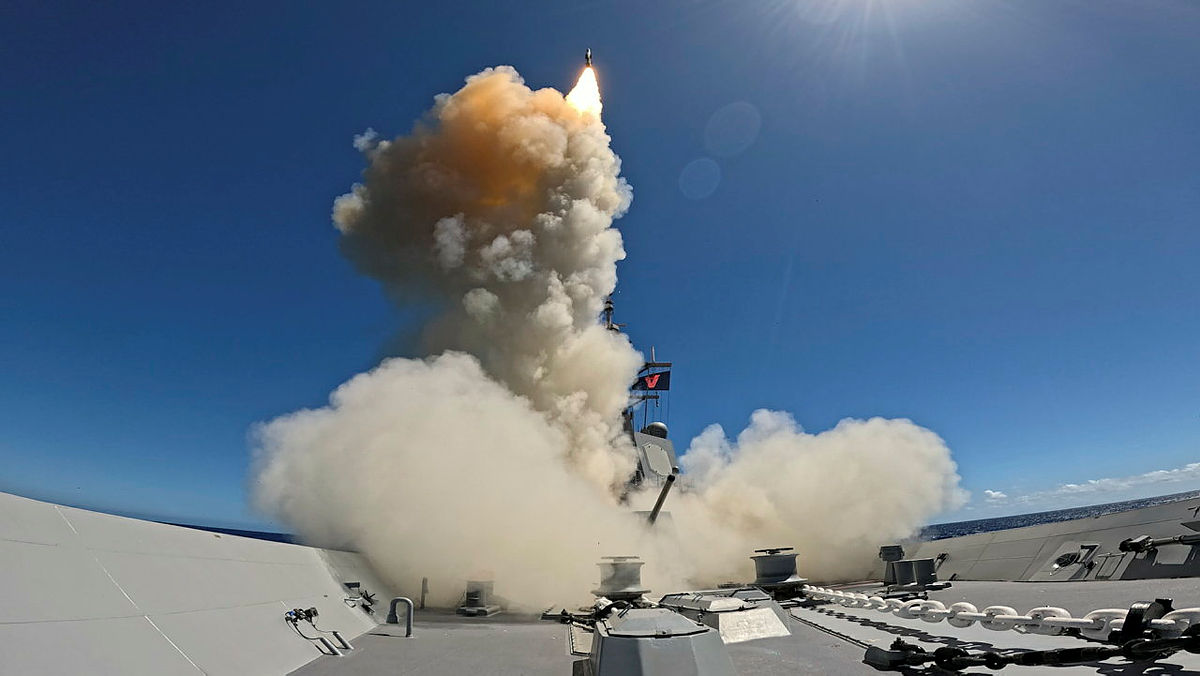
File Image: SM-6 fired from HMS Sydney during Exercise Pacific Dragon

The official designation is RIM-174 Standard Extended Range Active Missile, or ERAM. It is fired from the Mk 41 vertical launching system already fitted on US and allied destroyers and cruisers, so a ship does not need a new launcher to carry it.

What makes the SM-6 different from the older Standard missiles is that it does not have to rely only on the firing ship’s radar. Through Naval Integrated Fire Control-Counter Air, or NIFC-CA, it can take targeting data from an E-2D Hawkeye, another ship, or a fighter such as the F-35, and engage a target beyond the horizon of the ship that launches it.

The active seeker then finishes the intercept on its own. In plain terms, the missile can be cued by a sensor the target cannot see, and still home in the last miles.

Raytheon describes the SM-6 missile as “three missiles in one,” and says it is the only weapon that can perform anti-air warfare, anti-surface warfare, and ballistic missile defense or sea-based terminal missions.

“Mid Air Horror”: When an F-35 Hit a KC-130 Over California — and Why September Brought the Story Back

The Block IA and IB updates improve the seeker and guidance against harder, complex targets, while the Block IB adds a larger rocket motor for more range and speed against high-end air threats. Its exact range remains classified, but it is widely believed that it could reach over 200 nautical miles and fly at roughly Mach 3.5.

That spread of roles is also why the missile is expensive, and why magazines matter. A destroyer that fills its cells with SM-6s gains reach, but it burns through a scarce inventory if it uses the same missile for aircraft, cruise missiles, ships, and terminal ballistic shots.

China has reportedly been wary of the missile because of its capabilities. US allies in the region, including Japan, Australia, and South Korea, are lined up to acquire it.

The SM-6 on the Typhon Mid-Range Capability launcher is a ship missile adapted for strikes against land and sea targets. The Army has described the battery as a “strategic” weapon system to be used against higher-value targets such as air defense facilities and command and control centers — an important weapon given the region’s prevailing tensions.

In that ground-launched form, it sits alongside the Tomahawk, giving land forces a strike option that once belonged only to ships.

The US has also developed an air-launched variant of the SM-6, known as the AIM-174B, mounted on a US Navy Super Hornet, which broke cover during RIMPAC 2024. Fired from altitude and speed, it pushes an air-to-air engagement far outside the range of a carrier group’s older missiles.

The post Iran War, China Threat Push U.S. to Accelerate SM-6 Missile Production. Awards $24.4B Contract to Raytheon appeared first on EURASIAN TIMES.
  •  

F/A-18 Super Hornet Spotted with Secretive AIM-260 JATM — and It’s Not an American Fighter Jet

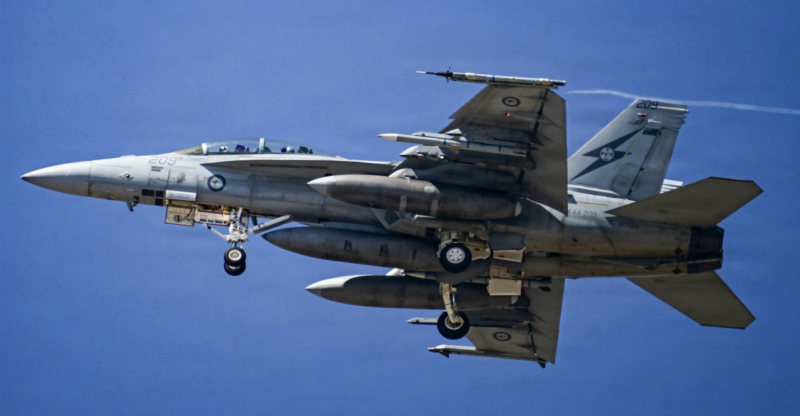
A Royal Australian Air Force (RAAF) F/A-18F Super Hornet was pictured carrying an AIM-260 Joint Advanced Tactical Missile (JATM) during a US test event in California. The development comes weeks after RAAF said it would become the first operator, outside the US, of the JATMs.

The image, clicked on Sept. 11 at Naval Base Ventura County Point Mugu and released by the U.S. Navy, shows aircraft A44-209 of No. 1 Squadron during Exercise Gray Flag 2026. However, the missile’s ownership remains unconfirmed.

The Navy caption does not name the weapon. Analysts identified the weapon as an AIM-260 training round, citing blue bands that mark an inert motor or warhead. No live firing was reported. The sortie appears to have been a captive-carry flight.

Earlier, as EurAsian Times reported, Australian Defense Minister Richard Marles said at Exercise Pitch Black on 6 August that Australia would invest almost A$736 million, about $518 million, to buy the missile through US foreign military sales.

Canberra did not say how many rounds that sum would buy. A separate U.S. notification in March covered a possible sale of up to 450 AIM-260s, plus test vehicles, estimated at $3.16 billion.

“This announcement is the latest milestone in the delivery of long-range, high‑tech capabilities for our Defense Force,” Marles said in Darwin. “The Albanese government continues to deliver critical capabilities that will allow the ADF to strike at a longer range, deter any adversary, and protect our national interests. It is fitting to make this announcement at Exercise Pitch Black, which is an important demonstration of Australia’s commitment to the peace, stability, and security of our region.”

A Royal Australian Air Force F/A-18F Super Hornet assigned to No. 1 Squadron takes flight at Naval Base Ventura County Point Mugu during Gray Flag 2026, Sept. 11, 2026. Via U.S. Navy photo by Dana Rene White.

Australia will integrate the missile first on the F/A-18F, then on the F-35A and the EA-18G Growler. Canberra said Australia would be the first country to field the AIM-260 outside the United States, and that it would complement existing air-to-air missiles.

“The acquisition of the AIM-260 JATM will provide Air Force platforms with a credible deterrent against airborne targets, complementing existing air-to-air missile capabilities and other surface-based missile capabilities across the Australian Defense Force (ADF). It will also further enhance Australia’s interoperability with the United States,” the Australian Department of Defense earlier said in a statement.

The existence of the AIM-260 JATM was initially confirmed in 2019 during an Air Force Life Cycle Management Center industry conference. Because of its sensitivity, the AIM-260 JATM is classified as a Special Access Program (SAP), and details have remained mostly classified.

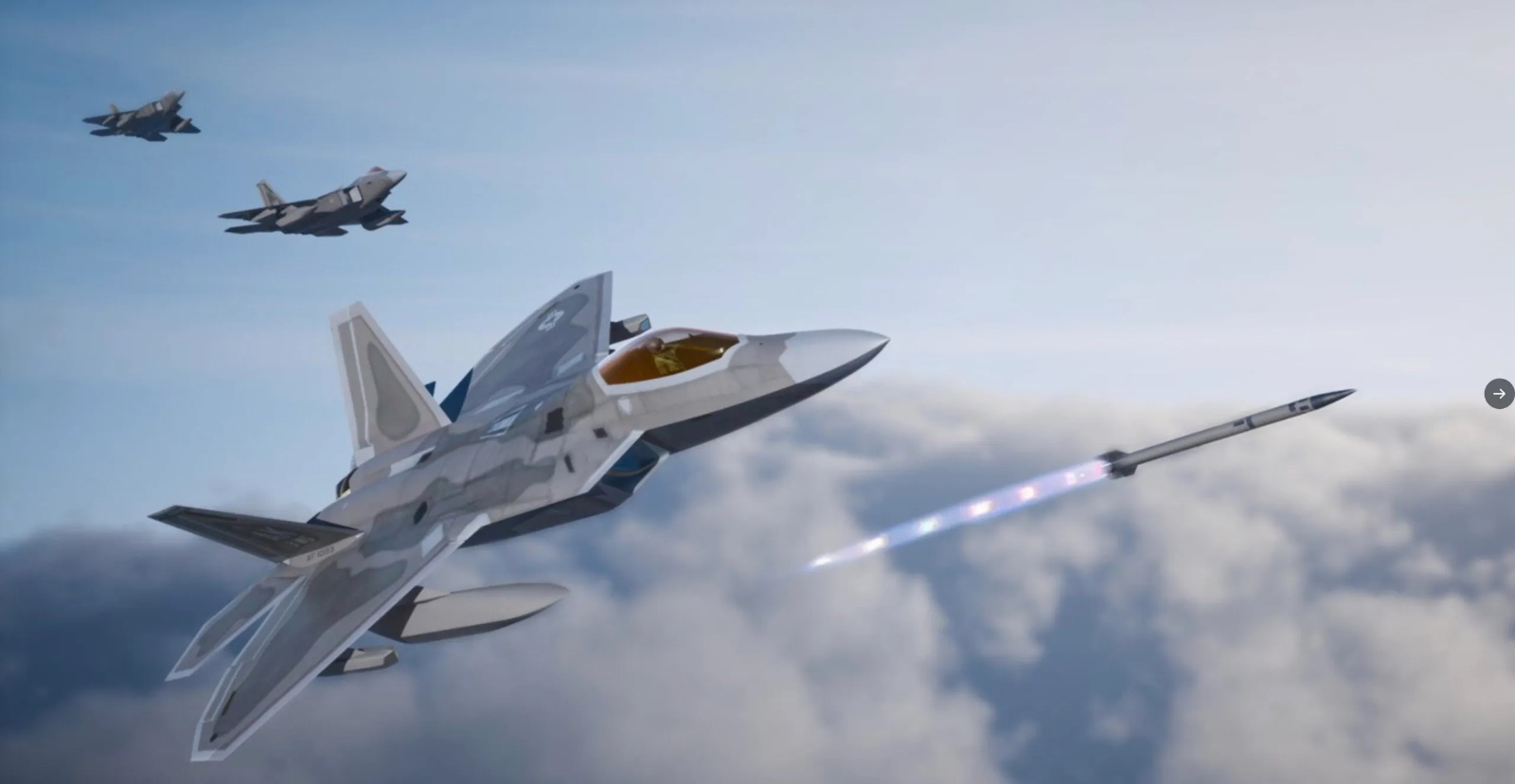
In 2022, General Mark Kelly, the head of the United States Air Force’s Air Combat Command, shared an artist’s concept of the Lockheed Martin F-22 firing an AIM-260 JATM.

An F-22 Raptor firing AIM-260 JATM in a USAF rendering

More recently, the US Navy publicly revealed the rendering of the missile in February 2025. At the time, experts said it looked similar to the AIM-120 medium-range air-to-air missile.

Nonetheless, the AIM-260 appears to have a larger rocket motor section and no mid-body surfaces, unlike the AIM-120. Although little is known about the JATM, reports suggest it will use dual-pulse rocket motors or ramjets to increase range and performance.

The AIM-260 could carry an advanced multi-mode seeker system that may include infrared imaging and active radar. The dual-seeker system could improve resilience to electronic warfare countermeasures and increase accuracy.

Like the AIM-120D-3 AMRAAM derivative, the AIM-260 is anticipated to have a two-way datalink. This feature would greatly increase the missile’s efficacy in networked battle by enabling mid-course targeting upgrades or re-targeting.

“Akash is The Limit”: India’s AD System Reaches Turkmenistan & Tajikistan: Here’s What Makes It Lethal

The missile is intended to keep valuable airborne assets, such as tankers and AEW&C aircraft, safe deep into contested airspace. Analysts say it would be designed to combat stealth aircraft and operate in disputed areas with heavy electronic jamming, increasing its effectiveness against enemies such as China and Russia.
The JATM “is the number-one air-delivered weapon priority for both the Air Force and the Navy, and out-prioritizes other weapon system improvements and modernization efforts on any fielded aircraft,” the USAF earlier stated.

The planned US sequence has the AIM-260 entering service first on the F-22 Raptors, then the F-35s and the Navy’s F/A-18E/F. Australia intends to integrate it on the F/A-18F before the F-35A and EA-18G.

US Arms Australia

The Indo-Pacific landscape is rapidly changing, with China emerging as a global military power and intimidating its neighbors. Although not an immediate neighbor, Australia is also concerned by Beijing’s growing military might and ambitions.

Australia has emerged as one of America’s strongest military partners. At the heart of this security architecture is the AUKUS submarine pact, signed alongside the UK.

Under this pact, Australia will acquire a fleet of nuclear-powered (not nuclear-armed) submarines. Nuclear propulsion would give the Australian Navy unparalleled stealth, range, and endurance, allowing it to operate deep within contested waters without surfacing for oxygen, as conventional submarines do.

Washington is also strengthening Australia’s strike capabilities. The RAAF has also acquired F-35 stealth jets, ensuring seamless interoperability with the US military and allies like Japan.

To complement these platforms, Washington has approved the sale of advanced long-range strike weapons, including Tomahawk cruise missiles, HIMARS, and AGM-158B JASSM-ER missiles. These weapons effectively shift Australia’s military posture from territorial defense to robust power projection.

The US is boosting Australia’s capabilities to establish domestic guided-missile manufacturing, securing a resilient supply chain outside the American mainland. Increased rotations of US bombers, maritime patrol aircraft, and troops to northern Australian military bases further cement this partnership.

While Washington and Canberra frame these advancements as essential steps to maintain a “free and open Indo-Pacific,” Beijing views the militarisation as an encirclement strategy. By arming Australia with these cutting-edge capabilities, the US is ensuring that any potential conflict in the region would face a highly sophisticated and unified allied front.

  • By ET Online Desk
  • Mail us at: editor (at) eurasiantimes.com

The post F/A-18 Super Hornet Spotted with Secretive AIM-260 JATM — and It’s Not an American Fighter Jet appeared first on EURASIAN TIMES.
  •  

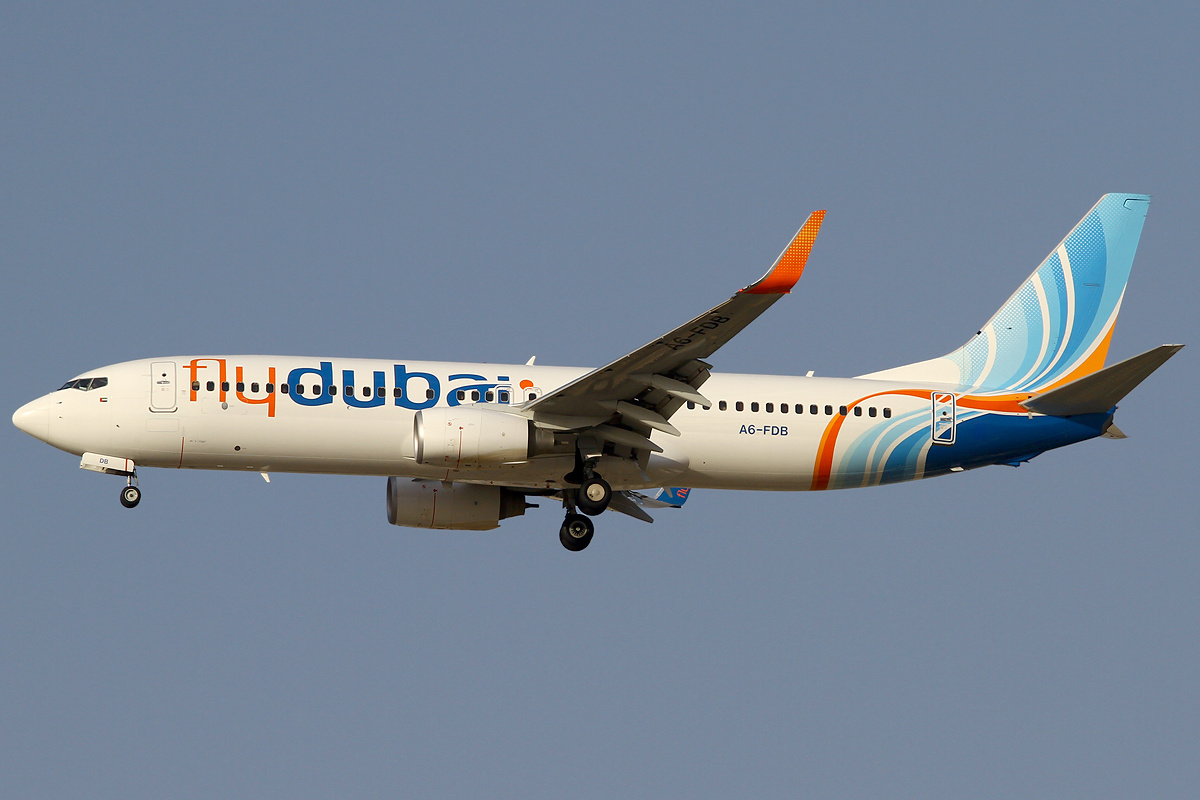
Terror Plot Thwarted: Israel Says ‘Jihadist’ Pilot Tried to Crash Flydubai Plane Heading Towards Tel Aviv

A Flydubai aircraft traveling from Dubai to Tel Aviv, Israel, was forced to land in Saudi Arabia after an “incident,” the airline said.

Flight FZ 1073 “experienced an incident while en route. The aircraft has landed safely in Tabuk Airport, and all passengers are safe and accounted for,” Flydubai’s spokesperson said in a statement.

In the latest update, Israeli leaders said that a “jihadist” pilot tried to crash a flydubai plane with mostly Israeli passengers, who overpowered him and prevented a “major disaster”.

“During the flight, as they approached the country, one of the pilots stabbed the other pilot and tried to crash the plane with everyone on board,” Prime Minister Benjamin Netanyahu said in a video message.

He said he spoke to an Israeli passenger who broke into the cockpit as the plane started to plummet and fought the pilot who was trying to bring down the aircraft.

“Another air crew member who was on the plane entered the cockpit and managed to stabilize the aircraft,” Netanyahu said.

“I salute these heroes, who showed extraordinary resourcefulness and courage. They saved many lives; they prevented a major disaster.”

Defense Minister Israel Katz described the incident as “an attempted jihadist terror attack” that was “thwarted only thanks to the heroism of several Israeli passengers”.

Katz did not identify his source for assigning a motive to the pilot, whose identity has not been revealed.

Netanyahu said the pilot who allegedly stabbed his colleague “has been arrested and is currently being interrogated by the Saudi authorities”.

“I have instructed the security services to prepare for additional potential threats. We are conducting ongoing situation assessments,” Netanyahu said.

Earlier, Israel’s Kan public broadcaster and Channel 12 reported that the Israeli military had scrambled fighter jets after fears of a possible hijacking. The office of Israeli Prime Minister Benjamin Netanyahu said the premier had held consultations on the matter and was “monitoring developments”.

“The incident is under control, and all measures are currently being deployed in order to return the Israeli passengers safely to Israel,” a statement said.

Israeli media reported that the passengers on board had stepped in to separate the pilots during their altercation, publishing photos of a passenger with a bloodied T-shirt.

Channel 12 reported that authorities were investigating whether or not one of the pilots had attempted a possible suicide by trying to crash the plane, with the other pilot apparently intervening to prevent the crash.

Other reports said that passengers reported cockpit screams, blood, and that one pilot stabbed the other with a knife.

Crew and passengers forced the door and subdued the attacker. Off-duty pilots helped land it safely in Tabuk, Saudi Arabia. Israeli officials treat it as a terror attack: the co-pilot (reports say Omani) repeatedly stabbed the captain, possibly intending to crash the plane. The suspect is under interrogation.

נוסעת בטיסת פליי דובאי: ״הישראלים ניטרלו את דוקר הטייס, צעקתי שמע ישראל כי חשבתי שלא נצא מפה״ pic.twitter.com/uNemz9Um6R

— זמן אמת (@zmanemet308) September 30, 2026

One passenger, Miriam, reportedly on board the aircraft, describes hearing screams and seeing blood in the cockpit after a pilot was stabbed. She says Israelis and crew neutralized the attacker; a doctor and nurse treated the pilot; she shouted Shema Yisrael, fearing they wouldn’t survive; and the plane made an emergency landing in Saudi Arabia.

According to data from the Flightradar website, the aircraft suddenly lost altitude during the flight, dropping from nearly 34,000 feet at 05:21 GMT to less than 17,000 feet at 05:22 GMT.

The incident comes just days after the Emirati president hosted Israeli Prime Minister Benjamin Netanyahu on Sunday.

Abu Dhabi acknowledged for the first time that Mohamed bin Zayed Al Nahyan met with Benjamin Netanyahu. Netanyahu’s office also confirmed the trip, saying the visit “focused on strengthening relations between the two countries and on regional challenges” amid delicate US-backed diplomacy over the war with Iran.

  • Via: Agence France-Presse
  • This is a developing story…

The post Terror Plot Thwarted: Israel Says ‘Jihadist’ Pilot Tried to Crash Flydubai Plane Heading Towards Tel Aviv appeared first on EURASIAN TIMES.

  •  

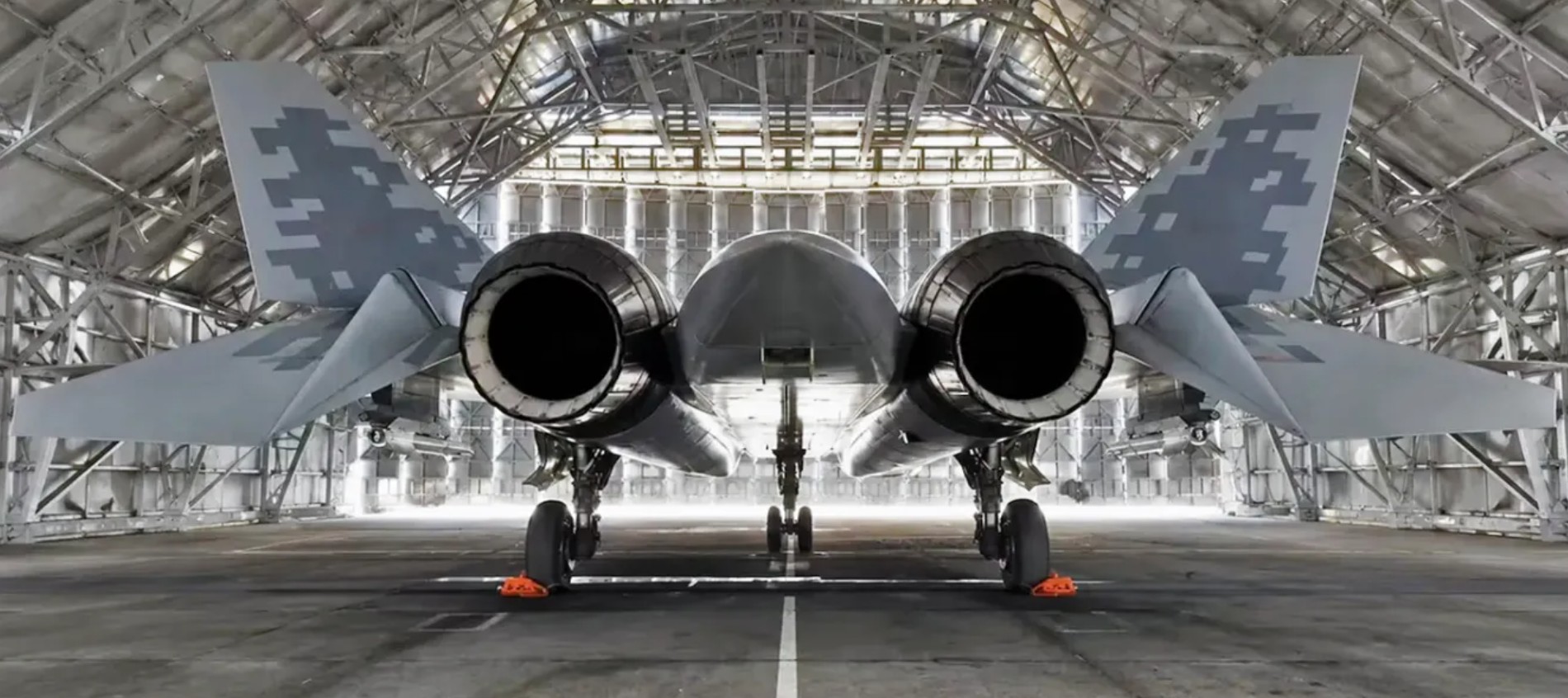
Su-57 OUT For India, 6th-Gen Aircraft In! After MiG-21, MiG-29 & Su-30 MKI, IAF Appears Set For Non-Russian Jets

India appears poised to overlook Russia’s Su-57 fifth-generation stealth fighter and opt for a sixth-gen aircraft instead. 

Defense Secretary Rajesh Kumar Singh recently clarified that New Delhi has “not thought about” new Sukhoi variants, prioritizing the upgrade of the Su-30MKI fleet under the ‘Super Sukhoi’ program and the indigenous Advanced Medium Combat Aircraft (AMCA) instead.

Moscow’s aggressive pitch—including local production, full source codes, and a two-seat variant—has failed to sway planners wary of diverting resources from self-reliance goals.

With AMCA still a far away and China fielding growing J-20 numbers, India is actively exploring partnerships in sixth-generation programs.

India’s Ministry of Defense has reportedly initiated efforts to join the French-led sixth-generation fighter program. This was stated in a report of the Parliamentary Standing Committee on Defense, presented in Parliament, according to news agency PTI.

The ministry has sought a roadmap from the French side for acquiring such aircraft. The panel noted that two major consortia are developing sixth-generation fighters: one involving the UK, Italy, and Japan; another involving (now-defunct) France and Germany.

The Indian Air Force plans to partner with one of these groups so that India does not fall behind in advanced combat aircraft technology.

End of Su-57?

In 1962, the USSR agreed to transfer technology to produce nearly 800 MiG-21 jet fighters for India, which it had earlier denied to China. They helped India set up factories for the aircraft, aero-engines, and avionics.

India’s relationship with the Soviet Union grew strategically, culminating in the 1971 Indo-Soviet Treaty of Friendship and Cooperation.

Through the 1971 India-Pakistan War for the liberation of Bangladesh, the Soviet Union stood by India against US and Chinese intimidations.

During the Cold War, India and the USSR maintained a “special and privileged strategic partnership” that was built on five major components: politics, defense, civil nuclear energy, anti-terrorism cooperation, and space.

Even after the dissolution of the Soviet Union, India maintained warm relations with Russia’s successor state. The first major political initiative after the dissolution was the Strategic Partnership signed by the two countries in 2000.

The IRIGC (India-Russia Intergovernmental Commission) is the main body responsible for conducting official affairs between the two countries at the governmental level. Both countries are members of international bodies, including the UN, BRICS, G20, SCO, and Russia-India-China (RIC) grouping. Russia supports India’s bid for a permanent seat on the United Nations Security Council.

Su-57 OUT For India, 6th-Gen Aircraft In! After MiG-21, MiG-29 & Su-30 MKI, IAF Appears Set For Non-Russian Jets

India is one of the largest markets for the Russian defense industry. Approximately 60 percent of the Indian military’s hardware today is of Russian origin. Military hardware supplies and, more recently, joint-venture production have been key pillars.

Su-57 carrying R-73 missiles externally. Credits X.

Make-in-India Began in the 1960s

The Soviet Union was the first to support Make in India defense production.

The MiG-21 factories set up in the early 1960s later produced the MiG-27 (170) and the Su-30 MKI (230). Su-30 MKI was a joint D&D project. Russia also learned a lot from the Su-30 MKI project and imbibed some of these ideas for its Su-30SM aircraft.

222 Su-30 MKI were produced under license at HAL’s Nashik plant since 2004. An estimated 920 AL-31FP turbofans were manufactured at HAL’s Koraput Division. The Su-30MKI is the backbone of the IAF’s fighter fleet.

In 1965, Heavy Vehicles Factory (HVF) was set up at Avadi, Chennai, with Soviet assistance. HVF products included Russian-designed T-72 Ajeya and T-90 Bhishma tanks.

In September 1965, the Soviet Union and India signed the first contract for the delivery of naval equipment, including four Project I641 diesel-electric submarines, five Project 159E corvettes, and five Project 368P motor boats. The Agreement also envisaged rendering Soviet technical assistance for the construction of a submarine naval base in Vishakhapatnam.

Recently, two frigates, the INS Tushil and INS Tamala, were built by Russia at the Yantar Shipyard, while the remaining two are under construction at Goa Shipyard Ltd (GSL) in India through technology transfer.

Russia is reportedly expanding its shipbuilding cooperation with India, with two Indian shipyards being considered for the construction of four non-nuclear icebreakers. Russian shipbuilding officials have reportedly offered New Delhi their nuclear-powered design for an Indian Navy aircraft carrier.

GSL is also constructing 24 river-sea class cargo ships for Russian clients in the Caspian Sea by 2027. Cooperation with India in shipbuilding has its benefits for Russia, as the unit cost per vessel is projected to be half of what it would cost Russian shipbuilders.

U.S. vs China’s Aircraft Carriers: New Report Shows How America Can Turn the Tables on “World’s Largest” Navy

Joint Ventures

Between 2012 and 2016, Russia accounted for 68% of India’s defense imports. Russia and India’s cooperation is not limited to a buyer-seller relationship but includes joint research and development, training, service-to-service contacts, and joint exercises.

India and Russia have a strong success story with Joint Ventures (JVs). The BrahMos is a medium-range ramjet supersonic cruise missile that can be launched from submarines, ships, and fighter aircraft. BrahMos Aerospace is a joint venture between the Indian Defense Research and Development Organization (DRDO) and Russia’s NPO Mashinostroyeniya. The missiles are already being exported.

Under an over ₹5000 crore contract signed in July 2021, over 610,000 AK-203 assault rifles are to be manufactured in India with technology transfer from Russia, by the JV Indo-Russian Rifles Private Limited (IRRPL).

Indian companies hold a controlling 50.5 percent share, and Russian companies hold 49.5 percent. The level of indigenous content has already reached 50% and is rising rapidly, with a target of 100% in the near future.

India and Russia have also agreed to expedite the delivery of spare parts of Russian-origin military platforms by setting up a JV in India.

Notwithstanding the above, some JVs did not take off. India had withdrawn from the joint Fifth-Generation Fighter Aircraft (FGFA) program due to technical issues. Finally, Russia continued the project and today has a successful Sukhoi Su-57 ‘Felon’ 5th generation fighter.

Following the selection of the Ka-226T to meet an Indian requirement for 197 helicopters, an agreement was signed in December 2015 to create a JV between Rostec, Russian Helicopters, and HAL to build the helicopters at a new factory in Tumakuru, India.

Later, India decided to make its own Light Utility Helicopter (LUH) based on the indigenous ‘Dhruv.’ India’s LUH is delayed, and Russia has been pushing the case for Ka-226T again.

Similarly, India canceled the Indo-Russian program to develop a new Multirole Transport Aircraft (MTA) for both countries through a JV between Russia’s UAC and India’s HAL.

In February 2023, on the sidelines of the Aero India 2023 air show, the Russians offered to jointly develop the Il-276. However, India would prefer the aircraft to be powered by a European engine rather than a Russian one.

India has operated a wide range of Soviet and Russian combat jets that formed the backbone of the Indian Air Force for decades. Key types include the prolific MiG-21 (in multiple variants including Bison), MiG-23 (BN and MF), high-altitude MiG-25, ground-attack MiG-27, and air-superiority MiG-29 (including upgraded versions).

From the Sukhoi stable came the Su-7 fighter-bomber and the highly successful Su-30MKI, which remains the IAF’s primary multi-role platform that India is looking to upgrade.

India’s decision to effectively rule out the Su-57 marks a noticeable shift. After decades of reliance on Russian fighters—from the MiG-21 to the Su-30MKI—New Delhi is prioritizing the AMCA program and partnerships in sixth-generation projects.

While the historic Indo-Russian defense ties remain strong in other domains, the rejection of Moscow’s most advanced stealth jet signals a clear preference for next-generation technology.

With China rapidly expanding its stealth fleet and AMCA still years away, India appears to be choosing long-term capability over Russian platforms.

The post Su-57 OUT For India, 6th-Gen Aircraft In! After MiG-21, MiG-29 & Su-30 MKI, IAF Appears Set For Non-Russian Jets appeared first on EURASIAN TIMES.
  •  

Ukraine Fails to Shoot Down Any Russian Missile in Deadly Kyiv Strikes; Zelensky Calls for More Anti-Ballistic Weapons


Ukraine was unable to shoot down any Russian missile during an overnight attack that left 17 people dead in Kyiv and the nearby areas.

The Russian army fired  115 drones and fired 28 missiles, including ballistic missiles, the Ukrainian air force said. President Zelensky urged allies to send more anti-ballistic air defense after the Russian attack.

“Ballistic interceptors are what could have saved the lives of those killed today. It is very important for partners to realize that delays in their deliveries or failure to provide anti-ballistic measures lead to such terrible casualties and destruction,” Zelensky said on social media.

Russia has enormously escalated attacks on Kyiv in recent months, firing salvos of hard-to-intercept ballistic missiles in short blitzes that rock buildings and send booms echoing across the city.

“Ballistic interceptors are what could have saved the lives of those killed today,” Zelensky said, announcing 17 people had been killed. Over 40 people were wounded in the capital and its surrounding areas, local authorities said.

Ukraine shot down 98 of the 115 drones fired by Russia overnight, the air force said. But it was unable to shoot down any of the missiles, preliminary statistics from the air force showed.

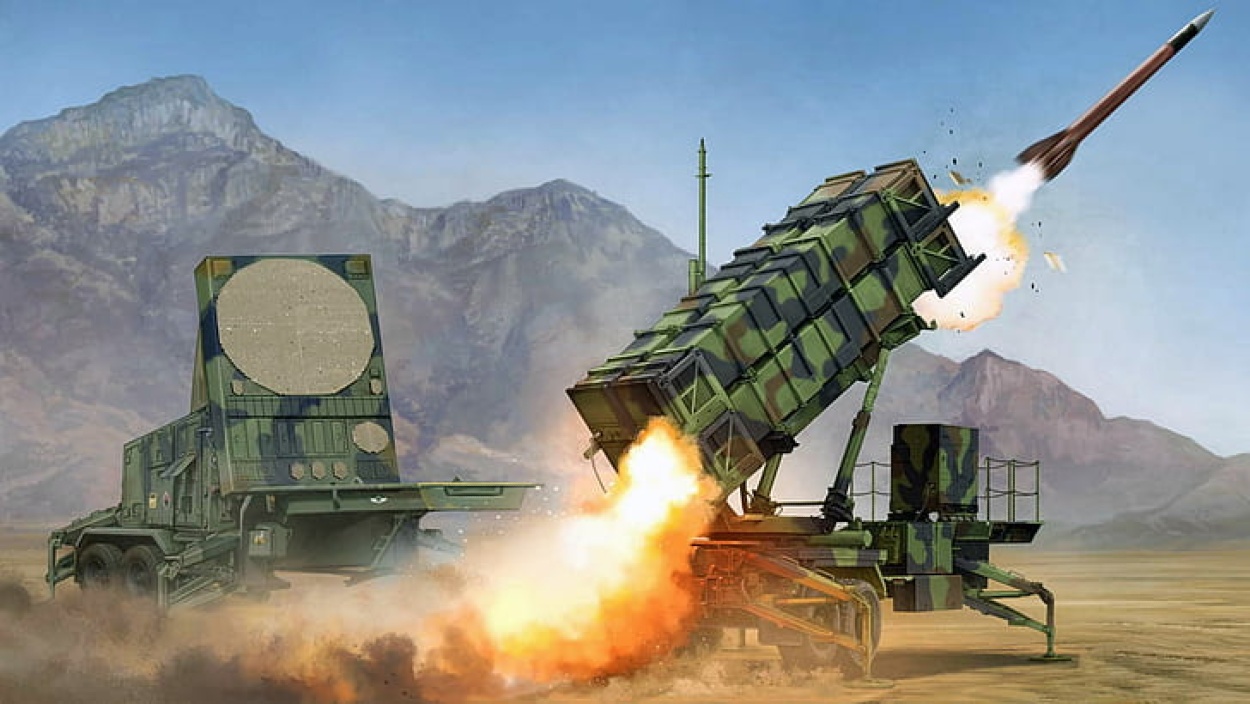
Meanwhile, besides urging the US for more Patriot interceptors, Ukraine is now pitching to license-produce Patriot interceptors domestically.

Zelenskyy made the case for the license in an interview with Face the Nation, stating that the US lacks sufficient anti-ballistic missile production capacity, while Russia has been ramping up domestic ballistic missile production.

“I sent a letter to the White House and to the U.S. Congress. I hope they will understand and respond,” the President stated, adding that the slow production could lead to a crisis in different parts of the world.

Patriot missile system
File Image: Patriot missile system

“60–65 anti-ballistic missiles per month, compared to current challenges, is nothing. It is no secret, and Russia knows this. We need to expand the production. I asked the previous U.S. administration, and I am asking today’s administration to give Ukraine licenses to produce Patriot missiles,” Zelenskyy.

“We can increase the production of Patriot missiles. This will help us. This will help the Middle East and any other country that the United States decides to help. Until we produce a European anti-ballistic system, we will need support from the United States,” he added.

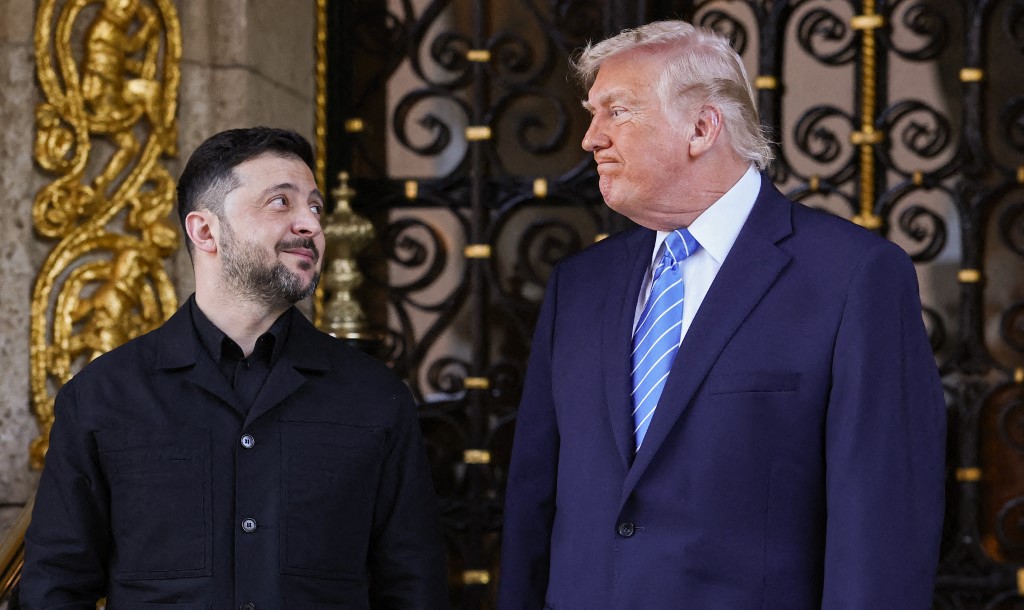
PALM BEACH, FLORIDA – DECEMBER 28: (EDITOR’S NOTE: Alternate crop) U.S. President Donald Trump greets Ukrainian President Volodymyr Zelensky at his Mar-a-Lago club on December 28, 2025 in Palm Beach, Florida. Trump invited Zelensky to his private club to work on the U.S.-proposed peace plan to end the war in Ukraine, as the conflict approaches four years since the sudden full-scale invasion by Russia on February 24, 2022. Joe Raedle/Getty Images/AFP (Photo by JOE RAEDLE / GETTY IMAGES NORTH AMERICA / Getty Images via AFP)

There were about 2,500 Patriot interceptors in the US inventory before Operation Epic Fury was launched, and between 1,060 and 1,430 Patriots were fired during the hostilities, according to a report published by the US-based think tank, the Center for Strategic and International Studies (CSIS).

However, Trump said the US must be “very careful” about giving Ukraine a license to produce Patriot air defense missiles.

“These weapons are incredible. We have to be very careful about letting somebody build them,” Trump said at the Camp David retreat in response to a question about allowing Ukraine to produce the missiles.

Zelensky met Trump at the White House as Kyiv and Moscow intensify long-range strikes after US-led diplomatic efforts to end the war failed. Zelensky said after the meeting that Trump had agreed to license Patriot production to Ukraine, but the US president only said that “many things were discussed” and “the meeting went very well!”

Meanwhile, the Pentagon signed a landmark seven-year framework agreement with Lockheed Martin earlier this year to more than triple the annual production capacity of PAC-3 Missile Segment Enhancement (MSE) interceptors — from roughly 600 per year to 2,000 per year by 2030. In addition, Boeing is reportedly tripling production of the critical active radar seekers for PAC-3 MSE missiles.

However, even increased missile production may not be enough to meet delivery obligations. For instance, the CSIS report posits that the US faces a challenge in delivering Patriots because it needs to replenish its own stockpiles, assist Ukraine in fending off Russian missile attacks, and meet the demands of 17 other nations that have ordered the interceptors.

“Current production of the latest variant—PAC-3 Missile Segment Enhancement (MSE)—is around the baseline rate of 650 interceptors per year, with half the deliveries going to the United States and the rest to allies and partners. The surge annual production rate with existing tooling and facilities is 2,000. Lockheed intends to scale up to this level,” it stated.

The think tank predicts that the US stockpile of Patriot interceptors would return to the pre-war levels only by mid-2029. This may have sparked concern in Ukraine that the depleted stockpiles and less-than-ideal production rate could impact deliveries to the Ukrainian Armed Forces and further embolden Russia.st.


The post Ukraine Fails to Shoot Down Any Russian Missile in Deadly Kyiv Strikes; Zelensky Calls for More Anti-Ballistic Weapons appeared first on EURASIAN TIMES.
  •  

F-35: U.S. Rejects Iran’s Claims Of Destroying Three Stealth Fighter Jets at Jordan Air Base

The US has outrightly rejected Iran’s claims that it managed to destroy American F-35 fighter jets.

CENTCOM wrote on X: Over the past few hours, Iranian state media have continued to report false claims by the Islamic Revolutionary Guard Corps (IRGC).

FIRST CLAIM: The IRGC (again) claims free and open routes through the Strait of Hormuz are dangerous for commercial vessels. FACT: The immediate dangers posed to commercial vessels and their civilian crews are the IRGC’s verbal threats and attempted attacks.

SECOND CLAIM: The IRGC claims three U.S. F-35 stealth fighters and three other aircraft were destroyed during a recent Iranian attack on an American air base. FACT: No U.S. aircraft were destroyed or damaged in recent attempted Iranian attacks. All missiles and drones were intercepted or failed to reach targeted areas.

THIRD CLAIM: Iranian state media is reporting that a commercial oil tanker, M/T Nora, has broken through the U.S. blockade.FACT: The commercial vessel has not broken through America’s steel wall blockade. More than 20 U.S. warships, hundreds of aircraft, and thousands of service members remain vigilant and continue to fully enforce the blockade.

Earlier, Iran’s Revolutionary Guards (IRGC) had claimed that three US F-35 jets were destroyed and three others were damaged in a missile attack on Jordan’s Al-Azraq air base.

However, this claim has not yet been confirmed by US or Jordanian officials, or by any independent source.

IRGC’s public relations department claimed the attack was in response to US airstrikes on two residential homes on Qeshm Island, which killed three members of the same family, including a child, and wounded two other children.

The Revolutionary Guards also claimed that a hangar for the installation and repair of fighter jets at Al-Azraq Air Base was also targeted, resulting in the deaths of several American officers and technical staff members. However, no specific numbers or further details were provided.

Washington has not yet issued any official statement.

Iran’s Revolutionary Guards said on Thursday that a ballistic missile strike destroyed three US F-35 fighter jets and severely damaged three others at Jordan’s al-Azraq air base.

The Guards said that several US officers and maintenance personnel were killed.

The attack targeted…

— Iran International English (@IranIntl_En) July 30, 2026

Earlier, IRGC said on Thursday that three of its members were killed in an attack by the United States on the northwestern province of Zanjan.

“In the brutal attack carried out by the terrorist regime of the criminal United States on 30 July 2026, three brave and devoted members of the Ansar al-Mahdi IRGC in Zanjan province… attained martyrdom,” the Guards’ provincial branch said in a statement, according to Tasnim news agency.

File Image

Earlier in March, as EurAsian Times reported, a US F-35 made an emergency landing at a US air base in the Middle East after it was hit by possible Iranian fire.

Capt. Tim Hawkins, a spokesperson for US Central Command, said the fifth-generation stealth jet was “flying a combat mission over Iran” when it was forced to make an emergency landing. Hawkins said the aircraft landed safely and the incident is under investigation.

“The aircraft landed safely, and the pilot is in stable condition,” Hawkins added. “This incident is under investigation.”

Iran has a well-documented pattern of issuing bold claims about successful strikes on advanced U.S. military assets, particularly F-35 stealth fighters.

Throughout the current conflict, the IRGC have repeatedly claimed to have destroyed or damaged US warplanes and other high-value assets at bases in Jordan, Kuwait, Bahrain, and elsewhere. Earlier claims in June and mid-July similarly described the destruction of fighter hangars and multiple aircraft at Al-Azraq, often accompanied by assertive language.

By asserting the destruction of the F-35—one of the most advanced fighters in the U.S. inventory—Iran seeks to project strength, boost morale at home, and portray its missile forces as capable of neutralizing American air power.

By ET Desk

The post F-35: U.S. Rejects Iran’s Claims Of Destroying Three Stealth Fighter Jets at Jordan Air Base appeared first on EURASIAN TIMES.

  •  

Iran Encircles Saudi Arabia From All The Sides — Threatening Its Economy, Oil Lifeline & Future Investments

Iran is deliberately outsourcing the risk. If a Houthi drone hits a Saudi tanker or an Iraqi militia rocket lands near a pumping station, Tehran retains deniability while Riyadh still pays the price. It is attrition by proxy, and it is highly effective.

Saudi Arabia is being encircled by Iranian proxies targeting its oil infrastructure and crippling its maritime trade. The picture is a terrifying scenario for the world’s biggest oil exporter — jeopardizing its plans to diversify its economy and attract investment & tourists.

Despite calls for a diplomatic solution, Saudi forces have faced attacks from both Yemen’s Tehran-backed Houthi rebels as they impose a Red Sea blockade on Saudi ships, and from pro-Iran militias in Iraq targeting its energy facilities.

Early on Wednesday, the kingdom struck back. Joint US-Saudi strikes in Iraq killed 20, according to the alliance of former paramilitary groups and factions whose bases were targeted.

“Saudi Arabia understands that becoming drawn into a prolonged war of attrition with Iran and the so-called Axis of Resistance does not serve the Kingdom’s long-term interests,” Danny Citrinowicz, a senior Iran researcher at Israel’s Institute for National Security Studies, wrote on X.

Still, as one Saudi analyst close to the government put it, “restraint has limits”.

With several Saudi tankers hit in the Red Sea, the Houthis are seeking to limit access to a critical artery delivering Saudi crude to the international market after the Strait of Hormuz was largely choked off by Iran.

Crown Prince and Prime Minister of the Kingdom of Saudi Arabia Mohammed bin Salman and US President Donald Trump speaks at the US-Saudi Investment Forum at the John F. Kennedy Center for the Performing Arts in Washington, DC on November 19, 2025. (Photo by Brendan SMIALOWSKI / AFP)

The repeated attacks have already done something more damaging than physical destruction: they have punctured the Gulf’s carefully cultivated image as a safe harbor for capital. Once that perception cracks, the cost of repairing it is measured in years, not months.

The threats on multiple fronts come just months after Iran itself launched waves of strikes targeting Saudi energy installations, including refineries, petrochemical plants and power facilities.

The salvos hit “key” installations, according to Saudi state media, impacting oil production capacity.

The repeated barrages against Saudi Arabia and its Gulf neighbors also shattered the wealthy monarchies’ hard-earned reputation for stability.

“For the Gulf states, stability is not an abstract concept; it is the foundation of their economic model,” Citrinowicz wrote in an online commentary.

“Their long-term prosperity depends on regional predictability, investment, trade, and uninterrupted energy flows.”

Such attacks risk a bigger backlash from a cornered Riyadh, which experts say has so far held off on a larger retaliation.

“The kingdom has the capacity to impose severe punishment on the Houthis and the Iraqi militias, but has so far exercised considerable restraint,” Ali Shihabi, a political analyst close to the Saudi government, told AFP.

“That restraint has limits and should not be mistaken for weakness.”

Fear is also mounting that the Houthis will copy Iran’s playbook in the Hormuz Strait by charging ships to transit the Red Sea — giving them a revenue stream to bolster their arsenal and project power across Yemen.

On Wednesday, a minister in Yemen’s internationally recognized government claimed the rebels had already begun working under Iranian guidance to establish a fee system.

Information minister Moammar al-Eryani described the move in remarks to AFP “as a dangerous escalation aimed at transforming one of the world’s most strategic maritime corridors into a permanent source of funding for the militia’s military and terrorist activities”.

Even if fears over the tolls are not realized, analysts say the group’s ability to disrupt one of the world’s most vital waterways sends a powerful message.

“That capability is itself the warning,” H.A. Hellyer, analyst at the Royal United Services Institute in London, told AFP. “It’s a preview of what Iran-aligned actors elsewhere on Saudi Arabia’s periphery can also bring to bear.”

With AFP Inputs

The post Iran Encircles Saudi Arabia From All The Sides — Threatening Its Economy, Oil Lifeline & Future Investments appeared first on EURASIAN TIMES.

  •  

U.S.-Iran War News: Egypt Drone Strike a Message That American Interests are “Vulnerable” Across the Middle East: Analysts

A drone strike on Egypt’s Mediterranean port of Damietta on 29 July 2026—the first direct attack on Egyptian territory since the outbreak of the US-Iran war earlier this year—appears designed as a high-stakes signal that American interests remain vulnerable across the entire Middle East, analysts say.

No party has claimed the attack on the Mediterranean port, and Egypt has not blamed anyone for the attack, which struck a US-owned and operated floating gas storage vessel.

Houthi militants in Yemen, who have imposed a Red Sea blockade on Saudi Arabia, have denied carrying out the attack, which raised fears for the only remaining safe maritime route for the world’s largest crude producer.

According to analysts, the goal of the attack — regardless of who launched it — could be to drag Egypt into the conflict, after months of Cairo acting as one of the few diplomatic channels between Iran and the US.

The port strike, the furthest afield from the Gulf since the war broke out, also marks a new milestone by crossing the Red Sea into the Mediterranean.

Damietta, a Mediterranean port, is more than 1,300 kilometers away from Iran and 2,000 kilometers from Yemen.

The precision strike caused fires on the US-owned Energos Winter storage and regasification vessel and the Greek-owned GasLog Salem tanker, which was moored alongside.

“The attack may have been calibrated to damage a United States-linked asset without killing Egyptians,” King’s College London professor Andreas Krieg told AFP, though Cairo would not “find that distinction reassuring”.

According to Royal United Services Institute analyst HA Hellyer, the distance means “it’s unlikely that Iran would have struck Egypt directly from Iranian territory”.

But, he said, it is possible Tehran’s regional allies could have done so, via the Houthis in Yemen or Iran-aligned militias in Iraq.

Houthi-affiliated news agency Saba on Thursday said the “rumors” were “unfounded”.

Iran’s other powerful ally, Hezbollah in Lebanon, is closest to the port less than 400 kilometers away.

“A drone launched from the Lebanese coast could fly west over the eastern Mediterranean before turning south towards Egypt,” Krieg said, enabling it to avoid both Israeli and Egyptian airspace.

But Cairo University political science professor Mustapha Kamel Al-Sayyid believes Hezbollah is “wiser” than to pick a fight with the largest Arab military.

While energy facilities elsewhere in the region have been hit by drones and missiles over the course of the United States and Israel’s war on Iran, Egypt had so far been spared.

“I would not automatically interpret this as an attack on Egypt itself,” Krieg said, adding the purpose was to “show that United States assets are vulnerable beyond the Gulf”.

“For Egypt, this is a warning that neutrality does not guarantee immunity,” Krieg added.

Wednesday’s attack took place as the United States and Iran returned to hostilities following a brief lull — an apparent message that Iran could disrupt global trade even farther than it has.

According to Hellyer, “that would mean that Iran’s strategy is very high risk, with a lot of downsides for their security relationships”.

“Cairo and others would see an attack by any Iranian-aligned group on Egyptian territory as a formidable escalation, and that won’t go down well for the medium-to-long term at all for Tehran,” he told AFP.

Egypt has for months walked a diplomatic tightrope, keeping phone lines open with both Tehran and Washington.

It helped secure a ceasefire earlier this year and serves as a diplomatic channel between the US, Iran and powers in the region.

“Egypt is the only major power in the region that still adopts a near-neutral stance,” Al-Sayyid told AFP, adding that “only Israel” benefits from a firmer Egyptian stance.

Mediterranean fallout

Egyptian ports have this year absorbed substantial trade rerouted from the Gulf, as major shipping companies have tried to avoid the Strait of Hormuz and the Gulf, according to data from risk intelligence firm Vortexa and ship tracker MarineTraffic.

Following the Houthi blockade on Saudi Arabia and ensuing attacks on ships crossing the Bab al-Mandeb Strait, tankers transporting Saudi crude have used the Suez Canal and an overland Egyptian pipeline as the only safe, albeit expensive, route.

But that alternative route depends on the safety of Egyptian shipping lanes and, crucially, the Mediterranean.

“I expect at least some vessel owners and operators to adopt a wait-and-see approach as the risks around Suez’s northern gateway are assessed,” George Morris, a market analyst at Vortexa, told AFP.

Market behavior, he said, will depend “on whether the attack is viewed as an isolated incident or the beginning of a broader escalation”.

The Egyptian government — for which the Suez Canal is a crucial foreign currency earner — has put out multiple statements affirming that marine traffic is flowing normally and the Damietta port remains operational.

By Agence France-Presse

The post U.S.-Iran War News: Egypt Drone Strike a Message That American Interests are “Vulnerable” Across the Middle East: Analysts appeared first on EURASIAN TIMES.
  •  

Iran War News: U.S. Commander Warns Cellphone Videos Help Iran Target Bases; Troops May Have to Surrender Mobiles

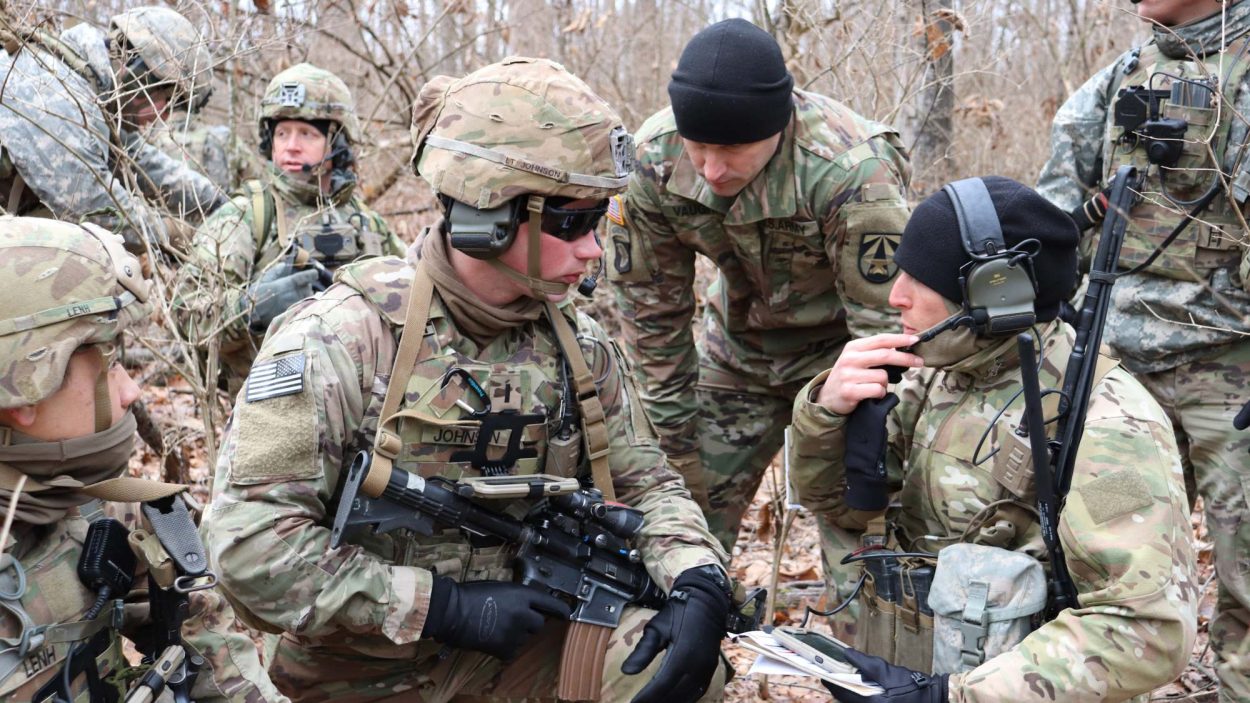
As the Iran war intensifies again, the top U.S. commander in the Middle East has warned that cellphone videos and images shared online by American soldiers could help Iran attack U.S. bases, and some service members may soon be ordered to surrender their phones.

Admiral Brad Cooper, head of U.S. Central Command (CENTCOM), raised the concern in a previously unreported letter dated July 28.

He said Iran was gaining real-time data into the success or failure of its missile and drone strikes by monitoring news reports and online content that included “reactions, photos, and footage from the cellphones of our troops.”

“The direct, unavoidable cost of this open-source intelligence could be measured in the lives of American service members and civilian residents in targeted Gulf countries,” Cooper wrote. He urged forces to “redouble our focus on operational security” but stopped short of recommending specific measures in the memo.

According to Reuters, some US troops stationed in Jordan have already been notified their phones will be seized in the coming days. More comprehensive restrictions are possible across the tumultuous region because of operational security concerns.

Cooper cited one specific example in the letter: a video captured on a service member’s Meta smart glasses and posted on Instagram during an Iranian missile and drone attack. The footage showed where and how the individual evacuated to a bunker. Without such publicly available material, Cooper said, Iran would struggle to determine whether its weapons had missed by tens of meters, struck an empty tarmac or hit a populated facility, thanks in part to U.S. electronic jamming and other battlefield tactics.

“Iran knows the weapons were fired; however, their forces do not know if they missed by 50 meters, hit an empty tarmac, or successfully struck a crowded facility,” he wrote.

“Detailed lists, descriptions, and analyses of what was hit, openly published by news outlets, are essentially performing Iran’s Battle Damage Assessment (BDA) for them, free of charge.”

Public disclosures of strike details, he added, could serve as “an immediate green light” for secondary, more devastating follow-up attacks.

The warning comes as the conflict that began in late February has killed 18 U.S. troops and wounded more than 600, according to official figures.

US Army
File Image: US Army

On July 13, the Financial Times reported that mobile phone networks across the Middle East had been targeted by a wave of cyberattacks aimed at locating American forces and contractors around the same time as U.S. and Israeli strikes on Iranian positions.

CENTCOM spokesman Captain Tim Hawkins confirmed the authenticity of Cooper’s letter, describing it as “a general reminder to our service members on the importance of maintaining operational security.” He declined to discuss specific protective measures.

Meanwhile, the US military conducted a “heavy wave of strikes” against Iran on Thursday in retaliation against Tehran targeting American bases in Jordan.

US President Donald Trump had vowed to hit Iran “hard” after Tehran launched missiles at Jordan.

American forces “successfully completed a heavy wave of strikes against Iran”, and struck dozens of Islamic Revolutionary Guard targets including military command centers, US Central Command (CENTCOM) said.

In Iraq, the joint US-Saudi air operation followed attacks by “terrorist militias loyal to Iran” on its oil facilities. The US military said logistics and weapons sites belonging to an Iran-aligned group were targeted in the strikes.

Iraq’s Hashed al-Shaabi alliance said the attacks killed at least 20 of its members. It condemned a “dangerous escalation” against an “official security institution”.

Two Hashed officials said five Iranian advisors were among those killed.

Iraq slammed the US-Saudi strikes and said it rejects “all acts of aggression, regardless of the party responsible or the justifications presented”.

The Ministerial Council for National Security said it would “confront any violation of Iraq’s sovereignty, and prevent any source from using Iraqi territory to threaten neighboring states”.

According to Fox News, however, Trump said the strikes were “coordinated with the Iraqi government”.

The strikes follow growing US pressure on Iraq to disarm pro-Iran groups. Earlier this month, Prime Minister Ali al-Zaidi visited both the US and Iran.

With AFP Inputs

The post Iran War News: U.S. Commander Warns Cellphone Videos Help Iran Target Bases; Troops May Have to Surrender Mobiles appeared first on EURASIAN TIMES.

  •  

Houthis Claim Shooting Down Turkish “Cutting Edge” Akıncı Drone Operated By Saudi Arabia Over Northern Yemen

Yemen’s Houthi rebels claimed to have shot down a Turkish-made “cutting-edge” Bayraktar Akıncı drone operated by Saudi Arabia over the northern Al-Jawf region.

Houthi military spokesperson Yahya Saree said the group’s forces downed the drone with “an appropriate weapon” while it was carrying out “hostile operations” in Yemeni airspace.

Media affiliated with the Iran-aligned group later published images of burning wreckage that appeared consistent with an Akıncı, including what they identified as a Saudi tail number. Saudi Arabia has not commented on the claim, which could not be independently verified.

If confirmed, it would mark the first reported loss of an Akıncı — a high-altitude, long-endurance armed reconnaissance drone manufactured by Turkey’s Baykar — in Yemen.

The announcement came a day after the Houthis said they had launched missile and drone strikes on Saudi energy facilities in the Jazan and Yanbu regions, in what they described as retaliation for Saudi-led airstrikes on Houthi targets.

A still from the video Ansar Allah’s military wing released on 26 July showing the wreckage of a Bayraktar Akinci UAV that it said was shot down over Al-Jawf.

It was the second time this month the group has claimed to have brought down a Saudi-operated drone.

On July 14, Saree said Houthi forces had shot down a Chinese-made Wing Loong II UAV over Al-Bayda governorate in central Yemen, though no supporting evidence was released at the time.

Earlier, as EurAsian Times reported, Iran reportedly downed a Wing Loong II drone, operated either by Saudi Arabia or the UAE.

During a closer examination of the wreckage, several prominent OSINT analysts identified it as  Wing Loong II based on wing-root geometry, fuselage shape, and other structural features that match the Chinese drone.

Notably, the Wing Loong is also operated by Iran’s neighbor, Pakistan.

Image
Drone wreckage found in Shiraz, Iran, and identified as Wing Loong II (Via X)

Meanwhile, the Saudi defense ministry said it thwarted various drones fired by pro-Iran groups in Iraq.

The latest attacks come during a lull in the fighting since Saturday, following 13 days of exchanges of fire between the US and Iran.

The Saudi defense ministry said “terrorist attempts were launched from Iraqi territory and carried out by Iranian-backed terrorist militias”, according to an official statement posted on social media.

The ministry said the drones targeted petroleum facilities in areas in the country’s east and the capital Riyadh.

Saudi Arabia pressed Iraq to “take all necessary measures to ensure the prevention of the use of its territory as a launching point” for attacks, according to a separate statement posted by an official Saudi broadcaster.

Saudi Arabia and other Gulf nations had accused pro-Iran militias in Iraq of launching waves of attacks targeting their territory during the earlier phase of the conflict.

Riyadh and Yemen’s Houthi rebels have also traded strikes in recent days, with the Houthis declaring a naval blockade on the kingdom’s ports. On Monday, the Houthis said they fired drones on Saudi oil infrastructure in response to incursions by the kingdom’s drones.

Riyadh had yet to comment on the Houthis’ claims.

With AFP Inputs

The post Houthis Claim Shooting Down Turkish “Cutting Edge” Akıncı Drone Operated By Saudi Arabia Over Northern Yemen appeared first on EURASIAN TIMES.

  •  

Ukraine Just Punched a Hole in Iran & Russia’s Secret Caspian Highway — Tehran Vows Consequences

Iran has warned of “unforeseen” consequences after Ukraine’s attack on an Iranian vessel in the Caspian Sea.

“This action by Ukraine was an absolutely illegal and unjustified act, contrary to the Charter of the United Nations, as well as a dangerous act of adventurism that will certainly not go unanswered by us,” the ministry’s spokesman Esmaeil Baqaei said in a weekly press briefing, adding that the consequences of Ukraine’s action “will certainly be unforeseen”.

Earlier, Iran’s Foreign Minister Abbas Araghchi warned that Tehran would respond to a deadly attack by Ukraine on an Iranian ship.

It came after Ukrainian President Volodymyr Zelensky said Kyiv had carried out long-range strikes in the Caspian Sea against vessels transporting military cargo involving Iran, underscoring the increasingly international dimensions of Russia’s war in Ukraine.”

Zelenskyy has attacked an Iranian commercial vessel, killing a sailor,” Araghchi said on X, describing it as “a blatant UN Charter violation done at Israel’s behest to drag Europe into its war”.He added that, during calls with the European Union’s Kaja Kallas and Russian top diplomat Sergei Lavrov, he “made clear that what the freeloader in Kyiv did CANNOT GO UNANSWERED”.

Iran’s foreign ministry said the attack caused the ship “to explode, killing one sailor and injuring several others”.The Islamic republic “has never intervened in the conflict between Russia and Ukraine”, the ministry said in a statement.

Ukrainian President Volodymyr Zelensky said on social media that armed forces had achieved “very strong results with long‑range strikes in the Caspian Sea — including vessels used in military cargo shipments involving Iran, as well as a warship”.

Ukraine’s intelligence services reported on Telegram that drone attacks had been carried out against “cargo vessels under international sanctions that were used to transport military cargo between Iran and Russia”.According to Iranian state television, the foreign ministry summoned the Ukrainian charge d’affaires in Tehran to protest this “hostile and criminal act”.

Ukraine Punches Hole in the “Caspian Highway”

As EurAsian Times reported earlier, it is Russia that is sending components for attack drones to Iran via the Caspian Sea, helping Tehran restock its arsenal.

It is said that many vessels operating between Russian ports like Astrakhan and Makhachkala and Iranian ports such as Bandar Anzali in the Caspian Sea function as a “dark” or shadow fleet. The merchant vessels of the two countries are said to be turning off their automatic identification system transponders in the Caspian Sea, allowing them to transport goods undetected by satellite surveillance.

According to a report in the New York Times, Iranian officials have said that efforts to open alternative trade routes are progressing rapidly, with four Iranian ports (Amirabad, Bandar Anzali,  Nowshahr, and Caspian port)  along the Caspian working around the clock to bring in wheat, corn, animal feed, sunflower oil, and other supplies.

Similarly, Russian trade officials have been quoted as saying there has been a swift increase in Caspian shipping in recent months. Two million tons of Russian wheat that used to be shipped annually to Iran through the Black Sea — now under threat of Ukrainian attacks — is now going via the Caspian.

Apparently, between July and February, Iran imported nearly 6 million tons of grain from Russia, double year-ago levels. Four Iranian Caspian ports now run 24/7 to process surges in wheat, corn, animal feed, and sunflower oil rerouted from blocked southern routes.

America’s New Headache: How Iran’s Kheibar Shekan Missiles Are Challenging U.S. Air Defense Systems

Russia is said to operate three grain-exporting ports on the Caspian: two in Astrakhan and one in Makhachkala, with a combined capacity of at least 3 million tons. A new 1.5-million-ton terminal in Makhachkala is expected to be completed by 2028.

In other words, the landlocked Caspian Sea, the largest lake in the world, has been proven to be a safe passageway for overt and covert trade between Russia and Iran. By rebuilding Iran’s offensive capabilities, this is helping Tehran persist as an adversary of the US despite overwhelming American military superiority.

File Image

Unlike the Persian Gulf, the United States cannot interdict ships on the Caspian because only the five bordering nations have access. And that is because, under the 2018 Convention on the Legal Status of the Caspian Sea, only the five bordering nations—Russia, Iran, Azerbaijan, Kazakhstan, and Turkmenistan—have exclusive jurisdiction over it.

Third-party militaries are strictly prohibited. Only the five littoral states can maintain military forces there. The US Navy, or, for that matter, any NATO member, has no legal right or physical ability to enter, patrol, or intercept ships here.

Containing vast reserves of oil and gas, the Caspian Sea has, of late, assumed many strategic dimensions. First is its geography – sitting at the crossroads of Europe, Asia, the Middle East, and Central Asia, it acts as a buffer zone and transit corridor between competing spheres of influence.

Trump Orders Pentagon to Ditch China & Russia Materials from Missiles, Jets & Drones: “Buy Secure, Not Cheap”

Multimodal (rail, road, maritime) arteries such as the Trans-Caspian International Transport Route (connecting China through Central Asian states, the Caspian Sea, the South Caucasus, and Turkey to the European Union) and the North-South transport links involving Russia, Iran, and India. These bypass traditional oceanic chokepoints and are vital for regional integration.

Important pipeline systems linked to the Caspian region help transport energy to Europe and global markets while bypassing Russia or Iran in some cases. This makes the region central to European energy security, global oil supply diversification, and geopolitical influence over energy corridors.

Secondly, and this is particularly significant in the context of Iran, Moscow and Tehran signed a strategic partnership treaty in 2025 and have pledged to enhance military cooperation, including regular naval exercises in the Caspian.

In 2020, Iran and Russia started their first joint strategic naval exercises in the Caspian Sea. Since then, Russia’s Caspian Flotilla has been regularly hosting Iranian Navy and IRGC Navy vessels. Mutual port calls and what are called “PASSEX” drills, which focus on, among others,  air defense and anti-ship missile launches, have become more frequent or routine.

Apparently, these exercises allow Iran to test Russian-provided air-defense radars and electronic warfare systems that are harder to deploy in the Persian Gulf due to US monitoring.

It may be noted that in March, Israel had targeted the 4th Artesh Naval District Headquarters at Bandar Anzali, destroying several naval assets, including missile boats (likely Sina-class) and the Hamzeh corvette. This reportedly wiped out roughly half of Iran’s warships and patrol vessels in the Caspian, affecting the supply chains, particularly relating to  Russian-supplied drone components, ammunition, and other military hardware.

Israel called it “one of the most significant” strikes conducted during combat operations, as this “shattered the illusion that the Caspian Sea was a secure and closed corridor for Moscow and Tehran to bypass blockades in the Persian Gulf”.

Israel’s Qatar Ultimatum: Ex-PM Pledges to Declare Qatar an Enemy State Despite Its Strong U.S. Ties

After Israeli strikes hit Iran’s Caspian naval command, Russia is reported to have increased joint drills with Iran to keep the country as a militarily viable partner against Western pressure, giving, in the process, the Caspian Flotilla a combat-relevant mission beyond coastal patrol.

By attacking an Iranian ship in the Caspian Sea, Ukraine did more than hit one vessel. It struck at a key supply route that links Russia and Iran.

Iran still calls this route commercial, but it has become a two-way military channel: Iranian drones and parts go north to help Russia fight Ukraine, while Russian parts and technology go south to help Iran rebuild its weapons.

  • Author and veteran journalist Prakash Nanda is Chairman of the Editorial Board of the EurAsian Times and has been commenting on politics, foreign policy, and strategic affairs for nearly three decades. He is a former National Fellow of the Indian Council for Historical Research and a recipient of the Seoul Peace Prize Scholarship.
  • CONTACT: prakash.nanda (at) hotmail.com

The post Ukraine Just Punched a Hole in Iran & Russia’s Secret Caspian Highway — Tehran Vows Consequences appeared first on EURASIAN TIMES.

  •  
❌