In a letter, Cornell's president apologized for what happened to the student who alleges she was raped by several men at a fraternity house in 2024 and promised 'meaningful action.'
In a letter, Cornell's president apologized for what happened to the student who alleges she was raped by several men at a fraternity house in 2024 and promised 'meaningful action.'
La Fondazione Med-Or ha firmato un accordo di cooperazione con l’Accademia diplomatica ucraina Hennadii Udovenko, istituzione che fa capo al ministero degli Esteri di Kyiv. L’intesa, siglata martedì 13 ottobre a Roma, punta a rafforzare la collaborazione tra Italia e Ucraina nel campo della formazione diplomatica e del dialogo internazionale, ampliando le relazioni bilaterali anche sul piano istituzionale.
Il Memorandum of Understanding è stato sottoscritto presso la sede della Fondazione dal presidente di Med-Or, Marco Minniti, e dal direttore dell’Accademia diplomatica ucraina, Ihor Ostash. Alla cerimonia hanno partecipato anche il sottosegretario alla Presidenza del Consiglio e Autorità delegata per la sicurezza della Repubblica, Alfredo Mantovano, e l’ambasciatore ucraino in Italia, Ihor Brusylo.
L’accordo definisce un quadro di collaborazione per lo sviluppo di iniziative congiunte nel settore della formazione diplomatica, prevedendo anche la possibilità di coinvolgere docenti ed esperti italiani e internazionali nei programmi dell’Accademia ucraina. Si tratta di un ambito nel quale Med-Or ha già sviluppato una rete di partenariati internazionali, in particolare con Paesi dell’Africa e del Medio Oriente, e che viene ora esteso alla cooperazione con Kyiv.
L’iniziativa assume un significato particolare nel contesto della guerra di aggressione russa contro l’Ucraina, inserendosi nel più ampio quadro delle relazioni tra Roma e Kyiv. La formazione diplomatica e il rafforzamento delle capacità istituzionali rappresentano infatti strumenti di cooperazione che guardano anche oltre le esigenze immediate del conflitto, contribuendo a consolidare le competenze e le relazioni internazionali dell’Ucraina.
L’importanza dell’accordo va però oltre la formazione diplomatica. In una fase in cui il sostegno all’Ucraina è concentrato soprattutto sulle esigenze della guerra, l’intesa tra Med-Or e l’Accademia diplomatica di Kyiv guarda al lungo periodo, investendo nelle capacità istituzionali e nelle relazioni internazionali del Paese. Per Med-Or, l’intesa costituisce un ulteriore sviluppo delle proprie attività di cooperazione internazionale, con l’obiettivo di contribuire al rafforzamento dei rapporti tra Italia e Ucraina attraverso il dialogo, la formazione e la condivisione di competenze diplomatiche.
Swedish activist Greta Thunberg joins teenagers calling for investment to fix teacher shortages and crumbling schools
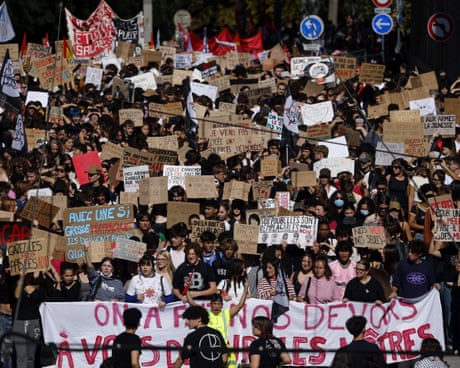
More than 160,000 schoolchildren, students and trade unionists have marched in cities across France as protests over high school education continued into a third week and many demonstrators denounced policing tactics.
Riot police fired teargas at the end of Tuesday’s marches in Nantes and near the Montparnasse area of Paris, but most of the demonstrations over teacher shortages, overcrowded classes and crumbling school buildings held in cities including Lyon, Lille and Marseille were peaceful.
Investigamos o que importa para os brasileiros além do que passa na campanha eleitoral. Leia mais reportagens como essa clicando aqui.
Os cinco partidos com políticos que mais atuaram em pautas consideradas contrárias aos povos indígenas, segundo a plataforma do Conselho Indigenista Missionário (Cimi), vão ocupar 53 cadeiras no Senado Federal a partir de 2027. São eles o PL, o PP, o Republicanos, o União Brasil e o MDB. O PL conseguiu ocupar a maior bancada do Congresso Nacional, com 121 deputados e 28 senadores eleitos pelo partido.
Como a Agência Pública já noticiou, entre 2019 e 2026, o PL foi o partido que mais votou e propôs propostas legislativas que ameaçavam os direitos dos povos originários, segundo levantamento do Cimi. Luis Ventura, secretário-executivo do Conselho, vê a nova formação do Congresso Nacional como um perigo direto aos povos indígenas.
Na avaliação de Ventura, no Senado, cinco partidos vão poder aprovar sozinhos alterações da Constituição que podem afetar diretamente os indígenas. Na Câmara dos Deputados, entretanto, mesmo em menor número, ainda se espera um campo de resistência, ainda que minoritário. “Há muitos outros parlamentares não indígenas que já aderiram, de forma sistemática, às pautas indígenas. Existe uma frente parlamentar mista de defesa dos direitos dos povos indígenas desde 2019 […] era uma frente parlamentar mista de mais de 150 parlamentares entre senadores e deputados”, explica Luís Ventura.
No Senado, nenhum dos 54 senadores eleitos se autodenomina indígena. Atualmente, na Casa, só dois parlamentares se identificam como indígenas: Wellington Dias (PT-PI) e o ex-vice-presidente de Jair Bolsonaro, Hamilton Mourão (Republicanos-RS), que adotou essa identidade nas eleições de 2022.
Ventura explica que a presença de indígenas no Senado sempre foi mais difícil. “O Senado sempre foi uma Casa totalmente hermética para os povos indígenas e isso porque o sistema eleitoral no Brasil torna muito difícil conquistar uma vaga nesse lugar. As formas de colonialismo político nos estados são muito herméticas e, se você perceber, dos 54 [senadores eleitos], salvando algumas exceções do campo da esquerda, estamos falando de pessoas que pertencem a um espectro político reacionário, conservador, fundamentalista, militarizado”, acrescenta o secretário.
Um Senado com baixa representatividade de povos indígenas, na visão do secretário executivo da Cimi, reforça um movimento que deve retroceder nas pautas centrais para essa população. “O objetivo deles vai ser impedir as demarcações, impor o Marco Temporal e abrir os territórios para a exploração econômica de terceiros. Esses são os grandes três objetivos dessa grande bancada reacionária que entrou no Senado”, prevê.
Indígenas ocuparão menos do 1% do Congresso Nacional
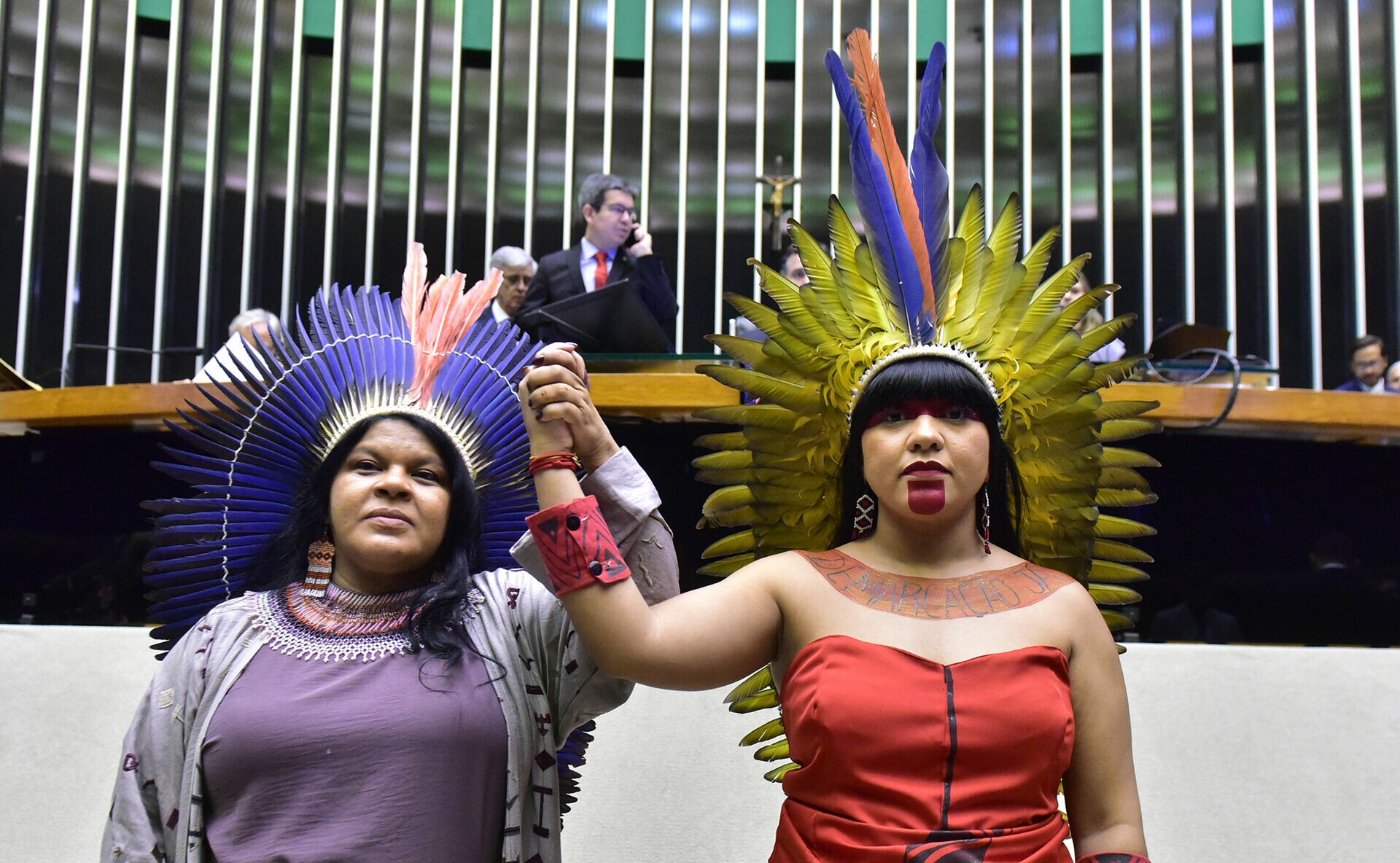
Ex-ministra dos povos indígenas do governo Lula, Sônia Guajajara se reelegeu deputada federal pelo PSOL
Os resultados do primeiro turno mostram que a presença de povos indígenas no Congresso Nacional ficará abaixo de 1% em 2027. Apenas duas das 45 candidaturas indígenas lançadas pela “Bancada do Cocar” foram eleitas no primeiro turno.
A bancada é um movimento iniciado no Acampamento Terra Livre em 2017 e tentou eleger deputados e senadores indígenas para defender suas pautas. Para a Pública, a deputada federal Célia Xakriabá (PSOL-MG), que não retornará à Câmara para novo um mandato em 2027, afirma que o objetivo era eleger entre seis a oito parlamentares federais. Entre os 45 candidatos, apenas Sônia Guajajara (PSOL-SP), com 54.207 votos, e Juliana Cardoso (PT-SP), com 111.904 votos, conseguiram uma cadeira na Câmara.
Outros 21 nomes, de vários locais do país e que participaram do projeto, conseguiram cargos de suplente. Entre todas as candidaturas, o único candidato da bancada do cocar que disputou um cargo majoritário, Isael Munduruku (Rede-AM), não conseguiu se eleger a governador do Amazonas. Ismael (Rede-AM), único candidato a senador do projeto, também não foi eleito.
Isael Munduruku fez parte do movimento Aldear a Política como candidato ao governo do Amazonas, mas não se elegeu
Sônia Guajajara entende que o Projeto Aldear a Política ajudou a ampliar candidaturas, formar lideranças e colocar as pautas indígenas no debate eleitoral. Entretanto, para ela, as eleições foram muito desiguais para indígenas. “Muitas candidaturas indígenas tiveram poucos recursos, pouco tempo de televisão, estruturas partidárias insuficientes e enfrentaram racismo, violência política e dificuldades territoriais”, denuncia.
“O resultado acende um sinal de alerta, mas não representa um recuo da nossa mobilização. Essa força não desaparece quando termina a eleição. É dela que precisamos para combater o desmanche das políticas ambientais e mostrar à sociedade que direitos indígenas e demarcações estão diretamente ligados à preservação das nossas florestas e combate à crise climática”, ressalta.
Para Guajajara, diante de um Congresso majoritariamente anti-indígena, é necessário fortalecer o diálogo, não só com os partidos de esquerda, mas com parlamentares comprometidos com a existência dos povos originários e com a defesa da Constituição. Fora do Congresso, a deputada afirma que é preciso consolidar as organizações indígenas, a comunicação dos territórios e a formação de novas lideranças.
“Precisamos acompanhar as comissões, disputar relatorias, impedir votações apressadas e apresentar projetos que tornem permanentes as políticas construídas nos últimos anos. Quando uma proposta violar direitos constitucionais, devemos acionar os instrumentos jurídicos cabíveis e as instituições de proteção”, conclui.
A possibilidade de alteração na Constituição Federal
“Se na legislatura passada houve um aumento de proposições legislativas contrárias aos povos indígenas, nos últimos quatro anos foram 83 [proposições feitas], o que cabe esperar, nos próximos quatro anos, é que muitas dessas, ou várias dessas, concluam o ciclo legislativo”, diz Ventura.
Ele teme não apenas a sanção de propostas com impacto negativo aos indígenas, mas também o aumento de proposições legislativas no mesmo sentido. Entre todos os prejuízos, o que mais se espera é que haja tentativas e processos para mudar a Constituição Federal de 1988, que protege os direitos fundamentais dos povos originários e comunidades tradicionais.
A alteração da Constituição Federal não é um perigo ilusório. Durante um evento em Goiânia, nesta terça-feira, 6 de outubro, o candidato Flávio Bolsonaro (PL-RJ) decretou que pretende atuar junto com a maioria no Senado e na Câmara dos Deputados para eleger um novo Presidente da Câmara e “mudar a Constituição e redemocratizar o país”.
O Artigo 231 da Constituição Federal de 1988 regula as terras de povos indígenas, proibindo a remoção de suas terras, determina que a posse e o usufruto das riquezas extraídas do território é dos indígenas, além de determinar a competência da demarcação de terras à União.
Ricardo Terena, diretor jurídico da Articulação dos Povos Indígenas do Brasil (Apib), explica que, hoje, o Supremo Tribunal Federal (STF) já entende o artigo 231 como cláusula pétrea, dispositivo imutável da Constituição Federal de 1988, mesmo com emendas parlamentares. No entanto, mesmo que a discussão, juridicamente, não seja válida, a atuação do STF acerca dos direitos indígenas é uma preocupação para Terena.
“Nós temos o Supremo criando alguns entraves no processo de demarcação, aumentando a possibilidade de indenizações nos processos de demarcação das terras indígenas, colocando certas limitações para o que a gente chama de redimensionamento das terras indígenas”, explica.
Advogado Ricardo Terena, da Apib, preocupa-se com a possível guinada à direita no STF
Desde a explosão do Caso Master e a divulgação de conversas entre Daniel Vorcaro e o ministro Alexandre de Moraes, que ocasionou uma crise institucional na Corte, a reforma do STF é um dos principais tópicos da campanha de Flávio Bolsonaro à Presidência da República. O senador do PL do Rio de Janeiro, inclusive, já anunciou que, se eleito, apresentará uma proposta de reforma no Judiciário.
Para Ventura, uma reestruturação do STF significa um caminho tortuoso aos povos indígenas. “Se o Flávio Bolsonaro utilizar suas prerrogativas para transformar o Supremo Tribunal Federal numa corte também reacionária nós estaremos diante de um período que podemos chamar de autoritário dentro de uma forma democrática. E, num período autoritário, os direitos dos povos indígenas não estão, evidentemente, garantidos”, conclui.
Terena entende que não seria necessário uma reforma no Judiciário para gerar um impacto aos povos originários. “O próximo presidente vai ter a indicação de quatro ministros e, dependendo de como é o posicionamento desses ministros, vamos ter muitos problemas com relação ao debate sobre direitos indígenas no Supremo”, avalia.
Em uma possível eleição de Bolsonaro, Terena prevê ministros sem comprometimento direto com os direitos indígenas. Já em um cenário onde Lula é reeleito, o advogado vê mais possibilidades de pessoas comprometidas com os direitos indígenas no STF.
Mesmo assim, as Propostas de Emenda à Constituição (PEC) que tramitam no Congresso Nacional hoje mostram um cenário que coloca a integridade do Artigo 231 em risco. A PEC 48/2023, que muda o Artigo 231 para instaurar o Marco Temporal foi aprovada pelo Senado e tramita agora na Comissão de Constituição e Justiça e de Cidadania (CCJC) da Câmara dos Deputados.
A proposta prevê entraves administrativos para a demarcação de terras, como a limitação de terras apenas para aqueles que já estavam nela e usufruindo do ambiente em 5 de outubro de 1988; também institui indenização a não-indígena. Terena explica que por tramitar como uma emenda constitucional, ela não passa por sanção ou veto do presidente da República.
Pelo menos quatro outras PECs que tramitam no Congresso Nacional, atualmente, propõem que o Artigo 231 seja alterado para determinar a competência da demarcação de terras ao Congresso Nacional, ao invés da União. Para Ricardo Terena, uma mudança para o legislativo ocasionaria um prejuízo ao processo de homologação de terras, que hoje já passa por um processo complexo de estudos.
“Quando a gente chega no momento de homologação, que é o ato do presidente da República, basicamente todo o processo já está feito [e] o Ministério da Justiça já validou. Quando a gente transfere essas competências para outros órgãos, como o legislativo, está sujeitando o direito das comunidades indígenas a certas dinâmicas políticas que prejudicam muito o processo de demarcação”, alega.
Um Congresso com baixa representação indígena, transformaria a demarcação de territórios em um acordo político, onde os movimentos indígenas não alcançariam maioria, analisa o advogado.
Órgãos de defesa aos indígenas em perigo
Além dos direitos descritos por lei, órgãos que são ferramentas para a proteção dos povos indígenas também podem ser afetados pelo aumento da bancada da direita e até por uma eventual mudança na presidência da República. Ainda sem resultados para presidente, o que Ventura vê são dois caminhos, ambos tortuosos, para as entidades como a Fundação Nacional dos Povos Indígenas (Funai).
Em um cenário em que Lula é eleito, Ventura prevê um movimento de resistência dos órgãos públicos, que esbarrarão com um Congresso Nacional que dificultará suas ações. Já em um cenário em que Flávio Bolsonaro seja eleito, o secretário espera um desmonte absoluto da Funai. “Não cabe esperar por uma questão especulativa, o que nós pensamos que poderia acontecer, porque isso já aconteceu no governo Jair Bolsonaro”, alerta.
Durante o Governo de Jair Bolsonaro, a Funai foi transformada em uma ferramenta anti-indígena. O órgão foi militarizado, houve abertura de processos administrativos disciplinares contra servidores de carreira, além de paralisação de processos de demarcação de terras. Com Flávio, Ventura vê um caminho parecido, de desmantelamento e reconfiguração de órgãos indigenistas.
A questão orçamentária também pode ser um entrave. Como o Congresso Nacional é quem decide o orçamento de cada instituição, Terena prevê a incapacidade de agir por motivos financeiros. “Nos últimos tempos, a gente também tem lidado muito com uma circunstância de projetos, de decretos legislativos que, de alguma maneira, suspendem atos, às vezes, do presidente da República. São instrumentos utilizados para tentar, de alguma maneira, atacar a demarcação das terras indígenas”, conclui.
Before the mid-19th century, executions in America were presumptively public. Most prisoners were hanged on a gallows, following an hours-long affair that began with the condemned person’s exit from jail accompanied by ministers, the sheriff and his deputies, and sometimes a military escort. Spectators joined the humiliating procession, gathering by the thousands to watch the noose lowered over the prisoner’s neck. The sheriff would mount the scaffold to read aloud the death warrant, sometimes adding commentary, and at least one minister (often several) would issue sermons. The condemned was offered the chance to give a speech, with spectators standing so close that they could ask the prisoner questions and join him in prayer, or bid him goodbye, if he was a family member or friend.
All of that seemed safely confined to a past that the Trump administration now hopes to revive. President Trump, a consummate showman, has authorized the country’s first public execution in 90 years. The condemned prisoner is Nidal Hasan, a military psychiatrist who murdered 13 people and injured many more during a 2009 mass shooting at Fort Hood, in Texas. Defense Secretary Pete Hegseth has said that the killing, scheduled for December 3, will be conducted by the military and publicly livestreamed. During his trial, Hasan alarmed his standby attorneys when he chose to defend himself, and mounted an argument that the lawyers considered tantamount to seeking his own death. He could still conceivably file civilian appeals, which could delay his execution substantially. If it goes forward, the administration surely hopes to make an example of Hasan to all who might be tempted by his worldview. But this strategy could just as likely result in unintended consequences, and pushback by the public.
Public executions ceased not because those who clamored to witness them found the displays uniformly outrageous, but because politicians in the 19th century associated them with proletarian barbarity. Though these executions were theoretically meant to deter crime and exhort onlookers to practice proper Christian values, they were mostly entertainment, and did not always provoke the desired reactions. Some onlookers cheered and celebrated the killings; others sympathized with the condemned. Public executions of Black prisoners in the South, for instance, became opportunities for community, song, and displays of Black religious authority. Ministers preached sermons of salvation and sometimes protested that the prisoners were innocent.
In that sense, the public nature of executions backfired, and critics took note. Because the attendant crowds were so volatile, vulgar, and unruly, by 1860 all northern states had begun carrying out the killings in jail yards, which were much smaller areas, subject to tight government control. Decades later, the South followed suit. The large crowds soon vanished. Military executions, traditionally carried out by firing squad, were long conducted in small, controlled settings, often witnessed only by military personnel and chaplains. The last military execution in the United States was carried out in 1961.
Trump and Hegseth aim to have it both ways: a small, secure setting and massive crowds. This time, viewers will be watching a livestream on their screens, close enough to see the event but too far to smell the gunpowder. Both Hegseth and Trump seem intent on flexing America’s political power and military might as a message not just to foreign enemies but to the American people, as if to say: This could be you. This method of ruling by fear is central to authoritarian governance, and Trump and Hegseth seem drawn to executions partly for that reason.
But if Trump and Hegseth are hoping for a deterrent effect, they’re unlikely to get it. The idea that executions could deter other killers with political motives seems sorely mistaken; those who carry out such murders already know that they could face grave consequences, and have deemed that outcome acceptable. Nor do executions deter murderers without political motives, because deterrence is generated not by the severity of the punishment, but by the certainty of getting caught. And there is little certainty in American homicide investigations: In 2023, the nationwide case-clearance rate for murder was only 58 percent, meaning that murderers have decent odds of evading justice. Even if they are caught, they have good odds of avoiding the death penalty—only 23 new death sentences were handed down in 2025. Trump’s Department of Justice hopes to boost those numbers, but even if they tripled, they would add up to 69 death sentences spread across some 14,000 murders.
Adding a livestreamed element is perhaps an attempt to intensify the intended deterrent effect, but it might have opposite consequences. Plenty of Americans would surely enjoy the spectacle of a public execution, just as people have historically. One can envision groups of people crowded around their phones, sharing chips and drinks, admiring the military pageantry. But it’s easy to imagine a different effect, too: Other crowds of people, other phones, entirely different impressions—that the death penalty is a disgusting violation of human rights that puts America in league with nations such as Saudi Arabia, Iran, and China. Or that Nidal Hasan is a martyr, and the United States is a savage country not worth defending—which is the narrative presented by Hasan himself. Before the shooting, he told family that he’d turned against the country he served upon hearing horrific stories of war from his psychiatric patients, and grew troubled by the fact that America was killing Muslims abroad. Carrying out his public execution would only credit the notion that this country is barbarous.
White Nights, a short novel by Fyodor Dostoevsky first published in 1848, is the latest literary discovery of Generation Z. TikTok users seem to be talking about little else.
Il sole sta calando sulle vette dei monti Pryor come una ferita aperta che sanguina sul Montana. È un paesaggio che sembra un quadro, ma è un inganno: sotto questa selce grigia giace una storia di violenza, fango e calcoli a freddo.
Se volete capire come si è chiuso il West, dimenticatevi le favolette di Hollywood. Qui si parla di sopravvivenza cruda, di gente che ha dovuto masticare ferro e sputare pallottole per non farsi cancellare dalla mappa.
Al centro di questo conflitto c’è Plenty Coups. Nato attorno al 1848 nella tribù degli Absarokee — i Crow, per chi mastica solo l’inglese —, gli appioppano alla nascita un nome che suona come “Bisonte che affronta il vento”. Ma da queste parti le parole valevano meno del fango sotto gli stivali se non eri pronto a tirare fuori i denti.
La svolta arriva quando ha nove anni. Gli ammazzano il fratello maggiore in una scaramuccia da quattro soldi. Un colpo secco, di quelli che ti fanno cortocircuitare il cervello. Il ragazzino prende e se ne va da solo tra i dirupi selvaggi dei Pryor, posti duri, pieni di selce scura e affilata come bisturi. Si mette a digiunare per giorni, masticando rabbia e svenendo sulla roccia dura.
Lì, tra la selce e la polvere, la fame gli regala una visione che sembra un film di terrore: una tempesta bestiale si abbatte sulla foresta e sradica i pini secolari, tirandoli giù come birilli spazzati via dal fango. Tutti gli alberi crollano, piallati. Ne resta in piedi uno solo. Su quel ramo sopravvissuto c’è una cinciallegra. Subito dopo, vede le mandrie di bisonti svanire nel nulla, rimpiazzate da una marea di buoi maculati che occupano ogni centimetro di terra.
Gli anziani del villaggio non ci misero molto a capire l’antifona, senza troppi fronzoli:
L’uomo bianco sta arrivando e farà tabula rasa. Se non vogliamo dare le dimissioni dalla storia, dobbiamo fare come quel piccolo uccello bastardo: ascoltare, capire come muove le carte il nemico e adattarci prima che ci schiacci.
Ma Plenty Coups non era un agnellino. Prima di mettersi la giacca e la cravatta, quel tipo era un guerriero spietato. Un coup per loro era il massimo del coraggio: toccare un nemico in battaglia a mani nude o con un bastone mentre quello cercava di piantarti un proiettile in pancia.
Bisognava avere i nervi di selce. Plenty ne collezionò a decine, umiliando Lakota e Sioux prima ancora di compiere trent’anni.
Si infilava la pelle di un lupo grigio sulla schiena e strisciava nel campo avversario rapido come una lama che ti taglia la gola in silenzio.
Poi arrivò il punto di non ritorno. Mentre altri capi leggendari sceglievano la guerra totale contro l’esercito americano — una scelta eroica ma destinata a finire in un bagno di sangue e nella resa incondizionata —, Plenty applicò la lezione della cinciallegra con un calcolo politico spietato. Capì che affrontare i fucili a ripetizione e i treni a vapore era un suicidio pulito.
Così fece la sua mossa: alleò i Crow con Washington, fornendo esploratori all’esercito contro i nemici storici della sua tribù. Un tradimento? No, puro cinismo da sopravvivenza. I Crow non volevano finire deportati in qualche buco arido a centinaia di miglia da casa. E il piano funzionò: quando la polvere si posò, i Crow furono tra i pochissimi a tenere le proprie terre ancestrali nella valle del Little Bighorn.
Nel 1890, diventato Capo Supremo, Plenty capì che la battaglia non si faceva più con i cavalli, ma negli uffici. Salì su quei mostri di ferro a vapore e andò dritto a Washington a trattare con i presidenti americani, schivando i tranelli di senatori corrotti e speculatori minerari con la stessa cattiveria con cui un tempo schivava le frecce.
Agli anziani che volevano ancora impugnare l’ascia, sputava in faccia la realtà:
L’istruzione è la vostra arma più potente. Con quella siete pari al bianco; senza, siete soltanto le sue prossime vittime.
Nel 1921 lo chiamarono perfino ad Arlington per la sepoltura del Milite Ignoto. Unico nativo presente in mezzo a una manica di politici che puzzavano di ipocrisia. Stette lì, solenne, e depose sulla tomba il suo copricapo di piume e il suo bastone da guerra. Tirò giù la serranda sulla sua carriera da guerriero davanti al mondo intero.
Morì nel 1932, a 84 anni suonati. Niente figli, ma una terra salvata dal disastro e la sua casa regalata allo Stato perché bianchi e nativi imparassero a non scannarsi come bestie.
La storia di Plenty Coups non è una storiella da eroi romantici: è la vicenda di un leader che ha preferito affilare il cervello invece di farsi massacrare per un briciolo di orgoglio.
Paul Spong’s life has been entwined with whales for nearly six decades. In the 1960s, Spong, who hails from Aotearoa New Zealand, moved to the U.S. to study physiological psychology at the Brain Research Institute at the University of California, Los Angeles. Then, in 1967, he entered the world of cetaceans when the Vancouver Aquarium in Canada hired him to study the behavior of a once-wild orca (Orcinus orca) named Skana, who’d been captured from Puget Sound that same year. While conducting behavioral, visual and auditory experiments on Skana, Spong quickly noticed the orca’s high intelligence and self-awareness, and advocated for her release. But the aquarium, which didn’t renew Spong’s contract, held onto Skana until her death in 1980. After his experience with Skana, Spong decided to investigate orcas in their natural habitat. In 1970, he landed on Hanson Island, off the northeastern coast of Vancouver Island, in British Columbia, Canada, with a tent and hydrophone, intending to study the local whales over the Northern Hemisphere summer. But his project stretched out longer than a single season, and by the late 1970s, Spong had founded a permanent research facility on Hanson Island, known today as the OrcaLab. Spong and his wife, whale researcher Helena Symonds, now serve as co-directors of the organization. Northern resident orcas near Hanson Island in British Columbia. Image courtesy of OrcaLab. Spong and Symonds made a conscious decision to take a hands-off approach, only observing the orcas using land-based hydrophones and cameras, rather than tracking them…This article was originally published on Mongabay
A push to reopen the door to commercial whaling failed at the recent meeting of the International Whaling Commission (IWC) after a controversial resolution was taken off the table on the last day. The draft resolution, put forward by the Caribbean nation of Antigua and Barbuda and co-sponsored by Palau, St. Kitts and Nevis, St. Lucia and Togo, called for the IWC to discuss the “sustainable use of whale resources” and introduced a path toward the reintroduction of commercial whaling. The bill, however, was ultimately withdrawn by another Caribbean nation, Grenada, which did not co-sponsor the bill, leaving the IWC’s 40-year-old global moratorium on commercial whaling intact. The IWC, an intergovernmental organization that oversees the management and conservation of cetaceans, including whales, dolphins and porpoises, convened its 70th meeting between Sept. 27 and Oct. 2 in Hobart, Tasmania. Approximately 400 delegates from all 89 member governments and several observer organizations attended this year’s commission meeting, which has been held biennially since 2012. The meeting marked 80 years since the IWC was established and 40 years since the moratorium it placed on commercial whaling took effect. The International Convention for the Regulation of Whaling, the international agreement that established the IWC in 1946, only refers to baleen and toothed whales, leading some to believe the moratorium only applies to these species, and not smaller cetacean species. Experts say the moratorium has aided the recovery of many whale species once on the brink of extinction due to whaling. But other threats to…This article was originally published on Mongabay
In a world on edge still from the last pandemic, rumors of a deadly disease that could have escaped from a lab can cause some understandable distress—however speculative they might be. Late last week, reports emerged that a woman who died in a Siberian hospital may have contracted plague, or even that she had seeded a plague outbreak. The case almost immediately set off rounds of hurried speculation within Russia and abroad; officials have shared few details, inspiring elaborate theories about what killed the woman, who worked in a plague-research facility. The fervor around the case escalated on Sunday, when Axiosreported that the State Department was monitoring a “suspected plague outbreak” in Russia.
So far, the evidence that the death was caused by plague or something worse is thin, in part because Russian authorities—who have a poor reputation for transparency about biosecurity—have shared few clarifications. But scientists have a good understanding of how plague works. And if the lab worker did contract plague, that is no cause for international panic.
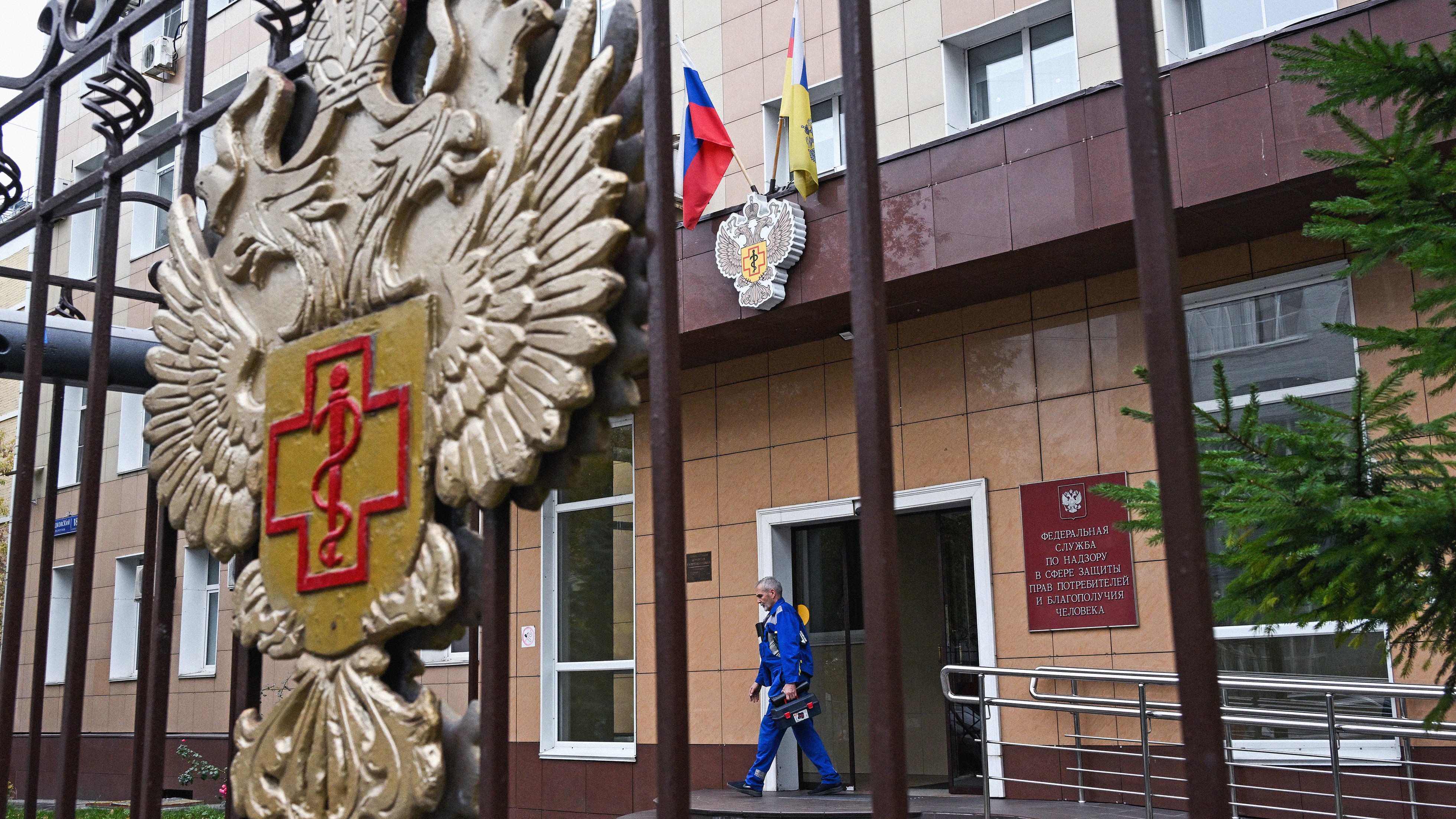
Here’s what is actually known. Sometime in the past week, a woman who worked at the Irkutsk Anti-Plague Research Institute of Siberia and the Far East, not far from the Mongolian border, died of “pneumonia of an unknown cause,” Rospotrebnadzor, Russia’s agency for consumer protection and public health, said Sunday. Government officials have not confirmed her identity, but Russian media have reported that the woman was Daria Shipilova, a 27- or 28-year-old technician at the lab. A local official said that the hospital where she was treated has been placed under quarantine; local media, meanwhile, reported that several hospitals were under quarantine. And Igor Kobzev, the governor of the Irkutsk region, said in a statement on Friday that other people—local media later reported the number as 200—may have been in contact with a resident who contracted an “especially dangerous infection,” and were placed under medical observation. He did not identify the resident as Shipilova or say that the person had died. The public-health agency told state media that “no micro-organisms linked to her professional activity were identified in the patient’s samples” and that no contacts have experienced “health changes related to infectious pathology.” Meanwhile, an aluminum factory in the same town as the laboratory imposed a mask mandate for its more than 2,000 employees, TheWall Street Journal reported.
Plague might sound medieval, but it’s endemic among animals in many parts of the world today. Although Russia hasn’t reported any plague cases to the WHO since at least 2018, Mongolia has. An average of seven cases are recorded in the United States every year, typically from a flea bite or handling infected animals. More than 80 percent of U.S. cases are the bubonic form of the disease, which presents with swollen, pus-filled lymph nodes. Two other main forms of plague, all caused by the same bacterium, are also occasionally reported around the world: septicemic, which infects the blood, and pneumonic, which infects the lungs. Because the lab worker died of pneumonia, speculation that she’d died from plague centered on this last form.
Pneumonic plague is the sole form of the disease that can transmit between humans, but that doesn’t mean it’s particularly likely to spread. David Wagner, the executive director of Northern Arizona University’s Pathogen and Microbiome Institute, told me that the respiratory droplets that can spread pneumonic plague—not to be confused with the tinier aerosols that can spread diseases such as flu and COVID—are only released during a cough or sneeze and only travel about three to six feet. “You have to be in very close proximity to someone with pneumonic plague to contract it from them,” he said.
Because transmission between humans is relatively difficult, the Russian government’s response to the mystery death from pneumonia—placing 200 people under medical observation—is “really incongruent with what you would expect for plague,” Amesh Adalja, an infectious-disease physician at Johns Hopkins University, told me. Daniel Jernigan, the former director of the CDC’s National Center for Emerging and Zoonotic Infectious Diseases, told me that response was “above and beyond” what is typically required for plague cases. Perhaps, he said, the Russian authorities acted out of an abundance of caution; per Reuters, a local official recently said that most of the hospital workers who had been placed under quarantine have already been released.
Even if Shipilova did die of plague, fears of a larger outbreak are probably moot by now. Plague has an incubation period of only one to seven days, so anyone Shipilova might have exposed would have come down with symptoms by now, Jernigan said. Russian authorities have said that no one under medical observation has tested positive for plague. Generally speaking, the chances of a large outbreak of plague are slim. “Once you have an accurate diagnosis, it’s readily treated with multiple types of antibiotics, which is why we don’t have massive plague outbreaks and pandemics anymore,” Wagner said.
Very quickly, though, some scientists, security experts, and media outlets began speculating that whatever killed Shipilova was not traditional pneumonic plague, but a dangerous pathogen that had been somehow altered in the lab. The fear is that the pathogen could be resistant to antibiotics or other treatments, making it harder to prevent an outbreak. No evidence so far suggests that’s true or that the Irkutsk lab was modifying plague bacteria to make it more dangerous. Still, the host of unanswered questions surrounding this case has paved the way for conjectures about links to biological weapons and for conspiracy thinking about government collusion and vaccine companies set to profit off a plague pandemic.
Some Russian media outlets reported—and international outlets repeated—that the woman contracted plague after she broke a test tube containing a sample of the disease. (If that was the case, Adalja said, the lab should have followed the standard procedure of prescribing antibiotics immediately after exposure, which has not been reported.) And in the past, the Russian government has worked on bioterrorist agents and hidden the true cause of disease outbreaks. For example, Soviet officials attributed a 1979 anthrax outbreak that killed at least 64 people to contaminated meat. More than a decade later, President Boris Yeltsin admitted that the anthrax had come from a military biological-weapons facility.
The war in Ukraine has increased speculation about planned biological threats. In 2022, the Russian military began refurbishing a Soviet-era laboratory to handle deadly pathogens such as Ebola viruses, The Washington Post reported. “There’s just a standard lack of transparency from the Russian government that adds to the vacuum of information,” Adalja said.
The U.S. government, for its part, has given inconsistent signals about whether it believes that the incident has wider implications. Along with the State Department, the CDC and the Administration for Strategic Preparedness and Response are reportedly working to learn more about the death. But Secretary of State Marco Rubio downplayed the possibility of danger to reporters yesterday, saying, “I don’t think it’s cause for alarm, but it is cause for focus and a cause to just keep an eye on it.” Today, he called on Russia to be more transparent and share more information. President Trump has offered his sympathies to Russia and said that the U.S. will offer help, though he didn’t specify what form that would take. (The White House did not respond to a request for comment.)
The strong public reaction to the death in Siberia can likely be attributed to some surface-level similarities to the early days of the coronavirus pandemic—a mysterious respiratory disease, rumors of a lab leak, an initial response being handled by a secretive government. Still, the experts I spoke with were adamant that pneumonic plague would not be another COVID-19. Plague may not be totally relegated to the history books, but a major outbreak is low on the list of real threats.
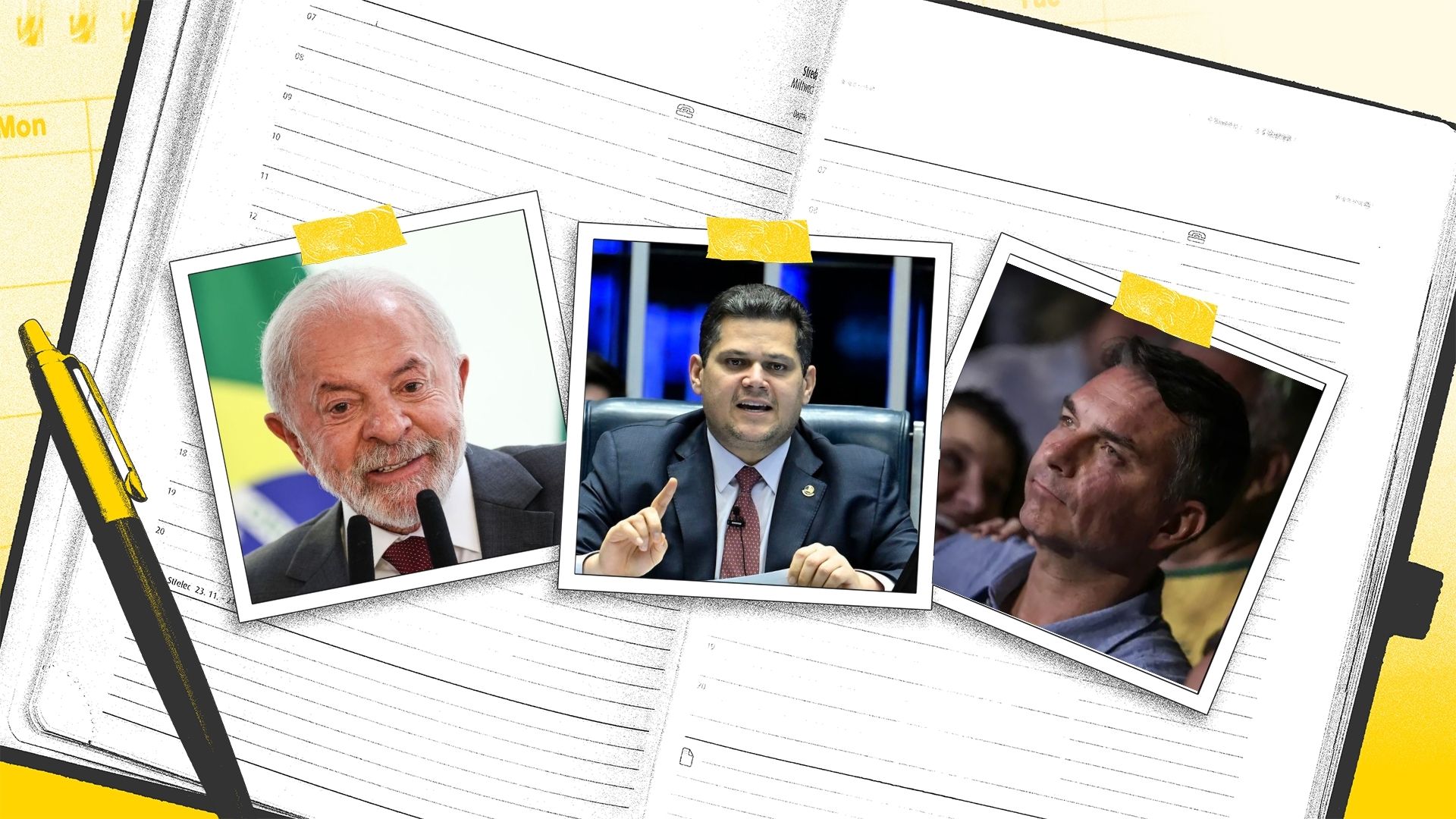
Após o primeiro turno das eleições, o Senado Federal volta a discutir o fim da escala 6×1 a partir desta terça-feira, 6 de outubro. A Proposta de Emenda à Constituição (PEC) 221/2019 reduz a jornada de trabalho para 40 horas semanais, com a possibilidade de dois dias de repouso remunerado. O Plenário realiza sessões para debater a PEC também na quarta-feira e na quinta-feira, 8 de outubro, a partir das 14h.
A análise entra na agenda do Plenário após negociações na última semana entre o presidente Lula e a cúpula do Senado para destravar o andamento da PEC. Em nota à imprensa, postada na Agência Senado, Davi Alcolumbre (UNIÃO-AP) afirma que a decisão surge a partir da “ampla relevância para a sociedade brasileira”.
Também nesta terça-feira, 6, cumprindo a Medida Provisória nº 1.394/2026, assinada por Lula, as empresas de apostas e as fintechs deverão terminar suas atividades e informar às instituições financeiras sobre os saldos dos clientes que não sacaram seu dinheiro até essa segunda-feira, prazo final para brasileiros sacarem o dinheiro dos aplicativos. Entre os dias 9 e 14 de outubro, as empresas deverão restituir dinheiro aos apostadores.
Corrida Eleitoral
Com a definição de um segundo turno entre o presidente Lula (PT) e o senador Flávio Bolsonaro (PL-RJ) para a presidência da República, os outros candidatos começam a discutir seu apoio para o segundo turno, dia 25 de outubro. O candidato Augusto Cury (Avante) disse que não pretende continuar na política e declarou que não vai apoiar ninguém para o segundo turno.
O mesmo ocorreu com Renan Santos (Missão), que não declarou seu apoio, mas, em live na segunda-feira, 5 de outubro, afirmou que seus eleitores podem escolher em quem votar. Ronaldo Caiado (PSD) comunicou que não irá declarar seu apoio sem antes se reunir com o presidente do partido, Gilberto Kassab. Sem posicionamento direto de apoio ao candidato Flávio Bolsonaro, Romeu Zema (Novo) declarou que vai estar contra o PT.
Com um período mais curto para o segundo turno, Lula, que teve 45,16% dos votos, em seu discurso pós-apuração declarou que irá começar com uma nova campanha. Para o presidente, o segundo turno irá mostrar “a verdadeira democracia do Brasil”. Nesta segunda-feira, 5, o presidente se reuniu com apoiadores para discutir novas estratégias de campanha.
Em contrapartida, Flávio Bolsonaro comemorou o resultado nas urnas. Nesta segunda-feira, o senador se encontrou com o deputado federal Nikolas Ferreira (PL-MG) e com o governador de São Paulo, Tarcísio de Freitas (Republicanos), ambos reeleitos, para discutir sobre as estratégias de campanha para o segundo turno.
Estão na agenda da semana de 6 a 10 de outubro:
TSE:
Salvo-conduto (06/10): último dia em que o documento de salvo-conduto, emitido pela Juíza Eleitoral, protege a integridade de eleitores que sofreram ameaças ou agressões para influenciar seu voto.
Eleitor pode ser preso (06/10): Fim do período em que eleitores não poderiam ser presos.
Justificativa do mesário (07/10): último dia para os mesários justificarem abandono do trabalho durante a votação.
Cadastramento (08/10): início do cadastramento das Mesas Receptoras de Justificativa e alocação temporária de seções para o segundo turno.
Propaganda eleitoral (09/10): Início da propaganda eleitoral nas rádios e na televisão.
Fundo Especial de Financiamento de Campanha (FEFC) (09/10): Último dia para a transferência, pelas agremiações, de recursos do FEFC destinados às candidatas e aos candidatos a cargos majoritários que concorram ao segundo turno.
Candidatos não podem ser presos (10/10): A partir desta data, candidatos que vão disputar segundo turno não podem ser presos, exceto em prisão em flagrante.
STF:
Exclusão de créditos (RE 835818, 07/10, 14h): Recurso Extraordinário avalia se há possibilidade de exclusão os créditos presumidos de Imposto de Circulação de Mercadorias e Serviços – ICMS, do cálculo do PIS e da Cofins.
Subordinação dos policiais penais (ADI 7781, 07/10, 14h): Ação direta discute constitucionalidade da lei de São Paulo em subordinar a polícia penal à Secretaria de Segurança da Administração Penitenciária.
Cargos em Comissão (ADI 7512, 07/10, 14h): Ação Direta de Inconstitucionalidade questiona a validade da lei amazonense, Lei Estadual 3.147/2007, que estabelece 10% dos cargos em comissão para servidores de carreira.
Expurgos inflacionários (RE 1141156, 07/10, 14h): volta a julgamento recurso extraordinário que discute a validade da inclusão dos expurgos inflacionários na correção monetária de depósitos judiciais.
Adicional de Insalubridade (ADPF 1181, 07/10, 14h): Governo Estadual do Espírito Santo entra com ação contra decisão da Justiça do Trabalho em obrigar o governo a pagar adicional de insalubridade de 20% para merendeiras e auxiliares de serviços gerais terceirizados da rede pública de ensino.
Agenda da semana daPúblicaé um serviço apresentado aos leitores, concebido com base nas informações dos portais da Câmara, Senado e STF.
Secretary of Defense Pete Hegseth is again focusing his attention on junior officers and noncommissioned officers. In a speech delivered September 30 at the Marine Corps base in Quantico, Virginia, he invoked a verse he has frequently cited, Isaiah 6:8—
And I heard the voice of the Lord, saying:
Whom shall I send,
And who will go for us?
Then I said: Here am I; send me.
Understandably, in these remarks he does not quote a rather more applicable previous verse:
Then said I:
Woe is me! For I am undone;
Because I am a man of unclean lips.
Isaiah volunteered for the solitary and dangerous task of reproaching a corrupt court that confused ritual with faith, filled with those who oppress the widow and the orphan, “grind the face of the poor,” and “declare their sin as Sodom, they hide it not.” He was, according to the Talmud, eventually sawed in two by the evil king Manasseh. The eighth-century B.C.E. prophet was not joining a military of well more than 1 million men and women with competitive pay, excellent lifelong benefits, and the right to board an airplane ahead of an 80-year-old grandmother.
Hegseth is a ludicrous figure in many ways—the strutting sycophant who has promised a military with “no fatties, no trannies, no beardos, no weirdos”; the flaunter of push-ups that are performative but out of regs; the grown man stuck at the development level of an angry first lieutenant; the testosterone-obsessed infantry officer who, unlike most of his peers, never managed to earn a Ranger tab. Even so, we should take what he is saying seriously.
Following the Quantico speech, Hegseth spoke to cadets at the U.S. Air Force Academy before the annual Air Force–Navy football game. In what is now his stump speech, he called them “the real one percent” of our society who have “a perspective that 99 percent of Americans do not have.” For 251 years, he said, America has required “the absolute best” to stand up and redeem the rest of us.
It is not only balderdash, but dangerous balderdash. With the greatest possible respect for the work of the all-volunteer military of the past 50 years—with acknowledgment of its hardship, suffering, and loss—the fact is that the armed forces of the United States have fought the country’s most important and difficult wars not with the one percent, but with all the rest of us: the doughboys and the GIs who cheerfully or reluctantly went when called, and who yearned to get the job done, go home, and resume civilian life.
George Washington’s Continentals were vital to winning American independence—but so, too, were the thousands of militiamen who harried British troops. The Civil War was won with mass armies; the American Expeditionary Force of World War I was filled by soldiers inducted through the Selective Service System, as were the armies of World War II, Korea, and Vietnam. In American history, only our lesser wars were fought exclusively with volunteers, and many of those who fought them were recent immigrants looked down upon by those who got here before them.
In the fall of 1863, Abraham Lincoln contemplated conscription for the Union armies. In his cool appraisal, he noted:
At the beginning of the war, and ever since, a variety of motives pressing, some in one direction and some in the other, would be presented to the mind of each man physically fit for a soldier, upon the combined effect of which motives, he would, or would not, voluntarily enter the service. Among these motives would be patriotism, political bias, ambition, personal courage, love of adventure, want of employment, and convenience, or the opposites of some of these.
Just so. People enlist for all kinds of reasons, but not necessarily because they are morally, physically, or mentally the best.
Moreover, the brute fact is that the challenges faced by our professional forces have been different from and smaller than those confronted by America’s previous mass militaries of short-term volunteers and conscripts. Again, with respect and gratitude to today’s American soldiers, the Iraqis, Taliban, and Iranians were lesser opponents than the Wehrmacht, the Korean People’s Army, the Chinese People’s Liberation Army, and the People’s Army of Vietnam.
Against its more recent enemies, the United States has brought to bear infinitely superior weapons, an array of allies, and usually greater numbers. It is a far cry from American sailors up against Japanese heavy cruisers and German U-boats; American soldiers staring down the barrel of the 88-millimeter gun on a King Tiger tank from a much-flimsier Sherman or watching bazooka rounds bounce off a T-34; or airmen jousting with Russian-piloted MiG-15s over the Yalu River.
What is even worse than biblical illiteracy and historical ignorance from this product of Princeton and Harvard Universities is a project about which he seems to be deadly serious: the cultural isolation of the military. His speeches subtly denigrate the general officer corps and focus on the most impressionable segment of the military, those old enough to have bought into the system but young enough to be naive about its merits.
What Hegseth is saying amounts to this: You are better than 99 percent of your fellow Americans. You are better physically and morally. You are crusaders, and they—particularly the media and the intellectuals—are not only uncomprehending of your merits but ready to subvert you. They are traitors. We want to select you from a specific slice of society: We want socially conservative young men and (very few) women from Liberty University and Hillsdale, not from liberal research universities and colleges. We want you to be isolated on bases from the rest of this corrupt society, which we despise, as should you.
It is profoundly dangerous stuff, the antithesis of what soldiers such as George C. Marshall or Dwight Eisenhower believed, that the soldier is a citizen first, that one cannot adequately defend this society without believing in its values and its essential goodness, that an air of contempt is incompatible with a life of self-abnegation.
A Hegsethian cult of military superiority over civilians is not only unwarranted, but actively dangerous. If allowed to fester, it will breed a military detached from America, poorly educated, and contemptuous of the press and all politicians save those of the Trumpian stripe. The force will be narrowly recruited, unrepresentative of a magnificently diverse country, insular, and obsessed with technical matters. It will resemble nothing so much as the Imperial German Army that led its country to disaster in World War I. That the secretary of defense, himself bearing a Crusader tattoo, begins this project by quoting a lonely man of faith is little short of blasphemy.
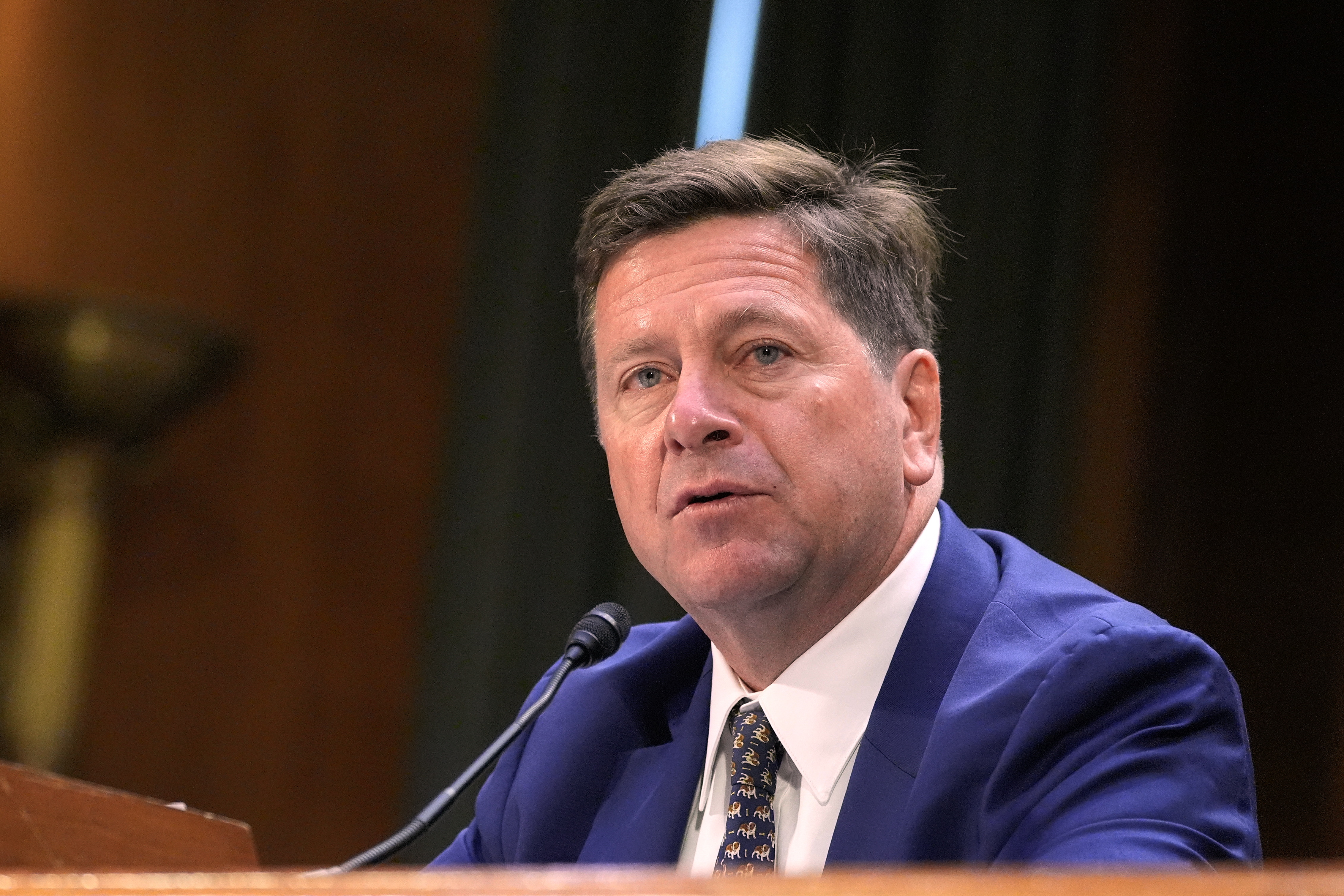
Trump said Clayton will lead the White House's new "Super Intelligence Force," which will coordinate government engagement with artificial intelligence.
Jay Clayton avrà 120 giorni per valutare rischi e opportunità dei sistemi più avanzati. Sullo sfondo la competizione con Pechino, il ruolo del Pentagono e il rapporto con le big tech
There was a time when moderation was a virtue and the middle ground, wisdom. Hyperbole was no more than a literary or rhetorical device. But not anymore. We live at the extremes. Raising everything to its highest possible level is the zeitgeist fate has handed us, and it comes with a suffix that colonizes the internet: maxxing. A highly versatile suffix: placed after the right word it means that, whatever you do, you are giving it your all.
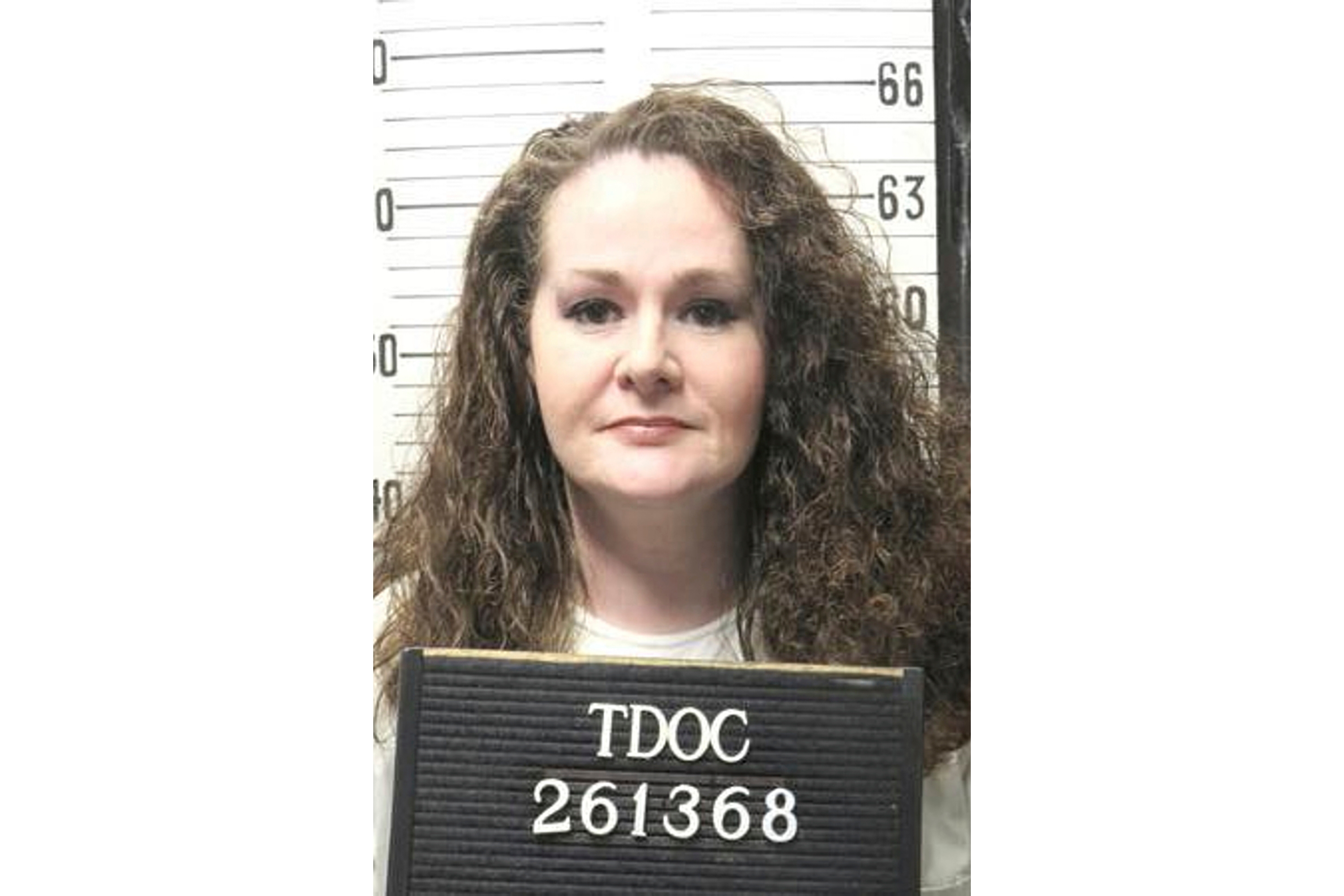
Il presidente promette di ampliare i reati punibili con la pena capitale. Il Tennessee sospende le esecuzioni dopo il caso Pike, mentre una sentenza della Corte Suprema del 2008 lascia aperto il nodo dei grandi narcotrafficanti

 Login