❌

Reading view

High Altitude Balloons Are A “Game-Changing” Capability: Army Space Command Boss

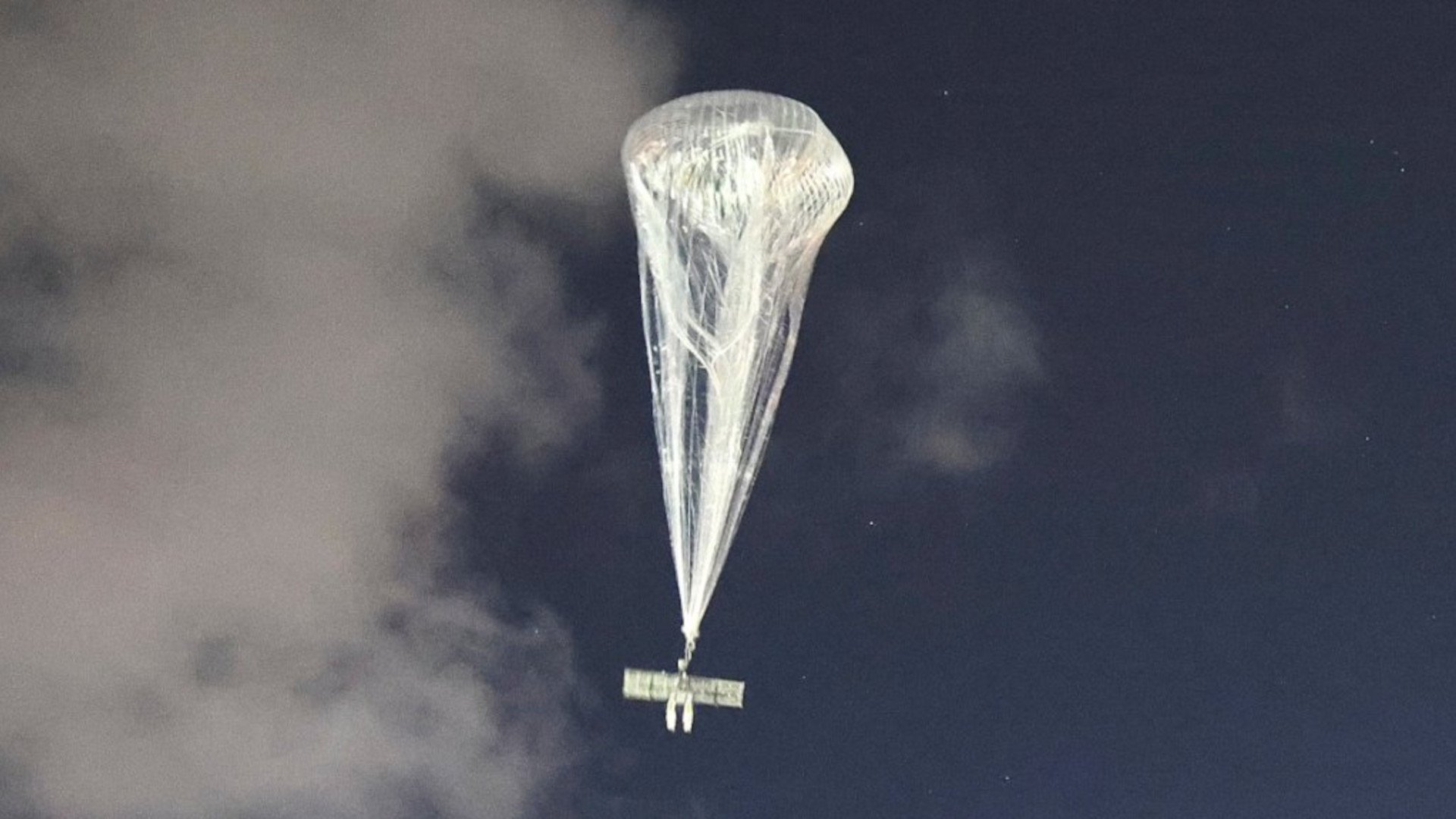
The head of the U.S. Army Space and Missile Defense Command (SMDC) was initially skeptical about the utility of high-altitude balloons, but now sees them as a “game-changing” capability. Lt. Gen. John Rafferty’s comments follow a separate disclosure that the Army axed plans for a balloon swarm test in the Pacific last year and instead sent those systems to support real operations in the Middle East. TWZ has been closely tracking the expanding use of high-altitude balloons and other lighter-than-air systems globally for intelligence gathering, as platforms for launching drones, and in support of other missions, for years now.

Lt. Gen. Rafferty was asked about high-altitude balloons during a media roundtable today, at which TWZ was in attendance, on the sidelines of the Association of the U.S. Army’s (AUSA) main annual convention. Army Col. Joseph Mroszczyk, head of SMDC’s Transformation Integration Directorate for Space Superiority (TID-Space Superiority), also discussed the service’s use of balloons during the roundtable. Breaking Defense first reported on the shift of balloon-based capabilities from the Pacific to the Middle East on Monday.

“I’ll just give a little personal history on high-altitude balloons. I started in the Army Futures Command in the Long Range Fires-Cross Functional Team. There was this talk of high-altitude balloons. I think it was the ISR [intelligence, surveillance, and reconnaissance] task force was talking about it,” Rafferty said. “It just sounded crazy to me that we were considering this.”

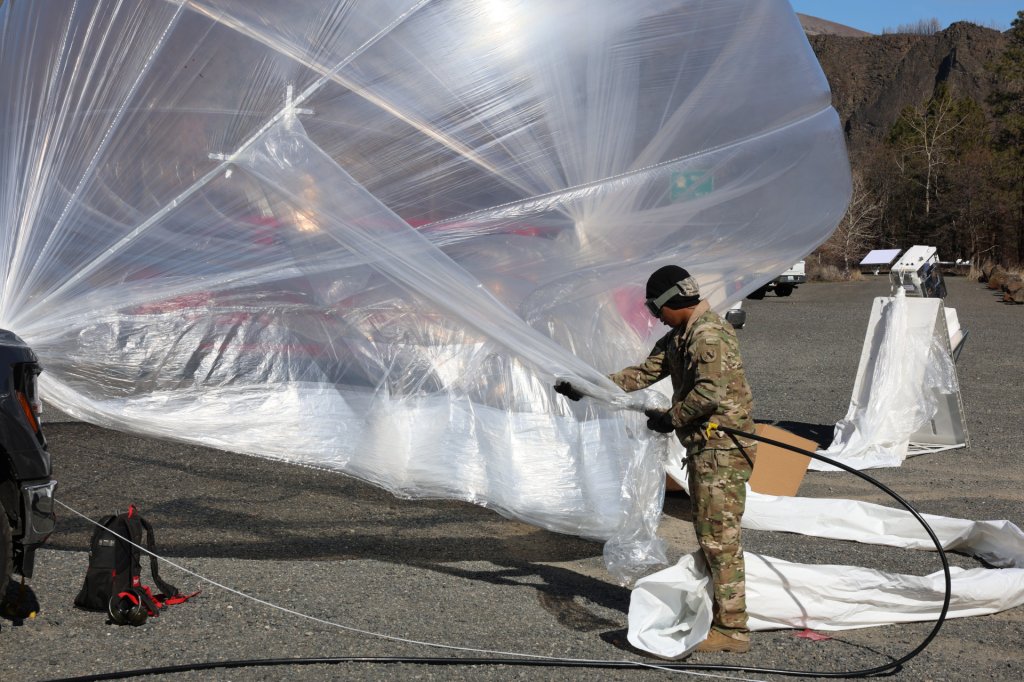
US Army personnel prepare to launch a high-altitude balloon during an exercise. US Army

“Then, a few years later, when the Sergeant Major [SMDC Command Sgt. Maj. Rickey Jackson] and I were together in the multi-domain community in Europe, I went with the 2nd MDTF [Multi-Domain Task Force] to Morocco for training and experimentation,” he continued. “[I] saw the high-altitude balloons in action, and I was immediately convinced after I understood better how they worked and how their ability to station-keep, and their ability to sense and even deliver effects from high altitude. It was game-changing for me.”

Broadly speaking, the main benefit that modern high-altitude balloons offer is their ability to be deployed persistently for days, weeks, or even months at a time. Designs available on the market today can hold their position, in spite of prevailing winds, and moderate their altitudes to keep on station, after precisely navigating to an assigned operating area.

On top of their persistence, the altitudes at which these balloons operate provide excellent fields of view for radars, cameras, and other sensors in all directions and across very broad areas. From a perch of 60,000 feet or more, they also offer a way to peer into certain denied areas while still soaring in international airspace and keeping further away from potential threats.

The video below from high-altitude balloon maker Aerostar offers a good general overview of the kind of capabilities on the market today.

As Lt. Gen. Rafferty noted today, ISR is not the only use case for high-altitude balloons, either. They can serve as communications relay nodes, as well as launch platforms for swarms of drones and other expendable payloads. These are all capabilities the Army has explicitly talked about as part of broader plans for balloons in the past. Other countries, especially China, are already actively employing high-altitude balloons for ISR and other missions, as we will come back to later on.

“In my former role as an MDTF commander, we experimented a lot in the Pacific with those [balloon-based] capabilities. We have leveraged different size platforms,” Col. Mroszczyk added today. “In this [TID-Space Superiority] role, as a proponent, what I’m pushing for is a family of stratospheric systems that really covers smaller size all the way up to larger size types of platforms in terms of balloons.”

“What that enables us to provide is space-like capabilities, really exploiting a transition point between what is normally considered the aerial layer and the space domain,” he continued. “Really, where you go from about 60,000 feet to 100,000 feet is what we focus on in the stratosphere. That operational space allows some persistence and broad coverage in an area where you can deliver space-like capabilities in terms of payloads, but then also take advantage of the deep access that you get from a stratospheric balloon.”
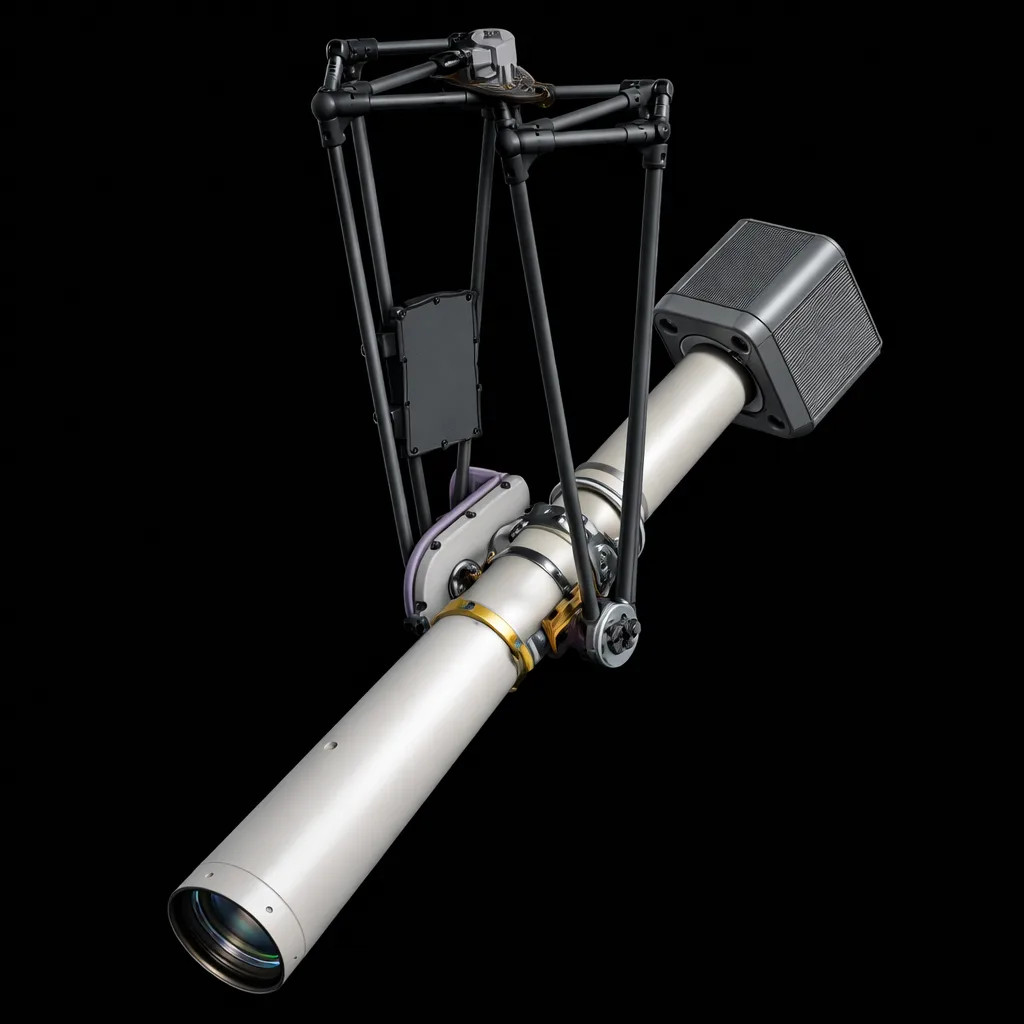
An element of a sensor payload called Wallabee designed to be carried aloft by high-altitude balloons. Urban Sky

“So, being able to go, take advantage of winds that are pushing you where you want to go already to be able to get either launched effects or other types of payloads for sensing and communications and extension of your launched effects portfolio,” he added. “That is a way that we can help exploit the stratosphere, and we’re looking to do that throughout multiple experiments over the course of the coming year.”

“Launched effects,” is a catch-all term the U.S. military now routinely uses to talk collectively about uncrewed aerial systems designed to be launched from other platforms in the air, on the ground, and/or at sea. This encompasses drones configured for a wide variety of missions, including surveillance and reconnaissance, electronic warfare, signal relay, and even kinetic attack.
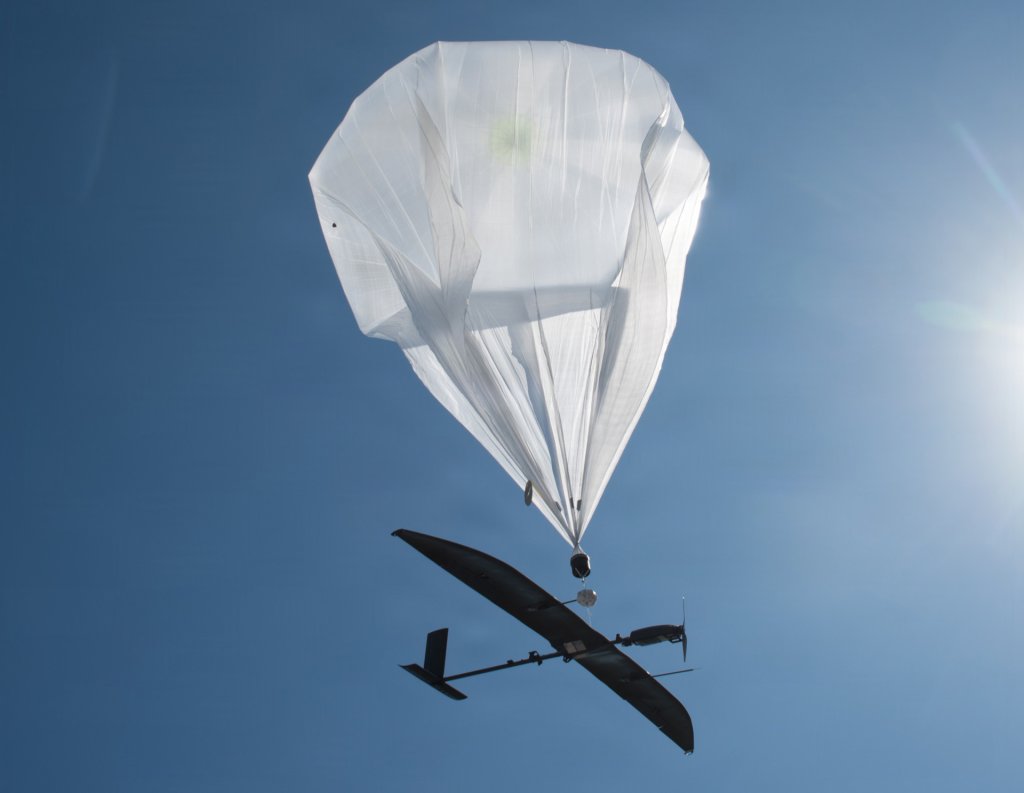
A high-altitude balloon with an Apollo-R drone suspended underneath, seen demonstrated here during the U.S.-led Exercise Orient Shield 26 in Japan earlier this year. US Army

Col. Mroszczyk talked about plans to further demonstrate how high-altitude balloons will be commanded and controlled, as well as networked together with other Army capabilities, when asked to elaborate on what the forthcoming experimentation would entail.

As mentioned, the Army had also planned to demonstrate the ability of balloons to operate in swarms with a high degree of autonomy in the Pacific region last year before those assets were redirected to the Middle East. When exactly that deployment occurred and how long it lasted are unclear.

“We were asked to pivot and do some experimentation in combination with operations, and we pivoted and supported operations in CENTCOM [U.S. Central Command],” Andrew Evans, Director of Strategy and Transformation with the Office of the Deputy Chief of Staff of the Army, or G-2, told Breaking Defense, per the story that outlet published on Monday.

“They were effective for the mission that they were assigned,” he also said, but declined to elaborate further, according to Breaking Defense. “Balloons can be a little finicky in terms of temperature, and you have to contend with environmental characteristics.”
“We had a lot of help from vendors in this space, but as you think about employing your systems and going from something like a Pacific [theater] to something like a CENTCOM [theater], you learn where those friction points might exist between what the military might need to inherently own, and … what a vendor could help provide in terms of the service,” Evans added. Furthermore, “balloons can be a little finicky in terms of temperature, and you have to contend with environmental characteristics.”

Another stock picture of a US Army soldier inflating a high-altitude balloon during training. US Army/Staff Sgt. Brandon Rickert

The remarks today from Lt. Gen. Rafferty and Col. Mroszczyk underscore the Army’s commitment to fielding new high-altitude balloon-based capabilities and the immense benefits the service sees in them. However, the continued emphasis on testing and experimentation highlights a discrepancy with the state of the service’s current efforts, and even more so in light of global trends.

The Army has been openly talking about balloons as part of its vision for a new multi-layered persistent sensor architecture, and how they could also be used to launch drones and other ‘effects,’ for at least six years now. In that same time, China has very actively shown off its ability to gather intelligence and conduct other missions using balloons and other lighter-than-air craft on a broad operational level across the Pacific. TWZ had been reporting on this reality for years before it was thrust fully into the public consciousness after a Chinese spy balloon passed over parts of the United States and Canada back in 2023.

A graphic the Army released in 2020 showing a notional “operational view” for how a “Multi Domain Sensing System” made of various capabilities, including high-altitude balloons, might be employed. US Army

Other countries, including U.S. allies and partners, are increasingly fielding balloon-based and other lighter-than-air systems, too. Forces in Ukraine have notably been using balloons to conduct kinetic attacks and launch drones in the course of the ongoing conflict with Russia. On the other side of that conflict, Russian forces have used balloons as decoys to confuse and misdirect air defenses.

American-made Hornet middle-range strike UAV being tested with balloon-assisted launch system.

Such resolution allows to drastically increase its original range (approx. 100km).

Hornet OWA-UAVs are actively employed by Ukrainian forces for strikes on Russian logistics and other… pic.twitter.com/S1bHqLNhPY

— Status-6 (@Archer83Able) May 20, 2026

The Middle East deployment does show new efforts on the Army’s part to operationalize high-altitude balloons on a more widespread basis, but also that it is still relying on largely experimental capabilities to do so. Earlier this year, the service called attention to the establishment of a new schoolhouse for high-altitude balloon training to help further lay this groundwork, further underscoring how all of this is still very much in its infancy.

The remarks today from Lt. Gen. John Rafferty, especially, show there is substantial support within the Army for pushing ahead with high-altitude balloon programs. At the same time, there is clearly much work to be done if they are to have a truly game-changing impact, while the gap with China and others only continues to grow.

Contact the author: joe@twz.com

The post High Altitude Balloons Are A “Game-Changing” Capability: Army Space Command Boss appeared first on TWZ.
  •  

F-35C Makes First Arrested Landing Aboard A Ford Class Carrier

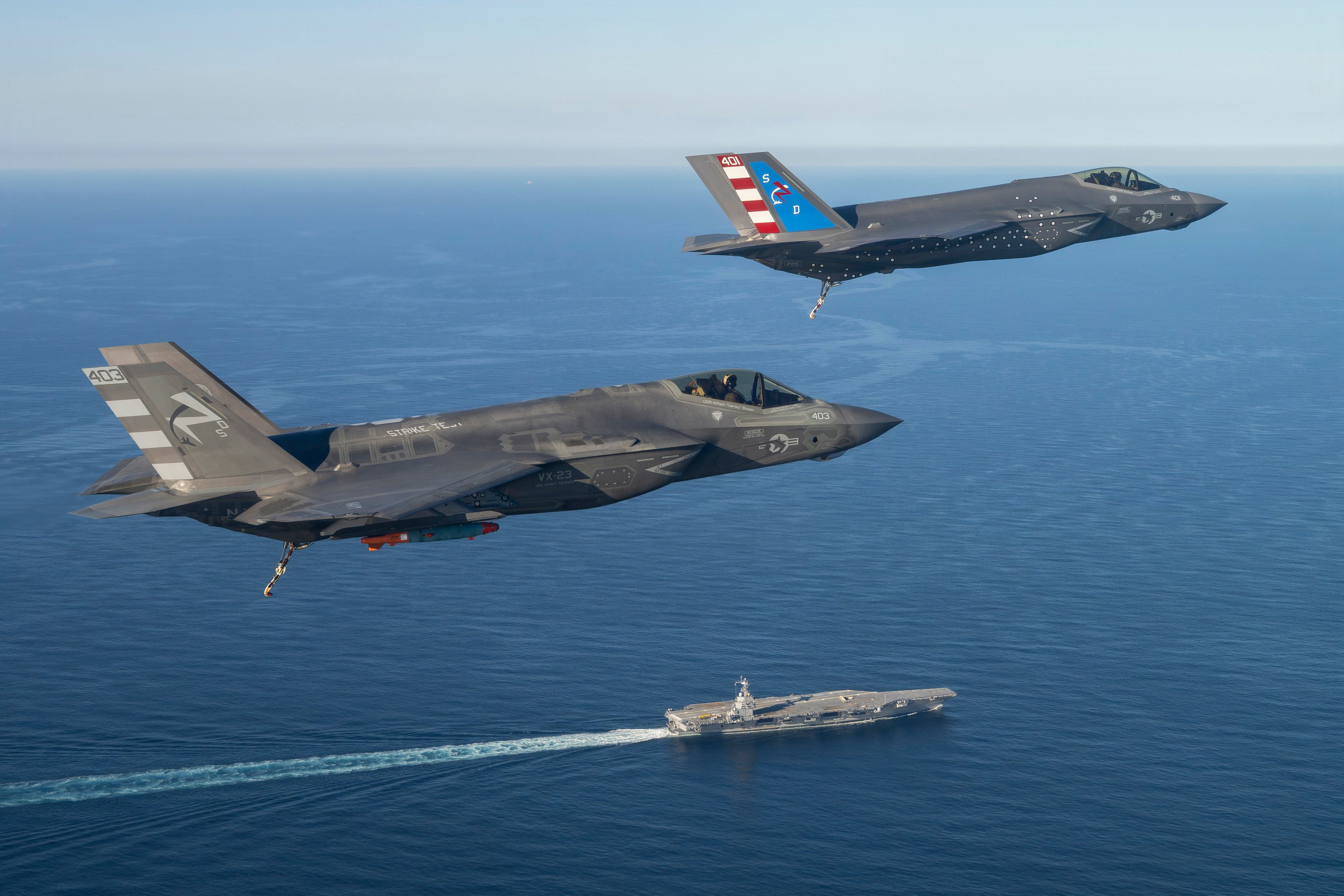
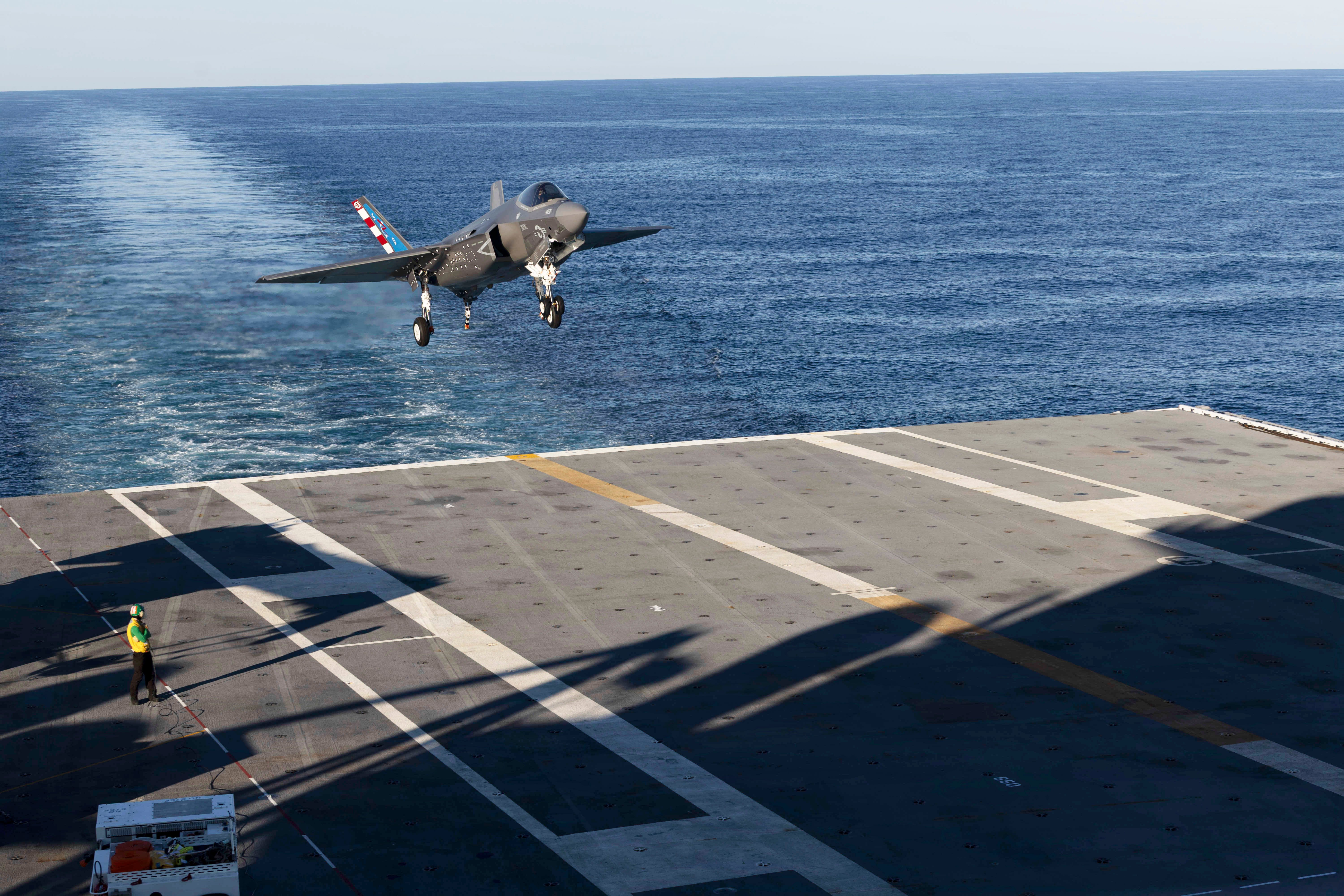
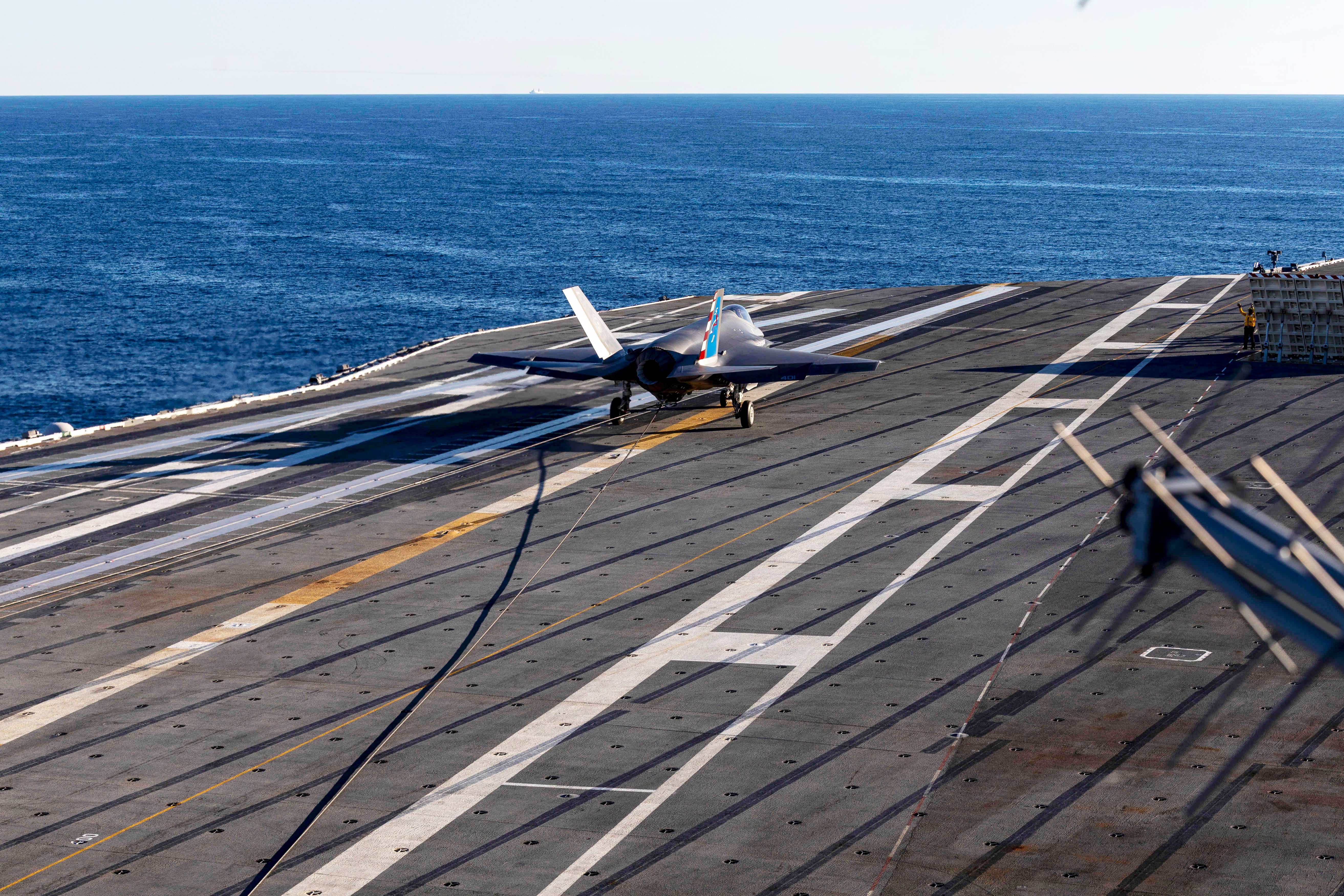
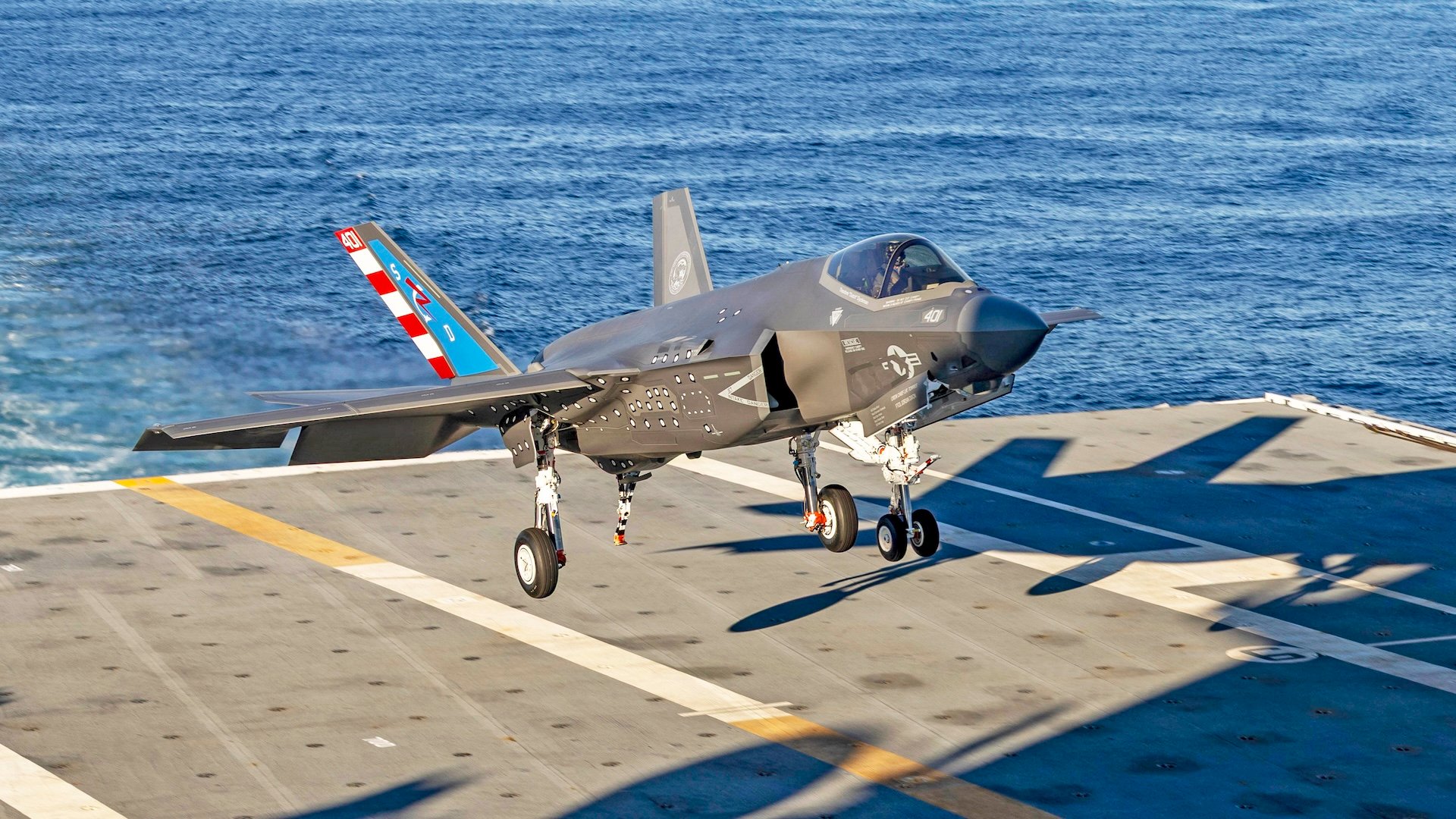
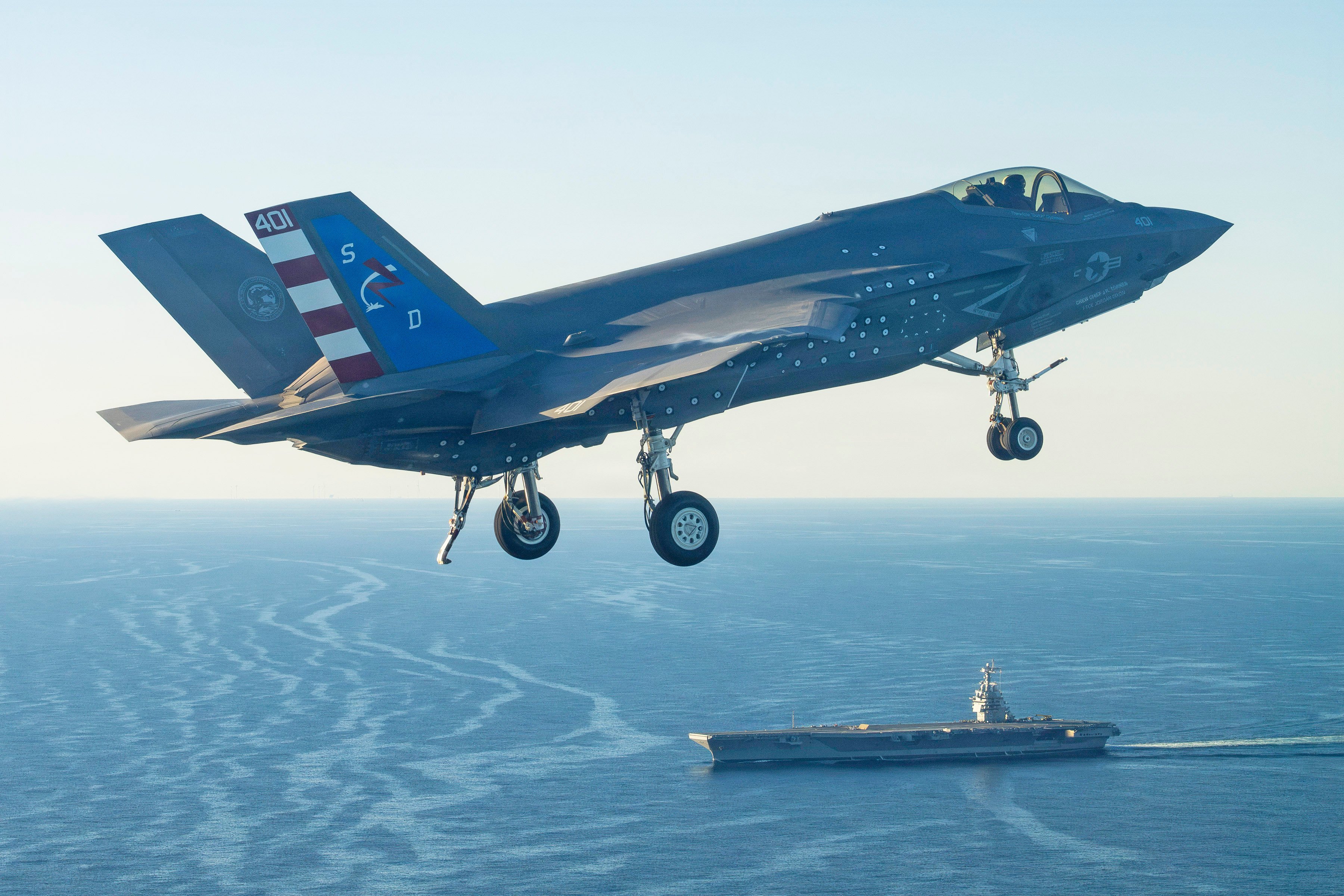
A U.S. Navy F-35C has made the first arrested landing for the type aboard a Ford class aircraft carrier, with the milestone taking place aboard the future USS John F. Kennedy (CVN 79) in the Western Atlantic on October 13, 2026. The milestone marks a major step in testing the Navy’s stealth fighter aboard its newest carrier class, following years of challenges integrating advanced launch and recovery systems.

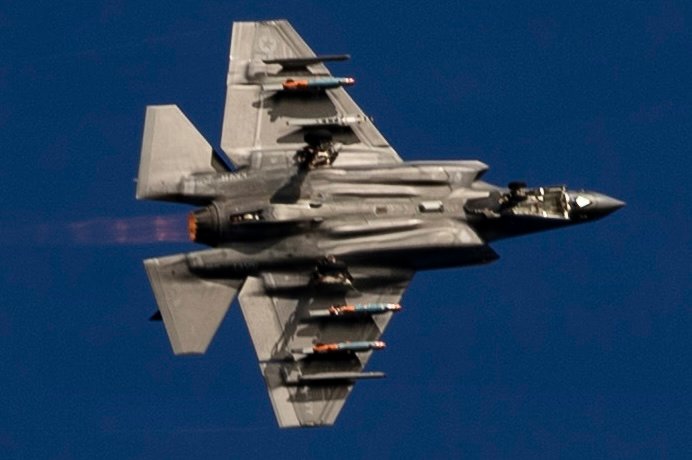
Two F-35C test pilots assigned to Air Test and Evaluation Squadron 23 (VX-23), part of the Naval Air Warfare Center Aircraft Division (NAWCAD), flew to the carrier as part of an ongoing Aircraft Compatibility Testing (ACT) campaign. A team from the Patuxent River-based F-35 Integrated Test Force (ITF), detached to the ship, is conducting the evaluation using a specially instrumented example of the carrier-capable stealth fighter. The imagery released shows two jets, although only one is seen landing on the flattop. The other is seen carrying inert Joint Direct Attack Munition (JDAM) bombs externally.

An F-35 test pilot from Air Test and Evaluation Squadron Two Three (VX-23), Naval Air Warfare Center Aircraft Division (NAWCAD), flies an F-35C Lightning II fighter aircraft to the PCU John F. Kennedy (CVN 79) in the Western Atlantic Oct. 13, 2026. This is the first time an F-35C has landed on a Ford-class aircraft carrier. A Patuxent River F-35 Integrated Test Force (ITF) team detached to the ship is conducting Aircraft Compatibility Testing (ACT) with the specially instrumented carrier variant of the stealth jet. ACT assesses the operational capabilities of the ship's aircraft launch and recovery equipment with U.S. Navy aircraft.
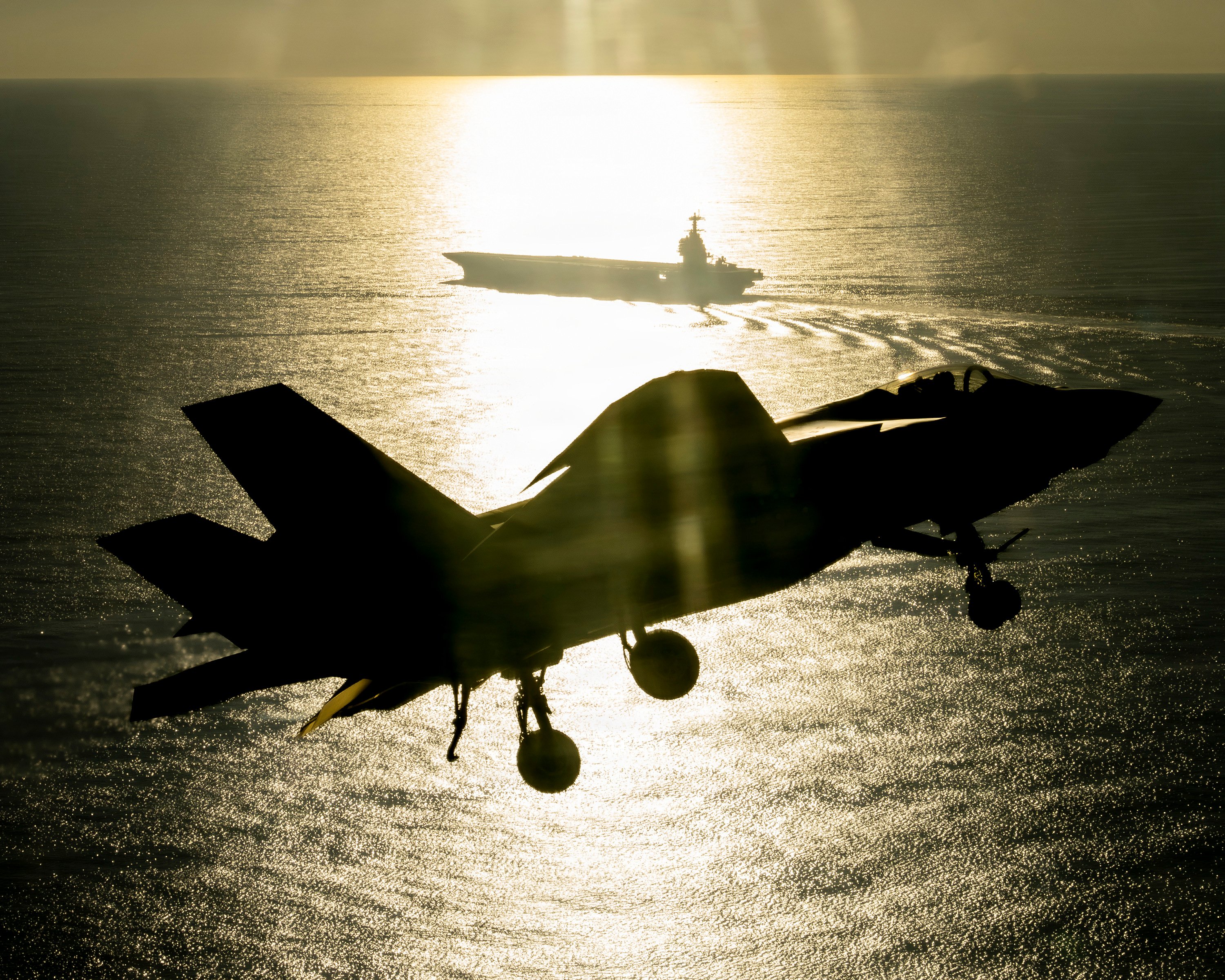
An F-35 test pilot from Air Test and Evaluation Squadron Two Three (VX-23), Naval Air Warfare Center Aircraft Division (NAWCAD), flies an F-35C overhead the PCU John F. Kennedy in the Western Atlantic on Oct. 13, 2026. U.S. Navy

The Navy took preliminary acceptance of the carrier from Newport News Shipbuilding on September 29, following successful acceptance trials in August. That development allows the ship and its crew to conduct at-sea testing and build underway proficiency while the shipbuilder completes final systems testing ahead of formal delivery, scheduled for spring 2027.

Two F-35 test pilots from Air Test and Evaluation Squadron Two Three (VX-23), Naval Air Warfare Center Aircraft Division (NAWCAD), fly F-35C Lightning II fighter aircraft to the PCU John F. Kennedy (CVN 79) in the Western Atlantic Oct. 13, 2026. This is the first time an F-35C has landed on a Ford-class aircraft carrier. A Patuxent River F-35 Integrated Test Force (ITF) team detached to the ship is conducting Aircraft Compatibility Testing (ACT) with the specially instrumented carrier variant of the stealth jet. ACT assesses the operational capabilities of the ship's aircraft launch and recovery equipment with U.S. Navy aircraft.
Two F-35 test pilots from VX-23 fly F-35Cs to the PCU John F. Kennedy in the Western Atlantic on Oct. 13, 2026. U.S. Navy

The test is an important step in validating the integration of the F-35C with the Ford class. The Navy’s newest carriers use electromagnetic catapults and advanced arresting equipment, replacing the steam-powered launch systems and conventional arresting machinery found aboard the preceding Nimitz class.

Aircraft Compatibility Testing assesses the operational capabilities of a ship’s aircraft launch and recovery equipment with U.S. Navy aircraft. The process helps engineers evaluate how the carrier’s systems interact with individual aircraft and collect data needed to validate their performance.

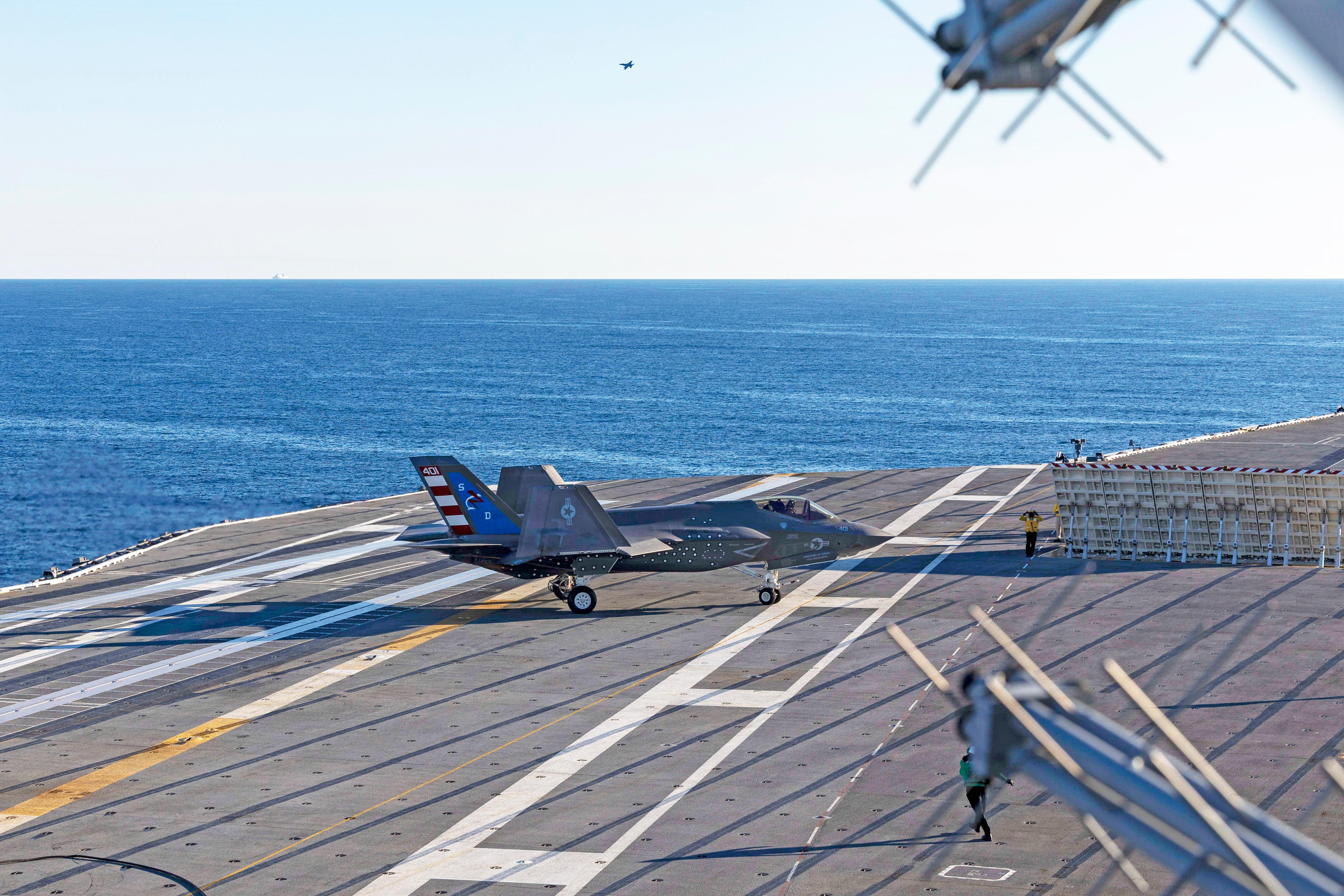
A U.S. Navy F-35C Lightning II, attached to the "Salty Dogs" of Air Test and Evaluation Squadron (VX) 23, makes an arrested landing on the flight deck aboard PCU John F. Kennedy (CVN 79), marking the first time an F-35C lands on a Ford-class aircraft carrier. John F. Kennedy is underway conducting Aircraft Compatibility Testing, which assesses the operational capabilities of the ship's aircraft launch and recovery equipment with U.S. Navy aircraft. (U.S. Navy photo by Mass Communication Specialist Seaman Kaitlyn Bailey)
A U.S. Navy F-35C of VX-23 makes an arrested landing on the flight deck aboard PCU John F. Kennedy. U.S. Navy photo by Mass Communication Specialist Seaman Kaitlyn Bailey
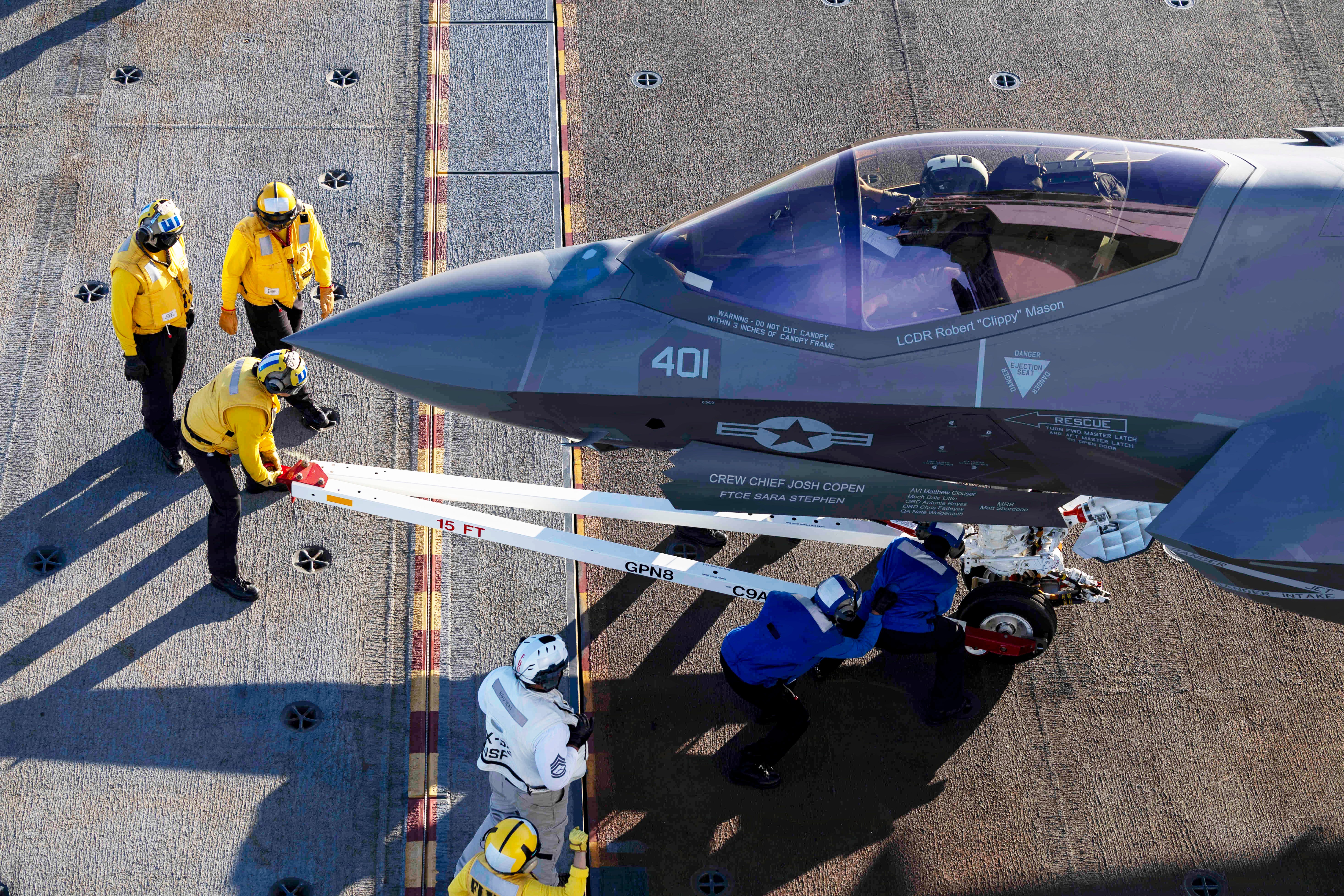
A U.S. Navy F-35C Lightning II, attached to the "Salty Dogs" of Air Test and Evaluation Squadron (VX) 23, makes an arrested landing on the flight deck aboard PCU John F. Kennedy (CVN 79), marking the first time an F-35C lands on a Ford-class aircraft carrier. John F. Kennedy is underway conducting Aircraft Compatibility Testing, which assesses the operational capabilities of the ship's aircraft launch and recovery equipment with U.S. Navy aircraft. (U.S. Navy photo by Mass Communication Specialist Seaman Kaitlyn Bailey)
A U.S. Navy F-35C of VX-23 catches the wire on the flight deck aboard PCU John F. Kennedy. U.S. Navy photo by Mass Communication Specialist Seaman Kaitlyn Bailey

The F-35C is specifically designed for carrier operations, with larger wings, reinforced landing gear and a beefier tail hook compared with the Air Force’s F-35A. Its ability to launch from a carrier and recover through an arrested landing is central to its role in the Navy’s carrier air wings, which also include F-35Cs operated by the U.S. Marine Corps.

The use of a specially instrumented aircraft is particularly relevant to the test campaign. Instrumentation allows test teams to record data during flight-deck operations, helping them assess system performance and identify any issues requiring further evaluation.

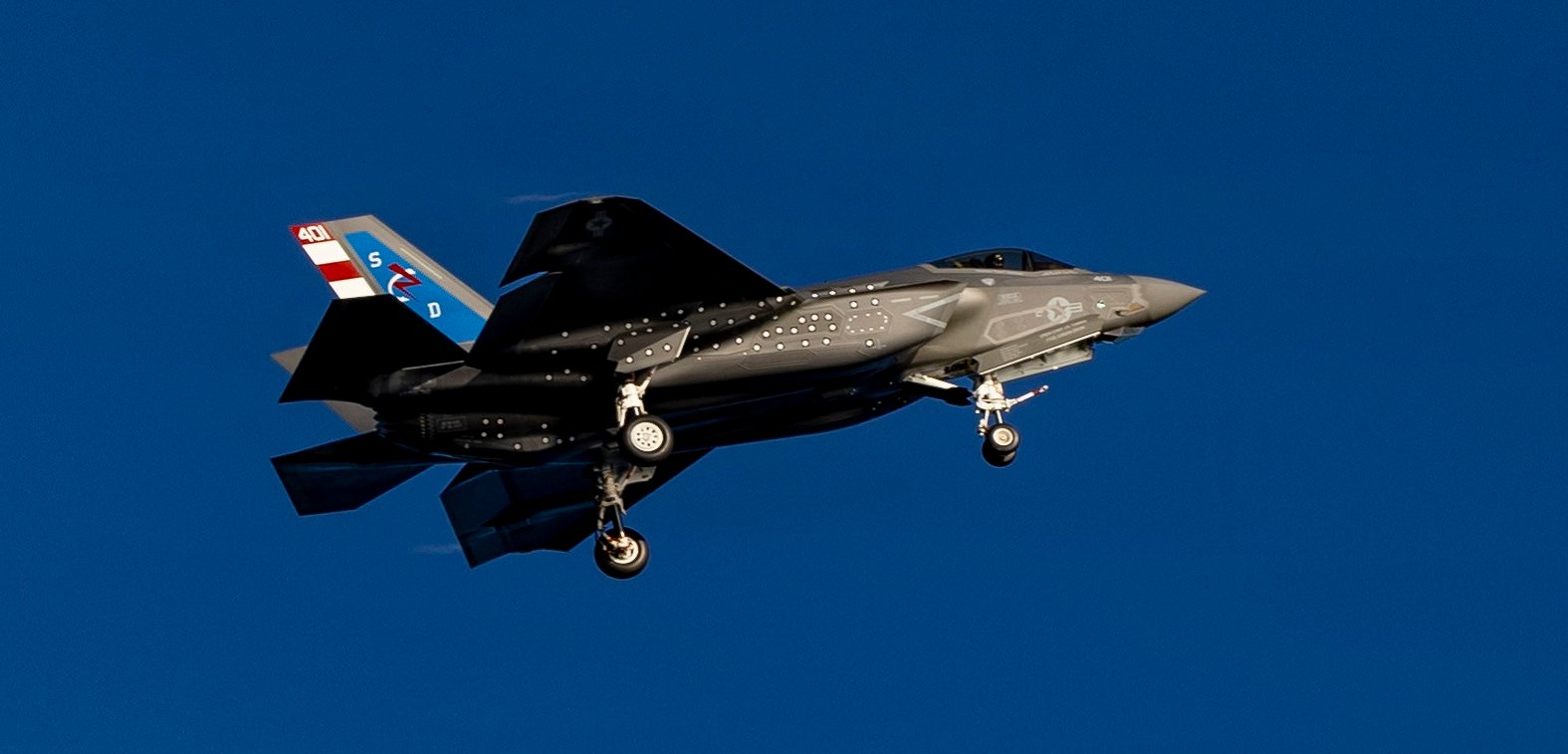
A U.S. Navy F-35C Lightning II, attached to the "Salty Dogs" of Air Test and Evaluation Squadron (VX) 23, makes an arrested landing on the flight deck aboard PCU John F. Kennedy (CVN 79), marking the first time an F-35C lands on a Ford-class aircraft carrier. John F. Kennedy is underway conducting Aircraft Compatibility Testing, which assesses the operational capabilities of the ship's aircraft launch and recovery equipment with U.S. Navy aircraft. (U.S. Navy photo by Mass Communication Specialist Seaman Kaitlyn Bailey)
A U.S. Navy F-35C of VX-23 with its airframe liberally adorned with telemetry markings — these act as precision visual references used during flight testing to capture exact spatial data. U.S. Navy photo by Mass Communication Specialist Seaman Kaitlyn Bailey
A U.S. Navy F-35C Lightning II, attached to the "Salty Dogs" of Air Test and Evaluation Squadron (VX) 23, makes an arrested landing on the flight deck aboard PCU John F. Kennedy (CVN 79), marking the first time an F-35C lands on a Ford-class aircraft carrier. John F. Kennedy is underway conducting Aircraft Compatibility Testing, which assesses the operational capabilities of the ship's aircraft launch and recovery equipment with U.S. Navy aircraft. (U.S. Navy photo by Mass Communication Specialist Seaman Kaitlyn Bailey)
A close-up of one of the U.S. Navy F-35Cs of VX-23 reveals a full set of underwing stores pylons and a load of three inert 500-pound JDAM-series weapons. U.S. Navy photo by Mass Communication Specialist Seaman Kaitlyn Bailey

The first arrested landing aboard John F. Kennedy demonstrates that the ship has reached an important F-35C compatibility milestone. It does not, however, establish that all testing, certification, or operational qualification requirements have been completed.

The milestone comes against the backdrop of the Ford class program’s difficulties integrating some of its advanced aviation systems. The lead ship, USS Gerald R. Ford (CVN 78), introduced the Electromagnetic Aircraft Launch System (EMALS) and Advanced Arresting Gear (AAG), technologies intended to improve aircraft-launch flexibility, recovery performance, and overall sortie generation. Development and reliability challenges with both EMALS and AAG have contributed to delays in the class’s progress. In a 2019 report, TWZ highlighted concerns that Ford class carriers would not be ready to operate the F-35C for years.

A U.S. Navy F-35C Lightning II, attached to the "Salty Dogs" of Air Test and Evaluation Squadron (VX) 23, makes an arrested landing on the flight deck aboard PCU John F. Kennedy (CVN 79), marking the first time an F-35C lands on a Ford-class aircraft carrier. John F. Kennedy is underway conducting Aircraft Compatibility Testing, which assesses the operational capabilities of the ship's aircraft launch and recovery equipment with U.S. Navy aircraft. (U.S. Navy photo by Mass Communication Specialist Seaman Kaitlyn Bailey)
A U.S. Navy F-35C makes an arrested landing on the flight deck aboard PCU John F. Kennedy for the first time. U.S. Navy photo by Mass Communication Specialist Seaman Kaitlyn Bailey

USS Gerald R. Ford was designed and built before the F-35C’s full carrier-integration requirements were sufficiently mature, so the Navy deferred several upgrades to a later modernization period rather than delaying the ship’s delivery. Following congressional pressure, the Navy adopted a single-phase delivery approach for USS John F. Kennedy, incorporating these modifications during construction instead.

The USS Gerald R. Ford completed its Aircraft Compatibility Testing in January 2020, following 16 days at sea, during which the crew launched and recovered 211 aircraft, testing five different airframes — but the F-35C was not included.

A U.S. Navy F-35C Lightning II, attached to the "Salty Dogs" of Air Test and Evaluation Squadron (VX) 23, makes an arrested landing on the flight deck aboard PCU John F. Kennedy (CVN 79), marking the first time an F-35C lands on a Ford-class aircraft carrier. John F. Kennedy is underway conducting Aircraft Compatibility Testing, which assesses the operational capabilities of the ship's aircraft launch and recovery equipment with U.S. Navy aircraft. (U.S. Navy photo by Mass Communication Specialist Seaman Kaitlyn Bailey)
A U.S. Navy F-35C, attached to VX-23, after an arrested landing on the flight deck aboard PCU John F. Kennedy. U.S. Navy photo by Mass Communication Specialist Seaman Kaitlyn Bailey

Beyond EMALS and AAG, integrating the F-35C on Kennedy requires modifications to the carrier’s maintenance infrastructure and support systems. These include specialized spaces for handling the aircraft’s sensitive mission systems and classified data, computer networks and interfaces linking its maintenance and logistics systems with the Navy’s existing infrastructure, and facilities and equipment to support the upkeep of its low-observable coatings and materials. The Navy has also identified the need for more robust jet blast deflectors (JBDs), which protect flight-deck personnel and equipment from the F-35C’s intense engine exhaust.

Earlier F-35C integration work aboard Nimitz class carriers included JBD modifications to improve heat resistance and cooling, while planning for John F. Kennedy explicitly included both JBD upgrades and changes to maintenance spaces and information systems.

An F-35 test pilot from Air Test and Evaluation Squadron Two Three (VX-23), Naval Air Warfare Center Aircraft Division (NAWCAD), flies an F-35C Lightning II fighter aircraft to the PCU John F. Kennedy (CVN 79) in the Western Atlantic Oct. 13, 2026. This is the first time an F-35C has landed on a Ford-class aircraft carrier. A Patuxent River F-35 Integrated Test Force (ITF) team detached to the ship is conducting Aircraft Compatibility Testing (ACT) with the specially instrumented carrier variant of the stealth jet. ACT assesses the operational capabilities of the ship's aircraft launch and recovery equipment with U.S. Navy aircraft.
An F-35 test pilot from VX-23 flies an F-35C to the PCU John F. Kennedy in the Western Atlantic on Oct. 13, 2026. U.S. Navy

The latest test represents progress toward resolving the compatibility question, although the full scope of the remaining work will depend on the results of the ongoing evaluation.

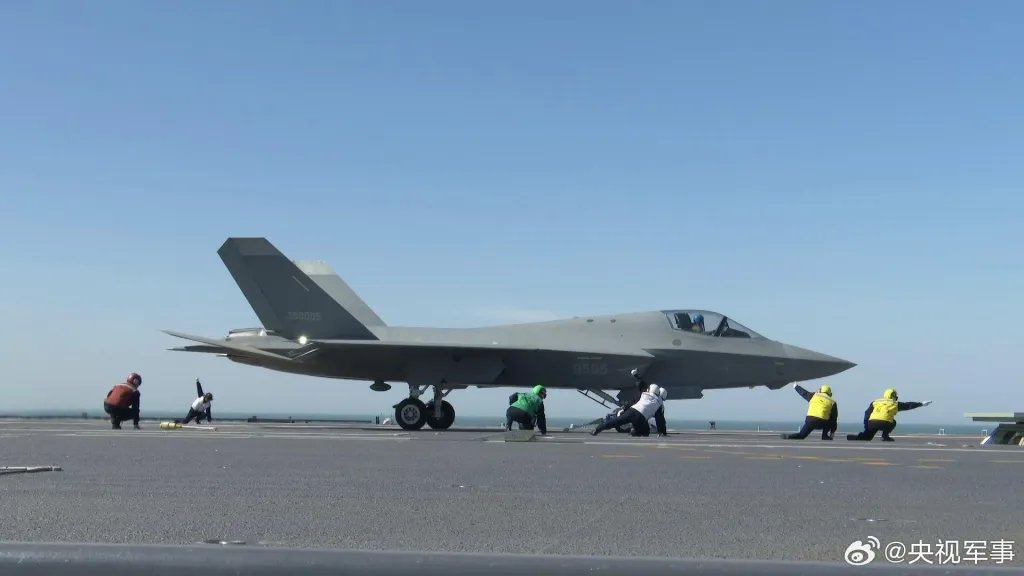
The development also comes as China advances its own carrier aviation capabilities. Unlike the U.S. Navy, its Fujian aircraft carrier has demonstrated electromagnetic catapult launches and arrested recoveries involving several aircraft types, including the J-35 stealth fighter.

A J-35 is prepared for takeoff on Fujian. via Chinese internet

In contrast to the U.S. Navy, which accumulated decades of experience with steam-powered catapults before adopting electromagnetic launch technology, China chose electromagnetic catapults for its first catapult-equipped carrier.

Although China’s demonstrations aboard Fujian and the F-35C compatibility testing aboard Kennedy involve different aircraft, ships, and stages of development, both underscore the technical demands of integrating advanced aircraft with modern carrier launch and recovery systems.

For the U.S. Navy, the immediate priority is to demonstrate that the Ford class can reliably support its intended aircraft. The F-35C’s first arrested landing aboard Kennedy is a significant step in that process, with further testing — not least an EMALS takeoff — needed before the milestone can begin to translate into an operational capability.

Contact the author: thomas@thewarzone.com

The post F-35C Makes First Arrested Landing Aboard A Ford Class Carrier appeared first on TWZ.

  •  

Sikorsky Aiming For Black Hawk ‘Nose Jobs’ To Be Available Within The Next Year

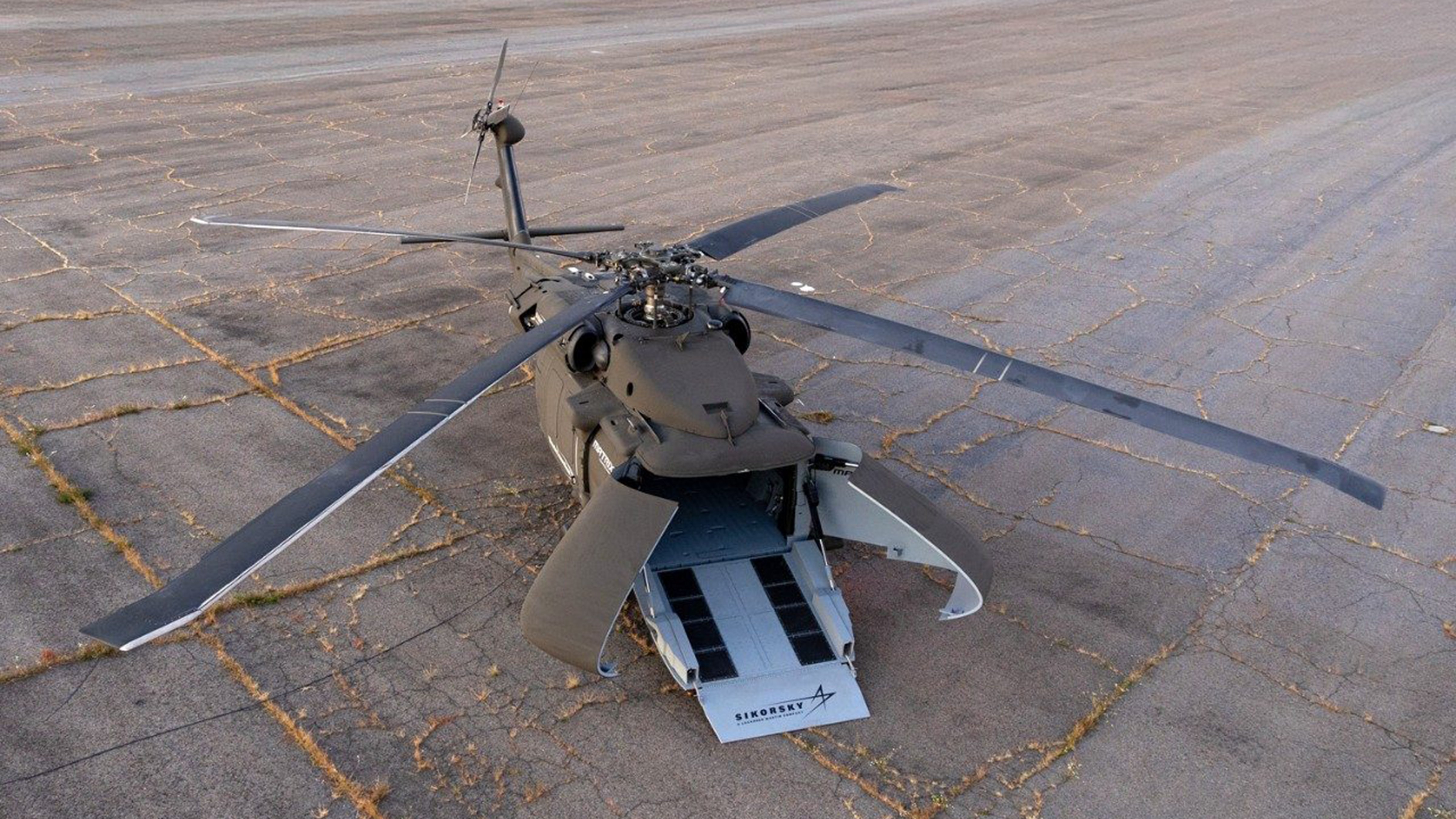
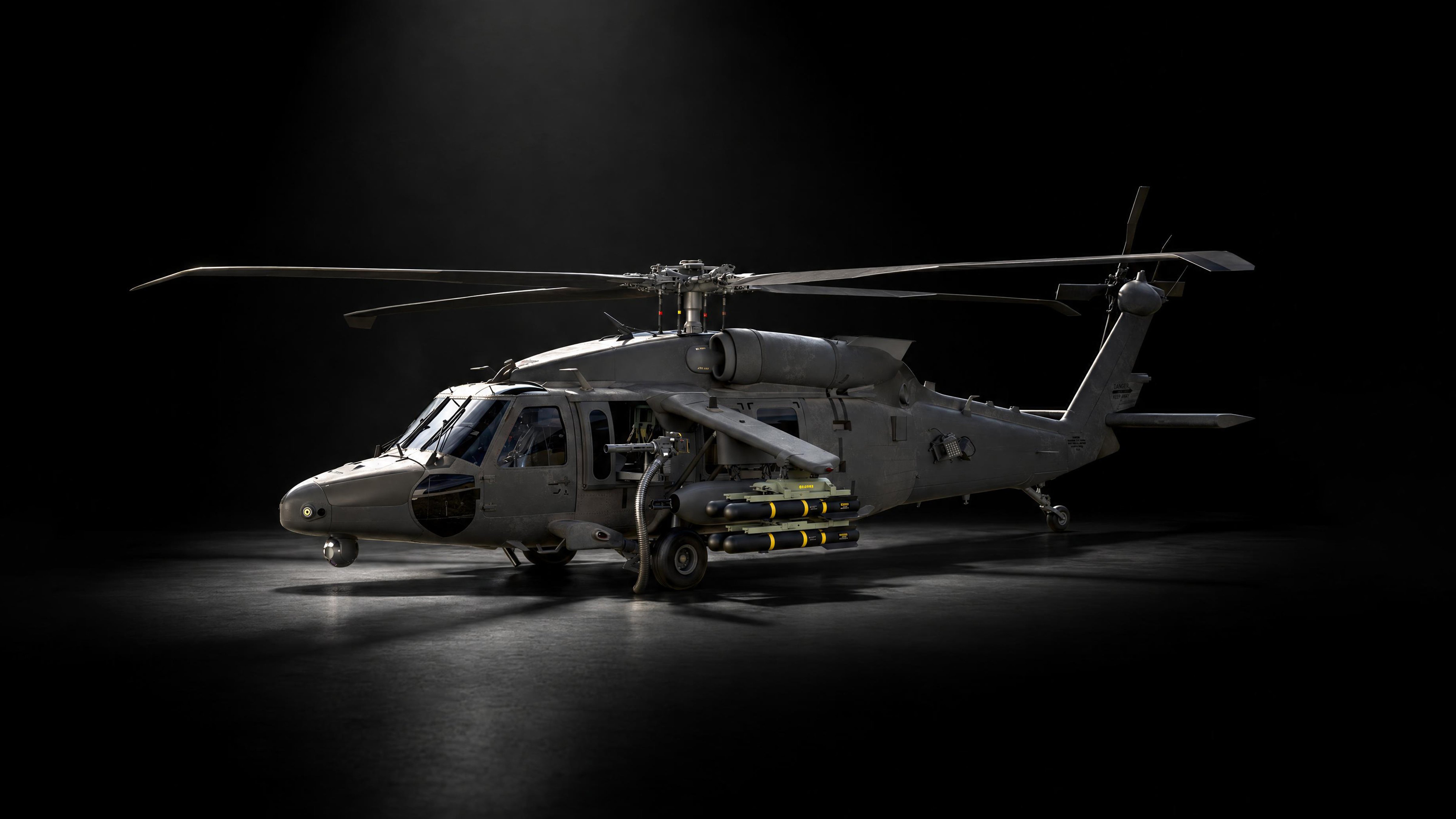
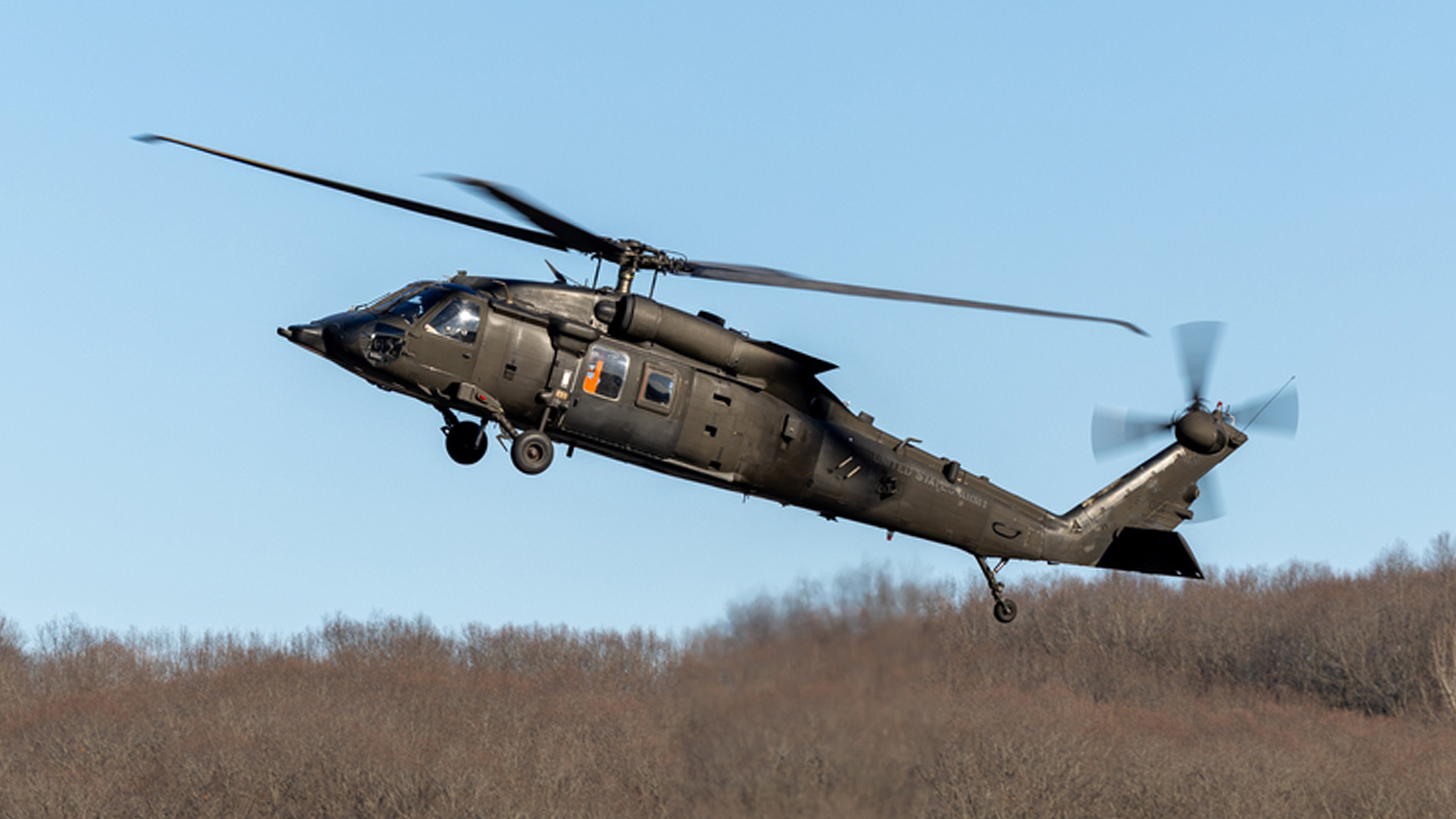
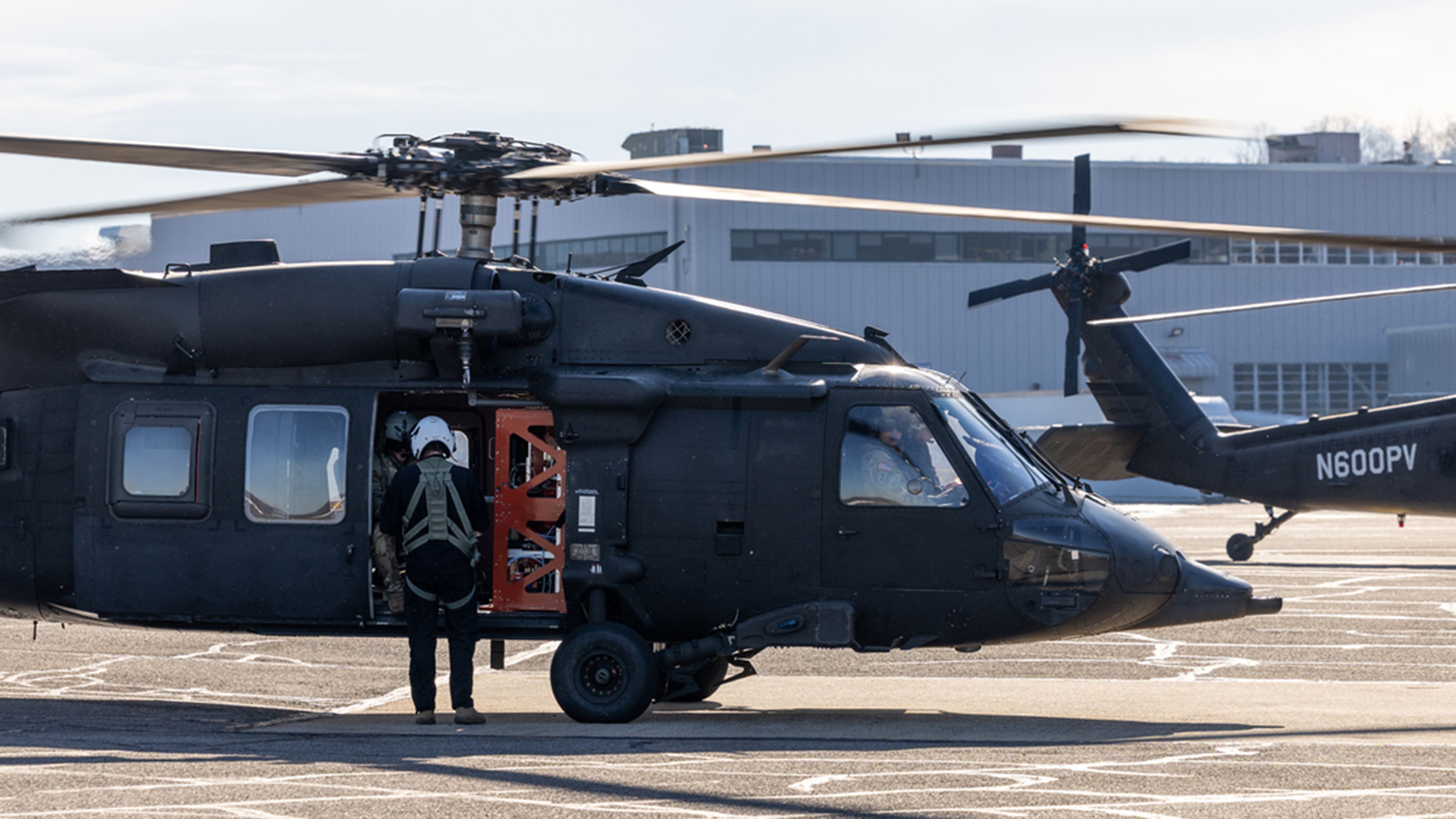
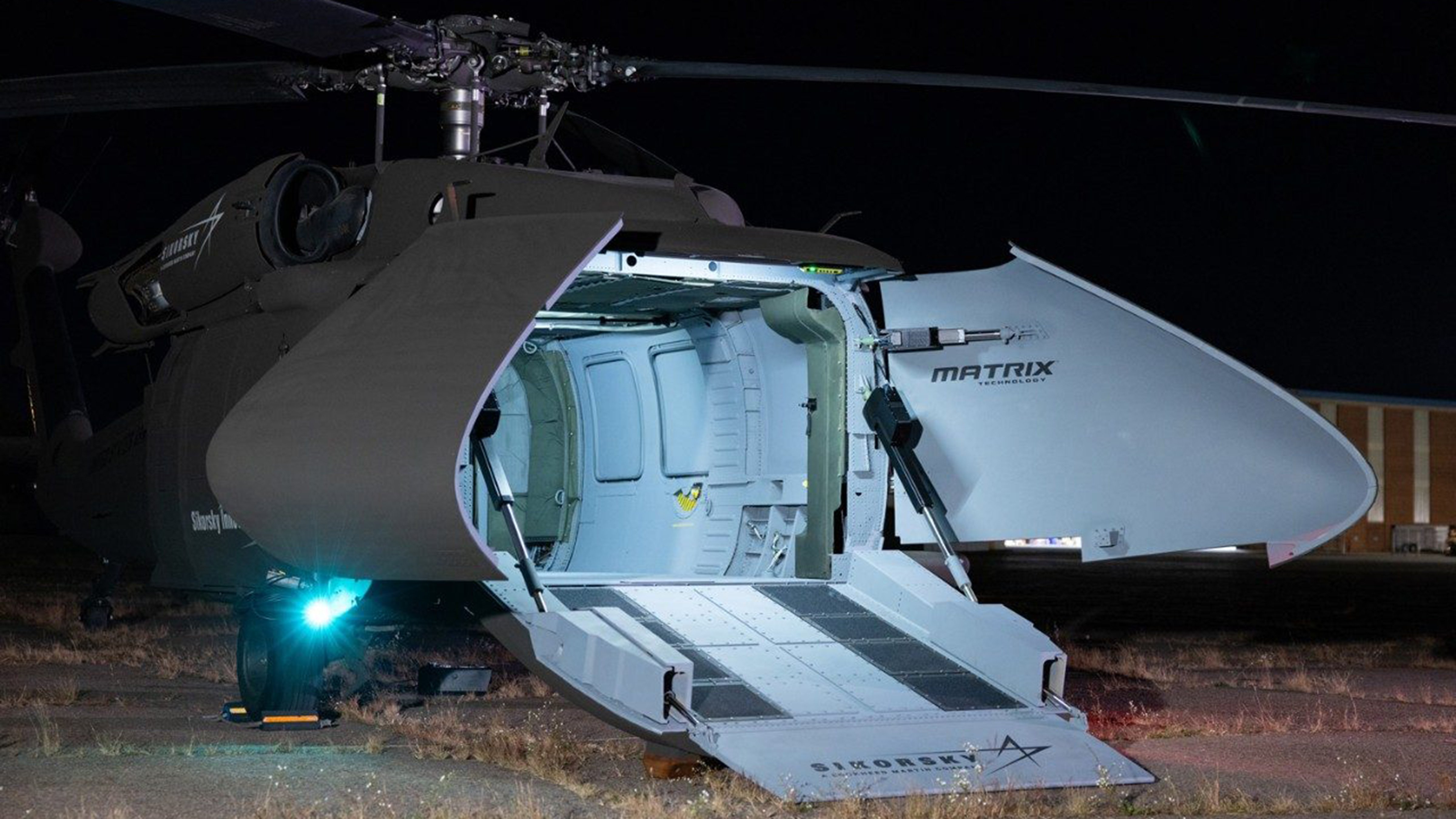
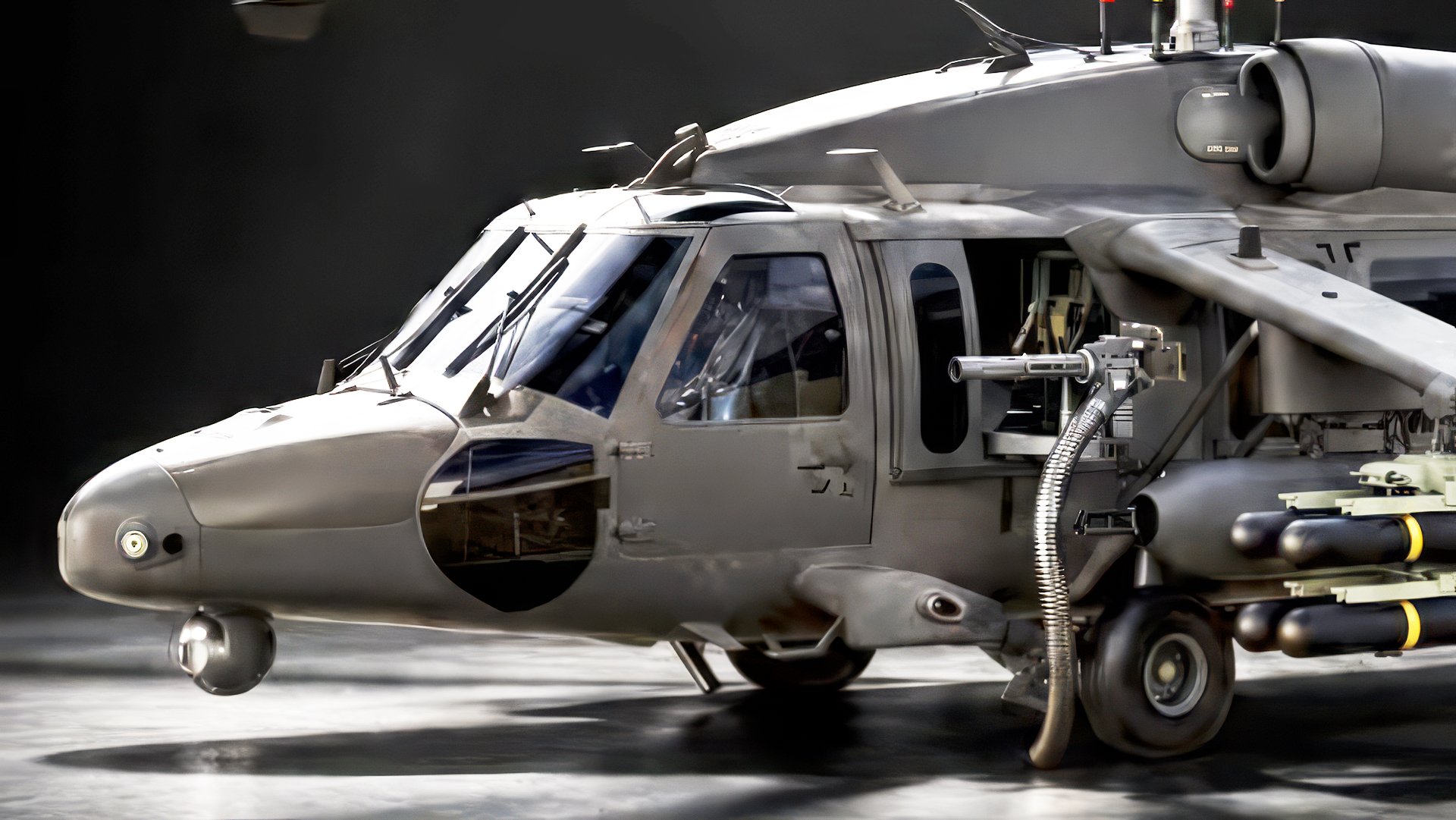
Sikorsky is aiming to start offering a new modular and readily swappable nose for the venerable H-60 family of helicopters within the next year or so. The noses will be made available on new-production H-60s, as well as be retrofittable to helicopters in service now. The ‘nose jobs’ will help operators relatively quickly reconfigure their H-60s for very different missions, from cargo-carrying to serving as gunships, as required. It also opens new avenues to integrating autonomous capabilities and other advanced functionality.

Our Howard Altman had a chance to speak with representatives from Sikorsky, now a subsidiary of Lockheed Martin, about the plans for the new nose for the H-60-series at the Association of the U.S. Army’s (AUSA) main annual convention today. This is part of a larger vision for keeping the design operationally relevant into the 2070s, which also includes uprated engines and increased total payload capacity. You can read more about the overall Black Hawk 2070 strategy here.

Of the different elements of Black Hawk 2070, “the nose is a good one, and it’s one that’s on a pretty accelerated timeline. Within the next, I would say, year or so, the nose will be available to be retrofitted or to be coming off the line,” Jason Wrigley, Sikorsky’s director of business development for Black Hawk, said. “We’ve gone through a design cycle with it.”

As it stands now, the new nose structure will offer roughly double the physical space of the standard nose on current-generation H-60s today.

“We’ve done the design. We then 3D-printed the noses, and we did that so that we can physically interact with it, because the whole point of this is for maintainability and access to be able to integrate these different sensors and comms gear,” he continued. “We’ve gotten some feedback from the engineers, from operators, from maintainers, and that goes back into the next cycle of the design.”

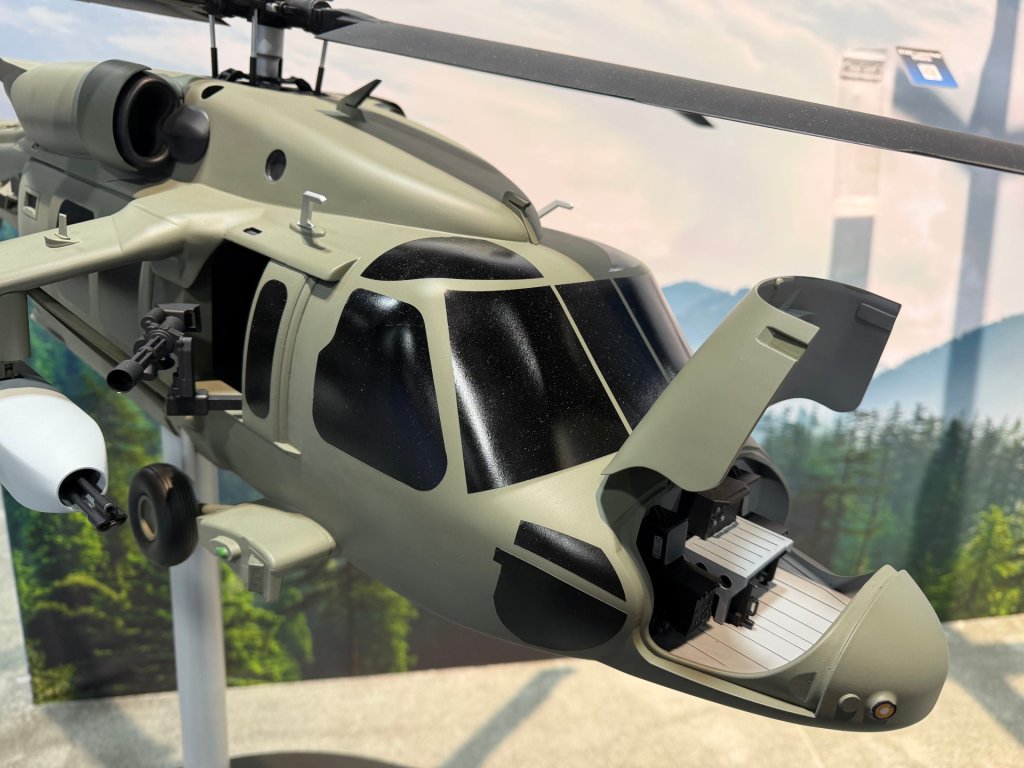
Exploring ways to optimize accessibility to areas of the new nose was a major focus of this ‘test print,’ according to Wrigley. Sikorsky has a scale model on the show floor at AUSA this week that highlights how the current design opens from the top, as seen below. Ensuring that it will be possible to keep any systems inside sufficiently cooled has also been an important design consideration already.

Jamie Hunter

Overall, “we just are kind of confirming, can we reach everywhere we need to? What are the different configurations?” he added. There’s been “a lot of work with the [U.S.] Army around what do you envision potentially could go in here?”

“This is one of those cases also where our whole engineering team gets more comfortable. It’s not something where the Army came to us and said, ‘this is exactly what I want. Here’s my spec,'” he also noted. “It was more, ‘here’s what I want to achieve. Here’s what I want to be able to do.’ And so we went off and designed that.”

Another look at the long-nosed Black Hawk model on display at AUSA. Jamie Hunter

“I like to highlight this, because it’s part of the way we’re also changing the way we design and deliver the Black Hawk,” Wrigley added as an aside. “So we’re very much in a model-based environment.”

While Wrigley mentioned sensors and communications equipment as possible payloads to fit into that extra space initially when talking with us today, he made clear later on that these are just some of the potential options.

“It’s using the old term, but it’s open architecture, and so the whole point is whatever the mission requires” can go into these new extended noses, he explained. “There’s always a demand for real estate up front.”

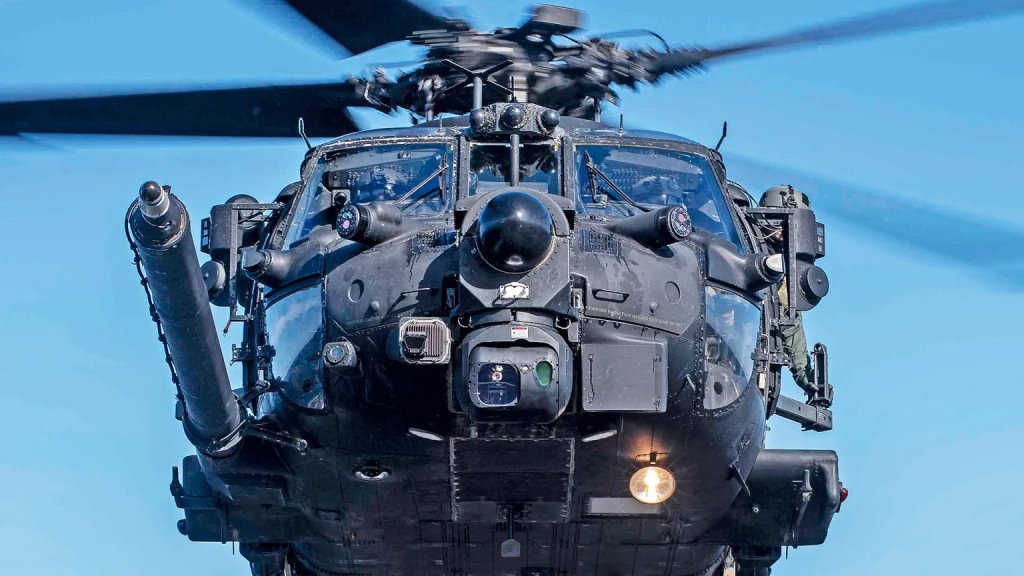
It’s very true that more specialized variants of the H-60, such as the MH-60s operated by the U.S. Army’s elite 160th Special Operations Aviation Regiment, often have modified noses loaded with radars, other sensors, and additional systems. The new HH-60W Jolly Green II rescue helicopters for the U.S. Air Force are another prime example of this, and there are many more.

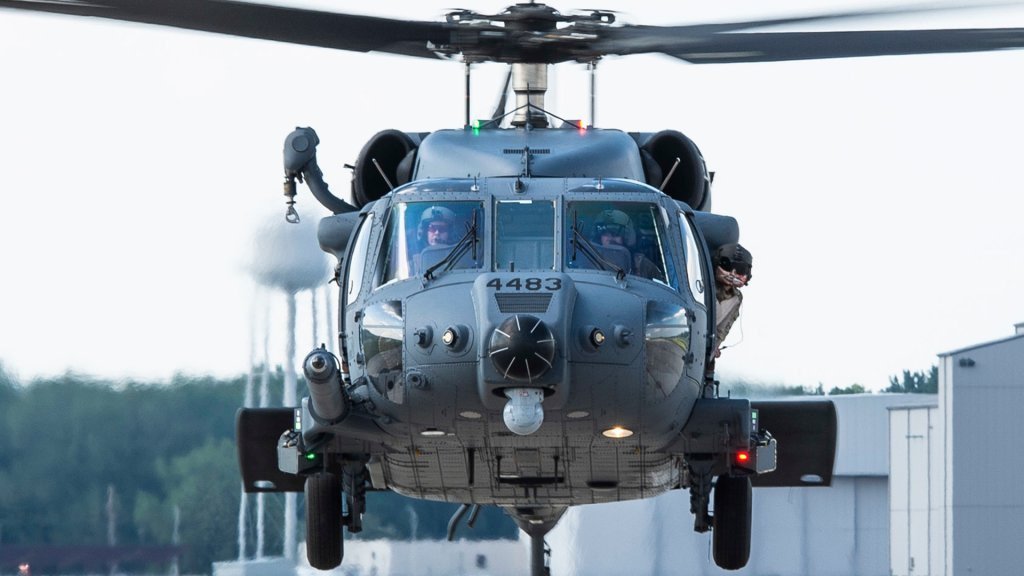
A head-on look at one of the 160th Special Operations Aviation Regiment’s MH-60s, with a nose absolutely crammed with sensors and other systems. USN
A look at the distinctive nose on the HH-60W Jolly Green II packed with sensors and other gear. USAF

“There’s a big focus on open architecture and that ability to quickly plug-and-play,” Wrigley also told TWZ earlier this month in the context of the larger Black Hawk 2070 plan. “The new modular nose will change the look of the Black Hawk up front to provide even more space for equipment that will work directly with the new digital architecture.”

In terms of swapping out modular noses on individual helicopters, Wrigley said that it is still too early in the design process to know exactly how that would be done and how long it might take to do so in practice.

“Part of the design process is to also write up the documentation for the retrofit, but we don’t see this one as very invasive,” he explained.

It is not hard to imagine use cases for long-nosed H-60s, especially ones that can then be reconfigured between missions, and not just for the U.S. Army. As Wrigley already underscored, there is long-standing demand for H-60s with longer and larger noses to accommodate additional mission systems. Modular noses, in general, have been becoming more and more common in aviation design for some time now.

The ability to readily swap modular noses could also allow operators of even relatively small H-60 fleets to gain a valuable new degree of multi-mission capability. As one example, cargo-carrying helicopters could be converted into gunships, and back again, as required, using a small common pool of noses with the requisite sensors, laser designators, and other equipment. All of this could offer cost benefits when it comes to sustainment and logistics, as well as added operational flexibility.

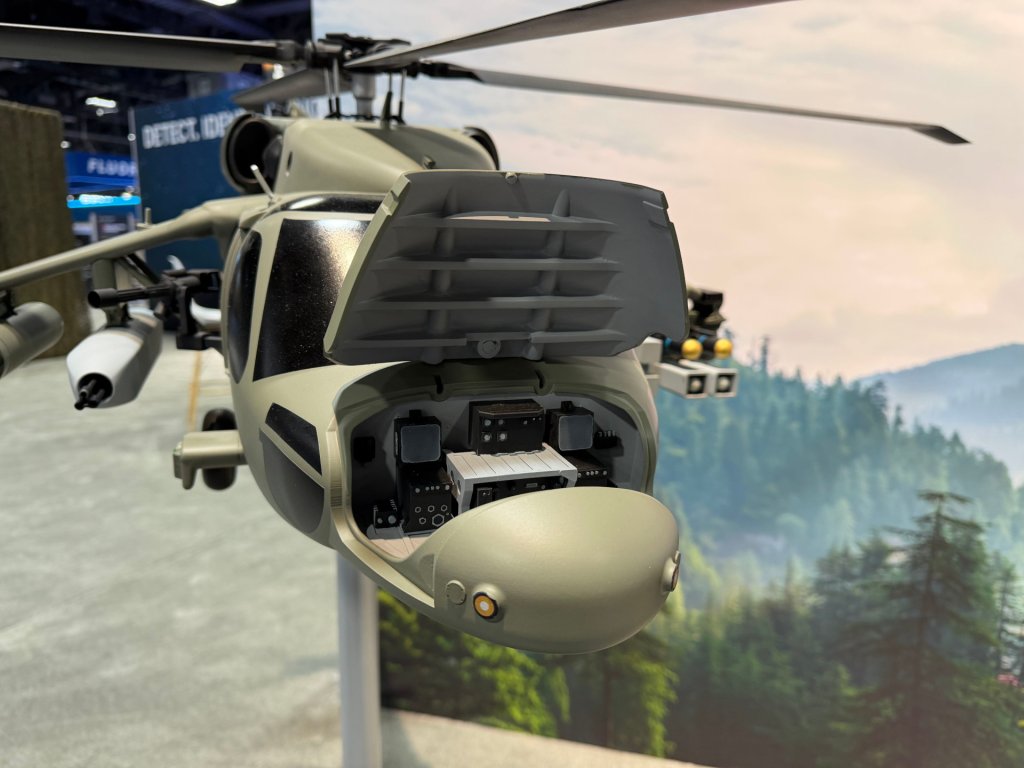
The long-nosed Black Hawk model on display at AUSA is notably configured as a gunship. Sikorsky has also talked previously about leveraging the new nose to reconfigure H-60s for search and rescue, airborne drone control, and other missions.

A full view of the model of the gunship-configured H-60 with the new modular nose on display at AUSA. Jamie Hunter

Just being able to install a radar for one series of missions, and then quickly switch over to an electro-optical wide-area surveillance system or another kind of sensor for the next run of sorties, would bring new adaptability to the already very flexible Black Hawk. Defensive systems could also be readily swapped from aircraft to aircraft, as well as more quickly upgraded, as needed.

The modular nose also opens the door to a new way to integrate advanced capabilities, including autonomy packages, which Wrigley said is also driving demand for more space at the front end of the helicopter. Sikorsky has been developing various tiers of autonomous capabilities for the H-60 family for years now, including artificial intelligence-driven ‘copilots’ designed just to help reduce the workload of human crew members and increase safety margins. Autonomous flight capabilities require additional sensors, such as LIDAR and cameras, to help with navigation and to provide additional situational awareness. At least some of those components could be hosted within new modular noses.

At the same time, integrating higher degrees of autonomy could require more substantial modification. Sikorsky is now developing a fully uncrewed version of the H-60, and has been doing so with an eye toward converting older Black Hawks to this configuration as they are retired from service, as you can read more about here.

In line with the Black Hawk 2070 vision, the modular noses could be part of a broader equation for modernizing existing H-60 fleets, as well.

“In our conversations with the Army, I think they’ve been using a phrase that they call targeted modernization,” Wrigley told us, speaking more generally. “There’s a daunting task that says there’s 1,000-1,500 Black Hawks in inventory. If you literally tried to upgrade every one of them, it’s a very expensive proposition, and it probably takes a long time.”

“I don’t think that’s the way they’re thinking about it. I think they’re thinking about it more on a battalion basis or a unit basis,” he continued. “Like, what’s the mission, and maybe certain Black Hawks get upgraded with autonomy, and other Black Hawks get upgraded with sort of the expanded launched effects capability, the engine, the structural upgrades, the [stub] wings, stuff like that.”

“Maybe some of them become ‘Superhawks’ or whatever, [and] get the whole package,” he added.

There is certainly still work to be done on the development of the new modular nose and then actually integrating it onto the H-60 platform. At the same time, Sikorsky clearly already sees demand for this new feature, which could lead to a breadth of new opportunities for new and old helicopters in the H-60 line.

Contact the author: joe@twz.com

The post Sikorsky Aiming For Black Hawk ‘Nose Jobs’ To Be Available Within The Next Year appeared first on TWZ.

  •  

Airbus Details Progress With Lakota Connector Uncrewed Cargo Helicopter

Airbus U.S. Space and Defense has been actively developing and iterating the technology for its Lakota Connector, an uncrewed, autonomous variant of the multi-mission UH-72B Lakota helicopter. This includes testing under Team Lakota Connector, that has brought together Shield AI, L3Harris Technologies, and Parry Labs in a prototyping phase for the U.S. Marine Corps.

TWZ’s Jamie Hunter spoke with Carl Forsling from Airbus U.S., at the AUSA 2026 trade event in Washington D.C. A former U.S. Marine Corps CH-46 Sea Knight and MV-22 Osprey pilot, Forsling explained the requirement for uncrewed logistics in contested theaters, and what’s next for Team Lakota Connector.

The post Airbus Details Progress With Lakota Connector Uncrewed Cargo Helicopter appeared first on TWZ.

  •  

General Atomics’ Mojave Drone Completes Austere Testing in Korea

General Atomics Aeronautical Systems (GA-ASI) and Hanwha Aerospace completed operations in a simulated battlefield scenario with the Mojave short take-off and landing (STOL) drone on September 16. The testing formed part of a Defense Drone Technology Exhibition and included Mojave operating from an austere short runway at the Seungjin Training Field in Pocheon-si. The flying portion of the trials also saw the Mojave operating down at low level to demonstrate its ability to terrain mask to avoid potential threats and to support ground forces at close quarters.

TWZ’s Jamie Hunter spoke to Matt Petraitis, senior manager of U.S. Army programs at GA-ASI, at the AUSA 2026 trade event being held this week in Washington D.C. about how the Mojave landed on a rough maneuver trail typically used by tanks and artillery vehicles, and about the company’s plans for Mojave in partnership with Hanwha Aerospace.

The post General Atomics’ Mojave Drone Completes Austere Testing in Korea appeared first on TWZ.

  •  

Drones Are Creating New Opportunities For The U.S. Army To Deceive Its Enemies

For more than a year, U.S. Army forces in Europe have been experimenting with new counter-drone capabilities, as well as tactics, techniques, and procedures to go with them, under the umbrella of what is dubbed Project Flytrap. In doing so, the service has also been gaining valuable new insights into how uncrewed systems can help shape the battlefield for friendly forces. It is particularly interesting to hear how the Army envisions using uncrewed platforms to open up new avenues for deceiving opponents.

Army Col. Timothy Price, head of the 2nd Cavalry Regiment, discussed the use of uncrewed platforms for deception and other operational concepts that have emerged in the course of Project Flytrap during a talk yesterday. Price’s remarks came at the Association of the U.S. Army’s (AUSA) main annual convention, at which TWZ is in attendance. 2nd Cavalry Regiment, based in Germany, is a brigade-sized mechanized formation equipped primarily with variants of the Stryker 8×8 light armored vehicle.

Stryker light armored vehicles assigned to 2nd Cavalry Regiment seen configured for a Project Flytrap event. US Army Sgt. Alejandro Carrasquel

Price, by way of introduction, described modern battlefields full of uncrewed platforms in the air and on the ground as presenting new twists on long-standing problem sets. More specifically, he started by describing the typical approach to getting past a minefield or similar obstacle using an established framework called SOSRA, which stands for Suppress, Obscure, Secure, Reduce, Assault.

“If we were going to breach a mined wire obstacle, the first step of SOSRA – suppress – would be the utilization of indirect fires, to get the enemy’s head down, and direct fire systems, so they would not maneuver on you, fix them in place, and you can make a decision about how you’re going to approach the problem,” the 2nd Cavalry Regiment commander explained. “The next step would be to obscure it. In the historical sense, obscurations used is [sic] smoke, to mask your movement to the point of breach, so the enemy doesn’t know what you’re doing. And then, of course, secure would be to establish frontside security, [and] allow your engineers to come up within this local security bubble. They’ll utilize some kind of line charge to open the breach, reduce it – that’s the ‘R’ – and then bring on a follow-on force of assault through.”

“We were brought up around the old traditional mined wire obstacles that we had to physically breach. This is no different,” he added. “It’s just a multi-domain environment. So it’s built up of a combination of electronic warfare, kinetic UAS [uncrewed aerial systems] threats, and then counter-UAS threats, and then the network that holds [that all] together that forms the obstacle, which a unit has to maneuver through in order to maintain the offensive.”

A briefing slide Col. Price showed at AUSA yesterday while talking about SOSRA on the modern ‘multi-domain’ battlefield. Jamie Hunter

Within this environment, Col. Price described the suppression step of SOSRA as having a different kind of probing dimension, particularly to feel out an enemy’s uncrewed capabilities, as well as those in the electromagnetic spectrum. He also noted that brigade-sized formations like this no longer necessarily have all the required tools organizationally to ‘service’ that aspect of the mission. This is in part because what has to be suppressed, including ground control stations for enemy drones, might now be miles behind the front line.

So, “what we have to do is allow the enemy to turn on their systems. How do I suppress them to allow division, or higher, to put an effect on them for suppression? It probably looks like flying small, attritable UAS [sic] into their security area” in the rear, he said. This, in turn, “cause[s] the enemy to do one of two things, either … go from passive to active with their EW [electronic warfare] systems, or to turn on radars to actually figure out what they’re seeing, which then forms the signature which higher headquarters can use to target.”

Though Col. Price did not describe it as such, there is already something of a deception aspect to this step in fooling enemy emitters to switch on and expose themselves. This, as a general tactic, is also hardly new. Stimulating air defenses, in particular, is a key part of operations to gather intelligence on those capabilities, as well as to suppress and destroy them. Once you have categorized and geolocated an emitter, it is a logical step to then target it. The ultimate goal, with data being passed along a more deeply networked kill chain, is for the time it takes for fires to be brought to bear to be almost instantaneous.

In 2020, then-Army Col. Scott Woodward, at the time commander of the 11th Cavalry Regiment, shared this annotated satellite image showing the electronic emissions signature of a battalion-sized element, underscoring how such signals exposed a unit to attack. US Army via X

Regardless, deception comes far more into play in the obscure step, according to the 2nd Cavalry Regiment commander.

“Obscuration is different, as well. So instead of trying to hide behind smoke as we maneuver through it, what is the deception plan, right? How am I trying to show the enemy a signature that says I’m going to breach over here when I’m actually going to breach here, right?” he asked rhetorically. “So, that’s probably the implementation of UGVs [uncrewed ground vehicles] with some kind of decoy emitter on top of them to pull the enemy’s eyes, resources, and time to a point that allows me to focus my assets and resources on the point of breach.”

The use of uncrewed platforms as decoys is also not new, and even more complex concepts have emerged within the U.S. military in the past. Uncrewed systems have also been developed for military and other purposes over the years that are designed to mimic something else entirely, including for purposes of deception. This includes masquerading as birds and other animals.

Back in 2019, TWZ was the first to report in detail on a Navy effort to develop and field an entire networked, cooperative electronic warfare ecosystem, at that time referred to as the Netted Emulation of Multi-Element Signature against Integrated Sensors, or NEMESIS. This was also a drone-heavy cross-domain concept intended to make many types of sensors over vast areas believe they were ‘seeing’ the same false fleets of aircraft and/or ships, and deceive and confuse the enemy on a grand scale. This, in turn, represented a massive leap in electronic warfare capabilities.

An unclassified 2014 briefing slide with details about NEMESIS. Note the inclusion of drone boats among other uncrewed platforms in the associated graphic. USN An unclassified 2014 briefing slide with details about NEMSIS. Note the inclusion of drone boats among other uncrewed platforms in the associated graphic. USN

There is also overlap here with reported sightings of what are now commonly called unidentified aerial phenomena (UAP), and that used to be called unidentified flying objects (UFO). As we have reported on repeatedly over the years, while some UAP sightings remain unexplained, many more have turned out to be drones. Adversaries have been using uncrewed capabilities for intelligence gathering and deception purposes against American interests at home and abroad, likely in part by exploiting UAP stigma for cover. We have talked in the past about how drones will be used in more and more exotic ways to confuse opponents.

I don’t know what this is, or if it’s legit BUT remember we are in a new age of misdirection, decoy and guile. Specifically using low end drone technology. There are more ways to stimulate an enemy air defense system, distract a populous, assess the flow of public info from a… https://t.co/wW7YVlbayB

— Tyler Rogoway (@Aviation_Intel) September 21, 2026

When it comes to UGVs, specifically, 2nd Cavalry Regiment, as well as units elsewhere across the U.S. Army, have been experimenting with various designs in recent years. The service has been trying for years to expand its operational use of UGVs, in general, but has faced repeated setbacks.

“It’s also spectral camouflage. So how are we controlling our heat and thermal signatures on our vehicles and our people?” Price continued. “It’s basic soldier discipline issues. It’s how we use our radios. It’s where we’re talking, where we’re not. But that’s what obscuration looks like.”

A Soviet-designed 2S3 self-propelled howitzer as seen through a thermal camera, offering a good example of how heat signatures can put forces at risk. CI Systems

As a reminder, Project Flytrap’s primary focus has been on counter-drone capabilities, which come into play heavily during the secure stage.

“There’s multi-layered assets on top of that to allow that convergence for our success at the point of breach. I’m going to focus on our corner, our part of the battle, right?” he said. “So, I’m looking at active and passive electronic warfare systems – that can either, one, find [threats], let me know that I’ve got some kind of system flying or operating against me and, then, if it’s an active system, take some kind of effect to maybe cut a downlink and disrupt that system – all the way down to the individual soldier with a shotgun.”

As mentioned, the ‘obstacle’ to be ‘reduced’ at the end of this is not necessarily something as simple as a minefield surrounded by barbed wire anymore. Now it could be enemy one-way-attack drone capabilities preventing holding up an advance. Col. Price, in turn, described friendly kamikaze drones as part of the equation for breaching past those threats. Decoys and deception have a continued role to play in this phase.

“This is where, at the brigade level, we introduce one-way attack munitions to try to destroy the C2 [command and control] network that the enemy is using to operate this reconnaissance/strike complex” that is standing in the way, he explained. “There’s layers to it, right? Like they’ve got a close side to this that’s the local part of this reconnaissance/strike complex. They’ve probably got a theater level that the Corps [the U.S. Army’s command echelon above divisions] and higher is trying to target as we are forcing people to turn on systems to communicate. But at the regiment level, I’m looking at one-way attack munitions, focused on C2 nodes, headquarters, and ground control stations that [sic] I can disrupt their ability to put lethal effects on me as we begin to open the breach.”

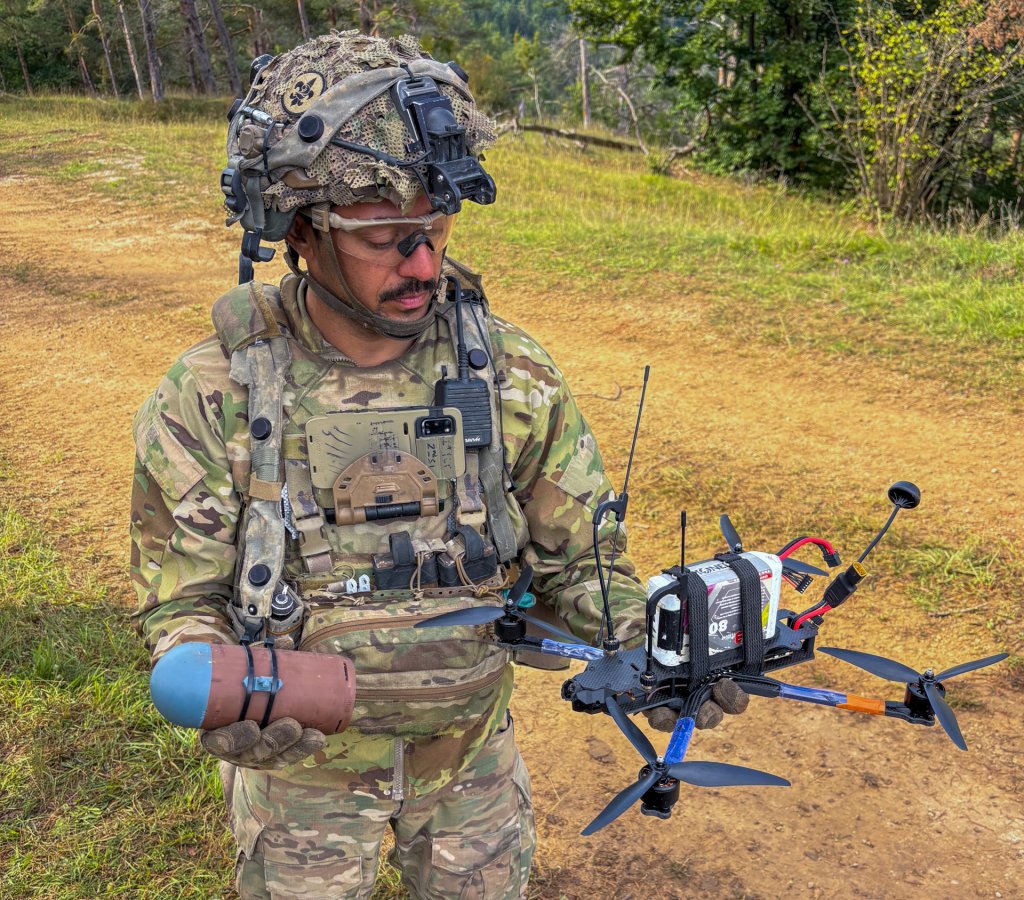
The U.S. Army is in the process of fielding a variety of weaponized drones, including loitering munitions and designs capable of releasing grenades and other small bomblets.

A member of the 2nd Cavalry Regiment holds a small quadcopter drone in one hand and a simulated bomblet in the other during an exercise in 2025. US Army

During a question-and-answer session that followed his remarks, Col. Price was asked about whether lessons learned and other observations from Ukraine, and specifically that country’s recent Operation Vivaldi counteroffensive, had contributed to this evolving framework.

“In terms of Vivaldi, I’m not an expert, so I’m not going to make any kind of estimations on how that worked or why,” he said in response. “But I will say, if you look at the focus of that operation, you can probably make the assumption that there was convergence of efforts across the different headquarters to enable success. So that’s how I would relate to the two.”

“In order to be successful for a multi-domain breach, the tactical level requires my higher headquarters to be part of that solution to enable me with resources and capabilities that I don’t have in here at the brigade level,” he continued. “I would imagine it’s very similar in the other operational comparisons.”

Though certainly true, in broad strokes, this response in some ways underscores how the U.S. Army continues to lag behind global trends in the use of uncrewed systems, as now typified by the ongoing war in Ukraine. Army leaders have been open about this continued reality in the past, despite efforts to try to reverse it.

“We’re behind. I’ll just be candid. I think we know we’re behind,” Army Lt. Gen. Charles Costanza said during a panel discussion at AUSA last year, in response to a direct question at the panel from our Howard Altman. Costanza was talking about both the employment of drones and counter-drone capabilities, and highlighted work being done then under Project Flytrap, as you can read more about here.

Another 2nd Cavalry Regiment Stryker configured for the counter-drone role seen during a Project Flytrap exercise. US Army

Costanza was head of V Corps, a key component of the U.S. Army presence in Europe, at the time. He was removed from that post abruptly in August for reasons that remain unclear, but were reportedly tied to disputes between top Army leadership and Secretary Pete Hegseth. Secretary of the Army Dan Driscoll resigned last month, amid reports of months of friction with Hegseth about various policies.

The Pentagon under Hegseth has launched a number of initiatives to accelerate the fielding of new uncrewed capabilities across the U.S. military, especially within smaller ground units. This now includes plans for a new Autonomous Warfare Command (AUTOWARCOM) unveiled last month.

For units like the 2nd Cavalry Regiment, new drone-centric concepts of operations are already taking shape. Beyond using them for surveillance and as one-way-attack munitions, there is also a clear focus emerging on employing expanding uncrewed capabilities to deceive opponents and prevent them from making the best use of their own resources.

Contact the author: joe@twz.com

The post Drones Are Creating New Opportunities For The U.S. Army To Deceive Its Enemies appeared first on TWZ.
  •  

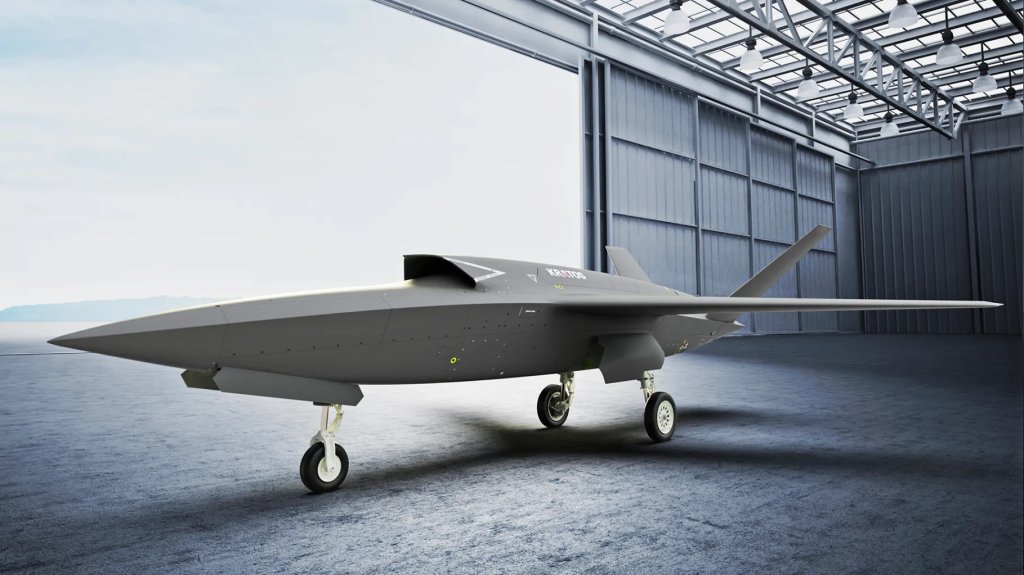
European U740 Variant Of The XQ-58A Valkyrie Has Flown

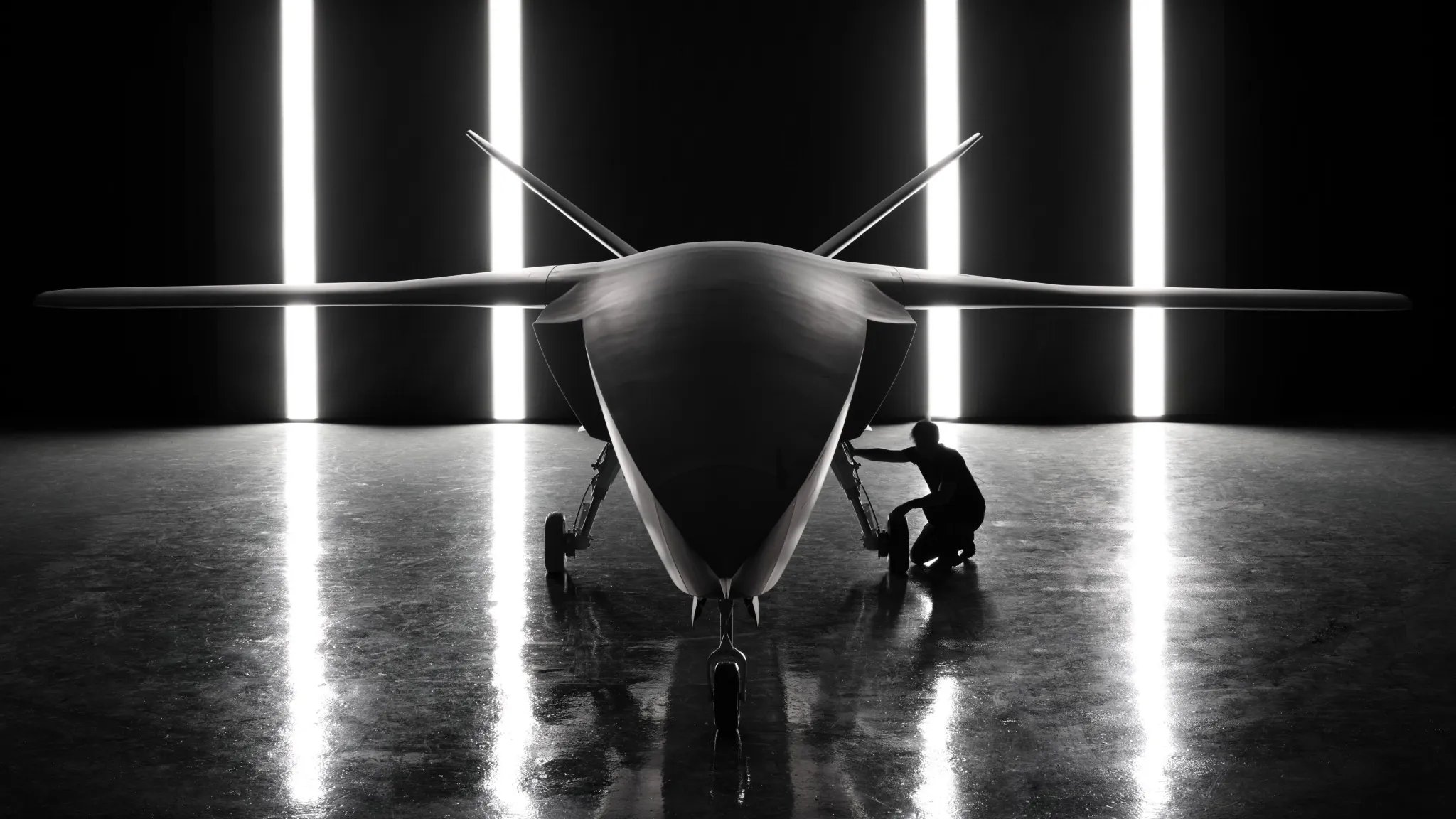
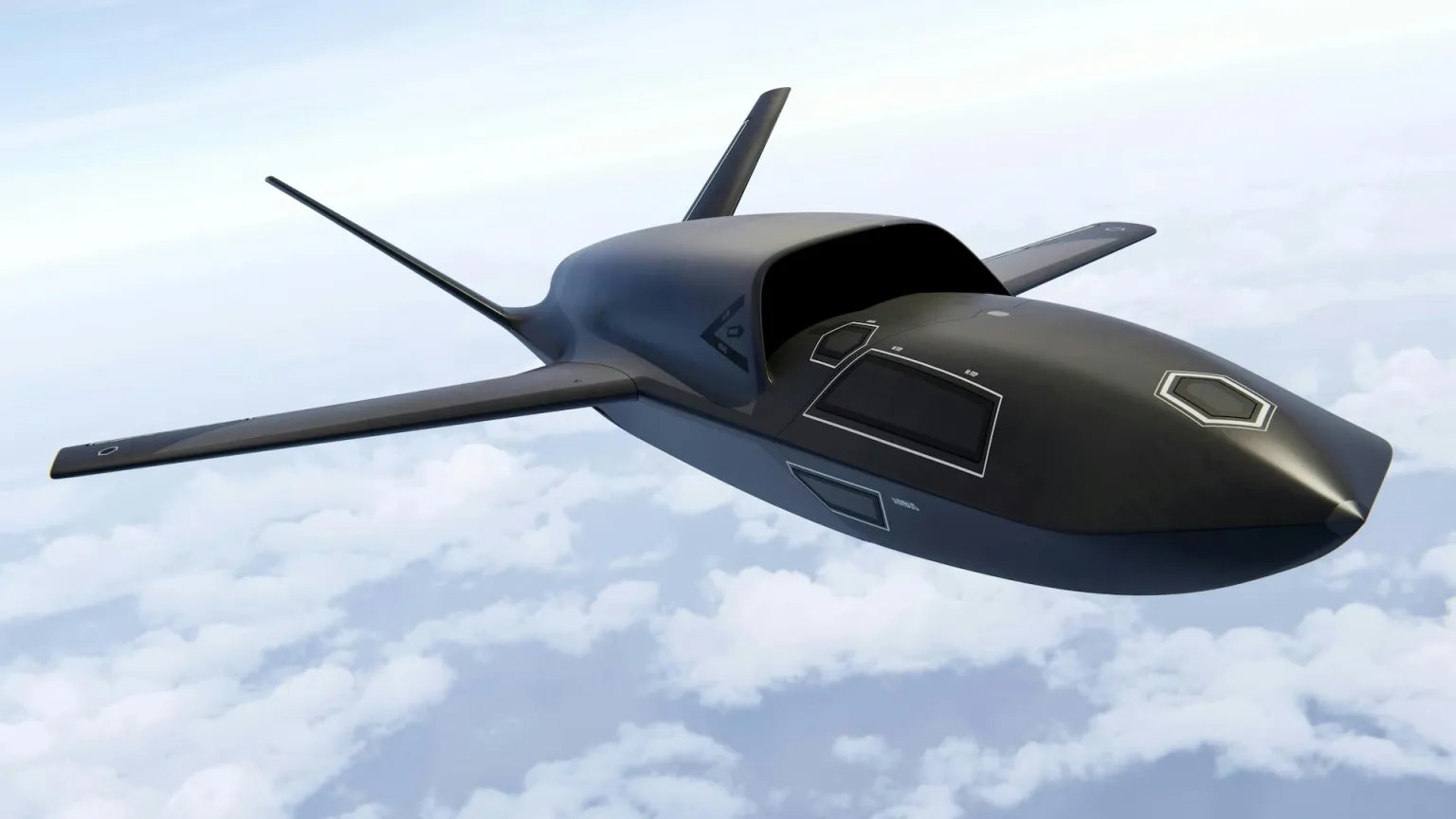
Airbus and Kratos Defense & Security Solutions have completed the first flight of the U740 Valkyrie uncrewed combat aircraft, a Europeanized version of the XQ-58A Valkyrie, advancing their bid to deliver a combat-ready system to Germany by 2029. The flight comes as the German Air Force, or Luftwaffe, moves toward acquiring a new class of jet-powered combat drones, in what could become a major shift in the country’s traditionally limited armed-uncrewed-aircraft capabilities.

The ride of the Valkyrie ⚔
With the successful first flight of the Airbus U740 Valkyrie in Europe, we are one step closer to introducing an operational uncrewed Collaborative Combat Aircraft (CCA) to the German and other European Armed Forces.
The flight achieved all… pic.twitter.com/S2sFrtdmGA

— Airbus Defence (@AirbusDefence) October 12, 2026

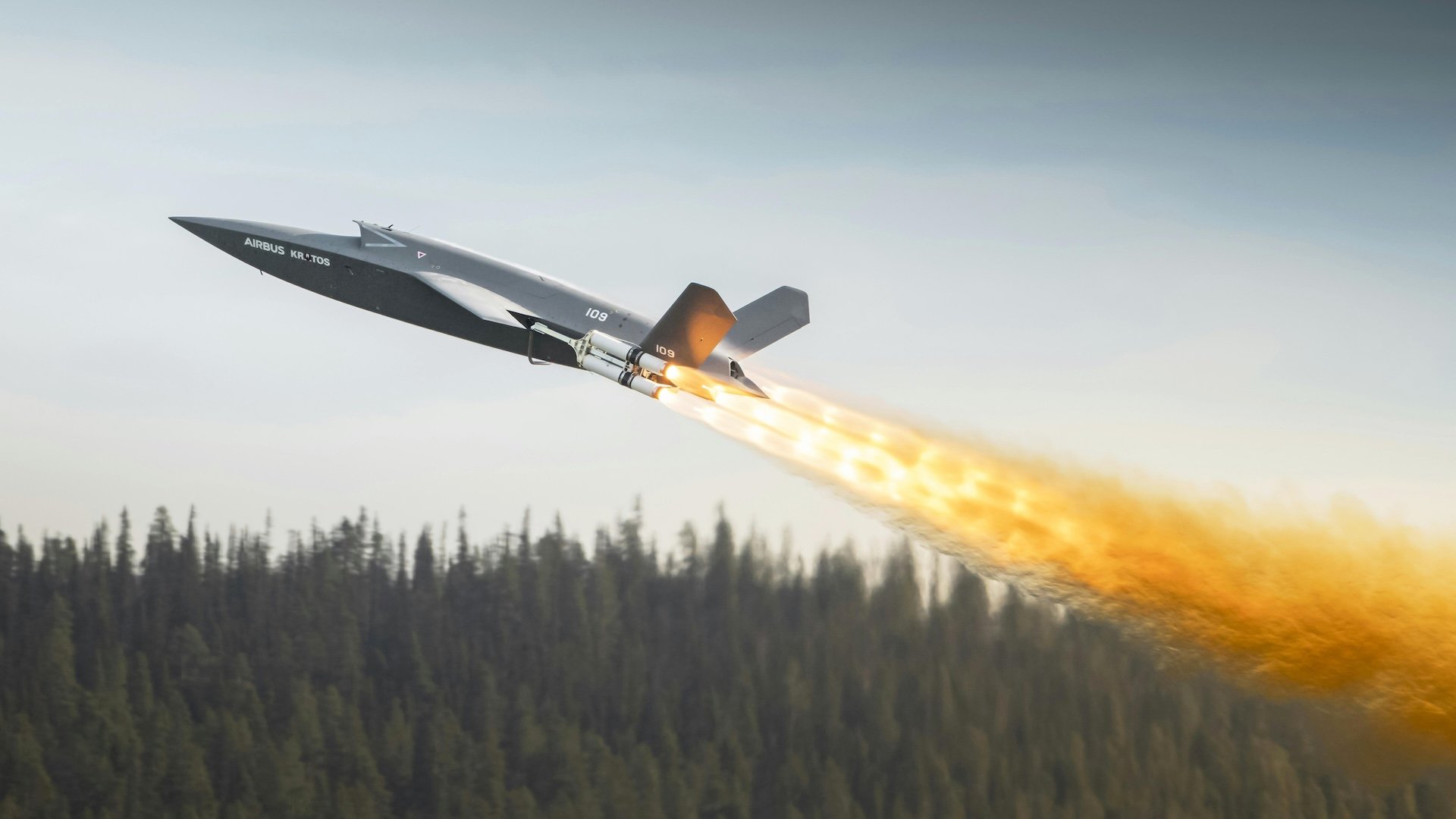
The flight took place at an unnamed test facility in northern Europe, Airbus announced on October 12. The aircraft conducted a rocket-assisted takeoff, maneuvers at different altitudes, and flight at speeds of up to Mach 0.8. The test also included in-flight mission adjustments, with Airbus reporting that all objectives were met.

The U740 Valkyrie uncrewed combat aircraft is prepared for launch. Airbus

The next phase will introduce Airbus’ Multi-platform Autonomous Reconfigurable and Secure (MARS) mission system, which is intended to provide the aircraft’s European-controlled software and mission-management architecture. Airbus says MARS will support autonomous operations and coordination between multiple uncrewed aircraft while retaining human oversight of critical decisions.

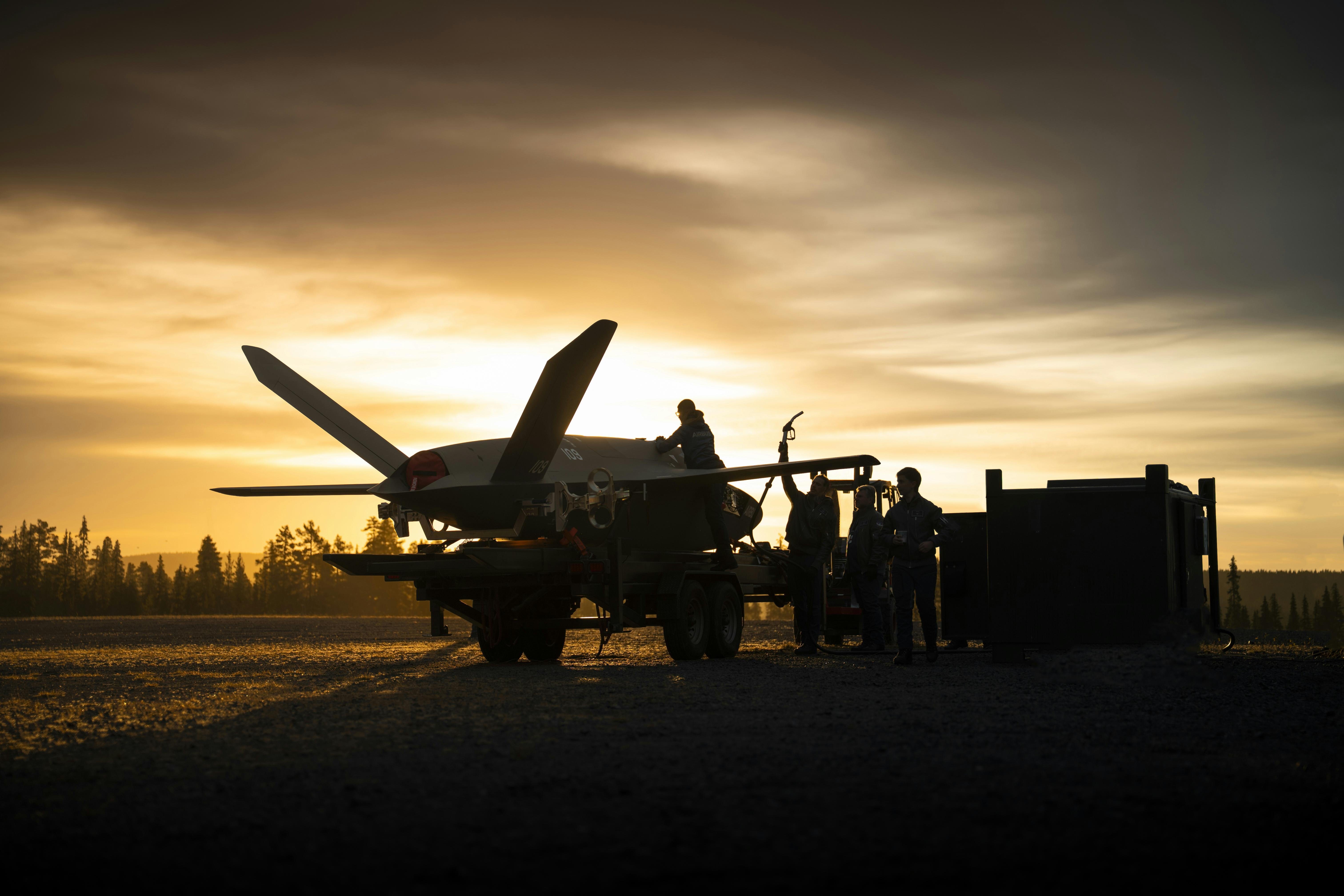
The U740 is based on Kratos’ American-developed XQ-58A, an uncrewed aircraft designed as a relatively affordable combat platform. Airbus is adapting the aircraft with its MARS mission system and presenting the combination as a way to provide Germany with a sovereign European capability without waiting for an entirely new airframe to mature.

The U740 Valkyrie on its launch trailer. Airbus

Published performance figures for the U740 include a maximum takeoff weight of around 3,000 kilograms (6,600 pounds). Airbus lists a range exceeding 5,000 kilometers (3,100 miles) and a service ceiling of 45,000 feet. It has an internal weapons bay and external payload stations beneath its wings.

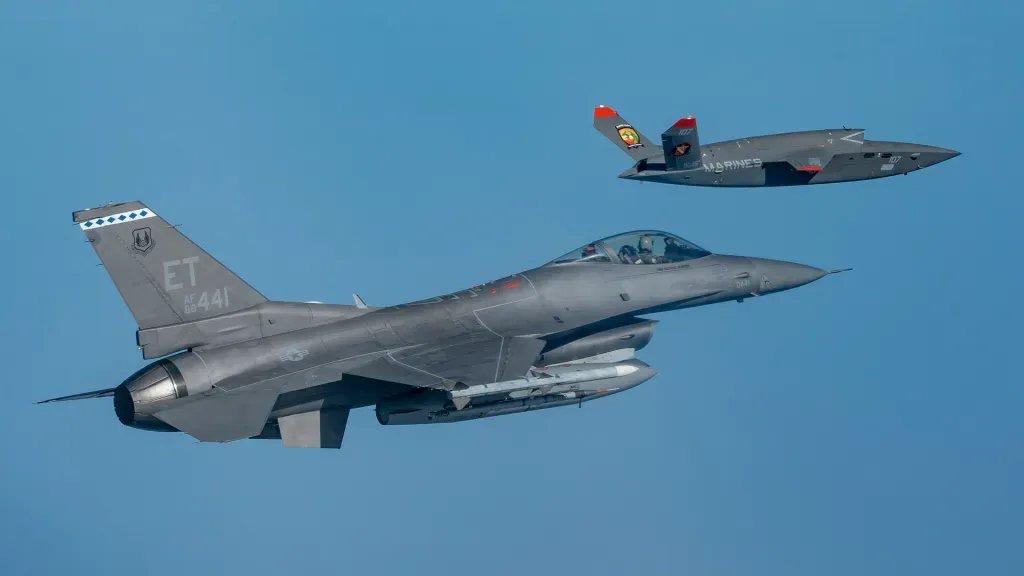
A U.S. Marine Corps XQ-58A Valkyrie conducts a test flight with a U.S. Air Force F-16. U.S. Air Force photo

One distinctive feature is the U740’s rocket-assisted launch capability, which reduces its dependence on conventional runways. The original Valkyrie design is primarily recovered by parachute, but newer versions can take off with rocket assistance and land on a runway, offering greater flexibility in how and where they operate. That could help the Luftwaffe disperse operations or launch aircraft from locations where established airfields are unavailable or under threat. The XQ-58 family has also shown some potential for scaling to different requirements, as detailed in these earlier reports on runway launch and recovery and further platform development. In particular, the U.S. Marine Corps has been exploring ways to expand the XQ-58’s flexibility, including further development of the Valkyrie to meet its own mission requirements.

If adopted, the rocket-assisted launch capability would provide an intriguing throwback to practical German studies during the Cold War, in which F-104G Starfighter fighter-bombers used the Zero-Length Launch (ZELL) system to take off from dispersed locations.

Airbus says the U740 will be able to operate autonomously or under the direction of crewed fighters such as the Eurofighter. The company sees it as a means of increasing the reach, firepower, and survivability of existing combat aircraft, with uncrewed platforms undertaking higher-risk missions.

With the MARS system, Airbus intends to give European customers control over mission applications, data, and key software functions, while enabling autonomous mission execution and coordination between aircraft. This is particularly relevant for Germany, which will likely want to integrate national weapons, sensors, and operational requirements without becoming dependent on a foreign-controlled mission architecture.

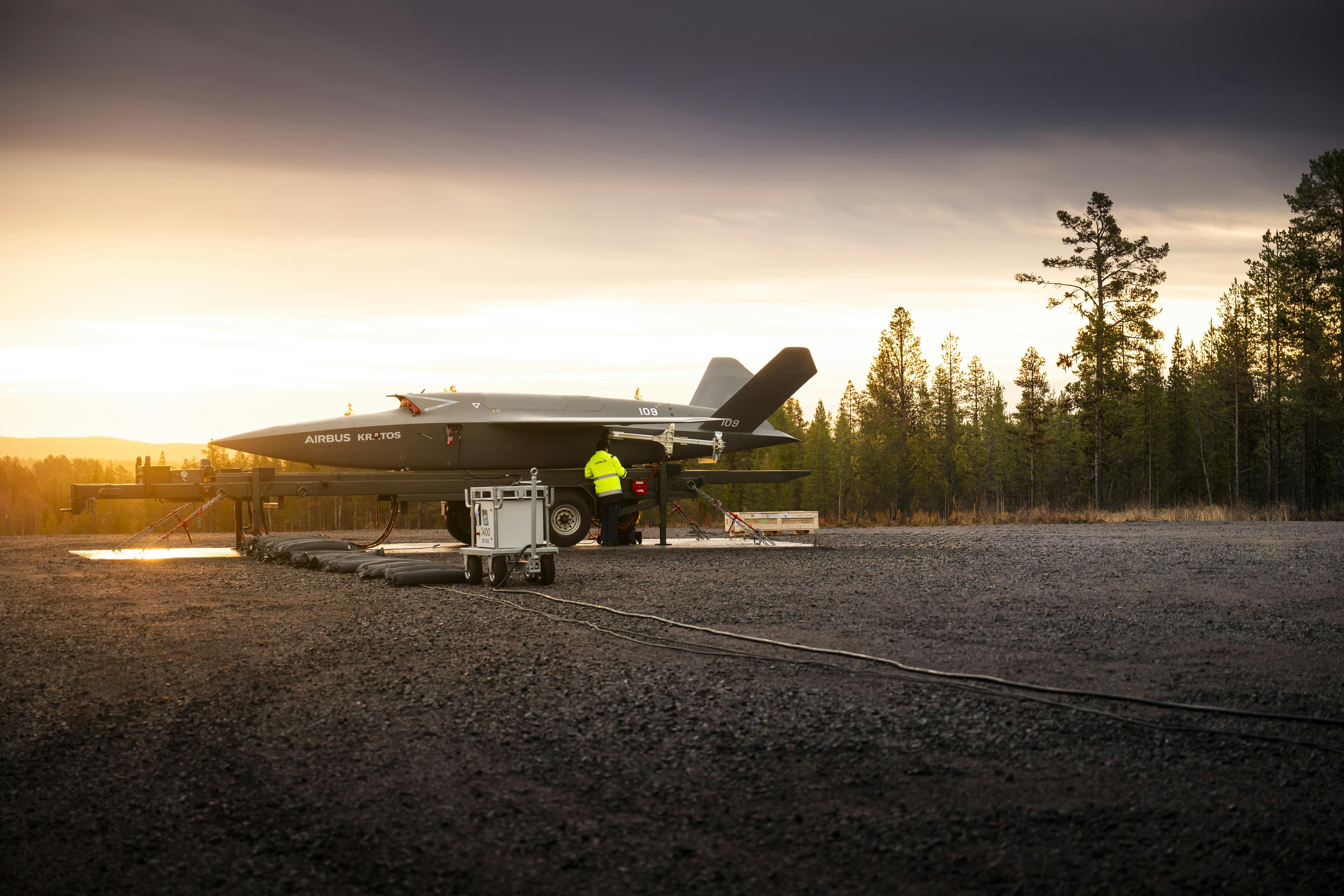
The U740 Valkyrie. Airbus

Since the underlying airframe is American, the degree of sovereignty Germany ultimately obtains will depend on the practical ability to control and modify software, integrate national systems, and support the aircraft throughout its service life.

The European flight is an important step for the Valkyrie program, but substantial work remains before it can be considered combat-ready. Mission-system integration, further testing, and the demonstration of effective cooperation with crewed aircraft will be central to meeting the companies’ 2029 target.

Another view of the U740 Valkyrie. Airbus

The effort is also unfolding as Germany develops its requirements for what has been described in press reports as a Jagdbomberdrohne, or fighter-bomber drone. The precise operational concept has yet to emerge publicly, including whether the Luftwaffe primarily wants an uncrewed aircraft to accompany crewed fighters or a platform capable of conducting independent long-range strike missions.

Germany has historically lagged behind several other major military powers in fielding armed uncrewed aircraft. Previous attempts to acquire larger reconnaissance drones encountered major technical and procurement difficulties, while political resistance to armed drones delayed the development of a strike capability for years.

The U740 Valkyrie seen moments after launch. Airbus

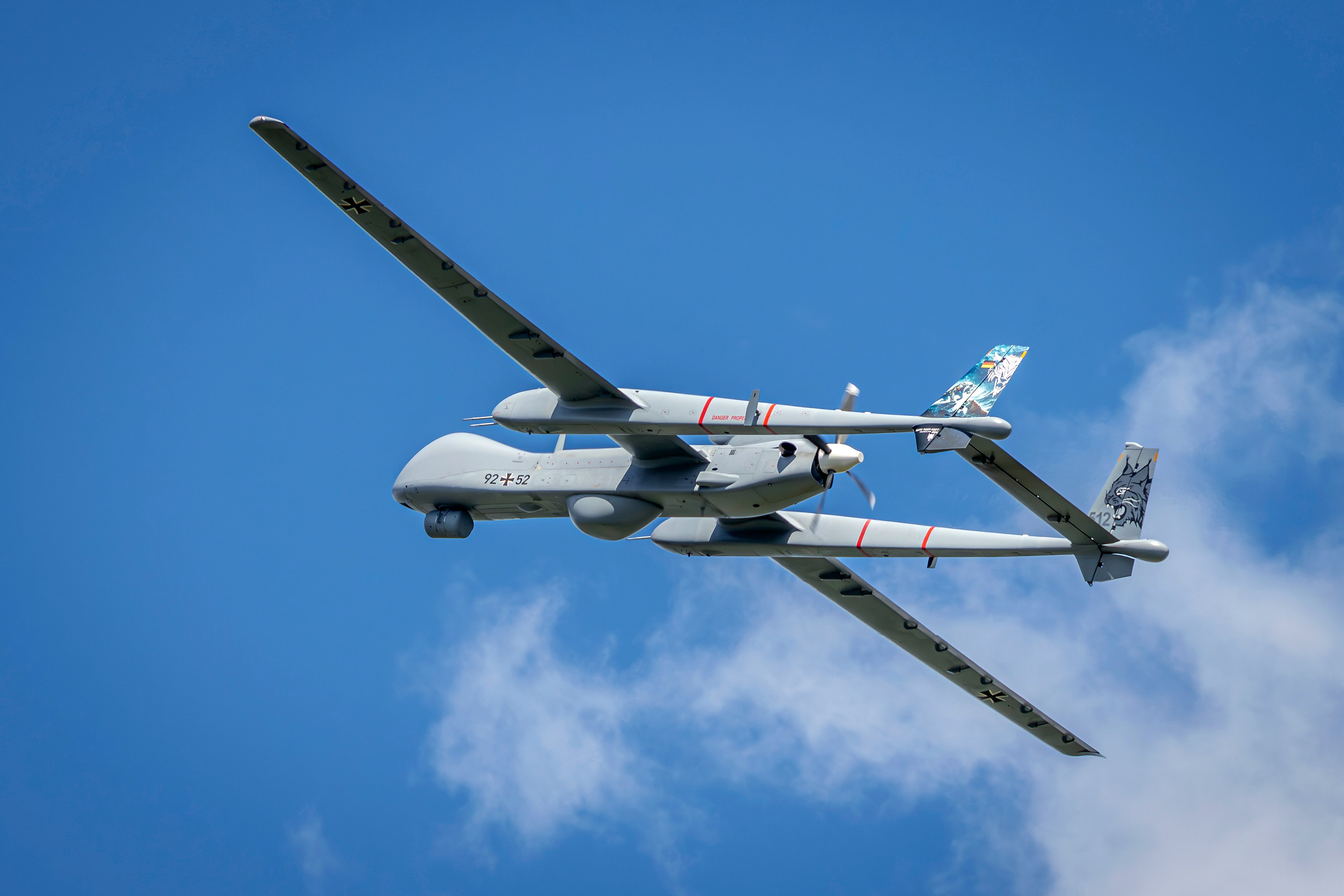
The Luftwaffe’s current larger uncrewed aircraft fleet remains limited to five leased Israeli-made Heron TP medium-altitude, long-endurance drones. Germany is also participating in the Eurodrone program, while uncrewed systems were expected to form part of the wider Future Combat Air System (FCAS), before that Franco-German-led effort hit the buffers earlier this year.

German Heron TP 92+52 mit Tiger-Sonderfolierung startet im Rahmen vom NATO Tiger Meet 2024 beim Taktischen Luftwaffengeschwader 51 Immelmann vom Fliegerhorst Jagel, am 27.05.2024. ©Bundeswehr/Ann-Kathrin Steinbring
A German Air Force Heron TP at Jagel Air Base in 2024. Bundeswehr/Ann-Kathrin Steinbring

Russia’s full-scale invasion of Ukraine in 2022 and Germany’s subsequent military buildup have intensified pressure to address these gaps. Berlin has set a goal of being ready for war by 2029, and reports indicate that the Luftwaffe wants a new combat-drone capability on a similarly ambitious timeline.

As well as Airbus and Kratos, the emerging competition reportedly includes Anduril, General Atomics partnered with Germany’s INTEC, as well as Lockheed Martin. Boeing and Rheinmetall are meanwhile pitching the larger, Block 3 version of the Australian-developed MQ-28 Ghost Bat, while Helsing and Hensoldt are pursuing the homegrown CA-1 Europa.

The CA-1 Europa from the German defense startup Helsing. Helsing

The various proposals reflect a broader shift toward uncrewed aircraft that can deliver additional weapons, sensors, and electronic warfare capabilities without putting a pilot at risk. But Germany’s terminology raises an important question about the intended role.

A conventional collaborative combat aircraft, or CCA, would be designed to work alongside crewed fighters, extending their reach and providing additional combat mass. A platform intended to operate independently against targets deep inside enemy territory would place greater emphasis on range and survivability. These roles are not mutually exclusive, but the Luftwaffe’s final requirements will shape the aircraft it chooses.

Germany may not be looking for a single drone to do everything. One option might be a split high-low approach that could pair more capable, longer-range systems for deep-strike missions with cheaper, attritable collaborative combat aircraft that can fly alongside crewed fighters. At this point, it should also be noted that CCAs could also give older fourth-generation fighters a new lease on life, boosting their lethality and survivability by extending their sensor reach, adding weapons capacity, and allowing uncrewed aircraft to take on more dangerous tasks.

Meanwhile, Airbus is also working on its larger U760 Ravenstorm, intended for service in the early 2030s. The Ravenstorm gives Airbus a longer-term path toward a more advanced European-designed uncrewed combat aircraft as it pursues the nearer-term Valkyrie effort.

The Airbus U760 Ravenstorm, a combat drone designed to operate alongside fighter aircraft in air-to-air combat, strike missions, and electronic warfare roles. Airbus

In the short term, the Luftwaffe will need to determine which capabilities must be available in an initial operational fleet and which can be introduced later. Even an aircraft based on an established design requires substantial integration, testing, training, and infrastructure before it can be employed effectively in combat.

Germany’s 2029 target leaves little time for a program that still has to integrate its mission system and demonstrate how the aircraft will be used operationally. That is a particular challenge for the Luftwaffe, which has little experience operating large uncrewed aircraft, let alone jet-powered systems intended for combat.

A rear view of the U740 Valkyrie. Airbus

The European flight gives Airbus and Kratos a head start in testing the U740 for German requirements, but the next major milestone will be flying it with the MARS mission system. How quickly that work progresses will help determine whether the Valkyrie can meet the Luftwaffe’s timetable.

Contact the author: thomas@thewarzone.com

The post European U740 Variant Of The XQ-58A Valkyrie Has Flown appeared first on TWZ.

  •  

Theme for 2026 – create a landscape that cares!

Autumn Mediterranean Garden Fair 2024 - Photo Eric Roth

Various venues have hosted the Autumn Mediterranean Garden Fair over the years, but the wonderful increasing support of plant lovers and gardeners has been the main inspiration for our volunteers.

The post Theme for 2026 – create a landscape that cares! appeared first on Portugal Resident.

  •  

B-52 To Get Stealthy AGM-158C Long-Range Anti-Ship Missiles

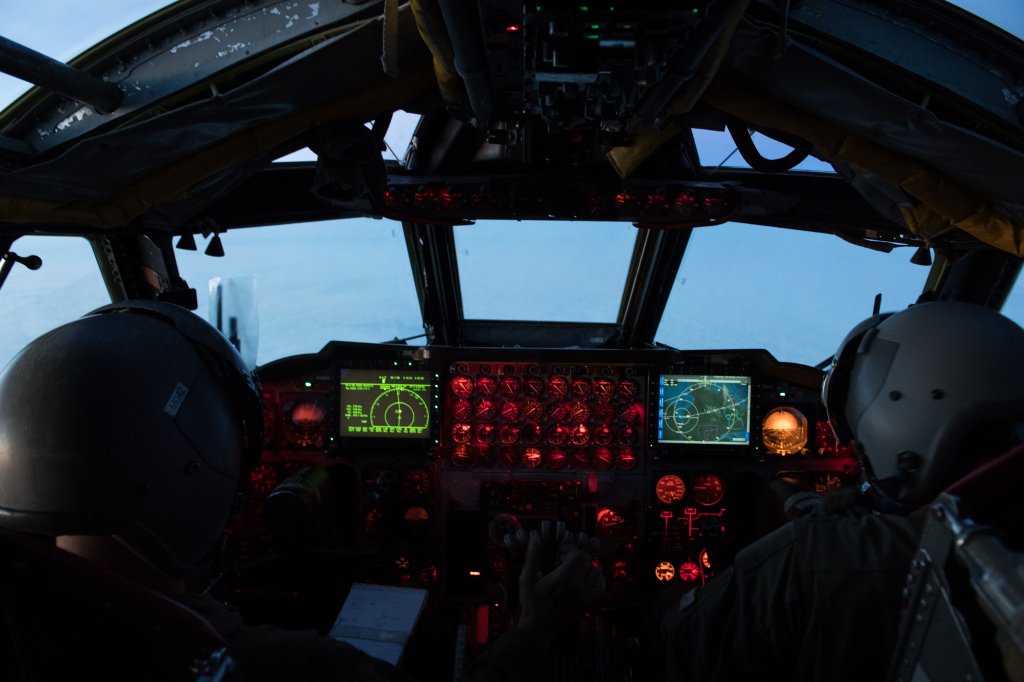
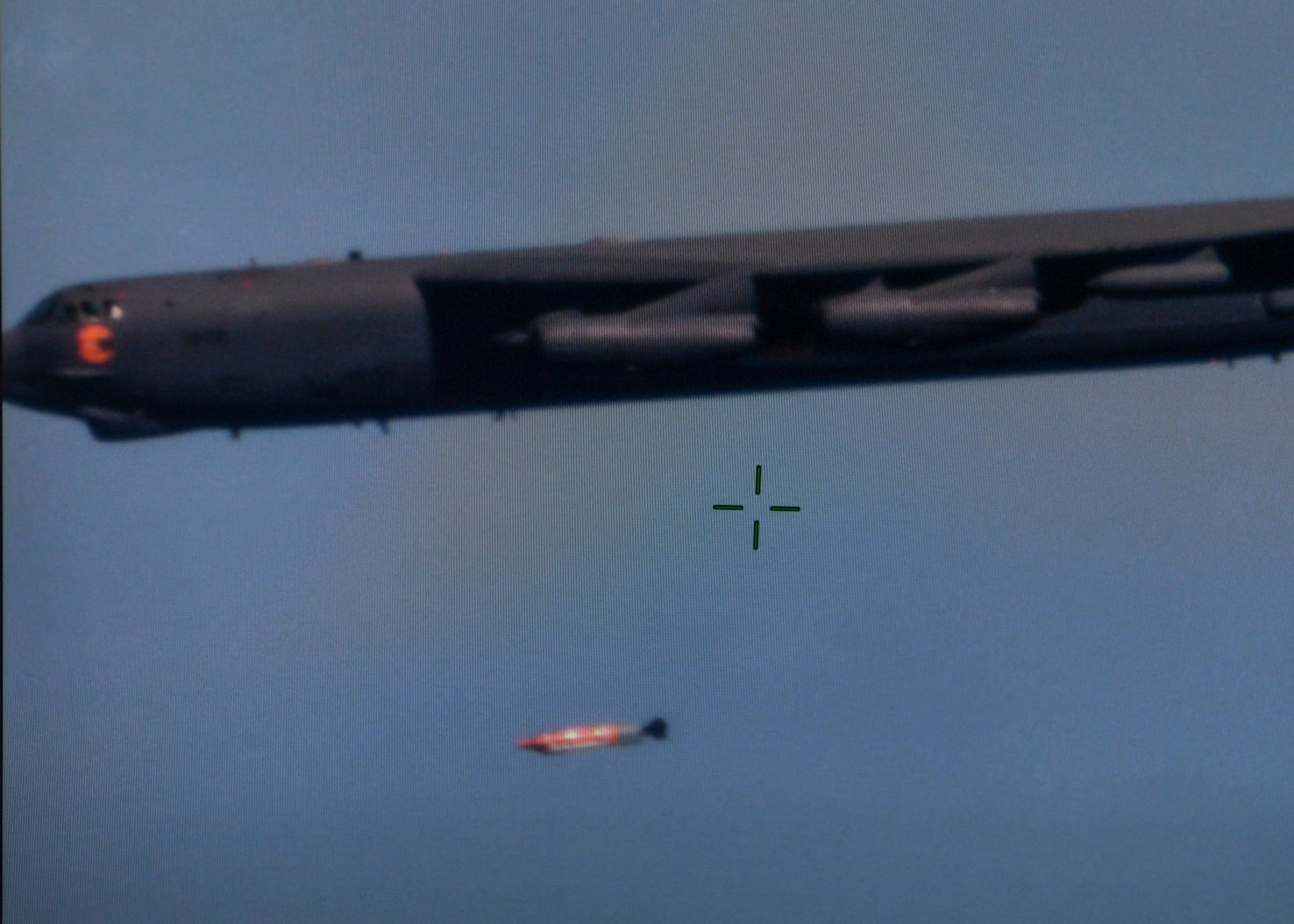
The U.S. Navy is preparing to sign a contract with Lockheed Martin to integrate the stealthy AGM-158C Long Range Anti-Ship Missile (LRASM) onto the Air Force’s B-52 Stratofortress bombers, according to an October 7 government notice. The effort would add another long-range maritime strike option to the U.S. bomber force as the military looks to counter increasingly capable adversary naval forces, especially in the Indo-Pacific theater.

The planned contract comes months after the Air Force revealed that the stealthy B-2 bomber can also launch LRASM, a capability that had not previously been publicly disclosed. You can read more about that here.

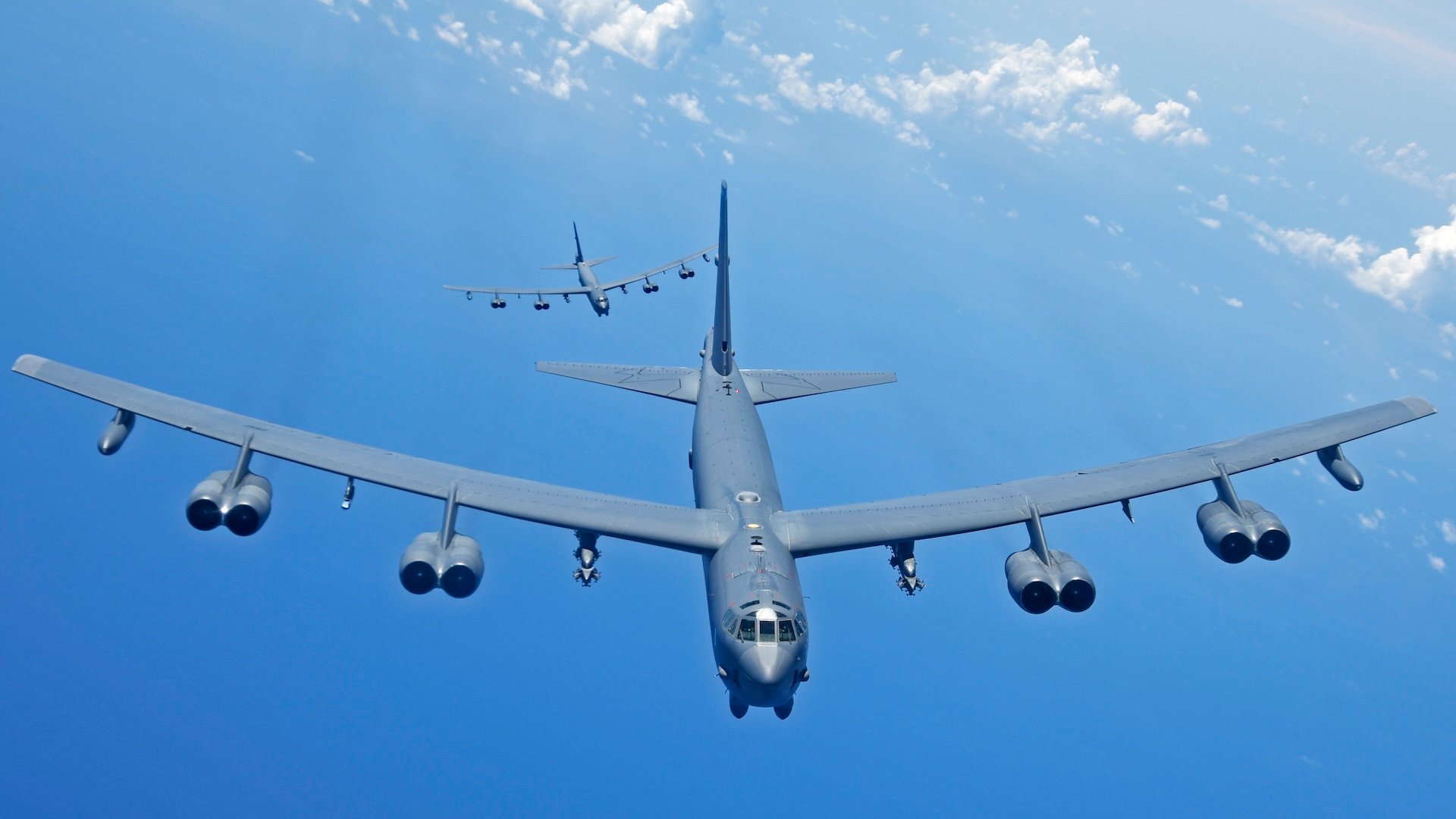
Two U.S. Air Force B-52H Stratofortress bombers fly over the Pacific Ocean during a routine training mission Aug. 2, 2018. This mission was flown in support of U.S. Indo-Pacific Command’s Continuous Bomber Presence operations, which are a key component to improving combined and joint service interoperability. (U.S. Air Force photo by Airman 1st Class Gerald R. Willis)
Two U.S. Air Force B-52s fly over the Pacific Ocean during a routine training mission. U.S. Air Force photo by Airman 1st Class Gerald R. Willis

The latest Naval Air Systems Command (NAVAIR) notice says the command intends to enter into sole-source negotiations with Lockheed Martin and subsequently award a cost-plus-fixed-fee delivery order covering LRASM integration on the B-52. The work would include missile software updates, associated testing, repairs to test assets, and failure review boards.

The notice does not provide a schedule for completing the integration or fielding the capability.

The B-52 is already capable of carrying large numbers of air-launched cruise missiles, including the AGM-158 Joint Air-to-Surface Standoff Missile (JASSM) family. LRASM is derived from that family, sharing a similar general form factor while incorporating features specifically designed to find and attack ships in contested maritime environments.

The B-52 can carry up to 20 JASSMs, and the weapons have the same dimensions, but the government notice does not specify how many LRASMs the bomber would ultimately carry.

A B-52 Stratofortress flies across the Atlantic Ocean June 17, 2019, for a flight in support of Exercise BALTOPS 2019. Airmen from the 23rd and 69th Bomb Squadrons generated aircraft in support of the largest multinational maritime exercise this year in the Baltic Sea. The Minot B-52 aircrews conducted flight missions lasting more than 25 hours during the exercise involving 12 countries during the first two weeks in June. (U.S. Air Force photo by Senior Airman Stuart Bright)
A B-52 flies across the Atlantic Ocean on June 17, 2019, for a flight in support of Exercise BALTOPS 2019, the largest multinational maritime exercise of the year in the Baltic Sea. U.S. Air Force photo by Senior Airman Stuart Bright

This is not the first time the B-52’s LRASM integration has been in the works.

As long ago as November 2019, Naval News reported that $10 million in Fiscal Year 2019 funding had been allocated to study integrating the missile onto the bomber, with Lockheed Martin and the Navy and Air Force expected to work on the effort. At the time, officials said the fielding timeline and the bomber’s eventual missile capacity had yet to be determined.

The U.S. Air Force’s Fiscal Year 2027 budget proposal further outlines plans to integrate the latest variants of LRASM and JASSM onto the B-52, including versions not yet cleared for use on the bomber. According to the document, the effort, which is intended to enable the deployment of next-generation stealthy cruise missiles against targets protected by sophisticated integrated air defense systems, will focus on engineering and manufacturing development, software updates, and weapons integration. Planned work in FY2027 includes incorporating the missiles’ operational flight programs into the B-52’s baseline bomber software, validating safe weapon separation from both wing-mounted stations and the internal carriage launcher, updating armament interfaces, and completing system-safety testing.

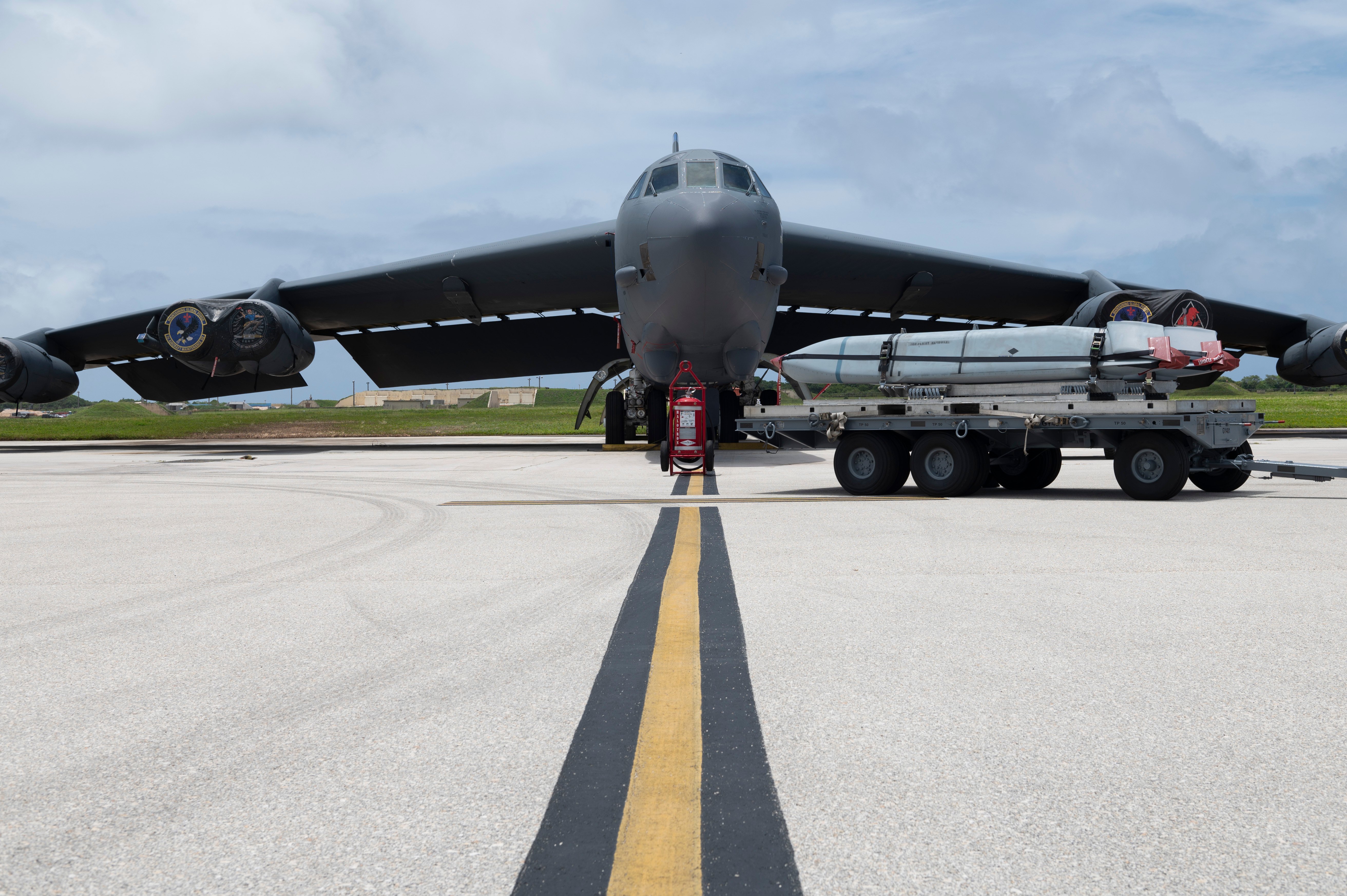
Joint Air to Surface Standoff Missiles are prepared to be loaded on to a U.S. Air Force B-52 Stratofortress on Andersen Air Force Base, Guam, April 24, 2023. The JASSM missile system is a weapons system capable of striking ground targets from extended ranges, making it a key deterrent against aggression across the Pacific. (U.S. Air Force photo by Airman 1st Class Spencer Perkins)
Joint Air-to-Surface Standoff Missiles are prepared to be loaded onto a U.S. Air Force B-52 on Andersen Air Force Base, Guam, on April 24, 2023. U.S. Air Force photo by Airman 1st Class Spencer Perkins

LRASM is designed to attack high-value surface vessels at long distances while reducing the exposure of the aircraft launching it. Its guidance combines GPS-assisted inertial navigation with onboard sensors and autonomous target-recognition capabilities intended to help it operate in heavily defended environments. Its imaging infrared seeker supports terminal target acquisition without relying on active radar emissions in that phase of flight. The missile operates with a high degree of autonomy, enabled by an integrated route-planning capability linked to its onboard electronic support measures (ESM) system. LRASM also has a datalink that allows it to get threat updates while in flight. It can also work cooperatively with other LRASMs during coordinated strikes. 

The missile’s precise operational range is not publicly disclosed. However, the baseline LRASM is reported to be able to strike targets at between 200 and 300 miles, in line with the AGM-158A JASSM. The forthcoming C-3 version is expected to have the same reach as the JASSM-ER, which is reported to be around 600 miles.

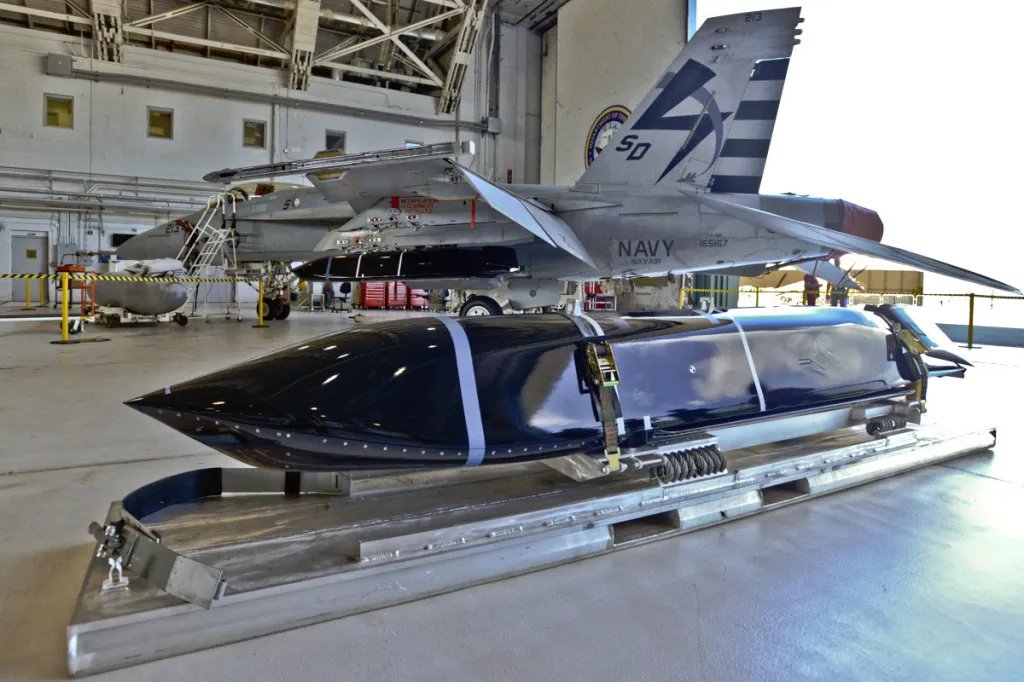
An AGM-158C Long Range Anti-Ship Missile is seen under the wing of an F/A-18, with another missile in the foreground. U.S. Navy

For the B-52, the addition of LRASM would provide a dedicated anti-ship weapon alongside its established land-attack arsenal. A bomber operating at a considerable distance from a hostile fleet could launch multiple missiles toward maritime targets, complicating an adversary’s air-defense and interception problem. The aircraft’s payload capacity could also allow it to contribute substantial missile volume to a coordinated strike.

The B-52 was previously adapted to carry AGM-84 Harpoon anti-ship missiles, although the weapon is not listed among the bomber’s current publicly documented armament. Compared to the Harpoon, however, LRASM represents a quantum leap in capability, offering drastically greater range, a stealthy design, and the ability to react to threats and adapt in real time. Combined, these traits make for a far more survivable and lethal anti-ship capability.

The B-52 also has a demonstrated naval mine-laying capability through the Quickstrike family of aerial mines. This includes carrying 2,000-pound Quickstrike-ER mines fitted with GPS-aided, winged guidance kits, allowing them to glide to designated points in the water from more than 40 miles away. The system enables the bomber to seed minefields with greater precision while remaining farther from potentially defended waters, threatening enemy shipping routes, port access, and naval movements.

190530-N-KR702-1083 PACIFIC OCEAN (May 30, 2019) A B-52 Stratofortress, assigned to the 49th Test and Evaluation Squadron from Barksdale Air Force Base, La., conducts an operational demonstration of the Quickstrike-ER (QS-ER) Naval mine project in the Pacific Ocean, May 30, 219. The QS-ER project was initiated by U.S. Indo-Pacific Command as part of ongoing efforts to modernize and enhance military readiness throughout the joint forces in the Indo-Pacific region. (U.S. Navy photo by Mass Communications Specialist 1st Class Holly L. Herline)
A B-52 conducts an operational demonstration of the Quickstrike-ER naval mine project in the Pacific Ocean, on May 30, 2019. U.S. Navy photo by Mass Communications Specialist 1st Class Holly L. Herline

The B-52 effort comes against the backdrop of the Air Force’s newly acknowledged use of LRASM on the B-2, which adds a different dimension to the service’s anti-ship capabilities.

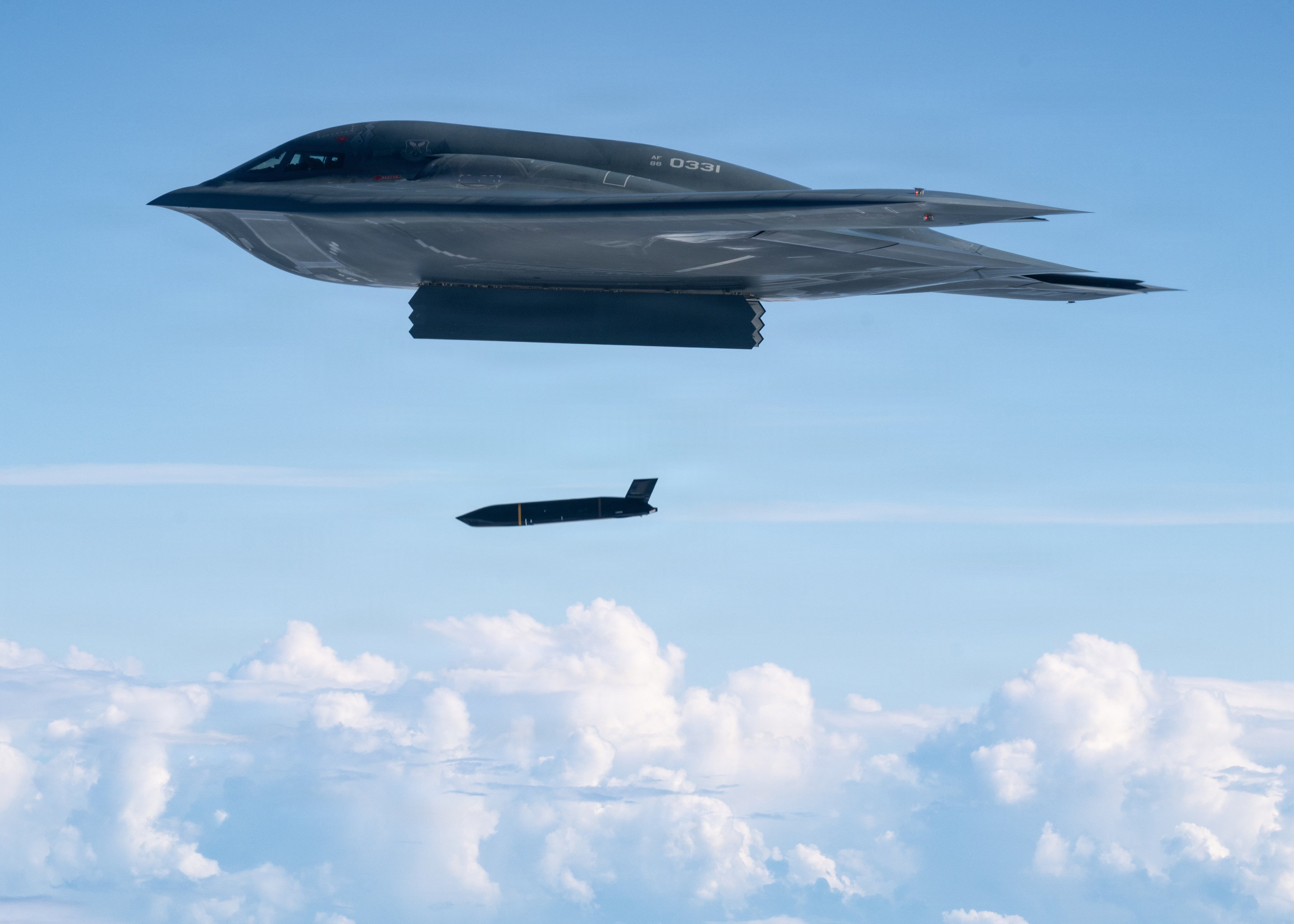
A U.S. Air Force B-2 Spirit Stealth Bomber, assigned to the 509th Bomb Wing, deploys an AGM-158C Long Range Anti-Ship Missile to support a live-fire sinking exercise as part of Valiant Shield 2026 over the Philippine Sea, June 27, 2026. The B-2 flew into the Mariana Island Range Complex to successfully employ the AGM-158C LRASM and demonstrated flexibility across the globe and hold maritime vessels at risk. (U.S. Air Force photo by Tech Sgt. Thomas Barley)
A U.S. Air Force B-2 deploys an AGM-158C Long Range Anti-Ship Missile to support a live-fire sinking exercise as part of Valiant Shield 2026 over the Philippine Sea, June 27, 2026. U.S. Air Force photo by Tech Sgt. Thomas Barley

LRASM was also previously integrated on the B-1B, meaning that all three of the Air Force’s strategic bombers will eventually be able to employ it.

The renewed focus on bomber-launched anti-ship weapons reflects the challenges posed by modern naval forces, particularly in the Indo-Pacific. China’s expanding surface fleet, increasingly sophisticated air defenses, and layered anti-access/area-denial capabilities have made the ability to attack ships from a distance an important consideration for U.S. military planning.

U.S. Airmen transport a live AGM-158C Long Range Anti-Ship Missile toward a B-1B Lancer during a U.S. Air Force LRASM Event Zero at Dyess Air Force Base, Texas, June 2, 2026. Led by the 7th Bomb Wing, the event focused on validating critical pre-flight procedures by connecting the munition to the aircraft using a locally fabricated cable. The effort helped evaluate processes supporting future weapon integration and maritime strike capabilities. (U.S. Air Force photo by Airman 1st Class Caleb Schellenberg)
U.S. airmen transport a live AGM-158C Long Range Anti-Ship Missile toward a B-1B Lancer at Dyess Air Force Base, Texas, June 2, 2026. U.S. Air Force photo by Airman 1st Class Caleb Schellenberg

LRASM is designed to help address those challenges by combining long-range flight with reduced observability and autonomous terminal targeting. Its onboard sensors and navigation capabilities are intended to help it identify and engage appropriate targets in environments where communications and external targeting support may be limited or contested.

Bomber integration also offers a way to increase the number of potential launch platforms without relying exclusively on tactical aircraft or surface combatants. A B-52 carrying a substantial missile load could contribute to a coordinated attack alongside B-1s, stealth bombers, naval aircraft, and other forces.

The B-52’s payload capacity would make it particularly useful for delivering larger quantities of weapons from outside the most heavily defended areas.

The planned B-52 integration also fits into a broader effort to expand LRASM’s availability across the U.S. military. Publicly discussed integration efforts have included the F-15E, F-15EX, F-16C/D, certain variants of the F-35, and the Navy’s P-8A Poseidon, in addition to established launch platforms, namely the Navy’s F/A-18E/F Super Hornet fighters and the B-1.

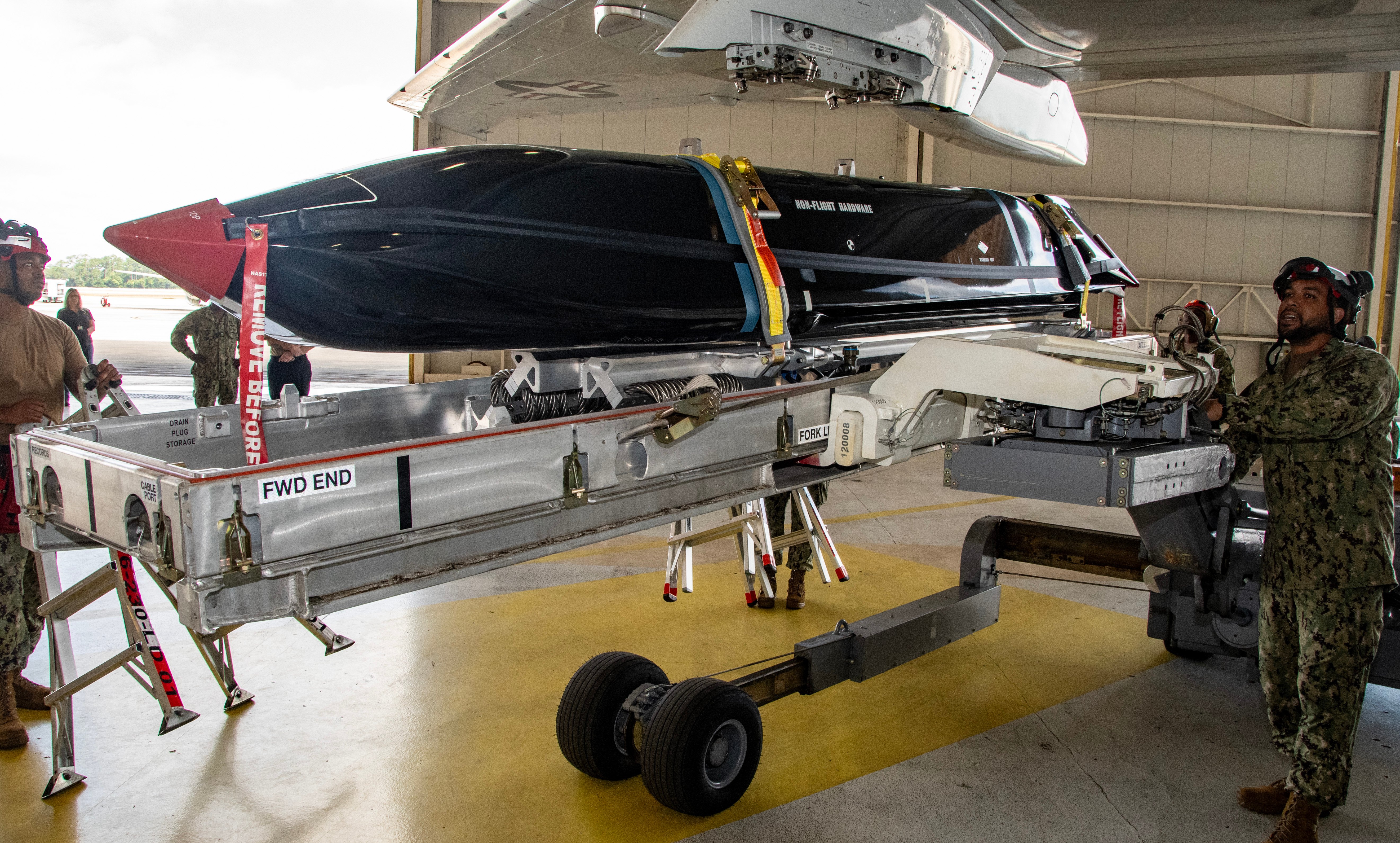
JACKSONVILLE, Fla. (October 1, 2025) Sailors assigned to Patrol Squadron (VP) 30 transport an AGM-158C Long Range Anti-Ship Missile (LRASM) using a Munition Handling Unit prior to installation on board a P-8A Poseidon maritime patrol aircraft, October 1, 2025. VP-30’s mission is to provide P-8A and MQ-4C Triton Unmanned Aircraft System (UAS) specific training to pilots, Naval flight officers, and enlisted aircrew prior to reporting to the fleet. (U.S. Navy photo by Mass Communication Specialist 1st Class Curtis D. Spencer.)
Sailors assigned to Patrol Squadron (VP) 30 transport an AGM-158C Long Range Anti-Ship Missile prior to installation on board a P-8A Poseidon maritime patrol aircraft. U.S. Navy photo by Mass Communication Specialist 1st Class Curtis D. Spencer

Meanwhile, the B-52 fleet is currently preparing for a slew of major upgrades. These include a critical radar overhaul alongside new engines, enhanced communications systems, and other improvements. The scope of these changes is significant enough that the aircraft will be redesignated from B-52H to B-52J. The bombers are also slated to further expand their weapons capabilities, including through the addition of the Long-Range Stand Off (LRSO) nuclear cruise missile. The upgraded B-52Js are expected to remain in service through at least 2050.

Even in its current configuration, the B-52 is particularly well suited to carrying the LRASM, given its substantial payload capacity and ability to launch weapons from standoff distances beyond the reach of enemy air defenses. Its upgraded networking capabilities will greatly enhance its effectiveness by allowing it to operate as part of a broader kill web, drawing on data from multiple platforms and sensors to support targeting over vast distances. In more dynamic operational environments, the bomber’s new radar can generate its own targeting information in real time. The B-2, B-1, and the B-52 all offer distinct levels of penetration and weapons-delivery capability, with the forthcoming B-21 able to push deeper into contested airspace; it will certainly employ LRASM too.

The integration of LRASM onto the B-52 could prove critical to generating the volume of sorties needed to counter China’s expanding naval fleet. With its substantial payload capacity and ability to launch missiles from standoff distances, the B-52 could deliver significant anti-ship firepower across the vast distances of the Indo-Pacific. These missions would likely involve very long-range sorties, making the bomber’s payload capacity, endurance and networking capabilities particularly valuable in sustaining operations against Chinese naval forces.

If the LRASM integration proceeds as planned, the result would be another addition to the U.S. military’s long-range anti-ship arsenal, giving the Air Force’s venerable B-52 a more explicit role in the growing emphasis on striking hostile fleets at a distance.

Contact the author: thomas@thewarzone.com

The post B-52 To Get Stealthy AGM-158C Long-Range Anti-Ship Missiles appeared first on TWZ.
  •  

Retired KC-10 Extender Tankers Could Get A Second Life With North African Mystery Operator

Just over two years after the U.S. Air Force retired the last of its KC-10A Extender aerial refueling tankers, four of those aircraft may be bound for a new career in North Africa for a mysterious end user.

The Air Force Life Cycle Management Center (AFLCMC) put out a contracting notice yesterday “solely for information and planning purposes” with the express intent “to identify potential industry sources that possess the capability, expertise, and facilities to execute the regeneration, one-time flight clearance, depot-level return to service, worldwide ferry delivery, in-country Contractor Logistics Support (CLS), and operational/maintenance training for up to four (4) KC-10 Extender aircraft.”

The KC-10s could be “transferred via Excess Defense Articles (EDA) to a partner nation in North Africa,” the notice adds, without naming the country in question.

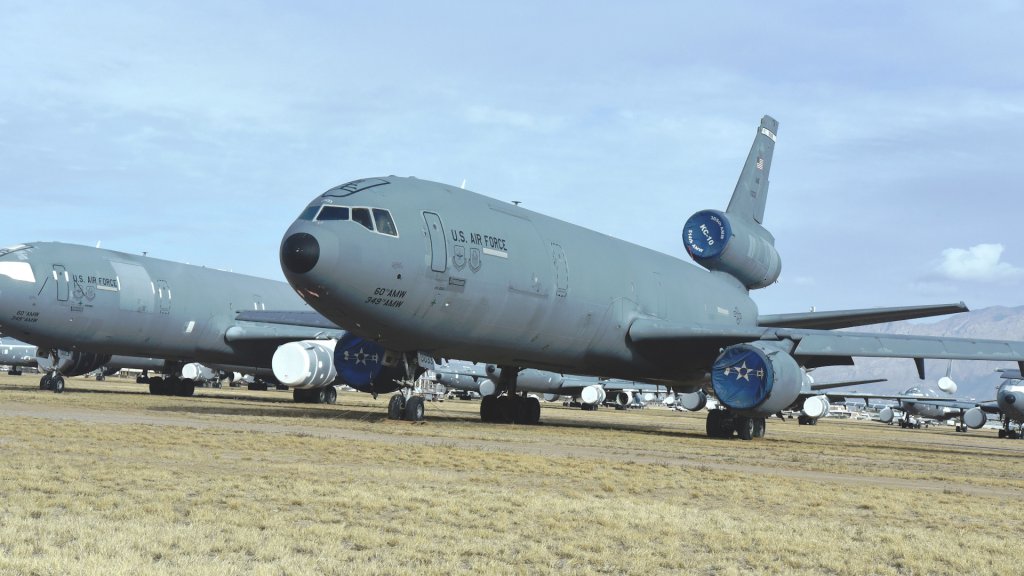
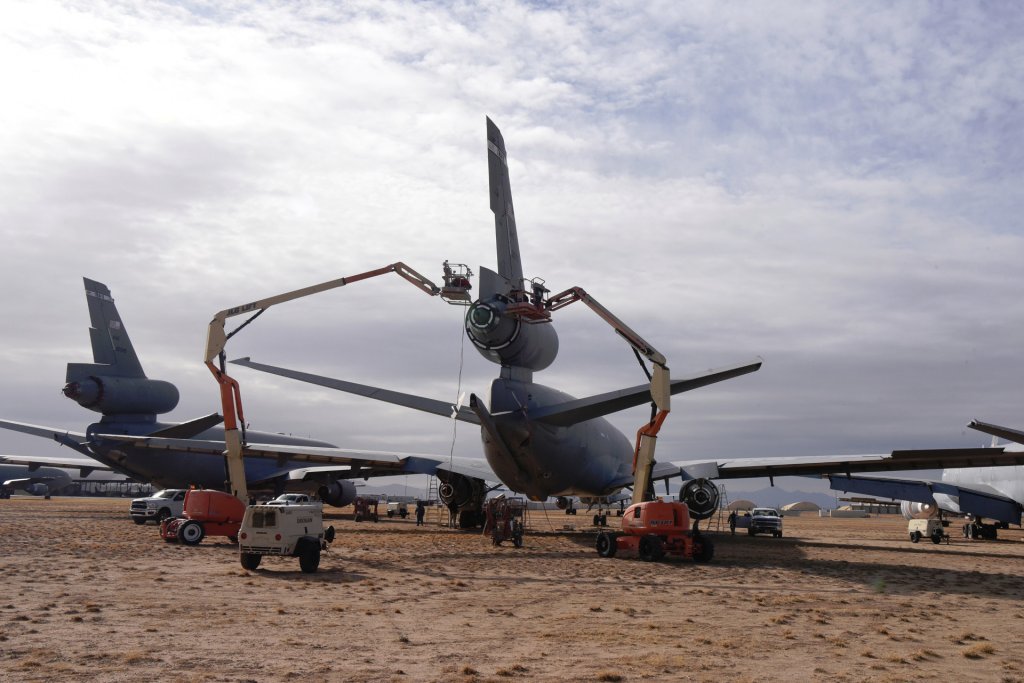
Retired KC-10 tankers seen at the boneyard at Davis-Monthan Air Force Base in Arizona in 2025. US Military

The Air Force operated KC-10s between 1981 and 2024. TWZ has reached out to the U.S. Air Force, as well as the U.S. State Department, for more information. The State Department directed us to contact the Pentagon.

The EDA program allows for materiel deemed extraneous to U.S. military needs to be transferred to allies and partners either at a reduced cost or as a grant. The foreign nation in question has to pay for those assets to be delivered, as well as refurbishment, if applicable.

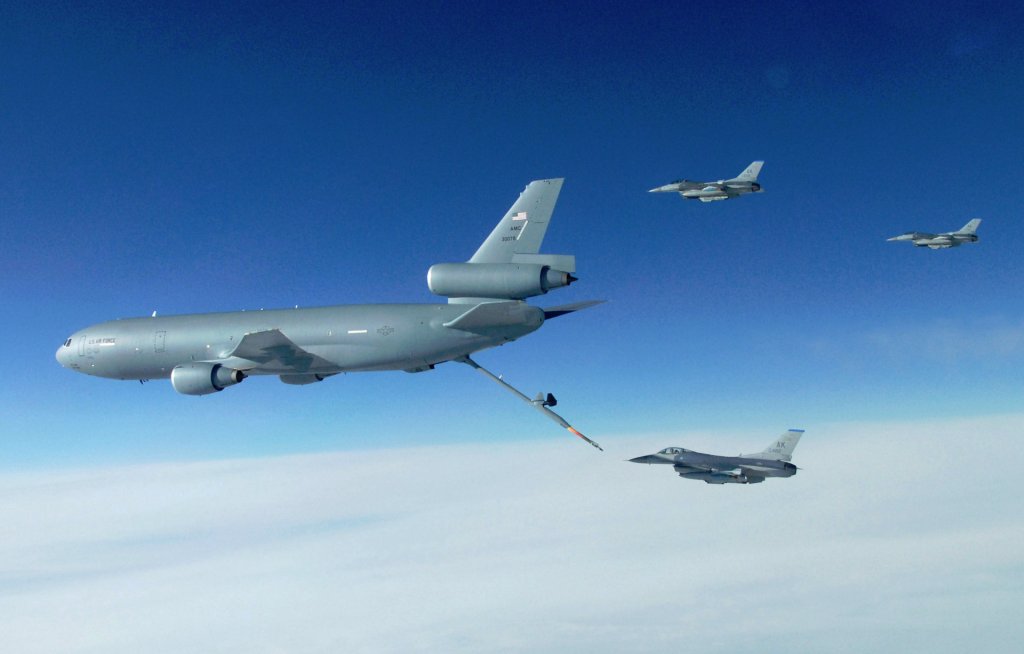
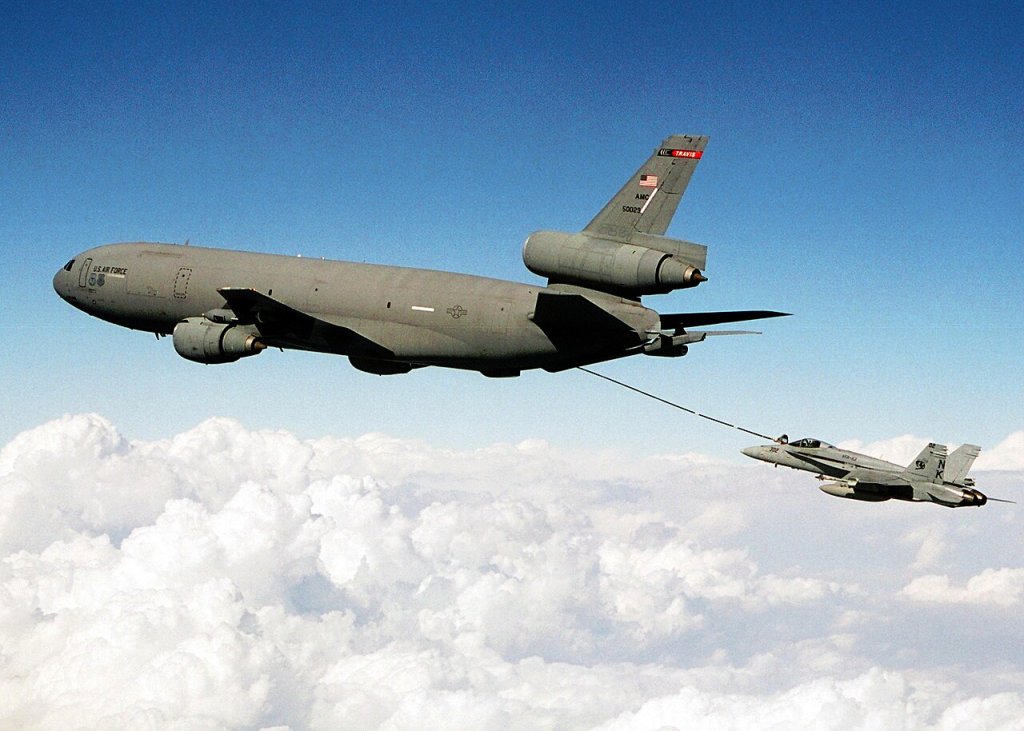
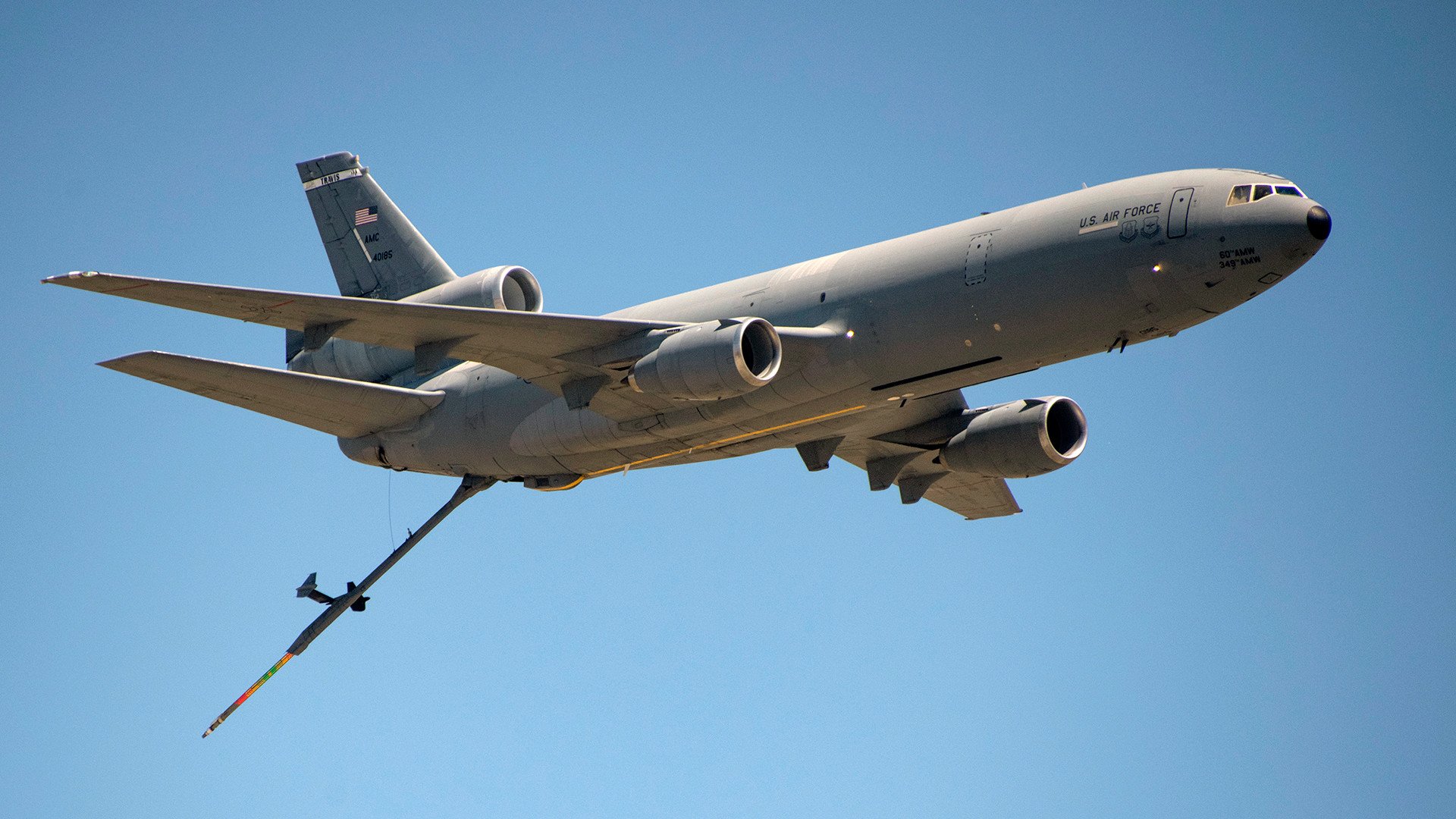
It is important to note here that the Extender, as designed, is capable of refueling receivers using either the boom or the probe-and-drogue method. Tankers equipped for the probe-and-drogue method are, by far, more common internationally. We will come back to this later on.

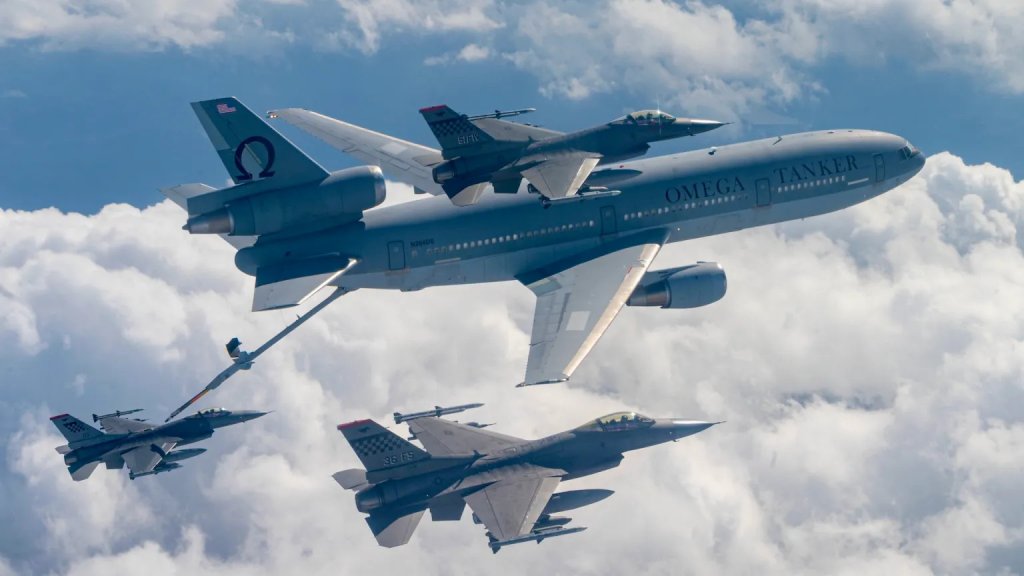
A KC-10 seen refueling F-16 fighters via the boom. USAF
A KC-10 refuels a US Navy F/A-18 Hornet via the probe-and-drogue method. USN

While we don’t know what the North African country might be in line now to receive the quartet of KC-10s, Egypt and Morocco would seem to be the most likely candidates based on their current and planned aircraft inventories. They are also both major U.S. allies.

The Egyptian Air Force currently does not operate any dedicated aerial refueling tankers. The country is in the process of acquiring two new C-130J-30 Hercules aircraft for use as airlifters, as well as tankers, using the probe-and-drogue method. It does already fly C-130s, but none explicitly configured for aerial refueling duties. Egypt also has a very diverse array of fighters that includes U.S.-made F-16 Vipers that can only be refueled in mid-air via boom.

A US Air Force KC-10 refuels an Egyptian F-16 during an exercise in 2023. USAF/Staff Sgt. Emily Farnsworth

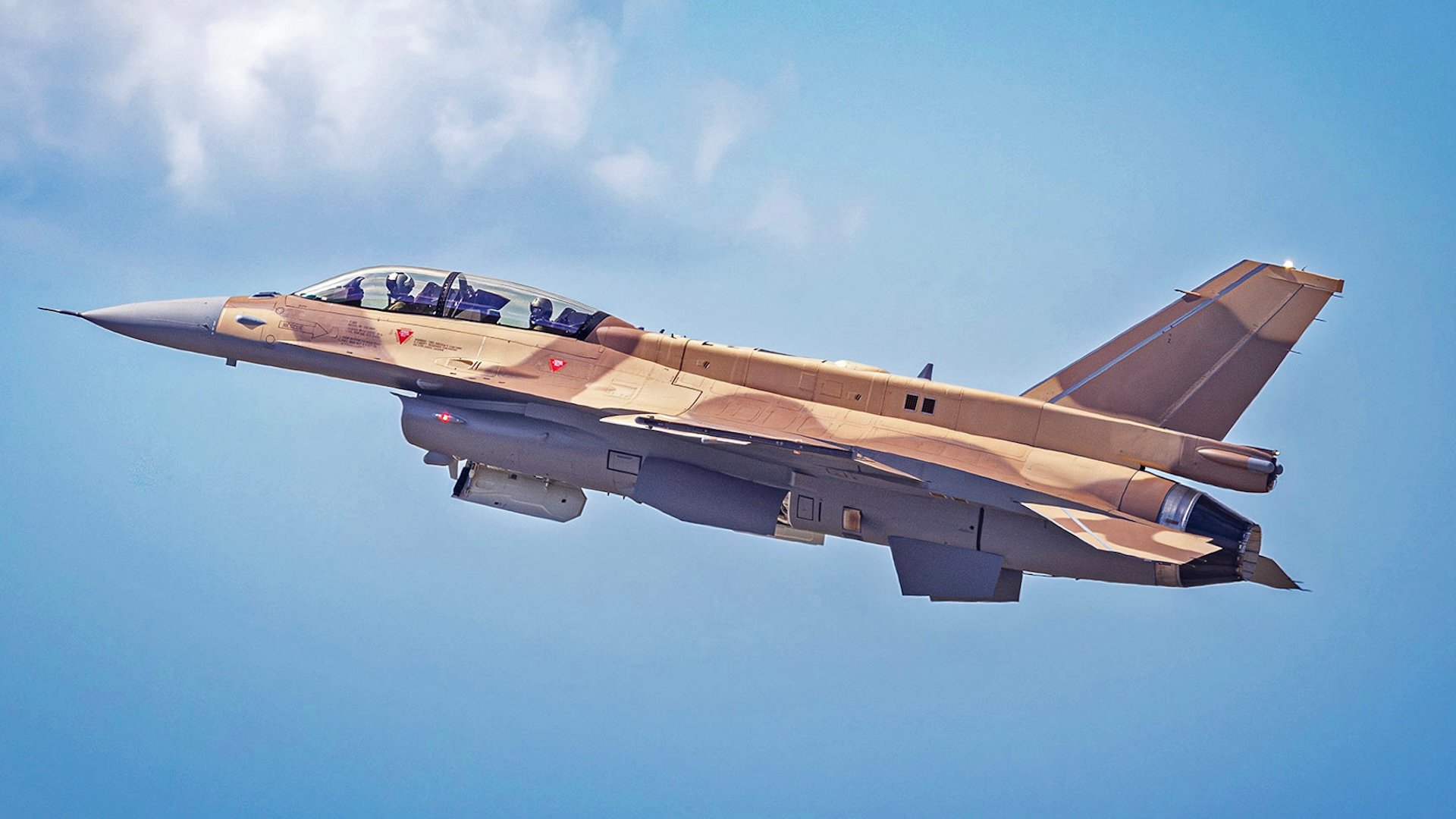
Morocco’s Air Force also flies F-16s and is in the process of acquiring more. The first new-production Block 72 F-16D for the Moroccan Air Force just flew for the first time earlier this week. Morocco does have an organic aerial refueling capability now, but in the form of C-130s equipped to dispense fuel via probe-and-drogue.

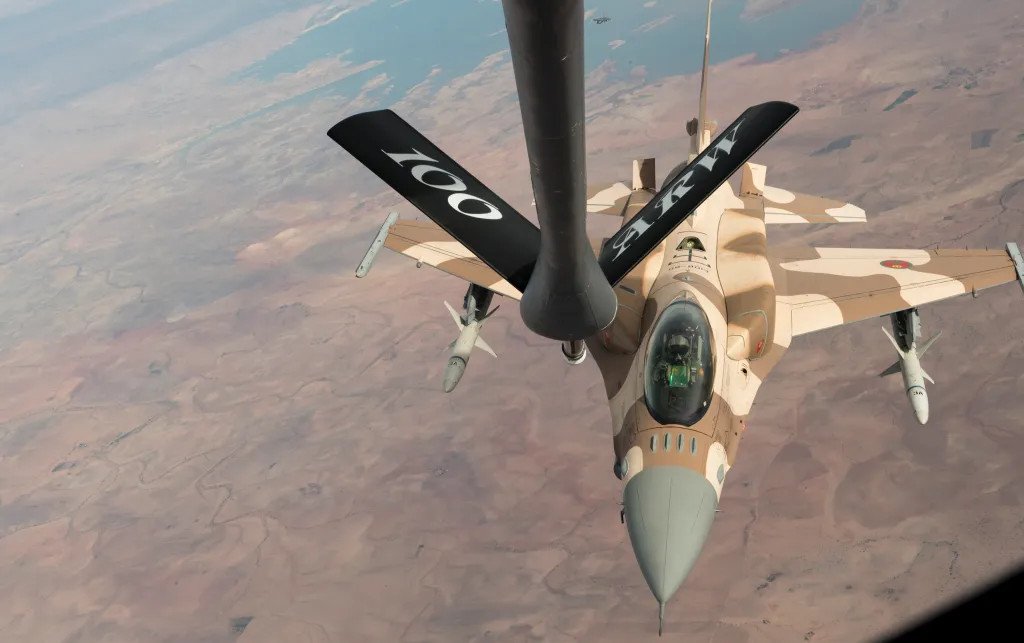
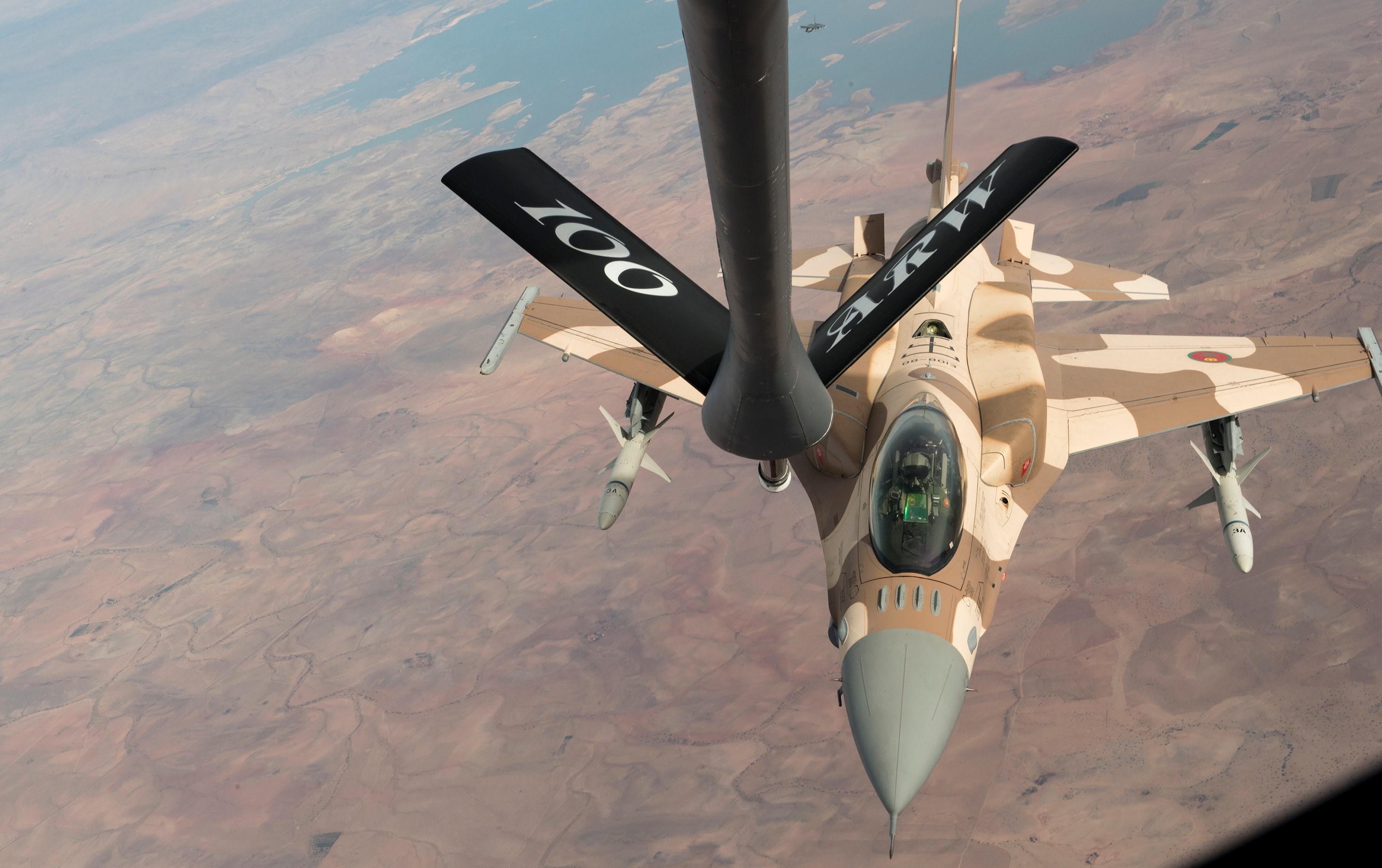
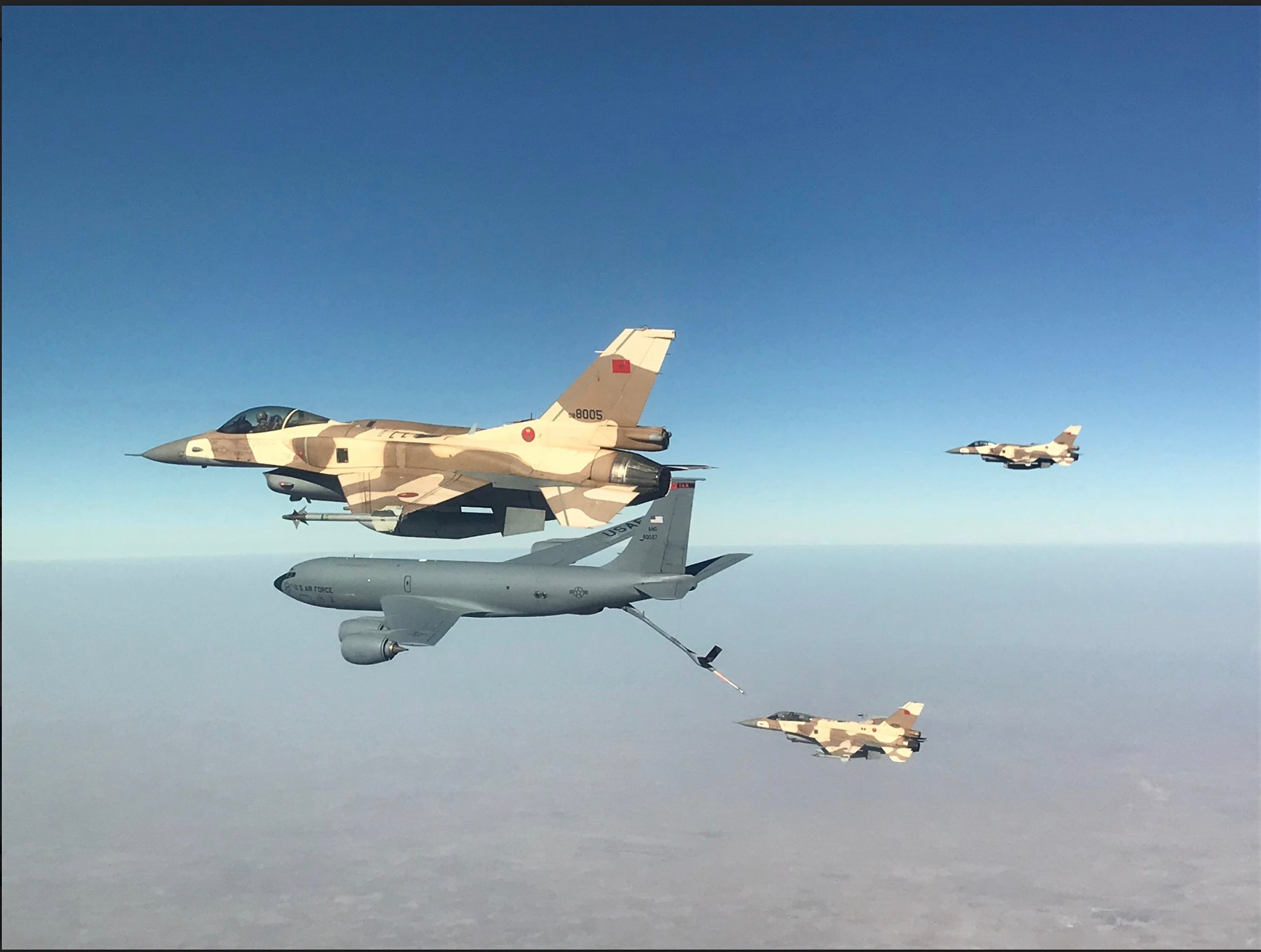
A Moroccan F-16 seen linking up with a US Air Force KC-135 tanker during an exercise. USAF

As mentioned, the KC-10 was designed to connect with receivers via probe-and-drogue, as well as boom, and could be used to refuel other tactical jets in Egyptian or Moroccan service. As an aside, fighters belonging to both regularly receive foreign tanker support during exercises, as already seen earlier in this story. Just last month, Chinese YY-20 tankers (also sometimes referred to as Y-20Us) notably did just this in an exercise in Egypt.

Footage released by Egypt’s official authorities from the “Eagles of Civilization 2026” joint air exercise shows Egyptian **MiG-29M/M2s and Rafale fighters receiving aerial refueling from a Chinese Y-20 tanker aircraft. pic.twitter.com/pvxkpsDHxG

— 笑脸男人 (@lfx160219) September 7, 2026

Whichever country may be in line to receive the four KC-10s, there is a question about the current state of those aircraft. Earlier in this story, we talked about the Extender’s capabilities as designed.

McDonnell Douglas (since absorbed into Boeing) delivered a total of 60 KC-10s to the U.S. Air Force between 1979 and 1987. The Extender was derived from the three-engine DC-10 airliner, the last of which was produced in 1989. The Air Force lost one of its KC-10s in an accident in 1987.

Of the remaining 59 KC-10s, 10 were put up for auction in a non-flyable state last year. For reasons that remain unclear, a single engine had been removed from under one of the wings of each of those aircraft. These Extenders were also among the first to be retired, and their booms had been stripped to be used as spares for the examples that remained in service until 2024. Private aerial refueling contractor Omega Air looks to have subsequently won those auctions. Omega also operates two ex-Dutch KDC-10 tankers, which are broadly similar to the KC-10, as well as another DC-10 converted into a probe-and-drogue-only tanker. The company has several Boeing 707-based tankers, as well.

One of Omega Air’s KDC-10s refuels US Air Force F-16s. USAF

The condition of the remaining 49 Extenders is unclear. Congress included a provision in the annual defense policy bill, or National Defense Authorization Act (NDAA), for the 2026 Fiscal Year that required the Air Force to preserve remaining retired KC-10s, but only stipulated they be maintained “in the same storage condition” they were in as of September 30, 2025. The bill, which was signed into law in December 2025, also made clear that the Air Force could still “dispose” of the aircraft in accordance with existing property management statutes.

Regenerating military aircraft, especially larger ones, back to service can be costly, complex, and time-consuming, even when they are kept in storage in a highly maintained state. In this particular case, acquiring KC-10s via the EDA program, with a very low up-front purchase price, could still be attractive to the right buyer, especially compared to the cost of acquiring new-production tankers.

Personnel at the boneyard at Davis-Monthan Air Force Base apply a protective coating to a KC-10. USAF

For a country like Egypt or Morocco that has never operated a boom-equipped tanker, second-hand Extenders could be a valuable entry point to future aerial refueling capabilities, as well. In general, organic aerial refueling capability is an important force multiplier for any air arm.

There is a possibility that KC-10s could be regenerated not as tankers, but as cargo aircraft, though this seems less likely to be the case. Cargo carrying was also an important duty for the Extenders while in U.S. Air Force service, and they still could operate in this role even when returned to service as tankers.

Though the aging KC-10s were getting increasingly more difficult to operate and maintain, the Air Force’s decision to retire them was still controversial. The Extender was a highly flexible tanker that could carry more fuel than the KC-46s that supplanted them. Clearly, there are others still interested in operating them.

It should be stressed that the AFLCMC contracting notice does not present the transfer of the four KC-10s as a done deal. At the same time, it has revealed that one of America’s partners in North Africa could breathe new life into four of these retired tankers.

Contact the author: joe@twz.com

The post Retired KC-10 Extender Tankers Could Get A Second Life With North African Mystery Operator appeared first on TWZ.

  •  

U.S. Makes F-35 Push As Portugal Weighs F-16 Replacement

The United States is stepping up its campaign to sell Portugal the F-35. Speaking in Lisbon today, Secretary of State Marco Rubio said the United States would make Portugal a “very competitive” offer to replace its F-16 fleet. The development adds a high-level political push to an increasingly intense competition over the Portuguese Air Force’s next fighter.

Portuguese Foreign Minister Paulo Rangel said after meeting Rubio that Lisbon is seriously considering the American proposal, while emphasizing that other options remain under consideration.

US Secretary of State Marco Rubio disembarks from a plane upon arrival at Lisbon Airport during a three-country European tour, in Lisbon on October 8, 2026. (Photo by Mark Schiefelbein / POOL / AFP via Getty Images)
U.S. Secretary of State Marco Rubio disembarks from a plane upon arrival at Lisbon Airport during a three-country European tour, in Lisbon on October 8, 2026. Photo by Mark Schiefelbein / POOL / AFP

“The Portuguese state will always decide in ‌accordance ⁠with the national interest,” Rangel said at a news conference after the meeting. “There is one point that is also clear: we are seriously considering the F-35 proposal, just as we are considering ⁠others.”

Portugal currently operates 25 modernized F-16AM/BMs, including 21 single-seat F-16AMs and four two-seat F-16BMs, from Monte Real Air Base, or BA5. The Portuguese Air Force, known as the Força Aérea Portuguesa (FAP), has not yet formally launched a replacement competition, but the aging fleet is increasingly becoming the focus of attention in Lisbon.

A Portuguese Air Force F-16 Fighting Falcon participating in NATO exercise Ramstein Flag 24 flies over the west coast of Greece, Oct. 4, 2024. Over 130 fighter and enabler aircraft from Greece, Canada, France, Hungary, Italy, Poland, Portugal, Romania, Spain, Sweden, United Kingdom and United States are training side by side to improve tactics and foster more robust integration, demonstrating NATO’s resolve, commitment and ability to deter potential adversaries and defend the Alliance. (U.S. Air Force photo by Tech. Sgt. Emili Koonce)
A Portuguese Air Force F-16 participating in NATO Exercise Ramstein Flag 24 flies over the west coast of Greece in 2024. U.S. Air Force photo by Tech. Sgt. Emili Koonce

Portugal acquired a total of 45 F-16A/B Block 15 aircraft through the Peace Atlantis I and II programs.

The first 20 aircraft were delivered beginning in 1994. These were new-build F-16A/B Block 15OCU aircraft, comprising 17 single-seat F-16As and three two-seat F-16Bs, and were used to equip Esquadra 201 “Falcões.”

A second batch followed in 1999, when Portugal received 25 former U.S. Air Force Block 15OCU aircraft. Twenty-one were F-16As and four were F-16Bs, with several intended as attrition replacements or spares. These aircraft had accumulated roughly 3,000 flight hours and underwent an extensive modernization program to bring them to the F-16AM/BM configuration. This means the aircraft are broadly comparable to the U.S. Air Force’s F-16C/D Block 50/52 fleet. 

Esquadra 301 “Jaguares” finally became operational with its upgraded aircraft in 2005, while Esquadra 201 did not receive its upgraded F-16s until 2011.

A Portuguese F-16 Fighting Falcon flies alongside a B-52H Stratofortress, assigned to the 96th Bomb Squadron, Barksdale Air Force Base, Louisiana, during a Bomber Task Force mission, June 2, 2021. The U.S. Air Force’s ability to quickly respond and assure allies and partners rests upon the fact that forces are in Europe, forward and ready. (U.S. Air Force photo by Staff Sgt. Jason Allred)
A Portuguese F-16 in special markings associated with the Esquadra 301 “Jaguares.” U.S. Air Force photo by Staff Sgt. Jason Allred

Since then, the Portuguese Vipers have continued to receive incremental improvements. Their configuration has progressed through several mission-software standards, while the aircraft have been equipped with night-vision goggles, Joint Helmet-Mounted Cueing Systems (JHMCS), and advanced targeting and weapons capabilities.

Among the more important additions are Northrop Grumman Litening II targeting pods, and the ability to employ weapons including GBU-12 Paveway II laser-guided bombs, GBU-31 Joint Direct Attack Munitions (JDAM), and GBU-49 Enhanced Paveway II dual-mode weapons.

Portuguese Air Force F-16s line up for takeoff. Portuguese Air Force

Twelve former Portuguese F-16s were transferred to Romania under a deal signed in 2013, with deliveries taking place in 2016 and 2017. Romania subsequently ordered five additional aircraft in 2019.

Structurally, the Portuguese F-16s could potentially remain in service into the mid-2040s. But maintaining their relevance against increasingly sophisticated air forces would require continued investment in avionics, sensors, communications, and self-protection systems.

The F-16AM/BM fleet continues to rely on the old AN/APG-66(V)2 pulse-Doppler radar. Replacing it with an active electronically scanned array (AESA) radar such as Northrop Grumman’s APG-83 would substantially improve detection and tracking performance, but would come at considerable cost.

A U.S. Air Force F-16C Fighting Falcon assigned to the 20th Fighter Wing receives 22 radar modification upgrades in conjuction with the U.S. Air Force Service Life Extension Program at Shaw Air Force Base, S.C., April 19, 2023. These upgrades replaced the APG-68 radar with the new APG-83 Scalable Agile Beam Radar, allowing 20th Fighter Wing F-16s to detect air-to-air and air-to-ground threats at much longer ranges. (U.S. Air Force photo by Airman 1st Class Erin Stanley)
A U.S. Air Force F-16C receives radar modification upgrades in conjuction with the U.S. Air Force Service Life Extension Program, which includes the APG-83 Scalable Agile Beam Radar. U.S. Air Force photo by Airman 1st Class Erin Stanley

Portugal faces a choice between continuing to invest in increasingly tired fourth-generation airframes or moving directly into the fifth generation.

Since the end of the Cold War, Portugal has become much more engaged in out-of-area operations and missions in support of NATO.

In the process, the Portuguese F-16 fleet has accumulated an impressive operational record.

The fighters have repeatedly deployed on NATO air-policing missions, including rotations to the Baltic States, Iceland, Romania, and Poland.

Portuguese Air Force F-16 military fighter jets participate in NATO's Baltic Air Policing Mission in Lithuanian airspace near Siauliai, on May 23, 2023. (Photo by Petras Malukas / AFP) (Photo by PETRAS MALUKAS/AFP via Getty Images)
Armed with live missiles, Portuguese Air Force F-16s participate in the NATO Baltic Air Policing Mission in Lithuanian airspace near Siauliai, on May 23, 2023. Photo by PETRAS MALUKAS/AFP via Getty Images

The F-35A would give Portugal a fifth-generation fighter built around low observability, sensor fusion, advanced electronic warfare, and networked operations.

The aircraft would also fit naturally into a NATO environment in which an increasing number of European air forces are adopting the F-35.

More than 900 F-35s are already in service or on order across Europe, according to previous comments by U.S. Ambassador to Portugal John Arrigo. Washington has repeatedly argued that joining that community would provide Portugal with a substantial interoperability advantage.

A U.S. Air Force F-35A Lightning II assigned to the 493rd Fighter Squadron taxis on the runway after arriving for the Beja International Airshow at Air Base No. 11 in Beja, Portugal, May 31, 2024. The 48th Fighter Wing's presence at the Beja International Airshow enhances interoperability, showcases seamless joint operations, and promotes the exchange of expertise, improving readiness and capability. (U.S. Air Force photo by Senior Airman Renee Nicole S.N. Finona)
A U.S. Air Force F-35A assigned to the 493rd Fighter Squadron taxis on the runway after arriving for the Beja International Airshow in Portugal, in May 2024. U.S. Air Force photo by Senior Airman Renee Nicole S.N. Finona

However, European competition includes the Eurofighter Typhoon, Dassault Rafale, and Saab Gripen E, with Airbus preparing an especially aggressive campaign for the Typhoon.

Airbus has said it intends to submit an unsolicited Eurofighter proposal to Portugal in late October or early November. That package is expected to encompass not just the aircraft, but financing, industrial participation and broader military cooperation.

Selecting the American stealth fighter deepens Lisbon’s military relationship with Washington at a time when European governments are wrestling with fundamental questions about their dependence on U.S. military capabilities.

Across the continent, uncertainty over Washington’s stance on NATO is encouraging European allies to examine ways of reducing their reliance on American military technology, even as those same countries continue to increase defense spending and purchase U.S. equipment.

Procurement of the UH-60 Black Hawk underscores the reliance of the Portuguese Air Force on U.S.-made hardware for many of its needs. Portuguese Air Force

If Washington can combine the F-35’s capability advantages with an attractive acquisition and sustainment package, Portugal could find itself facing a difficult choice between the strategic benefits of joining Europe’s growing F-35 fleet and the industrial and political advantages of selecting a European fighter.

The final decision on the replacement of the F-16 will also determine what combat jet spearheads the Portuguese Air Force for the next several decades.

Contact the author: thomas@thewarzone.com

The post U.S. Makes F-35 Push As Portugal Weighs F-16 Replacement appeared first on TWZ.
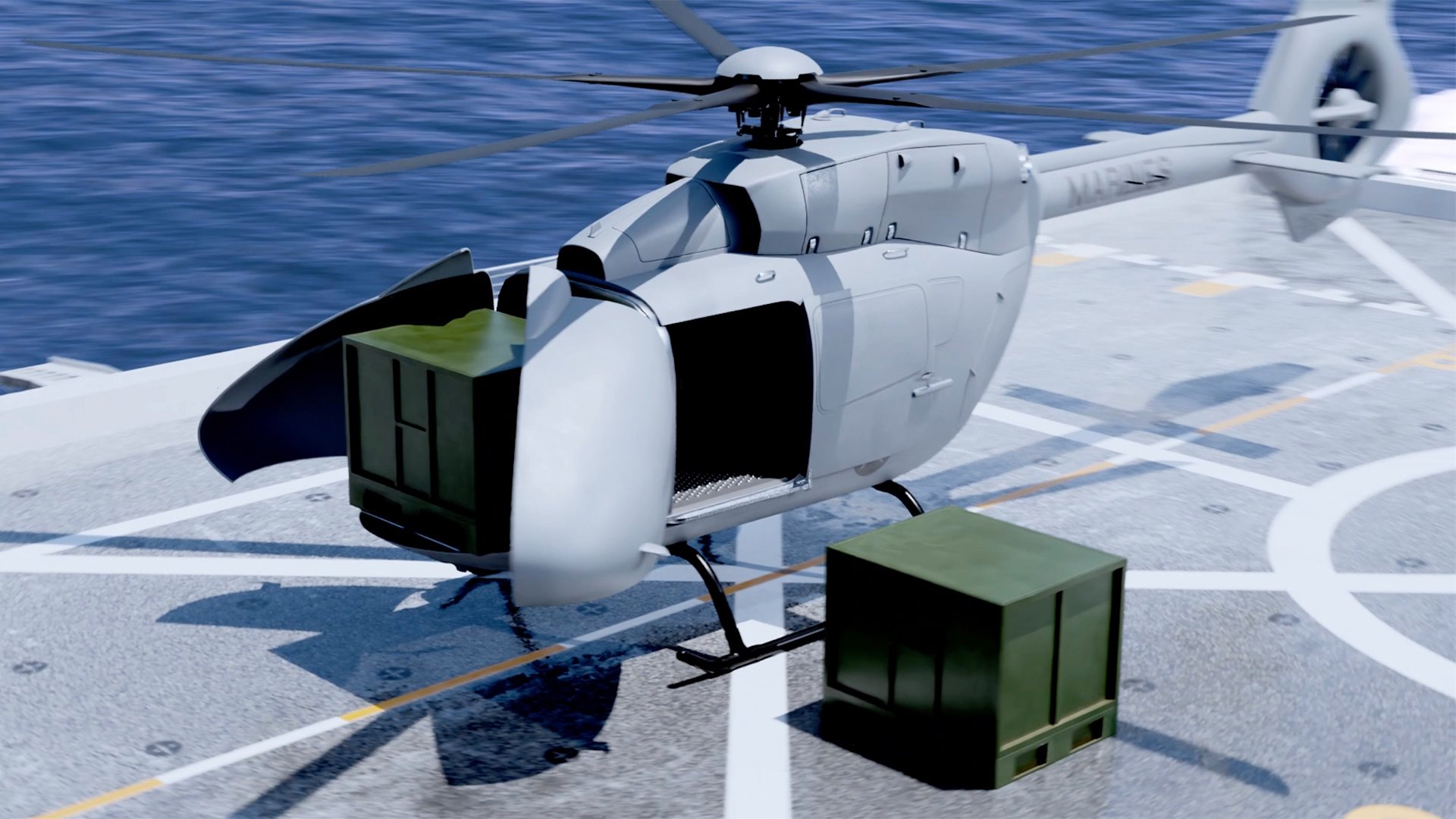
  •  

Navy Doubles Down On X-BAT VTOL ‘Fighter’ Drone Development

Shield AI says it is on track to roll out the first prototypes of its X-BAT jet-powered stealth ‘fighter’ drone by the end of this month. Flight testing of this uncrewed aircraft, which is designed to take off and land vertically from a tail-sitting position, is still scheduled to kick off before the end of the year. X-BAT’s core concept was already highly ambitious, but an extremely aggressive timeline to reach some degree of operational capability through the U.S. Navy’s Runway Independent Maritime Expeditionary Strike (RIMES) program has now been disclosed.

TWZ got an update on X-BAT, which we were first to report on in-depth last year, in an interview yesterday with Shield AI’s Armor Harris, Senior Vice President and General Manager of the company’s aircraft division. This came ahead of today’s announcement that the company has received an additional $150 million in funding from the Office of the Under Secretary of War for Acquisition and Sustainment through its Defense Exportability Features program via the Navy. This is on top of the $50 million investment the Navy, in cooperation with the Pentagon’s Defense Innovation Unit, made in X-BAT’s development earlier this year as part of the RIMES effort. Shield AI has committed an equivalent amount of internal funding, for a combined total of $400 million.

Jamie Hunter

“In broad strokes, the last year has been a bunch of collaborative risk reduction with the Navy. So, wind tunnel testing, engine testing, thermal testing, all kinds of stuff to basically take the major risks in the program, [and] burn them down, so we can move confidently into the production design,” Shield AI’s Harris told us. “The last culmination of the risk reduction is the flight testing of the two full-scale prototypes. The first one of those will be done at the end of October.”

“That’s a full-scale vehicle,” he continued. “It’s got the outer mold line, it’s got the F110 engine, the full propulsion path, everything in it.”

To date, Shield AI has only shown models of the X-BAT publicly. A new one displayed at the Navy League’s Sea-Air-Space 2026 exposition in April revealed major changes to the core design. This included a complete reworking of the planform from a ‘cranked kite’ type arrangement to one with a distinctly different arrowhead-shaped profile featuring a straight leading edge with a more dramatic sweep.

The video below includes clips showing the original X-BAT design and the current one.

The aforementioned “propulsion path,” testing of which has already been conducted on the ground, primarily consists of the General Electric F110 paired with an Axisymmetric Vectoring Exhaust Nozzle (AVEN). The nozzle was originally developed in the 1990s for an experimental thrust-vectoring F-16 fighter. Shield AI is using the original AVEN, which had been in storage for decades, to support development of X-BAT. The nozzle will provide pitch and yaw control, with roll control for the drone coming from bleed air routed through thrusters in the drone’s wings.

No runway, no problem.

Shield AI and @GE_Aerospace just cleared a critical path to vertical flight, completing engine light-off testing of the Axisymmetric Vectoring Exhaust Nozzle (AVEN) for X-BAT.

Engineers from both companies integrated the AVEN into GE Aerospace's… pic.twitter.com/OxV3y3sRKB

— Shield AI (@shieldaitech) July 20, 2026

Shield AI has previously said that the roughly fighter-sized X-BAT will have a maximum range of 2,000 nautical miles and a service ceiling of around 50,000 feet. The company has also said in the past it is targeting an effective combat radius roughly twice that of the F-35, or around 1,340 nautical miles, but also that it could be closer to 1,000 nautical miles. Space has been made within the X-BAT design for a potential in-flight refueling capability, but there is no active work yet to integrate that feature.

In terms of payload, X-BAT’s design includes internal weapons bays roughly the same size as those on the F-35, as well as two external hardpoints under the wings. Those hardpoints are plumbed, meaning that range-extending drop tanks, or even buddy refueling stores to allow the drone to act as a tanker, could be carried. Baked-in modularity and open-architecture mission systems are intended to make it easier to fit various sensors, data links, and other capabilities down the line.

A rendering highlighting X-BAT’s stores carrying capabilities. Two AGM-154 Joint Stand-Off Weapon (JSOW) glide bombs are depicted here in the internal bays. The silhouette of an AGM-158C Long Range Anti-Ship Missile (LRASM) cruise missile is shown under the wing. Shield AI

“X-BAT’s really designed to be a multi-role capability, and, if you look out at the 10-20 year time horizon, it’s hard to predict what the future fight is going to look like,” Shield AI’s Harris noted. “We fundamentally believe that multi-role capabilities are critically important. And, so, X-BAT, the reason why it’s sized to where it is is [sic] to be able to carry serious strike weapons internally and externally, in addition to being able to do air-to-air [combat], electronic warfare, and other mission sets.

“You could think of it as like X-35 versus F-35,” he also said yesterday when asked about any expectations now for further changes between the initial pair of prototypes and the final production design.

Lockheed Martin’s X-35 demonstrators are, in very broad strokes, similar to, but distinct from any of the resulting variants of the Joint Strike Fighter. Shield AI has notably already talked in the past about integrating more low-observable (stealthy) attributes to the exhaust end of the design down the line.

A side-by-side look at an X-35 demonstrator, at left, and a production F-35A, at right. USAF

“Then we’ll get into flight testing around the end of this year,” Harris added. “We’ll be doing vertical takeoff and landing testing with that [the initial prototypes] to actually prove out and develop the VTOL [vertical takeoff and landing] technology for X-BAT.”

Shield AI’s X-Forge 2 facility at the Newton City-County Airport in Kansas is set to be the main flight testing hub for X-BAT, as well as the focal point for sustainment of the drones. A production facility, X-Forge 3, is also being built in Des Moines, Washington. The company’s original site, X-Forge 1, is in Frisco, Texas.

A rendering of the X-Forge 2 facility. Shield AI

In terms of the actual flight test campaign, “you remember the X-BAT system has the air vehicle and the launch and recovery vehicle, which is the trailer that it launches and lands from,” Harris said. “Basically, the way the testing works is, we start with the vehicle horizontal, sitting on that launch and recovery vehicle, running the engine. Then we bring it up vertical, run the engine vertically, run the vehicle vertically.”

“Then we have one of the biggest cranes in the world that’s getting set up at our test site in Kansas right now, and we hang the vehicle suspended from that crane and do a bunch of testing while it’s hanging from the crane in free flight,” he continued. “Then we take the crane away, and then we do the actual untethered flights.”

Shield AI’s goal is to fly a fully missionized X-BAT in 2028 and start series production the following year.

A rendering of the X-Forge 3 production facility being built in Des Moines, Washington. Shield AI

On top of that, “the way that the [RIMES] program has been structured is getting to an early operational capability in 2029 is the end goal,” Shield AI’s Harris said.

When asked if this meant that RIMES is aiming “to eventually arrive at not just a demonstration of capability, but a real operationalized capability,” he said that was “correct.”

We will come back to this more later on, but suffice it to say up front, the prospect of X-BAT reaching an operational level of maturity within three years is extraordinarily ambitious, to say the least.

In the meantime, Shield AI has already been testing the mechanisms to “latch and unlatch” X-BAT to the launch and recovery system using an unpowered “battleship” test article, according to Harris. The design of the launch and recovery system has also evolved, and it is now self-propelled, at least to a degree, rather than just being a towed trailer.

“The launch and recovery vehicle is actually critical to the operation of the X-BAT weapon system because it enables survivability on the ground. So when you’re operating in a land-based environment, it enables basically shoot-and-scoot tactics,” Harris also noted. “Enemy transporter-erector-launchers [for missiles] are like pretty hard to find because they’re constantly moving around. Just like X-BAT, when it’s mated onto the launch and recovery vehicle, [it] is always moving around, makes it hard to track, hard to find, hard to destroy.”

A rendering of an X-BAT on a launch and recovery trailer in the fully erected position. Shield AI

The plan now is to “build the one-to-one launch and recovery vehicles to air vehicles. So the air vehicle is always on the trailer. It never comes off of it,” he continued. “Even maintenance to the air vehicle is done while it’s sitting on that launch and recovery vehicle.”

“In fact, we’re actually planning on building more than one-to-one of the launch and recovery vehicles, so that way you can preposition them around different islands, different places in the theater, and have multiple places the aircraft can lily pad from,” he added. “But you’re never putting multiple aircraft onto one launcher and launching them or something like that.”

“When you typically operate a jet, there’s a whole bunch of ground carts and stuff that you bring, like the ground power cart, the ground cooling cart, the air start cart, etc,” Harris further elaborated. “So we’ve moved a lot of those systems onto [the] launch and recovery vehicles, so you don’t have all these separate carts, which is pretty critical when you’re trying to do expeditionary operations.”

“The model for land-based operations is kind of a hub-and-spoke type model. So the squadrons are based at air bases. All the fuel and the weapons are generally based at the air bases, as well. But then you can distribute the aircraft all over the airfield,” he continued. “So, you think about what the enemy’s doing, they’re targeting the runways, they’re targeting the tarmacs, but you can disperse the aircraft around the perimeter of the airfield. You can launch them from the golf course. You can launch them from empty space in the taxiway, etc.”

A graphic highlighting various options for deploying X-BATs on land and at sea. Shield AI

Harris said that another “spoke” could be X-BATs operating from forward arming and refueling points (FARP). All of this is part of larger concepts of operations for the drone that Shield has been envisioning, and that are not at all limited to deployments at locations on land. Harris noted during the interview that the self-propelled nature of the current launch and recovery system would also help with moving the drones around on virtually any ship with sufficient deck space. This is where the RIMES program, which is separate and distinct from the U.S. Navy’s carrier-based Collaborative Combat Aircraft (CCA) drone ambitions, really comes in.

“I’ll say the fundamental value proposition of RIMES is that if you have a carrier-based CCA, you’re fundamentally constrained by the square footage of the deck of the aircraft carrier,” Harris explained. “So if you are taking an F-18 or an F-35 off, you better be replacing it with better capability per square foot of deck space than the thing that you’re taking off.”

“So, F/A-XX [the Navy’s sixth-generation carrier-based fighter, now to be built by Boeing] is a huge leap in capability, right? Which is why that program makes a lot of sense,” he continued. “The challenge with CCA is: Does it really make sense to take a manned aircraft off of an aircraft carrier and replace it with an unmanned aircraft?”

Shield AI’s argument here is that X-BAT disrupts this core equation by opening the door to a CCA-like capability, or even something more capable, that can be employed in a ship-based mode without sacrificing any crewed aircraft capacity on an aircraft carrier. Shield AI envisions dozens of X-BATs being employed from amphibious assault ships, as well as other kinds of amphibious warfare ships, including expeditionary sea base type vessels, as seen at the top of this story.

A rendering depicting X-BAT drones on the deck of the US Navy’s future America class amphibious assault ship USS Bougainville. Shield AI

“So when you think about the number of carrier air wings that the Navy has to deploy, deploying X-BAT across all these other ships basically significantly increases the number of carrier air wings,” Harris said.

As already mentioned, the current structure of the RIMES includes a target for an early operational capability in 2029, according to Harris. “We have a program defined to get there, and there’s basically milestone-based payments along the way, so as Shield performs and hits milestones, then the Navy kicks in additional funding,” he added.

“I don’t want to get ahead of the Navy, and give you a specific number, but like hundreds to low thousands,” he also said when asked if there was even a very rough planning figure for the eventual size of the RIMES drone fleet.

Many questions remain about X-BAT, which still has to demonstrate the viability of its vertical takeoff and landing capability, which underpins everything else. As we noted in our original in-depth report on this design, the core concept here is not new, and there have been many unsuccessful attempts to operationalize it in the past. There has been skepticism that Shield AI’s effort will succeed where others have failed. The company is of the view that groundwork has now been more firmly laid, including through its own work with its much smaller internal combustion-engine-powered V-BAT tail-sitting VTOL drone, to truly realize a design of this kind.

The performance and capabilities that Shield AI expects from X-BAT once it is flying at all are also ambitious. A high degree of autonomy is also part of the full planned package, which will leverage the company’s already extensive work in this domain with its Hivemind software.

There are also questions about the Navy’s exact plans for RIMES, as well as its broader future drone fleets. Just this year, the service has issued several contracting notices pointing to rapidly evolving views about future carrier-based strike drones and other uncrewed aircraft. New requirements that Naval Air Systems Command (NAVAIR) released in August ostensibly for future CCA-type drones notably pointed more toward something that sounded very much like an advanced uncrewed combat air vehicle (UCAV), as you can read more about here.

Whether the 2029 operational timeframe the Navy is said to be aiming for under RIMES is firm, or even realistic in any way, remains to be seen. The actual definition of what constitutes an “early operational capability” could be very flexible, as well. It is also worth noting here that Shield AI is not the only company currently conducting work under RIMES. Whether the Navy might be planning to acquire more than one design through this program is unclear. We have reached out to the service for more information.

Other services could be interested in any operational capability produced through the RIMES effort, too. TWZ regularly highlights how runway-independent drones would be particularly well-suited to the U.S. Marine Corps’ new expeditionary and distributed concepts of operations. That service is already in the process of acquiring MQ-58B Valkyrie drones from Kratos that will be able to operate from conventional runways. They will also be capable of runway-independent launches, though they will still have to land conventionally. The baseline Valkyrie design lands via parachute.

A rendering of a landing gear-equipped version of the Valkyrie in line with what the Marines are now acquiring. Kratos

Aviation Week has reported separately today that Shield AI is looking to pitch the X-BAT to the U.S. Army as a successor to that service’s fleet of MQ-1C Gray Eagle armed drones.

In general, runway independence is of growing interest elsewhere across the U.S. military as threats to large, established bases continue to expand in scale and scope. The proliferation of various tiers of weaponized drones is a particularly significant factor in this, as TWZ just examined in detail this week in the context of the recent withdrawal of B-1 bombers from RAF Fairford in the United Kingdom. Ever more capable cruise, ballistic, and hypersonic missiles are also part of the full threat picture.

The conflict with Iran has also underscored the limits of what can be gained survivability-wise by dispersing traditional fixed-wing aircraft, especially within an existing airbase. As highlighted earlier, X-BAT could be dispersed very differently to nearly anywhere within a facility that can handle the thrust from the F110 engine in hover.

As it stands now, we are set to get our first view of a full-sized X-BAT prototype within the next few weeks as Shield AI continues to gear up for the start of actual flight testing before the end of the year.

Contact the author: joe@twz.com

The post Navy Doubles Down On X-BAT VTOL ‘Fighter’ Drone Development appeared first on TWZ.

  •  

How The Groundwork For F-47 Flight Testing Is Being Laid

The testing plan for the U.S. Air Force’s sixth-generation F-47 fighter is continuing to take shape ahead of the type’s expected first flight in 2028. The Air Force Test Center (AFTC) aims to blend developmental and operational test elements, and leverage new tools in the virtual realm, to help accelerate that work. All of this is in support of an aggressive program schedule that aims to see the first production F-47s enter operational service in the early 2030s.

Air Force Brig. Gen. Mark Massaro, head of the AFTC, was asked about how the groundwork is being laid for F-47 testing during a virtual talk the Air & Space Forces Association’s Mitchell Institute for Aerospace Studies hosted yesterday. AFTC is located at Edwards Air Force Base in California, which is the Air Force’s main flight testing hub.

“So, I’ll leave timelines to the [F-47] program office and other folks to talk to, but what I will tell you are some of the things that we’re doing to accelerate our test capabilities to get critical capabilities out the door,” Massaro explained. “Integrated test is a key component.”

A rendering of the F-47 fighter. USAF

“So, how we mix together the DT [developmental test] and OT [operational test] elements, how we bring our operational test partners in earlier to define the requirements early on in the test planning process,” he continued. “We understand that the information that we can get early on in a program may have applicability to that final operational test requirement to establish whether it’s effective and suitable to the end user. So that’s a key component to accelerating test capabilities.”

There has always been overlap in development and operational test efforts for new U.S. military aircraft, but the Air Force has been taking steps to more deeply integrate these processes in recent years. The F-15EX Eagle II fighter, which reached initial operational capability in 2024, was the first ever Air Force aircraft to be fully tested and fielded through DT and OT efforts conducted in parallel, as you can read more about here. The service has more recently applied these concepts to the B-21 Raider program with test flights where developmental and operational test pilots have shared the cockpit.

A pair of F-15EX test jets. USAF
A B-21 Raider seen from a KC-135 aerial refueling tanker during a flight test. USAF

“Another thing that we’ve learned over time too, if you think back to software testing and you think about agile software development, is having an iterative capability that you constantly iterate on,” Brig. Gen. Massaro also highlighted yesterday. “So, thinking about how we can structure our software, or our software testing, our capabilities testing.”

In this way, “we have those opportunities to inform decision makers on a regular cadence on what type of capability they may have at a certain timeline to be able to issue out to a warfighter on a time that might not be a normal milestone chart,” he continued. “We’re really working to incorporate into our test planning processes.”

“Another thing – and I kind of alluded to it a little bit earlier, too – is on the digital front, using our software tools, that super intelligence, graphic processing units, which have a significantly higher capability to process information, to really refine model iteration,” the AFTC head added. “Those models and flight test data [can be used] to update things like computational fluid dynamics when you’re doing tests like loads and high-alpha maneuvering to get information quicker from a flight test back into the program.”

Those “digital tools” can also be used “to accelerate how that information then goes back into a design choice or change if they need to make it,” he continued. “Coming up with those opportunities to use those tools in a test design and in a program” can then further help “to accelerate that final schedule delivery.”

Brig. Gen. Mark Massaro seen during a ceremony marking his assumption of command of the Air Force Test Center on June 30, 2026. USAF

Even very high-fidelity modeling in the digital realm is still not a substitute for real-world flight tests. However, Brig. Gen. Mark Massaro spoke more generally yesterday about how AFTC has been blending digital and live testing to maximize their respective benefits.

“We use models to develop our capabilities, and we need to anchor those models in truth, in physics, and an understanding of what happens in the real world,” the AFTC head stressed. “Outside of a cyber system, all of our capabilities touch the real world and touch physics, and we need to understand those dynamics. So, the models that we use to do design work, to do iterative type[s] of developmental work, and, in ways, operational work, too, need to be anchored in that real world truth.”

At the same time, “we can’t replicate what we need to go and test, and develop tactics and operationally test, in the real world on some of our ranges,” he also noted. “So, from a geographic perspective, just the width and the depth and the height of the ranges to the laydown of the systems that we have to see on the ranges to be able to execute against a threat, [and] the numbers that we might have to be testing.”

Blending real and virtualized elements can therefore be very valuable.

An “element that we’ve done in the developmental world for quite a while, that are [sic] part of this conversation, are plugging in, even though it’s a virtual environment, plugging in real world hardware into that virtual environment,” Massaro offered as one example. “So, you’re getting real-world software, the OFPs [operational flight program software], or you’re getting real-world sensing information coming into that virtual environment and feeding it there.”

Virtualized elements can also be added to real-world flight test events in various ways. The Air Force, among others, is also making use of these so-called live, virtual, constructive (LVC) concepts for training purposes for many of the same general reasons, including limited range capacity.

It is also worth noting here that the F-47 program is already benefiting from years of flight testing in secret using full-scale demonstrator aircraft. A substantial amount of simulation and modeling would also already have been done as a byproduct. A simulator likely already exists, as well, which could be used for risk reduction and fine-tuning of the F-47 design, as well as testing flight dynamics.

The Air Force has also leveraged its F-22 Raptor fleet to help in the development of relevant advanced capabilities. Back in 2023, the service announced that it was outright transforming its existing F-22 test force into one that would support the broader Next Generation Air Dominance (NGAD) initiative. F-47 is part of the larger NGAD effort, as is the Collaborative Combat Aircraft (CCA) drone program, along with work on new weapons, jet engines, and more.

An F-22 test jet assigned to the 411th Flight Test Squadron, which now serves as the Air Dominance Combined Test Force (AD-CTF). USAF

Though much about the F-47 program remains highly classified, the Air Force has consistently said that the program continues to be on track. Prime contractor Boeing is now building the first flying example, and construction is already well underway to establish a full production line. As mentioned, the target date for a first flight is currently in 2028, ahead of operational fielding in the early 2030s. As an aside, Boeing has also now won the contract to develop the Navy’s sixth-generation carrier-based fighter, currently referred to as F/A-XX.

AFTC is doing its part now to be ready to support the flight testing that will be needed to keep the F-47 program on track in the coming years.

Contact the author: joe@twz.com

The post How The Groundwork For F-47 Flight Testing Is Being Laid appeared first on TWZ.
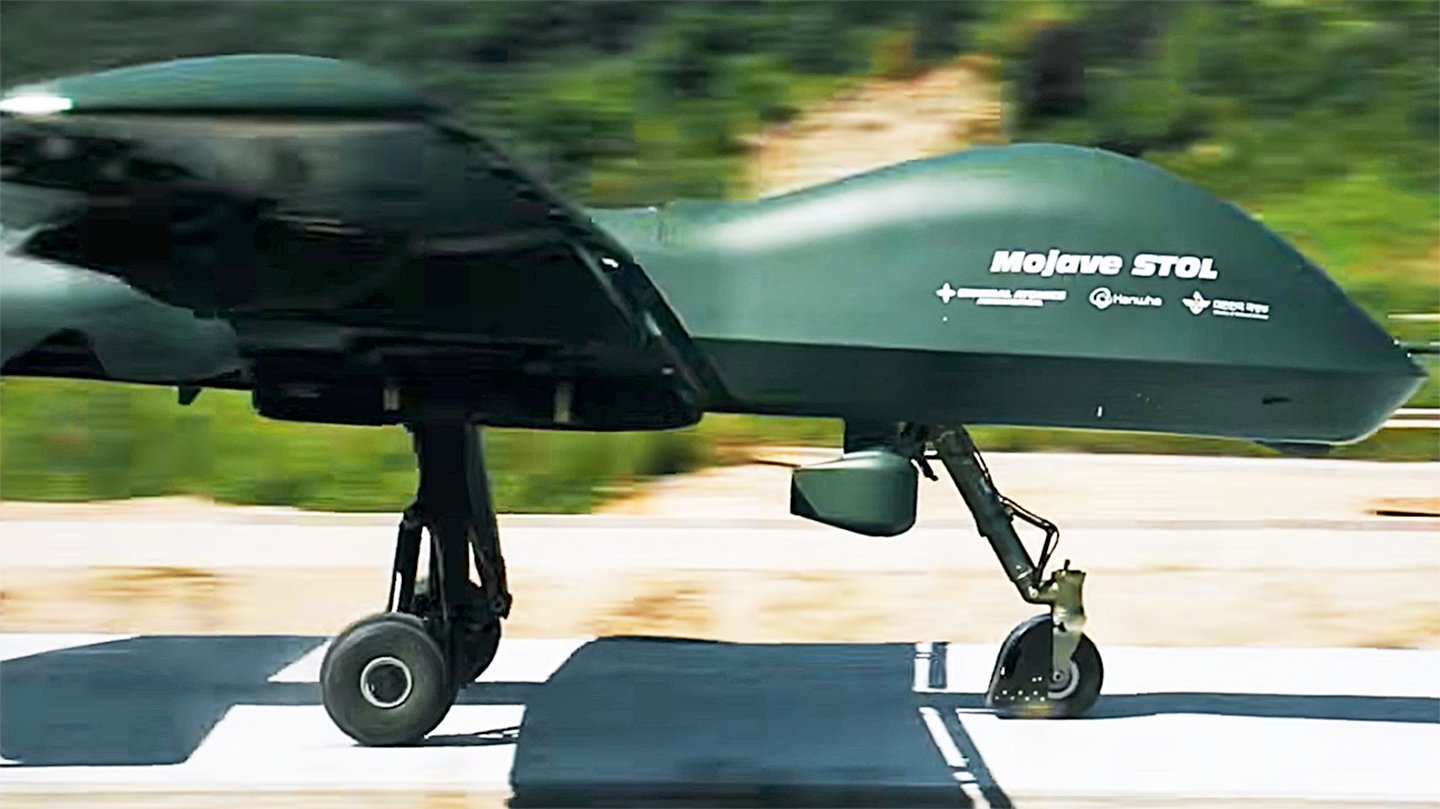
  •  

Sikorsky’s “Black Hawk 2070” Strategy Includes Drones, New Engines, And Flying The Pilotless U-Hawk This Year

The UH-60 Black Hawk has been the rugged workhorse of U.S. Army aviation for nearly 50 years, with around 4,000 examples currently in service with 36 nations worldwide. Many of these helicopters, and new aircraft coming off the line, are set to fly as far out as 2070, and Sikorsky is curating a suite of upgrades to keep them valuable assets for the future fight. A new “digital backbone” is designed to underpin swift technological insertions such as launched effects, with related initiatives including the provision of more power to lug greater payloads, and the fully-autonomous U-Hawk cargo drone variant.

“As part of an overall “Black Hawk 2070” modernization effort we’re developing a number of complementary capabilities, including our U-Hawk uncrewed cargo variant, which we plan to fly later this year,” Jason Wrigley, Sikorsky’s director of business development for Black Hawk, told TWZ at the company’s Stratford plant in Connecticut.

Sikorsky plans to fly its U-Hawk uncrewed cargo version of the Black Hawk this year. Sikorsky

“A new digital backbone for the Black Hawk is at an advanced design phase in our labs and it’s designed to provide interfaces throughout the aircraft that will provide power, data, a network, cooling and most importantly, open architecture interfaces that enable the easy integration of new equipment, such as sensors. We see this as a core building block for the next generation of Black Hawk, along with new engines and other airframe improvements designed to futureproof the platform.”

The new digital backbone is designed to work in concert with a modern, software-driven strategy that meets the Army’s Modular Open Systems Approach and the desire to add technologies cheaper, faster, and more easily. Wrigley says that as customers identify new capabilities and needs for their Black Hawks, the digital backbone will be sufficiently efficient to permit customization even on a mission-by-mission basis. Sikorsky is also introducing a new modular nose to the H-60, which is reconfigurable with sufficient volume to support even more sensors and electronics.

“There’s a big focus on open architecture and that ability to quickly plug-and-play,” says Wrigley. “The new modular nose will change the look of the Black Hawk up front to provide even more space for equipment that will work directly with the new digital architecture.”

The new modular nose will give the Black Hawk more than twice the internal volume of the original nose section and it’s designed to provide space for internal electronics and an integrated mount for external sensor pods. It is designed to provide sufficient space to accommodate electronics that enable roles such as search and rescue, drone control, and flying in degraded environments, and it will also house some of the equipment required as the Black Hawk’s autonomous capabilities expand.

Sikorsky plans to introduce a new modular nose to the UH-60M. Sikorsky

Joshua Powers spent 22 years as an Army Aviation officer flying the Black Hawk, and he’s well qualified for his new role with Sikorsky handling business development for rapid capabilities insertions. “Army units know the Black Hawk inside out; how to fly it, maintain it, and use it to maximum effect. The upgrades we are developing will bring new capabilities faster, without time-consuming and complex changes to sustainment, training, and operations, plus we are adding more range, more payload, and more power to meet the demands of the Indo-Pacific region.”

“I find it amazing to pair new technology with a rugged platform like the Black Hawk. These new innovations are needed to meet the needs of the new complex battlefield. The fight I fought in Iraq is very different from the current operating environment and what future warriors are going to go up against, and what we’re asking them to do is very different from what came before.”

Bringing autonomous co-pilots to the Black Hawk

Autonomy is a central pillar of Sikorsky’s strategy for the future Black Hawk. The company’s MATRIX autonomy software is now being matured on a UH-60M variant, and while it’s not necessarily designed to completely replace pilots, MATRIX will assume some of their workload, making flying safer and simpler as mission sets grow increasingly complex and dangerous. “Pilots that are controlling collaborative drones, for example, need to be able to focus on the drone mission, and autonomy will help lighten their cognitive load,” explains Wrigley.

“The standard Black Hawk crew operates with two pilots. Adding our MATRIX autonomy system gives the operator options – a single pilot could fly without an unbearable workload and still fulfil a mission commander role, for example. The Army could then operate the Black Hawk with no pilots at all when that’s the appropriate option.”

The U.S. Army received its first UH-60MX Optionally Piloted Vehicle (OPV) on March 20, 2026. Sikorsky

Sikorsky’s MATRIX autonomy has been developed on the company’s UH-60A fly-by-wire Optionally Piloted Black Hawk, which has been tested by Sikorsky and Army aviators. MATRIX has accumulated more than 1,000 flight hours across 500 tests and demonstrations. It has already been integrated on over 20 different platforms, including on the Black Hawk for testing by the Defense Advanced Research Projects Agency (DARPA) and the U.S. Army in multiple exercises.

“We delivered the first UH-60MX to the Army earlier this year,” says Wrigley. The delivery marked the first full authority fly-by-wire and optionally-piloted UH-60 in the Army fleet. “They are using it for testing and soldier feedback to develop tactics, techniques and procedures for the autonomous Black Hawk. We have since received a contract to deliver three more MX aircraft to the Army.” 

MATRIX autonomy kits have now been installed on all three U.S. Army Black Hawk models; the UH-60A, UH-60L and UH-60M. Sikorsky plans to incorporate autonomy options into all Black Hawks as they are built, plus the MATRIX system will be able to be retrofitted to existing examples.

Powers is well aware of the benefits autonomy will provide from complex combat operations to more mundane day-to-day missions. “Flying at night and seeing the tracer fire coming up at you, things like that, I honestly feel that’s not the big threat. It’s when you’re going to land and there’s just a big dust cloud. When you’re tired, you aren’t as focused. Having MATRIX, whether that’s with one, two, or no pilots, it’s about that reduced workload on the mission. Pilots won’t be as fatigued, plus they have the safety net of a fully autonomous aircraft that can, if needed, land in all of those difficult environments. It will give commanders more operational flexibility and the ability to mitigate risk in less-than-ideal conditions dictated by the enemy or weather.”

The first UH-60MX during testing alongside Sikorsky’s UH-60A Optionally Piloted Black Hawk. Sikorsky

“The Black Hawk operation isn’t just about pilots, it’s also that integrated four-person crew. As a pilot, you’re relying on your senses and also on the guys in the back to watch out and tell you where you’re going. MATRIX is just going to help that team effort and put you in a better position to bring the crew back safely. It integrates all the systems and sensors and uses altitude, airspeed, radar altimeter, drift indications, and puts the fly-by-wire technology to where it can make rapid adjustments and changes based on what it’s seeing with the sensors.”

The volume of testing, the maturity, and the confidence in MATRIX helped Sikorsky to develop the S-70UAS, or U-Hawk, which was unveiled in 2025. The U-Hawk project essentially removes the cockpit and its associated equipment from a Black Hawk and replaces the front end with cargo doors to provide a huge internal space as a supply drone.

“We acquired a used UH-60L Black Hawk as the template for our initial U-Hawk. We added the clamshell doors and that was the actual aircraft that we showed at AUSA last year,” says Wrigley. “Since then we’ve been adding the fly-by-wire and integrating the MATRIX autonomy. It’s currently in our innovations hangar in Bridgeport, Connecticut, getting the final work done and it will make its first flight as a U-Hawk later this year.”

The first U-Hawk is based on a modified UH-60L. Sikorsky

Sikorsky sees the U-Hawk as a natural evolution for the Black Hawk in contested logistics missions, when cargo needs to be moved but the threat is sufficiently high that it drives a need for uncrewed platforms to tackle the mission. 

“We’re spending a lot of time on the U-Hawk and its roles. As well as being an uncrewed cargo helicopter, it can also be a truck that can carry a large volume of launched effects,” explains Wrigley. “There are Black Hawk models on the market right now that are being divested, and we see those as being an ideal option for conversion to U-Hawk configuration to affordably introduce this capability to the market.”

Drone dispenser

The integration of small drones dubbed ‘launched effects’ into rotary-wing operations is a major initiative from the Army as a new means to collect intelligence for commanders on the battlefield, relay communications, jam and distract enemy emitters, and act as loitering munitions. These mini air-launched drones can be carried and fired from stub-wing-mounted launchers, with other concepts seeing larger volumes of them carried inside the cabin as a “mega-pack,” with Sikorsky seeing both as being highly-applicable to both the Black Hawk and the U-Hawk.

This is exactly the kind of capability that the digital backbone in the Black Hawk is intended to open the door to; installing plug-and-play drone command kits, which could enable the Black Hawk to act as a “drone mothership” to launch, task, and command swarms of multi-mission launched effects.

A Launched Effect-Medium Range is fired from a UH-60M Blackhawk helicopter, utilizing the platform-agnostic government-developed Launched Effects Dispenser for Ground and Rotorcraft (LEDGR) during Project Convergence-Capstone 6 at Fort Irwin, California, July 20, 2026. LEDGR enables airborne rotorcraft to extend the operational reach, survivability, and mission-tailored lethality of maneuver forces. (U.S. Army photo by Staff Sgt. Dane Howard)
A Launched Effect-Medium Range is fired from a UH-60M Black Hawk during Project Convergence-Capstone 6, in July 2026. U.S. Army

The Army tested its latest operational concepts for launched effects during the Project Convergence Capstone 6 demonstration event this summer. This annual exercise is designed to develop concepts and tactics as well as gather soldier feedback, as it works to transition new systems into service. The latest exercise built on previous launched effects testing on the Black Hawk, when a UH-60M deployed Anduril’s Altius-700 launched effects that then operated as an autonomous hunter-killer team to locate targets, share data on those targets, and then strike them, without the need for the Black Hawk to expose itself to threats.

“As a young Black Hawk pilot, the OH-58 Kiowa Warrior was the primary scout platform, but it was limited by range and its ability to be detected,” explains Joshua Powers. “Today, we launch small drones that can remain unseen and they can give us real-time feedback. Launched effects make our lift assets more capable.”

“We see the Black Hawk as the aircraft capable of carrying, deploying and then acting as an airborne mission command node for launched effects,” adds Jason Wrigley. “In the operational environment of the future, it’s really about the mass of those launched effects. This isn’t about carrying one or two of them, this is about carrying and controlling a large number of them.”

A “quiver” of launched effects inside the U-Hawk shown at the AUSA 2026 trade event. Jamie Hunter

“We’ve tested them on the stub-wings, but we are also exploring what we call “quiver” – that large number of launched effects inside the cabin in that “mega-pack.” This creates additional opportunities for mass that we think is going to be really critical. We’ve done a lot of operational analysis in concert with the Army on what the right mix of launched effects might be to extend the standoff range of the aircraft to improve survivability – which is of course what it’s all about – but the right mix will ultimately come down to the mission. We have seen a lot of testing over the past few years, so we do believe this is a capability that can be introduced operationally soon on the Black Hawk.”

More power for more missions

To support the increased lift that might be needed for a missionized Black Hawk lugging large payloads, including an arsenal of launched effects, Sikorsky is well along in development of a new engine that is designed to create over 1,000 pounds of increased payload capacity and increased range for the Black Hawk. The T901 Improved Turbine Engine (ITE) from GE Aerospace provides 50 percent more horsepower over the existing T700 engines in the UH-60M.

“One of the key building blocks of the future of the Black Hawk are the twin ITEs as we look to expand the mission capability and the utility of this aircraft for decades to come,” explains Wrigley. Sikorsky began initial testing of the first UH-60M with ITE in January 2025. “We are actively in the test program right now at our test facility in West Palm Beach, Florida. The twin ITEs in each Black Hawk and that additional power translates into some pretty significant operational opportunities. Since our first flight with ITE in May 2025 we’ve flown the aircraft with the new engine for over 50 hours and up to 17,000 ft above sea level.”

A UH-60M fitted with twin GE Aerospace T901 Improved Turbine Engines (ITE). Sikorsky

Sikorsky is accompanying the addition of the new engines with a significant expansion of the fuel tank to increase capacity and range. This is being done without impinging on cabin volume and thus retaining the important ability to transport 11 combat troops, while increasing range by around 100 nautical miles. “The T901 also improves fuel efficiency and eases maintenance – so overall we are really improving the payload capacity of the aircraft. We’ll be getting to the milestone C production decision on ITE within the next couple of years, and at that point it will become a core element of the Black Hawk program going forward,” Wrigley explains.

Building Black Hawks

Touring the Black Hawk production line in Stratford, Connecticut, it’s a hive of activity. Many of the major components for each helicopter are manufactured here. The long final assembly line sees teams of workers busily constructing UH-60M and HH-60M medevac Black Hawks for both domestic and foreign military sales customers, along with new HH-60W Combat Rescue Helicopters for the U.S. Air Force and MH-60R Seahawks.

“We’re designing all of these upgrades with the intent that they will all be available off the production line in new build aircraft, as well as in kit form for upgrades to existing assets in the field,” notes Wrigley. “Here in Stratford in what we call the “back shop” we build all the rotor blades, gearboxes, and many other components that go into each aircraft. We are already thinking ahead and we’ve invested significantly into additive manufacturing, with 11 parts on the Black Hawk today that are additively manufactured. It’s a great place to start, but there’s a long way to go and we’re working on qualifying more challenging components and load-bearing parts.”

A brand new UH-60M in pre-delivery testing. Sikorsky

Cohesively, the digital backbone, larger fuel tank, new engines, and the new modular nose will all be introduced on the production floor in the coming years to pave the way for that increased payload capacity to carry fully-equipped combat troops, supplies, and all the new kit needed for the future fight and the Black Hawk’s role as a multi-mission forward battlefield node. The autonomous U-Hawk and the optionally piloted flexibility afforded by MATRIX – all of these pieces of the future Black Hawk are presently coming together under an overarching effort.

“The future Black Hawk will be that complement to the future long-range MV-75 Cheyenne II,” says Powers. “These won’t be a one-for-one replacement for every Black Hawk currently in the fleet – the MV-75 has a specific purpose and function that the Black Hawk isn’t designed to do. What the Black Hawk can do with these new upgrades is shape the battlefield and with its autonomy be out there flying missions into contested environments.”

Three U.S. Army UH-60 Black Hawk Helicopter, assigned to 4th Ranger Training Battalion (Ravens), takes off from Landing Zone 7A7 during the 5th RTB Open House at Camp Frank D. Merrill, Dahlonega, GA., April 25, 2026. The Ranger Open House is open to the public to show case Ranger School and the training Rangers endure to earn the Ranger Tab. (U.S. Army Reserve photo by 1st Sgt. Austin Berner)
U.S. Army UH-60 Black Hawks assigned to 4th Ranger Training Battalion. U.S. Army

“Those homeland missions are equally necessary. I recall talking about this in flight school when choosing an aircraft to fly, how it’s one thing to be deployed on combat missions, but it’s also about being back in the homeland on disaster relief when you need the Black Hawk to go out and save lives, those kinds of missions the Army National Guard does – it really underlines the importance and versatility of the Black Hawk.”

Over the past 50 years and looking ahead to the next 50, continuing the proven legacy of the Black Hawk will mean constant evolution to meet new missions and needs. Sikorsky’s task is for all of these new elements to meld into a future Black Hawk that’s ready to roll off this production line soon, that still also provides the same dependable, rugged capability for the Army at home or overseas, well into the future.

The post Sikorsky’s “Black Hawk 2070” Strategy Includes Drones, New Engines, And Flying The Pilotless U-Hawk This Year appeared first on TWZ.

  •  

Glaring Lack Of Investment In Aircraft Shelters Highlighted By B-1B’s Sudden Retreat From U.K. Airbase

Multiple reports now say that U.S. Air Force B-1 Lancers left the United Kingdom over the weekend due to the threat of an Iranian-directed near-field drone attack broadly akin to Ukraine’s Operation Spiderweb that decimated Russian bombers. Though many specific details are still unconfirmed, this is an entirely plausible mode of attack that TWZ has been warning about for many years now.

Short- and long-range drone threats against parked aircraft have now morphed fully from theory to reality, as also demonstrated by losses in the course of the conflict with Iran, and even non-state actors are increasingly brandishing these capabilities. Despite the increasing dangers posed to planes out on open flightlines, the Pentagon continues to drag its feet on building hardened aircraft shelters and other fortified air base infrastructure.

Before the hasty and unexpected departure of the bombers on Sunday, B-1s had been deployed to RAF Fairford continuously since March, initially in support of Operation Epic Fury against Iran. A contingent of B-52s had also conducted strikes on Iran from Fairford, but left back in July. The base is a major operational hub for the U.S. military in the United Kingdom, and regularly hosts strategic aircraft, including bombers and U-2 spy planes.

Dan Rivers, U.S. correspondent for ITV News in the United Kingdom, was among the first to report on Monday that the B-1’s quick departure had been prompted by concerns about a potential Spiderweb-like drone attack ordered by Iran, citing an unnamed source. Other outlets have subsequently reported similar details, all sourced to anonymous U.S. and British officials.

Ukraine’s unprecedented Operation Spiderweb last year involved simultaneous covert near-field attacks using explosive-laden quadcopter-type drones on airbases across Russia. At least 10 Russian bombers, as well as a variety of other aircraft, all parked on open flightlines, were destroyed.

“They didn’t fly out by accident,” U.S. President Donald Trump told reporters during a gaggle at the White House on Monday when asked about why the B-1s had left Fairford. “There were some threats.”

A satellite image showing B-1s parked in the open at RAF Fairford on July 29, 2026. PHOTO © 2026 PLANET LABS INC. ALL RIGHTS RESERVED. REPRINTED BY PERMISSION

“I can’t tell you that, but if they did, they’ll suffer greatly,” Trump added in response to a separate question about whether Iran might have managed to get weaponized drones into the United Kingdom.

“What you saw there was the Secretary of War [Pete Hegseth], out of an abundance of caution, trying to protect our guys,” U.S. Vice President J.D. Vance said during a separate press engagement on Monday. “We do feel, with some confidence, that the Iranians are – they’re trying to do what the Iranian state has done for 49 years, which is engage in acts of terrorism against the United States, and a lot of other people, as well. So, we are being extremely cautious.”

Another satellite image offering an overall view of RAF Fairford. Google Earth

It’s also worth noting here that British authorities had arrested five men on suspicion of driving bomb-laden vans toward the base back on September 27. Those individuals were released on bail after no explosives were found in the vehicles. U.S. and British officials have also raised the possibility of an Iranian link to that incident.

“We’ve documented what happened [near Fairford] last week. I wouldn’t just directly tie that to the move that was made,” U.S. Secretary of State and National Security Advisor Marco Rubio also told members of the press on Monday. “The only reason why you guys are focused on how many planes are at Fairford is because of the threat that happened last week.”

“We have confidence in the security of all of our bases, because all of our bases are [sic] theoretically could be threatened at any moment,” he added.

Rubio’s comments notwithstanding, the remarks from Trump and Vance make clear that there was some recent threat intelligence that contributed to the decision to pull the bombers from Fairford. There are still many questions about the exact nature of the potential attacks, and how imminent, or not, the danger may have been.

Regardless, as mentioned, the prospect of a near-field drone attack on a base like Fairford carried out by actors in close proximity is extremely plausible, and the barrier to entry to such an operation is relatively low. Spiderweb may have thrust this reality into the public consciousness in dramatic fashion, but the danger well predates that operation, and even the start of Russia’s all-out invasion of Ukraine in 2022.

TWZ has been highlighting exactly these kinds of threats in the course of a decade or so now of regular reporting on drone incursions over U.S. and foreign military facilities and critical infrastructure, as well as American naval vessels operating offshore. Langley Air Force Base in Virginia and Barksdale Air Force Base in Louisiana, some of America’s most strategic airbases domestically, are among the facilities that have had to grapple with this in the past. After the Langley incident, in particular, it had become clear to the larger public what we had been reporting for many years, that the United States does not control the airspace over even its most critical military installations.

This all extends overseas, as well. In November 2024, there was a rash of drone sightings over and around several airbases in the United Kingdom, including RAF Fairford. This has been an issue more broadly in Europe in recent years, as well. This was only further underscored by an attempted drone attack on a Ukrainian An-124 at an airport in Germany in August, which authorities in that country have blamed on Russia.

New footage of yet another act of Russian terrorism on EU soil, showing the drone loaded with explosives on the tarmac at Leipzig/Halle Airport, just meters from a Ukrainian Antonov An-124 cargo aircraft.

According to German authorities, the drone was carrying an improvised… https://t.co/eCZaLfz9yx pic.twitter.com/DbRz87wgIv

— SPRAVDI — Stratcom Centre (@StratcomCentre) August 5, 2026

A drone attack on Fairford would also not necessarily have had to come from somewhere very close by. Longer-range one-way attack drones are steadily proliferating, and can be launched using a variety of methods from positions on the ground, as well as vessels at sea. TWZ explored the very real threat of sea-based drone attacks, including ones conducted covertly, and Iran’s specific ability to carry them out globally, following the leak of an FBI alert back in March.

The proliferation of lower-end one-way-attack drones has ‘democratized’ precision-guided attacks, even for non-state actors. The fielding of automated targeting capabilities, driven by developments in artificial intelligence and machine learning, is also becoming more and more widespread. That technology will soon enable these weapons to find and strike even moving targets on their own. Even without anyone at the controls and without the drone putting out any detectable radio emissions, very effective precision attacks can still be launched at static targets, like known parking areas for aircraft at airbases, just by using basic map coordinates or Google Earth. It’s also worth pointing out here that the definition of a stand-off attack is becoming increasingly blurry, with even quadcopter-type drones capable of flying miles away to conduct a kamikaze attack on a target based on a set of GPS coordinates.

Ukrainian Saker UAV with AI capabilities. The video shows the process of target recognition. It has reportedly already been put to use several times against Russian targets. pic.twitter.com/NVNJyxUjGP

— NOELREPORTS 🇪🇺 🇺🇦 (@NOELreports) January 25, 2024

Overall, it is an indisputable fact that aircraft sitting exposed on a flightline are particularly vulnerable to drone attacks, as well as other threats. This is something U.S. military officials have acknowledged themselves. Fairford, where B-1s and other bombers have no option but to park out in the open in well-established areas that are plainly visible from outside the base’s immediate perimeter, is indicative of how American military aircraft are generally positioned on the ground abroad and at home.

As we wrote all the way back in 2017:

“Similar swarming strikes could be unleashed behind the front lines as well, with hugely expensive and low density/high demand combat aircraft being especially vulnerable to this sort of tactic—something General James Holmes alluded to inadvertently while speaking to the Air Force Association, stating:

‘Imagine a world where somebody flies a couple hundred of those and flies one down the intake of my F-22s with just a small weapon on it.’

Actually, it would be even easier to just strike the jets as they sit idle and vulnerable on the flight line. One swarm could see a whole squadron of tightly packed fighters destroyed without even having a chance to fight back.”

This picture of a B-1 at Fairford on March 7 shows how bombers and other aircraft are typically parked at the base. The line of photographers along the fence line also underscores how close those parking spots are to the base’s immediate perimeter. JUSTIN TALLIS / AFP via Getty Images

With all this in mind, a heated debate has emerged in the past few years in and around the U.S. military about the value of investing in new hardened aircraft shelters, as well as other fortified infrastructure.

To date, the U.S. Air Force, in particular, has put virtually all emphasis on surface-to-air missiles and other active defenses, as well as the dispersal of aircraft, over physical hardening. The conflict with Iran, in which a number of American military aircraft have been damaged or destroyed on the ground by drone and missile attacks, has underscored the limits of these strategies.

Second angle. pic.twitter.com/NUupdRkdm9

— OSINTtechnical (@Osinttechnical) March 29, 2026

“I’m not a big fan of hardening infrastructure,” Gen. Kenneth Wilsbach said at a roundtable at the Air and Space Forces Association’s main annual symposium in 2023, offering a prime example of this viewpoint. “The reason is because of the advent of precision-guided weapons … you saw what we did to the Iraqi Air Force and their hardened aircraft shelters. They’re not so hard when you put a 2,000-pound bomb right through the roof.”

Wilsbach was commander of Pacific Air Forces (PACAF) at the time. He subsequently became head of ACC and is now Chief of Staff of the Air Force, the service’s top officer.

“I think that I don’t want to spend a lot of money on hardening shelters. Unless you’re going to send something 100 feet or more underground, we can blow it up, and so can they,” Wilsbach said in an interview with Breaking Defense in July of this year when asked explicitly if his position changed. “So, the economics of building a shelter that is impervious to a strike doesn’t work.”

U.S. Air Force Chief of Staff Gen. Ken Wilsbach speaks during an all-call with personnel at RAF Mildenhall, another base in the United Kingdom, on July 13, 2026. USAF

“I think the economics favor defending your airspace, defending your ground space with systems that can defeat the incoming rounds, versus building a shelter,” he added. “Some people would argue, well, you should do both. Well, that’s even more expensive. And the other thing is, the shelter doesn’t go anywhere.”

It is fair to point out that typical above-ground hardened aircraft shelters are not invulnerable, especially to attacks involving ballistic, cruise, and certain air-launched threats. There are also substantial cost and other factors to consider when it comes to any major military construction effort.

That being said, having more hardened infrastructure also imposes costs and complexities on opponents, who have to dedicate more advanced and costly munitions and other resources to ensure targets are neutralized. Shelters have the knock-on benefit of complicating the targeting process for an enemy by obscuring where aircraft are or are not positioned, to begin with. An opponent has to treat shelters like they are full even if they are empty.

When thinking about hardened aircraft shelters, stereotypical Cold War-era reinforced concrete structures typically come to mind. However, they do not all have to be built to a one-size-fits-all standard with the same degree of hardening across the board to be useful. Shorter-range drone attacks are typically carried out by platforms carrying small explosive charges or that are designed to drop small bomblets. Even longer-range one-way-attack drones generally have smaller warheads than traditional missiles, they also hit with less kinetic energy.

A US Air Force F-16 fighter sits inside a traditional hardened aircraft shelter. USAF

A structure that shields against smaller blasts and shrapnel, also including from cluster munitions that can be readily scattered across wide areas, is one that then has to be addressed by more capable weapons. This could even include mobile or otherwise temporary shelters that offer sufficient concealment and protection.

This picture shows what the Air Force described as a “prototype portable camouflage, concealment, and deception hangar” in use during Exercise Hoodoo Sea in 2023. Air National Guard The prototype portable hangar intended to support camouflage, concealment, and deception efforts in use during an Air National Guard-led exercise in 2023. Air National Guard

Eliminating, or at least substantially mitigating, the lowest rung of threats creates a dilemma for opponents, who then have to decide whether it is even worthwhile to attempt certain types of attacks. There is clear value in narrowing the available options for the enemy and pushing them toward having to expend higher-end, more expensive munitions, that are available in smaller quantities, and that traditional active defenses may be better optimized to handle. As an example, it may be more viable to shoot down a small barrage of incoming cruise missiles than a swarm of dozens of drones.

Active defenses, especially surface-to-air missile batteries and interceptors to go with them, have historically been very expensive. Lower-end counter-drone-focused interceptors and directed energy weapons are helping to bring these costs down in some regards. Even so, those capabilities come at a significant cost.

There are magazine and stockpile depth issues at play here, too. This is something that has also been brought front and center by the conflict with Iran, which has fueled already long-standing concerns about the sufficiency of stockpiles of air defense interceptors, other critical munitions, and the capacity to replenish them quickly. This is something the British government, among others, is also grappling with, as you can read more about in our separate reporting here.

Furthermore, losses of aircraft on the ground are not without their own costs, which are even more lopsided if an opponent can simply use lower-cost weaponized drones. U.S. bombers are particularly expensive and prized assets that are in short supply compared to the level of demand, as seen during the height of combat operations earlier this year against Iran. When it comes to B-1s, specifically, there are only 45 of them left in service today. A dozen of them being knocked out in one go would have major repercussions strategically. Losing even one would also be a propaganda coup for whoever might be responsible.

How many shelters can we build for the upgrade cost of one Zumwalt class DDG that will probably be parted out in 10 years anyway?

— Tyler Rogoway (@Aviation_Intel) October 5, 2026

On top of all this, the U.S. military simply will not always have the luxury of being able to rapidly relocate aircraft in response to threats. Moving a dozen bombers on short notice takes massive resources. It is not just aircraft that have to be repositioned, but supporting personnel and assets, as well as weapons and fuel. Having to shift to alternate locations could easily have negative impacts on tempo and other aspects of operations, especially in the midst of actual conflict. RAF Fairford is one of only a few bases globally that can support bomber operations for a prolonged period.

More recently, there have been signs of changing mindsets on the matter of hardening across the U.S. military. In January, Joint Inter-Agency Task Force 401 (JIATF-401), a focal point for counter-drone efforts the Pentagon established last year, issued explicit guidance regarding the use of netting, cables, and other kinds of passive physical defenses around bases and other critical infrastructure. A contracting notice in March also called attention to plans for new hardened underground facilities at Al Udeid Air Base in Qatar.

“There is value in some light protection against small, unmanned threats,” Gen. Wilsbach also told Breaking Defense in July. “Some of them — just nets that are up that keep a small, few-$100 drone from getting next to a $2 billion aircraft. That actually works, [and is] really cheap.”

A graphic included a contracting notice put out by authorities at Langley Air Force Base in 2024 showing how sunshade-type shelters at the base might be equipped with anti-drone nets. USAF

“It’s not either or,” Wilsbach said in a separate interview with Air & Space Forces Magazine in July. “The net keeps the small UAS [uncrewed aerial system] from getting close to an aircraft that you’re trying to protect… That’s a very inexpensive way to give you some modicum of protection without killing your checkbook on really exquisite defensive systems.”

In spite of these institutional developments, action to implement such recommendations on a broad basis has continued to lag. There still does not appear to be any major department-wide push to build new hardened aircraft shelters or other fortified structures at facilities globally. The U.S. Air Force does have a certain number of hardened aircraft shelters at bases now, especially in the Pacific and Europe.

This is all despite a very visible trend in the construction of new aircraft shelters and other hardened infrastructure elsewhere around the globe, including in China, Russia, North Korea, and Iran. Even before Operation Spiderweb, Russia had already initiated a large-scale effort to build new hardened shelters at various bases, especially on the occupied Crimean Peninsula, in the face of expanding Ukrainian drone and missile attacks. This effort has now extended to building the huge hardened shelters for the country’s bomber force, something the country has never done before.

Work underway in December 2024 on new hardened aircraft shelters and other infrastructure at Russia’s Belbek Air Base on the occupied Crimean Peninsula. PHOTO © 2024 PLANET LABS INC. ALL RIGHTS RESERVED. REPRINTED BY PERMISSION
Another satellite image taken on June 20, 2026, showing hardened aircraft shelters being built at Engels Air Base in southeastern Russia, which is a major bomber hub. PHOTO © 2026 PLANET LABS INC. ALL RIGHTS RESERVED. REPRINTED BY PERMISSION

“It is inappropriate to discuss matters of intelligence, and we will not discuss specific force protection measures,” a U.S. Air Force spokesperson told TWZ yesterday when asked about the reports that Iranian drone threats prompted the recent removal of the B-1s from Fairford. “The Department will continue to assess the threat environment surrounding our installations and take appropriate actions to protect our people, our platforms and the bases where our forces operate from.”

We still do not know exactly how serious or imminent any recent threat to the B-1s at Fairford was that contributed to their hasty departure. Regardless, the reports of concerns about potential drone attacks remain very plausible. The reality here is that a dozen bombers were yanked from a forward operating location in Europe without an adversary ever having to fire a shot. This is a problem set that is only growing, especially as lessons and expertise on low-end weaponized drones from the war in Ukraine are spreading around the globe.

A B-1 bomber seen parked out in the open at RAF Fairford on March 15, 2026. Matthew Horwood/Getty Images

Erecting new aircraft shelters and other hardened infrastructure would not be a full solution to those threats by themselves. At the same time, they would be a valuable added layer of defense, and a passive one that would have a huge logistical footprint to operate once the initial investment is made. The lack of movement to better fortify American airbases globally is only becoming more and more glaring, and it remains to be seen if real action will not occur until lessons are learned in a most unfortunate way.

Contact the author: joe@twz.com

The post Glaring Lack Of Investment In Aircraft Shelters Highlighted By B-1B’s Sudden Retreat From U.K. Airbase appeared first on TWZ.
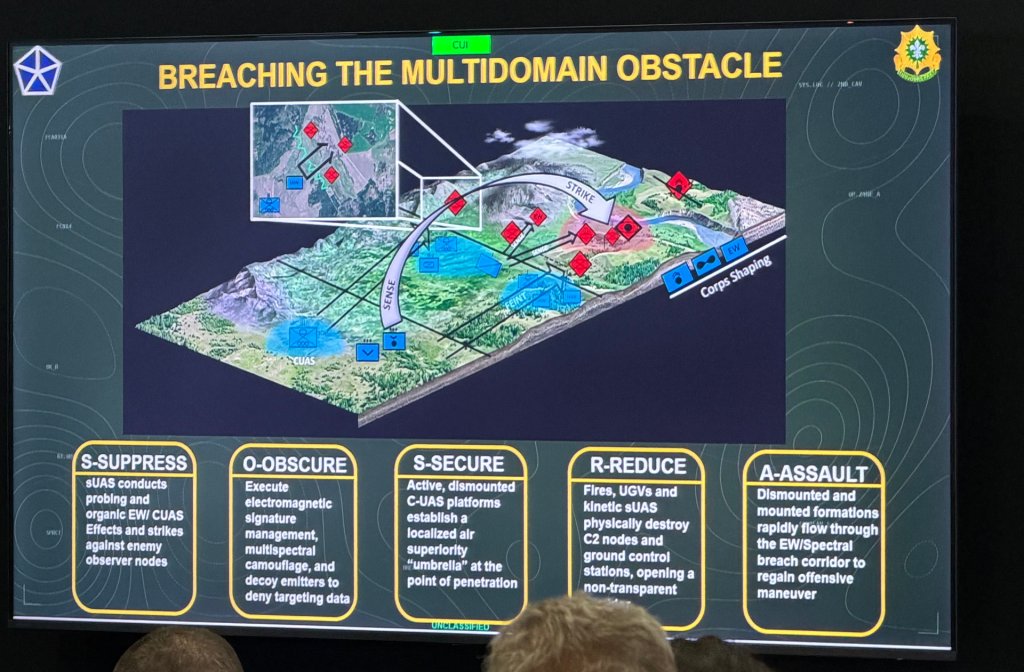
  •  

Could NASA’s SR-71 Blackbird Be Modified To Reach Mach 4?

During his time as the lead propulsion engineer for SR-71 Blackbirds at NASA’s Dryden Flight Research Center, Tim Conners looked into how to push the iconic recon plane to fly faster than it had ever flown before. The world record for any crewed jet-powered aircraft is officially Mach 3.3, or 2,193 mph. It was set by a Blackbird in 1976 “on a straight-line course over Edwards Air Force Base in California.” In a recent interview with TWZ, Conners said he investigated whether there were ways to get Blackbird to approach Mach 4, equivalent to roughly a whopping 2,660 mph at altitude. Fast forward to today, with the possibility that NASA could be returning the SR-71 in some configuration to its test fleet, as well as its potential missions, the question of just how fast could the airframe go has become far more relevant than just a hypothetical exercise.

Conners spoke to us about his knowledge of plans to restore SR-71 #844, which had mysteriously disappeared from NASA’s Armstrong Flight Research Center, as well as its potential uses, in a deep-dive interview here. Prior to the revelations about the missing Blackbird, speculation about NASA’s renewed interest in the type was sparked last month, when NASA Administrator Jared Isaacman showed the silhouette of an aircraft that immediately drew comparisons to SR-71 during a speech at the annual All-In Summit in Los Angeles, California. Isaacman pushed back on a direct link to the SR-71 but said his agency is working hard to get “back in the business of flying high and fast again.”

NASA Administrator Jared Isaacman talks at the All-In Summit about new high- and fast-flying X-planes with the eye-catching aircraft silhouette in the background. All-In Summit/YouTube screencap

Given that, we wanted to know what limited the SR-71’s speed in its original configuration and how fast Conners thought it could go with modifications.

“The study that I did at Dryden was purely conceptual,” Conners explained of his work on the topic there in the early 1990s. “I asked questions of the Lockheed folks and the Pratt folks regarding limitations on speed. So stagnation temperature. What can we get to at altitude?”

The Blackbird, he said, “flew a trajectory that was usually operationally limited to 450 knots equivalent airspeed. If you look at the flight envelope, that defines the right edge of the envelope.”

SR-71 Blackbird. (Courtesy photo via USAF)

“The engines, however, were optimized to fly at about 500 knots equivalent airspeed, 475 to 500, and for whatever reason, there was a mismatch between what the engines were designed to do and what the airframe was ultimately optimized for, which was flight at around 450 knots,” the engineer added. “And you end up with that limitation now, the equivalent airspeed curve hooks up and to the right as you go up in altitude, so it sweeps out Mach number, and as you sweep out Mach number, the stagnation temperature is going up on you.”

“So you do reach a point, even at 500 KEAS [knots equivalent airspeed], where you end up with a constant value up at altitude once you’re in the stratosphere,” Conners said. “The Blackbird was trimmed or limited at that speed on the right side of the envelope, and that equated to a certain stagnation temperature. That limitation was driven primarily by the material strength of the engine front frame, from what it was described to me, and that’s what drove the analysis we did at NASA.”

SR-71 tail number 844 during its service with NASA. (NASA)

To even consider pushing the aircraft past the world record speed, Conners said something had to be done to mitigate the tremendous effects of the extreme heat on the air entering the engines.

“We weren’t looking at active cooling of the frame by pumping coolant through it,” Conners recalled. “What we looked at was spray cooling of the incoming airflow to lower the bulk temperature, so it would only be used when you were accelerating beyond about Mach 3.4. You would only very briefly do Mach excursions to a higher Mach number, and then come back. That was the conops for that system.”

“This is a way to [get to a higher Mach range] briefly,” the engineer postulated. “You could probably get to a higher Mach number. The problem is that if you clog or freeze the system, if it fails while you’re at higher speed, you have to decelerate in a hurry to protect the assets.”

Among other impediments to breaking the speed record, the Blackbird’s existing power plant was not up to the job, according to Conners.

“So that weak link was the J58,” he explained. “It had the performance, but not the material strength. If we’re looking at alternate engines designed to handle the higher Mach capability, then that could put the limiter on the airframe at that point, which we were told at NASA was somewhere like up near Mach 4 for brief excursions.”

Aviation expert Paul F. Crickmore, who’s written several books about the Blackbird, told us that the aircraft was designed around a sustained cruise speed of Mach 3.2, with the primary critical limitation being aforementioned compressor inlet temperature (CIT).

Above 427 degrees Celsius (about 800 degrees Fahrenheit), the engines would be damaged, Crickmore noted. But if outside air temperature was colder, the aircraft could go faster before hitting that limit (in practice, Mach 3.3).

Temperature was just one factor in limiting how fast the SR-71 could travel, Crickmore explained. The shock waves from traveling so fast would also tamp down the Blackbird’s ultimate speed potential.

Paul Crickmore’s latest book on the SR-71, Lockheed Blackbird: Beyond the Secret Missions. The Missing Chapters. (Osprey Publishing)

“On the SR, you have to think three-dimensionally,” Crickmore explained. “But looking in just two dimensions, you would have an oblique shock wave on the nose, the first shock wave, and it would be at 90 degrees on either side. As the airplane got faster, that cone became more sharp until you got down to about 32 degrees. Now, at that speed, you’re at [Mach] 3.2. That oblique shock wave was still outside the envelope of the airplane – you don’t want to get that shockwave going anywhere near the flight controls. The faster you go, the narrower that cone, and the closer it gets to the wingtips, which is not good. This is the thing: People say, ‘Oh yeah, we can go maybe Mach 6.’ Well, right. But it’s not just about that. It’s about a lot of other things.”

The limiting factors imposed by the CIT value and the shockwave effect are also recalled by the late SR-71 pilot David Peters, recounted on the Habubrats SR-71 account on X.

“A little clarification on the speed. The issue is that I have been limited to less than Mach 3 on a few occasions because the outside air temperature was entirely above standard, and 427C came up at about [Mach] 2.95. On other occasions, like the Murmansk deal I got above 3.4 (3.49 on one occasion) and wasn’t close to 427C. The actual limiting airspeed is around 3.55; that is where the spike, being at full retraction loses the intercept on the shock wave and can no longer position it correctly in the inlet. Also, the overflow of the shock starts to go over the wing and interfere with the flight controls. So the limiting speed as configured would be about 3.55 so long as you don’t exceed 427C.”

For his part, Conners said that “shock effects at the inlet can be accommodated through rescheduling the inlet spike movement and perhaps making changes to the bypass schedules. None of that would necessarily be simple, and any changes would require careful envelope expansion. But it would not be impossible.”

Regardless of any other factors, Conners, the Blackbird engineer, remembered that his effort in boosting the jet’s speed never took off.

“It never got beyond me just sizing tank volume, considering different fluids that might work as a coolant, and then just gauging the relative appetite of NASA hierarchy for something like that,” Conners stated. “They weren’t interested in the risk. Nobody was asking for that Mach range.”

But that may be changing. It seems clear that one of the biggest challenges of getting the Blackbird back in the air will be its engines. They have sat for a long time, and getting them into a flyable condition could be the limiting issue. Beyond that, equipping the SR-71 with new engines also may represent the biggest opportunity for NASA getting a return on investment from its revived Blackbird.

(NASA)

In our interview, Conners told us that the feedback he heard about the remaining Blackbird J58 engines was “discouraging” because “the engines are indeed unserviceable.”

“I don’t believe that is based on an actual attempt to run them,” he explained. “It is based on inspection. Probably no surprise. They’ve sat idle, you know, for 27 years. That is what led to questions going back and forth regarding how the airframe would be powered. And that’s what led into, if you connect the dots, that’s where the airframe would be used as an engine test bed.”

Different engines “would have to be high-Mach bypass systems,” he noted. “We can speculate on which engine company might be developing those systems, but yeah, I don’t want to give it too much away because I don’t want us to lose the inside information that we got.”

Pratt & Whitney J58 engine. (National Air and Space Museum)

Also, the flight regime approaching Mach 4 would likely be one of the areas NASA is most interested in. It’s here where a combined cycle engine capable of hypersonic flight, one that contains both turbojet and ramjet or scramjet functions, would ‘hand-off’ propulsion from the turbojet to the other that is optimized for extreme speed. This is the same concept behind Lockheed’s SR-72 concept. Having an aircraft, and especially one that is not mired in deep classification and hidden from view, that can actually test this transitional flight regime could be of extreme value in unlocking a future where hypersonic flight is more accessible.

“Yeah, that could very well be what we’re looking at here,” Conners told us when we asked whether Blackbird’s open classification level is a driving factor in using it as a test bed for this research. “I’ve had friends ask that question this week. We were talking about the SR-72. Where is that at? I don’t know. I know people who went to work on it years ago. I’ve never heard anything since. So it could be that that’s so deep black that there’s no way that platform could be used as a test asset. So I think it’s precisely what you said. The Blackbird’s no longer classified, and that it’s possible that the engines that might be used in Blackbird wouldn’t be classified either.”

Lockheed’s ‘SR-72’ hypersonic plane concept. (Lockheed Martin Skunk Works)

So, reengining the SR-71 may solve two birds with one stone — providing a modern powerplant that won’t require the J58s to be revived and taking care of the inlet temperature issues discussed above that would allow the SR-71 airframe’s full potential to be exploited in testing. The fact that the jet can carry a massive payload on its back could allow it to provide critical testing of the handoff for dual cycle engine concepts.

This is just one use, of course. With the explosion in high-speed flight for defense purposes over the last decade, there are many other reasons to push a Blackbird to higher Mach numbers.

So with all this in mind, if we get the Blackbird back at all, maybe it will roll out with some major modifications that could indeed push it to new velocities.

Contact the author: howard@twz.com

The post Could NASA’s SR-71 Blackbird Be Modified To Reach Mach 4? appeared first on TWZ.

  •  

First F-16 Block 72 Has Flown

The first-ever F-16 Block 72 has taken to the air, marking a major milestone for the program and for Morocco’s long-running effort to field what Lockheed Martin describes as the most advanced version of the Viper.

The first of the jets for the Royal Moroccan Air Force (RMAF), a two-seat F-16D, completed its maiden flight at Lockheed Martin’s facility in Greenville, South Carolina, the company announced today. The aircraft will now proceed through flight testing ahead of its delivery to Morocco.

Morocco’s first @LockheedMartin F-16 Block 72 aircraft has taken flight in Greenville, South Carolina. The milestone marks another step toward delivering the most advanced F-16 configuration to the Royal Moroccan Air Force.

— Lockheed Martin News (@LMNews) October 6, 2026

Interestingly, one of the photos of the jet published by Lockheed Martin shows the pilot in the front cockpit wearing a Digital Joint Helmet Mounted Cueing Systems (D-JHMCS). This advanced helmet is not often seen worn by F-16 pilots and it is not clear if it has been ordered by Morocco.

Regardless, Morocco was the first customer to select the Block 72 configuration when the U.S. government approved its purchase in March 2019.

At that time, the Defense Security Cooperation Agency said Morocco was seeking 25 F-16C/D Block 72 aircraft in a package estimated at $3.787 billion. The proposed aircraft were to be equipped with the AN/APG-83 Scalable Agile Beam Radar (SABR), an active electronically scanned array type, new mission computers, Link 16 Multifunctional Information Distribution Systems, modernized navigation systems, helmet-mounted cueing systems, and a range of air-to-air and air-to-ground weapons.

A Royal Moroccan Air Force F-16 prepares to receive fuel from a U.S. Air Force KC-135 Stratotanker from the 100th Air Refueling Wing, RAF Mildenhall, England, during exercise African Lion 2019 over the skies of Morocco, April 2, 2019. African Lion 2019 is an annual, combined multilateral exercises designed to improve interoperability and mutual understanding of each nation’s tactics, techniques and procedures while demonstrating a strong partnership between nation’s militaries. (U.S. Air Force photo by Staff Sgt. Ceaira Tinsley)
A Royal Moroccan Air Force F-16C/D Block 52+ with a pair of AGM-88 High-speed Anti-Radiation Missiles (HARM) under the wings. U.S. Air Force photo by Staff Sgt. Ceaira Tinsley

The distinction between the Block 70 and Block 72 is the engine. The Block 70 uses General Electric’s F110-GE-129, while the Block 72 uses Pratt & Whitney’s F100-PW-229, providing fractionally more power. The two configurations otherwise share the same major avionics and systems modernization package.

The F-16 began life as a Pratt & Whitney-powered fighter, with the F100 selected to power the original F-16A/B. But reliability and maintainability problems with early F100s prompted the U.S. Air Force to launch its Alternate Fighter Engine competition in the 1980s, leading General Electric to develop the F110 as an alternative. The resulting “Great Engine War” established two competing F-16 engine families, with Pratt & Whitney’s F100 and GE’s F110 ultimately becoming the principal powerplants for later F-16C/Ds. Although U.S. procurement eventually became heavily concentrated on the GE-powered F-16, Pratt & Whitney continued to supply F100-powered aircraft to international customers.

Airmen from the 49th Component Maintenance Squadron conduct a test run on a Pratt & Whitney F100 turbofan engine in the hush house at Holloman Air Force Base, New Mexico, Sept. 6, 2022. The hush house is a safe, enclosed environment designed to facilitate aircraft engine testing. (U.S. Air photo by Airman 1st Class Isaiah Pedrazzini)
Airmen conduct a test run on a Pratt & Whitney F100 turbofan engine in the hush house at Holloman Air Force Base, New Mexico. U.S. Air photo by Airman 1st Class Isaiah Pedrazzini

For Morocco, the choice of the Block 72 is based on ensuring as much fleet commonality as possible. The RMAF already operates F-16C/D Block 52+ aircraft powered by F100 engines, making the new aircraft a natural fit within its existing support infrastructure.

Morocco is also upgrading its existing F-16 fleet to the F-16V configuration, which is broadly similar to the new-build Block 70/72 standard.

That will eventually provide the RMAF with a larger fleet centered around a common, substantially modernized F-16 standard.

A separate notification in March 2019 covered the upgrade of Morocco’s existing 23 F-16C/D Block 52+ aircraft to the F-16V standard.

Morocco’s new and upgraded F-16s could also provide a significant boost to combined operations with its other international partners. In recent years, Moroccan F-16s participated in the campaign against ISIS, while the country has also deployed the aircraft on missions against Houthi rebels as part of the Saudi Arabia-led coalition in Yemen. In 2015, a Moroccan F-16 crashed in Yemen. Although the Houthis claimed they had shot down the aircraft, Moroccan authorities attributed the loss to a technical malfunction.

Reported wreckage of #Morocco Air Force F-16 lost during #Yemen operations http://t.co/bZUOnFm0vp pic.twitter.com/x5H7CQ0puD

— Joseph Dempsey (@JosephHDempsey) May 11, 2015

Outside of combat operations, the RMAF also frequently takes part in exercises with its allies, including the African Lion series, the largest annual, multinational joint military exercise led by U.S. Africa Command (USAFRICOM) and partner nations.

A Utah Air National Guard KC-135 Stratotanker refuels a Royal Moroccan Air Force F-16 aircraft over central Morocco as part of exercise African Lion 2019, March 18, 2019. This multinational air-to-air refueling training promoted interoperability and enhanced strategic cooperation. African Lion 2019 is a Chairman of the Joint Chiefs of Staff-sponsored, U.S. Africa Command-scheduled, U.S. Marine Corps Forces Europe and Africa-led, joint and combined exercise conducted in the Kingdom of Morocco with a spoke in Tunisia. (Courtesy Photo )
A Utah Air National Guard KC-135 Stratotanker refuels a Royal Moroccan Air Force F-16 over central Morocco as part of Exercise African Lion 2019. U.S. Air Force/Courtesy Photo

Meanwhile, the new-build Moroccan aircraft also arrives at an interesting point in the F-16 program.

The Block 70/72 has attracted customers across Europe, the Middle East, Asia, and elsewhere, with Bahrain, Bulgaria, Jordan, Peru, the Philippines, Slovakia, Taiwan, and Turkey also having selected the latest-generation Viper configuration. So far, only Block 70s have been ordered, although tbe Block 72 has been offered to some customers and potential customers. There is also apparent U.S. Air Force interest in a version of the Block 70 tailored for its specific needs and referred to by the manufacturer as the F-16G.

Air Force Reserve Crews over Southern California with the 370th FLTS from Edwards Air Force Base provide aerial refueling from a KC-135 to a Lockheed Martin F-16 Block 70 aircraft for the Royal Bahraini Air Force. The F-16 Block 70 is currently in developmental test with the 416th FLTS, Airpower Foundations Combined Test Force at Edwards. A sub-mission of the 416th FLTS is to provide flight test services for Foreign Military Sales customers of the F-16.
An F-16D Block 70 aircraft for the Royal Bahraini Air Force prior to delivery. U.S. Air Force

Morocco’s position as the Block 72 launch customer means the aircraft now flying is effectively the prototype-standard production aircraft for an export configuration that other countries can now buy.

The Moroccan F-16 program is also increasingly tied to a broader effort to develop the country’s military-industrial and sustainment infrastructure.

Lockheed Martin says it is working with Moroccan industry, including Maintenance Aero Maroc, on an upcoming MRO facility at Benslimane. The more than 86,000-square-foot facility is intended initially to support heavy maintenance and modernization of C-130 Hercules aircraft, with plans to expand into additional platforms, including the F-16.

A Royal Moroccan Air Force C-130 Hercules aircraft taxis down the runway during Exercise African Lion 21 at the 3rd Royal Moroccan Air Force Base in Kenitra, Morocco, June 14, 2021. U.S. C-130J Super Hercules aircraft assigned to the 37th Airlift Squadron conducted an inter-fly formation with the RMAF C-130H to maintain regional support of superior airpower capabilities. African Lion is U.S. Africa Command’s largest, premier, joint, annual exercise hosted by Morocco, Tunisia and Senegal, 7-18 June. More than 7,000 participants from nine nations and NATO train together with a focus on enhancing readiness for U.S. and partner nation forces. AL21 is a multi-domain, multi-component, and multi-national exercise, which employs a full array of mission capabilities with the goal to strengthen interoperability among participants. (U.S. Air Force photo by Tech. Sgt. Devin Nothstine)
A Royal Moroccan Air Force C-130 Hercules taxis down the runway at the 3rd Royal Moroccan Air Force Base in Kenitra, Morocco. U.S. Air Force photo by Tech. Sgt. Devin Nothstine

That could eventually give Morocco a greater role in sustaining its own expanding fleet and potentially supporting other aircraft in the region.

The F-16 program itself is part of a much broader U.S.-Moroccan defense relationship that dates back more than five decades. The Royal Moroccan Armed Forces now operate a range of U.S.-supplied systems, while Morocco is also set to receive HIMARS and has expanded its rotary-wing capabilities with AH-64E Apache attack helicopters.

For the RMAF, however, the F-16 remains central to its combat-aircraft modernization and, once it arrives, it will be the spearhead of the country’s fighter fleet.

Contact the author: thomas@thewarzone.com

The post First F-16 Block 72 Has Flown appeared first on TWZ.

  •  

First Release Of USAF’s New HACM Hypersonic Cruise Missile Has Happened Over Australian Range

The U.S. Air Force’s scramjet-powered Hypersonic Attack Cruise Missile (HACM) has finally reached the flight test phase, with at least one “release” having been carried out so far over a range in Australia. HACM has suffered significant delays, and the Air Force has taken the risky step of scaling back overall testing plans to try to keep the program on schedule. The stated goal is to be able to make a decision to start rapidly acquiring HACMs in 2027.

The Air Force has been working on HACM in cooperation with the Royal Australian Air Force (RAAF). The program has been conducted, in part, under the broader umbrella of the U.S.-Australian Southern Cross Integrated Flight Research Experiment (SCIFiRE). The Defense Advanced Research Projects Agency’s (DARPA) Hypersonic Air-breathing Weapon Concept (HAWC) project also fed into HACM. Raytheon (now formally RTX), in cooperation with Northrop Grumman, was chosen to develop the missile in 2022. The weapon has reportedly been designated AHM-4A in a new branch of the U.S. military’s joint service nomenclature system for aircraft and missiles.

A rendering DARPA put out during the preceding Hypersonic Air-breathing Weapon Concept (HAWC) effort. DARPA

“The U.S. Air Force, in partnership with Australia, has conducted a flight test of the Hypersonic Attack Cruise Missile (HACM) as part of our continuous work to advance long-range strike capabilities,” an Air Force spokesperson confirmed to TWZ today. “This effort is part of the Southern Cross Integrated Flight Research Experiment (SCIFiRE), a collaborative agreement built on more than 15 years of partnership between our two nations.”

“Leveraging this enduring alliance, the Royal Australian Air Force executed the release of a HACM flight test unit over a designated Australian test range, gathering crucial data to advance the program’s objectives,” the spokesperson added. “The flight was the culmination of an extensive series of tests designed to measure the missile’s performance under realistic flight conditions.”

The spokesperson did not name the test range where the “release” was conducted or say when that occurred. Whether the missile flew under its own power for any amount of time after release is unknown. What aircraft was used to carry the missile aloft is also not known. TWZ has reached out for more information.

The Air Force did say previously that it planned to conduct HACM launches in Australia. The expectation has long been that this would be done at the country’s sprawling Woomera Test Range, which provides an ideal location for extended-range flight testing activities in general. The U.S. and Australia have partnered on other hypersonic testing at Woomera in the past, as seen in the video below. The remote inland location of the range complex makes it well suited for conducting more sensitive tests away from prying eyes, as well.

The Government Accountability Office (GAO), a Congressional watchdog, has also reported in the past that RAAF F/A-18F Super Hornets would be used to conduct at least some of the HACM test launches. This would fit with today’s statement from the U.S. Air Force saying that it was the RAAF that “executed the release.” The Air Force’s initial launch platform is the F-15E Strike Eagle, though others are expected to follow.

A pair of RAAF F/A-18F Super Hornets. RAAF

To date, neither the Air Force nor Raytheon has released a confirmed picture or rendering of HACM. In 2023, the Air Force did release a picture, seen below, showing an air-breathing hypersonic cruise missile test article related to either HACM or the preceding HAWC effort.

USAF

“The missile consists of two stages, a rocket booster and a scramjet cruiser, which separates from the booster and eventually dives toward its target,” according to GAO. Scramjets do not function effectively at lower speeds, and designs powered by them require some form of initial boost to a high Mach velocity. Hypersonic speed is generally defined as anything above Mach 5, but what HACM’s peak speed might be is unknown.

Two-stage air-breathing missile-like hypersonic vehicle designs have been tested on several occasions in the past. This includes Boeing’s scramjet-powered X-51 Waverider and HyFly 2 hypersonic test vehicles, among others. The X-51 (as its name indicates) and HyFly 2 also notably had so-called ‘waverider’ configurations designed to ‘skip’ on the shockwaves generated during high-speed flight to help provide additional lift. Whether HACM might also use this principle is not known.

It’s also worth noting here that Castelion’s Blackbeard hypersonic missile also has a two-stage configuration. It remains unconfirmed whether or not the second stage of that weapon is powered, but it does not appear to be an air-breathing design either way. Castelion is currently developing an air-launched version of Blackbeard for the U.S. Navy, which is also in flight testing now, as well as a ground-launched type for the U.S. Army. You can read more about that missile here.

Coming soon to a theater near you…BLACKBEARD!@USPACOM @CENTCOM @PAEAviation pic.twitter.com/KgBtIqdf8I

— NAVAIR (@NAVAIRNews) September 25, 2026

Scramjet-powered air vehicle designs, including aircraft and missiles, have historically proven challenging. As noted, HACM has suffered delays over the years. The original goal had been to begin flight testing in 2024, which slipped first to 2025 and then 2026.

“The HACM program is on track to conduct its first flight test in the second quarter of fiscal year 2026, but officials said there is effectively zero margin left in the schedule for the rapid prototyping effort. The program has already descoped the rapid prototyping effort from seven to five planned flight tests,” GAO said bluntly in a report published in July. “The Air Force plans to produce 13 missiles during the rapid prototyping effort, including test assets, test spares, and operational rounds.”

“If a significant flight test failure occurs, it is likely that the program will not be able to complete all five tests within the 5-year rapid prototyping timeframe,” the report continued. “According to the program, completing at least the first three flight tests is critical for informing the Air Force’s decision to initiate a rapid fielding effort and procure HACM in fiscal year 2027.”

GAO’s July report, which had a January cutoff date, noted later on that the Air Force’s target date for initiating the rapid fielding effort, more specifically, was the first quarter of Fiscal Year 2027. This fiscal period began last Thursday and runs through the end of the year. Whether the service is still aiming to keep to that part of the schedule is unclear, but it would seem extremely difficult to do so.

A Raytheon rendering of an air-breathing hypersonic air vehicle that GAO used to illustrate the entry on HACM in its recent report. Raytheon via GAO
Another rendering of a notional hypersonic missile that has been used to illustrate discussions about HACM in the past. Raytheon via GAO

“The HACM program has taken on risk to maintain its current schedule. According to program officials, maintaining the schedule has required aggressively resequencing activities to focus almost exclusively on those necessary to support the first flight test date,” GAO’s report added. “In some cases, officials said this has involved risky strategies, such as concurrently performing parts validation testing while completing the system’s design, which could require the redesign of key parts if they fail validation testing.”

In terms of U.S. hypersonic missile developments, challenges have also not been limited to scramjet-powered types like HACM. Air Force, Navy, and Army efforts to develop a variety of air- and surface-launched hypersonic missiles in various sizes and configurations have all suffered setbacks in the past decade or so. The Navy notably cancelled its own air-launched hypersonic cruise missile program, called Hypersonic Air-Launched Offensive Anti-Surface Warfare, or HALO, last year. The service subsequently shifted focus to the aforementioned Blackbeard under a program called the Multi-mission Affordable Capacity Effector (MACE). This has all prompted particular concerns about a growing and increasingly worrisome gap in this regard between the United States and its chief global competitors, especially China.

Lockheed Martin, which previously put out this rendering of a hypersonic cruise missile, had been working on HALO for the Navy before that program was cancelled. Lockheed Martin

There is also a cost question. HACM traces to a time when hypersonic missiles were generally viewed, at least publicly, as highly capable, but also higher-cost and lower-density, assets. Blackbeard, for example, reflects a more recent push to develop and field more economical munition designs across the board that can also be more readily produced at scale. This demand signal has become even more pronounced in light of the dwindling American stockpiles of critical munitions due to the conflict with Iran, as well as other crises globally in recent years. More exquisite munitions, including hypersonic types, will still be part of the larger U.S. arsenal going forward.

Regardless, the U.S. military, as well as its Australian counterparts, have made it clear in the past that they view hypersonic weapons as critical for success in future conflicts, especially high-end fights, such as one in the Pacific against China. In general, air-breathing hypersonic cruise missiles offer a valuable and highly flexible way to strike targets, especially time-sensitive ones, quickly and over extended ranges. The weapon’s high speed and maneuverability drastically increase its ability to penetrate through enemy air defenses and reduce the total time an opponent has to react.

Whether or not the Air Force will be able to avoid any more major delays with HACM remains to be seen. The service’s goal to start at least limited production of HACM before the end of 2027, if not sooner, is even more ambitious now after years of schedule slips. As mentioned, officials have already acknowledged there was no more margin for error at the start of the year. There are many questions still about what form any initial fielding will take, and how that might be further impacted by the truncated testing plan.

The HACM program has at least now hit the important milestone of beginning flight testing.

Contact the author: joe@twz.com

The post First Release Of USAF’s New HACM Hypersonic Cruise Missile Has Happened Over Australian Range appeared first on TWZ.
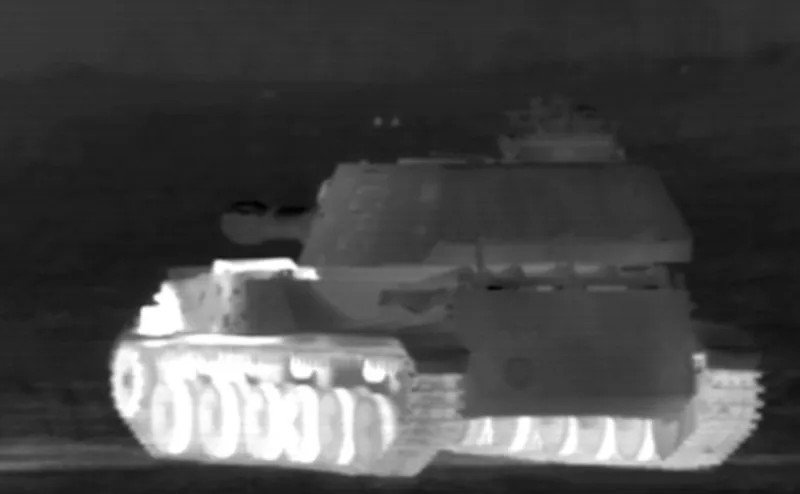
  •  
❌