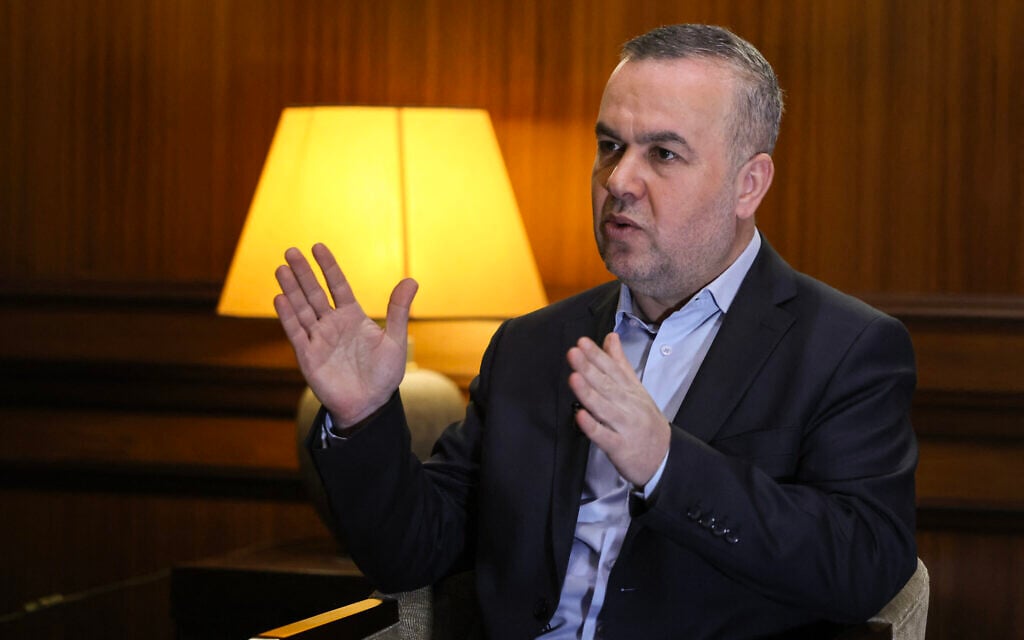
Earlier this week, Lebanese officials seized a truckload of explosives in the northeastern Hermel region, leading to accusations from some of the officials of an impending Hezbollah assassination campaign involving bombs. On Thursday, Hezbollah MP Hassan Fadlallah confirmed that the explosives belonged to the group, but insisted that there was no assassination program, and that […]
Like most nights, Wednesday night saw Israeli forces carry out artillery strikes and airstrikes across southern Lebanon, with reports of strikes hitting multiple municipalities across the Tyre, Nabatieh, and Bint Jbeil Districts. Those strikes included some casualties in the town of Haddatha, in Bint Jbeil, where an Israel airstrike wounded two civilians, one of them […]
Lawmaker for terror group says bomb-making material was intended for use against Israeli forces, asks for material seized by authorities to be returned
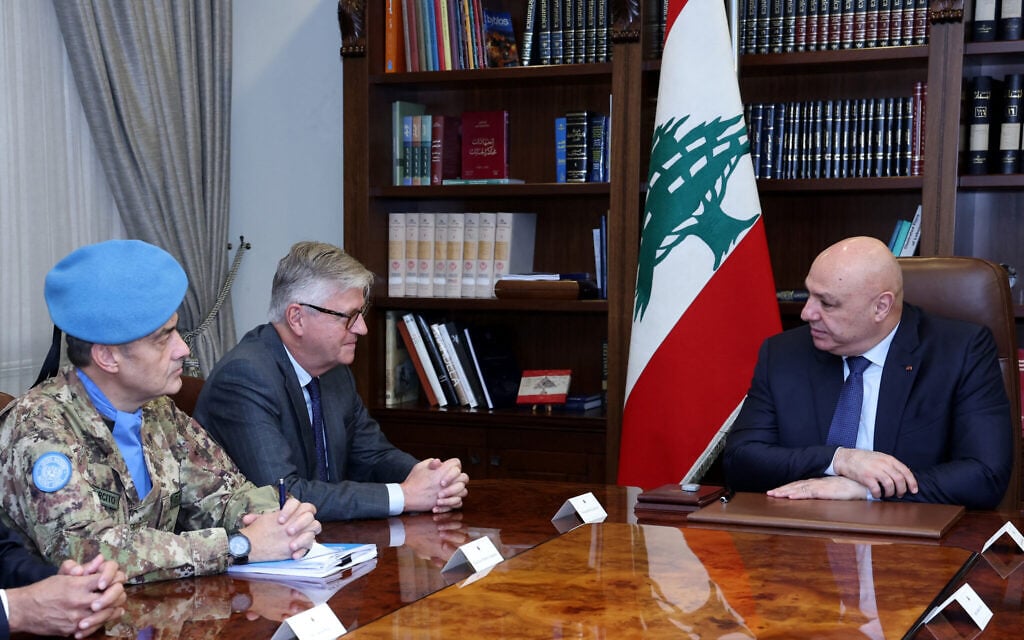
UNIFIL mandate set to end in December after nearly 50 years, prompting concern from Lebanese officials who warn withdrawal will create 'vacuum' and harm regional security
Anticipating another round of war with Hezbollah despite the fact that the current Israeli invasion of Lebanon hasn’t even ended, Defense Minister Israel Katz laid out a litany of threats against Lebanon that would happen if Hezbollah “joins Iran” in any attack on Israel. Katz declared that the territory around Nabatieh and the Litani River […]
Netanyahu says he's against Israeli or US strike on Islamic Republic, hopes there won't be an attack on Israel to disrupt elections; Katz warns Hezbollah not to launch conflict
The Resistance Movement Hezbollah unveiled a housing assistance program on Tuesday to help Lebanese families left homeless or with severely damaged residences by Israeli military strikes, offering subsidies of up to $14,000 for those in Beirut and its southern suburbs.
The Lebanese resistance movement formally presented the project under the name “Promise and Commitment,” known in Arabic as Wa’ad wa Iltizam.
Officials described it as comprehensive, direct and urgent aid for households whose homes were destroyed or badly damaged during the Israeli aggression.
The program sets a ceiling of $14,000 for affected families in Beirut and its southern suburb of Dahiye. Of that sum, $8,000 will go toward replacing furniture and household goods, while $6,000 will cover rental costs.In the rest of Lebanon’s affected regions, the maximum assistance reaches $12,000, with rent capped at $4,000.
The payments will be made in four installments over one year, starting with an initial payment of $3,500 for the capital and its suburbs and $3,000 for the rest of the country.
The program covers owners of homes destroyed either fully or partially, as well as displaced people from border zones and areas that remain inaccessible.
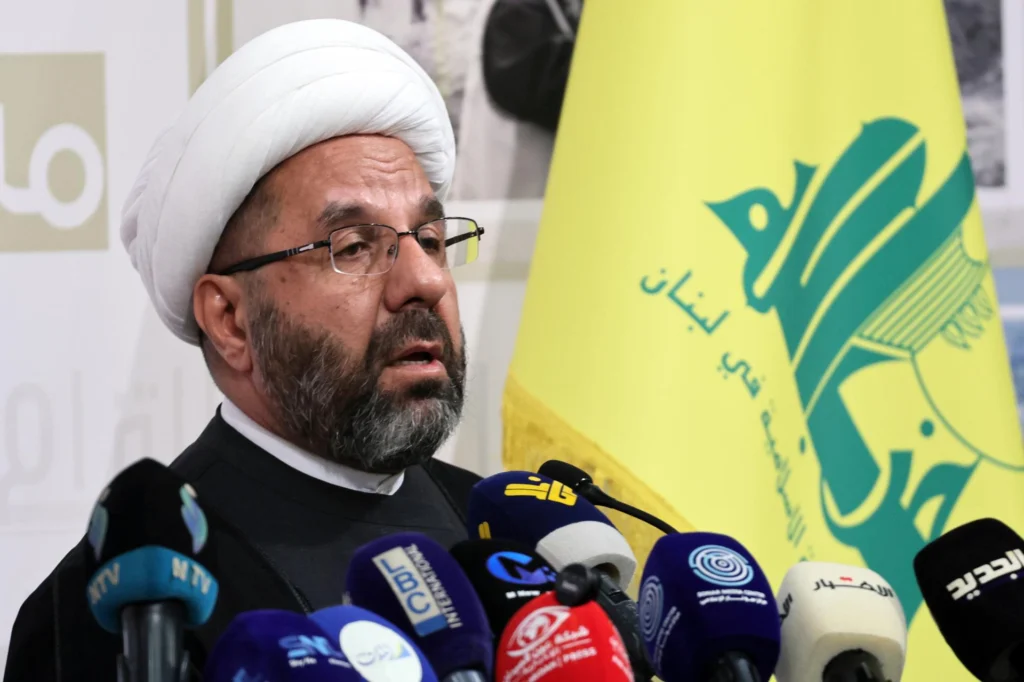
The head of Hezbollah’s Executive Council, Sheikh Ali Daamoush, announced the resistance’s new “Promise and Commitment” housing assistance program for forcibly displaced families whose homes were damaged by Israeli aggression across Lebanon.
A joint report by the United Nations Development Programme (UNDP) and the Lebanese National Council for Scientific Research (CNRS-L), published in June, assessed the damage from Israeli attacks up to that date. It found that 11,095 buildings were completely destroyed, affecting 17,891 housing units.
Another 2,242 buildings suffered partial damage, affecting 5,219 units, and 9,311 buildings sustained minor damage, affecting 18,282 units. Damage was estimated at $1.38 billion.
Lebanese authorities have also reported the return of 400,000 displaced people to the south of the country following the Israeli aggression. That return adds urgency to the housing effort, as many families come back to neighborhoods where their homes no longer stand.
The aid program is structured around that reality. By splitting payments across a full year, the initiative aims to cover both immediate needs and the longer process of rebuilding lives and households.
For the poorest households, the initial installments provide a bridge while more durable reconstruction gets underway. The program’s architects say the subsidies address both the loss of possessions and the cost of temporary shelter.
The presentation of the housing project carries political weight beyond its material value. Hezbollah has positioned reconstruction as central to its post-war standing, presenting the rebuilding effort as a form of resilience against what it describes as foreign aggression.
كشف حزب الله عن تفاصيل برنامج الإيواء الجديد، محدّدًا التعويضات بين 12 و14 ألف دولار للوحدة السكنية، بحسب المنطقة، مع دفعة أولى تتراوح بين 3000 و3500 دولار
فكيف ستُصرف المبالغ المتبقية، وما شروط الاستفادة من البرنامج؟
Text reads: “Hezbollah has revealed the details of its new housing assistance program, setting compensation at between $12,000 and $14,000 per residential unit, depending on the area, with an initial payment ranging from $3,000 to $3,500.”
Presenting the initiative, Hezbollah Executive Council head Sheikh Ali Damoush said its implementation would show the victory of reconstruction over destruction and of resistance over what he called foreign barbarity. Damoush sharply criticized the Lebanese government, affirming that authorities have not presented any effective plan to help the hundreds of thousands of displaced people and have not taken responsibility for assessing damage and rebuilding.
The program’s rollout now begins with registration and verification of affected families, followed by the first disbursements.
Last week it was reported that Iran had provided Hezbollah with some $200 million to help provide for those Lebanese civilians who lost homes so far during the Israeli invasion. Today, Hezbollah began to provide details about how the program would work. The plan is to provide $14,000 to families that lost homes in Beirut […]
Since relatively early in the current Israeli invasion of southern Lebanon, the IDF has made a priority of destroying Lebanese villages en masse. In late June, Defense Minister Israel Katz said that certain Lebanese villages would have to “disappear,” and over the course of the summer, that’s exactly what has happened. The latest analysis of […]
“I’m okay.” That was the last message I sent my mother before an Israeli strike hit us, a group of seven journalists reporting in southern Lebanon.
Three years ago, on 13 October 2023, my colleague Dylan Collins and I headed to the southern border of Lebanon to cover the situation following cross-border shelling between Israeli forces and Hezbollah. We spent the morning filming UN peacekeeping force patrols along the blue line dividing Lebanon and Israel. The atmosphere was calm and nothing suggested that the day was about to change and upend our lives. We went to a coffee shop near a UN post where journalists from different outlets had gathered and there we met our friend and Reuters colleague Issam Abdallah.
Around 4:50PM, we heard a bombardment in a nearby town so we moved to an exposed hill in Alma Al-Shaab, where Al-Jazeera journalists Carmen Joukhadar and Elie Brakhya were positioned. Together with colleagues from Reuters, we were a group of seven journalists, all wearing press vests, reporting next to a car marked “TV”. We were clearly identifiable as press and spent about an hour filming while an Israeli drone hovered above us. At 5:57 I finished filing my photos and sent a message to my mother to tell her I was okay. Seconds later, I found myself on the ground, bleeding and screaming for help. Dylan rushed over with a tourniquet, but before he even had the time to put it, another strike hit.
Everyone disappeared and I was left alone, unable to move and the heat of the flames creeping closer to my face. I was terrified of burning alive, so I started crawling away with the camera still hanging from my neck and its strap tightening around my neck with every move. Two weeks later, I woke up from an induced coma with one leg missing, the other severely damaged, and Issam dead.
Not an isolated attack
What followed was as horrific and brutal as the attack itself and it didn’t stop there. What happened to us was not an isolated incident — for three years I watched journalists being killed in Lebanon and Gaza by Israeli forces in ways that felt painfully familiar.
In October 2024, Israeli forces struck a compound in Hasbaya where journalists were staying and killed media workers Ghassan Najjar, Mohammed Reda and Wissam Kassem, while they slept.
Human Rights Watch found no evidence of military activity at the site and concluded that the strike was deliberate and should be investigated as war crime.
Then in April 2026, journalist Amal Khalil was killed in southern Lebanon after an Israeli strike hit the building where she had taken shelter with her colleague Zainab Faraj, leaving both women trapped under the rubble. Investigations found that Israeli forces repeatedly obstructed rescue efforts.
Since our attack, dozens of journalists have been killed in Lebanon, and nearly 200 journalists have been killed in Gaza by Israeli forces.
Many have been mired by Israel with the same false allegations that they were “terrorists.” The dead can’t defend themselves against such accusations, but I survived and I can speak about what happened to us.
In June 2026 in an interview on France 2, Israel’s ambassador to France described the 13 October attack as a “mistake” saying that we were not targeted because we were journalists, but because Israeli forces had mistaken us for “terrorists.” The evidence tells a different story.
Five independent investigations by Agence France-Presse, Amnesty, Human Rights Watch, Reuters, and UNIFIL found no indication of fighters or military activity at the site, and no cross-border exchange of fire for more than 40 minutes before we were struck with a 120mm tank shell.
These investigations matter because they establish with certainty evidence beyond my own personal account.
What remains unanswered is who gave the order, who fired the double-tap strike, and why no one has been held accountable. These are basic questions that can be answered by Israel if they were sought by EU member states.
Three years on, Issam’s family and the survivors of this attack deserve to know: Who gave the order?
Evidence alone cannot deliver justice, someone must be willing to act on it. In the face of this attack, including the targeting of four of its own citizens on Lebanese soil, the Lebanese government has failed us.
Neither Lebanon nor Israel are party to the Rome Statute, meaning that the International Criminal Court does not have jurisdiction to prosecute those responsible for the attack.
In 2024, Lebanon approved a special declaration that would have allowed the Court to investigate war crimes committed after 7 October 2023, only to later reverse its decision for political reasons.
And now, making our legal path even more complicated, in June 2026 Lebanon signed a new framework agreement with Israel whereby Clause 13 commits both sides to cease “all hostile and adverse actions in international and legal fora.”
EU urged to act
I have no hope left that we will ever get justice for what we lost, but I will not rest before I know the names and faces of those responsible.
Our case is the most documented instance of Israeli forces targeting the press on record. The October 13 targeted attack was perpetrated by Israeli forces on a group of journalists clearly identifiable as press.
If we cannot get answers in the face of such overwhelming evidence, what does it mean for the hundreds of journalists killed by Israeli fire throughout the region for which there is no such evidence?
This is where the European Union must act. The EU has repeatedly said that journalists must not be attacked and that violations of international law must be met with accountability. Today, we demand actions not just words and statements. The EU must demand that Israel provide a full account of the 13 October attack, including who ordered, authorized and carried out the strikes.
For me, this is not an abstract question of foreign policy. Issam was my friend. I survived that attack with one leg missing. I know what it means when the people responsible for an attack are allowed to remain unnamed and unaccountable.
I am asking the EU not simply to stand with journalists in words, but to stand with us in action.
The EU has political, diplomatic, and legal leverage. It should use it. If Israel refuses to fully explain what occurred and disclose those responsible for killing and maiming journalists who were visibly identifiable as press, EU member states should use every available mechanism to pursue accountability, including further targeted sanctions or suspending trade with Israel.
I refuse to believe that a military with advanced surveillance could have simply mistaken us for fighters and attacked us in a double-tap strike, a tactic repeatedly used by Israel in this war. But, if that’s truly what happened, then Israel must still answer for how such incompetence and failure was possible.
For now, justice evades us, but the truth of who gave the order is within reach and we must demand it.
After two people were reported killed over the weekend in southern Lebanon, an addition two people were reported killed today and at least 19 others wounded along both sides of the border, in this case seemingly entirely from unexploded ordinance left there earlier in the war. The death in Lebanon was a member of security […]
MOSCOW – Russia believes that the use of force by the Israel Defense Forces (IDF) in Lebanon grossly violate international law, Russian Foreign Minister Sergey Lavrov said on Monday.
At a press conference with Lebanese Foreign Minister Youssef Raji, Lavrov said that they discussed Israel’s ongoing actions in Lebanon, adding that Moscow has reaffirmed its position in support of Lebanon’s sovereignty, unity, and territorial integrity.
“Of course, we are committed to our assessments that the military actions of the IDF, the Israeli army, grossly violate the norms of international law and provoke an additional escalation of tensions in Lebanon,” Lavrov said.
This was part of a broader discussion of the situation in the Middle East, the Russian minister said.
“We certainly discussed the situation in the region and examined issues related to developments in the Gulf, in and around Syria, and, naturally, in Palestine, where Israel’s actions are a source of particular concern, as they create facts on the ground that directly contradict the UN resolution on the establishment of a Palestinian state,” Lavrov said.
Israeli forces carried out a strike against a car inside northwestern Lebanon near the Syrian border, wounding six people. Five of the wounded were Syrian nationals and two of them were women. The sixth person was a Lebanese citizen. The strike took place on the outskirts of Hawsh al-Sayyid Ali, along the border between Syria’s […]
It’s olive harvest season for agriculture-heavy southern Lebanon, and while more than a few olive groves have been destroyed outright by the ongoing Israeli invasion, the ones that remain are active with people trying to harvest the year’s crops. Two people have been killed over the course of the harvest of Sunday, both as a […]
With Hezbollah squarely in the political opposition, Lebanese officials have been hoping for awhile that the ongoing Israeli invasion would further alienate Hezbollah from the public, as an active combatant force and, at least by Israel’s framing, the reason for the conflict. That’s been a polarizing issue, however, and Hezbollah is likely to score a […]
In the course of his recent speeches, Israeli Finance Minister Bezalel Smotrich has laid out the position calling once again for the outright annexation of much of southern Lebanon, saying that territory losses should serve as a “penalty” for Israel’s enemies for opposing them. In one speech he declared that both Gaza and Lebanon “will […]
A family in Lebanon describes their own ethnic cleansing. Over the past 7 months, Israeli officials have been open about their plans to ethnically cleanse southern Lebanon. US tax dollars are funding this, while US media help
In a pair of comments that broadly reflect why the ongoing Israeli invasion of Lebanon shows no sign of ending, Israeli Prime Minister Benjamin Netanyahu and Hezbollah Executive Council head Ali Damoush both addressed their respective crowds and laid out their goals. Netanyahu, who was speaking at an October 7 memorial event, vowed that it […]
 Login