❌

Reading view

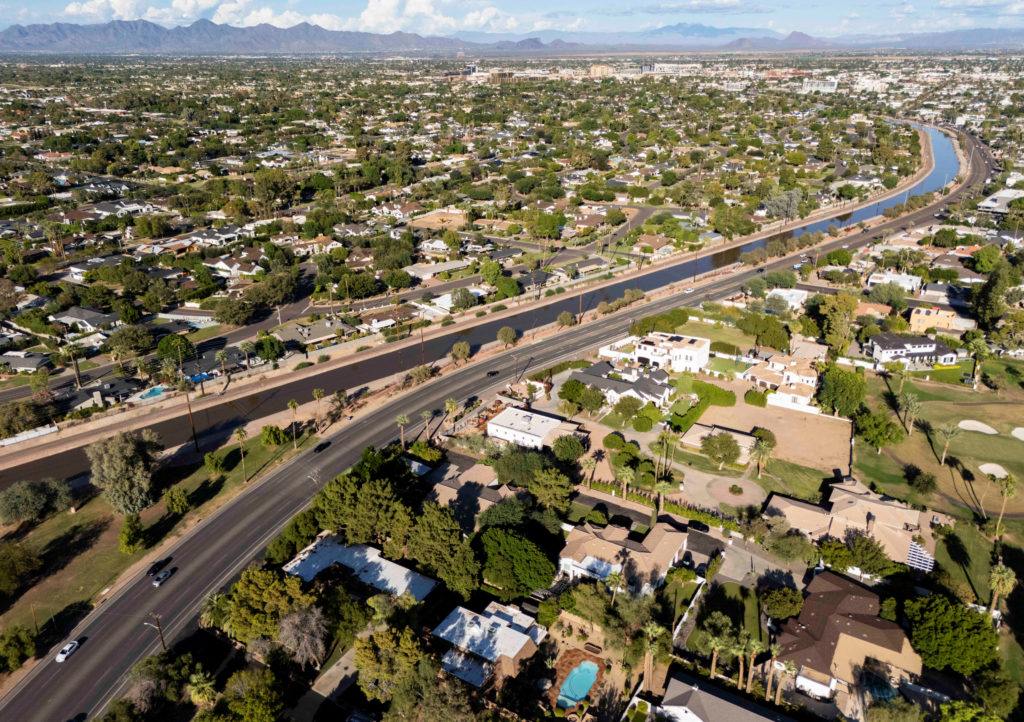
Water access becomes a top election concern for Arizona voters

For many Arizona voters, the top concern heading into the midterms isn't inflation, immigration or education. It's water. With the state gripped by prolonged drought, candidates are facing growing questions about how to secure its water future. Stephanie Sy reports for our series, Tipping Point.

  •  

Got H2O? Technocracy’s Control Over Water

“Air and water have traditionally been regarded as ‘free’ goods, but the enormous costs to society of past and present pollution show that they are not free… The policy question is how and by whom they will be paid, not whether.” — Our Common Future (Brundtland Report), 1987¹

“Where ground-water use exceeds the recharge capacity of local aquifers, regulatory or fiscal controls become essential.” — Our Common Future, 19872

“Guarantee the right to potable water, clean air, food security, uncontaminated soil, shelter, and safe sanitation, allocating the national and international resources required.” — The Earth Charter, 20003

“Politicians tend not to run for office on promises of making the price of goods reflect their real (higher) costs for the sake of sustainable development; consumers tend not to demand to pay such higher costs.” — World Business Council for Sustainable Development, 20024

“…the NGOs, who bang on about declaring water a public right. That means that as a human being you should have a right to water. That’s an extreme solution. The other view says that water… should have a market value.” — Peter Brabeck-Letmathe, Chairman of Nestlé, 20055

“Governments should establish and scale up integrated water resource management schemes, bearing fully in mind that water plays multifaceted roles, including for drinking, sanitation, agriculture, industry and energy.” — UN High-level Panel on Global Sustainability, 20126

“By 2030, implement integrated water resources management at all levels, including through transboundary cooperation as appropriate.” — Transforming Our World: the 2030 Agenda, SDG 6.5, 20157

“Water and energy prices need to be adjusted to incentivise the recycling of treated waste water.” — German Development Institute (DIE), 20168

“Water prices rose 1.6 times faster than overall inflation between 2015 and 2025.” — Report on the Food & Water Watch study, October 6, 20269

Introduction

Water is the most basic resource there is. Every person, farm, factory, and city depends on it, and nothing replaces it. Whoever controls water controls everything downstream of it, including food, energy, housing, and population settlement. That is why water has been in Technocracy’s crosshairs since 1932.

Technocracy is a resource-based economic system. It replaces the free market’s price mechanism with the scientific management of resources by unelected experts. The original Technocrats of the 1930s said so openly. Their modern heirs are more careful. They speak of “sustainable development,” “integrated water resources management,” “full-cost pricing,” and “natural asset” valuation. The goal has not changed. They want an inventory of every resource on the planet, a meter on every faucet or pipe, and a central authority deciding who gets what and at what price.

This paper follows that goal in the documents from 1987 to today. It ends with the price shock American households are now absorbing. A 62 percent rise in water bills over ten years is not a random market event. It is what policy produces when it was designed for exactly that result.

The Technocratic Blueprint: Water as an Engineered Flow

The Technocracy Study Course, first published by Technocracy Inc. between 1934 and 1936, set out the intellectual foundation.10 In its analysis of the Price System, it explained that value has nothing to do with how important a thing is to human life. It comes only from scarcity:

“Both air and water are completely indispensable for the maintenance of life. Air is so abundant that one need not exchange any commodity for its use. It is accordingly without value… In a region of heavy rainfall and abundant water supply… water has no value; it cannot be bought or sold. In arid regions, however… due to its scarcity, [water] is bought and sold or traded in, and accordingly has value.”11

The Technocrats of that day understood that you can only control and monetize water by making it scarce. Water that is plentiful cannot be managed through price. Scarce water can be. The policy implication follows: declare scarcity, real or manufactured, and control follows.

The Study Course also treated water as one of the engineered systems of the planned city. Its list of design requirements includes “a system of water supply, of heat, gas and electric power” and “trunk connections for traffic, supplies, water, energy, and so on, between the city and the world outside.”12 In the Technate, water is not owned. It is routed.

The same document demanded total registration of all assets, continuous inventory and the specific registration of each individual’s consumption.13 In the 1930s, the technology to do that did not exist. It does now.

1987: Trilateral Commission’s Gro Harlem Brundtland Reframed Water

The modern revival of Technocracy came through the doctrine of sustainable development. Its founding document is Our Common Future, published in 1987 by the UN’s World Commission on Environment and Development. The Commission was chaired by Gro Harlem Brundtland, a member of the Trilateral Commission. In 1991, James MacNeill wrote Beyond Interdependence for the Trilateral Commission, a book that “extends the Commission’s analysis of the issues of global change” in support of the Brundtland report.14

Brundtland set three things in motion on water that still govern policy today.

First, it took away water’s status as a free good. In the report’s words, air and water “are not free,” and “the policy question is how and by whom they will be paid, not whether.”15 It said costs can be “internalized” by enterprises, which may then “pass the costs along to the consumer.”

Second, it called for regulatory and fiscal controls. Where groundwater use exceeds recharge, “regulatory or fiscal controls become essential.”16 For agriculture, it prescribed “the regulation of water quantities, and more rational water charges.”17

Third, it tied water pricing to energy pricing. The report praised “energy pricing policies” after the 1970s oil shocks and noted “the potential of similar pricing policies for other raw materials.”18 It urged countries to see “how far real energy costs can be passed on to the consumer.”19

The report also cast water as a source of international conflict. It cataloged river disputes from the Rio Grande to the Nile and the Euphrates.21 That framing laid the groundwork for “transboundary” management. Once a resource is defined as a cross-border problem, national control can be called inadequate.

1992 to 2002: Agenda 21, the Earth Charter and the Corporate Partners

The Brundtland report “provided the momentum for the landmark 1992 Rio Summit that laid the foundations for the global institutionalization of sustainable development.” Agenda 21 set out 40 chapters, including the “conservation and management of natural resources.”21 As I have written elsewhere, Agenda 21 was created and scripted by the Trilateral Commission from start to finish. It was modeled after historic Technocracy, a resource-based economic system.22

The Earth Charter, written by Steven C. Rockefeller, followed in 2000. Its language looks humanitarian. It pledges to “guarantee the right to potable water… allocating the national and international resources required.”23 But a right that is guaranteed by allocation is not a right. It is a ration. Whoever does the allocating holds the power.

In 2002, the World Business Council for Sustainable Development complained that “politicians tend not to run for office on promises of making the price of goods reflect their real (higher) costs,” and that consumers do not ask to pay those higher costs.24 Here the plan is stated plainly. Prices must go up, and the political process is the obstacle.

Nestlé’s Peter Brabeck-Letmathe went further in 2005. He called the idea that people have a right to water “an extreme solution” and said water “should have a market value.”25

The Earth Charter’s “right to water” and Brabeck’s “market value” look like opposites. They are not. Both put water under managed allocation, one through government and one through the corporation. In Technocracy, the public-private partnership merges the two.

Privatization in Practice: Cochabamba, Bolivia

What happens when the plan meets the people was shown in Cochabamba, Bolivia, in 2000. The city’s water utility went to a consortium, Aguas del Tunari, partly owned by Bechtel Engineering. Residents found that the contract terms gave the consortium rights even to rainwater. Protests and violence followed where one civilian died and hundreds were injured. The mayor and the prefect resigned, and the contract was abandoned.26 Bechtel later sued Bolivia for $25 million in losses. The claim was settled in 2006 for $0.30.27

Cochabamba was not an isolated case. The UN-Habitat World Cities Report 2016 records that the population served by private water operators grew from 6 million in 1991 to 94 million by 2000, and to over 160 million by the end of 2007. Water and sanitation privatization took place in 90 countries and 504 local governments between 1990 and 2011.28 The report admits that “experience with the hybrid model of privatization among low-income countries has been disappointing.”

2012 to 2016: Integration, Nexus and Price Adjustment

By 2012 the language had matured. The UN High-level Panel on Global Sustainability defined sustainable development as “seeing the whole picture — such as the critical links between food, water, land and energy.”29 It told governments to “establish and scale up integrated water resource management schemes.”30 It also told them to shape “investor calculations” with targets, including for “water conservation.”31

This is the “nexus” doctrine. Once water, food, land and energy are defined as one integrated system, they need one integrated manager. That is the Technate under a new name.

The 2030 Agenda, adopted in 2015, wrote this into the Sustainable Development Goals. SDG 6.4 calls for “sustainable withdrawals and supply of freshwater.” SDG 6.5 calls for “integrated water resources management at all levels, including through transboundary cooperation.”32 Paragraph 33 declares the UN “determined to conserve and sustainably use… freshwater resources.” As I noted in Technocracy: The Hard Road to World Order, the first cost of this Utopia is “nothing less than turning over control of all natural resources to the UN.”33

The German Development Institute’s 2015–2016 report shows how the doctrine works on the ground. It states that “water and energy prices need to be adjusted” to change behavior. It also cites Zambia’s 2011 Water Resources Management Act, which introduced “an approval procedure and a water extraction tax” to “manage resource consumption.”34 Price, permit and tax are the tools. Consumption is the target.

The New Urban Agenda, adopted in 2016, brought the program into the city. Member states committed to “integrated water resources planning and management, considering the urban-rural continuum,” and to “water reuse.”35 Water infrastructure is to be “climate resilient” and part of “integrated urban and territorial development plans.”36 Water policy becomes land-use policy, and land-use policy becomes control over where and how people live.

The Control Grid: Metering Every Drop

Pricing needs measurement. The Smart Grid initiative, which I documented in Technocracy Rising (2015), was designed from the start to include gas and water metering. It uses digital meters with “continuous two-way communication between the utility and the consumer’s property.”37 By the time I wrote The Evil Twins of Technocracy, about 115 million smart meters had been installed across America, close to 70 percent of the market.38

Water rights are also being redefined. Technocracy Rising covers the move to replace private property with government control of rights and resources that will be “licensed” in certain situations.39 A licensed right can be revoked, metered, conditioned, and priced.

2026: Tokenizing Water

The last step is financialization. In Crucible of Tokens, I documented a 2026 Goldman Sachs paper that explains how water rights can be turned into “traceable tokens” tied to flow meters, with tradeable conservation credits on the carbon-credit model.40 The United Nations University has declared a global “water bankruptcy” and calls for enforceable limits and centralized accounting. Dubai’s commodities center signed an agreement in June 2025 to launch a token backed by verified freshwater reserves. California flies electromagnetic surveys over its aquifers. Oracle processes data from more than 100 million utility meters with software that can detect a single household’s irrigation in real time.

I summed up the sequence as “Map it, meter it, ticket it… water is three-quarters of the way down.”41

Look at the whole picture. In 1934 the Technocrats said water has value only when it is scarce. In 1987, Brundtland said water is no longer free. In 2026, Wall Street is building the ledger to trade it. A scarcity declared by the UN plus a meter on every pipe produces a tradable asset. The people who hold the deeds gain from scarcity. The people who pay the bills get gouged.

October 2026: The Bill Comes Due

A study by Food & Water Watch recently uncovered that, between 2015 and 2025, American household water bills rose 62 percent while consumer prices rose 39 percent. Water rose 1.6 times faster than inflation! Water also outpaced groceries (30 percent) and eggs (28 percent). Bills rose 19 percent more than the national median household income between 2014 and 2024.42

The average household using 60,000 gallons paid $531 in 2025, with a range from $133 to $1,416. New Hampshire bills jumped 177 percent, Oregon’s 114 percent, and West Virginia’s 95 percent.

The corporate gap is the most telling finding. Corporate-owned utilities charged the average household $823 a year against $494 for public systems, a 67 percent difference. Corporate systems were just 11 percent of the 500 systems studied but 44 percent of the 25 most expensive. Seventy percent of the top 10 were for-profit. All 25 of the least expensive systems were publicly owned.43

Bills exceeded the study’s affordability threshold for the poorest fifth of households in 93 percent of systems. Water costs consume about 11 percent of low-income household income in West Virginia and about 20 percent in Puerto Rico.45

This is the result Brundtland called for in 1987: costs “passed along to the consumer.” It is the result the WBCSD wanted in 2002: prices that “reflect their real (higher) costs.” It is what Brabeck asked for in 2005: water with “a market value.” The documents said it would happen, and it has.

Conclusion

The record from 1987 to 2026 is consistent. Water was redefined from a free good into a priced resource. Then it became a regulated resource, an integrated “nexus” resource managed at all levels, a metered resource, and finally a tokenized asset. Each step was published openly in UN, NGO, and corporate documents. Each step moved control further from the household and the local community and toward unelected managers and financial institutions.

The 62 percent rise in water bills is definitely not the end of this process.

Technocracy’s rule in 1934 was that water has value only when it is scarce. Sustainable development has spent four decades supplying the scarcity and the flow meters. American households are now paying for it.

References

  1. World Commission on Environment and Development, Our Common Future (United Nations, 1987), Ch. 8, para. 53.
  2. Ibid., para. 65.
  3. The Earth Charter (2000), Principle 9a, reproduced in Patrick M. Wood, Technocracy Rising: The Trojan Horse of Global Transformation (Coherent Publishing, 2015), Appendix III.
  4. Holliday, Schmidheiny and Watts (World Business Council for Sustainable Development), 2002, p. 18, quoted in “Executive Summary,” UN background paper on sustainable development.
  5. Peter Brabeck-Letmathe, We Feed the World (documentary, 2005), cited in “Trilateral Commission: Bilderberg schism founded by David Rockefeller,” n. 103.
  6. UN Secretary-General’s High-level Panel on Global Sustainability, Final Advance Text (2012), Recommendation 17.
  7. United Nations, Transforming Our World: the 2030 Agenda for Sustainable Development, A/RES/70/1 (2015), Target 6.5.
  8. German Development Institute (DIE), Annual Report 2015–2016, p. 31.
  9. “US households pay 62% more for water than they did a decade ago, study finds,” October 6, 2026.
  10. Technocracy Inc., Technocracy Study Course (New York, 1934–1936; fifth edition 1940).
  11. Ibid., “The Price System,” pp. 124–125.
  12. Ibid., p. 252.
  13. Patrick M. Wood, The New Economics of Technocracy, citing Technocracy Study Course, p. 232.
  14. Patrick M. Wood, The Evil Twins of Technocracy, on Brundtland, MacNeill and Beyond Interdependence.
  15. Our Common Future, Ch. 8, para. 53.
  16. Ibid., Ch. 8, para. 65.
  17. Ibid., para. 64.
  18. Ibid., para. 37.
  19. Ibid., Ch. 7, para. 96.
  20. Ibid., Chairman’s Foreword and Overview, para. 13.
  21. “Executive Summary,” UN background paper on sustainable development, Brundtland to Rio.
  22. Wood, The New Economics of Technocracy, p. 223.
  23. The Earth Charter, Principle 9a, in Wood, Technocracy Rising, Appendix III.
  24. Holliday, Schmidheiny and Watts, quoted in “Executive Summary.”
  25. Brabeck-Letmathe, We Feed the World (2005).
  26. “Bechtel,” profile, Cochabamba Water War.
  27. Ibid., Bolivian claim and 2006 settlement.
  28. UN-Habitat, World Cities Report 2016, Ch. 1.7, “Inequality and Exclusion.”
  29. High-level Panel on Global Sustainability (2012), para. 21.
  30. Ibid., Recommendation 17.
  31. Ibid., para. 37.
  32. 2030 Agenda, A/RES/70/1, Targets 6.4 and 6.5.
  33. Patrick M. Wood, Technocracy: The Hard Road to World Order, on 2030 Agenda para. 33.
  34. DIE, Annual Report 2015–2016, p. 31.
  35. United Nations, New Urban Agenda, A/RES/71/256 (2016), paras. 72–73.
  36. Ibid., para. 119.
  37. Wood, Technocracy Rising, Smart Grid chapter.
  38. Wood, The Evil Twins of Technocracy, “The Control Grid.”
  39. Wood, Technocracy Rising, on property rights and licensed resource rights.
  40. Wood, Crucible of Tokens (2026), citing Goldman Sachs, “Securing and Financing the Future of Water” (2026).
  41. Ibid., n. 13, citing United Nations University Institute for Water, Environment and Health; DMCC (June 17, 2025); Chainlink; California Department of Water Resources; and Oracle Utilities.
  42. “US households pay 62% more for water than they did a decade ago, study finds,” October 6, 2026.
  43. Ibid.
  44. Ibid.
  45. American Water Works Association, as summarized in notes on the October 6, 2026 water-price article.

  •  

US Households Pay 62% More For Water Than They Did A Decade Ago

Technocracy seeks to control all resources, especially those required for life itself: water, energy, food, and air. Now the UN has declared the world bankrupt of water, the language of which requires a receiver to oversee the proceedings. Yet humongous data centers get a free pass on both energy and water, as AI is set to take over metering of those same resources. ⁃ Patrick Wood, Editor.

US households are paying 62% more for drinking water than they did a decade ago – outpacing inflation, grocery prices and household incomes, according to a new study.

Food & Water Watch, a Washington DC-based non-profit, analyzed 2025 billing data from the 500 largest community water systems in the US, which together serve about 155 million people, or 45% of the country’s population. The analysis compared current rates with data from a similar Food & Water Watch survey conducted in 2015. The study does not include wastewater or storm water charges, which are often billed separately from drinking water service.

In 2025, the average household using 60,000 gallons of water paid $531 for drinking water service, according to the study. However, costs varied widely, with annual bills ranging from $133 at the cheapest system to $1,416 at the most expensive.

Water prices rose 1.6 times faster than overall inflation between 2015 and 2025. Consumer prices increased 39% during that period, compared with a 62% jump in water bills, according to the study. Water costs also rose more than twice as fast as groceries, which increased 30%, and eggs, which rose 28%.

Water bills also rose faster than household incomes, increasing 19% more than the national median household income between 2014 and 2024, the study found.

Mary Grant, Food & Water Watch’s water program director and a co-author of the study, said: “Water bills are increasing much faster than many households can keep up with and these escalating water costs impact every corner of the country. Low-income households are being hit the hardest.

“Corporate water abuses, federal disinvestment and climate change are supercharging water rate hikes across the country.”

The increases were particularly severe in some states. Water bills in New Hampshire jumped 177% over the decade, followed by Oregon at 114% and West Virginia at 95%. In Louisiana, Maryland and West Virginia, water bills grew at roughly twice the rate of state median household incomes, while in New Hampshire water bills increased nearly five times faster.

The study also found a major disparity between publicly owned and for-profit water systems.

Corporate-owned utilities charged the average household $823 a year, compared with $494 for publicly owned systems – a difference of $329, or 67%. Corporate systems accounted for just 11% of the 500 systems the study analyzed but represented 44% of the 25 most expensive systems. The study added that 70% of the top 10 were owned by for-profit corporations.

California accounted for 52% of the 25 most expensive water systems. By contrast, all 25 of the least expensive systems were publicly owned. About 60% of the least expensive systems were in the south, including many in Florida and Georgia, the study found.

Water was even less affordable for low-income households, according to the study. Water bills exceeded the study’s affordability threshold in 93% of systems, costing more than 1.5% of income for the poorest fifth of households. Only Idaho and Utah stayed below the threshold.

West Virginia and Puerto Rico faced the heaviest financial burdens, the study found. Water bills consumed about 11% of income for low-income households in West Virginia and roughly 20% in Puerto Rico, which the study described as “simply unaffordable by any metric”.

Grant of Food & Water Watch said water systems must make updates to repair “ageing water lines and help clean up toxic contamination from lead pipes, Pfas forever chemicals, nitrate pollution from industrial agriculture, the list goes on”. She added: “Corporate control of water systems exacerbates this affordability crisis, as big water monopolies take away local control, prioritize profit and hike water prices even higher.”

Grant said communities could face increasingly difficult choices as they struggle to secure additional public investment. “Without real solutions to hold polluters accountable, establish local affordability programs and expand federal support, systems serving vulnerable communities could face the impossible choice: forgo an urgent water safety project or price many out of water service,” she said.

In a separate statement, the American Water Works Association (AWWA), a non-profit whose membership includes more than 4,300 utilities supplying roughly 80% of North America’s drinking water and treating nearly half its wastewater, pointed to infrastructure renewal, resilience and regulatory requirements as key cost drivers threatening drinking water affordability.

“If communities rely exclusively on revenue from water bills to address these needs, average annual household drinking water bills would rise from $429 in 2025 to $969 by 2050 (2025 dollars) – more than doubling in real terms,” AWWA spokesperson Greg Kail said.

“That would mean an estimated 30.4m households – or 21.5% – would spend more than 2.5% of their income on drinking water, and 53.5m households – 37.8% – would exceed a 1.5% income threshold. An estimated $13.6bn per year in assistance would be needed by 2050 to keep water bills below commonly understood affordability benchmarks,” Kail added.

Meanwhile, the National Association of Water Companies (NAWC), a trade association representing privately owned water and wastewater utilities, said it had not reviewed the Food & Water Watch study but emphasized the growing costs of maintaining water systems.

“Affordability is a legitimate challenge for many households and one that NAWC and its members take seriously,” NAWC spokesperson Jenn Kocher said, citing costs tied to ageing infrastructure, Pfasand lead regulations, cybersecurity and severe weather.

Kocher also highlighted customer-assistance programs offered by private water companies, saying: “Many regulated, private water companies offer robust assistance programs that help low-income customers maintain service and manage bills. These programs are often overlooked in rate comparisons.

“By comparison, many government-owned utilities face legal or other restrictions on cross-subsidizing customers, which can limit the types of assistance programs they are able to provide,” she added.

“Evaluating affordability based solely on published rate schedules can produce a misleading picture of what many customers actually pay after assistance and conservation programs are taken into account,” Kocher continued.

Read full story here…

  •  

Where Cities and Oceans Meet

What does it mean to live in a disappearing place? For Pioneer Works’ Broadcast, Brad Bolman, a professor of history and environmental studies at Tulane University, writes about New Orleans, the shifting borders between land and sea, and the political and economic forces that continue to shape the city’s fate in a time of climate catastrophe.

If Los Angeles is the city that has been imaginatively destroyed again and again in film and TV, as Thom Andersen argues in Los Angeles Plays Itself, New Orleans is the one that has been destroyed countless times in reality. We have survived worse and rebuilt before, many insisted. We’re staying.

It was a reaction as understandable emotionally as it was disconnected from environmental reality. But that gap is a feature of life in the Crescent City. As I watched my first Mardi Gras parade this spring, junk falling in never-ending torrents from brightly decorated floats, a friend sympathetically interjected, “This must be driving you crazy.” What they meant was that as someone who teaches about environmental history but isn’t from here, I must be especially affected by the throwaway culture of the city’s most famous fête and its tons and tons of plastic beads, made from the same fossil fuels that are causing sea levels to rise around us.

  •  

A Lake the Size of Connecticut Has Been Sealed Under Antarctic Ice Since Before Humans Existed

In February 2012, after twenty years of nearly uninterrupted work, a Russian drill broke through the last stretch of ice over East Antarctica and reached something no human had ever touched: the surface of a lake sealed shut long before our species existed. Water surged up the borehole, mixed with the kerosene and Freon used […]

  •  

The Santa Cristina Well-Temple, a Nuragic Work of the Bronze Age That Is 30 Centuries Old and Looks Like It Was Built Yesterday

There are ancient monuments that impress with their size and others that impress with their precision. The Sacred Well of Santa Cristina, in the municipality of Paulilatino, province of Oristano in Sardinia, belongs to the second group. Its basalt stones are carved and assembled with such geometric precision that, according to the site management center […]

  •  

Ten European startups reshaping the blue economy

The blue economy is no longer limited to traditional activities such as fishing, shipping, or offshore energy. A new generation of startups is applying climate technology, AI, robotics, biotechnology, and advanced water treatment to make the use of oceans and water resources cleaner, safer, and more efficient.

EU-Startups’ 2026 coverage shows Europe’s blue economy attracting capital across a widening range of technologies and business models. Among the larger disclosed rounds were €17 million for cargo.one alongside its acquisition of ocean-freight platform Cargofive or €10 million for marine-biofuel developer Kvasir Technologies.

These deals form part of a broader funding landscape in which startups are tackling an increasingly diverse set of challenges linked to how Europe uses, manages and protects its water and marine resources.

From restoring coastal ecosystems and generating tidal power to removing hazardous pollutants, improving wastewater treatment, supporting aquaculture, automating maritime operations, and digitalising shipping workflows. The 10 startups featured below, founded between 2020 and 2026, show how innovation is reshaping the sector, in alphabetical order.

Apolownia is a Paris-based ClimateTech startup committed to making the world more environmentally responsible. It develops end-to-end coastal ecosystem restoration and blue carbon projects, including mangroves and seagrass, which help absorb carbon, reduce coastal flooding and erosion, improve water quality, and provide vital habitats for fish and other marine life.

Its projects use satellite imagery, drones, field data and AI to monitor ecosystem recovery, estimate carbon capture and verify environmental results in a clear, data-driven way. Founded in 2024, it has raised €1 million in funding.

Headquartered in Heidelberg, Blue Activity develops sustainable water treatment solutions for industrial cooling systems. Its technology replaces toxic biocides with natural microorganisms and uses biopolymer-based additives, supported by digital monitoring. This reduces chemical use, water and energy consumption, maintenance needs, and operating costs.

They promote cleaner industrial water use and reduce harmful substances discharged into the environment, contributing to healthier water resources and more sustainable industry. Founded in 2021, Blue Activity secured €8.5 million in funding.

Launched in 2024 in Oxford, Caudal Energy takes a bio-inspired approach to tidal power, using ocean currents to generate predictable renewable electricity. Its system replaces conventional rotating turbines with moving fins inspired by marine animals, offering a lower-impact solution with simpler installation and maintenance.

This activity matters because tidal energy provides a more predictable source of renewable power than solar and wind, which are more dependent on weather conditions. By harnessing ocean currents, Caudal Energy can support the transition away from fossil fuels while making sustainable use of marine resources. Its innovative approach has enabled them to raise €6.43 million in total funding.

Heidelberg-based Enzo focuses on preventing water damage before it becomes costly. Its one-drop sensor attaches to a building’s main water pipe. The startup uses AI to identify unusual water-use patterns and small leaks in real time, allowing homeowners, property managers, and insurers to act before major damage occurs.

Its activity is especially useful as early leak detection can prevent water waste, expensive repairs, and unnecessary use of materials and energy, contributing to more sustainable water management. Launched in 2021, Enzo raised €6.3 million in funding.

Lir Labs develops an AI-powered microscopy for wastewater treatment, turning microscopic activity in water into real-time operational insights. Its automated sensors use deep-learning models to identify changes in microorganisms and particles, allowing treatment plants to detect problems earlier and adjust processes before they become costly or disruptive.

Their approach to better wastewater monitoring can reduce pollution, unnecessary energy and chemical use, and the risk of poorly treated water reaching natural ecosystems. Founded in 2025 in London, Lir Labs raised €245k in funding.

Mirai Robotics is a Maritime Technology startup building AI-powered systems that allow boats and other maritime vehicles to operate with little or no human control. Its technology can guide vessels, process data from onboard sensors, and make real-time decisions during activities such as sea patrols, inspections, monitoring, and transport.

Its activity is relevant to the blue economy because it can make maritime operations safer, faster, and more efficient, particularly in remote or hazardous areas where deploying human crews can be costly or risky. Launched in 2025 in Bari, this innovative approach to maritime automation and safety has helped Mirai Robotics secure €3.6 million in funding.

Founded in 2023 in Ireland, Nernst Electric develops on-site oxygen generation for aquaculture. Its technology uses ceramic membranes to separate high-purity oxygen directly from the surrounding air, allowing fish farms to produce oxygen where it is needed instead of relying on costly deliveries. A reliable oxygen supply is essential for maintaining healthy fish and productive farming conditions, particularly at remote sites.

Its efficient way of producing oxygen can make aquaculture more reliable, cost-effective, and sustainable while reducing energy use and dependence on transported liquid oxygen. Nernst Electric has a total funding of €1.7 million.

NPHarvest has developed a new hardware solution for the collection and recycling of nutrients from wastewater, turning them into valuable ingredients for fertilisers. Installed at wastewater, biogas, and agricultural facilities, its system captures nitrogen and phosphorus that would otherwise be lost as waste and converts them into reusable resources. The technology can recover up to 90% of these nutrients while operating with relatively low energy use.

As excesses of nitrogen and phosphorus can pollute waterways and contribute to eutrophication, managing levels in the water is important. By recovering these nutrients before they reach the environment, NPHarvest supports cleaner aquatic ecosystems while creating a circular source of fertiliser. Founded in 2023 in Espoo, they raised €3.4 million in total funding.

Zürich-based Oxyle tackles some of the hardest-to-remove pollutants in water, particularly PFAS, also known as “forever chemicals”. Rather than simply filtering these substances out, the company’s treatment systems break them down at the molecular level, preventing them from being transferred into another waste stream. The technology is designed for contaminated groundwater and industrial wastewater across sectors such as chemicals, pharmaceuticals, semiconductors, and waste management.

Removing hazardous chemicals from wastewater helps prevent them from reaching rivers, groundwater, and marine ecosystems, supporting cleaner and safer water resources. Founded in 2020, Oxyle has raised €19 million in funding.

Founded in 2021 in Berlin, Tilla is a MaritimeTech startup bringing greater efficiency to crew changes in the shipping industry. Its digital platform brings voyage schedules, crew information, port services, flights, and travel requirements into one place, allowing shipping companies to plan and manage crew movements with fewer manual tasks, lower costs, and better coordination.

By digitalising a process still heavily dependent on spreadsheets, emails, and manual coordination, Tilla supports more efficient maritime operations and improves the working experience of seafarers. The company raised €4 million in total funding.

  •  

Kefalonia: British tourists pay for water for firefighters combating the big fire

British tourists on the island on Kefalonia showed their gratitude and paid for water bottles for the firefighters battling the big blaze on the island in the Ionian Sea over the weekend. Local media kefaloniapress.gr reported about the spontaneous “Thank you!” incident that apparently occurred on Sunday, August 2. The post published today, Tuesday, August […]

The post Kefalonia: British tourists pay for water for firefighters combating the big fire appeared first on Keep Talking Greece.

  •  

Greece’s Water Reform Bill: Privatization and prices increases underway?

Parliament in Greece has approved a government bill concerning the country’s two major water utilities, EYDAP and EYATH in Athens and Thessaloniki respectively. The bill passed amid strong opposition criticism that the legislation could lead to the privatization of water services. The bill, introduced by the Ministry of Environment and Energy, passed with support from […]

The post Greece’s Water Reform Bill: Privatization and prices increases underway? appeared first on Keep Talking Greece.

  •  
❌