Violent protests spread from Albania's capital to smaller cities on Thursday, as student-led demonstrators demand prime minister Edi Rama's resignation for a third straight day.
Protesters again clashed with police in Albania's capital in hours-long confrontations, with crowds targeting government buildings, banks and shopfronts.
Demonstrators, who had earlier gathered in the thousands, are demanding that Rama step down and that the government offer more support for students, citing poor university conditions and high tuition fees.
On Thursday, protests spread to several smaller cities, as more students joined university boycotts.
In Shkodra, in Albania's northwest, protesters smashed city hall windows and pelted the ruling Socialist Party and opposition Democratic Party headquarters with stones, local media reported.
Broadcast images also showed protesters confronting police in southern coastal cities, with reports of Korce students smashing school windows and blocking streets.
In Tirana, AFP journalists saw repeated clashes with police across the city, with police using water cannons and tear gas as protesters lobbed stones, barricaded roads and set fire to trash.
Streets remained shrouded in smoke and tear gas into the early evening, littered with debris and shattered glass from smashed shopfronts.
The escalation comes after months of anti-government demonstrations in the country originally sparked by a controversial resort development linked to US President Donald Trump's family.
"We demand real change, not empty promises. We want a government that works for its people, not against them," journalism student Teftalia Papa told AFP.
She said the people had many issues accessing basic services, but students were being particularly "crushed by rising costs".
Protesters in Tirana on Tuesday and Wednesday smashed their way into several government buildings and set at least one ablaze.
Rama earlier posted a video on his Facebook page of him touring the burnt-out remains of an office at a college campus in Tirana.
"Until yesterday, this was the office of the College of Europe, the school of a united Europe," he said in the video - his first public comments since the protests began.
"Today this is the ruin left by hands that are not, and can never be, the hands of students," Rama said, blaming opposition figures for the violence at the demonstrations.
"Everyone who has had a hand in this chaos will certainly pay."
'Ruin' and 'chaos'
Meanwhile, protest groups circulated an "ultimatum" demanding the prime minister's resignation by 1:00 pm (1100 GMT).
Rama's office did not respond to AFP's request for comment on the protests and the calls for his resignation.
For more than four months, anti-government protests in Albania have routinely drawn crowds in the thousands.
They were triggered by a luxury hotel project linked to Trump's daughter, Ivanka, and son-in-law, Jared Kushner, that became a symbol of alleged corruption and inequality in the country.
Protester and media analyst Altin Tufa said several factors fueled the demonstrations, but the alleged clearing of land for the project in a protected coastal area was the "last straw, unleashing people's discontent and anger".
"It is the indifference, arrogance and failure of the entire political class to listen to people's concerns about economic, political, social and healthcare issues," Tufa said as he marched with protesters.
The European Union's delegation in Tirana strongly condemned Thursday's "violent escalation".
"We call on protesters to exercise restraint and to refrain from any acts of violence," it said in a statement.
The EU had also previously urged prompt investigation into allegations of excessive police force.
Police said 65 people were arrested during Wednesday's protests, suspected of "attacking police officers, institutions, public and private property".
A total of 71 police officers had been injured in the unrest, some seriously, police chief Skender Hita told reporters on Thursday.
He urged the demonstrators to "immediately distance themselves from masked and violent individuals", pledging that police will not back down.
The health ministry said that hospitals in Tirana treated 89 people on Wednesday, including 61 police officers.
Four officers and two protesters remained hospitalised, with one officer in intensive care, according to the authorities.
A spike in diesel prices is hammering broad sectors of the US economy – especially agriculture and shipping – and becoming a flash point ahead of the November 2026 midterm elections. This squeeze has prompted Republicans from hard-hit farm states to call for a ban on US diesel exports, with President Donald Trump reportedly weighing […]
The EU is preparing to curb Chinese imports of chemicals and industrial machinery, following a successful deal with Beijing that capped hybrid car exports to the bloc.
The European Commission “showed openness” to proposing safeguards, referring to an emergency brake on imports that can cover entire sectors, an EU diplomat told EUobserver on Thursday (15 October).
And there was “broad support” for the idea among member states for the commission to proceed, the diplomat said.
Last week, trade commissioner Maroš Šefčovič agreed with Beijing to cap imports of Chinese hybrid cars at 350,000 next year, which was less than half the amount expected this year.
He called the deal a “blueprint” for other sectors, a view which was publicly echoed by EU Commission president Ursula von der Leyen, also on Thursday.
Under World Trade Organization (WTO) and EU rules, anti-dumping and anti-subsidy cases require Brussels to prove that Chinese firms sell at unfairly low prices or receive subsidies.
Safeguards do not need evidence under WTO rules, which allows them to be used as an emergency measure.
And the commission only has to show that a surge in imports is seriously harming European producers.
“We like the idea, chemicals, machinery where there’s still a lot of Chinese overproduction needs to be managed,” said another EU diplomat.
The instrument had its limits: Safeguards have to apply to all countries, not just China, and can last no more than eight years.
The EU rarely uses WTO safeguards, but did so on steel, also aimed at China, which expired in June, after reaching the eight-year limit, and which have since been replaced by a separate EU steel regime.
And the Centre for European Reform, a prominent think-tank in Brussels, previously suggested exempting the EU’s 76 free-trade partners from safeguards so that the measures fell mainly on China.
It was a legal moot point in the WTO if that was OK, but the EU has done something similar before.
Norway, Iceland, Liechtenstein, and 10 other countries were left out of the steel safeguard, but using this tool to address Chinese imports was still seen as a temporary solution.
Before the end of the year, the EU commission aims to present diversification tools to reduce reliance on Chinese goods, as well as a mechanism to compensate companies hit by Chinese countermeasures.
And the package would include an instrument to shut Chinese companies out of the EU market if need be, in a measure first proposed in a Franco-German paper last week.
Ousted Venezuelan President Nicolas Maduro and his wife Cilia Flores have pleaded not guilty on to a new US indictment accusing them of conspiring to torture political opponents.
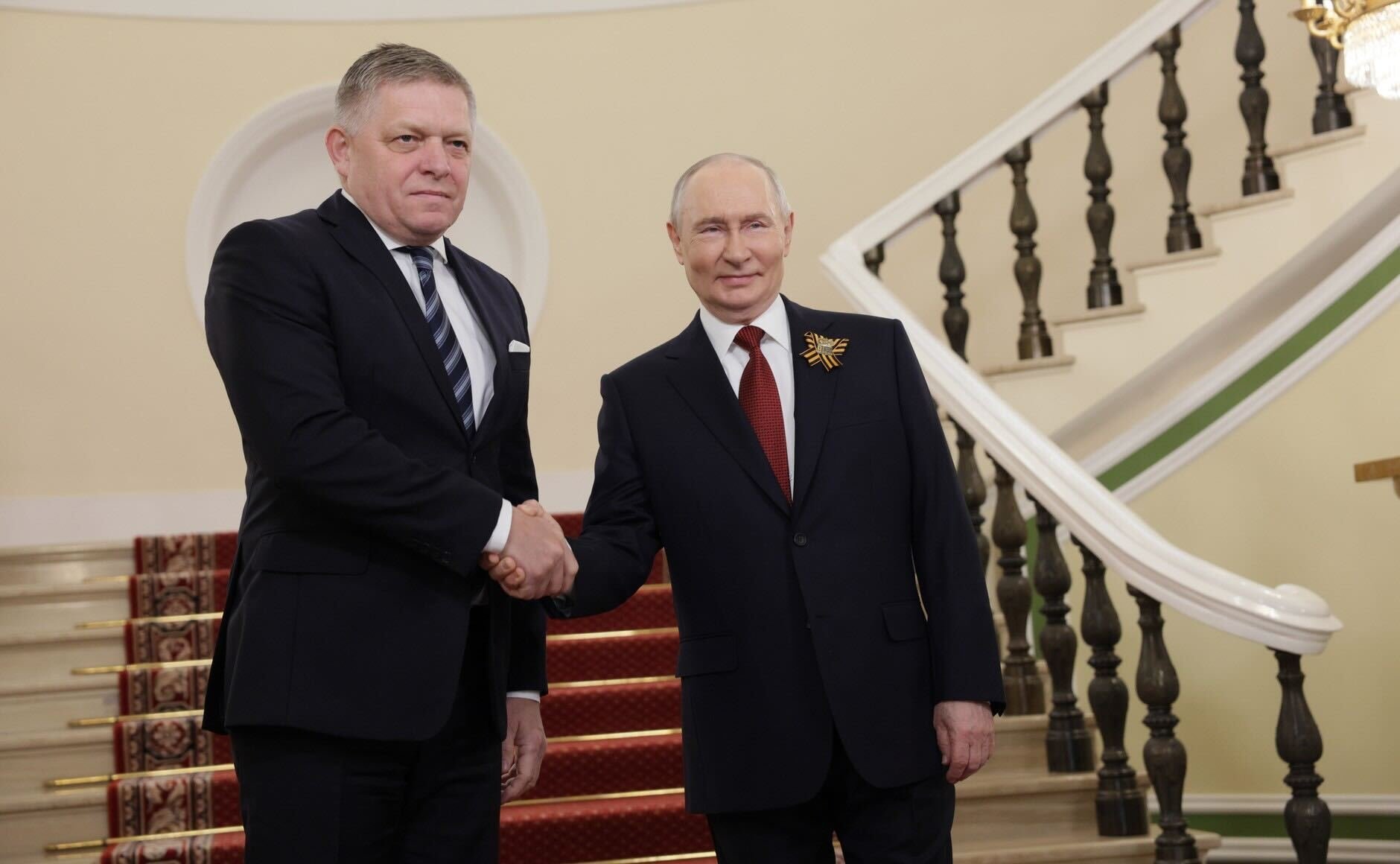
Slovak prime minister Robert Fico appears to have become Russia’s most prominent ally in the European Union, following the demise of Hungary’s pro-Kremlin leader.
Juraj Blanár, Slovakia’s foreign minister, announced controversial plans to revive a joint committee with Russia back in August – just a day before the anniversary of the Soviets occupying Czechoslovakia in 1968.
His announcement also came before Fico headed off to meet his counterparts at a summit in Brussels on Thursday (15 October).
And “so that there are no surprises, on the 25th [of October] there will … be a meeting of the joint economic commission with the Russian Federation,” Fico told the European affairs committee in Slovakia’s parliament on Wednesday.
The central European leader announced the closer ties with his aggressive neighbour immediately after planning a trip to Lviv in Ukraine early next month.
But if Fico does actually go to Lviv, just over the border from Poland, it would be the deepest he has travelled in the war-torn country so far.
And while he has not visited Kyiv in three years since returning to power, Fico has made plenty of time to go to Moscow during this time.
Many factors point to Slovakia now openly supporting the Kremlin, even as Russian attacks on Ukrainian civilians intensify, killing dozens of people.
The Institute for European Security Studies (IESS), a Kyiv-based think tank, noted, in its analysis, that a recent statement by Slovak defence minister Robert Kaliňák did not consider Russia a threat, despite Russian intelligence services having been linked to attacks in Slovakia including, potentially, a drone attack on a manufacturer near Prešov.
The IESS also highlighted the renewed Slovak-Russian cooperation at the level of military attachés, with two Slovak military personnel sent to the Russian capital while a Russian officer went to Bratislava.
This swap of soldiers was promised by Fico to Putin when they met in the Kremlin on 9 May.
And to make matters worse, a Russian military attaché was captured on video handing cash to an associate of the Slovak fake news site Hlavné správy.
The Ukraine think-tank warned that Slovakia’s magnetism towards Russia should not be ignored.
“In the end, by lowering Nato’s guard and reopening the doors to Russian intelligence, Slovakia is doing exactly what Moscow needs: disabling the West’s defences from the inside out,” it said.
Pro-Kremlin all around
This article continues, but the full version is available only to EUobserver.com subscribers. Visit account.euobserver.com/membership
Lawmakers in Somerville, Massachusetts, are considering an ordinance that would bar the US city from awarding contracts to companies accused of complicity in Israel’s violations of international law, amid growing pressure to sever financial ties with firms linked to Israel's genocide in Gaza.
The proposal follows a November 2025 ballot measure backed by 55.7% of voters, calling for the city to end existing business with, and prohibit future contracts and investments in, companies linked to Israel’s “apartheid, genocide, and illegal occupation of Palestine”.
The City Council has delayed a decision to assess the ordinance’s scope and financial impact, with a vote expected on 27 October, according to local reports.
Following renewed discussions on Tuesday led by Somerville’s Legislative Matters Committee, councillors said more time was needed to assess which businesses would be affected and the potential financial implications for the city.
Two Jewish councillors have raised concerns about the proposal, particularly over which companies would fall within its scope.
If enacted, Somerville would join a growing number of US cities adopting divestment measures in line with the Boycott, Divestment and Sanctions (BDS) movement, which seeks to hold Israel accountable for its violations of Palestinian rights through economic pressure.
However, the passage of last year's ballot measure prompted a backlash from pro-Israel groups, which have been pressuring the city to reject the proposed ordinance, citing Somerville’s longstanding Jewish community, which is made up of around 84,000 residents.
Jewish opposition to Israel's policies has grown in the US, with many challenging attempts to portray criticism of Israel or support for Palestinian rights as inherently antisemitic.
More recently, a July 2026 Associated Press-NORC poll highlighted deep divisions within Jewish communities over Israel's military actions. Around four in ten religiously unaffiliated Jewish respondents believed Israel had committed genocide against Palestinians in Gaza, compared with around a quarter of religiously affiliated Jewish respondents.
The findings underline the diversity of Jewish opinion on Israel, even as pro-Israel groups continue to challenge divestment campaigns.
Somerville for Palestine (S4P), a local organisation that spearheaded both the ballot initiative and the proposed ordinance, has continued to press the council to implement the measure.
Pro-Palestine activists have accused the city of maintaining financial ties with companies targeted by the BDS movement.
They point to city records showing that its pension fund has more than $500,000 invested in Lockheed Martin, a weapons manufacturer whose fighter jets and Hellfire missiles have reportedly played a significant role in Israel’s genocidal war on Gaza.
Activists have also highlighted more than $1.7 million in contracts Somerville has awarded to Hewlett-Packard over several decades.
According to the BDS movement, HP-linked technology has been used in biometric surveillance systems at Israeli checkpoints in the occupied West Bank, which Palestinians and rights groups have condemned as part of Israel’s system of apartheid.
The ballot initiative and proposed ordinance have received backing from several Somerville councillors, including Ben Ewen-Campen, Ben Wheeler, Wilfred N. Mbah and Jon Link. Jewish Voice for Peace Boston has also voiced support for the measures, demonstrating that Jewish organisations are among those backing efforts to hold Israel accountable through divestment.
The campaign comes amid growing calls for local councils across the US, North America and the wider Western world to recognise the Gaza genocide and sever financial ties with companies accused of facilitating violations of international law.
Pro-Palestine campaigners are urging councils to divest from arms manufacturers supplying Israel with weapons and military technology, as well as companies involved in financing or constructing illegal Israeli settlements in occupied Palestinian territory.
The move followed a backlash from pro-Israel groups against an earlier proposal calling on the city to recognise and condemn “apartheid” and “genocide” in Palestine and immediately suspend institutional ties with the Israeli government, its institutions and municipalities.
The royal couple arrived at the Community Recording Studio in Nottingham, in central England, which offers music, performance and athletic programs to youth people.
The royal couple arrived at the Community Recording Studio in Nottingham, in central England, which offers music, performance and athletic programs to youth people.
Turkish police raided the Istanbul headquarters of an important pro-opposition television station on Wednesdazy, the day that jailed Istanbul Mayor Ekrem Imamoglu was set to start his defense against corruption charges.
A cargo ship that participated in the search located the 44-year-old woman and she found conscious while floating inside a lifebuoy, according to the Hellenic Coast Guard.
A cargo ship that participated in the search located the 44-year-old woman and she found conscious while floating inside a lifebuoy, according to the Hellenic Coast Guard.
Youths protesting Albania's long-serving Socialist government hurled rocks at a police cordon outside the Education Ministry. Riot police responded with tear gas and water cannons.
Youths protesting Albania's long-serving Socialist government hurled rocks at a police cordon outside the Education Ministry. Riot police responded with tear gas and water cannons.
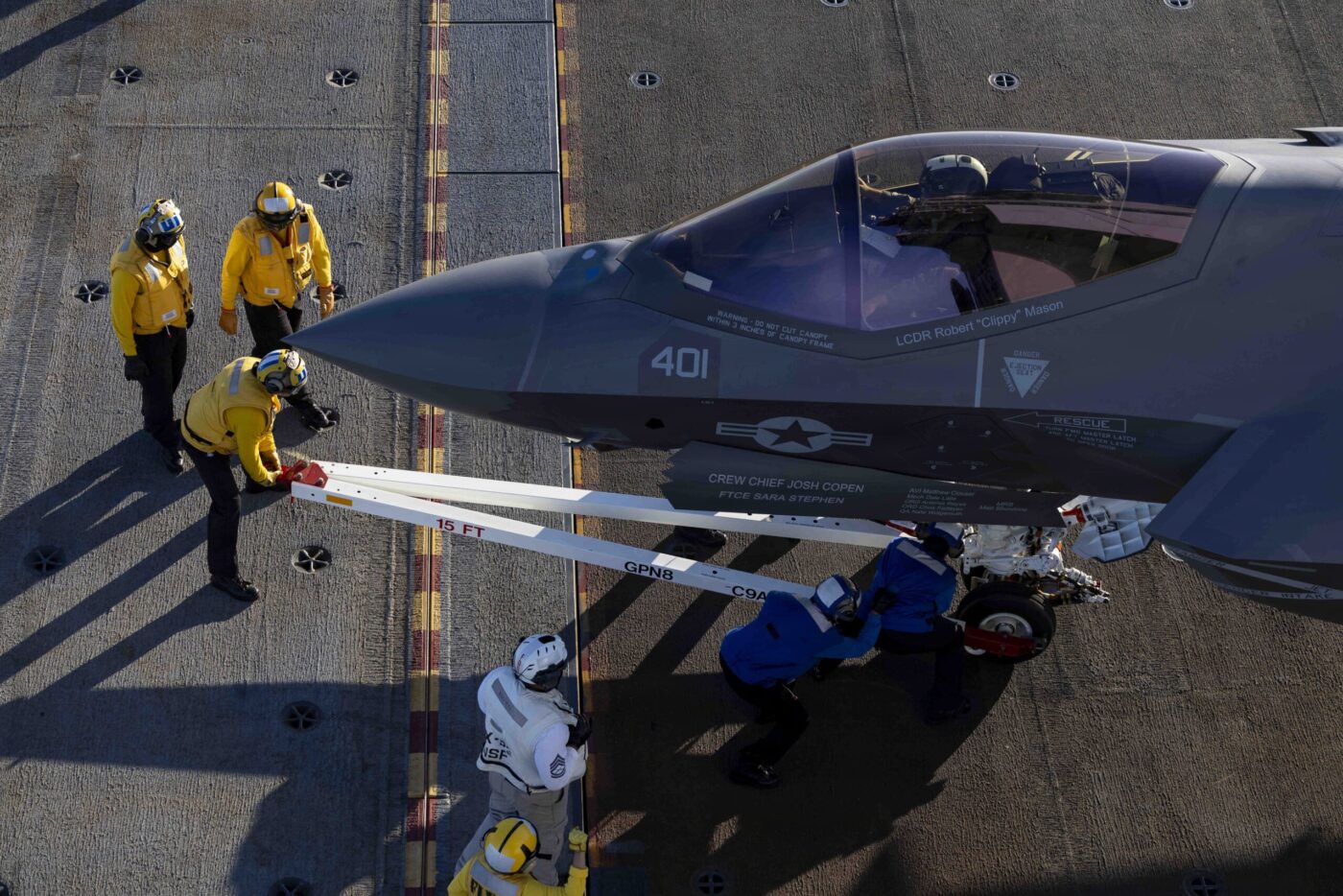
The US Navy F-35C Lightning II aircraft made its first-ever arrested landing and takeoff aboard its newest Ford-class aircraft carrier. This milestone marks a major step for the US jet that initially struggled with hook-related flaws that complicated landings during ground tests.
On 13 October, an F-35C from Air Test and Evaluation Squadron (VX) 23 (“Salty Dogs,” NAS Patuxent River) made the first arrested landing aboard the Pre-Commissioning Unit (PCU) John F. Kennedy (CVN-79).
The aircraft reportedly used the unique EMALS and AAG electromagnetic launch-and-recovery systems to perform arrested launches and recoveries from CVN-79 as part of Aircraft Compatibility Testing (ACT).
ACT lets engineers examine how the ship’s equipment interacts with specific aircraft types while gathering data to confirm those systems function as intended.
The US Navy released photos of the event showing two F-35C aircraft with tail numbers 401 and 403—one landing on the carrier deck, and the other flying with an inert Joint Direct Attack Munition (JDAM) bomb carried externally. Later, another set of images and a video were posted on social media, showing the F-35C launching from the deck of the John F. Kennedy on the second day of ACT.
The US Navy took the preliminary acceptance of the carrier on 29 September 2026, after sea trials the previous month. Preliminary acceptance allows at-sea testing, training, and proficiency building before the carrier is commissioned and put into service.
This arrested landing and subsequent catapult launch marked the first time any F-35C had operated from a Ford-class ship, the largest and most advanced fleet of aircraft carriers in the American armory.
The lead ship, USS Gerald R. Ford (CVN-78), has never embarked the F-35C for sustained operations because the carrier was reportedly delivered without the full set of modifications needed to sustain stealth-fighter operations due to cost-saving measures.
Earlier in June 2019, former Navy spokesman Capt. Daniel Hernandez said that although Ford-class carriers were built to launch and recover the F-35C fighter jet, they still needed upgrades such as stronger jet blast deflectors to protect the deck from hot exhaust during launches, as well as designated areas for aircraft operations.
Instead of the F-35C, the USS Gerald R. Ford hosts air wings mainly equipped with F/A-18E/F and Growler variants for its current combat posture.
The US Navy has flown the F-35C only from its Nimitz-class carriers so far. The aircraft completed its initial at-sea testing aboard the USS Nimitz in November 2014. USS Carl Vinson was the first to deploy the jet operationally, and USS Abraham Lincoln was the first to use it in combat.
However, the House Armed Services Committee’s Seapower and Projection Forces Subcommittee later ordered in FY2020 that the Navy must not accept the CVN-79 USS John F. Kennedy aircraft carrier until it can embark the F-35C. This makes the latest arrested landing and takeoff special.
File: A US Navy F-35C makes an arrested landing on the deck aboard John F. Kennedy
This test is a key step in validating F-35C integration with the Ford class, especially because these carriers use electromagnetic catapults and advanced arresting equipment, replacing the Nimitz class’s steam-powered launch and conventional arresting systems.
Interestingly, however, this key milestone comes as US President Donald Trump has ordered the Pentagon to redesign a new aircraft carrier to replace electromagnetic catapults—designed for finer control, reduced airframe stress, higher sortie rates, and better support for a wider range of aircraft—with steam catapults.
In fact, the President signed a national security memorandum in August, giving the Pentagon leaders two months to come up with “a plan on the required measures to replace the Electromagnetic Aircraft Launch System and Advanced Weapons Elevators with steam and hydraulic systems for the construction of” the USS Doris Miller, also a Ford-class aircraft carrier.
Nonetheless, putting F-35C jets on USS John F. Kennedy is a major breakthrough for the US Navy’s upcoming combat posture as regional security threats multiply across theatres. The F-35C Lightning II brings stealth, advanced sensors, sensor fusion, and long-range strike capability that older fighters, such as the Super Hornet, lack.
File: F-35C aboard John F. Kennedy carrier
The F-35C’s Leap is Admirable
More than a decade ago, the F-35C struggled with its arresting hook system (AHS), which had a well-documented design issue, as reports in 2012 noted, citing a leaked JSF Concurrency Quick Look Review dated 29 November, 2011.
The report noted that the stealth fighter couldn’t board a carrier because of these tailhook design issues.
It stated that the F-35C failed to engage the MK-7 arresting gear during particular tests at NAWC-AD (Naval Air Warfare Center – Aircraft Division) Lakehurst, with a poor score of 0 successes in 8 attempts.
This was despite testing at a regular airport, not a real carrier, where an aircraft may face inclement weather, a pitching deck, adjacent obstructions, low fuel, and no alternate airfields, among other challenges.
At the time, reports noted that the core issue was the short longitudinal distance—about 7 feet—between the main landing gear tires and the lowered tailhook point. Low-observability, or stealth, requirements drove this geometry, forcing the Arresting Hook System into a recessed bay with doors to preserve the aircraft’s outer mold line and minimize radar cross-section, according to the reports.
For comparison, the F/A-18 placed the main landing gear-to-tailhook distance at about 18.2 feet. Additionally, the tailhook point design had limited ability to scoop low-positioned cables.
A Lockheed Martin official later said the company traced the F-35C’s trouble catching a carrier’s arresting gear wires to the tailhook design. “The good news is that it’s fairly straightforward and isolated to the hook itself,” said Tom Burbage, the F-35 program manager at the time. “It doesn’t have secondary effects going into the rest of the airplane.”
Burbage said that the rest of the tailhook system design, including the bay and doors that hide the device and other auxiliary hardware, was sound. “What we are trying to do is make sure that we got the actual design of the hook is optimized so that it in fact repeatedly picks up the wire as long as the airplane puts itself in position to do that.”
He explained that the fundamental limitations of creating a stealth fighter also caused the hook issue, adding that the company faced the rare challenge of designing the first-ever naval stealth fighter jet with a tail-hook that had to be concealed when not in use.
He also noted that the tail hook had to be installed farther forward on the jet’s ventral surface than on other naval aircraft because it had to fit within the F-35’s outer mold line. As a result, the hook behaved differently than it did on previous fighters like the F/A-18.
The way the wires react as the jet passes over them is a dynamic factor in the F-35, and the wire responded in a sine wave pattern.
“The time differential between when the main gear rolls over the cable and the time the hook picks up the cable on a more conventional airplane is more time for that wave to damp out,” the spokesperson was quoted as saying. “In the case of the F-35, one of our design constraints is that the hook just has to be closer to the main landing gear than on a conventional aircraft because of the requirement to hide it inside the airplane,” he added at the time.
Later, engineering investigations identified three primary factors: the aircraft’s constrained geometry, a suboptimal hook-point shape, and inadequate hold-down performance. Additionally, it found that a faulty or inadequately validated wire-dynamics simulation model contributed to the original design assumptions.
The Joint Strike Fighter program addressed the issue by redesigning the hook point and improving the hold-down damper, along with other refinements such as improved upstroke damping and strength. The revised system underwent successful shore-based testing, including dozens of roll-in arrestments, enabling the first at-sea arrested landings on USS Nimitz in late 2014, followed by a rigorous testing regime.
Notably, Ford-class ships use the newer Advanced Arresting Gear (AAG) rather than the legacy MK-7 hydraulic system. However, the successful trap and launch close the loop on more than a decade of work that began with the original hook’s total failure.
As the EurAsian Times previously explained, the F-35C offers significantly greater range over other F-35 variants, larger internal weapons bays, and superior endurance, making it ideal for long-range operations from the vast ocean.
These stealthy warplanes are nearly invisible to enemy radars and can penetrate even the most advanced air-defense systems. They have advanced sensor fusion to create a shared battlespace picture for the entire air wing and can conduct precision strikes or intercept threats, as demonstrated by the Iranian drone shootdown earlier this year.
The F-35C can carry over 5,000 pounds of internal weapons or over 18,000 pounds of combined internal and external weapons. This lets the US Navy use external armaments to increase lethality when needed or operate in stealth when required.
Not just that, the aircraft can also operate as an intelligence, surveillance, and reconnaissance (ISR) asset, sharing information with all networked ground, sea, and air assets in the battlespace
Contact the author at sakshi.tiwari13 (at) outlook.com
Kyiv, Ukraine, 15 October, (Brussels Morning Newspaper) – Ukrainian President Volodymyr Zelenskyy has raised serious concerns that Washington’s recent approach towards Moscow could strengthen Russia’s position in the ongoing war. The Zelenskyy US warning comes as tensions deepen … Read more
A sell-off for artificial-intelligence stocks is hitting Wall Street again after whipping around the world on worries about how much longer the AI frenzy will last.
A sell-off for artificial-intelligence stocks is hitting Wall Street again after whipping around the world on worries about how much longer the AI frenzy will last.
Europe’s trade deficit with China reached a record $34.8bn [€31bn] in September, as EU leaders meet in Brussels on Thursday (15 October) to discuss Europe’s competitiveness agenda and what they call “macroeconomic imbalances” — a euphemism to avoid mentioning China by name.
EU heads of state and government are expected to give a mandate to the EU Commission to propose a set of trade defence measures and tools to reduce the EU’s reliance on Chinese industry, based on a new Franco-German blueprint, as a united front spreads across the bloc.
There was a move towards a “surprising unitary position” on Beijing among member states, said an EU diplomat, ahead of a two-day summit in Brussels which began on Thursday (15 October).
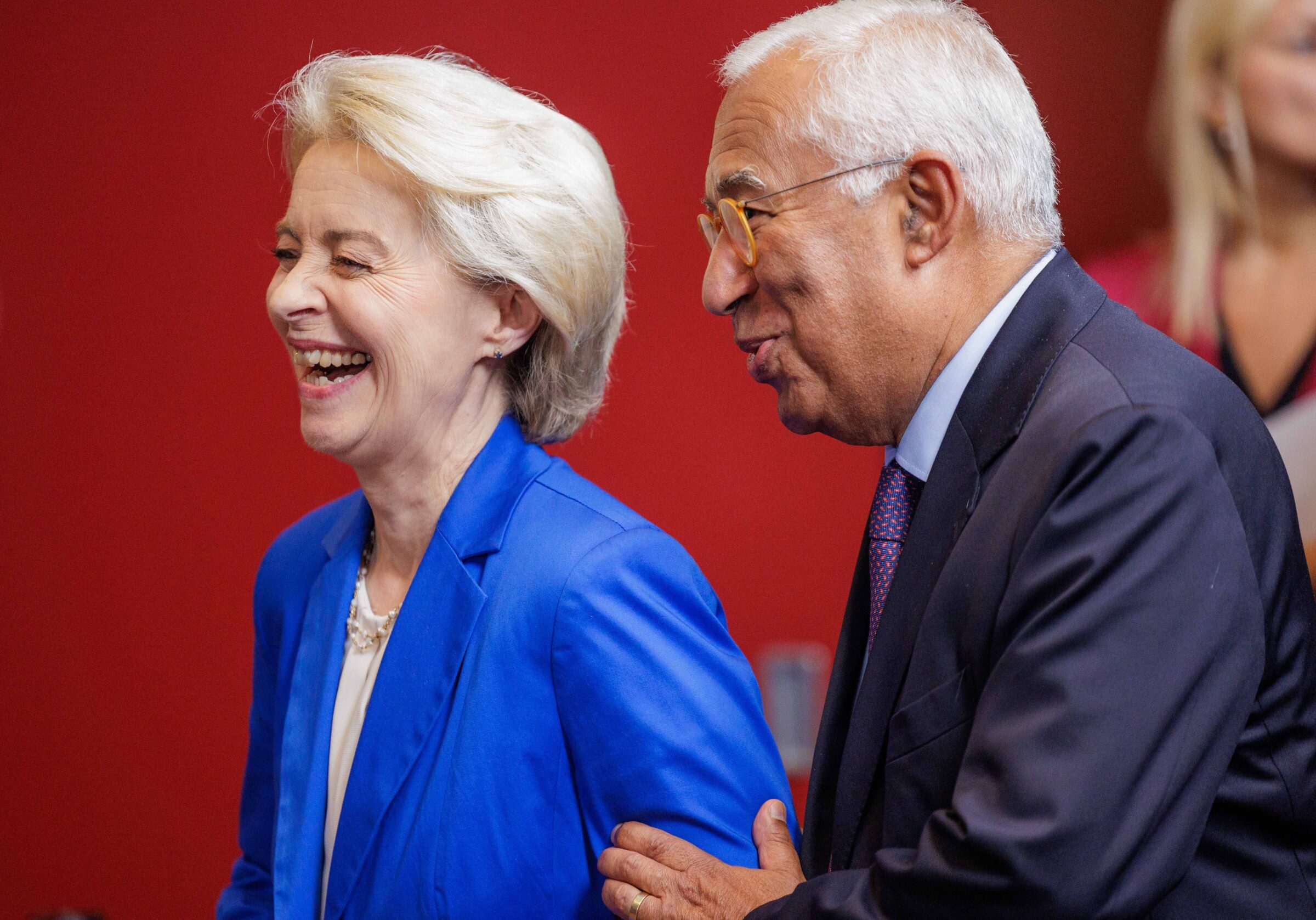
A joint letter and policy paper submitted by French president Emmanuel Macron and German chancellor Friedrich Merz to commission president Ursula von der Leyen last week was viewed by many EU diplomats as marking a decisive shift towards a more consolidated EU stance on trade relations with China.
“For a long time, there were significant differences between these two countries on how to deal with China, how to address the economic situation,” parliament president Roberta Metsola told reporters on Thursday.
The diplomat added that the commission’s trade diversification package, designed to reduce the bloc’s reliance on Chinese industrial inputs and curb Chinese exports, will be presented by the end of the year and will be based on the Franco-German paper.
But the commission, for its part, has downplayed the prospect of rapid progress to EU-Chinese trade statistics. “It’s an issue which is not going to be solved in a couple of months,” said one official.
‘Be ready for escalation’ but do nothing
This article continues, but the full version is available only to EUobserver.com subscribers. Visit account.euobserver.com/membership
Riyadh, Saudi Arabia, 15 October, (Brussels Morning Newspaper) – Saudi Arabia’s military coalition announced on Thursday that it had intercepted and destroyed a cruise missile over the Medina region, home to one of Islam’s holiest cities. The reported … Read more
 Login