❌

Reading view

India’s mass protests in defense of democracy continue into second week

Thousands participated in a joint delegation of opposition groups in India who were attempting to meet the Chief Justice (CJI) of the country on Monday, October 12. The delegation sought to raise concerns over the alleged irregularities and fraud in the national and state level elections.

The police and security forces, yet again, tried to block the protesters from marching and used force to disperse them. The CJI refused to meet the delegation claiming the matter was subjudice.

Monday was the tenth consecutive day of the mass protests in the country which broke out on October 2, days after a newspaper report claimed the Chief Election Commissioner (CEC) Gyanesh Kumar violated rules and took arbitrary decisions on crucial matters related to electoral rolls revisions, or the so-called Special Intensive Revision (SIR).

Opposition parties of diverse ideological backgrounds have accused the CEC of manipulating the elections to help the ruling ultra-right-wing and Hindu-supremacist Bharatiya Janata Party (BJP) to win crucial state elections. and have been demanding Kumar’s removal.

The opposition is also demanding the end of the SIR process and the re-inclusion of over 130 million voters whose names have been removed from the electoral rolls in various states depriving them of their right to vote, a fundamental right in the Indian constitution.

The BJP and CEC Gyanesh Kumar have refuted the charges, claiming the allegations were based on superficial assumptions.

Massive crackdown over the weekend

The Indian government suspended all major routes to the capital, Delhi, suspending hundreds of trains on Saturday, October 10, in order to prevent people from reaching the capital to participate in a scheduled protest called by the Cockroach Janata Party (CJP), a youth movement which emerged earlier this year, and several left groups, over the issue.

The authorities also closed down all major metro stations in the city and imposed sections of the law which disallow any gathering of people, literally shutting down the city.

The security personnel detained thousands of people from various corners of the city, from their homes and even from moving trains and other vehicles to prevent them from participating in the protests.

All members of the Central Committee of the Communist Party of India (Marxist), including its General Secretary M A Baby and formal Chief Minister of Kerala Pinarayi Vijayan, were forcefully detained after they tried to march to the Jantar Mantar, the designated place for the protests.

They were kept in detention for hours before they were finally released in the evening.

Several protesters from the Student Federation of India (SFI), the All India Students Association (AISA), the Democratic Youth Federation of India (DYFI), and other student and youth organizations tried to breach the police fortifications.

However, most of them were detained by the police during the effort. They claimed they were beaten up by the security forces, with hundreds of videos circulating on social media showing them being manhandled.

Some journalists also accused the security forces of trying to prevent them from reporting. They claimed they were beaten up and their cameras and mics were broken by the police and thugs belonging to the ruling party.

On Sunday, several young leaders, mostly women, from the left-wing organizations, such as the SFI, AISA, the All India Students Federation (AISF), and some Members of the Parliament (MP) from the left parties, like the CPI (M), and the Communist Party of India (CPI), were injured after the police attacked them during the protests.

The crackdown on protesters has invited strong reactions and solidarity from the International Peoples Assembly (IPA) and several left and progressive forces from across the world.

“India’s youth has risen to defend the right to vote itself” because “if a citizen is quietly erased from the voter list, democracy becomes a facade,” the IPA said in a statement issued on Sunday. It also demanded the end of state repression against the peaceful protesters.

Youth in defense of democracy

Talking to BreakThrough News, several youth leaders claimed the objective behind the movement against the rigging in elections is a movement to protect democracy and the basic rights of the people.

They asserted that they will not stop until Gyanesh Kumar is sacked and all the irregularities in the election process are corrected. Under the authoritarian administration, manipulation in elections is now eroding the small remaining democratic voice the people have in the country, they said.

They also questioned the authority of the government to block people’s right to protest, claiming the immunity provided to the security forces to attack the students, youth, and opposition party leaders trying to raise their voice against the injustice confirms that the BJP and its leadership has no commitment to democracy.

Mrityunjay, secretary of the Delhi state DYFI said one should not look at alleged irregularities as just affecting the rights of a section of society. In India the right to vote is linked to several social security benefits for poor and working class people. Once they lose their right to vote they may lose crucial welfare benefits.

The fact that the majority of those who have been deleted from the electoral rolls are from poor and working-class communities makes the fight for free and fair elections a fight for social justice and equality.

Rikta, another leader of the DYFI, claimed that the youth movements see the fight against the CEC as a fight to retain faith in the constitution and democratic processes in India. She claimed that the BJP has never believed in democracy and that is the reason they are so indifferent to the popular resistance against their policies so far.

However, the left and democratic forces in the country have decided to go till the end so that the BJP and people like Gyanesh Kumar never dare to manipulate the popular mandate again and learn to respect dissent, Rikta told BreakThrough News.

  •  

Political crisis in Pakistan deepens with dismissal of PTI-led provincial government

Large-scale protests broke out in different parts of Pakistan’s Khyber Pakhtunkhwa (KP) province on Monday, October 12, after the federal government dismissed its elected government and imposed the centralized Governor’s rule.

The federal government also declared an emergency in 12 out of 40 of KP’s districts, citing a law-and-order situation. The imposition of the emergency under article 232 of Pakistan’s constitution means the suspension of citizen’s fundamental rights.

Pakistan Tehreek-e-Insaf (PTI) which was ruling the KP government, called the dismissal of its government a “direct assault on the democratic mandate of the people.” PTI is currently leading a large march to Pakistan’s capital, Islamabad, demanding the release of its jailed leader and former prime minister, Imran Khan,

Several of its leaders and activists protested the federal government’s decision in different parts of the province on Monday and Tuesday, despite the repression unleashed by security forces.

The federal government has deployed the armed forces in large numbers across the province, closed down all the educational institutions and blocked all access routes to the capital Peshawar with shipping containers in order to prevent large protests.

Chief Minister Sohail Afridi was also arrested on Monday, along with several of the elected members of the provincial legislative council, with PTI claiming his whereabouts were unknown.

Afridi, who was leading the march to Islamabad since October 4, had, on Saturday, dared the federal government to dismiss his government, claiming the imposition of federal rule by dismissing “the only truly elected government” in the country would be a brutal repression of popular will.

The PTI has called for large-scale protests against the move in the coming days. It has also filed a petition demanding the revocation of the Governor’s rule and production of its elected members, arrested since Sunday.

“Unpardonable crime“

Reacting to the dismissal of the PTI government, Ammar Ali Jan, leader of the leftwing Haqooq-e-Khalq Party (HKP) called it “one of the darkest chapters” in the country’s history.

“All those responsible, including the PMLN [Pakistan Muslim League Nawaz, the ruling party], PPP [Pakistan Peoples Party, part of the ruling coalition] & the establishment [the Army] have committed an unpardonable crime against our people,” Ali Jan said, asking people to “revolt against this tyranny.”

Several other groups and parties opposed the federal government’s move, calling it an attack on people’s basic rights.

HKP called it a brazen disregard for the will of the people which will further increase the gap between the people and the government “in the midst of unprecedented security, economic and regional challenges” faced by Pakistan.

The left-wing Mazdoor Kisan Party (MKP) and Awami Workers’ Party-Marxist also opposed the move, calling it an example of authoritarianism. The MKP dismissed the justification about the PTI government’s failure to maintain law and order and curb terrorism as just excuses to undermine the popular mandate.

The federal government, led by Prime Minister Shehbaz Sharif of the PMLN, has long accused the KP government of failing to secure law and order in the province, citing rising cases of “terrorist attacks.”

It claimed the PTI-led government has “deliberately disengaged with the fight against terrorism” as justification for its dismissal on Sunday.

Pakistan’s Information Minister Attaullah Tarar also claimed on Monday that the move has been welcomed by the people of KP as the PTI government was sympathetic and even supportive to “terrorist” groups.

The dismissal of the PTI government in KP is largely seen as a result of the persistent political tensions between the PTI and the ruling coalition.

The PTI is the largest opposition party in the country’s National Assembly. Khan, despite being in prison for the last three years, still has a large popular following.

Khan and the PTI have maintained that the ruling coalition, in collaboration with the country’s armed forces, conspired and rigged the 2024 elections to deprive them of power after Khan spoke against the latter’s interference in the democratic governance.

The PTI was denied its symbol during the national elections, forcing it to run its candidates as independents, while Khan was disqualified to contest in the elections and denied permissions to campaign. He was put in prison and charged with scores of cases related to corruption, misuse of power, and violence.

  •  

India says US visa restrictions will hurt bilateral relations

India’s Ministry of External Affairs (MEA) reacted strongly to the US announcement to suspend the Permanent Labor Certification (PERM) program used by major IT companies for getting green cards for their foreign employees.

Reacting to the announcement made by the US Labor Secretary in the presence of Vice President J D Vance, India’s MEA, on Friday, October 9, called it a move harmful for the “shared ambitions of both countries.”

US Labor Secretary Keith Sonderling said on Thursday that his department will not accept any fresh application for PERM or process the pending applications from eight major IT companies.

The companies named were Microsoft, HCL, Cognizant, Adobe, Capgemini, Tata Consultancy Services (TCS), Infosysis, and Wipro.

Among these firms are some of India’s biggest IT companies with the majority of them employing a large number of IT professionals from outside the US. The move is seen as a part of the Donald Trump administration’s crackdown on immigration.  

Almost 70% of H-1B visa holders are Indians which means the halt in PERM will affect the Indian IT professionals the most.

PERM is the first step for an employer in the US to sponsor a green card for its foreign employee. According to the US laws, the employer must prove it tried and failed to get a local for the job before it can sponsor a foreign person.

According to Sonderling, these eight companies have sought almost three million foreign workers and received over 230,000 H-1B visas and over 100,000 PERMs since 2009, claiming all these were “jobs that were taken from American workers.”

Vance said the Donald Trump administration wants the companies to prioritize local recruitment instead of getting “foreign indentured labor.”

He accused companies of abusing the H-1B visa program, claiming there have been multiple cases pending in the federal investigation about fraud in recruitment and the violation of its “best of the best” clause.

Unwarranted and deeply offensive 

In a brief statement, India’s MEA on Friday called Vance’s comments about “foreign indentured labor” “unwarranted” and deeply offensive, claiming it “ignores the fact that Indian professionals in the US are highly educated and skilled contributors to its economy and innovative ecosystem.”

“The history of the US itself has been shaped by generations of immigrants whose labor, enterprise and innovation have contributed to its growth and prosperity” it underlined, further noting that “resorting to terminology that carries painful historical and colonial legacy connotations is deeply offensive.” 

Millions of Indians were taken out of the country to different parts of the world for indentured labor during the British colonial period in the nineteenth and early twentieth centuries.  

The US decision has already led to widespread reactions from the opposition groups asking the Indian government to take measures to protect the interest of the country’s IT professionals. 

In a post on X, Jairam Ramesh, leader of the main opposition party, the Indian National Congress (INC), asked the government to retaliate to the US move, claiming failure to do so would be tantamount to surrendering the country’s interests to a bully.

Ramesh accused the Narendra Modi-led ultra-right-wing government in the country of adopting a policy of “appeasement” toward the US, citing its recent decision to impose user charges on payments through mobile phones in the country as one crucial example of how it is going out of the way to do so.

Ramesh claimed Washington’s decision to suspend the visas yet again proves that such a policy never pays off.

  •  

Indian students and opposition parties call for national mobilization on October 10 against election commissioner

Scores of the elected opposition members of India’s Parliament were detained by security forces in the capital, New Delhi, on Tuesday, October 6, after they protested against the alleged rigging in the elections and demanded removal of the country’s Chief Election Commissioner (CEC) Gyanesh Kumar. 

The Leader of the Opposition Rahul Gandhi and several other MPs also claimed they were manhandled by the police during the detention and forcefully removed from the protests site. All of the detainees were released later.

The protests by the MPs was a part of the ongoing nationwide mobilizations which broke out on Saturday over alleged rigging and irregularities in various elections under the incumbent CEC. The protesters are demanding his immediate removal claiming he manipulated the elections in various states to benefit the ruling party.   

Despite the heavyhandedness of the security forces who have refused to allow any protest gathering in the capital and repeatedly detained opposition leaders, students, and youth group protesters, people turned up on the streets of Delhi and other parts of the country for the consecutive fifth day on Wednesday. 

Several protesters have claimed they were beaten up during detention while some women reporters have claimed they were molested by police personnel on duty during those protests. 

Also on Tuesday, security forces allegedly attacked a cultural gathering organized around the issue by the left-wing Student Federation of India (SFI) in central Delhi. 

On Wednesday, major left and progressive student organizations such as SFI, the All India Students Association (AISA), and the Cockroach Janta Party (CJP), a movement which emerged in protests demanding reforms in the country’s education system earlier this year, announced a new joint protest beginning from October 10.

Rigging in elections is murdering democracy 

Rahul Gandhi, who is also the leader of India’s main opposition party, the Indian National Congress (INC), claimed around 300 opposition MPs were marching from the country’s Parliament building to the office of the Election Commission of India (ECI), seeking a meeting with the CEC when the security forces stopped them and detained them.

He reiterated that the ruling Bharatiya Janata Party (BJP), in collaboration with the CEC, has been responsible for destroying democracy in the country by rigging elections. He called the act “treason” and warned that none of the people responsible for “murdering democracy” in the country will be spared whether it is the Prime Minister Narendra Modi, Home Minister Amit Shah, or Gyanesh Kumar.

The ultra-right-wing and Hindu-supremacist BJP has been in power since 2014, winning three national elections, including the last one in 2024. It is also ruling a majority of states in India.

Speaking in a press conference in Delhi on Wednesday, Neha Bora, president of AISA and one of the leaders of the movement, claimed that the movement against the manipulations in the national elections by the CEC and the BJP will continue until the removal of Gyanesh Kumar.

Over 130 million Indians have been removed from electoral rolls in the country since the ECI, the highest body responsible for conducting elections in the country, started the so-called Special Intensive Revision (SIR) last year under Gyanesh Kumar’s leadership.

Opposition parties and legal experts have claimed that the SIR is illegal, as it is not mentioned in the ECI rule books and the process was started to manipulate election results to favor the ruling BJP.

A recent report in one of the main English daily paper’s in the country also claimed that most of the decisions taken by Gyanesh Kumar as CEC were illegal.

In the last few weeks, opposition has also alleged that the ECI and BJP collaborated to remove thousands of names, mostly Muslim voters, from the electoral rolls in various constituencies across the country.

Talking to the media on Tuesday, John Britas MP from the Communist Party of India (Marxist) claimed that protests against Gyanesh Kumar are a “historical movement to save democracy” in the country. He accused Kumar, in collaboration with the BJP, of destroying the reputation of India’s electoral process and of being the “real enemy of the nation.”

Britas called for his immediate removal as CEC and demanded he must be tried for his criminal activities.

  •  

Pakistan faces domestic opposition over military deployment to Saudi Arabia

The Pakistan government’s decision on Monday, October 5, to deploy its armed forces to Saudi Arabia and provide other military assistance in its fight against Yemen is facing widespread criticism from the left and other progressive sections within the country.

Critics have questioned the rationale behind the decision, expressing concerns that it will further erode the credibility of Pakistan among the people in the region and unnecessarily drag it into endless wars.

According to the joint statement, the constituents decided “to move immediately to the practical implementation of the collective defense commitments” under the Mecca Joint Defence Agreement and provide military force and other capabilities to Saudi Arabia to protect its security and territorial integrity.

The statement was issued after a meeting of the Strategic-Political and Defence Committee of the Mecca Alliance countries in Riyadh on Monday. 

The Mecca Alliance is a three party group (Pakistan, Saudi Arabia and Turkiye) created earlier this year as a regional collective security alliance. 

Though Pakistan has one of the largest armed forces in the world along with being the sole Muslim majority country with a nuclear weapon, the decision has invited strong criticism from the scholars and activists in the country.  

Critics have pointed out how its armed forces have already been engaged in numerous domestic conflicts, such as prolonged operations against the terrorist groups such as the Tehreek-e-Taliban Pakistan (TTP), and other separatist forces in Balochistan 

These groups have been allegedly involved in carrying out large-scale violent attacks against civilian and military targets.

Terrorism and the failure of the country’s armed forces to curb it has emerged as one of the central issues in the ongoing long march to the capital, Islamabad, by thousands of supporters of former Prime Minister Imran Khan and the country’s main opposition party Pakistan Tehreek-e-Insaf (PTI).  

Pakistan, which is also facing a grave financial and economic crisis is also involved in cross border fights with the Taliban-ruled Afghanistan for months now and has an active decades-long conflict on its eastern borders with India.

Given the multifrontal engagement of the Pakistan army at the moment it would be dangerous to get involved in yet another conflict in West Asia, experts have pointed out.

Pakistan is being drawn into an endless quagmire 

Saudi Arabia has been involved in an over-a-decade-long war against Yemen since 2015. It has imposed a complete air, sea, and land blockade on the country, which has caused an unprecedented humanitarian crisis in the Arab world’s poorest nation.

Though the joint statement issued after the meeting on Monday did not name Ansar Allah or Yemen explicitly, it condemned the alleged attacks on Mecca and Medina, two of the holiest places of Islam, last month.

Ansar Allah has denied Saudi Arabia’s accusations about its involvement in those attacks.  

“Pakistan is getting sucked into the Saudi-Yemen war. We can all thank Trump for igniting a new war in the Middle East. But shouldn’t we also have more sense to stay out of such a quagmire?” asked Taimur Rahman, leader of the left-wing Mazdoor Kisan Party (MKP), in a post on X on Tuesday.

Ammar Ali Jan, leader of another major left formation in the country, the Haqooq-e-Khalq Party (HKP) claimed that the “deployment of troops in Saudi Arabia is a dangerous escalation that can push Pakistan into an endless quagmire.”

He questioned the government for moving against “the people of Yemen” who “have shown exemplary solidarity to Gaza despite suffering endless aggression and siege,” claiming “attacking them would be a political and moral catastrophe.”

  •  

Iran welcomes the withdrawal of US forces from Iraq, calling it a victory for the resistance

The withdrawal of the remaining US troops from Iraq is a victory for the Iraqi nation and the resistance force in the region, Iran claimed on Thursday, October 1, also calling for greater cooperation between both the countries to achieve complete sovereignty for Iraq.

“The US, despite possessing vast resources and equipment, has been expelled from Iraq, and the Iraqi people are celebrating this victory,” head of Iran’s Quds’ forces Esmail Qaani said during a program held in Tehran to mark the second anniversary of the Israeli assassination of Hezbollah leader Hasan Nasrallah.

He thanked the “resistance of the Iraqi nation and the heroes of the Resistance Front” for making the end of the US occupation a reality.

The US withdrew all its remaining forces from Iraq on September 30, as per the 2024 understanding between both the countries marking the conclusion of over a decade-long military presence in the country.

The news of the withdrawal led to widespread celebrations in Baghdad and other parts of the country on Wednesday.

The US occupied Iraq during the 2003 war which lasted until 2011 when it publicly stated that it withdrew all its forces. They were then re-deployed in 2014 as part of the international coalition fighting against the Islamic State or ISIS.

Iraqi people, as well as the resistance groups in the country, have been demanding the withdrawal of all foreign troops from the country for years now. Their presence is seen as undermining the country’s sovereignty.

Due to popular resistance, most of the foreign troops left the country by 2019 after a victory was declared over ISIS. Remaining US troops were redeployed to some bases in Baghdad and Erbil.

In 2020, the Iraqi parliament adopted a resolution demanding the withdrawal of all remaining foreign troops from the country following popular protests over the US assassination of Qassem Solemani during a visit to Baghdad. Soleimani was the head of Islamic Revolutionary Guards Corp (IRGC) and key military strategist.

Also an Iranian victory

Qaani claimed that the US withdrawal from Iraq is also a victory for Iran which has been in support of the call on the ground that the presence of foreign troops in the region undermines regional security and stability.

Qaani also linked the withdrawal to the setbacks the US faced in its war with Iran in the last seven months. Contrary to its expressed wish to force Iranians to surrender within days of the war launched on February 28, “they encountered a reality vastly different from their calculations,” he said.

The US had used its military presence and the bases in Iraq to launch attacks across the border in Iran in the past and also during the ongoing war. This has prompted Iranian retaliations causing destruction and death of some of its servicemen.

Iran has also accused that the US military’s presence in Iraq has been used by Israel for its clandestine operations inside the country.

Reacting to US withdrawal from Iraq, IRGC said on Thursday that it is the beginning of its withdrawal from the entire region.

Qaani expressed hope that in the aftermath of US troop withdrawal there will be increased coordination between the governments in Iraq and Iran for purging the remaining US influences on the country and creating a secure and sovereign Iraq.

Though the US has withdrawn militarily, the legacy of its occupation still remains in Iraq. It continues to control Iraq’s economy by controlling the payments to its oil exports which are routed through the American Central Bank.

Oil revenues made up 90% of the Iraqi government’s total budget and over 40% of its national GDP.

Qaani accused that banning the Iranian airlines to Iraq and other countries in the region is a distraction used by the US to undermine the significance of its military defeat.

Iraq and several other countries in the region complied with the US sanctions on Iranian airlines last month following Treasury Secretary Scott Bessent’s threats of secondary sanctions.

  •  

Protests sweep India demanding removal of Chief Election Commissioner

Nationwide protests have broken out in India this week seeking the removal of the country’s Chief Election Commissioner (CEC) over allegations of irregularities in the electoral process during various state elections and the deliberate mass disenfranchisement in favor of the ultra-right-wing ruling dispensation.

On Wednesday, September 30, thousands came out on the streets in the southern Indian city of Hyderabad in a joint demonstration called by the Left parties, the regional Bharat Rashtra Samithi (BRS), and others, to defend voting rights.

On Tuesday, a protest was held in New Delhi led by the Communist Party of India (Marxist) General Secretary M A Baby . The protesters, who were marching to the Election Commission of India (ECI) headquarters, were detained by the security forces for hours in an attempt to disrupt the march.

Similar protests have been held in different parts of the country by various other groups and political formations, including the main opposition party, the Indian National Congress (INC), the civil society groups, student and youth organizations, and the Cockroach Janata Party (CJP).

The CJP, which successfully led a protest by students and youth in the country earlier this year against the union government’s education policies, has called for another national mobilization over the issue beginning on October 2.

The protesters have listed three major demands: 

  • halting the so-called Special Intensive Revision (SIR) of the electoral rolls
  • the re-inclusion of all the voters removed so far from the electoral rolls
  • the removal of the CEC Mr. Gyanesh Kumar

Protestors say these demands are essential to protect the fundamental right to vote, currently at risk by the Chief Election Commissioner.

Read more: India’s Cockroach Rebellion and what comes next

Over 130 million removed from the electoral rolls   

India does not have a centralized electoral roll. They are prepared at the local constituency levels. The CEC in the country has been accused of changing this by arbitrarily changing rules and initiating processes. The opposition alleges these actions were taken in order to have control over the electoral outcome. 

According to the data compiled by various reports, over 130 million voters have been deleted from the electoral rolls of different states in India, citing various reasons since the so-called Special Intensive Revision (SIR) began last year. 

Reports indicate that in several state legislative constituencies, the number of voters deleted from the electoral rolls were more than the victory margins during the elections.

Despite its large electoral base, in India’s First Past the Poll system, margins of victory in state legislative constituencies are often very small, ranging from a few to a few thousand votes.

It has also been reported that because of the SIR, in some smaller states between one third to half of all voters have been deleted or put into doubtful lists by the ECI. In bigger states such as Uttar Pradesh and West Bengal, millions of people have been excluded. 

In most of these cases, those removed from the electoral list have either already missed their opportunity to vote or expected to miss it given the slow process of appeals for re-inclusion.

For example, in West Bengal, elections were held earlier this year with millions of citizens failing to exercise their right to vote while waiting for the re-inclusion of their names in the electoral list.  

The majority of those who failed to reapply and get their names back into the electoral rolls in time are from economically marginalized sections or from the Muslim-minority communities.

The ECI has also been accused of deliberately suppressing crucial information from the public and delaying the proceedings. 

A deliberate move to benefit the ruling party

The opposition has been accusing that these deletions and the slow process of appeals are deliberate moves adopted by the ECI in complete violation of the country’s legal and constitutional provisions. The process disregards citizens’ fundamental right to vote, the opposition claims.

Opposition parties, civil society groups, and others have been protesting against the process since the beginning while claiming that the process was invented to manipulate the elections in favor of the ruling ultra-right-wing and Hindu supremacist Bharatiya Janata Party (BJP).

Civil society groups and some political parties also filed a petition in the country’s Supreme Court last year challenging the SIR. However, the process has continued as the court has repeatedly refused to stay it.

The top court’s refusal to stay the SIR despite acknowledging irregularities and violations in its execution from time to time has enraged the opposition parties and civil society activists.  

The current upsurge was a result of a report published in the Indian Express, one of India’s leading English daily papers on September 23. The report, citing official documents, exposed that the CEC Mr. Kumar bypassed the majority objections and made unilateral decisions related to the SIR on at least 14 occasions.

There are two more commissioners apart from the CEC in the ECI all appointed by the union government. The laws clearly state that all decisions in the ECI must be taken either by a consensus or by a majority.

Mr. Kumar’s unilateral decisions related to the SIR process, including the rules regarding voter enrollment, the deletion or inclusion of names in the electoral rolls, among others, have unfairly benefited the ruling party, including in West Bengal, which amounts to stealing the elections, the opposition alleges.

The BJP came to power in West Bengal, one of India’s largest provinces, for the first time earlier this year amidst allegations of the deliberate exclusion of millions of voters from the electoral rolls.

On Tuesday, the INC issued a statement calling for more protests across the nation and reiterating the demands for Mr. Kumar’s removal, apart from the immediate halt of the SIR and the re-inclusion of all the voters wrongfully deleted from the electoral rolls.

Second freedom struggle

The INC has alleged that the irregularities in the electoral process are nothing less than “a theft of votes and democracy” done by the ECI under the leadership of Mr. Kumar on behalf of the ruling BJP and the movement will not stop until he is removed from his post and tried for his criminal actions.

It also claimed that the movement for the restoration of the right of all adult citizens to vote is no less than a second “freedom struggle,” invoking India’s anti-colonial movement against the British in the early twentieth century.

All the left parties, led by the CPI (M), also issued a joint statement last week seeking the removal of Mr. Kumar, and the withdrawal of the SIR process, claiming the allegations against him raise serious questions regarding the constitutional protection of the right to vote and elect representatives.

The SIR, under Mr. Kumar’s leadership in the ECI, has created doubts about the fairness and integrity of the electoral process in India, the Left parties said, claiming it needs to be urgently corrected.

  •  

Movement for the release of former PM Imran Khan heats up in Pakistan

Pakistan Tehreek-e-Insaf (PTI), the country’s main opposition party, announced a long march to the capital, Islamabad, on Sunday, October 4, as part of its ongoing nationwide movement to demand the release of its leader and former Prime Minister Imran Khan.

The march, which was originally scheduled to be held on Sunday, September 27, starting from Peshawar, was postponed on Friday after the party’s top leadership decided it needed more time to mobilize to face the state’s preparations to block it.

Thousands of people have been taking to the streets in different parts of the country demanding the immediate release of Khan, his wife Bushra Bibi, and other party leaders.

Khan’s party and supporters have also accused the Shehbaz Sharif-led coalition government in the country of deliberately ignoring Khan’s bad health condition and trying to “slowly kill him in prison” by keeping him in solitary confinement.

They have also alleged that Khan has been denied access to his family members and party colleagues in Rawalpindi’s Adiala Jail for almost six months now and demanded that he be transferred out of the jail to a private hospital.

State repression

Meanwhile, the security forces have fortified the capital, blocking all the ways leading to the capital with shipping containers and large deployments after the government called the protests illegal and threatened consequences for the PTI leadership.

Pakistan’s Interior Minister Mohsin Naqvi had earlier called the march a failure and “a drama” and warned that if the PTI does not abandon its plan to go to Islamabad the state will find a “permanent solution” to stop them.

The security forces had arrested a large number of PTI leaders and workers in order to derail the protests. The PTI last week said that even its elected members of the National Assembly were arrested.

Three of Khan’s sisters Aleema, Uzma, and Noreen Khan were also arrested by the Pakistani authorities last week and jailed for 30 days on charges of being an alleged “threat to public order.”

The PTI released a statement on Monday, September 28, claiming Khan’s sisters have not been allowed to meet their family members or lawyers at Kot Lakhpat Jail in Lahore. Calling the situation of their incarceration “alarming” and a violation of their fundamental rights.

The previous mobilization to Islamabad in November 2024 had also witnessed large-scale state repression leading to clashes between the security forces and the PTI workers. Over a dozen people, including four security officials, were killed in those clashes.

Three years of incarceration 

Khan, largely considered the most popular political leader in Pakistan’s politics today, was first arrested almost a year after he was ousted from his Prime Minister’s post in May 2023. He led the Pakistan government from August 2018 to April 2022.

The interim government that assumed power after his removal filed over a hundred cases against Khan, accusing him of the misuse of power, corruption, and violence against the security forces during the May 9, 2023 protests.

However, he was released after a court ruled his arrest was illegal only to be arrested again on August 5, this time after a district court sentenced him to three years in prison in the Toshakhana case, related to the state department that stores valuable gifts given to Pakistani officials by foreign dignitaries. Later his wife Bushra Bibi was also arrested.

Though a higher court later overturned his conviction, he and his wife have remained in Adiala Jail facing charges and even convictions in several other cases. 

Many leaders in Khan’s party, PTI, were either arrested or forced to denounce the party and politics in public altogether. 

Despite the fact that the PTI was blocked from contesting national elections in February 2024, it emerged as the largest opposition group in the country’s National Assembly after it decided to field its candidates as independents. 

PTI and Khan’s supporters maintain that the cases against Khan and his wife were politically motivated and fake.  

Ammar Ali Jan, leader of the Left wing Haqooq-e-Khalq Party (HKP) and a member of the Tehreek-i-Tahaffuz Ayeen-i-Pakistan (Movement to Save Pakistan’s Constitution or TTAP) formed as a broader alliance to fight for Khan’s release has condemned the continued incarceration of Khan and the repression of movements for his release. 

He also questioned the state’s narrative about the failure of the movement, pointing out how it has made every effort to oppress it, including the arrests and fortification of the capital.

  •  

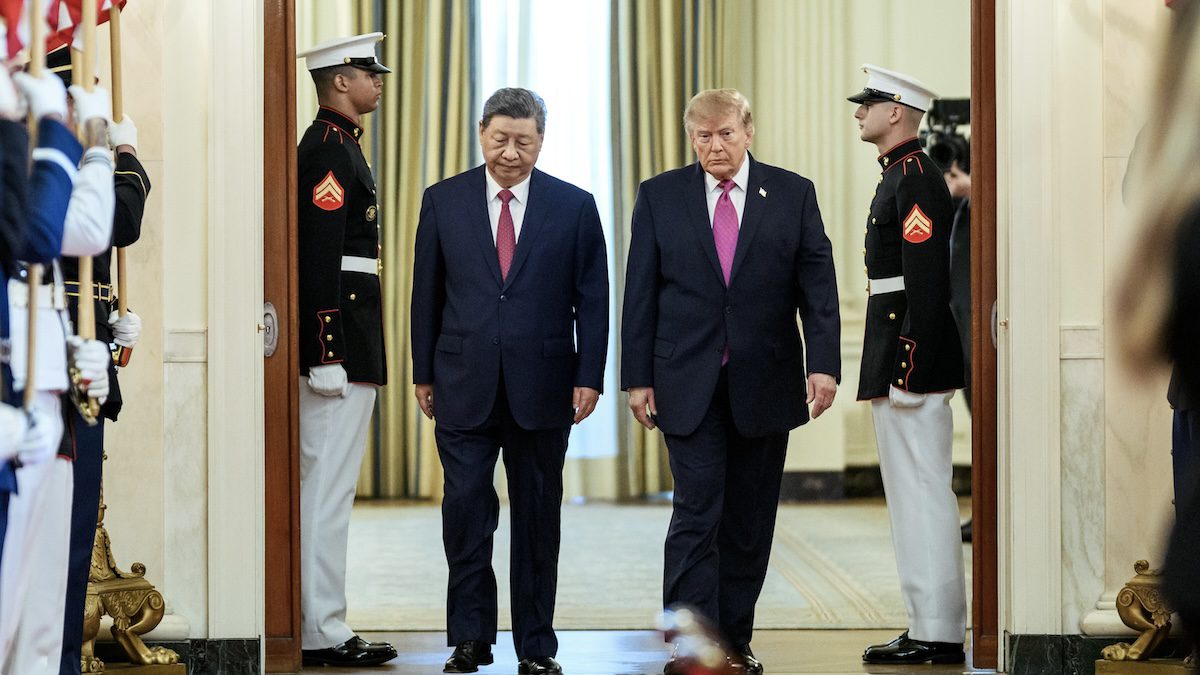
Xi on his DC visit: ‘China and the US should be partners not rivals’

China’s President Xi Jinping concluded his three-day state visit to the US on Friday, September 25, with hopes of enhanced cooperation and partnership between the world’s two largest economies.

Xi arrived in the US on Wednesday and received a large-scale welcome from President Donald Trump. Though this was their third in-person meeting it was Xi’s first state visit to the US in over a decade.

On Thursday, the leaders had a long in-person conversation in the White House and finished the day with a state dinner with 130 guests, including tech executives. Though the US is yet to release its version of the official proceedings, reports indicate they discussed a range of outstanding issues such as the dispute over trade and tariffs, cooperation in Artificial Intelligence, the issue of Taiwan, and the US-Israeli war on Iran. 

During the meeting with Trump, Xi called for strategic stability in the China-US relationship which will benefit both countries and the people around the world, Xinhua reported.  

“China and the US should be partners, not rivals,” Xi said. 

Xi’s statement comes at a time when the two countries are negotiating a longer trade deal after briefly facing each other in a tariff war last year. Both countries agreed to extend their temporary trade truce which halted the tariff war till January to give their negotiators more time.

The so-called Busan Trade Truce was set to expire in November this year.  

Xi hoped that “both sides would stay committed to the principles of mutual benefit and win-win cooperation and promote the sustained, stable and sound development of China-US economic and trade relations.” 

Technology and AI

Successive administrations in the US have characterized China’s advancements in technology and other economic sectors as a threat to American interests and have tried to curb them by restricting its access to technology.

In his attempt to address such apprehensions, Xi proposed that “both sides work towards a relationship featuring cooperation as the mainstay, moderate competition, manageable differences, and the promise of peace.” 

Talking about the competition in the development of Artificial Intelligence (AI), Xi offered increased coordination and cooperation between the countries as a way of mutual benefit. 

While emphasizing that “two sides should maintain human control over AI technologies, uphold people-centered approach and the principle of using AI for good” he proposed greater exchange of information to “prevent any misuse and abuse of AI.”

Read more: The AI frontier asks to be paced: anatomy of a panic

Xi also expressed hope that Chinese companies “are treated fairly in the US” while inviting more US companies to invest in China. “Working together, we can lengthen the list of cooperation and shorten the list of issues” he underlined.

The US has sanctioned or put a large number of Chinese companies, including its AI firms on various watch lists in recent years, after accusing them of working with the Chinese armed forces or being involved in the so-called technology theft.

Notably, however, major US tech and finance executives such as Jensen Huang of Nvidia, Mark Zuckerberg of Meta, Eric Yuan of Zoom, Kelly Ortberg of Boeing, Larry Fink of Blackrock, Sam Altman of OpenAI, Satya Nadella of Microsoft, Sundar Pichai of Google, Jeff Bezos of Amazon, and Elon Musk of SpaceX and Tesla, were present at the state dinner for Xi’s visit hosted at the White House on Thursday, September 24, though no details of cooperation between US and Chinese tech firms have emerged.

Taiwan

Reiterating China’s resolve to “safeguard national reunification and territorial integrity,” Xi expressed hope that the US will “adhere to the correct position on opposing ‘Taiwan independence’ and handle the Taiwan question with caution.”

China has repeatedly accused the US of promoting the separatist cause in Taiwan, despite officially adhering to “one China policy.” The US under Trump has sold or agreed to sell billions of dollars’ worth of weapons to Taiwan in complete disregard of China’s objections.

China has also accused the US and its allies in the region of promoting an arms race by deploying advanced weapon systems close to its borders.

Xi said if the US follows the correct position on Taiwan it “will enable both the countries to lay a solid foundation for their strategic cooperation and the development of their bilateral relationship.”

US-Israeli war on Iran 

China has refused to intervene or get involved in the US-Israeli war on Iran, despite Trump’s repeated calls for them to do so. China has maintained the war was unnecessary and repeatedly warned against its prolongation. It has supported the interim peace deal signed in June under international mediation.

Xi reiterated this position during his visit to the US, expressing hope that both Iran and the US would soon return to the Memorandum of Understanding (MoU) and end the war.

Xi claimed that “China-US cooperation may not solve every problem in the world, but without it, it would be hard to solve many of the world’s problems” and proposed more dialogue and “mechanisms of crisis communication and prevention” between their armed forces.

Read more: No new talks with the US until the previous conditions are met, says Iran

Trump said his meeting with Xi on Thursday was “great” also claiming they have maintained close communication.

Trump also agreed that “continued dialogue” with China is necessary to reach agreement on significant issues.

  •  

US rolls out sanctions against Iranian airlines

China called the latest US threats of secondary sanctions on airline service-providing companies across the world an illegal unilateral measure without any basis in international law. The US said the sanctions would be applied if these companies do not stop providing services to Iranian airlines.

China said they “firmly oppose illicit unilateral sanctions that have no basis in international law and lack UN Security Council mandate,” Guo Jiakun, official spokesperson of its Ministry of Foreign Affairs said during a regular press conference on Wednesday, September 23.

China’s reaction came on the same day the latest US sanctions against Iran went into effect. 

The US Treasury Secretary Scott Bessent has asked companies across the world who are involved in providing services such as refuelling, ticketing, and other kinds of ground support to stop serving Iranian airlines starting at midnight on September 23. If they fail to comply they will be “locked out of the dollar system,” Bessent threatened.

The latest sanctions against its airlines is part of the recently announced US attempt to completely isolate Iran from the global economy in order to pressure its government to re-open the Strait of Hormuz.

Iran has shut down the Strait of Hormuz following the resumption of US airstrikes as well as Washington’s attempts to bypass Iranian control over the waterway in the Persian Gulf since July. Iran has claimed that those American moves were in violation of the peace deal signed under international mediation in June.

The adoption of new sets of sanctions is widely seen as an indication of Washington’s failure to achieve its objectives in Iran militarily, even after seven months of war, which began on February 28. 

Iran has reiterated that no amount of economic coercion will open the Strait of Hormuz. They listed the withdrawal of the US naval blockade, the unfreezing of its international assets, and an end of the war on all fronts in the region as preconditions for opening the Strait. 

Air blockade

While some of the countries in the region cancelled Iranian flights to their airports in fear of US sanctions, Iran claimed most of its international flights remained scheduled and operational. Some countries also decided to close their airspace for Iranian airlines.

Iraq has diverted most of the Iranian flights from its Baghdad airport to Najaf.

If the flights remain suspended for a significant number of countries for a longer duration it would amount to an air blockade on Iran. This will have an effect on thousands of people employed in the aviation sector in the country which is already heavily facing tremendous economic troubles due to existing sanctions 

A prolonged suspension of flights could also impact hundreds of thousands of Iranians who have to travel out of the country for medical or other reasons.

Iran has maintained that unilateral US sanctions are illegal and an “act of terrorism” against Iranian people. It has urged the nations across the world to not succumb to the unilateral actions of the US. 

Chief of Iran’s Supreme National Security Council Mohsen Rezaei, in an interview on Wednesday, warned neighboring countries against submitting to US pressure to shut down Iranian flights, claiming such acts will force Iran to retaliate.

  •  

Press TV condemns Israeli abduction of West Bank correspondent Naqaa Hamed

Iranian news outlet Press TV called the detention of its West Bank correspondent Naqaa Hamed by the Israeli forces an “aggressive terrorist operation” aimed at silencing the truth about its occupation and genocide of Palestinians. It demanded the immediate intervention of the international community for her release.

“The desperate attempt by the Zionist war and security machine to block the flow of free news and boycott structured crimes in the West Bank is clear evidence of the occupier’s fear of independent” reporters “who expose widespread human right violations,” the Press TV statement, published on Thursday, September 17, said.

Naqaa Hamed was abducted by the Israeli armed forces from a checkpoint at Tuqu, near Bethlehem, in the occupied Palestinian territory on September 15. 

She, along with her cameraman, were returning after reporting about rising Israeli settler violence on Palestinians in Masafer Yatta.

One eyewitness, a TRT journalist accompanying Hamed in her car, claimed that they were detained at the checkpoint and made to sit on the ground for 45 minutes while Hamed was taken alone for interrogation.

After the interrogation, cameraman and TRT journalists were let go but Hamed was arrested and sent to an unknown location.

Later it was reported that her detention has been extended until September 23 by an Israeli court.

Though no official confirmation has come forward about the charges against Hamed, Israeli media quoted unidentified military sources claiming her arrest was linked to her alleged cooperation with “the enemy entity,” presumably Iran, and espionage.

Hamed (38), a Palestinian-American and mother of three children, has been subjected to repeated physical attacks by Israeli forces in the last few months. She has also been subjected to a smear campaign on social media. 

According to Press TV, rubber bullets were fired at her when she was reporting near Qalandia camp in December 2025. She was injured again in August this year by an Israeli stun grenade and tear gas fire.

The intimidation and smear campaigns on social media, started by pages affiliated with the Israeli occupation regime, targeted Hamed by questioning her credibility and calling her a part of the “Iranian propaganda machine.” 

Israel is the worst place to be a journalist

Israel has one of the worst records when it comes to killing and arresting journalists. Hundreds of Palestinian journalists have been either killed or arrested by the Israeli occupation forces since the beginning of the war and genocide in Gaza. 

According to various sources Israel has killed over 250 journalists and media workers in the West Bank and Gaza since October 2023. 

According to the Palestinian Prisoner’s Society, currently nearly 40 Palestinian journalists are in Israeli detention, including five women. Almost half of these journalists are kept in prison under the draconian provision of Administrative Detention, which allows the authorities to keep them in jail for an indefinite period without any formal charges or trial.

The Iranian media channel Press TV underlined that Hamed’s arrest by Israeli forces violates international laws about immunity to journalists in war zones. It demanded the UN, its High Commissioner for Human Rights, and other international human rights groups to come out of their “shell of inaction and meaningful silence” and take measures to end Israel’s impunity.

“As long as responsible institutions remain in the shell of silence and inaction, Naqaa Hamed will not be the first, nor the last journalist to be targeted by the illegal actions of the Zionist regime,” the Press TV statement said.

  •  

Descendants of Chinese forced laborers sue Japanese companies for reparations

A group of 50 family members and descendants of wartime forced laborers in China filed a lawsuit against six companies on Wednesday, September 16, demanding compensation for their suffering during the Japanese occupation. 

In their lawsuit at a local court in Hebei, southwest of the capital, Beijing, the group is seeking around $55,000 in compensation for each member, along with an apology published in at least 10 Japanese and Chinese media outlets.

The plaintiffs accuse six Japanese firms of being beneficiaries of the forced labor, causing long-term pain, suffering, and the deaths of their family members, Kyodo News reported. 

According to Kyodo News, the six Japanese firms named in the lawsuit include construction firm Taisi Corp, mining firm Nittetsu Corp, and heavy industry manufacturer IHI Corp. 

Japan occupied large parts of China, the Korean Peninsula, and other parts of Southeast Asia at various times between the last decade of the 19th century to the end of the Second World War.

The Japanese military committed systemic torture, sexual exploitation, forced labor, and other cruelties against Chinese and other Asian peoples during the occupation, all which have been well documented.

Millions had to do forced labor in the territories occupied by Japan, including hundreds of thousands of Chinese people. Some Chinese forced laborers were also sent to Japan to work in mining and other industries. Thousands of these forced laborers were killed due to harsh working conditions and torture inflicted by their employers. 

Compensation and apology for crimes during occupation

The survivors of Japanese atrocities and their descendants have in different moments raised demands for compensation and apologies.

In 2014, a similar lawsuit was filed by hundreds of people in a Chinese court against Mitsubishi Materials Corp and others. The case ended in an out-of-court settlement, with Mitsubishi offering an apology and compensation to the plaintiffs.

In China, survivors cite their lack of faith in the Japanese system as the reason for filing the suit in a domestic court. 

Japanese courts have dismissed all such lawsuits. A 2007 Japanese Supreme Court’s judgment stated that all such claims were settled when Japan and China established their diplomatic relations in 1972.

However, China has maintained that the 1972 documents did not denounce an individual’s right to seek legal action. China has also often invoked Japan’s failure to acknowledge its repressive and atrocious colonial period and apologize to its victims in the region.

Reacting to the news on Wednesday, the official spokesperson of China’s Ministry of Foreign Affairs Guo Jiakun underlined that “forced recruitment and enslavement of laborers is one of the serious crimes committed by Japanese militarists during their foreign aggression and colonial rule.”

He urged “Japan to look history in the eye, reflect on past crimes, earnestly heed and respond to the just calls and legitimate claims of the people of victims countries in Asia, and properly resolve relevant issues left over from history with a responsible attitude.”

  •  

China and Russia oppose deployment of US weapons to space

After the US officially admitted it deployed weapons into outer space earlier this week, Russia and China expressed concerns, calling it a threat to international peace and demanding the immediate stoppage of all such activities.

During a regular press conference on Tuesday, September 15, Guo Jiakun, official spokesperson of China’s Ministry of Foreign Affairs, said that “China opposes any arms race in outer space or any attempt to weaponize it and turn it into a warzone.”

He further said that “China stands for the peaceful use of outer space and keeping it safe” and urged the US to “stop expanding military build-up in outer space, and uphold global strategic stability with concrete actions.”

Russia’s Foreign Ministry Spokesperson Maria Zakharova said that the US weapons deployment is a threat to international security and puts a question mark on the stability in outer space. 

“Russia has for many years been consistently drawing the attention of the global community to the grave consequences for international security that Washington’s destructive course may lead to,” Zakharova said.  

She said her country seeks “urgent practical measures to prevent arms race in outer space” and reiterated Russia’s push for a “multilateral legally binding instrument banning the deployment of weapons in outer space.” 

Though it has long been a subject of speculation, a couple of US military officials, earlier this week, admitted that its military is operating weapons deployed in outer space.  

The admission was made by US Air Force Secretary Troy Meink on Monday during a conference. He said that the US “has on-orbit space control weapons capable of defending the joint force against hostile adversary action.”

Meink’s statement was substantiated by US Space Force chief Douglas Schiess, who a day later, on Tuesday, said that in the coming years the US is even planning to increase the number of orbital weapons already used by the members of his military unit.

Urgent need of legal prohibitions

Underlining the threat that the deployment of weapons in outer space poses, several countries, including Russia and China, have been calling for an international treaty to prevent any arms race in outer space for decades now.

The existing instrument, the UN Outer Space Treaty (1967) makes clear that “outer space is not subject to national appropriation by claims of sovereignty, by means of use or occupation, or by any other means.”

It also prohibits the deployment of “nuclear weapons, or other weapons of mass destruction in orbit or on celestial bodies or stationing them in outer space in any other manner,” but it says nothing about the deployment of conventional weapons, despite declaring it should be used for peaceful purposes only.

None of the US military officials spoke about the nature of weapons deployed by the US in outer space.

Though only a handful of countries have the technological capability to explore outer space in any significant way, several countries have used satellites for military and war purposes for decades now.

The US has a dedicated space force which has recently held exercises related to possible military conflicts in space.

The deployment of weapons and claims of exclusivity, apart from increasing possibilities of an arms race between the existing powers in space; the US, Russia, and China, may also make the rest of the world more insecure.

Zakharova said that Russia is planning to submit a proposal for the creation of an international instrument legally prohibiting all weapon deployment in outer space during the upcoming annual UN General Assembly session.

She asked for more countries to join the Russian initiative and co-author the treaty document.

  •  

No new talks with the US until the previous conditions are met, says Iran

Secretary of Iran’s Supreme National Security Council Mohsen Rezaei refuted United States President Donald Trump’s latest claims about his country seeking fresh talks. He reiterated that there will be no new talks with the US until it implements the conditions already agreed upon.

“Dont get distracted by the US president’s mix signals-from ‘no negotiations’ to ‘we are ready to talk.’ The stakes around oil and the straits have changed. Damage control won’t stop what’s coming,” Rezaei said in a post on X on Tuesday, September 15.

Rezaei was responding to Trump’s latest claims made on his social media post about Iran seeking a deal “quickly and badly.” Trump called Iran a “failing nation” and said he will decide “whether or not the US will choose to engage.”

Iranian President Masoud Pezeshkian, during his visit to the 18th BRICS Summit in New Delhi earlier this week, also said there is no need for fresh talks with the US until the conditions in the Islamabad Memorandum of Understanding (MoU), signed between the two countries in June, are implemented.

Iran and Oman are seeking regional consensus

On Monday, Iran claimed it had finalized an agreement with Oman regarding the management of navigation through the Strait of Hormuz and said it’s details would be announced soon. 

“The understanding between Iran and Oman, as two littoral states, has been finalized. In consultation with Oman, we will decide on the next step, including how to announce or register the understanding,” official spokesperson of Iran’s Ministry of Foreign Affairs Esmail Baghaei said in a press conference on Monday, September 14.

He also claimed that a scheduled discussion over the issue with the Persian Gulf countries on Monday was canceled at the last minute after Saudi Arabia’s intervention. He called the Saudi move “ill-advised” and a lost opportunity.

It is speculated that the Saudi intervention is linked to recent attacks carried out by Yemen’s Ansar Allah forces inside its territories, hitting a crucial oil pipeline and King Khalid Air Base, along with other infrastructure.

Ansar Allah claimed its attacks inside Saudi Arabia were in retaliation to hundreds of Saudi airstrikes and over a decade-long blockade of the country.

Read more: Over 300 killed in Yemen in clashes between Ansar Allah and Saudi-backed forces

Ansar Allah has also announced it will target Saudi ships carrying crude through the Bab-al Mandeb in the Red Sea.

In the past, Saudi Arabia had accused Iran of supporting Ansar Allah militarily. Iran has denied such claims, calling Ansar Allah an ally with its own independent agenda. 

Earlier, both Iran and Oman had claimed that the regional meeting on Monday was not postponed for a later date, with Omani Foreign Minister Badr Albusaidi saying the delay was in the “interest of consensus.”

The talks for an agreement over the joint management of traffic through the Strait of Hormuz with Oman began in June, after Iran proposed it.

On August 25, Iran and Oman announced an initial agreement on the establishment of a temporary joint maritime corridor and a joint-mine clearance project.

The agreement, once finalized, is expected to “restore safe navigation” through the Strait while preserving the sovereignty and sovereign rights of coastal states, Press TV reported.

Strait of Hormuz is closed

On the evening of September 14, a super tanker hit a mine after trying to cross the Strait of Hormuz through what Iran calls the “illegal route” near Omani waters, the Islamic Revolutionary Guard Corps (IRGC) said in a statement.

Later it was reported that several of the crew members of the said ship were missing.

The IRGC reiterated its warnings to all the ships in the Persian Gulf to refrain from using the US-backed Omani route, repeating the claims about the Strait of Hormuz being shut and under its full control.

The IRGC has repeatedly questioned US President Donald Trump’s claims of the restoration of free navigation through the Strait, calling them lies. 

The Strait, through which nearly 20% of the global energy trade flowed before the US-Israeli war on Iran began in February has seen a massive fall in traffic, causing disruptions in energy supplies after the Iranians restricted traffic in retaliation.

Oil prices have crossed USD 100 per barrel several times since then. They again crossed the mark earlier this week due to the renewed escalation and fear of a blockade of oil trade through the Bab-al-Mandeb, after Ansar Allah’s warnings of targeting Saudi ships.

Nearly 12% of global trade in energy happens through the Bab-al-Mandeb. 

On Monday, Iran reiterated that the US is solely responsible for the global impacts caused by the blockade of oil trade in the region.

The US war and naval blockade against Iran are the direct reasons for the closure of the Strait, Ali Bahreini, Iran’s permanent representative at Geneva, said during a UN Trade and Development (UNCTAD) meeting asking the international community to acknowledge the fact that such unilateral actions are harmful for the global economy.

Iran assured that it will lift the blockade on the Strait of Hormuz the moment the US announces the end of its war and lifts the naval blockade and economic sanctions on Iran.

  •  

BRICS nations call for end of US blockade on Cuba, condemn Israeli and US violations in Iran 

The 18th BRICS summit concluded in New Delhi on Sunday, September 13, with the unanimous adoption of the New Delhi declaration condemning wars in West Asia and reiterating calls for a more democratic and multilateral world order. 

This year marks the 20th anniversary of the formation of the grouping with the core objective of democratizing global governance and promoting multilateralism and cooperation among the countries of the Global South.

This years’ summit was held around the theme of “Building for Resilience, Innovation, Cooperation and Sustainability.”

The summit, hosted by Indian Prime Minister Narendra Modi, was also attended by Chinese President Xi Jinping, Russian President Vladimir Putin, Iranian President Masoud Pezeshkian, South African President Cyril Ramaphosa, Indonesian President Prabowo Subianto among others.

Several heads of international organizations, including the secretary general of the UN, Antonio Guterres also attended the summit.

In the context of ongoing US attempts to outright control the region in complete disregard to the independence of the countries and the international law, the BRICS joint declaration underlined that “the character of Latin America and the Caribbean as a zone of peace, built on mutual respect, peaceful settlement of disputes, and non-intervention” must be respected.

It particularly expressed “deep concern on the situation relating to Cuba due to the tightening of unilateral [US] blockade measures against the country, their adverse effects on the Cuban economy, energy supplies and the worrying humanitarian impact on the Cuban people,” and demanded the immediate end of all such political and economic measures in accordance with UN General Assembly resolutions.

The 11 members of the BRICS (Brazil, Russia, India, Iran, Indonesia, China, Ethiopia, Egypt, UAE, and South Africa with Saudi Arabia yet to formally join) represent over 30% of the global economy and nearly half of the world’s total population. 

Israel and US must respect international law  

Though the joint declaration did not explicitly name the US and mentioned Israel once, it expressed great concern over the wars in Iran, Palestine, and Lebanon, demanding the aggressors respect international law and resolve all standing conflicts through the multilateral forums and diplomacy.

It also expressed serious concerns over “deliberate attacks on civilian infrastructure and peaceful nuclear facilities under full safeguards of the International Atomic Energy Agency (IAEA)” in Iran, calling them a violation of international law. 

The joint US-Israeli aggression, both in June 2025 and since February this year, targeted several civilian infrastructure, assassinated political figures and bombed civilian nuclear facilities in Iran in complete violations of existing laws and norms endangering massive human destruction.

The joint declaration also underlined the need to ensure the smooth flow of “global trade, supply chain and energy” in accordance with international law.

Both Iran and the UAE, which hosts US bases used for attacks on Iran, are full members of BRICS. The UAE has condemned the Iranian retaliation to US bases in the country and recently announced the suspension of all trade and economic relations with Iran. 

The Abu Dhabi crown prince Sheikh Khalid Bin Mohamed bin Zayed Al Nahyan, representing his country at the summit in New Delhi, had a brief conversation with Pezeshkian on the sidelines.

Read more: Iran reverses the asymmetry

The BRICS nations also criticized the continued violations of the ceasefire in Gaza, declared in October last year, by the Israeli forces. It demanded a halt of the plan for “forced displacement of Palestinians from Gaza” and asked Israel to fully respect the human rights of Palestinians. 

It reiterated its support for a two-state solution within the 1967 borders and full membership for the Palestinian state in the UN.

BRICS nations also condemned the continued violations of the ceasefire and sovereignty and territorial integrity of Lebanon by Israel, demanding the withdrawal of all its forces from occupied Lebanese territories.

Against unilateralism and attempts to undermine multilateral institutions

BRICS nations reiterated their joint commitment to “reforming and improving global governance” including the UN and global financial and trade institutions by promoting a more just and equitable, representative and accountable international and “multilateral system in the spirit of extensive consultation, joint contribution and shared benefits.”

BRICS also condemned the attempts to “unilaterally undermine the work of global multilateral institutions and impair the implementation of their respective mandates” in a likely indication to the recent US attacks on the UN and International Criminal Court (ICC). 

In the context of US attempts to “economically isolate” Iran and threats of secondary sanctions on countries who do not comply with its measures, its sanctions on Cuba and various other countries, the BRICS joint declaration condemned the repeated invocations of all forms of “unilateral coercive measures,” calling them contradictory to international law.

Such measures “have far reaching negative implications for human rights, including the rights to development, health and food security” with disproportionate effects on poor and vulnerable sections of the society, the declaration noted. 

Several leaders, including Chinese President Xi Jinping, called for greater unity and cooperation among the BRICS members and the countries of the Global South to pave the way for the democratization of the international order and greater mutual economic development. 

Xi called the Global South the key driver of world multipolarity, asking them to jointly defend the rule of law in international politics.

The BRICS joint declaration also called for a greater collective push for the achievement of the UN Sustainable Development Goals by 2030 and named the global eradication of poverty as one of its central objectives.

  •  

Iran calls for the end of all forms of external interference in Yemen after reports of US military involvement

Following a fresh escalation in the war in Yemen over the last few days and reports of possible US involvement, Iran called for an end to all forms of external interference in the country and reiterated the need for the resumption of Yemeni-Saudi dialogue to end the decade-long conflict.

Iran “reiterates its principled and steadfast position regarding the necessity of respecting Yemen’s independence, national sovereignty and territorial integrity, and the need to end the illegal and inhuman blockade of the country,” its Ministry of Foreign Affairs said in a statement on Friday, September 11.

The statement followed the news of Saudi Arabia seeking fresh assistance from the US against the Ansar Allah-led Yemeni forces, who captured various strategic locations around the country’s Red Sea coast earlier this week in a fresh escalation in fights with Saudi-backed forces.

Saudi Arabia has already carried out over 60 air strikes in Yemen since the outbreak of the recent fights. On Thursday, Crown Prince Mohammed Bin Salman reportedly called President Donald Trump asking for US military intervention as well.

The US has previously supplied key military assistance and weapons to the Saudi Arabia-led coalition in the war against Ansar Allah. It was withdrawn during the Joe Biden administration briefly, after a massive popular campaign against US involvement.

The US has bombed Yemen on several occasions in the past months, citing its alleged attacks on “freedom of navigation” in the Red Sea during the Yemeni campaign against Israel in support of the Palestinian people in Gaza.

US military involvement in Yemen

On Thursday, US officials admitted the US was ready to assist Saudi Arabia and forces backed by it in Yemen once again in order to “protect its core national security interest” in the region.

The US has once again defined its core interest in the region as the “protection of freedom of navigation” in the Red Sea through which around 12% of global trade passes.

The US claims Ansar Allah is acting as a proxy of Iran and sees the escalation in Yemen as an Iranian attempt to block oil trade through the Red Sea as well, after its ongoing blockade in the Strait of Hormuz.

This is despite Ansar Allah rejecting such media reports and assuring that their latest campaign does not threaten ship movements through the Bab al-Mandab.

Iran maintains that Ansar Allah is not a proxy but an independent force and an ally.

The US has already deployed over a 100 military advisors to Saudi Arabia to assist it in the war, according to reports in US media.

Saudi Arabia has imposed a comprehensive land, sea, and air blockade on Yemen since an international coalition led by it started the war in 2015. The blockade prevented the flow of crucial humanitarian supplies to the country causing a massive crisis, including hundreds of thousands of Yemenis dying due to the lack of food and medicine during the COVID outbreak.

The Saudi blockade even threatened flights carrying patients and people trapped outside the country from landing at Sanaa airport. The only exception was during a short period in 2022 when a pause in the war after rounds of negotiations facilitated by the UN had temporarily provided some relief.

Ansar Allah announced the end of the 2022 ceasefire following Saudi Arabia’s attacks on Sanaa airport in July, threatening an Iranian aircraft with diplomats demanding the immediate end of the decade-long blockade.

Noting that the people of Yemen have a right to “a dignified life free from pressure, intimidation and oppressive blockade,” Iran demanded the immediate resumption of the dialogue on the roadmaps already agreed upon in the past.

Iran also offered its offices to facilitate the Yemeni-Saudi dialogue.

  •  
❌