❌

Reading view

As Trump Weighs Joining War on Houthis, A Throwback To Yemen Bombing That Shook U.S. Navy! 

Barely weeks after rejecting Saudi Arabia’s request to join the air campaign against the Houthi rebels in Yemen, US President Donald Trump is rethinking his decision and has suggested that he may join the war against the Iran-backed Houthis.

The latest Houthi strikes on Saudi targets have revived a long-running American dilemma in Yemen — one that stretches back to the October 2000 bombing of the US Navy warship, which killed 17 U.S. sailors.

At least 25 people have been killed in Houthi drone and missile strikes on Saudi Arabia’s airports in recent weeks.

Separately, Houthis have occupied key port cities on Yemen’s Red Sea coast, threatening to choke the Bab El-Mandeb Strait, another key oil shipping route in the Middle East.

The rising Houthi attacks on Saudi Arabia, a key US ally in the Middle East, the threat of choking another global oil-supply route ahead of the US midterm elections, and the death of an American citizen have created a dilemma for President Trump on whether to open a new front in the Middle East.

Following the strike on Riyadh airport, Trump suggested that the US might join the Saudi war against the Houthis. “We may. We’re gonna look at it … We’ll make a decision. We move very quickly,” Trump replied on October 12 when asked whether Washington is considering joining the Saudi War against the Houthis.

Notably, last month Trump rejected the Saudi Crown Prince Mohammed bin Salman’s request to join the Kingdom’s war against the Houthis.

However, the decision to open a new front against the Houthis will not be an easy one, as Trump realizes that the war in Yemen could become another quagmire for the US when it is already tied down in the Iran War since February this year.

Operation Decisive Storm to Operation Rough Rider

Trump launched Operation Rough Rider against the Houthis in March 2025, barely two months after taking the oath in January last year. The U.S. launched a major air and naval campaign after the Houthis resumed Red Sea attacks following the breakdown of a Gaza ceasefire.

Over the course of the next three months, the US struck over 1000 targets in Yemen, including radar systems, air defenses, missile and drone launch sites, manufacturing facilities, and some leadership targets.

However, the US abruptly ended the campaign in May, after agreeing to an Oman-brokered ceasefire. Houthis agreed to stop attacking U.S. vessels; the US halted strikes.

Trump later described the deal as Houthis “capitulating” under pressure; however, analysts disagreed as the ceasefire agreement did not cover Israel, the country that participated with Washington in bombing Houthi targets.

A New York Times investigation later revealed that Trump agreed to the ceasefire as the costs of the war exceeded $1 billion in munitions alone.

The US also lost three F/A-18 Super Hornet fighter jets and more than 15 MQ-9 Reaper drones in the campaign; however, it did not substantially weaken the Houthi position in Yemen.

However, the US involvement with Yemen goes much further back.

The USS Cole Bombing in Yemen

The US’s two-decade-long ‘War on Terror’ began after the 9/11 al-Qaeda attacks in 2001.

However, that was not the first time that Osama bin Laden-led terrorist group had attacked Americans or U.S. interests.

Just one year earlier, on October 12, 2000, al-Qaeda carried out a suicide boat attack on the USS Cole, a US Navy guided-missile destroyer, while it was refueling in the port of Aden, Yemen.

The blast killed 17 American sailors and wounded nearly 40 others. It also tore a roughly 40-foot-wide hole in the ship’s hull near the waterline.

The crew’s damage-control efforts saved the vessel.
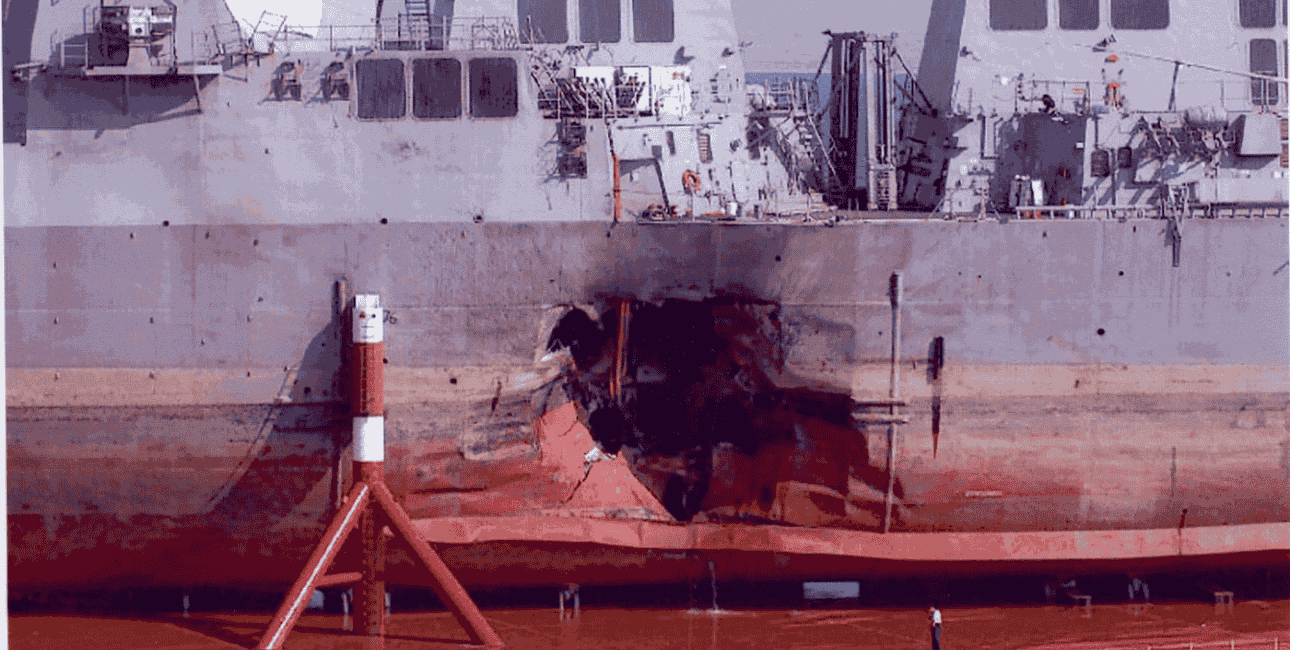
A picture of USS Cole after the bombing in October 2000. Credits US Government.

The US destroyer, en route to the Persian Gulf, was making a prearranged fuel stop at the port of Aden, Yemen, when the attack occurred.

Before al-Qaeda used civilian airliners to strike the World Trade Center and the Pentagon, it used a small inflatable boat as a suicide bomb to strike the US Navy destroyer.

In fact, the USS Cole bombing was al-Qaeda’s second attempt to target a US Navy vessel near a Yemeni port.

The investigation revealed that the USS Cole bombing followed an unsuccessful attempt on January 3, 2000, to bomb another US Navy ship, the USS The Sullivans.

In this earlier incident, the terrorist boat sank before the explosives could be detonated; however, the boat and the explosives were salvaged. The Navy refitted the boat, tested the explosives, and reused them in the USS Cole attack.

The extensive FBI investigation ultimately determined that members of the al Qaeda terrorist network planned and carried out the bombing.

By the end of 2000, Yemeni authorities had arrested several suspects, including Jamal Muhammad Ahmad Al-Badawi and Fahad Muhammad Ahmad Al-Quso, two of the alleged masterminds of the USS The Sullivans and the USS Cole plots.

Al-Badawi and Al-Quso, known al Qaeda operatives who trained in al Qaeda camps in Afghanistan during the 1990s, were later killed in separate U.S. airstrikes.

However, the US failed to anticipate that such suicide attacks could be replicated on a much grander scale by using aircraft to attack US buildings.

It also failed to infiltrate al-Qaeda ranks to uncover plans for further attacks on the US.

Less than a year after the USS Cole bombing, al-Qaeda struck again, this time on US soil, executing the deadliest terror attack inside the US in history.
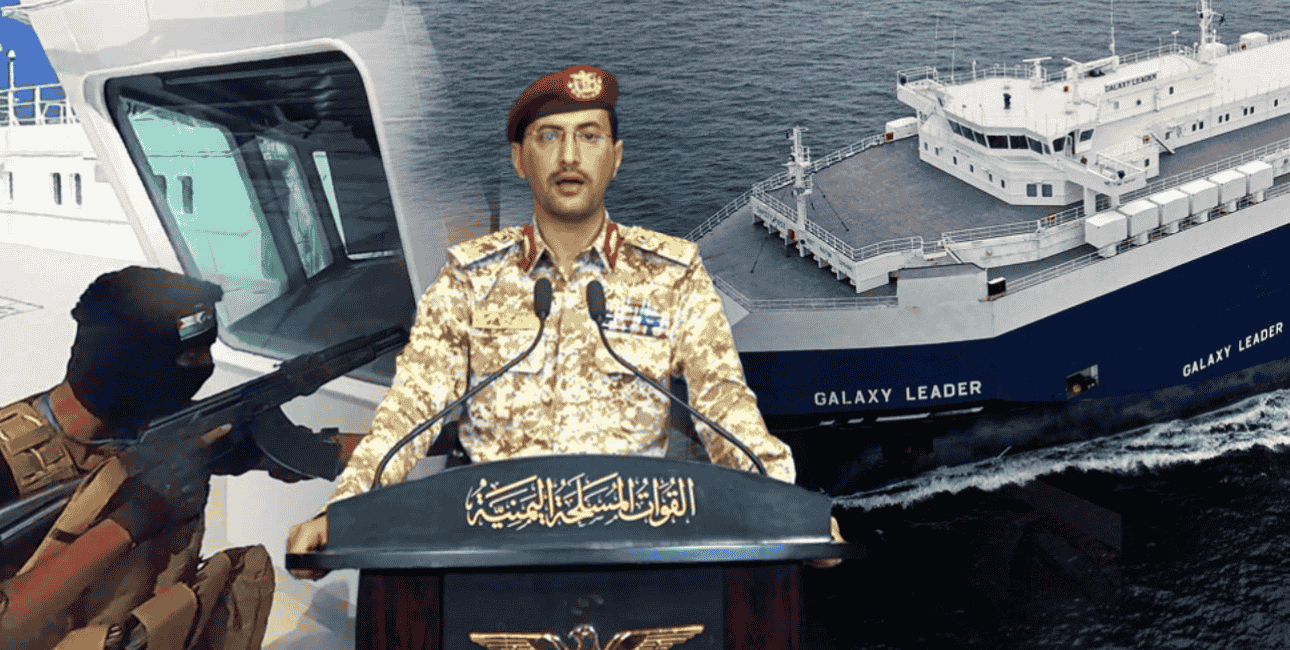
Image Credits: Gulf International Forum.

The Cole attack was part of al-Qaeda’s escalating campaign against the US after the 1998 East Africa embassy bombings.

It demonstrated al-Qaeda’s ability to strike a major U.S. military target overseas and served as a powerful propaganda victory.

The 9/11 Commission Report noted that the USS Cole attack “galvanized al-Qaeda’s recruitment efforts.”

Bin Laden ordered a propaganda video featuring a reenactment of the blast, training-camp footage, and calls to jihad.

The 9/11 Commission Report also noted that the planning for both the USS Cole attack and the 9/11 attacks took place during al-Qaeda’s summit in Kuala Lumpur in January 2000.

In retrospect, it’s clear that the USS Cole bombing was al-Qaeda’s warning to the US that more such attacks are coming; however, Washington failed to read the warning.

Yemen, in fact, was a major base for al-Qaeda before the rise of the Ansar Allah movement (precursor to the Houthis) in the early 2000s.

Osama bin Laden’s family also came from Yemen’s Hadhramaut region, and he saw the country as strategically important because of its weak central authority, remote tribal areas, and geography.

Al-Qaeda in Yemen was also responsible for the 1992 Aden hotel bombings targeting hotels used by US Marines en route to Somalia.

Aden hotel bombings were one of the first al-Qaeda terrorist attacks against the US.

In the 1990s and early 2000s, it was al-Qaeda in Yemen, and now it’s the Houthis; Yemen has been serving as a base for anti-US activities in the Middle East for over three decades now.

  • Sumit Ahlawat has over a decade of experience in news media. He has worked with Press Trust of India, Times Now, Zee News, Economic Times, and Microsoft News. He holds a Master’s Degree in International Media and Modern History from the University of Sheffield, UK. 
  • He can be reached at ahlawat.sumit85 (at) gmail.com

The post As Trump Weighs Joining War on Houthis, A Throwback To Yemen Bombing That Shook U.S. Navy!  appeared first on EURASIAN TIMES.
  •  

U.S. F-16 ‘Viper’ Jets Create New Problems For Taiwan — Aircraft Arrive, But Trained Fighter Pilots Are Quitting

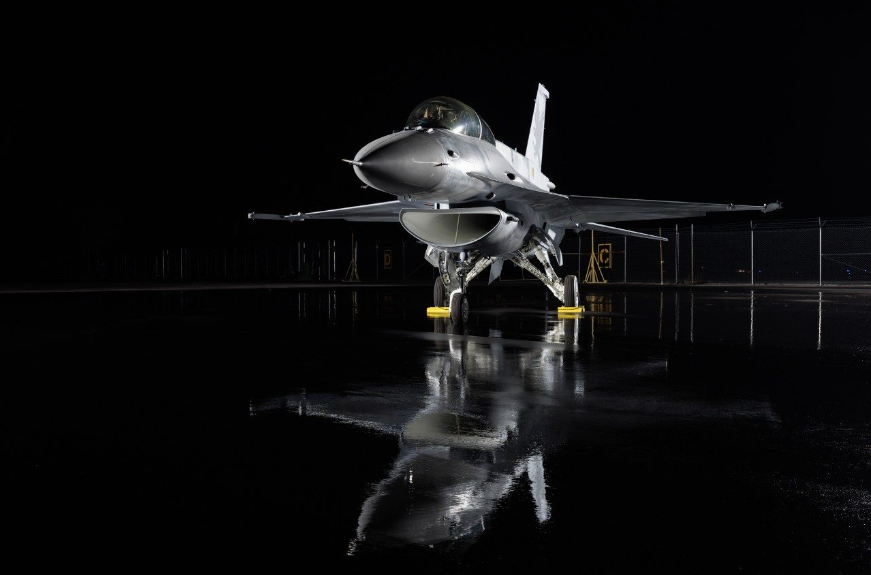
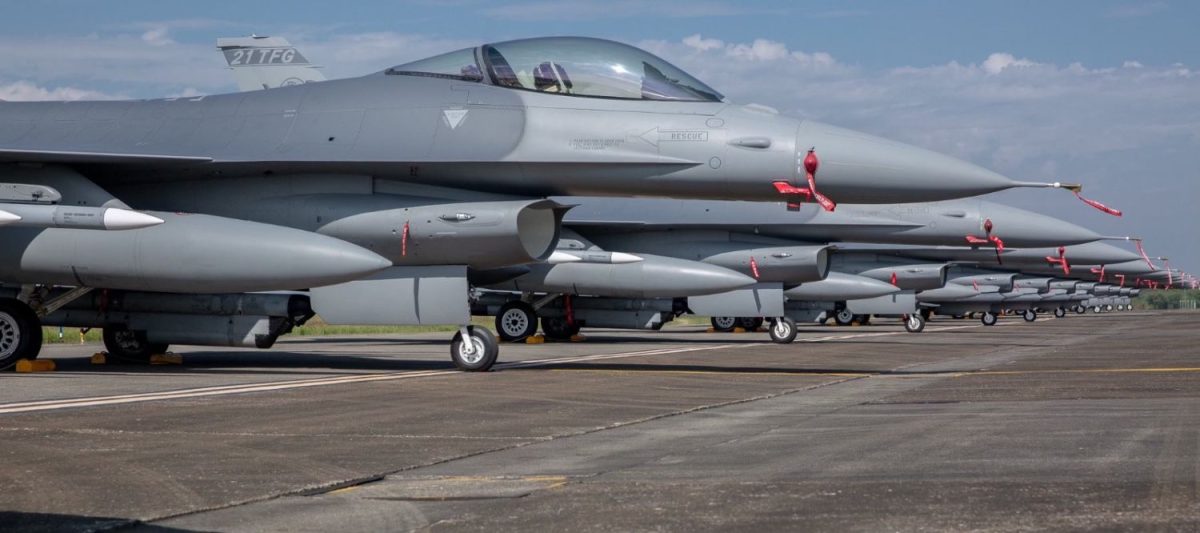
After years of delays and missed timelines, Taiwan recently received its first two F-16V (Viper) fighter jets from the US. Despite the arrival of two cutting-edge jets, Taipei’s problems may have just begun.

The two jets are part of a US$8 billion deal for 66 F-16Vs approved in 2019 during US President Donald Trump’s first term.

Taiwan was originally scheduled to receive the first new F-16V Block 70 fighter jets in 2023, but severe production and software-related delays pushed delivery back nearly three years.

Lockheed is expected to deliver all 66 F-16V Block 70 jets by 2028; however, Taiwan is still negotiating with authorities to finish the deliveries by the end of next year.

Taiwan has already upgraded 140 of its F-16A/B Block 20 fighter jets to the advanced F-16V (Viper) standard under the US$4.5 billion modernization initiative, the Peace Phoenix Rising program, completed in December 2023.

When Lockheed Martin delivers the 66 new jets by 2028, the Taiwanese Air Force will have more than 200 F-16 Viper fighter jets, making it the largest Viper-standard fleet in the Indo-Pacific region.

The Challenge

However, this large F-16 Viper fleet will help Taiwan deter China only if the country has experienced, trained pilots to fly them, which seems like a problem right now, as the country is struggling to find new fighter pilots and retain experienced ones.

To tackle fighter pilot shortages, Taiwan’s defense ministry now plans to allow military pilots to serve until age 58.

Under the plan, pilots could serve until they turn 58, up from about 48 for lieutenant colonels and 52 for colonels, extending their current service limits of 26 and 30 years, respectively.

Effectively, lieutenant colonels will get a 10-year extension, and colonels will get a six-year extension.

After 0-for-8 Tailhook Failures, F-35C Completes Landmark Arrested Landing Aboard USS John F. Kennedy

Taiwan believes a longer service period will attract new talent, help retain experienced fighter pilots, and address chronic pilot shortages in the air force.

The Taiwanese Air Force would also create 72 additional posts for highly qualified lieutenant colonel and colonel pilots with at least 14 years of service, allowing them to keep their rank and focus on flying rather than command or administrative duties.

These 72 additional posts would be outside the regular personnel establishment, meaning they would not take positions from other officers or have to assume command roles.

“Their job would simply be to fly,” Koo said.

They would also help train and mentor younger pilots, he added.

These changes – allowing fighter pilots to serve longer, creating additional posts so that they can focus exclusively on flying, and reducing their administrative and command duties – are meant to retain fighter pilots in the Air Force when many of them are taking voluntary premature retirement to pursue more lucrative and less stressful careers in civilian airlines.

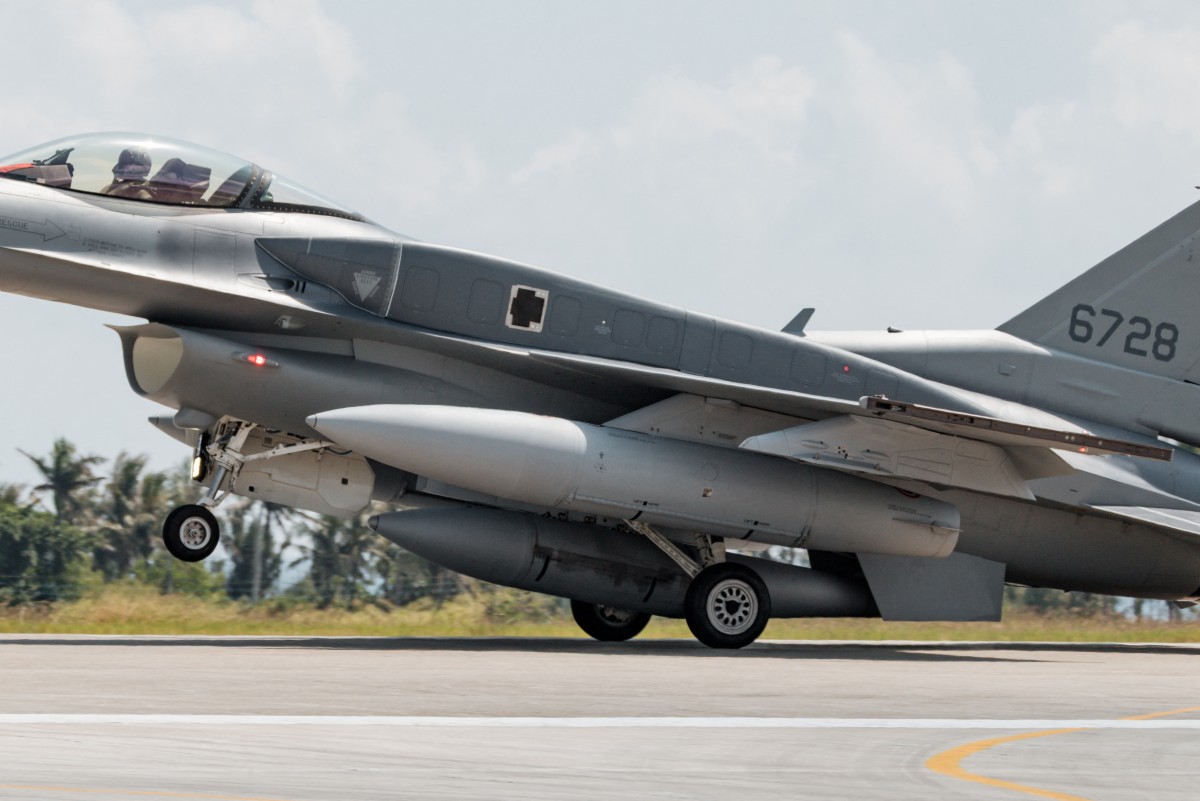
File Image: F-16V

The Executive Yuan in Taipei is currently considering the defense ministry’s proposals.

Defense Minister Wellington Koo Li-hsiung said earlier this week that the arrangement was designed to keep experienced pilots in uniform when many faced a choice between remaining in the military and pursuing longer, potentially more lucrative careers with commercial airlines, the Hong Kong-based South China Morning Post reported.

Notably, civilian airline pilots can fly until age 65, giving Air Force fighter pilots a strong incentive to switch while they’re still young.

As mentioned earlier, before the changes, lieutenant colonels in Taiwan could fly fighter jets until age 48 and colonels until age 52, meaning they could fly 13 to 17 years longer in commercial airlines.

Europe Is Rearming — and U.S. Wall Street is Writing the Checks, Including GE’s Nearly $12 Billion Deal

Extending their service term until age 58 will narrow this gap considerably.

“If they can serve until 58, the gap with civilian airline pilots, who can fly until 65, will not be that large,” Koo told lawmakers in the parliament.

The plan would still require annual health checks and other regular reviews, the minister said. Officers who failed the tests could no longer continue flying.

He said 57 air force pilots had retired so far this year, broadly in line with previous years but fewer than last year. All had completed the minimum required service period.

Defense Minister Koo also underlined that the post-pandemic expansion in commercial airlines has created a lucrative market for pilots, which is making it difficult for the Air Force to retain its fighter pilots.

As a result, many fighter pilots apply for voluntary premature retirement once they reach the minimum service age (20 years), well before the maximum service period for Air Force pilots: 26 years for lieutenant colonels and 30 years for colonels.

The defense ministry proposals also highlight how air forces worldwide place a higher premium on retaining experienced fighter pilots than on recruiting and training new ones.

Recruiting and training new pilots is expensive, time-consuming, and requires lots of effort and resources.

The defense ministry proposals also highlight that air forces worldwide place a higher premium on retaining experienced fighter pilots than on recruiting and training new ones.

These proposals to retain experienced fighter pilots come even as Taiwan has met its recent targets for recruiting new pilots.

The ministry said pilot recruitment reached 96.2 percent of its target in 2024, 112 percent in 2025, and 98.6 percent in 2026.

It also reported that the air force currently has an 87.8 percent personnel fill rate.

Experienced aviators, however, possess accumulated knowledge of aircraft systems, combat tactics, and operational procedures that newly trained pilots cannot easily replicate.

Retaining experienced fighter pilots is even more pressing, as Taiwan will receive over 60 new F-16V fighter jets in the next two years.

Notably, the Block 70 F-16V is an upgraded variant of the F-16 jets the Republic of China (another name for Taiwan) Air Force (RoCAF) has flown for nearly 30 years.

Taiwan first ordered 150 F-16 jets in the 1990s and received the first Block 20 fighters in April 1997.

It still has nearly 140 of these older F-16 jets, now upgraded to the Viper standard.

Nearly 200 U.S. Bradley Fighting Vehicles Lost in Ukraine War — GDLS Displays Wolf XM30 Scale Model as Army Tests Successors

As a result, many of Taiwan’s fighter pilots already have years of experience flying these jets. This experience could be invaluable as the country starts integrating new F-16 Viper jets into its air force.

Taiwan plans to assign at least 100 fighter pilots to its fleet of 66 new F-16 Viper jets. The ministry informed that the air force had increased pilot positions and training in preparation for the new aircraft.

The first two of the 66 F-16V Block 70 fighters landed at Chihhang Air Base on October 2.

Koo said 63 of the 66 aircraft had entered production, including six that had reached the flight-test stage.

Another factor putting pressure on the RoCAF is almost daily violations of Taiwanese airspace by China’s People’s Liberation Army Air Force (PLAAF).

For instance, Taiwan’s Ministry of National Defense (MND) reported 181 violations of Taiwan’s ADIZ in September alone. Responding to these airspace violations is taking a toll on the RoCAF’s staffing ratio.

These near-daily PLAAF violations mean the RoCAF must keep aircraft and pilots ready at all times.

Asked about pilot fatigue from near-daily PLAAF airspace violations, Air Force Chief of Staff Lieutenant General Lee Ching-jan said the air force had moved away from scrambling fighters to shadow PLA aircraft one-for-one.

Top USAF General Reveals NATO Plan to Fight Russia — But it is Designed for Containment, Not Decisive Defeat

Instead, Taiwan was using a combination of fighters already on patrol, naval vessels, and land-based missile systems to monitor and respond to PLA activity, reducing strain on both pilots and aircraft, he added.

It remains to be seen whether Taiwan’s government will accept the proposals and what impact they would have on retaining experienced pilots in the air force.

  • Sumit Ahlawat has over a decade of experience in news media. He has worked with Press Trust of India, Times Now, Zee News, Economic Times, and Microsoft News. He holds a Master’s Degree in International Media and Modern History from the University of Sheffield, UK. 
  • He can be reached at ahlawat.sumit85 (at) gmail.com

The post U.S. F-16 ‘Viper’ Jets Create New Problems For Taiwan — Aircraft Arrive, But Trained Fighter Pilots Are Quitting appeared first on EURASIAN TIMES.

  •  

Prelude to Saudi-Houthi War: When 9-Nation Coalition Led by Saudi Arabia Bombed Yemen With U.S. Support

The Houthis (Ansar Allah) attacked Saudi Arabia’s King Khalid International Airport in Riyadh on October 10, killing at least 13 people and injuring over 300, the deadliest attack on the kingdom in more than a decade, forcing authorities to suspend operations at the airport.

This was not an isolated incident.

Since the fighting resumed between Saudi Arabia and the Iran-backed group in July this year, Houthis have attacked at least five Saudi airports, including King Abdullah bin Abdulaziz International Airport in Jizan, Abha International Airport, Najran Airport, King Khalid International Airport in Riyadh, and King Fahd International Airport in Dammam.

So far, at least 20 people have been killed in these attacks, and hundreds more have been injured, apart from damage to runways, terminals, and aircraft.

Just the King Khalid International Airport in Riyadh has been attacked three times this week. The two previous attacks on King Khalid Airport this week killed ⁠four and caused heavy damage to a Saudi commercial plane parked on the tarmac.

The Houthis, in fact, have declared the whole of Saudi airspace as “a zone of military operations,” saying airlines should avoid flying in the country.

Saudi Arabia operates one of the Middle East’s most extensive, multi-layered air-defense networks. Its upper tier includes US-supplied THAAD (Terminal High Altitude Area Defense) alongside Patriot batteries, South Korea’s Cheongung-II AD system, and improved HAWK launchers.

It also fields French Crotale SAMs, Avenger systems with Stinger missiles, anti-aircraft guns, and Silent Hunter laser systems supplied by China.

The Houthis are also enforcing a naval blockade of Saudi Arabia by choking the Bab-el-Mandeb strait in the Red Sea and have also targeted the country’s oil refineries and East-West oil pipeline.

In fact, in the ‘fog of war,’ it is easy to miss the context that the Houthi-Saudi war did not begin with these strikes on Saudi airports; nor did it start in July when a 2022 ceasefire between the two sides broke over Saudi air strikes on Sana’a airport.

The two sides have been fighting for nearly two decades.

Saudi-Houthi Conflict

The Houthis are a Zaydi Shiite politico-religious movement from northern Yemen’s Saada region, originating in the 1990s as a revivalist group opposing corruption in central government, their economic and social marginalization, and increasing Saudi-backed Wahhabi influence in Yemen, including in traditionally Zaydi areas.

Saudi Arabia’s longest land border with Yemen stretches roughly 1,200 km, much of it still porous. Consequently, expanding Iranian influence through the Houthi rebels carries security implications Riyadh cannot afford to overlook.

The Houthis drone and missile capabilities, and the strategic importance of the Red Sea and Bab al-Mandeb routes for Saudi oil exports, add more risks for Riyadh.

Due to these factors, Riyadh has a vested interest in both containing rising Iranian influence in Yemen and weakening the Houthis’ military capabilities, while at the same time, preventing the economic collapse of Yemen.

If Yemen collapses, the crisis will inevitably spill into its northern neighbor – Saudi Arabia. There are already over 2 million Yemeni migrants in the country, and an economic collapse can further push millions of Yemeni citizens into the country.

Riyadh regularly provides grants to the Yemeni government to prevent its collapse and has already provided US$12.6 billion in the last 14 years. After investing so much money, Riyadh clearly tries to control who leads the country and its policies.

However, Saudi involvement in Yemen was never limited to just financial aid.

Riyadh first got militarily involved in Yemen 17 years ago, in 2009.

Between 2004 and 2010, the Yemeni government and the Houthis were engaged in constant hostilities. This warfare often spilled into Saudi Arabia’s southern parts as well.

After Houthi attacks on Saudi border posts in November 2009, which killed border guards, Saudi Arabia launched airstrikes on Houthi positions with F-15 and Tornado fighter jets, and even conducted limited ground operations.

Notably, this was the kingdom’s first unilateral military operation in decades.

Fighting continued in 2010, and there were substantial Saudi casualties, with more than 130 Saudi soldiers dead by some estimates.

Riyadh and the Houthis reached a ceasefire in 2010, which stopped the fighting. Meanwhile, the Houthis continued to gain ground in Yemen. By the end of 2014, the Houthis had occupied the very strategic Sanaa and Aden airports.

In March 2015, Saudi Arabia returned to Yemen with Operation Decisive Storm. This time, Riyadh was not alone. It cobbled together a coalition of eight countries, including the UAE, Bahrain, Kuwait, Qatar, Jordan, Egypt, Morocco, and Sudan. The US also provided logistics and intelligence support.

Saudi F-15s
File Image: Two F-15SA Advanced Eagles escorted two US B-52 Stratofortress bombers while crossing
Saudi Arabia’s airspace on Dec. 10. 2020. (via Twitter)

When Saudi Arabia Bombed Yemeni Airports

The campaign began with massive airstrikes targeting air defenses, airports/air bases, missile sites, and Houthi positions. Riyadh also imposed a naval blockade of Yemen.

The coalition particularly targeted Yemeni airports, airbases, air defense missiles, and civilian and military aircraft. The aim was to neutralize any aerial capability that the Houthis might have gained after seizing Yemeni government assets.

In March itself, the Saudi-led coalition launched airstrikes on Sanaa International Airport, the adjacent al-Dulaimi air base, and Al Anad Air Base.

Reports say the attacks damaged or destroyed scores of aircraft, including a Yemeni Air Force CASA CN-235M-300 cargo plane and a Beechcraft Super King Air at al-Dulaim.

The strikes also damaged one Mi-8 helicopter, two Bell 214 Huey helicopters, multiple Su-22 ground-attack fighters, and F-5 jets. The coalition destroyed an Ilyushin Il-76TD cargo aircraft at Sanaa International Airport in late March.

The coalition also damaged the runway at Sanaa International Airport.

The coalition attacked Sanaa Airport again in April. A Yemeni Felix Airways Bombardier CRJ702ER civilian aircraft was set ablaze, and another cargo plane was hit. Two Yemeni Air Force MiG-29s were also reported destroyed in related strikes at the airport.

US Airstrikes Hit Yemen Oil Port

When an Iranian cargo plane, allegedly carrying humanitarian aid, tried to land at the Sanna airport, coalition jets targeted the airport again and bombed the runway, rendering it unusable.

Brigadier General Ahmed Asseri, spokesman for the Saudi-led coalition, told Reuters at the time that the airport was bombed after an Iranian aircraft refused to coordinate with the coalition and the pilot ignored orders to turn back.

He said the bombing of the runway made it unusable for planned aid flights.

“Airport officials said the strikes set a civilian aircraft operated by Yemeni Felix Airways ablaze. A cargo plane was also hit they said,” a contemporary Reuters report said.

The airport at the Red Sea city of Hodeidah was also bombed.

These attacks continued in May.

A contemporary report said that one MiG-29, two F-5s, three Su-22s, one Mi-8, and two Il-76TD cargo planes were destroyed in Saudi-led airstrikes in Yemen in May.

The Yemeni Air Force was effectively neutralized in these attacks. The coalition strikes destroyed most MiG-29s, Su-22s, F-5s, and support aircraft on the ground or rendered them unusable.

The coalition further attacked Yemeni airports in 2017 and 2018.

The Saudi-led operation continued for seven years, from 2015 till 2022, when a ceasefire was reached between Riyadh and the Houthis.

This ceasefire was broken in July 2026 when Riyadh once again bombed Sanaa airport in order to not let an Iranian plane land at the airport.

However, by July 2026, the Houthis had considerably improved their offensive capabilities.

This time, it’s the Houthis who are enforcing a naval blockade of Saudi Arabia and repeatedly targeting its civilian airports, as well as oil infrastructure.

While the Houthi attacks on Saudi airports are making global headlines, the prelude to these attacks was written over a decade ago in 2015, and the final chapter of this nearly two-decade-long conflict between Riyadh and the Houthis has yet to be written.

  • Sumit Ahlawat has over a decade of experience in news media. He has worked with Press Trust of India, Times Now, Zee News, Economic Times, and Microsoft News. He holds a Master’s Degree in International Media and Modern History from the University of Sheffield, UK. 
  • He can be reached at ahlawat.sumit85 (at) gmail.com

The post Prelude to Saudi-Houthi War: When 9-Nation Coalition Led by Saudi Arabia Bombed Yemen With U.S. Support appeared first on EURASIAN TIMES.
  •  

Better than Rafale — Why Taiwan’s F-16 Viper Holds an Edge Over India’s French Jets to Counter China? Opinion

Taiwan recently received its first two F-16V (Viper) fighter jets from the US under an $8 billion deal for 66 F-16Vs, approved during US President Donald Trump’s first term.

The F-16 Vipers landed at Taiwan’s Chihhangair Air Force Base in Taitung. President Lai Ching-te called it “a major milestone in elevating Taiwan’s air defense capabilities” and thanked the US for its “long-standing support.”

When Lockheed Martin delivers the 66 new jets by 2028, the Taiwanese Air Force will have more than 200 F-16 Viper fighter jets, making it the largest Viper-standard fleet in the Indo-Pacific region.

Meanwhile, another Asian country, wary of China’s military, plans to acquire 114 Rafale jets from France.

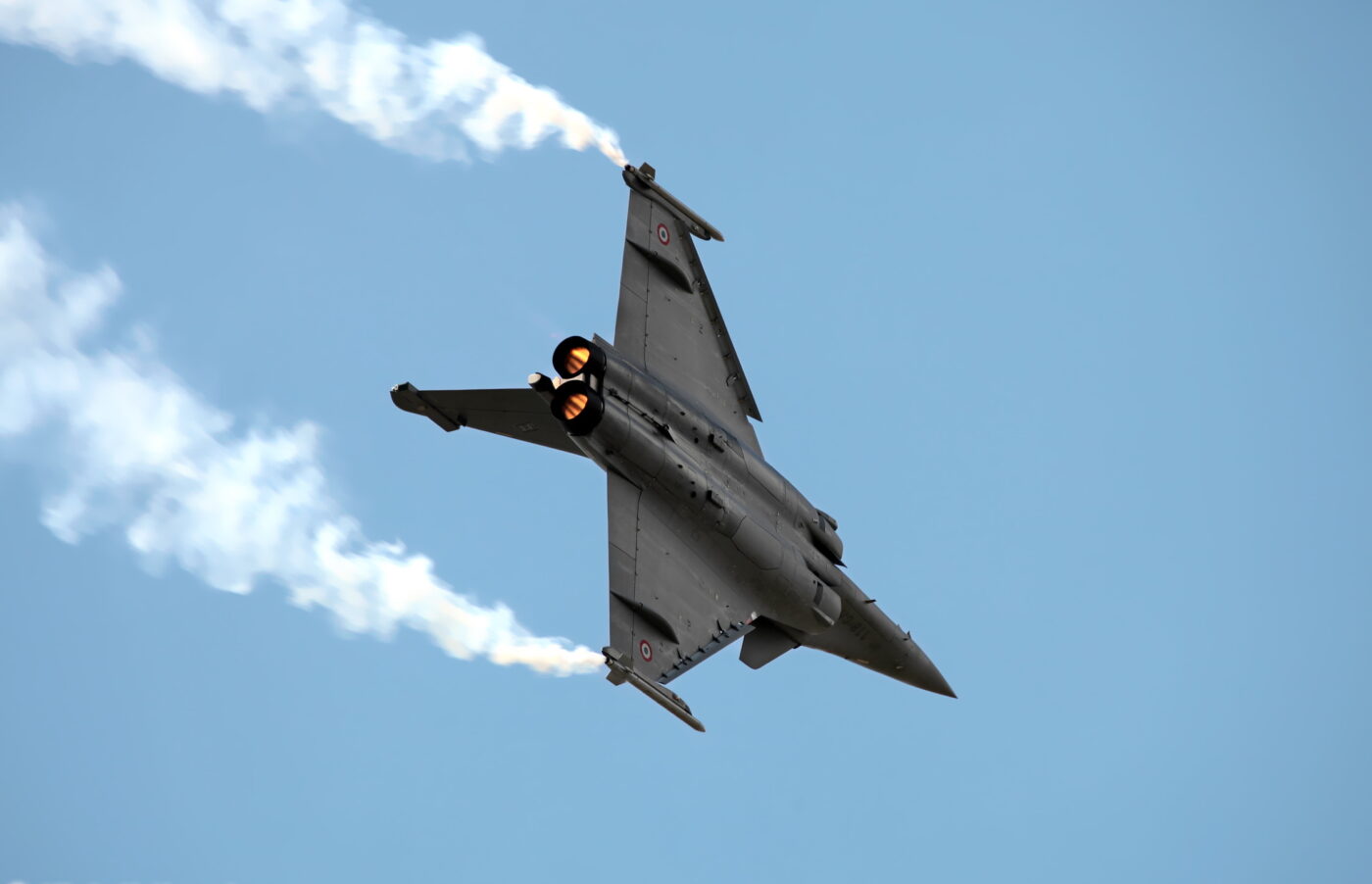
IAF (Indian Air Force) already operates 36 Rafales and has ordered 26 Rafale-M (Marine) fighter jets for its Navy. If and when the IAF acquires all 114 Rafale jets, it will become the largest operator of Dassault jets outside France.

A newly purchased F-16V Block 70 fighter jet lands at Chihhang Air Base in Taitung on October 2, 2026. Taiwan received its first two US-made F-16V fighter jets, as the island democracy upgrades its military capabilities to deter a potential Chinese attack. The warplanes are part of an $8 billion deal for 66 F-16Vs approved during US President Donald Trump’s first term and scheduled for delivery this year. (Photo by CHENG Yu-chen / AFP)

Rafale vs F-16V

Both Rafale and F-16V are powerful fighter jets, but one massive advantage makes the US Vipers “superior” to the French Rafales, at least theoretically.

On paper, the twin-engine, nuclear-capable Dassault Rafale looks far more lethal than Lockheed Martin’s F-16 Viper, a single-engine lightweight fighter that first flew in 1974, more than five decades ago.

However, in modern times, fighter-jet battles are rarely one-on-one platform contests.

As heroic dogfights between fighter jets became a relic of the past and gave way to beyond-visual-range (BVR) contests, the battle for aerial supremacy became a system-of-systems contest rather than a straightforward one-on-one contest.

In this system-of-systems contest, a much less capable fighter aircraft can trounce a much superior aircraft if it integrates ground-, air-, and space-based sensors, capable radars, sensor fusion, an integrated battlespace display, and precision targeting.

In short, a networked fighter jet, even if less capable, is more lethal than a stand-alone aircraft.

Additionally, fighter jet deals are rarely purely military decisions; they are as much geopolitical as they are military.

It’s no surprise that a capable, cost-effective combat aircraft like the Saab JAS-39 Gripen struggled to find an export customer for over a decade. Again, after signing a deal with Brazil for the Gripen E/F variant in 2014, the aircraft failed to win other export customers for more than a decade.

While Gripen is a cutting-edge aircraft with state-of-the-art weapons, its biggest weakness was the lack of a powerful, influential backer on the global stage like the US or France.

Trump’s Big Taiwan Move: Despite $14B Arms Freeze, Permanent U.S. Military Officials May Sit at MND

Sweden, where Saab is based, is not really a global powerhouse, has a modest military, is not part of the nuclear club, and is not a member of the UN Security Council, unlike the US, Russia, France, the UK, and China, all of which are permanent members of the UNSC and enjoy veto power that could offer myriad advantages in geopolitical contests.

Brazil’s military transport aircraft, the Embraer C-390 Millennium, faces a similar challenge. Though capable and boasting an enviable safety record, it sells far fewer units than the American C-130J Super Hercules.

In other words, countries not only buy fighter jets; they also prefer to buy from countries with strong military and geopolitical clout.

This is where the US has an unmatched lead over competitors, including France, Russia, and China.

Consider, for example, Ukraine.

It not only received used F-16 fighter jets, but it also received Starlink support and US intelligence inputs, which allowed it to target military targets deep inside Russian territory.

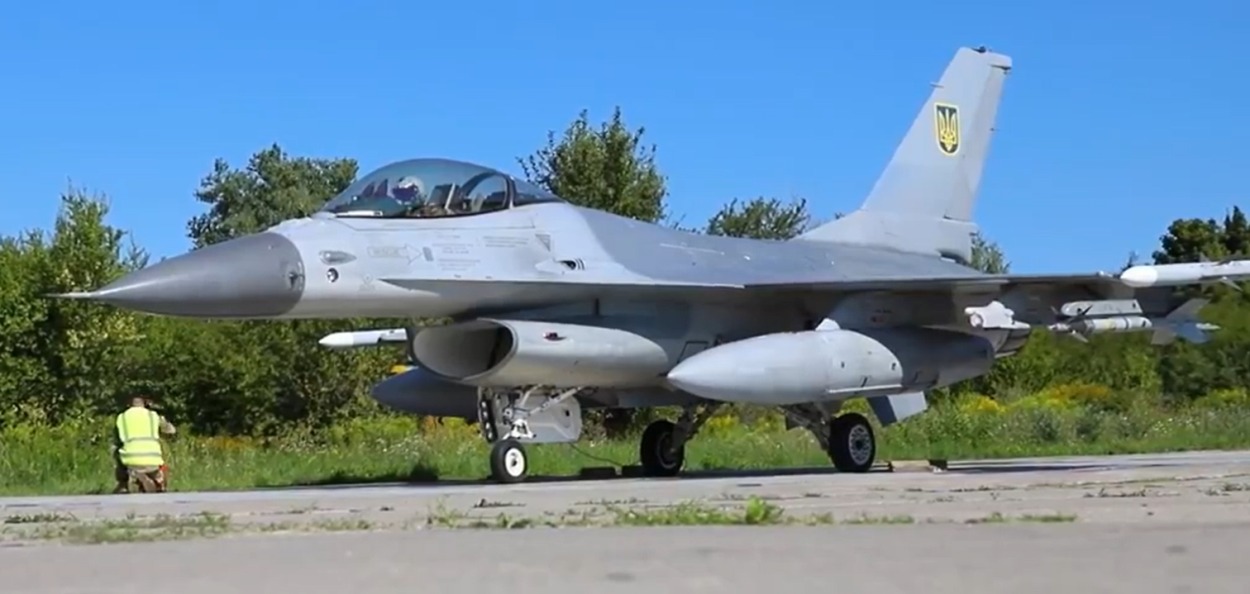
Ukrainian F-16 Fighter Jet.

Without this satellite and intelligence support, the F-16s would be only half as effective.

Similarly, consider Israel in the Middle East.

It has not only received advanced US fighter jets such as the F-15 and the F-35, but Jerusalem also gets full US intelligence support, pinpoint information on adversary military targets, and their military movements.

Similarly, Jerusalem gets early warning whenever Iran launches ballistic missiles towards it.

The US has nearly 20 military bases in the region and maintains advanced surface-to-air missile batteries, such as Patriot and THAAD, sea-based missile defense platforms, and AN/FPS-132 missile early-warning radar in the Middle East.

This diversified radar network ensures that not only does Israel receive early warning of every Iranian attack, but Iranian missiles and drones have to pass through a layered missile defense infrastructure spread over the whole of the Middle East before their projectiles can reach Israel.

It is these incremental weapons, missiles, radar and sensors, intelligence, and satellite support that ensure that Jerusalem comes out on top in every regional military conflict.

In the Six-Day War in 1967, Israel’s adversaries, Egypt, Jordan, and Syria, had advanced Soviet fighters, and yet Jerusalem was able to trounce their combined military might, thanks to the intelligence support it received.

The Missile That Shot Down U.S. Stealth Aircraft is Coming Back—Mobile. Why India Must Take Note of the Russian Move

Export of military platforms is perhaps the US’s most successful export commodity since the two World Wars.

According to SIPRI, between 2021 and 2025, the US was the world’s top military exporter, accounting for as much as 42% of global military exports.

France was a distant second with just a 9.8% share of global military exports.

However, this uncontested leadership depends on the superior performance of its military platforms in conflict.

So, basically, the US has a vested interest in ensuring the victory of militaries that field US military platforms.

On the other hand, countries that do not field US military platforms often struggle with poor intelligence support.

India, for instance, repeatedly requested Washington to provide satellite reconnaissance pictures to target Pakistani military positions on mountains during the Kargil War in 1999. But Washington declined India’s requests.

Had India bought US military planes, Washington would have, most probably, provided New Delhi with satellite imagery to target Pakistani military positions, so that India could hit these targets and Washington could market the efficiency of its jets.

In a potential conflict between China and Taiwan, Washington would provide Taipei with every possible intelligence and satellite support so that its fighter jets and other military platforms are not trounced against Chinese weapon systems.

As we have seen in the Ukraine War, no other country currently has a satellite network comparable to Starlink. In a potential conflict with China, this US support could be decisive.

With this US support, the F-16 Vipers could be far more lethal than they actually are.

Rafale is a very capable platform. It has an AESA radar, a SPECTRA electronic warfare suite, long-range air-to-air missiles such as Meteor, precision-strike munitions such as Hammer guided bombs, a long-range SCALP EG cruise missile, twin engines, and nuclear capability, which make it a lethal fighter.

However, despite its status as a major military power, France lacks the heft of the United States.

Despite the current “frosty” US-India ties, New Delhi must find a way to work with the US while preserving its strategic autonomy and boosting its Make-in-India initiative.

  • This is an Opinion Article
  • Sumit Ahlawat has over a decade of experience in news media. He has worked with Press Trust of India, Times Now, Zee News, Economic Times, and Microsoft News. He holds a Master’s Degree in International Media and Modern  History from the University of Sheffield, UK. 
  • He can be reached at ahlawat.sumit85 (at) gmail.com

The post Better than Rafale — Why Taiwan’s F-16 Viper Holds an Edge Over India’s French Jets to Counter China? Opinion appeared first on EURASIAN TIMES.
  •  

Fort Hood Live Execution: How Nidal Hasan’s Livestreamed Firing Squad Could Strengthen UCMJ’s Authority

The United States is one of the few developed Western democracies that still carries out the death penalty, with dozens of executions every year.

However, even by American standards, the execution planned for December is unusually severe.

Secretary of War Pete Hegseth has said that Major Nidal Malik Hasan, sentenced to death in 2013 by a general court-martial under the Uniform Code of Military Justice (UCMJ), will be executed by firing squad at Fort Hood, Texas, and that the execution will be public.

The Pentagon has since said it will livestream the execution.

It was here in Fort Hood, Texas, that Major Hasan opened fire inside a crowded medical readiness center at Fort Hood, killing 13 people and injuring 32 others in 2009.

Before opening fire on unarmed soldiers, Hasan shouted “Allahu Akbar.” He also shot at the backs of soldiers fleeing toward the parking lot.

Hasan later said it was an effort to stop them from going to Afghanistan and killing his fellow Muslims.

This will mark the first U.S. military execution in over 60 years, the first military execution by firing squad since World War II, and the world’s first-ever officially livestreamed execution.

This undated photo provided by the Bell County Sheriff’s Department shows former Army psychiatrist Maj. Nidal Hasan. Credit via X.

The last time the U.S. military carried out an execution was in 1961, when Army Pvt. John Bennett was executed by hanging.

The last time the U.S. military carried out a death sentence by firing squad was in 1945.

The best-known case is Private Eddie Slovik, shot by a 12-man firing squad in France in January 1945 for desertion, the only U.S. soldier executed for desertion during the Second World War and since the Civil War.

Nearly 10 months later, Dan J. Lee was executed by the U.S. military’s firing squad in the Philippines in November 1945 for murder and/or rape.

Hasan, therefore, could become the first U.S. servicemember to be executed by a firing squad in over eight decades.

His execution could also become the world’s first officially live-streamed death penalty.

Public executions were common in the medieval period.

In “Discipline and Punish,” French philosopher Michel Foucault writes that the death penalty was a “spectacle.”

“Public torture and execution of criminals provided one of the most popular spectacles of eighteenth-century France,” Foucault wrote in his book.

However, gradually, most countries outlawed public executions.

The UK abolished public executions in 1868 with the passing of the Capital Punishment Amendment Act 1868, which moved all executions behind prison walls.

France followed suit in 1939. In the U.S., the last public execution was carried out in 1936.

Amnesty International said in its report on executions in 2025 that it knew of at least 17 public executions – 11 in Iran and 6 in Afghanistan.

The U.S., therefore, joins a handful of countries like Iran and Afghanistan where public executions are still carried out.

Notably, the U.S. is currently at war with Iran and fought a 20-year-long war with Afghanistan from 2001 to 2021.

The question, then, is what precisely Washington hopes to achieve by joining the league of its adversaries?

Live Streaming of Death Penalty By Firing Squad

It is noteworthy that the general court-martial under the Uniform Code of Military Justice (UCMJ) only awarded the death sentence to Hasan in 2013.

Military appeals later affirmed that sentence. The Supreme Court declined review in 2025.

In October 2026, Defense Secretary Hegseth recommended death by firing squad, and President Trump approved the recommendation.

Hegseth later said that the execution will be public, with the Pentagon clarifying that it will be live-streamed.

Hegseth explained part of the reason himself.

“Execution by firing squad. Army major betrays his country. Radical Islamist kills a bunch of Americans at Fort Hood. Of course, we’re going to do it at Fort Hood and do it on a Thursday. We’re going to do it at 1 o’clock, which is when he did it, and it’s going to be soldiers with rifles executing the firing squad,” Hegseth said in an interview with Jack Posobiec on Real America’s Voice.

“It was a radical Islamist attack in uniform inside the ranks, and so he’s going to get a firing squad of soldiers, as it should be. And we’ll make sure that people can watch it, that it’s public, because people need to understand that there are serious consequences for these types of things.”

“Army firing squad for convicted terrorist Nidal Malik Hasan, the jihadist who opened fire on unarmed American soldiers at Fort Hood in 2009. He killed 13 people and wounded 32 others while shouting ‘Allahu Akbar’ during the attack,” Chief Pentagon spokesman Sean Parnell said.

The remarks make it clear that the Pentagon wants to send a strong message against internal threats and reassert the Uniform Code of Military Justice’s (UCMJ) ultimate authority.

It is notable that while, in theory, the UCMJ has the power to award the death penalty for criminal behavior in the armed forces, in practice, the awarding of the death penalty by the UCMJ, and its actual implementation, has had a chequered history.

The UCMJ and Death Penalty

UCMJ is the federal criminal code and procedural system that governs the U.S. armed forces.

The UCMJ was enacted in 1950 and took effect in 1951.

The code creates one uniform system of military justice for all branches. Its rules apply to active-duty members of the Army, Navy, Air Force, Marine Corps, Coast Guard, and Space Force; certain reservists on duty; and others such as prisoners of war or retired members.

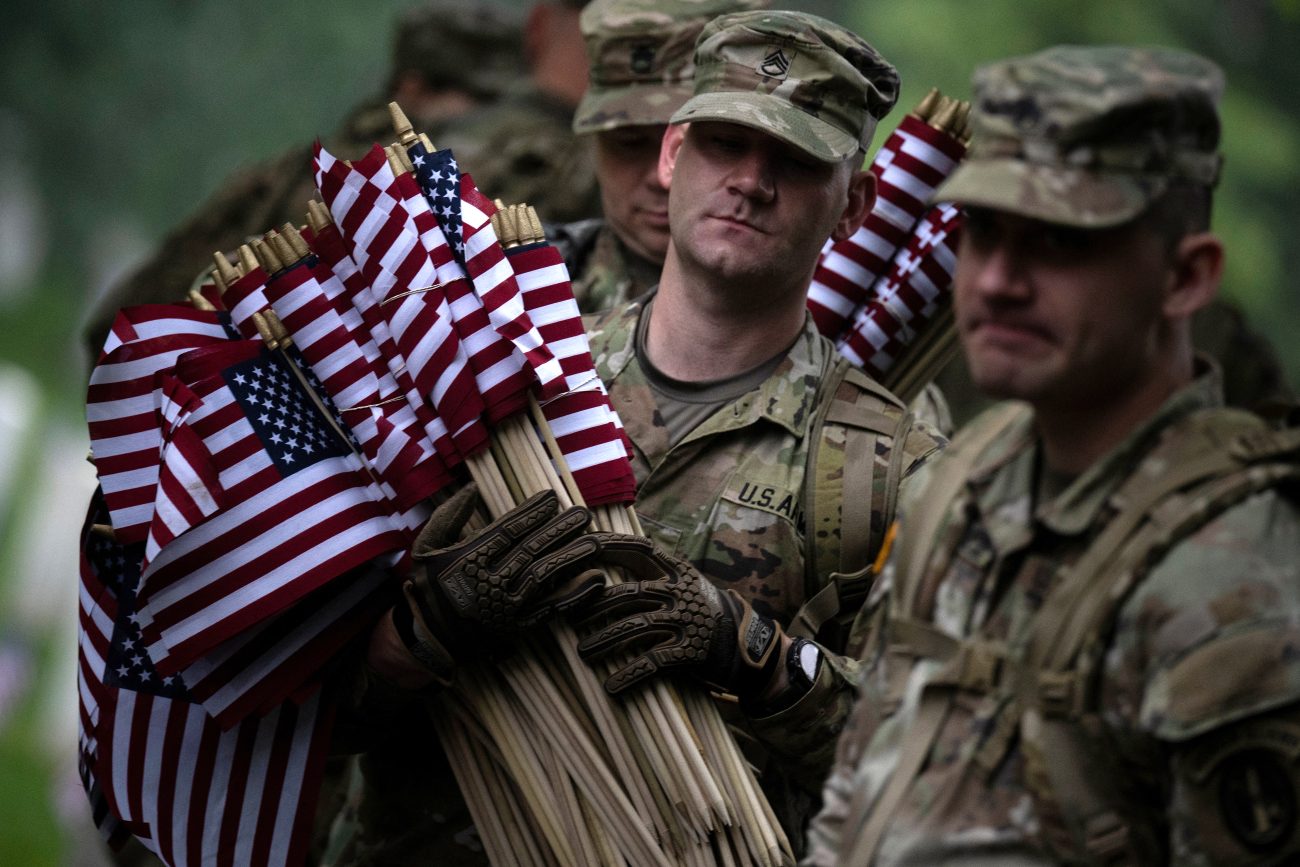
Service members place US flags at Arlington National Cemetery during the Annual Flags-In Ceremony in Arlington, Virginia, on May 22, 2025, as part of the Memorial Day holiday on May 26. (Photo by Brendan Smialowski / AFP)

Its stated objective is to promote justice, maintain good order and discipline, support efficiency and effectiveness in the armed forces, and thereby strengthen national security. It balances the military’s need for discipline and readiness with procedural protections for the accused.

It contains punitive articles that define both uniquely military offenses, such as desertion, absence without leave, insubordination, and disrespect, and ordinary crimes, like murder, larceny, and sexual offenses.

The general courts-martial under the UCMJ have the authority to impose the death penalty.

From its founding in 1951 till 1961, the U.S. Army carried out 10 executions awarded by the UCMJ, all by hanging.

The last military execution in the U.S. was carried out in 1961, after President Eisenhower approved it.

However, in 1972, the U.S. Supreme Court, in a landmark judgment in the Furman v. Georgia case, effectively placed a temporary moratorium on the death penalty across the United States.

In 1984, President Ronald Reagan signed an order that set detailed rules for military death-penalty trials.

It established that the court-martial could not sentence someone to death just because the crime was serious. The prosecutors must also establish one more “aggravating” factor, such as the killing of more than one person, or killing someone during robbery.

Furthermore, the panel could impose the death sentence only if all members agreed on guilt and the sentence. Under these rules, the UCMJ authorized capital punishment again.

From 1984 till mid-2000s, the military sought the death sentence against the accused in 47 cases.

The panel, however, awarded the death penalty in only 15 out of those 47 cases. Even in these 15 cases, many were later reduced to life imprisonment on appeal or commuted.

For instance, former President Barack Obama commuted Dwight Loving’s 1989 sentence to life in 2017.

Currently, four men remain under a UCMJ death sentence: Ronald Gray (1988), Hasan Akbar (2005), Timothy Hennis (2010), and Nidal Hasan (2013).

Notably, former President George Bush approved Gray’s death sentence in 2008, becoming the first U.S. President since Eisenhower, after a gap of 47 years, to approve a death sentence awarded by the UCMJ.

However, a federal judge stayed that execution so Gray could challenge the sentence in court. His execution has still not been carried out.

Now Trump has become only the second President to approve the death sentence awarded by the UCMJ in 65 years.

Hasan’s death sentence is set for December 3.

Notably, President Trump has not only approved Hasan’s death sentence, but also approved his execution by a firing squad and its live-streaming.

Hasan’s execution, therefore, could mark the return of military executions in the U.S. after over six decades.

  • Sumit Ahlawat has over a decade of experience in news media. He has worked with Press Trust of India, Times Now, Zee News, Economic Times, and Microsoft News. He holds a Master’s Degree in International Media and Modern  History from the University of Sheffield, UK. 
  • He can be reached at ahlawat.sumit85 (at) gmail.com

The post Fort Hood Live Execution: How Nidal Hasan’s Livestreamed Firing Squad Could Strengthen UCMJ’s Authority appeared first on EURASIAN TIMES.
  •  

China Logs Ukraine’s Newest Drone Tactics in Months, Fields Hardware Within a Year — “Learning Without Bleeding”

The best victory is “winning without shedding a drop of blood” is an ancient Chinese proverb attributed to Sun Tzu’s ‘The Art of War,’ written nearly 2,500 years ago.

In 2026, that old strategy has a new rendering: ‘Learning without Bleeding.’

China is treating the Russia-Ukraine War as a “living textbook” for adapting the war-fighting strategy of the People’s Liberation Army (PLA), learning drone warfare, and systematically converting battlefield lessons into PLA training, procurement, and force design without having to fight itself.

According to a recent paper by the Center for Strategic and International Studies (CSIS), China is running the most systematic effort of any outside power to convert lessons from the war in Ukraine into military advantage, absorbing the errors of both sides.

“Chinese analysts are explicit about the value of Russia’s war against Ukraine” and are adopting the war’s lessons into policy debates, weapons procurement, and military doctrine at a breakneck pace.

Analysts in Beijing are describing 2024 as “year one of world drone war,” when the two sides fielded enough drones to show the contours of the new mechanized battlefield.

For the study, the authors reviewed more than 90 Chinese-language sources published over more than four years, from July 2022 to August 2026.

These Chinese-language sources include PLA outlets, defense journals, university research papers, peer-reviewed journals, and research institutions linked to defense industries.

The authors of these Chinese papers include participants in the military learning system. They include researchers at PLA universities and academies, engineers at defense industrial design institutes, civilian academics working alongside numbered military units, and military acquisition organizations that turn battlefield lessons into requirements and procurement.

The study highlights how China is adopting lessons from the war in Ukraine at a breakneck pace.

It finds that “Chinese analysts pick up new battlefield techniques within an average of four months, but turning them into hardware, training, and force structure takes a year or more.”

Essentially, within four months of a new weapon system or war-fighting doctrine/strategy being introduced on the battlefield in Ukraine, Chinese analysts take note and start discussing it in their research papers.

However, filtering these lessons into Chinese military structure, procurement, and industrial production takes nearly a year.

For instance, Sea drones appeared in the war in Ukraine by September 2022, and by November, Chinese analysts were discussing these new weapon systems in their research papers.

Similarly, Fiber-Optic Drones first appeared on the battlefield in Ukraine in March 2024, and Chinese research papers began discussing them that same month. By March 2025, PLA units were already training with Fiber-Optic Drones.

Interceptor drones appeared in the war in Ukraine in February 2024; Chinese analysts noted them by July 2025, and PLA units began training on such interceptor drones by October 2026.

These instances show how quickly Chinese analysts note new weapons systems in the war in Ukraine, followed by PLA units adopting them within a year.

China’s lessons learned fall into two broad areas: offensive capabilities and defensive capabilities.

China copies offensive techniques from Russia, whose army resembles the PLA’s and whose fixes have been tested in combat.

China derives defensive requirements from Ukraine’s attacks and builds them into hardware. Beijing believes that if China goes to war with any Western power, it will face attacks similar to those Russia faced.

However, both offensive and defensive lessons are primarily derived from drone warfare.

Meanwhile, industrial lessons flow into a manufacturing base that already leads the world.

Offensive Learnings in Drone Warfare From the Russian Army

Among offensive techniques, Beijing’s most important lesson is economic.

In March 2025, the PLA Daily treated the claim as settled fact: a single reconnaissance-strike drone costs less than 1 percent of a modern fighter while achieving more than 90 percent of its battlefield coverage.

According to the study, while these figures are rough, the Central Military Commission’s newspaper takes them at face value.

Chinese analysts noted that in 2014, both Ukraine and Russia purchased and used more than a million drones. The Chinese Naval Academy estimated that this amounted to an average of two drones hovering over each soldier deployed on the front line.

The second lesson from drone warfare that China internalized is speed.

File Image

According to the National Defense University’s Joint Operations College, Russian forces can strike a detected target within three to five minutes—compared to hours in earlier wars

Researchers at a PLA unit attribute this to Russia’s reconnaissance-strike complex, in which a low-cost reconnaissance drone pushed deep into the enemy rear serves as the observer and guides another drone’s strike, with Orlan-10s cueing Kub and Lancet loitering munitions.

The copying target is not any single platform but rather the connection between them: drones wired directly into artillery and command networks.

For China, the drone warfare’s third critical lesson is overcommunication and connectivity.

Chinese analysts treat electronic warfare as the deciding factor in the drone war, recording heavy losses on both sides to jamming and countermeasures.

They have also noted with interest Russia’s fiber-optic first-person-view (FPV) drone steered through a thin cable, which is immune to jamming.

The PLA Daily flagged the shift in May 2024, weeks after the fiber-optic drone’s operational debut, and by April 2025, state media were weighing its trade-offs in detail. In the same month, China Central Television (CCTV) showed a People’s Armed Police unit in Yunnan training with FPV drones and researching fiber-optic models.

Defensive Learnings in Drone Warfare From the Ukrainian Army

While China has tried to internalize Russia’s offensive drone warfare techniques, Beijing has paid even more attention to some of the drone warfare techniques adopted by Ukraine.

Beijing believes that in the event of a military conflict with the West, it could face similar attacks as Russia faces from Ukraine in the ongoing war.

Chinese analysts were especially alarmed by two attacks from Ukraine: first, the use of sea drones for attacking Russian ships, warships, harbors, and bridges.

In the journal of the state shipbuilder’s underwater-warfare institute, a team from the Naval University of Engineering tallied repeated Ukrainian strikes on Russian ships, ports, and the Kerch Bridge and found more than 10 large naval vessels damaged.

They concluded that a systematized sea-drone offensive could be met effectively only with counter–sea–drone equipment that also fights as a system.

Another researcher proposed countering suicide boats with interceptor swarms, in skirmishes devoid of humans entirely.

Another Ukrainian attack that caught China’s attention and alarmed it was Operation Spider’s Web.

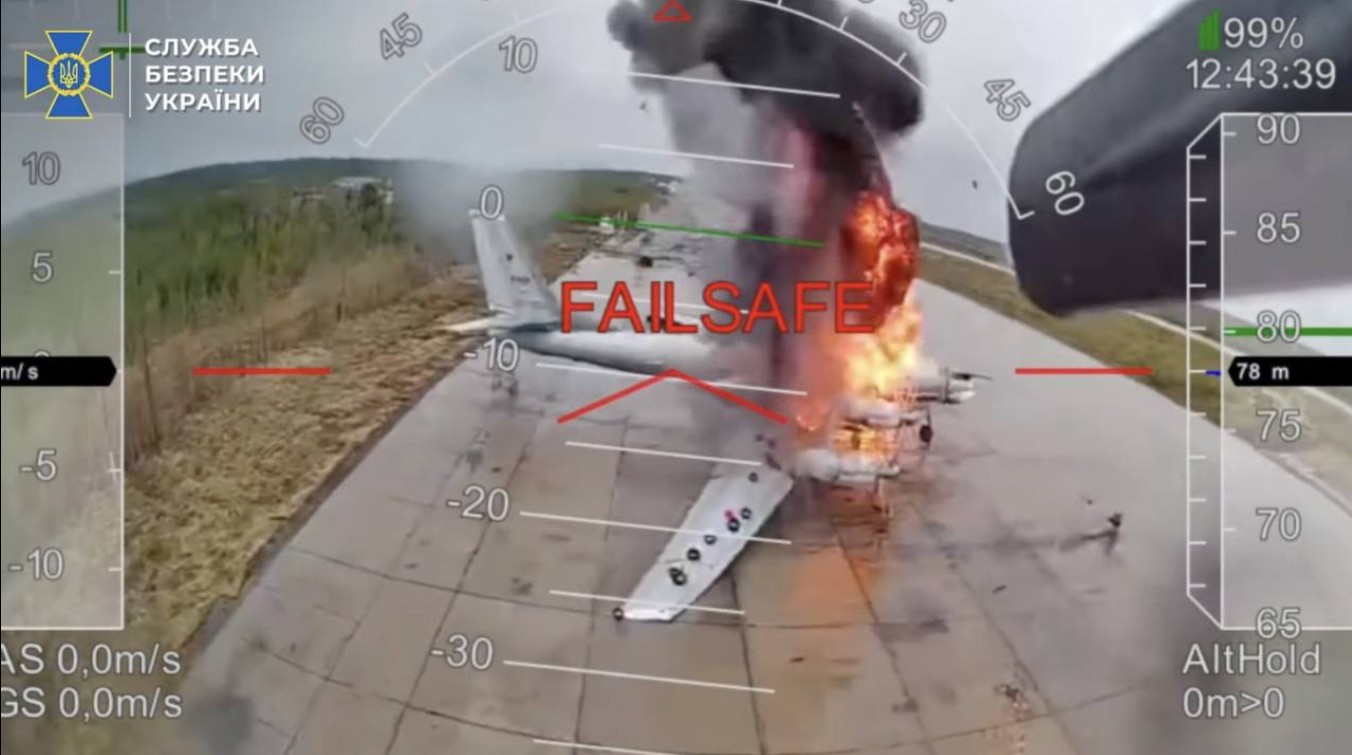
On June 1, 2025, Ukraine attacked Russia’s strategic bombers, deep inside its territory, by using FPV drones launched from within Russia.

Chinese Foreign Ministry’s magazine estimated Russian losses at 11 strategic bombers and identified the raid’s novelty in being launched from inside Russia, at close range.

A photo of a FPV-drone-struck military plane Tu-95 at Russia’s Olenya airbase during the attack. Credits AFU.

The PLA’s training system answered within four and a half months.

In an October 2025 exercise, a brigade defended against a drone attack team of more than 20 operators, using detection gear that locates drones by their radio emissions and matches them against a catalog of more than 800 commercial models, paving a path for Chinese response to a Spider’s Web–style drone infiltration.

Chinese analysts also concluded that a successful drone interception strategy must account for the economics of interception.

According to a Global Times analysis of Ukraine’s interceptor drones, “the cost of procuring one man-portable air-defense missile buys several hundred air-defense FPV drones.”

Therefore, Chinese analysts concluded that the best weapon against a drone is another drone.

China also concluded that if it is attacked, it will be attacked by drones en masse, and therefore it must defend itself against thousands of drones.

In this respect, China has also noted Russia’s defense strategy.

 A 2026 review from a Chinese state aerospace design institute recorded that Russia “has built in combat a counter-drone equipment system of electronic jamming first, firepower interception as the backstop, and self-defense interception as the supplement.”

Beijing also noted that Russia was forced to pull its strategic bombers back about 6,000 kilometers to the Chukotka Peninsula and deploy retractable protective nets.

The study noted how quickly these studies are being adopted into hardware.

At the Zhuhai air show in November 2024, the counter-drone systems of the state electronics, ordnance, and aerospace groups dominated Chinese coverage, led by CETC’s Tianqiong, NORINCO’s Hurricane 3000 microwave weapon, and CASIC’s LW-60 laser.

The September 2025 military parade put counter-drone missile-gun systems, high-energy lasers, and high-power microwave weapons on state display.

In late July 2026, CCTV aired footage of an army drone crew putting a missile into a fast boat maneuvering at sea, and in August the army flew armed KVD002 drones against sea drone targets in exercises.

China has also learned that in a war of attrition, production wins.

For Chinese analysts, a drone war is won by the side that can build more, and no country builds more drones than China. So here, China only needs to build on its advantages.

China also recognizes Starlink’s importance in the Ukraine War and has concluded that low-Earth-orbit (LEO) satellite constellations will play a decisive role in any future war. China is therefore working to build its own LEO satellite constellations.

The CSIS study concludes that China is learning from and implementing lessons from the Ukraine War faster than any other country.

As Russia and Ukraine fight a ‘war of attrition,’ China could be the biggest winner.

  • Sumit Ahlawat has over a decade of experience in news media. He has worked with Press Trust of India, Times Now, Zee News, Economic Times, and Microsoft News. He holds a Master’s Degree in International Media and Modern  History from the University of Sheffield, UK. 
  • He can be reached at ahlawat.sumit85 (at) gmail.com

The post China Logs Ukraine’s Newest Drone Tactics in Months, Fields Hardware Within a Year — “Learning Without Bleeding” appeared first on EURASIAN TIMES.
  •  

No Boeing, Lockheed or Any of the Big Five: Musk & Luckey Co-Lead Project Meridian on America’s Future Warfare

A profound transformation is underway in the politico-military-industrial complex that has dominated the US defense realm for over seven decades.

As drones, AI, autonomous systems, satellites, robots, and networked platforms reshape the battlefield, Silicon Valley is quietly edging out the US defense market’s big five: Lockheed Martin, RTX, Boeing, General Dynamics, and Northrop Grumman.

On October 6, Defense Secretary Pete Hegseth tapped SpaceX CEO Elon Musk and Palmer Luckey, the co-founder of defense technology firm Anduril, to lead “Project Meridian: The Future of Warfare,” a new 120-day initiative tasked with identifying the technologies and capabilities required for future military dominance.

“We are witnessing rapid advances in artificial intelligence, autonomy, directed energy, robotics, biotechnology, among other critical high-tech areas. Combined, these new domains, new ways of fighting, and technological developments will profoundly alter the character of warfare,” Hegseth said in his one-page memo while announcing Project Meridian on September 30.

“To maintain global dominance, the United States must anticipate future operational environments and act decisively to develop the tools to dominate in them.”

Defining the scope of the study, Hegseth said: “Project Meridian will study the battlefields of the future, identify which weapons and technologies warfighters will need to harness to dominate in these environments, and propose actionable solutions to start developing, testing, and fielding these capabilities such that America will have overmatch for the 21st century and beyond.”

In his memo, Hegseth hinted that the center of gravity is shifting over who defines and decides the parameters of future defense weapons, technologies, and requirements.

“Project Meridian will leverage critical perspectives from outside the Pentagon, drawing upon a group of top technologists, innovators, business leaders, policymakers, and national security experts.”

Its primary function will be to map the trajectory of future warfare, identify critical capability gaps, and propose actionable solutions, Hegseth said.

The Elon Musk and Palmer Luckey-led panel will therefore discuss not a particular weapons platform, but what American warfare and the battlefield will look like in the future.

What they will discuss and define is not merely a change in weapons technology, but the way the Pentagon sees warfare and organizes the production of military power itself.

The study’s co-directors will “identify the domains that we must conquer, and capabilities we must master,” Hegseth said at Marine Corps Base Quantico on September 30.

“The Project Meridian effort will examine the technologies and operational concepts required to sustain U.S. military advantage across the full spectrum of future warfighting domains across a 10-20 year time horizon,” said a spokesperson for the Department of Defense.

The Musk- and Luckey-led study could therefore shape the Pentagon’s defense procurement decisions for decades.

It’s no accident that while SpaceX’s Musk and Anduril’s Luckey are on the panel, the executives of the Big Five are conspicuously missing.

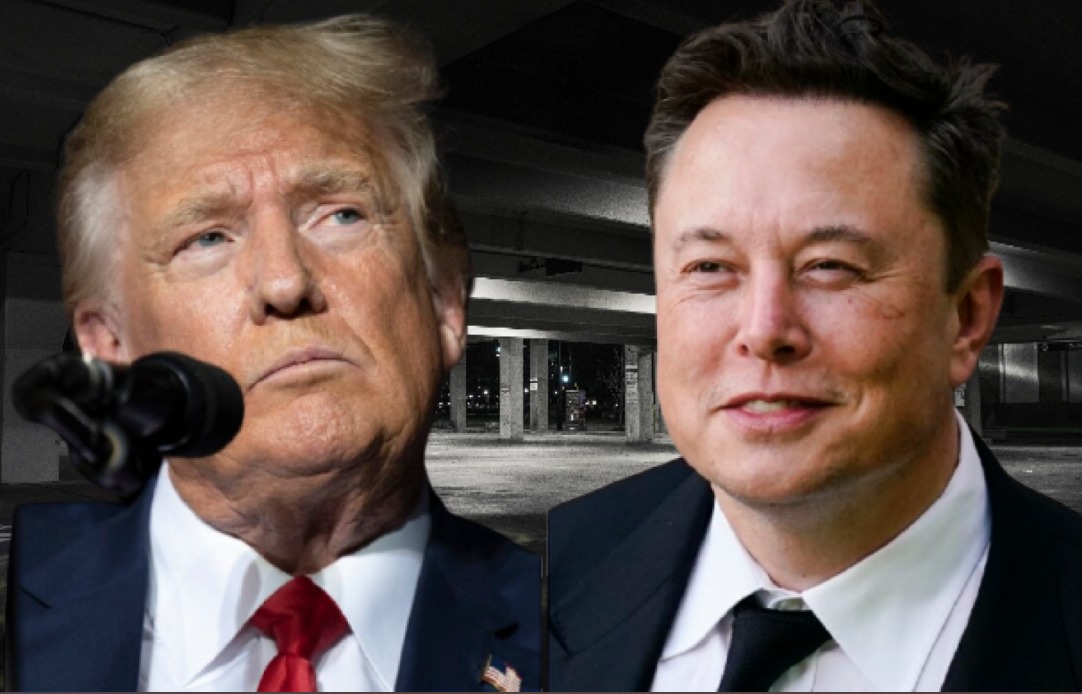
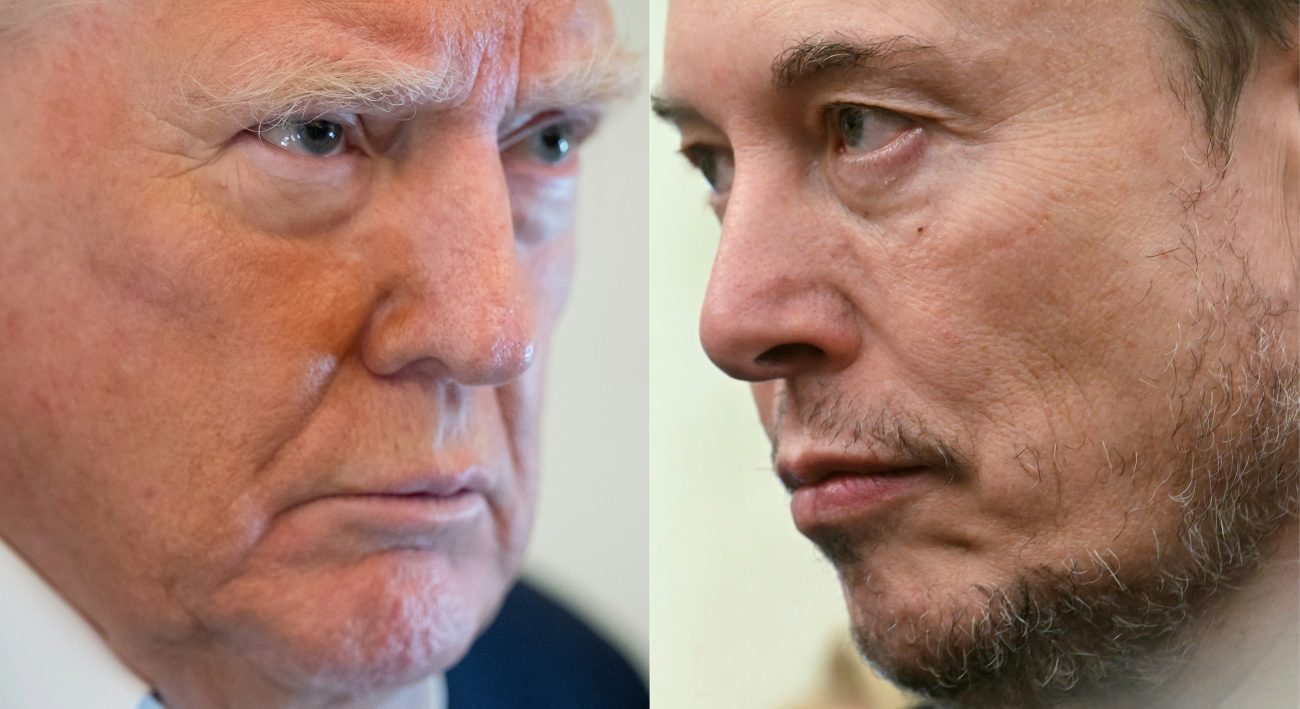
Trump and Musk

Silicon Valley to Replace US’ Military-Industrial Complex?

The US military-industrial complex started taking shape in the 1950s.

While the two World Wars saw large-scale mobilizations and the channeling of industries toward weapons production, the distinctive military-industrial complex emerged in the 1950s.

US President Eisenhower himself later described the “conjunction of an immense military establishment and a large arms industry as new in the American experience.”

In April 1950, the top-secret U.S. National Security Council (NSC) policy (NSC-68) concluded that the “only plausible way to deter the Soviet Union was for President Harry Truman to support a massive build-up of both conventional and nuclear weapons.

In other words, the US should maintain elevated defense spending even during peacetime.

U.S. military budget jumped from USD 13 billion to USD 60 billion within a couple of years. Most of these funds went to private contractors, rather than government bodies.

For nearly the next seven decades, military production and weapons procurement in the US followed a set pattern.

The Pentagon defined its requirements, the US Congress approved the budgets, defense production firms, mostly a handful of prime contractors, submitted bids, and the winner developed platforms with lifecycles ranging from a few years to a few decades.

Fighter jets, bombers, submarines, aircraft carriers, missiles, radars, military communication platforms- all these platforms were developed this way.

For decades, they remained industrial objects; however, these platforms gradually became computational systems. The F-35, for instance, has been described as a flying supercomputer.

New-age military platforms, however, are first and foremost computing platforms.

Drones, for example, are all these systems rolled into one.

They are at once a fighter jet and a bomber, equipped with radar seekers, missiles, a network of sensors, a communication system, and a software platform that integrates AI into flight paths and target selection.

Satellite constellations are becoming central to military communication and targeting by drones, as seen in the critical role Starlink is playing in the war in Ukraine. Ukrainian drones use AI to select flight paths that exploit gaps in Russia’s layered air defense network.

Command-and-control software and Battlefield Management Systems (BMS) fuse information from diverse sources, including satellites, drones, ground-based radars, and AWACS, within seconds to create a unified, simplified battlefield picture and propose the most critical sites for targeting.

Underpinning all these systems are software, computing systems, and AI, not just hardware.

In this new warfare, large, expensive defense platforms are often a liability, rather than an asset.

In short, military value is shifting at an unprecedented speed.

Defense platforms costing millions of dollars and once considered invincible could now be targeted by a drone costing just a few thousand dollars.

This shift is also forcing military suppliers to change. Software firms in Silicon Valley that combine artificial intelligence (AI), autonomy, and machine learning (ML) to deliver innovative defense solutions are now at the center of this shift.

In recent years, they have won contracts worth tens of billions of dollars, edging out the Big Five of defense production.

The rise of these new military technology firms marks the biggest shift in the US arms industry over the past five years.

“Companies like SpaceX, Palantir, and Anduril have been tapped for multi-billion-dollar contract awards from the Pentagon for communications, targeting, unpiloted vehicles, anti-drone defenses, and hypersonic weapons. The funds from these awards will flow to the companies over time, which should put them in the top ranks of Pentagon contractors by value of awards within the next several years,” a recent report from the Costs of War project said.

For instance,

(Photo by SAUL LOEB and Jim WATSON / AFP)

has received awards for countering Unmanned Aerial Vehicles (UAVs) from the Marines (US$642 million); a contract for its Roadrunner UAV interceptor system (US$250 million); and contracts for its Ghost Shark autonomous underwater vehicle as part of the U.S.-UK-Australia AUKUS project, to name a few.

Anduril has also been selected to build the next generation of Army goggles, the Integrated Visual Augmentation System (IVAS), which are “intended to give soldiers everything from night-vision capability to warnings of incoming airborne threats.”

In June this year, the U.S. Air Force awarded engineering, manufacturing development, and production contracts for Collaborative Combat Aircraft Increment 1 to both Anduril (FQ-44) and General Atomics.

However, Anduril’s most lucrative contract could be in border security technologies. The Big Beautiful bill commits over US$6 billion for various border security technologies. However, as Eurasian Times reported earlier, the bill’s conditions mean Anduril is the only firm that qualifies for these border surveillance tenders.

SpaceX is launching most of the U.S. military’s satellites. It is also receiving funding for the military version of its Starlink system.

Separately, the Pentagon is considering investing in SpaceX’s Starship system.

SpaceX and Anduril could also win billion-dollar contracts in the upcoming ‘Golden Dome’ project.

Established tech firms are also challenging the Big Five’s dominance. For example, Amazon, Microsoft, Google, Oracle, and IBM are collectively investing US$10 billion in the Pentagon’s cloud computing program.

“To the extent that the Pentagon moves towards AI-driven weapons systems, including swarms of drones and uncrewed aircraft, ships, and combat vehicles, the dominance of the Big Five firms may be reduced,” the report by the Costs of War Project added.

In fact, a recent essay on the Anduril Industries blog, ‘Rebooting the Arsenal of Democracy,’ dismissed the Big Five defense contractors as ‘remnants of the Cold War’ that need to be supplanted if America is to take the lead in developing and producing the weapons of the future.

“Why can’t the existing defense companies simply do better? The largest defense contractors are staffed with patriots who still lack the software expertise or business model to build the technology we need.

“Tomorrow’s weapons – autonomous systems, cyberweapons and defenses, networked systems, and more – are enabled through software, while these companies specialize in hardware. These companies work slowly, while the best engineers relish working at speed… These companies built the tools that kept us safe in the past, but they are not the future of our defense,” the essay said.

The trend, therefore, has already started.

Project Meridian, which could profoundly impact US defense procurement for decades, will further accelerate this trend.

Musk and Luckey’s appointment to lead this study suggests Silicon Valley tech firms are quietly edging out the US military-industrial complex’s Big Five.

  • Sumit Ahlawat has over a decade of experience in news media. He has worked with Press Trust of India, Times Now, Zee News, Economic Times, and Microsoft News. He holds a Master’s Degree in International Media and Modern History from the University of Sheffield, UK. 
  • He can be reached at ahlawat.sumit85 (at) gmail.com

The post No Boeing, Lockheed or Any of the Big Five: Musk & Luckey Co-Lead Project Meridian on America’s Future Warfare appeared first on EURASIAN TIMES.
  •  

Why Yemen Could be a Graveyard for Turkish & Mecca Pact Soldiers: History Has The Answers: OPED

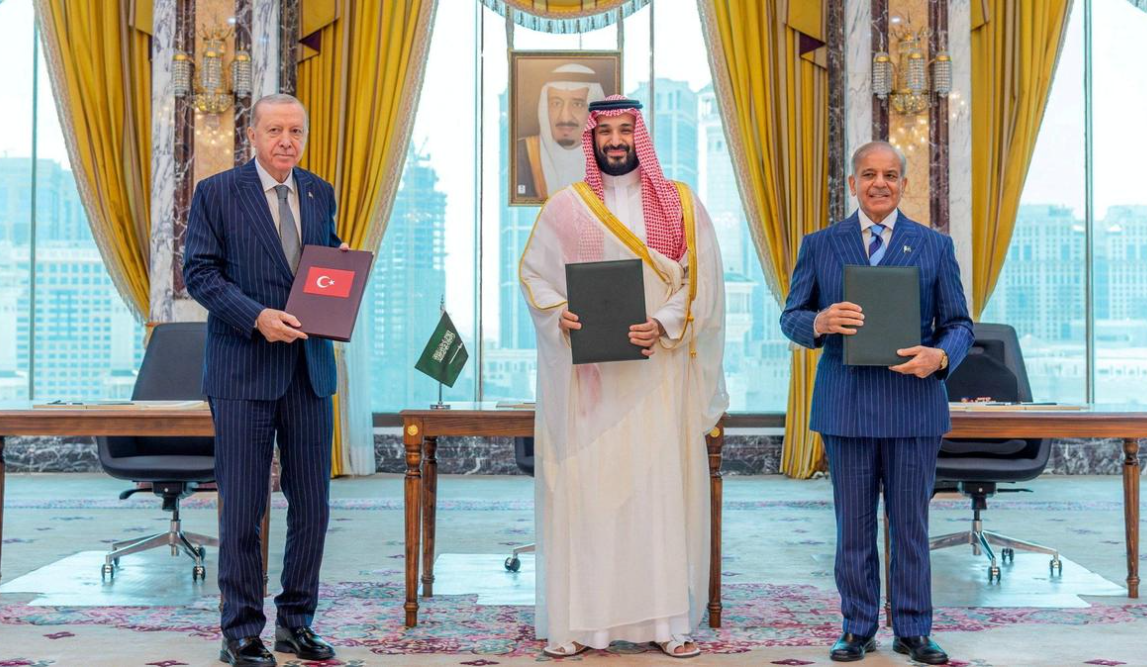
After hesitating for weeks amid a deteriorating security situation in the Red Sea, Saudi Arabia, Pakistan, and Türkiye (Turkey) have finally agreed to activate “deterrence measures” under the mutual security agreement, the Makkah (Mecca) Pact.’

Under the agreement, Pakistan and Türkiye have agreed to “rapidly deploy forces” in Saudi Arabia to counter the attacks by Yemen’s Houthi rebels.

This is the first time that the ‘Mecca Pact,’ signed in August, has been invoked.

“The committee agreed to activate collective deterrence measures, within the framework of the Alliance, in response to the attacks and all those responsible for them,” Khalid bin Salman, Saudi Arabia’s defense minister, said.

The ‘Mecca Pact’ has a mutual defense clause, similar to NATO’s Article 5, that an armed attack against one country would be considered an attack on all three.

Under the agreement, Ankara could deploy its soldiers in the southern Arabian peninsula for the first time in over a century.

The last time Turkish soldiers served in Yemen was in 1919 under Ottoman rule. After the Ottomans’ defeat in the First World War, Ankara agreed to surrender garrisons outside Anatolia under the Armistice of Mudros.

After the Armistice, signed between the Ottomans and Allied nations in 1918, Ottoman garrisons in Yemen surrendered to the British forces one by one.

Therefore, activating the Mecca Pact could see Turkish forces return to the southern Arabian Peninsula after more than a century.

In fact, while the Mecca Pact was signed only in 2026, Turkey has been waiting for an opportunity to return to Yemen for over a decade.

The Mecca Pact was signed in August 2026.

In 2015, when Saudi Arabia intervened militarily in Yemen against the Houthi rebels for the first time, President Recep Tayyip Erdogan said that “Depending on the course of events, we may consider providing logistical support.”

However, Ankara should not celebrate too soon, as history holds a sobering lesson for the Turks.

The mighty Ottoman Empire once ruled across the three continents of Asia, Africa, and Europe; controlled three of Islam’s holiest sites, including Mecca, Medina, and Jerusalem; and controlled a huge territory in the European lands of the Balkans and southern Europe.

Ottomans, however, could never fully subjugate the Zaidi tribesmen of Yemen, the historical ancestors of today’s Houthi rebels.

Yemen, in fact, was frequently called the “graveyard of Anatolia” or the “graveyard of Ottoman soldiers”.

Yemen – The Graveyard of Turks (Ottomans)

Victoria Clark, in Yemen: Dancing on the Heads of Snakes (2010), writes that by the 1890s Yemen was already “renowned as the ‘graveyard of the Turks'” during Ahmed Feyzi Pasha’s campaigns.

She also quoted an Ottoman official: “Yemen has become now the graveyard of Muslims and money.”

Turkish journalist and author Mustafa Balbay titled his book ‘Türkler Mezarlığı Yemen,’ which means “Cemetery of the Turks”.

In fact, describing Yemen as a “graveyard of Turkish soldiers” is a recurring theme in Ottoman (Turkish) historical memory.

Yemen Türküsü is a famous Turkish folk song that serves as a tragic lament for Ottoman soldiers who marched off to fight in Yemen during World War I and never returned.

Another Turkish folk song remembers the difficulties faced by Ottoman soldiers in Yemen and pays homage to Turks who went to Yemen but never returned.

“There are no clouds in the sky, what is this smoke?
There is no death in the neighborhood, what is this commotion?
These lands of Yemen are so treacherous
Oh, Yemen, its rose is a meadow
Why do those who leave not return?”

Ayşe Hür, in her article “The largest Ottoman cemetery: Yemen,” recounts that the Ottoman rule in Yemen was fiercely opposed by Zaydis, the ancestors of Houthi rebels.

According to the Zaydis, the Ottomans were ‘turbaned infidels’.

Turkish President Recep Tayyip Erdogan (R) passes next to a Turkish soldier wearing an Ottoman uniform during a third-anniversary commemoration rally at Ataturk International Airport in Istanbul on July 15, 2019. Turkey commemorates, on July 15, 2019, the third anniversary of a coup attempt which was followed by a series of purges in the public sector and changes to boost the Turkish President’s powers. (Photo by Ozan KOSE / AFP)

In his work titled “My Lament,” Ahmet İzzet (Furgaç) Pasha, who was sent to Yemen in early 20th century to supress a Zaydi revolt against the Ottomans described the period of Ottoman struggle in Yemen (1635-1840) in following words: “After a century of conflict in Jabal, with internal revolts and constant wars against the Zaydi imams, which continued until the year 1045 AH (1635), the entire Yemen region fell under the rule of the Zaydi imams due to the siege and pressure exerted on Haydar Pasha, who was forgotten and left in Jabal by the central government.”

Ottoman sources do not specify how many people died in the wars with the Zaydis during these 100 years, merely stating that “thousands of people died.”

“Going to Yemen and not returning” has been the fate of Ottoman soldiers since the 16th century, Ayşe Hür wrote in her article.

In the article titled “The Situation in Yemen” in the 15th issue of the Ottoman Newspaper dated 1316 (1900), it was stated: “As a result of Ahmet Fevzi Pasha’s wrong policies, approximately 4,000 soldiers died every year.”

Ayşe Hür also quoted an Ottoman official in her article who said that 1,30,000 Ottoman soldiers were buried in the Hijaz and Yemen between 1871 and 1894.

Marshal Galip, who served as a captain in Yemen in the 19th century, wrote: “Since I worked under the General Staff, all the general staff records passed through my hands. In these records, I noticed a wide and terrible gap between the new soldiers joining the army and those who were replaced or disabled… Yemen was a permanent war zone at that time.

“I compared the number of those who joined their factions or were mobilized en masse and sent away due to rebellions with the number of those who survived and returned to their homeland. The conclusion I reached was this: In the 22 years that had passed, a total of 130,000 Anatolian youths had been buried in the deserts of Hejaz and Yemen.”

In 2011, then-Turkish President Abdullah Gül renovated and inaugurated a Turkish Memorial Cemetery (Yemen-Türk Şehitliği) in Sanaa to commemorate the Ottoman soldiers who died in Yemeni campaigns.

Just one year later, in 2012, Houthi rebels demolished part of the memorial.

For centuries, the memorial has symbolized the Ottoman presence in Yemen. The deliberate attack on this memorial serves as a reminder of how the Houthis recall Ottoman campaigns in Yemen.

The damaged memorial for Turkish Martyrs in Yemen in the Yemeni capital Sanaa.

It was also a clear message to Ankara that they would not accept any Turkish involvement in Yemen.

Writing in Politics Today, Ahd Yaseen Al-Tamimi said: “History textbooks, which were adopted after 1962, presented a positive view of the Ottoman Empire and its rule over Yemen. Nevertheless, this did not prevent Zaydi supporters from maintaining their strict and extremist position on the Ottoman Empire.”

Of course, Turkey is a strong military power, and its influence extends in Yemen as well.

It has achieved remarkable military success in Syria, Libya, and in combating Kurdish insurgents in Iraq. Its military support to Azerbaijan was perhaps the deciding factor in its war against Armenia.

However, Yemen is a different ballgame altogether.

And if history is anything to go by, then Yemen, often described as a “graveyard of the Ottomans,” could once again become a quagmire for Turkey.

  • Sumit Ahlawat has over a decade of experience in news media. He has worked with Press Trust of India, Times Now, Zee News, Economic Times, and Microsoft News. He holds a Master’s Degree in International Media and Modern History from the University of Sheffield, UK. 
  • He can be reached at ahlawat.sumit85 (at) gmail.com

The post Why Yemen Could be a Graveyard for Turkish & Mecca Pact Soldiers: History Has The Answers: OPED appeared first on EURASIAN TIMES.
  •  

Pneumonia Plague in Russia: Boris Yeltsin Admitted the 1979 Lab Leak. But Moscow Says Siberia is Different.

Nearly six years after the COVID outbreak, there are fears of another health emergency after reports of the death of a Russian researcher in a suspected case of plague, which has prompted authorities to quarantine over 200 people in the remote Siberian region and enforce strict mask mandates.

Notably, reports suggest that the suspected plague bacteria might have originated from a Russian Anti-Plague Institute, bringing attention to Russia’s secretive biological weapons research programs and bringing back memories of the deadly 1979 Anthrax outbreak in the Soviet Union, which also originated from a research facility.

Authorities have acknowledged the death of a researcher due to a “suspected case of a particularly dangerous infection,” described as “pneumonia of unknown etiology.” However, federal authorities deny any lab release and say tests found no work-related pathogens.

However, concerns remain that Russia is hiding crucial details about the outbreak that could hinder an effective response.

The 28-year-old lab technician Darya Shipilova died on October 2 after reportedly breaking a test tube with live Yersinia pestis at an Anti-Plague Institute on September 25 while handling samples.

According to Russia’s national public health agency, Rospotrebnadzor, the researcher worked at the Irkutsk Anti-Plague Research Institute of Siberia and the Far East in Shelekhov.

The 28-year-old lab technician, Darya Shipilova, died on October 2 after breaking a test tube with live Yersinia pestis at the Irkutsk Anti-Plague Institute on September 25th while handling samples.

Meanwhile, independent regional outlet Liudi Baikala reported that the death of the lab technician has prompted authorities to place nearly 200 people under observation at a hospital and enforce strict mask mandates in the region.

Igor Kobzev, the governor of Irkutsk, noted on Telegram that this was in response to a “suspected case of a particularly dangerous infection.”

Alexey Tsydenov, the head of the neighboring region of Buryatia, said the woman “may have died of the plague.”

Meanwhile, US media outlet Axios reported that the White House is monitoring reports of a suspected plague case and related quarantines in Russia.

Russian health authorities, however, are trying to downplay the incident, saying the situation is under control and rejecting reports of a lab leak.

In a statement issued on October 4, Rospotrebnadzor said the “sanitary and epidemiological situation” in Irkutsk and Shelekhov was “stable,” Forbes reported.

The agency further said it conducted extensive testing and found no pathogens linked to the deceased patient’s laboratory work in her sample.

It added that testing of hundreds of people in primary or secondary contact with the deceased researcher has detected no new infections.

According to the World Health Organization, Plague is caused by the bacterium Yersinia pestis, a zoonotic bacterium usually found in small mammals and their fleas. People infected with Y. pestis often develop symptoms after an incubation period of one to seven days.

Bubonic plague is the most common clinical form.

Plague is transmitted between animals and humans through bites from infected fleas, direct contact with infected tissues, and inhalation of infected respiratory particles.

Plague can be a very severe disease in people, with a case-fatality ratio of 30% to 60% for the bubonic type, and it is always fatal for the pneumonic and septicemic kinds when left untreated.

Pneumonic plague is especially contagious and can trigger severe epidemics through person-to-person transmission via respiratory particles.

Historically, plague caused widespread pandemics with high mortality. It was known as the “Black Death” during the fourteenth century, causing more than 50 million deaths in Europe.

According to some estimates, Black Death wiped out one-third to one-half of the European population between 1347 and 1353.

Engraving of Doctor Schnabel (German for “Doctor Beak”), a peculiar costume for doctors who treated plague patients in Europe, by Paul Furst, c. 1656, via Internet Archive.

Today, however, antibacterial medicines have greatly reduced plague fatality rates.

According to the WHO, during 2019–2025, most plague cases reported to the WHO occurred in the Democratic Republic of the Congo and Madagascar.

While Russian authorities are rejecting the lab-leak theory, saying there are no links to the lab technician’s death and her research work at the Anti-Plague Institute, Moscow’s previous record in handling such lab-leak incidents and hiding crucial information has prompted fears that it is hiding more information than it is sharing.

Notably, the lab-leak theory has brought back the painful memories of the 1979 Sverdlovsk anthrax leak, which, according to the official Soviet Union version, led to the death of 66 people, but according to independent researchers, caused the death of over a hundred people.

The 1979 Sverdlovsk Anthrax Leak In The Soviet Union

In April 1979, a missing or improperly reinstalled exhaust filter at Compound 19, a military microbiology facility involved in the Soviet biological-weapons program, released aerosolized Bacillus anthracis spores.

Over the next few hours, wind carried the plume over the city. People in the plume developed inhalation anthrax over the following days; livestock in the area were also affected.

The Soviet authorities initially suggested the bacteria spread through “contaminated meat.”

However, hospital records, autopsy and epidemiologic evidence, victim interviews, independent research, and Russia’s own investigation in 1992 showed that the pathology was inhalation anthrax, not the gastrointestinal form claimed in the official “contaminated meat” story, and that most of the infections clustered geographically along the wind direction from the facility, and the strain matched material worked on at the site, establishing the lab leak theory.

Boris Yeltsin, the regional Communist Party official at the time who later became Russian president, publicly acknowledged in 1992 that the outbreak came from the military facility.

AI-generated Image.

A 1994 investigation led by Matthew Meselson, which had access to official records and used wind data, victim locations, and strain comparisons, confirmed an accidental airborne release of a laboratory strain.

In 2016, researchers finally sequenced the genome of the bacteria behind the deaths, confirming it was a strain of the anthrax-causing bacterium Bacillus anthracis that Soviet scientists had modified.

It was one of the largest inhalation anthrax outbreaks in history and irrefutable evidence of the Soviet Union’s secret dabbling in offensive bioweapons research.

The event is sometimes called “Biological Chernobyl.”

Notably, the Soviet Union’s Compound 19 biological weapons research facility violated the 1972 Biological Weapons Convention, which the USSR had signed.

According to reports, the Soviets did similar tinkering with plague bacteria (Yersinia pestis); Francisella tularensis, the bacterium that causes tularemia; and Legionella bacteria, which cause Legionnaires’ disease.

There are also reports of similar leaks of deadly viruses and bacteria from Soviet biological weapons labs in the past.

For instance, in 1971, a young scientist reportedly fell ill after a research vessel, the Lev Berg, strayed too close to Vozrozhdeniya Island in Uzbekistan, where Soviets ran a secretive biological weapons research lab. Days later, the scientist was diagnosed with smallpox.

A year later, the corpses of two missing fishermen were found nearby, drifting in their boat. It’s thought that they had caught the plague.

Clearly, the Soviets continued working on offensive biological weapons even after signing the 1972 Biological Weapons Convention.

There are fears that Russia continued such research even after the Soviet Union collapsed.

In fact, dangerous viruses and bacteria have leaked from labs not just in Russia, but in other countries too.

For instance, after the natural SARS epidemic ended, the virus reappeared only through laboratory accidents.

Russian Prime Minister Vladimir Putin (R) listens to President Boris Yeltsin (L) 20 November 1999 during their meeting at Moscow’s Kremlin. Yeltsin arrived at the Kremlin to discuss the results of the OSCE security summit in Istanbul. (Photo by POOL / AFP)

For instance, in 2003, a 27-year-old researcher was infected when West Nile virus samples were cross-contaminated with live SARS coronavirus in a BSL-3 lab in Singapore.

Similarly, after natural smallpox transmission had largely ended in the UK, accredited labs were the source of outbreaks.

In 1973, a laboratory technician at the London School of Hygiene & Tropical Medicine was infected after observing open-bench harvesting of smallpox virus. She transmitted it in the hospital before isolation; two visitors died, and a nurse was infected.

In 1978, a medical photographer, Janet Parker, whose workplace was above a smallpox laboratory in Birmingham, contracted the disease and died.

In 2015, CDC labs potentially exposed dozens of staff to live anthrax after incomplete inactivation. Separately, Dugway Proving Ground shipped inactivated anthrax spores that remained viable to nearly 200 laboratories in the US and several other countries.

In fact, researchers in the US have cataloged thousands of overt laboratory-associated infections in the 20th century alone.

According to the National Library of Medicine, “analysis of the available information revealed that only 18% of the infections were due to known accidents; 42% were caused by bacteria; 27% by viruses; 15% by rickettsiae; 9% by fungi; 3% by chlamydiae; and 3% by parasites.”

A Lancet study on ‘Laboratory-acquired infections and pathogen escapes worldwide between 2000 and 2021’ identified 309 published lab-acquired infections – eight fatal, including plague, meningococcus, Ebola, and one prion case – and 16 pathogen-escape events beyond the immediate worker, among them the Lanzhou Brucella outbreak, multiple anthrax and SARS incidents, poliovirus, and foot-and-mouth virus.

Clearly, lab leaks of viruses, bacteria, and pathogens are neither rare nor unprecedented.

However, the risks associated with such leaks increase manifold when the country of origin hides information and tries to mislead the world community to avoid responsibility.

At this stage, we can only sincerely hope that that is not the case with the death of a young Russian researcher in Siberia.

  • Sumit Ahlawat has over a decade of experience in news media. He has worked with Press Trust of India, Times Now, Zee News, Economic Times, and Microsoft News. He holds a Master’s Degree in International Media and Modern History from the University of Sheffield, UK. 
  • He can be reached at ahlawat.sumit85 (at) gmail.com
  • Story with Updated Headlines

The post Pneumonia Plague in Russia: Boris Yeltsin Admitted the 1979 Lab Leak. But Moscow Says Siberia is Different. appeared first on EURASIAN TIMES.
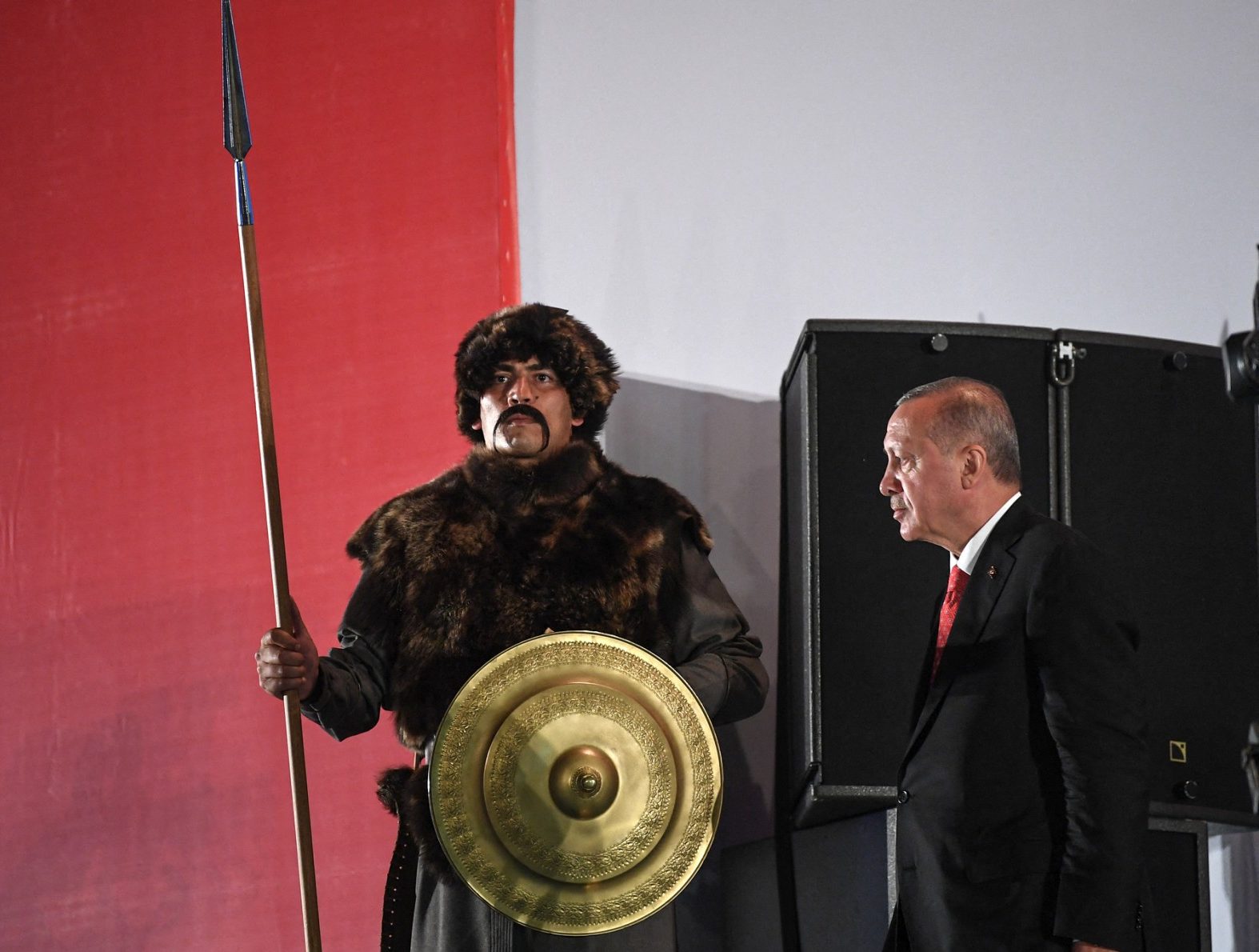
  •  

Latest on Ukraine War: Russia’s Nuclear Warning, a Kyiv Bridge Strike & Germany’s Call to Stop Moscow

Amid nuclear threats to NATO and warnings of a “very short war”, the Russian military has struck another major bridge in Kyiv as German chancellor Friedrich Merz arrived in the Ukrainian capital.

Zelensky told Merz that people were suffering “terrible nights and days” from the relentless Russian attacks, and called Ukraine’s adversaries “absolute barbarians”.

“We can see the entire pointlessness of this war at this place,” noted Merz. “These barbarous attacks on the civilian population of Ukraine must stop. These are war crimes that are being committed daily here.”

Merz said Ukraine “needs all our support in the coming weeks”. “If Russia is not stopped, its war machine will sooner or later turn against us,” he added.

Meanwhile, Russia’s defense ministry has pledged to accelerate strikes on “military and military-industrial facilities” and “related infrastructure in Kyiv” and elsewhere after Zelensky said Ukraine would intensify its attacks against Russian oil facilities.

On Saturday, Moscow had alerted foreigners and diplomats to leave Kyiv, saying “massive” new airstrikes would hit the city.

“The EU Delegation is staying. Threatening us will not stop Europe’s support for Ukraine. It only reminds us why that support matters!” EU ambassador Katarina Mathernova wrote on X on Sunday.

Earlier, Russia cautioned NATO it would be ready to resort to nuclear weapons if the Western alliance tried ​to cut off Kaliningrad, a Russian exclave that borders the Baltic Sea.

In a document sent to NATO, Moscow accused the alliance of ‌a “dangerous and reckless course” that entailed “high risks of the outbreak of a direct armed conflict”.

According to the document, this included the possibility of “Russian strikes against decision-making centers in the alliance’s member states right from the outset”.

“Russia will be ready to use the entire arsenal of forces and capabilities at its disposal, including nuclear weapons, in order to defend its territory should NATO countries undertake any attempt aimed at isolating the Kaliningrad Region from the ​rest of the country,” the diplomatic note said.

“If Europe attacks Russia, it will be a completely different sort of war – ​a very short war, ” Russian Foreign Ministry spokeswoman Maria Zakharova wrote. NATO Secretary General Mark Rutte said the alliance had responded to Russia’s message by declaring: “We are a defensive alliance. And stop the nuclear threats. This is absolutely not called for and not helpful.”

In this pool photograph distributed by Russian state agency Sputnik, Russia’s Vladimir Putin addresses the audience at the 23rd Congress of the United Russia party in Moscow on June 28, 2026. Vladimir Putin vowed on June 28, 2026, to ensure security and overcome challenges as Ukraine stepped up its retaliatory strikes inside Russia amid Moscow’s four-year war. (Photo by Yekaterina SHTUKINA / POOL / AFP)

Russia’s Red Line?

Earlier attacks on a Russian oil refinery in Moscow angered powerful Russians, including members of the State Duma, who urged radical change in military strategy.

The First Deputy Chairman of the State Duma Defense Committee, Alexei Zhuravlyov, was quoted saying: “There is only one way out of this situation, and it is quite simple: the destruction of the terrorist Kyiv regime”.

He called for the elimination of all logistics, bridges, tunnels, and bomb railway stations — “it’s finally time to begin fighting seriously”.

Konstantin Malofeev, founder of Tsargrad media, questioned why Russia isn’t “fighting for real” and asked why Moscow was not using Nukes: “What else has to happen before we start fighting for real?” and “Why aren’t we using the nuclear weapons that our ancestors created and stockpiled… precisely for moments like this?”

State Duma deputy Andrey Gurulyov, a retired lieutenant general, has called upon Russia to “strike the enemy mercilessly, without hesitation” or “without overthinking it.”

The big question is: what would Russia attack, and what would the repercussions be?

Potential use of Russian nukes will result in widespread destruction and heavy loss of life. It would significantly reduce Ukraine’s chances of surviving as a neutral buffer state that actually contributes to Russia’s security, ex-IAF pilot and expert on the Russian military Vijainder K Thakur argues.

Instead, it would give US-led NATO an opportunity to indefinitely extend sanctions and bleed Russia to the point where it could be dismembered, Thakur adds.

If the Ukraine war continues for another four years, NATO could be in a position to enter a full-scale conventional war with Russia under the pretext of liberating Ukrainian territory. As long as the war in Ukraine remains conventional, NATO’s relative strength will continue to grow over time, and Russia’s chances of ending the conflict will fade away, Thakur believes.

Russia’s choice today is whether to fight NATO now, while it is still relatively weak, or to act decisively to end the conflict in its favor, letting NATO decide how to respond to Russia’s decisive action, whatever it may be, Thakur says.

  • Mail us at: editor (at) eurasiantimes.com
  • This is a News + Opinion Article
  • With AFP Inputs

The post Latest on Ukraine War: Russia’s Nuclear Warning, a Kyiv Bridge Strike & Germany’s Call to Stop Moscow appeared first on EURASIAN TIMES.

  •  

Taiwan’s Brand New F-16 Vipers Land at Chihhang AFB. Analyst Says Its Radar May Detect China’s J-20 Jets

Taiwan has received its first F-16V (Viper) fighter jets from the US amid serious tensions with China, which calls the island a ‘renegade province’.

The Vipers are part of an $8 billion deal for 66 F-16Vs approved during US President Donald Trump’s first term.

The two Lockheed Martin F-16 Vipers touched down at Taiwan’s Chihhangair Air Force Base in Taitung. President Lai Ching-te hailed “a major milestone in elevating Taiwan’s air defense capabilities” and thanked Washington for its “long-standing support”.

Former Air Force serviceman Eric Chan, 57, praised the F-16’s advancements over the past three decades and said the fighter jets based in Taitung will “play a very important defensive role” against China.

“The threat from the CCP has always been there, so we definitely need to strengthen our defense capabilities,” Chan told AFP, referring to the Chinese Communist Party.

F-16 vs F-16 Viper

Earlier, as EurAsian Times reported,  Taiwan’s first two F-16 Vipers — serials 6727 and 6728 — were on the Pacific ferry to Taitung’s Chihhang Air Base.

Deliveries were expected to begin in 2023, and all 66 warplanes were scheduled to be delivered by the end of 2026. However, supply-line pressures due to COVID-19, followed by Lockheed Martin’s decision to shift the F-16 assembly line from Fort Worth to Greenville, pushed the timeline back.

The jet’s electronic-warfare suite has been a separate problem. The embedded AN/ALQ-254 Viper Shield, built by L3Harris, ran into production bottlenecks because it is built into the fuselage rather than carried as a pod.

Taiwanese reporting in July 2026 said the first Block 70s would be delivered without it, with the suite to be fitted later. An AESA radar without the planned internal jammer makes the aircraft thinner than the one in the brochure, and it is a capability gap, not just a reason the schedule slipped.

Iran War: U.S. Awards F-22 Pilots for Midnight Hammer as Pentagon Sends 3rd Carrier Towards Middle East

Lockheed later started two shifts to prioritize Taiwan’s order to deliver the combat jets. Still, the full 66-jet order is not expected to be delivered before 2028.

When Lockheed Martin delivers the 66 new jets by 2028, the Taiwanese Air Force will have more than 200 F-16 Viper fighter jets, making it the largest Viper-standard fleet in the Indo-Pacific region.

A newly purchased F-16V Block 70 fighter jet lands at Chihhang Air Base in Taitung on October 2, 2026. (Photo by CHENG Yu-chen / AFP)

F-16 vs F-16 Viper

Both the legacy F-16 and the latest F-16V jets share a common airframe shape, a single-engine layout, 9g capability, and basic flight characteristics.

The main differences are in sensors, computers, cockpit, electronic warfare, and modern weapons/data-link integration.

However, the biggest capability jump is perhaps in the radar system.

The legacy F-16A/B jets used the mechanically scanned AN/APG-66 radar. Most F-16C/D (Blocks 25–52) used the mechanically scanned AN/APG-68.

“Simply False”: Ukraine Rejects Reports That Over 50% Of Its F-16 Fighting Falcons Are Out of Action

These radars have slower scan rates, more limited multi-target tracking capabilities, and poorer jamming performance.

For the F-16V, however, Lockheed Martin uses Northrop Grumman’s AN/APG-83 SABR AESA radar.

It uses electronic beam steering, supports simultaneous air-to-air and air-to-ground modes, high-resolution SAR mapping, better jamming resistance, and tracks more targets at longer ranges.

Lockheed Martin states it delivers 5th-generation radar capabilities through hardware and software commonality with F-22 and F-35 radars.

“It delivers greater situational awareness, flexibility and quicker all-weather targeting and provides pilots with unprecedented target area detail and digital map displays that can be tailored with slew and zoom features,” said Lockheed Martin in a factsheet about the Block 70/72 jets.

The new Viper standard jets also provide enhanced battlespace awareness.

Block 70/72 features a new high-resolution Center Pedestal Display (CPD), which provides critical tactical imagery to pilots and enables them to take full advantage of AESA and targeting pod data.

The new CPD enables color moving maps, larger and easier-to-manage air-to-air Situation Displays, zoom functionality with the ability to switch information among displays, digital display of Flight Instrument Data, and a color/night helmet-mounted display.

Additional integration of the Lockheed Martin Sniper® Advanced Targeting Pod and Legion-ES™ IRST system increases pilot situational awareness and enhances warfighter survivability.

An inside view of the F-16 Viper’s cockpit. Credits: Lockheed Martin.

The F-16V also provides better pilot protection. Lockheed Martin’s Automatic Ground Collision Avoidance System (Auto GCAS) was purpose-built to prevent deadly crashes and has already saved the lives of multiple pilots and F-16s since the system entered service with the U.S. Air Force in late 2014.

The Auto GCAS is designed to reduce incidents of controlled flight into terrain, or CFIT. According to U.S. Air Force statistics, CFIT incidents account for 26 percent of aircraft losses and a staggering 75 percent of all F-16 pilot fatalities.

The F-16V also provides extended structural capabilities.

The Block 70/72 has an extended structural life to 12,000 hours – more than 50 percent beyond that of previous production F-16 aircraft. The older F-16s had a structural life of around 8,000 hours.

According to Lockheed Martin, the F-16V could serve for 40 years without any major repairs.

The conformal fuel tanks provide increased fuel capacity and range without sacrificing the jet’s aerodynamic performance.

Furthermore, legacy F-16s relied on multiple older computers with limited processing power, whereas the F-16V has a single high-performance Modular Mission Computer (MMC) and a modernized avionics architecture. This gives far higher computing power for sensors, weapons, and data fusion.

F/A-18 Super Hornet Spotted with Secretive AIM-260 JATM — and It’s Not an American Fighter Jet

The F-16V is certified for a very wide range of modern weapons, such as AIM-120D AMRAAM, AIM-9X, JASSM, JSOW, JDAM variants, and SDB, and uses Link 16, which provides enhanced situational awareness and enables real-time command, control, and tactical data exchange among military aircraft, ships, and ground forces.

They also have greater electrical power, cooling, and data-processing capacity to support the future integration of advanced electronic warfare equipment, weapons, and infrared search-and-track systems.

F-16 Viper. Credits: Lockheed Martin.

Because of all these capabilities, even though both the older F-16 and the latest F-16V share the same airframe design, the F-16V is a much more lethal aircraft.

Modern sensors, avionics, radars, an electronic warfare suite, Link 16, structural improvements, and an improved weapons package and ferry range mean the F-16V is a much more capable jet. That is why operators such as Taiwan, Greece, Bahrain, Slovakia, Bulgaria, and Turkey are upgrading their existing F-16 fleets.

“Indian Pilot Crashes UAE Jet Full of Israelis” — The Headline That Would Have Run, Had Machchhar Not Fought Back: OPED

According to Su Tzu-yun, a senior analyst at the Institute for National Defense and Security Research, the AN/APG-83 radar was designed to detect targets with small radar cross-sections and could “improve the F-16V’s chances of detecting PLA stealth aircraft such as the J-20 and J-35”.

  • Sumit Ahlawat has over a decade of experience in news media. He has worked with Press Trust of India, Times Now, Zee News, Economic Times, and Microsoft News. He holds a Master’s Degree in International Media and Modern  History from the University of Sheffield, UK. 
  • He can be reached at ahlawat.sumit85 (at) gmail.com

The post Taiwan’s Brand New F-16 Vipers Land at Chihhang AFB. Analyst Says Its Radar May Detect China’s J-20 Jets appeared first on EURASIAN TIMES.

  •  

Straight Out of a Fighter Jet Cockpit! Lamborghini’s Red Switch to Tesla’s Yoke — How Aviation Shaped Modern Car Design

Automakers and aircraft manufacturers share a history that stretches back more than a century.

Many automakers have entered the production of aircraft, aircraft engines, components, and drones/UAVs, often spurred by wartime demands and by leveraging their shared expertise in engine engineering.

Big car brands such as Rolls-Royce, Renault, Ford, General Motors (GM), Chrysler, BMW, Alfa Romeo, Honda, and Fiat have been involved in aircraft engine and components production for years.

Brands such as Renault and Ford had delivered thousands of aircraft during World War II.

Swedish aviation major Saab had a flourishing car business for decades. Japanese Mitsubishi and Subaru started as aviation companies and remain active in both aviation and the automobile business.

Meanwhile, Turkish drone company Baykar started as a car garage company in Istanbul in the 1970s.

Given this shared history, it is no wonder that automobile companies have often taken inspiration from fighter jet cockpits to revolutionize their car design philosophy.

For instance, Lamborghini’s ‘red flip-cover start button,’ copied directly from aircraft and resembling a fighter jet’s missile launch button, has become the identity of the iconic supercar maker.

You have to flip up the red safety cover, exactly like aircraft weapon switches, before pressing the start button.

This feature is found in the Lamborghini Aventador, Huracán, Revuelto, Urus, and some special editions.

Even though the ‘red flip-cover start button’ offers little practical benefit, the feature has now become synonymous with Lamborghini cars, and the automaker believes that its dedicated users are unlikely to ever get tired of this feature even in the age of digital touchscreens.

The Italian supercar maker believes that this red flip start button evokes a certain emotion whenever drivers start their vehicles.

Lamborghini start button copied from aircraft. Credits Carbuzz.

Combined with Lamborghini’s roaring and heavy engine throttle sound, this gives its riders a unique experience, akin to launching a missile from a fighter jet.

The feature was first introduced in Lamborghini’s Aventador back in 2011.

Speaking with CarBuzz earlier this week, Lamborghini’s design director Mitja Borkert said the start/stop switch found in the Temerario, Revuelto, and Urus creates “the right amount of emotions,” even though it makes the starting sequence a little slower.

Supercar performance has become easy to replicate with the rise of hybrid motors and cheaper performance parts, but Lamborghini knows that speed isn’t all that customers look for.

“For sure, there is a faster way to start the car, but is it fun?” Borkert asked.

“I think we are creating the right amount of emotions, and I think that belongs on such a car.”

However, some critics believe that this process could become a little tiresome when you have to do it over and over again.

Borkert, however, doesn’t think so.

“I don’t think so,” Borkert said, adding, “In the kitchen, you want to do something with quality. If you’re going fast, it’s not as enjoyable as when it takes a little bit of time. You need to feel a little bit involved.”

Sitting next to the latest Lamborghini Urus SE Performante at the Goodwood Festival of Speed, Borkert was keen to share that the theme is consistent across all three Lamborghini models, which brings synergy and familiarity for those with multiple Lamborghinis.

“We have the same philosophy in our supercars so that when you take your precious car out on the weekends, you’re not confused. You have an architecture that integrates you like a pilot.”

Borkert believes that features like these also make Lamborghini stand apart from its competitors.

These small physical elements remind the driver they are in a Lamborghini, even when they’re driving on electric range in the Revuelto.

Moreover, as more and more automakers replace physical switches with digital screens, Lamborghini sticking with its same old design philosophy will make its customers rejoice, he said.

“We are not the champions of screen sizes, but we have the right sizes to provide the modern visualization the driver or the pilot needs. We always keep our iconic keys, like the start/stop button,” Borkert said. When you step into a Lamborghini, you know you’re stepping into a Lamborghini – nothing else.

However, Lamborghini is not the only automobile maker that has taken inspiration from cockpit designs.

Automobile Interiors That Were Inspired by Cockpit Designs

Tesla’s Aircraft-Style Yoke Steering Wheel: Tesla borrowed this idea from airplane yokes and Formula 1 cars. Instead of a round wheel, it’s a rectangular “yoke” for a more pilot-like feel.

In a Joe Rogan interview, Elon Musk noted that “they use a yoke in Formula One.” He has also described future versions of Tesla as working “like the way aircraft and modern jets are controlled.”

Credits Tesla.

However, Tesla says that the rectangular yoke also offers some practical advantages, such as an unobstructed view of the instrument cluster and the road ahead and a more futuristic, immersive feel.

Musk has famously called conventional round wheels “boring” and said they block the screen.

With Tesla’s success, many iconic brands such as the Lexus RZ, Mercedes-Benz, and MG Cyberster have adopted similar Yoke-style steering wheels.

Chevrolet C8 Corvette’s Fighter-Jet-Inspired Cockpit Layout: Chevrolet designers openly said the C8 Corvette’s interior was inspired by fighter jet cockpits, low dashboard, controls wrapped around the driver, and a very pilot-centric feel.

Chevrolet design team studied jet cockpits, where controls “wrap around” the pilot. This led to the long, sloping vertical strip of physical buttons running down the high center console, creating a driver-enveloping “cockpit” that partially separates the driver and passenger, much like an aircraft.

Chevrolet C8 Corvette’s Fighter-Jet-Inspired Cockpit Layout.

In fact, its exterior design also drew heavily from modern fighter jets, such as the F-22 Raptor and F-35 Lightning II, with a canopy-forward stance and aggressive proportions. Corvette has a long history of aircraft inspiration. Many astronauts owned earlier generations.

Airplane Ceiling Panels-Like Overhead Toggle Switches: The Ineos Grenadier placed many switches on the roof, just like in aircraft cockpits and military vehicles.

Credits Rover Parts.

Tata Harrier Handbrake: Sometimes, cockpit-inspired design features look great, but aren’t received well due to large size or ergonomics.

India’s Tata Harrier’s handbrake was intentionally designed to look like an aircraft thrust lever. Tata officially described it as an “Aero-throttle styled” parking brake lever. Reviewers noted that the handbrake was deliberately designed to look like an aircraft thrust/throttle lever to give the cabin a more “cockpit-like” feel.

Though it looked distinctive, unique, and aesthetic, many users complained that the handbrake took too much space in the central console, interfered with the cup holders, felt awkward to operate, and criticized it for its poor ergonomics.

Tata Harrier handbrake. Team Bhp.

Therefore, from 2023 onwards, Tata replaced it in many of the new variants with a conventional electronic parking brake button + Auto Hold. The aircraft-style lever was discontinued.

Given the long association between automobile makers and aviation companies, it is only natural that car designers will adopt certain aircraft features to give the car a fighter jet cockpit feel.

However, such features must be adopted carefully, as they should not interfere with the overall design philosophy of the car’s interiors and must be easy to operate.

  • Sumit Ahlawat has over a decade of experience in news media. He has worked with Press Trust of India, Times Now, Zee  News, Economic Times, and Microsoft News. He holds a Master’s Degree in International Media and Modern History from the University of Sheffield, UK. 
  • He can be reached at ahlawat.sumit85 (at) gmail.com

The post Straight Out of a Fighter Jet Cockpit! Lamborghini’s Red Switch to Tesla’s Yoke — How Aviation Shaped Modern Car Design appeared first on EURASIAN TIMES.

  •  

Iran’s $500 Billion Bonanza: How Trump Could Enrich Iran More Than Apple, Nvidia & Microsoft Combined

Amid reports that the US has virtually exhausted all its long-range precision munitions, as well as missile interceptors, it is becoming increasingly clear that Washington is in no position to fight a protracted war with Iran and has no real leverage over Tehran.

On August 5, CNN reported that the US military has exhausted nearly 80% of its interceptors for a key missile defense system.

“The US military has burned through nearly four-fifths of its THAAD missile inventory compared to pre-war numbers and roughly half of its Patriot interceptors since the start of the war, according to two sources familiar with the latest inventory report,” it said.

Similarly, the US has exhausted virtually the entire stockpile of highly accurate long-range missiles, such as ATACMS and PrSMs.

Consequently, any possible US-Iran ceasefire agreement is likely to be on terms favorable to Tehran.

During previous rounds of negotiations, Iran has indicated that while it is agreeable to some compromise on the nuclear issue, it will not compromise on the issue of managing the shipping traffic in the Strait of Hormuz and charging a fee from all ships transiting the narrow maritime corridor.

For instance, according to the June 2026 Memorandum of Understanding (MoU), signed between Tehran and Washington, Iran will make arrangements for the safe passage of commercial vessels “with no charge for 60 days only,” followed by dialogue with Oman and other Persian Gulf littoral states, “to define the future administration and maritime services in the Strait of Hormuz… in line with the applicable international law and the sovereign rights of coastal states.”

Iranian officials interpreted the limited 60-day free period plus the “maritime services” reference as implicitly allowing “service fees” for navigation, security, and environmental protection, once the 60-day window has lapsed.

While the US administration rejected this interpretation, the US media itself, including The New York Times, acknowledged that the language of the MoU was vague and that it formalized Iranian control of the Strait of Hormuz.

Again, multiple media outlets reported earlier this week that Iran and Oman are close to finalizing a deal between them for joint management of the Strait of Hormuz.

Details included Iranian management of vessel entry, joint oversight of exits near the Oman coast, and a “central corridor.”

According to a Reuters report published on August 6, Iran is seeking fees of ​between 5% and 7% of the price of cargoes from ships using the strait, according to the senior Iranian official. Oman is discussing fees of around 3%, while Washington wants ‌no fees ⁠at all.

In normal (pre-war) times, the narrow waterway handled roughly 20–21 million barrels per day of crude and petroleum products, amounting to nearly one-fifth of the world’s total oil consumption and roughly 25% of seaborne oil trade.

According to a Gulf News estimate, this would generate a net profit of US$385 million per day for Iran, or up to US$140 billion per year gross.

A typical Very Large Crude Carrier (VLCC) can carry up to about 2 million barrels.

At an oil price of US$80/barrel, the cargo is worth US$160 million; a 7% fee would equal roughly US$11–11.2 million for that one voyage.

Strait of Hormuz.

Given that Iran would have to spend a minimal amount of money to oversee the entry of cargo vessels into the Strait of Hormuz, most of this annual revenue of USD140 billion would be ‘net profit’ for Tehran.

Even if Iran spends USD5 billion annually on these expenses, Tehran would still pocket a net profit of USD135 billion.

That is a staggering amount.

For perspective, Egypt’s Suez Canal Authority reported US$4.67 billion in revenue for the 2025/2026 fiscal year.

The income of Egypt’s Suez Canal Authority looks meager when compared to Iran’s prospective income from the Strait of Hormuz if indeed it is able to charge a 7% fee on all cargo vessels passing the maritime corridor.

Indeed, Iran will get control of the world’s most lucrative and profitable tollway.

The disruption in the Hormuz traffic during the last four months has shown that many countries would not mind paying a fee to Tehran as long as it can ensure a steady supply of oil and LNG from the maritime corridor, even if there is no provision under the International Law (International Convention on the Law of the Sea, UNCLOS) allowing a coastal state like Iran to charge for passage through a natural waterway, impose a “toll” or a “service fee”.

In fact, according to Bloomberg, Iran has already started charging a transit fee from commercial vessels crossing the Strait of Hormuz.

The report said that Iran charged as much as USD 2 million per vessel as a transit fee, and many countries paid the fee to Tehran to let their cargo vessels pass from the narrow maritime corridor.

Reports also said that these payments were made in Chinese Yuan.

In March, Lloyd’s List reported that Iran’s IRGC ran a de facto “toll booth” system requiring vetting, clearance codes, and escorts via a controlled corridor.

Meanwhile, the Financial Times reported that transits were mostly linked to Chinese, Indian, or Gulf-linked owners, including some “dark fleet” vessels.

What’s even more is that at USD 135 billion, Iran’s profit from the Strait of Hormuz would beat some of the world’s biggest and most profitable technology companies.

For instance, in 2025, Google’s Alphabet made a profit of USD 132 billion.

Similarly, in fiscal year 2026, Nvidia made a profit of USD 120 billion. Apple made a profit of USD 112 billion. Microsoft made a profit of USD 101 billion. And Saudi Arabia’s oil major Aramco made a profit of USD 105 billion.

These are some of the world’s biggest technology and oil companies, which have reached here after years of hard work and innovation.

However, if Iran’s plans to collect a 5-7% toll fee from all commercial cargo vessels crossing the Strait of Hormuz materialize, Iran will start making more profit than these companies from the first year.

Furthermore, this would be a vicious cycle, as a toll fee of 5-7% would mean that oil prices would go up. This would also mean that insurance prices for these cargo vessels would shoot up, further increasing the oil prices.

As oil prices rise, the absolute value of Iran’s proposed 5–7% toll – calculated on cargo value – would increase in tandem. Consequently, Tehran would benefit twice over: its toll revenues would grow both from higher shipping volumes and from escalating oil prices.

Notably, Iran holds the world’s third-largest oil reserve.

In addition to this windfall gain, another condition of the June Iran-US MoU was that Washington would “undertake with regional partners to develop a definitive mutually agreed plan with at least USD 300 billion for the reconstruction and economic development of the Islamic Republic of Iran.”

Another condition was: “The United States of America undertakes to make fully available for use the frozen or restricted funds and assets of the Islamic Republic of Iran upon the implementation of this MoU. The United States of America and the Islamic Republic of Iran will mutually agree on the procedures related to the release of these funds during the negotiations.”

Estimates of the frozen assets involved ranged from roughly US$12–37 billion; however, some Iranian sources claimed that the frozen assets amounted to over USD 100 billion.

Motorists drive past a large billboard pledging revenge against US President Donald Trump along Jomhouri Street in central Tehran on July 27, 2026. Iran’s foreign ministry said on July 27 that the US was not involved in recent talks with Oman over the administration of the strategic Strait of Hormuz. Traffic through the vital global shipping route has been under Iranian control since the outbreak of war with Israel and the United States on February 28. (Photo by AFP) /

If all these conditions are met, Iran would get a windfall of over USD 500 billion within the first two years. A substantial part of this money is set to be invested in the further development of Iran’s ballistic missile program.

In effect, it could mean that a few years down the line, Iran could be a much stronger adversary, militarily as well as economically.

The repercussions of that for the US and Israel could be devastating.

  • Sumit Ahlawat has over a decade of experience in news media. He has worked with Press Trust of India, Times Now, Zee  News, Economic Times, and Microsoft  News. He holds a Master’s Degree in International Media and Modern History from the University of Sheffield, UK. 
  • He can be reached at ahlawat.sumit85 (at) gmail.com

The post Iran’s $500 Billion Bonanza: How Trump Could Enrich Iran More Than Apple, Nvidia & Microsoft Combined appeared first on EURASIAN TIMES.

  •  

British MI6 Ranked Europe’s Top Spy Agency in Major Peer Review, French DGSE Takes Second Spot

The United Kingdom lost its global empire by the mid-twentieth century – and with it, its status as the world’s pre-eminent military power.

Today, according to the Global Firepower Index, Britain ranks as the world’s eighth-strongest military, while the IMF places it as the fifth-largest economy, just marginally ahead of India.

Yet in one domain it still stands at the very top: the shadowy world of intelligence and spycraft.

MI6, the UK’s foreign intelligence service, has been ranked as the most powerful foreign intelligence service in Europe ahead of France and the Netherlands, according to a peer review.

The British service topped a field of 25 countries, finishing well ahead of France’s DGSE in second place.

The British intelligence agency scored 251 points in the research and was commended for its expertise in recruiting high-level informants and penetrating the ruling elites in Russia, China, Iran and Turkey, according to the review by 60 professionals from 25 countries.

The review was conducted by French magazine L’Express, which contacted people in state services de renseignements (intelligence services) to rate their counterparts in the Western-allied countries.

After MI6, France’s General Directorate for External Security (DGSE) finished in second place with 169 points for its global reach and operational capability, the Times reported.

Notably, there was a gap of 82 points between first and second place, underscoring MI6’s huge lead over its continental rivals.

MI6 HQ
The MI6 headquarters at Vauxhall Cross in London.

The Netherlands came third with 97 points. Ukraine was fourth with 77 points, and Germany was fifth with 62 points, followed by Sweden, Norway, Estonia, Poland and Denmark. Slovakia was rated the weakest.

The UK spy agency was praised for its global reach and for its long-term human intelligence (HUMINT) work, recruiting high-level sources and penetrating elites in top adversary countries, such as Russia, China, and Iran.

MI6 was also praised for its patience, often investing in developing sources for decades. The agency was also praised for its willingness to use bold tactics.

A former head of the DGSE said: “The British have the ability to play the long game, investing in sources over a 10-year horizon, somewhat like the Russians. And they have a taste for dirty tricks.”

Olivier Mas, a senior DGSE officer until 2017, pointed to recruitment as a factor.

He said “all European intelligence services draw inspiration from British methods” and noted that “the best from Cambridge and Oxford join MI6.”

As many as eight out of the last 10 MI6 chiefs attended Oxford or Cambridge.

These strengths of MI6 have practical advantages.

For instance, Britain was the first to warn Ukraine about the likelihood of the Russian invasion that began in February 2022.

London has also been one of the staunchest allies of Kyiv during the war. Less than six weeks after the Russian invasion on February 24, 2022, British Prime Minister Boris Johnson also visited Kyiv and promised Ukraine full support.

The exploits of MI6 are also recognized by the CIA, the US foreign spy agency.

Ralph Goff, a former chief of operations for Europe and Eurasia at the CIA, told the magazine: “The British are in the lead on the Ukrainian file. We are right behind them.”

Robert Gorelick, a former CIA station chief, added: “The United Kingdom has by far the strongest secret services in Europe. MI6 is extraordinary.”

Notably, last year, Blaise Metreweli became the first woman ever to lead MI6, taking over from Sir Richard Moore.

Earlier in 2022, Israel’s spy agency Mossad announced that a female officer, known only as Agent “A,” has assumed the post of Director of the Intelligence Authority (parallel to the Head of the IDF Intelligence Branch), the first woman in the history of the Mossad to hold the office.

While MI6 was praised for its human intelligence, the French spy agency DGSE was rated as one of the world’s best in counter-terrorism.

The service is renowned for its clandestine operations to “eliminate” people deemed a threat to French security. François Hollande, the former French president, spoke publicly about ordering at least 40 operations to assassinate “high value” targets in the Middle East and Africa, according to a 2017 book.

A Polish intelligence executive told L’Express: “It is the only service in continental Europe with near-global reach. They combine technical collection, human intelligence and operational action capabilities.”

A Brief History of MI6

MI6, formally the Secret Intelligence Service (SIS), was established in 1909. At that time, due to the growing fears of German espionage, Britain established its own spy service, known as the Secret Service Bureau.

It had two divisions: the Home Section, which later became MI5, was responsible for domestic security, and the Foreign Section, the forerunner of MI6.

The Foreign Section was led by Captain Sir Mansfield Cumming, a Royal Navy officer. He became the first Chief of the service and signed documents with a green-ink “C” – a tradition that continues to this day. The service is still headed by a Chief known simply as “C.”

The service got its initiation by fire just five years later during the First World War when it ran several agent networks behind German lines in occupied Europe.

After the war and German defeat, the newly-established Soviet Union became its primary theatre of operation.

Again, during the Second World War, it worked in close collaboration with American and Free French allies, and had important links to the codebreakers at Bletchley Park.

Bletchley Park was where Alan Turing and other agents of the Ultra intelligence project decoded the enemy’s secret messages, most notably those that had been encrypted with the German Enigma and Tunny cipher machines. Experts have suggested that the Bletchley Park code breakers may have shortened the war by as much as two years.

After the war, it helped establish a lasting partnership with the newly created CIA.

During the Cold War, once again, the service’s primary target became the Soviet Union and its allies.

However, its reputation suffered severe damage from the discovery of the Cambridge Five spy ring, a group of five British elite intelligence officers – Kim Philby, Donald Maclean, Guy Burgess, Anthony Blunt, and John Cairncross – who spied for the Soviet Union from the 1930s through the early 1950s. Recruited while students at Cambridge University, they leaked thousands of secret documents to the Soviets.

However, MI6 was also able to recruit some high-profile Soviet spy agency KGB agents as its informers.

For instance, a senior KGB officer, Oleg Gordievsky, became an informer for the British spy agency. Gordievsky was one of the highest-ranking Soviet moles ever handled by the West.

Over more than a decade (1974-1985), he provided MI6 with extraordinary intelligence on Soviet intentions, agent networks, and the Kremlin’s thinking. His reporting is widely credited with helping avert a potential nuclear confrontation during the 1983 Able Archer crisis when the Soviets misread a NATO exercise as preparation for a first strike.

In 1985 MI6 successfully exfiltrated him from Moscow in a daring operation, code-named Pimlico, after his cover was blown.

Recently declassified documents suggest that MI6 also provided valuable inputs to India on Sikh separatist activities and Khalistani terrorists during the early 1980s.

Since the end of the Cold War, priorities have shifted toward counter-terrorism, cyber threats, nuclear proliferation, and state actors such as Russia, China, and Iran.

MI6’s work is also credited with uncovering the global nuclear black market network developed by Pakistan’s disgraced nuclear scientist A.Q. Khan, who was clandestinely supplying nuclear secrets, blueprints, and components to many countries, including Iran, Libya, and North Korea.

However, it must be noted that due to the very nature of spycraft, often operating in shadows, many of MI6’s most daring operations remain classified and will be known only much later.

Nevertheless, the recognition of MI6’s clear lead over other European intelligence agencies – by former and serving spies themselves – stands as a rare testament to the UK’s enduring soft power, which has survived the end of its empire and the loss of its former military and economic pre-eminence.
  • Sumit Ahlawat has over a decade of experience in news media. He has worked with Press Trust of India, Times Now, Zee  News, Economic Times, and Microsoft News. He holds a Master’s Degree in International Media and Modern History from the University of Sheffield, UK. 
  • He can be reached at ahlawat.sumit85 (at) gmail.com

The post British MI6 Ranked Europe’s Top Spy Agency in Major Peer Review, French DGSE Takes Second Spot appeared first on EURASIAN TIMES.
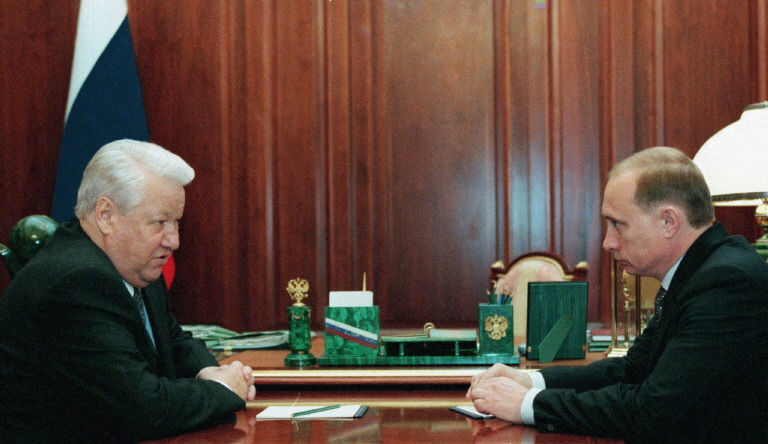
  •  

U.S. vs China’s Aircraft Carriers: New Report Shows How America Can Turn the Tables on “World’s Largest” Navy

For decades, the US has maintained an unassailable lead in aircraft carriers.

The US currently operates 11 flattops, all of them nuclear-powered. China is a distant second with three aircraft carriers, none of them nuclear-powered.

The US operates roughly half of the world’s true aircraft carriers. However, for years, the security analysts in Washington have been wargaming for a nightmarish scenario.

What if the US’s carrier fleet is not a force multiplier, but a strategic vulnerability? Or, to put it another way, can Beijing sink the US Navy’s aircraft carriers?

These questions have assumed significance ever since China claimed to have developed anti-ship ballistic missiles (ASBMs), the DF‑21D and DF‑26B, also known as “carrier-killers.”

These ASBMs are part of China’s broader A2/AD (Anti-Access and Area Denial) architecture intended to push U.S. carrier strike groups (CSGs) beyond the first island chain.

In the last decade, several wargames, research studies, think‑tank reports, and opinion columns have wondered whether carriers are becoming obsolete, the new battleships – large, complex, and expensive systems – but vulnerable to cheap, long‑range missiles.

But a new Center for Strategic & International Studies (CSIS) research paper has flipped the script: if US carriers are vulnerable, why can’t Washington also hold China’s new carriers at risk?

Are Aircraft Carriers Becoming Obsolete? 

In 2023, the South China Morning Post reported that researchers at North University of China claimed that it took an average of only 24 hypersonic missiles to sink the USS Gerald R. Ford and its five escort ships across 20 simulated battles.

From an economic point of view, that would imply that for every $1 China spends on new classes of low-cost hypersonic missiles, it could destroy $10,858.59 worth of U.S. capital ships.

A British study published in 2024 found that their carriers – the HMS Queen Elizabeth and HMS Prince of Wales – were similarly at risk.

Not just think tanks, even senior US government figures have expressed similar fears.

US Secretary of War Pete Hegseth said in a recent podcast interview: In wargames against China, ‘We lose every time.”

The secretary went further, linking US defeat to the vulnerability of aircraft carriers: “We know what our real capability [is]…If our whole power projection platform is aircraft carriers and the ability to project power that way strategically around the globe . . . and if 15 hypersonic missiles can take out our 10 aircraft carriers in the first 20 minutes of a conflict, what
does that look like?”

But if US carriers are so vulnerable, why can’t Washington bring China’s expanding carrier fleet within its firing range?

China’s Expanding Carrier Fleet

After the US, China has the world’s second-largest carrier fleet.

Beijing currently operates a fleet of three aircraft carriers. China launched its third carrier, Fujian (Type 003), an 80,000‑ton supercarrier capable of launching a mix of over 50 fourth- and fifth-generation fighters, and key enablers such as KJ-600 airborne early warning and control aircraft.

China also launched Sichuan (Type 076), a 40,000‑ton amphibious assault ship also suspected of serving as a drone carrier capable of using an electromagnetic (EM) catapult to launch GJ-11 stealth unmanned combat aircraft.

A fourth carrier (Type 004) is undergoing construction. Satellite imagery suggests that this will likely be China’s largest and first nuclear-powered carrier.

Fujian-China
The Fujian is more technically advanced than the other Chinese carriers.

China plans to construct six additional aircraft carriers by 2035, bringing its total carrier force up to nine, according to the Department of War (DOW).

China’s growing carrier fleet is a force multiplier; however, it could also become a strategic vulnerability.

The Vulnerability of the US Aircraft Carriers

China recognized early that the US ability to project force globally rests on its fleet of 11 nuclear-powered aircraft carriers. It also recognized that it would be decades before it could match Washington in carrier fleet strength.

Therefore, China focused its energy on developing weapons systems that could negate the US advantage and developed anti-ship ballistic missiles (ASBMs).

Recent pieces have argued that Chinese hypersonic and ballistic missiles, supported by an increasingly sophisticated space‑ and AI‑enabled “kill web,” could force US and allied carriers so far offshore that their air wings become operationally irrelevant.

For example, the YJ-21 is a Chinese air-launched medium-range ballistic missile specifically designed to strike high-value assets such as carriers. This missile can be launched from fighters and unmanned combat aerial vehicles (UCAVs) and uses redundant guidance systems that make it difficult to jam; a variant can be fired from Type 055 destroyers, though this may have been the YJ-20.

Source: Adapted from CSIS Missile Defense Project, “Missiles of China,” CSIS, last modified March 18, 2026. Credits CSIS.

Combined with older missiles such as the DF-26, colloquially known as “carrier-killers” with a range of up to around 4,000 kilometers (km), and the DF-17, which has a shorter range of up to around 2,500 km but is designed to strike high-value assets and evade US interceptors (e.g., THAAD and Patriot), China has an arsenal of systems capable of hypersonic speeds that can hold carriers at risk up to 2,500 miles away.

A Selection of Chinese Anti-Ship Missile Capabilities. Credits CSIS.

However, the current discussion in Washington often frames carriers as unique to the United States and uniquely vulnerable, while underplaying the fact that China is now building its own large-deck, network‑enabled capital ships that are at least as targetable as the U.S. ships China aims to threaten.

How the U.S. Can Make China’s Carriers Vulnerable?

According to the CSIS paper, Washington could follow a five-pronged strategy to make China’s growing carrier fleet vulnerable.

(1) Subsurface ambush operations: China’s Achilles’ heel at sea remains anti‑submarine warfare (ASW).

“Despite various improvements, PLAN surface ASW, fixed‑wing ASW, and undersea sensing are still patchy compared with U.S. and Japanese capabilities, particularly in noisy littorals and chokepoints,” it said.

A cost‑effective way to threaten China’s carriers is through a layered subsurface screen built around the following assets:

■  U.S. nuclear attack submarines (SSNs) operating at range.

■  Allied diesel-electric submarines from Australia, Japan, South Korea, and potentially the Philippines, including submarines equipped with air-independent propulsion where available.

■  Shared undersea sensing networks and common heavyweight torpedoes, enabling coordinated ambush of PLAN carrier groups in transit corridors rather than near the Chinese coast.

■  Shared unmanned undersea vehicles (UUVs) capable of both conducting intelligence collection and limited strike missions against PLAN ships.

The key is to turn the “undersea domain into a continuous threat envelope that forces Beijing to invest heavily in escorts, ASW aviation, and fixed sensors simply to move carriers out of its home waters.”

Further, this approach also leverages existing areas of production and operational excellence from various U.S. allies, making implementation faster and cheaper than more novel approaches.

(2) Land-based maritime strike networks: China’s A2/AD system is, in part, a land‑based missile problem. The United States and its regional partners can mirror that logic by building a distributed, multinational anti‑ship missile network on land from Japan through the Philippines and, where politically feasible, into the South Pacific and even around key maritime terrain globally, including the following:

■  U.S. Marine Corps and Army units fielding Navy-Marine Expeditionary Ship Interdiction System (NMESIS) missile systems, Mid‑Range Capability (i.e., Typhon batteries), and Precision Strike Missiles (PrSMs) adapted to strike ships and a host of information warfare systems (e.g., cyber, space, electronic warfare, and inform/influence activities) stationed as a
littoral rotational force.

■  Australian, Japanese, and potentially Philippine coastal missile batteries (e.g., upgraded Type 12, BrahMos, and naval strike missiles) integrated into common fire control and ISR architectures.

■  Pre‑negotiated access, dispersal sites, and logistics arrangements to ensure these units can survive Chinese Air Force and Rocket Force (PLAAF/PLARF) strikes and continue to generate maritime fires.

Such a network can threaten PLAN carriers during deployment, not just at the point of conflict.

Moreover, “the mere expectation that upon entering the Philippine Sea, carriers such as the Fujian or Sichuan will face dense, land‑based anti‑ship fires backed by allied ISR raises the perceived risk of using them as front‑line tools of coercion.”

(3) Long-range air and space-enabled fires: The United States and its allies can conduct long-range strikes using a mix of bombers, fighters, and maritime patrol aircraft:

■  U.S. Air Force bombers and Navy aircraft armed with anti-ship missiles, such as LRASM and future hypersonic anti-ship weapons, connected to a complex battle network that both supports the attack and degrades enemy sensors.

■  Allied F‑35 fleets (from Australia, Japan, and South Korea) using low‑observable sensors to contribute to the maritime picture and deliver their own long‑range anti‑ship munitions.

■  A mix of kinetic and non-kinetic attack vectors with a conscious emphasis on mission kills, specifically by degrading flight‑deck operations, destroying aviation fuel and ordnance handling, or disabling key escorts and logistics ships supporting the carrier, rather than only aiming for catastrophic hull loss.

This approach is particularly suited to large military powers such as the United States but can be partially adopted by states with smaller budgets by investing in a limited number of fifth‑generation or advanced fourth‑generation aircraft plus modern anti‑ship missiles.

(4) Cyber-electromagnetic disruption: PLAN CSGs are nodes within a broader battle network. Their combat value depends on complex links to off‑board ISR, satellite navigation, command networks, and electromagnetic attack and defense platforms.

By disrupting the carriers’ connections to this broader network, the United States and its allies can deny the PLAN access to the enablers that make its forces more combat-capable.

Rather than treating ships solely as physical targets, U.S. and allied planners should prioritize EM and cyber operations.

(5) Unmanned swarm and port-denial campaigns: The Ukraine war has shown how even a state with a modest navy can use unmanned surface vessels (USVs), unmanned aerial vehicles, and shore‑based missiles to attrite a larger fleet.

Ukraine has successfully forced Russia to pull major units out of Sevastopol and turned the Black Sea into a contested battlespace.

While the terrain of the Pacific is not identical to the Black Sea, a similar logic can be applied to PLAN carriers, especially in the first island chain.

Swarms of relatively low‑cost USVs and loitering munitions can attack ships in port, logistic hubs, and fixed defenses, driving carriers to relocate to more distant, less convenient bases.

The central idea is to make a carrier’s routine employment around Taiwan, the South China Sea, or beyond the first island chain appear prohibitively risky.

By following these steps, the U.S. and its allies could blunt the advantage of China’s growing carrier fleet.

While China has for years invested in AA/AD vectors to make the U.S. carriers vulnerable, Washington could flip the script and make Beijing’s own carriers equally vulnerable.

  • Sumit Ahlawat has over a decade of experience in news media. He has worked with Press Trust of India, Times Now, Zee  News, Economic Times, and Microsoft News. He holds a Master’s Degree in International Media and Modern History from the University of Sheffield, UK. 
  • He can be reached at ahlawat.sumit85 (at) gmail.com

The post U.S. vs China’s Aircraft Carriers: New Report Shows How America Can Turn the Tables on “World’s Largest” Navy appeared first on EURASIAN TIMES.
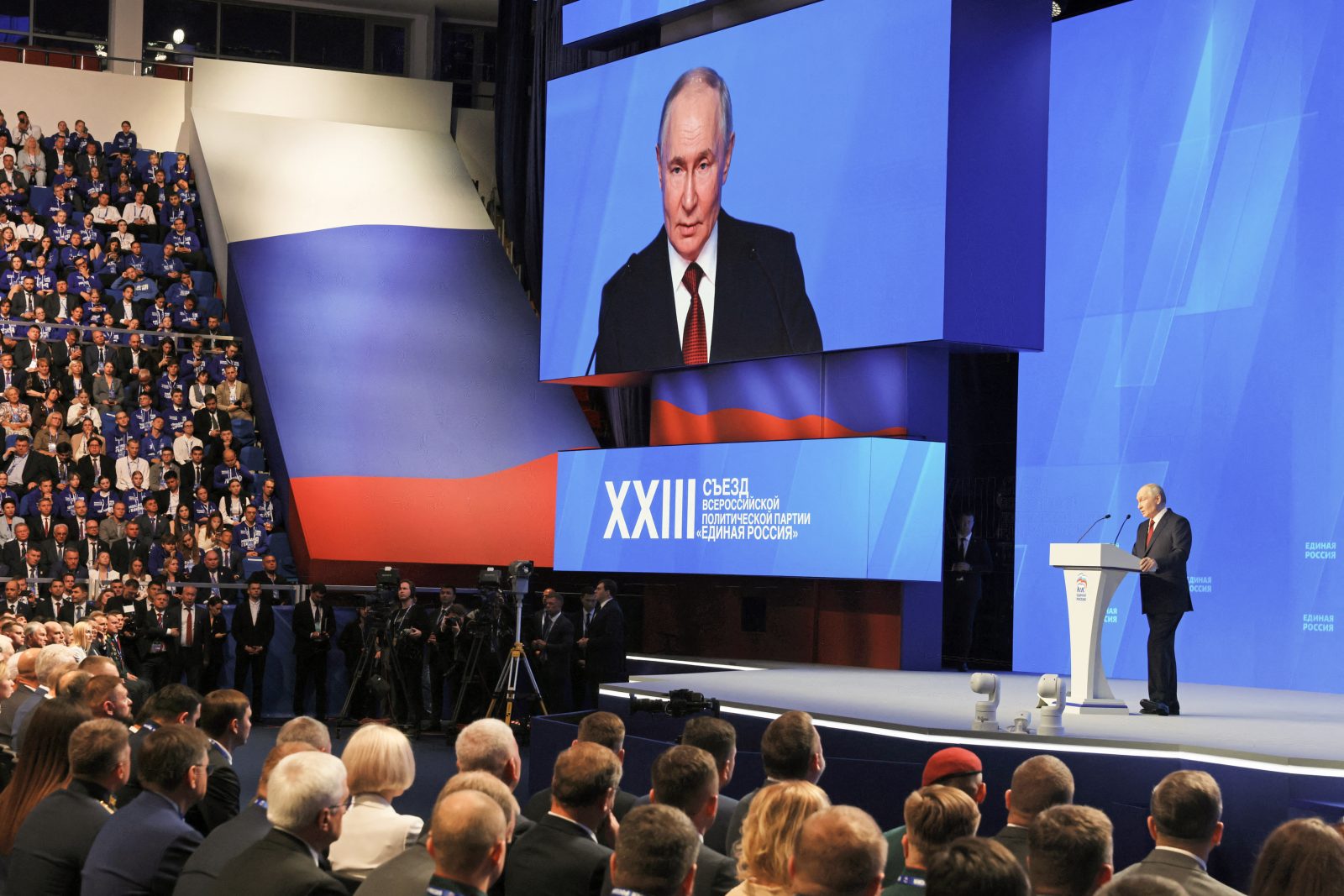
  •  

Rafale F5 in Doldrums After Collapse of FCAS 6th-Gen Program; French Air Force Pushes for More F4 Jets

A month after the collapse of the France–Germany–Spain Future Combat Air System (FCAS) fighter program, the outlook for France’s Rafale F5, the next major upgrade standard of the Dassault Rafale multirole fighter succeeding the F4, has itself grown uncertain.

The French Air and Space Force has indicated it would rather receive additional F4-standard jets sooner than wait for the more advanced F5 variant.

The Chief of Staff of the French Air and Space Force, General Jérôme Bellanger, told senators that his force needs more Rafales well before the fighter’s next standard, the F5, becomes available.

Taking more Rafale F4-standard jets, which Bellanger described as a very capable fighter, would be preferable to waiting for the F5.

While Bellanger did not directly mention the Russia-Ukraine War and fears of the war spreading to Europe and NATO, he did suggest that changed geopolitical circumstances necessitated greater fighter fleet strength sooner.

General Jérôme Bellanger appeared before the Senate foreign affairs, defense and armed forces committee in May, during hearings on the bill updating France’s 2024-2030 military programming law. However, the whole session was held behind closed doors, and transcripts of the meeting were released only in the first week of August.

France’s updated 2024-2030 military programming law, which was adopted by the Senate on July 1, 2026, defers the delivery of 20 Rafale fighter jets from 2031-2032 to 2033-2034, so that the aircraft could be delivered directly to the upgraded F5 standard.

Rafale F5 Standard

France’s planned Rafale F5 standard will be armed with ASN4G hypersonic nuclear missiles and STRATUS RS missiles for suppressing enemy air defenses and for anti-ship warfare, will be powered with a domestically produced, high-thrust T-REX engine, and will feature Manned-Unmanned Teaming (MUM-T) with loyal wingman drones, including plans for a stealth combat drone by 2035.

France’s defense procurement agency, the Direction Générale de l’Armement (DGA), notified MBDA on June 2, 2026, about the framework agreement for the implementation and development contract for the ASN4G (Air-Sol Nucléaire de 4ème Génération), the country’s fourth-generation nuclear-armed hypersonic cruise missile.

The DGA has set a target of 2035 for the missile’s induction, adding that it will be carried by the Rafale F5 and integrated into both the French Air and Space Force’s Strategic Air Forces (FAS) and the Navy’s Nuclear Air Force component.

Meanwhile, the M88 T-REX is an advanced higher-thrust military turbofan engine developed in France by Safran Aircraft Engines to power the Dassault Rafale F5 fighter jet. Officially unveiled at the Paris Air Show in June 2025, it provides a 20% power boost over the standard M88 engine.

Dassault Rafale – Wikimedia Commons

“F5 variant of Rafale will have more powerful engines, improved survivability and data links, and will be accompanied by an unmanned combat air vehicle (UCAV) weighing more than 10t,” Dassault Aviation’s chief executive Officer, Eric Trappier, recently said in an interview.

The Rafale F5 standard is targeting initial operational service capability by 2030. However, integration into the French Air Force and Navy could happen around 2033-2034, with integration of ASN4G hypersonic missiles expected only by 2035.

The aircraft combat fleet target, as per the 2024-2030 military programming law, is unchanged at 225 aircraft by 2035: 185 for the French Air and Space Force and 40 for the French Navy.

However, Bellanger told the Senate that he would need the aircraft sooner, even if they’re of the F4 standard.

“I am going to need more aircraft quickly,” Bellanger told the committee. “If we are not in a position to produce the F5 standard before 2033, we will have to choose the F4, which is already a very fine aircraft, unless the operational contracts of the Air and Space Force on the fighter segment are revised.”

Notably, Bellanger is not alone in demanding more F4-standard Rafale jets sooner, instead of waiting for the F5-standard aircraft.

The Senate committee itself has questioned the design to postpone the induction of 20 Rafale jets so that they can be inducted directly in F5-standard.

It cited the tremendous pressure on the Rafale fleet of the French Air Force, the advanced age of the Rafale Marine aircraft, and mounting operational commitments constraining aircraft availability, according to reports.

Warning that the postponement could widen the capability gap at a critical time, the Senate committee said that the decision seems to be motivated more by budgetary considerations than operational choices.

Notably, in June this year, nearly 80% of the French fighter fleet was airborne at the same time for the first time ever.

Bellanger attributed it to Operation Poker, the quarterly Strategic Air Forces nuclear raid exercise, and intensive deployments in the Near and Middle East, where French Rafales were helping defend Gulf countries against Iranian drones and missiles.

French Rafales are also deployed into Eastern Europe as part of the Baltic Air Policing mission.

In June this year, two French Rafales were scrambled from Siauliai Air Base in northern Lithuania and met up with Gripens to jointly intercept a group of six Russian aircraft, including a Su-35.

📍Lithuania | Interception of 6 🇷🇺 aircrafts within the Baltic air space 🚨✈
 
⚡ Scramble of two 🇫🇷 Rafale aircraft of the Baltic Air Policing 71 detachment, based in Šiauliai 🇱🇹, in order to escort 🇷🇺 aircrafts operating in the Baltic responsibility area.
 
👀  Visual… pic.twitter.com/eDMIBB7xBI

— The 🇫🇷 Joint Staff – Military operations (@FrenchForces) June 4, 2026

“We are overusing the Rafale,” Bellanger said. “Versatility does not mean ubiquity.”

Another reason for overusing the Rafales is France’s expanding nuclear posture.

Earlier this year, French President Emmanuel Macron unveiled the “forward deterrence” nuclear doctrine, proposing to expand France’s independent nuclear deterrent umbrella across Europe.

However, this “forward deterrence” nuclear doctrine would put additional pressure on the Rafale fleet.

Bellanger said that the larger arsenal announced by President Emmanuel Macron at Île Longue in March would “mechanically” force France to reconsider the number of nuclear-armed Rafale B, the single-seat Rafale C assigned to protect them, and potentially its tanker fleet, which remains capped at 15 A330 MRTTs under the updated law.

This would be a major issue for the next programming law, he said, adding that “many more” aircraft would be needed.

“If we expand the nuclear arsenal, it is not so the weapons can sit in storage,” Bellanger said.

Another issue is the tremendous pressure on Dassault Aviation to deliver on its large Rafale orderbook.

France currently has nearly 165 Rafales in its fleet, 41 in the French Navy, and 124 for the French Air Force.

France has a target of 225 Rafale jets by 2035. So Dassault will have to deliver around 60 more Rafales in the coming years.

However, Dassault also has to deliver 165 Rafales for export customers, including India, Egypt, Qatar, Greece, Croatia, the UAE, Serbia, and Indonesia.

This does not include the 100 aircraft that Ukraine has shown intent to acquire, nor the Indian Air Force’s (IAF) proposal for 114 Rafale aircraft, which is currently under active consideration by India’s Ministry of Defense (MoD). If these two deals go through, the numbers will be even more significant, around 380 for export customers and 60 for France.

For perspective, Dassault delivered 26 Rafale fighter jets in 2025, one more than its target of 25. Of the 26 Rafales, 15 were for export customers and 11 for the French armed forces.

A year ago, the Rafale production rate was 2 aircraft a month (24/year). The same has now been increased to 3 per month (36 per year), with plans to increase to 4 per month (48 per year) to handle a growing backlog of orders.

Meanwhile, France’s existing Rafale fleet is working at full capacity, its Rafale Marine fleet is aging rapidly, and the current geopolitical environment and France’s expanding nuclear posture demand more Rafale aircraft sooner rather than later.

Under these circumstances, Bellanger feels that more F4-standard Rafales sooner is preferable to fewer F5-standard Rafales at a later date.

  • Sumit Ahlawat has over a decade of experience in news media. He has worked with Press Trust of India, Times Now, Zee News, Economic Times, and Microsoft News. He holds a Master’s Degree in International Media and Modern History from the University of Sheffield, UK. 
  • He can be reached at ahlawat.sumit85 (at) gmail.com

The post Rafale F5 in Doldrums After Collapse of FCAS 6th-Gen Program; French Air Force Pushes for More F4 Jets appeared first on EURASIAN TIMES.

  •  

Russians “Hold the Key” to Israel’s PM Office: Why Netanyahu’s Fate Hinges on the “Putin Aliyah”

In June 2025, as Israel and Iran fought a brief 12-day war, Russian President Vladimir Putin was pressed on why Moscow was not providing more direct military support to Tehran.

Rather than answering directly, Putin deftly redirected the question, drawing attention to an often-overlooked reality about Israel: its large Russian-speaking population and the growing political weight of immigrants from the former Soviet Union.

“I want to draw your attention,” Putin said, “to the fact that almost two million people from the former Soviet Union and the Russian Federation reside in Israel. It is almost a Russian-speaking country today. And, undoubtedly, we always take this into account in Russia’s contemporary history.”

As Israel heads into polls in October this year that could close the country’s most difficult period in recent decades, Putin’s words will ring like a warning to Israeli politicians, especially Benjamin Netanyahu, the country’s longest-serving Prime Minister who is facing his toughest poll contest.

Indeed, the votes of Russian-speaking immigrants to Israel, many of whom are also called “Putin Aliyah,” those who migrated to Israel from Russia and former Soviet Union republics during the Putin era, could be the most decisive factor in the upcoming elections.

How Russian-Speakers Became the King-Makers in Israel

In Israel’s peculiar election system, just a few seats could decide the outcome of the country’s upcoming general elections, scheduled for October 27.

Israel’s parliament, the Knesset, has 120 seats, and a party, or a coalition, needs 61 seats to form the government.

However, in the last eight decades, Israel never had a single-party government, and the country has always been ruled by multi-party coalitions.

These 120 Knesset seats are filled by proportional representation and a 3.25% electoral threshold.

The whole country is treated as a single electoral district. Voters do not elect individual candidates or local representatives. Instead, they vote for a party, or a coalition of parties. Seats are distributed roughly in proportion to each list’s share of the national vote, provided the list clears the electoral threshold of 3.5%.

Meaning, all political parties/alliances that receive more than 3.5% of the electoral vote will get seats in the Knesset in proportion to their vote share.

For instance, if a party receives 10% of the total vote share, it will have 12 seats in the 120-seat Knesset.

Given the history of multi-party coalition governments in Israel, and a deeply fractured polity and mandates, 5-10 seats could very well decide the outcome of elections.

In the October elections, Israel’s Russian-speaking population could be the X factor that makes or breaks Netanyahu’s dream of coming back to power for a record seventh time.

Russian-Speaking Population in Israel

According to various estimates, Russian-speaking immigrants constitute 12 to 15% of eligible voters in Israel. However, some reports give a number as high as 17%.

This figure primarily covers immigrants and their descendants from the former Soviet Union/post-Soviet states who arrived mainly in the large 1990s wave.

After Putin launched an invasion of Crimea in 2014, and then attacked Ukraine in 2022, a second large wave of Russian-speaking Jews immigrated from Russia and Ukraine to Israel. These new Russian-speaking immigrants are known as “Putin-Aliyah.” Aliyah is the immigration of Jews from other countries to the Land of Israel.

Russian speakers could number around 1.3 million in the country’s population of 9.6 million.

Russian is described as the third most common native language in Israel after Hebrew and Arabic.

Furthermore, Russian-speakers are known for their high voter turnout and for voting as a bloc.

According to estimates, Russian speakers could influence 14-15 seats in the 120-member Knesset.

Given that in the current Knesset, the largest political party, Netanyahu’s Likud, won 34 seats, whereas the second-largest party, Yesh Atid, won only 24, 15 seats could very well decide who will form the next government.

Furthermore, nearly 125,000 Russian-speakers have migrated to Israel since Putin launched its military offensive in Ukraine in February 2022.

Therefore, in the October 2026 election, the influence of Russian-speaking immigrants in the electorate would be even stronger.

Another 125,000 Russian-speakers had migrated to Israel earlier after the occupation of Crimea by Russia in 2014.

Together, these 250,000 Russian-speaking immigrants, or “Putin-Aliyah,” could influence 5-6 seats in the Israeli Knesset, and the scramble for these votes has already begun.

Voting Preferences of Russian-Speakers in Israeli Elections

“People form norms and habits, and it is very hard to change their minds. Even when reality changes, they adjust their internal priorities to maintain the same voting patterns. For example: ‘Likud is terrible on religion and state issues, but I vote for them out of security considerations.’ That is why the new immigrant community is worth its weight in gold. The vote of this audience in the upcoming elections could set a trend for decades,” political psychologist Dr. Hagay Elkayam-Shalem told Haaretz.

There have been many studies on the voting behavior of these Russian-speaking immigrants. While these studies have reached different conclusions, it is safe to say that the Russian-speakers are not a monolithic bloc.

Elkayam-Shalem’s study of more than 600 Russian-speaking Israeli residents who arrived after 2012 found that 73% described their political views as “moderate” – 25% center-right, 30% centrist, and 18% center-left. Among those who arrived after 2022, more than a quarter identified as left-wing (27%).

Israeli Prime Minister Benjamin Netanyahu attends the annual ceremony on the eve of Israel’s Remembrance Day for fallen soldiers (Yom HaZikaron) at the Yad LaBanim Memorial in Jerusalem on April 20, 2026. (Photo by Marc Israel SELLEM / POOL / AFP)

The same study also found that in the 2022 elections, 45% of new Russian-speaking immigrants supported today’s opposition, and only 13% chose parties represented in the ruling coalition.

If these trends continue, it would mean that Netanyahu will have a hard time convincing these people to vote for his party.

However, Netanyahu and his Likud party were not always this unpopular among Russian-speaking immigrants.

According to multiple studies done by Prof. Zeev Hanin, a professor with the Department of Political Studies at Bar Ilan University and a lecturer at the Department of Israel in the Middle East and Political Science at Ariel University in Judea and Samaria, the Likud won 26.7% of the immigrant vote in the 2019 election, behind 40.2% of the vote share for Yisrael Beytenu; the Blue and White party won 15.1%; and the Kulanu party won 5.8% of the sector’s vote.

The rest of the votes were divided between the Labor party (2.3%), the New Right (3.2%), and Sephardic Ultra-Orthodox party Shas (1.5%).

So, in 2019, Netanyahu’s Likud won the second-highest share of votes among Russian-speaking immigrants in Israel.

However, together with Yisrael Beytenu, the right-wing parties in Israel got nearly 67% of the vote of Russian-speakers.

Hanin explains this preference for right-wing parties among Russian-speakers as the result of their experience in Russia in the troublesome 1990s.

“Immigrants from the former Soviet Union believe in strong leadership more than they believe in the democratic apparatus,” Remennick said. “The drunken democracy they experienced in the 1990s immediately after the dissolution of the Soviet Union was essentially chaos: there was no law and order, no work, and nothing to eat, which is why [Russian President] Vladimir Putin was able to rise to power and stay there for 20 years. People cling to the order and stability that a strong leader can provide.”

However, the voting preferences of Russian speakers are not static and have evolved over time and with changing circumstances.

For instance, they helped Labor’s success in 1992 and contributed to Netanyahu’s narrow 1996 prime ministerial win. They supported Ehud Barak in 1999 and later Ariel Sharon.

However, in the 2022 election, according to Elkayam-Shalem’s study of more than 600 Russian-speaking Israeli residents who arrived after 2012, only 13% chose parties represented in the ruling coalition, including Netanyahu’s Likud party.

Netanyahu is perhaps already aware of the criticality of this bloc and conscious of his falling support among them.

In April this year, Israel’s Channel 14 announced the acquisition of the Russian-language news site Mignews, one of the oldest Russian-language resources in Israel. Channel 14 is often called Israel’s equivalent of Fox News and is considered a mouthpiece for the Netanyahu camp and far-right views.

Another critical factor could be the October 7, 2023, Hamas terror attacks. The Russian-speaking immigrants have historically adopted a hawkish attitude on the Palestine issue and support a strong security state, a preference they might have carried from the security-focused Russian state.

In this new atmosphere where security issues are set to dominate the election debate, many Russian speakers could again shift to the right, which could benefit Netanyahu. A strong showing among Russian speakers could help Netanyahu balance some of his losses in other sections of Israeli society.

Whether or not Netanyahu is able to win back support among Russian speakers, the bloc is set to play the king-makers in the 2026 elections.

  • Sumit Ahlawat has over a decade of experience in news media. He has worked with Press Trust of India, Times Now, Zee News, The Economic Times, and Microsoft News. He holds a Master’s Degree in International Media and Modern History from the University of Sheffield, UK. 
  • He can be reached at ahlawat.sumit85 (at) gmail.com

The post Russians “Hold the Key” to Israel’s PM Office: Why Netanyahu’s Fate Hinges on the “Putin Aliyah” appeared first on EURASIAN TIMES.

  •  

America’s $40 Billion Blind Spot: Why World’s Largest Arms Exporter Hasn’t Sold a Single Submarine in 50 Years?

The US has been the world’s largest defense exporter for more than three decades now.

According to SIPRI (Stockholm International Peace Research Institute), the United States accounted for 42% of global arms exports between 2021 and 2025.

For perspective, during this period, France was the world’s second-largest defense exporter, accounting for only 9.8% of global arms exports.

However, despite its dominant position in global arms exports, the United States has notably been absent from a particular high-value weapon system market that could have generated billions of dollars in additional revenue for its defense firms.

Ironically, Washington has stayed out of this business despite leading the world in this niche technology for over five decades.

On July 6, Canada reportedly selected the winner of the Canadian Patrol Submarine Project (CPSP) deal, expected to cost nearly US$ 30 billion, with Germany’s TKMS outdoing South Korea’s Hanwha.

Similarly, India is in the final stages of signing a major submarine deal with ThyssenKrupp Marine Systems (TKMS) under Project 75(I).

Both Canada and India are strategic partners of the US. One might wonder why the US defense companies were not even in the running for these “big ticket” deals.

This, despite the fact that the US is not only the world’s largest submarine operator, but its submarines are also some of the most advanced in the world. According to the Global Firepower Index 2026, both Russia and the US operate 66 submarines.

However, while Russia operates a mix of diesel-electric and nuclear submarines, all of the US’s submarines are nuclear-powered.

China is fast catching up with 61 submarines; however, China also operates a mix of diesel-electric and nuclear submarines.

However, Russia (and formerly the Soviet Union) has exported submarines to Algeria, Bulgaria, China, Cuba, Egypt, India, Indonesia, Iran, North Korea, Poland, Romania, Syria, Venezuela, Vietnam and others, and China has exported to Pakistan, Myanmar, Bangladesh and Thailand.

Interestingly, the US, despite its technological lead in the field, has not exported a single submarine to any country in the last 50 years. In fact, the last submarine the US exported was in 1973 to Taiwan.

So, why, despite its dominant position in global arms export and its technological lead in the field, has the US not exported a single submarine to any country in over 50 years?

Trump Calls It “Invasion,” Musk Says Budget “Destroyed”: Moroccan Surge in Spain Rattles U.S. & Europe and Reignites “Islamic Fear”

US Submarine Exports in History

The US was not always averse to exporting submarines. After the Second World War, the US emerged as one of the world’s largest submarine exporters.

During the war, the US constructed over 200 submarines, and by the time the war ended, the US had 232 submarines in commission.

However, within years of the end of the Second World War, a new Cold War began with the Soviet Union, and the US launched a massive modernization campaign for its submarines.

Under the modernization plan, the US decommissioned hundreds of its late-war-era Balao- and Tench-class diesel-electric submarines.

This left the US with dozens of decommissioned submarines.

At the same time, the US was financing a massive reconstruction plan in Europe under the Marshall Plan and building Europe’s military capabilities to create an effective deterrent against the Soviet Union.

For this purpose, the US decided to export these older, decommissioned, diesel-electric submarines to its allies. Between 1950 and 1970, the US exported nearly 50 submarines to its partners, including Turkey, Spain, Italy, Greece, the Netherlands, Canada, Taiwan, and others.

In fact, between 1945 and 1975, the United States accounted for roughly 25% of global exports of diesel-powered submarines.

Most of these were Balao-class diesel-electric submarines built during World War II.

Meanwhile, in 1954, the US launched USS Nautilus (SSN-571), the world’s first nuclear-powered submarine, heralding the era of nuclear-powered submarines.

Nuclear-powered submarines have key advantages, such as unlimited endurance, as they can stay submerged for months, maintain high underwater speeds consistently, and have global reach.

After the launch of USS Nautilus, Washington gradually phased out diesel-electric submarines. After 1954, the US built only three Barbel-class diesel-electric submarines.

By the early 1960s, all new US Navy combat submarines were nuclear-powered. The last diesel-electric attack submarine (USS Blueback) was decommissioned in 1990, leaving Washington with only nuclear-powered submarines.

USS-Virginia-Submarine
File Image: USS West Virginia Submarine: Via US CENTCOM

Why Does the U.S. Not Export Nuclear Submarines?

The US nuclear-powered submarines are considered the best in their class; however, to date, Washington has not exported this technology to any country for various reasons.

Firstly, the U.S. Navy has long opposed even the export of diesel-electric submarines due to concerns about the impact of submarine technology proliferation on the ability of its forces to operate securely in coastal waters worldwide.

Submarines fall under the US Munitions List and are subject to the International Traffic in Arms Regulations (ITAR) and the Arms Export Control Act.

When it comes to nuclear propulsion technology, the US Navy is highly sensitive, as it adds extra layers of control under the Atomic Energy Act.

The US nuclear propulsion, quieting technology, sonar, and combat systems are considered among America’s most protected “crown jewels.”

The US has deliberately avoided proliferating this technology to preserve its undersea dominance.

In fact, Washington is so sensitive about submarines’ nuclear propulsion technology that it has refused to share this technology even with its close allies, such as France, Japan, Taiwan, or Canada.

The only two exceptions are the UK and Australia.

The US has a long-standing special nuclear propulsion technology-sharing agreement with the UK, dating back to the 1958 US-UK Mutual Defense Agreement.

The US supplied the reactor for Britain’s first nuclear sub, HMS Dreadnought, and ongoing collaboration allows the UK to design and build its own boats.

However, this is alliance cooperation, not a commercial export.

Similarly, in 2021, the US, the UK, and Australia signed the AUKUS agreement, under which the US has agreed to sell/transfer up to three Virginia-class SSNs to Australia, starting in the early 2030s.

Another issue is US industrial capacity, which is already struggling to meet US Navy demand for Virginia-class submarines.

In its current modernization drive, the U.S. Navy hopes to add two to three Virginia-class attack submarines to its fleet annually until 2043.

In fact, it’s not just the US that is sensitive about exporting nuclear submarines.

Globally, nuclear-powered submarines are operated by only six countries: the US, Russia, China, France, the UK, and India.

The US, Russia (formerly the Soviet Union), and the UK have been operating nuclear submarines for over six decades now.

However, to date, there is only one example of a country exporting/leasing a nuclear-powered submarine to another country.

The Soviet Union first leased a Charlie I-class (K-43) nuclear-powered submarine to India in 1988–1991.

India operated it as INS Chakra.

Further, Russia leased an Akula-class submarine (Nerpa/K-152) to India from 2012 to 2021, which New Delhi operated as INS Chakra II.

The US, the UK, China, France, and India have never exported or leased a nuclear submarine to any country.

In fact, how all countries are highly protective of nuclear-powered submarines can be gauged from the fact that even China refused this technology to its all-weather ally, Pakistan.

Leaked documents revealed that Pakistan formally asked China for nuclear-powered submarine technology and sea-based nuclear second-strike capabilities to counter India.

However, Beijing ultimately refused to provide the technology, citing global non-proliferation commitments and a desire to avoid triggering a regional nuclear arms race.

Instead, China is providing Pakistan with eight Hangor-class diesel-electric attack submarines, under a US$5 billion deal.

However, since the US no longer produces diesel-electric submarines and is reluctant to export nuclear-powered submarines even to its close allies, Washington is effectively out of the global submarine business, which is dominated by countries such as Germany, France, Russia, China, and Spain, and the situation is unlikely to change in the near future.

  • Sumit Ahlawat has over a decade of experience in news media. He has worked with Press Trust of India, Times Now, Zee News, Economic Times, and Microsoft News. He holds a Master’s Degree in International Media and Modern History from the University of Sheffield, UK. 
  • He can be reached at ahlawat.sumit85 (at) gmail.com

The post America’s $40 Billion Blind Spot: Why World’s Largest Arms Exporter Hasn’t Sold a Single Submarine in 50 Years? appeared first on EURASIAN TIMES.

  •  

Su-57: Russia Claims 1st Air-to-Air Kill For Its Stealth Fighter in Ukraine War Using Hybrid RVV-SDM Missile

Russia has for the first time officially claimed that its fifth-generation fighter jet, the Su-57, has registered its first air-to-air kill in the Ukraine War, using a hybrid RVV-SDM missile.

Alexander Mikheev, Director General of Rosoboronexport, Russia’s state arms exporter, said that the stealth aircraft has proved its superiority in all aspects of warfare, including hitting targets on the ground and in the air.

This, he said, is fueling a heightened global interest in the Su-57E fifth-generation fighter.

“Rosoboronexport notes increased global market interest in the Su-57E fifth-generation fighter. It has proven its superiority in real combat conditions when countering the most advanced air defense and electronic warfare systems. The aircraft has engaged numerous airborne, ground, and surface targets with Russian air-to-air munitions, including the latest RVV-SDM guided missile,” Russia’s state-controlled news agency TASS quoted Mikheyev as saying.

The RVV-SDM is a new medium-range air-to-air missile introduced by Russia’s Rosoboronexport to arm the export variant of the fifth-generation Su-57E stealth fighter. It features fire-and-forget capabilities, active-passive radar guidance, and high resistance to electronic warfare.

According to Vijainder K Thakur, former Indian Air Force (IAF) pilot and defense analyst, the RVV-SDM is a medium-range missile, most likely a derivative of the RVV-SD tweaked for internal carriage by the Su-57 and improved performance.

While reports of Su-57’s first aerial kill have been doing rounds for some time now, this is the first official acknowledgment by Russia of Su-57’s air-to-air kill in the Ukraine War.

In April 2026, a report attributed to Sergei Lebedev claimed that a Su-57 had destroyed a Ukrainian Air Force aircraft in an aerial engagement over the Mykolaiv region using a long-range missile.

In May 2026, Russian media and Telegram channels claimed that a Su-57 had used a long-range R-37M missile to shoot down a Swedish Saab 340 AEW&C aircraft transferred to Ukraine over eastern Ukraine.

Mikheyev said that Su-57’s combat performance in the war has fueled global interest in the aircraft’s export variant, the single-seat Su-57E. However, despite its best efforts to promote the aircraft in the international market, so far there has been only one confirmed customer of the Su-57.

Edited Image: Su-57

Algeria was the first country to confirm the acquisition of the Su-57E. The country, which has a fleet of Soviet-Russian Su-30MKA, MiG-29, and MiG-25 fighters, has bought an unspecified number of aircraft and has reportedly deployed the jet on operational duty.

In November last year, Vadim Badekha, the Director General of United Aircraft Corporation (UAC), which manufactures the Su-57, announced that Russia has delivered two Su-57E stealth aircraft to a foreign client.

“Our foreign customer, our foreign partner, has already received the first two aircraft. They have begun to carry out combat duty and demonstrate their best qualities. Our customer is satisfied,” Badeja said.

Russia is also pitching the Su-57E to India and has even promised full Transfer of Technology (ToT) and to localize the production of the stealth aircraft in India. However, New Delhi has not made a decision yet.

According to Russian officials, the Su-57’s combat experience in the Ukraine War and limited exposure during the Syria war is a key highlight of the stealth fighter jet’s export potential.

Russia has, however, used the Su-57 very cautiously in the Ukraine war. According to security analysts, the aircraft has been mostly used for stand-off strikes from long distances.

Earlier this month, it was reported that Moscow is also using the stealth jet in anti-drone operations near Moscow.

Notably, just a few days earlier, a picture emerged showing the Su-57 fitted with R-73 air-to-air missiles attached to its wing pylons rather than in its internal weapons bay.

Carrying the missiles beneath the wing pylons would compromise the Su-57’s stealth; however, if the jet is deployed primarily for anti-drone operations, maintaining stealth is of no use.

Carrying these short-range AAMs externally suggests that the Su-57 load-out was optimized for close-range aerial engagements, most likely against the long-range Ukrainian one-way attack drones and cruise missiles that Kyiv has recently begun using.

Critics argue that Moscow is deliberately limiting the aircraft’s exposure to protect its export potential. Any confirmed losses to Ukrainian forces, they say, would severely damage the jet’s credibility in the international export market.

Still, an official acknowledgment by Russia of Su-57’s first aerial kill will no doubt boost the jet’s credibility, which has so far struggled to find many export customers.

Notably, while the US’s F-35 fighter jet has been in service for 11 years and has seen action in many wars, including in Iraq, Syria, Yemen, Gaza, and Iran, it scored its first air-to-air kill in March this year.

An Israeli Air Force F-35I “Adir” stealth fighter jet shot down an Iranian YAK-130 aircraft over Tehran, according to a statement by Israel Defense Forces (IDF).

“This is the world’s first shootdown of a manned fighter jet by an F-35,” the statement added.

It must also be noted that Ukrainian airspace is heavily defended by frontline Western air defense systems such as Patriots. This is in contrast to where the F-35 has seen combat, in the poorly defended airspace of Gaza, Syria, Iraq, Yemen, and Iran.

Meanwhile, the USAF’s F-35 fighter jet also got hit by an Iranian drone-missile hybrid in the Iran war, underscoring that even most advanced Western stealth fighter jets are not completely invisible or invincible.

Additionally, while Russia initially faced many issues with the Su-57, including production delays, Moscow has made key improvements to the aircraft in recent years, increasing its lethality and survivability in contested airspace.

Su-57’s Continuous Upgradation

In February this year, Moscow’s Rostec press service said that the Russian Aerospace Forces (VKS) have inducted a new batch of Su-57 fighters featuring a “new technical profile.”

The upgraded version of Russia’s fifth-generation fighter incorporated enhanced onboard systems and a new weapons configuration that significantly expanded the jet’s combat role.

SU-57 RUSSIA
File Image: Su-57. Via Wikipedia

“To fulfill the targets set by the Russian Defense Ministry for the supply of highly sought-after weapons and military equipment to the troops, crews of the Russian Aerospace Forces have accepted the Su-57 aircraft in its new technical configuration,” the Rostec press service quoted a Su-57 pilot as saying.

“The aircraft has already proven itself during the special military operation (Ukraine War). The new technical configuration will provide for the expansion of the range of missions for which this aircraft type is deployed. The advanced capabilities incorporated into the aircraft armament system make it possible to use new types of aircraft weapons,” the pilot added.

While Rostec provided no details of the upgraded onboard systems or the new weapons package, analysis of higher-resolution images released by UAC and examined by OSINT analyst George N. revealed visible changes to the 101KS electro-optical complex, which supports self-protection and missile warning functions.

The 101KS complex is an electro-optical targeting system that provides the Su-57 with all-weather surveillance and passive infrared detection.

The 101KS complements the radar by detecting and tracking targets in the infrared and visible spectra. It can detect heat signatures of missiles and aircraft and conduct passive situational monitoring.

This allows the fighter to operate without active emissions, enhancing survivability in highly contested environments.

The aircraft also received revised apertures, presumably operating across multiple spectral bands, including visible, mid- and long-wave infrared (IIR), and possibly ultraviolet (UV), pointing to a substantial expansion of passive observation capabilities.

The imagery suggested that the 101KS would no longer function solely as a defensive sensor, but rather as a key element of situational awareness, aligned with the philosophy of the AN/AAQ-37 Distributed Aperture System (DAS) carried by the F-35.

It underscored that the Su-57 is moving toward a distributed, passive surveillance capability that can detect and track airborne threats without relying solely on radar.

The announcement came nearly two months after the UAC confirmed it had tested the Su-57 with a new Izdliye 177 engine, a powerplant developed by the United Engine Corporation (UEC) specifically for the Su-57.

The new Izdliye 177 engine was tested with the Su-57 in December 2025. According to a Rostec official, each Izdliye 177 engine can deliver up to 16,000 kg of thrust (approximately 35,000 pounds) with the afterburner engaged.

The new engine will further reduce fuel consumption and is stated to be far more durable than the previous power plant, the Saturn AL-41F1 afterburning turbofan engine.

In fact, the fighter jet has been steadily upgraded since its induction into the VKS in 2020.

Vadim Badekha, CEO of UAC, recently said the platform continues to evolve.

“The fifth-generation Su-57 aircraft system is the best aircraft in its class, but we’re not resting on our laurels. The fighter has undergone a tremendous evolution, and its improvement continues today – the aircraft’s weapons and systems capabilities are being upgraded,” Badekha said.

“This fighter allows us to solve the most important tasks today, demonstrating efficiency and excellent maneuverability and combat capabilities,” he added.

All these upgrades fit within the progressive maturation of the Su-57 program, also known as the Megapolis development program.

Under it, the Su-57 would receive incremental upgrades to its avionics, cockpit, engine, sensors, and weaponry.

Russian engineers claim that the Su-57 is a future-oriented project that will evolve as Moscow’s principal air combat system well beyond 2040.

At the same time, these upgrades will also boost the jet’s export potential.

  • Sumit Ahlawat has over a decade of experience in news media. He has worked with Press Trust of India, Times Now, Zee News, Economic Times, and Microsoft News. He holds a Master’s Degree in International Media and Modern History from the University of Sheffield, UK. 
  • He can be reached at ahlawat.sumit85 (at) gmail.com

The post Su-57: Russia Claims 1st Air-to-Air Kill For Its Stealth Fighter in Ukraine War Using Hybrid RVV-SDM Missile appeared first on EURASIAN TIMES.

  •  

Why is Putin Hunting Telegram’s Founder Pavel Durov and Branding Him a Terror Facilitator?

Russia has charged Telegram founder Pavel Durov with facilitating terrorist activity in the country and put him on an international wanted list, alleging that his hugely popular messaging app was being used by ‌Ukrainian spies to organize attacks inside Russia.

The charges, announced by the Federal Security Service (FSB), followed a long investigation into Telegram.

The FSB accused Telegram of failing to remove “numerous channels, chats and bots” allegedly used by “Ukrainian intelligence agencies, terrorist and extremist organizations to prepare and coordinate acts of sabotage and terrorism, mass murder, and cyberfraud” in Russia, which resulted in “numerous human casualties.”

It further said that a chatbot available on Telegram called “Daivinchik/Leo” had been ​used by Ukrainian spies to recruit young Russians to carry out sabotage and terrorist operations.

Reportedly, Ukrainian special agents pose as young women on the app to recruit Russian men and use them for spying or carrying out sabotage activities.

Russia has also issued an international arrest warrant against Durov, who was born in Russia but currently lives in Dubai.

Notably, the Telegram app, which is hugely popular in Russia, is already heavily restricted in Russia.

Russian citizens can now access Telegram only by using a VPN to encrypt their traffic and conceal their location. However, despite these restrictions, state bodies, including the Kremlin and the defense ministry, continue to post ⁠on it regularly.

The crackdown on Telegram is part of Russia’s broader effort to restrict access to foreign tech platforms and assert control over the internet. Apart from Telegram, other popular messaging apps such as WhatsApp, Instagram, Facebook Messenger, Signal, Discord, Snapchat, and Apple FaceTime are also banned in Russia.

Russia has now gone one step ahead and formally charged Telegram founder Durov with aiding terrorism, despite the fact that the app is hugely popular in Russia.

However, notwithstanding Russian restrictions on Telegram and the charging of its founder with terrorism, both Russia and Ukraine have used the app extensively in the ongoing war.

In fact, the Telegram app has also been described as a “virtual battlefield” in the war between Russia and Ukraine, where it is used ​by officials, soldiers, defense ministry handles, and influential bloggers on both sides.

So, how did a messaging app become key to the Russia-Ukraine War?

Telegram As A “Virtual Battlefield” in the Russia-Ukraine War

In the Soviet Union, media was heavily controlled by the state to control public discourse.

Russia inherited this culture of controlling the narrative through its influence on the media. However, with the proliferation of digital and social media, the state’s ability to control the media weakened.

Telegram was one of the most popular messaging apps in Russia and Ukraine in 2022 when the war began.

In Russia, Ukraine, and many Eastern European countries, Telegram served as a crucial alternative to state-monitored communication channels for sharing news.

With Russia’s invasion of Ukraine, Facebook and Instagram were banned over extremism charges by a Moscow court, and access to Twitter was restricted by the Russian censorship body Roskomnadzor.

As there was disdain for traditional state-controlled media in Russia and many other social media channels were banned outright, the role of Telegram, already hugely popular in Russia, in shaping narratives and controlling perceptions of the war became even more critical.

According to a Levada survey, among Russian youth aged 18-24, TV was the least popular news source, with 41% relying on Telegram channels for news. Additionally, during the first two months of the conflict, 76.6% of Ukrainians used social media for news, with Telegram as the most favored platform at 65.7%.

Telegram was also used by both the Russian and Ukrainian governments to broadcast air raid warnings and distribute maps of local bomb shelters.

Some of Telegram’s unique features, such as the ability to make a channel public or private, the option to have unlimited subscribers, and the lack of algorithms that boost or restrict content visibility, have made Telegram a popular information-dissemination tool for both pro- and anti-war voices.

In this pool photograph distributed by Russian state agency Sputnik, Russia’s Vladimir Putin addresses the audience at the 23rd Congress of the United Russia party in Moscow on June 28, 2026. Vladimir Putin vowed on June 28, 2026 to ensure security and overcome challenges as Ukraine stepped up its retaliatory strikes inside Russia amid Moscow’s four-year war. (Photo by Yekaterina SHTUKINA / POOL / AFP)

According to a research paper titled ‘Telegram as a Battlefield,’ over 40% of Telegram channels are dedicated to news, with approximately 17% directly related to the war and ongoing events in Ukraine.

As the war progressed, many war bloggers who were not part of traditional media outlets began posting on Telegram, reaching millions of people.

For millions of people, these war bloggers became an alternative source of information and war updates, often coming straight from the front lines.

Given its popularity as a source of information for war updates, many pro-government channels also used Telegram to push their narrative and spread disinformation.

The paper ‘Telegram as a Battlefield’ also found that after the invasion, average views per post for Pro-Kremlin channels rose from 15,929 to 67,442 (a 323% increase) and for Anti-Kremlin channels from 25,346 to 104,778 (313% increase), highlighting how Telegram emerged as a critical battlefield for disseminating information, propaganda, and shaping narratives.

However, it noted that anti-Kremlin channels consistently garnered higher viewership than pro-Kremlin channels, especially post-invasion.

Also, as the war progressed, Ukraine, just like in the case of drone technology, used Telegram in more innovative ways than Russian government circles.

Ukrainians used it for air-raid alerts, bomb-shelter maps, and official updates from President Zelensky and military commands.

Ukraine also used Telegram as an intelligence-collecting tool. It crowdsourced intelligence via tip bots and channels that shared enemy vehicle movements, leading to successful strikes.

Common people in Ukrainian villages often shared information on Russian military movements with the Ukrainian military and intelligence securely via Telegram.

Telegram, in fact, became a vast depository of HUMINT (human intelligence) for Ukraine.

Furthermore, the platform was also used by Russian government critics to share information with the Ukrainian military across the border.

Telegram was also used to document war crimes and OSINT (open source intelligence).

Ukrainian intelligence also used Telegram to communicate with people in occupied territories and to encourage them to share intelligence on the Russian military.

Frontline troops also use the app to organize logistics, share drone feeds, and have informal discussions with their military commands.

Telegram has also been described as the conflict’s digital battle space, where organizing logistics, war blogging from the frontlines, propaganda, disinformation campaigns, narrative warfare, intelligence collection, recruitment of spies and saboteurs, cataloging of war crimes, and dissemination of public interest information like air raid warnings and bomb shelter maps all take place in real time.

Telegram, in fact, is providing the most unfiltered view of the war.

“Telegram has become this really key battleground in the information war,” Dr. Ian Garner, a historian and translator of Russian war propaganda, told Time magazine. “And it’s interesting that this information war has been outsourced to a private company.”

While Russia has often tried to use Telegram to its advantage, Ukraine has shown much more ingenuity in using it, which explains Moscow’s love-hate relationship with the app.

Russia might have restricted the app and now formally charged its founder with terrorism, but official Russian media handles are still using it, and even common Russian citizens can use it using VPN services.

However, even after these formal charges, Telegram will continue to remain the digital battle space of the Russia-Ukraine War.

  • Sumit Ahlawat has over a decade of experience in news media. He has worked with Press Trust of India, Times Now, Zee  News, Economic Times, and Microsoft  News. He holds a Master’s Degree in International Media and Modern History from the University of Sheffield, UK. 
  • He can be reached at ahlawat.sumit85 (at) gmail.com

The post Why is Putin Hunting Telegram’s Founder Pavel Durov and Branding Him a Terror Facilitator? appeared first on EURASIAN TIMES.

  •  
❌