The program's early termination is the latest setback for Los Angeles communities in the middle of recovery and awaiting billions of additional federal dollars.
The ports of Los Angeles and Long Beach both set all-time monthly cargo records in September, handling a combined 2.04 million twenty-foot equivalent units (TEUs) as strong imports and shifting...
Analucía Lopezrevoredo says she founded Los Angeles-based social organization Jewtina y Co to answer her longtime question: 'Where do people like me get to be whole?'
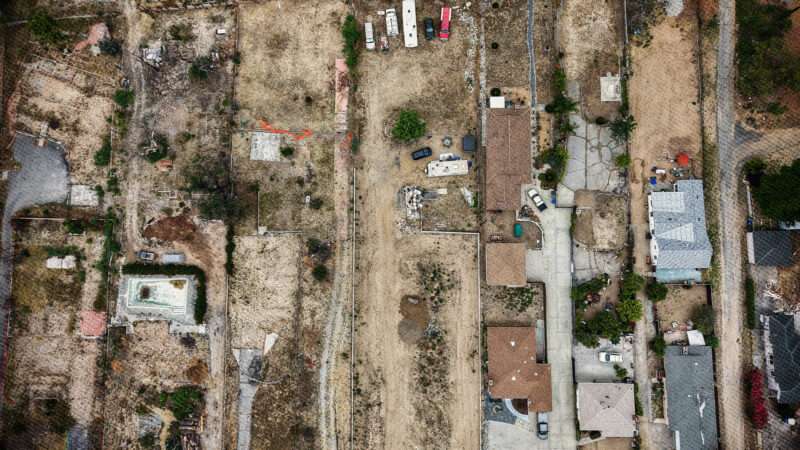
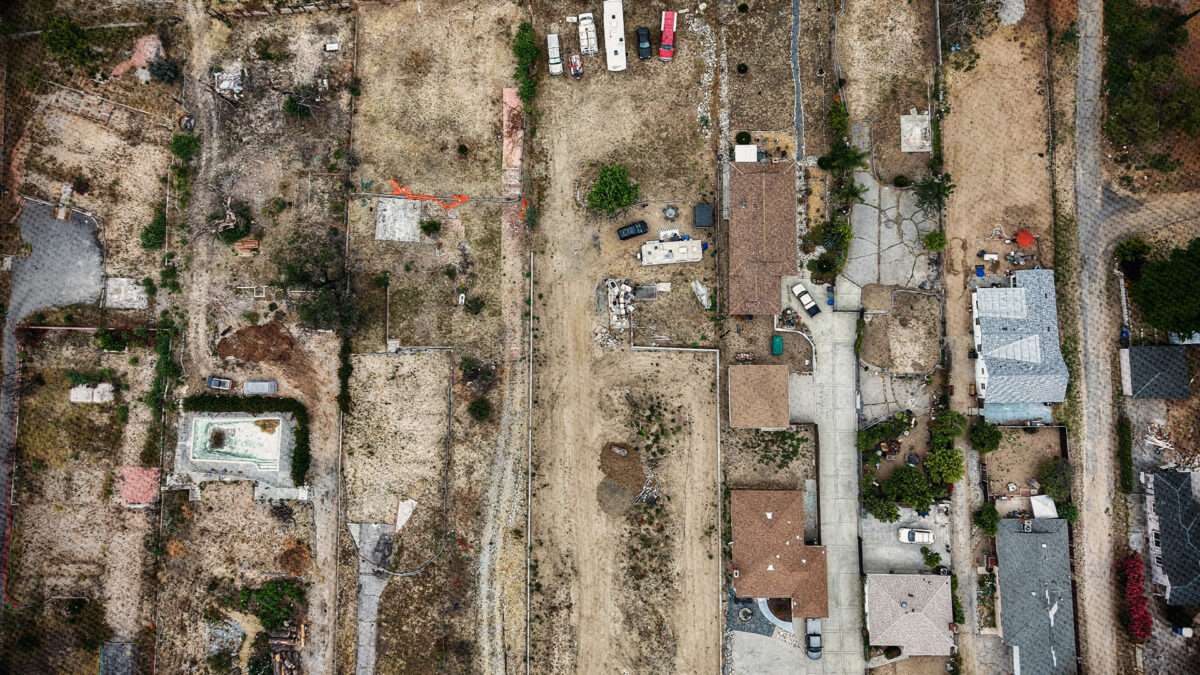
My recent trip to Malibu from Los Angeles was my first post-wildfire drive through the Pacific Palisades and, my goodness, there's nothing like seeing something with one's own eyes to grasp the enormity of the devastation. The obliterated hulks along Pacific Coast Highway 21 months after the tragedy raise multiple issues, including ones related to the excruciatingly slow rebuilding process.
This being California, the state has yet to grapple sufficiently with the reasons the wildfires started—and the failed response to them. But late is better than never, so I applaud a new report that Gov. Gavin Newsom commissioned from the nonprofit Fire Safety Research Institute. Released this month, it looked at the nitty-gritty of how the fires started and how multiple agencies reacted. The results aren't pretty.
The New York Times provided the best summary: "The comprehensive analysis found that while several state and local agencies fell fatally short in their preparation and response, the clearest lesson from the disaster was the extent to which climate-driven fires are outstripping modern firefighting." The report found LA officials failed to take the fires seriously enough at the outset. County officials handled the Altadena evacuations in a "chaotic" manner. They were unprepared for the intensity of the fire storms.
We've all read about some of the inexplicable stupidity. The Santa Ynez Reservoir was empty during the fires because of a repair to its protective cover, yet it's empty again (although it's in the process of being refilled). The California Coastal Commission allegedly delayed new permits for the Los Angeles Department of Water and Power to install fire-resistant utility poles because of concerns about an endangered weed. The commission disputes that report—and there's still heated debate involving multiple agencies.
If we can't get multiple agencies on the same page on one minor question about milkvetch, I'm skeptical California can deal with the basics. The report said the tragedy involved "multiple interlinked systems rather than any single factor or failure." In one example by Patch, the Los Angeles County Sheriff's Department remained at normal staffing levels. The Los Angeles Fire Department was reportedly so concerned about overtime costs that it reportedly responded slowly.
This epitomizes California's approach to everything: Bigger agencies, higher spending, and expanded workforces. The left hand never knows what the right hand is doing. Other priorities outside of public protection—budgeting, meeting union demands, turf battles—take precedence. This isn't malicious, but reflects the fundamental nature of government.
Even after the state suspended rebuilding regulations, the rebuilding process is still in a quagmire because of the number of involved agencies. How could California realistically streamline a wildfire-fighting process that involves an alphabet soup of local, county, regional, and state bureaucracies? Even the feds are involved because around 45 percent of the state's land area is owned by them. The wildfire issue is a statewide problem, so the conclusions should resonate beyond LA.
Furthermore, the report argues that California needs to change its overall approach toward wildfire resilience. Back to the Timesanalysis, which noted that climate-driven fires are becoming more intense and that's challenging the traditional ways that the state has battled wildfires. But how often have you seen governments respond efficiently to external economic or environmental changes? All governments are slow-moving freight trains.
Everything government does is mired in the past. As an unrelated example, the nation's education system isn't much different than the one created in the 1800s—despite all the technological changes that should have sparked a revolution. When COVID hit, private schools adapted and provided successful at-home learning, whereas the public schools watched students fall behind and truancy rates soar. It's not any different with any public service, including firefighting.
My fear: California policymakers will read that summary about "climate-driven" fire risks and do what they always do: blame the problem on climate change and double down on the state's counterproductive climate policies. They are designed to change the entire Earth's weather patterns (even though California is responsible for less than 1% of the world's greenhouse emissions), rather than adjust our regulatory system to make us more resilient in the face of warming trends.
California's union-controlled state and local governments aren't about to adjust firefighting budgets so they can further stretch their dollars. State firefighters generally earn more than $250,000 in annual total compensation, with some Los Angeles firefighting officials earning pay levels that boggle the mind. Instead of trimming costs, California has been ratcheting up pay levels.
California state officials haven't even been forthright about their approach toward brush clearance. For instance, four years ago Newsom touted an important wildfire-prevention program that at the time hadn't completed a single project. We hear promises, but little action.
That's government for you. It doesn't do anything well and is incapable of learning the right lessons even from the best reports. Driving along PCH was just my latest reminder of this sad truth.
This column was first published in The Orange County Register.
Google Maps still shows a prosperous image of Pacific Place, a business center on the busy Valley boulevard in a suburb east of Los Angeles, California. But that picture no longer matches reality. The windows of a mental health clinic and a real estate agency have been boarded up to protect the premises from vandalism. One by one, shops pulled down their shutters until the mall was almost deserted. Several businesses belonging to an enigmatic figure also closed: Guojun Xuan, a wealthy Chinese immigrant who is at the center of a chilling case involving the alleged mistreatment of 21 children at his Arcadia mansion.
The Port of Los Angeles handled a record 1,042,652 twenty-foot equivalent units (TEUs) in September, marking the busiest month in its 118-year history as strong consumer demand and shifting global...
The Port of Los Angeles reported its best single month in its history. In a media briefing, port executive director Gene Seroka announced the port processed 1,042,652 TEUs, 23k TEUs more than the July 2025 record.
President Donald Trump said it without weighing the possible electoral consequences for Republican candidates in California, less than a month before the midterm elections. Far from generating laughter or support for his war with Iran, his comments have raised concern and could affect the vote in a state governed by Democrats since 2011. During a rally in Nebraska on Monday, the president said Iran could “take out” Los Angeles or San Diego, two of the largest cities in the United States, calling it a “small price” to pay to eliminate what he says is the threat posed by the Iranian regime.
It was the first face-to-face between the two men vying to govern California, the most populous state in the United States, with more than 39 million residents, just over a month before the midterm elections. Republican Steve Hilton and Democrat Xavier Becerra arrived at the CNN-organized debate with a twofold mission: lay out their proposals to lead what is considered the fourth-largest economy in the world and, at the same time, attack their opponent and explain to voters why they should not trust the other with their vote on November 3. Neither missed the chance to present their ideas on the state’s difficult economic situation, fears around artificial intelligence, and the ICE raids that threaten undocumented immigrants.
Sandra Martinez Roe, a mother in Los Angeles, hopes that her son will never use artificial intelligence (AI) in school. “I’m not going to let my children be guinea pigs,” she tells EL PAÍS over the phone. The city’s school board granted her wish, at least temporarily, a couple of weeks ago: the Los Angeles Unified School District (LAUSD) has banned AI from public classrooms this school year.
Explaining the world through images. Humanity has been doing it for millennia: from cave paintings to photography, cinema, living-room television and the omnipresent screens of today. Over the past decades, if there is anyone who has known how to create emotion through images, that is George Lucas, 82, director, writer, producer and the creative mind behind phenomena that have shaped contemporary culture, such as the Star Wars and Indiana Jones franchises. And his eye for visual narratives has not been limited to film: for decades (funded by the lucrative returns of cinema), he has also devoted himself to art collecting, and possesses an immense collection of roughly 40,000 works that he has now decided to share with the world.
Frustrated that law enforcement and government officials are unable to help them, Venice property owners have called upon a private company, staffed by former gang members, to remove encampments in their neighborhood. For L.A. Material, Hayes Davenport talked to one of the company’s owners—lifelong Venice resident Bobby Luna—as well as dozens of locals, from homeowners to unhoused folks, about the company’s presence in the community. Homeowners are satisfied with Ghost Town’s service, while some unhoused people who have been forced to relocate report harassment and physical force from its employees. “Ghost Town has stepped in to address a decades-old problem with an unconventional approach,” writes Davenport. “Are they an inspiring story of neighborhood reclamation, filling the void left by an insufficient, hobbled government response? Or mercenary enforcers, contracted to speed along the neighborhood’s gentrification?”
One homeowner — who said she has paid between $100 and $300 a month for Ghost Town’s services, with the cost going down as more neighbors became clients — told me she signed up after multiple people trespassed on her property while she was pregnant, triggering their security system. “Police didn’t come for an hour and a half,” she said. “Ghost Town shows up in five minutes.”
“They’re the reason we still live here,” she added.
But Andrew’s contention that “most people in the homeless community have had some kind of negative interaction with Ghost Town” had also been supported by the people I talked to on the street.

 Login